









All News - Page 398 of 1715 - Good News Network
Home Blog Page 398

Even Dying Stars Can Still Give Birth to Planets, Scientists Discover

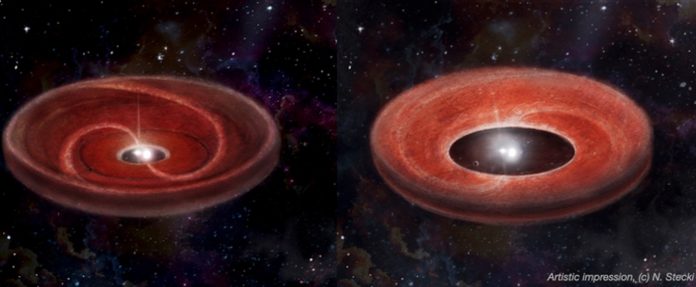
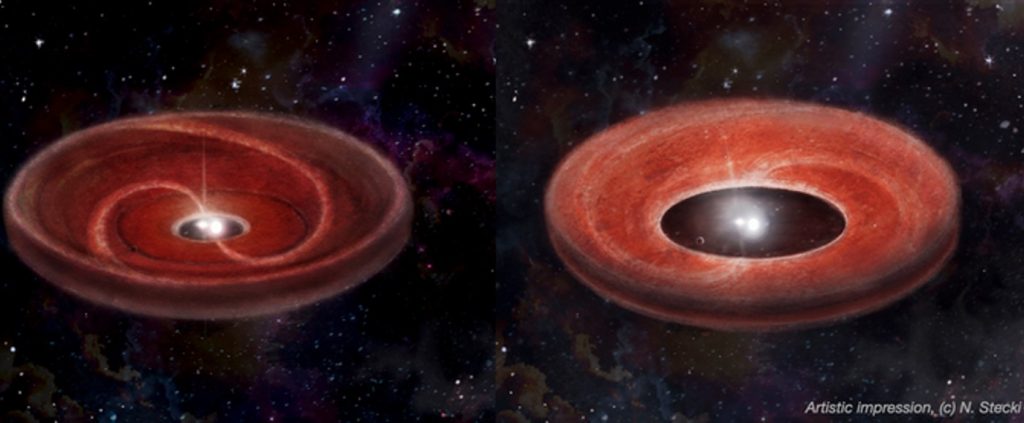
Discs surrounding so-called evolved binary stars not uncommonly show signs that could point to planet formation. CREDIT © N. Stecki
Discs surrounding so-called evolved binary stars not uncommonly show signs that could point to planet formation/© N. Stecki

Planets are usually not much younger than the stars around which they revolve. Take the Sun: it was born 4.6 billion years ago, and not long after that, Earth came into the world.

But KU Leuven astronomers have discovered that a completely different scenario is also possible. Even if they are near death, some types of stars can possibly still form planets. If this is confirmed, theories on planet formation will need to be adjusted.

Planets such as Earth, and all other planets in our solar system, were formed not long after the Sun. Our Sun started to burn 4.6 billion years ago, and in the next million years, the matter around it clumped into protoplanets.

The birth of the planets in that protoplanetary disc, a gigantic pancake made of dust and gas, so to speak, with the Sun in the middle, explains why they all orbit in the same plane.

But such discs of dust and gas needn’t necessarily only surround newborn stars. They can also develop independently from star formation, for example around binary stars of which one is dying (binary stars are two stars that orbit each other, also called a binary system).

When the end approaches for a medium-sized star (like the Sun), it catapults the outer part of its atmosphere into space, after which it slowly dies out as a so-called white dwarf. However, in the case of binary stars, the gravitational pull of the second star causes the matter ejected by the dying star to form a flat, rotating disc. Moreover, this disc strongly resembles the protoplanetary discs that astronomers observe around young stars elsewhere in the Milky Way.

RELATED: Gigantic Planet Found Hidden in Plain Sight

This we already knew. However, what is new is that the discs surrounding so-called evolved binary stars not uncommonly show signs that could point to planet formation, as discovered by an international team of astronomers led by KU Leuven researchers.

What’s more, their observations show that this is the case for one in ten of these binary stars. “In ten per cent of the evolved binary stars with discs we studied, we see a large cavity in the disc”, says KU Leuven astronomer Jacques Kluska. “This is an indication that something is floating around there that has collected all matter in the area of the cavity.”

LOOK: Mysterious Purple Coating Found on Mars Rocks in Every Direction

Second-generation planets
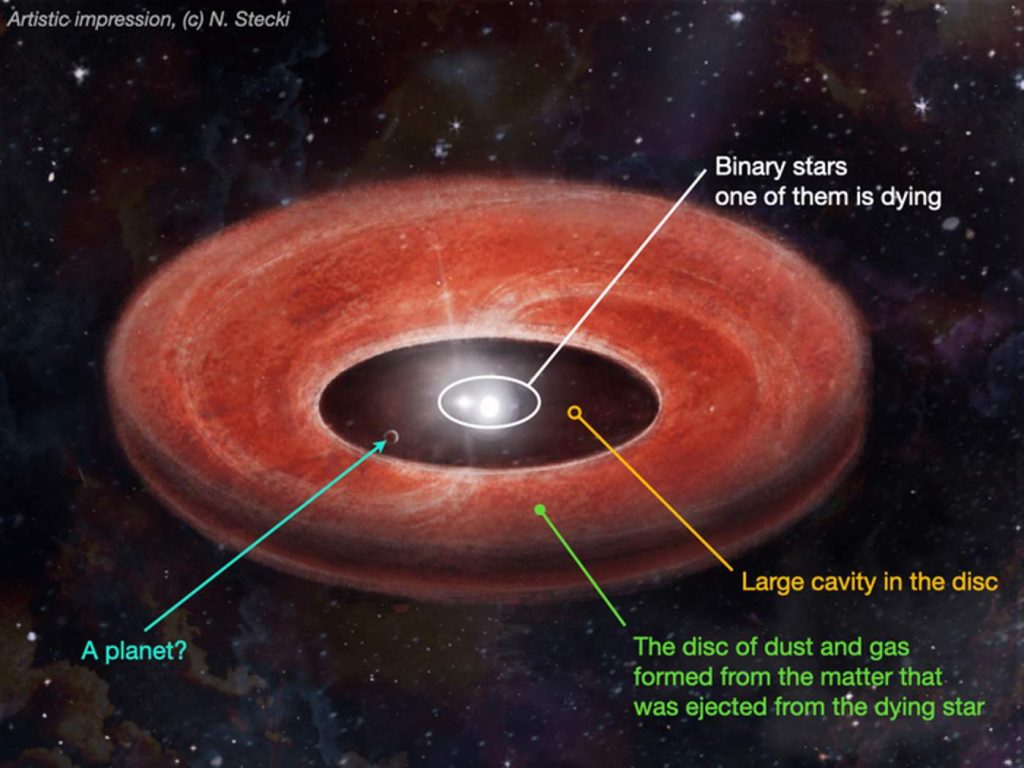
Discs surrounding so-called evolved binary stars can show signs that could point to planet formation/© N. Stecki

The clean-up of the matter could be the work of a planet. That planet might not have formed at the very beginning of one of the binary stars’ life, but at the very end. The astronomers moreover found further strong indications for the presence of such planets. “In the evolved binary stars with a large cavity in the disc, we saw that heavy elements such as iron were very scarce on the surface of the dying star”, says Kluska.

“This observation leads one to suspect that dust particles rich in these elements were trapped by a planet.” By the way, the Leuven astronomer doesn’t rule out the possibility that in this way, several planets can be formed around these binary stars.

MORE: Mysterious Object Unlike Anything Astronomers Have Seen Before Discovered

The discovery was made when the astronomers were drawing up an inventory of evolved binary stars in our Milky Way. They did that based on existing, publicly available observations. Kluska and his colleagues counted 85 of such binary star pairs. In ten pairs, the researchers came across a disc with a large cavity on the infrared images.

Current theories put to the test

If new observations confirm the existence of planets around evolved binary stars, and if it turns out the planets were only formed after one of the stars had reached the end of its life, the theories on planet formation will need to be adjusted. “The confirmation or refutation of this extraordinary way of planet formation will be an unprecedented test for the current theories”, according to Professor Hans Van Winckel, head of the KU Leuven Institute of Astronomy.

The KU Leuven astronomers soon want to verify their hypothesis themselves. To this end, they will use the big telescopes of the European Southern Observatory in Chile to take a closer look at the ten pairs of binary stars whose discs show a large cavity.

The article about this discovery is published in the journal Astronomy & Astrophysics.

Source: KU Leuven

SHARE This Far Out News With Space-Loving Pals…
“I wish I could make him understand that a loving good heart is riches enough, and that without it intellect is poverty.” – Mark Twain

Quote of the Day: “I wish I could make him understand that a loving good heart is riches enough, and that without it intellect is poverty.” – Mark Twain (The Diaries of Adam and Eve)

Photo: by Will O

With a new inspirational quote every day, atop the perfect photo—collected and archived on our Quotes page—why not bookmark GNN.org for a daily uplift?


Higher Olive Oil Intake Associated With Much Lower Risk of Death From Various Diseases

By Marco Verch Professional Photographer

Replacing margarine, butter, mayonnaise, and dairy fat with olive oil was associated with lower mortality risk from diseases, according to a large new study.

Consuming more than 7 grams of olive oil daily (1 and 1/2 teaspoons) is associated with lower risk of mortality from cardiovascular disease, cancer, and neurodegenerative and respiratory diseases, according to a new study.

The study also found that a lower risk of mortality was associated with the replacement of 10 grams / 2 teaspoons per day of margarine, butter, mayonnaise, or dairy fat with the equivalent amount of olive oil.

Published January 10 in the Journal of the American College of Cardiology, the findings were based on an analysis of participants from the Nurses’ Health Study, and the Health Professionals Follow-up Study. Researchers analyzed 60,582 women and 31,801 men who were free of cardiovascular disease and cancer at the study baseline in 1990.

During 28 years of follow-up, their diets were assessed by a questionnaire every four years. The questionnaire asked how often, on average, they consumed specific foods, types of fats and oils, as well as which brand or type of oils they used in the kitchen and at the table.

The findings support current dietary recommendations to increase the intake of olive oil and other unsaturated vegetable oils.

POPULAR: Magnesium May Prime the Immune System to Fight Cancer and Infections

“Clinicians should be counseling patients to replace certain fats, such as margarine and butter, with olive oil to improve their health,” said Marta Guasch-Ferré, PhD, a senior research scientist at the Department of Nutrition at Harvard T.H. Chan School of Public Health and the study’s lead author. “Our study helps make more specific recommendations that will be easier for patients to understand and hopefully implement into their diets.”

Olive oil consumption was calculated from the sum of three items in the questionnaire: olive oil used for salad dressings, olive oil added to food or bread, and olive oil used for baking and frying at home. One tablespoon was equivalent to 13.5 grams of olive oil.

The consumption of other vegetable oils was calculated based on the participants reported oil brand and type of fat used for cooking at home. Margarine and butter consumption was based on the reported frequency of stick, tub or soft margarine consumption, and the amount of margarine or butter added from baking and frying at home. Intakes of dairy and other fats and nutrients were also calculated.

RELATED: Mediterranean Diet and Extra Olive Oil Can Lower Risk of Breast Cancer

The researchers found olive oil consumption increased from 1.6 grams/day in 1990 to about 4 grams/day in 2010, while margarine consumption decreased from about 12 grams/day in 1990 to about 4 grams/day in 2010. The intake of other fats remained stable.

Participants with higher olive oil consumption were often more physically active, had Southern European or Mediterranean ancestry, were less likely to smoke, and had a greater consumption of fruits and vegetables compared to those with lower olive oil consumption.

The average consumption of total olive oil in the highest category was about 9 grams/day at baseline and included 5% of the study participants.

When researchers compared those who rarely or never consumed olive oil, those in the highest consumption category had 19% lower risk of cardiovascular mortality, 17% lower risk of cancer mortality, 29% lower risk of neurodegenerative mortality, and 18% lower risk of respiratory mortality.

CHECK OUT: Israeli and Palestinian Farmers Find Peace Through Olive Oil

The study also found substituting 10 grams/day of other fats, such as margarine, butter, mayonnaise and dairy fat, with olive oil was associated with 8–34% lower risk of total and cause-specific mortality. They found no significant associations when substituting olive oil for other vegetable oils.

Over the course of 28 years, there were 36,856 deaths to examine that occurred in the Nurses’ Health Study and the Health Professionals Follow-up Study.

“It’s possible that higher olive oil consumption is a marker of an overall healthier diet and higher socioeconomic status. However, even after adjusting for these and other social economic status factors, our results remained largely the same,” Guasch-Ferré said.

He pointed out that the study cohort was predominantly a non-Hispanic white population of health professionals, which “should minimize potentially confounding socioeconomic factors, but may limit generalizability as this population may be more likely to lead a healthy lifestyle.”

ALSO: New Research Links 5 Simple Lifestyle Choices to a 60% Reduced Risk of Developing Alzheimer’s

In an accompanying editorial, Susanna C. Larsson, PhD, associate professor of epidemiology at the Karolinska Institutet in Stockholm, added, “The current study and previous studies have found that consumption of olive oil may have health benefits. However, several questions remain. Are the associations causal or spurious? Is olive oil consumption protective for certain cardiovascular diseases, such as stroke and atrial fibrillation, only or also for other major diseases and causes of death? What is the amount of olive oil required for a protective effect? More research is needed to address these questions.”

SLIDE This Dietary News to Health-Conscious Friends on Social Media…

Ancient Trees Have Incredible Lifespans That Also Help Keep The Surrounding Forests Alive

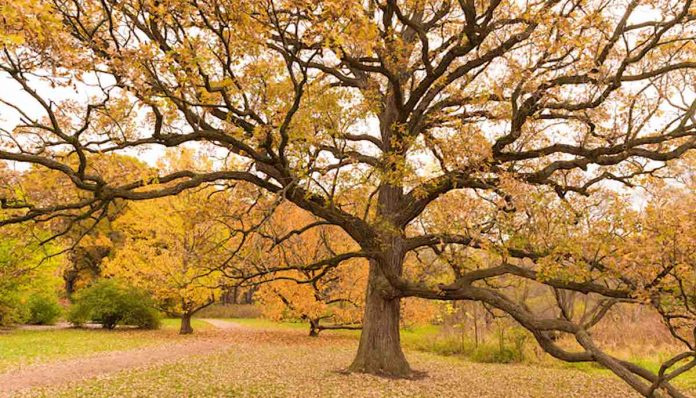
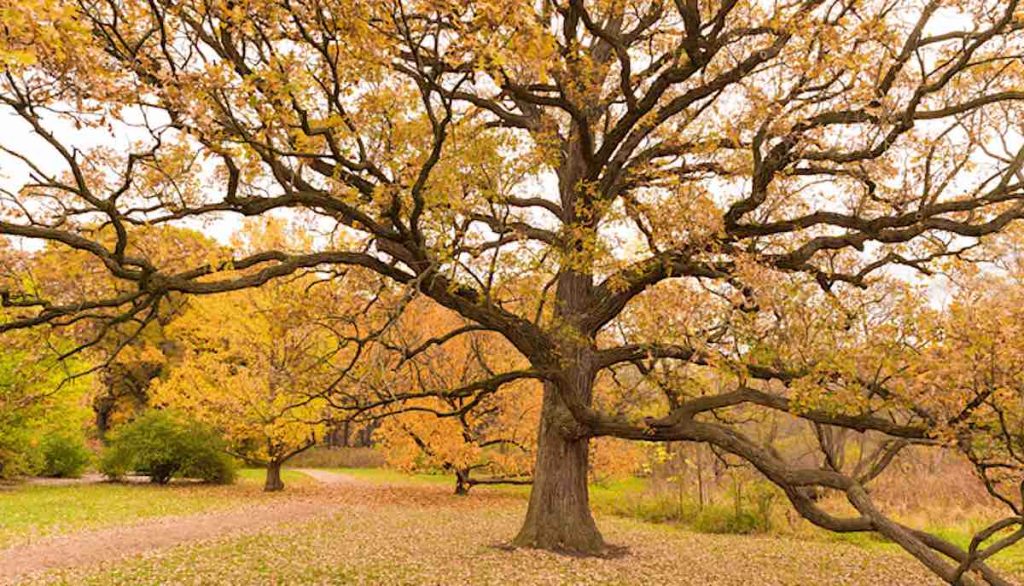
Old Burr Oak / The Morton Arboretum

New research suggests that ancient trees possess far more than an awe-inspiring presence. They provide a suite of ecological services to forests, as well as sustaining the entire tree population’s ability to adapt to a rapidly changing environment.

Old Burr Oak / The Morton Arboretum

In the February edition of Nature Plants, Chuck Cannon, PhD, director of The Morton Arboretum’s Center for Tree Science in Lisle, Illinois, reported that old and ancient trees (often more than 10 to 20 times older than nearby trees) radically change the overall genetic diversity and composition fitness of their surrounding populations.

Collaborating with scientists at Tuscia University in Italy and the University of Barcelona in Spain, he said the findings also indicate that these trees contribute evolutionary properties to forests that are vital to their long-term survival.

“We examined the demographic patterns that emerge from old-growth forests over thousands of years, and a very small proportion of trees emerge as life-history ‘lottery winners’ that reach far higher ages that bridge environmental cycles that span centuries,” said Cannon.

“In our models, these rare, ancient trees prove to be vital to a forest’s long-term adaptive capacity, substantially broadening the temporal span of the population’s overall genetic diversity.”

LOOK: Refugees in Cameroon Have Turned a Treeless Desert Camp Into a Thriving Forest

These trees, which comprise less than 1% of a population, given model conditions, contribute a vitally important amount of genetic and biological diversity to a forest’s overall population, documenting a broad range of historical environmental conditions that span hundreds or even a thousand years.

To put it simply, according to the authors, ancient trees have survived countless environmental changes over hundreds or thousands of years, and in turn, this genetic resilience is passed on to the forest. Moreover, these old trees sequester a disproportionate amount of carbon compared to typical mature trees.

RELATED: Hedgerows Are 2,000 Times More Valuable For Ecosystems Than We Could Imagine

The authors report that the death of ancient trees is more a random product of their environment rather than a predictable process.

According to the study, the researchers found in their models that the maximum age that trees could reach was particularly sensitive to the lower range of observed mortality rates. However, at higher mortality rates, like those that might be seen as resulting from climate changes, the ability of trees to reach the same impressive ages is limited.

“As the climate changes, it is likely that mortality rates in trees will increase, and it will become increasingly difficult for ancient trees to emerge in forests,” said the Morton Arboretum botanist.

The authors note that while forest restoration and tree planting efforts are important tools to improve both local and global environments, ancient trees cannot be recovered or regenerated without many centuries and generations of trees passing.

RELATED: Italy is Protecting its Giant Trees Forever – Monumental Trees that Can Live for Centuries

This study recalls the urgent need for a global strategy to conserve biodiversity, not only by preserving intact forests, but in particular the small remnant of a few ancient trees that have survived in managed forest landscapes,” concludes Gianluca Piovesan, a co-researcher at the Department of Ecological and Biological Sciences in the Università Tuscia, in Viterbo, Italy.

SHARE The Magical Properties of Ancient Trees on Social Media…

A Hero Just Passing By Saves Young Mom and Son From Dying in Wyoming House Fire

Ryan Pasborg / Green River Fire Department

A passerby is being hailed as a hero for risking his own life to help rescue a Wyoming family after their Jamestown home erupted into flames early Tuesday morning.

Ryan Pasborg / Green River Fire Department

A 34-year-old mother and her four young children, ages 12, 8, 6 and 4, were asleep in their Jamestown house when a fire erupted in the home.

Ryan Pasborg was running late for work Tuesday morning as he traveled from his home in Green River towards town when he smelled smoke and saw flames coming from a bedroom window.

When he didn’t see any emergency lights, the 32-year-old decided to pull into the driveway where he saw a young girl and two boys leaving the house. The three children told Pasborg that their mother and 4-year-old little brother were still inside—and without hesitation he entered the residence through a garage door and stepped into the kitchen.

Pasborg told authorities that he could not see anything inside because of heavy smoke, so he crawled on his hands and knees on the floor several feet into the kitchen before he bumped into the small child. He immediately grabbed the boy around the waist, picked him up and carried him outside.

With a windchill temperature well below zero, Pasborg quickly put all four children in his truck to keep them warm before entering the burning home a second time, this time crawling through the kitchen deeper into the house in search of the children’s missing mother.

Moments later, Pasborg found the woman lying on the floor, badly burned and struggling to breath. After dragging her outside, he noticed that she was unresponsive and no longer breathing, so he began performing lifesaving measures until she suddenly took a gasp of air.

WATCH: Hero Jumps Into Maryland Bay to Save Toddler’s Life, After Crash Flings Her Car Seat Into the Water

Pasborg then drove the family away from the now raging fire to the end of the driveway near the highway and awaited the arrival of emergency first responders.

Sheriff Deputy Jason Mower said he could not recall ever witnessing such courage and selflessness as that displayed by Pasborg, who surely saved the lives of the young mother and son.

“I think this is the first time in nearly 15 years of law enforcement that I’ve ever heard of a total stranger truly going above and beyond in a way and in a situation that many wouldn’t have dared to face,” Mower said.

“Not only is it a blessing in its own right that Mr. Pasborg was in the right place at the right time, but his willingness without second thought to risk his own life to help save this family was the difference between life and death for this young mother and her child; he gave them a fighting chance,” said Sheriff John Grossnickle said in a statement.

RELATED: Firefighters Rescue a Dog Trapped Down a 15-Foot Underground Burrow

“There are no words to adequately express the magnitude of Ryan’s bravery other than he is a perfect example of what it means to be a real hero,” Grossnickle continued. “His actions speak volumes about the true content of his character, and people like Ryan are a testament to the overwhelming power and strength of community that we are so fortunate to share with one another as friends and neighbors here in Sweetwater County.”

Not only was his bravery on display, but his generosity and compassion. Pasborg later purchased several hundred dollars worth of clothing and necessities and delivered them to the family at their grandmother’s house.

MORE: Hero Trucker Ignores Own Safety to Save Utility Worker Stuck in a Bucket With Fire Blazing Below

HAIL This Hero By Sharing Ryan’s Bravery on Social Media…

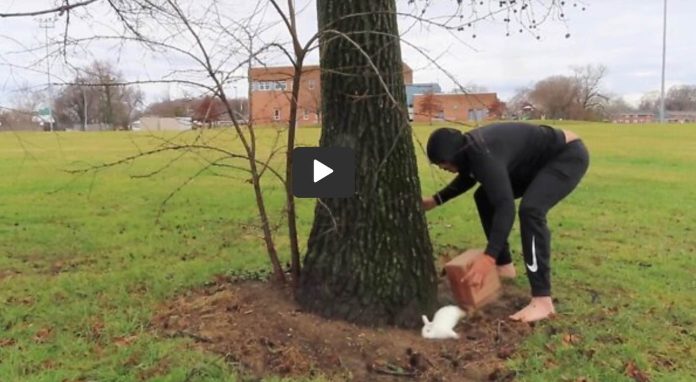
Guy Tries His Best to Catch a Bunny Rabbit, Captures the Hilarious Fail on Video

Three weeks ago, a man was caught in an amusing predicament after buying a pet rabbit.

“I went straight to a park,” explained YBS Bunny on YouTube, who was alone, at the time. “Bad idea.”

“Let’s say he gave me a run for my money. 😂”

He bought the rabbit to learn how to reconnect with the earth, by finding something to bond with.

“Then your bond, your connection, will extend to other things on the planet. People get ducks; people get cats; I chose a rabbit.”

Check out YBS Bunny’s epic chase around a tree, as he tries to capture his pet back in the box, in the video below.

RELATED: Watch 2 Cats Experience Snow For the First Time – Adorably Shaking Their Paws With Each Step

The white wabbit did finally depart the safety of the tree, and scampered into the open lawn—we’re hoping it got easier from there. YBS promised GNN an update tomorrow.

SEND This Circle of Chuckles to Friends On Social Media…

“We are too sincere, too productive, and too realistic. We need to enter more fully and more willingly into that realm under the rocks and behind the mirror.” – Thomas Moore

Quote of the Day: “We are too sincere, too productive, and too realistic. We need to enter more fully and more willingly into that realm under the rocks and behind the mirror.” – Thomas Moore

Photo: by Baran Lotfollahi

With a new inspirational quote every day, atop the perfect photo—collected and archived on our Quotes page—why not bookmark GNN.org for a daily uplift?


Are We About to Witness a Super-Massive Black Hole Merger?

PICTURED: Edited Hubble Space Telescope montage (created by NASA) of various galaxies with growing black holes due to collisions with other galaxies. PC: Stuart Rankin-CC 4.0.

Reprinted with permission from World At Large, a news website of nature, politics, science, health, and travel.

Edited Hubble Space Telescope montage (created by NASA) of galaxies with growing black holes due to galaxy collisions, by Stuart Rankin – CC 4.0 license (cropped)

A galaxy featuring a pair of supermassive black holes could be about to receive a pretty loud wake up call, as the titanic entities will spiral together and merge in just a few months, with an expression of energy that will literally shake the entire universe.

This big bang could be the first of its kind that scientists will be able to witness, and the sheer mention of a prediction that we know when and where such an event would take place lead scientists around the world scrambling for telescope time to try and catch a glimpse in X-rays, gamma rays, and radio waves.

Most galaxies probably have supermassive black holes at their center, but scientists don’t know how they grow so large. One theory is that they periodically suck in material that makes them grow big and grow bright, becoming active galactic nuclei or AGN. Another theory is that when two galaxies collide, the black holes at their center set themselves on a collision course which causes them to merge, bringing them into the supermassive size.

Mergers would bring the black holes too close together for their light to be separated. Instead, they are detected either through gravitational waves at observatories like LIGO, or optically through periodic oscillations in the signatures of energy and heat churned out into the surrounding matter by the pair as they grow nearer to each other.

Ning Jiang of the University of Science and Technology of China was operating a survey telescope from the Zwicky Transient Facility in California where he and his team stumbled upon data that appeared to be from an AGN with two such black holes, in which the oscillations during an observing period of 3 years, decreased from 1 year to 3 months, suggesting that within 100 days, the pair of black holes would tie the knot.

“If the interpretation is true, a coordinated, multi-band electromagnetic campaign should be planned for this first binary [supermassive black hole] merger event observed in human history,” the authors write in their paper which is yet to be peer-reviewed— and some critics are skeptical.

RELATED: Mysterious Purple Coating Found on Mars Rocks in Every Direction

Just have to wait and see

Fortunately for everyone involved and impacted by this exceedingly-bold prediction, the usual periods of waiting ascribed to astronomical research is much shorter, as the black holes merging could be 100 to 300 days, or even less.

If a merger does take place, along with a massive burst of light along the electromagnetic spectrum, there will be a shower of neutrino particles, which can be detected at the IceCube neutrino observatory at the South Pole, and a massive ripple in the fabric of space and time called a gravitational wave.

Bold claims require bold evidence, and Science Magazine had further opinions from scientists that believe the evidence is merely circumstantial.

RELATED: NASA Probe Enters the Sun’s Atmosphere for the First Time, Immediately Teaching Us New Things About Our Star

Theorist Daniel D’Orazio from the Niels Bohr institute in Copenhagen point out that the galaxy, logged as SDSSJ1430+2303, lacked the diminishing oscillations in its light curve in the years before Jiang started observing it. Before then, there were steady emissions of energy into the surrounding matter, suggesting that it is merely a black hole binary galaxy and nothing more.

However, on the 14th of September, 2015, the LIGO-Virgo collaborations announced the first observation of gravitational waves from a signal of two black holes with masses of 29 and 36 solar masses merging about 1.3 billion light-years away. During the final fraction of a second of the merger, it released more than 50 times the power of all the stars in the observable universe combined.

CHECK OUT: This is What it Looks Like When a Black Hole Snacks on a Star

This merger would be an awful lot bigger. Rather than containing 36 times the mass of the sun, they would contain the mass of hundreds of millions of suns— and no one can say for certain what the observable effect would be in this case.

SHARE the Space Alert With Geeks on Social Media…

Ginger Cat is Local Star for Stealing Hundreds of Toys and Presenting Them Sweetly to Neighbors

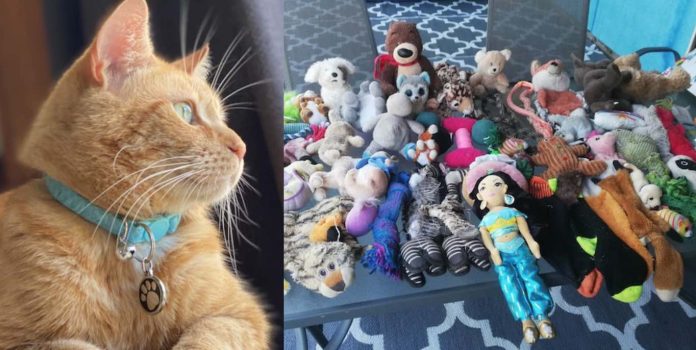
Photos: (Left) Ingrid Moyle, (right) Kay McCall

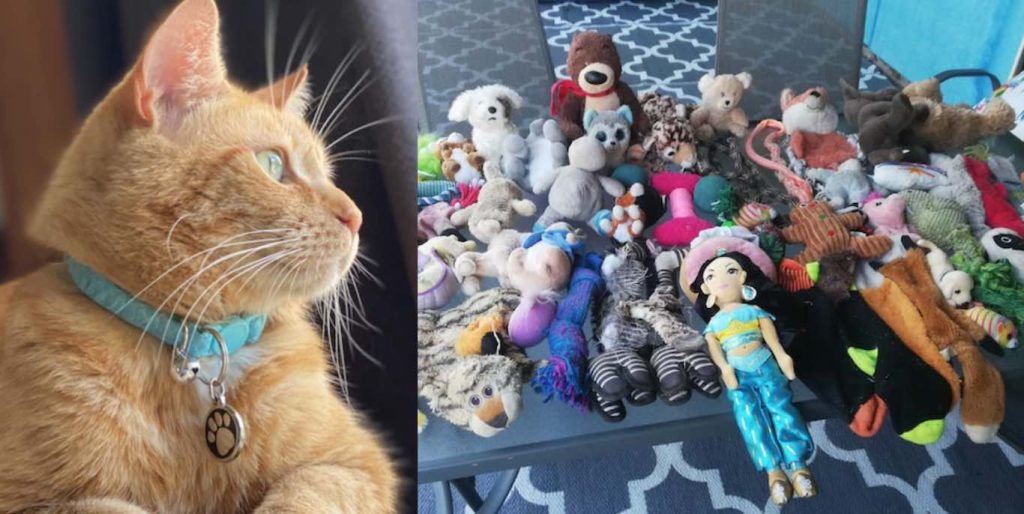
A cat burglar and kleptocat, has stolen the hearts of Australians after becoming an internet celebrity for his relentless robbing of locals and their toys.

Photos: (Left) Ingrid Moyle, (right) Kay McCall

Kay McCall and her husband were moving into a new apartment last year in Ferny Hills, near Brisbane, when they met a ginger cat who hopped over the fence looking for a head pat and chin scratches.

It became an enjoyable daily encounter, but as the visits continued they began to notice an accumulation of toys in their yard.

It wasn’t long before they caught him in the act. It turned out, the orange visitor was bringing more than affection and neighborliness.

McCall says he left in their yard several odd socks, a school tee-shirt, and lots of toys.

“He brought a beautiful little Peter Rabbit,” she told ABC News Australia. “After a while, we just accumulated a ridiculous number—literally an entire table-full.”

They decided to post a picture of the “Pirate Kitty” and his haul on a Facebook group for locals, seeing if any of the toys belonged to the neighbors. Indeed, dozens of people reported they had been visited by Pirate Kitty, or recognized one of this plundered items— and he instantly became a local icon.

Pirate kitty needed a home

Eventually, McCall tracked down the ginger cat’s loving owners and established that, no, it wasn’t a vagabond—and that it had a home nearby—but the family couldn’t keep him from wandering off.

Later the owners asked if the McCalls were able to help Pirate Kitty find a new home, since it was impossible for them to ensure his safety.

LOOK: Girl Makes Special Pouch For Her Cat to Take Him Traveling Around Italy—His Favorite Hobby

A local resident, Ingrid Moyle, who regularly fostered stray animals, had recently lost some family members, so she decided that a new lover in their home would be a good idea.

Because Pirate Kitty didn’t respond to his actual name ‘Johnny,’ Moyle called him ‘Kylo’ after one of her favorite angsty Star Wars characters.

“I was a Pirate Kitty fan from the very first post … and then I saw the post that Kay put up saying his previous owners couldn’t keep him anymore,” Ms. Moyle said.

Turning Pirate Kitty into an indoor cat was surprisingly easy—but ending the chronic thievery was all but impossible.

Kylo’s morning haul of toys in his new home – Ingrid Moyle

“I have a very, very large box of toys of different sizes and shapes, so I just tip this toy box on the floor downstairs in the lounge room.”

Kylo now chooses a toy and drags it up the stairs to their bedroom, where he presents it to his new mother while she is presumably trying to sleep. He then runs off to get another one.

RELATED: Why Cats Love to Sit in Boxes – Even Fake Ones, According to Science

Since the happy ending, the Pirate Kitty’s fan base has asserted that Kylo actually now owns Moyle, rather than the other way around—and everyone looks forward new posts about the cat’s mischief in the Ferny Hills home.

STEAL The Hearts of Friends By Posting The Pirate Antics on Social Media…

500 Acres of Old Growth Redwood Forests Donated to Tribal Council for Lasting Protection in Mendocino, Calif

Photo by Max Forster Photography, courtesy of Save the Redwoods League

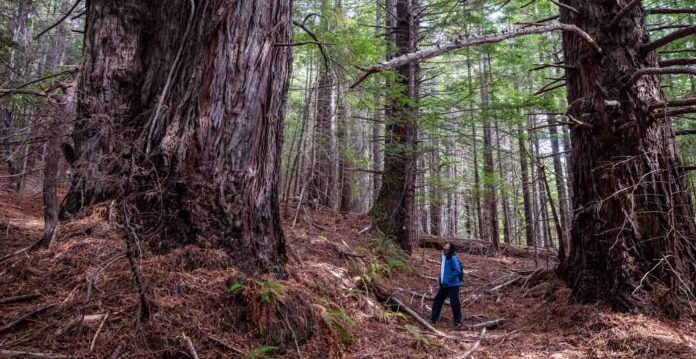
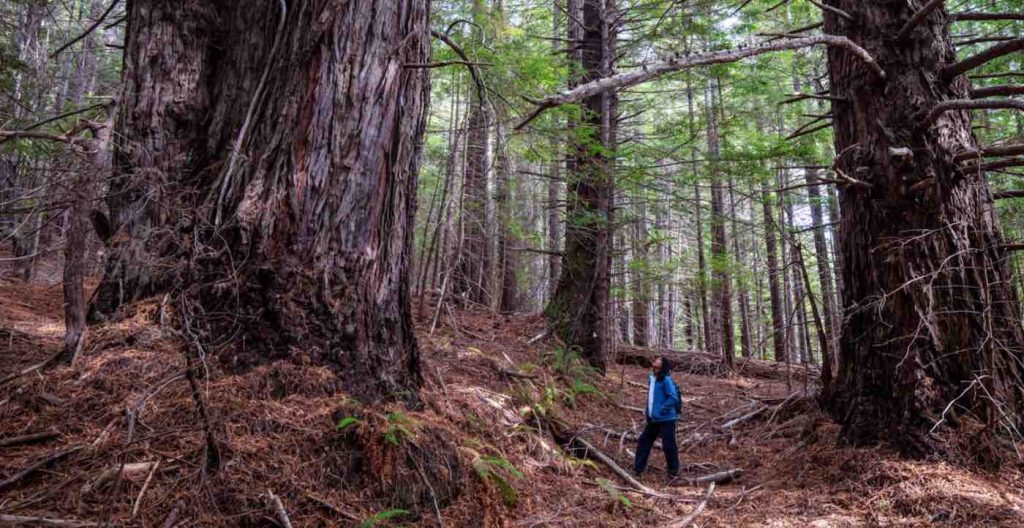
For a second time, the nonprofit Save the Redwoods League has orchestrated a donation of coastal redwood forestland to the InterTribal Sinkyone Wilderness Council to permanently protect trees on the Lost Coast in Mendocino County, California.

The League purchased the 523-acre property, formerly known as Andersonia West, in 2020. To ensure its lasting protection, the conservation group transferred ownership to the Sinkyone Council, which then granted the League a conservation easement.

Through the partnership, the Sinkyone people resume guardianship of a land they lived on generations ago, before European settlers moved in—and the forest will again be known as Tc’ih-Léh-Dûñ (pronounced tsih-ih-LEY-duhn), meaning “Fish Run Place”

“Renaming the property Tc’ih-Léh-Dûñ lets people know that it’s a sacred place,” said Crista Ray, a tribal citizen of Pomo Indians and a board member of the Sinkyone Council.

“Today I stand on the shoulders of giants, my ancestors … to bring them honor, and to not let our old ways be forgotten, for our next generation,” said Buffie Schmidt, a tribal citizen and board treasurer of the Sinkyone Council. “Our ancestors are still here, they’re still around us. As I listen to the wind, I feel like my ancestors.”

“The Sinkyone Council today represents the Indigenous Peoples who are the original stewards of this land. Their connection to the redwood forest is longstanding, and it is deep,” said Sam Hodder, president and CEO of Save the Redwoods League. “The League is honored to support a return of Native people to this place and to partner with the Sinkyone Council in their management and stewardship of Tc’ih-Léh-Dûñ. We believe the best way to permanently protect and heal this land is through tribal stewardship. In this process, we have an opportunity to accelerate the pace and scale of conserving California’s iconic redwood forests.”

RELATED: Native American Tribe in Maine Gets Back Sacred Island Taken 160 Years Ago

Save The Redwoods League

Tc’ih-Léh-Dûñ is a coastal conifer forest with 200 acres of old-growth coastal redwoods and 1.5 miles of waterfront wilderness on Anderson Creek—a Class I fish-bearing stream and tributary to the South Fork Eel River.

Second-growth redwoods, Douglas-firs, tanoaks and madrones tower over a lush understory of huckleberries, elderberries, manzanitas and ceanothuses. This habitat corridor supports coho salmon, steelhead trout, marbled murrelet and northern spotted owl—all species listed under the US Endangered Species Act.

CHECK Out: At Long Last, Smallest Native Californian Tribe Has Land To Call Their Own

Tc’ih-Léh-Dûñ is the League‘s second land donation to the Sinkyone Council. The first, in 2012, was the 164-acre Four Corners property north of Tc’ih-Léh-Dûñ, the first project for which Save the Redwoods entered into a conservation agreement with a tribal entity.

Both organizations are committed to the prevention of habitat loss, commercial timber operations, construction and development.

As a Tribal Protected Area, Tc’ih-Léh-Dûñ is a vital addition to 180,000 acres of adjacent conserved lands east of the 7,250-acre Sinkyone Wilderness State Park.

Protection of Tc’ih-Léh-Dûñ

The League’s initial purchase of this 523-acre forest for $3.55 million in 2020 was fully funded by Pacific Gas & Electric Company’s (PG&E) Compensatory Mitigation Program (program), which develops projects related to PG&E’s 30-year conservation goals that were developed with the U.S. Fish and Wildlife Service.

PG&E also reimbursed the League and Council for transactional costs and management plan preparation, in addition to a $1.13 million endowment to support ongoing stewardship of Tc’ih-Léh-Dûñ.

POPULAR: One of the Largest Native American Tribes Has Just Voted to End Their 100-Year Dependency on Coal

“This is a great collaborative effort that demonstrates our environmental stewardship commitment to protect these valuable resources and the communities we serve,” said Mariano Mandler, senior director of environmental management for PG&E.

PLANT Some Towering Good News on Your Social Media Pages…

This Week’s Inspiring Horoscopes From Rob Brezsny’s ‘Free Will Astrology’

Our partner Rob Brezsny provides his weekly wisdom to enlighten our thinking and motivate our mood. Rob’s Free Will Astrology, is a syndicated weekly column appearing in over a hundred publications. He is also the author of Pronoia Is the Antidote for Paranoia: How All of Creation Is Conspiring To Shower You with Blessings. (A free preview of the book is available here.)

Here is your weekly horoscope…

FREE WILL ASTROLOGY – Week of February 5, 2022
Copyright by Rob Brezsny, FreeWillAstrology.com

AQUARIUS (Jan. 20-Feb. 18):
“All things are inventions of holiness,” wrote poet Mary Oliver. “Some more rascally than others.” I agree. And I’ll add that in the coming weeks, holiness is likely to be especially rascally as it crafts its inventions in your vicinity. Here are the shades of my meaning for the word “rascally”: unruly, experimental, mischievous, amusing, mercurial, buoyant, whimsical, and kaleidoscopic. But don’t forget that all of this will unfold under the guidance and influence of holiness. I suspect you’ll encounter some of the most amusing and entertaining outbreaks of divine intervention ever.

PISCES (Feb. 19-March 20):
The year 1905 is referred to as Albert Einstein’s “Year of Miracles.” The Piscean physicist, who was 26 years old, produced three scientific papers that transformed the nature of physics and the way we understand the universe. Among his revolutionary ideas were the theory of special relativity, the concept that light was composed of particles, and the iconic equation E = mc squared. With that information as a backdrop, I will make a bold prediction: that in 2022 you will experience your own personal version of a Year of Miracles. The process is already underway. Now it’s time to accelerate it.

ARIES (March 21-April 19):
Aries actor Bette Davis said that if you want to improve your work, you should “attempt the impossible.” That’s perfect advice for you right now. I hope to see you hone your skills as you stretch yourself into the unknown. I will celebrate your forays into the frontiers, since doing so will make you even smarter than you already are. I will cheer you on as you transcend your expectations and exceed your limits, thereby enhancing your flair for self-love. Here’s your mantra: “I now have the power to turn the impossible into the possible and boost my health and fortunes in the process.”

TAURUS (April 20-May 20):
Ancient Chinese philosopher Sun Tzu wrote, “Opportunities multiply as they are seized.” You’ll be wise to make that your motto during the next five months, Taurus. Life will conspire to bring you more and more benefits and invitations as you take full advantage of the benefits and invitations that life brings. The abundance gathering in your vicinity may even start to seem ridiculously extravagant. Envious people could accuse you of being greedy, when in fact, you’re simply harnessing a crucial rule in the game of life. To minimize envy and generate even more benefits and invitations, be generous in sharing your plenitude.

GEMINI (May 21-June 20):
“‘Because there has been no one to stop me’ has been one of the principles of my life,” wrote Gemini author Joyce Carol Oates. “If I’d observed all the rules, I’d never have got anywhere,” said Gemini actor Marilyn Monroe. “Play the game. Never let the game play you.” So advised Gemini rapper and actor Tupac Shakur. “Who I really am keeps surprising me,” declared Gemini author Nikki Giovanni. I propose that we make the previous four quotes your wisdom teachings during the next four weeks.

CANCER (June 21-July 22):
Your animal symbol is usually the crab. But I propose we temporarily change it to the tardigrade. It’s a tiny, eight-legged creature that’s among the most stalwart on planet Earth—able to live everywhere, from mountaintops to tropical rainforests to the deepest parts of the sea. In extreme temperatures, it thrives, as well as under extreme pressures. Since it emerged as a species half a billion years ago, it has survived all five mass extinctions. I believe you will be as hardy and adaptable and resolute as a tardigrade in the coming months, Cancerian. You will specialize in grit and resilience and determination. PS: Tardigrades are regarded as a “pioneer species” because they take up residence in new and changed environments, paving the way for the arrival of other species. They help create novel ecosystems. Metaphorically speaking, you could be like that.

LEO (July 23-Aug. 22):
I regularly ask myself how I can become more open-minded. Have I stopped being receptive in any way? What new developments and fresh ideas am I ignorant of? Have my strong opinions blinded me to possibilities that don’t fit my opinions? In accordance with astrological omens, Leo, I encourage you to adopt my attitude in the coming weeks. For inspiration, read these thoughts by philosopher Marc-Alain Ouaknin: “If things speak to us, it is because we are open to them, we perceive them, listen to them, and give them meaning. If things keep quiet, if they no longer speak to us, it is because we are closed.”

VIRGO (Aug. 23-Sept. 22):
Like all the rest of us, Virgo, you have limitations. And it’s important for you to identify them and take them into consideration. But I want to make sure you realize you also have fake limitations; you wrongly believe in the truth of some supposed limitations that are, in fact, mostly illusory or imaginary. Your job right now is to dismantle and dissolve those. For inspiration, here’s advice from author Mignon McLaughlin: “Learning too soon our limitations, we never learn our powers.”

LIBRA (Sept. 23-Oct. 22):
“Develop enough courage so that you can stand up for yourself and then stand up for somebody else,” counseled poet and activist Maya Angelou. Author Toni Morrison said, “The function of freedom is to free someone else.” Author and activist Nikki Giovanni wrote, “Everybody that loves freedom loves Harriet Tubman because she was determined not only to be free, but to make free as many people as she could.” I hope the wisdom of these women will be among your guiding thoughts in the coming weeks. As your own power and freedom grow, you can supercharge them—render them even more potent—by using them to help others.

SCORPIO (Oct. 23-Nov. 21):
“Man, sometimes it takes you a long time to sound like yourself,” testified Miles Davis, one of the most unique and talented jazz trumpeters and composers who ever lived. Popular and successful author Anne Lamott expressed a similar sentiment: “I’m here to be me, which is taking a great deal longer than I had hoped.” If those two geniuses found it a challenge to fully develop their special potentials, what chance do the rest of us have? I have good news in that regard, Scorpio. I believe 2022 will be a very favorable time to home in on your deepest, truest self—to ascertain and express more of your soul’s code. And you’re entering a phase when your instinct for making that happen will be at a peak.

SAGITTARIUS (Nov. 22-Dec. 21):
In the course of human history, three million ships have sunk to the bottom of the Earth’s seas. At one extreme have been huge vessels, like the Titanic and naval cruisers, while at the other extreme are small fishing boats. Many of these have carried money, gems, jewelry, gold, and other precious items. Some people have made it their job to search for those treasures. I believe there could and should be a metaphorical resemblance between you and them in the coming weeks, Sagittarius. Now is a favorable time for you to hunt for valuable resources, ideas, memories, and yes, even treasures that may be tucked away in the depths, in hidden locations, and in dark places.

CAPRICORN (Dec. 22-Jan. 19):
“It is astonishing what force, purity, and wisdom it requires for a human being to keep clear of falsehoods,” wrote author Margaret Fuller. That’s the bad news. The good news is that your capacity for exposing and resisting falsehoods is now at a peak. Furthermore, you have a robust ability to ward off delusions, pretense, nonsense, inauthenticity, and foolishness. Don’t be shy about using your superpowers, Capricorn. Everyone you know will benefit as you zero in and focus on what’s true and genuine. And you will benefit the most.

WANT MORE? Listen to Rob’s EXPANDED AUDIO HOROSCOPES, 4-5 minute meditations on the current state of your destiny — or subscribe to his unique daily text message service at: RealAstrology.com

(Zodiac images by Numerologysign.com, CC license)

SHARE The Wisdom With Friends Who Are Stars in Your Life on Social Media…

“In teaching my students, I try to figure out what questions I can ask that have no right answer. I seek to force students to develop original thought.” – Meg Gorman

Quote of the Day: “In teaching my students, I try to figure out what questions I can ask that have no right answer. I seek to force students to develop original thought.” – Meg Gorman

Photo: by Rubén Rodriguez

With a new inspirational quote every day, atop the perfect photo—collected and archived on our Quotes page—why not bookmark GNN.org for a daily uplift?


Bride Has ‘Slowest Walk Down the Aisle’ as Her Ring Bearer Pet Tortoise Steals the Limelight on Her Big Day

SWNS
SWNS

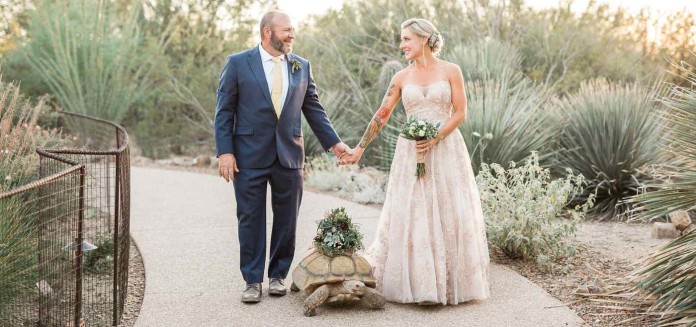
A bride had the ‘slowest walk down the aisle in history’ as she made her pet tortoise the ring bearer at her wedding.

Vets Ericka and Jay Johnson first met while doing a wild tortoise survey 20 years ago, so felt it was only right for their beloved Sulcata tortoise, Tom Shelleck, to be part of their wedding celebrations.

The 41-year-old said that strawberries were dotted down the aisle for ‘always hungry’ Tom to follow before the pair tied the knot last year at Tohono Chul Botanical Gardens in Arizona.

The mom-of-one said that everything ran smoothly and he even became the ‘center of attention’ on her big day.

Photos captured show the 20-year-old reptile creeping down the aisle following a trail of fruit while bearing rings on a floral basket attached to his shell.

Ericka said, “The only thing we were worried about was if ladies had painted toenails and he’d look at them and think they were fruit and maybe get off track and bite some toes, but fortunately that didn’t happen.

RELATED: An Office Worker Captures Beautiful Wildlife Photos On His Lunchbreak – LOOK

“I was proud of how he did. I think he did great and we’re really happy with how everything went.

“The day after the wedding I had several people text me like ‘Hey, do you have any pictures of Tom?'”

Ericka said it took around three minutes for Tom to get down the aisle—while it took everyone else a matter of seconds.

MORE: 65 Different Species of Animals Laugh, Says a New Study

Still, getting him in the right direction was easy.

“He eats mostly hay and dry things like that because he’s a desert-adapted species, so he’s not supposed to eat a lot of fruit but since he loves strawberries so much we knew it was a surefire way to get him to go down the aisle.”

SHARE the Sweet Wedding News; Share Tom’s Story…

How Good News Saved His Life – Anthony Samadani

© Legs of Steel/Red Bull Content Pool

The Lesson: There are many kinds of capital and currencies, but there is only one we all share. Anthony Samadani pointed out, as the Austrian-school economists do, that time is paid in addition to the cost of all things, but unlike stocks, commodities, or other currencies, it never appreciates, only depreciates. Looking at the cost in time before other currencies teaches people how to “appreciate” their time by aligning their passions (personal, professional, and spiritual) with their purpose.

Notable Excerpt: “Our actions should begin with a thoughtful intention. If you make the right intention and follow through with the proper actions, which is what people call “showing up,” you never have to worry about the result. That’s the freedom of it all, because we’re not in charge of our results. Listening or reading good news at least 3-4 minutes a day can help reduce stress! So many amazing studies have been done, including ones at Harvard.”

The Podcast: Building While Flying is a new podcast produced by Sasha Group, a new agency founded by author-entrepreneur Gary Vaynerchuk “dedicated to helping businesses grow faster.”

The Guest: Anthony Samadani is co-owner of Good News Network, and is launching a new podcast this month called LIVIN’ GOOD CURRENCY in partnership with GNN.  He and his co-host, Tobias Tubbs, will be exploring their simple formula of ‘Good Currency’, which coaches people to spend their most important currency—time—on doing good for themselves and others.

RELATED: How to Wake Up From the Trance of Unworthiness
MORE: 3 Ways to Deal With the Anxiety of a New Situation by Brene Brown

SHARE the Good Living Advice With Pals on Social Media… 

Kindergarten Kids Had Never Seen Snow So Florida Teacher Gets Sister to Ship a Snowman, ‘It’s Here!’

By Amber Estes

An 800-mile, $78 journey from Kentucky to Florida brought a smiling snowman to a classroom full of kids, many of whom had never laid an eye, much less a finger, on snow.

If one has family from Florida, it’s normal to find they’ve never seen snow. This was the case for kindergarten teacher Robin Hughes, who realized almost all the kids in her Florida classroom had never laid eyes on frozen precipitation after flipping through a book about snow with them.

It was this realization, following a trip home for Thanksgiving, that drove her to ask a curious request of her sister, Amber Estes, who lived in Louisa, Kentucky. She asked if Estes could mail her some of it on the off-chance it snowed that year.

Fast forward to January 8th, and knowing Estes was due for about 10 inches of snow, Hughes requested that she build a snowman for her classroom. Thus was born “Lucky” a snowman with blueberries, carrots, and twigs for eyes, a nose, and arms respectively. Sealed in a temperature controlled package with ice, Lucky flew priority USPS to Riverview in Florida.

“’He’s here!” He’s here!’ the school’s receptionist shouted through the halls when the package was finally delivered,” wrote the Washington Post.

RELATED: Teacher Shares Brilliant Band-Aid Lesson to Teach Kids About Fairness – And it Goes Viral (WATCH)

Despite a blueberry shifting in transit, Lucky arrived intact and unmelted in time to be revealed to the kids, who received him with utter wonderment.

Amber Estes

“I was so excited because he made it and just the pure joy [the kids] had seeing this snowman,” Hughes told The Post. “They wanted to touch him. ‘Is he coming to life?’ [they asked].”

MORE: A Talking Crow Befriending a School Has a Foul-Mouth But is Still Beloved by Kids in Oregon

Hughes immediately called Estes, who had formed an emotional bond with the snowman. She received the news that he had arrived safely with tears.

Kept cold and snug in the school cafeteria, Lucky is repeatedly brought out for different classes to demonstrate the majesty of snow, but when he becomes a little too shiny is closed again in the freezer.

“[I]n a time when things are not normal for kids in the classroom and for adults… this little snowman has created happiness,” Hughes told The Post.

The plan for Lucky is to be melted on Earth Day upon a newly-planted garden on the Kindergarten’s property.

MELT Hearts With Good News; Share This Story…

Watch Breathtaking Alpine Ski Run Through Forest, Ice Cave, and Rooftops By Extreme Free-Skier

The word ‘extreme’ doesn’t go as far as a thrown snowball to describe Red Bull’s latest dip into extreme sports filmmaking. Markus Eder’s The Ultimate Run is 10 minutes of the most hazard-riddled downhill skiing likely ever filmed.

Going down a mountain, across a glacier, through an ice-cave, through a forest, across village rooftops, through another forest, through a castle, and across another village, the only thing that can stop grand master free-skier Markus Eder is the end of the mountain.

The Italian rider has stood atop the podium at multiple free-skiing competitions, and won the European Skier of the Year title. He’s also extremely accomplished, as one can see below.

“I’ve always dreamt of showcasing all of my skiing in one big, flowy project,” Eder told Red Bull, who financed the project. “Typically, I contribute to multiple projects throughout the year. But this time, I wondered what I could create if I put all of that energy into one vision—where everything I’ve lived for amounts to a 10-minute segment.”

The cinematography of production company Legs of Steel is simply astonishing, capturing Eder’s incredible descent every step of the way.

(WATCH the video below.)

Featured image: © Legs of Steel, Red Bull Content Pool

SHARE This Video With All Your Best Ski Buddies…

“Irregularity – that is to say, the unexpected, surprise, and astonishment—is an essential part and characteristic of beauty.” – Charles Baudelaire

Quote of the Day: “Irregularity – that is to say, the unexpected, surprise, and astonishment—is an essential part and characteristic of beauty.” – Charles Baudelaire

Photo: by Alexander Schimmeck

With a new inspirational quote every day, atop the perfect photo—collected and archived on our Quotes page—why not bookmark GNN.org for a daily uplift?


Iconic Pink Flamingos Are Coming Back and Standing Tall in Florida

- NPS
Florida Flamingos Working Group/Facebook

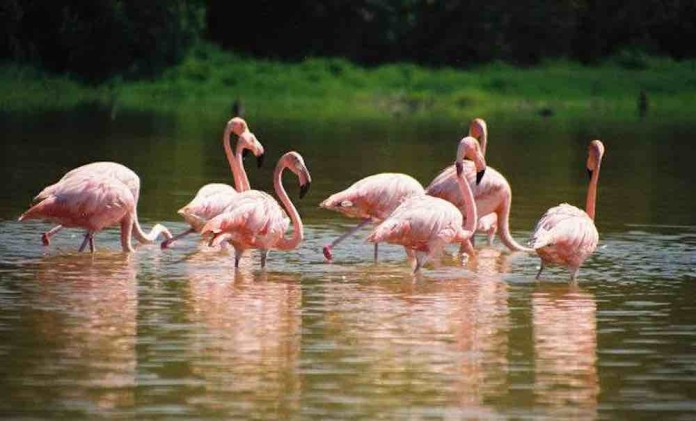
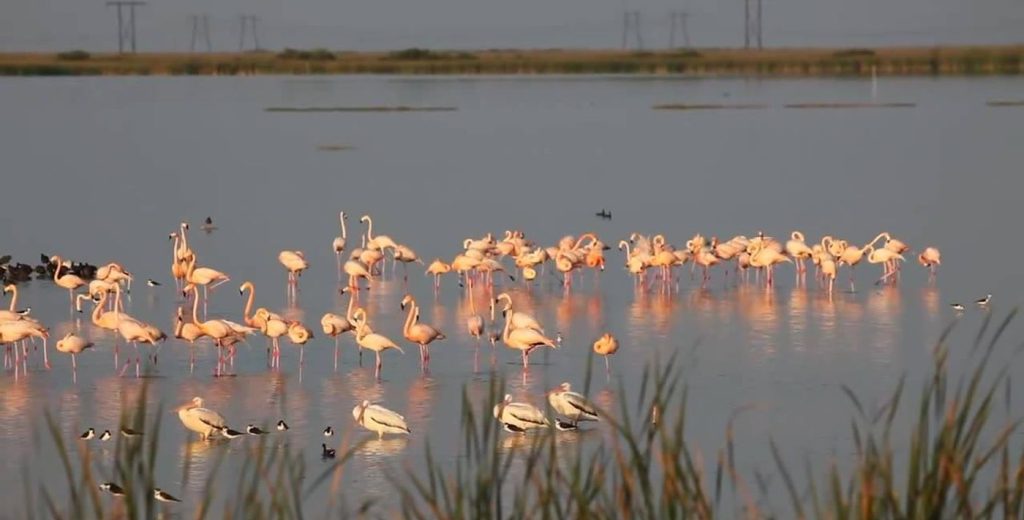
Once extirpated from Florida such that it lost its status as a native species, the American Flamingo is being sighted again in the state’s rich wetlands, prompting conservationists to feel the time is right for a rose-colored renaissance of the famous bird.

Not only are wildlife tour guides and the like spotting the tall pink waders, but scientists who work with GPS collars to track the birds are finding that they are once again making their homes in places like the Everglades.

Considered for 100 years as rare migrants to Florida’s shores, flamingos are now known to visit annually, or even stay year round. A 2021 biological assessment released by the Florida Fish and Wildlife Commission stated that there were somewhere between 0 and 1,000 individuals in Florida.

“Florida’s small population occurs on public conservation lands and exhibits a stable or increasing population trend in recent years,” reads the Commission report. “The return of this iconic species to the Everglades, Biscayne Bay, and the Florida Keys certainly is worthy of celebration and encouragement.”

Currently, scientists and conservationists are working to build a database of the behavior, habitat, and migration patterns for the Florida population so that if the numbers grows large to enough to receive a listing as a state-threatened species, or any other kind of designation, there’s already information for officials to access.

RELATED: Album of Endangered Bird Songs Soars Above Taylor Swift to Number 3 on Music Chart

The genetic origin of the current population is somewhat of a mystery. Were these birds from the Caribbean, where their numbers are strong, or from the Yucatan? Perhaps they came from even farther south—and the Flamingo Working Group (FWG) is trying to ascertain their lineage through testing.

The FWG is teaming up with the University of Central Florida to conduct genetic research to solve this riddle, while posting regular “Flamingo Alerts” on their Facebook page to help local birders log a particularly difficult wild sighting on their Life List, and raise awareness for the bird’s return.

CHECK OUT: How To Help Hummingbirds During the Winter Months – Myths and Tips

Photo by Grahm S Jones

Where the birds are returning from is a big question, but why they’re returning is one that’s potentially easier to answer. Recent state and federal grants to the Everglades have totaled more than $2 billion for maintenance and restoration projects, and state mandates preventing farms from creating agricultural runoff are seeing the water quality for Florida’s wetland habitats improve.

MORE: Biologists Identify First Animal That Communicates With the Complexity of Human Language: the Song Sparrow

Flamingos eat tiny crustaceans that often are the first things to die in a polluted wetland. Agricultural runoff dumps nutrients like nitrogen and phosphorus which causes blooms of algae, deoxygenating the water and killing most of the flamingo’s prey. In the southern Everglades, 2021 was one of the most successful nesting years for all native and migratory bird species since before the Second World War.

With conditions improving, it’s no wonder the FWG is trying to stop the state bird being updated from the flamingo to the northern mockingbird. It likely only a matter of years before the iconic wader, bedecked in pink, fully returns.

HELP Good News Soar; Fly This Story Over to Chums…

What Wintering Squirrels Can Teach Astronauts

When bears and ground squirrels hibernate in winter, they stop eating, lasting until spring simply on the fat reserves they’ve stored up in their bodies. Usually, this sort of prolonged fasting and inactivity would significantly reduce the mass and function of muscle, but hibernators don’t suffer this fate. How they avoid it, however, has been a mystery.

Now an Université de Montréal biologist has figured out why, and his findings could have implications for, of all things, the future of space travel. By studying a variety called the 13-lined ground squirrel that is common in North America, Matthew Regan has confirmed a theory known as “urea nitrogen salvage” dating back to the 1980s.

The theory posits that hibernators harness a metabolic trick of their gut microbes to recycle the nitrogen present in urea, a waste compound that is usually excreted as urine, and use it to build new tissue proteins.

How could this discovery be of use in space? Theoretically, Regan posits, by helping astronauts minimize their own muscle-loss problems caused by microgravity-induced suppression of protein synthesis and which they now try to reduce by intensively exercising.

If a way could be found to augment the astronauts’ muscle protein synthesis processes using urea nitrogen salvage, they could be able to achieve better muscle health during long voyages into deep space in spacecraft too small for the usual exercise equipment, the argument goes.

CHECK OUT: New Study Further Resolves Stephen Hawking’s Black Hole Paradox – With String Theory

“Because we know which muscle proteins are suppressed during spaceflight, we can compare these proteins with those that are enhanced by urea nitrogen salvage during hibernation,” said Regan, who carried out this research while a postdoc at the University of Wisconsin-Madison.

He is now continuing his work through a Canadian Space Agency research grant at UdeM, where he last year took up a position as assistant professor of animal physiology in the Department of Biological Sciences.

“If,” Regan continued, “there is an overlap between the proteins in spaceflight and the ones from hibernation, then it suggests this process may have benefits to muscle health during spaceflight.”

A model hibernator

In his study, Regandesigned a series of techniques and experiments to investigate the major steps in the urea salvage process and provide evidence for whether or not they occur in the 13-lined ground squirrel when it hibernates.

To do that, in their lab they injected their test squirrels’ blood with “double-labeled” urea, meaning the urea’s carbon atom was 13C instead of the usual 12C, and its nitrogen atoms were 15N instead of the usual 14N. These labels allowed them to track the urea-sourced carbon and nitrogen through the different steps of the urea nitrogen salvage process.

That process, they found, led from the initial transport of urea from the blood into the gut, to the breakdown of urea into its component parts by gut microbes, to the flow of substances—called metabolites—containing urea nitrogen back into the animal, and finally to the eventual appearance of this urea nitrogen in tissue protein.

LOOK: ‘Orion’s Fireplace’: Flame Nebula is Ablaze With Color and Captured in Stunning New Images

“Essentially, seeing 13C and/or 15N in metabolites at these various steps indicated that they originated from urea, and thus, that the hibernator was using urea nitrogen salvage,” said Regan.

He did his experiments on squirrels with and without gut microbiomes at three times of the year: summer, when they were active and not hibernating; early winter, when they were one month into fasting and hibernation; and late winter, when they were four months into fasting and hibernation.

‘Clear evidence of nitrogen salvage’

What they found was definitive: at each step of the process, there was clear evidence of urea nitrogen salvage by the squirrels with intact gut microbiomes.

Importantly, the squirrels with depleted gut microbiomes displayed no evidence of urea nitrogen salvage at any step, confirming this process was wholly dependent on the gut microbes’ ability to degrade urea, something the squirrels themselves cannot do.

Regan and his team also made two other important findings:

  • First, the incorporation of urea nitrogen into the tissue protein of the squirrels was highest during late winter, suggesting that urea nitrogen salvage becomes more active as the hibernation season proceeds. This is unlike most physiological processes during hibernation, when tend to be significantly reduced.
  • Second, there was evidence the microbes themselves were using the urea nitrogen to build their own new proteins, which is useful for them because they, like the squirrel, are under conditions of fasting hibernation. Thus, both the squirrel and its microbes benefit from urea nitrogen salvage, which makes this process a true symbiosis.

What this means, Regan said, is that the squirrels emerge from hibernation in the spring in good shape. This is important because the year’s only mating season, which is a time of intense physical activity for both males and females, occurs directly after they emerge from hibernation. Tissue function—particularly muscle tissue function—is therefore highly important for a successful mating season.

RELATED: Mysterious Purple Coating Found on Mars Rocks in Every Direction

“By facilitating muscle protein synthesis late in the hibernation season, urea nitrogen salvage may help optimize the emerging squirrels’ muscle function and contribute to their reproductive success during the mating season,” said Regan. “Urea nitrogen salvage may therefore enhance the animals’ overall biological fitness.”

Starving masses and the elderly

Beyond the implications for space travel and the health of astronauts, Regan’s discovery could have more immediate impacts now right here on Earth — in the starving masses of the underdeveloped world, and in the elderly.

Hundreds of millions of people globally experience muscle wasting as a consequence of various conditions—undernourishment, for instance, affects over 805 million people globally. More prevalent in Canada is sarcopenia, an age-related decline in muscle mass stemming from anabolic insensitivity that affects all humans, leading to a 30- to 50-per-cent decline in skeletal muscle mass between the ages 40 and 80.

MORE: Mysterious Object Unlike Anything Astronomers Have Seen Before Discovered

“The mechanisms that mammals like the 13-lined ground squirrel have naturally evolved to maintain protein balance in their own nitrogen-limited situations may inform strategies for maximizing the health of other nitrogen-limited animals, including humans,” said Regan. One solution might be to develop a pre- or probiotic pill that people could take to promote a gut microbiome of the kind that hibernators like squirrels have.

“To be clear, these applications, though theoretically possible, are a long way from delivery, and a lot of additional work is needed to translate this naturally evolved mechanism safely and effectively to humans,” Regan said.

“But one thing I find encouraging is that a study from the early 1990s provided some evidence that humans are capable of recycling small amounts of urea nitrogen via this same process. This suggests that the necessary machinery is in place. It just needs to be optimized.”

This research was published in Science. 

Source: University of Montreal

SEND This Far Out News to All Your Chums on Social Media…

Magnesium May Prime the Immune System to Fight Cancer and Infections

nuts public domain towfiqu-barbhuiya-4N0dLUmdLAY-unsplash
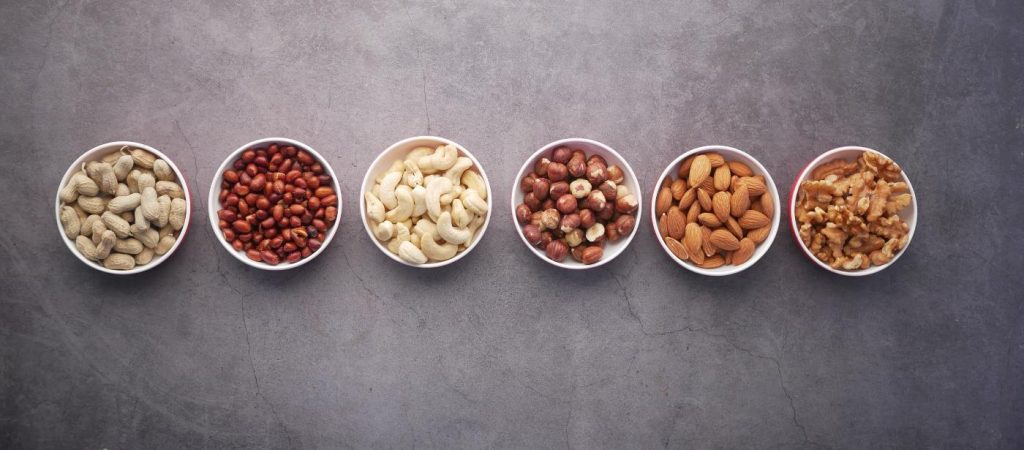
Nuts are a good source of magnesium; Owfiqu Barbhuiya

A simple mineral we all learned about in high school PE class could be the active ingredient in a new method of cancer treatment and prevention. In this way, magnesium has gone from being something to help us play sports longer to something that lets us play life longer.

That’s because magnesium acts like a bridge between killer T cells, a critical immune system weapon, and cancerous cells by binding to a protein on the T cell’s exterior called LFA-1, which allows them to then hone in on cancer cells which in turn have many ways to disguise themselves ordinarily.

Cell-surface binding and receptor proteins are areas of key interactions in studying physiological effects, and the COVID-19 pandemic taught many people how important these interactions, sometimes called docking, can be to our health.

The research came from a recent paper published in Cell, which found that killer T cells were only able to eliminate cancerous or infected cells in rats if their LFA-1 proteins had bound with free available magnesium.

In light of their discoveries, the research team from Switzerland looked at past studies of cancer immunotherapies and found that low-magnesium concentrations were strongly linked to a more rapid progression of disease. In addition, they found that influenza and other viruses spread faster in mice that were fed a magnesium deficient diet.

RELATED: Your Body’s Own ‘Cannabis-Like’ Substance Can Reduce Chronic Inflammation During Exercise

“In light of our experimental data and the retrospective analyses we performed on two clinical trials, magnesium deficiency is very likely to be responsible for at least a proportion of the insufficient efficacy seen in cancer patients receiving immune therapy,” Dr. Christoph Hess, Ph.D., from the University of Basel told Medical News Today.

MORE: Experimental Treatment in Spain Puts 18 Cancer Patients in Complete Remission

Building on this work, Dr. Hess is now seeing if magnesium-rich lipid molecules, coated in antibodies and injected into tumors, can prevent or reverse growth in the tumor microenvironment. Also they will investigate if magnesium supplementation improves outcomes of trials using other methods of immuno-therapy.

Both of these affects have been observed in mouse models.

Magnesium, which is most richly-found in nuts, is a critical macromineral, meaning that we must consume it from our diet and cannot live in a healthy state without it.

SEND This Hopeful News to Friends Who’d Love to Know It…