All News - Page 402 of 1715 - Good News Network
Home Blog Page 402

Majority of Americans Plan to Splurge on These Top 10 Things–After Missing Out in Pandemic

The “Roaring 20s” are just around the corner for seven in 10 Americans who plan to go all out with their finances in the coming years by enjoying what they missed out on in the last two years.

A survey of 2,000 adults found 70% are looking to have more fun with their finances over the next decade, with 84% believing those plans to spend more freely are due to having built a financial safety net during the pandemic.

Fifty-nine percent of Gen Zers (ages 18 to 24) are more likely to enjoy their money in the coming years, compared to 45% of millennials (ages 25 to 40) and 25% of Gen Xers (41 to 56).

On the other hand, 36% of boomers (57+) plan to stick to a very tight budget, while still enjoying themselves by spending some of their money.

When it comes to emergency funds, close to three-quarters (73%) have a savings account set up for when they need it most—with an average of $3,816.

Commissioned by Alliant Credit Union and conducted by OnePoll, the survey revealed 77% of millennials have retooled their budgets since the pandemic began, as compared to an average of 72% of all generations.

A third of those polled (31%) prefer spending money on experiences, and a quarter (25%) on material things.

RELATED: Six in 10 Americans Agreed They’re More Financially Confident Than They Were Before the Pandemic

Over the next decade, respondents want to spend more money on:

1. Traveling – 44%
2. Home goods/decor – 40%
3. Consumer electronics – 38%
4. Restaurants – 37%
5. Groceries – 37%
6. Clothing – 37%
7. Live entertainment – 37%
8. Shoes – 29%
9. Museum exhibits – 27%

“The last couple of years have helped us all realize what we value most,” said Director Chris Moore, of Alliant Credit Union. “Saving for retirement and a rainy day is incredibly important, but so is spending money on the things that bring you joy each day.”

“As long as you realistically budget for it, you can truly enjoy spending money on that next vacation or new gadget,” she added.

Still, a majority believe that with great fun comes great responsibility. Four in five of respondents are careful with their finances, with 73% of people regularly following a monthly budget.

Of all generations, Gen Xers describe themselves as the most cautious with their finances (87%), compared to seniors over 76 (84%), boomers (83%), millennials (78%) and Gen-Z (76%).

CHECK OUT: With Time to Pursue New Hobbies, 6 in 10 Have ‘Leveled Up’ – And 40% Think They’ll Make Money From it

Many respondents even use spreadsheets (45%) and budgeting apps (38%) to help them stay on top of purchases.

“Every successful budget needs a ‘fun’ spending category,” assures Moore. “The key is to set realistic savings goals and budget accordingly so you know exactly how much you can spend on the things you love—and it’s OK to adjust your budget each month to spend extra on the experiences for which you’ve been missing out.”

Will you be indulging in ‘the Roaring 2020s’? Tell us in the comments…

Alien-Like Sculptures Sliced By Ice and Winds on Lake Michigan Beach – LOOK

Shaun Tvetmarken Photography

Dr. Seuss-like spires whipped into formation by icy winds along the shore in Lake Michigan have caught the eye of nature photographers—and fed the fancy of fans on social media.

The nearly-annual phenomenon is similar to the one that creates 50-foot tall spires called hoodoos in the Utah desert, but these temporary ice hoodoos are anywhere from 3 to 20 inches high.

And, they may last only a day before the temperature and winds change, rendering them back to grains of sand.

Resembling chess pieces or modern art, they are carved when the wet sand turns into ice in spots, and strong winds remove the loose sand, layer by layer, in only a few hours.

Amateur photographer Shaun Tvetmarken lives in Saint Joseph, Michigan, where the bizarre sandy spires were created in Tiscornia Park.

He braved the cold to shoot some frames to post on Facebook and Instagram.

Shaun Tvetmarken Photography
Photo courtesy of Nature photographer Terri Abbott, Indiana

Gusts along the lake shore topped 40 mph on Friday morning, January 8, and as the temperatures rose above freezing the fragile pieces crumbled.

POPULAR: Researchers Drop Ice Chunk Down Glacial Hole and it Makes the Most Satisfying Sound Ever

Shaun Tvetmarken Photography

The phenomenon isn’t unique to this Southwestern corner of Lake Michigan. They can form, for instance, along the Northwest Pacific Coast or in Northern Europe.

LOOK: Birdwatchers Flock to See Rare 8-ft Raptor After ​Huge Russian Eagle Takes Detour into Maine

BLOW These Cool Pics to Nature Lovers on Social Media…

Solar Power Will Account for Nearly Half of New U.S. Electric Generating Capacity in 2022

By Science in HD
By Science in HD

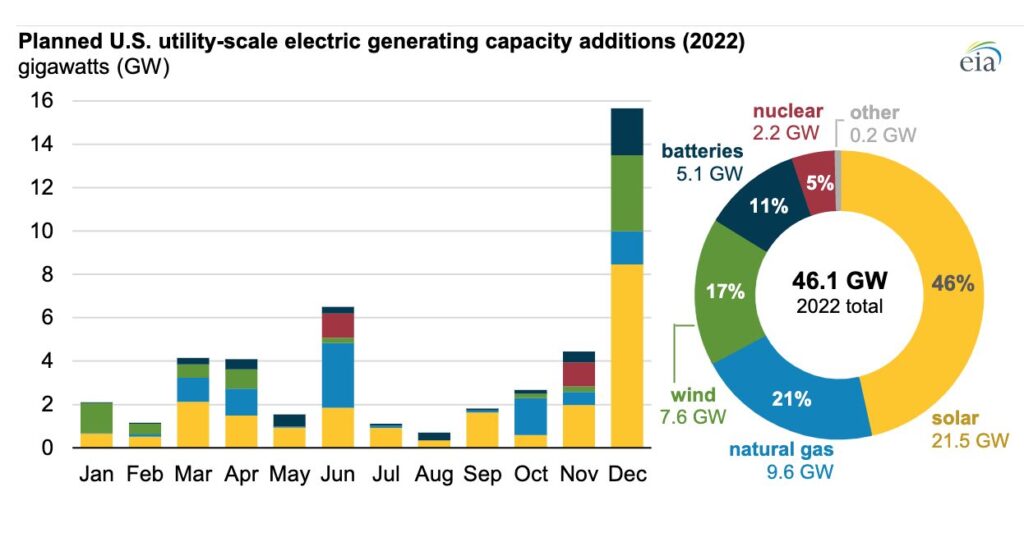
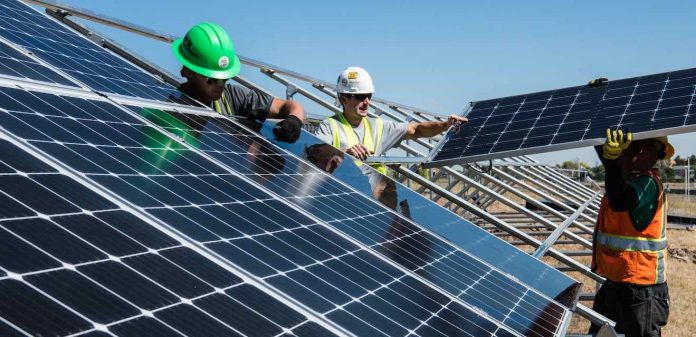
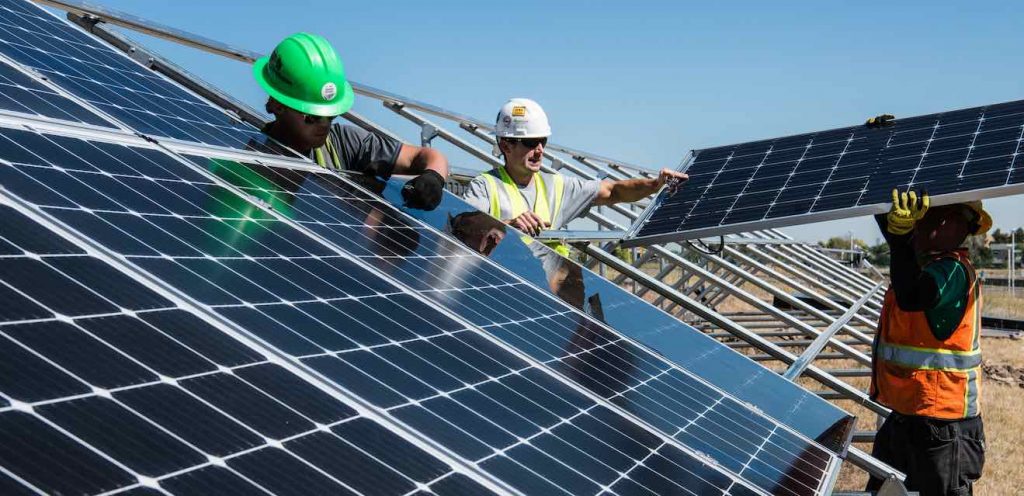
In 2022, almost half of the planned utility-scale electric generating capacity coming online are solar, according to the U.S. Energy Information Administration.

Wind power is in third place, estimated to create 17% of the new green energy launching this year.

“We expect U.S. utility-scale solar generating capacity to grow by 21.5 GW in 2022,” reports the EIA. “This planned new capacity would surpass last year’s 15.5 GW of solar capacity additions, an estimate based on reported additions through October (8.7 GW) and additions scheduled for the last two months of 2021 (6.9 GW).”

Most of the planned solar additions in 2022 will be in Texas, with 28% of the national total (6.1 GW), followed by California providing around 18 percent (4.0 GW).

POPULAR: Man Who Tells the Queen He Engineers Solar Panels is Stunned When She Orders Some Installed on the Castle

How did wind power contribute In 2021? A record-high 17.1 GW of wind capacity came online in the United States last year. Another 7.6 GW of wind capacity is scheduled to come online in 2022.

About half of the planned 2022 wind capacity additions are also located in Texas. The 999 MW Traverse Wind Energy Center in Oklahoma, the largest wind project expected to come online in 2022, is scheduled to begin commercial operations in April.

RELATED: Hundreds of Solar Farms Built Atop Closed Landfills Are Turning Brownfields into Green Fields

Regarding the all-important battery storage needs for renewables, the Administration expects U.S. utility-scale battery storage capacity to grow by 84% (5.1 GW) this year. Several factors have helped beef-up the expansion, including declining costs of battery storage and adding value through regional transmission organization (RTO) markets.

Developers and power plant owners report planned additions to the EIA for their annual and monthly electric generator surveys. In the annual survey, we ask respondents to provide planned online dates for generators coming online in the next five years.

CHECK OUT: These Solar Shingles on Your Roof Could Be Producing Energy With Simple Installation

SHINE Some Sun on Your Social Media Page With This Good News…

This Week’s Inspiring Horoscopes From Rob Brezsny’s ‘Free Will Astrology’

Our partner Rob Brezsny provides his weekly wisdom to enlighten our thinking and motivate our mood. Rob’s Free Will Astrology, is a syndicated weekly column appearing in over a hundred publications. He is also the author of Pronoia Is the Antidote for Paranoia: How All of Creation Is Conspiring To Shower You with Blessings. (A free preview of the book is available here.)

Here is your weekly horoscope…
FREE WILL ASTROLOGY – Week of January 22, 2022
Copyright by Rob Brezsny, FreeWillAstrology.com
AQUARIUS (Jan. 20-Feb. 18):
Self-help teachers and New Age gurus are fond of using metaphors about opening doors. They provide a lot of advice that encourages us to knock on doors, scout around for doors that are open just a crack, find keys to unlock doors, and even kick down doors. I will not be following their lead in this horoscope. In my opinion, the coming days are an excellent time for you to heed the contrary counsel of author Paulo Coelho: “Close some doors today. Not because of pride, incapacity, or arrogance, but simply because they lead you nowhere.” Once you carry out this assignment, Aquarius, I believe you’ll start finding interesting new doors to open.

PISCES (Feb. 19-March 20):
Piscean film director Jordan Peele released his debut film, Get Out. It was a success with both critics and audiences. A year later, Peele became the first Black screenwriter to win the Academy Award for Best Original Screenplay. As he accepted the Oscar, he said, “I stopped writing this movie about 20 times because I thought it was impossible.” Personally, I’m glad Peele didn’t give up his dream. Here’s one reason why: He will serve as an excellent role model for you throughout 2022. As you reinvent yourself, Pisces, don’t give up pushing ahead with persistence, courage, and a quest for what’s most fun.

ARIES (March 21-April 19):
In October, the Vancouver Canucks hockey team played the Seattle Kraken team in a Seattle arena. A fan named Nadia Popovici noticed that the Canucks’ equipment manager Brian Hamilton had an irregular mole on the back of his neck—possibly cancerous. She found a way to communicate her observation to him, urging him to see a doctor. In the ensuing days, Hamilton sought medical care and discovered that the mole was indeed in an early stage of melanoma, and he had it removed. In the spirit of this inspiring story, Aries, I invite you to tell the people in your life things they should know but don’t know yet—not just what might be challenging, but also what’s energizing and interesting. Be their compassionate advisor, their agent for divine intervention.

TAURUS (April 20-May 20):
Canadian-Jamaican songwriter and recording artist Kreesha Turner isn’t a mega-star like Beyoncé or Rihanna, but she has had a successful music career. What’s the secret to her constant creative output? Here’s what she has said: “I love to surround myself with people who are the best at what they do. My idea is I want to be a sponge and absorb everything they teach, experience their energy, view them in their element, and have the opportunity to ask them questions.” The coming year will be one of the best times ever for you to emulate her strategy, Taurus. And now is a perfect moment for formulating plans to make it happen.

GEMINI (May 21-June 20):
Gemini author Lisa Cron says that when we’re telling a story, we should give each successive scene “new information, rather than rehashing things we already know. Never tell us the same fact twice. Because it’s boring and stops the flow of the story. Never tell us the same fact twice. Because it’s boring and stops the flow of the story.” In accordance with astrological omens, Gemini, I suggest you apply this counsel to everything you say and do in the next three weeks. Don’t repeat yourself. Keep moving right along. Invite novelty. Cultivate surprises and unpredictability.
CANCER (June 21-July 22):
Years ago, I reluctantly gave up my music career. To do so was sad and hard. But it enabled me to devote far more time and energy to improving my writing skills. I published books and developed a big audience. I’m glad I did it. Here’s another redemptive sacrifice I made earlier in my life: I renounced the chaotic pleasure of seeking endless new romantic adventures so I could commit myself to a relationship with one particular woman. In so doing, I learned a lot more about how to be a soulful human. I’m glad I did it. Is there potentially a comparable pivot in your life, my fellow Cancerian? If so, the coming weeks and months will be a favorable time to make a move.

LEO (July 23-Aug. 22):
Leo actor Claudia Christian has appeared in over 50 films, including many in the science fiction genre. She has played a variety of roles in movies with more conventional themes. But as for the sci-fi stuff? She says, “Apparently, I’ve been typecast: I’m a Russian asexual telepathic Jew.” If Christian came to me for astrological advice right now, I would suggest that the coming months will be an excellent time for her and all of you Leos to slip free of any pigeonholes you’ve been stuck in. Escape the mold! Create niches for yourself that enable you to express your full repertoire.

VIRGO (Aug. 23-Sept. 22):
The coming weeks will be a favorable time to meditate on your job and your calling—as well as the differences there may be between your job and your calling. In fact, I regard this as a phase when you can summon transformative epiphanies about the way you earn a living and the useful services you provide to your fellow humans. For inspiration, read this quote from photographer Margaret Bourke-White: “Even while you’re in dead earnest about your work, you must approach it with a feeling of freedom and joy; you must be loose-jointed, like a relaxed athlete.”

LIBRA (Sept. 23-Oct. 22):
Author Marguerite Yourcenar wrote, “All happiness is a work of art: The smallest error falsifies it, the slightest hesitation alters it, the least heaviness spoils it, the slightest stupidity brutalizes it.” If what she says is true, it’s bad news, isn’t it? She makes it seem like cultivating joy and well-being is a superhuman skill that few of us can hope to master. Personally, I am not as stringent as Yourcenar in my ideas about what’s required to generate happiness. But like her, I believe you have to work at it. It doesn’t necessarily come easily and naturally. Most of us have never been taught how to cultivate happiness, so we must train ourselves to do it and practice diligently. The good news, Libra, is that the coming weeks will be an excellent time for you to upgrade your happiness skills.

SCORPIO (Oct. 23-Nov. 21):
In 1891, a cultural organization commissioned Scorpio sculptor Auguste Rodin to create a statue of beloved French author Honoré de Balzac. The piece was supposed to be done in 18 months, but it wasn’t. For seven years, Rodin toiled, producing over 50 studies before finally finishing the piece. We shouldn’t be surprised, then, that one of his mottoes was “Patience is also a form of action.” I’m recommending Rodin-like patience to you in the coming weeks, Scorpio. Yours will be rewarded long before seven years go by.

SAGITTARIUS (Nov. 22-Dec. 21):
“I am ashamed of confessing that I have nothing to confess,” wrote author Fanny Burney. Actor Jennifer Lawrence said, “I started to write an apology, but I don’t have anything to say I’m sorry for.” I nominate these two souls to be your role models for the coming weeks. In my astrological opinion, you are currently as immune to karmic boomerangs as it’s possible to be. Your guilt levels are abnormally low. As far as I can determine, you are relatively free from having to answer to the past or defend your actions. How do you plan to make maximum use of this grace period?

CAPRICORN (Dec. 22-Jan. 19):
“New truths become evident when new tools become available,” declared Nobel Prize-winning medical physicist Rosalyn Sussman Yalow (1921–2011). She was referring to developments in science and technology, but I think her idea applies to our personal lives, too. And it so happens, in my astrological opinion, that the coming weeks will be a favorable time for you to acquire new tools that will ultimately lead you to discover new truths.

WANT MORE? Listen to Rob’s EXPANDED AUDIO HOROSCOPES, 4-5 minute meditations on the current state of your destiny — or subscribe to his unique daily text message service at: RealAstrology.com

(Zodiac images by Numerologysign.com, CC license)

SHARE The Wisdom With Friends Who Are Stars in Your Life on Social Media…

“Happiness comes when your work and words are of benefit to others.” ― Buddha

Quote of the Day: “Happiness comes when your work and words are of benefit to others.”
― Buddha

Photo: by Lina Trochez

With a new inspirational quote every day, atop the perfect photo—collected and archived on our Quotes page—why not bookmark GNN.org for a daily uplift?


Nursing Home Residents Recreate Famous Portraits From History – And They’re Amazing (LOOK)

SWNS
SWNS

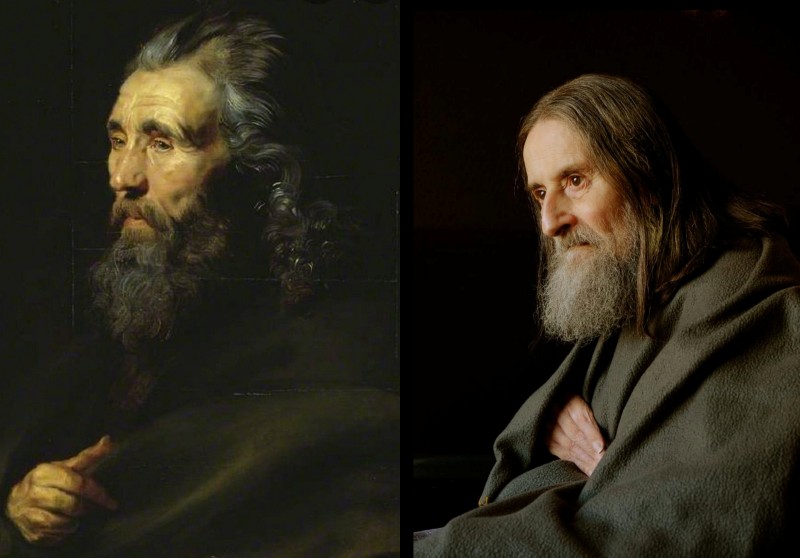
A care home has produced a calendar featuring all the old people posing in a series of photos from famous portraits—including The Virgin In Prayer and American Gothic.

The elderly residents of MHA Brookfield each feature as a different month in classic paintings—such as Evelyn Elizabeth Tudor.

Staff at the Oxfordshire care home in England created the 2022 calendar with the help of 14 elderly people.

One of the home’s volunteers, Rebecca Phillipson, took and edited the photos.

The calendars will be on sale for £12 ($16) and can be purchased from reception at the home.

The home provides nursing and nursing dementia care for 66 residents in purpose-built, en-suite accommodation.

57-year-old resident Andrew Reese who is on the cover of the calendar, said, “I really liked the style of my picture and it was good fun.

MORE: Nursing Home Residents Recreate Classic Album Covers While in Lockdown – LOOK

“A table cloth and some fur was used for my costume and I really enjoyed being a part of this for the second time.”

SWNS

Victoria Davidson, activity coordinator said, “I am very impressed with how the pictures have come out.

“Those who volunteered to be a part were very excited and could not wait to see what the pictures looked like.

“We used a lot of our own equipment at the homes to make props and costumes and it was something we all really enjoyed.

SWNS

“The pictures have received a lot of interest, so we decided to put them up in the reception area and whenever we have people walking through they stop by and have a look.”

Take a look at some more of the portraits below.

SWNS
SWNS
SWNS
SWNS
SWNS

SHARE This Fun Story With All Your Artist-Loving Pals…

An Athlete Has Mastered the Sport of Extreme Pogo – Watch His Incredible Stunts

SWNS
SWNS

A young athlete has mastered the unique sport of extreme pogo—or Xpogo—and performs incredible stunts.

22-year-old Henry Cabelus learned to pogo when he was seven, but it wasn’t until he was 12 years old when he got his first high-powered stick and began to learn tricks.

He began pushing it to the next level at 16 and practiced religiously to test his personal limits.

Henry, from Burlington in Vermont, is these days a full-time professional pogo sticker who performs with the Xpogo Stunt team.

He said, “Similar to street skateboarding or BMX videos, we like to see what tricks can get done in our day-to-day environment.

LOOK: Deaf Football Team Goes 12-0 On Its Way to California State Championship

“It’s hard to be satisfied with a clip unless you had to overcome fear or some sort of new physical challenge.”

Henry has suffered several injuries while performing the stunts, but he’s determined to improve his skills.

He added, “When it comes to danger there’s the obvious broken arms and legs, but my main concern is always the ‘slip out’.

“We only have one point of contact on the ground and it is not very much surface area.

MORE: Tom Brady FaceTimes With High School Team After They Dialed the Wrong Number

But pogo is simply what he loves to do. He says, “I still would like to take it further.”

(WATCH the video for this story below… but maybe don’t try this sport at home?)

JUMP Henry’s Skills Over to Those News Feeds…

IKEA Buys Land Damaged by Hurricane in Florida to Plant Forests

Readleaf pines; BobisTraveling/CC license
Readleaf pines/BobisTraveling, CC license

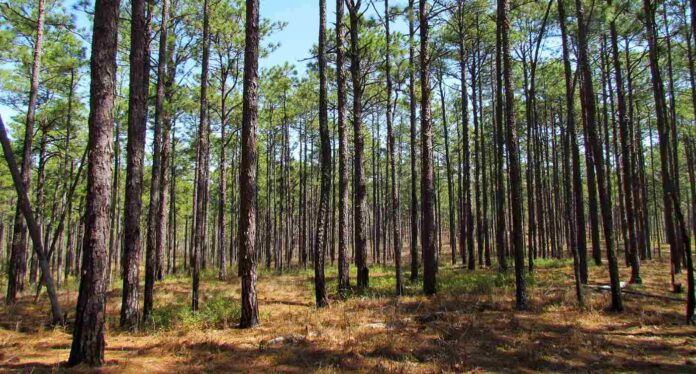
Ingka Group, the owners of the IKEA furniture chain, just bought 3,200 acres of forest in Florida that had been destroyed by a hurricane in order to restore it with longleaf pine.

Part of the retail giant’s commitment to carbon neutrality, Ingka Group has gradually accumulated more than 600,000 forested acres in the U.S., Europe, and New Zealand to offset the CO2 it releases during its entire value chain.

“The new forests will support increased biodiversity, help ensure sustainable timber production from responsibly managed forests, and recover land damaged by Hurricane Michael in October 2018,” Ingka Group stated.

“The afforestation business… is a long-term investment that consolidates our business while also positively impacting the climate through the absorption of CO2 during the forests’ growth.”

If Ingka can keep the forests healthy and alive, in 40 years they will pull carbon out of the air equal to a certain percentage of the carbon placed into the atmosphere by IKEA’s operations, while providing valuable habitat to vulnerable species like the red-cockaded woodpecker, gopher tortoise, pine snakes, and dusky gopher frogs.

MORE: Buy Some Wind Power With Your Furniture? IKEA is Now Selling Renewable Energy

GNN reported in 2021 that IKEA bought 11,000 acres in Georgia to stop it from being clear-cut and developed. In that instance Ingka teamed up with The Conservation Fund to create working forests that are harvested and regenerated sustainably to save the cost of managing them, while also being placed along important biodiversity corridors, or to stop habitat fragmentation.

CHECK OUT: IKEA is Ditching All of Their Single-Use Plastics Throughout Stores

Forest stewardship is just one way that the world’s largest furniture outlet is trying to become a carbon-neutral company. They recently announced they would begin buying used IKEA furniture from customers for resale, while electric vans and less carbon-emitting materials are used in both packaging and product.

SHARE This Story With Someone You’d Happily Build IKEA Furniture With…

Exercise Alters Brain Chemistry to Protect Aging Synapses, Study Finds

By anupam mahapatra

When elderly people stay active, their brains have more of a class of proteins that enhances the connections between neurons to maintain healthy cognition, a UC San Francisco study has found.

This protective impact was found even in people whose brains at autopsy were riddled with toxic proteins associated with Alzheimer’s and other neurodegenerative diseases.

“Our work is the first that uses human data to show that synaptic protein regulation is related to physical activity and may drive the beneficial cognitive outcomes we see,” said Kaitlin Casaletto, PhD, an assistant professor of neurology and lead author on the study.

The beneficial effects of physical activity on cognition have been shown in mice but have been much harder to demonstrate in people.

Casaletto, a neuropsychologist and member of the Weill Institute for Neurosciences, worked with William Honer, MD, a professor of psychiatry at the University of British Columbia and senior author of the study, to leverage data from the Memory and Aging Project at Rush University in Chicago. That project tracked the late-life physical activity of elderly participants, who also agreed to donate their brains when they died.

MORE: Your Body’s Own ‘Cannabis-Like’ Substance Can Reduce Chronic Inflammation During Exercise

“Maintaining the integrity of these connections between neurons may be vital to fending off dementia, since the synapse is really the site where cognition happens,” Casaletto said. “Physical activity—a readily available tool—may help boost this synaptic functioning.”

More Proteins Mean Better Nerve Signals

Honer and Casaletto found that elderly people who remained active had higher levels of proteins that facilitate the exchange of information between neurons. This result dovetailed with Honer’s earlier finding that people who had more of these proteins in their brains when they died were better able to maintain their cognition late in life.

To their surprise, Honer said, the researchers found that the effects ranged beyond the hippocampus, the brain’s seat of memory, to encompass other brain regions associated with cognitive function.

CHECK OUT: Weight Lifting Can Burn Fat Just Like Cardio: New Research About Strength Training vs Aerobics

“It may be that physical activity exerts a global sustaining effect, supporting and stimulating healthy function of proteins that facilitate synaptic transmission throughout the brain,” Honer said.

Synapses Safeguard Brains Showing Signs of Dementia

The brains of most older adults accumulate amyloid and tau, toxic proteins that are the hallmarks of Alzheimer’s disease pathology. Many scientists believe amyloid accumulates first, then tau, causing synapses and neurons to fall apart.

RELATED: There’s ‘No Link’ Between Exercise and Developing Arthritis in the Knee

Casaletto previously found that synaptic integrity, whether measured in the spinal fluid of living adults or the brain tissue of autopsied adults, appeared to dampen the relationship between amyloid and tau, and between tau and neurodegeneration.

“In older adults with higher levels of the proteins associated with synaptic integrity, this cascade of neurotoxicity that leads to Alzheimer’s disease appears to be attenuated,” she said of the study, which appears in the latest issue of Alzheimer’s & Dementia: The Journal of the Alzheimer’s Association. “Taken together, these two studies show the potential importance of maintaining synaptic health to support the brain against Alzheimer’s disease.”

Source: University of California

KEEP Those News Feeds Positive; Share the Good News…

“Imagine others complexly.” – John Green

Petra Bensted - CC License

Quote of the Day: “Imagine others complexly.” – John Green (Paper Towns)

Photo: by Petra Bensted, CC license on Flickr

With a new inspirational quote every day, atop the perfect photo—collected and archived on our Quotes page—why not bookmark GNN.org for a daily uplift?

Outdoor Cats Are Using $500 Starlink Satellite Dishes as Self-Heating Beds

@AaronTaylor/Twitter

A man using a $500 Starlink satellite dish to connect to the internet was surprised to find five cats curled up inside of it on a snowy day.

Attracted to the dish for its self-heating feature that melts off snow to prevent interference with the connection, the cats would pile in all day, until night when they would return to their heated cat house.

Aaron Taylor suspects that the wide metal bowl of the satellite dish absorbs and reflects heat from the sun, while the self-heating feature warms from below, creating a kind of sleeping bag effect which the kitties found irresistible.

He confirmed in a tweet that five cats “slows everything down,” while another Starlink user reported a similar occurrence when a raptor was photographed enjoying the heat on its talons.

With an aim of giving internet access to all corners of the world, the Starlink service is part of Elon Musk’s SpaceX company–it currently has 1,600 satellites flying around in space, with U.S. permission to launch far more, so that even those in rural places far from any grid can get online.

MORE: Cat Reunited With Family After It Got Stuck in an Armchair They’d Donated to a Thrift Store

With all of Musk’s intellect and resources, it seems he overlooked his technology’s use for felines.

RAISE a Paw For This Fun Winter Story; Share it on Social…

New Method for Treating Alzheimer’s Disease Developed by Researchers

Associate professor Evandro F. Fang. Photo- Thomas Olafsen, University of Oslo released
Associate professor Evandro F. Fang. Photo- Thomas Olafsen, University of Oslo

Researchers in Oslo have developed an artificial intelligence method to help them identify potential new medicines for Alzheimer’s. The new medicine seems to be more precise. No side effects were documented during tests with worms and mice.

One of the causes of Alzheimer’s disease is the degeneration and loss of nerve cells in the brain as we age. A cell is like a finely tuned machinery. The cell needs energy to perform its tasks. The energy comes from energy factories called mitochondria.

In young, healthy cells, old or damaged mitochondria are removed from the cell in a process called mitophagy. The research group found that when we get older, we have more broken mitochondria, and the cells will not be able to remove all of them anymore. An accumulation of broken mitochondria clogs the cell’s ordinary processes and eventually, the cell will die.

Cells need the energy generated by the mitochondria to clear this “garbage.” Just like a machine will stop working if it is not maintained, says associate professor Evandro F. Fang, the leader of the research group.

A new method for treating Alzheimer’s disease

A new potential method for treating the disease is described by Fang’s group in a new study. “We may be able to reduce or stop the progress of the disease with the patient. We can do this by increasing the cell’s ability to self-clean,” Fang says.

MORE: New Study of ‘MIND’ Diet Shows It May Improve Memory and Thinking Skills in Old Age

Because the clogging of the machinery is a part of the problem, the researchers had to find a way to boost the cleaning process. They looked into the use of so-called mitophagy inducers. The idea was to find a way to increase the level of waste management in the patient’s brain cells.

“We can compare this to hiring extra personnel to clear a cleaning backlog in a factory,” Fang explains.

Fang’s group described how It may be possible to find a way to stimulate the cells’ own self-cleansing system in 2019.

The treatment may improve other organs

The green colours show healthy mitochondria while the red ones are damaged mitochondria undergoing ‘clearance’ by mitophagy. Photo- Xu-xu Zhuang.

The reboot of mitophagy gives the patient several advantages: It will increase the clearance of brain cell garbage and the cleaning process will be more effective in itself. It may also increase the cleaning in other other organs, not only the brain.

“By turning up mitophagy, we may also be able to increase the quality of other organs, like their heart and muscles. A stronger body is important to reduce the effects of the disease,” Fang notes.

AI used to find possible candidates for a new medication

It takes a lot of time and effort to develop a new drug, and it is a very expensive process.

RELATED: Coffee and Tea Drinking May be Associated With Reduced Rates of Stroke and Dementia

The researchers wanted to find substances that may induce the cleaning process. They used AI to search for substances similar to known mitophagy inducers.

The computer program browsed through a large catalog of substances and identified two candidates, Rhapontigenin and Kaempferol. They used mice and nematodes, a type of worms, to document whether use of these substances on their nerve cells inhibited memory loss.

CHECK OUT: 4 Common Medicines Have Reversed Alzheimer’s in Mice

Fang and his colleagues have filed a patent on Rhapontigenin for the treatment of Alzheimer’s disease. They are now working on describing both how Rhapontigenin and Kaempferol may help us delay the progression of memory loss, and how it may help us reduce disease progression when it has occured.

In addition, they are also going to describe the in-depth molecular mechanisms that help Kaempferol and Rhapontigenin to induce mitophagy.

MORE: Keeping Active Can Reduce the Risk of Dementia, Scientists Find

The compounds have not been tested in humans yet, so much still remains to be done.

“We are now using AI to propose small, structural modifications to these candidate compounds. We want to make them safer and more efficient for treating Alzheimer’s disease,” Fang says.

The study is published in Nature Biomedical Engineering.

Source: University of Oslo

SHARE This Story of Hope on Social Media…
Dogs Can Differentiate Between Languages, Study Finds

dog in study headphones-released study-Enikő Kubinyi Eötvös Loránd University
Enikő Kubinyi, Eötvös Loránd University

Dog brains can detect speech and show different activity patterns to familiar and unfamiliar languages, according to a new brain imaging study. This is the first demonstration that a non-human brain can differentiate two languages.

“Some years ago, I moved from Mexico to Hungary to join the Neuroethology of Communication Lab at the Department of Ethology, Eötvös Loránd University for my postdoctoral research. My dog, Kun-kun, came with me.

“Before, I had only talked to him in Spanish. So I was wondering whether Kun-kun noticed that people in Budapest spoke a different language, Hungarian,” says Laura V. Cuaya, first author of the study. “We know that people, even preverbal human infants, notice the difference. But maybe dogs do not bother. After all, we never draw our dogs’ attention to how a specific language sounds. We designed a brain imaging study to find this out.

“Kun-kun and 17 other dogs were trained to lay motionless in a brain scanner, where we played them speech excerpts of The Little Prince in Spanish and Hungarian. All dogs had heard only one of the two languages from their owners, so this way, we could compare a highly familiar language to a completely unfamiliar one. We also played dogs scrambled versions of these excerpts, which sound completely unnatural, to test whether they detect the difference between speech and non-speech at all.”

When comparing brain responses to speech and non-speech, researchers found distinct activity patterns in dogs’ primary auditory cortex. This distinction was there independently from whether the stimuli originated from the familiar or the unfamiliar language. There was, however, no evidence that dog brains would have a neural preference for speech over non-speech.

RELATED: Why Do Dogs Tilt Their Heads? Scientists Look at What’s Going On in Their Minds

“Dog brains, like human brains, can distinguish between speech and non-speech. But the mechanism underlying this speech detection ability may be different from speech sensitivity in humans: whereas human brains are specially tuned to speech, dog brains may simply detect the naturalness of the sound,” explains Raúl Hernández-Pérez, coauthor of the study.

In addition to speech detection, dog brains could also distinguish between Spanish and Hungarian.

These language-specific activity patterns were found in another brain region, the secondary auditory cortex. Interestingly, the older the dog was, the better their brain distinguished between the familiar and the unfamiliar language. “Each language is characterized by a variety of auditory regularities. Our findings suggest that during their lives with humans, dogs pick up on the auditory regularities of the language they are exposed to,” says Hernández-Pérez.

MORE: Researchers Find the Key to Fixing Human Allergies to Dogs

“This study showed for the first time that a non-human brain can distinguish between two languages. It is exciting, because it reveals that the capacity to learn about the regularities of a language is not uniquely human. Still, we do not know whether this capacity is dogs’ specialty, or general among non-human species. Indeed, it is possible that the brain changes from the tens of thousand years that dogs have been living with humans have made them better language listeners, but this is not necessarily the case. Future studies will have to find this out,” say Attila Andics, senior author of the study.

“And if you wonder how Kun-kun is doing after moving to Budapest: He lives just as happily as he lived in Mexico City—he saw snow for the first time and he loves swimming in the Danube. We hope that he and his friends will continue to help us uncover the evolution of speech perception,” says Cuaya.

This study was published in NeuroImage

(WATCH the video for this story below.)

Source: Eötvös Loránd University

RAISE a Paw For Fascinating Studies and Share This One With Chums…

“There is a road from the eye to the heart that does not go through the intellect.” – G.K. Chesterton

Quote of the Day: “There is a road from the eye to the heart that does not go through the intellect.” – G.K. Chesterton

Photo: by Jonathan Cutrer, CC license on Flickr

With a new inspirational quote every day, atop the perfect photo—collected and archived on our Quotes page—why not bookmark GNN.org for a daily uplift?

High School Athletes Shovel Snow For Their Neighbors as Special Weightlifting Assignment for Football Team

Courtesy of Bethel Park HS football coach / YouTube
Courtesy of Bethel Park HS football coach

Students in Western Pennsylvania had a snow day on Monday, but instead of staying home or meeting for an indoor workout, these teens on a high school football team were instructed by their coach to get outside and help their neighbors.

Coach Brian DeLallo at Bethel Park High School near Pittsburgh, took to Twitter to announce that Monday’s weightlifting session in the gymnasium was cancelled—but he had an alternative assignment for the young men.

“Due to the expected severe weather, Monday’s weightlifting workout has been cancelled. Find an elderly or disabled neighbor and shovel their driveway… that’s our Monday workout.”

He also told the boys not to accept any money.

By mid-morning more than 27 of the athletes were texting photos to the coach, with some saying they were on their 6th driveway.

POPULARCouple Stuck on Highway for 21 Hours in Snowstorm Asks Bakery Truck to Give Away Their Supply to Hungry Drivers

One of the students even reported that his elderly neighbors were not accepting their non-payment requirement, insisting on a donation.

“What better workout than shoveling driveways,” said Braedon Del Duca, a junior on the team who went from house to house offering their services with teammate Colton Pfeuffer.

“It’s just nice getting out here, helping out the community, just helping out others that need help,” Pfeuffer told WTAE-TV News in Pittsburgh.

“We’d love to do it for everybody that we can,” echoed Del Duca.

WATCH the video from WTAE…

RESTORE Some Faith in Our Youth By Sharing This on Social Media…
Diego Rivera’s Dream of a ‘City of Arts’ in Mexico Turns to Reality 80 Years Later

Diego Rivera murals at the Palacio Nacional by Kgv88 - CC license
Museo Diego Rivera Anahuacalli

Diego Rivera created many masterpieces, but he envisioned a magnum opus that never came to be in his lifetime—a city of art, where Mexican practitioners of all ages and disciplines could come to study, showcase, and celebrate the art of their diverse cultural heritage.

Frida Kahlo’s husband and mentor, Rivera is famous for his use of Cubism in large public murals like The History of Mexico, The Allegory of California, and the Man at the Crossroads, commissioned by the Rockefellers—but it was after a long and storied career that he bought land in a suburb of Mexico City to built his utopian City of Art.

Diego Rivera murals at the Palacio Nacional by Kgv88, CC license

Now 65 years after his death, River’s Ciudad de las Artes has finally come to life.

A 64,000 square-foot complex south of the capital, the City of Arts centers around an Aztec temple-inspired museum built of volcanic rock from Xitle Volcano which erupted in 400 B.C.—in which Rivera’s personal collection of more than 50,000 pre-Hispanic artifacts are housed.

In 1941, back from a trip to San Francisco, Rivera undertook the construction of the Anahuacalli Museum, which sought to generate continuity between modern art and pre-Columbian aesthetics.

MORE: Meet the Sustainable Alternative to Concrete that Caught the Eye of Dior and Louis Vuitton

Opened in 1964 as the centerpiece of his imagined City of Arts, it is now finally surrounded by 13 additional structures which were built over six years at a cost of more than a million dollars, completing Rivera’s original scheme.

The spaces include galleries, performance spaces, workshops ,and new offices, all built by one of Mexico City’s most-renowned architecture firms, Taller de Arquitectura, “to bring together the artist of the school and the academy with the potter, with the weaver, with the basket maker, with the stonemason, with everything that is a pure expression of the people of Mexico”, according to the Rivera’s own words.

RELATED: Incredible Cave Paintings 8 Miles-Long Revealed Deep in Amazon Forest: The Sistine Chapel of Ancients

“The idea is that, as in pre-Columbian cities, the buildings gradually connect and allow the relationship between the parts. The buildings are built of volcanic stone walls… [and] lattices; light atmospheres that already existed in Diego’s main building,” Mauricio Rocha, the chief architect behind the project, told El País. “In addition, with the new technologies that we use, it seems that the buildings sail in a kind of sea of ​​lava.”

The openings of the new areas, including the experimental space The Piedra, took place in October last year to coincide with the Day of the Dead festival, and hosted an earth festival that focused on pottery, and other outdoor installations and concerts.

PASS on the Culture—Share This Story From Mexico City…

Mysterious Purple Coating Found on Mars Rocks in Every Direction

purple coating mars perseverence released NASA, JPL-CALTECH, MSSS
 NASA; JPL-CALTECH, MSSS

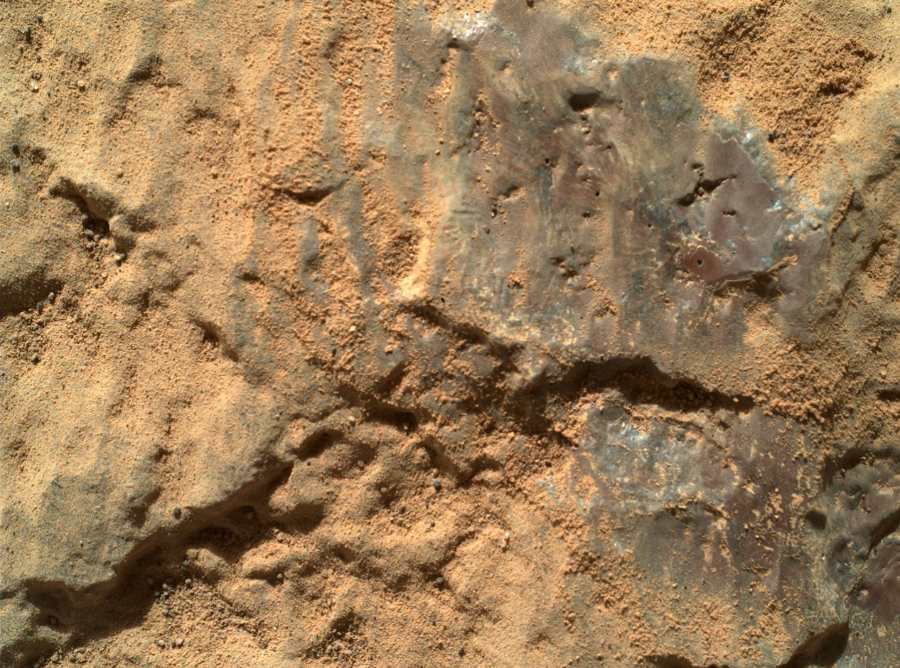
A presentation on data gathered from the Perseverance rover is trying to explain the ubiquitous coatings of unknown, dark grey, almost purple material on Martian rocks.

Having been observed everywhere the rover has trundled, more details on the coating’s composition could come with clues about Mars’ past, including whether it hosted microbial life.

On Earth, rock coatings, called varnishes, tend to be excellent places to find unusual microbes like cyanobacteria. The nooks and crannies of the surface of a stone are havens if you’re a microbe, and often offer moisture and shelter. Some species have even been known to metabolize minerals like manganese on the surface of rocks in order to create a coating to protect themselves from UV-rich sunlight.

A study in South Tryol, Italy, found 55 species of bacteria living under rock varnishes in five sample locations, all of which were rich in iron and manganese.

On Mars, the Perseverance rover’s science kit has researchers believing the near-purple coating found everywhere in Jezero Crater is rich in iron.

MORE: Watch Our Biggest Moments From Mars in 2021: Riding on the Shoulders of NASA’s Perseverance Rover

The rover’s laser-breakdown-induced spectroscopy tool blasts rock with laser beams until bits of it explode, and then measures the elemental composition of the gas created.

Purple coating in the top right of the frame/NASA; JPL-CALTECH,

Microphones can also measure the “clack” sound of the rocks when they break, with softer sounds indicating softer rock.

While this tool didn’t detect any manganese in the Jezero samples, other samples taken in Gale Crater with a similar tool aboard the Curiosity rover, did; findings which were also published as an investigation into “rock coatings.”

The samples which Perseverance took auditorily pointed to the coating being separate from the rocks below, and the spectroscopy found iron-oxides and hydrogen; in other words, rust.

The presence of hydrogen would suggest that water played a role in the coating’s creation, but the rover is currently investigating old solidified magma and isn’t really anywhere near the lake sediments of Jezero.

RELATED: NASA Launches James Webb Telescope to See First Galaxies and Distant Worlds With its Giant Sunshield

It’s a mystery that requires more investigation, and maybe before the end of the mission Perseverance will come across varnishes with both iron and manganese like the Italian ones.

But for now the rover has been caching samples in tubes for its future return to Earth. Scientists are hoping the purple coatings can survive the journey intact enough to be studied in a proper laboratory.

SHARE This Far Out Story With All Your Pals…

See 1,000 Glorious Fin Whales Feeding Together: Share Their Comeback From Near Extinction

Twitter/@conorryan
Twitter/@whale_nerd

Sailors and scientists aboard four krill fishing boats and a research vessel were treated to the majestic sight of 1,000 fin whales congregating near Antarctica to feed.

Second only in size to the blue whale, fin whales were once one of the chief targets of whaling vessels—and were driven to near extinction by the practice; they haven’t been seen in these numbers for over a century.

It may be, estimates researcher Conor Ryan, the largest congregation of fin whales ever recorded, and the sea was so dense that day with the 81-foot (27-meter) long slender baleens, their breaching created what Phillip Hoare described as a “misty forest of spouts, as tall as pine trees.”

Ryan, a zoologist aboard the National Geographic Endurance, filmed the whales going about their business as the boat passed around 375 miles north of the Antarctic Peninsula, near the South Orkney Islands.

Hoare, a whale expert reporting for the Guardian, states that science has discovered fin whales can live 140 years, meaning they could only just now be recovering from the whaling industry of the 1800s, and that gatherings such as these could become a lot more commonplace.

RELATED: Incredible Video Shows a Husband and Wife’s Amazing Encounter With a Group of Humpback Whales

The winter months of Europe and North America are the summer months down in the Southern Ocean, which means as the sea ice recedes, the waters become flush with food for many species of whale.

MORE: A Real Moby Dick: Mythic White Sperm Whale Captured on Film Near Jamaica

It’s already known that humpbacks and blue whales also gather in the summer near Antarctica as part of their long global migrations.

The fin whale is currently classified as Vulnerable on the IUCN Red List, but also their populations worldwide are increasing, and could have passed 100,000 individuals.

(WATCH the whales in the video below.)

SHARE This Hopeful Story On Your Social Media Feeds…

“Once you realize how valuable you are and how much you have going for you, the smiles will return, the sun will break out, the music will play.” – Og Mandino

Quote of the Day: “Once you realize how valuable you are and how much you have going for you, the smiles will return, the sun will break out, the music will play.” – Og Mandino

Photo: by Michael Kroul

With a new inspirational quote every day, atop the perfect photo—collected and archived on our Quotes page—why not bookmark GNN.org for a daily uplift?

Drone Helps Save the Life of a 71-Year-old Man Who Has Cardiac Arrest While Shoveling Snow

Delivering an AED defibrillator – Everdrone

A 71-year-old Swedish man “can’t put into words” how thankful he is for the new technology that quickly flew him into the small category of only ten percent of people who survive sudden cardiac arrest.

The man has now made a speedy recovery, after the speedy delivery of a defibrillator—via autonomous drone.

The company behind the drone pilot project says it’s the first time in medical history, a drone has played a crucial part in saving a life during a cardiac arrest.

He was in his driveway shoveling snow in the Swedish city of Trollhättan in December, when the attack occurred.

Normally, you have about ten minutes to get help in such a situation and ambulance response times are often too long to save the life of the patient.

Luckily, a telephone call was immediately placed requesting emergency services and he lived in a region that had partnered with Everdrone’s innovative life-saving program called EMADE (Emergency Medical Aerial Delivery service).

RELATED: Invading Rats Were Finally Eradicated on 2 Galapagos Islands Thanks to Drone Partnership

Delivering an AED defibrillator – Everdrone

EMADE drones deliver an automated external defibrillator (AED) to the scene—and the amount of time from the alarm until the AED was safely delivered at the doorstep of the incident address was just over three minutes.

Even more fortuitous, a doctor happened to be driving by and stopped to see if he could help.

“I was on my way to work at the local hospital when I looked out the car window and saw a man collapsed in his driveway and I immediately rushed to help”, says Dr. Mustafa Ali. “The man had no pulse, so I started doing CPR while asking another bystander to call 112 (the Swedish emergency number). Just minutes later, I saw something flying above my head. It was a drone with a defibrillator!”

WATCH: Filipino Inventor Flies His Hoverboard For 2 Miles, Setting World Record For Longest Flight

After the initial treatment on site, the ambulance arrived, the patient was rushed to the hospital.

“This is a truly revolutionary technology that needs to be implemented all over,” said the patient who now has made a full recovery and returned home. “If it wasn’t for the drone I probably wouldn’t be here.”

The drone carries an ultralight Schiller FRED easyport defibrillator, which can be used by any bystander.

The drone delivery system in Region Västra Götaland was developed and is operated by Everdrone, a world-leading company in autonomous drone solutions, in close collaboration with Center for Resuscitation Science at Karolinska Institutet and SOS Alarm.

MORE: Uganda Joins African Nations Using Drones to Deliver Life Saving Medical Supplies to More Than 22 Million People

“This is an excellent real-world example of how Everdrone’s cutting-edge drone technology, fully integrated with emergency dispatch, can minimize the time for access to life-saving AED equipment”, says Mats Sällström, CEO of Everdrone.

275,000 patients in Europe and 350,000 in the US, suffer from OHCA annually. Approximately 70% of OHCAs occur in private homes without AEDs on site. The company says the chance of survival decreases by 7–10% with each minute following the collapse—and consequently, the current survival rate among OHCA patients is merely 10%.

CHECK OUTAfter Massive Wildfires, DroneSeed is Replanting Forests 6x Faster By Using Special Drones

Everdrone’s service can currently reach 200,000 residents in Sweden and is expected to expand to more locations in Europe during 2022.

FLY This Lucky News to Friends By Sharing on Social Media…