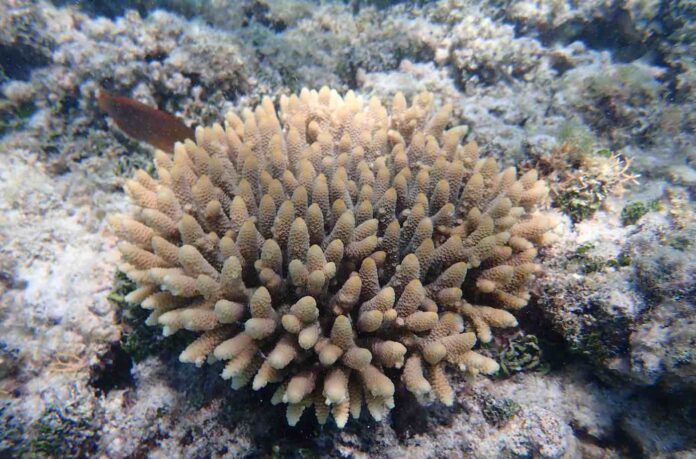
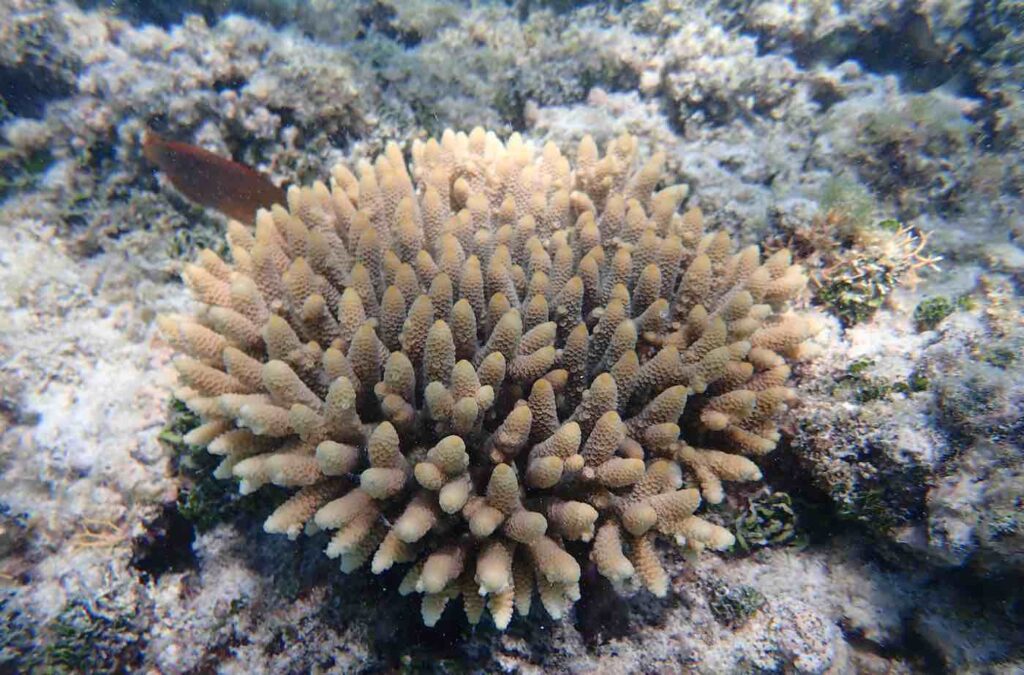
Acropora coral larval restoration on Great Barrier Reef – Peter Harrison / Southern Cross University
The first Coral IVF babies on the Great Barrier Reef have produced the next generation—the first time that a breeding population has been established on the Great Barrier Reef using the innovative process.
Acropora coral larval restoration on Great Barrier Reef – Peter Harrison / Southern Cross University
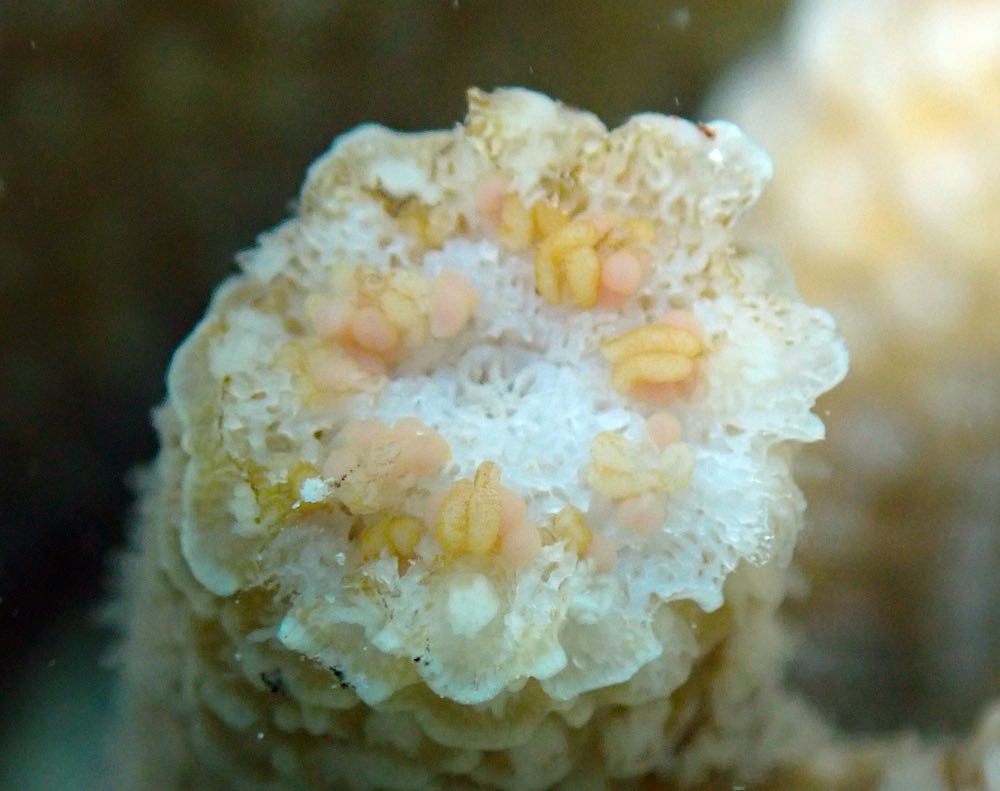
Researchers have found that 22 large coral colonies born through the first Coral IVF trial on the Reef in 2016 have grown to maturity, and were filled with eggs and sperm ready to spawn after the recent full moon mass coral spawning event.
Great Barrier Reef Foundation Managing Director Anna Marsden said, “We couldn’t be more excited to see that these coral babies have grown from microscopic larvae to the size of dinner plates, having not only survived a bleaching event but are now reproducing themselves – helping to produce larvae that can restore a degraded reef.”
From the larvae deployed five years ago, these coral babies have grown from microscopic larvae to the size of dinner plates. Many of the dozens of other smaller colonies are not quite large enough to reproduce but should be breeding next year.
After discovering the potential of this game-changing technique, the Great Barrier Reef Foundation brought together its partners and the public back in 2016 “to give nature a helping hand” near Heron Island.
Lead Researcher and Southern Cross University Distinguished Professor Peter Harrison said, “Coral IVF is the first project of its kind to re-establish coral on damaged reefs by collecting millions of coral eggs and sperm during the spawning season, growing them into baby corals and releasing them directly onto degraded areas of the Reef.”
“This is a thrilling result to see these colonies we settled during the first small-scale pilot study grow over five years and become sexually reproductive.
Acropora spathulata coral, now five years old, with mature pink eggs and sperm packets ready to spawn – Christina Langley / Southern Cross University
“The ultimate aim of this process is to produce new breeding populations of corals in areas of the Reef that no longer have enough live corals present due to being damaged by the effects of climate change,” Prof. Harrison said.
“The larvae generated from these spawning corals have dispersed within the Heron Island lagoon and may settle on patches of reef nearby, helping to further restore other reef patches that have been impacted by climate change.
“This has given me and the rest of the team renewed enthusiasm as we research additional techniques on Lizard Island, through the Reef Restoration and Adaptation Program in collaboration with CSIRO, QUT and with support from Australian Institute of Marine Science, that will enable us to scale up and optimize this technique.”
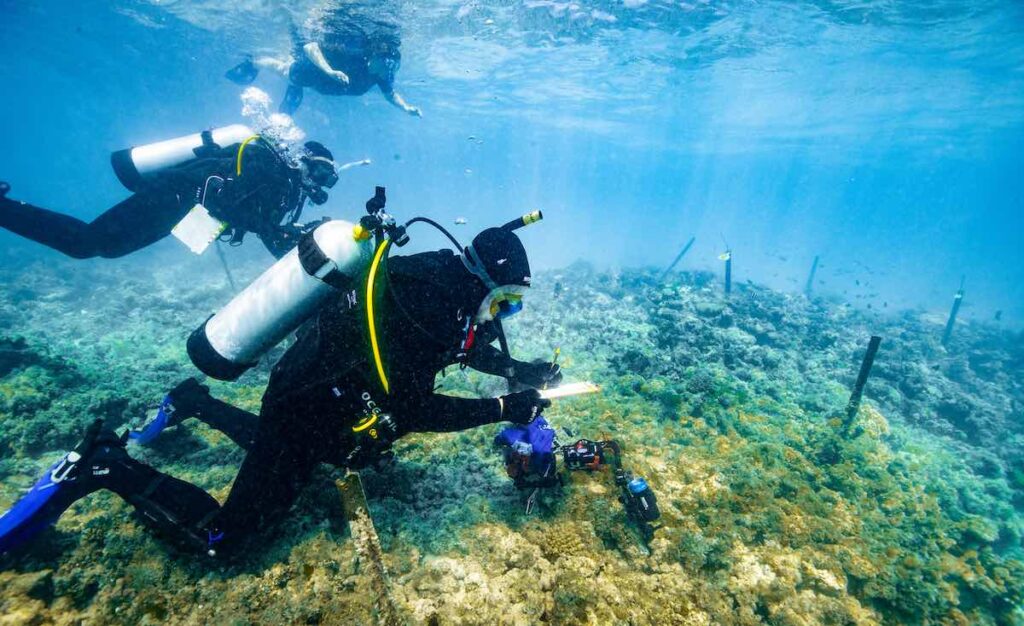
Professor Peter Harrison inspecting coral IVF colonies at Heron Island lagoon, December 2020 – Southern Cross University
The Reef Restoration and Adaptation Program is the world’s largest and most ambitious effort to develop, test and deploy at-scale protection, restoration and adaptation interventions to ensure that the Great Barrier Reef and coral reefs globally can resist, adapt to, and recover from the impacts of climate change.
“Saving the Reef is a huge task,” says Marsden. “But having proof that this innovative, cutting-edge science works gives us hope.”
SPAWN Some Good News on Social Media By Sharing This With Ocean Lovers…
Quote of the Day: “When things go wrong, they usually go on getting worse for some time; but when things start going right they often go get better and better.” – C.S. Lewis, The Horse and His Boy
Photo: by Dawid Zawila
With a new inspirational quote every day, atop the perfect photo—collected and archived on our Quotes page—why not bookmark GNN.org for a daily uplift?
Three years after launching, and decades after its inception, the Parker Solar Probe passed into the solar atmosphere, arriving closer than any craft ever before to the surface of the Sun.
Betmari, CC license
While claims that the probe “touched the sun” are a bit misleading, the reality is that entering the Sun’s atmosphere is a truly remarkable achievement, and almost immediately provided data on solar magnetism and solar winds which we could never have collected from Earth.
Back on the 28th of April, Parker passed what is known as the Alfvén critical boundary. The sun has no actual surface, but the roiling material inside is kept in check by a magnetic field and gravity—but heat and pressure can push some material further.
It is at this moment that the ejected material is classified as the “solar wind”: highly energetic solar material that leaves the Sun in a zig-zag pattern, and moves so fast that it passes the boundary and arrives at Earth in the form of radiation.
Scientists had no idea where the Alfvén critical boundary was, and as the Parker Solar Probe continued to orbit the Sun, it’s eighth revolution saw it pass a point of around 8.1 million miles from the surface where the magnetic and particle data changed, informing scientists it had passed through the boundary and was within the Sun’s atmosphere, also known as the corona.
“We were fully expecting that, sooner or later, we would encounter the corona for at least a short duration of time,” said Justin Kasper, lead author on a new paper about the milestone published in Physical Review Letters.
After the initial entry, Parker passed in and out of the boundary several times, proving that rather than a smooth sphere, it’s wrinkled and bent according to pressures coming off of the Sun itself. Understanding how events on the surface impact this boundary can help scientists better understand the solar wind and how it affects the solar system.
A particular moment in orbit brought Parker to within 6.5 million miles from the surface, where it captured images of a pseudostreamer, massive columnar structures that rise above the Sun’s surface, and which make up the dramatic tentacle shapes coming off the Sun seen during a total solar eclipse.
Strangely, the pseudostreamer was like a storm system, in that the edges were extremely active, but in the center, conditions quieted.
At this point it bears mentioning that in order to avoid being melted from the intense heat thus far left out of the discussion, Parker has to travel at 320,000 miles per hour, which makes it the fastest thing build by humans. Its heat shield, behind which the instruments are protected, staves off heat up to 2,500°F (1,400°C).
In 2019 when Parker first entered the edge of the Alfvén critical boundary environment, it discovered the origin of the zig-zag pattern of the solar wind. On its 6th orbiting of the Sun, collected data showed the zig-zags, known as switchbacks, occurring in patches and have a higher percentage of helium—known to come from the surface of the sun, the photosphere.
The switchbacks’ origins were further narrowed when the scientists found the patches aligned with magnetic funnels that emerge from the photosphere called supergranules. These supergranules could be the genesis of the solar wind altogether. A fascinating discovery.
Over the next few years, Parker will continually dart in and out of the corona taking readings, and one point will see it reach 3.8 million miles from the surface.
“I’m excited to see what Parker finds as it repeatedly passes through the corona in the years to come,” said Nicola Fox, division director for the Heliophysics Division at NASA Headquarters. “The opportunity for new discoveries is boundless.”
SEND This Breakthrough From Space to Science Fans on Social Media…
A biocompatible, antimicrobial adhesive for corneal repair and grafting could replace sutures and conventional adhesives that have bad side effects.
An assistant professor of bioengineering at the University of California-Riverside has developed an adhesive that rapidly integrates corneal cells to speed healing and reduce the chances of secondary infection.
The breakthrough by Iman Noshadi also reduces complications that increase the risk, cost, and healing time of eye injuries and corneal transplants.
Of the 2.4 million eye injuries annually in the United States, 600,000 are open globe corneal tears, leading to blindness in some cases. There are also around 40,000 corneal grafting procedures performed each year.
The current standards of care for corneal repair are sutures and cyanoacrylate glue, both of which are associated with complications and costs, during and after the procedure.
Sutures, used for larger tears and grafting, can cause astigmatism, vascularization, and infections. Cyanoacrylate glue, which is not FDA approved, can be used only for tiny perforations, has low biocompatibility, cytotoxicity, opacity, and causes infections and cataract – all needing additional care and cost.
“There is no FDA-approved material platform to replace the present techniques for corneal repair effectively,” said Noshadi. “Our technology addresses all these issues, resulting in reduced operative and post-operative costs.”
The UC Riverside product should solve these secondary problems with its biocompatibility, high adhesion, flexibility, and high strength. It will not accidentally loosen or fall off and its antimicrobial properties will help prevent infections. Because the adhesive is transparent, it will help restore vision more quickly, as well.
The new material is a biodegradable polymer that combines a choline-based ionic liquid—an organic salt with high water solubility and electrochemical properties— with polyethylene glycol, a biocompatible compound widely used in medical applications. These adhesives can adhere quickly and strongly to the tissues. Its biocompatible nature allows long-term regeneration of corneal cells.
“Our gel will result in a safer procedure that will improve the patient’s quality of life with better health outcomes by preventing visual acuity loss or blindness. The simpler procedure will save time, reduce operative costs, and eliminate corrective surgery and need for extensive post-operative care,” said Noshadi, who, with a $250,000 grant from the National Science Foundation, hopes to have the product on the market by 2026.
With the funding, Noshadi’s research group will test the material’s tissue adhesion, biocompatibility, flexibility, transparency, and antibacterial properties. Then, the researchers will test its performance on corneal tears and study its effects on corneal cells, as well as the migration of corneal cells into the bioadhesive over time.
When the UC Riverside corneal adhesive is approved for the market, Noshadi expects that corneal transplants will be more affordable, less dangerous, easier to recover from, and more available to people who need them.
LET Your Friends SEE This Great Potential –SHARE on Social Media…
Quote of the Day: “It’s against the rules of humanity to believe there is nothing we can do.” – Melina Marchetta
Photo: by Project Morpheus, CC license
With a new inspirational quote every day, atop the perfect photo—collected and archived on our Quotes page—why not bookmark GNN.org for a daily uplift?
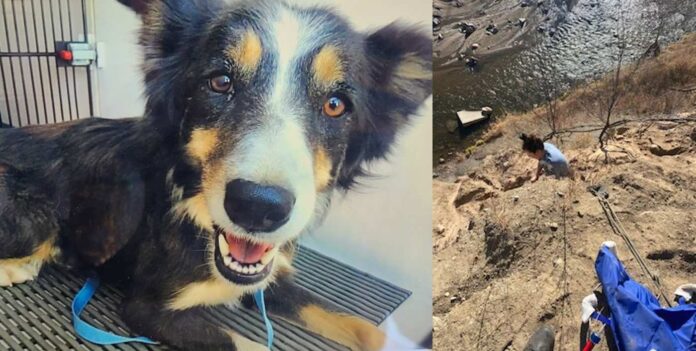
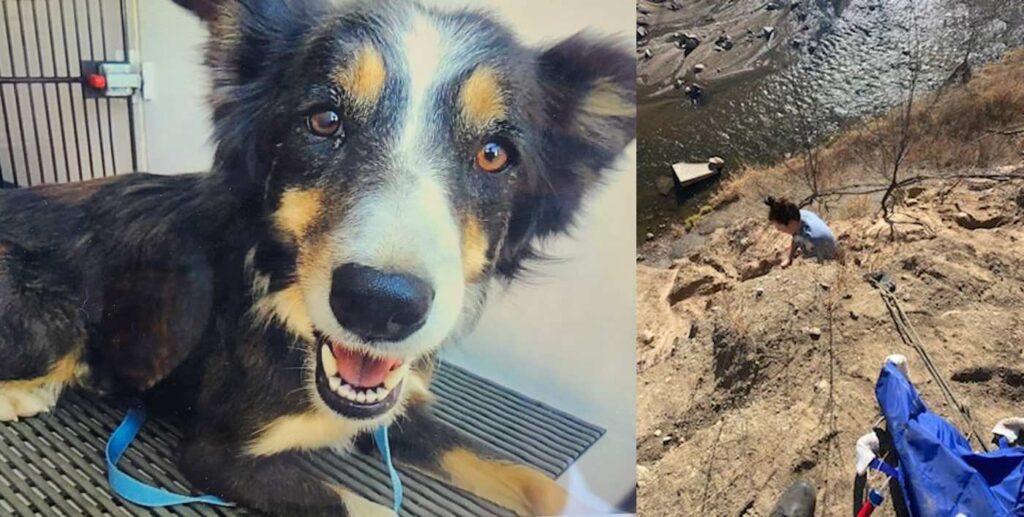
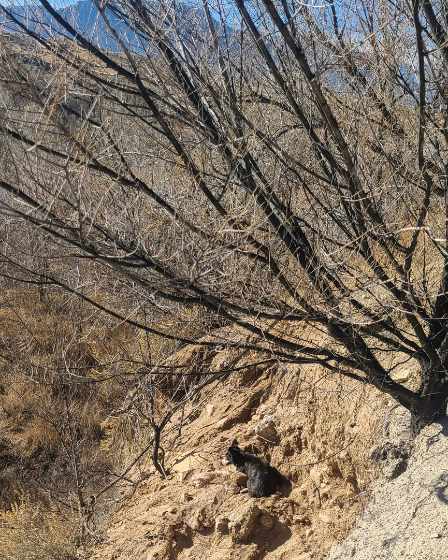
Jessie Lee, a dog that had gone missing for two weeks, was recently discovered stranded on a precarious perch in the Pike’s Peak region of Colorado. While her owners diligently searched for her every day, they never could have imagined their lost pet would ever wind up in such a scary spot.
Animal Law Enforcement (ALE, a division of Humane Society of the Pikes Peak Region) was first alerted to the pooch’s presence by a hiker who’d spotted her on a ledge about 50 yards up the cliffside bordering Fountain Creek.
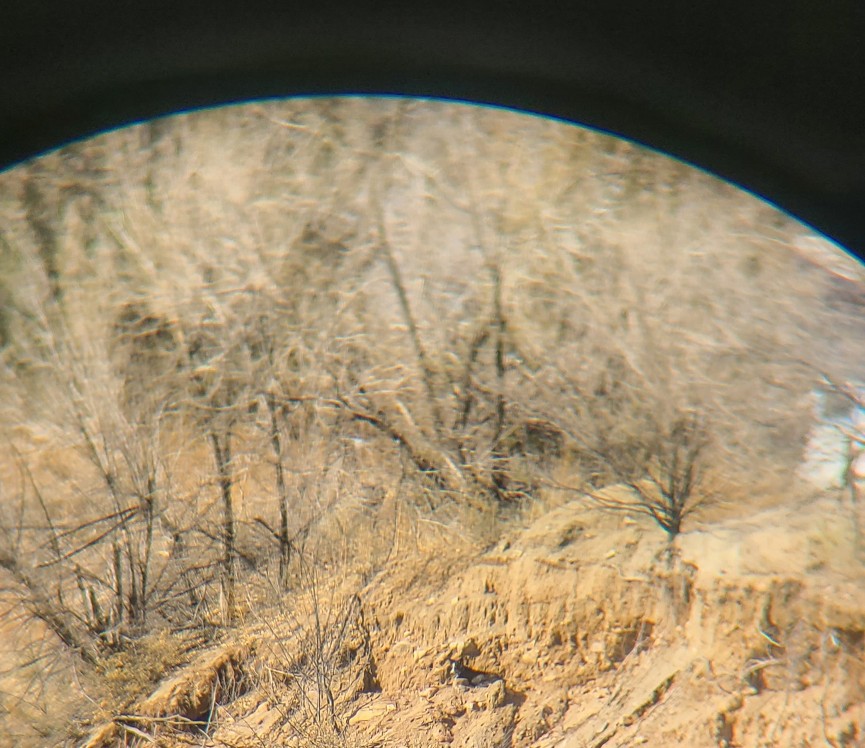
Two officers, Johnson and Barker—how perfect is that name?—were quickly dispatched to the locale. Using binoculars, the pair pinpointed Jessie Lee’s location and launched a daring rescue.
“Our law enforcement team went out there…to assess the situation [and] make sure it was even a dog the person was seeing on the cliff because they were looking from a distance… We wanted to make sure we could come back and get the tools that were necessary to rescue the dog,” HSPPR Public Relations and Content Specialist Cody Costra told KOAA News 5.
After determining it was indeed a doggo at risk, the officers were able to borrow climbing equipment from a local resident. To implement the retrieval process, Officer Barker first secured a rope to a sturdy wooden fencepost atop the cliff, then rappelled down the side of the ravine, getting as close to Jessie Lee as she dared.
While it was clear from Jessie Lee’s wagging tail the pooped pup was certainly glad someone had finally come for her, with the ground crumbling beneath her paws as she inched toward Officer Barker’s outstretched arms, it was also apparent there wasn’t any solid footing to be had.
Using a catch-pole lowered to her by Officer Johnson, Officer Barker was luckily able to secure the pup around her neck and shoulders.
“This allowed Officer Barker to slowly pull the dog closer without the risk of losing her if she fell,” HSPPR reported. “Once the pup was finally in the arms of Officer Barker, Officer Johnson lowered a secondary rope which was securely tied into a makeshift harness for the dog. Officer Johnson quickly pulled up the dog and Officer Barker shortly after.”
With a “Woof!” of relief, the mission was declared a resounding success.
Jessie Lee was quickly whisked back to HSPPR, where she was easily identified by her microchip and name tag.
HSPPR immediately notified her relieved and grateful pet parents who showed up bright and early the next day to take their cherished fur baby home, bringing this episode of Animal Rescue: The Extreme Edition to its pawsomely happy conclusion.
RESCUE the Great Coloradan News; Share This Article…
Following the recent flurry of tornados in Mayfield, Kentucky, it was “all hands to the grills,” as non-profits and individuals alike fired up their BBQs to feed people.
“I just figured I’d do what I can do,” said Jim Finch, a man who for no other reason than that people were in need, loaded his truck with food, water, and a barbeque grill, and drove to Mayfield to serve others.
The tornadoes destroyed thousands of buildings, knocked out power, and thereby refrigeration and restaurant services in the town.
A local reporter found Finch on a particularly devastated roadside, having driven half an hour to cook food for residents.
This was the scene right before Jim Finch, the man in the video, set up his grill. There was later Church service in that parking lot across from him. pic.twitter.com/RQBvb2y1Ao
“I know they don’t have no electricity, so that means they don’t have no electric, no restaurants, no running water, so I just figured I’d do what I can do,” said Finch. “Show up with some food and some water.”
Pitmasters to the rescue
Perhaps reflecting the societal value of barbeque in Kentucky, Finch wasn’t actually the only relief-pitmaster to arrive in Mayfield to help. Operation BBQ Relief offers free hot meals on a first-come, first-serve basis to those impacted by these disasters.
Operation BBQ Relief/Ole Hickory Pits
Multiple times per year, Operation BBQ Relief loads up 18-wheelers packed with commercial BBQ smokers by Ole Hickory pits and deploys to disaster areas to bypass the need for gas and electricity to serve up massive amounts of hot meals cooked by award-winning barbecue chefs.
Operation BBQ Relief are in Mayfield now, but they’ve previously assisted with Hurricane Ida in Louisiana and Missouri when they served a quarter-million meals.
They were at the unprecedented freeze in Houston last winter, and have on multiple occasions set up to feed frontline healthcare workers during the early days of the pandemic.
One of the first steps to hosting a barbecue is inviting your friends and family.
It’s a tradition borne of togetherness and generosity, of making sure people have enough to eat, and it’s no surprise perhaps that it’s a kneejerk reaction for those witnessing a disaster befall their fellow Americans.
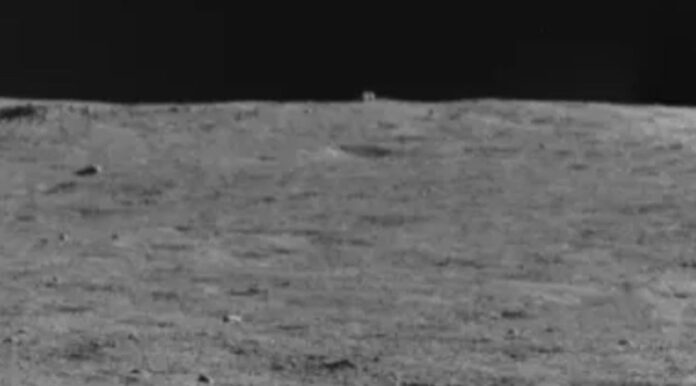
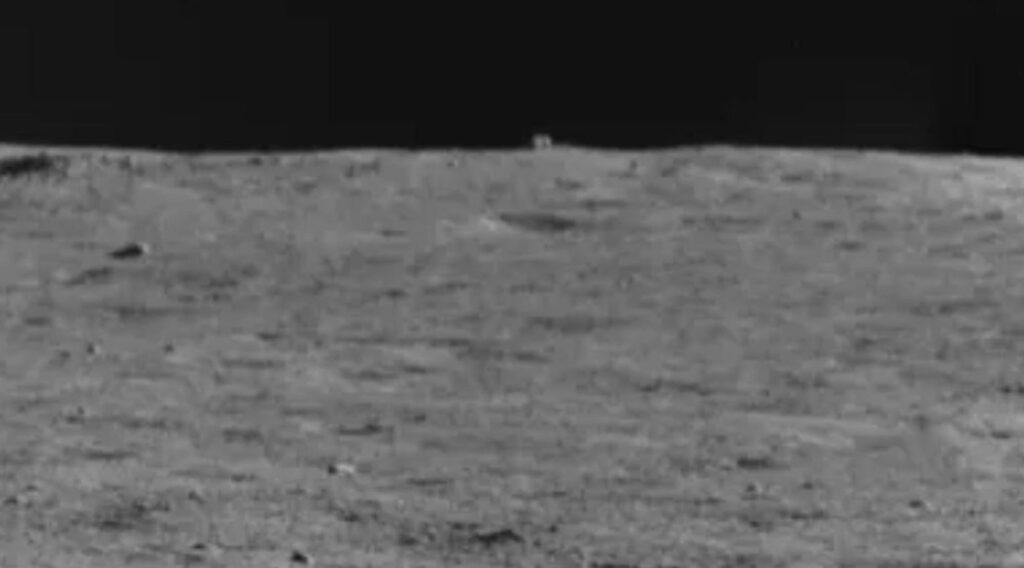
A lunar rover has spotted a strange cube-shaped object and will alter its official course to check it out, needing 2-3 months to arrive.
Official observations suggest it could be rock thrust upward from the impact of an asteroid that clearly landed next to it, or a technological relic from previous human exploration, or hopefully, perhaps something that can’t be explained.
The infrequency with which we visit outer space, the extreme requirements of such travel, and the inspiration that are required to do so, make everything about it more intense.
The joys are more joyous, the achievements are more celebrated, and the mysteries are more intriguing.
The Chinese Yutu 2 lunar rover spotted a bizarre shape in its cameras while traversing a C-shape enclosure made up of ferocious impact craters on the moon’s far side.
“Under the dark and deep sky, a circle of winding mountains stood on the extension line of the sky and the moon. On the side, people can’t help but admire the extraordinary craftsmanship of the universe,” wrote Our Space, a Chinese-language blog affiliated with the national space agency.
“The drivers zoomed in on the pictures, slowly admiring them one by one. Suddenly, an obtrusive cube on the northern skyline attracted their attention. This object pierced through the winding of the skyline, like a “mysterious hut.”
Right angles are unusual in nature, usually marking out something artificial if we see them through the gloaming of a forest. On the moon however, there’s not a lot of room for possibilities for a cube.
After some days, the camera produced an image to share with the world of their “mystery hut.” The blog post suggested it could be evidence of previous Moon missions, but noted the presence of a small impact crater next to the cube, which could have led to the upthrusting of rocks following the impact.
Popular Science magazine said it could simply be pixilation of the image, as it was taken from far away.
Yutu 2 landed with Chang’e-4, the first two spacecraft ever to land on the Moon’s far side. They’ve virtually had the place to themselves since they arrived in 2019.
They spotted the cube at the end of October, which means we should be getting some closer images and more details soon as the solar-powered rover draws nearer.
Yale University researchers have developed a novel vaccine that in guinea pigs offers protection against infection by the bacterium that causes Lyme disease and may also combat other tick-borne diseases.
Instead of triggering an immune response against a particular pathogen, the new vaccine prompts a quick response in the skin to components of tick saliva, limiting the amount of time that ticks have to feed upon and infect the host, the study shows.
The vaccine is delivered by the same mRNA technology that has proved so effective against COVID-19.
In the United States, at least 40,000 cases of Lyme disease are reported annually, but the actual numbers of infections could be 10 times greater, researchers said. In addition, other tick-borne diseases have also spread in many areas of the U.S.
“There are multiple tick-borne diseases, and this approach potentially offers more broad-based protection than a vaccine that targets a specific pathogen,” said senior author Erol Fikrig, the Waldemar Von Zedtwitz Professor of Medicine (infectious Diseases) at Yale and professor of epidemiology (microbial diseases) and of microbial pathogenesis. “It could also be used in conjunction with more traditional, pathogen-based vaccines to increase their efficacy.”
The saliva of the black-legged tick Ixodes scapularis, which transmits the Lyme disease pathogen Borrelia burgdorferi, contains many proteins. The investigators focused on 19 separate proteins.
In search for the basis of the vaccine, the Yale researchers, in collaboration with a team led by Drew Weissman at the University of Pennsylvania, analyzed bits of mRNA that produce all 19 of the saliva proteins. A similar strategy was used in vaccines that effectively combat the SARS-Cov-2 virus. And in a series of experiments, they tested the vaccine on guinea pigs, which can be infected with the Lyme disease agent and have also been used as a model to study tick resistance.
Unlike non-immunized guinea pigs, vaccinated animals exposed to infected ticks quickly developed redness at the tick bite site. And as long as ticks were removed when redness appeared, none of the immunized animals developed Lyme disease. In contrast, about half of the control group became infected with B. burgdorferi after ticks were removed. When a single infected tick was attached to immunized guinea pigs and not removed, none of them was infected while 60% of control animals did become infected. If three ticks remained attached to the guinea pigs, however, protection waned even in immunized animals.
In addition, ticks attached to immunized animals were unable to feed aggressively and dislodged more quickly than those on guinea pigs in the control group.
“The vaccine enhances the ability to recognize a tick bite, partially turning a tick bite into a mosquito bite,” Fikrig said of the research, published in Science Translational Medicine. “When you feel a mosquito bite, you swat it. With the vaccine, there is redness and likely an itch so you can recognize that you have been bitten and can pull the tick off quickly, before it has the ability to transmit B. burgdorferi.”
Researchers did note a caveat in their findings: In similar experiments, mice, which are unable to acquire natural tick resistance after infection, were not protected against Lyme disease after vaccination. In fact, in contrast to guinea pigs, mice are a natural reservoir for I. scapularis ticks, suggesting that ticks may have evolved to develop ways to specifically feed repeatedly on mice. Another possibility may be that guinea pig skin, like human skin, is more layered than the skin of mice.
Fikrig said more study is needed to discover ways that proteins in saliva can prevent infection. Ultimately, human trials would need to be conducted to assess its efficacy in people.
Others are also researching treatments for Lyme disease, including the U.S. Department of Defense, which is funding research into development of a vaccine.
Quote of the Day: “Being afraid to take chances is scarier than actually doing things that challenge you.” – Simone Elkeles
Photo: by Samantha Sophia
With a new inspirational quote every day, atop the perfect photo—collected and archived on our Quotes page—why not bookmark GNN.org for a daily uplift?
A fountain-of-youth pill could be on the horizon after scientists dramatically extended longevity in mice.
Injecting elderly rodents with a grape seed extract increased their remaining time by more than sixty percent.
It also boosted overall lifespan by nine percent—equivalent to more than a decade in a human.
Corresponding author Dr Yu Sun, of the Chinese Academy of Sciences in Shanghai, said, “The plant chemical has high potential as a clinical intervention to delay, alleviate, or prevent illnesses.”
The flavonoid known as PCC1 flushes out ‘zombie’ or ‘senescent’ cells that have stopped dividing. They accumulate naturally as we get older—and release chemicals that cause inflammation.
Dr Sun explained, “Ageing-associated functional decline of organs and increased risk for chronic disease is driven in part by their accumulation.
“Here we show PCC1, a component of grape seed extract, increases the healthspan and lifespan of mice through its action on senescent cells.”
The study screened a panel of natural compounds in a model of cultured human prostate cells. It found PCC1 selectively killed senescent cells—leaving healthy ones alone.
In several mouse models of disease, including exposure to radiation, numbers were slashed and health boosted.
The therapy also improved the effect of chemotherapy in those whose immunity had been compromised.
What’s more, injections of PCC1 were administered to 91 male and female mice aged 24 to 27 months. In human years, it would be in the range of 75 to 90 year-olds, explained the researchers.
The regime appears to have been well tolerated. A safe dose needs to be established before further clinical trials can begin.
Dr Sun said, “Considerable progress has been made over recent years to develop specific agents to treat individual age-related conditions such as type 2 diabetes, osteoporosis, fragility, and vascular dysfunction.
“However, the combined effect of these drugs in controlling morbidity and mortality has been modest.
“These diseases tend to occur in synchrony as multimorbidities—with prevalence increasing exponentially after 70 years of age.”
The findings offer hope for prolonging health and lifespan —and treating age-related conditions with a therapy derived from natural sources.
Dr Sun added of the study, published in Nature Metabolism, “The potential anti-ageing effects of PCC1 provide good support for further translational and clinical development with the overall aim of achieving a longer and healthier life.”
DON’T Let This Hopeful Research Age; Share It Now…
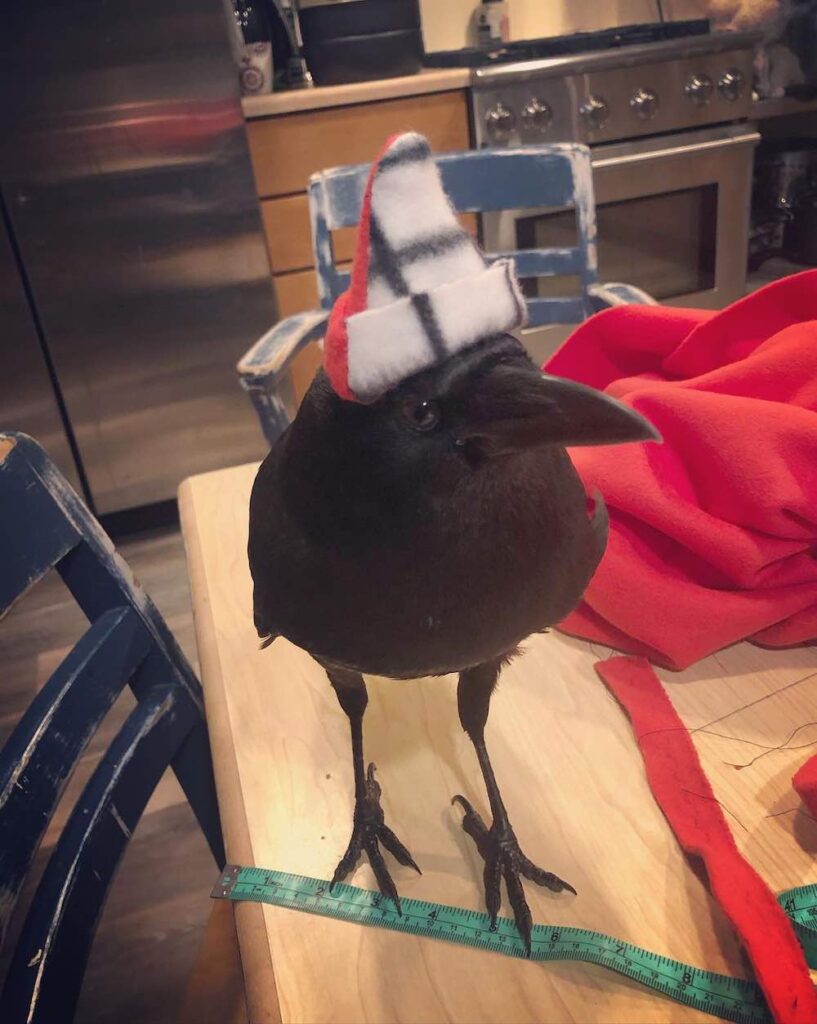
In one Oregon town, kids at a local school noticed that a particularly nosey and brave crow seemed dead-set on getting into the classroom.
Sure enough. Finding an open window at Allen Dale Elementary School, the bird made its way into a fifth-grade classroom and started helping itself to some snacks—all the while adoring the attention from the kids, and being quite friendly.
Oh, and it began talking.
According to local reporting from The Oregonian, the crow was actually a rescued bird that was all grown up and had lived with a family in the community for years, since it was a baby. None of the students or teachers knew that however, and its calm demeanor and vocabulary left them stunned.
“It would say ‘What’s up?’ and ‘I’m fine’ and a lot of swear words,” said Education assistant Naomi Imel. “It was like a parrot. It was the weirdest thing.”
Then, it became “quite the production” when all the grades came out to see the attempt of animal control to try and remove the jolly jabberer from the classroom. Even though one officer fed the bird from his hand, ultimately they left the school empty-handed.
Imel said they decided it was “not in their jurisdiction to catch the crow.”
Little did the school in Grants Pass realize they were just the latest chapter in the strange talking crow story which had begun weeks earlier.
Cosmo frequents a child care center
Returning from an out-of-town Thanksgiving this year, resident JaNeal Shattuck was devastated to find her bird missing.
‘Cosmo’ had escaped, and then been captured by a neighbor, who evidently didn’t like the teasing—which Cosmo had a reputation for doing to those who were uncomfortable around birds—and so whisked the crow away to an animal sanctuary.
Not realizing, however, that the bird was something akin to a housepet, the sanctuary released him back into the wild. That’s when he found his way to the school to “hang out.”
Shattuck’s daughter, Daphnie Colpron, admitted that the corvid knows a lot of words—over 40 now. Cosmo also loves children—and frequents a child daycare center near their house.
“As soon as he found out what time the kids got there, he’d go over there and hang out,” Colpron told the Oregonian. “Sometimes he does use profanity.”
Over the years, reports of a talking crow have caused quite the stir around town.
At Planet Fitness, where JaNeal was working out, he would sit on top of the building talking to people who were going in.
Back at the school the crow’s owners swooped in to relieve Allen Dale Elementary of their new mascot, after learning the news that their bird was spotted.
It turns out that cats keep a mental map of their territory inside their heads which they can use to abstract out information. A recent study showed however that on the legend of that map, the largest icon is us: their owners.
Cats track where their owners are at all times, a study from the University of Kyoto demonstrated, and become deeply confused when we turn up where we shouldn’t be according to the cats’ mental maps.
Abstraction is a higher-order brain function that is the basis for trial and error and other kinds of learning, but also tool use, complex problem solving, hunting, and more.
One thing which abstraction allows is to be able to place objects and forces in and around the environment, even if they can’t be immediately perceived, for example the cat food in the cupboard, the mouse among the tall grass, or the owner in the next room over.
Dr. Saho Takagi conducted a study that placed 50 cats inside individual rooms, where their owner’s voice was periodically calling from outside.
Then either a stranger or the owner’s voice would be played from a speaker in a corner of the room. Observing individuals who didn’t know which voice was being played, ranked the appearance of shock on the cat’s face and body posture at the time the voice came from inside the room.
As per the authors’ predictions, the cats appeared the most surprised when, hearing and abstracting their owner as outside of the room, they suddenly appeared inside, coming through the speakers.
“A lot of what a cat has to interpret in its territory is an awareness of where other cats are. It is also important for hunting: how could a cat catch a field vole moving around beneath the grass if it couldn’t use clues, such as the occasional rustle, to see in its mind’s eye, where they are?” Roger Tabor, a biologist and BBC host of the TV show Cats, told the Guardian.
“A cat’s owner is extremely significant in its life as a source of food and security, so where we are is very important.”
Interestingly, the cats didn’t exhibit the same surprised response if the owner’s voice was replaced with a cat’s meow, or electronic sounds, reinforcing just how important our voices are to the day-to-day mental state of our cats.
It’s sometimes said that cats don’t care about their owners as much as dogs, but knowing they have an invisible map of the house, with the owner always highlighted, soundly scuppers that theory.
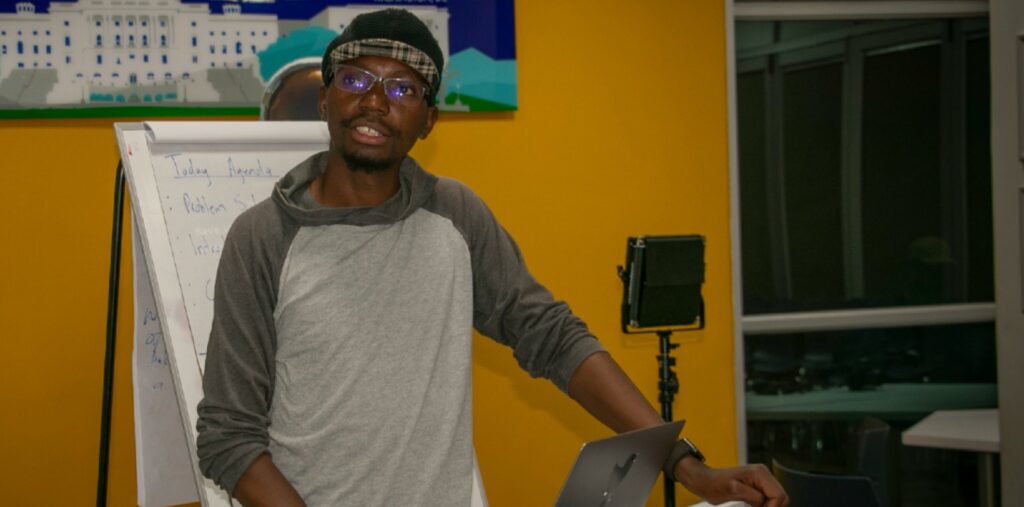
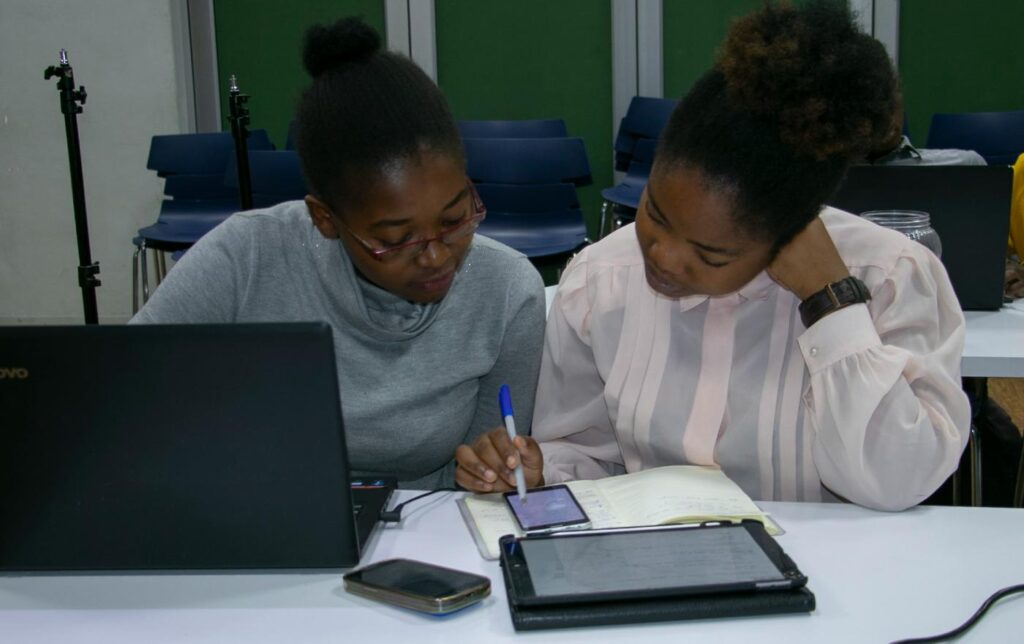
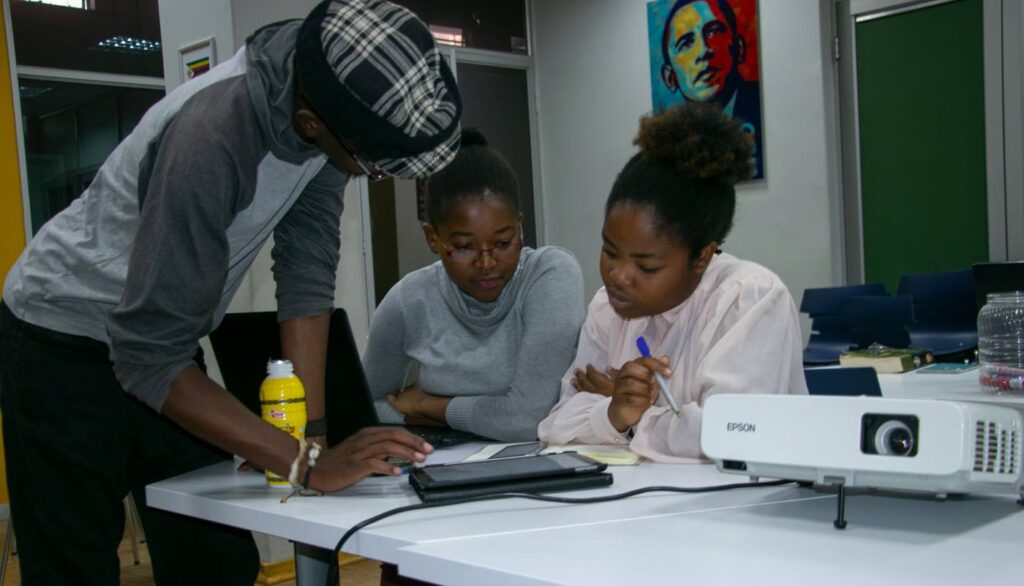
Having been inspired by an introductory coding and computer science class at Berkeley, a young man from Zimbabwe is replicating his experience for talented students in his home country—launching their academic journeys into schools like Northwestern and Stanford.
Like many young Zimbabweans, Eric Khumalo didn’t have a lot of options, even for a curious mind like his. He found a breakthrough moment, however, in a U.S.-sponsored school near his home town of Bulawayo.
A fascination with coding merged with a desire for sharing knowledge, and a background in teaching that would end with Khumalo starting Emzini WeCode, an education program that has grown from teaching locals in Zimbabwe classrooms at the American embassy to hosting online classes for more than 1,000 students.
“I graduated high school in 2018, and within the government there was a shortage of STEM teachers, so I applied for a year and a half,” Eric told GNN. “I taught at three high schools and got accepted into UC Berkeley on a scholarship from the Mastercard Foundation.”
“I wanted to study so many things! I was going to go with chemistry, I was just like ‘okay, I really need to understand how these molecules behave.’”
Like so many successful students, it was the chance encounter with the fabled “good professor” that launched Eric’s computer science journey.
“I was just like asking questions, and then he told me just about his journey, about how when he was a kid he learned to code; he would make games, and for me I just admired the wonderful things he could accomplish with just code,” says Khumalo. “I found it interesting—this power to create, and this power to solve problems, or if you have a solution—scaling it is possible with computer science.”
Afro-tech
Emzini weCode
Interest in computer science and technology is squarely in the focus of young Africans, not least in those who have taken Eric’s classes at Emzini WeCode, like Nandi Siluma, a teaching assistant at Emzini, who is also a junior at Northwestern University.
“The end goal is to have every child in Zimbabwe, and Africa, knowing how to write, interpret, and manipulate code,” says Siluma.
“I do feel like I am part of a movement to reduce the knowledge gap between the Northern and Southern Hemispheres; that is why I joined Emzini WeCode because I am passionate about sharing learning opportunities with others,” says Proud Npala, another teaching assistant, who took his own experience with Emzini and landed a scholarship at Stanford.
According to Adama Sanneh of the Moleskin Foundation ,who helps run the WikiAfrica Education Program, there’s more information on the city of Paris on Wikipedia, for example, than the entire African continent. Khumalo sees Emizini as a way to close that gap in tech-know-how.
“The main problem I wanted to tackle was job creation,” explains Khumalo, whose January classes are now open for enrolment online for 1,000 students.
“I’ve seen, mostly when I was teaching, that my students’ parents or relatives, mostly they all go to South Africa to work, and how they go there is usually… illegal,” he said. “Through Emzini WeCode at least my number one goal is to change the mindset, to tell more young people that they can create things, that they can have ideas that can scale, and to get jobs.”
“I have a vision that local universities here, having young people who are skilled with world-class knowledge, and they get hired to solve some of the problems that we have.”
Despite the growing popularity of his classes, he has kept his them free, or as cheap as possible, covering only the costs of buying the data necessary to stream in the other teachers from their quarters at whichever U.S. university.
“Usually, like two U.S. dollars a month,” says Khumalo. “The group that I usually target most is people who I know are facing challenges in the community. Because I know if I don’t do that… exposing them to this kind of content, how to code, if a young person doesn’t get some of these opportunities, the next thing they think of is ‘okay, I’ll just go to South Africa and work there.”
Owning the house
Emzini weCode
Emzini means the “house,” in Khumalo’s native language, making Emzini WeCode, “The House of Code.” The name reflects the teaching style, which Eric has modeled to emulate his first experience in computer science at Berkeley, mixed with culturally-relevant aspects.
His focus is broad in scope, avoiding a strict focus on any particular coding language, and opting instead to inspire students to see computer science and coding as a way to solve problems, in whichever career they focus on.
“’This information is good; if I could just take it and find a way of giving it to my people,'” said Eric. “It’s this knowledge I know they really want, but that they don’t have.”
Taking a semester off to return home in 2019, Eric was interested in teaching an introductory coding course at the Education USA program he took before Berkeley. However it wasn’t long before he realized this was not going to be possible.
“I thought people had some foundational knowledge on computer science, but after some time I realized ‘Oh they don’t, they need that course that I took when I was a freshman!’”
So he designed a course that was going to appeal to a wide group of people, with a focus on the foundational problem solving/solution-generating abilities of computer science. Banele Ndlovu took Eric’s coding class when he first set it up in Zimbabwe.
“Back home, at that time, coding wasn’t really a thing; especially for females,” Ndlovu told GNN.
“It has actually led me to the interest of tech as a whole, because now I found myself in a great place where I really love the intersection of business and tech,” she said. “I want to pursue product management, and that started from understanding the knowledge of tech which I learned at Eric’s class, so it really does have an impact.”
“He is very good with breaking down complex concepts into simpler, understandable statements,” Nandi adds. “He would use everyday examples that were relatable, sometimes even teach code in IsiNdebele! (our native language) I remember the first time he explained recursion, he used an example of how people pay their bus fares in Zimbabwe starting from the backseat.”
Proud agreed, saying, “I liked the introductory course CS7. It is an amazing course for anyone who wants to get into computer science,” he said. “It’s not too deep nor too shallow… which is why I found it well-structured for an intro course.”
“What Eric is doing is really cool and really humbling as well because being able to create a program like this especially at first directly to students from Zimbabwe… I really love that, I really love how it’s going,” said Banele.
Eric Khumalo feels a great deal of pride seeing the students taking his course moving on to other schools and other careers. He wants to expand the opportunities he gave to them to more people, and he’s currently designing a computer science curriculum for high schools.
“If one of my students can get into Stanford, then ten of my students should get into Stanford,” he said smiling.
SHARE This Brilliant Initiative From Zimbabwe With Others…
Quote of the Day: “Love is the only thing that we can carry with us when we go, and it makes the end so easy.” – Louisa May Alcott
Photo: by Patty Brito
With a new inspirational quote every day, atop the perfect photo—collected and archived on our Quotes page—why not bookmark GNN.org for a daily uplift?
More than 2.5 million Americans have a chronic condition arising in early childhood that can negatively impact their education, job performance, and employability well into adulthood.
There is no known cure, and existing treatments are often minimally effective. Yet for those with persistent, developmental stuttering, there is new hope, thanks to groundbreaking research led by scientists at Vanderbilt University Medical Center in Nashville, Tennessee, and Wayne State University in Detroit, Michigan.
In two papers published this week, Jennifer “Piper” Below, PhD, and Shelly Jo Kraft, PhD, describe a “genetic architecture” for developmental stuttering and report the discovery of new genetic variations associated with the condition.
The researchers said that these findings and studies like them have the potential to identify therapeutic directions that could improve outcomes for people who stutter.
“It’s clear that in populations, stuttering is polygenic, meaning that there are multiple different genetic factors contributing to and protecting people from risk,” said Below, associate professor of Medicine at VUMC. “That was something that had not been clearly shown before these studies.”
The new revelations will have a huge impact on people who stutter and on the parents of children affected by the condition, predicted Kraft, associate professor of Communication Sciences and Disorders and director of the Behavior, Speech & Genetics Lab at Wayne State University.
“It’s a piece of themselves that they can then understand,” she said, “instead of living a lifetime of experiencing this difference in their speech and never knowing why.”
With the help of colleagues in Ireland, England, Israel, Sweden, Australia, and throughout the United States, Kraft has collected blood and saliva samples for genetic studies from more than 1,800 people who stutter, including more than 250 families with three generations of stuttering.
But while that effort, called the International Stuttering Project, identified new genetic variations, or variants, associated with developmental stuttering, it was not sufficiently “powered” to reveal the complexity of the condition. There simply were not enough people in the studies.
That’s where Below comes in. She utilized a key VUMC resource, BioVU, one of the world’s largest repositories of human DNA linked to searchable, electronic health information. BioVU has enabled researchers to conduct GWAS, or genome-wide association studies to probe the genetic underpinnings of a wide range of diseases.
Stuttering, however, is a condition that is rarely mentioned or given a diagnostic code in the medical record. People aren’t hospitalized for stuttering. “We had to come up with some clever new ways to try to capture that missing code,” Below said.
From confirmed cases of developmental stuttering, the researchers constructed a “constellation” of diagnostic codes for other conditions such as attention-deficit hyperactivity disorder (ADHD) and autoimmune reactions to infections that co-occur with stuttering more frequently than would be expected by chance.
Then, using machine learning techniques, they created an artificial intelligence tool that used the presence of these “phenotypes” recorded in the electronic health record to predict those who were likely to stutter, “even in the absence of having a direct note about their stuttering in their medical record,” Below said.
Supported by $3.5 million, five-year grant awarded in 2018 by the National Institute on Deafness and Other Communication Disorders, part of the National Institutes of Health, the researchers demonstrated that their stuttering prediction model positively predicted the presence of stuttering more than 80% of the time.
The research, published in The American Journal of Human Genetics, also turned up a stuttering-related gene implicated in autism-spectrum disorder, as well as genetic variants that affect the regulation of sex hormones. The latter finding may help explain why boys are more likely to stutter, and why women who stutter are more likely to recover.
Some correlations between traits may be spurious, Below noted. But if the researchers establish genetic connections between stuttering and other traits such as ADHD, those findings could open up avenues for treating both conditions at the same time, Kraft said.
Île Ronde island in Quebec by Claude Duchaîne:Nature Conservancy of Canada
Île Ronde island in Quebec by Claude Duchaîne/Nature Conservancy of Canada
Near to where the Ottawa and St. Lawrence Rivers meet, a small island teeming with birds and turtles sits surprisingly untouched amid a suburban sprawl that has turned the surrounding waterline into concrete walls.
The island, called Île Ronde, was spared from this development by the dollars of one man back in the 1960s, who after decades of refusing to sell to real estate and property men, has just donated it to the Nature Conservancy Canada to be protected forever.
Thor Wikström immigrated to Canada from Sweden and built a house for himself, his newish wife, and their first son Hans, in a town called Laval on the shore of Rivière-des-Prairies.
Out of their window, the seven-acre Île Ronde sat offshore by a mighty stone’s throw. Wikström convinced the previous owner to sell it, and it was there that many childhood memories were made among migratory birds and turtles.
Now at 93 years of age, he’s at peace knowing the forests and marshlands, the little cabin and birdhouses he built, will all be protected forever.
“It’s just a good feeling in my heart. I know this will be there forever,” he told CBC News.
“Nature was more important than some stupid money in my pocket,” he added. “I said, ‘This is something [that’s] got to be preserved,’ and I kept my word.”
He turned down dozens of offers to sell the property over the years, good news for the northern map turtle, a species the Canadian government designates as “special concern,” and one which no longer has access to much of its previous habitat due to development along the river.
Île Ronde also hosts a unique tree species called the shagbark hickory, and many migratory bird and game bird species like widgeon, gadwall, and wood ducks.
“The Vikström family has taken great care of it, and with this very meaningful act we are protecting the natural diversity of this unique habitat for the benefit of the animal and plant species that live there, but also for future generations,” said Annie Ferland, project manager for the Montreal Greenbelt at the Nature Conservancy of Canada.
The Lesson: What we believe about the world decides the fate of our thoughts and actions. Two conditions to that belief: That one is good, and has the power to shape the life they want, and that the universe is good, and will help make that life contribute profoundly to providing a space of ‘un’conditional happiness, rather than happiness as determined by outside conditions. It’s not that some people are lucky in life, it’s that some people are looking, or in other words, people don’t believe things when they see them, they will see them when they believe them.
Notable Excerpt: “Most people have to be somewhere, with someone, or do something, to really feel good about themselves and their life and to be happy. And that’s a problem. That makes happiness totally ‘conditional,’ but there is another way. There’s a lens you can look at the world with, where you see yourself, and the world you live in, as good and powerful. And it’s that lens that starts making your joy and your peace free of any conditions.”
The Speaker: Moshe Gersht is a spiritual teacher, Rabbi, Wall Street Journal bestselling author and emerging thought leader. Before spending 15 years studying the Torah, mediating, and researching philosophy, psychology, and theology, he actually dropped out of high school and was the singer songwriter for a pop punk band in Los Angeles.
The Book: Gersht is the author of two books, Succos Inspired and his most recent It’s All The Same To Me, which Deepak Chopra called “a contribution to the world’s enlightenment.”
(WATCH Moshe Gersht speak at TEDxDupreePark below.)
Monarch butterflies are famous for their annual long-distance migration, which takes them over several thousand kilometres from the north of the USA to their overwintering habitat in central Mexico. On their migration, the conspicuously orange-black-white colored butterflies use sun information as main orientation reference.
But how is sun information processed in the butterfly’s brain? Previous studies have already described cells that process the solar azimuth. “However, we didn’t know these cells encode the sun during flight,” says Jerome Beetz from the Biocentre at Julius-Maximilians-Universität Würzburg (JMU) in Bavaria, Germany.
Until now, it was assumed that the sun compass always works—irrespective of whether the insects sit, walk or fly.
A team led by JMU researchers Jerome Beetz and Basil el Jundi shows that this is not the case and that the compass is established at the onset of flight: “Surprisingly, the nerve cells change their coding strategy during flight, so that the neural network represents the heading direction of the butterflies relative to the sun in a similar way to a compass. This only happens when the animals can control their own direction of flight.”
Butterflies in a flight simulator
How was this gap in knowledge closed? The team led by Beetz and el Jundi measured for the first time the neural activity in actively flying monarch butterflies and examined the influence of the animal’s orientation behaviour on the processing of sun information. Such measurements had previously only been carried out in restrained butterflies.
The JMU researchers took advantage of a technical trick: “We tethered the butterflies to a freely rotatable rod in the centre of a flight simulator, which enables the butterflies to actively choose a flight direction. The sun was mimicked with a green light spot. While the tethered butterfly was flying, we monitored the brain activity with ultra-fine microelectrodes.”
The experiments, published in in the scientific journal Current Biology, prove: Active movement of the butterflies is necessary to process sun information as compass information in the butterfly brain during migration.
“Our results emphasize the importance of performing neuronal recordings in actively moving animals in order to understand how the brain solves complex orientation tasks,” says Beetz, who is first author of the publication in Current Biology. Other researchers from the Biocentre as well as from the universities of Lund (Sweden), Bielefeld and Texas were involved in the project. The work was funded by the German Research Foundation (DFG).
Brain the size of a grain of rice with amazing abilities
Beetz admires his research subjects: “Our publication uniquely demonstrates that even a brain with the size of a grain of rice is a highly complex organ that enables insects to perform such amazing behaviors. With their brain, monarch butterflies manage the enormous migration by using an efficient internal compass. Such a long-distance migration without using modern navigation devices is hard to imagine for us, humans and this is one major reason that drives my fascination for these enigmatic butterflies.”
Next, Jerome Beetz and Basil el Jundi plan to investigate how the butterflies’ sun compass operates when the butterflies have access to the natural sky than when simply using a light spot as reference for orientation. To do this, the neural recordings must be carried out in open air flight simulators.
Quote of the Day: “Wine, love, art, beauty. Without them life is safe, but not worth bothering with.” – Stephen Fry
Photo: by Bill Williams
With a new inspirational quote every day, atop the perfect photo—collected and archived on our Quotes page—why not bookmark GNN.org for a daily uplift?