











All News - Page 431 of 1715 - Good News Network
Home Blog Page 431

This Week’s Inspiring Horoscopes From Rob Brezsny’s ‘Free Will Astrology’

Our partner Rob Brezsny provides his weekly wisdom to enlighten our thinking and motivate our mood. Rob’s Free Will Astrology, is a syndicated weekly column appearing in over a hundred publications. He is also the author of Pronoia Is the Antidote for Paranoia: How All of Creation Is Conspiring To Shower You with Blessings. (A free preview of the book is available here.)

Here is your weekly horoscope…
FREE WILL ASTROLOGY – Week beginning October 1, 2021
Copyright by Rob Brezsny, FreeWillAstrology.com

LIBRA (Sept. 23-Oct. 22):
Being “nude,” said art critic Kenneth Clark, has “no uncomfortable overtone,” but indicates “a balanced, prosperous, and confident body.” I bring this to your attention because I believe you would benefit from experiencing extra nudity and no nakedness in the days ahead. If you choose to take on this assignment, please use it to upgrade your respect and reverence for your beauty. PS: Now is also a favorable time to express your core truths without inhibition or apology. I urge you to be your pure self in all of your glory.

SCORPIO (Oct. 23-Nov. 21):
Scorpio poet Anne Sexton wrote, “One has to get their own animal out of their own cage and not look for either an animal keeper or an unlocker.” That’s always expert advice, but it will be extra vital for you to heed in the coming weeks. The gorgeous semi-wild creature within you needs more room to run, more sights to see, more adventures to seek. For that to happen, it needs to spend more time outside of its cage. And you’re the best person to make sure that happens.

SAGITTARIUS (Nov. 22-Dec. 21):
Sagittarian composer Ludwig van Beethoven (1770–1827) could be a marvelous friend. If someone he cared for was depressed or feeling lost, he would invite them to sit in his presence as he improvised music on the piano. There were no words, no advice—only emotionally stirring melodies. “He said everything to me,” one friend said about his gift. “And finally gave me consolation.” I invite you to draw inspiration from his example, Sagittarius. You’re at the peak of your powers to provide solace, comfort, and healing to allies who need such nurturing. Do it in whatever way is also a blessing for you.

CAPRICORN (Dec. 22-Jan. 19):
At age 23, Capricorn-born Jeanne Antoinette Poisson (1721–1764) became French King Louis XV’s favorite mistress. She was not born into aristocracy, but she wielded her Capricornian flair with supreme effectiveness. Ultimately, she achieved a noble title as well as high prestige and status in the French court. As is true for evolved Capricorns, her elevated role was well-deserved, not the result of vulgar social-climbing. She was a patron of architecture, porcelain artwork, and France’s top intellectuals. She ingratiated herself to the King’s wife, the Queen, and served as an honored assistant. I propose we make her your role model for the next four weeks. May she inspire you to seek a boost in your importance and clout that’s accomplished with full integrity.

AQUARIUS (Jan. 20-Feb. 18):
The bad news is that artist Debbie Wagner was diagnosed with two brain tumors in 2002. The good news is that surgery not only enabled her to survive, but enhanced her visual acuity. The great news is that on most days since 2005, she has painted a new image of the sunrise. I invite you to dream up a ritual to celebrate your own victory over adversity, Aquarius. Is there a generous gesture or creative act you could do on a semi-regular basis to thank life for providing you with the help and power you needed?

PISCES (Feb. 19-March 20):
A self-described “witch” named Lars wrote, “I am a ghost from the 1750s, and my life is currently in the hands of a group of suburban 13-year-olds using a ouija board to ask me if Josh from homeroom has a crush on them.” He’s implying that a powerful supernatural character like himself is being summoned to do tasks that are not worthy of him. He wishes his divinatory talents were better used. Are there any resemblances between you and him, Pisces? Do you ever feel as if you’re not living up to your promise? That your gifts are not being fully employed? If so, I’m pleased to predict that you could fix this problem in the coming weeks and months. You will have extra energy and savvy to activate your full potential.

ARIES (March 21-April 19):
Blogger AnaSophia was asked, “What do you find attractive in a person?” I’ll reproduce her reply because it’s a good time to think about what your answer would be. I’m not implying you should be looking for a new lover. I’m interested in inspiring you to ruminate about what alliances you should cultivate during the coming months. Here’s what AnaSophia finds attractive: “strong desire but not neediness, passionate sensitivity, effortlessness, authenticity, innocence of perception, sense of humor, vulnerability and honesty, embodying one’s subtleties and embracing one’s paradoxes, acting unconditionally and from the heart.”

TAURUS (April 20-May 20):
Taurus author Roberto Bolaño confessed, “Sometimes I want greatness, sometimes just its shadow.” I appreciate his honesty. I think what he says is true about most of us. Is there anyone who is always ready for the heavy responsibility of pursuing greatness? Doubtful. To be great, we must periodically go through phases when we recharge our energy and take a break from being nobly ambitious. What about you, dear Taurus? If I’m reading the omens correctly, you will benefit from a phase of reinvention and reinvigoration. During the next three weeks, you’ll be wise to hang out in the shadows of greatness.

GEMINI (May 21-June 20):
“Have fun, even if it’s not the same kind of fun everyone else is having,” wrote religious writer C. S. Lewis. That advice is ten times more important right now than it usually is. For the sake of your body’s and soul’s health, you need to indulge in sprees of playful amusement and blithe delight and tension-relieving merriment. And all that good stuff will work its most potent magic if it stimulates pleasures that are unique to you—and not necessarily in line with others’ tastes.

CANCER (June 21-July 22):
“It is one thing to learn about the past,” wrote Cancerian journalist Kenneth Auchincloss. “It is another to wallow in it.” That’s stellar advice for you to incorporate in the coming weeks. After studying your astrological omens, I’m enthusiastic about you exploring the old days and old ways. I’m hoping that you will discover new clues you’ve overlooked before and that this further information will inspire you to re-envision your life story. But as you conduct your explorations, it’s also crucial to avoid getting bogged down in sludgy emotions like regret or resentment. Be inspired by your history, not demoralized by it.

LEO (July 23-Aug. 22):
Would you like to deepen and strengthen your capacity to concentrate? Cosmic rhythms will conspire in your favor if you work on this valuable skill in the coming weeks. You’ll be able to make more progress than would normally be possible. Here’s pertinent advice from author Harriet Griffey: “Whenever you feel like quitting, just do five more—five more minutes, five more exercises, five more pages—which will extend your focus.” Here’s another tip: Whenever you feel your concentration flagging, remember what it is you love about the task you’re doing. Ruminate about its benefits for you and others.

VIRGO (Aug. 23-Sept. 22):
What’s your favorite feeling? Here’s Virgo poet Mary Szybist’s answer to that question: hunger. She’s not speaking about the longing for food, but rather the longing for everything precious, interesting, and meaningful. She adores the mood of “not yet,” the experience of moving toward the desired thing. What would be your response to the question, Virgo? I’m guessing you may at times share Szybist’s perspective. But given the current astrological omens, your favorite feeling right now may be utter satisfaction—the gratifying sensation of getting what you’ve hungered for. I say, trust that intuition.

WANT MORE? Listen to Rob’s EXPANDED AUDIO HOROSCOPES, 4-5 minute meditations on the current state of your destiny — or subscribe to his unique daily text message service at: RealAstrology.com

(Zodiac images by Numerologysign.com, CC license)

SHARE The Wisdom With Friends Who Are Stars in Your Life on Social Media…

4 in 10 Older Americans Say They’ve Had the Best Sex of Their Lives as They’ve Aged

Fotolia

There may be a good reason grandma and grandpa haven’t returned your phone call.

Fotolia

A new survey of 2,000 Americans aged 50 and older found that 45% reported having the best sex of their lives as they’ve aged.

In fact, the results showed that one in eight respondents have sex at least five times a week.

Conducted by OnePoll on behalf of LELO, the survey found that 35% are surprisingly more intimate than ever before and the same amount said their sex drive is higher than when they were younger.

More than a third of people over 50 would like to be more intimate but don’t have the time (38%) — likely because 42% claimed they were ‘always working’, 39% were living with others or often have family coming over.

Nearly half of those whose kids are out of the nest said their sex life had improved drastically.

Although some Americans 50 and older don’t have as much time to be intimate as they’d like, more than half said they take advantage of their free time by being intimate with their partner (56%).

While the most popular places in the home that respondents have had sex are the bedroom (69%) and living room (48%), one in four older people admitted to getting a little adventurous in the laundry room or on the staircase.

RELATED: Drinking This Juice Could Help Promote Healthy Aging, Scientists Find

“Even though we don’t see many older adults being sexually romantic in the media, it doesn’t mean they don’t enjoy it too,” said Luka Matutinovic, LELO’s chief marketing officer.

But, one in eight said they would feel uncomfortable talking to their partner about changes in their sex drive.

“The myth around it is related to people’s discomfort with aging,” said Matutinovic. “But, intimacy comes in different forms as we age and it can be just as satisfying.”

Forty-two percent of those who have a low sex drive fear that it might destroy their relationship.

MOST: Hearing Loss For Adults Shows Promising Decline

But intimacy doesn’t always have to be about sex

Americans 50 and over enjoy bonding with their partners non-sexually by watching movies (53%), having intimate dinners (46%) or going on walks (44%).

One respondent said “a night out enjoying each other’s company” helps to spark their intimacy, while others say it’s important to remind one another that they love each other.

“The changes that come with aging make women and men communicate more, get more creative, have more time to explore, which leads to getting the right type of satisfaction,” adds Matutinovic.

CHECK OUT: Even Moderate Socializing With Friends Could Ward Off Dementia in Older People, Study Finds

SHARE This Sexy-Good News With the Over-50 Crowd on Social Media…
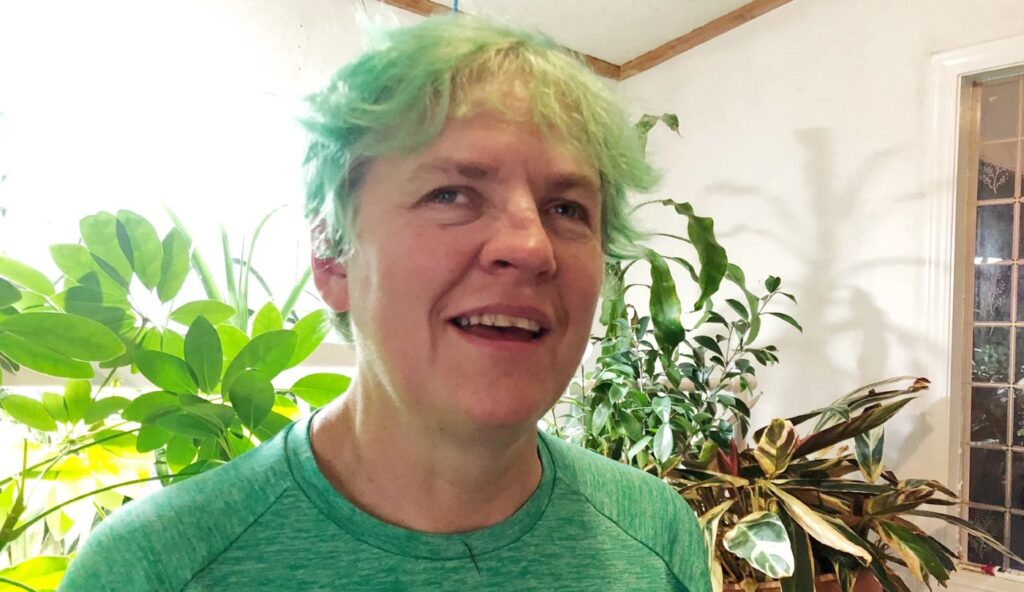
“Joy and sweetness and affection are a spiritual path… You just have to get rid of so much baggage to be light enough to dance, to sing, to play.” – Anne Lamott

Quote of the Day: “Joy and sweetness and affection are a spiritual path… You just have to get rid of so much baggage to be light enough to dance, to sing, to play.” – Anne Lamott

Photo: by Senjuti Kundu

With a new inspirational quote every day, atop the perfect photo—collected and archived on our Quotes page—why not bookmark GNN.org for a daily uplift?

Want to Know Where The Best Fall Colors Are in Your Area? Check Out This Interactive U.S. Map

Lady Dragonfly, CC license

Across the northern hemisphere, leaves are currently turning from deep summer green to the most brilliant shades of red and orange, yellow and gold.

Lady Dragonfly, CC license

It’s quite the show, and for leaf peepers in the Lower 48 states, it’s possible to take a look at a virtual, interactive map to see just where the tree leaves are at their brilliant best.

At SmokyMountains.com, publicly accessible data such as National Oceanic and Atmospheric Administration precipitation forecasts, temperature forecasts, and average daylight exposure gets collated and synthesized in order to create a map that changes color according to where the most colorful scenes might be seen across the States.

Just move the date lever to predict the foliage for a future date.

Co-founder of the map, David Angotti, noted that its predictions aren’t quite perfect. It might show amazing fall colors happened in the middle of Arizona, but if there are no deciduous trees in that area—of course there won’t be much of a show.

“I wish I could make fall happen in South Florida or in the desert,” Angotti told the Washington Post, “but at the end of the day, the math is basically showing when the temperature and precipitation trends would cause peak fall to occur in each of these areas.”

RELATED: Stunning Aerial Video of Iceland’s Green Volcano Can Soothe Your Lockdown Stress

So just why do leaves change their color? According to SmokyMountains.com, “As the fall days begin to get shorter and shorter, the production of chlorophyll slows to a halt, eventually giving way to the ‘true’ color of the leaf.”

SmokyMountains.com

When it gets cold, the trees then “slowly close off the veins that carry water and nutrients to and from the leaves with a layer of new cells that form at the base of the leaf stem, protecting the limbs and body of the tree.

MORE: Americans Say COVID-19 Has Given Them a Newfound Appreciation of Nature

“Once the process of new cell creation is complete, water and nutrients no longer flow to and from the leaf—this enables the leaf to die and weaken at the stem, eventually falling gracefully to the ground.”

We hope it’s beautiful where you are right now.

PASS This Story On To The Leaf Peepers In Your Life Via Social Media…

Weight Lifting Can Burn Fat Just Like Cardio: New Research About Strength Training vs Aerobics

public domain image via Flickr

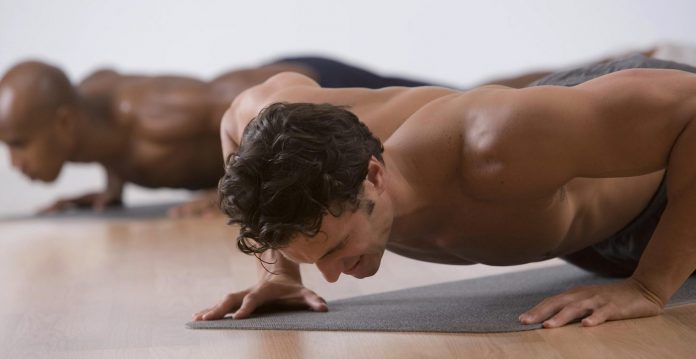
It’s basic exercise knowledge that to gain muscles, you strength train, and to lose fat, you do cardio—right? Not necessarily, a new UNSW study suggests.

In fact, the study—a systematic review and meta-analysis that reviewed and analysed existing evidence—shows we can lose around 1.4 percent of our entire body fat through strength training alone, which is similar to how much we might lose through cardio or aerobics.

“A lot of people think that if you want to lose weight, you need to go out and run,” says senior author of the study Dr Mandy Hagstrom, exercise physiologist and senior lecturer at UNSW Medicine & Health.

“But our findings show that even when strength training is done on its own, it still causes a favorable loss of body fat without having to consciously diet or go running.”

Up until now, the link between strength training and fat loss has been unclear. Studies have investigated this link in the past, but their sample sizes tend to be small—a side effect of not many people wanting to volunteer to exercise for months on end. Smaller sample sizes can make it difficult to find statistically significant results, especially as many bodies can respond differently to exercise programs.

“It can be really difficult to discern whether there’s an effect or not based on one study alone,” says Dr Hagstrom. “But when we add all of these studies together, we effectively create one large study, and can get a much clearer idea of what’s going on.”

Dr Hagstrom and her team pulled together the findings from 58 research papers that used highly accurate forms of body fat measurement (like body scans, which can differentiate fat mass from lean mass) to measure the outcomes from strength training programs. Altogether, the studies included 3000 participants, none of which had any previous weight training experience.

While the strength training programs differed between the studies, the participants worked out for roughly 45-60 minutes each session for an average of 2.7 times per week. The programs lasted for about five months.

The team found that, on average, the participants lost 1.4 per cent of their total body fat after their training programs, which equated to roughly half a kilo in fat mass for most participants.

While the findings are encouraging for fans of pumping iron, Dr Hagstrom says the best approach for people who are aiming to lose fat is still to stick to eating nutritiously and having an exercise routine that includes both aerobic/cardio and strength training.

READ: Metabolism Does Not Slow Down in Mid-Life as is Commonly Believed, Says Study

But if aerobics and cardio just aren’t your thing, the good news is you don’t need to force it.

“If you want to exercise to change your body composition, you’ve got options,” says Dr Hagstrom.

“Do what exercise you want to do and what you’re most likely to stick to.”

Busting the fat loss myth

Part of the reason many people think strength training doesn’t live up to cardio in terms of fat loss comes down to inaccurate ways of measuring fat.

For example, many people focus on the number they see on the scale—that is, their total body weight. But this figure doesn’t differentiate fat mass from everything else that makes up the body, like water, bones, and muscles.

“More often than not, we don’t gain any muscle mass when we do aerobic training,” says Dr Hagstrom. “We improve our cardiorespiratory fitness, gain other health and functional benefits, and can lose body fat.

LOOK: Is Your Goal to Walk 10,000 Steps? Science Shows We Need A Lot Fewer

“But when we strength train, we gain muscle mass and lose body fat, so the number on the scales won’t look as low as it would after aerobics training, especially as muscle weighs more than fat.”

The research team focused on measuring how much the total body fat percentage—that is, the amount of your body that’s made up of fat mass—changed after strength training programs. This measurement showed fat loss appears to be on par with aerobics and cardio training, despite the different figures on the scales.

“A lot of fitness recommendations come from studies that use inaccurate measurement tools, like bioelectrical impedance or scales,” says Dr Hagstrom.

“But the most accurate and reliable way of assessing body fat is through DEXA, MRI or CT scans. They can compartmentalize the body and separate fat mass from lean tissue.”

RELATED: A World Food Prize Winner Wants You To Reconsider Anchovies – Here’s How Nutritious They Are

While this study didn’t show whether variables like exercise duration, frequency, intensity, or set volume impacted fat loss percentage, the team hope to next investigate whether how we strength train can change the amount of fat loss.

A better way of measuring progress

As part of their study, published in Sports Medicine, the team conducted a sub-analysis comparing how different ways of measuring fat can influence a study’s findings.

Interestingly, it showed that when papers used more accurate measurements like body scans, they tended to show lower overall changes in body fat.

“Using accurate fat measurements is important because it gives us a more realistic idea of what body changes to expect,” says lead author of the study Mr Michael Wewege, PhD candidate at UNSW and NeuRA.

“Future exercise studies can improve their research by using these more accurate body measurements.”

MORE: Scientists Design Junk Food Game to Help People Eat Less, Lose Weight – Study Shows it Works

Reframing the way we measure progress doesn’t just apply to sports researchers, but to everyday people, too.

“Resistance training does so many fantastic things to the body that other forms of exercise don’t, like improving bone mineral density, lean mass, and muscle quality. Now, we know it also gives you a benefit we previously thought only came from aerobics,” says Dr Hagstrom.

“If you’re strength training and want to change how your body looks, then you don’t want to focus on the number on the scale too much, because it won’t show you all your results.

“Instead, think about your whole body composition, like how your clothes fit and how your body will start to feel, and move, differently.”

Source: University of New South Wales

ADD Strength to Your Mates’ Wellness Knowledge; Share This Story…

Batteries of the Future Set to be Cheaper and Better – Thanks to Sugar

Simply by adding sugar, researchers from the Monash Energy Institute have created a longer-lasting, lighter, more sustainable rival to the lithium-ion batteries that are essential for aviation, electric vehicles, and submarines.

The Monash team, assisted by CSIRO, report that using a glucose-based additive on the positive electrode they have managed to stabilize lithium-sulfur battery technology, long touted as the basis for the next generation of batteries.

“In less than a decade, this technology could lead to vehicles including electric buses and trucks that can travel from Melbourne to Sydney without recharging. It could also enable innovation in delivery and agricultural drones where light weight is paramount,” says lead author Professor Mainak Majumder, from the Department of Mechanical and Aerospace Engineering and Associate Director of the Monash Energy Institute.

In theory, lithium-sulfur batteries could store two to five times more energy than lithium-ion batteries of the same weight. The problem has been that, in use the electrodes deteriorated rapidly, and the batteries broke down.

There were two reasons for this—the positive sulfur electrode suffered from substantial expansion and contraction weakening it and making it inaccessible to lithium, and the negative lithium electrode became contaminated by sulfur compounds.

Last year the Monash team demonstrated they could open the structure of the sulfur electrode to accommodate expansion and make it more accessible to lithium.

Now, by incorporating sugar into the web-like architecture of the electrode they have stabilized the sulfur, preventing it from moving and blanketing the lithium electrode.

Test-cell prototypes constructed by the team have been shown to have a charge-discharge life of at least 1000 cycles, while still holding far more capacity than equivalent lithium-ion batteries.

“So each charge lasts longer, extending the battery’s life,” says first author and PhD student Yingyi Huang. “And manufacturing the batteries doesn’t require exotic, toxic, and expensive materials.”

MORE: To Replace Lithium Batteries For Grid Storage ‘Gravitricity’ Uses Gravity

Yingyi and her colleagues were inspired by a 1988 geochemistry report that describes how sugar-based substances resist degradations in geological sediments by forming strong bonds with sulfides.

RELATED: Biodegradable Algae Solar Panels Clean The Air While Growing Green Energy

Dr Mahdokht Shaibani, second author of the paper, published in Nature Communications, and Monash researcher, says, “While many of the challenges on the cathode side of the battery has been solved by our team, there is still need for further innovation into the protection of the lithium metal anode to enable large-scale uptake of this promising technology—innovations that may be right around the corner.”

Source: Monash University

POWER Up Friends’ Feeds With This Energizing Story…

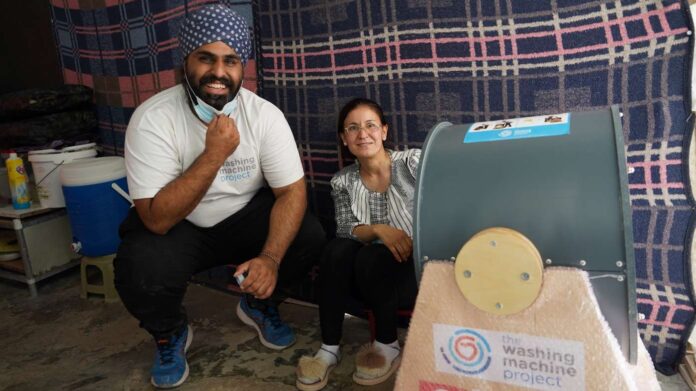
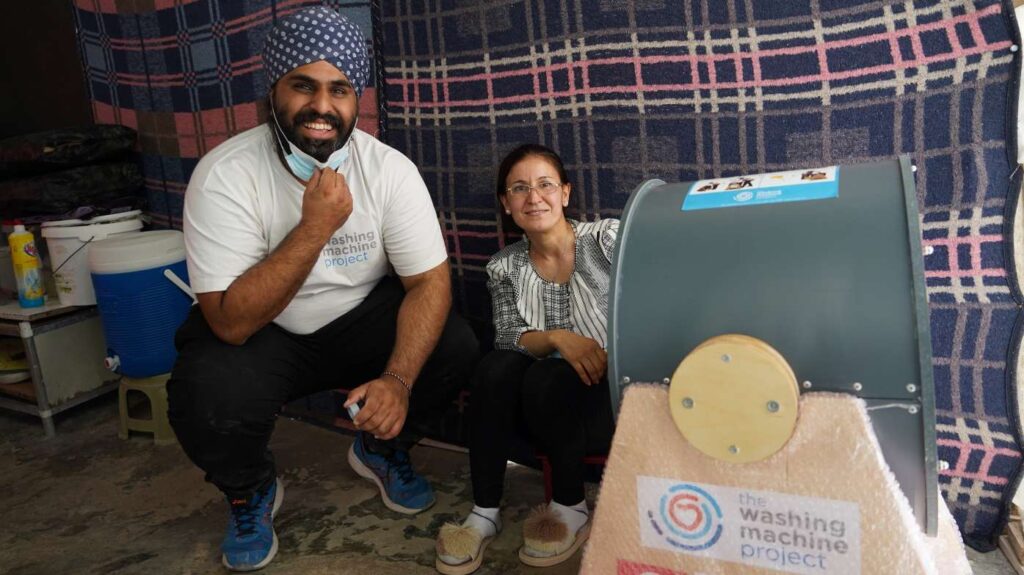
Inventor of Hand-Cranked Washing Machine is Distributing the Low-Cost Device to Refugees

SWNS
SWNS

The inventor of a hand-cranked washing machine has traveled to Iraq to distribute the low-cost device to refugees.

Navjot Sawhney created the ‘Divya’ to allow those living in poverty to be able to wash their clothes more easily.

It is thought around 70 percent of the world’s population does not have access to electric washing machines.

The machines are created in the UK and sent to those without access to electricity and water, who would otherwise need to wash clothes by hand.

Former Bath University student Navjot told the BBC the two-week trip to northern Iraq to hand out the machines has been a “completely humbling experience.”

“To give them the dignity of clean clothes is very fulfilling,” he said.

“Some of these families still have members missing, some of these women have suffered major trauma and abuse. It’s just really heartbreaking stuff.

RELATED: French Beekeeper Invents a Trap to Take on Asian Hornets Decimating Bee Populations in Europe

“Handwashing clothes is restrictive and painful. The Divya means women, who are usually the primary washers, have more time to rest.”

Navjot was inspired to create the machine after witnessing the struggles of his neighbour while volunteering in India, after quitting his engineering job in Wiltshire.

“When you read the news, places like this can seem really daunting but the people here are like everyone else in the world,” he said.

“They just want their lives to go back to normal.

“This is my third trip to Iraq and each time I come it is unique and I learn so much. Every time I’m reminded of the dignity and pride people have in clean clothes.”

MORE: Malawi Inventor Lights Up His Whole Village Basically for Free–Starting With a Bicycle and a River

The engineer set up the Washing Machine Project in 2018 and it now has orders from 15 countries around the world. He is working towards rolling the device out in Uganda, India, Lebanon, and Jordan.

“We’re really proud to be here to do our part.”

CRANK Out a Little Good News by Sharing This Inspiring Story…

“We must adjust to changing times and still hold to unchanging principles.” – Jimmy Carter (turns 97 today)

Quote of the Day: “We must adjust to changing times and still hold to unchanging principles.” – Jimmy Carter (turns 97 today)

Photo: by Joshua Rawson-Harris

With a new inspirational quote every day, atop the perfect photo—collected and archived on our Quotes page—why not bookmark GNN.org for a daily uplift?


It’s a Myth That Adults Can’t Learn Languages as Easily as Kids – Benefits Multiply if Families Learn Together

Adults can learn a second language as fast as children, reports a new study—and it’s only the conditions in which a child learns a second language that’s given kids a reputation as such fast learners.

This means that adults can develop the increased neural connections typical of bilingual individuals that can, by themselves, stave off dementia by four years, as well as make traveling a heck of a lot easier.

For children, learning a second language increases the number of neural pathways between grey matter areas, and more rapidly breaks down and rebuilds existing pathways with more conceptual capacity.

This translates at home and in the classroom to better memory, increased focus, reduced vulnerability to distractions, and even earlier aptitudes at multi-tasking.

Beyond that, it gives parents more reason to dive into a second language as part of a family effort, as further research has shown learning a language as a family improves everyone’s abilities and gives opportunities for learning that are mostly absent from classroom settings.

Nature vs nurture

Many studies have shown that children’s propensity for learning a second language far exceeds that of adults, but recent research from the University of Kansas’ department of linguistics has demonstrated that’s not necessarily true.

In an examination of Spanish second-language learners, the researchers found that after minimal training, the brain activity between sentences that relied on grammatical features unique to each language resembled that of native speakers.

In other words, the brain activity within an English speaker saying, writing, and reading: “Las flores son hermosas,” or “the flowers are beautiful,” is identical to that found in the brain of a Spanish speaker, despite the fact that this target sentence uses grammatical features not found in English, such as gender and number agreements.

“I think it’s cause for optimism for university foreign language instruction. It shows that, even with limited exposure in the college classroom, learning can happen quite quickly and efficiently,” said KU linguistics professor Alison Gabriele, the co-author of the paper, to Language Magazine.

Another study published in the Journal of Child Language found that adults aged forty and children responded exactly the same to explicit language-learning instruction, reinforcing the hypothesis stated earlier that it’s the environment in which the child and the adult learn that has created the difference.

In my experience, teaching English to children in China, and also speaking Italian at a fluent level, children learn by playing games, watching videos, and switching between listening, writing, reading, and speaking. The emphasis on the class is often about fun, or at least takes place in a relaxed setting.

Adults on the other hand tend to learn languages in more traditionally academic ways, as well as being much more susceptible to fear of making mistakes.

Learning a language as a family, then, improves the level of immersion needed to truly grasp a second language, as it brings the learning methods which characterize the perception of children’s more rapid development into the home for the benefit of the adults as well.

A bilingual home

National Geographic reports in an interview with Christine Jernigan, author of Family Language Learning: Learn Another Language, Raise Bilingual Children, that as far as immersion goes, practicing a second language with people is the most important aspect, and who talks to each other more than a family?

Language learners need to be brave and ready to make mistakes and receive feedback. Most people will be far more comfortable making mistakes around family members than in a classroom setting.

LOOK: Kids Give Up Playtime to Learn Sign Language for Deaf Classmate

Furthermore, any home activity, whether that’s gardening, playing in the yard, watching movies, going shopping, cleaning, or cooking a meal, becomes an opportunity for language learning.

Jernigan recommends preparing vocabulary before an activity and using it as short coursework.

Going shopping? Make the list in your target language. Playing board games? Use the target language to explain the rules. Tending to the garden? Make signs for every plant in the target language. Family movie night? Watch the movie in your target language; Jernigan recommends using subtitles too, so you can see which words are being used.

A language is also about writing, so try and exchange text messages in the target language for a day, or for a week.

MORE: How to Build Rapport With Everyone by Learning the 3 Types of Body Language

If a family is trying to take the learning to a higher level, join a speaking group at a community center or university, where one can meet other people in the area practicing the target language.

Learning a second language is one of the three most common New Years resolutions in America, and now this research essentially removes the major barrier to entry: the idea that if you’re older than 16, you’ve missed your chance.

EDUCATE Your Chums on the Latest Language Learning Science…

This Mozart Sonata Calms the Brain to Help Reduce Seizures in People With Epilepsy

Deutsch Otto Erich
Otto Erich, CC license

Listening to just 30 seconds of Mozart calms areas of the brain and can prevent seizures in people with medication-resistant epilepsy, reveals a new study.

Researchers found the Sonata for Two Pianos in D Major (K 448) might have the power reduce the epilepsy-associated electrical activity spikes in the brain.

People who enjoyed the piece of classical music were noted to have substantial increases to its therapeutic effects, the findings discovered.

The piece for “four hands,” written in 1781, first came to the fore in the early 1990s when a study found listening to the Mozart sonata led to an increase in spatial reasoning ability.

This result, which became known as the Mozart Effect, was studied in a range of fields over the past decades—including epilepsy.

CHECK OUT: This Ingenious Solution Was Designed Specifically to Help People During Their Epileptic Seizures

In this study, the researchers used electroencephalograms on 16 adults with medication-resistant epilepsy as they listened to a series of 15 or 90 second clips—including the Mozart piece.

Listening to K 448, but not any other music clip, was linked with a 66.5 percent average reduction in the number of epilepsy-associated electrical activity spikes throughout the brain.

These reductions were found to the greatest extent in the brain’s left and right frontal coertices, parts of the brain involved in regulating emotional responses.

MORE: Researchers Create AI System That Can Predict Epileptic Seizures One Hour Ahead of Time With 99.6% Accuracy

Mozart’s sole sonata for two pianos was written at the age of 25 for Josepha von Auernhammer—one of his most promising students—who went on to become one of Austria’s leading female performing pianists and composers.

The findings were published in the journal Scientific Reports.

(LISTEN to the famous Mozart song in the video below.)

Pass On The Melodic Story To Your Friends By Sharing It To Social Media…

Man Finds Love on Tinder… And a New Kidney – ‘I Never Would’ve Expected That’

REID ALEXANDER AND RAFAEL DÌAZ

Making a connection on the dating app Tinder can lead to anything from a casual hookup to a lifetime commitment. For one lucky couple, a fateful swipe led not only to true love but to a second chance at a happy, healthy life together.

Reid Alexander was diagnosed with the genetic kidney disease Alport syndrome at age 17. By the time he graduated college, his symptoms had progressed to the point that his kidneys were only functioning at 20% capacity.

Alexander began dialysis and was put on the transplant list, however, determined not to let the illness rule his life, the Kokomo, Indiana native went forward with plans to move from his home state to Denver, Colorado.

He’d only been resettled for a little while when he and Rafael Dìaz—the man who would eventually become both his future husband and kidney donor—met via Tinder.

“We really just hit it off,” Alexander told PEOPLE. “And we were together every day ever since. It felt like we knew each other for a really long time. And it still feels like that to us.”

Alexander was upfront with Dìaz about his medical prognosis. His new Prince Charming took the news in his stride. Already a registered organ donor, Dìaz began investigating what it would take to learn if he and Alexander were a donor match as well as a love match.

MORE: Israeli Woman Donates Her Kidney to a 3-Year-old Palestinian Boy in Gaza

Their engagement announcement was followed a few months later by news that Dìaz was indeed a viable donor for Alexander’s kidney transplant. Rather than a lavish wedding ceremony, the couple opted to pool their resources to finance the lifesaving surgical procedure.

REID ALEXANDER AND RAFAEL DÌAZ

Alexander and Dìaz got hitched in a small ceremony this past April; the transplant went off without a hitch in June. Both men are extremely grateful not only to have found one another but to have participated in what amounts to something of a real-life miracle.

RELATED: Man Decides to Give Bone Marrow to Soothe His Depression – Not Only Did Her Cancer go into Remission But MS Too

“Expect the unexpected,” Alexander told PEOPLE. “I never would’ve thought that I would move across the country and meet the love of my life, and then the love of my life would also be a perfect match, and I would get a kidney. [I] never would’ve expected that.”

BE Generous With the Inspiring Stories; Share This One…

Canadian Startup to Build $400M UK Plant to Harness Nuclear Fusion in Entirely New Cost-Effective Way

General Fusion
General Fusion

A Canadian nuclear fusion power company has garnered a $400 million investment to build a demonstration energy plant in the UK.

They will showcase their proprietary method for generating electricity through the fusion of hydrogen atoms in the hopes of attracting additional private investors that can kickstart the last great revolution in energy technology.

The fusion plant, illustrated as a glittering cylindrical building of glass and curved hanger-bay doors, will be constructed in Culham, and construction is set to begin next summer in collaboration with the UK’s Atomic Energy Authority.

The Fusion Demonstration Plant will verify that General Fusion’s MTF technology can create fusion conditions in a practical and cost-effective manner at power plant relevant scales, as well as refine the economics of fusion energy production that would lead to a commercial fusion plant.

The Culham demonstration plant would be about 70% the size of a commercial facility.

GNN has reported extensively on nuclear fusion, a process that generates unlimited, clean, on-demand electricity that uses the same process that powers our Sun.

A field that twenty years ago was exclusively the domain of government-funded research has blossomed into a budding private industry rapidly growing in size, variation, and opportunity.

While the Massachusetts-based Commonwealth Fusion Systems uses enormous superconducting magnets and the inter-governmental fusion program called ITER uses magnets as heavy as passenger aircraft and cooled by the world’s largest cryogenic freezer, Canada’s General Fusion company uses much more modest and cheaper existing technology in the form of steam-powered pneumatic pistons.

RELATED: China’s ‘Artificial Sun’ Brings Nuclear Fusion One Step Closer, Breaking World Record

The pistons power the fusion process—creating a magnetic field that causes hydrogen atoms inside a superheated gas known as a plasma to overcome their electromagnetic resistance and fuse together.

General Fusion reactor

The fusion requires temperatures of at least 100 million Celsius, and existing fusion technologies are struggling to find a way to keep the plasma at that temperature for long periods.

For other methods and companies, it’s not a question of “can we generate electricity from fusion,” or even even “can we keep the plasma heated to generate electricity continuously,” but “how can we generate more electricity than we use?”

Ringing out hydrogen

General Fusion has focused on commercializing the technology which, for example, cost ITER over $20 billion for a prototype.

Instead of using magnets to heat and contain the plasma, General Fusion uses a plasma injector—a separate machine—to create a plasma under more economical conditions, and inject it into the fusion reactor’s main chamber.

MORE: Amazing Tech Developed by Private Firms Are on the Verge of Creating Nuclear Fusion Reactors to Power Humanity

Inside the chamber is a spinning wall of liquid lithium, which is compressed into a tiny sphere by the pistons. The compression heats the plasma to fusion temperatures, releasing huge amounts of heat, which the liquid metal absorbs easily. It is that heat that is exacted to create steam, which is used to power a turbine, which creates electricity with only helium as the waste product.

“This is incredibly exciting news for not only General Fusion, but also the global effort to develop practical fusion energy,” stated Christofer Mowry, CEO of General Fusion, who predicts the fusion market to be worth $1 trillion in the next decade.

One of the best parts of fusion is it’s completely safe, as there’s no radioactive anything, and helium is the only byproduct. While 100 million Celsius seems dangerous, “if you were to blow on this thing, it just turns itself off,” Dennis Whyte, a Canadian scientist who is director of plasma science fusion center at MIT, explained to the Financial Post.

SEE: How Scientists are Managing to Trap the World’s Coldest Plasma in a Magnetic Bottle

Furthermore, it uses a tiny amount of fuel, and Commonwealth Fusion Systems estimate a cup of something as simple as seawater would generate enough electricity to take care of the power usage of one human for their entire lifetime. Just 70 grams of the hydrogen isotopes deuterium and tritium, which are captured during the fusion reaction is enough to power a small city.

“It’s probably the last energy source we’ll ever tame,” said Whyte. “I think of the trajectory from taming fire and it finally completes in fusion, because we’ll have tamed the energy source of the stars.”

(WATCH the videos for this story below.)

POWER UP the Good News and Get Pals Talking About This Article…

CRISPR Gene-Editing Experiment Partly Restores Vision In Legally Blind Patients

Franny White, OSHU
Carlene Knight/Franny White, OSHU

A lot of work is being done in the fields of CRISPR gene-editing, and recently the revolutionary therapy was used to partially restore the vision in patients with a rare genetic disorder.

55-year-old Carlene Knight is now able to move around her call center office without the aid of her walking stick, easily locate objects, and can see colors much more vividly now.

43-year-old Michael Kalberer also learned he could see colors again while on the dancefloor of his cousin’s wedding, and he has gradually regained some of the peripheral field of vision.

They were two of seven patients who received CRISPR injected directly into their eye, a procedural method never before done with CRISPIR, which normally involves removing cells, editing them in vitro, and injecting them back where they were found.

Both patients are far from cured of their Leber congenital amaurosis, or LCA, a rare mutation in the retina, but they’re no longer legally blind, and while the treatment failed to work for some patients during the three- and nine-month followups, no side effects were reported.

“I’ve always loved colors,” said Knight, who lives near Portland. “Since I was a kid it’s one of those things I could enjoy with just a small amount of vision. But now I realize how much brighter they were as a kid because I can see them a lot more brilliantly now; it’s just amazing.”

Mark Pennesi, a professor of ophthalmology holding an MD and a Ph.D. from the Baylor College of Medicine, presented the results at a recent symposium, calling it “a really amazing technology and very powerful,” according to NPR.

MORE: Honda is Designing an Ingenious In-Shoe Navigation System For The Visually Impaired

Like all scientists, Pennesi urges caution, as a lot more follow-up research needs to be conducted before the true value of the CRISPR trial can be measured.

However, the early success was so significant and clear for people like Knight and Kalberer, the researchers are already moving on to the next group of patients.

CRISPR works by injecting harmless viruses taught to carry edited genes into the retina, where cells cannot be removed, thus facilitating the in vivo approach. To ensure the highly-experimental treatment wouldn’t ruin what limited vision the patients did have, only one eye received the injection, and doses were varied.

The fact that some patients didn’t regain any vision could have been the dose size, or the limit to the single retina. Pennesi believes some may continue to improve even after nine months as a matter of course, while the brain begins to gradually figure out what to do with all these extra images.

CHECK OUT: Scientists Partially Restore Vision in Blind Man Using Emerging Technique and Genes from Light-Sensitive Algae

CRISPR has been used to treat sickle-cell disease, hypertrophic cardiomyopathy, and even to create an antidote to the Australian box jellyfish sting, and the number of potential uses for CRISPR could be huge if it’s shown safe to apply in vivo, as genetic disorders inherent to organs that are difficult to draw samples from, such as the brain, could be approached.

“We’re thrilled to see early signs of efficacy because that means gene editing is working. This is the first time we’re having evidence that gene editing is functioning inside somebody and it’s improving—in this case—their visual function,” said Dr. Eric Pierce, another professor of ophthalmology at Harvard Medical School who’s assisting with the trials.

Give Your Buds an Eyeful of the Good News by Sharing This Story…

“There is a candle in your heart, ready to be kindled. There is a void in your soul, ready to be filled. You feel it, don’t you?” – Rumi (born 814 years ago today)

Quote of the Day: “There is a candle in your heart, ready to be kindled. There is a void in your soul, ready to be filled. You feel it, don’t you?” – Jalal ad-Din Muhammad Rumi (Persian poet and Sufi mystic born 814 years ago today)

Photo: by Lilya Alis

With a new inspirational quote every day, atop the perfect photo—collected and archived on our Quotes page—why not bookmark GNN.org for a daily uplift?


This is What it Looks Like When a Black Hole Snacks on a Star

NASA/JPL-Caltech
Illustration shows a glowing stream of material from a star, torn to shreds as it was being devoured by a supermassive black hole. The feeding black hole is surrounded by a ring of dust NASA/JPL-Caltech

While black holes and toddlers don’t seem to have much in common, they are remarkably similar in one aspect: Both are messy eaters, generating ample evidence that a meal has taken place.

But whereas one might leave behind droppings of pasta or splatters of yogurt, the other creates an aftermath of mind-boggling proportions. When a black hole gobbles up a star, it produces what astronomers call a “tidal disruption event.” The shredding of the hapless star is accompanied by an outburst of radiation that can outshine the combined light of every star in the black hole’s host galaxy for months, even years.

A team of astronomers led by Sixiang Wen, a postdoctoral research associate at the University of Arizona Steward Observatory, use the X-rays emitted by a tidal disruption event known as J2150 to make the first measurements of both the black hole’s mass and spin. This black hole is of a particular type—an intermediate-mass black hole—which has long eluded observation.

“The fact that we were able to catch this black hole while it was devouring a star offers a remarkable opportunity to observe what otherwise would be invisible,” said Ann Zabludoff, UArizona professor of astronomy and co-author on the paper. “Not only that, by analyzing the flare we were able to better understand this elusive category of black holes, which may well account for the majority of black holes in the centers of galaxies.”

By re-analyzing the X-ray data used to observe the J2150 flare, and comparing it with sophisticated theoretical models, the authors showed that this flare did indeed originate from an encounter between an unlucky star and an intermediate-mass black hole. The intermediate black hole in question is of particularly low mass—for a black hole, that is—weighing in at roughly 10,000 times the mass of the sun.

“The X-ray emissions from the inner disk formed by the debris of the dead star made it possible for us to infer the mass and spin of this black hole and classify it as an intermediate black hole,” Wen said.

Dozens of tidal disruption events have been seen in the centers of large galaxies hosting supermassive black holes, and a handful have also been observed in the centers of small galaxies that might contain intermediate black holes. However, past data has never been detailed enough to prove that an individual tidal disruption flare was powered by an intermediate black hole.

“Thanks to modern astronomical observations, we know that the centers of almost all galaxies that are similar to or larger in size than our Milky Way host central supermassive black holes,” said study co-author Nicholas Stone, a senior lecturer at Hebrew University in Jerusalem. “These behemoths range in size from 1 million to 10 billion times the mass of our sun, and they become powerful sources of electromagnetic radiation when too much interstellar gas falls into their vicinity.”

The mass of these black holes correlates closely with the total mass of their host galaxies; the largest galaxies host the largest supermassive black holes.

“We still know very little about the existence of black holes in the centers of galaxies smaller than the Milky Way,” said co-author Peter Jonker of Radboud University and SRON Netherlands Institute for Space Research, both in the Netherlands. “Due to observational limitations, it is challenging to discover central black holes much smaller than 1 million solar masses.”

Despite their presumed abundance, the origins of supermassive black holes remain unknown, and many different theories currently vie to explain them, according to Jonker. Intermediate-mass black holes could be the seeds from which supermassive black holes grow.

“Therefore, if we get a better handle of how many bona fide intermediate black holes are out there, it can help determine which theories of supermassive black hole formation are correct,” he said.

RELATED: Have We Detected Dark Energy? Cambridge Scientists Say It’s a Possibility

Even more exciting, according to Zabludoff, is the measurement of J2150’s spin that the group was able to obtain. The spin measurement holds clues as to how black holes grow, and possibly to particle physics.

This black hole has a fast spin, but not the fastest possible spin, Zabludoff explained, begging the question of how the black hole ends up with a spin in this range.

“It’s possible that the black hole formed that way and hasn’t changed much since, or that two intermediate-mass black holes merged recently to form this one,” she said. “We do know that the spin we measured excludes scenarios where the black hole grows over a long time from steadily eating gas or from many quick gas snacks that arrive from random directions.”

In addition, the spin measurement allows astrophysicists to test hypotheses about the nature of dark matter, which is thought to make up most of the matter in the universe. Dark matter may consist of unknown elementary particles not yet seen in laboratory experiments. Among the candidates are hypothetical particles known as ultralight bosons, Stone explained.

“If those particles exist and have masses in a certain range, they will prevent an intermediate-mass black hole from having a fast spin,” he said. “Yet J2150’s black hole is spinning fast. So, our spin measurement rules out a broad class of ultralight boson theories, showcasing the value of black holes as extraterrestrial laboratories for particle physics.”

In the future, new observations of tidal disruption flares might let astronomers fill in the gaps in the black hole mass distribution, the authors—whose paper is published in The Astrophysical Journal—hope.

MORE: 900-Year-old Mystery That Puzzled Stargazers is Now Solved – It’s A ‘Zombie’ Star

“If it turns out that most dwarf galaxies contain intermediate-mass black holes, then they will dominate the rate of stellar tidal disruption,” Stone said. “By fitting the X-ray emission from these flares to theoretical models, we can conduct a census of the intermediate-mass black hole population in the universe,” Wen added.

To do that, however, more tidal disruption events have to be observed. That’s why astronomers hold high hopes for new telescopes coming online soon, both on Earth and in space, including the Vera C. Rubin Observatory, also known as the Legacy Survey of Space and Time, or LSST, which is expected to discover thousands of tidal disruption events per year.

Source: University of Arizona

SHARE the Out There News With More Astronomy Fans…

They Brought Scouting to 10,000 Afghan Kids – And Just Got Permission to Continue By the Taliban

Parsa

In times of war and crisis, it’s important to remember that for every story of loss and tragedy, there is a story of courage and generosity—such is the case with Afghanistan’s Youth Scout program.

PARSA

The country has been embroiled in conflict for more than 40 years, and growing up in that turmoil, Mohammad Hamkar decided to revive Afghanistan’s fledgling scout program in the 2010s from a compound of almond and peach trees on the outskirts of Kabul.

He and his NGO-partner Marnie Gustavson, an American who remembers living in Kabul during earlier peaceful days, have been working to uplift the lives of rural boys and girls through worldwide scouting mandates—especially encouraging a sense of responsibility and service to the community, particularly during the last two months.

As members of the nonprofit PARSA—(Physiotherapy And Rehabilitation Services for Afghanistan) which focuses on rebuilding Afghan communities—Hamkar and Gustavson realized the power of the Merit Badge in giving young people a worthwhile path to follow in life.

Hamkar has trained 600 volunteers to be scoutmasters, and was proud to regain membership in the World Organization of Scout Movements, restoring scouting as a national pursuit that dated back to 1931.

“We have about 10,000 scouts around the country,” PARSA director Marnie Gustavson, who left the country during the Taliban’s recent victory in Kabul, told KUOW.

“What the scouts accomplish across the country—particularly their focus on community service—is just remarkable.”

PARSA

POPULAR: Afghan Mom Who Gave Birth on Air Force C-17 Named the Baby ‘Reach’ After the Aircraft That Rescued Them

Assisting refugees – the Scouting way

After the Taliban resumed power, refugees poured into parks around Kabul. It was a situation Hamkar and his scouts were born to solve.

Gathering up tents, sleeping bags, and other emergency supplies, they created a safe, functioning campsite where 45 displaced families could get shelter, and receive food and water.

When the Taliban heard about what was going on, they accused Hamkar of teaching Christianity, an allegation that was easy enough for him to disprove.

Soon after, the Taliban government issued the all-clear for PARSA to continue its work, which included the scouts returning to the streets and outskirts of Kabul to lend a helping hand, and presumably, to continue stacking up their merit badges.

MORE: Afghan Translator Who Saved U.S. Soldiers Finally Celebrates 4th of July as an American Citizen

A great way to show support for your fellow scouts is by making a donations to help PARSA continue the program that offers role models for Afghan youth.

SHARE the Hope; Share This Story From Afghanistan…

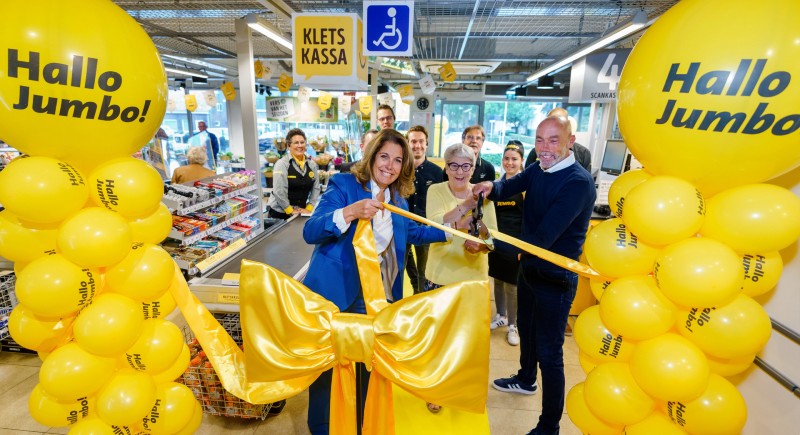
A Grocery Line Where Slower is Better: Supermarkets Open ‘Chat Checkouts’ to Combat Loneliness Among Elderly

Jumbo
Jumbo

1.3 million people in the Netherlands are older than 75 years—and one large supermarket chain is making sure they’re not getting too lonely in their elder years.

The Dutch government with its campaign, ‘One Against Loneliness’, has galvanized organizations, towns, companies, and individuals to find solutions. The grocer giant, Jumbo, is doing their part with its innovative chatty check outs.

The idea for the ‘Kletskassa’, which translates to ‘chat checkout’, originated more than two years ago—and in the summer of 2019 the first Kletskassa was opened in Vlijmen in Brabant.

This resulted in many positive reactions from customers—and now Jumbo is expanding the initiative further: By this time next year, there will be chat checkouts in 200 stores across the country where people can go for a conversation. When choosing the stores, areas where loneliness is a major factor are carefully considered.

Colette Cloosterman-van Eerd, CCO of Jumbo and the driving force behind the National Coalition against Loneliness, is closely involved in the initiative. She says, “Many people, especially the elderly, sometimes feel lonely. As a family business and supermarket chain, we are at the heart of society.”

“Our stores are an important meeting place for many people and we want to play a role in identifying and reducing loneliness. We do this in various ways, including our Kletskassas. We are proud that many of our cashiers like to take a seat behind a Kletskassa. They support the initiative and want to help people to make real contact with them out of genuine interest.”

RELATED: Seniors Play Dress Up With Nature to Personify the Magic Around Us– LOOK

“It is a small gesture, but very valuable, especially in a world that is digitizing and getting faster and faster.”

Jumbo

Local approach to loneliness

In addition to the Kletskassas, Jumbo has various other initiatives to establish personal contact between people.

Cloosterman-van Eerd explained that, “At Jumbo we want to be more than just a place where you do your shopping. For example, we help our stores by means of a manual to signal loneliness among customers and to set up local initiatives… Several stores also have a chat corner where customers can grab a nice cup of coffee and chat with neighbors.”

The Ministry of Health, Welfare and Sport has supported the establishment of local coalitions against loneliness in each of the 355 municipalities across the country for organizing programs such as home visits, telephone hotlines, and creating maps of activities for nearby seniors.

MORE: 100-Year-old Grandma Sets Guinness World Record as a Powerlifter, and Continues Winning Trophies (WATCH)

The Dutch national movement towards supporting older people will hopefully catch on in many more countries around the world.

ENCOURAGE Positive Chatter Among Your Peers—Share This Story…

First EV Trucks Roll off Rivian Assembly Line in Illinois, Watch Giddy Test Drives: ‘Quickest Thing I‘ve Ever Driven’

Rivian EV truck test drives-YouTube
Rivian EV truck test drives/YouTube

Rivian Automobiles has just launched a pair of all-electric outdoor adventure vehicles following years of subjecting them to the harshest testing and explorers’ feedback.

On September 14th, their first models were driven off the assembly line in their Illinois production plant.

The R1T and the R1S are super-loaded with features specialized for road-tripping to off-road adventure, and they have a range 80 miles greater than Ford’s electric pickup.

“A trail to the middle of nowhere. A great mountain road. A long weekend with the family. We are focused on building products that inspire and enable you to see the world, on-road and way off,” the website reads, and that’s no understatement.

The robustness and capability of these vehicles is dramatic, as were the rigors Rivian put their SUV and pickup through on the way to the dealership.

The battery system was built and tested in environments as varied as 130ºF to -25ºF to ensure the car starts no matter where you left it. The four-wheel drive system will do 0-60 in 3 seconds, can crawl up rocks at inclines as steep as you care to attempt, and the models can wade through three feet of water.

To get some early durability testing, two pickups were sent on a 13,000-mile trip from the tip of Argentina up to Los Angeles, which spanned 100 days and every type of terrain and weather imaginable.

Rivian

With a price tag starting at $67,500 the vehicles are not exactly cheap, but for the most capable nature-lover who is interested in enjoying the great outdoors as much as they are in saving it, there’s just no other choice out there.

A world of experiences

Automatic driving, LTE-WiFI, a booming stereo system with full tablet connectibility and 120V power outlets turns any trip a little more like an RV-one rather than an on-the-rough camping expedition.

MORE: German Company Makes Concrete to Charge Electric Vehicles From Roads With 95% Efficiency and Low Cost

The lack of engine block gives the R1T an extraordinary amount of storage space—68 cubic feet in total, which also allows the them to fit a full-size spare tire as standard, and the innovative “Gear Tunnel.”

Located between the cab and the backseat, the gear tunnel is a third standard storage option idea for skis, wetsuits, muddy or dirty cloths and equipment, or anything else that doesn’t have a home, as well as being the compartment for some unique add-ons.

RELATED: One of the Biggest Myths About EVs is Busted in New Study

Rivian will sell you an electric slide-out camp kitchen—complete with crockery that folds in and out of the Gear Tunnel. On top of the all-glass panoramic star-gazing roof is an equipment rack fitted with attachments suitable for most third-party products.

It’s an awful lot to fit into a car, but this month the company announced it had received more than 24,000 preorders for the R1T, which they say will be available with an extended range of 400 miles on a charge by next year.

(WATCH the test drives below.)

REV UP the Positivity—Share This Article…

The ‘World’s Longest’ 3D-Printed Concrete Bridge Erected in The Netherlands

Municipality of Nijmegen, Michiel van der Kley

In the Netherlands, a country famous for all manner of methods for surmounting aquatic obstacles, an engineering company recently completed the world’s largest 3D-printed bridge.

Built in Nijmegen, the bridge spans 95 feet (29 meters) across a canal, and was completed through a collaboration from the Eindhoven Institute of Technology, a pair of engineering firms, and planning aid from the government.

It surpasses by 10 feet the previous record-holding 3D-printed bridge in China, and helps demonstrate the scope of 3D printing advantages for both designers and policy makers. Among these are the facts that 3D printers use far less material than traditional construction techniques, and offer greater creative possibilities for designers.

“The city of Nijmegen is very honored to receive this innovative 3D printed bridge,” said Alderman Bert Velthuis of Nijmegen City Council. “We are a city of bridges, and this special, innovative bridge is a wonderful addition. The bridge leads to connection: in the design and construction phase it connected the different partners, and from now on the bridge connects our residents.”

The bridge is striking to look at, with sculpted conical feet that gives it a shape a little like that of a caterpillar.

MORE: World’s First 3-D Printed School Poised to Be Built in Madagascar For Half the Price of Traditional

The CEO of the 3D-printing firm Weber Benelux stated the bridge, that was designed on a computer and printed piece by piece before being assembled on site, required 50% less material to create as the printer only deposits concrete where it’s absolutely needed for structural integrity.

Furthermore, the mold and design will be there in the Weber Benelux Nijmegen site for years to come, meaning the bridge can be quickly commissioned and printed again with only minor tweaks, a reproducibility rare in large civic projects, and which could save tens of thousands in design, surveying, and consulting costs.

RELATED: Stylish Tiny Homes Are Now Being 3D-Printed In 24 Hours And Shipped to Your Site

“Nijmegen has had a fantastic year as [it was named] European Green Capital,” said Alderman of the municipality of Nijmegen Harriët Tiemens, in a 2019 statement on the bridge’s announcement. “A new innovative sustainable 3D-printed bridge is a nice addition to this.”

DESIGN a Culture of Innovation—Share This Story…

“Diligence is the mother of good fortune, and idleness, its opposite, never brought a man to the goal of any of his best wishes.” – Miguel de Cervantes (born 474 years ago)

Quote of the Day: “Diligence is the mother of good fortune, and idleness, its opposite, never brought a man to the goal of any of his best wishes.” – Miguel de Cervantes, author of Don Quixote (born 474 years ago)

Photo: by Hu Chen

With a new inspirational quote every day, atop the perfect photo—collected and archived on our Quotes page—why not bookmark GNN.org for a daily uplift?