










All News - Page 440 of 1716 - Good News Network
Home Blog Page 440

Nutrient-Rich Human Waste is Poised to Sustain Agriculture and Improve Economies, Say Researchers

agricultre sunset scene L. Brian Stauffer university of illinois
L. Brian Stauffer/University of Illinois

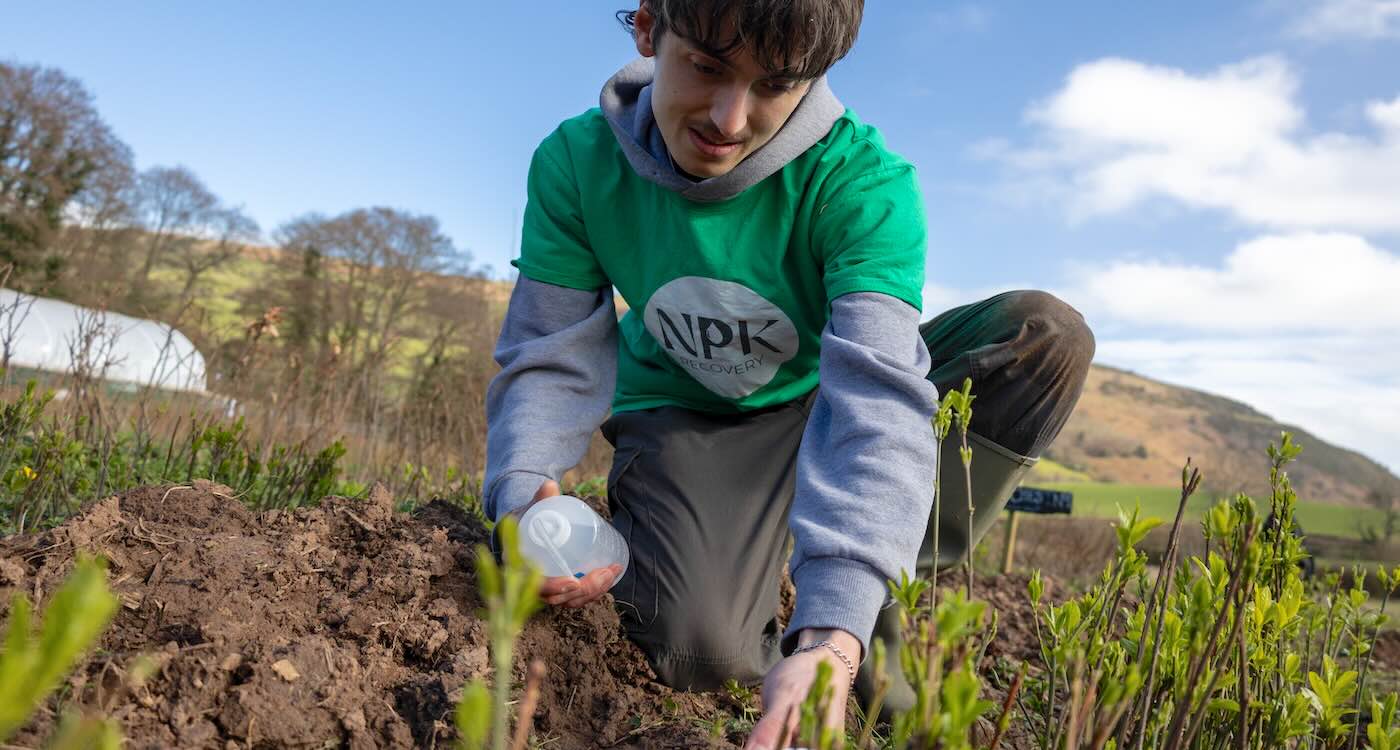
The future connection between human waste, sanitation technology, and sustainable agriculture is becoming more evident. According to new research, countries could be moving closer to using human waste as fertilizer, closing the loop to more circular, sustainable economies.

A new study directed by University of Illinois Urbana-Champaign civil and environmental engineering professor Jeremy Guest, characterizes the spatial distribution of human urine-derived nutrients—nitrogen, phosphorus. and potassium—and agricultural fertilizer demand to define supply-demand location typologies, their prevalence across the globe, and the implications for resource recovery.

“The total amount of nitrogen, phosphorus, and potassium largely remains constant in our bodies, once we stop growing,” said Guest. “Whatever comes in through food and drink must come out in our urine, feces and sweat. Knowing that, we can estimate how much of each of these nutrients is in a population’s bodily waste if we know their diet.”

Previous studies by Guest and others have assessed the potential for recovering the nutrients from human waste across the globe and identified locations with a surplus of human waste-derived nutrients relative to the local demand for agricultural fertilizers.

“The new study is the first to describe human waste-derived nutrient supply-demand location relationships using a single mathematical equation,” Guest said. “The quality of sanitation infrastructure varies greatly across the globe, as do people’s diets and the availability of land suitable for agriculture. Having the means to characterize and quantitatively compare a location’s nutrient-recovery potential can go a long way to better inform decision-makers when it comes to future sanitation and agriculture policy.”

The team performed extensive numerical and geographic analyses of dietary, population, sanitation and agricultural data from 107 countries to accomplish this quantitative characterization at the global scale. The investigation revealed three distinct supply-demand typologies: countries with a co-located supply-demand; countries with a dislocated supply-demand; and countries with diverse supply-demand proximities.

The United States and Australia, for example, fall under the dislocated supply-demand typology. They have intensive agriculture in areas far from large cities, thus the human waste-derived nutrient supply is far away from where it is needed, Guest said.

Even with advanced sanitation infrastructure in place, this means that nutrients would need to be transported over large distances, either as heavy fluids or converted into concentrated crystalline products.

Economically speaking, Guest said, it would make sense to work with a concentrated product to implement a human waste-derived fertilizer in these countries.

The study reports that in countries with co-located supply-demand typologies like India, Nigeria, and Uganda, human populations are more substantively in the proximity of agricultural areas, making local reuse possible.

In many communities with co-located supply-demand, however, there is a need for improved sanitation infrastructure. Guest said implementing a human waste-derived fertilizer program could be highly beneficial to sanitation and agriculture in these places.

RELATED: Amaranth is a Health Trend 8,000 Years Old That ‘Could Feed the World’

Countries like Brazil, Mexico, China, and Russia exhibit a continuum of co-location to dislocation of nutrient supply and demand.

The study reports that policymakers would need to approach human waste-derived nutrient use with more regionalized strategies and a range of local reuse and transport approaches. “Higher income countries in this group may have the infrastructure and economic support for various technologies, but those with limited financial resources would require prioritization of resource-recovery technology in some areas,” Guest said.

The team was surprised to find the typologies corresponded closely to the United Nations Human Development Index.

MORE: The Yellow Center of the Deadliest Flower is a Lifeline to Farmers – and the Planet

“Higher HDI-scoring countries like the U.S., Western Europe, and Australia tend to fall in the dislocated supply-demand typology and lower HDI-scoring countries tend to fit the co-located supply-demand typology. Of course, there are exceptions, but we did not expect to find such a strong correlation,” Guest said.

The findings are published in the journal Environmental Science and Technology.

The team hopes this research will help clarify the salient economic, sanitation, and agricultural characteristics of countries across the globe so that decision-makers can prioritize investment, policies, and technologies that will advance goals for a circular economy and the provision of sanitation to all, Guest explained. That sounds like good news to us.

Source: University of Illinois at Urbana-Champaign, News Bureau

DON’T WASTE the Positive News, Share This Story…
“The road to success is always under construction.” – Lily Tomlin (turns 82 today)

Quote of the Day: “The road to success is always under construction.” – Lily Tomlin (turns 82 today)

Photo: Hayden Walker

With a new inspirational quote every day, atop the perfect photo—collected and archived on our Quotes page—why not bookmark GNN.org for a daily uplift?


‘Within Good’ Bracelets From Muhammad Ali’s Daughter and GNN Co-Owner Are Back in Stock

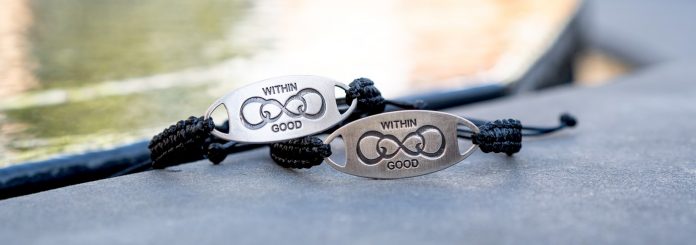
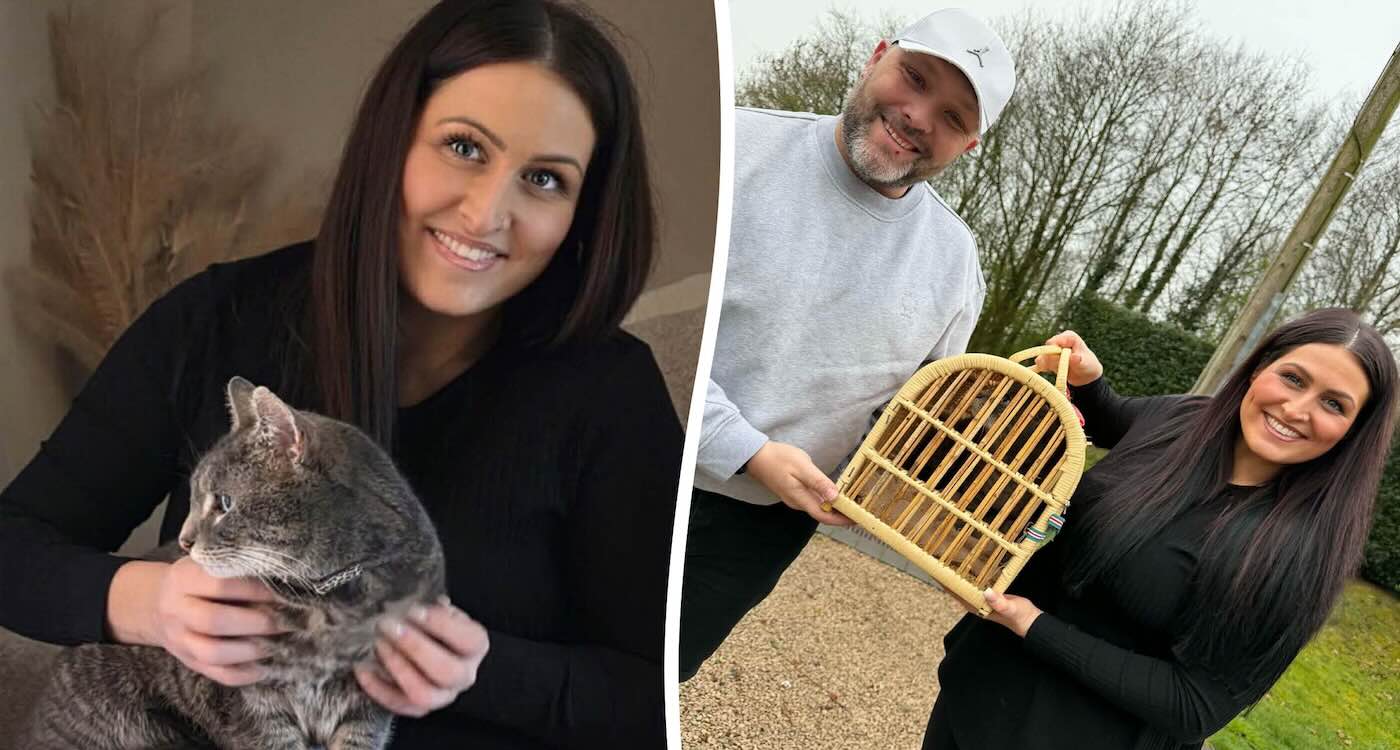
Back by popular demand: The Within Good bracelets, which many of you have been asking for, are back in stock and ready to be shipped. And, the face has also been updated so the message will shine through more clearly and withstand daily wear.

For those of you new to the brand, Within Good was started by GNN co-owner Anthony Samadani and Muhammad Ali’s eldest daughter, May May Ali. After staring at the word “Good” one night, Anthony kept seeing the word God become more pronounced. It was then that the phrase ‘Within Good, There is God’ was destined to be a wearable reminder.

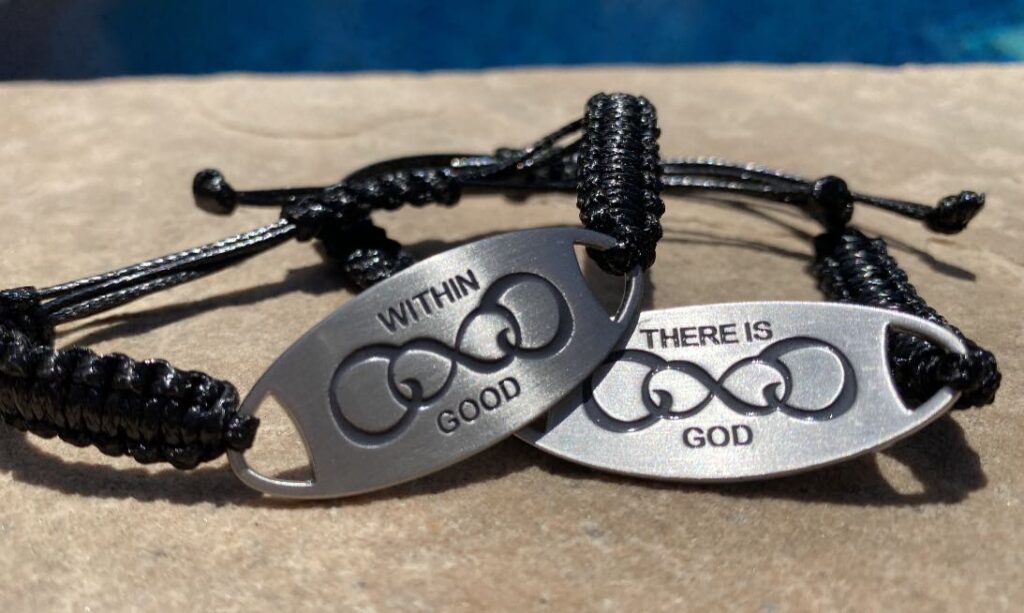
The founders stress that it is not intended to be a religious bracelet. The concept was to go back to the basics of doing good for yourself and others, which connects us all. It is a universal message that can unite people of all faiths and backgrounds. This is why the second half of the statement, There is God, appears on the underside of the bracelet since the concept of God is personal to every wearer.

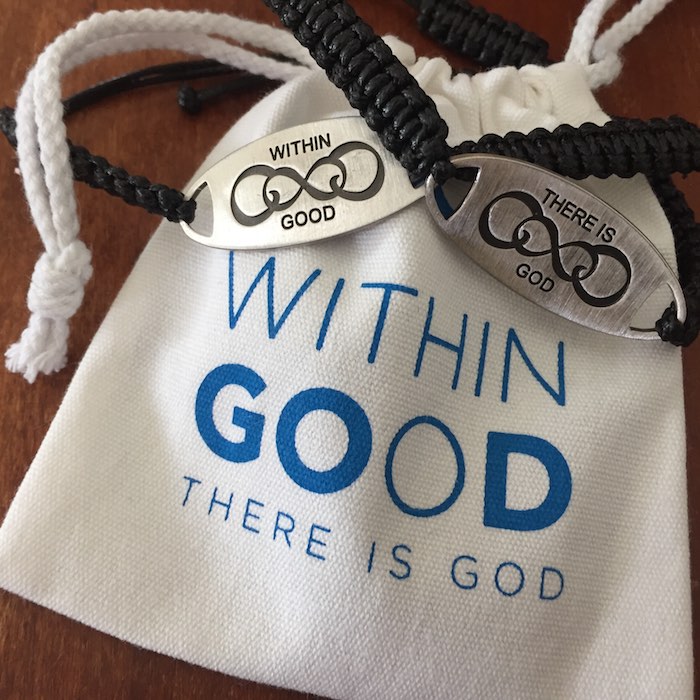
And, each bracelet comes in its own canvas pouch—ready to give as a gift without wrapping.

The logo evolved into an infinity symbol to spell the double “o” in Good, while interlocking the G and D. The rope symbolizes strength and the strong connection between Good and God that is within us all.

And, GNN readers get a 10% discount

The unisex bracelets feature a casual yet classy styling and are made of nylon wax rope and zinc alloy with silver plating. Each one will come in its own canvas pouch.

“At the end of the day, God symbolizes peace, love, harmony, perfection, happiness, serenity, connectedness, purpose and any other word or feeling that makes you feel Good.”

The retail price is $29.99 but our loyal GNN readers will receive a 10% discount (with only California residents paying tax). Simply add the code GNN10, into the discount box.

The handsome bracelets are a great gift for yourself and others, a wearable reminder that the more good we do, the more we connect with God and each other.

“At the end of the day, God symbolizes peace, love, harmony, perfection, happiness, serenity, connectedness, purpose, and any other word that makes you feel GOOD”.

The Within Good team has been overwhelmed by the positive response and personal stories from their customers.

“Within GOoD is my go-to accessory this summer… I absolutely love it.” – Marjie S

“I received my bracelet and couldn’t be happier with it! I absolutely love the message and plan on wearing it every day. Today was my first day and every time I looked at it, it was a reminder to me that there still is good in the world, and it inspires me to spread the goodness through my actions, as well.” – Mandy R.

Remember that you can also find the bracelet on our Good Gifts page in the top menu of our homepage.

SHARE the gift idea on Social Media, too…

Houston’s Mattress Mack and Lakewood Church Open Doors to Hurricane Ida Refugees, Send Truckloads of Supplies

test

In the wake of Hurricane Ida’s devastating toll on New Orleans, the people of Houston are opening their Texas-sized hearts and providing Texas-sized relief to refugees. Not only are they sending trucks full of supplies, they’re opening their doors to provide beds for the displaced, including inside the massive Lakewood Church.

Photo: Gallery Furniture/Facebook

And, once again, Gallery Furniture’s “Mattress Mack”—Jim McIngvale—legendary for his past storm relief efforts—is leading the charge, and initiating his own collection drive.

“We did it during Katrina and, you know, people need a place to stay. They’ve been disrupted from their homes by this terrible hurricane, so it’s the least we can do. We’ve got lots of mattresses, lots of sofas and anybody needs a place to stay, come out to Gallery Furniture,” McIngvale told KPRC News. “It’s just the right thing to do.”

Any evacuee with a Louisiana ID will be offered shelter in the store. And, while Houstonians arrive hourly with cars full of supplies to send to Louisiana, McIngvale is scouting a location for a distribution warehouse from which to disperse the truckloads of relief supplies once they arrive.

Donations can be dropped off at the Gallery Furniture 6006 N. Freeway location through Wednesday, September 1st until 5:30 p.m. The items most needed are:

Non-Perishable Food, Bottled Water, Diapers, Baby wipes, Pet Food, Soap, Toothpaste, Toothbrushes, Deodorant, Hairbrushes, Shampoo, Feminine care products, Socks, Books, games, puzzles, and activities for families with children.

Christian groups are galvanizing to help

Houston’s Lakewood Church was also holding a 2-day collection drive that ended today, and has opened its doors to offer shelter for those who fled the hurricane.

MORE: Man Opens Up His Home to Shelter 300 Dogs From a Hurricane: ‘It doesn’t matter if the house is dirty’

“We are preparing to help the people coming from New Orleans and Louisiana… We want them to know that Lakewood is open if they need a place to stay. We’ll accommodate as many as we can safely,” Pastor Joel Osteen told KPRC.

Free Astros Tickets

The Houston Astros Foundation is also hosting an emergency drive at Minute Maid Park from 8 a.m. to 2 p.m. on Wednesday and Thursday, with all donations being shipped directly to Louisiana communities impacted by the storm.

The drive is only accepting these specific items: Bottled water, Bug spray, Brooms, Garbage bags, Mops, Cleaning supplies, Laundry detergent and bleach, Hygiene products (toothpaste, shampoo, soap), Baby products (food, diapers and wipes), Paper products, Plastic cutlery, and Pet food.

Curbside donations can be dropped off at Crawford Street at the Union Street entrance. For each donation, fans will receive two free tickets to the September 6 Astros game versus the Seattle Mariners. (Two tickets per vehicle while supplies last!)

Don’t live in Texas, but want to help? McIngvale has set up a GoFundMe campaign.

(WATCH the KPRC kindness news coverage below…)

BE SURE to SHARE This Story to Help Hurricane Victims…

Baking Bad: Ex-Cons Are Mentored as Bakers and Now Their Bread is in the Best Restaurants

SWNS
SWNS

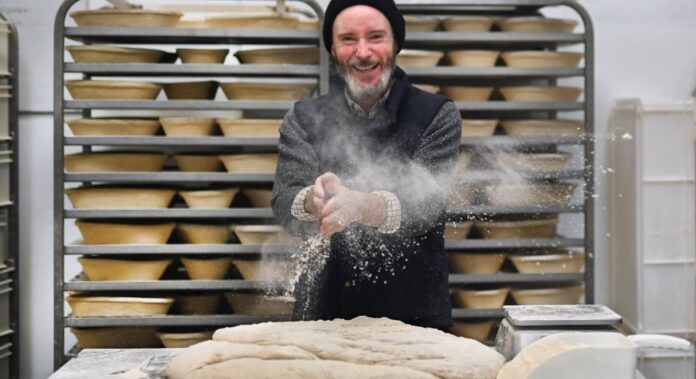
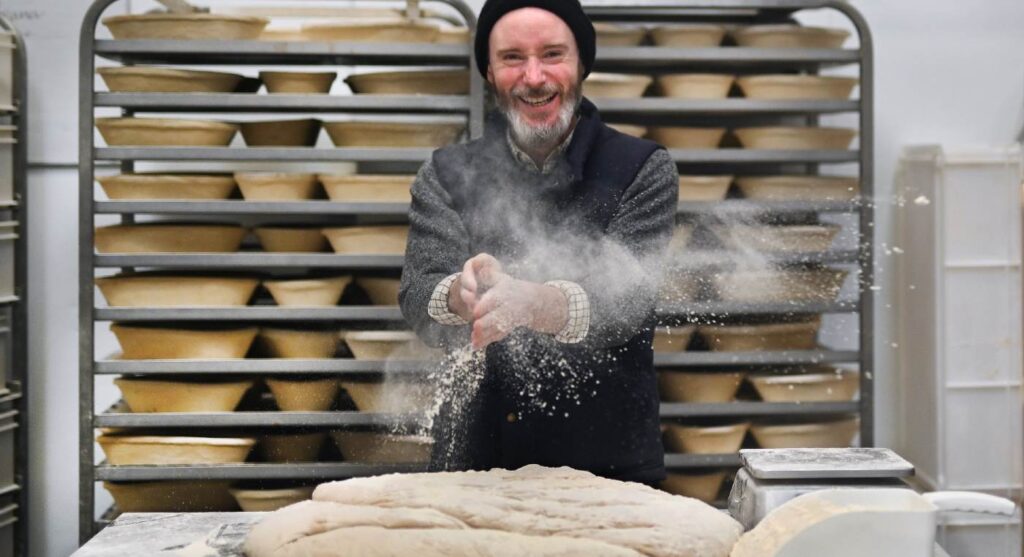
A bakery run by a Cambridge graduate is teaching ex-cons new skills, including providing bread to some of Scotland’s fanciest restaurants.

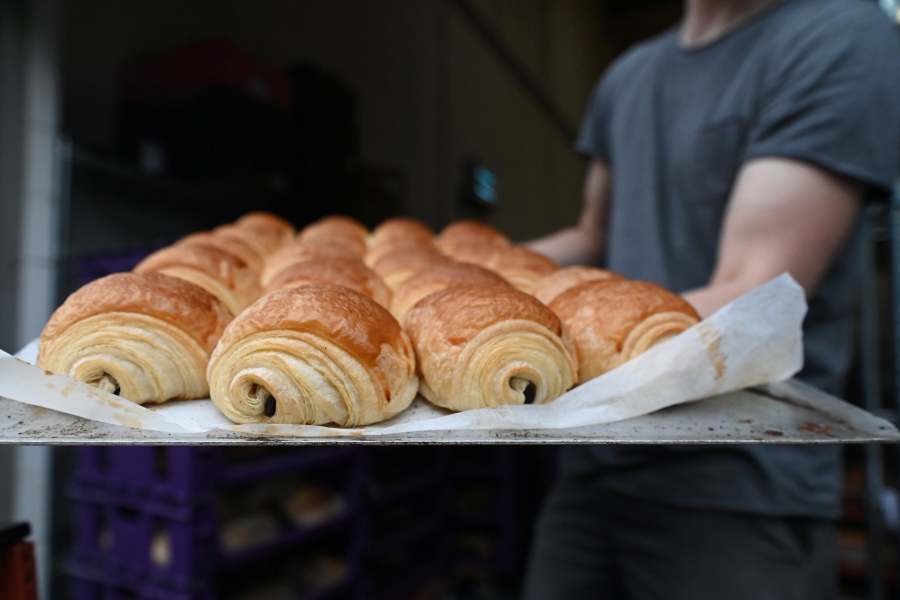
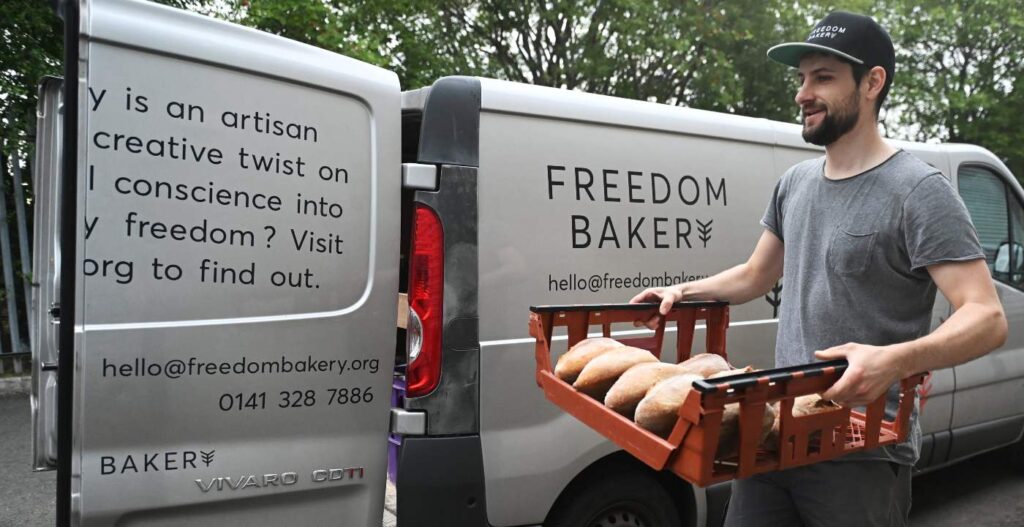
Freedom Bakery, in Glasgow’s East End, provides well-known eateries including Ubiquitous Chip with bread rolls.

The social enterprise was set up by Matt Fountain who grew up watching his stepfather struggle to establish a life after being released from jail in  Kent—and who he had visited in prison, aged 12, and begged never to go again.

Matt enrolled in university courses in Manchester, studied History of Art in London, spent a year in Glasgow, and attended Cambridge.

He returned to Glasgow and had the chance to do a PhD at Oxford, but opted not to.

Instead he decided to invest his time and energy into helping people, including convicted murderers, reintegrate into society.

In 2014, he was granted permission to use a small kitchen in HMP Low Moss, Glasgow.

SWNS

Matt planned to make and sell bread and at the same time put those prisoners through a recognized qualification for the baking industry, SVQ Level 2 in Craft Baking.

By 2017 he was working with prisoners in notorious Barlinnie, and pairing them with qualified bakers in order to help them obtain a qualification.

Trainee bakers have a broad variety of backgrounds, and Matt’s employees are given training in self-defence due to working with prisoners.

There are currently 16 employees and a third were recruited from jails.

Matt said: “It’s a mixture of long term and short term sentences including drugs-related offences, fraud, and I’m afraid to say manslaughter and murder.”

Matt felt out of place in Cambridge and failed to find enjoyment in it. “By the end of it I was pretty worn out and because of my background, I felt like I was living a bit of a fake life.

After struggling to get a job after graduating from Cambridge, he felt at a loose end. “I thought if I had an Oxbridge degree it would help me in life,” he said. “I didn’t really know what to do.

MORE: Waitress in Tears After Receiving Thank You Note From Widow Eating Alone

“I came to the conclusion that I should be doing something useful and I set upon this idea to raise money for the charity Shelter by cycling around the UK.”

That led to the idea of starting Freedom Bakery.

Matt said: “The only ideal was to make sure it was really good so it would leave a lasting impression on the person eating it, so they would understand where it came from and maybe think more positively about who made that bread.

SWNS

“It is important our bread tastes great and for us to be really successful, our people need to be cared for and paid fairly and if those things combine it means the bread we make is really doing good.”

He described prisons as “a microcosm of humanity with both good and evil.”

Matt said: “For some, the odds have been stacked against them from the beginning, so they never had a chance. An individual contacted us who has been in institutions from childhood.

RELATED: Youth Who Walks 17 Miles So He Can Work is Given New Bike and $52,000 From Good Samaritans

“He is completely institutionalized but he wants to get out and can imagine a life he can have that will be healthy and rewarding so that is what we are about.”

In October the bakery will move to a larger premises.

And it saw its sales increase by 12 per cent last year, despite lockdowns.

Matt added: “I really feel that it is important to help people, but at the end of the day they have to want to help themselves. In terms of the help we can offer, that goes quite far with us.”

LET Good News Rise High—Share This Story…
She Lost Both Her Legs in the Brussels Bombing And is Now Competing on Horseback in the Paralympics

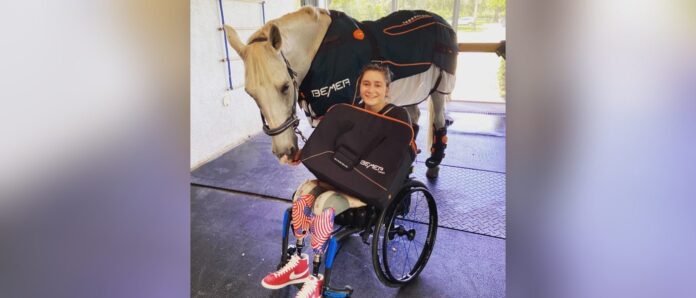
It was the spring of 2016, and 17-year-old Beatrice de Lavalette was waiting for a flight when she got hit by the terrorist bombing at Brussels airport.

Along with serious burns and a spinal cord injury, De Lavalette lost both legs below the knee.

Yet she says she wouldn’t be the person she is today if weren’t for those events… and the person is she will be competing as part of the U.S. Para-Equestrian team at the Paralympic Games in Tokyo.

Riding is a passion not only for De Lavalette but for her family as well. She began riding at age 3 and by 12, she’d taken up dressage.

Getting back in the saddle was no easy feat in light of her injuries, but she was determined to do so as soon as she was able. Five months after the bombings, thanks to her grit, determination—and extensive regimens of rehab and retraining—that’s exactly where she was.

“I had no muscle, I was just skin and bones, so being back on the saddle with no sense of balance was really uncomfortable. But with time, I was able to build up the muscle and work on my balance, and it got easier with time,” she told CNN.

Of course, De Lavalette got a lot of help and encouragement along the way—from her family, her friends, the doctors and hospital staff—and from her beloved horse, DeeDee.

Unsurprisingly, De Lavalette was depressed as she tried to come to terms with her injuries. She admits to crying a lot in the hospital until an unexpected visitor turned things around for her.

“DeeDee saved my life,” De Lavalette said in an interview on The Doctors. “My mom had figured out a way to get … DeeDee into the hospital parking lot. I said, ‘Where’s my [wheel]chair?’”

“I went outside in the rain and as I got closer, she came towards me and put her head against my chest. That moment made me decide that I wasn’t going to give up on life.”

It’s taken a great deal of hard work for De Lavalette to get where she is today. Having to adjust to her body’s new normal was, in many ways, like having to learn to ride all over again.

MORE: An Archer With No Arms Aims to Win Gold at Summer Paralympic Games Joining Team USA – VIDEO

But as her efforts began to pay off, the Paralympics seemed the perfect outlet to showcase her hard-earned skills.

After making her first appearance as part of the U.S. Para-Dressage team in 2020, De Lavalette set her sights on Tokyo, where she’ll be riding an “awesome” 14-year-old Dutch Warmblood named Clarc.

“The reason I’ve gotten to this level of recovery is because of my horses,” De Lavalette told News 4 JAX.

RELATED: Limb-Different Gamer Wins Confidence—And Fans—With Bionic Arm, After a Rough Time in School

De Lavalette says, “I can’t change what happened, but I can succeed at being me. As I have said many times, I was in the wrong place at the wrong time. What else is there to say? There are no ‘What ifs.’ I have a new life in front of me,” she says on her website. “What’s important is that I’m alive and I feel that I will do something grand with my life.”

We’d say, she already has.

(WATCH The Doctors video about Beatrice’s story below.)

GALLOP the Good News Over to Those Social Feeds…

Pecan-Rich Diet Shown to Reduce Cholesterol in New Study

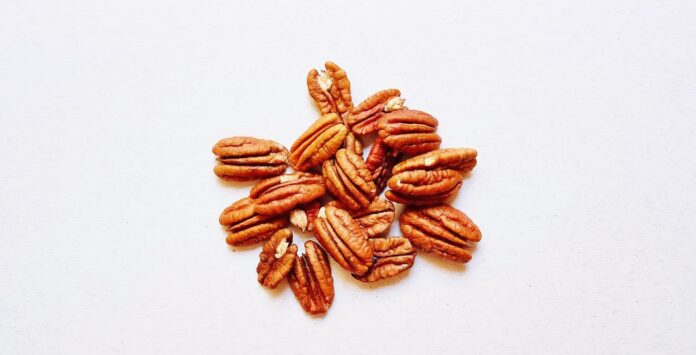
While the proper pronunciation of pecan remains a subject of debate, University of Georgia researchers have shown the tree nut can dramatically improve a person’s cholesterol levels.

Participants at risk for cardiovascular disease who ate pecans during an eight-week intervention showed significant improvements in total cholesterol, triglycerides and low-density lipoprotein (LDL), or “bad” cholesterol, in a study conducted by researchers in the UGA College of Family and Consumer Sciences.

“This dietary intervention, when put in the context of different intervention studies, was extremely successful,” said Jamie Cooper, a professor in the FACS department of nutritional sciences and one of the study’s authors. “We had some people who actually went from having high cholesterol at the start of the study to no longer being in that category after the intervention.”

Researchers saw an average drop of 5% in total cholesterol and between 6% and 9% in LDL among participants who consumed pecans.

For context, researchers referred to a previous meta-analysis of 51 exercise interventions designed to lower cholesterol that reported an average reduction of 1% in total cholesterol and 5% in LDL cholesterol.

“The addition of pecans to the diet not only produced a greater and more consistent reduction in total cholesterol and LDL compared to many other lifestyle interventions, but may also be a more sustainable approach for long-term health,” Cooper said.

“Some research shows that even a 1% reduction in LDL is associated with a small reduction of coronary artery disease risk, so these reductions are definitely clinically meaningful.”

Researchers assigned 52 adults between the ages of 30 and 75 who were at higher risk for cardiovascular disease to one of three groups.

One group consumed 68 grams or about 470 calories of pecans a day as part of their regular diet; a second group substituted pecans for a similar amount of calories from their habitual diet, and a control group did not consume pecans.

At eight weeks, participants consumed a high-fat meal to determine changes in blood lipids and the amount of glucose, or sugar, in the blood.

Fasted blood lipids showed similar improvements among the two pecan groups while post-meal triglycerides were reduced in the group that added pecans. Post-meal glucose was lowered in the group that substituted pecans.

“Whether people added them or substituted other foods in the diet for them, we still saw improvements and pretty similar responses in total cholesterol and LDL cholesterol in particular,” said Cooper, who also serves as director of the UGA Obesity Initiative.

Researchers—whose work was published this month in the The Journal of Nutrition—pointed to the known bioactive properties of pecans for possible mechanisms driving the improvements.

Pecans are high in healthy fatty acids and fiber, both of which have been linked to lower cholesterol.

Source: University of Georgia

“Hope is important because it can make the present moment less difficult to bear. If we believe that tomorrow will be better, we can bear a hardship today.” – Thich Nhat Hanh

Quote of the Day: “Hope is important because it can make the present moment less difficult to bear. If we believe that tomorrow will be better, we can bear a hardship today.” – Thich Nhat Hanh

Photo: Aziz Acharki

With a new inspirational quote every day, atop the perfect photo—collected and archived on our Quotes page—why not bookmark GNN.org for a daily uplift?


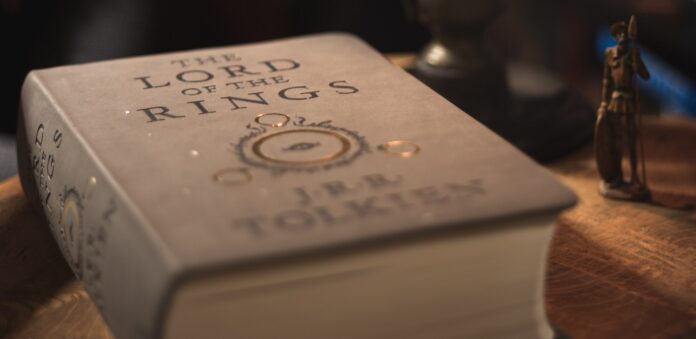
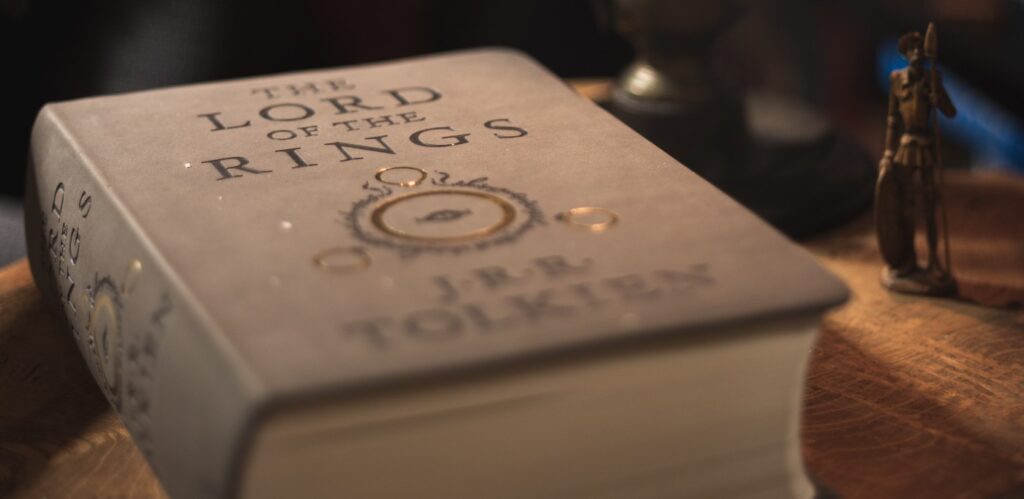
What Can the Wise Voices of J.R.R. Tolkien, Frodo Baggins, and Gandalf the Grey Teach Us About the Present Day

Vincent Ma Janssen

Of course, the commentary of wise figures from The Lord of the Rings would be relevant for every day and every moment, such is the power of J.R.R. Tolkien’s writings.

While Tolkien vehemently rejected that his fantasy masterpiece represented anything allegorical whatsoever, one might say that it has launched itself forward to stand among the principle allegories of our time.

I recently took to The Lord of the Rings trilogy books once again, as my lack of television has barred me from watching the films for two-and-a-half years, and I couldn’t help but measure everything I’ve seen since COVID-19 arrived to the circumstances of Tolkien and of his chief protagonist Frodo Baggins.

In the edition I read (which was not the edition my brother and I owned when we were young), a detailed foreword written by the author explained how the book came to be when he took up his pen in the waxing years of the turmoil that would become World War II.

In it I found something which Gandalf the Grey might describe as “an encouraging thought,” a feeling that struck me again as I read the innocence in Frodo’s voice as he realizes he must leave his home forever on a perilous quest from which he likely would never return.

Today, with warnings of waning immunity, fourth waves, and more, I thought an interview with Frodo, Gandalf, and their creator might make for a strong lesson in changing times, and our attitudes towards them.

Here’s to the future

Vincent Ma Janssen

The best stories are the ones which are told the best, with all those wonderful literary keystones fitted neatly together. They are the ones we learn of in creative writing: can we see ourselves in the characters, are they flawed, do they make the right choice or the easy one, can we relate to their difficulties?

Tolkien and his characters reflect, whether he would like them to or not, how the times during which one lives tend to vacuum them up, obscuring thoughts of the future or of the past. COVID-19 has been compared to many great crises, sometimes fairly, sometimes comedically, but we can learn from the great writer and his characters that the correct way out of a crisis is to never believe the current disaster is somehow unique in its dreadfulness.

CHECK OUT: How One Writer Learned to be Productive During the Pandemic

Tolkien became a man in perhaps the worst single moment in history to do so, around 1914, at the dawning of World War I.

“In those days chaps joined up, or were scorned publicly,” he wrote in a letter to his son Christopher later in life. “It was a nasty cleft to be in for a young man with too much imagination and little physical courage.”

He was a junior officer at the Battle of the Somme, one of the most tragic events in human history, notable for the sheer empty-headedness of it all. Catching trench fever, he was shipped back to England, after which nearly every young man in his battalion was killed. Talk about a Hobbit’s luck.

The Great War, described at the time as the “war to end all wars” was a singularity. Yet, as unbelievably calamitous as it had proved, twenty years later a new generation was set to do it all again.

“One has indeed personally to come under the shadow of war to feel fully its oppression; but as the years go by it seems now often forgotten that to be caught in youth by 1914 was no less hideous an experience than to be involved in 1939 and the following years,” Tolkien writes in his foreword.

He had not finished writing his iconic fantasy books upon the outbreak of the second ‘great war’ in 1939—and had not even finished the first part of the first book.

RELATED: Join a Global Gathering of Researchers on the Importance of Self-Compassion – Free Online

“In spite of the darkness of the next five years I found that the story could not now wholly be abandoned and I plodded on, mostly by night,” he recalled. His son was serving in the British Royal Air Force, a difficult situation for any parent. Thank goodness you plodded on sir, thank goodness.

From Middle-England to Middle-Earth

Now we come to Frodo. Like the hobbit, so many of us in March of 2020 suddenly had our collective “Shires” clouded over. News coming out of Italy, China, and a cruise ship off the coast of Washington had placed the Ring of Power atop all our mantlepieces. A long, hard journey lay ahead.

Among Frodo’s seminal strengths is one which shines during his encounter with the dark portents which Gandalf brings to him—that he must leave the Shire behind, perhaps forever. Rather than giving up or refusing to get involved, or feeling there may be no time for futures, he simply gets on with it, despite the fact that he admits he is very scared.

“But this [the adventure] would mean exile, a flight from danger into danger, drawing it after me. And I suppose I must go alone, if I am to do that and save the Shire. But I feel very small, and very uprooted, and well—desperate.”

“I should like to save the Shire, if I could,” he tells Gandalf. “I feel that as long as the Shire lies behind, safe and comfortable, I shall find wandering more bearable: I shall know that somewhere there is a firm foothold, even if my feet cannot stand there again.”

MORE: How to Deal With Your Biggest Critic – That Inner Voice That Attacks You Regarding Self-Improvement

And without much deciding at all really, Frodo acts, reasoning the world will continue to turn, and that it would turn all the better if he can throw the Ring into the Crack of Doom in Mordor, and thereby save the Shire. This, his partner Samwise also notes after seeing Frodo in a moment of doubt: “A new day will come, and when the sun shines it will shine out the clearer.”

In a separate moment of weakness, Frodo wishes “none of this had happened,” something which many of us have said to ourselves over the last 18 months. Yet Gandalf responds, in one of the most wonderful things ever written in English, practically transposing Tolkien’s experience with the two World Wars and reminds Frodo:

“So do all who live to see such times, but that is not for them to decide. All they have to decide is what to do with the time that is given to them.”

There, peeping among the cloud-wrack above a dark tor high up in the mountains, Sam saw a white star twinkle for a while. The beauty of it smote his heart, as he looked up out of the forsaken land, and hope returned to him. For like a shaft, clear and cold, the thought pierced him that in the end the Shadow was only a small and passing thing: there was light and high beauty for ever beyond its reach.
The Return of the King (the final book in the trilogy)

SPIN the Advice From Middle Earth to Your Favorite People—Share This Story…
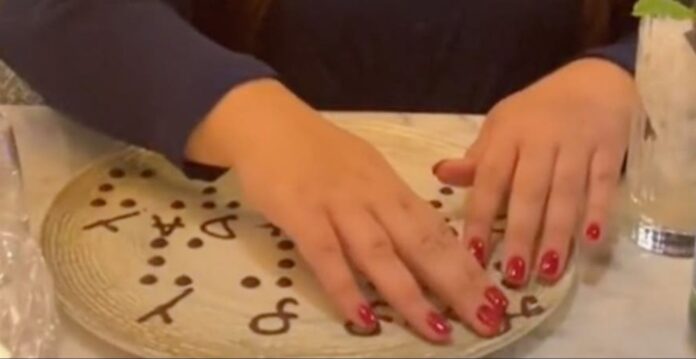
Restaurant Makes Special Chocolate For Blind Customer With Birthday Message in Braille

TikTok/@natbysight
TikTok/@natbysight

There may be a thousand ways to say, ‘Happy Birthday!’ but the sweetest of all may very well be a special chocolate message that was recently served up by an amazingly thoughtful restaurant staff.

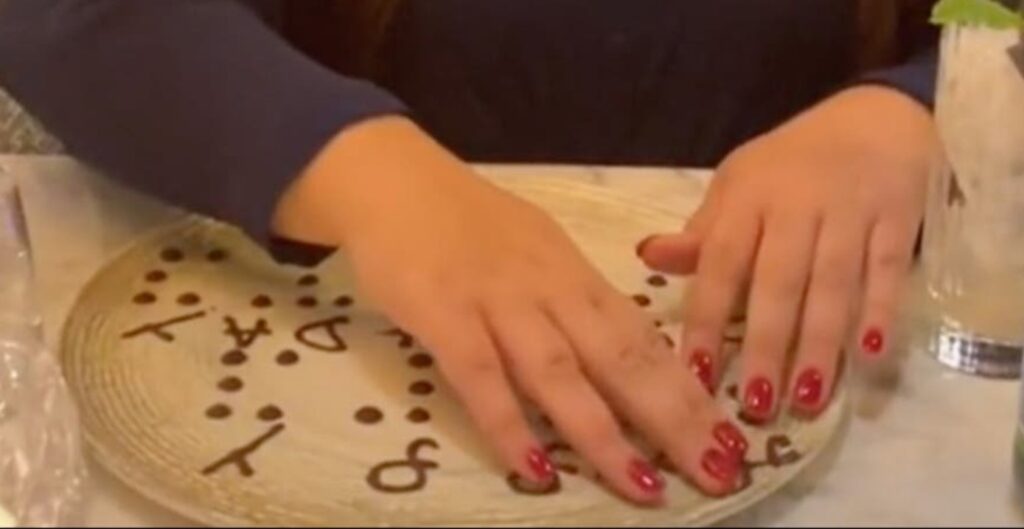
Creating natal felicitations in warm liquid cocoa was nothing new at London’s Luciano by Gino D’Acampo restaurant, but for birthday girl Natalie Te Paa, who is totally blind, the best wishes were spelled out in Braille.

What gave the message an even greater meaning was that there was no advance planning involved. When the restaurant crew learned the dinner Te Paa was sharing with friend Claire Sara was a birthday celebration, they took it upon themselves to find and recreate the Braille translation that summed up their best wishes in well-chilled chocolate.

Te Paa could barely believe her fingertips as she traced over the raised confectionary dots.

“My mind was blank for a second and then I was like, ‘Is this in Braille?’” Ta Paa told TODAY. “I’ve never had anything happen like that before. It was wild. They just really did go above and beyond.”

Dinner companion Sara recorded Te Paa’s delighted reaction to what had become a very different kind of surprise party and posted the jubilant footage to TikTok.

@natbysight

I’ll never forget this moment. #braille #blind #blindtiktok #viralvideo

♬ Epic Emotional - AShamaluevMusic

While restaurant manager Giovanni Galluccio maintains the impromptu gesture was simply part of the customer service they strive to extend to all their patrons, clocking in with close to 16 million views to date, the internet judged the extraordinary act of kindness extra special.

MORE: Blind For 15 Years She Now Has 20/20 Vision And Sees Her Grandchildren For the First Time

As Te Paa told TODAY, “The fact that people have responded so much and so well to it just shows how much the world needs kindness right now, how much the world needs a message of hope, needs to see people doing things and going above and beyond for each other.”

“So take heart despite how broken the world is right now,” the viral video caption reads, “true kindness still exists.”

RELATED: Meet the 18-Year-old Blind Piano Player Who is So Talented, Scientists Are Studying His Brain

To paraphrase M&M’s iconic tagline—that’s one message sure to “melt in your hearts, not in your hands.”

GIVE the Gift of Good News by Sharing This Story…
One Year Since Bipartisan Bill Funds Repairs at National Parks: See What Projects are Underway in 40 States

A year ago this month, former President Trump signed into law the Great American Outdoors Act, one of the largest votes of support for U.S. public lands system since it was conceived.

Now over 250 projects have already gotten underway in 40 states across America.

Passing with massive bipartisan support, the bill permanently authorized the Land and Water Conservation Fund (LWCF), a critical source of funding for public land maintenance, with $900 million in annual spending for parks, forests, lakeshores, campgrounds, roads and other infrastructure, down to the smallest playgrounds in your local neighborhood.

In Shoshone National Forest, a dilapidated bridge has been replaced; a scenic byway and drain culvert will be replaced in Umatilla and Malheur National Forests; National Forests such as Daniel Boone, Ozark St. Francis, El Yunque, George Washington-Jefferson, and all those in Florida and North Carolina, will be receiving new roads, wastewater treatment systems, campgrounds, trail restoration, bridges, and much more.

Devil’s Canyon campground on the Manti-La Sal National Forest has already received brand spanking new roads.

Montana got a hefty share of the $285 million war chest that was part of the first round of LWCF dollars distributed among 40 states to address 54 projects helping repair what needs fixing in spectacular wild places such as the Bitterroot Mountain Range.

MORE: This Road Trip Map Helps You Visit the 47 Iconic National Parks in the Shortest Time

$11 million went to the beloved Zion National Park for campground restoration, and another $4 million went to an unspecified Utah project across 50 acres.

In California, in the Sierra National Forest, several roads are getting a total makeover, as well as some of the campgrounds, while restoration of the mighty Pacific Crest Trail will be carried out across 25 National Forest easements.

RELATED: Researchers Have Found That Listening to Natural Sounds Like Running Water Benefits Human Health

That’s all in one year, and much can be hoped that next year will bring the same, and the one after that, allowing all those who enjoy the public lands in America to enjoy them as they should.

REPAIR Your News Feeds With a Little Fix of Great News…

Tens of Millions Now Have Power Thanks to Off-Grid Solar Systems –Many of Them Recycled

Jon Strand, CC license

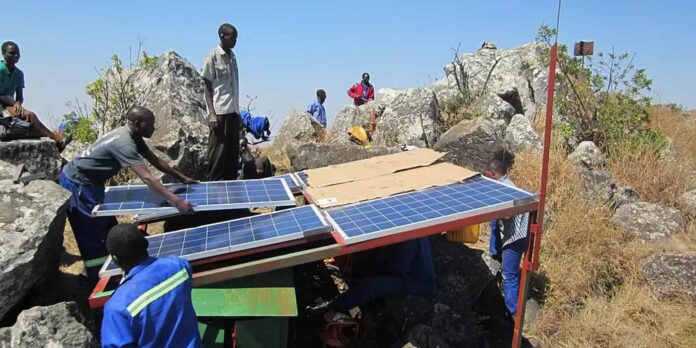
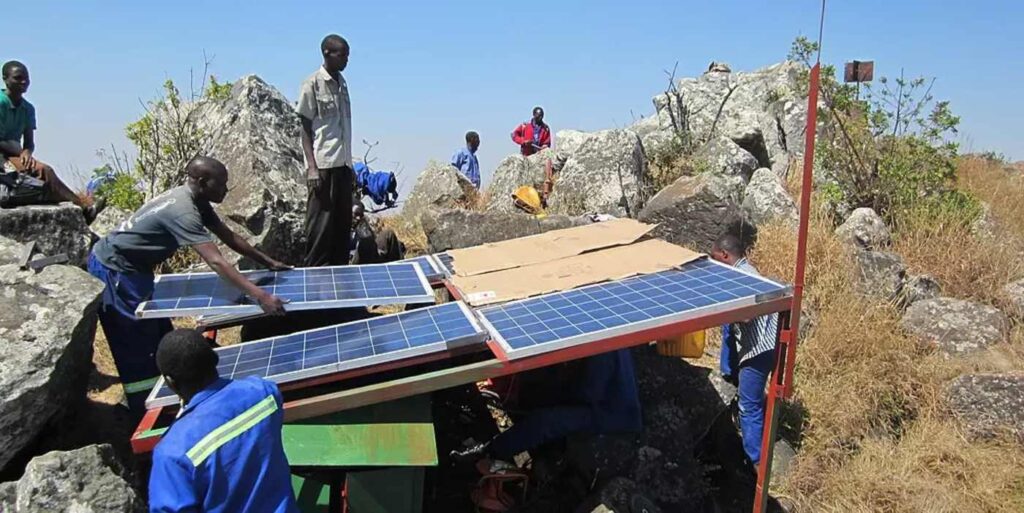
While in America off-grid solar electricity is still fairly uncommon, around the world it gives power to 420 million people.

Furthermore, it’s created an entirely unlooked-for market worth more than $1 billion annually. It’s unlooked-for because—as the first and even second generations of solar panels are nearing the end of their lifecycle—renewable energy pioneers and advocates are hurrying to try and come up with ways to prevent them from inundating landfills with millions of tons of electronic waste.

The International Renewable Energy Agency reports that, by 2050, there will be only slightly more new panels installed per year than there will be panels being decommissioned—and they are predicted to grow to 6% of global electronic waste streams.

MORE: Solar-Powered Refrigeration Trucks Will Cut Pollution From Idling Diesel Engines

The solution to the problem of growing solar waste, is perhaps seeing that a degraded solar panel just needs a slight fix to make it nearly as good as new.

Since 2017, revenues from the off-grid solar industry continue to rapidly grow, increasing by 30% annually, report the World Bank, who add that 180 million off-grid solar panels were sold to people in countries including Nigeria, Pakistan, and Lebanon.

In nations such as these, reliable power for those outside the major cities is hardly the norm. Poor infrastructure and limited investment currently restricts electricity access to about one-ninth of the world’s population.

While perhaps not good enough to maintain government or industry-imposed standards for power generation at a Google campus, decommissioned solar panels are often just fine for meeting the needs of powering a house, or a water pump, or something equally small.

A little opinion piece in Bloomberg remarking on these recent reports noted that second-hand market shipments of retired solar panels in the several thousands are quite the normal.

RELATED: Shade From Solar Panels Increases Abundance of Flowers, Benefiting Pollinators

In the Southern Hemisphere, merely an $11 billion investment at current market conditions would be needed to expand the second-hand solar trade to every unpowered inhabitant.

“The off-grid solar industry is instrumental for achieving universal electricity access,” said Riccardo Puliti of the report, the Regional Director of Infrastructure, Africa, at the World Bank. “We are scaling up our support to client countries by helping them leverage this potential through innovative and financially sustainable solutions.”

ENERGIZE Those Social Feeds By Sharing This Story…
 

Artist Makes the Most Amazing Animal Sculptures From Trash – LOOK

SWNS
SWNS

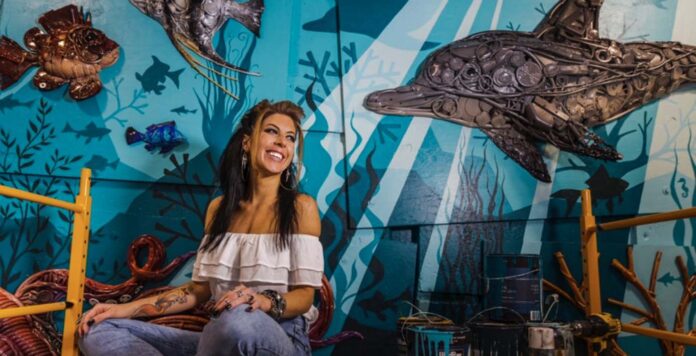
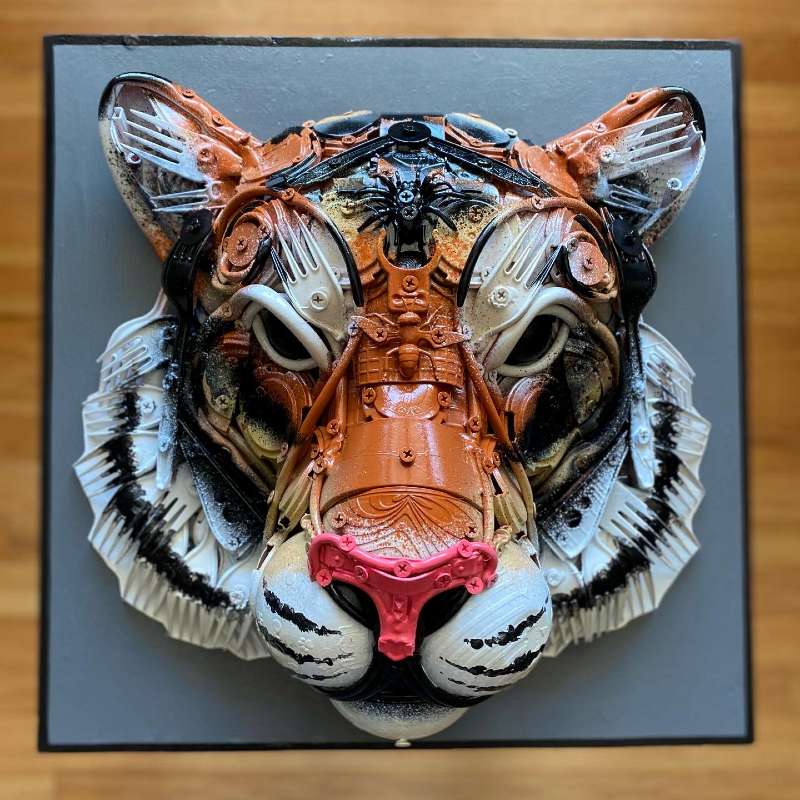
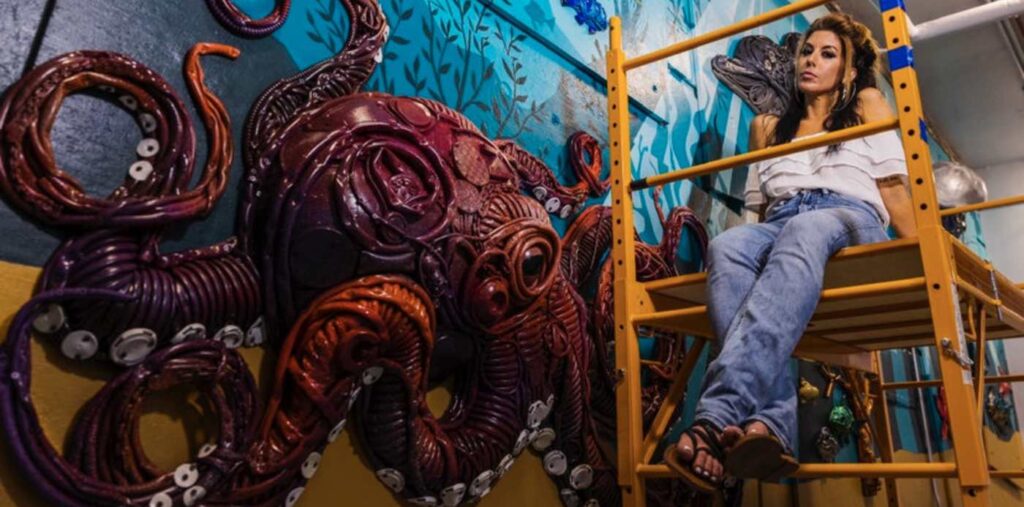
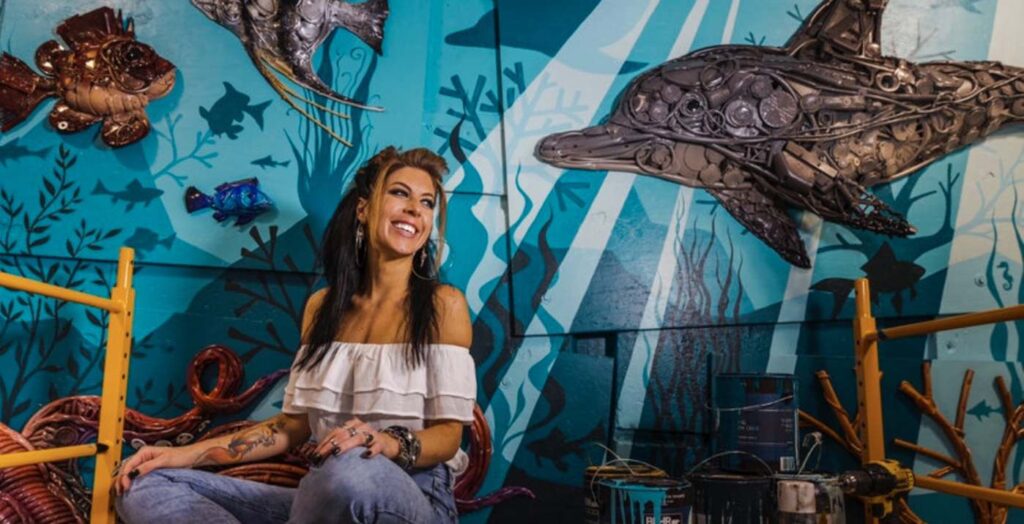
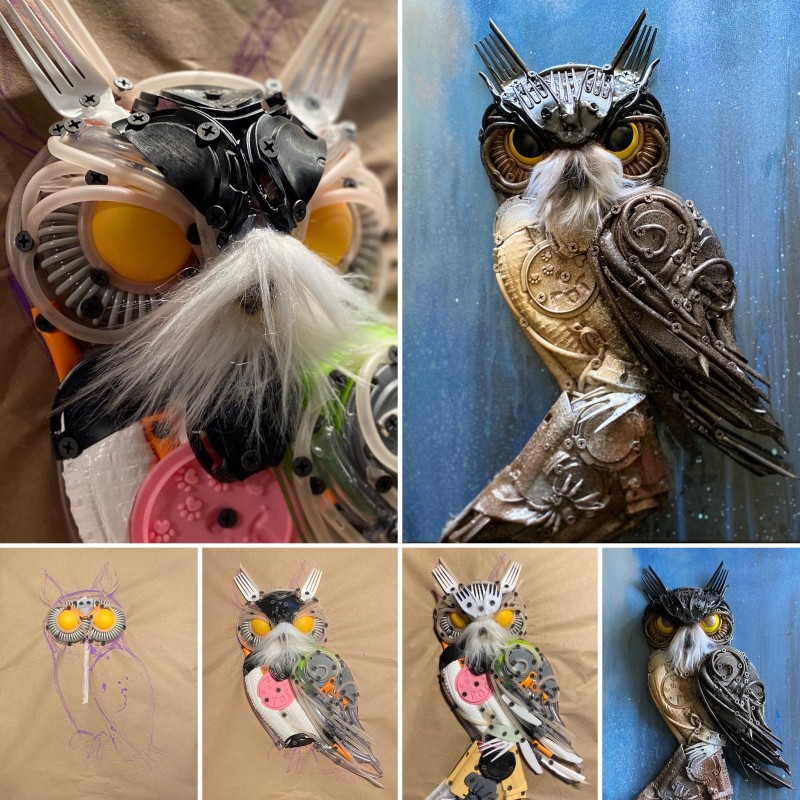
This artist creates intricate sculptures of animals made completely out of trash including plastic spoons, old ping pong balls, and even unused catheters.

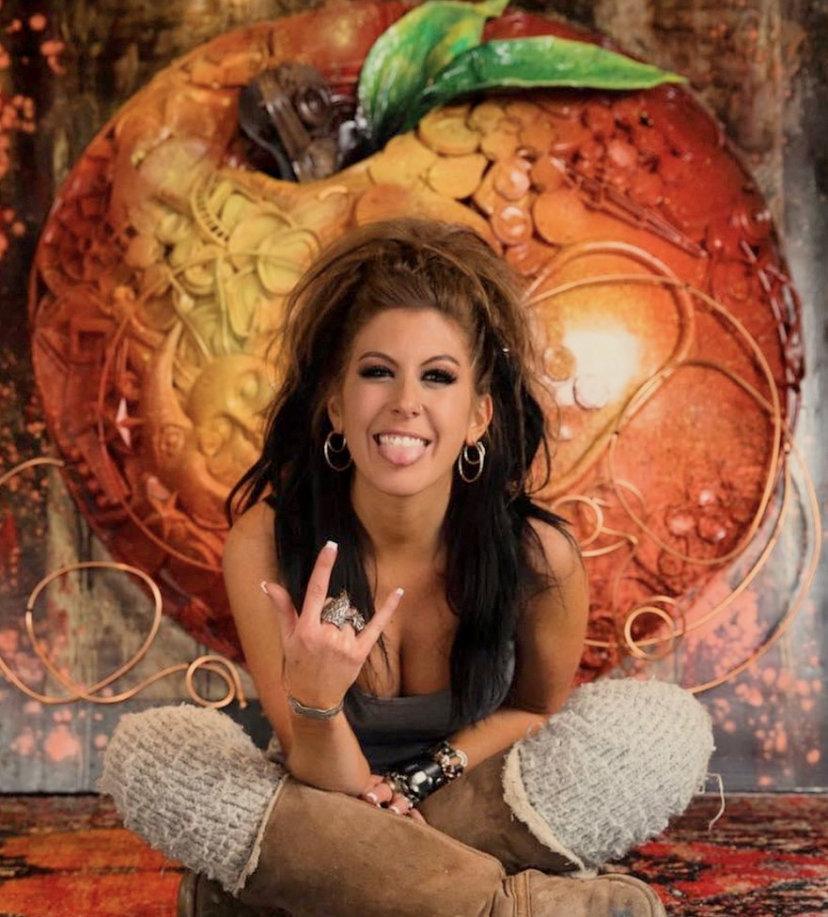
35-year-old Stephanie Hongo embraced trash art four years ago because at the time she could not afford art supplies.

Now Stephanie, who lives in Connecticut, has created over 100 detailed artworks of animals, sometimes screwing together hundreds of pieces of trash for one piece.

Stephanie appeals to friends and family for spare trash and also sources specific pieces from Facebook groups to complete her incredible sculptures of lobsters, octopus, and other animals.

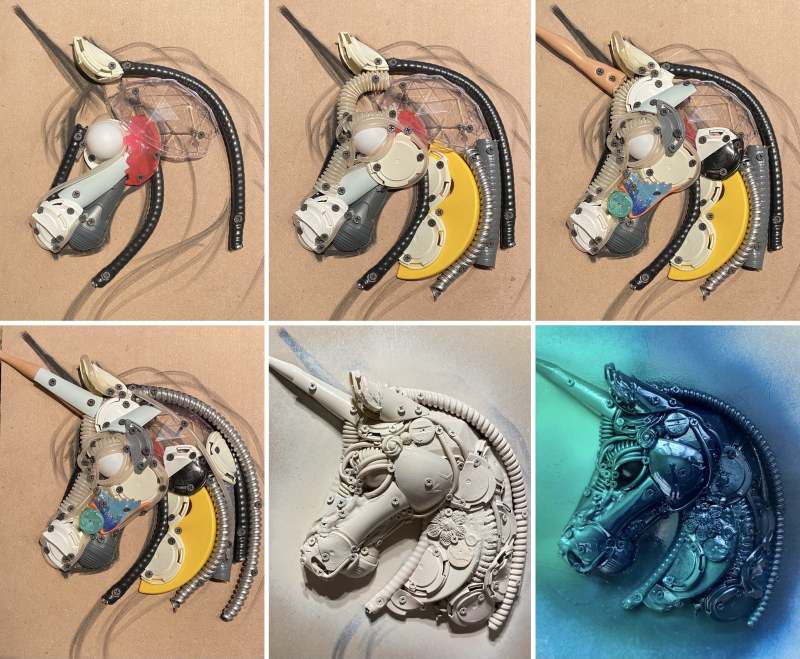
She has used a Barbie leg to create a unicorn’s horn, unused catheters as the antennas of a lobster, and plastic forks for the feathers of an owl.

Stephanie, who creates her art under the name Sugarfox, explained that she turned to trash to make her artworks as she was strapped for cash after quitting her job as an artist-in-residence at grocery store chain Trader Joe’s in May 2017.

SWNS

She was inspired by Portuguese artist Bordalo II, who makes large scale installations out of trash.

She made a rule that she will never purchase plastics for her sculptures.

SWNS

“I won’t ever purchase plastic, I don’t like the idea of buying anything outside the paint and the hardware that I need,” She said. “I do ask for plastic tubing or old basketballs on community pages on Facebook.

MORE: This Simple 10-Question Word Test Reveals How Creative You Are

Despite using recycled materials, Stephanie resists the label of ‘eco artist’ as she uses spray paint to complete her pieces.

“I do find it necessary to tell people that I’m not an eco artist. The recycling aspect of my art is something I’m very proud of but it’s not the driving force behind it.

The animal kingdom is Stephanie’s favorite subject and she likes how nailing trash together gives the works a sci-fi, steampunk look.

SWNS

She spends between ten hours and two weeks on each piece and has developed a knack for finding the perfect piece of trash to build her artworks.

RELATED: Artist Creates Stunning Animal Art From Seashells She Found at the Beach – LOOK

“Some pieces need hundreds of pieces of trash.

“Ping pong balls are very commonly used in my art as well as a lot of extension cords, old telephones, old remote controls, and lots of plastic toys.”

SWNS

Stephanie, who shows off her artworks on her Instagram @sugarfox_art, said that her artworks start at $300 with her eight-foot long octopus going for $5,000.

SWNS

She hopes to one day sculpt a winged dragon measuring ten feet.

SHARE This Awesome Art In Your Social Feeds…
“I choose joy over despair. Not because I have my head in the sand, but because joy is what the Earth gives me daily and I must return the gift.” – Robin Wall Kimmerer

Quote of the Day: “I choose joy over despair. Not because I have my head in the sand, but because joy is what the Earth gives me daily and I must return the gift.” – Robin Wall Kimmerer

Photo: Visual Stories || Micheile

With a new inspirational quote every day, atop the perfect photo—collected and archived on our Quotes page—why not bookmark GNN.org for a daily uplift?


Join a Global Gathering of Researchers on the Importance of Self-Compassion – Free Online

Noted researchers are coming together on September 10 to spread one message: “Self-compassion is critical.”

The Global Compassion Gathering will feature a deep dive into self-compassion with Kristin Neff, PhD, the pioneering self-compassion researcher who conducted the first empirical studies on self-compassion over 20 years ago. Her latest book is Fierce Self-Compassion.

The free event has been organized by the Center for Compassionate Leadership, which wants to focus us inward. “It is not just the external systems that require compassionate care, it is each and every one of us who can benefit from the inner work of self-compassion to rest, restore, and return to wholeness.”

The gathering will be co-hosted by the Center’s founder Laura Berland,  and Monica Worline, PhD, co-author of Awakening Compassion at Work and researcher with the Stanford University Center for Compassion and Altruism Research and Education.

Berland points out that self-compassion is often an overlooked concept. “Self-compassion is the foundation for our internal growth, a greater capacity for compassion with others, and creating the compassionate world where everyone thrives.”

“Especially during these chaotic times, the call to compassionate action is more urgent than ever,” she added

POPULAR: UC Berkeley is Offering Up Their Popular ‘Science of Happiness’ Course for Free Online

Worline and Neff, an Associate Professor of Educational Psychology at the University of Texas at Austin, will share their latest research and insights on self-compassion.

The free 75-minute event will also provide virtual rooms for participants to practice and to engage in small group conversations with like-minded compassion advocates from around the world.

RELATED: People are Making Self-Care a Priority After One of the Most Stressful Years Ever

LEARN more and register for the Zoom event at their website.

Over Half of Moms Use Snack Time to Show Off What ‘Cool Moms’ They Are: Best Snack Hacks

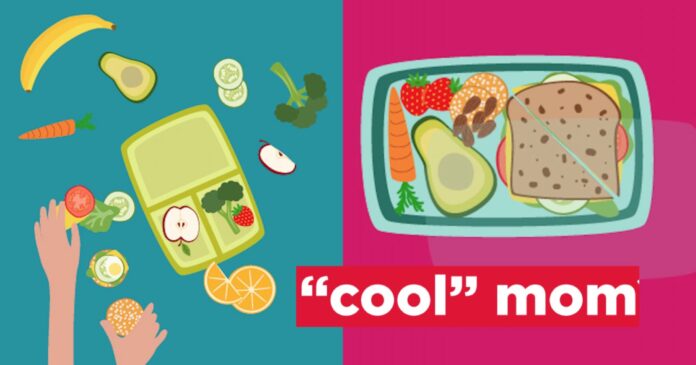
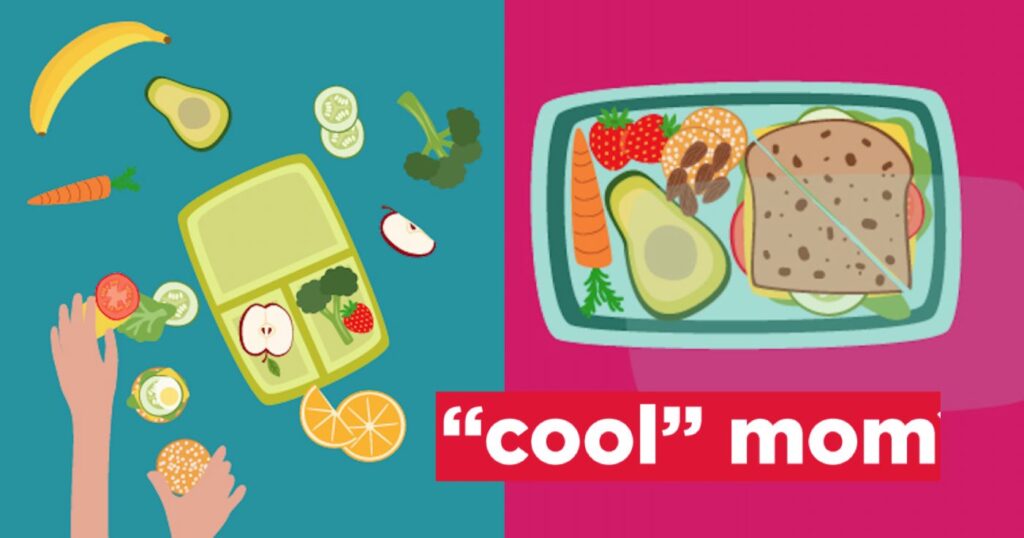
More than half of moms use snack time to show off what a “cool” mom they are, a new poll finds.

The recent survey asked 2,000 American moms with children ages 3–18 to identify the traits of a “cool” mom—and then asked their kids to set the record straight.

Nearly three in five kids agreed that a “cool” mom helps them out with homework and projects for school.

And, according to kids, there are some things a “cool” mom should never do.

Using their home nickname in front of their friends (42%), shouting their name at a sports game or other event (40%), and dancing in public (40%), will put some parents in time-out.

Conducted by OnePoll in partnership with SUNSET, the survey suggests that although getting kids to eat healthy food can be a challenge, moms have a few tricks up their sleeves, such as cutting up fruits and vegetables into fun shapes (48%) and making their food more colorful (47%).

47% of moms worry about whether their kids think they’re cool, and making food fun is one of their top creative ploys to win kids over.

Half of moms have made a cheese board for their children, and more than half admitted that their youngsters eat more sophisticated snacks and lunches than they do.

Moms also shared the secrets behind their greatest ever snack hacks, including blending frozen fruit so kids think it’s ice cream, building a stackable tower with sticks of watermelon and even making sandwich kabobs.

Snacks and lunches can be a bragging point for kids, too—especially those that include chips (50%), baked goods (44%) or a fruit bowls (44%).

RELATED: Paul McCartney is Helping People Grow Their Own Fruits and Vegetables for Better Health and Wellbeing

“Our study shows that many moms are good at navigating that balance between giving kids the foods they enjoy and making sure they’re getting a balanced diet,” said a spokesperson for SUNSET.

“They’re introducing their youngsters to fruits and veggies in creative ways and incorporating them not just at lunchtime, but throughout the day as well.”

And it can be a great opportunity for parents and kids to bond. Take a look at some of these cool-mom tips…

MOMS’ GREATEST SNACK HACKS FOR THEIR KIDS

• Kiwi caterpillars
• Blending frozen fruit so they think it’s ice cream
• Freezing bone broth in small cubes for winter soups or drinks
• Making grab bags that they can’t see inside of and letting them choose their own bags, so every snack is a surprise
• Sandwich kabobs
• Making squash look and taste almost like mac n’ cheese to trick her into eating a veggie she doesn’t like
• Jello with fruit mixed in and then poured into cool molds in different kinds of shapes like cars, houses, bears, etc.
• Making pumpkin pancakes with beets and other pureed vegetables, but with fun colors
• Building a Jenga stack with watermelon
• Playing ‘restaurant’ during lunch – using menus so they can choose
• Saying something is a ‘grown-up version’ so they want it, or something ‘new’ they get excited to try

POPULAR: Creamy vs. Crunchy – What Your Peanut Butter Preference Says About Your Personality: Poll

SHARE the Ideas With Young Parents on Social Media…

Devious Dog Fakes a Coma to Avoid Toilet Duty in the Rain –And it’s So Cute (WATCH)

Even a T-bone steak could not have persuaded this determined dog to move a muscle.

The family pet named River was adopted from a shelter, so her breed is a mystery. It is believed, however, that she is part Australian Shepherd—and may be part border collie—so it’s not surprising that she is craftier than the average pup.

When it gets late and bedtime is approaching, River gets her instruction to go out for her nightly toilet duties. Normally, she doesn’t mind and trots obediently out the door to visit the grass and trees on the property, and returns a few minutes later to settle in for the night.

But she doesn’t like the rain at all, and on this night she devised a scheme to avoid going out into the weather.

When she’s told to go outside, she rolled over on her back and pretended to be dead, or sleeping, or in a coma—but lying completely still. River wouldn’t budge for anything.

ALSO: Watch Astonishing Heart Being Formed By Sheep, As Farmer Pays Tribute to Beloved Aunt

Her owner even tried flattery, but in the end, he just shoved her across the shiny floor towards the door, to her dismay.

Watch the video for a guaranteed chuckle, as River feigns paralysis to avoid going out in the rain…

SEND a Giggle Out the Door To Friends on Social Media…

This Week’s Inspiring Horoscopes From Rob Brezsny’s ‘Free Will Astrology’

Our partner Rob Brezsny provides his weekly wisdom to enlighten our thinking and motivate our mood. Rob’s Free Will Astrology, is a syndicated weekly column appearing in over a hundred publications. He is also the author of Pronoia Is the Antidote for Paranoia: How All of Creation Is Conspiring To Shower You with Blessings. (A free preview of the book is available here.)

Here is your weekly horoscope…

FREE WILL ASTROLOGY – Week beginning August 27, 2021
Copyright by Rob Brezsny, FreeWillAstrology.com

VIRGO (Aug. 23-Sept. 22):
“I sing like the nightingale whose melody is crowded in the too narrow passage of her throat,” wrote author Virginia Woolf. That was an insulting curse for her to fling at herself. I disapprove of such behavior—especially for you in the coming weeks. If you hope to be in alignment with cosmic rhythms, don’t you dare say nasty things about yourself, even in the privacy of your own thoughts. In fact, please focus on the exact opposite: flinging praise and appreciation and compliments at yourself.

LIBRA (Sept. 23-Oct. 22):
The Tumblr blogger wlw says the following are the top tender actions. 1. Fastening clothes or jewelry for your companion. 2. Letting them rest their head on your shoulder. 3. Idly playing with their hands. 4. Brushing a leaf out of their hair. 5. Locking pinkies. 6. Rubbing their back when you embrace. 7. Both of you wearing an item that belongs to the other. Dear Libra, I hope you will employ these tender actions with greater frequency than usual in the coming weeks, Libra. Why? In my astrological opinion, it’s a ripe time to boost your Affection Quotient with the allies you care for the most.

SCORPIO (Oct. 23-Nov. 21):
Naturalist Henry David Thoreau wrote in his journal, “I feel slightly complimented when nature condescends to make use of me without my knowledge—as when I help scatter her seeds in my walk—or carry burs and cockles on my clothes from field to field. I feel as though I had done something for the commonweal.” I mention this, Scorpio, because the coming weeks will be an excellent time for you to carry out good deeds and helpful transformations in nature’s behalf. Your ability to collaborate benevolently with plants and animals and elemental forces will be at a peak. So will your knack for creating interesting connections between yourself and all wild things.

SAGITTARIUS (Nov. 22-Dec. 21):
You may have never heard of Sagittarian artist Baya Mahieddine (1931–1998). At age 16, she experienced a splash of acclaim with a show in Paris. Famous artists Pablo Picasso, Henry Matisse, and George Braques came. They drew inspiration from Mahieddine’s innovative use of color, elements from her Algerian heritage, and her dream-like images. Picasso even invited her to work with him, exulting in the fresh perspectives she ignited. Though her art never received the full credit it warranted,  astrological omens are authorizing you to go out and get the recognition and appreciation you deserve but have not yet fully received.

CAPRICORN (Dec. 22-Jan. 19):
“Who knows what is unfolding on the other side of each hour?” asked Capricorn poet Juan Ramón Jiménez (translated by Capricorn poet Robert Bly). “How many times the sunrise was there, behind a mountain. How many times the brilliant cloud piling up far off was already a golden body full of thunder!” Your assignment, Capricorn, is to imagine what is unfolding just beyond your perception and understanding. But here’s the twist: You must steer your mind away from inclinations to indulge in fear. You must imagine that the events in the works are beautiful, interesting, or redemptive. If you’re not willing to do that, skip the exercise altogether.

AQUARIUS (Jan. 20-Feb. 18):
“Better than any argument is to rise at dawn and pick dew-wet red berries in a cup,” wrote author Wendell Berry. I mostly agree with that sentiment, although I will also put in a good word for certain kinds of arguments. There are moments when it’s crucial for your psychological and spiritual health that you initiate a conversation about delicate issues that might lead to a dispute. However, I don’t think this is one of those times, Aquarius. In my astrological opinion, picking dew-wet red berries is far more sensible than any argument. For further inspiration, read this testimony from actor Natasha Lyonne: “I definitely would rather take a nap than get angry.”

PISCES (Feb. 19-March 20):
For painter Vincent van Gogh, love wasn’t primarily a sentimental feeling. Nor was it an unfocused generalized wish for health and happiness in those he cared for. Rather, he wrote, “You must love with a high, serious, intimate sympathy, with a will, with intelligence.” His love was alert, acute, active, and energized. It was animated with a determination to be resourceful and ingenious in nurturing the beloved. For van Gogh, love was always in action, forever moving toward ever-fresh engagement. In service to intimacy, he said, “you must always seek to know more thoroughly, better, and more.” I hope you’ll make these meditations a top priority during the next seven weeks.

ARIES (March 21-April 19):
Aries mythologist Joseph Campbell advised us to love our fate. He said we should tell ourselves, “Whatever my fate is, this is what I need.” Even if an event seems inconvenient or disruptive, we treat it as an opportunity, as an interesting challenge. “If you bring love to that moment, not discouragement,” Campbell said, “you will find the strength.” He concludes that any detour or disarray you can learn from “is an improvement in your character, your stature, and your life. What a privilege!” Few signs of the zodiac are inclined to enthusiastically adopt such an approach, but you Aries folks are most likely to do so. Now is an especially favorable time to use it.

TAURUS (April 20-May 20):
The brilliant Taurus dancer and choreographer Martha Graham spoke of “a vitality, a life force, a quickening that is translated through you into action,” adding that “there is only one of you in all time.” She added, “It is not your business to determine how good it is, nor how it compares with other expressions. It is your business to keep it yours clearly and directly, to keep the channel open.” But even if you do this very well, Graham said, you will nevertheless always feel “a divine dissatisfaction, a blessed unrest” that will fuel you. This is the perfect message for you Tauruses to embrace in the coming weeks.

GEMINI (May 21-June 20):
There’s growing scientific evidence that we make ourselves stupid by complaining too much—or even by listening to other people complain a lot. Excessive negative thoughts drain energy from our hippocampus, a part of our brain that’s essential to problem-solving. This doesn’t mean, of course, that we should avoid dealing with difficult issues. But it does suggest we should be discerning about how many disturbing and depressing ideas we entertain. According to my reading of the omens, all this will be especially useful advice for you in the coming weeks.

CANCER (June 21-July 22):
Your brain contains one hundred billion nerve cells. Each cell has the potential to be linked with tens of thousands of others. And they are always busy. Typically, your grey matter makes a million new connections every second. But I suspect your number of connections will increase even beyond that in the coming weeks. Your most complex organ will be working with greater intensity than usual. Will that be a bad thing or a good thing? It depends on whether you formulate an intention to channel your intelligence into wise analysis about important matters—and not waste it in careless fussing about trivial details.

LEO (July 23-Aug. 22):
“You should have a sticky soul,” counsels author Elizabeth Berg. “The act of continually taking things in should be as much a part of you as your hair color.” I especially endorse that attitude for you during the next four weeks, Leo. Your task is to make yourself extra magnetic for all the perceptions, experiences, ideas, connections, and resources you need most. By September 23, I suspect you will have gained an infusion of extra ballast and gravitas.

WANT MORE? Listen to Rob’s EXPANDED AUDIO HOROSCOPES, 4-5 minute meditations on the current state of your destiny — or subscribe to his unique daily text message service at: RealAstrology.com

(Zodiac images by Numerologysign.com, CC license)

SHARE The Wisdom With Friends Who Are Stars in Your Life on Social Media…

“There’s a saying in engineering: You can build things cheap, fast, or right, but not all three.” – Temple Grandin (turns 74 today)

Quote of the Day: “There’s a saying in engineering: You can build things cheap, fast, or right, but not all three.” – Temple Grandin (turns 74 today)

Photo: public domain

With a new inspirational quote every day, atop the perfect photo—collected and archived on our Quotes page—why not bookmark GNN.org for a daily uplift?


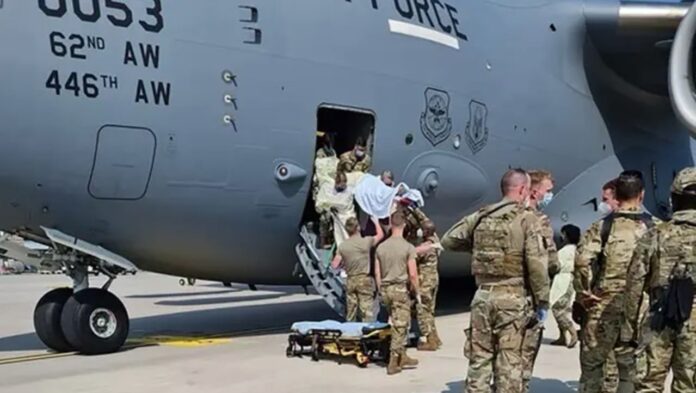
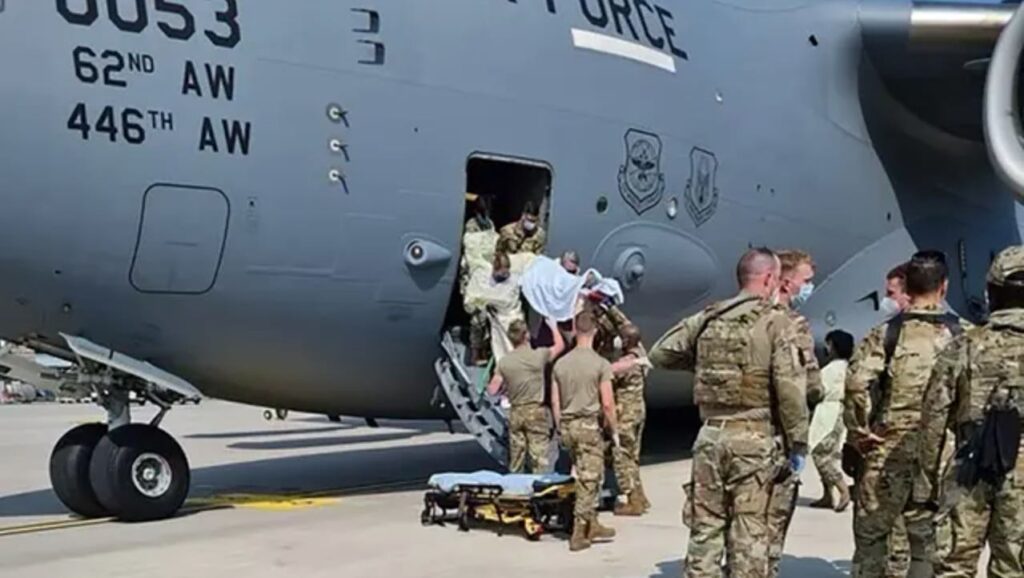
Afghan Mom Who Gave Birth on Air Force C-17 Named the Baby ‘Reach’ After the Aircraft That Rescued Them

test
U.S. Air Force photo

A pregnant Afghan woman who boarded a U.S. evacuation aircraft gave birth in the plane—and the baby girl was named ‘Reach’ after the C-17 that flew the family, and hundreds of other people, out of the Middle East to safety.

Medical support personnel from the 86th Medical Group met the Afghan mother aboard Reach 828, moments after she delivered the child in the aircraft upon landing at Ramstein Air Base in Germany.

The mother went into labor on the flight and began experiencing complications due to low blood pressure.

The aircraft commander made the decision to descend in altitude to increase air pressure in the aircraft, which helped stabilize the mother and perhaps save her life.

Upon landing, Airmen from the 86th MDG came aboard and delivered the child in the cargo bay of the aircraft. The baby girl and mother were transported to a nearby medical facility and are in good condition.

RELATED: Unaware She Was Pregnant, Lucky Lady is on Same Flight As NeoNatal Crew When She Gives Birth Prematurely

“That child’s name will forever be ‘Reach,’ and as you can well imagine it’s my dream to watch that young child grow up to be a U.S. citizen…” said Air Force Gen. Tod Wolters, the head of U.S. European Command.

FLY This Heartwarming Moment Over to Your Social Media Family…