Quote of the Day: “A creative life cannot be sustained by approval any more than it can be destroyed by criticism.” – Will Self
Photo: by Aleksandra Sapozhnikova
With a new inspirational quote every day, atop the perfect photo—collected and archived on our Quote of the Day page—why not bookmark GNN.org for a daily uplift?
If you’ve taken a step back to review your finances during the pandemic, you’re certainly not alone.
A new survey revealed 58% of Americans have “completely” changed how they think about money due to the pandemic and nearly as many (56%) believe their concept of financial well-being has been altered since the pandemic.
The poll of 2,000 Americans explored the impact financial wellness has on their mental and physical health.
In fact, the pandemic caused 48% to increase the amount of money they believe they need in their rainy day or emergency fund.
Conducted by OnePoll on behalf of Capital One, the survey found respondents added one month of emergency expenses to their savings (an average of five months pre-pandemic to six months now).
3 in 10 respondents said their top financial struggle is establishing good spending habits, so it’s no wonder the top habit they want to change is spending on items they don’t really need (44%).
Impulse spending is another habit two in five respondents are trying to shake, and 41% even said they made impulse purchases during the pandemic they regretted.
29% of these respondents blamed pandemic-related stress for their impulse spends—which cost an average of $162 per spend.
And while men were less likely to make impulse purchases than women, they were often more expensive with more than 1 in 4 (27%) spending over $250 on their impulse purchase.
“After living through the last year and a half, one of the most important things we’ve learned is that there isn’t a ‘one-size-fits-all’ approach to well-being,” said Lia Dean, President, Retail Bank & Premium Card Products, Capital One. “People have always been stressed about money, perhaps never more so than right now, which is why we want to create a world where our customers can save more and live fully without losing sleep over their finances.”
Nearly 3 in 10 (29%) respondents believe their credit score is the strongest indicator of their financial well-being, followed by the ability to pursue their financial goals without concern (19%).
1 in 5 respondents used the pandemic to start a new savings goal as they strive toward a healthier financial future.
As they look ahead over the next year, some of Americans’ top goals included starting an emergency fund (39%), paying off their credit card (34%) and starting to save for retirement (24%).
With all of these financial firsts and new goals in mind, 33% of those surveyed are confident they could actually become a “finfluencer” to advise their family and friends on financial decision-making.
TOP PANDEMIC FINANCIAL FIRSTS
Made a new savings goal – 20%
Prioritize my mental health with therapy, meditation or another ritual – 19%
Started a side hustle – 18%
Started exercising regularly – 17%
Investing in stock – 12%
Started an emergency fund – 12%
Applied for a credit card – 11%
Investing in cryptocurrency – 11%
Started a 401k – 5%
Applied for a mortgage – 4%
Began consulting with a financial coach – 3%
TOP GOALS FOR NEXT 12 MONTHS
Start an emergency fund – 39%
Pay off my credit card – 34%
Save up for a big vacation – 29%
Start saving for retirement – 24%
Pay off student loans – 15%
Pay off my mortgage – 9%
PASS On the Financial Hope—Share This Story With Friends…
Reprinted with permission from World at Large, a news website of nature, politics, science, health, and travel.
BLM
Sabinoso Wilderness Area in New Mexico, an inaccessible and tiny refuge just five years ago, has grown by almost 10,000 acres, or 50% of its total size, after receiving the largest gift in the Bureau of Land Management’s (BLM) history.
The Cañon Ciruela property was donated by the Trust for Public Land which works to create public spaces from private donations all over America, and was a follow-up from another much smaller donation made in 2017 in an effort to grow Sabinoso out from the confines of private landholdings which surrounded it.
Described as “a series of high, narrow mesas surrounded by cliff-lined canyons,” the BLM, who manages wilderness areas in the U.S, called the property “rugged country primarily [of] piñon pine and juniper woodlands with occasional clusters of ponderosa pine. A perennial warm-season grass savanna is found on the mesa tops. Streams periodically flow in the canyon bottoms supporting riparian vegetation including willow and cottonwood.”
The area is home to black bears, mountain lion, elk, mule deer, and turkey, among smaller animals.
Pueblo Tribal member and Secretary of the Interior Debra Haaland visited a remote patch of the wilderness in New Mexico’s San Miguel County to talk of the gift, recognizing the land’s history as a hunting ground of several native tribes, including the Jicarilla Apache and northern Pueblos.
“We’re here today because we recognize the importance of preserving this special place,” the Secretary said, according to the San Francisco Chronicle. “We know that nature is essential to the health, well-being and prosperity of every family and every community.”
The Cañon Ciruela property provides a second public access point for the wilderness area, which was opened for hiking, primitive camping, hunting, and more under the DOI of Ryan Zinke in 2017.
Additionally, the donation permanently protects a critical tributary watershed that feeds into the existing wilderness which ensures there will be nothing but natural forces that interrupt the life-giving waters flowing into the area.
The Trust for Public Lands is the kind of entity President Biden is relying on to conserve 30% of America’s geographic area in its natural state as part of his commitment to preventing climate change, and as part of the America the Beautiful Act, which rather than sweeping government penmanship, hopes to rely mainly on private landowners and donations to reach the “30×30 goal.”
GROW the Good News—Share This Story in Friends’ Feeds…
Have a minute? Try sitting still and watching the second hand of a clock as it sweeps its way around the dial. Feels like a long time, doesn’t it? Now, picture waiting for something to arrive, not for an hour, not for a day, but for 100 years. An eternity, right?
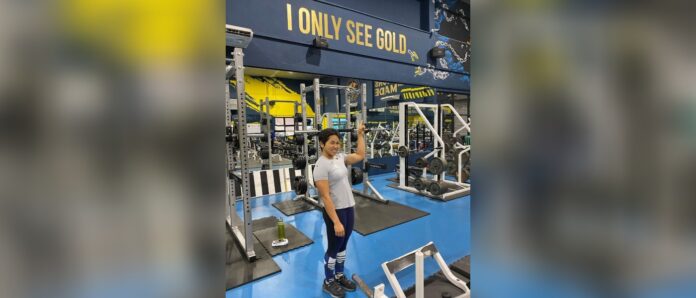
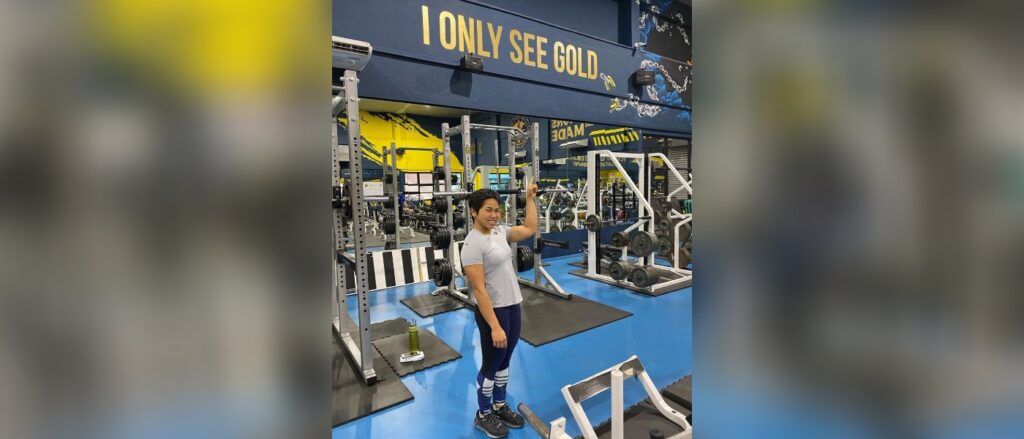
Now imagine what it must feel like for that century-long wait to finally be over. Awesome and then some, of course, and it’s the very reason Hidilyn Diaz, a 30-year-old weightlifter from the Philippines was over the moon when, with her final dramatic lift of the competition, she won the first-ever gold medal for her homeland after a 100-year Olympic drought.
The Philippines has been sending teams to the Summer Olympics since 1924. Over the course of ensuing competitions, Filipino athletes have historically scored 10 medals, but the gold remained elusive. (Diaz herself won a silver in the 2016 Rio de Janeiro games.)
Training throughout the pandemic has been rough, but for Diaz, the challenges she faced were tougher than most.
Stranded by COVID-19 travel restrictions, Diaz was unable to see her family for more than a year. To top that off, she lacked proper training equipment and was forced to improvise—but she persevered.
Coming as she did from an economically challenged childhood, the lessons Diaz learned early in life about self-sufficiency and resilience certainly stood her in good stead during the ordeal she endured leading up to the games.
A Reddit discussion chronicles the many obstacles Diaz had to overcome just to get to Tokyo, and how she repeatedly rose to the occasion.
“The most amazing thing about her story is that she got stuck in Malaysia during the COVID lockdown. She was only there for an Olympic qualifying event when the government banned traveling and she ended up being stuck there for more than a year. I read she had to build her own workout equipment using water jugs,” one Reddit commenter reported.
“And despite all that, [she] and her team were running online seminars at the same time in exchange for donations. They used the funds they raised to help get basic necessities like groceries to people back home in the Philippines who were having trouble during the lockdown,” another enthused.
To win the gold, Diaz needed to take down the 2019 world champion, China’s Liao Qiuyun, who’d earned an impressive overall score of 223 for her three lifts. But Diaz proceeded to set a new world record with a clean and jerk of 127 kg (about 280 lbs), taking her cumulative total to 224 and cinching the top honors in the event.
Realizing what she’d just accomplished, an ecstatic Diaz was overcome with emotion. Tears flowed freely as she took the podium and saluted the Filipino flag while the country’s national anthem played.
“We are so proud to see our motherland’s flag raised at the Olympic podium and we are deeply thankful to Hidilyn Diaz for bringing the first gold medal to the Philippines,” Brendan Flores, president of the National Federation of Filipino American Associations told The Washington Post.
As proud as her country is of her, for Diaz, the feeling is more than mutual. She sees her win as a “golden opportunity” to inspire other up-and-coming Filipinos to set their sights high, to work hard, and to never give up.
“I am thankful that God is using me to inspire all the young generation and all the Filipino people to keep fighting during this pandemic,” she said in a statement reported by WaPo. “To all the young generation in the Philippines, please dream high… That’s how I started. I dreamed high and finally, I was able to do it.”
SHARE This Fantastic Win for the Philippines With Pals on Social Media…
Unveiled after years of work, an energy startup in Massachusetts is claiming that in a few years they can produce, at scale, “the battery you need to fully retire coal and natural gas plants.”
Hoping to solve the key challenge with renewable energy—that of storage—Form Energy’s new battery technology, which they’re calling the “Holy Grail,” ditches lithium for one of the most abundant minerals on Earth: iron.
Many battery startups are looking to create a battery system that can reliably store the energy generated when the sun is shining and the wind is blowing for those periods of stillness and darkness when no energy can be created.
A deep-dive into Form Energy’s inner-workings by the Wall Street Journal revealed this gem of a quote, that there is a “Cambrian Explosion” going on in the sector of batteries and energy storage.
GNN has reported on this story every step of the way—analyzing new tech from hydrogen cells, to aluminum lava, to giant towers that lift and drop enormous metal weights.
How it works
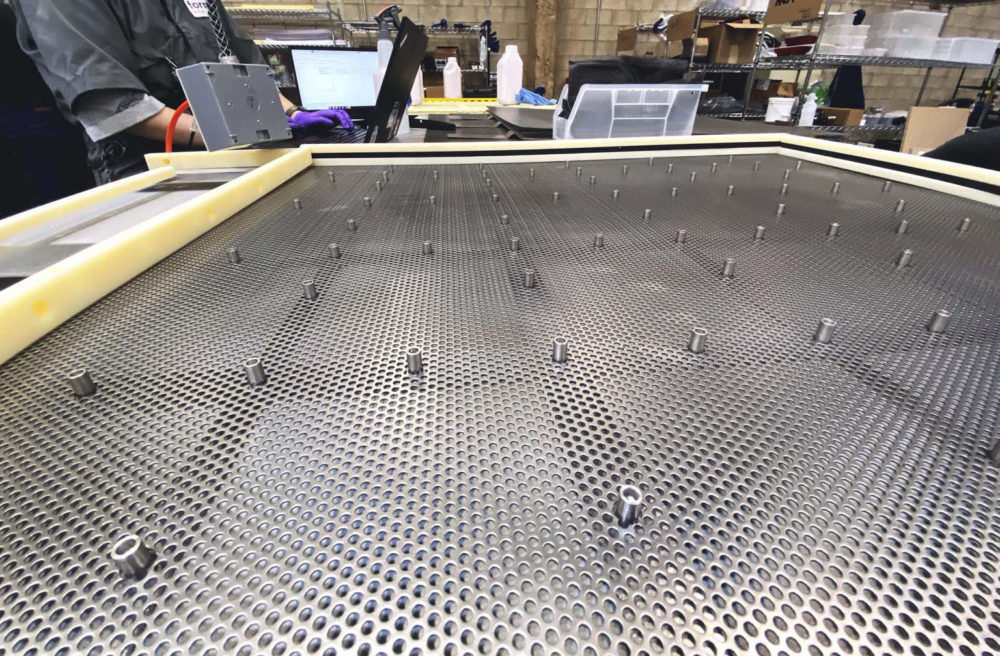
Iron anode section of prototype battery, Form Energy
Form Energy’s battery uses the chemical reaction that creates rust, i.e. iron and oxygen, to store energy in a kind of technology known as stage transition, which harvests the energy given off by matter when it’s stressed or changes form, for example from a gas to a liquid, or when a giant weight is lowered, held, and dropped again.
Understanding these technologies without being an expert in thermodynamics or chemistry simply involves accepting the fact that since matter is energy, energy can be stored and released in ordinary elements as they change form.
“Our first commercial product using our iron-air technology is optimized to store electricity for 100 hours at system costs competitive with legacy power plants,” write Form on their website. “This product is our first step to tackling the biggest barrier to deep decarbonization: making renewable energy available when and where it’s needed, even during multiple days of extreme weather, grid outages, or periods of low renewable generation.”
“We’ve completed the science,” says Form Energy’s President and COO Ted Wiley, “what’s left to do is scale up from lab-scale prototypes to grid-scale power plants.”
Wiley from their location in Sommerville, Massachusetts added that “the modules will be one-tenth the cost of any technology available today for grid energy storage.”
Inside the battery cells, thousands of tiny pieces of iron are exposed to oxygen and rust, but when the oxygen is removed, the iron-oxide goes back to iron. By controlling this process, the battery is charged and discharged.
According to WBUR News Boston, Form are planning to have their first 1 MW pilot project installed at the Great River Energy power plant in Minnesota by 2023.
Behind this relatively unknown firm are major investors like the Italian oil giant Eni, Amazon’s Jeff Bezos, Microsoft founder Bill Gates’ subsidiary Breakthrough Energy, and iron giant ArcelorMittal, who just committed $200 million in a series D funding round, hoping to acquire non-exclusive supply rights of iron for the company’s batteries.
There are many other wonderful ideas of how to bring renewable energy storage to world markets, but not all of them will survive or attract the funding necessary to see their dreams realized.
However the free market, by selecting one firm’s goods and services over another’s, naturally moves the talented labor on to other sectors where it can be better utilized, meaning that as soon as a small pool of battery firms attract most of the investment money, hundreds of innovative energy nerds will be unleashed on other substantial problems in the society. A win-win.
POWER UP Your Friends’ News Feeds With the Good News—Share This Story…
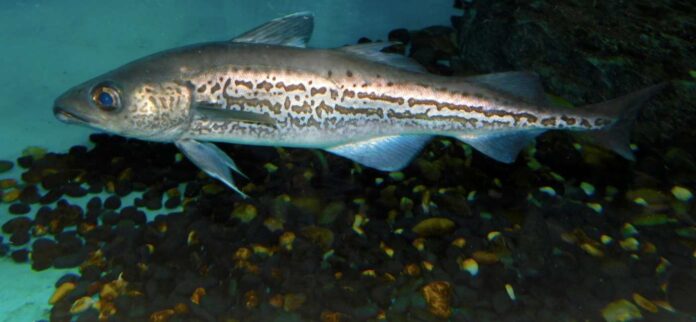
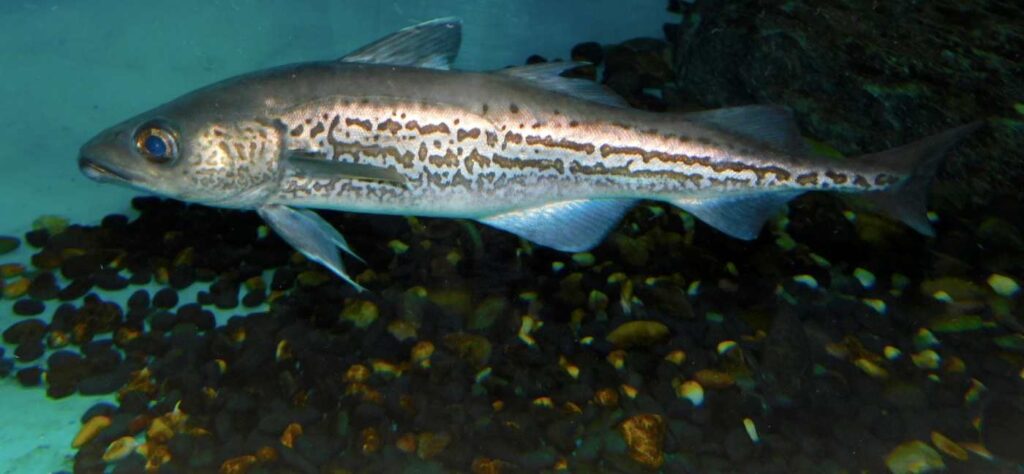
Off the pristine waters of Alaska, there is a harvest of an almost magical fish that everyone loves, but that maybe doesn’t get the recognition it deserves.
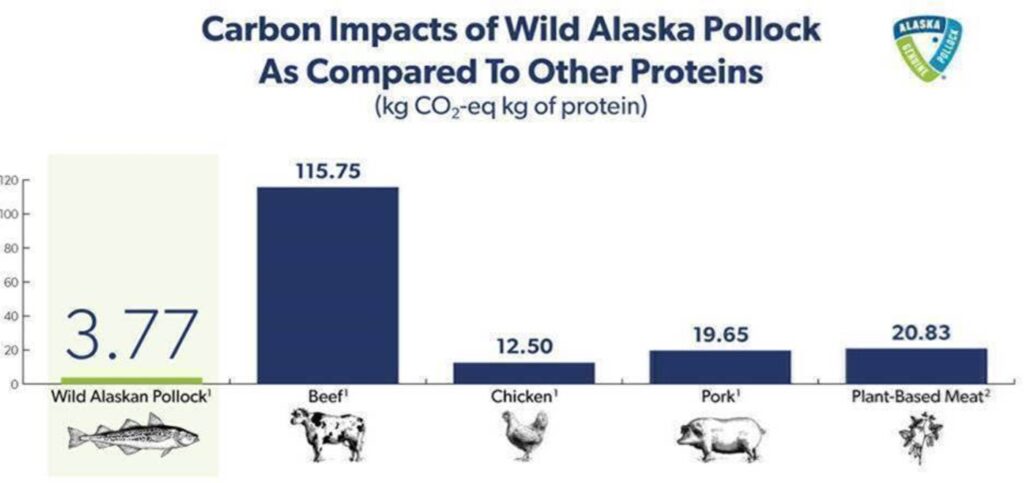
For those who believe their dietary choices should account for the impact on climate, the choice is clear, and it isn’t fake meat, but rather Wild Alaskan pollock which has the lowest carbon footprint of any major protein source in the world.
The finding, based on a life-cycle assessment (LCA) by the leading sustainability consultancy firm Quantis, is staggering, because when we say major, we mean major.
Wild Alaskan pollock is the world’s largest sustainable wild-caught fishery, and the Association of Genuine Alaskan Pollock Producers (GAPP) produce more wild caught fish for consumption than any other single fishery in the world at 3.3 billion pounds per year.
It is the most consumed whitefish in Europe, and the third most consumed fish in the U.S.
Staggeringly, pollock from Alaska provides for the entire world’s supply of McDonald’s filet-of-fish sandwiches, as well as the bulk supply of beloved European processed fish products like fish fingers in England, schlemmer-filets in Germany, and kibling in the Netherlands.
Furthermore, pollock is the number-one source for surimi, or imitation crab, in Asia and most of the world’s sushi and hotpot restaurants, having cornered the market for products like kamabuko—fish balls for traditional Chinese hotpot—and the California roll.
Astonishingly all this supply and demand, all 3.3 billion pounds of it, can be achieved annually with 15% of the total stock of fish.
“It schools in volumes that are really unmatched in the world, in any other ocean,” says GAPP CEO Craig Morris. “It schools in what we call very clean biomass. There’s very little bycatch—far less than 1% of what we catch is not what we’re fishing for.”
“It’s a fishery that learned from the challenges some of the other fisheries around the world faced. When we started fishing for Alaska pollock 40 years ago, we had to be more efficient than other fisheries because [it] doesn’t school off major population centers.”
A dedicated breed
GAPP
For GAPP, their control over this magnificent fish comes with pride, and the sense of responsibility normally reserved for National Park Rangers.
“We look at this as a fishery that we want to hand down to the generations to come,” said Bob Desutel who sits on the board of directors for GAPP. “We’re quite proud of what we’ve done here, and validated it here with this life-cycle assessment.”
The Quantis LCA, which took account of every measurable speck of energy used to produce a frozen piece of pollock, found that all the aforementioned staples can be provided to the world for around 3.7 kg of CO2 or equivalents per kg of pollock, which is substantially-less than any terrestrial protein source, less even than eggs, and one-fifth of the CO2 produced from making the Impossible Burger or other fake meats.
Propulsion is the primary driver of carbon in the fishery, Bob admitted to GNN, but the wild-caught element means that no carbon is produced to create food as would be the case in traditional aquaculture.
Furthermore, their substantial reliance on Alaskans for the post-catch segment of the supply chain means that very little carbon is generated through transportation or shipping jobs over seas.
Indeed a report demonstrated that over 26,000 Alaskans are employed in the seafood industry, with an average of one-third of all work, both catching and processing, done on pollock.
“In Alaska, all that really leaves are boneless fillets, boneless surimi and we turn basically everything else into fishmeal and oil,” said Morris. “And those two are processed in Alaska, so basically there’s zero waste. Every pound that leaves Alaska is in a useable form.”
For generations to come
“My family comes from Massachusetts and they lived off of what everyone thought was the inexhaustible Atlantic cod resource, and they did not have the coordinated approach that we enjoy in Alaska,” said Morris. “The oceans are something that need a science-based approach to ensure that populations remain at stable levels for generations to come.”
And GAPP helps achieve this goal year in year out with the help of the Alaska Fisheries Council, the Dep. of Commerce, and the National Oceanic and Atmospheric Administration, to ensure the health of the fish stocks continue, and that only adult fish are the ones being targeted.
In order to further reduce emissions, GAPP and the agencies above use solar-powered sailing drones equipped with sonar that crisscross the waters for as long as it takes until every inch of habitat is surveyed, and the number of fish schooling at about 500-1000 grams weight are counted, thereby setting the catch for the coming year.
“For those concerned about the impacts their dietary choices have on climate change, there is a protein that’s right there in front of you, that’s really unmatched in its carbon store,” says Morris.
“We wanted to make sure since we’re the largest sustainable wild-caught fishery in the world that our partners looking to make sustainability commitments, it doesn’t matter if that’s an Aldi, a Costco, or a Walmart, we wanted them to know that by marketing our product they’re doing a lot for the environment.”
SWIM This Fascinating Story Over to Friends on Social Media…
Quote of the Day: “Being happy doesn’t mean that everything is perfect. It means that you’ve decided to look beyond the imperfections.” – Gerard Way (singer-songwriter, co-founder of My Chemical Romance, and comic book creator)
Photo: by note thanun
With a new inspirational quote every day, atop the perfect photo—collected and archived on our Quote of the Day page—why not bookmark GNN.org for a daily uplift?
With retailers and restaurants recently uniting to purge their inventory of dangerous “forever chemicals,” consumers can feel a bit better about supporting some of their favorite companies.
Made up of 23 brands totaling almost 84,000 physical stores and $570 billion in annual sales—the new alliance is uniting against a class of chemical contaminants variously called PFAS, PFOA, PFOS, or polyfluoroalkyl substances.
The diversity of the retailers, from Chipotle to Home Depot, from REI to TJ Maxx, reflects the true nature of the threat. PFAS come from a wide-variety of products, but have no known degradative pathway in nature, giving them the moniker “forever chemicals.”
They are found in the coatings inside popcorn bags, on water-proof raincoats, and on linings for non-stick Teflon pans. They are also injected via spray as industrial fire-fighting foam and stain protectors for furniture and outdoor equipment, and are found baked into industrial carpet fibers.
Now, they are being found in the water supply for as many as 16.5 million Americans.
Recent legislative and corporate governance strategies have seen major reductions in the use of PFAS in some places. For example on July 15, Maine became the first U.S. state to ban PFAS outright, except where it is currently unavoidable, like in critical hospital and medical supplies.
“I am proud to see Maine taking action that will change the conversation on how PFAS are regulated, not only addressing the entire class, but creating the requirement to avoid these persistent and toxic chemicals wherever possible,” stated Patrick MacRoy, deputy director of Defend Our Health.
But the benefit to be gained from a company like McDonald’s abstaining from the use of any PFAS in their packaging is that their products end up all over the country and the world, and so can protect people from their harmful effects without relying on the support of a localized government agency.
The same goes for Target, Amazon, 7-Eleven, Food Lion, Wendy’s, Panera Bread, Lowes, and others.
Safer Chemicals Healthier Families is an organization that provides excellent oversight on the state of contaminants and harmful chemicals and the products that usually contain them, the scientific work that identified them, and government ordnances banning them. They say that even though it’s likely every human in the U.S. has PFAS in their body, there are steps everyone can take to minimize their risk.
One method is to stay away from takeout food containers, popcorn bags, or packaged food. They also provide a list of name-brand packaging that is certified as PFAS-free.
Avoid Teflon or other non-stick coatings on pans, don’t use them if you’ve left them on too high a heat for too long, and if the non-stick coating isn’t so non-stick anymore, get rid of the pan.
An important detail has emerged in the battle to prevent chemicals in packing products and drinking water on July 21st. The House voted to pass a PFAS “Action Act.”
H.R. 2467, if passed through the Senate, would give the EPA one year to designate PFOS and PFOA as harmful chemicals, but five years to determine whether to designate PFAS as a harmful substance and harmful air pollutant.
In the same vein, a national drinking water standard for these chemicals, meaning how much contamination is legally allowed, is to be established over a period of two years.
The bill suggests products should have a ‘containing PFAS’ label, but that such a label should be voluntary.
It may be a slow-moving governmental action for now, but we can be proud of the 23 American brands, as well as states like Maine, which aren’t waiting around to get rid of a ‘forever’ toxic chemical.
HOPE is Forever—Share This Plastics Story With Pals on Social Media…
A woman left blind for 15 years has finally regained her sight after a life-changing operation.
Doctors believed 59-year-old Connie had glaucoma when she rapidly began to lose her eyesight over a decade ago. But then an ophthalmologist diagnosed cataracts in 2018—one of the most common and treatable adult vision issues.
Connie, who lives in Colorado, began noticing halos and prisms on lights while driving in 2003 and went to a doctor who told her she had glaucoma. Three weeks later she lost even more sight and peripheral vision.
Doctors believed her vision was inoperable. She went blind. Determined not to let her condition stop her, Connie continued doing things she had loved before—such as ice skating, kayaking, camping, and attending sporting events and concerts.
“I was so happy to be in the nosebleeds screaming my lungs out and not seeing anything,” she said.
“I just lived life as much as I possibly could the way I did before I lost my sight.”
Still, she found some things difficult to adjust to.
“I wasn’t really sure to how to use a cane and I would keep walking into bushes,” she said. “I had to have somebody with me when I cooked to make sure the food looked okay. I couldn’t vacuum and had to sweep in a pattern.”
Then, three years ago, she got the surgery that changed everything about her life.
On November 12th, her right eye was operated on.
“When they took my patch off the next day the first thing I saw was the nurse’s eyebrow, eyelashes, and pupil and I started crying,” Connie said. “She had me read an eye chart and the first line I read was 20/20.
“I had the second eye done and right after Thanksgiving, I was seeing 20/20 out of both eyes.”
During the next few weeks, look up and you can expect to see more than your average number of bright and shimmery shooting stars lighting up the night sky.
The Perseids “are considered the best meteor shower of the year,” according to NASA.
This year’s show began on July 17 and will last until August 26. The peak will be on the night of August 11, running into the early hours of August 12. That’s when the rate of shooting stars will be at its highest, with about 50 meteors per hour.
The extra good news? The moon will be only 13% illuminated on August 11, so if you have clear skies you’ll have an excellent view of all those shooting stars.
You can be anywhere in the Northern Hemisphere to enjoy this show of speed and light. Fine summer weather should make for comfortable viewing too. To best see the starry sight, try to face northeast towards the Perseus constellation.
But just what are you seeing up there? According to Farmer’s Almanac, “Meteors occur when Earth rushes through a stream of dust and debris left behind by a passing comet (the Swift-Tuttle comet, in the case of the Perseids). When the bits strike Earth’s upper atmosphere, friction with the air causes each particle to heat and burn up. We see the result as a meteor.”
P.S. If you’re not able to get out to a place with dark skies to watch the event, check out the Virtual Telescope Project. They’ll be streaming the peak night live, so everyone can enjoy the show.
SHARE The Far-Out News With Starry-Eyed Pals on Social Media…
The urge for most of us is to throw something away—even if it means we have to buy a new one for more money—as it’s often easier than finding a store that will fix it, taking it there, then going out later and picking it back up, all with the chance that it might break again in the future.
But the residents of one Glasgow neighorhood are taking on that important responsibility.
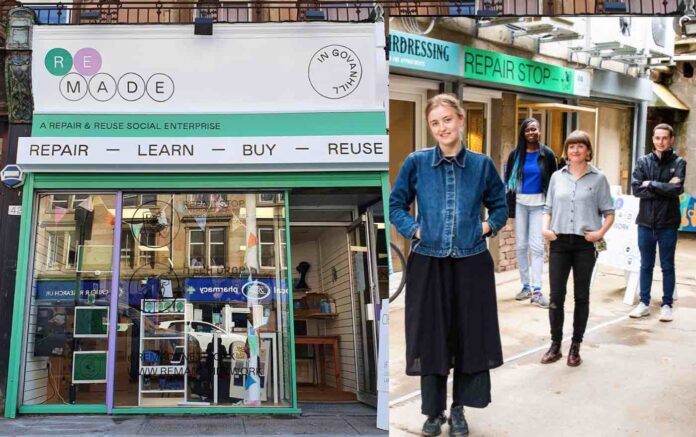
After a mend and repair shop opened in the Govanhill neighborhood, hundreds of residents began bringing in broken electronics and clothes to be repaired, resisting the urge to rid themselves of the problem by going on Amazon and getting a new one.
The shop is called Remade, and it’s looking to change the way Britain consumes.
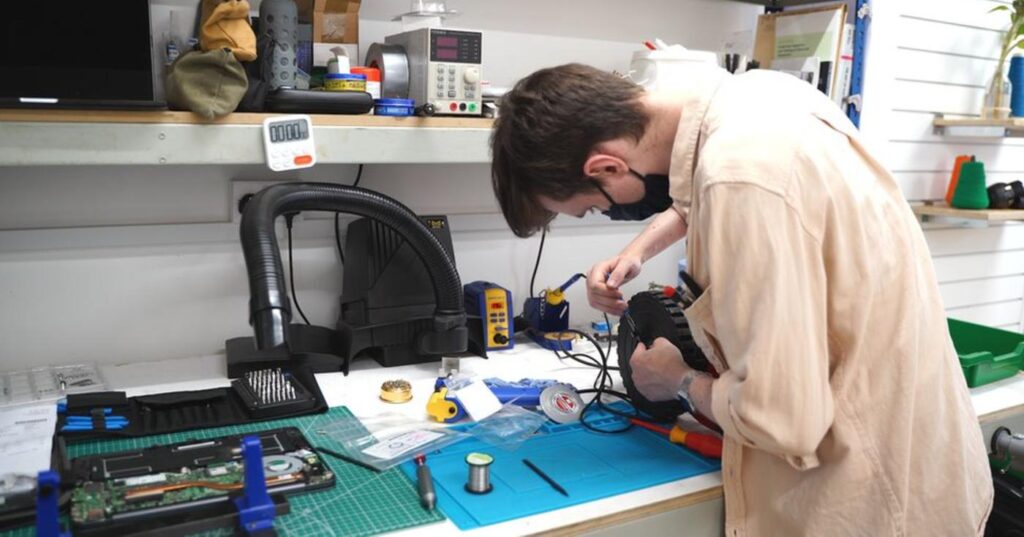
A team of technicians, general repairmen, and tailors work, not out of charity, but as part of what the BBC described as a thriving business fixing every imaginable gadget, home appliance, lawn machine, garment, jewelry, and even Christmas ornament.
Along with mending broken items, Remade also works to find items new homes as a second-hand outlet, as well as connecting unneeded laptops or other internet-connected gadgets with homes that lack them.
The BBC spoke with one repeat customer who said she had a watershed moment when an extension cable she owned stopped working.
“My immediate response was, well that sucks—I guess I will go to an online retailer like Amazon and buy another one,” she said. “Then I thought—hang on, there’s absolutely no need to do that—I know this place is open just down the road.”
It’s not easy these days to see that thought through to the end.
But it’s the right thing to do for the planet in a sense, as old electronics are contributing enormously to non-degradable landfill waste.
Furthermore, it’s not only the burden of transporting, storing, and tossing e-waste in a landfill, but the emissions that come from producing its replacement.
Computers, phones, and tablets for example need microchips that rely on lithium to produce, which is a rare earth mineral that is costly—both in terms of dollars and CO2 emissions—to mine.
Fortunately it’s not only GNN who knows this, and the Remade staff has grown to eleven employees to keep up with the demand of Scots taking on the mission of having their old stuff fixed up.
FIX YOUR Friends’ News Feeds—Share This Story With Them…
Quote of the Day: “Problems sustain us—maybe that’s why they don’t go away. What would a life be without them? Completely tranquilized and loveless.” – James Hillman (author of Soul’s Code, one of the best books for any parent)
Photo: by Volodymyr Hryshchenko
With a new inspirational quote every day, atop the perfect photo—collected and archived on our Quote of the Day page—why not bookmark GNN.org for a daily uplift?
Zoo keepers made a tortoise a homemade scratching station, and an adorable video shows the creature wiggling while trying it out.
Morgan Brem, a Dallas Zoo intern, created the scratching device for Sunny the radiated tortoise.
Made from broom heads, it’s perfect for the little animal to itch the impossible-to-reach spots on the top of his shell.
Robin Ryan, supervisor of ambassador animal experiences at Dallas Zoo, said: “She made it adjustable to see if our ambassador armadillo would also be interested, but so far, we have only seen Sunny use it.
“The base is wood with a turf mat cover for belly scratch opportunity, the frame is PVC, and the brush heads are held on with conduit fittings.”
To “maximise scratching abilities”, the top brush was lowered twice for Sunny, who has been at the Dallas Zoo since 1980.
Robin said tortoises’ shells are part of their spine and they have nerve endings which run on the top.
Ryan explains that: “The name ‘radiated tortoise’ comes from the pattern on Sunny’s shell. The top part of his shell has yellow lines that radiate out from the center.
“They kind of look like sun bursts, hence the name. His engaging personality helps inspire guests to want to create a better world for animals.”
(WATCH Sunny scratch that itch in the video below.)
WIGGLE This Fun Story on Over to Friends on Social Media…
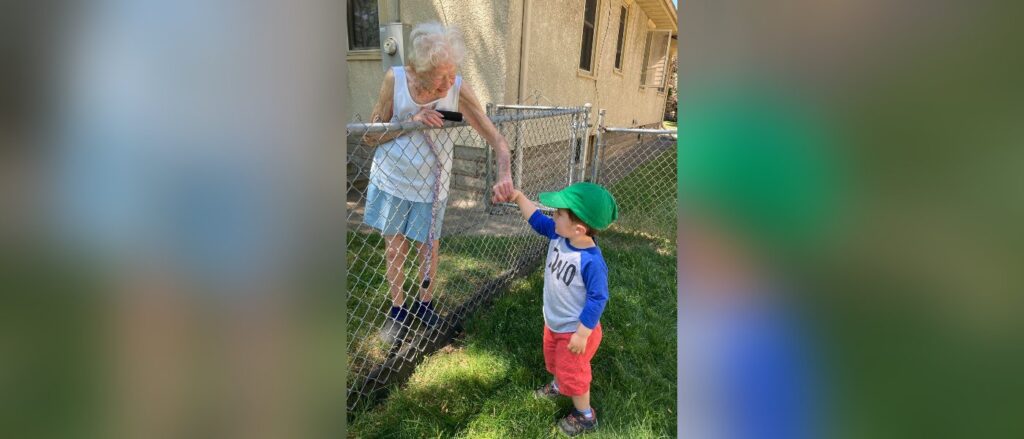
There’s an old saying that goes, “Good fences make good neighbors.” With so many folks forced to stay at home during the pandemic, some are happy to report that good fences can also make good friends.
In Minneapolis, the Olson family lives next door to 99-year-old Mary O’Neill.
Although Mary has an adult daughter in the area who visits once a week, with the rest of her relatives scattered, for the most part, the pandemic left the soon-to-be centenarian in seclusion.
But as lockdown wore on, Mary managed to forge a special friendship with one of her neighbors—Benjamin Olson, age 2.
Over time, Mary watched through the chain-link as Benjamin learned to walk, talk, and eventually run and play. Despite the huge differences in their ages, Benjamin was drawn to his elderly neighbor, delighting in her presence.
Between the two, they developed a game they could play over the fence. Ben would pass her a ball and she’d hit it back to him with her cane.
While others might remark at the 97-year gap between the two pals, when Ben sees Mary, he simply sees a friend, not a number.
“She’s just Mary, or in the past couple of days, he’s been calling her ‘Mimi.’ We’ll be playing inside and he’ll go, ‘Mimi? Mimi?’ and we’ll go outside and look for [her],” Benjamin’s mom Sarah Olson told CBS News. “She’ll call out, ‘Hey Benjamin!’ when she sees him, and it’s just been so cute to watch it.”
Although the pair’s special affinity definitely scores high on the cuteness factor, Sarah and Mary’s adult daughter believe the relationship has been a lifeline that’s kept the elderly woman going through the long period of isolation.
As pandemic restrictions have lifted, Mary and Benjamin’s bond continues to blossom on both sides of the fence—only now, the gates can be opened.
Benjamin joins Mary on her back steps to play games, blow bubbles, and enjoy the activities that bring joy to both the young and the young at heart.
“Friendship can just happen so many different ways,” Sarah told CBS. “I’m just really happy they were able to form this [one]—quarantine or not, pandemic or not. I’m happy…because it means a lot to her and it means a lot to him too.”
In August, when Mary celebrates her 100th birthday, it’s a good bet Benjamin and his family will be there to help her blow out the candles and make a wish.
But we’re guessing the one thing she won’t be wishing for is a best friend.
By putting the recycling costs on the producer rather than the consumer, Maine becomes the first U.S. state to hold companies responsible for the waste they create.
In putting what is essentially an import duty on packaging, Maine is telling companies there is a limit to the amount of reliance they can have on Mainers and municipalities to recycle their material.
If a company is using less-than eco-friendly packaging, they have to pay a Stewardship Organization (SO) per ton of packaging they bring into the state.
The SO then looks at the costs and workload of recycling programs around the state and reimburses them depending on the amount and type of material they are processing.
Prior to the law, the only way to raise money for recycling was more taxes.
“It’s really designed to help tackle our waste crisis, get us to finally reaching our goal of recycling 50% of our waste which we set back in 1989 but never met,” said Sarah Nichols, Director at the Natural Resources Council of Maine, in an interview with WCSH News.
Nichols hypothesizes that companies will do more either to create eco-friendly packaging or to have clear recycling instructions and labels on their products that will ensure Mainers don’t put the wrong thing in the wrong bin.
Successful companies are often the nimblest ones; able to adapt to changing market and regulatory conditions, while remaining profitable.
Small producers, either those who make less than $2 million gross or who create less than one ton of waste per year, would be exempt from the tax, ensuring Maine’s small business sector isn’t over-burdened with regulatory costs.
Nichols said that while Maine was the first U.S. state to pass a law like this, Oregon has a similar one heading to the governor’s desk, and that she is certain they “won’t be the last.”
RECYCLE the Good News From Maine—Share This Story With Pals…
Quote of the Day: “Know what you want and all the universe conspires to help you achieve it.” – Paulo Coelho
Photo: by Alejandro Luengo
With a new inspirational quote every day, atop the perfect photo—collected and archived on our Quote of the Day page—why not bookmark GNN.org for a daily uplift?
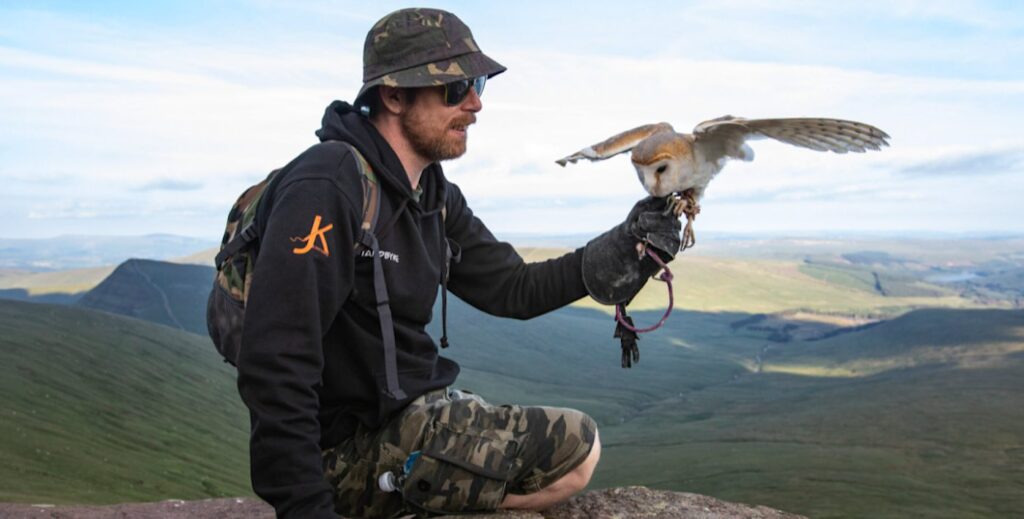
It’s not every day you see a man and his owl hiking up a mountain.
Joann Randles Photography
But this isn’t just any regular owl. Louie is an emotional support animal.
Jaylo Miles and his beautiful PTSD barn owl have the most incredible bond.
Together they are on a mission to help raise awareness for mental health and those who are battling PTSD (post-traumatic stress disorder) and the stigma attached to it.
A photojournalist based in Swansea, Wales, Joann Randles, recently joined the unlikely duo for a hike to the summit of the highest peak in South Wales, Pen-y-Fan.
“I try to find uplifting stories and came across Jaylo Miles’ inspirational owl story online.”
She reached out to Welshman who lives in Cardiff, to see if he would allow Joann to join him on one of his adventures with Louie.
“People will never know how special Louie is, not just for me but, for guys I let hold him,” says Jaylo. “That special moment of love!”
Joann Randles Photography
Jaylo set up a Facebook page called Many Downs, Time To Get Up, as a safe and uplifting community where individuals can learn about his battle to overcome PTSD, and readers can help inspire others.
The father of three wrote, “I have built this page from a desperate battle with my own mental health and suicidal thoughts in the hope to make a difference and leave a legacy to create & inspire.”
Joann Randles Photography
Jaylo and Louie—and another support owl named Oscar—are now familiar faces around Cardiff.
They encourage others to join with them on challenges and group meet-ups, so that they, too, can take the positive steps to overcome their fears.
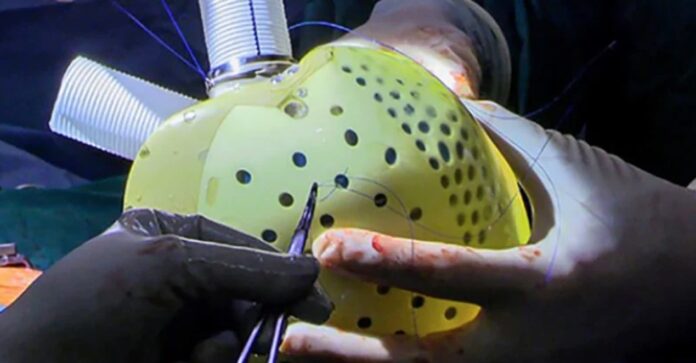
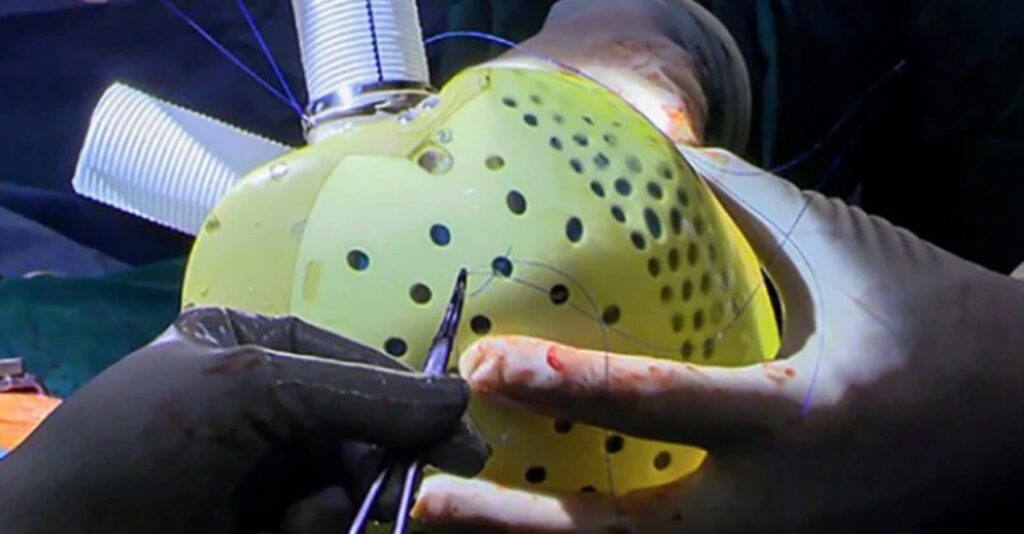
Surgeons at Duke University successfully implanted a new-generation artificial heart in a man with heart failure—a first for any hospital in North America.
The artificial heart was developed by a French company, CARMAT and has been approved for use and sale in Europe.
Last year, the company received U.S. FDA approval to begin studies and enroll 10 patients with end-stage biventricular heart failure—people who are suffering on the waiting list for a heart donor—and offer a life-saving bridge before transplant.
“We are encouraged that our patient is doing so well after the procedure Monday,” said Dr. Carmelo Milano, a transplant surgeon and the principal investigator of the device study at Duke. “As we evaluate this device, we are both excited and hopeful that patients who otherwise have few to no options could have a lifeline.”
The North Carolina patient, Matthew Moore, is just 39-years-old and was referred to Duke in June after a sudden, unexpected diagnosis of heart failure. Moore and his wife, Rachel, recently adopted their two-year-old foster son, Marshall, and arrived at Duke expecting only to undergo heart bypass surgery.
As Moore’s condition quickly deteriorated, however, traditional options, including transplant, became too risky. Meanwhile, Duke was among just three transplant centers in the United States selected to join the device study, and the procedure team received specialized training to prepare for the implant surgery.
Matthew’s wife, a nurse, said, “Both Matthew and I are so grateful that we’ve been provided an opportunity to participate in something that has the potential to have an impact on so many lives. We are just taking it day-by-day and hope everything continues to progress well.”
The artificial heart device called the ‘Aeson’, is an implantable prosthetic that includes biological valves derived from bovine tissue and operates on an external power supply.
If the device receives FDA approval, it would provide hope for transplant patients whose hearts require assistance to pump blood through both chambers. Current technology—notably a left-ventricular assist device (LVAD)—supports just one chamber.
“Because of the shortages of donor hearts, many patients die while waiting for a heart transplant,” said Schroder, a transplant surgeon who led the implant procedure. “We are hopeful for new options to help these patients, many like Mr. Moore who have devastating disease and cannot otherwise be considered for a transplant.”
Gran Via in Madrid by Felipe Gabaldón, CC license
Whether you’re from the U.S. and call it a “Beltway” or Europe and call it a “Ring road,” Madrid will be calling it the “green way” soon enough, as the Spanish capital aims to combat their city’s island of heat by encircling themselves with a sea of green.
Gran Via in Madrid by Felipe Gabaldón, CC license
Their urban forest project will involve planting nearly a half million trees on a 46-mile perimeter (75-km) around the city. When the trees have reached maturity, they should absorb around 175,000 tons of CO2 per year.
Black pine, beech, Spanish juniper and various oak species can all be found in the arid middle of Spain wherein lies the Spanish capital, and it is these native trees which require little water or specialized soil conditions that will constitute the new forest.
“What we want to do is to improve the air quality in the whole city, to fight the ‘heat island’ effect that is happening inside the city, to absorb the greenhouse emissions generated by the city, and to connect all the existing forest masses that already exist around the city,” Mariano Fuentes told Euronews.
As Madrid’s councilor for the environment and urban development, Fuentes explained that for cities that belch three-quarters of all human-caused CO2, which tend to absorb much more heat and poor air than surrounding countryside, methods for combating climate change and general environmental degradation need to be varied.
“It has to be a global strategy,” added Fuentes. “It’s not only about cars, but also a pedestrianization strategy, the creation of environmental corridors in every district… and most of all… to engage citizens in this new green culture, it is essential for every city to face the near future in the best conditions.”
Experts assured reporters that “it’s not a park,” but certainly for nature-loving Madrileños, it will be a place of respite, shade, and bird habitat that will work night and day to absorb excess heat and clean the air of the European mega-city.
WATCH the video from EuroNews…
Plant Some Good News on Social Media For All Your Friends Who Love Spain…