All News - Page 455 of 1716 - Good News Network
Home Blog Page 455

Student Builds Life-Saving Device that Can Instantly Stop Bleeding from Stab Wounds

Loughborough University

A UK college senior is doing his part to ‘stop the bleeding’ of violent knife crime by inventing a device that can help first responders better seal wounds.

Depending on the location, the victim of a stabbing doesn’t have long without proper first aid to stop blood loss, but if Joseph Bentley’s new invention is on the scene it could significantly reduce that possibility.

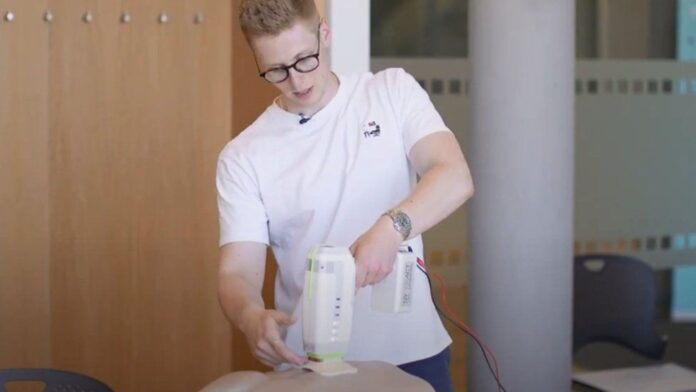
The device is known as the rapid emergency actuated tamponade, or REACT, and it borrows the long-utilized but hardly perfect function of gauze to apply pressure to a wound site to stop blood loss. Once blood clots stop the bleeding, the removal or disturbance of the gauze can reopen both the wound, and the problem.

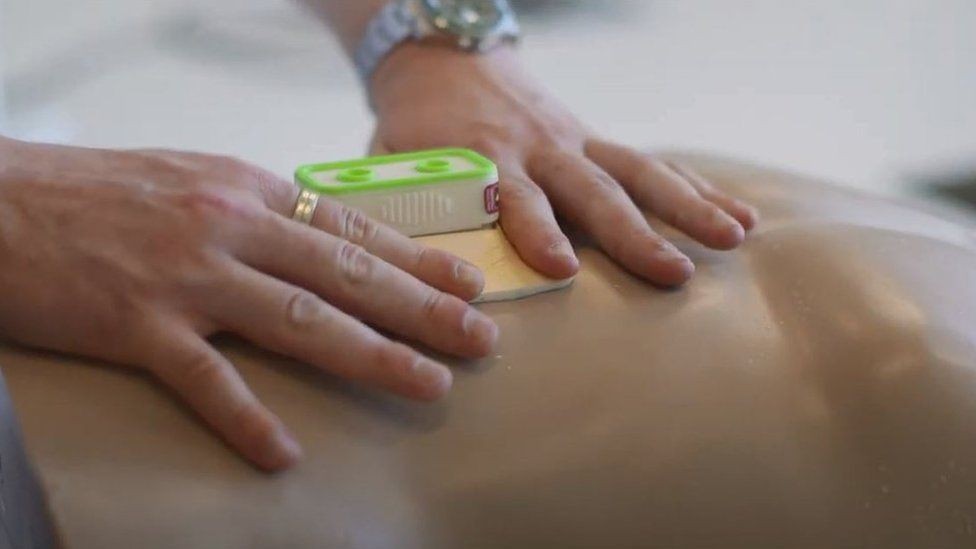
In contrast, REACT inflates a silicon balloon-like sleeve known as a tamponade, which applies similar pressure and allows the blood to clot. Once the balloon needs to be removed, it’s deflated slowly and gently, allowing the clots to remain intact.

MORE: Accidental Discovery of New T-Cell Hailed as Major Breakthrough for ‘Universal’ Cancer Therapy

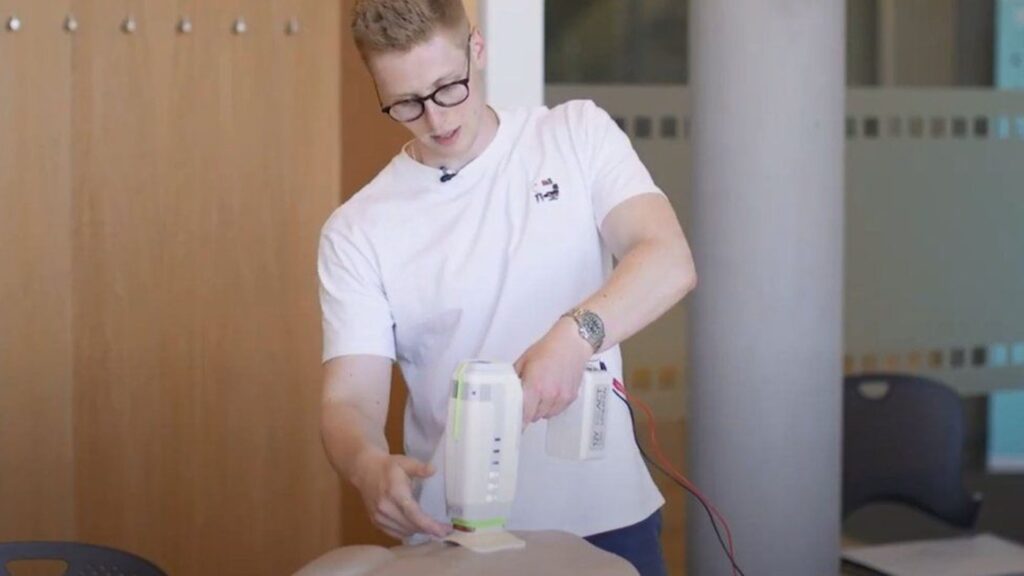
First responders would insert the sleeve into an open wound, and use the actuator device, which looks a bit like a battery-powered hand drill, to first select which part of the body the wound is located on and then inflate the tamponade through a connected valve to exactly the right proportions for the location.

Loughborough University

“I know several friends who have been the unfortunate victims of knife crime, thankfully none of the incidents were fatal,” Joseph explained to Loughborough University press.

“The tamponade can be in place and stopping a hemorrhage in under a minute, saving hundreds of lives a year, and as the tamponade is suitable for large cavities like the abdomen, it is also easier and faster to remove than current methods used to stop bleeding, giving the patient the best chance in reconstructive surgery,” he added.

Currently seeking a patent for his tech, Bentley’s REACT is still a prototype, but it’s his hope that he can get it through the necessary stages in order to ensure first responders have access to it ASAP.

CHECK OUT: Simple Type-2 Diabetes Treatment With Low Calorie Diet is So Effective, It Reverses the Disease in Studies

“Medical device development takes a long time, but hopefully in a few years the REACT system will be used to control the bleeding in victims of knife crime and save lives,” Bentley said in a statement. “I’m hoping one day it will be carried by all emergency services: police, ambulance staff, even the military, but the absolute goal is to get this product in use as soon as possible.”

(WATCH the video about REACT below.)

FIX Your Friends’ News Feeds With Good News—SHARE This Story…

Herd of Elephants to be Moved from UK to Kenya in Rewilding ‘World First’

David Rolfee/Howletts

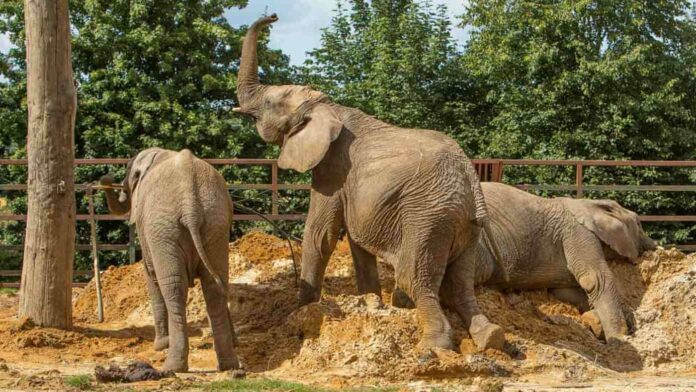
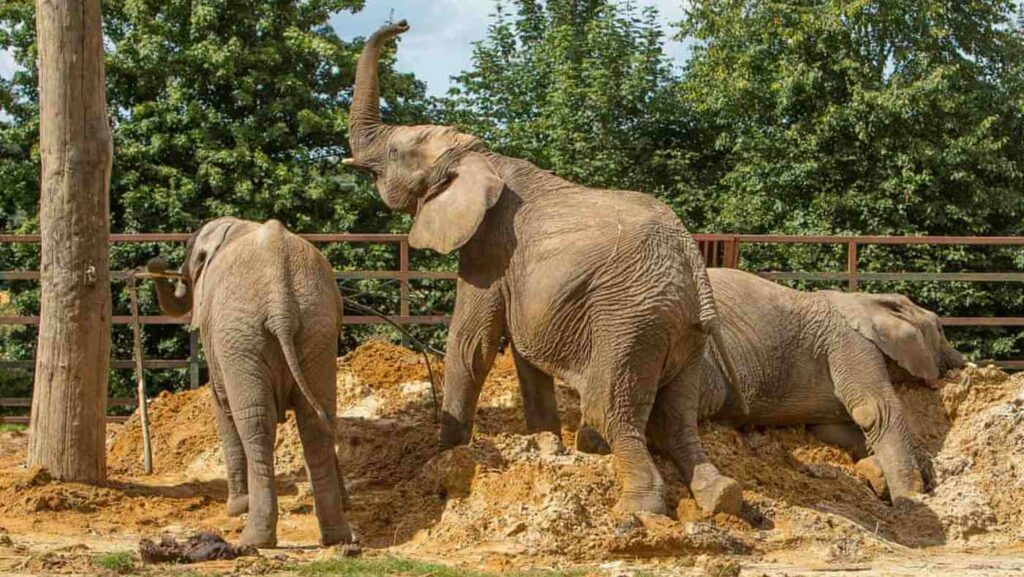
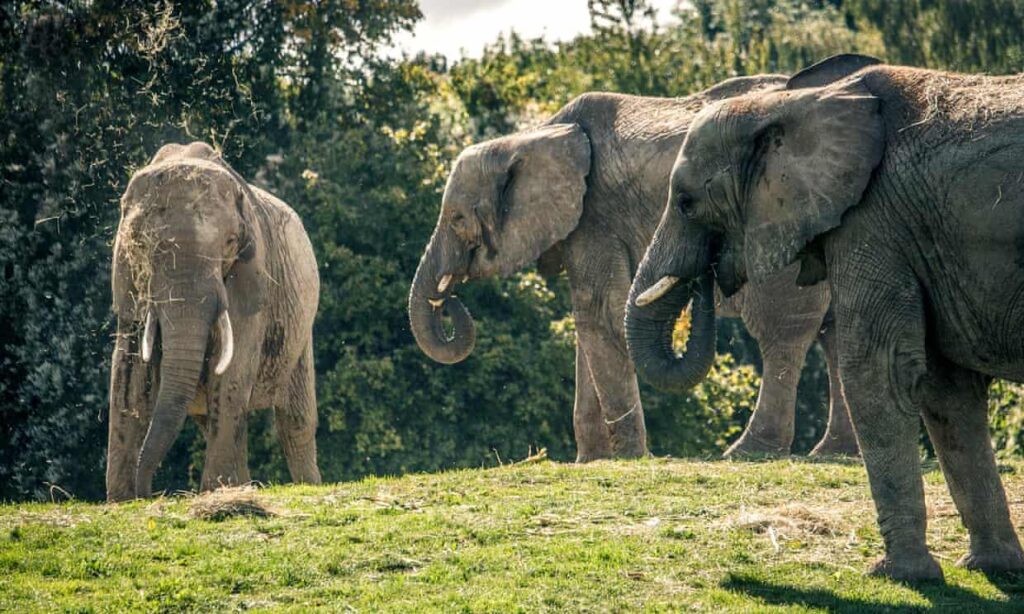
Elephants are famous for their migrations—long marches across savannahs and deserts done entirely from memory, but for 13 captive elephants in Kent, their journey will look quite a bit different.

That’s because their trip will be one-way, by plane, and will be the first of its kind—a rewilding effort that hopes to move all 25 collective tons of pachyderm via airplane back to their ancestral homeland of Kenya.

Such a challenge requires experienced minds, but the team behind the mammoth undertaking are some of the best around. Experts in wild animal relocation, The Aspinall Foundation are working with the Sheldrick Wildlife Trust and the Kenyan Wildlife Service.

At Howletts’ Wild Animal Park in Kent, near Canterbury, The Aspinall Foundation ensures that every exotic animal breeding and living in safety there generates the revenue they need for them or their descendants to be reintroduced into the wild.

David Rolfee/Howletts

Their ‘Back to the Wild’ program has already seen an impressive number of animals born at the Kent parks return to their natural habitats. Western lowland gorillas, black rhino, Javan langurs and gibbons, European bison and clouded leopards are now not only thriving in the wild, but are also successfully breeding.

On the Kenyan side, the Sheldrick Wildlife Trust has been protecting wild elephants and rescuing injured ones, nursing them back to health, and reintroducing them into the wilds of Kenya for over 50 years.

When the Howletts’ breeding herd steps onto Kenyan soil after their 4,500-mile (7,000-kilometer) journey, it will be the longest and largest elephant release effort in history.

A mammoth task

While the amount of money and work that will go into building special crates, continuously monitoring the elephants, loading them onto lorries, and then into the back of a cargo aircraft seems too much to believe, the program leaders feel there is no other option.

David Rolfee/Howletts

Carrie Johnson, the wife of Prime Minister Boris Johnson, is actually the communications director for the Aspinall Foundation, and she wrote in the Sunexplaining their decision:

“After years of weighing up the benefits and the risks, we at the Aspinall Foundation have decided on an unprecedented project and a real world first,” she said. “This is the first time a breeding herd of elephants has ever been re-wilded.”

MORE: Baby Elephant Rescued After Falling Into Indian Well 30-Feet Deep

Mr. Damian Aspinall, founder of the foundation, told BBC Radio Kent: “Elephants don’t do well in captivity. Hardly any are born. Females live to about half their natural life. Over half the elephants in captivity are obese. They suffer foot problems, skin problems, [and] mental distress.”

“I think we would have done something good in the world if we can achieve this,” he added “Once they get out there, they are going to be so happy, wandering about, meeting other wild elephants, breeding.”

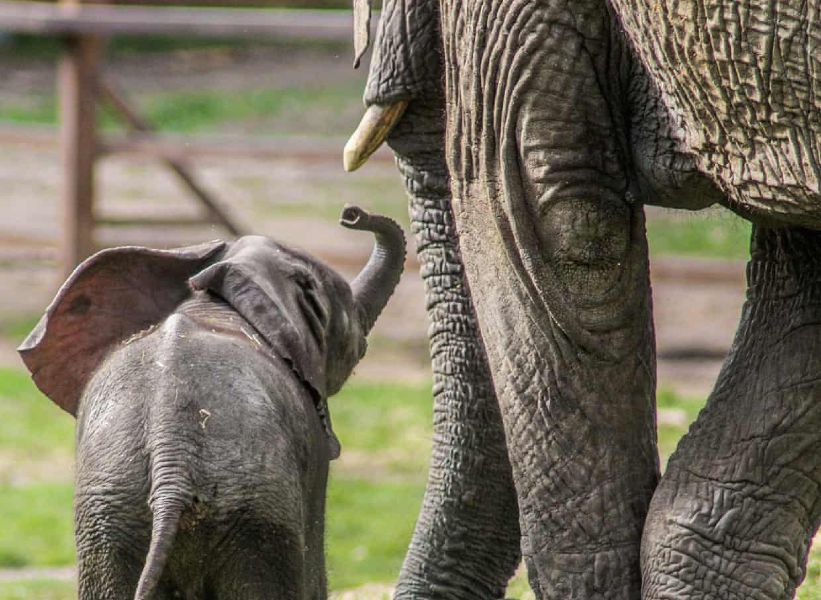
The 13 elephants include three calves, which lent the idea of naming the specially-designed 747 in which they will travel the “Dumbo” jet. 

RELATED: 35 Circus Elephants Arrive in Amazing Florida Sanctuary to Retire Among Forest, Grassland, and 11 Watering Holes

Angela Sheldrick, CEO of the Sheldrick Trust, said: “Since the 1970s we have been helping elephants. Providing a wild future to more than 260 rescued orphans and operating extensive protection projects to ensure they, their wild-born babies, and their wild kin are best protected throughout their lives.”

“We look forward to offering that same opportunity to these 13 elephants when they step foot on African soil, home where they belong and able to live wild and free as nature intended.”

CREATE a Good News Stampede—Share This Story on Social Media…

“Darkness is the soil and the soul: the deep places of growth and life.” – Tonia Rose

Quote of the Day: “Darkness is the soil and the soul: the deep places of growth and life.” – Tonia Rose

Photo: by Ankhesenamun

With a new inspirational quote every day, atop the perfect photo—collected and archived on our Quote of the Day page—why not bookmark GNN.org for a daily uplift?

Revolutionary Machine That Grows New Skin for Burn Patients Unveiled

WyssZurich

A piece of skin the size of a nickel, when placed inside a revolutionary Swiss bioengineering machine, can create a skin graft the size of a manhole cover.

Neither totally real nor totally artificial, the new machine about the size of a coffee table allows skin to be stretched to much greater sizes in an effort to aid in the millions of people who suffer debilitating injury or death from burns.

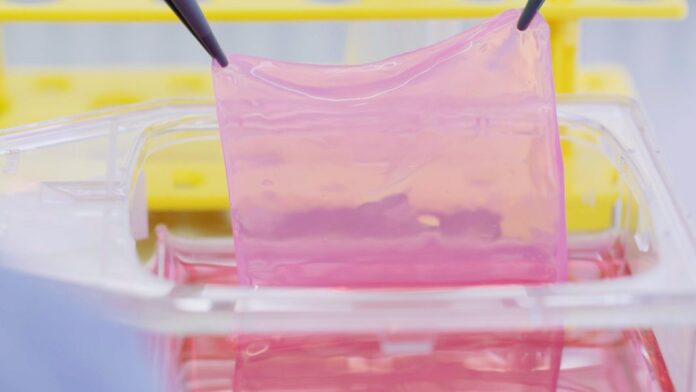
Taking healthy, undamaged cutaneous skin cells from the victim, the procedure starts by “growing” them in a lab before combining them with hydrogel. The resulting 1mm inch thick skin is about the combined width of our natural skin layers.

The technology is called denovoGraft, and it’s already being used to treat people even though it’s only recently finishing phase II trials. That’s because for a select few people, this method of skin crafting is so advanced, it’s the only existing option in the world for their condition, which could be a rare illness or a significant burn.

“At the moment we can multiply the surface area of the original sample by a factor of 100, and we’re aiming eventually for a factor of 500,” said Daniela Marino, co-founder and director of denovoGraft’s developers CUTISS.

MORE: Goal of Plentiful Organ Transplants Moves Closer to Reality as Scientists Grow Tiny Working Livers from Skin Cells

A Swiss news outlet reports that 11 million people worldwide suffer serious burns every year, and a more democratized treatment option could launch the field forward to a point where those in developing countries and war zones would be able to receive a denovoSkin graft. The denovoGraft machine can make several grafts at a time with no manual input, which offers the chance to dramatically reduce both production time and costs.

While the market for skin reconstruction in the event of scars or burning is valued at a little less than $2 billion, there are only around 40 people employed full-time in the sector.

RELATED: ‘Game-Changing’ Approval of Liver Transplant Procedure Expected to Halve the Waiting List

“There are 20 centres of excellence in Europe for treating serious burns,” Marino told Swiss Info. “We’re going to start by working with them, and we can do that on our own. Later, sure, we’ll have to find partners.”

Marino expects phase III trials to be finished sometime after 2023, after which the procedure would initially be available principally in Europe.

(WATCH the video about this story below.)

CURE Your Friends of Bad News—Share This Story With Them…

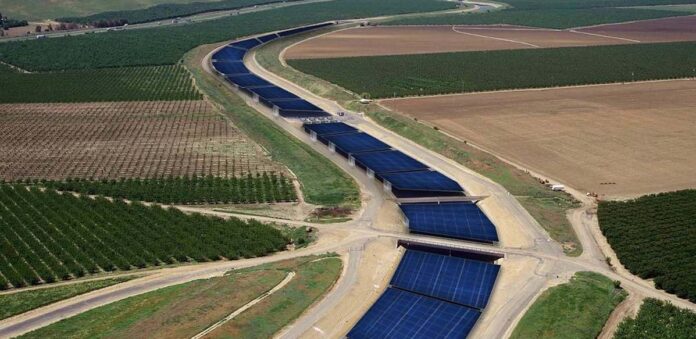
Huge Supply of Water is Saved From Evaporation When Solar Panels Are Built Over Canals

Rendering, Solar AquaGrid

In an interview, famed astronomer Neil DeGrasse Tyson explained that we already have flying cars, in a way, because tunnels and overpasses allow cars to access the third dimension.

Rendering/Solar AquaGrid

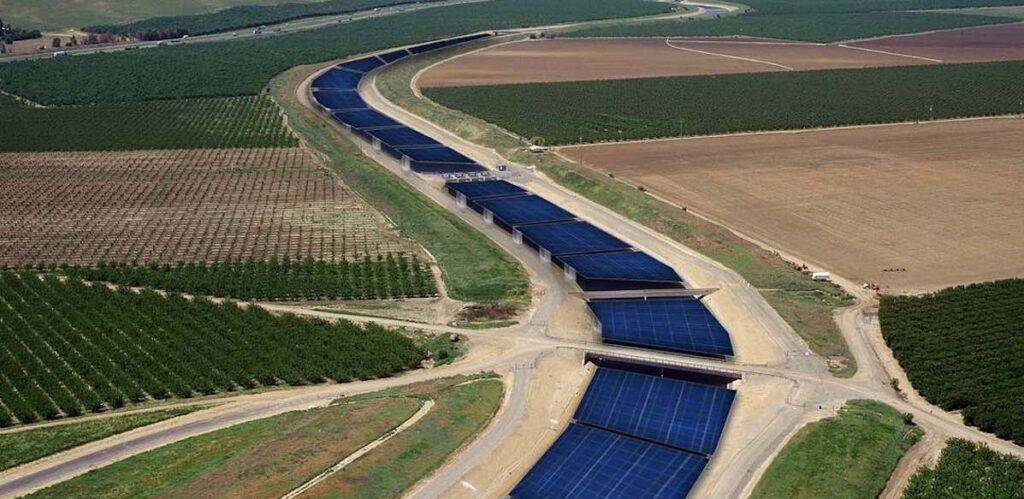
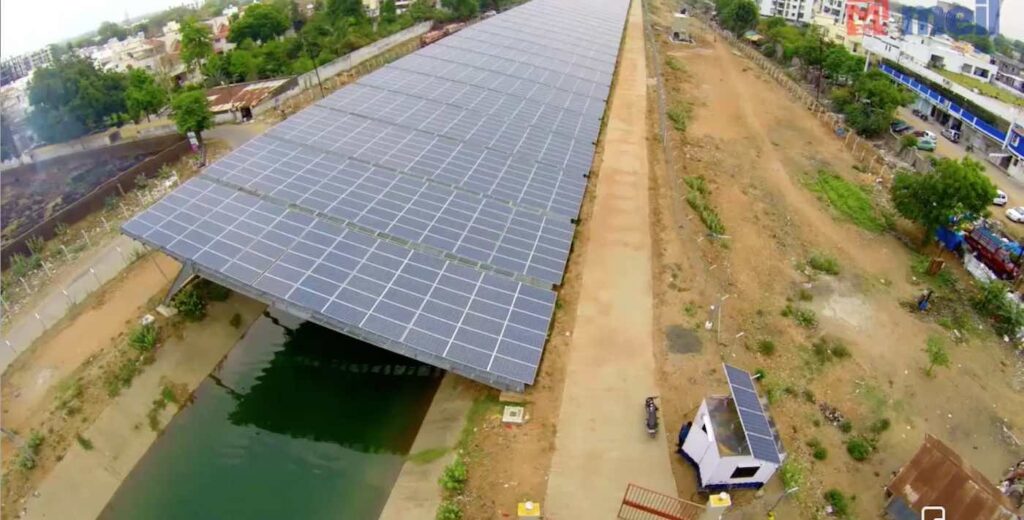
By that logic, India has invented ‘flying solar panels,’ which are being suspended above irrigation canals to cut down on the evaporation of precious water droplets by providing shade from the sun’s evaporating heat. It’s also a clever way to cut down on habitat loss, too, by placing panels in already-dedicated man-made spaces.

Now, California is eyeing the benefits derived from several successful canal installations in India. With the world’s largest irrigation canal network, and 290 days of average sunshine, California is uniquely positioned to ease its own severe water shortages with this emerging innovation of canal-covering solar farms.

UC Santa Cruz has investigated this method for use in California and estimates that—on top of generating green energy—it would save 63.5 billion gallons of water from evaporation annually, a massive windfall for a state that sometimes rations water and which regularly suffers from droughts.

MORE: Solar-Rich California Hits 95% Renewable Energy On a Recent Day Across 80 Percent of the State

However the story begins in the Indian state of Gujarat in 2014, when a pilot project covering 750 meters of canal space led to the creation of an entire canal-topped solar plant in Vadodara District, and another one totaling 100 megawatts off the Narmada River.

Researchers in India found that the water running beneath the panels cooled them, too, preventing overheating and resulting in an average efficiency increase of between 2-5%.

YouTube– REC Solar panels over canals in India

Brandi McKuin and her colleagues at UCSC wanted to model the pros and cons of covering the Golden State’s 4,000 miles of canals in solar panels, including using three separate techniques to measure water savings, and choices of construction methods that would be the most efficient to scale. (The most value conducive method of construction was thought to be steel cables.) Their results published in Nature Sustainability model a sunny future.

They believe that spanning California’s canals with solar panels could create a cost savings—from water conservation, real estate costs, aquatic weed maintenance, and enhanced electricity production—which outweighed the increased cost of building the more complex solar array.

Furthermore, the state uses diesel-powered water pumps to drive the flow of the canals, which could be replaced to the tune of 15-20 generators per megawatt of solar.

RELATED: Scientists Create World’s First Truly Biodegradable Single-use Plastic That ‘Eats Itself’ in Just 2 Weeks

Roger Bales, a coauthor on the paper put it simply, saying, “This study is a very important step toward encouraging investments to produce renewable energy while also saving water.”

Watch a video from Punjab, India, where REC solar panels suspended by cables above canals are saving 73 million liters of water which are channeled to local farms, while generating 8.4 million kW of energy annually since 2017.

POWER UP the Good News—Share This Story With Friends on Social Media…

4-Day Work Week is a Huge Success in Iceland

Nothing beats getting from Monday to Friday before a co-worker tells you it’s a three-day weekend. But what if that was how it was every Friday?

For those who don’t decide their own working hours, a trial of a 35-hour workweek without a corresponding drop in compensation among 2,500 workers in Iceland has shown the ole’ punch clock’s feeding schedule may truly not be the most productive form of labor.

The report, conducted by the think tank Autonomy, and another one called the Association for Sustainability and Democracy, found that negative markers like burnout, stress, necessary overtime, and disconnection with friends and family all went down, as would be expected, but that productivity remained at worst unchanged, and often improved in those working shorter hours.

The trials were such a success that following their conclusion in 2019, mass renegotiation by labor unions means that 86% of Icelanders are now working non-traditional work weeks which could include 5-6 hour working days or four-day working weeks.

“This study shows that the world’s largest ever trial of a shorter working week in the public sector was by all measures an overwhelming success,” said Will Stronge, director of Autonomy. “It shows that the public sector is ripe for being a pioneer of shorter working weeks—and lessons can be learned for other governments.”

Icelanders, unlike their Scandinavian neighbors, tend to work more even though the 21st century has been categorized in that part of the world with an increase in productivity paired with a decrease in working hours.

The principal theory is that “burnout” depletes the ability of workers to be productive. The lack of production will occasionally necessitate overtime, especially by managers, further increasing burnout and decreasing productivity. In those who cannot afford to be less productive, like nurses for example, the burnout simply results in negative health outcomes.

Hoping to see if they could replicate the productivity gains in other countries, the Reykjavik City Council launched this trial, mostly at public offices, but also in private firms, to measure performance and worker well-being for four years.

The mother of invention

Compared with non-enrolled firms or offices, productivity remained the same or was elevated in those participating, but it wasn’t free. Instead, as necessity is the mother of invention, a sort of mass re-imagining of operations was needed to achieve production or service goals with the reduced hours.

CHECK OUT: This Could Be Your Dream Job: Thousands Apply to Be Caretakers on Remote Irish Island

This involved, as the report details, the shortening or ending of meetings, reorganization of shifts, and often a total reevaluation of work processes to find where redundancies or inefficiencies could be removed.

One participant reported: “We shortened meetings in our workplace and we keep trying to constantly shorten them, we constantly think about how we perform the tasks here.”

A manager of one office said: “For instance, we changed our shift-plans. This changed the way of thinking in the workplace somewhat automatically, you know, you start to re-think and become more flexible. Instead of doing things the same, usual routine as before, people re-evaluated how to do things and suddenly people are doing things very differently.”

MORE: Admirable Bosses Lead to More Productive Employees, Says Survey

Experienced workers will know these kinds of changes can sometimes destroy an operation, but the reward of shorter working hours without loss of pay was, in general, more than enough of a unifying force of collective desire to ensure that firms made the most of the reduced hours.

Most importantly though, some of the profound results were found in measures of health and life. Along with increased personal time and chances to exercise, participating working parents noted being able to spend more time with their kids, for men to be able to pitch-in on home-related tasks, and for both parents to do more errands and be less stressed out by doing them.

Since the dawn of time, humans have been figuring out how to do more with less. The 9-hour, five-day workweek was pioneered in a time with limited technological assistance compared to what’s available now. Cloud storage, file sharing, instantaneous communication, the internetthese have all reduced the amount of time it takes to complete tasks in the workplace.

RELATED: These 6 Cities and This State Will Pay You to Move There

Yet humanity has not moved on from the days when writing meant using a typewriter, and one had to be sitting next to the phone in order to answer it. We are long overdue for a 35-hour working week, as technology more than compensates for those five lost hours. In another 20 years, when machine learning and bio-tech interfaces become more common, we’ll probably be able to do the same in a 30-hour workweek.

DO THE WORK for Your Friends—Share This Story on Social Media…

Honda is Designing an Ingenious In-Shoe Navigation System For The Visually Impaired

Honda
Honda

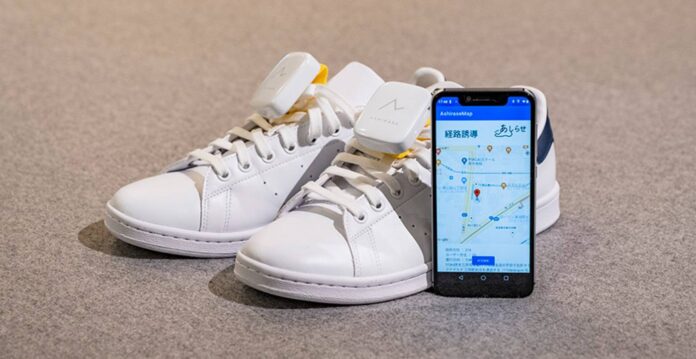
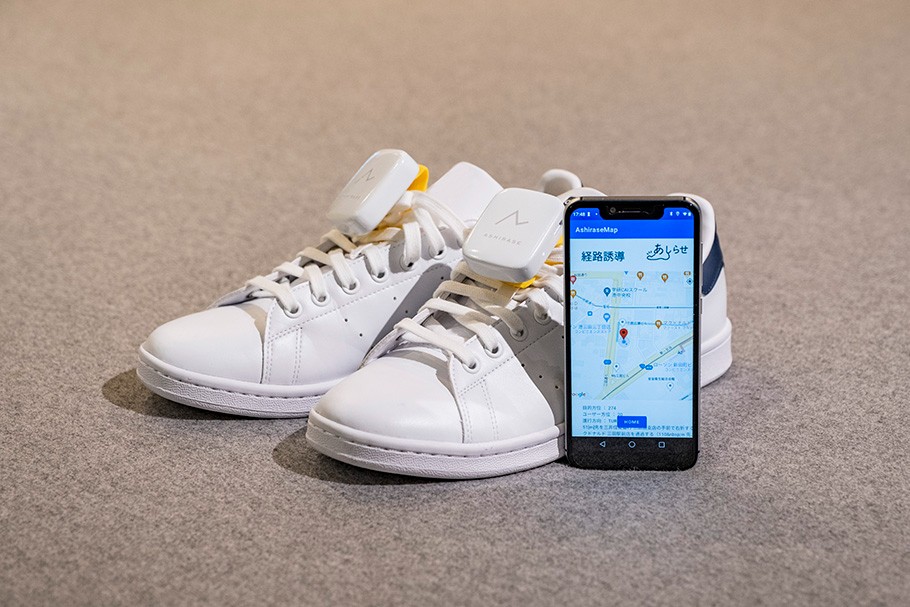
Honda is developing a in-shoe navigation system to support the visually impaired with walking, and it could be a game-changer.

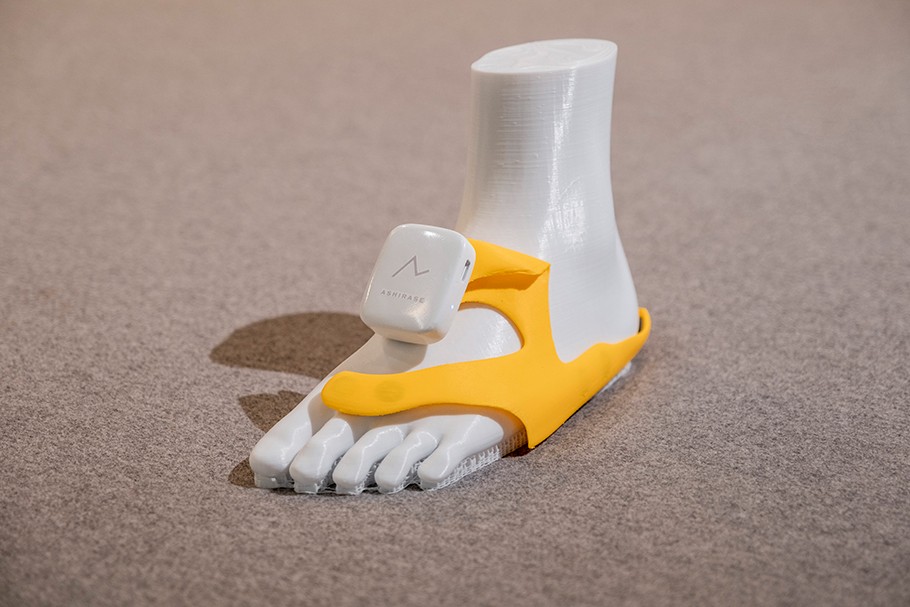
The Ashirase is a navigation system consisting of a smartphone app and a three-dimensional vibration device including a motion sensor, which is attached inside the shoe.

Based on the route set with the app, the device vibrates to provide navigation.

When the user should go straight, the vibrator positioned on the front part of the foot vibrates, and when the user is approaching a right or left turn, the vibrator on the right or left side vibrates to notify the user.

The navigation provided by Ashirase enables intuitive understanding of the route, and therefore the user does not have to be constantly mindful of the direction, which makes it possible for them to walk more safely and with a more relaxed state of mind.

Having navigation be provided through vibration on the foot is also useful in that it does not interfere with the user’s hand which is holding a white cane, or ears used to listen to ambient sounds.

Why is a company known for its automoblies getting involved in this area? Because it matters. In Japan alone, the number of people with visual impairment including low vision was estimated to be 1.64 million as of 2007, and the number is forecast to increase to nearly 2 million by 2030.

Honda

Visually impaired people constantly check their safety and route to the destination when they walk alone.

MORE: Scientists Partially Restore Vision in Blind Man Using Emerging Technique and Genes from Light-Sensitive Algae

However, as they are required to use all remaining senses to acquire information to compensate for their limited sight, it is somewhat inevitable that they will be unable to pay thorough attention and face functional issues such as “getting lost” or “falling into unsafe situations.”

Moreover, discovery sessions conducted by the development team with the visually impaired revealed that such functional issues lead to psychological issues, as indicated by comments such as:

“When I get lost, people around me sometimes do not respond when I try to talk to them. It is scary because I don’t know why they are not responding.” (comment by a person with late-onset total blindness).”

RELATED: 37 Years Ago She Began Making Braille Children’s Books to Cut the Cost By 90% And Donate Them Worldwide

With the concept of “navigation which enables safety and a relaxed state of mind for the visually impaired,” Ashriase is being developed as a product which helps the users reach their destinations safely and have a more independent lifestyle.

Wataru Chino, a designer at Honda, said, “I am sure that we will face many obstacles as we work toward the market launch of Ashirase; however, we will overcome such obstacles one by one and devote ourselves wholeheartedly to realize the freedom of mobility for visually impaired people.”

WALK a Little Good News Over to Pals—Share This Story…

“People ask me, ‘why don’t you have any tattoos?’ and I say: I don’t put bumper stickers on Ferraris.” – Sebastian Maniscalco, comedian

Quote of the Day: “People ask me, ‘why don’t you have any tattoos?’ and I say: I don’t put bumper stickers on Ferraris.” – Sebastian Maniscalco, comedian

Photo: by Martin Katler

With a new inspirational quote every day, atop the perfect photo—collected and archived on our Quote of the Day page—why not bookmark GNN.org for a daily uplift?

Watch This 4-Year-old Jump Into Action When Air Fryer Catches Fire in Kitchen

YouTube

Even the dogs weren’t aware of the fire that recently broke out in the house of one Florida family. Luckily, a four-year-old wearing a tutu saw it and saved the family home.

When little Amelia Jermyn first discovers the air fryer in the kitchen has caught fire, she adorably pumps her hand on her forehead, wondering what to do, before sprinting off to alert her daddy.

Daniel Jermyn springs to action, tossing the fryer into the pool in their Jacksonville yard.

Since that dramatic moment, Daniel has only had grateful words for his quick-thinking daughter, calling her, naturally, his ‘superhero in a tutu.’

(WATCH the Inside Edition video footage of the moment below.)

Featured image: YouTube/Inside Edition

SHARE This Little Girl’s Brave Actions With Pals…

Astonishing ‘Fairy Lanterns’ Found Growing in the Darkest Depth of Malaysian Rainforest

University of Oxford

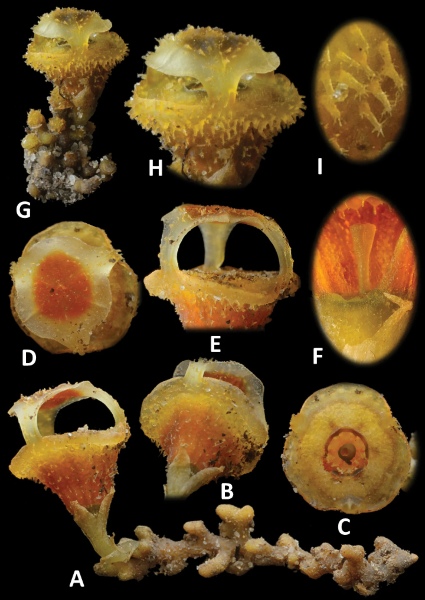
So-called ‘fairy lanterns’ are among the most extraordinary-looking of all flowering plants.

These curious, leafless plants (genus Thismia) grow in the darkest depths of remote rainforests where they are seldom seen.

There are some 90 species worldwide, distributed across the forests of Asia, Australasia, South America, and the USA. They all lack true leaves and chlorophyll, obtaining their food from root-associated fungi shared with other green plants.

Their mysterious flowers emerge just briefly, and often under leaf litter, so few people are lucky enough to encounter them.

Scientists at Oxford and in Malaysia have just described a species of fairy lantern completely new to science.

It was first discovered by rainforest explorer Dome Nikong in 2019 who, astonishingly, found the plant growing along a popular tourist track on Gunung Sarut, a mountain located in the Hulu Nerus Forest Reserve in the state of Terengganu.

University of Oxford

In February of 2020, Dome Nikong was joined by a team of botanists including researcher Siti-Munirah. To their dismay, the only known ‘fairy lantern’ plants had been destroyed by wild boars except for a single fruiting specimen.

Examining the little material collected from the two trips, Siti-Munirah and Dr Chris Thorogood, Head of Science for Oxford Botanic Garden and Arboretum, were able to describe and illustrate the new species.

They examined the architecture of the flower—its shape, color, and surface characteristics. They found that it has a unique and peculiar orange, lantern-like flower with pillars holding up a so-called ‘mitre’—an umbrella-like structure, the function of which is a mystery.

Together, the scientists named the plant Thismia sitimeriamiae after Dome’s mother Siti Meriam, honoring the support she has given his life’s dedication to conservation work in Terengganu, Malaysia.

The plant’s unique and remarkable ‘mitre’, color, and surface texture make Thismia sitimeriamiae among the most eye-catching plants ever described from Peninsular Malaysia.

MORE: Dutch Guy Famous for Cleaning Up Pacific Garbage Patch is Now Clearing the World’s Rivers Too

Dr Chris Thorogood says, “The extraordinary architecture of the flower raises interesting questions about how it is pollinated.

Other species appear to be visited and pollinated by little fungus gnats, but in truth, we know little about the ecology of these plants—they are a mystery. What is certain is that the plant is exceptionally rare—it has only been seen twice. The conservation status of the plant is Critically Endangered (CR) according to IUCN criteria.

RELATED: This Wonder Tree is a Game-Changer for Rainforest Agriculture in Honduras And Deforested Sites Worldwide

The scientists recommend in their paper, published in the journal Phytokeys, that further survey work is needed to bring fairy lanterns out of obscurity and inform the conservation priorities for these mysterious plants.

(WATCH the botanists on their adventure below.)

Source: University of Oxford

SHARE This Fascinating Story From the Rainforest With Friends…

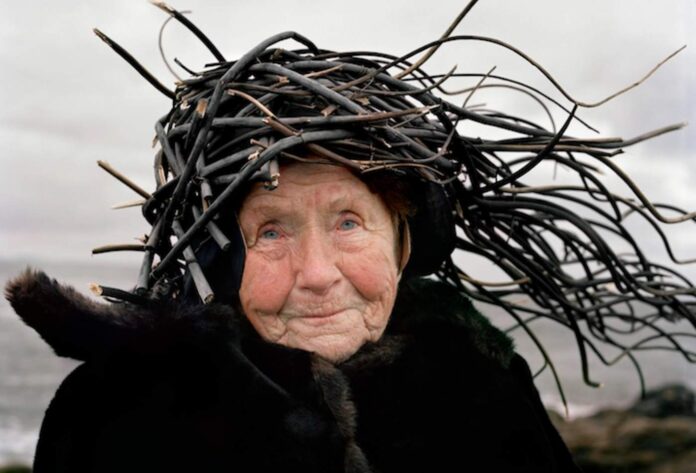
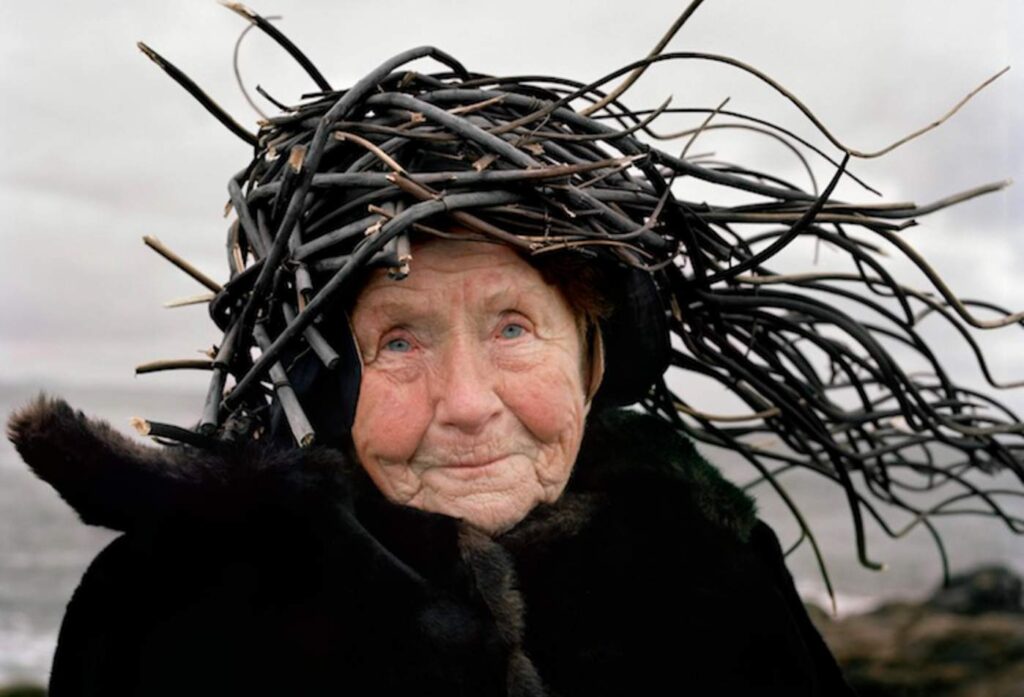
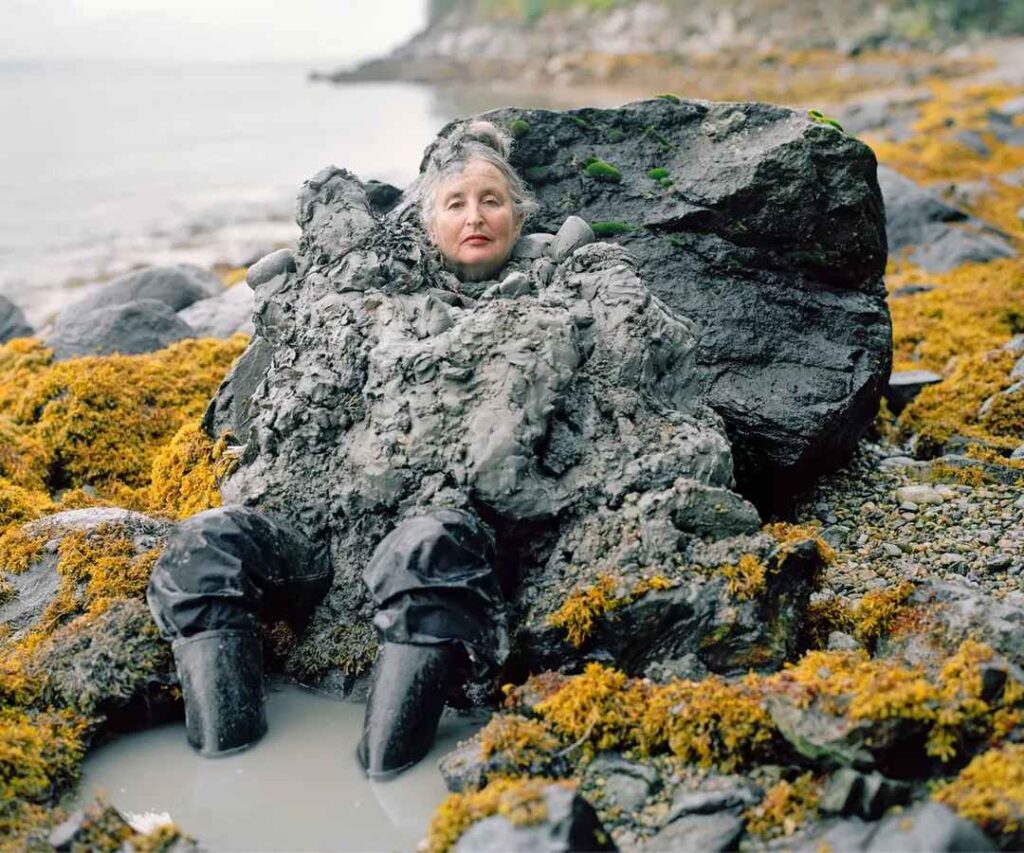
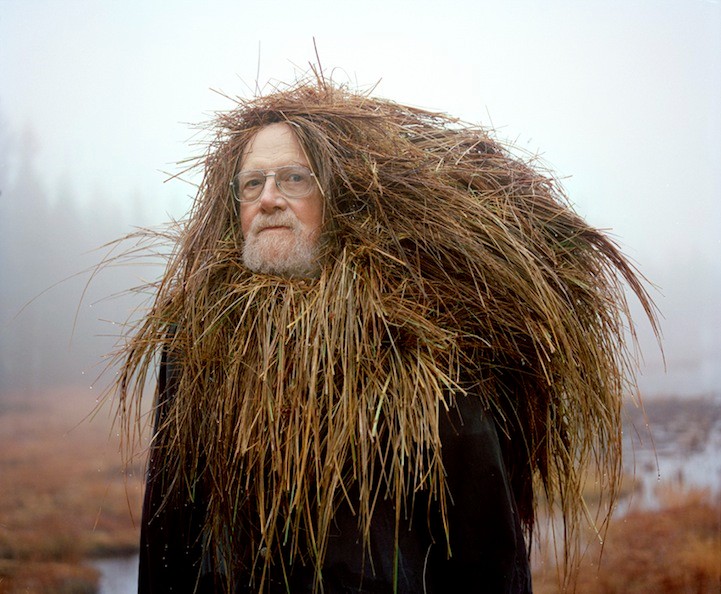
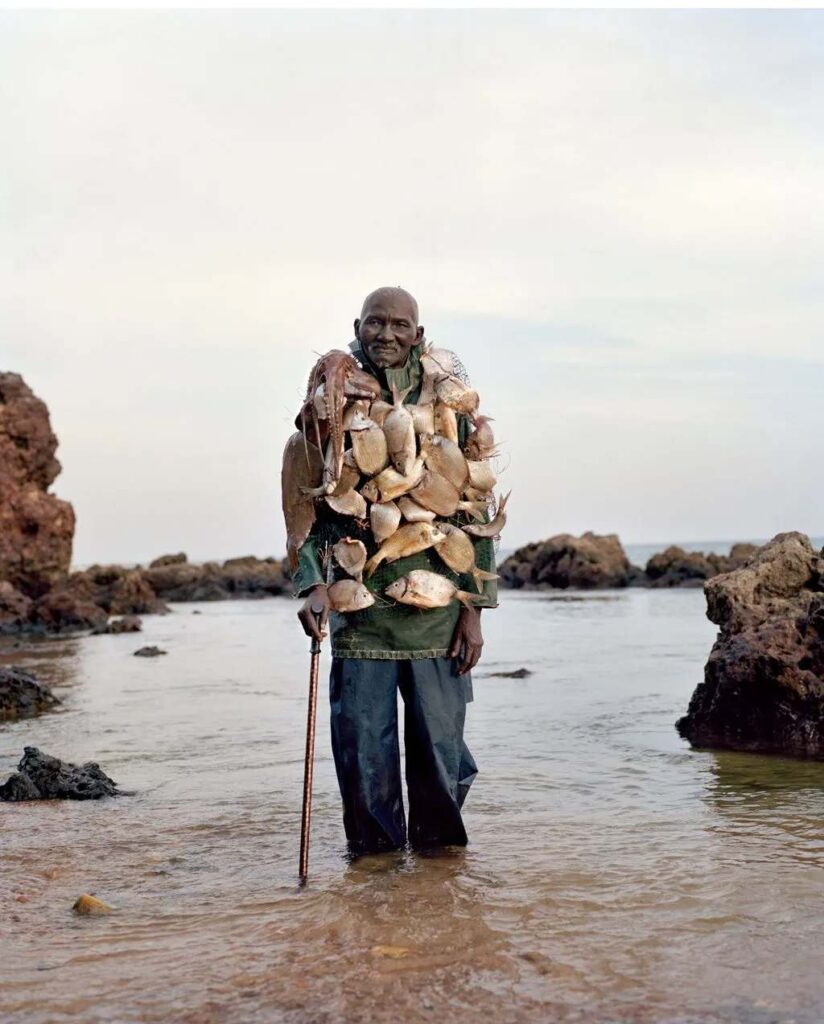
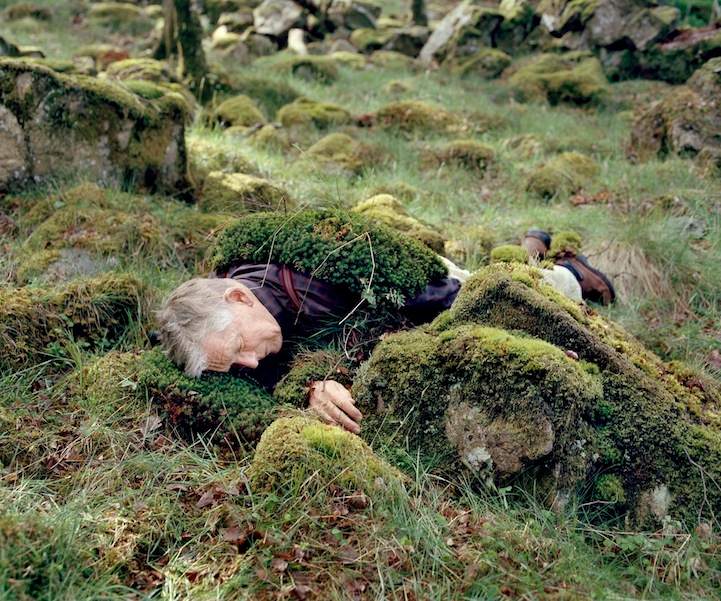
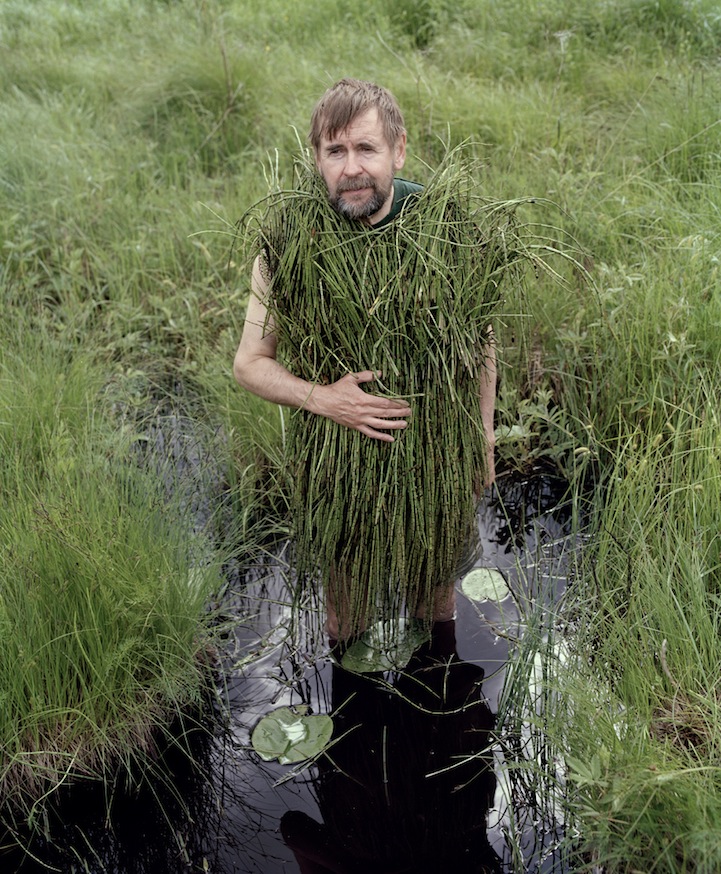
Seniors Play Dress Up With Nature to Personify the Magic Around Us– LOOK

Karoline Hjorth and Riitta Ikonen

Have you ever stared at a nature photo of an animal hiding in plain sight and had an almost impossible time trying to separate the creature from the background?

Camouflage (a.k.a. cryptic coloration) is an adaptive mechanism that helps organisms to blend in with their surroundings. It can be a life-saving form of self-defense. But when the camera lens captures senior citizens as integral, interconnected parts of the landscape they inhabit, it can also become a life-affirming revelation of self-expression.

Karoline Hjorth and Riitta Ikonen

Eyes as Big as Plates, a conceptual collaborative photography project between Finnish and Norwegian artists Riitta Ikonen and Karoline Hjorth started off as a riff on traditional Nordic folklore.

Ikonen, who’d been looking for a way to reinterpret the tales of trolls and magic creatures became intrigued by Hjorth’s photo series of Norwegian grandmothers and reached out to her.

After the two hooked up, the focus of the project evolved. “In the beginning, we were trying to illustrate certain phenomena—folklore, stories, figures from myth,” Ikonen told the BBC.

Karoline Hjorth and Riitta Ikonen

But the pair soon realized they were onto something that spoke to the bigger picture about the ways in which the elderly are seen—or perhaps more accurately not seen—and valued by society; one that might hold a deeper universal significance than a simple reimagining of regional mythology.

Karoline Hjorth and Riitta Ikonen

Throughout history, elders have been traditionally revered for their experience and wisdom. Now, however, seniors often admit they feel as if they’ve been erased from the larger cultural conversation. But, by incorporating older models as almost sculptural elements into their compositions, Ikonen and Hjorth have created a body of work that takes ostensibly invisible individuals and makes them the center of attention.

Karoline Hjorth and Riitta Ikonen

Featured models are imbued with an eye-popping, organic connection to the environment. The result? Each stunning portrait reflects a personal narrative acknowledged and venerated rather than a life story dismissed and forgotten.

Karoline Hjorth and Riitta Ikonen

Since 2011, the globetrotting pair has traveled extensively, setting up their tripods to capture their sometimes whimsical, sometimes thought-provoking, sometimes deeply moving scenarios everywhere from Norway, Finland, Sweden, Greenland, Iceland, the Czech Republic, France, the United States, Great Britain, the Faroe Islands, South Korea, Japan, Senegal, and Tasmania.

Karoline Hjorth and Riitta Ikonen

The cast of characters they’ve cataloged includes former farmers, fishermen, zoologists, plumbers, opera singers, housewives, artists, academics—and even a 90-year-old novice parachutist.

MORE: 80-Year-old Bonsai Master Creates Incredible Tiny Forests As a Rebel in the Ancient Art – LOOK

“We just try to work with whatever the people we interview bring, wherever they are,” Hjorth told BBC.

Karoline Hjorth and Riitta Ikonen

“We might be in Paris, and you might be at an opera soiree evening and there might be an old lady dancing, the last person on the dance floor,” Ikonen told CNN Style. “And you just think: Who is this fascinating person I have to meet? You approach them and ask, ‘Who are you and what are you doing tomorrow?’”

RELATED: Artist Fills Public Potholes With Colorful Mosaics – Restoring Roads and Sidewalks (Look)

For those fascinating people who take the visionary shutterbugs up on the challenge, more often than not, that means finding themselves communing with nature in a manner they’d never imagined, and ultimately, being celebrated for posterity in ways they could never have dreamed of.

Karoline Hjorth and Riitta Ikonen

SHARE This Beautiful Art With Friends on Social Media…

Inventor Creates a Machine That Turns Any Alcoholic Drink Into Soft Scoop ‘Ice Cream’

SWNS
SWNS

An inventor has developed a machine that turns beers and other alcoholic drinks into a soft scoop ‘ice cream’ that maintains its potency.

The ‘Below Zero’ machine takes any alcoholic beverage and crystallizes it in under 30 minutes for a treat that can, if you’d like, be covered in sprinkles and chocolate sauce.

Developed with WDS Dessert Stations in Hinkley, Illinois, the drink is first de-gassed to remove the carbon dioxide, then it is mixed with a gel, put in the machine, and out comes the ice cream.

Inventor and owner of Below Zero, Will Rogers, said: “The way it truly works… we like to say the gel ‘bear hugs’ the alcohol itself and turns it into ice cream.

“In the beginning days we used liquid nitrogen to make Below Zero, but now with the new machines you put it out in a cone and it’s ready to eat.”

The Nitrogen Ingredient Additive gel allows the alcohol to freeze to a near solid inside the machine as well as adding sugars.

SWNS

It is FDA-approved and pasteurized, and since the drink contains no dairy products, it’s not technically ice cream.

MORE: Pulling Vodka From the Air: This Award Winning Carbon-Negative Spirit Comes From Captured CO2

The machine itself will cost sweet-toothed breweries $6,000, but will allow them to serve all drinks, from a pint of lager to a strawberry Daiquiri, in a cone.

Inventor Will was inspired to create his machine while running an ice-cream shop and trying to formulate a highly-caffeinated espresso flavour.

He said: “One of our staff made the joke ‘what if we did this with alcohol?’ A light bulb went off in my head.”

He started experimenting with gums and stabilizers from the ice cream industry to create his patented gel.

Once he cracked the crystallization, the machine was born and he started serving boozy delicacies at catering events.

RELATED: The Queen has Launched Her Own Gin Featuring Botanicals Grown on Her Country Estate

Will said: “Vodka and lemonade cone is my personal favourite, on a hot day that’s like having an Italian ice-cream.

“We’ve run the Bud Lime through the machine, but your traditional Budweiser or Stella… I’d say sit back and have that on ice!”

SERVE UP the News of This Fun Invention to Pals on Social Media…

Two Boy Scouts Save Drowning Woman While Cycling Alongside Missouri Floodwaters

Monica Viet

Saving drowning women is all in a day’s work for a couple of Missouri boy scouts who had already collected their swimming and lifesaving merit badges.

Monica Viet

The county recreation center swimming pool where one gets such badges presents very different conditions to those created when a June storm dumped six inches of rain over Columbia in Missouri with little warning—causing floodwaters from creeks to burst their banks, causing overflow zones to turn into ponds.

When 15-year-old Dominic Viet and 16-year-old Joseph Diener passed a basketball court that had turned essentially into a water polo area, they heard the frantic shouting of a young woman desperately trying to keep her head above water under the force of a current.

The boys had seen the girl swimming with a friend there before, but it was now obvious she was drowning.

MORE: Diver Emerges Unscathed From the Mouth of Humpback Whale: ‘I was completely inside’

“The first thing that came into my mind was to get into the water,” Dominic told CNN. “We didn’t have time to think, her head was barely above the water and we could see her sinking more down every second. We didn’t think about the risks, we had to get her out.”

Heroes will do as heroes do, and hoisting her up onto their shoulders, Dom and Joseph got her ashore, where emergency services arriving at someone else’s call performed first aid and rushed her to the hospital.

Jerry Jenkins

Floodwaters are no conditions to be swimming in. There can be sewage runoff, loose chemicals, downed power lines charging the current with electricity, or physical debris such as manhole covers that have been lifted out of their sockets by the force of the water.

Assistant Fire Chief Jerry Jenkins described the boys’ act as heroic and brave, as did Dominic’s mom, who had been calling her son for some time before and was growing nervous.

She sent her husband, Dom’s father, to check on his position, but when he arrived he saw ambulances and firetrucks from the call that was meant to rescue the young woman.

“I thought of the worst, he’s on a bike and people weren’t paying attention and my fear was he was going to pull up and see our son on the ground,” said Mrs. Viet. “But then he saw them on their bikes heading back to their friend’s house, and I got a text from Dominic saying ‘Coming home soon, just saved a woman’s life Mom.'”

RELATED: Firefighters Get Creative to Help Baby Raccoon With its Head Stuck in a Sewer Cover

Oh Mom… how about you have a little faith?

Monica Viet

The fire department will honor the two boys with a “Citizen Life Safety Award” next week.

RESCUE the Good News For Your Friends by Sharing This Story…

Top Cities For Digital Nomads Looking to Work While Traveling the World

Reprinted with permission from World At Large, a news website of nature, politics, science, health, and travel.

COVID-19 chased millions of traditionally office and computer-based workers into remote working situations—a place where many, especially young people, were trying to get to all along.

The revelation of how many office functions can be done at home is opening up the option for many to travel the world in between workdays, a lifestyle known as digital nomadism.

Digital nomads are growing in number as technology advances both in terms of the software they use to work, and in terms of the countries they visit. The digital nomad brand and business is coveted, and recently the Portuguese government turned an entire community on the beautiful island of Madeira into a “digital nomad village.”

Recently, an Italian firm conducted a broad-scale analysis of 75 major cities around the world, and ranked them for a variety of factors pertaining to digital nomading—such as average Wi-Fi speed, average rent cost, security, burden of government, weather and air quality, and more.

Called the “Work From Anywhere Index,” it was put together by an international renters agency based in Italy, and for digital nomads it provides a good overview of known possibilities as well as opening up new ones.

Oyster world

“The last year has truly demonstrated to many firms that remote working is not only a possibility, but in reality something which can be advantageous for everyone involved,” stated Omer Kucukdere, CEO and founder of Nest Pick.

Scored from 1 to 100, 16 categories are added together to create the index. The #1 destination for remote workers across all the categories was Melbourne, Australia—a city which along with being clear, fun, free, and relatively less expensive than other global metropolises—has a special entry visa for digital nomads.

MORE: These 6 Cities and This State Will Pay You to Move There

Other cities that have digital nomad or remote working visas include Dubai, Medellin in Colombia, Chiang Mai in Thailand, Tallinn in Estonia, and Athens in Greece.

The Icelandic capital of Reykjavik had the highest score for internet speed and almost the highest across the board for religious or sexual freedom, but was overall ranked 23 due largely to taxes being so high there.

In contrast Dubai has 0 taxes on foreigners, and was ranked #2 overall. For cost of renting an apartment, St. Petersburg is second lowest, while also scoring second lowest for tax burden. The interesting conclusions could continue.

RELATED: These Beautiful Italian Towns Will Pay You to Move There if You Work Remotely

When someone realizes the world is their oyster, and they don’t need a desk, office, or a suit to go to work, it can be a little overwhelming. If you could go anywhere, deciding where you’d go could be really difficult.

The Work From Anywhere Index can make all that indecision a little bit easier.

SHARE These Sweet Spots With Friends on Social Media…

“To all I care about, here’s a friendly tip: enlightenment is gaffe upon error upon blooper.” – Ikkyu Sojun

Quote of the Day: “To all I care about, here’s a friendly tip: enlightenment is gaffe upon error upon blooper.” – Ikkyu Sojun, poet

Photo: by Michael Dziedzic

With a new inspirational quote every day, atop the perfect photo—collected and archived on our Quote of the Day page—why not bookmark GNN.org for a daily uplift?


Flying Car Completes First-Ever Flight Between Airports –Then Transforms Back into a Sports Car in 3 Minutes

AirCar by Klein Vision

Let the bells ring out in every direction from Toledo to Tokyo. Flying cars—the vision of transportation from science-fiction writers—may finally be landing in the modern world.

AirCar by Klein Vision

In a test flight, a Slovakian pilot drove what appeared to be an exotic sports car up a runway in the city of Nitra.

It then took flight with the aid of a fixed propeller, and landed 35 minutes later at Bratislava, before folding up the wings and driving straight out onto the highway.

The aptly-named AirCar (prototype 1) was developed by a company called KleinVision, founded by Stefan Klein, who spent 20 years turning his dream into a reality. For an unbelievably small amount of money—about 2 million euro—the Slovak created the world’s first flying car to travel between two airports.

During the maiden flight, AirCar was able to reach a cruising speed of 105 mph (170 kph) at an altitude of 8,200 feet (2,500 meters.) Fuel economy would allow it to maintain this trajectory for 600 miles (1,000 kilometers).

Once the flying portion of its journey is over, a push of the button causes a Transformer-like sequence that in under three minutes leaves the vehicle as a slightly-oversized, perfectly road-legal sports car with a 160 horsepower gas-powered BMW engine, a seat for another passenger, and a convertible roof.

WATCH the video…

In order to be certified to fly under modern regulations, planes or helicopters must be safe to fly for many years, without having an incident.

“I have to admit that (the AirCar) looks really cool—but I’ve got a hundred questions about certification,” Dr. Stephen Wright, a research fellow of avionics at the Univ. of West England, told the BBC“I can’t wait to see the piece of paper that says this is safe to fly and safe to sell.”

One company did get certified for a flying car this year. Terrafugia, founded in 2006 by five MIT engineering grads, first flew its flying car, the Transition, at a New York airport in Plattsburgh in 2012. Featuring its own parachute and a flight range of around 480 miles, Terrafugia took deposits on pre-orders for 100 vehicles, retailing for around a quarter million dollars each.

Flying car in March - photo by Terrafugia
Terrafugia Transition

After years of product delays and refunding of customers’ deposits, Terrafugia was bought in 2017 by a Chinese company. But, in January they announced that the Transition had finally received a Special Light-Sport Aircraft (LSA) airworthiness certificate from the U.S. Federal Aviation Administration.

The problem is, that flying car cannot be driven, because it has not proven its road-worthiness through various crash tests. By February 2021, Terrafugia had laid off most of their employees and said it would close down operations in Massachusetts, with the intention of moving to China.

At least they proved it is possible to receive FAA certification in the U.S.

Klein Vision has specified that they are looking to take a share out of the aircraft market with the AirCar, not the auto market—and Morgan Stanley estimates the flying car market over the next 20 years will be worth over a trillion dollars, similar to the buzz that arose around the recent boom in private spaceflight.

AirCar by Klein Vision

Klein Vision is looking to upgrade their prototype engine with more power, allowing it a top cruising speed of 186 miles per hour, while other companies like Hyundai, Toyota, and VW are looking into flying cars of their own.

FLY This Cool Video to Your Friends By Landing it on Social Media…

Out of Ideas For Entertaining the Kids? Here’s Some FREE Family Fun to Try While on Vacations

Steven Sim, CC license

After a year of lockdowns, six in 10 families want to spend more quality time together outdoors this summer, since enjoying nature became more important than ever during the pandemic.

Steven Sim, CC license

The poll shows that families want to make the most of getting outside but are sometimes lacking inspiration for how to turn the day into a fun adventure.

TV presenter and nature enthusiast, Helen Skelton, says, “I think over the last 18 months we have exhausted our ideas bank.”

67 percent of parents have struggled to come up with ideas to keep their child amused since the pandemic began.

Indeed, the top ten outdoor family activities that parents said they plan to do this summer are fairly standard:

Have a picnic, watch the sun set, go to theme parks, ride bikes, swim in the sea, visit nature reserves, go sightseeing, jump in the waves, pick fruit, and build sandcastles.

So, Skelton teamed up with the sunscreen brand Soltan, which commissioned the poll, to come up with some tips to help parents foster fun adventures this summer—from map making and obstacle courses to cloud-spotting and treasure hunts.

‘Glamping’ (glamorous camping in an RV), according to the survey, was a top activity that families have never done but would consider for the first time this year, but there are many ideas from Helen to keep children entertained for free.

Become a wildlife ranger: When out exploring, take a closer look at the nature around you. Before you head outside, make a list of the creatures you’d like to spot and see if you can find them all during your adventures.

Create a nature obstacle course: Use the landscape around you to create the ultimate obstacle course.

Nature bracelets: Before heading off on a hike, take a piece of masking tape and put it around your wrist, sticky side out. Once you’re out and about, find pieces of nature to stick onto the bracelet: twigs, grass, fallen petals.

Go on a rainbow hunt: Go for a walk with your family and find something from every color of the rainbow to create your very own wildlife museum. It could be a pink petal, some yellow straw or a green leaf.

Learn to find your way with a map: Find a paper map of the area and start off by working out where you are right now on the map. Choose an end point and plan your route there, making sure the map is facing in the right direction.

Cloud spotting: The aim of the game is to see what unusual or unexpected things you can see in the clouds. Do you see a snake, a star or a face?

Make natural art: When out and about, collect fallen leaves, petals and sticks and use them to make a picture when you get home.

Build a twig raft: If you come across a source of water like a river or a lake, build a raft using objects you find around you and see how long it floats for.

Build a wildlife hotel: Collect fallen branches you come across when you’re out exploring to build a wildlife den that small animals can use for protection and shelter.

We hope these ideas will give your creativity a jumpstart for your next family adventure.

RELATED: Americans Choose the Best Road Trip Tunes Of All Time — For Your Summer Playlist

SHARE the Ideas to Help Your Friends on Social Media…

This Kid Has Sensational Dance Moves, Even Doing Double-Dutch At the Same Time

While resuming our lives post-pandemic and enjoying happy outdoor activities, some simple pleasures just make you smile—and dancing with friends is one of the best.

We found this video of one Asian youth taking it to the next level. It’s not just the smooth dance moves, but the fact that they do it while moving between double-Dutch jump ropes.

Their pure joy as they sway to the music is just what we needed to see…

JUMP This Video Over to Your Friends on Social Media, and Make Them Swoon…

This Week’s Inspiring Horoscopes From Rob Brezsny’s ‘Free Will Astrology’

Our partner Rob Brezsny provides his weekly wisdom to enlighten our thinking and motivate our mood. Rob’s Free Will Astrology, is a syndicated weekly column appearing in over a hundred publications. He is also the author of Pronoia Is the Antidote for Paranoia: How All of Creation Is Conspiring To Shower You with Blessings. (A free preview of the book is available here.)

Here is your weekly horoscope…

FREE WILL ASTROLOGY – Week beginning July 2, 2021
Copyright by Rob Brezsny, FreeWillAstrology.com

CANCER (June 21-July 22):
Philosopher Friedrich Nietzsche said that when our rational minds are working at their best, they inspire us to cultivate our most interesting and enlivening passions. They also de-emphasize and suppress any energy-draining passions that might have a hold on us. I’m hoping you will take full advantage of this in the coming weeks, Cancerian. You will generate good fortune and sweet breakthroughs as you highlight desires that uplift you and downgrade desires that diminish you.

LEO (July 23-Aug. 22):
Leo author Wendell Berry suggests, “It may be that when we no longer know what to do, we have come to our real work, and when we no longer know which way to go, we have begun our real journey.” Although there’s wisdom in that formulation, I don’t think it’s true a majority of the time. Far more often we are fed by the strong, clear intuitions that emerge from our secret depths—from the sacred gut feelings that give us accurate guidance about what to do and where to go. But I do suspect that right now may be one of those phases when Berry’s notion is true for you, Leo. What do you think?

VIRGO (Aug. 23-Sept. 22):
Is there anything you have unfairly gained from others? Is there anything others have unfairly gained from you? The next six months will be prime time to seek atonement and correction.

LIBRA (Sept. 23-Oct. 22):
Libran Zen teacher Thich Nhat Hanh advises you and me and everyone else to “seek the spiritual in every ordinary thing that you do every day.” You have to work at it a bit, he says; you must have it as your firm intention. But it’s not really hard to do. “Sweeping the floor, watering the vegetables, and washing the dishes become holy and sacred if mindfulness is there,” he adds. I think you Libras will have a special knack for this fun activity in the coming weeks. (Thich Nhat Hanh wrote a series of “Mindfulness Essentials” books that includes How to EatHow to WalkHow to Relax, and How to Connect. I invite you to come up with your own such instructions.)

SCORPIO (Oct. 23-Nov. 21):
My unexpected interpretation of the current astrological omens suggests that you will be wise to go naked as much as possible in the coming weeks. Being skyclad, as the pagans say, will be healing for you. You will awaken dormant feelings that will help you see the world with enhanced understanding. The love that you experience for yourself will soften one of your hard edges, and increase your appreciation for all the magic that your life is blessed with. One important caveat: Of course, don’t impose your nakedness on anyone who doesn’t want to witness it.

SAGITTARIUS (Nov. 22-Dec. 21):
If you analyzed the best-selling songs as measured by *Billboard* magazine, you’d think we were in the midst of a dangerous decline in population. The vast majority of those popular tunes feature lyrics with reproductive themes. It’s as if there’s some abject fear that humans aren’t going to make enough babies, and need to be constantly cajoled and incited to engage in love-making. But I don’t think you Sagittarians, whatever your sexual preference, will need any of that nagging in the coming days. Your Eros Quotient should be higher than it has been in a while.

CAPRICORN (Dec. 22-Jan. 19):
Pulitzer Prize-winning author Donna Tartt, born under the sign of Capricorn, writes, “Beauty is rarely soft or consolatory. Quite the contrary. Genuine beauty is always quite alarming.” In my view, that’s an unwarranted generalization. It may sometimes be true, but is often not. Genuine beauty may also be elegant, lyrical, inspiring, healing, and ennobling. Having said that, I will speculate that the beauty you encounter in the near future may indeed be disruptive or jolting, but mostly because it has the potential to remind you of what you’re missing—and motivate you to go after what you’ve been missing.

AQUARIUS (Jan. 20-Feb. 18):
On July 21, 1969, Aquarian astronaut Buzz Aldrin was the second human to walk on the moon. It happened during a spectacular astrological aspect, when transiting Jupiter and Uranus in Libra were trine to Aldrin’s natal Sun in Aquarius. But after this heroic event, following his return to earth, he found it hard to get his bearings again. He took a job as a car salesman, but had no talent for it. In six months, he didn’t sell a single car. Later, however, he found satisfaction as an advocate for space exploration, and he developed technology to make future trips to Mars more efficient. I hope that if you are now involved in any activity that resembles Aldrin’s stint as a car salesman—that is, a task you’re not skilled at and don’t like—you will spend the coming weeks making plans to escape to more engaging pursuits.

PISCES (Feb. 19-March 20):
Astronomers say the Big Bang birthed the universe 13.8 billion years ago. But a star 190 light years away from Earth contradicts that theory. Its age seems to be 14.5 billion years, older than the universe itself. Its scientific name is HD 140283, but it’s informally referred to as Methuselah, named after the Biblical character who lived till age 969. Sometimes, like now, you remind me of that star. You seem to be an impossibly old soul—like you’ve been around so many thousands of lifetimes that, you, too, predate the Big Bang. But guess what: It’s time to take a break from that aspect of your destiny. In the next two weeks, you have cosmic permission to explore the mysteries of playful innocence. Be young and blithe and curious. Treasure your inner child.

ARIES (March 21-April 19):
Columnist Linda Weltner says that there’s a dual purpose to cleaning your home, rearranging the furniture, adding new art to the walls, and doting on your potted plants. Taking good care of your environment is a primary way of taking good care of yourself. She writes, “The home upon which we have lavished so much attention is the embodiment of our own self love.” I invite you to make that your inspirational meditation for the next two weeks.

TAURUS (April 20-May 20):
“For peace of mind, I will lie about any thing at any time,” said author Amy Hempel. Hmmmm. I’m the opposite. To cultivate peace of mind, I try to speak and live the truth as much as I can. Lying makes me nervous. It also seems to make me dumber. It forces me to keep close track of my fibs so I can be sure to stick to my same deceitful story when the subject comes up later. What about you, Taurus? For your peace of mind, do you prefer to rely on dishonesty or honesty? I’m hoping that for the next four weeks, you will favor the latter. Cultivating judicious candor will heal you and boost your intelligence.

GEMINI (May 21-June 20):
In her essay about education, “Don’t Overthink It,” philosopher Agnes Callard reminds us, “No matter how much we increase our investment at the front end—perfecting our minds with thinking classes, long ruminations, novel-reading, and moral algebra—we cannot spare ourselves the agony of learning by doing.” That will be a key theme for you in the next four weeks, dear Gemini. You will need to make abundant use of empiricism: pursuing knowledge through direct experience, using your powers of observation and a willingness to experiment.

WANT MORE? Listen to Rob’s EXPANDED AUDIO HOROSCOPES, 4-5 minute meditations on the current state of your destiny — or subscribe to his unique daily text message service at: RealAstrology.com

(Zodiac images by Numerologysign.com, CC license)

SHARE The Wisdom With Friends Who Are Stars in Your Life on Social Media…

“You will never know how much it has cost my generation to preserve your freedom. I hope you will make a good use of it.” – John Adams (Happy 4th of July!)

Quote of the Day: “You will never know how much it has cost my generation to preserve your freedom. I hope you will make a good use of it.” – John Adams (Happy Fourth of July!)

Photo: by Debby Hudson

With a new inspirational quote every day, atop the perfect photo—collected and archived on our Quote of the Day page—why not bookmark GNN.org for a daily uplift?