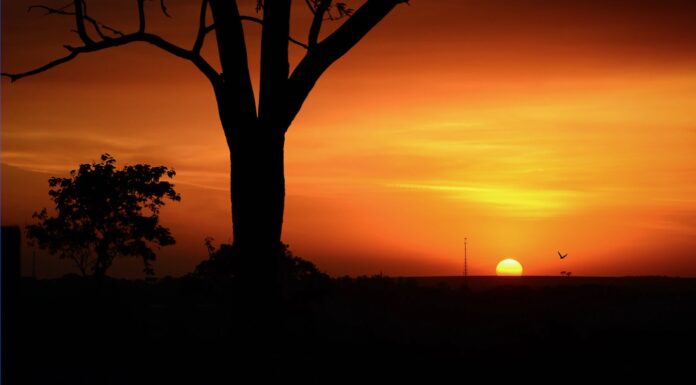
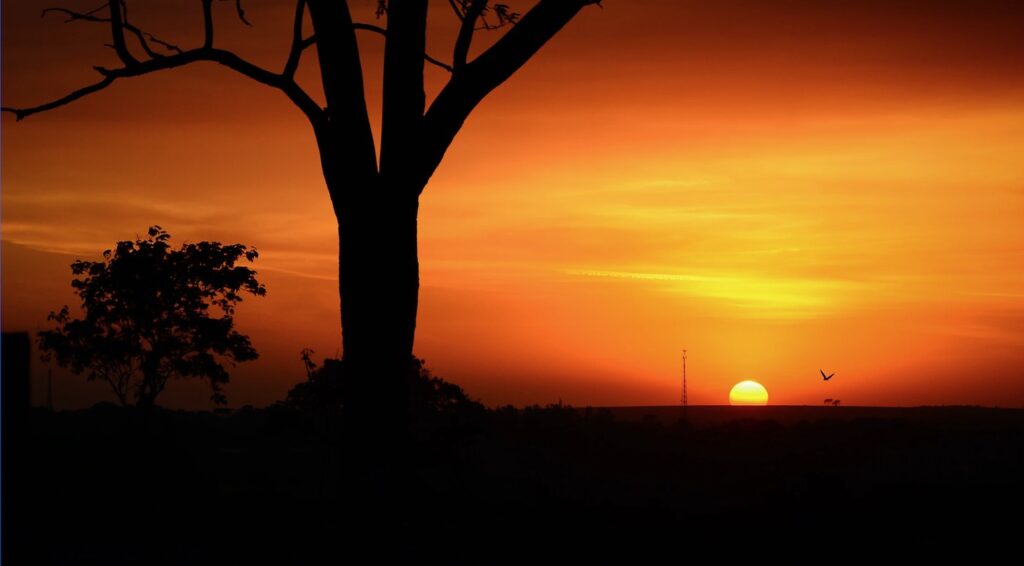
The lighted whisps in this image of a solar eclipse are just a tiny portion of the Sun's corona - credit: Drew Rae
It’s time to dig out the solar glasses from the back of the cupboard, because on the morning of June 10—that’s this Thursday—the Sun, Moon, and Earth will bring us a highlight of the summer stargazing season as a solar eclipse hits the Northern Hemisphere.
If you’re in the Lower 48 you’ll want to be in the northeast, or in parts of the Midwest and Mid-Atlantic, to glimpse a surreal sunrise where the sun has ‘solar horns’. Maine will see 78% coverage of the sun; in Washington, D.C. it will be 55% covered—creating a fascinating crescent shape.
If you’re in Ontario, Nunavut, or Quebec in Canada, if the skies are clear you’ll see an impressive ‘Ring of Fire’ solar eclipse a little after sunrise—but only if you’re north of Lake Superior (sorry, Torontonians.)
Drew Rae
If you’re further in the west of Canada or the U.S? You may as well have a lie-in, as the eclipse will begin and end its show before sunrise hits.
The Weather Network has great maps containing more info on what you’ll see, and when, in your location in North America.
So how do solar eclipses work? According to NASA, “A solar eclipse happens when the Moon moves between the Sun and Earth, casting a shadow on Earth, fully or partially blocking the Sun’s light in some areas.
“During an annular eclipse, the Moon is far enough away from Earth that the Moon appears smaller than the Sun in the sky. Since the Moon does not block the entire view of the Sun, it will look like a dark disk on top of a larger, bright disk. This creates what looks like a ring of fire around the Moon.”
P.S. It’s not just up in the direction of the sun you’ll want to look at during Thursday’s spectacular sunrise. Look on the forest floor, according to The Washington Post, and you could see crescent-shaped patches of light tucked among the trees’ shadows as the sun’s image gets projected on the ground.
(WATCH NASA’s visualization of Thursday’s eclipse in the video below.)
GET Your Friends’ Ready for the Solar Eclipse—Share This Story…
In it, he begins to try and unravel our natural born prejudice towards anything with more than two legs, and shows that many of the most well-established intelligence tests we use for mammals and birds can also be passed by bugs and cephalopods.
In a Literary Hub excerpt, he argues that this should at least leave us revisiting whether these tests prove intelligence as such, or if we need to reexamine the concept of animal intelligence at large.
Let’s take a look at just how intelligent invertebrates really are.
Bees
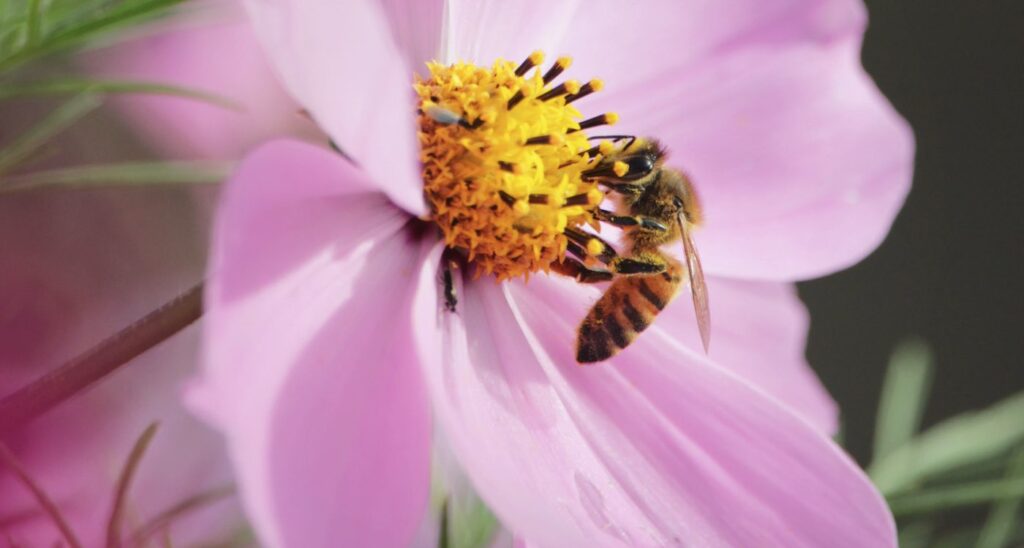
Bees are known to have a mind-bogglingly complex sensory interconnectivity through the use of pheromones that allows them to seemingly move as if controlled by a single mind.
And yet individual bees can recognize individual human faces. They understand the concepts of something “same” and something “different,” which was demonstrated in tests with shapes and colors.
Honeybees seem to know they know things as well: One cited study suggested bees would not participate in tasks that were very difficult if failure meant receiving a bitter tasting liquid at the end. Researchers took this to mean the bee would only participate in tasks it knew it was capable of finishing.
Low on the sting-o-meter, paper wasps score high on other tests, such as the ability to recognize individual members of their colony by the distinct marks on their little heads. By digitally altering features of a colony-member’s face, researchers were able to observe that they would choose their comrade’s face over the doctored image.
Tool-use, a generally accepted form of higher intelligence, is found in digger wasps, who, after paralyzing their prey, bury it underground and use flat stones to tamp down the dirt they moved in order to disguise it from other insects that have learned an easy meal lies within the borrow.
One of the distinguishing features here is that they selected flat stones in particular, and not any such hard object, such as a nut, that might have been lying around.
Ants
Ants can recognize themselves in a mirror.
We’re not kidding. In what Balcombe describes as his favorite insect intelligence test, Brussels researchers found ants behaved differently when looking at their own face in a mirror than colony mates viewed through a pane of glass. This “MSR” test was the same one that caused a scientific reevaluation in the ’70s when chimpanzees were found to do the same.
When a blue dot was applied to their forehead, the ants, upon seeing themselves in the mirror, and like so many humans before going out in public, busily scrubbed away until the pesky stain was removed. This preening wasn’t observed if the blue dot was placed on the back of their head where they couldn’t see, or if it was applied and they were not given a mirror to gaze into.
Since 1970, just apes, dolphins, elephants, magpies, and as Balcombe points out, a type of cleaner fish, have passed this test.
This animal has garnered a lot of attention recently through a string of now-iconic videos on YouTube, as well as from several experts talking to the eclectic mind of America’s biggest broadcaster: Joe Rogan.
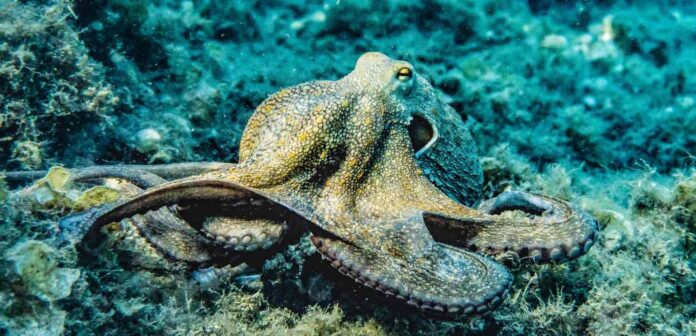
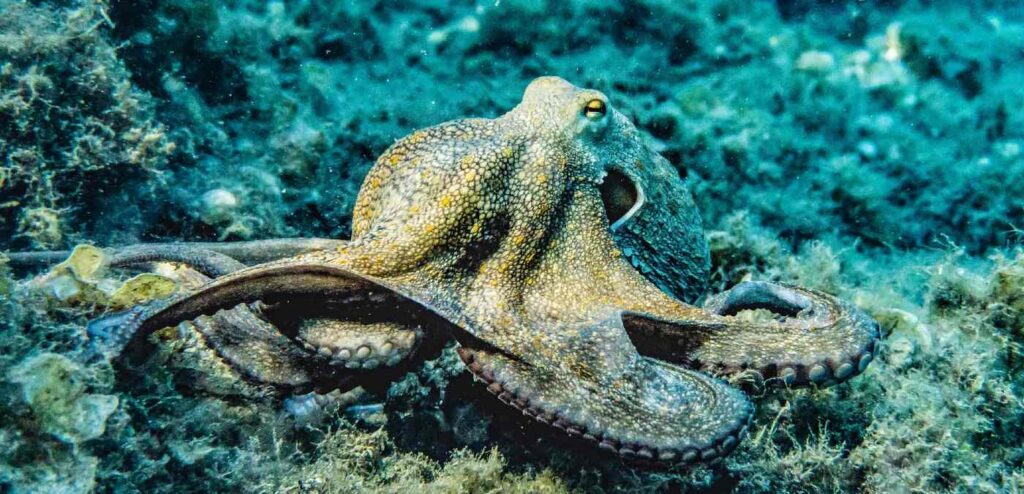
An octopus can open child-proof containers and untie knots, is a master of escape, has emotion, and demonstrates play behavior. They even have unique personalities, and can actually learn skills by watching others.
This has led researchers to suggest that, given the evolutionary distance between mammals and octopuses, consciousness was first developed by the eight-legged curiosities, and that therefore, consciousness has evolved on Earth on two separate occasions at least.
Spiders
We saved this species for last so that arachnophobes who may not enjoy hearing that spiders are more intelligent than we thought can leave having enjoyed the rest of the article.
Object permanence was found in various jumping spider species when researchers observed them moving out from behind a rock if a prey species passed out of sight behind it. They knew the prey was still there, it’s just that something was blocking its view.
Spiders, again the jumping variety, were also found to display very advanced methods of approach, and would back away from its prey if it thought it had a better chance of approaching undetected elsewhere.
The reason this was found in jumping spiders and not those that rely on ambush, like trapdoor or web-weavers, could be the same reason that wolves and leopards are smarter than crocodiles.
Actively seeking and stalking requires complex sensory and mental arrays to parse information from the environment in order to avoid detection, whereas a camouflaged lizard or spider need only wait until something wanders close enough to its mouth.
In his book, Balcombe quotes Jane Goodall’s professor in the moments after he learned of her documenting of advanced tool use in chimps: “Now we must redefine tool, redefine Man, or accept chimpanzees as humans.”
Late 19th and early 20th century fiction was filled with visions of a brave new world where science, technology, and machinery would come together to build metropolises under the sea, floating in the air, or out in space.
Now a Dutch planning and architecture firm is working with the Maldives to create a 200-hectare floating city. It’s modeled on the structure of coral reefs and powered by green energy to help fortify the nation against climate change.
Averaging less than 1 meter above sea level, the Maldives, a collection of 25 atolls in the Indian Ocean, is the lowest-lying nations on Earth and at a real risk of becoming uninhabitable as the planet warms.
Fortunately, with 300 years of Dutch know-how on controlling their wet environments, Dutch Docklands is working with the Maldives government to create a solution.
Planned to drift upon a 200-hectare warm water lagoon just a 10-minute boat ride from the capital of Malé, the Maldives Floating City (MFC) will be built along a flexible grid and surrounded with larger islands to act as wave and water breaks.
“Up top, traditional Maldivian architecture sets the tone of MFC’s design plan, supported down below by the most eco-friendly construction possible,” state Dutch Docklands. “MFC offers an approachable, scalable, sellable solution for truly sustainable water-front development.”
Rendering, Maldives Floating City
“As a nation at the front-lines of global warming, the Maldives is perfectly positioned to reimagine how humankind will survive—and, indeed, thrive—in the face of rising seas and coastal erosion.”
Rather than industry or agriculture, the Maldives is powered by tourism, and the hexagonal, modular building segments are inspired by the rich corals that attract the visitors that fuel the country’s economy.
The plan also includes the building of artificial coral structures in and around the neighborhoods to attract sea life, and further protect the town from storm surges.
“Our adaptation to climate change mustn’t destroy nature but work with it, as the Maldives Floating City proposes,” said Mohamed Nasheed, former president of the Maldives and speaker of parliament. “In the Maldives, we cannot stop the waves, but we can rise with them.”
The housing modules will be connected by a series of canals and flexible bridges, while docks will allow people parking and access to services and shops. Construction is slated to begin next year, and finished in five.
A school and hospital will be added, a renewable energy grid will power the city, and prices for homes are said to be set to accommodate all income brackets.
(WATCH the project launch video for Maldives Floating City below…)
SHARE the Innovative News With Pals on Social Media…
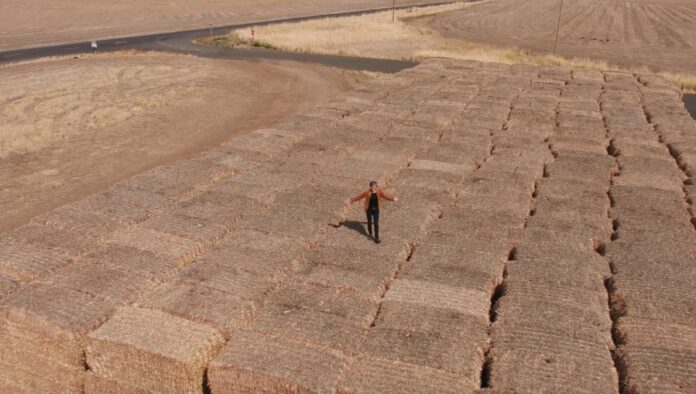
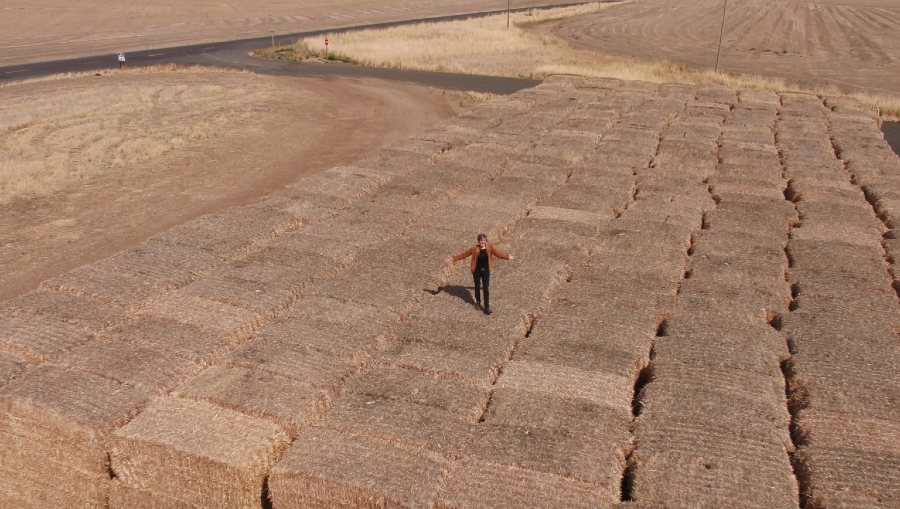
Canopy's Executive Director Nicole Rycroft standing on a huge stack of waste wheat straw/Canopy
Pack4Good, a campaign by the NGO Canopy, is one of the fastest growing corporate responsibility platforms in America for ensuring paper packaging is not coming from virgin, endangered, or valuable forests.
Canopy’s work in auditing supply chains and providing recycled or sustainable packaging solutions has attracted 750 brands across all its campaigns, including e-commerce giants Amazon, fashion empires like Gap, H&M, Marks and Spencer, and others, and publishing and media firms like Mansfield Press, Penguin, and the New York Times.
Only 18 months since launching Pack4Good, and the campaign has welcomed 29 new brands from food and beverage products, to the printing, fashion, and e-commerce sectors.
“The companies that are joining Pack4Good are the out of the box thinkers we need—leaders ready to transform paper packaging supply chains and scale up solutions to save forests and our climate,” stated Nicole Rycroft, Executive Director of Canopy. “We have so many solutions just waiting to be implemented, it’s time to take them from the margins to the mainstream.”
Pack4Good’s selection of solutions for companies looking to reduce their forest impact are varied. They help connect companies to providers of waste pulp material like wheat straw that can be turned into fibrous packaging, while their stamp of approval—Ancient Forest Friendly—denotes the highest adherence to supply chain practices, and that the certified material contains no endangered, controlled, or ancient wood.
90 million tones of rice straw is burned every year in India, which in the fields surrounding Delhi accounts for 40% of the air pollution in the metropolitan area. Canopy wants to take take that rice straw and put it in the hands of recycled-paper mills, flooding the market with supply and adding a little more income to farmers. A win-win.
Canopy’s Executive Director Nicole Rycroft standing on a huge stack of waste wheat straw/Canopy
Pack4Good claim these solutions are everywhere, it’s just a matter of helping business get started down the road to sustainable paper supply chains.
Some modern investing strategies, like those recently implemented by BlackRock, target companies based on their degree of sustainability. The logic is that polluting companies will be pushed out of the market by conscious investors and squeezed by government regulations.
As more corporations look for ways to reduce their impact on the world environment, it’s up to groups like Canopy to ensure their energy is directed.
SHARE This Good Green News With Friends on Social Media…
Adult coloring can relax the fear center in your brain known as the amygdala, reducing stress, and helping improve your sleep and focus. It’s also fun.
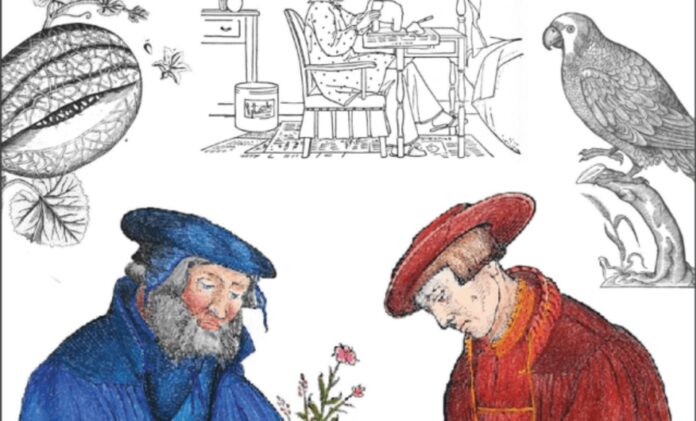
To get as many as people involved in arts—and the joys of coloring—as possible, the New York Academy of Medicine Library has been hosting an annual #ColorOurCollections project since 2016, with global museums, libraries, archives, and academic institutions participating in the creation of completely free, downloadable coloring pages inspired by their collections.
The coloring books from 2021 and the five years prior remain accessible year-round for free download. You can check out the different options here (note that the website is a little tricky to navigate: To get to the PDF you’d like to download, you’ll want to click on a title, for example ‘Eton College Library Coloring Book 2021’. On the new page that click takes you to, click on the hyperlink with the same title, and that’s your PDF).
You could draw over vintage motorcycle posters from the archives at Harley-Davidson. You could color in ancient book pages from Barcelona. Victorian flora and fauna illustrations, old medical sketches—it’s all available, so just take your pick.
And if none of these printable PDFs are really striking you?
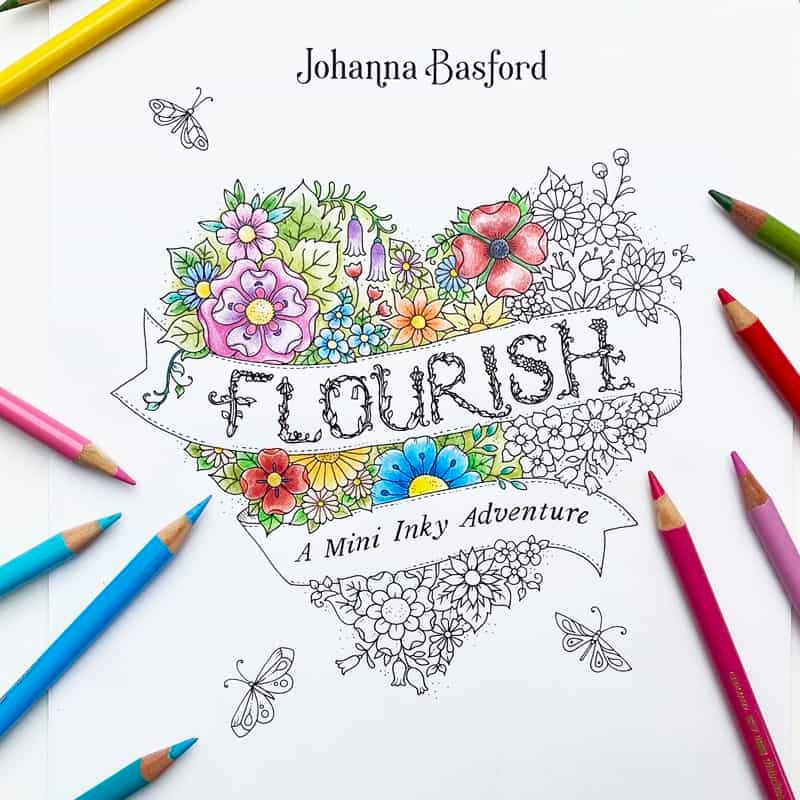
Over the past year, everyone from West Elm to illustrator Johanna Bashford—who popularized adult coloring with her books like Secret Garden and The Enchanted Forest—have been creating free books for anyone to download and color in. And they’re wonderful.
Johanna Bashford
SHARE These Free Finds With Your Pals on Social Media…
Quote of the Day: “When people don’t express themselves, they die one piece at a time.” – Laurie Halse Anderson, Speak
Photo: by Giancarlo Corti
With a new inspirational quote every day, atop the perfect photo—collected and archived on our Quote of the Day page—why not bookmark GNN.org for a daily uplift?
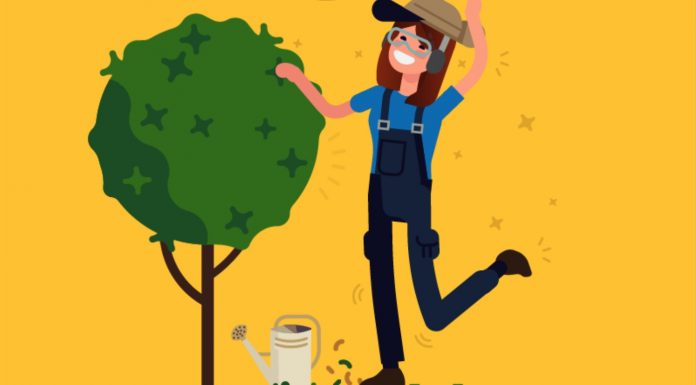
Eight in 10 young people think gardening is cool—and it turns out that more than half would rather go to a garden center than a nightclub.
A poll of 2,000 people found horticulture has enjoyed a renaissance among 18 to 34 year-olds during lockdown.
The appeal appears to be rooted in young people having a desire to make their homes and gardens a nicer place to be, to improve mental health, and create a space they can escape to.
It also emerged gardening is so popular that young adults spend close to two hours during a typical week taking care of their beloved plants.
Kev Smith, head of marketing at Draper Tools, which commissioned the survey, said: “The popularity among young adults is fantastic to see, we knew it was popular, but even we were surprised by the outpouring of love for it.
“There’s a tendency to think of gardening as an activity for older people, but this poll proves that gardening really is for everyone, whatever your age.
“Gardening is a very calming activity, as well as a rewarding one—everyone can enjoy the benefits it brings.”
The survey found the most popular houseplants among those polled are cacti, orchids, and aloe vera, followed by basil, spider plants, and peace lilies.
Outdoors, the most common are daffodils, roses, and lavender, along with tulips, mint, and hydrangea.
While the act of gardening itself is one of the biggest appeals—it appears to be bigger more than that.
Two thirds (66 percent) also said they love shopping for gardening items, whether that’s plants, seeds, or tools.
To date, the Brits polled have spent £318.56 ($452) on such items—with 58 percent revealing they’ve spent more on gardening during the past 12 months or so than ever before.
In fact, 56 percent said gardening is one of the things which has kept them going in the wake of the pandemic.
But this doesn’t mean their interest looks likely to shrivel up like an unloved plant—72 percent intend to keep on investing in plants, tools, equipment, and more to fulfil their vision for their garden.
Carried out through OnePoll, the study also found 60 percent wish they had access to more outside space than they do currently, so they could be even more green thumbed.
However, 78 percent believe you don’t need a big outdoor area to experience the benefits of gardening.
The most popular place to grow plants is on the kitchen windowsill, while living rooms, bathrooms, and balconies are also popular locations for all things green.
Kev Smith added: “Gardening is incredibly accessible which might in part explain its increasing popularity.
“Wherever you live, whatever your space, anyone can give growing plants a go—and we’re seeing more and more people embracing this.
“The transformative effect of plants on areas big or small is just one of many great things about having plants in your home—both inside and out.” Cheers to that.
High school graduations are one of the most important rites of passage in a teenager’s life. Four years of hard work, friendships, and dreams for the future all culminate in a shining moment that will be remembered long after the caps and gowns are collecting dust.
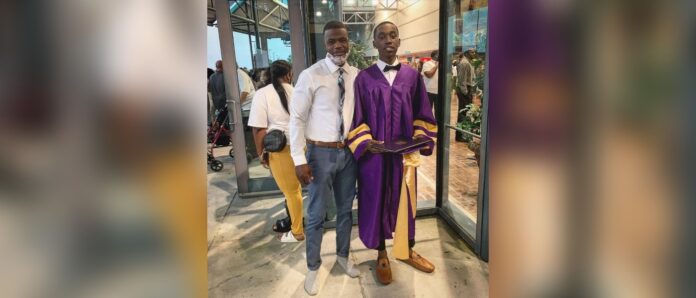
So imagine Daverius Peters’ dismay when on May 19, as he headed into the ceremony to receive his diploma, he was stopped at the door by the fashion police. Although his black-topped, white-soled sneakers were anything but outrageous, Peters learned they were in violation of the school’s dress code and he was denied entry.
It looked as if Peters was about to miss his chance to walk across the stage with his classmates—until someone stepped in with both feet—and shoes—to turn things around.
When the distraught senior caught sight of a friendly face he went looking for help. John Butler, a para-educator at Boutte, Louisiana’s Hahnville High School was on hand for the graduation as a parent, not a staff member, but once he learned the details of Peters’ predicament, he accompanied the young man he’d come to know and respect back to the entry to see if he could change the gatekeeper’s mind.
“[I was] hoping that maybe if she saw me with him, she would let it go, but she insisted on not letting this young man in, and I didn’t have time to go back and forth with her,” Butler told The Washington Post. “It was a no-brainer… This was the most important moment in his life up to that point, and I wasn’t going to let him miss it for anything.”
Without missing a beat, Butler simply swapped his size-11 loafers for Peters’ size-9 athletic shoes. With seconds to spare, Peters made it inside the venue just as the doors closed and was able to keep his place in the graduation line.
Although his family was initially confused by the last-minute wardrobe substitution, they were thrilled that Butler’s quick thinking kept a joyful celebration from turning into an ugly situation.
“I wasn’t surprised because Mr. Butler is that type of person,” a grateful Peters told The Washington Post. “At school, if you’re having a bad day, he’ll be the one to take you out of class, walk around the school with you and talk to you.”
It’s said that a truly generous man will give the shirt off his back to someone in need. Now it seems, the adage also applies to the shoes off his feet.
BE GENEROUS With the Good News by Sharing This Story…
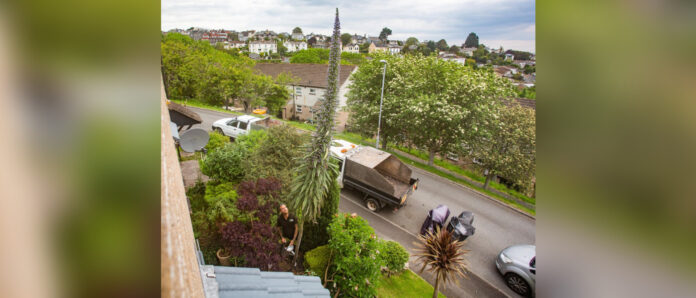
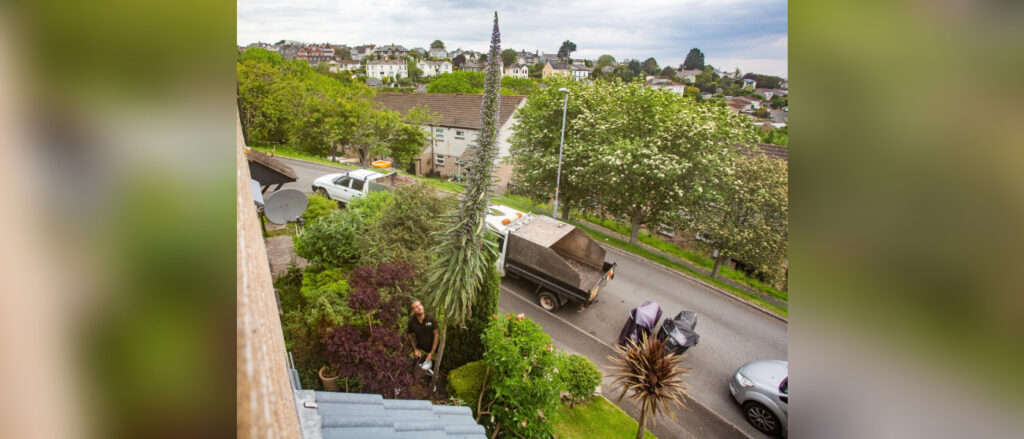
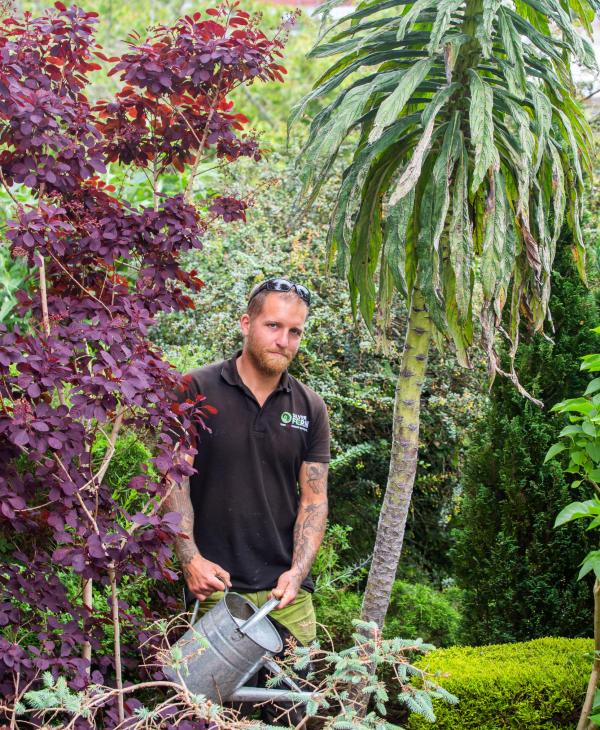
He said that after he and his wife measured the enormous plant, they decided to do some research online and try to find out how tall the biggest one was.
SWNS
Their research revealed that the tallest known echium in the UK was 16-feet tall—two whole feet shorter than Darren’s.
“We measured it Sunday and it had already grown three inches from Friday. It should stop growing once it’s finished flowering. Al the flowers will turn to seeds and the whole thing will die… But I reckon it’s still got another month’s growth.”
Darren stumbled upon the echium, which was much smaller at the time, in a clearance job he was doing. Since then, he’s been protecting the magnificent plant and wrapping it up in winter.
As for what the neighbors think of the tree-like plant?
Darren says: “One guy actually said he’s pretty sure it runs around the street at night when we’re all in bed.
“When you come up the road it’s just right there in your eyeline, so it stands out—it looks good, very impressive.” We could never deny that.
PASS On The Fun And Share With Your Gardening Friends on Social Media…
An Irish designer is hoping to save her island’s native bee species by creating special hives grown from mushrooms.
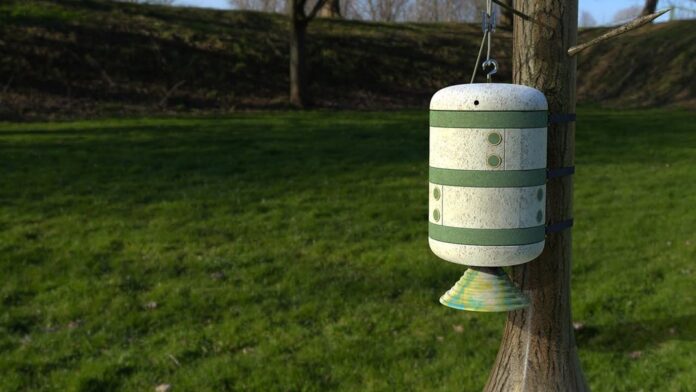
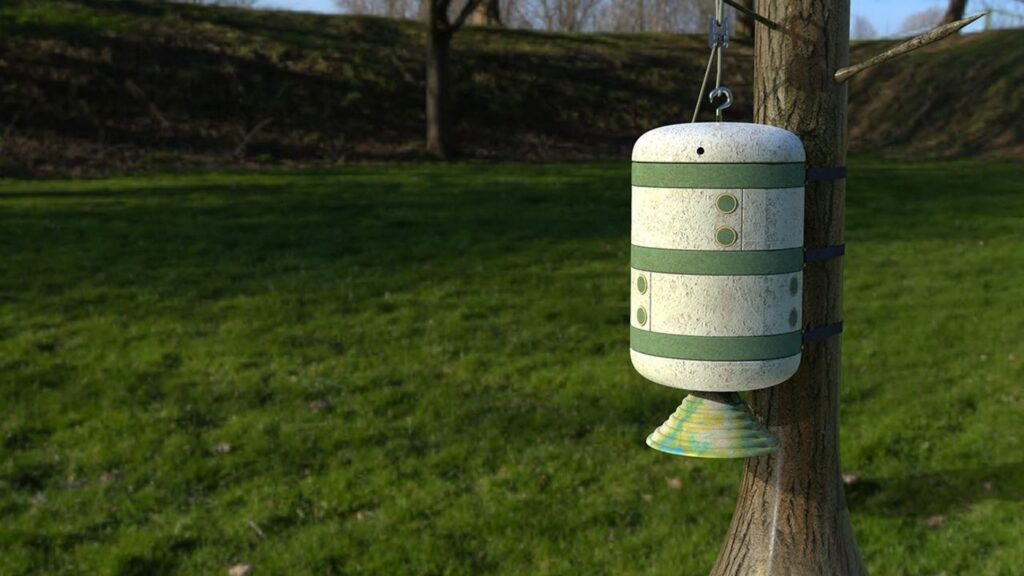
Placing on the world Top 20 for the James Dyson Design Award for Sustainability, the prototype hive, called Econooc, is being designed specifically by Niamh Damery for the Irish black bee, as well as to get more people involved in conservation.
Plummeting bee populations in Ireland are not only the result of habitat loss or pesticide use as is common elsewhere, but also because for years the country imported bee populations from warmer climates that have a hard time surviving the Irish weather.
Those introduced species bred with native bees to create hybrids that invaded black bee hives, but that still couldn’t cope with the weather. Econooc hives are grown from mycelium spores spread onto an agricultural byproduct, like wood shavings or straw, called a substrate.
Mycelium is the fibrous underground structure the supports the fruiting body—the mushrooms we see on walks—and is emerging as a potential super design tool. GNN has reported on its use to make things as varied as bricks, canoes, and even coffins. The mixture of mycelium and substrate is stuffed into a mold to mimic the natural structure of a beehive, before going in the oven to preserve the shape.
Econooc simulates the hollow of a native tree where black bees tend to build their hives in order to shelter themselves, their food, and their young from the rain. A landing pad where owners can watch bee activity in and out of the hive is made from recycled plastic, while the straps that secure it to the tree are old car seatbelts, making it almost entirely recycled or otherwise sustainable.
Damery also worked to create a calendar, which will be included in the purchase of every hive, that each month educates the owner on the different native plants growing in that period that require Irish black bees for pollination, as well as what exactly is happening inside the hive during that season.
In addition, once the month is finished, the owner can rip the calendar’s bottom part off, which is filled with wildflower seeds, and place it under an inch of soil in their garden to further aid in the efforts to save black bees and other Irish pollinators.
As soon as the Econooc is ready for market, we’ll be sure to let you know.
(WATCH the James Dyson Foundation video about this story below.)
BUZZ This Innovative Design Over to Pals on Social Media…
One of the biggest California fossil discoveries ever made has been found to include the remains of ancient mastodon, fish, and other mammals.
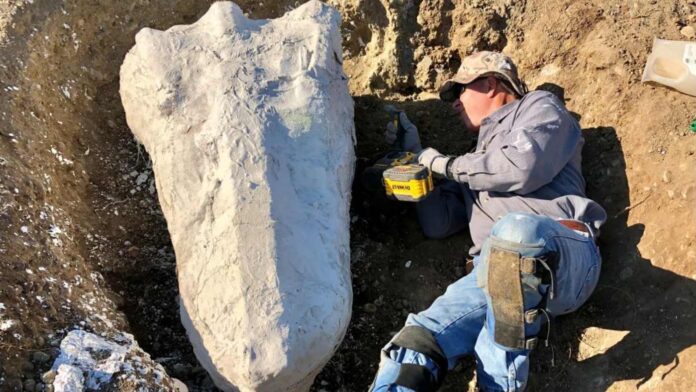
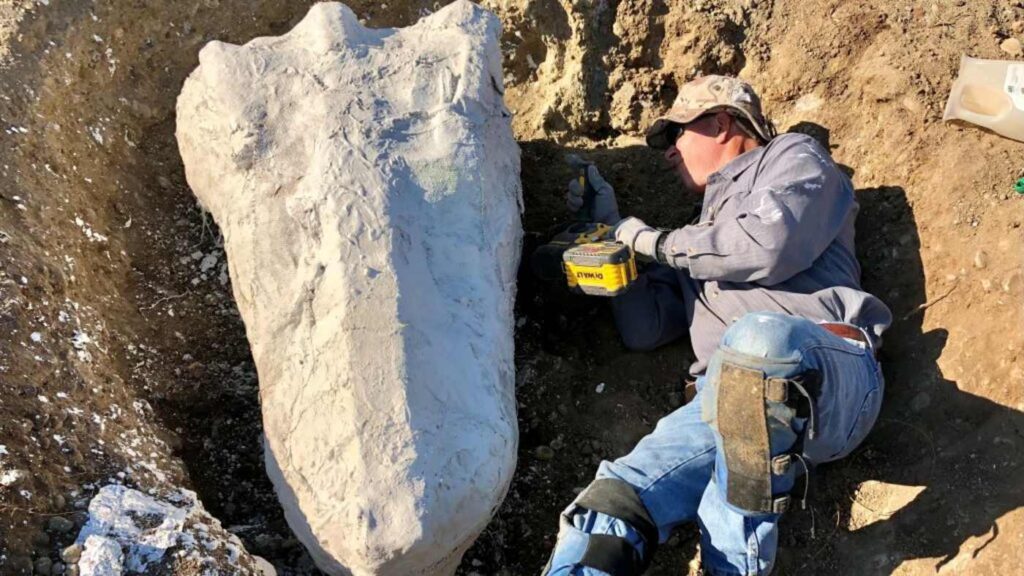
Encased amid the fossilized remains of a petrified forest, they were discovered by a local government ranger in the Mokelumne River watershed south east of Sacramento—and are now making headlines around the world of paleontology.
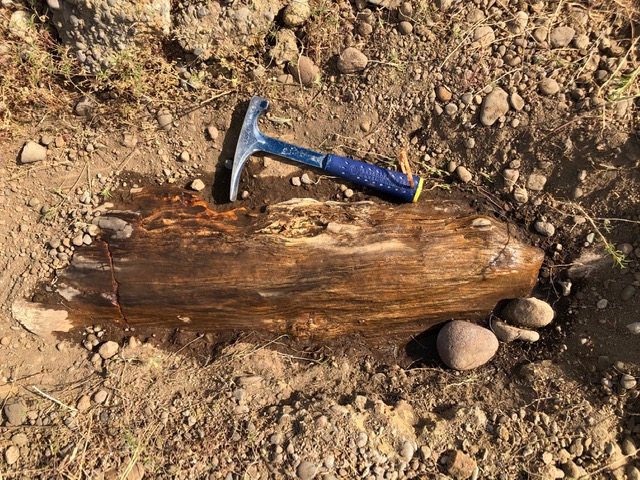
Thought to be from the Miocene Era of around 10 million years ago, ranger Greg Francek at the East Bay Municipal Utility District was in the area for work when he found the first fossilized tree, half buried in the soil.
Petrified wood, EBMUD
“I looked around the area further and I found a second tree,” Francek said in an EBMUD statement released this week. “And then a third and so on. After finding dozens of trees I realized that what I was looking at was the remains of a petrified forest.”
After millions of years, forests and trees buried in the ground become “petrified” or turned to minerals; coming from the Greek word “petra” which means stone. There are 19 petrified forests in the U.S., ranging in size from merely stands of trees to national park-sized forests.
It took three weeks of surveying the area for Francek to find his first vertebrate fossil; a piece about twice as big as his folding knife, broken in three places.
“What I didn’t comprehend at the time [of the initial find]” he said, “was the amazing fact that I was looking at the bones of great beasts that had roamed this landscape millions of years ago.”
Francek then reached out to every geology and paleontology expert in the area as fast as he could. Soon a team arrived from California State University, Chico, to begin excavating the fossils.
The bones of two elephant cousins, camel, rhino, horses, tortoises, and even a toothed-salmon weighing 400 pounds were all subsequently discovered there in what is one of the largest single discoveries in the state’s history.
Great Beasts
Most charismatic of Francek’s ‘Great Beasts’ was undoubtedly the complete skull of an American mastodon with all its teeth and magnificent tusks intact—the first discovery in the area since 1947. Needing over four days of work and eight people to load it into a truck, the two-tusked mastodon roamed Earth more than 10 million years ago before becoming extinct during the Pleistocene, just 12,000 years ago.
Mastodon tooth, EBMUD
A gomphothere was also discovered—a shorter cousin to the mastodon that sported four tusks, but that died out around 6 million years ago. It’s massive jaw required the assistance of a backhoe to heave it from the ground.
Beyond this pair of tusked-titans, remains of merychippus, the three-toed progenitor of the modern horse, tapirs, single-hump camels, and even rhinoceros were all discovered there as well. One of the most challenging excavations was a Miocene salmon species, that judging by the skeleton, which was equipped with a mouth full of teeth, and could reach 400 pounds.
Both state and federal government protections for the area have kicked in since its discovery, and the next step in the story is to try and parse out the classic scientific questions: why are the finds there, and how did they die.
You can learn more at EDMUD and Chico University, who both have excellent reports with stunning images of the finds.
SHARE the Astonishing Finds From California With Pals…
Quote of the Day: “Why didn’t I learn to treat everything like it was the last time. My greatest regret was how much I believed in the future.” – Jonathan Safran Foer, ExtremelyLoud & Incredibly Close
Photo: by Nelson Santos Jr
With a new inspirational quote every day, atop the perfect photo—collected and archived on our Quote of the Day page—why not bookmark GNN.org for a daily uplift?
This blog was submitted to GNN by one of our readers for publishing. If you have an interesting story of kindness or positivity, be sure and send it to us for review.
Situated along the coast of the Bay of Bengal is one of the most beautiful territories of India. Named Pondicherry / Puducherry, it charms visitors with its soothing breezes and jaw-dropping sunsets.
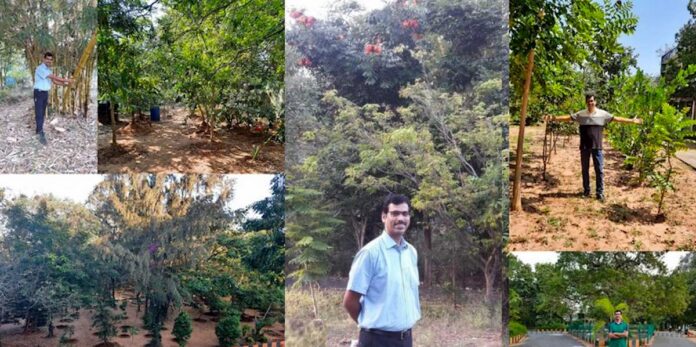
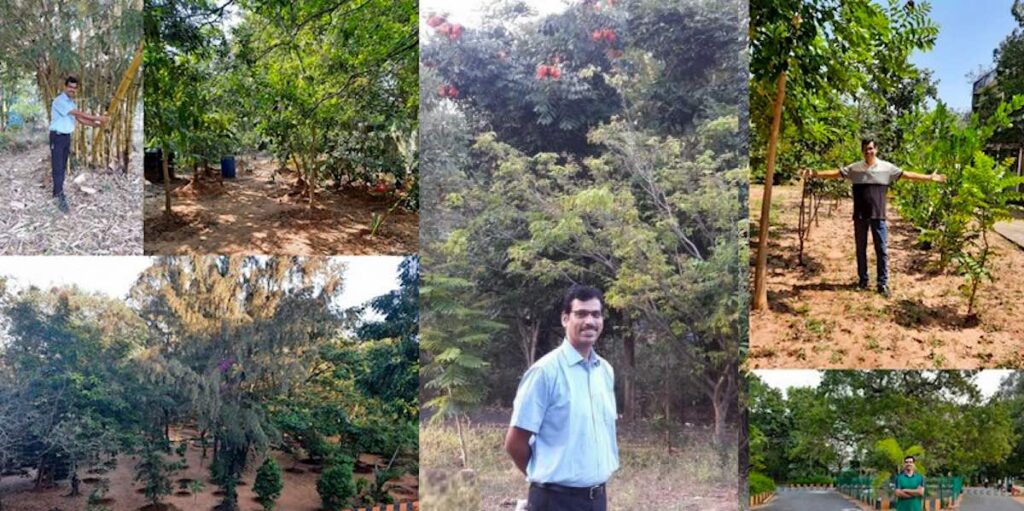
Among the numerous government and private colleges here is a gem known as the Tagore Government Arts and Science College, which stands out from the rest—not so much for its education, but the amazing ecosystem grown on campus by the college principal, Sasikanta Dash.
After 4 years of consistent effort, since Dash took the position in 2017, the green spaces have become mesmerizing.
“I was appalled by the vast treeless lands staring at me,” he told GNN. “It was a defining moment for me as I could gauge the under-utilized potential of this blank space.”
Then and there he decided to convert this place to the most lustrous green cover ever possessed by a college.
Today the college boasts of its 8 acres of green cover—home to plants and wildlife and oxygen-rich air coming from trees that include 100 palms, neem, banyan, burflower (Kadamba), and Bodhi. They have beautiful blooming flowers like jasmine, crape jasmine, champa (a variety of magnolia), hibiscus, sadabahar (periwinkle), morning glory, and many more.
Best of all are the orchards of nutritious fruits that include 50 Jackfruit trees, 25 mango trees, 45 coconut and papaya trees, and 10 pomegranate trees, along with guavas, lemons, bananas, and blackberries hanging from limbs and shrubs inside the campus.
Tagore Government Arts and Science College
Some land is also devoted to producing seasonal vegetables. Students can watch a variety of birds that now call the campus home—including woodpeckers, parrots, kingfishers, cuckoos, sparrows, and owls.
“We have constructed rainwater harvesting setups that recharged 1.2 million liters of water last year,” says Dash proudly. “Recently we have been able to successfully draw honey from honey-combs installed as part of a new apiculture initiative at the college.”
And every single celebration here is honored by planting a tree, which are also planted in fond memories of departed souls.
The team at the college fully supports Dash’s efforts to create a nourishing environment, and helps maintain the flourishing ecosystem. Together, they strive to gift the students an environmentally sustainable campus that will inspire them to create legacies for India in all fields.
“We have come a long way from 100 trees 4 years ago to a mini forest (3000 trees) today,” says Dash. “It feels extremely good to say that a tour of the campus with its nature trails and seating benches will rejuvenate your spirits…equivalent to a nature tour in an eco-resort.”
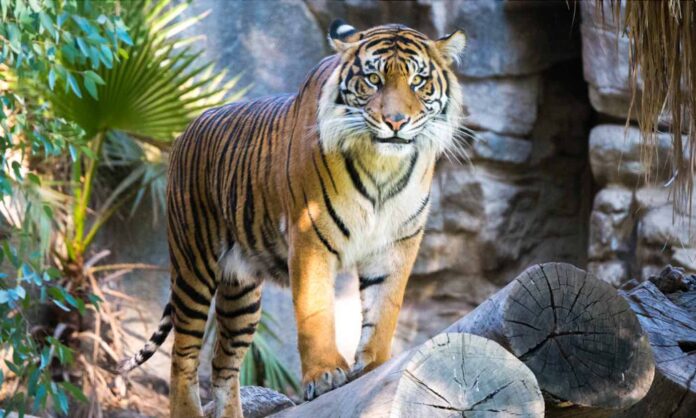
News of the arrest of a poacher nicknamed ‘Tiger Habib’ has brought “sighs of relief” to local police and conservation officers in Bangladesh.
Rick L
The Guardian reported this week that police chief Saidur Rahman said Habib Talukder was finally in custody, and charged with numerous violations of wildlife conservation law.
He lived near the vast Sundarbans mangrove forest and would “flee whenever officers raided the area”.
The 50-year-old has been on the run for 20 years, Rahman said, and is suspected of hunting and killing dozens of Bengal tigers that live and swim in the local mangrove forest—containing one of the world’s largest populations of the majestic species.
After an earlier crackdown on poaching and banditry, a 2019 study by Bangladesh’s forest department found a total of 114 Bengal tigers living in the Sundarbans area, a UNESCO heritage site. That number is up 7 percent from the record low in 2015.
One forest conservation officer described Habib as “a big headache for us.”
But with his capture, Bengal tigers—and the rest of the world—can rest more easily.
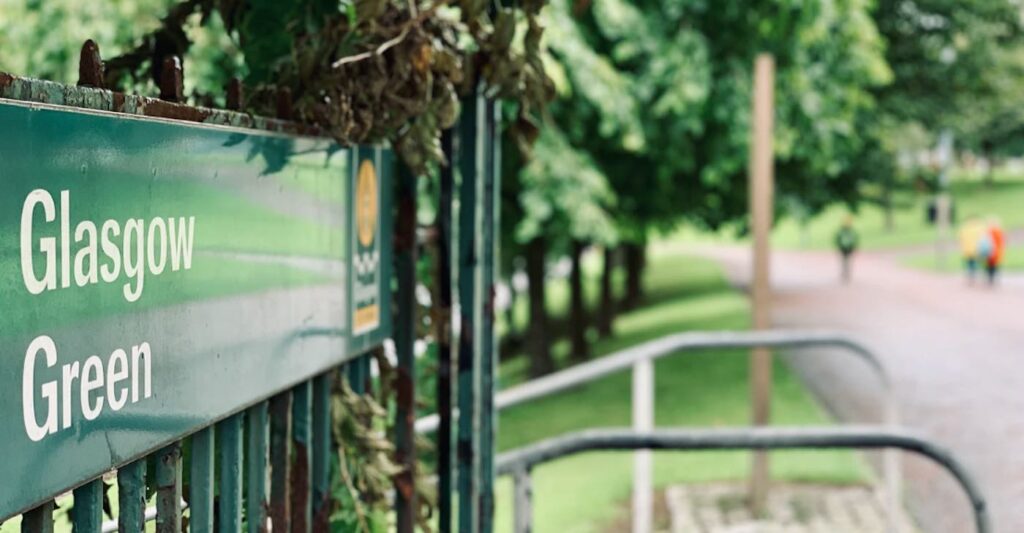
A new partnership has vowed to plant 10 trees for every man, woman, and child in the Glasgow region as part of a new urban ‘forest’ network.
By Phil Reid
The ambitious planting pledge is being called the Clyde Climate Forest initiative, and it will ‘breathe new life’ across the eight local authorities around Scotland’s largest city.
The 18 million trees to be planted over the next decade will increase woodland cover in the region from 17% to 20%.
The Glasgow & Clyde Valley Green Network, founded in 2007, is leading the way to help the city demonstrate its commitment to reaching Net Zero, as Glasgow hosts the next annual UN climate change conference, COP26, in November.
In Inverclyde, the first saplings were planted by Council leader Stephen McCabe, who, along with volunteers from the Friends of Coves Community Nature Reserve group, agreed that ‘must do all we can to protect our planet.’
“The pandemic has brought into focus like never before the value of local spaces as places to exercise, de-stress and engage with nature,” said Susan Aitken, Leader of Glasgow City Council.
There are around 112 square-miles (29k ha) of broadleaved woodland in the region, but they are fragmented due to urban development. The new planting aims to connect these woodlands and help restore nature and boost biodiversity.
The right tree in the right place, while reducing blight
The project team aims to focus on areas of deprivation—former coal mining sites, vacant and derelict land, and urban streets—but will operate on the planting principle ‘the right tree in the right place’.
They are also calling on community groups and land managers to help identify places to plant new trees, or replace ones that have been lost in the past.
Work is also beginning to encourage smaller land owners and local authorities by providing free woodland assessments to identify potential new areas to be greened up with trees.
“Trees are nature’s own green lungs, improving the air that we breathe and soaking up harmful CO2 emissions from our environment,” said Councillor Andrew Polson who is Chair of the Land Use and Sustainability Portfolio for Glasgow City Region.
“We all have a fantastic opportunity to work collectively to improve our living environment whilst tackling climate change at the same time.”
This is a first for Scotland, with eight local authorities working together with government and other partners on a major woodland creation initiative, but the nation of Scotland has been no slouch when it comes to reforesting.
The majority of woodland planting will be funded through Scottish Forestry’s various grant schemes but also through funding mechanisms that the Clyde Climate Forest can leverage on its own.
For instance, the project secured a £400,000 grant from the Woodland Trust’s Emergency Tree Fund. Individuals and community groups can also donate to the Clyde Climate Forest project, here.
Grow Some Optimism By Sharing the Good News on Social Media…
Quote of the Day: “Take responsibility of your own happiness, never put it in other people’s hands.” – Roy T. Bennett, The Light in the Heart
Photo: by Caju Gomes
With a new inspirational quote every day, atop the perfect photo—collected and archived on our Quote of the Day page—why not bookmark GNN.org for a daily uplift?
We don’t have the details, but a video has gone viral for its amusing peek into a parent’s life with triplets.
With all 3 kiddos walking around the room at the same time, our immediate reaction was, ‘That’s a full time job right there.’
Just like the mama bear that needed to get all four cubs across the road, we couldn’t help but smile—and relate to—this dad who is doing his best to keep two of the triplet babies from climbing onto the kitchen table from multiple chairs.
If the family could bottle-up such youthful determination, they’d have plenty of buyers.
FREE WILL ASTROLOGY – Week beginning June 3, 2021
Copyright by Rob Brezsny, FreeWillAstrology.com
GEMINI (May 21-June 20):
“All I want to be is normally insane,” said actor Marlon Brando. Yikes! I have a different perspective. I would never want to be normally insane because that state often tends to be sullen and desperate and miserable. My preferred goal is to be quite abnormally insane: exuberantly, robustly, creatively free of the toxic adjustments that our society tells us are necessary. I want to be cheerfully insane in the sense of not being tyrannized by conventional wisdom. I want to be proactively insane in the sense of obeying my souls’ impulses rather than conforming to people’s expectations. I bring this to your attention, Gemini, because I believe the coming weeks will be a fruitful time for you to be my kind of insane.
CANCER (June 21-July 22):
“It’s one thing to make a mistake, it’s another to become wedded to it,” advised author Irena Karafilly. Let’s make that one of your key truths in the coming weeks. Now is a good time to offer yourself forgiveness and to move on from any wrong turns you’ve made. Here’s a second key truth, courtesy of composer Igor Stravinsky: “I have learned throughout my life as a composer chiefly through my mistakes and pursuits of false assumptions, not by my exposure to founts of wisdom and knowledge.” Third key truth, from Sufi teacher Pir Vilayat Inayat Khan: “Don’t be concerned about being disloyal to your pain by being joyous.”
LEO (July 23-Aug. 22):
According to my analysis of the astrological omens, the number of perfect moments you will experience during the next two weeks could break all your previous records. And what do I mean by “perfect moments”? 1. Times when life brings you interesting events or feelings or thoughts that are novel and unique. 2. Pivotal points when you sense yourself undergoing a fundamental shift in attitude or a new way of understanding the world. 3. Leaping out of your own mind and into the mind of an animal or other person so as to have a pure vision of what their experience is like. 4. An absolute appreciation for yourself just the way you are right now.
VIRGO (Aug. 23-Sept. 22):
“There is strong shadow where there is much light,” wrote Virgo author Johann Wolfgang von Goethe (1749–1832). That’s a good metaphor for you these days. Since I suspect you are currently shining as brightly as you possibly can, I will urge you to become acutely aware of the shadows you cast. In other words, try to catch glimpses of the unripe and unformed parts of your nature, which may be more easily seen than usual. Now, while you’re relatively strong and vibrant, investigate what aspects of your inner world might need improvement, care, and healing.
LIBRA (Sept. 23-Oct. 22):
According to physicists, it’s impossible for a human being to suck water up through a straw that’s more than 34 feet long. So please don’t even try to do that, either now or ever. If, however, you have a good reason to attempt to suck water up a 33-foot straw, now would be an excellent time to do so. Your physical strength should be at a peak, as is your capacity for succeeding at amazing, herculean tasks. How else might you direct your splendid abilities? What other ambitious feats could you pull off?
SCORPIO (Oct. 23-Nov. 21):
Scorpio poet Ezra Pound had character flaws that bother me. But he also had a quality I admire: generosity in helping his friends and colleagues. Among the writers whose work he championed and promoted with gusto were 20th-century literary icons James Joyce, T. S. Eliot, Marianne Moore, Hilda Doolittle, William Butler Yeats, Ernest Hemingway, William Carlos Williams, and Robert Frost. Pound edited their work, arranged to get them published in periodicals and anthologies, connected them with patrons and editors, and even gave them money and clothes. In accordance with astrological omens, I encourage you to be like Ezra Pound in the coming weeks. Make an extra effort to support and boost your allies. Assist them in doing what they do well. To do so will be in your own best interest!
SAGITTARIUS (Nov. 22-Dec. 21):
Poet Tess Gallagher praises those times “when desire has strengthened our bodies.” I want you to have an abundance of those moments during the coming weeks. And I expect that cultivating them will be an excellent healing strategy. So here’s my advice: Do whatever’s necessary to summon and celebrate the strong longings that will strengthen your body. Tease them into bountiful presence. Treasure them and pay reverence to them and wield them with gleeful passion.
CAPRICORN (Dec. 22-Jan. 19):
“To live is so startling it leaves little time for anything else,” observed poet Emily Dickinson. That’s the truth! Given how demanding it is to adjust to the nonstop challenges, distractions, and opportunities of the daily rhythm, I’m impressed that any of us ever get any work done. According to my astrological analysis, you Capricorns are now experiencing a big outbreak of this phenomenon. It’s probably even harder than usual to get work done, simply because life keeps bringing you interesting surprises that require your ingenuity and resourcefulness. The good news is that these surges of ingenuity and resourcefulness will serve you very well when the hubbub settles down a bit and you get back to doing more work.
AQUARIUS (Jan. 20-Feb. 18):
Aquarius-born August Strindberg (1849–1912) was a masterful and influential playwright. He also liked to dabble in painting and photography. His approach in those two fields was different from the polish he cultivated in his writing. “I am an amateur and I intend to stay that way,” he testified about his approach in the visual arts. “I reject all forms of professional cleverness or virtuosity.” Just for now, Aquarius, I recommend you experiment with the latter attitude in your own field. Your skill and earnestness will benefit from doses of playful innocence, even calculated naiveté.
PISCES (Feb. 19-March 20):
Which of the astrological signs feels the deepest feelings? I say it’s you Pisceans. You’re connoisseurs of deep feelings, as well as specialists in mysterious, multi-splendored, brushes-with-infinity feelings. And right now, you’re in the Deepest Feelings Phase of your personal cycle. I won’t be surprised if you feel a bit overwhelmed with the richness of it all. But that’s mostly a good thing that you should be grateful for—a privilege and a superpower! Now here’s advice from deep-feeling author Pearl Buck: “You cannot make yourself feel something you do not feel, but you can make yourself do right in spite of your feelings.”
ARIES (March 21-April 19):
“There is ecstasy in paying attention,” writes Aries author Anne Lamott. That’s always true for everyone, but it’s extra true for you Aries people. And it will be extra ultra-especially true for you during the next 20 days. I hope you will dedicate yourself to celebrating and upgrading your perceptual abilities. I hope you will resolve to see and register everything just as it is in the present moment, fresh and unprecedented—and not as it was in the past or will be in the future. For best results, banish all preconceptions that might interfere with your ability to notice what’s raw and real. If you practice these high arts with exhilarating diligence, you will be rewarded with influxes of ecstasy.
TAURUS (April 20-May 20):
Your guiding wisdom comes from Taurus author Annie Dillard. She writes, “I think it would be well, and proper, and obedient, and pure, to grasp your one necessity and not let it go, to dangle from it limp wherever it takes you.” I suspect that Dillard’s approach will enable you to maintain a righteous rhythm and make all the right moves during the coming weeks. If you agree with me, your crucial first step will be to identify the nature of your “one necessity.” Not two necessities. Just the single most important.
WANT MORE? Listen to Rob’s EXPANDED AUDIO HOROSCOPES, 4-5 minute meditations on the current state of your destiny — or subscribe to his unique daily text message service at: RealAstrology.com
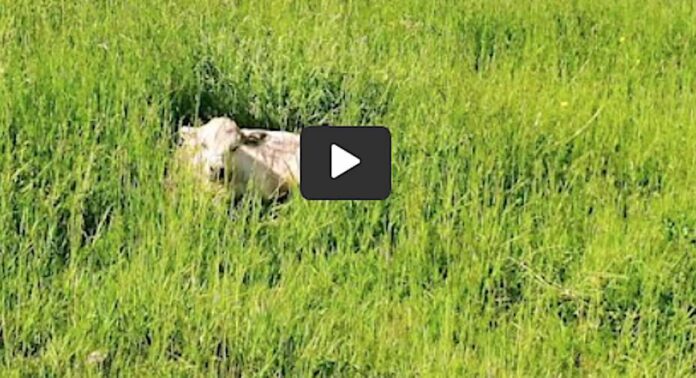
JuJube the calf is facing some serious challenges, but farmer Dave is doing everything he can to ensure it grows up to enjoy life on this “ethical farm”.
A few weeks ago in Ontario, Canada, JuJube was born with difficulty walking and getting up, and a calf who cannot stand is unable to nurse or follow the herd around the vast expanse of rolling pasture.
With many acres of lush, green pasture and meadows to wander and graze upon, the calf’s mother Bernise has lived here for ten years, but in this situation, even a loving parent can’t help a sick creature like JuJube.
On this farm, which is family-owned and operated, they treat the animals more like pets—and Dave puts more emphasis on their health than profit.
A veterinarian was hired to come out to the farm every few days to examine JuJube and check on his progress. They initially suspected he might suffer from white muscle disease, which is a deficiency in selenium. They gave JuJube vitamins and supplements by injection, along with anti-inflammatories and antibiotics because the animal could also be suffering from an infection in his joints.
JuJube has responded well to treatments, but just to make sure he’s looking healthy, farmer Dave has employed a drone to check up on the latest member of the herd…
Quote of the Day: “Break clear away, once in awhile, and climb a mountain or spend a week in the woods. Wash your spirit clean.” – John Muir (Today is World Environment Day)
Photo: by barnyz, CC license
With a new inspirational quote every day, atop the perfect photo—collected and archived on our Quote of the Day page—why not bookmark GNN.org for a daily uplift?