All News - Page 464 of 1735 - Good News Network
Home Blog Page 464

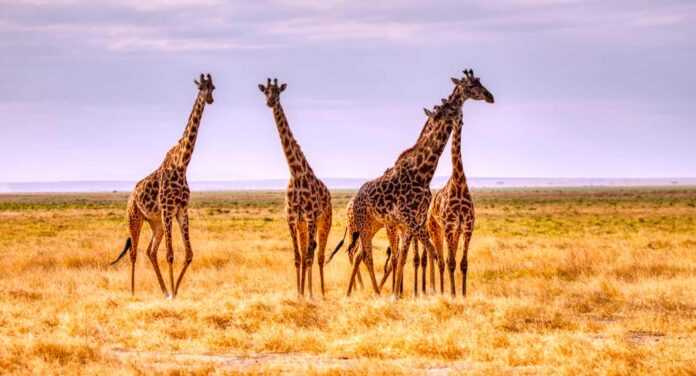
“In nature, improbabilities are the one stock in trade. The whole creation is one lunatic fringe . . . so far-fetched as a single giraffe.” – Annie Dillard

Quote of the Day: “In nature, improbabilities are the one stock in trade. The whole creation is one lunatic fringe . . . so far-fetched as a single giraffe.” – Annie Dillard, Pilgrim at Tinker Creek

Photo: by MARIOLA GROBELSKA

With a new inspirational quote every day, atop the perfect photo—collected and archived on our Quotes page—why not bookmark GNN.org for a daily uplift?


This Week’s Inspiring Horoscopes From Rob Brezsny’s ‘Free Will Astrology’

Our partner Rob Brezsny provides his weekly wisdom to enlighten our thinking and motivate our mood. Rob’s Free Will Astrology, is a syndicated weekly column appearing in over a hundred publications. He is also the author of Pronoia Is the Antidote for Paranoia: How All of Creation Is Conspiring To Shower You with Blessings. (A free preview of the book is available here.)

Here is your weekly horoscope…

FREE WILL ASTROLOGY – Week beginning August 13, 2021
Copyright by Rob Brezsny, FreeWillAstrology.com

LEO (July 23-Aug. 22):
According to Leo author Guy de Maupassant, “We are in the habit of using our eyes only with the memory of what people before us have thought about the things we are looking at.” That’s too bad. It causes us to miss a lot of life’s richness. In fact, said de Maupassant, “There is an element of the unexplored in everything. The smallest thing contains a little of what is unknown.” Your assignment in the next two weeks, Leo, is to take his thoughts to heart. In every experience, engage “with enough attention to find an aspect of it that no one has ever seen or spoken of.” You are in a phase when you could discover and enjoy record-breaking levels of novelty.

VIRGO (Aug. 23-Sept. 22):
Poet Brigit Pegeen Kelly wrote a poem I want you to know about. She described how, when she was a child, she stayed up all night picking peaches from her father’s orchard by starlight. For hours, she climbed up and down the ladder. Her hands “twisted fruit” as if she “were entering a thousand doors.” When the stars faded and morning arrived, her insides felt like “the stillness a bell possesses just after it has been rung.” That’s the kind of experience I wish for you in the coming days, Virgo. I know it can’t be exactly the same. Can you imagine what the nearest equivalent might be? Make it happen!

LIBRA (Sept. 23-Oct. 22):
Ancient Greek philosopher Plato mistrusted laughter, poetry, bright colors, and artists who used bright colors. All those soulful activities influenced people to be emotional, Plato thought, and therefore represented a threat to rational, orderly society. Wow! I’m glad I don’t live in a culture descended from Plato! Oh, wait, I do. His writing is foundational to Western thought. One modern philosopher declared, “The European philosophical tradition consists of a series of footnotes to Plato.” Anyway, I’m counseling you to rebel against Plato in the coming weeks. You especially need experiences that awaken and please and highlight your feelings. Contrary to Plato’s fears, doing this will boost your intelligence and enhance your decision-making powers.

SCORPIO (Oct. 23-Nov. 21):
A biography of Nobel Prize-winning Scorpio author Albert Camus noted that he had two modes. They are summed up in the French words solidaire (“unity”) and solitaire (“solitary”). When Camus was in a solidaire phase, he immersed himself in convivial engagement, enjoying the pleasures of socializing. But when he decided it was time to work hard on writing his books, he retreated into a monastic routine to marshal intense creativity. According to my astrological analysis, you Scorpios are currently in the solidaire phase of your rhythm. Enjoy it to the max! When might the next solitaire phase come? October could be such a time.

SAGITTARIUS (Nov. 22-Dec. 21):
During the 76 years since the end of World War II, Italy has had 69 different governments. That’s a great deal of turnover! Is it a strength or weakness to have so many changes in leadership? On the one hand, such flexibility could be an asset; it might be wise to keep reinventing the power structure as circumstances shift. On the other hand, having so little continuity and stability may undermine confidence and generate stressful uncertainty. I bring this to your attention, Sagittarius, because you’re entering a phase when you could be as changeable as Italy. Is that what you want? Would it serve you or undermine you? Make a conscious choice.

CAPRICORN (Dec. 22-Jan. 19):
Capricorn actor Nicholas Browne testifies, “My heart is too full; it overflows onto everything I see. I am drowning in my own heart. I’ve plunged into the deepness of emotion, and I don’t see any way back up. Still, I pray no one comes to save me.” I’m guessing that his profound capacity to feel and express emotions serves Browne well in his craft. While I don’t recommend such a deep immersion for you 24/7/365, I suspect you’ll be wise to embark on such an excursion during the next three weeks. Have fun diving! How deep can you go?

AQUARIUS (Jan. 20-Feb. 18):
In accordance with current astrological omens, I’m calling on author Byron Katie to offer you a message. Is it infused with tough love or sweet encouragement? Both! Here’s Katie: “When you realize that suffering and discomfort are the call to inquiry, you may actually begin to look forward to uncomfortable feelings. You may even experience them as friends coming to show you what you have not yet investigated thoroughly enough.” Get ready to dive deeper than you’ve dared to go before, Aquarius. I guarantee you it will ultimately become fun and educational.

PISCES (Feb. 19-March 20):
In August 1922, author Nikos Kazantzakis wrote this triumphant declaration: “All day today I’ve had the most gentle, quivering joy, because I’m beginning to heal. Consciously, happily, I feel that I am being born anew, that I am beginning once again to take possession of the light.” On behalf of the cosmic powers-that-be, I authorize you to use these words as your own in the coming weeks. They capture transformations that are in the works for you. By speaking Kazantzakis’s declarations aloud several times every day, you will ensure that his experience will be yours, too.

ARIES (March 21-April 19):
“Consecrate” isn’t a word you often encounter in intellectual circles. In my home country of America, many otherwise smart people spurn the possibility that we might want to make things sacred. And a lot of art aspires to do the opposite of consecration: strip the world of holiness and mock the urge to commune with sanctified experiences. But filmmaker Pier Paolo Pasolini (1922–1975) expressed a contradictory view. He wrote, “I am not interested in deconsecrating: that’s a fashion I hate. I want to reconsecrate things as much as possible, I want to re-mythicize them.” In accordance with astrological omens, Aries, I invite you to look for opportunities to do the same.

TAURUS (April 20-May 20):
Anais Nin wrote, “I don’t want worship. I want understanding.” George Orwell said, “Perhaps one did not want to be loved so much as to be understood.” Poet Marina Tsvetaeva declared, “For as long as I can remember, I thought I wanted to be loved. Now I know: I don’t need love, I need understanding.” Here’s what I’ll add, Taurus: If you ask for understanding and seek it out, a wealth of it will be available to you in the coming weeks.

GEMINI (May 21-June 20):
The English idiom “playing hard to get” means “pretending to be unavailable or uninterested so as to make oneself more attractive or desirable.” Psychologists say this strategy often works, although it’s crucial not to go too far and make your pursuer lose interest. 17th-century philosopher Baltasar Gracián expressed the concept more philosophically. He said, “Leave people hungry. Even with physical thirst, good taste’s trick is to stimulate it, not quench it. What’s good, if sparse, is twice as good. A surfeit of pleasure is dangerous, for it occasions disdain even towards what’s undisputedly excellent. Hard-won happiness is twice as enjoyable.” I suggest you consider deploying these strategies, Gemini.

CANCER (June 21-July 22):
Painter John Singer Sargent sometimes worked alongside painter Claude Monet at Monet’s home. He sought the older man’s guidance. Before their first session, Sargent realized there was no black among the paint colors Monet gave him to work with. What?! Monet didn’t use black? Sargent was shocked. He couldn’t imagine painting without it. And yet, he did fine without it. In fact, the apparent limitation compelled him to be creative in ways he hadn’t previously imagined. What would be your metaphorical equivalent, Cancerian: a limitation that inspires?

WANT MORE? Listen to Rob’s EXPANDED AUDIO HOROSCOPES, 4-5 minute meditations on the current state of your destiny — or subscribe to his unique daily text message service at: RealAstrology.com

(Zodiac images by Numerologysign.com, CC license)

SHARE The Wisdom With Friends Who Are Stars in Your Life on Social Media…

Retired Officer Engages With Scammers to Expose Their Schemes – WATCH the Call

The internet makes it easy for criminals to reach out from anywhere to illegally obtain your money or personal data—and a retired police officer is pointing out some of the most dubious ways scammers use smart phones to trick innocent people.

Dave has spoken directly with hundreds of scammers in an attempt to understand what they do, so he can help the public avoid falling prey to their frauds.

Their ploys are varied, and sophisticated enough to be convincing even to the most savvy people.

Dave, who resides in Canada, received a call from a number disguised as if it were a local caller. When he answered, a voice told him that he was in trouble unless he spoke with a government agent about his bank account.

The caller pretended to be with the investigations department of Service Canada. In this case, the scammer told Dave that his accounts were connected with serious crimes. In the US, many scammers identify themselves as being with the FBI.

The scammer even set up a fake call with a local police officer, while he waited on hold.

RELATED: 14-Year-old Awarded $25,000 For Invention That Totally Eliminates Blind Spots in Your Car Using a Projector

Together, the thieving tag-team explained that Dave’s money needed to be moved to a secure government account.

Dave’s advice is that you should never engage with these scammers. One correct piece of data, even a first name or your correct city, can be used with your phone number to find you on social media and gather even more information.

If the call seems real, ask for a name and then hang up. Use a different phone to call the agency or bank directly to verify the caller’s identity.

Always look up a bank or police department number yourself, instead of dialing one provided by the caller. Police will never call somebody on the phone to threaten arrest. Your bank will never call and ask you to divulge information. And government agencies will not call you to help you secure your funds.

CHECK OUT: City’s Police Force Says No Officer Fired a Single Shot in 2020, Citing Successful De-escalation Training

Sometimes, scammers will hijack your phone and your verification call to any number will be rerouted to them without you knowing it was done. If you understand the scam and you refuse to provide any information or follow any instructions, you will be less likely to ever be the victim of one of these scams.

SHARE Some Police Training on Social Media…

Solar-Powered Refrigeration Trucks Will Cut Pollution From Idling Diesel Engines

A provider of solar and battery power systems is set to outfit refrigeration trucks with solar paneled roofs that would cut emissions while keeping cool 1,000 trailers full of food.

The transporting of tons of food to local supermarkets are normally cooled by diesel fuel. Idling diesel tractors burn about a gallon of fuel every hour while releasing more than 22 pounds of carbon dioxide into the atmosphere.

Under the terms of a new agreement, XL Fleet will supply battery and power electronics systems for the first 1,000 units of eNow’s new electrified refrigerated trailer solutions.

XL Fleet’s mission is to help corporations and their fleets lower operating costs while helping them achieve their green goals.

eNow’s solar systems capture the sun’s energy with roof mounted solar modules, and then store the energy in auxiliary batteries used to power lift gates, in-cab air conditioning, refrigeration and lighting.

RELATED: Daimler Trucks is Now Accepting Orders for All-Electric Freight Trucks, Having Tested Them on American Highways

Approximately 50,000 new diesel-powered refrigerated trailers are sold annually in the U.S., and XL Fleet’s partnership with eNow accelerates a sustainable all-electric solution.

XL Fleet and eNow are collaborating on the design and development of the system, especially an integrated lithium-ion battery and power electronics technology that will be installed underfloor on the Class 8 trailers, providing approximately 12 hours or more of run time between charges.

Solar panels mounted on the roof of the trailer will be used for charging of the batteries and powering systems when idling or during loading and unloading of the trailer.

The system will be equipped with a thermal management system to enable year-round operation across North America.

CHECK OUT: Instead of Dumping Rejected Food Shipments into Landfills, Truckers Are Donating Them to Local Charities

They can be hauled by traditional internal combustion engine or electrified tractors, as a way for fleet managers to immediately and significantly reduce emissions. Delivery is expected in the first half of 2022.

“We have been collaborating with eNow on critical engineering elements of this exciting next generation electrified refrigerated trailer offering for some time now, and continue to be impressed by the team’s technology, ingenuity and shared passion for sustainability,” said Dimitri Kazarinoff, CEO of XL Fleet.

“This partnership will change the way the transportation industry thinks about energy and refrigerated transportation,” said Jeff Flath, President & CEO at eNow, “to eliminate a major source of diesel fuel consumption and emissions for fleets.”

SHARE the Green Good News on Social Media…

Steelworkers Union is Helping Turn Massive Abandoned Steel Mill into Producer of Wind Turbines

Once the largest steel mill in the world, the Sparrows Point shipyard in Maryland will provide new jobs in Baltimore as a manufacturer of wind turbine parts.

The United Steelworkers union (USW) announced this month that it will partner with US Wind as it transforms the former steel mill into a manufacturing facility supporting the growth of offshore wind energy.

US Wind plans to use the site to make the monopile foundations needed for their offshore wind developments, including their maiden MarWin project consisting of 22-turbines.

The union has pledged to work with the company to recruit and train local workers, while supporting workers’ rights to unionize and collectively bargain.

RELATED: World’s Largest Wind Turbine Manufacturer Says All Its Blades Will Soon be Fully Recycled

“The loss of the Sparrows Point steel mill, which once employed thousands of workers, was a huge blow to the Baltimore community and to U.S. manufacturing as a whole,” said USW International President Tom Conway. “Now, we have a chance to create the jobs of the future right here on this historic site and ensure that they are good, union jobs that will again support families across this region.”

Catalyzed by a 90-acre lease agreement and $150 million investment by US Wind, the plant is expected to support more than 500 permanent jobs, as well as 3,500 construction jobs to prepare the site.

Welcoming steel back to the storied Sparrows Point site is truly a full-circle moment that shareholders hope will create a ripple effect of jobs and prosperity to power Maryland’s post-COVID economy.

ALSO: Retired Wind Turbine Blades Get Turned into Bridges and Reinforced Concrete

“Sparrows Point has always been hallowed ground for me and my fellow Steelworkers,” said USW’s Jim Strong. “We’re thrilled to be a part of US Wind’s visionary plans to bring steel back to Baltimore, back to this hallowed ground.”

BLOW This Good News to Job-seekers on Social Media… (File photo by Jschnalzer, CC license)

“The world’s not perfect. But it’s there for us, trying the best it can; that’s what makes it so damn beautiful.” – Hiromu Arakawa

Quote of the Day: “The world’s not perfect. But it’s there for us, trying the best it can; that’s what makes it so damn beautiful.” – Hiromu Arakawa, Fullmetal Alchemist, Vol. 1

Photo: by Cristofer Maximilian

With a new inspirational quote every day, atop the perfect photo—collected and archived on our Quotes page—why not bookmark GNN.org for a daily uplift?


Physical Activity During Depression Not Only Reduces Symptoms, But Increases Brain’s Ability to Change, Says Study

Physical activity does the brain good.

Not only does it reduce depressive symptoms, it actually fosters the brain’s ability to change and adapt.

This dual beneficial effect of physical activity was reported by researchers at Ruhr-Universität Bochum in Germany following a small study.

“The results show how important seemingly simple things like physical activity are in treating and preventing illnesses such as depression,” says study leader associate professor Dr. Karin Rosenkranz.

People with depression often withdraw and are physically inactive. To investigate the effect of physical activity, Karin Rosenkranz’s working group enlisted 41 people for the study, all of whom were undergoing treatment at the hospital. The participants were each assigned to one of two groups, one of which completed a three-week exercise program.

The program, which was developed by a sports science team at the University of Bielefeld, was varied. It contained fun elements, and did not take the form of a competition or test, but instead required teamwork from the participants.

RELATED: Embrace Your Darker Moods And You’ll Feel Happier in the Long Run, Say Scientists

“This specifically promoted motivation and social togetherness while breaking down a fear of challenges and negative experiences with physical activity—such as school PE lessons,” explains Karin Rosenkranz. The other group took part in a control program without physical activity.

The study team ascertained the severity of the depressive symptoms, such as a loss of drive and interest, lack of motivation and negative feelings, both before and after the program.

The brain’s ability to change, known as neuroplasticity, was also measured. It can be determined externally with the help of transcranial magnetic stimulation. “The ability to change is important for all of the brain’s learning and adaptation processes,” explains Karin Rosenkranz.

Ability to change increased—symptoms decreased

The brain’s ability to change is lower in people with depression than in healthy people.

After the program of physical activity was completed, this ability to change increased significantly and achieved the same values as healthy people.

MORE: Moving Your Sleep Time An Hour Earlier Could Cut Depression Risk by 23%, Study Says

At the same time, depressive symptoms decreased in the group.

The more the ability to change increased, the more clearly the clinical symptoms decreased, according to Rosenkranz, and these changes were not so pronounced in the group who took part in no physical activity.

Though physical activity had an effect on symptoms and the brain’s ability to change, the doctor could not say to what extent the changes are causally linked, based on this study, which was published in June 2021 in the journal Frontiers in Psychiatry.

“It is known that physical activity does the brain good, as it, for instance, promotes the formation of neuron connections, adds Rosenkranz. “This could certainly also play a role here.”

So, next time you’re feeling low, it’s worth it to try and move your body, to change your brain.

(Source: Ruhr-University Bochum)

UPLIFT Your Friends With a Friendly Suggestion on Social Media…

Video Shows Wally the Walrus Appearing to Drive the Boat He Clambered Into During His Latest Escapade

SWNS
SWNS

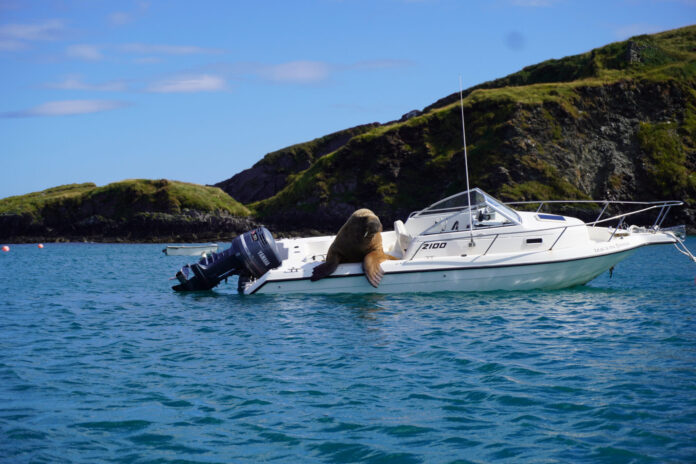
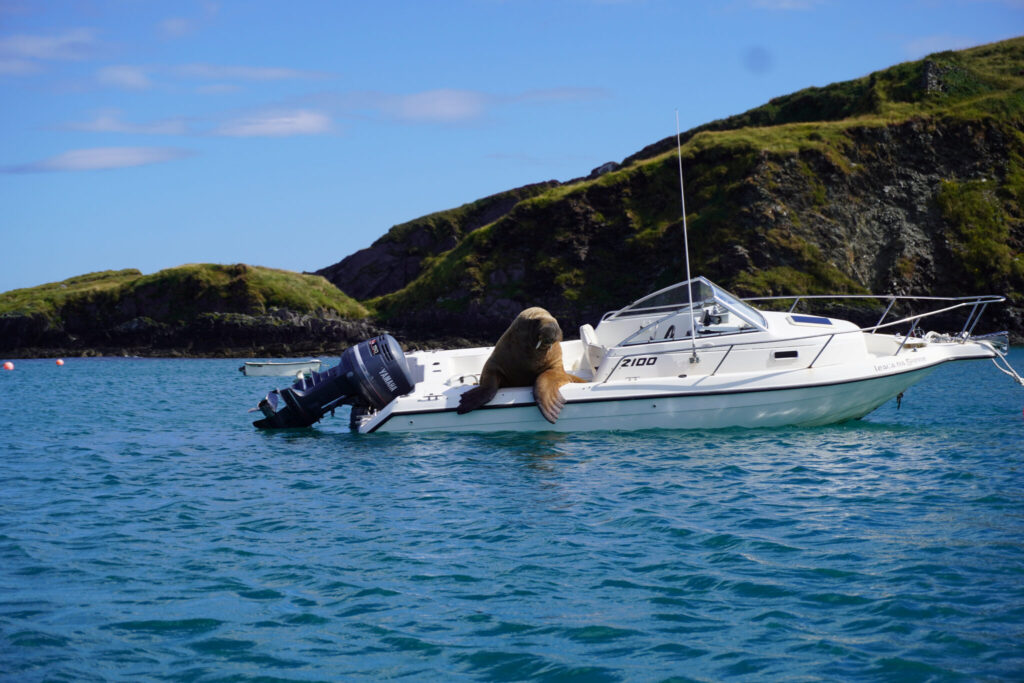
This funny video shows Wally the Walrus appearing to drive a boat he clambered into during his latest escapade.

Wally has has been filmed ‘steering’ a motorboat along the Irish coast as he continues to make a nuisance of himself.

The lonely walrus has been on a 2,500 mile solo trip for months and recently spent more than six weeks off Cornwall.

Wally is believed to be from Svalbard, north of Norway, and to have travelled by himself between Wales, England, and France.

But the wandering walrus has now made a home for himself off the Irish coast.

And recent footage shows Wally seemingly cruising along the coast on a luxury motorboat belonging to Clonakilty Distillery in West Cork.

Posting the video online, the distillery said: “One of our team had an unexpected Arctic visitor on their boat this evening.

“Wally the walrus spotted in Clonakilty today… We reckon he must have stopped by on his travels for a refreshing Minke G&T.”

MORE: See the Moment a Shark Appears to Pose for a Selfie With a Diver, and Crack the Same Huge Smile

The boat is ordinarily used to forage for rock samphire, a botanical used in gin production.

The large sea mammal, thought to be around four years old, has reportedly sunk one small boat and damaged several others on his visit to Cork.

It was first seen in Ireland before taking up residence in Tenby, Pembrokeshire in March.

Seal Rescue Ireland has now launched an appeal for a pontoon or other floating platform for Wally to use as a “safe, designated haul-out site” for him to rest on undisturbed.

RELATED: Diver Gets Glorious Glimpse of Giant Sea Worm That Normally Only Comes Out at Night

The charity said: “We are looking for a pontoon/floating platform as a safe haul-out site for the Walrus, so that he can be effectively monitored, protected from disturbance, and damage to property prevented.

“As a Pinniped (like seals and sea lions), Walruses are semi-aquatic, which means they must come up on land (or a floating object) to rest.

CHECK OUT: Size Doesn’t Matter to a Dolphin Mom As She Adopts a Whale Calf

Such a pontoon would be similar to one built for the walrus during his time on the Isles of Scilly.

The BDMLR and St Mary’s Harbour Authority constructed a specific customized pontoon replicating his apparent need for physical contact.

(WATCH Wally in the SWNS video below.)

MAKE a Splash in Friends’ Feeds—Share This Fun Story With Them…

Italian Dogs Trained as Lifeguards Save 20 Lives Every Year – With New Teams Headed to Germany and US

SICS on Facebook https://www.facebook.com/sicscentromeridionale

Stories about sled dogs hauling medicine and supplies through the frozen wilderness have become the stuff of legends, but did you know pups are proving just as powerful in the waves as they are on the ice?

SICS on Facebook

In Italy, an elite squadron of 350 specially-trained canines from the Italian School of Water Rescue Dogs (Scuola Italiana Cani Salvataggio, or SICS) has successfully been patrolling the beaches, working as lifeguards.

300 SICS units, consisting of one dog and one trainer, are tasked with watching over approximately 30 of the country’s busiest beaches.

Thanks to their willingness to perform, strength, and fearless exploits—including leaping from helicopters into the surf below to rescue at-risk swimmers—an average of 20-30 lives are saved annually by the doggie guards, and that number continues to climb each year.

Earlier this month, when several families, including eight children, were imperiled by strong wind and wave conditions while 330 feet from shore, three canine lifeguards and their trainers rushed in to save the day.

With the help of their human companions, dogs Eros, Mya, and Mira pulled everyone to safety in about 15 minutes.

The SICS program is the brainchild of 59-year-old Ferruccio Pilenga, who got the idea that dogs would make excellent lifeguards back in 1989 from watching his own Newfoundland, an immensely powerful swimmer named Mas.

“He pulled a water-filled dinghy with three people on board for half an hour,” Pilenga told The Times of London. “A human cannot do that.”

The SICS program is an arduous one. After 18 months of basic training, only those dogs successfully completing the required steps are deemed ready to move on to the more intensive aspects of lifesaving techniques, such as jumping from helicopters and leaping from speeding boats.

MORE: ‘Puppy Dog Eyes’ Are an Evolutionary Trait Developed So Dogs Can Better Capture Our Hearts

Ocean lifeguard dog -SoCalH2O rescue team photo

SICS teams are recognized for being especially effective in the face of large-scale life or death scenarios. Thanks to their special training, they’re better able to carry out the simultaneous rescue of multiple swimmers in situations where the capabilities of one or two lifeguards might be easily overwhelmed.

“To be able to use a dog in a water rescue mission gives the rescuer a leg up. The rescuer who operates on his own is alone. We are never alone. We are always in a team with our dog so it’s a six-legged unit. I can conserve my energy and become a more effective rescuer,” Plienga told Great Big Story.

“To make [people] understand, I always say, ‘To pull a sled, it takes at least six dogs, to pull six people, you only need one dog.’”

While the success of the program can be partially attributed to the dogs’ acutely attuned survival instincts that help them find the safest route to shore, as well as their stamina and ability to follow commands, Pilenga believes the emotional component they bring to their work cannot be underestimated.

RELATED: Never Give Up! Terrier Lost For 290 Days After Vacation is Found Thanks to Social Media

“The presence of the dogs helps to lighten up the situation. The biggest reward is the emotion that the dog and the owner feel at the moment of the rescue, which further unites that special bond between dog and human.”

Italy is currently the only country to recognize certified canine lifeguards, but training centers are being set up for dogs in the U.S., Germany, Switzerland, and the Azores, with SICS eager to spread its safety net to encompass wider waters across the world.

(WATCH the Great Big Story video about these dogs below.)

SHARE This PAWsome Story With Pals on Social Media…

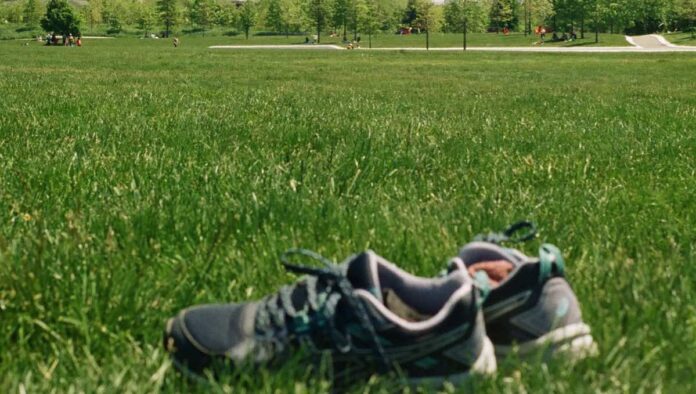
“Rest is not idleness, and to lie sometimes on the grass under trees on a summer’s day… is by no means a waste of time.” – John Lubbock

Quote of the Day: “Rest is not idleness, and to lie sometimes on the grass under trees on a summer’s day… is by no means a waste of time.” – John Lubbock, The Use Of Life

Photo: by Jene Yeo

With a new inspirational quote every day, atop the perfect photo—collected and archived on our Quotes page—why not bookmark GNN.org for a daily uplift?

Dog Missing for Weeks Wanders Into Walmart and Finds Owner Working at the Register

Danielle Robinette/Facebook

You can find a little bit of everything at Walmart from produce and groceries to lingerie, big-screen TVs, and auto parts. For one very lucky mutt, if you know where to look, you can also find your misplaced human friend.

When Abby the dog disappeared in Dothan, Alabama, all she left behind was her collar and an empty tie-out line.

June Rountree and her husband scoured the neighborhood door-to-door, searching for their missing 4-year-old black-and-white fur baby to no avail.

Three weeks passed and there was no sign of Abby, then something extraordinary happened.

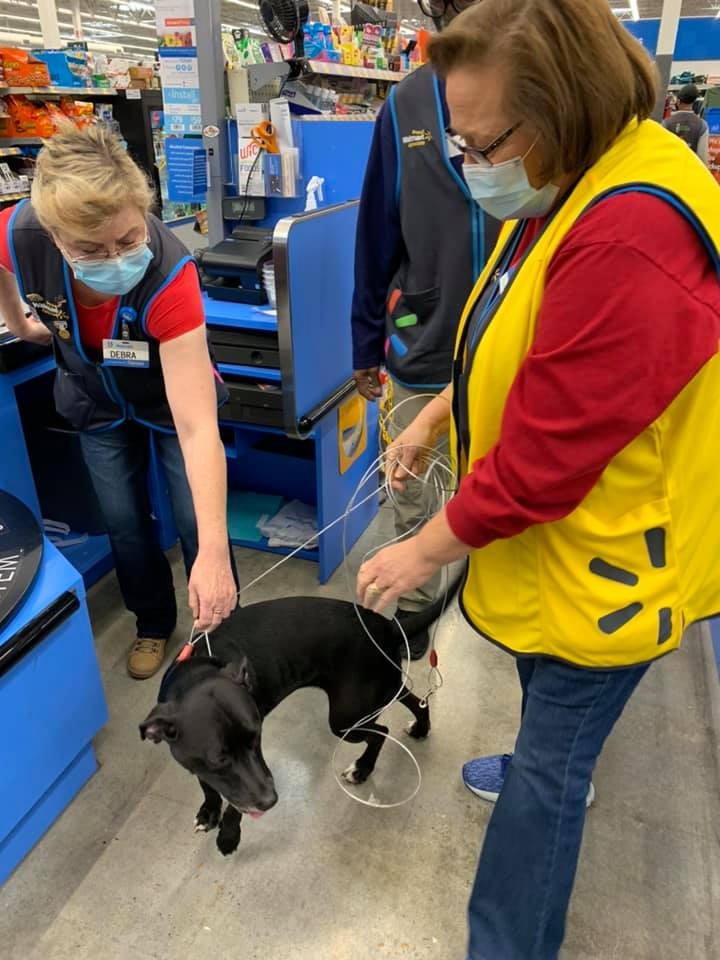
June was working the weekend shift at the Walmart register when she heard a rumpus.

Somehow, a dog had gotten loose in the store and was artfully dodging the would-be shoppers and staff trying to corral her as she careened through the various departments.

“I was like, ‘What in the world is happening?’” customer service associate Danielle Robinette told The Washington Post.

When the dog arrived at June’s post, register No. 6, it was clear she wasn’t checking out, she was checking in.

Danielle Robinette/Facebook

Although June could scarcely believe it, the dashing doggo in line with 10 items or less was her long-absent Abby.

“I called her name and she came to me,” Rountree told WaPo. “I bent over and hugged her. I completely lost it then. I couldn’t speak. I was in complete shock and just couldn’t believe it.”

MORE: ‘Puppy Dog Eyes’ Are an Evolutionary Trait Developed So Dogs Can Better Capture Our Hearts

No-one is sure where Abby was for the three weeks she went AWOL, but for a dog that had been on its own three weeks she was in remarkably good shape.

The Rountrees believe someone must have been feeding her even if they were unable to catch her, and they’re truly grateful for that.

There’s also speculation that since June had been with Abby in the Walmart parking lot a few times, the dog might have recognized the location when she happened upon it in her travels.

RELATED: Two-Legged Pooch Rescued From Afghanistan Makes the Most Amazing Recovery: ‘He’s full of joy’

Whether Abby was prompted to brave the superstore’s threshold in search of food, shelter, or something else is anyone’s guess, but we’d like to think the canny canine followed her hunting instincts on a hunch that June would be inside.

While we’re not sure what aisle Walmart generally stocks happy reunions on, we think it’s safe to say when Abby left the store to go home with her mom, she was one pawsomely satisfied customer.

WOOF the Good News Loud and Clear—Share This Story With Pals…

Deeply Empathetic People Process Music Differently in Their Brains

People with who deeply feel the pain or happiness of others differ in the way their brains process music, according to one study.

The researchers found that those with higher empathy process familiar music with greater involvement of the reward system of the brain, as well as in areas responsible for processing social information.

“High-empathy and low-empathy people share a lot in common when listening to music, including roughly equivalent involvement in the regions of the brain related to auditory, emotion, and sensory-motor processing,” said lead author Zachary Wallmark, an assistant professor in the SMU Meadows School of the Arts.

But there is at least one significant difference.

Highly empathic people process familiar music with greater involvement of the brain’s social circuitry, such as the areas activated when feeling empathy for others. They also seem to experience a greater degree of pleasure in listening, as indicated by increased activation of the reward system.

“This may indicate that music is being perceived weakly as a kind of social entity, as an imagined or virtual human presence,” Wallmark said.

Researchers in 2014 reported that about 20 percent of the population is highly empathic. These are people who are especially sensitive and respond strongly to social and emotional stimuli.

This SMU-UCLA study is the first to find evidence supporting a neural account of the music-empathy connection. Also, it is among the first to use functional magnetic resonance imaging (fMRI) to explore how empathy affects the way we perceive music.

The  study indicates that among higher-empathy people, at least, music is not solely a form of artistic expression.

“If music was not related to how we process the social world, then we likely would have seen no significant difference in the brain activation between high-empathy and low-empathy people,” said Wallmark, who is director of the MuSci Lab at SMU, an interdisciplinary research collective that studies—among other things—how music affects the brain.

MORE: Visit This Nightingale Thicket and You’ll Hear a Musician Singing with Them – WATCH the Duets

“This tells us that over and above appreciating music as high art, music is about humans interacting with other humans and trying to understand and communicate with each other,” he said.

This may seem obvious.

“But in our culture we have a whole elaborate system of music education and music thinking that treats music as a sort of disembodied object of aesthetic contemplation,” Wallmark said.

“In contrast, the results of our study help explain how music connects us to others. This could have implications for how we understand the function of music in our world, and possibly in our evolutionary past.”

The researchers reported their findings in the peer-reviewed journal Frontiers in Behavioral Neuroscience, in the article “Neurophysiological effects of trait empathy in music listening.”

“The study shows on one hand the power of empathy in modulating music perception, a phenomenon that reminds us of the original roots of the concept of empathy—’feeling into’ a piece of art,” said senior author Marco Iacoboni, a neuroscientist at the UCLA Semel Institute for Neuroscience and Human Behavior.

“On the other hand,” Iacoboni said, “the study shows the power of music in triggering the same complex social processes at work in the brain that are at play during human social interactions.”

Comparison of brain scans showed distinctive differences based on empathy

Participants were 20 UCLA undergraduate students. They were each scanned in an MRI machine while listening to excerpts of music that were either familiar or unfamiliar to them, and that they either liked or disliked. The familiar music was selected by participants prior to the scan.

Afterward each person completed a standard questionnaire to assess individual differences in empathy—for example, frequently feeling sympathy for others in distress, or imagining oneself in another’s shoes.

READ: MIT Scientists Spin Some Music Out of Spider Webs – And it Sounds Otherworldly (Listen)

The researchers then did controlled comparisons to see which areas of the brain during music listening are correlated with empathy.

Analysis of the brain scans showed that high empathizers experienced more activity in the dorsal striatum, part of the brain’s reward system, when listening to familiar music, whether they liked the music or not.

The reward system is related to pleasure and other positive emotions. Malfunction of the area can lead to addictive behaviors.

Empathic people process music with involvement of social cognitive circuitry

In addition, the brain scans of higher empathy people in the study also recorded greater activation in medial and lateral areas of the prefrontal cortex that are responsible for processing the social world, and in the temporoparietal junction, which is critical to analyzing and understanding others’ behaviors and intentions.

RELATED: That Song Stuck in Your Head is Helping the Brain With Long-Term Memory

Typically, those areas of the brain are activated when people are interacting with, or thinking about, other people. Observing their correlation with empathy during music listening might indicate that music to these listeners functions as a proxy for a human encounter.

Beyond analysis of the brain scans, the researchers also looked at purely behavioral data— answers to a survey asking the listeners to rate the music afterward.

Those data also indicated that higher empathy people were more passionate in their musical likes and dislikes, such as showing a stronger preference for unfamiliar music.

Precise neurophysiological relationship between empathy and music is largely unexplored

A large body of research has focused on the cognitive neuroscience of empathy—how we understand and experience the thoughts and emotions of other people. Studies point to a number of areas of the prefrontal, insular, and cingulate cortices as being relevant to what brain scientists refer to as social cognition.

Activation of the social circuitry in the brain varies from individual to individual. People with more empathic personalities show increased activity in those areas when performing socially relevant tasks, including watching a needle penetrating skin, listening to non-verbal vocal sounds, observing emotional facial expressions, or seeing a loved one in pain.

CHECK OUT: Americans Choose the Best Road Trip Tunes Of All Time — For Your Summer Playlist

In the field of music psychology, a number of recent studies have suggested that empathy is related to intensity of emotional responses to music, listening style, and musical preferences—for example, empathic people are more likely to enjoy sad music.

“This study contributes to a growing body of evidence,” Wallmark said, “that music processing may piggyback upon cognitive mechanisms that originally evolved to facilitate social interaction.”

Source: Southern Methodist University

SHARE This Fascinating Research of Note With Pals on Social Media…

Nintendo is Partnering With a Nonprofit to Bring Gaming Consoles to Hospitalized Kids

Starlight Gaming Stationnonprof

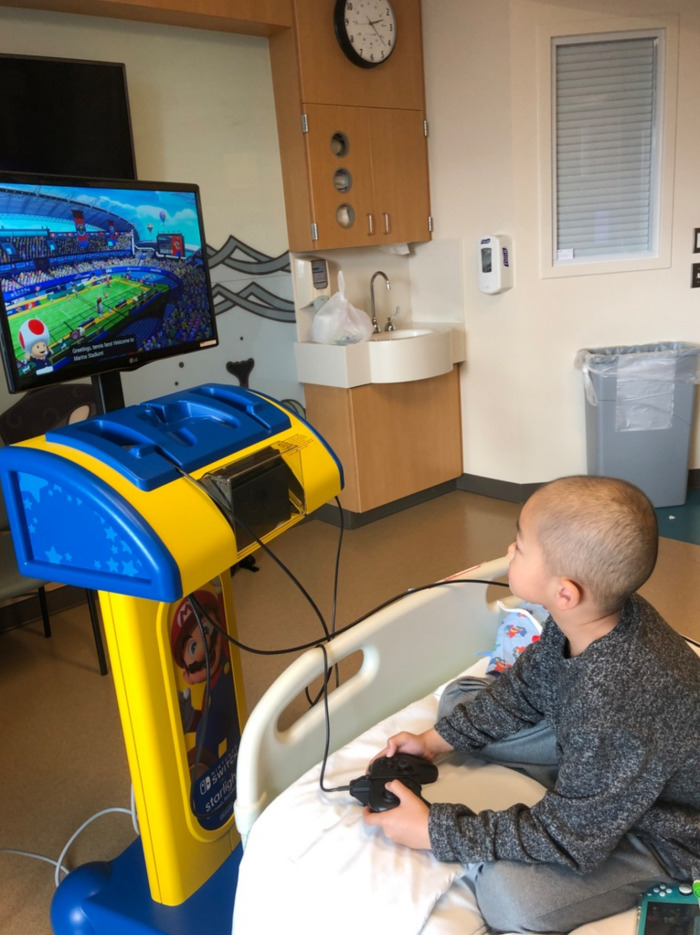
Starlight Nintendo Switch Gaming stations have been making their way to hospitals and health care facilities across the country.

Each station comes preloaded with more than 25 games from Super Mario Party to The Legend of Zelda: Breath of the Wild.

The station is specially designed and manufactured by Nintendo for use in a hospital setting.

The device can be completely cleaned with disinfectant to meet a hospital’s strict safety infection protocols and includes a mounted playback monitor that can roll anywhere in a hospital, so children can enjoy some of their favorite Nintendo video games from the comfort of their own hospital beds or in a playroom with a group of other children.

Gaming delivers happiness to kids stuck in the hospital by providing entertainment and much-needed distraction from stressful situations. According to Starlight Children’s Foundation, it can even provide emotional support, resulting in reduced anxiety and improved mood.

CHECK OUT: Study During Lockdown Shows Video Gaming –Even For Hours– Can Help Your Mental Health

Doctors, nurses, clinicians, and child life specialists are able to use a single Starlight Gaming station in a variety of settings, from entertaining children during a relative’s visit to the emergency room, to distracting kids during an otherwise painful medical treatment, to giving kids something fun to do during long periods of isolation or with a group of other kids, or helping them to relax and feel comfortable when communicating with caregivers about their diagnosis.

In 28 years, the partnership of Starlight with Nintendo of America has delivered Gaming stations to over 800 hospitals and healthcare facilities all over the country—bringing smiles to an estimated 11.6 million seriously ill children.

RELATED: Video Game-Streaming Grandma is Making Profound Impact on the Lives of Strangers Across the Internet

“Over the years, Starlight Gaming stations have provided millions of seriously ill children with the healing power of play, entertainment, socialization, and emotional support, and have helped to normalize an otherwise scary situation or setting for families,” Adam Garone, CEO of Starlight, said. “We’re so grateful to Nintendo and their employees for such a long and continuing partnership fueled by innovation, impact, and generous support.”

“It’s been our pleasure to work with Starlight and observe them bringing happiness to kids when they need it the most,” Don James, Nintendo of America’s Executive Vice President of Operations, added. “As with everything we do, we hope the new Starlight Nintendo Switch gaming stations will put smiles on the faces of children and their families.”

PASS This Sweet Story on to Pals on Social Media… 

Two-Legged Pooch Rescued From Afghanistan Makes the Most Amazing Recovery: ‘He’s full of joy’

SWNS
SWNS

A two-legged pooch who was rescued from the streets of Afghanistan has made a remarkable recovery—and loves running on his two legs.

Maz the Labrador cross was struck by a car that crushed both of his back legs in 2013, and was left to roam the streets of the war-torn nation.

UK NHS doctor Helene Svinos said she saw a video of the ‘friendliest dog’ online on Valentine’s Day in 2015 and couldn’t stop thinking about him.

Despite his severe injuries, Maz was ‘full of joy’ and Helene decided she had to bring him back to her home in Manchester, England.

After contacting old friend Louise Hastie, a former soldier who rescues dogs from war zones, the dog was taken to Kabul and eventually flown to the UK in May that year.

Maz has joined a gang of other pups at Helene’s home, as she has six rescue dogs including paraplegic Pomeranian Bambi and blind Husky Inka, both from Romania.

Despite having both of his back legs amputated after they were fused together, Maz has remained upbeat and is always raring to go for runs.

Helene said the pooch has repeatedly refused to wear wheels or walking aids as he loves to ‘scuttle around as fast as lighting’.

Marvellous Maz has even beaten Helene’s three springer spaniels in a sprint, despite them competing in CaniCross races.

Helene said: “Maz is just a complete and utter star. You can’t feel sad or unhappy around him as he’s full of joy—except for when it’s raining.

“Maz has never let anything stop him from doing all the things he wants to do—including rolling in mud!

MORE: ‘Puppy Dog Eyes’ Are an Evolutionary Trait Developed So Dogs Can Better Capture Our Hearts

“He just lives in the moment and he doesn’t focus on what happened in the past.”

Helene, who works on the frontline as an A&E doctor at Manchester Royal Infirmary, said coming home to her dogs has helped her throughout the Covid crisis.

She said: “I’m an A&E doctor working during lockdown, but coming home he just puts things into perspective.

“It’s been difficult at times during lockdown, feeling lonely, but then I come back to these happy dogs.”

SWNS

The intelligent pooch somehow found his way to a vet where he befriended one of the doctors and would always leap up to greet anyone despite his injuries, Helene said.

They tried to keep the friendly pooch healthy but with limited resources, they were unable to do much more and posted an appeal online.

RELATED: Never Give Up! Terrier Lost For 290 Days After Vacation is Found Thanks to Social Media

Louise Hastie from War Paws, a charity she set up to help dogs in areas of civil conflict, helped bring Maz to Manchester where he is now ‘full of life’.

He had two four-hour surgeries to remove his back legs in May 2015 before he finally found his forever home with Helene.

Helene said: “He’s just the most wonderful dog and I’m so grateful to have him in my life.

CHECK OUT: Stranger Takes Home 2 Dogs After Helping Car Accident Victims Get Airlifted to Hospital Unable to Tend Pups

“There are so many incredible dogs in the world who need homes, and they will bring you as much joy as you give them.

SWNS

“I have a special love for disabled dogs, and I think people are worried that they may have problems but that’s just not true.

“They get overlooked often but they can live a full and happy life.”

PAW the Good News Over to Pals on Social Media…

“Do not let the pain make you hate. Do not let the bitterness steal your sweetness. Take pride that even though the rest of the world may disagree, you still believe it is a beautiful place” – Iain Thomas

Quote of the Day: “Do not let the pain make you hate. Do not let the bitterness steal your sweetness. Take pride that even though the rest of the world may disagree, you still believe it is a beautiful place” – Iain Thomas, I Wrote This For You

Photo: by Martin Adams

With a new inspirational quote every day, atop the perfect photo—collected and archived on our Quotes page—why not bookmark GNN.org for a daily uplift?


Explorer Who Found Many Iconic Shipwrecks Like the Titanic Credits Dyslexia For His Success

Ted Talks on YouTube / Titanic photo by NOAA

Not being able to see the world in the same way as others is often considered a drawback, but the view from a different lens can also be revelatory.

79-year-old Robert Ballard, a pioneer in underwater robotic technology, always knew he was “wired differently” than most folks, but it was only a few years ago that he learned he was dyslexic.

While he finally had an explanation for early learning issues that set him apart from his peers, the realization also went a long way toward explaining just how extraordinary his particular gift of vision was.

As National Geographic “explorer at large,” along with his ongoing robotic research at the Woods Hole Oceanographic Institution, Ballard’s milieu is literally the wide oceans of the Earth.

“I live in a world where everywhere I go is totally dark, so you have to visualize it in your mind… Dyslexics are extremely good at visualization of three-dimensional space,” Ballard told The i. “When I am at my command center… I’m able to take all of that information into my head and then form a mental image of a world of total darkness [where I’m] extremely comfortable… because I see it in my mind.”

Before discovering he was dyslexic, Ballard assumed that’s how everyone else saw the world as well, but it’s his singular ability to simultaneously assimilate vast quantities of information “eyes-on” that’s led to his greatest achievements.

Ballard is the man responsible for finding the wreck of the RMS Titanic. While it’s arguably the historic footnote he’ll be best remembered for (at least by search engines), ironically, when the discovery was made, Ballard was on a top-secret mission for the U.S. government. Searching for the storied lost liner was just his cover story.

Check Out: This Font is Designed Specifically For Dyslexia – and it Really Works

In addition to locating other notable shipwrecks—like the infamous Nazi battleship, the Bismarck, the aircraft carrier USS Yorktown, and the torpedo patrol boat last commanded by John F. Kennedy who saved his crew when it sunk during WWII—the technology spearheaded by Ballard has given us some of the most comprehensive scientific knowledge of the ocean floor to date.

Ballard’s robot denizens have plumbed the mysteries of plate tectonics and explored vast, previously uncharted undersea biomes home to creatures straight out of an Alien movie, including 13-foot worms with nightmarish gnashing teeth.

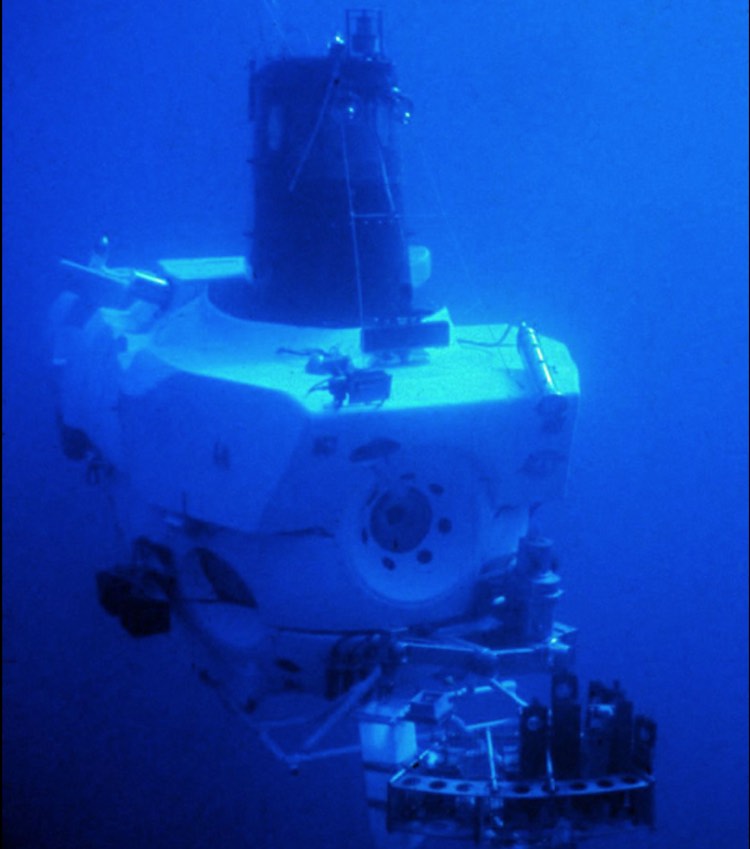
Alvin submersible from Woods Hole / NOAA

POPULAR: Entire Town Became Autism-Friendly After Every Business Agreed to Apply Four Specific Measures

Thinking outside the box of conventional maritime history, Ballard plotted a direct trading route across the Mediterranean Sea between ancient Rome and Carthage by following a trail of discarded empty wine bottles that were tossed overboard by sailors at mealtime.

None of these things, he believes, would have been possible had he not seen the world through a dyslexic’s eyes.

“I often wonder how my life would have been different had I known I was dyslexic… I think I arrived at a good spot, but I got there by a very strange route,” he told The i.

In his new autobiography, Into the Deep, Ballard chronicles his personal history and storied career, along with the very important role his dyslexia played in all that he’s accomplished.

“Everyone needs to understand that dyslexics aren’t stupid, they’re just a different kind of human being. They see the world in a very different way,” Ballard told the University of Rhode Island News. “This book is a coming-out party for my dyslexia. I’m standing on a soapbox now and saying, ‘I’m dyslexic,’ and I feel so lucky’.”

MORE: Childhood ADHD – 5 Things No One Else is Telling You

Nearing 80, Ballard is mentoring more these days, but he continues to be actively involved in new projects, including the design and implementation of a fleet of autonomous underwater vehicles (AUVs), which he says can be programmed “like a pack of hounds” to hunt the estimated 3,999,040 remaining shipwrecks (that’s minus the 60 he’s already found) languishing beneath the waves.

In addition, Ballard is partnering with National Geographic to create a program offering educational opportunities so that dyslexics who come from disadvantaged backgrounds can better achieve their full potential.

“When I was growing up, my Kansas grandmother was full of sayings, and I remember one in particular…  ‘Great is the person who plants a tree knowing they will never sit in its shade.’ That’s where I am now. I’m planting trees.”

(WATCH Robert Ballard’s popular Ted Talk below.)

Inspire Anyone With Dyslexia By Sharing This on Social Media… 

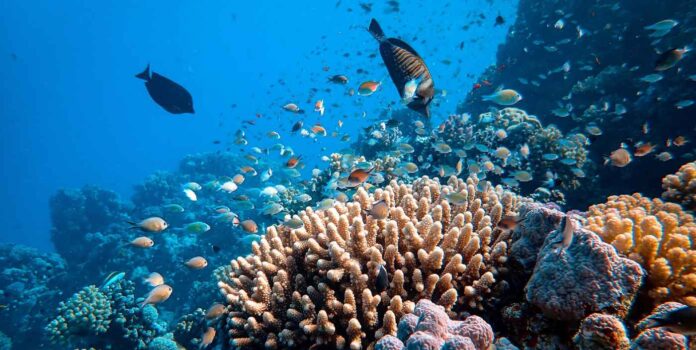
Thailand Announces Ban on Coral-Damaging Sunscreens in Marine National Parks

Thailand has announced that, across its marine national parks, it’s banning sunscreens that contain chemicals known to damage coral.

The Thai Department of Conservation said four ingredients commonly found in sunscreens are shown to destroy chemical larvae. They obstruct coral reproduction and contribute to bleaching of reef systems.

Those banned chemicals are: oxybenzone, octinoxate, 4-methylbenzylidene camphor or butylparaben.

MORE: Fisherman Thrilled to Find Rare Melo Pearl in His Seafood Lunch – Worth up to $350,000

Hawaii and the Pacific islands of Palau, Bonaire, and Aruba, which are all known for their delicate reef systems, have also announced similar bans.

To learn more about reef safe sunscreen—which typically include UV-blocking minerals like oxide and titanium dioxide as their active ingredients—check out this handy guide.

SHARE This Win For Marine Life With Pals on Social Media…

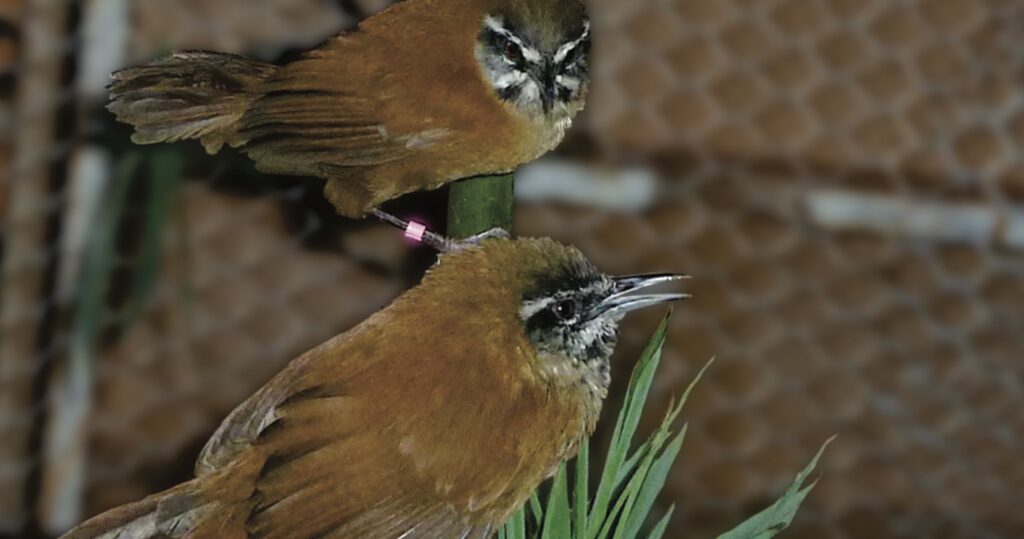
Duetting Songbirds ‘Mute’ the Musical Mind of Their Partner to Stay in Sync, Researchers Find

NJIT
NJIT

Art Garfunkel once described his legendary musical chemistry with Paul Simon, “We meet somewhere in the air through the vocal cords… .” But a new study of duetting songbirds from Ecuador has offered another tune explaining the mysterious connection between successful performing duos.

It’s a link of their minds, and it happens, in fact, as each singer mutes the brain of the other as they coordinate their duets.

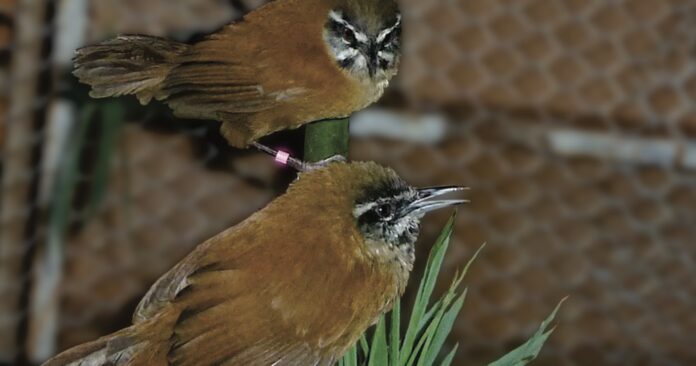
In a study, a team of researchers studying brain activity of singing male and female plain-tailed wrens has discovered that the species synchronizes their frenetically paced duets, surprisingly, by inhibiting the song-making regions of their partner’s brain as they exchange phrases.

Researchers say that the auditory feedback exchanged between wrens during their opera-like duets momentarily inhibits motor circuits used for singing in the listening partner, which helps link the pair’s brains and coordinate turn-taking for a seemingly telepathic performance. The study also offers fresh insight into how humans and other cooperative animals use sensory cues to act in concert with one another.

“You could say that timing is everything,” said Eric Fortune, co-author of the study and neurobiologist at New Jersey Institute of Technology’s Department of Biological Sciences.

“What these wrens have shown us is that for any good collaboration, partners need to become ‘one’ through sensory linkages. The take-home message is that when we are cooperating well… we become a single entity with our partners.”

“Think of these birds like jazz singers,” added Melissa Coleman, the paper’s corresponding author and associate professor of biology at Scripps College. “Duetting wrens have a rough song structure planned before they sing, but as the song evolves, they must rapidly coordinate by receiving constant input from their counterpart.

“What we expected to find was a highly active set of specialized neurons that coordinate this turn-taking, but instead what we found is that hearing each other actually causes inhibition of those neurons—that’s the key regulating the incredible timing between the two.”

MORE: Falcons Have Natural ‘Eye Makeup’ to Improve Hunting Ability, Scientists Discover

For the study, the team had to travel to the heart of the plain-tail wren music scene, within remote bamboo forests on the slopes of Ecuador’s active Antisana Volcano.

Camped at the Yanayacu Biological Station’s lab, the team made neurophysiological recordings of four pairs of native wrens as they sang solo and duet songs, analyzing sensorimotor activity in a premotor area of the birds’ brains where specialized neurons for learning and making music are active.

The recordings showed that during duet turn-taking—which often take the form of tightly knit call-and-answer phrases, or syllables, that together sound as if a single bird is singing—the birds’ neurons fired rapidly when they produced their own syllables.

Yet, as one wren begins to hear their partner’s syllables sung in the duet, the neurons quiet down significantly.

“You can think of inhibition as acting like a trampoline,” explained Fortune. “When the birds hear their partner, the neurons are inhibited, but just like rebounding off a trampoline, the release from that inhibition causes them to swiftly respond when it’s their time to sing.”

RELATED: Man is Stunned After He Sets Up Camera Inside Bird Box and Attracts 41 Million Fans Worldwide

Next, the team played recordings of wrens duetting while they were in a sleep-like state, anesthetized with a drug that affects a major inhibitory neurotransmitter in the wrens’ brains that is also found in humans, gamma-aminobutyric acid (GABA). The drug transformed the activity in the brain, from inhibition to bursts of activity when the wrens heard their own music.

“These mechanisms are shared or similar to what happens in our brains because we are doing the same kind of things,” said Fortune, whose study has been published in Proceedings of the National Academy of Sciences. “There are similar brain circuits in humans that are involved in learning and coordinating vocalizations.”

Fortune and Coleman say the results offer a fresh look into how the brains of humans and other cooperating animals use sensory cues to act in concert with each other, from flowing musical and dance performances, or even the disjointed feeling of inhibition commonly experienced today during video conferencing.

(WATCH the video illustrating this research below.)

Source: New Jersey Institute of Technology

TWEET This Research to Pals on Social Media…

See the Moment a Shark Appears to Pose for a Selfie With a Diver, and Crack the Same Huge Smile

SWNS
SWNS

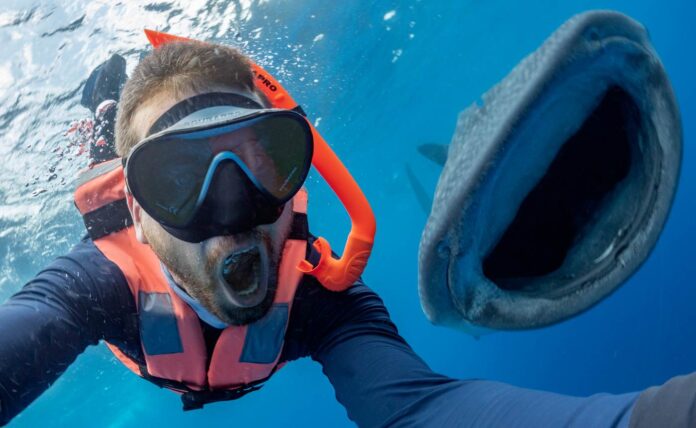
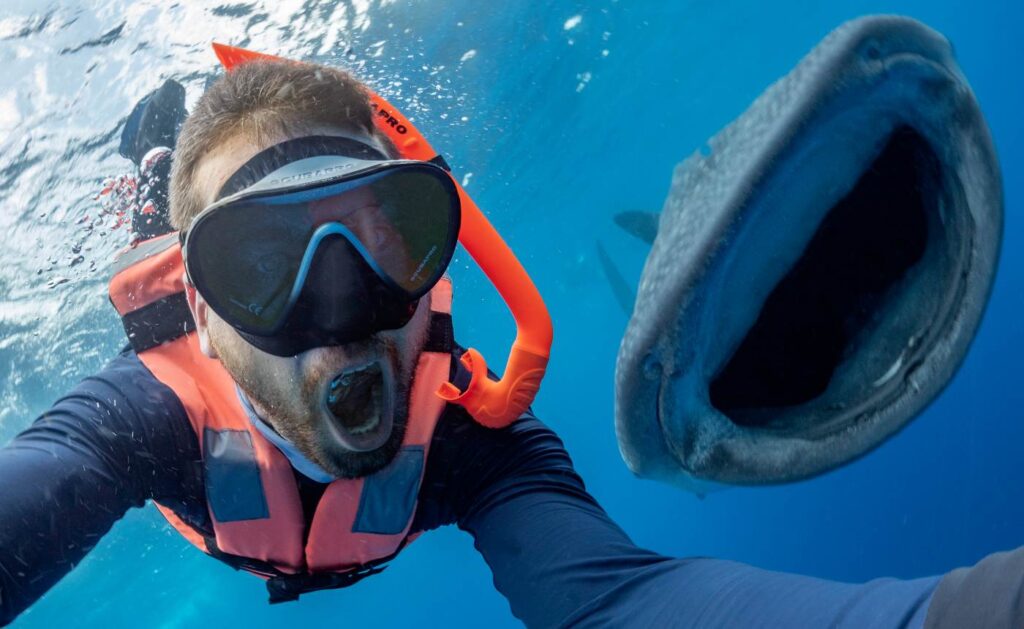
This is the moment a shark appears to pose for a selfie with a diver—and crack the same giant smile.

36-year-old William Drumm recently clicked the perfectly timed shot 20 miles off the coast of Isla Mujeres in Mexico.

Whale sharks often swim with their mouths open and William thought it would make a good shot to imitate them.

After a few tries, he managed to get the perfect image. The Coloradan explained said that whale sharks are “so amazing.” The largest sharks on the planet, they “are often swimming with their mouths open as they filter tiny plankton from the water.”

On Instagram he explained that there were “millions of fish eggs in the water, which is likely what attracts all of these sharks every year.

“A whale shark can consume 30,000 calories or more per day, feeding on some of the smallest prey imaginable!”

MORE: Friendly Humpback Whale Gives Woman the Experience of a Lifetime – WATCH

“They swim pretty fast, so it took me a few tries, but I think I got a few images that worked.

“I felt so excited and honored to share the water with so many of these beautiful behemoths.

CHECK OUT: Humpback Whales Herd Salmon With Their Fins in Never-Before-Filmed Feeding Behavior

”Never have I seen so many whale sharks—at least 100 in a single day.”

GIVE Your Friends the Gift of a Big Grin—Share This Story…
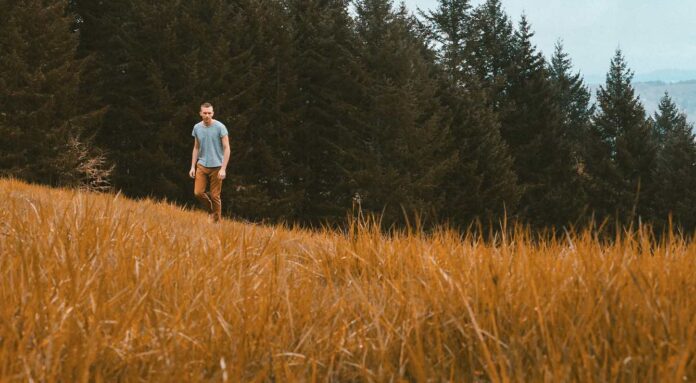
“Walk with the dreamers, the believers, the courageous, the cheerful, the planners, the doers, the successful people with their heads in the clouds and their feet on the ground.” – Wilferd Peterson

Quote of the Day: “Walk with the dreamers, the believers, the courageous, the cheerful, the planners, the doers, the successful people with their heads in the clouds and their feet on the ground.” – Wilferd Arlan Peterson

Photo: by Joshua Earle

With a new inspirational quote every day, atop the perfect photo—collected and archived on our Quotes page—why not bookmark GNN.org for a daily uplift?