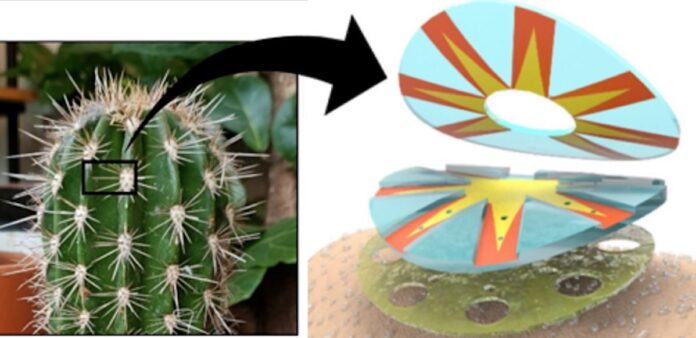
A sweat-collecting patch has been developed using the principle based on how the cactus spines attract water.
POSTECH
Sweat is an effective body fluid for analyzing bioanalytes in the body without collecting blood. The sweat sensor can reduce the hassle for diabetic patients who repeatedly have to draw blood, and can also be used in wearable devices for daily healthcare monitoring.
However, the practical use of sweat sensors has always been impeded by irregular and low sweat-secretion rates—until now.
To this, a research team led by Professor Kilwon Cho and Ph.D candidate Jonghyun Son of POSTECH’s Department of Chemical Engineering has recently developed a skin-attachable patch that quickly collects sweat by mimicking the principle behind cactus spines.
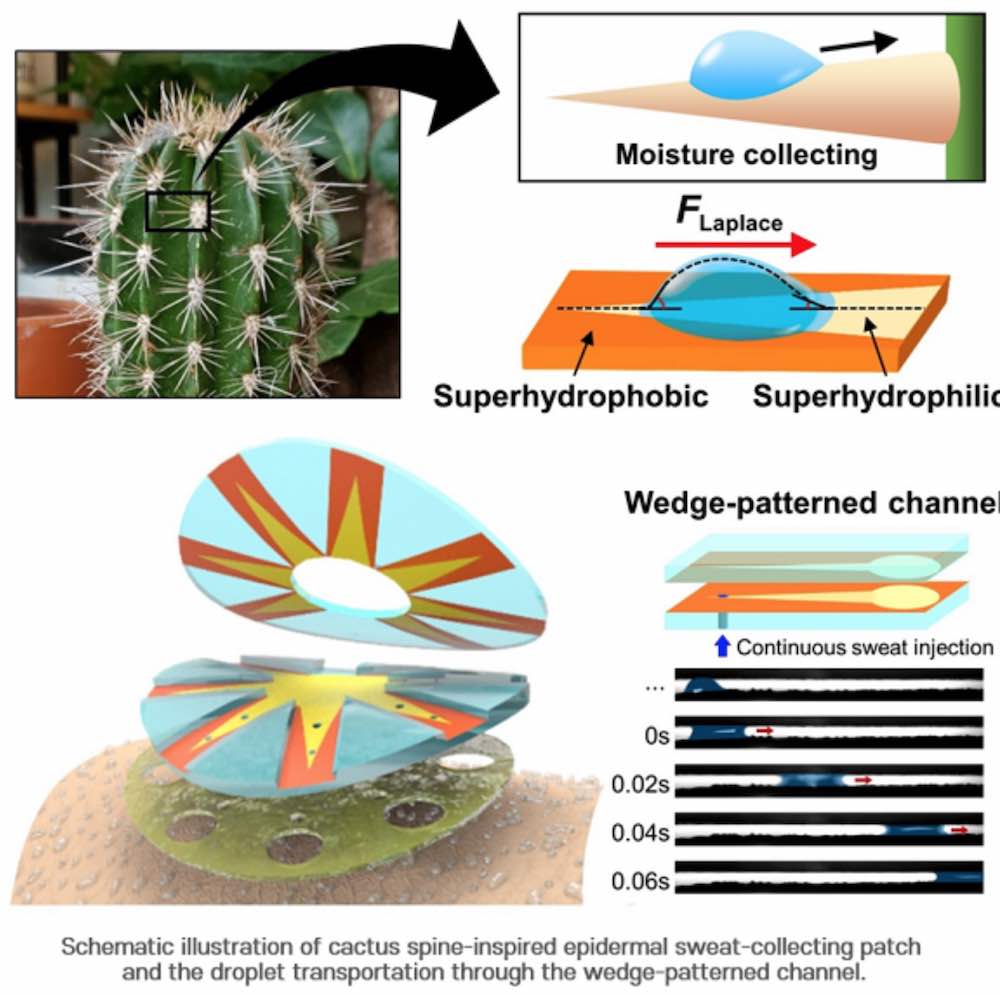
Cacti, which grow in arid environments, move water droplets that form on the tip of their spines to their base in order to survive. During this process, the fine water droplets move due to the difference in pressure acting on the inside and outside of the curved surface of the water droplet. This phenomenon is called the Laplace pressure.
The patch newly developed by Professor Kilwon Cho’s research team applied this principle of how cactus spines collect water. The researchers mimicked the structure of the cactus spine by using the wedge-shaped wettability patterns with superhydrophobic / superhydrophilic surfaces.
Through this, a sweat droplet on the wedge-patterned surface spontaneously moves to the wide end of the wedge pattern because the Laplace pressure difference between the front and back surfaces of the droplet is maximized.
The results confirm that the wedge-patterned channel can collect sweat quickly and spontaneously regardless of the inclination of the microfluidic channels, without the need for additional force.
In addition, the wedge-patterned channel shows great sweat-collecting efficiency as it transports nearly all sweat droplets to the sensing area without leaving much behind inside the channel, enabling it to collect sweat much faster than the conventional microfluidic channels. This allows the patch to continuously monitor the bioanalytes in the blood.
“Difficulties in collecting sweat has hindered its use in wearable healthcare devices,” explained Professor Kilwon Cho of POSTECH. He added, “This newly developed patch solves that issue by quickly collecting sweat and facilitating its use in various wearable healthcare devices, including blood sugar monitoring.”
A third-grade teacher has gone viral for sharing a sweet and simple lesson on fairness—using band-aids as a prop.
On her social media channels, the elementary teacher known as @aimeesedventures explains, in a way that’s accessible to both kids and adults, “Fair doesn’t mean everyone gets the same thing… it means that everyone gets what they need to be successful.”
Quote of the Day: “You don’t have to worry about burning bridges, if you’re building your own.” – Kerry E. Wagner
Photo: by Wai Siew
With a new inspirational quote every day, atop the perfect photo—collected and archived on our Quotes page—why not bookmark GNN.org for a daily uplift?
There’s a reason why Dwayne Johnson gets called the most likable celebrity around. Not only is he funny; he has his own foundation that helps at-risk and terminally ill children. Kindness just seems to be in this actor’s bones. As for his latest act? He’s just gifted a brand new Ford F-150 to an old friend.
@TheRock/Instagram
On New Year’s Day, the 48-year-old Fast and Furious star visited pal Bruno Lauer.
It’s true that the Rock’s initial greetings didn’t sound all that friendly. “Hey you son of a gun!” Dwayne yelled across the parking lot. But his tone was just in jest.
Bruno took the actor in when he was homeless as a teen in Tennessee. Nine years later, after Johnson fell on hard times once again while trying to make his name as a wrestler, it was Bruno who again came to the rescue and said he could live in his Nashville trailer.
‘I love you, brother,” Johnson wrote to his friend in a post on Instagram. “Your kindness and heart – helped change my life’s trajectory. And when you’re ready to retire from ‘the business’ you just say the word. I got you covered.”
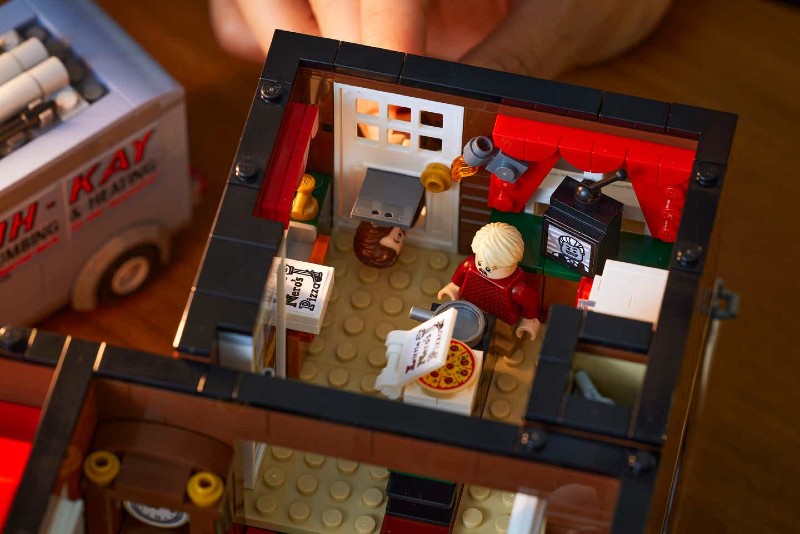
The LEGO Group has revealed the new LEGO Ideas Home Alone set, an incredibly detailed recreation of the McCallister family residence from the much-loved Home Alone movie, where mayhem ensued as Kevin was left to his own devices and the bumbling burglars Harry and Marv descended.
Now in brick form for the first time, the new set is based on a design submitted to the LEGO Ideas platform by 28-year-old Alex Storozhuk from Ukraine. At an impressive 3,955 pieces, it is also the largest set created from a LEGO Ideas concept.
The LEGO Ideas Home Alone set is instantly recognizable, perfectly capturing the grand McCallister family home, and is also packed with features that tell the story of Kevin’s holiday antics. As well as the exterior, the interior layout is true to the movie and includes the ground and first floor, kitchen, basement, and attic.
A new opening mechanism opens up the house for full enjoyment; the walls separate in the middle to open sideways and fully reveal the interior, while the roof also opens upwards. In addition, the set comes complete with the main characters of the movie in LEGO minifigure form, including; Kevin, robbers Harry and Marv, the old man Marley—and Kevin’s mom Kate.
Every room is packed with details from the classic film, such as the after-shave lotion from “The Scream” bathroom scene, Buzz’s pet tarantula, the robbers’ van, the paint cans used to knock them down, and the treehouse with zipline. Other features include the fireplace, Christmas tree, a toy train, grandfather clock, dining table, and record player.
As the festive season draws in, the LEGO Ideas Home Alone set is designed to provide the ultimate holiday at home together and a unique building experience.
LEGO
Split into an Advent Calendar-like 24 build bags, you can build the iconic house in sequence with the movie, starting with meeting the robbers and their van and ending with Kevin’s reunion with his mom.
Talking about his inspiration for the set, the LEGO fan designer Alex Storozhuk, commented, “Just like every 90s kid, I grew up watching Home Alone and it takes a very special place in my heart. I can’t even imagine holidays without it. This movie is very nostalgic and makes those warm childhood memories come up every time.”
LEGO
Taking Alex’s original design and creating the final set was the job of Antica Bracanov, LEGO Designer.
Talking about the task, Antica said, “Bringing Alex’s Home Alone house to life has been brilliant fun. He’d thought about every aspect, from the layout of the rooms to the use of color and of course the details from the movie to make it instantly recognizable.
“Following the themes of the film, we wanted to make the experience as immersive as possible for fans of LEGO building and the movie. The step-by-step build which mirrors the movie, and the ability to open up the set and see inside lends itself well to hours of joyful focus this holiday season—just add a festive backdrop and a certain Christmas movie!”
Dierdre Wolownick Honnold / Instagram and El Capitan by Mike Murphy, CC license
You may have heard about Alex Honnold, the daredevil climber whose historic ascent of El Capitan in Yosemite with little more than a T-shirt and hand chalk was portrayed in the Oscar-winning documentary Free Solo.
Dierdre Wolownick Honnold / Instagram and El Capitan by Mike Murphy, CC license
Well, now his mother just became the oldest woman to conquer the famous granite peak, having reached the peak on September 23rd—the morning of her 70th birthday.
Dierdre Wolownick, the writer and language teacher, decided to take up climbing as a means to connect more deeply with her son, who made history in 2018 when he became the first man to climb El Capitan without ropes or safety equipment.
“Climbing El Cap at 70 takes its toll, physically, mentally, emotionally,” Wolownick writes in her blog. “I’m not ‘down’ yet. Not sure I ever will be, completely.”
In 2008, Honnold was home nursing an injury, which allowed him the time to accompany his mother on her first visit to the climbing gym Pipeworks in Sacramento. She completed 12 routes that first day with his help, but it was months before she had worked up the courage to return on her own.
Wolownick became committed to the sport, and began to meet friends and sharpen her skills. She scaled parts of Half Dome and Cathedral peak at a time when many people her age are thinking about retirement and slowing down.
The writer would go on to publish a memoir of her experiences climbing with Alex called The Sharp End of Life: A Mother’s Story, referring to the climber at the sharp, or lead end of a route who essentially bears all the responsibility for guiding the route and securing the rope for the other climbers.
“As a mother, I marveled at this process of swapping leads. Parents and children often wind up changing roles in life, as they get older,” she writes in her book. “But never, I thought, is that transformation as obvious as when they climb together.”
“This year, on September 23, 10 friends and I set out in the dark, at 6am,” Wolonick writes in her blog. The first third of the route is a hike steep enough to require all-fours, grabbing boulders and trees and whatever else will hold your weight.
The second-third of the climb involves ascending fixed ropes using mechanical grips that slide upwards along the rope, and which require immense core strength to use, which Wolownick writes wore out pretty fast.
“The granite slabs that lead you up that last third stretch for what seems like miles. Impossible to protect with rope or any other way. Just walk steeply uphill, endlessly, grabbing whatever tiny edges you can find. But my foot no longer works the way it should (from a botched surgery), and the toes can’t grip,” she remembers.
“My head, though, was the worst offender. My writer’s imagination could see exactly what would happen if I stumbled…I’d roll down slab after slab, breaking parts of me at every bump of rock, until I reached the edge. Then I’d sail out over the Valley to plummet down 3,200 feet to the Valley floor.”
Yet despite the fear, the squad made it to the top, where champagne and cupcakes—much needed sugars, were produced to celebrate with views of the famous valley.
“It was really awe-inspiring to watch her and then to have her on top with all of us,” said McMackin, a friend of Dierdre’s to the LA Times. “There was a special look on everyone’s face. We knew where we were. We knew how awesome the moment truly was.”
INSPIRING Stories Should Soar; Help This One Travel Far by Sharing…
While nations announced pledges to do more to prevent climate change, one announcement at COP26 was rather more playful.
An inflatable bouncy castle, or what we Americans refer to as a moon bounce, was debuted as a means to clean the air of CO2 and provide hours of entertainment in the process.
Within the inflatable tubes that make up the structure of the moon bounce are microscopic algae that feed on carbon and other minerals in the air. The algae actually create a biomass which can be used to make plastic-like material for manufacturing, or fuel for certain kinds of electricity production.
The pump that continuously inflates the moon bounce pulls in the CO2 in the air, and the children’s bouncing movements channel it into the algae chambers.
It was tested in Poland, and went on display early on at the 2021 United Nations Climate Change Conference happening in Glasgow.
Featured on the BBC, this technology could give climate change the most formidable enemy it has yet faced: the relentless energy of a play-hungry schoolkid.
Quote of the Day: “Always tell what you feel; do what you think.” – Gabriel García Márquez
Photo: by Claire Fischer
With a new inspirational quote every day, atop the perfect photo—collected and archived on our Quotes page—why not bookmark GNN.org for a daily uplift?
Dogs may be man’s best friend, but let’s not forget that a faithful fetching stick is a dog’s other best friend if you don’t have a tennis ball at hand.
So when 59-year-old Andrew Taylor noticed that there was a lack of good sticks at his local park, he decided to take matters into his own hands.
The dad from Kaiapoi, New Zealand had been chopping off excess branches from some trees in his yard when he decided to make them into a “Stick Library” for all the local pups.
After chopping up the branches into several dozen conveniently-sized pieces, he put them into a hand-crafted box emblazoned with the words “Stick Library: Please Return” and brought it to the park.
Since Taylor and his daughter hosted a small neighborhood inauguration party for the Stick Library, more than 50 dogs and their owners have enjoyed a game of fetch with the sticks.
“As people started to arrive, there was a disbelief of how simple the idea was, but it’s one of those ideas no one had thought of,” said Taylor’s daughter Tayla Reece. “All the dog owners appreciate it, as they all have experienced the ‘good stick search’, which isn’t always fruitful. It’s an idea that just makes sense to them.”
(WATCH the pawesome video below)
Be Sure And Share This Fetching Story With Your Friends On Social Media…
Mike Palen has practiced Olympic-style weightlifting since he was 12, and 68 years later, he’s still going strong—800 lbs. strong, to be precise.
The 80-year-old has been keen to get back in his local New York Sports Club after the easing of lockdown restrictions, wanting to resume training two to three times a week—as he has done since Kennedy was in the White House.
“What I lifted yesterday happened to be 765 (lbs.), and that’s my own technique,” Palen told GNN in an interview. He’s working towards a higher number in his custom lift, which is in a simple half-squat position and using a rack, but we can’t specify the number because he doesn’t want his wife to find out he’s going back to the “heavy stuff.”
GNN has reported on silver-haired lifters before, such as a 100-year old great-great-grandmother who set a Guinness World Record after completing a 150-pound deadlift, and a World War II veteran who took out the bench press record for his 91-year old age group with a 187-pound press, but for the moment at least Mike is on another level.
Mike Palen’s fitness journey began, like so many others, under the shadow of an athletic big brother—but where his brother Steve took to football, Mike was drawn to the “heavy stuff.”
A fitness journey
“My dad was making a bench in the open lot next to our house… and left some of the remaining cement pillars that held the bench up. They made perfect dumbbells, and I saw immediate results,” says Palen, whose love of the competitive rush of completing a lift led to Olympic aspirations as a young adult.
“I felt I could compete in the Olympics; probably in the late 50s, early 60s,” he said. “I got up to 315 in the clean and jerk, 265 in the military press, and the snatch was a tough lift, but I did a total of 235. And that was up there; that was a lot of weight for those days.”
Tommy Kono, a Japanese-American Gold-medalist weightlifter who is often considered the greatest Olympic lifter America ever produced, was posting world-record numbers which Mike was approaching. In 1953, Kono won the National Weightlifting Championship with a world-record 280 in the snatch, and 350 in the clean and jerk.
Palen’s Olympic ambitions were cooled after he married his wife Sandy and had children, but he never stopped lifting 2 to 3 times a week, even through a host of injuries.
“That’s why I don’t let myself get old”
A member of the SilverSneakers senior fitness program, the New York state resident now offers immediate inspiration to all those around him, particularly as they watch him continually slide plates onto the bar.
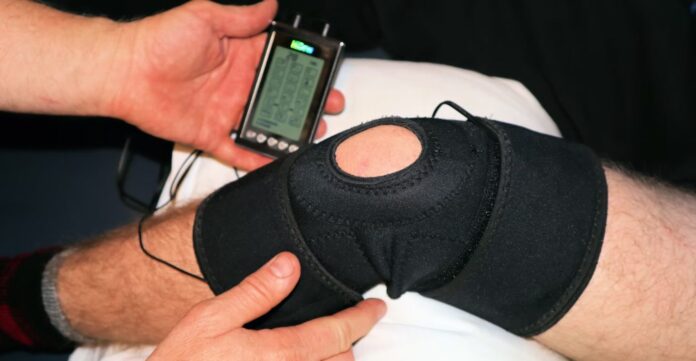
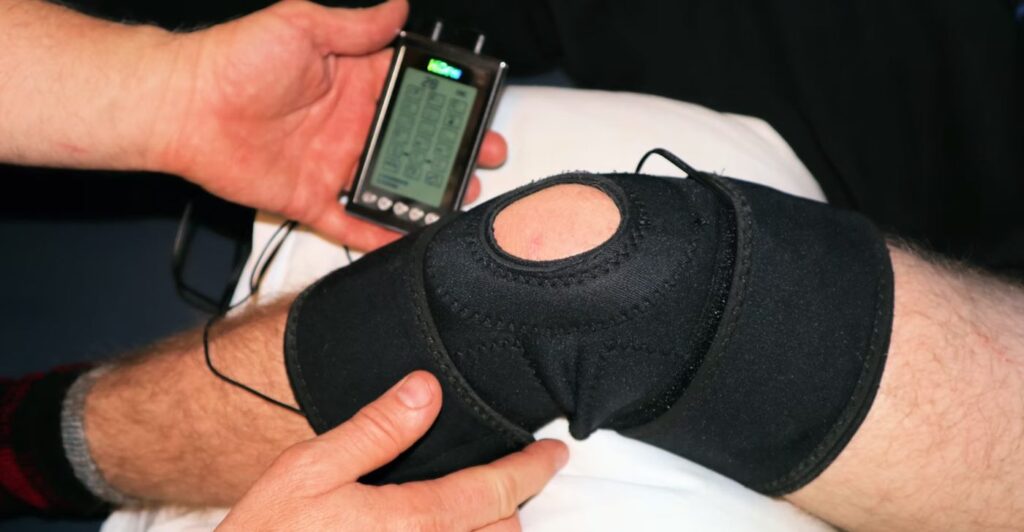
It wasn’t all smooth sailing, and like so many heavy lifters he had problems with his knees.
“When I flexed it a certain way, the tissue would go in between my knee, and you can imagine what that does, I was on crutches for awhile,” says Palen. “Eventually that went away, and my knees have returned and that’s why I immediately went back to heavy squats in my late 70s.”
“My legs are still what they used to be, I like to think. They [doctors] told me eventually when you get old…and that’s why I don’t let myself get old—you’re going to feel like you’ve got problems, but I still have that strength. I still ski.”
There’s truth in Mike’s iron-headedness. Intense exercise stimulates the production of chemicals in the brain, such as brain-derived neurotrophic factor, which promotes neuroplasticity—the speed which the brain can create new connections, and neurogenesis—the creation of new neurons.
Perhaps more important than a muscular physique, weightlifting helps maintain bone density, which begins to decline at a relatively early age, and accelerates in one’s silver years. Bone density loss is a leading factor of morbidity, and is why something like a fall can be so dangerous for a senior, when for a younger person it’s pretty harmless.
SilverSneakers offers virtual classes at pretty much every fitness level, and access to 22,000 fitness centers across the country.
“Our whole mission is to help older adults live happier, healthier lives, and the classes promote physical activity social connection and mental enrichment,” said Debbie Jacobson, from SilverSneakers. “Not everybody’s Mike, not everybody can do what he’s doing, but we have classes for all levels.”
“I’m a member of SilverSneakers and I have to say honestly, it should be offered to everybody that’s getting old, because it keeps us off the insurance liability!” adds Mike. “Better health, maintained, is better than the alternative, it puts us on a different course.”
It’s not only seniors he wants to inspire, he left GNN with a message for the youth as well.
“Time flies by so fast, and before you know it you’re 80. [Let] an exercise of your choice be your vehicle to good health. If for some reason you quit always return as soon as possible.”
GOOD News Never Ages—Share Mike’s Story With Mates…
There is no link between exercise and developing arthritis in the knee, according to new research from the University of Oxford.
Terry Shultz
In the UK approximately one in 10 adults have symptomatic clinically-diagnosed osteoarthritis, the knee being the most common.
A meta-analysis of six global studies of more than 5,000 participants—with and without knee osteoarthritis—were followed for 5-12 years. It showed that for these adults, over 45 years old, recreational activities are mostly free of risk.
While this study found that recreational exercise like running, cycling or swimming or sport has little to no impact on the knee, any occupation that involves heavy physical work load, kneeling, whole body vibration and repetitive movements is still risky.
The Oxford researchers said this was the first study which assessed the relationship between examining physical exercise and looking at calories burned during the activity and knee osteoarthritis.
Osteoarthritis is more common in women and people in older age groups, with obesity also being another common risk factor.
Dr Thomas Perry, of the University of Oxford, said, “These findings suggest that physical activity as defined by whole-body, physiological energy expenditure during sport/walking/cycling activities is not associated with knee osteoarthritis.
“Likewise, time spent in recreational physical activity is not associated with incident knee osteoarthritis.
“Knowing that the amount of physical activity and time spent doing it is not associated with the development of knee osteoarthritis is important evidence for both clinicians and the public who may need to consider this when prescribing physical activity for health.”
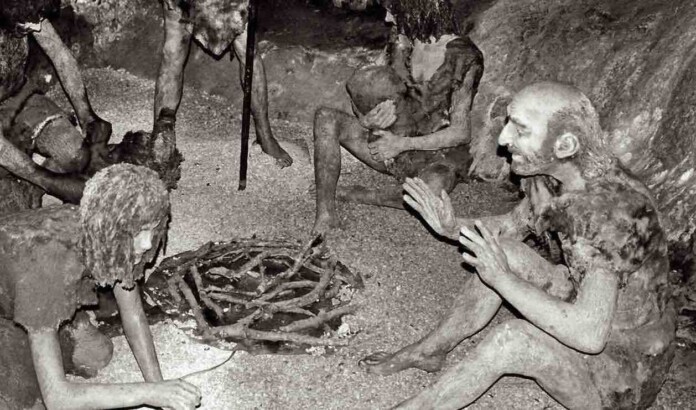
Neanderthals museum exhibit by Yuliya S. / CC license (black and white)
As it turns out, the Out of Africa walk our human ancestors took left behind not one, not two, but three ex-fiancés in the process—the third of which represents a species science has never seen before.
This so-called “Ghost Ancestor” is the focus of a new dimension of early hominid research, created using the help of artificial intelligence and the fibula of a 13-year old girl who lived 50,000 years ago whose mom was a Denisovan and whose dad was a Neanderthal.
Using a deep learning algorithm called Bayesian Inference, geneticists were able to parse out that present in the large cross-continental variety of the human genome—derived from multiple gene projects—was an early ancestor from a lineage that is totally different from anything we’ve seen before. It indicated that the puzzle of human evolution is far from being solved.
“About 80,000 years ago, the so-called Out of Africa occurred, when part of the human population, which already consisted of modern humans, abandoned the African continent and migrated to other continents, giving rise to all the current populations,” said Jaume Bertranpetit from the Universitat Pompeu Fabra in Spain, who later added that we know homo sapiens interbred with both Denisovans and Neanderthals.
“As it happens, if you subtract the Neanderthal and Denisovan parts, there is still something in the genome that is highly divergent,” she said.
“This population is either related to the Neanderthal-Denisova clade or diverged early from the Denisova lineage,” the researchers wrote in their paper, published in Nature, adding that it was probably a descendant mixture of the two that had a long independent history.
A Harvard geneticist, David Reich, described the 2018 paper of the 13-year-old teenager as a breakthrough, and that it represented a definite third inter-breeding event which happened at some point in South Asia.
The remains of the teen girl from over 50,000 years ago “with strange uniqueness” that seemed to be a ‘hybrid’ ancestor was a clue to mating dalliances on the road out of the African continent millennia ago.
It is the first time that deep learning has been used successfully to explain human history, paving the way for this technology to be applied in other questions in biology, genomics, and evolution.
Reich added that he would not be surprised to see more ghost ancestors show up in future studies.
EVOLVE Those News Feeds By Adding This Fascinating Finding to Them…
Quote of the Day: “There are two paths you can go by, but in the long run, there’s still time to change the road you’re on.” – Stairway To Heaven – lyrics by Robert Plant (released 50 years ago today on Led Zeppelin’s fourth album)
With a new inspirational quote every day, atop the perfect photo—collected and archived on our Quotes page—why not bookmark GNN.org for a daily uplift?
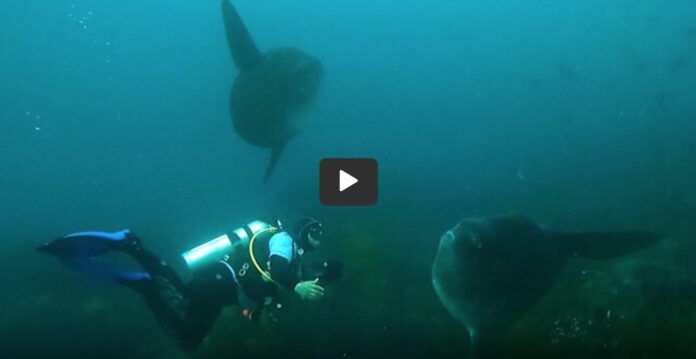
This scuba diver cannot contain his joy when he finds himself among some of the world’s most elusive and unusual fish.
These ocean sunfish are commonly called Mola Mola. They resemble giant heads with fins, as they have no tails.
They drift slowly on the current, although they are capable of impressive speeds for very short distances to avoid predators.
Small Mola Mola are often prey to a variety of sharks, tuna, sea lions, and many types of large fish, but once they reach full size, their thick skin makes them difficult to eat.
Mola Mola can reach sizes of over 10 feet in length and a mass of more than 5,000lbs (2300kg). Once they reach this size, only orcas, large sharks, and sea lions pose a threat to them.
They often seek food at deeper temperatures which causes them to lose a significant amount of body heat. It is believed that this why they can often be seen lying flat on the surface, basking in the sun.
Mola Mola lay more eggs than any other fish, with a mature female laying as many as 300,000,000 at one time.
These fish are a rare sight for scuba divers and this man was thrilled to be swimming among a group of these strange animals which seemed unconcerned with his presence around the remote islands of the Galapagos in Ecuador.
SHARE the Fun Animal Facts With Your School of Friends on Social Media…
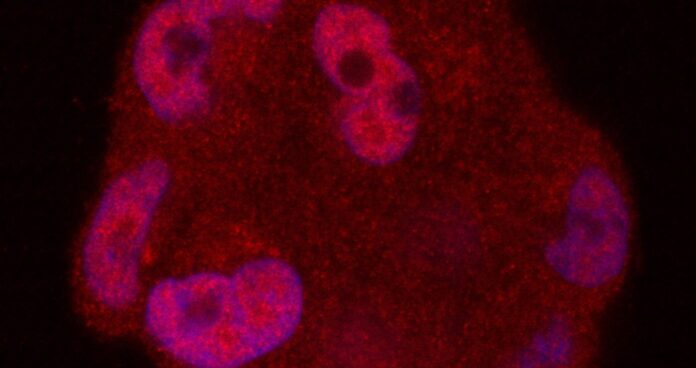
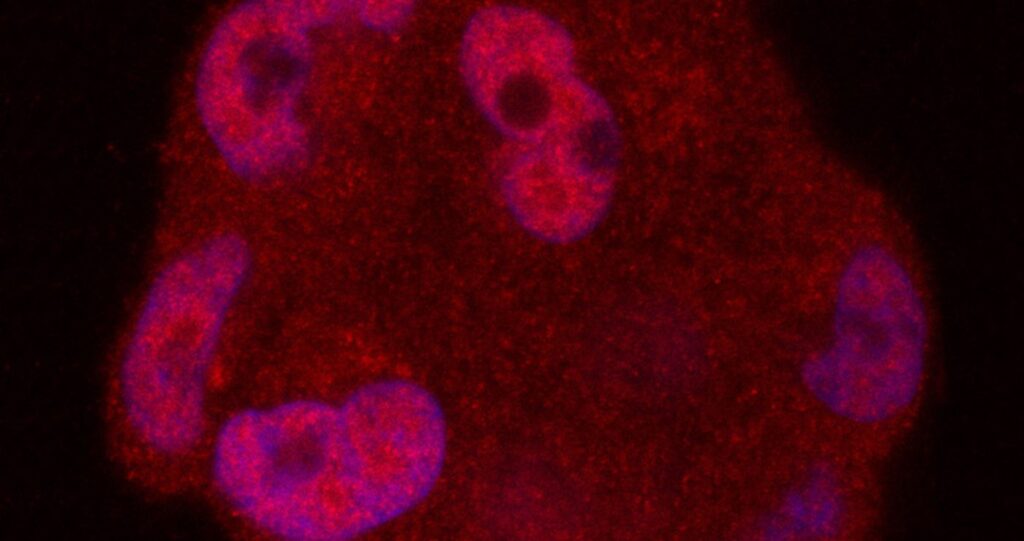
The androgen receptor shown in dark red – University School of Medicine in St Louis
Many patients with prostate cancer are treated with drugs to which they quickly develop resistance.
Now, a new study from Washington University School of Medicine in St. Louis has identified an RNA molecule that suppresses prostate tumors.
The scientists found that prostate cancers develop ways to shut down this RNA molecule to allow themselves to grow. However, when they implanted mice with human prostate tumor samples, the new treatment restored this so-called long noncoding RNA—and they’ve hailed it as a new strategy to treat the cancer which has developed resistance to hormonal therapies.
“The drugs that we have to treat prostate cancer are effective initially, but most patients start developing resistance, and the drugs usually stop working after a year or two,” said senior author Nupam P. Mahajan, PhD, a professor of surgery.
“At that point, the options available for these patients are very limited. We are interested in developing new therapies for patients who have developed resistance—and we believe the RNA molecule we’ve pinpointed may lead to an effective approach.”
About one in eight men will get prostate cancer—making it the most common male cancer. It mainly affects people over age 50.
The key protein that drives prostate tumor growth, the androgen receptor, binds to testosterone and stimulates cancer growth. Studying the stretch of DNA that codes for the androgen receptor, the researchers discovered that a section of the DNA molecule next to the androgen receptor produced a molecule called a long noncoding RNA. They found that this long noncoding RNA plays a key role in regulating the androgen receptor and vice versa. Because of its position next to the androgen receptor in the genome, the researchers dubbed it NXTAR (next to androgen receptor).
The androgen receptor shown in dark red – University School of Medicine in St Louis
“In prostate cancer, the androgen receptor is very clever,” said Mahajan, who is also a research member of Siteman Cancer Center at Barnes-Jewish Hospital and Washington University School of Medicine.
“Our research shows that it suppresses its own suppressor; essentially it binds to NXTAR and shuts it down. This means that in all the prostate cancer samples that we study, we rarely find NXTAR, because it is suppressed by the heavy presence of the androgen receptor in these types of tumors. We discovered NXTAR by using a drug that my lab developed that suppresses the androgen receptor. When the androgen receptor is suppressed, NXTAR starts to appear. When we saw this, we suspected that we had discovered a tumor suppressor.”
The drug, called (R)-9b, was developed to attack a different aspect of prostate cancer biology, knocking down expression of the androgen receptor overall rather than just blocking its ability to bind to testosterone or reducing overall testosterone levels in the body, as currently approved drugs do. But in this study, (R)-9b ended up serving as a tool to reveal the presence and role of NXTAR.
In the study, published Nov. 5 in Cancer Research, a journal of the American Association for Cancer Research, the researchers showed that restoring NXTAR expression caused the tumors to shrink. They also showed that they didn’t need the entire long noncoding RNA to achieve this effect. One small, key section of the NXTAR molecule is sufficient for shutting down the androgen receptor.
“We are hoping to develop both this (R)-9b drug and NXTAR into new therapies for prostate cancer patients who have developed resistance to the front-line treatments,” Mahajan said. “One possible strategy is to encapsulate the small molecule drug and the key piece of NXTAR into nanoparticles, perhaps into the same nanoparticle, and shut down the androgen receptor in two different ways.”
The (R)-9b inhibitor has been licensed to a biotechnology startup company called TechnoGenesys. Mahajan and co-author Kiran Mahajan are co-founders of the company and have applied for a patent.
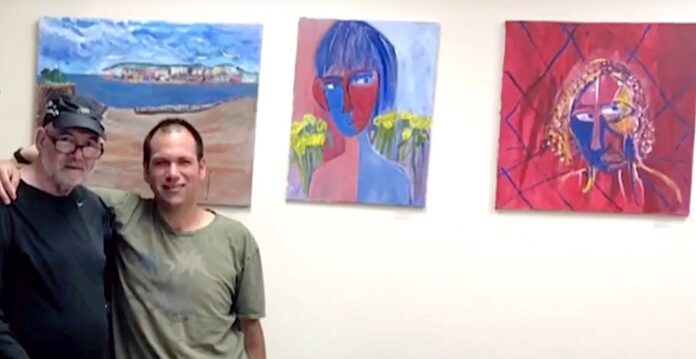
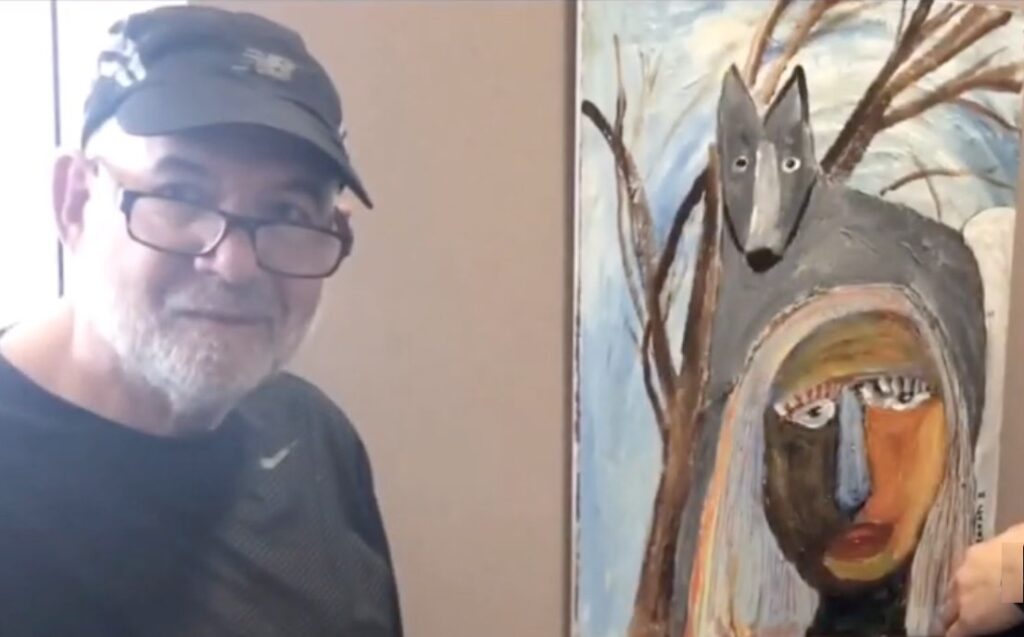
13 years ago, after being diagnosed with Parkinson’s disease, a 65-year-old military veteran and social worker, decided he would turn his dark diagnosis into a positive opportunity to fulfill a lifelong dream.
Now, Norman Greenstein is known as ‘The Parkinson’s Painter’.
In high school he was a prolific doodler, but the dean of an art school told him he would never make it as an artist.
“I showed him my work and he said, ‘The problem with modern art is you can spit on a canvas and call it art’—that’s what he thought of my artwork, so I didn’t do it.”
Norman put his dream aside, and supported his wife and three children with devotion.
He flirted with his passion over the years, but ‘reality’ and responsibilities always overtook his longing for creative expression.
After Norman was diagnosed with Parkinson’s, he talked to his son about finally embarking aboard life as a painter.
“My father has continued to fight through the burdens and struggles of his afflictions in order to continue to paint,” his son Gabe Greenstein told GNN.
“Inspired by this, my brother, Steven, and I, started what would become a project involving our whole family, in order to help spread awareness of our father’s work, his experience, and his mission to help others with Parkinson’s.”
In 2018, Norman, who lives in Hartford, Connecticut, began selling his first paintings, with galleries exhibiting his work.
The team is also working on releasing Norm’s first digital NFT art collection. 20% of all sales is being donated to two Parkinson’s research foundations.
Watch the video segment from the TODAY show below—and see more of his artwork at ParkinsonsPainter.com.
MULTIPLY the Good by Sharing the Inspiring Story on Social Media…
Quote of the Day: “The cave you fear to enter holds the treasure you seek.” – Joseph Campbell
Photo: by Nicolas Häns
With a new inspirational quote every day, atop the perfect photo—collected and archived on our Quotes page—why not bookmark GNN.org for a daily uplift?
Michelle Valberg / for Raincoast Conservation Foundation
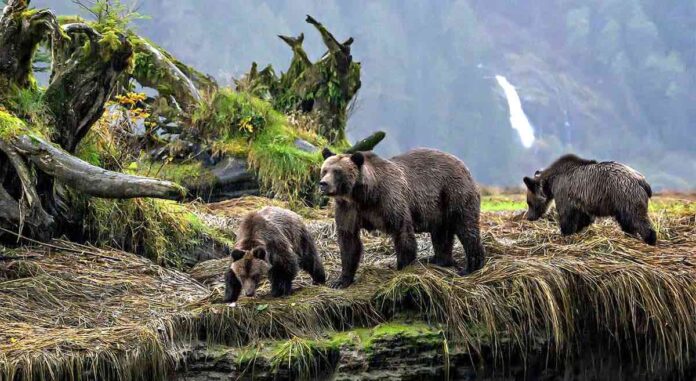
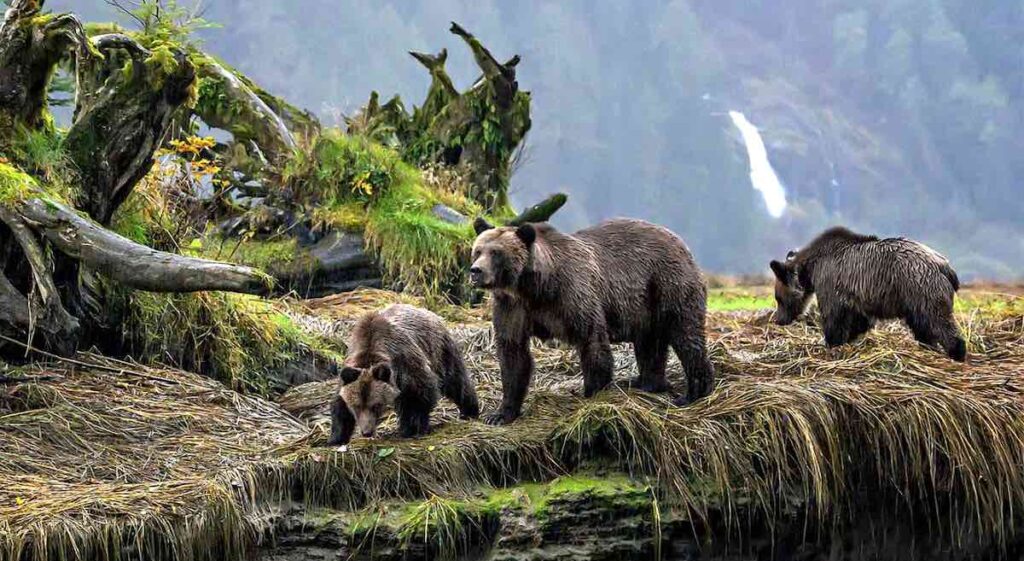
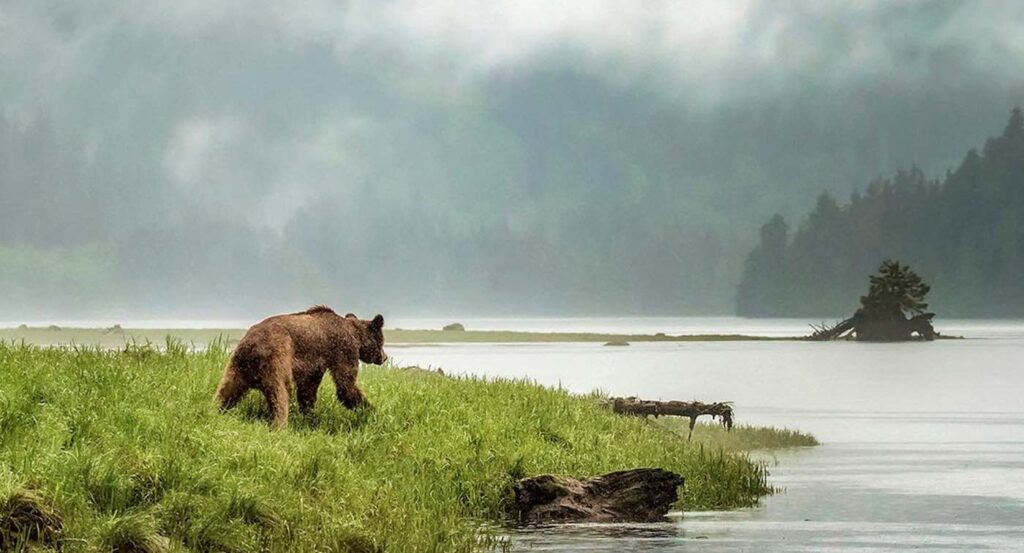
Indigenous humans living along the west coast in British Columbia have been culturally connected to grizzly bears for millennia, sharing the same dense forests of Canada.
Michelle Valberg / for Raincoast Conservation Foundation
Now research reveals the grizzlies here belong to three distinct genetic groups—and they align strikingly well with the three local Indigenous language families.
From a collaboration of First Nations with scientists at the University of Victoria and the Raincoast Conservation Foundation a newly identified link emerged in this relationships between grizzlies and the Tsimshian, Northern Wakashan, and Salishan Nuxalk peoples.
The explanation the partnership favors is that the landscape has shaped bears and humans in similar ways.
How exactly the three areas differ—likely in constraints and opportunities for foods and movement—remains a mystery. However, we do know that bears and people have long shared resources and space on this landscape, emphasizing the potential for a parallel response to variation in these resources that reflects this long-term relationship.
The striking finding was as unexpected as it was surprising.
“The study was originally motivated towards understanding if genetic discontinuity might exist across the landscape, an important consideration in management,” offered Lauren Henson, Raincoast Fellow and PhD student at UVic.
Henson used bear hair samples that researchers had collected over the course of 11 years, according to Science.org, which reported that the group collected samples from 147 bears over 23,500 square kilometers—an area roughly the size of Vermont.
“Grizzly bears sampled within an area represented by a given language family were significantly similar to those sampled within that language family and significantly divergent to those sampled outside the language family. This spatial co-occurrence suggests that grizzly bear and human groups have been shaped by the landscape in similar ways, creating a convergence of grizzly bear genetic and human linguistic diversity.”
Michelle Valberg for Raincoast Conservation Foundation
But, don’t assume that “shaped by the landscape” refers to rivers, or obvious physical barriers that would keep them apart—because there were none. The genetic groupings didn’t fall in areas bordered by waterways or rugged peaks.
Henson infers that the bears remain genetically distinct not because travel is restricted, but because the region is so bountiful (with an unending supply of salmon, for instance) that they never needed to stray to meet their needs.
Most important to modern conservationists, the geographic configuration of the genetic groups does not align with how grizzlies are currently spatially managed by the local provincial government.
For William Housty, of the Heiltsuk Integrated Resource Management Department and co-author, results like these highlight the importance of locally-led monitoring for management.
“Our investments in research across our territories allow us to make informed management decisions that draw not only from our own knowledge, but also new scientific evidence like this,” said Housty.
Send the Fascinating News to Your Tribe on Social Media…
FREE WILL ASTROLOGY – Week beginning November 5, 2021
Copyright by Rob Brezsny, FreeWillAstrology.com
SCORPIO (Oct. 23-Nov. 21):
To encourage young people to come to its shows, the English National Opera has offered a lot of cheap tickets. Here’s another incentive: Actors sing in English, not Italian or French or German. Maybe most enticing for audiences is that they are encouraged to boo the villains. The intention is to make attendees feel relaxed and free to express themselves. I’d love to give you Scorpios permission to boo the bad guys in your life during the coming weeks. In fact, I would love it if you were extra eloquent and energetic about showing your true feelings. In my view, this is prime time for you to show the world exactly who you are.
SAGITTARIUS (Nov. 22-Dec. 21):
“If we’re not careful, we are apt to grant ultimate value to something we’ve just made up in our heads,” said Zen priest Kosho Uchiyama. In my opinion, that’s a problem all of us should always be alert for. As I survey my own past, I’m embarrassed and amused as I remember the countless times I committed this faux pas. For instance, during one six-month period, I devoted myself to courting a woman who had zero interest in a romantic relationship with me. I bring this to your attention, Sagittarius, because I’m concerned that right now, you’re more susceptible than usual to making this mistake. But since I’ve warned you, maybe you’ll avoid it!
CAPRICORN (Dec. 22-Jan. 19):
Capricorn author Asha Sanaker writes, “There is a running joke about us Capricorns that we age backwards. Having been born as burdened, cranky old people, we become lighter and more joyful as we age because we have gained so much practice in wielding responsibility. And in this way we learn, over time, about what are our proper burdens to carry—and what are not. We develop clear boundaries around how to hold our obligations with grace.” Sanaker’s thoughts will serve as an excellent meditation for you in the coming weeks. You’re entering into a ripe new phase of embodying the skills she articulates.
AQUARIUS (Jan. 20-Feb. 18):
As author Denise Linn reminded us, “The way you treat yourself sends a very clear message to others about how they should treat you.” With that advice as your inspiration, I will ask you to deepen your devotion to self-care in the coming weeks. I will encourage you to shower yourself with more tenderness and generosity than you have ever done in your life. I will also urge you to make sure these efforts are apparent to everyone in your life. I am hoping for you to accomplish a permanent upgrade in your love for yourself, which should lead to a similar upgrade in the kindness you receive from others.
PISCES (Feb. 19-March 20):
You have at your disposal a prodigiously potent creative tool: your imagination. If there’s a specific experience or object you want to bring into your world, the first thing you do is visualize it. The practical actions you take to live the life you want to live always refer back to the scenes in your mind’s eye. And so every goal you fulfill, every quest you carry out, every liberation you achieve, begins as an inner vision. Your imagination is the engine of your destiny. It’s the catalyst with which you design your future. I bring these ideas to your attention, dear Pisces, because November is Celebrate Your Imagination month.
ARIES (March 21-April 19):
Are you still hoping to heal from psychological wounds that you rarely speak about? May I suggest that you consider speaking about them in the coming weeks? Not to just anyone and everyone, of course, but rather to allies who might be able to help you generate at least a partial remedy. The moment is ripe, in my opinion: Now is a favorable time for you to become more actively involved in seeking cures, fixes, and solace. Life will be more responsive than usual to such efforts.
TAURUS (April 20-May 20):
“The delights of self-discovery are always available,” writes author Gail Sheehy. I will add that those delights will be especially available for you in the next few weeks. In my view, you’re in a phase of super-learning about yourself. You will attract help and support if you make it your quest to explore mysteries that have eluded your understanding. Have fun surprising and entertaining yourself, Taurus Make it your goal to catch a new glimpse of your hidden depths every day.
GEMINI (May 21-June 20):
Gemini novelist and philosopher Muriel Barbery says, “I find this a fascinating phenomenon: the ability we have to manipulate ourselves so that the foundation of our beliefs is never shaken.” In the coming weeks, I hope you will overcome any tendency you have to manipulate yourself in such a way. In my view, it’s crucial for your mental and spiritual health that you at least question your belief system—and perhaps even risk shaking its foundation. Don’t worry: Even if doing so ushers in a period of uncertainty, you’ll be much stronger for it in the long run. New, more robust and complete beliefs are on the way.
CANCER (June 21-July 22):
In her book Mathilda, Frankenstein novelist Mary Shelley (1797–1851) has the main character ask, “What had I to love?” And the answer? “Oh, many things: there was the moonshine, and the bright stars; the breezes and the refreshing rains; there was the whole earth and the sky that covers it.” I bring this to your attention in the hope of inspiring you to make your own tally of all the wonders you love. I trust your inventory will be at least ten times as long as Mathilda’s. Now is a favorable time for you to gather all the healing that can come from feeling waves of gratitude, even adoration, for the people, animals, experiences, situations, and places that rouse your interest and affection and devotion.
LEO (July 23-Aug. 22):
Our memories are always changing. Whenever we call up a specific remembrance, it’s different from the last time we visited that same remembrance—colored by all the new memories we have accumulated in the meantime. Over time, an event we recall from when we were ten years old has gone through a great deal of shape-shifting in our memory—so much so that it may have little resemblance to the first time we remembered it. Is this a thing to be mourned or celebrated? Maybe some of both. Right now, though, it’s to be celebrated. You have extra power to declare your independence from any memories that don’t make you feel good. Why hold onto them if you can’t even be sure they’re accurate?
VIRGO (Aug. 23-Sept. 22):
In 1962, astronaut John Glenn became the first American to orbit the Earth in a spacecraft. His flight happened to be the first time that NASA, the agency in charge of spaceflight, had ever used electronic computers. Glenn, who was also an engineer, wanted the very best person to verify the calculations, and that was Virgo mathematician Katherine Johnson. In fact, Glenn said he wouldn’t fly without her involvement. I bring this to your attention, Virgo, because I believe the coming months will be a favorable time for you to garner the respect and rewards that Katherine Johnson got from John Glenn. Make sure everyone who needs to know does indeed know about your special aptitudes and skills.
LIBRA (Sept. 23-Oct. 22):
According to an Apache proverb, “It is better to have less thunder in the mouth and more lightning in the hand.” If you act on that counsel in the coming weeks, you will succeed in doing what needs to be done. There is only one potential downfall you could be susceptible to, in my view, and that is talking and thinking too much about the matter you want to accomplish before you actually take action to accomplish it. All the power you need will arise as you resolutely wield the lightning in your hands.
WANT MORE? Listen to Rob’s EXPANDED AUDIO HOROSCOPES, 4-5 minute meditations on the current state of your destiny — or subscribe to his unique daily text message service at: RealAstrology.com
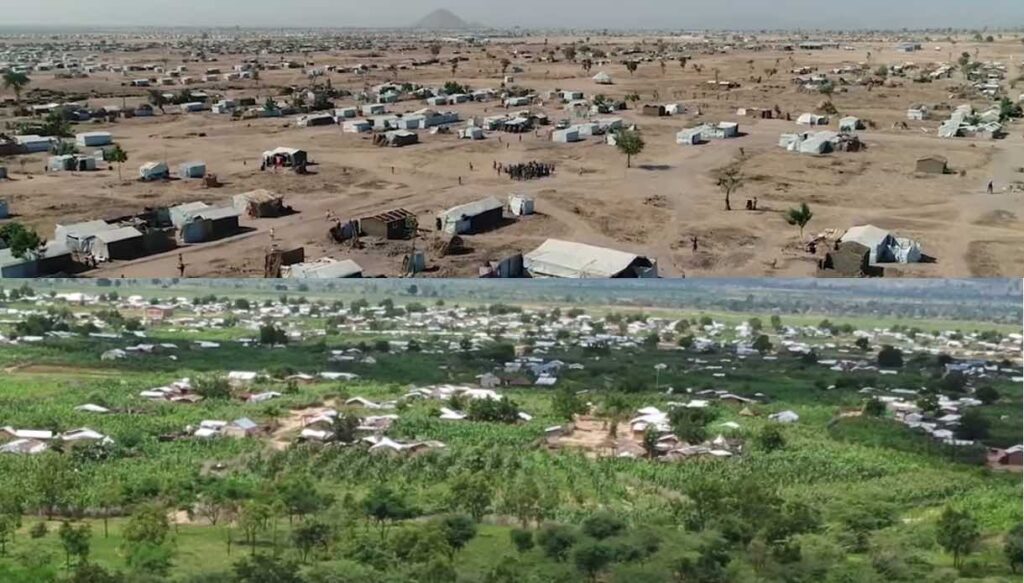
What once was brown now has turned green, thanks to a special collaboration between the Dutch Lottery, the UN, and a group of humanitarian Lutherans.
In 2014, Minawao began hosting at least 60,000 refugees in Cameroon who fled violence linked to the Boko Haram insurgency in neighboring Nigeria. An arid region already dusty brown, the refugees’ arrival accelerated the desertification process as they cut down all the surrounding trees for firewood and cooking.
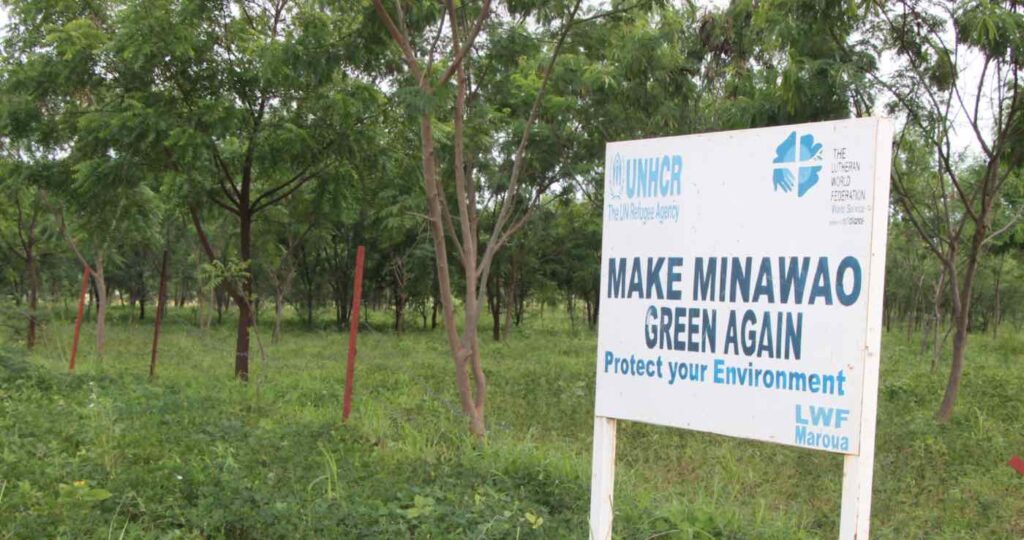
But, in a few years, the Lutheran World Federation (LWF) and the United Nations Refugee Agency (UNHCR) were able to empower the refugees to transform the region into a thriving young forest.
In this very harsh climate, rivers dry up during the summer months and planting and harvesting is difficult. Already, 95% of the people living in this far north region cooked and heated with firewood—additionally, the refugee camp grew to become its own city needing its own supplies.
Before the Nigerians arrived, the local population had enough firewood and “you couldn’t see anyone within 100 meters”. After their arrival, the environment was destroyed and became “treeless for miles,” said Boubakar Ousmary, who governs the canton bordering the camp.
The price of wood rose considerably, causing community conflicts. Faced with this ecological and human disaster, UNHCR and LWF launched its unique program in 2017 that would reverse deforestation and tackle the problem from two ends, including the promotion of renewable energies.
Now the communities are working together, to restore and protect the environment.
Minawao camp project-by Lutheran World Federation / N. Toukap Justin
“Everywhere we look is green now,” says Luka Isaac, president of the Nigerian refugees in Minawao. “The trees have grown, we have shade and we will have enough trees to make our environment beautiful and healthy. Before, the air was very dusty. Now the air we breathe is very good.”
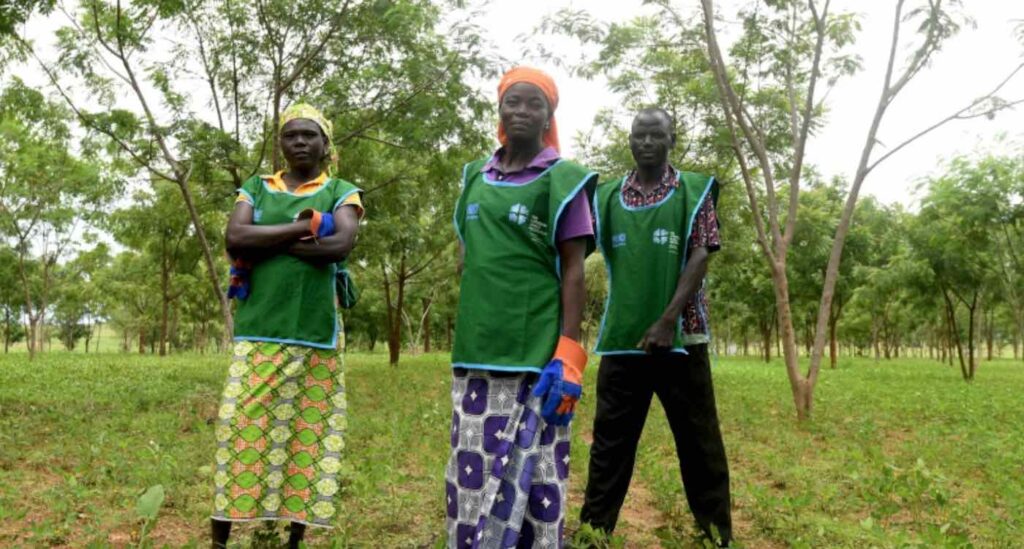
LWF grows fruit trees in nurseries, with the help of refugee volunteers, then distributes the saplings to the camp administrators, schools, mosques, churches, and households.
Refugees received training on how to use “cocoon technology”, developed by Land Life Company, to give seedlings the best chance of survival in the harsh environment. It involves burying a doughnut-shaped water tank made from recycled cartons that surrounds the plant’s roots and feeds it using a string that connects to the young shoot.
Now, four years later, 360,000 seedlings have been grown in the nursery on the outskirts of the camp—and planted throughout 294 acres (119 hectares). And, they are recording 90% survival rates.
Fruit trees, acacias, cashews, or moringas will provide fruit, medicine and much more. A five-year planting and harvest cycle ensures material for firewood, as well as vines for the construction of roofs. After three years, some trees are big enough to be pruned for firewood.
The trees also break the wind, reduce erosion, and provide shade—enough for families to grow crops, something that was not possible previously.
“The trees bring us a lot,” Nigerian refugee Lydia Yacoubou told UNHCR. “First, they provide the shade necessary to grow food. Then, the dead leaves and branches can be turned into a fertilizer for cultivating. Finally, the forest attracts and retains water. Rainfall has even increased.”
At the same time, the project is providing new livelihoods, while cutting carbon emissions from the burning of wood.
Alternative energy empowers women and girls
To make sure the new forest is not cut down immediately, the production of energy-efficient stoves was launched, along with two centers for ‘ecological charcoal’ production.
The households in the camp send their waste from crops to the charcoal center where it is sorted, dried, carbonized, and compacted into briquettes by trained refugees, which are then used in specially adapted cook stoves. LWF says it has trained more than 5,500 households in the production of ecological charcoal and has distributed a whopping 11,500 energy-efficient stoves.
300 people are employed in the production of charcoal and stoves, the majority of them women. Having their own income has empowered them and improved their positions in the families. Since charcoal became the main source for fuel, young girls have more time available to study for school.
Fibi Ibrahim, a refugee and mother of five who has lived in Minawao since 2016, is one of the workers.
“The money I make selling charcoal briquettes allows me to buy soap, seasoning, and meat to supplement the family’s rations,” says Fibi. “I hope that soon, when I have saved enough money, I can start my own shop in the camp and fully meet the needs my household.”
Funded by a $2.7 million donation from the Dutch Postcode Lottery, the Cameroon program is part of the Great Green Wall initiative that aims to grow an 8,000-kilometre swath of vegetation and trees to combat desertification and drought along the border of the Sahara.
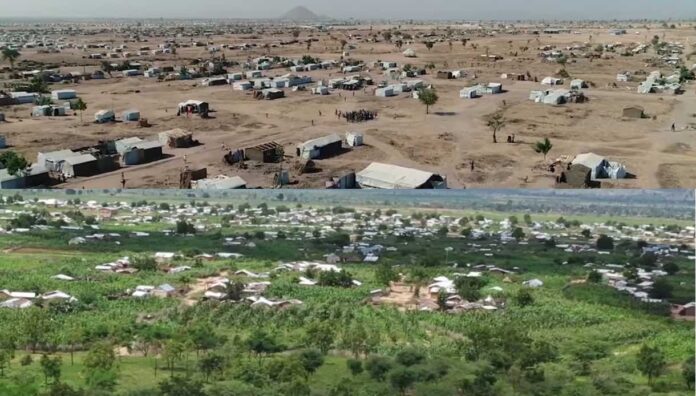
Seen from the sky, the evolution of the site in a few years is striking. Video footage shot in 2018 showed vast stretches of sand surrounding buildings and shelters. Now the land is covered with vegetation.
Watch the video from Reuters below…
GROW This Good News By Planting it on Social Media…