











All News - Page 486 of 1736 - Good News Network
Home Blog Page 486

This Week’s Inspiring Horoscopes From Rob Brezsny’s ‘Free Will Astrology’

Our partner Rob Brezsny provides his weekly wisdom to enlighten our thinking and motivate our mood. Rob’s Free Will Astrology, is a syndicated weekly column appearing in over a hundred publications. He is also the author of Pronoia Is the Antidote for Paranoia: How All of Creation Is Conspiring To Shower You with Blessings. (A free preview of the book is available here.)

Here is your weekly horoscope…

FREE WILL ASTROLOGY – Week beginning May 27, 2021
Copyright by Rob Brezsny, FreeWillAstrology.com

GEMINI (May 21-June 20):
A blogger named Valentine Cassius reports, “A tiny old woman came into the deli where I work and ordered a ‘wonderful turkey sandwich.’ When asked what she wanted on the sandwich other than turkey, she said ‘all of your most wonderful toppings.’“ Here’s my response to that: The tiny old woman’s approach usually isn’t very effective. It’s almost always preferable to be very specific in knowing what you want and asking for it. But given the current astrological omens, I’ll make an exception for you in the next three weeks. I think you should be like the tiny old woman: Ask life, fate, people, spirits, and gods to bring you all of their most wonderful toppings.

CANCER (June 21-July 22):
“I am tired of trying to hold things together that cannot be held,” testifies Cancerian novelist Erin Morgenstern. “Tired of trying to control what cannot be controlled.” Here’s good news for her and all Cancerians. You have cosmic permission to surrender—to no longer try to hold things together that can’t be held or try to control what can’t be controlled. Maybe in a few weeks you will have gained so much relaxed new wisdom that you’ll be inspired to make fresh attempts at holding together and controlling. But that’s not for you to worry and wonder about right now. Your assignment is to nurture your psychological and spiritual health by letting go.

LEO (July 23-Aug. 22):
Philosopher Georges Bataille wrote, “The lesson of Wuthering Heights, of Greek tragedy and, ultimately, of all religions, is that there is an instinctive tendency towards divine intoxication which the rational world of calculation cannot bear. This tendency is the opposite of Good. Good is based on common interest, which entails consideration of the future.” I’m going to dissent from Bataille’s view. I agree that we all have an instinctive longing for divine intoxication, but I believe that the rational world needs us to periodically fulfill our longing for divine intoxication. In fact, the rational world grows stale and begins to decay without these interludes. So the truth is that divine intoxication is crucial for the common good. I’m telling you this, Leo, because I think the coming weeks will be a favorable time for you to claim a healthy dose of divine intoxication.

VIRGO (Aug. 23-Sept. 22):
Virgo actor Ingrid Bergman (1915–1982) won the most prestigious awards possible for her work in films, TV, and theater: Oscars, Emmys, and a Tony. She was intelligent, talented, and beautiful. Life was a challenge when she was growing up, though. She testified, “I was the shyest human ever invented, but I had a lion inside me that wouldn’t shut up.” If you have a sleeping lion inside you, Virgo, I expect it to wake up soon. And if your inner lion is already wide awake and you have a decent relationship with it, I suspect it may soon begin to come into its fuller glory.

LIBRA (Sept. 23-Oct. 22):
Libran author Antonio Tabucchi described the frame of mind I recommend for you in the coming days. I hope you’ll be eager to embrace his far-reaching empathy. Like him, I trust you will expand your capacity to regard the whole world as your home. Here’s Tabucchi’s declaration: “Like a blazing comet, I’ve traversed infinite nights, interstellar spaces of the imagination, voluptuousness and fear. I’ve been a man, a woman, an old person, a little girl, I’ve been the crowds on the grand boulevards of the capital cities of the West, I’ve been the serene Buddha of the East. I’ve been the sun and the moon.”

SCORPIO (Oct. 23-Nov. 21):
Author James Frey writes, “I used to think I was tough, but then I realized I wasn’t. I was fragile and I wore thick armor. And I hurt people so they couldn’t hurt me. And I thought that was what being tough was, but it isn’t.” I agree with Frey. The behavior he describes has nothing to do with being tough. So what does? That’s important for you to think about, because the coming weeks will be an excellent time to be tough in the best senses of the word. Here are my definitions: Being tough means never letting people disrespect you or abuse you, even as you cultivate empathy for how wounded everyone is. Being tough means loving yourself with such unconditional grace that you never act unkind out of a neurotic need to over-defend yourself. Being tough means being a compassionate truth-teller.

SAGITTARIUS (Nov. 22-Dec. 21):
Fragile intensity or intense fragility? Ferocious gentleness or gentle ferocity? Vulnerable strength or strong vulnerability? I suspect these will be some of the paradoxical themes with which you’ll be delicately wrestling in the coming days. Other possibilities: sensitive audacity or audacious sensitivity; fluidic fire or fiery fluidity; crazy wisdom or wise craziness; penetrating softness or soft penetration; shaky poise or poised shakiness. My advice is to regard rich complexities like these as blessings, not confusions or inconveniences.

CAPRICORN (Dec. 22-Jan. 19):
Birds that live in cities have come up with an ingenious adaptation. They use humans’ abandoned cigarette butts to build their nests. Somehow they discovered that nicotine is an insectide that dispels pests like fleas, lice, and mites. Given your current astrological aspects, I’m guessing you could make metaphorically comparable adjustments in your own life. Are there ways you could use scraps and discards to your benefit?

AQUARIUS (Jan. 20-Feb. 18):
A blogger named Raven testifies, “My heart is a toddler throwing a tantrum in a store and my brain is the parent who continues to shop.” I’m pleased to inform you, Aquarius, that your heart will NOT act like that toddler in the coming weeks. In fact, I believe your heart will be like a sage elder with growing wisdom in the arts intimacy and tenderness. In my vision of your life, your heart will guide you better than maybe it ever has. Now here’s a message to your brain: Listen to your heart!

PISCES (Feb. 19-March 20):
The Voyager 1 space probe, launched by NASA in 1977, is now more than 14 billion miles from Earth. In contrast, the farthest humans have ever penetrated into the ground is 7.62 miles. It’s the Kola Superdeep Borehole in northwest Russia. Metaphorically speaking, these facts provide an evocative metaphor for the following truth: Most humans feel more confident and expansive about exploring the outer world than their inner realms. But I hope that in the coming weeks you will buck that trend, as you break all previous records for curious and luxurious exploration into your deepest psychic depths.

ARIES (March 21-April 19):
“Open your mouth only if what you are going to say is more beautiful than silence,” declares an Arab proverb. That’s a high standard to aspire to. Even at our very best, when we’re soaring with articulate vitality, it’s hard to be more beautiful than silence for more than, say, 50 percent of the time. But here’s a nice surprise: You could exceed that benchmark during the next three weeks. You’re primed to be extra expressive and interesting. When you speak, you could be more beautiful than silence as much as 80 percent of the time.

TAURUS (April 20-May 20):
Here’s the definition of an emotional support animal: “a companion animal that provides therapeutic benefit to a person with a mental or psychiatric disability.” I don’t mean to be flippant, but I think every one of us has at least one mental or psychiatric disability that would benefit from the company of an emotional support animal. If you were ever going to acquire such an ally, the coming weeks would be prime time to do so. I encourage you to also seek out other kinds of help and guidance and stimulation that you’d benefit from having. It’s the resource-gathering phase of your cycle. (PS: Cesar Chavez said: “You are never strong enough that you don’t need help.”)

WANT MORE? Listen to Rob’s EXPANDED AUDIO HOROSCOPES, 4-5 minute meditations on the current state of your destiny — or subscribe to his unique daily text message service at: RealAstrology.com

(Zodiac images by Numerologysign.com, CC license)

SHARE The Wisdom With Friends Who Are Stars in Your Life on Social Media…

Good Deed Takes Flight at Airport as Man Buys Ticket For Someone Desperate to Get Home

File Photo by Bidgee, CC

This blog was submitted to GNN by one of our readers for publishing. If you have an interesting story of kindness or positivity, be sure and send it to us for review.

My wife came home from work yesterday and shared a very heartwarming story that one of her office colleagues told her about a recent trip to the airport. (Be sure you read to the end!)

File Photo by Bidgee, CC

While he and his wife were waiting in the ticketing line, he overheard a man at the counter trying to get a ticket to Las Vegas. He was having trouble. He only had $150 and that wasn’t enough. The ticketing agent was pretty unhelpful and told him he needed to go online and look for other options.

The man kept trying to explain his situation to her but wasn’t getting anywhere. His English language abilities were limited, so it was difficult for him to communicate. He was becoming increasingly frustrated—and she was becoming increasingly indifferent.

After he finally, despondently, turned away from the counter, my wife’s colleague, Fernando, went up to the man and asked what was up. He speaks Spanish so was able to understand his story.

The man had lost his job here in the San Francisco area, had no place to live, and only $150 in his pocket. He had family who were living in Las Vegas and was trying to get there. He was told he could get a ticket for $150, but told Fernando that he couldn’t read, didn’t have a computer, and didn’t know how to access the internet from the airport—let alone navigate how to purchase a low fare ticket.

LOOK: Instead of Dirty Looks, a Kind Stranger Laid on the Ground to Calm Boy With Autism Amid His Meltdown

Fernando believed him and wanted to help him. They walked back to the counter and Fernando purchased a $330 ticket to Las Vegas for the man.

Fernando didn’t ask for anything and trusted that this guy’s story was true. He followed his heart, because he wanted to help him. And most importantly, he did.

RELATED: As Couple Flies Home With Newly-Adopted Daughter, Strangers on Plane Throw Impromptu Baby Shower

May this incredibly kind gesture from a stranger, who paid attention and cared enough to listen to this man’s story and take some action, be a turning point for him to get back on track.

It was a Good Samaritan helping another who was down on their luck—most likely an immigrant, most definitely a human being—so he might have some safety, better his life, and be with his family.

Not only that, a month later when Fernando’s wife was going through the credit card statement, she saw the charge and asked her husband, “Wasn’t that ticket $240? Why is the bill $330?”

Fernando sheepishly replied, “I upgraded him.”

FLY This Inspiring Story to Your Friends and Family on Facebook…

Young Man With Autism Finds His Jam at Local McDonald’s, Singing Every Order at ‘Best Drive Thru Ever’ –WATCH

Sign photo by Ashley Sicora

A high school graduate is serving up huge smiles with his unique brand of customer service, which includes a musical ditty with every order.

Sign photo by Ashley Sicora

Daniel Marshall’s cheerful singing and joking with customers at the Arden Hills McDonald’s near Minneapolis, Minnesota has earned him five star reviews like, “Best Drive Thru Ever!”

He has been taking center stage at the restaurant for the last year, greeting every drive-thru customer with his vocal talents and good cheer.

He always personalizes his tunes if he knows a customer’s name, or he will just give you a nickname like “Superstar”, “Boss”, or “Captain”.

The owner of the burger establishment recognized Daniel’s infectious personality recently by surprising him with a personal message on the restaurant’s massive sign out front.

“WE ARE LOVING DANIEL!!!!,” read the sign, preceded by Daniel’s signature greeting, “BA, DA, BA, DA, DA.”

WATCH to see Daniel in action, and read more, from KARE-11 News, here… [Note: If you are having technical issues with the video below, see it at the link above.]

RELATED: Incredible Customer Service Note Arrives Next Day After Phone Call

Drive This Over to Cheer-up Your Friends on Social Media…

“As you grow older, you will discover that you have two hands: one for helping yourself, the other for helping others.” – Sam Levenson 

Credit: Lina Trochez

Quote of the Day: “As you grow older, you will discover that you have two hands: one for helping yourself, the other for helping others.” – Sam Levenson

Photo: by Lina Trochez

With a new inspirational quote every day, atop the perfect photo—collected and archived on our Quote of the Day page—why not bookmark GNN.org for a daily uplift?


Judge Gave Drug Dealer a Second Chance. 16 Years Later He Swears Him In As a Lawyer

Edward Martell
Edward Martell

The difference between finding justice and following the letter of the law sometimes takes a simple act of compassion. Where others might have seen an incorrigible offender, one judge saw promise—and following a hunch, he acted on his intuition.

At first glance, Edward Martell, a 27-year-old high school dropout with an extensive arrest record might not have seemed a prime candidate for rehabilitation, but when he was facing a 20-year drug conviction, instead of meting out the maximum sentence, presiding judge Bruce Morrow gave Martell probation—and a challenge.

Morrow told Martell the next time he stepped into the courtroom, he expected him to have made something of himself—something big.

“He said, ‘I challenge you to be a CEO of a Fortune 500 company instead of being out here selling drugs,’” Martell told Deadline Detroit. “And I love a challenge.”

“It was kind of in jest,” Morrow recalled in an interview with The Washington Post, “but he understood I believed he could be anything he wanted to be.”

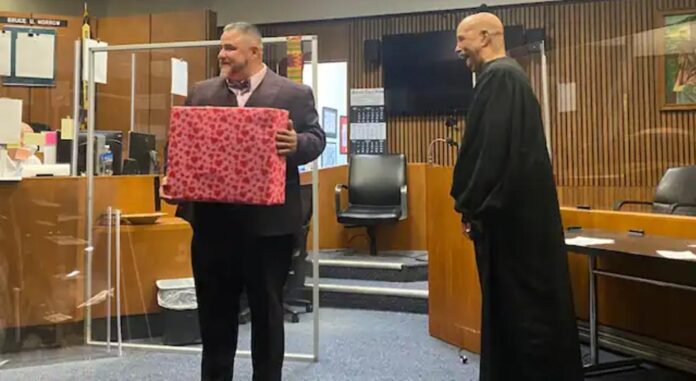
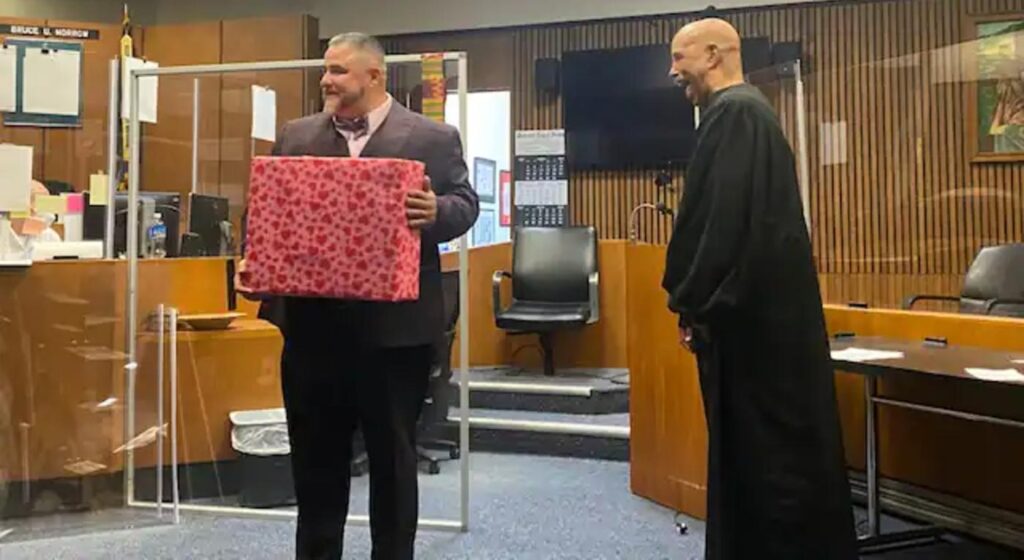
Fast forward 16 years and Martell is standing in front of Judge Morrow again—only this time, he’s being sworn in as an attorney after passing the Michigan state bar. While the outcome is sweet, Martell’s path wasn’t easy or assured.

Since there was a very real possibility that his prior criminal record might scuttle his future plans, as he was completing his GED, Martell’s guidance counselors discouraged him from pursuing a legal career. But he refused to give up.

After obtaining his associate’s degree, Martell went on to score scholarships for both his undergraduate studies and law school. He then clerked at the District of Columbia’s Federal Public Defender’s office, and eventually was hired by the Perkins Law Group as a researcher and writer.

When it came time to take the bar exam, Martell had plenty of supporters in his corner—including Judge Morrow, with whom he’d kept touch over the years.

With the help of his law firm mentors, Martell submitted a 1,200-plus page application detailing the steps he’d taken to turn his life around.

MORE: ‘I’m Not a Cat,’ Lawyer Tells Judge When He Can’t Change The Zoom Filter – Hilarious Video

“The main thing they look for is candor. I let them know I am remorseful—that I’m downright embarrassed,” Martell told WAPO. “I am the same person, but I don’t think like that anymore. I’ve evolved.”

His approval took only 15 minutes. The seeds of a dream he’d planted had finally come to fruition. Martell still has a job with the Perkins Group, only now, he’ll be a practicing attorney rather than a researcher—and all because one man was willing to take a chance and made a challenge Martell couldn’t walk away from.

CHECK OUT: After Illegally Bulldozing Historic London Pub, Developers Were Ordered to Rebuild it ‘Brick by Brick’

“It’s a crazy cliché, but some defendants, that’s what they need,” Morrow told DD. “If you believe like I believe, that there but for the grace of God go you and me… It took some intelligence to get in and out of the kind of trouble he got into. I told him, ‘You could be my son. Let’s see how far you can go.’ And man, he hasn’t finished yet.”

Which is just the kind of sentencing recommendation we could likely use a lot more of these days.

HELP Your Pals’ Be the Judge of the Good News—Share This Story…

Ingenious Musician Turns Rain Drops Into Otherworldly Music – LISTEN

YouTube

Music can be made with all sorts of things—including, it would seem, rain drops.

For today’s moment of Zen, listen to this video. Made in Japan and titled Amaoto No Yurai, it’s beautiful.

After listening, do you find you’re perceiving the world about you differently?

MORE: MIT Scientists Spin Some Music Out of Spider Webs – And it Sounds Otherworldly (Listen)

Do you think you’ll hear the next rainstorm differently—with extra awareness, curiosity, and a sense of play? That’s what the best music does. It moves us, and it binds us quietly to where we are.

(WATCH the video below.)

SHARE Nature’s Percussion Music With Friends…

New Hope as Groundbreaking Cancer Treatment Could Save Child With Extremely Rare Condition

SWNS

A young boy is the first in the world to have a rare form of cancer spreading through his body, but he has a fighting chance thanks to groundbreaking treatment.

SWNS

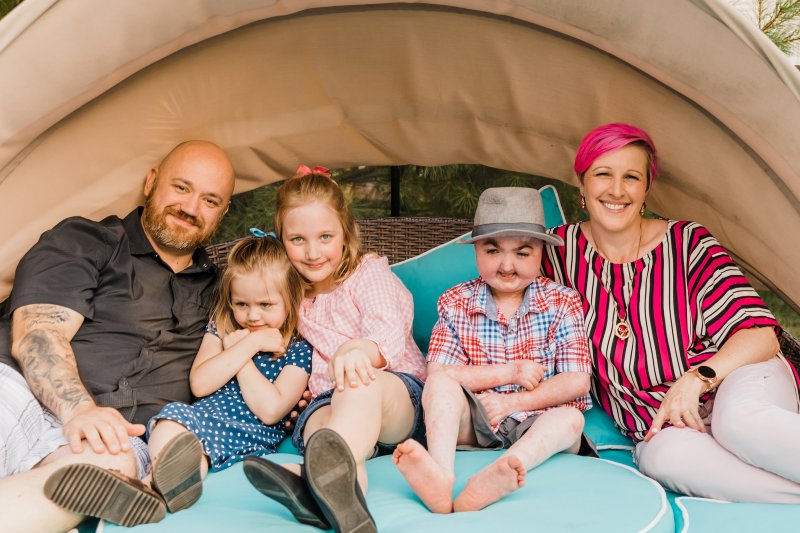
12-year-old Reef Carneson has a life-threatening cancer that’s normally slow to progress, limited to the skin, and seen in adults who have spent years sunbathing without suncream.

He was first diagnosed with advanced cutaneous squamous cell carcinoma (cSCC) in 2015, but a chemotherapy cream seemed to have mostly cured it by 2019.

Sadly, the skin cancer was then found to have spread to his bones and brain in 2020.

Just days after Reef and his family were told to say their goodbyes after it was found the cancer had spread to his lungs, Reef was offered another chance at life with a new treatment.

This therapy has never been used in children anywhere in the world to battle this form of cancer, and Reef’s unusual case makes him the first kid to undergo Cemiplimab—a programed receptor-1(PD-1) blocking antibody, which teaches the patient’s body’s immune system to recognize the cancer cells as not part of them and harmful.

SWNS

MORE: Bus Driver Desperate to See Terminally Ill Mom Stunned by Offers of Help From Community

Reef, who has lived with immunological complications after beating leukemia as a baby, has kept on fighting and his proud mom, Lydia Carneson, said he is responding well to the treatment, which began on May 7.

The mom of three said: “It’s amazing. He is stable and we believe the treatment is working… We feel unbelievably blessed at this time. We believe he is a miracle a thousand times over.”

Reef as a baby, SWNS

In the meantime, Reef has mentioned that he has three wishes: to have a pet duck, to go to the mall, and to go camping.

CHECK OUT: Son Sells Thousands of Cheesesteaks to Give Mom Last Dream Trip to See the Egyptian Pyramids

Now he has two ducks named Donald Duck and Daisy. He’s visited the Metro Centre mall in Newcastle on a VIP experience: Five stores invited him to pick out whatever he’d like, with no budget limit.

“He is so humble that he picked a lot of ducks, sweeties, and balloons,” his mom said.

Here at GNN, we’re wishing Reef and his family a wonderful camping trip as soon as it’s as possibility.

SHARE This Story of Hope and Family Love With Friends…

World’s Tiniest Pig at 10-Inches Tall, Once Thought Extinct, Is Returning to the Wild

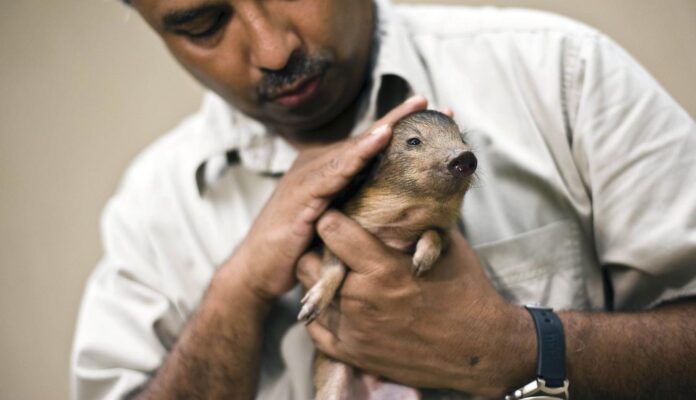
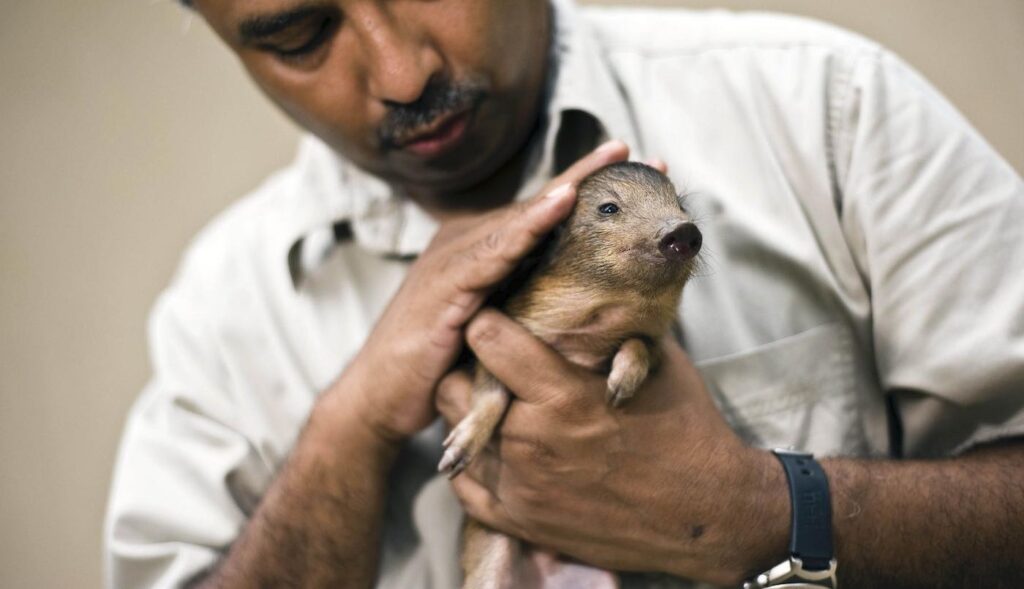
Goutam Narayan, Ph.D., Project Director, Pygmy Hog Conservation Programme holds a one month old Pygmy Hog, weighing around 800gms and measuring about 9 inches, 6th June 2008, Pygmy Hog Conservation Programme (PHCP) Research and Breeding Centre, Basistha, Guwahati, Assam, India. Pygmy Hogs (Porcula salvania) are the worlds smallest and most endangered species of wild pig. At birth they only weigh between 150 and 200g and are about the size of a rat. The Breeding Centre, centre holds the only captive pygmy hogs in the world, 49 adults and around 20 infants. Adults are only 60 to 65 cm in length and 25 cm in height. An adult male weighs 8 to 9 kg. Females are a bit smaller. Compared to a Wild Boar it is about 10-15 times smaller in bulk. Currently, the Pygmy Hogs are found only in the grassland of Manas Tiger Reserve of Assam. In the past they were found in a narrow belt of grassland south of Himalayan foothills in Uttar Pradesh, Nepal, Bihar, north Bengal and Assam. Even till 1990, they were present in a few places outside Manas, such as Barnadi Wildlife Sanctuary, but populations other than those in Manas have all disappeared now. Although accurate numbers are not known it is estimated that there may be only a few hundred, probably less than 500, Pygmy Hogs left in the wild. The World Conservation Union (IUCN) has accorded the highest priority rating (Status Category 6 - Critically Endangered) to the species putting it among the most endangered of all mammals. It is also listed in the Schedule I of the Indian Wildlife (Protection) Act, 1972. PHOTOGRAPH BY SIMON DE TREY-WHITE/ BARCROFT MEDIA LTD + 44 (0) 845 370 2233
Goutam Narayan, Ph.D. holds a one month old Pygmy Hog, SIMON DE TREY-WHITE/BARCROFT MEDIA LTD

Who would imagine that in the habitat of elephants, tigers, and rhinos, the world’s smallest wild hog is the animal that’s determining where the conservation dollars go?

Like the keystone in an arch that holds all the others in place, the endangered pygmy hog of North India is the keystone species of the Terai grasslands, and while those other large mammals can live elsewhere, the hog cannot. Therefore you have a situation where protecting a 10-inch tall pig has the added benefit of protecting the 300-pound tigers and 8-ton elephants.

Presumed extinct until it was discovered in 1971 in the Indian state of Assam by a tea plantation worker, it wasn’t until the 1990s that conservationists began breeding the pygmy hogs in captivity.

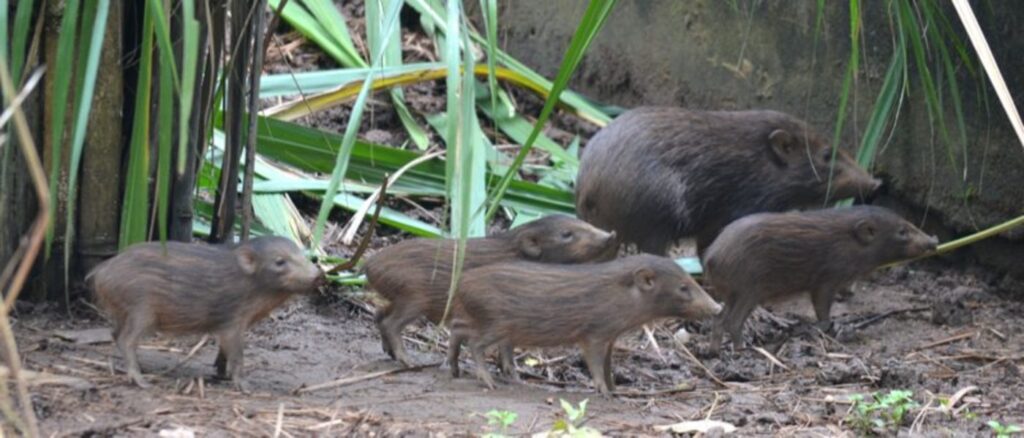
Fortunately the hogs, which represent the last living species in the genus porcula, breed like, well, pigs, and now between 300-400 are roaming the Terai grasslands again—while another 74 stay in captivity awaiting reintroduction.

This is all down to the work of the Pygmy Hog Conservation Program, (PHCP) established in the ’90s by Gerald Durrell of the Durrell Wildlife Conservation Trust.

Pygmy Hog Conservation Program

Between 2008-2020, National Geographic reports, the PHCP released 130 wild hogs into two national parks, Manas and Orang, as well as two wildlife sanctuaries, Barnadi and Sonai Rupai. All four of these are found in the state of Assam, as that’s where the special grassland habitat the pygmy hogs require can be found.

MORE: ‘Huge Surprise’ as Giant River Otter Thought to be Extinct Pops Up in River in Argentina

Grassland ecosystems often contain one or more species that act as regulators or engineers which keep the system healthy. Lemmings or other rodents constantly aerate the soil through the digging, while grazers like bison or wildebeest constantly trim the tall grass species, allowing light to reach the smaller blades.

Pygmy hogs play a role like this in the Terai grasslands. They tear up grasses to make small thatched nests over depressions in the ground, and the trails and corridors they make among the grass stalks help create space for light and for other plant species to grow, not to mention useful ready-made highways for other animals.

RELATED: BREAKING: 100-Year-Old Galápagos Giant Tortoise Found on Fernandina Island is Indeed Member of ‘Extinct’ Species

If the Terai grasslands can be protected from grazing animals and fires, there’s no doubt the hog will become a common sight once again.

(WATCH the Smithsonian video about pygmy hogs below.)

SHARE the Good News From India With Your Pals…

Scientists Partially Restore Vision in Blind Man Using Emerging Technique and Genes from Light-Sensitive Algae

By injecting a Parisian man’s eye with genes from algae that encode for light-sensing proteins, scientists were able to slowly restore the patient’s vision to the point where he could locate, identify, and count objects again.

The treatment is being called a breakthrough in optogenetic therapy, and offers a chance of vision restoration in people with retinitis pigmentosa, the degradation of photoreceptive cells in their eyes.

Found in glowing algae, the protein, called channelrhodopsin ChrimsonR, aids in the flow of ions in and out of the cell after being exposed to light. The application of this protein opens up new possibilities for retinal gene-therapy, as it bypasses the broken photoreceptors typifying retinitis pigmentosa.

Instead, the ChrimsonR genes were targeted for retinal ganglion cells, which are part of the vision equipment responsible for taking information from photoreceptors and relaying them to the optic nerves, and then to the brain where they’re transformed into what we know as sight.

The ganglia were essentially given the job of the photoreceptors, which due to the disease no longer functioned. A pair of purpose-built goggles collected the image of the world and condensed it into a single amber-light spectrum, the one which causes the channelrhodopsin ChrimsonR protein to change shape and send signals to the brain.

MORE: A Single Injection Reverses Blindness in Patient with Rare Genetic Disorder – Another RNA Success

Over months of training, the patient was able to see objects, the white lines on the sidewalk, and more with the help of the goggles—all of which is detailed in the resulting study, published in Nature journal. This doesn’t seem like a particularly advanced treatment, but retinitis pigmentosa has no approved therapy, and is one of the most common causes of blindness in young people.

Further developments in this field could make optogenetic therapy much more futuristic, such as if a gene somewhere in biology could be found that reacted in the same way as ChrimsonR, but towards multiple color spectrums. This would allow a more natural version of sight to be restored.

RELATED: 37 Years Ago She Began Making Braille Children’s Books to Cut the Cost By 90% And Donate Them Worldwide

On the other hand, stem cell methods for restoring photoreceptors have been pioneered in mice and also performed in humans. Sai Chavala, Ph.D. at the Laboratory for Retinal Rehabilitation in the University of North Texas, recently showed that fibroblasts, a type of skin cell, can reprogram themselves into photoreceptors in patients and mice with age-related macular degeneration (MD), a type of progressive blindness that’s so common it’s practically just described as “aging.”

Chavala is gunning for FDA approval of this treatment for rolling back age-related MD in the next 1-2 years.

OPEN Pals’ Eyes to the Good News by Sharing This Story…

“When I first lit the Amnesty candle, I had in mind the old Chinese proverb: ‘Better light a candle than curse the darkness’.” – Peter Benenson (founded Amnesty Intl 60 years ago)

Quote of the Day: “When I first lit the Amnesty candle, I had in mind the old Chinese proverb: ‘Better light a candle than curse the darkness’.” – Peter Benenson (founded Amnesty International 60 years ago today)

Photo: by BBC Creative @bethbapchurch

With a new inspirational quote every day, atop the perfect photo—collected and archived on our Quote of the Day page—why not bookmark GNN.org for a daily uplift?

Shepherd is Hailed As Hero, Braving Freezing Temperatures to Save 6 Runners in Chinese Ultramarathon

Being in the right place at the right time can mean the difference between life and death.

When a freak ice storm felled runners in a 100-kilometer cross-country race in China’s north-western Gansu province, a shepherd named Zhu Keming braved the elements to pull three men and three women to safety.

The day of the race began with mild temperatures. Zhu was tending his flock as usual. Then in the space of a few moments, everything changed.

As temperatures plummeted and freezing sleet and hail began to pound the terrain, Zhu took shelter in a small cave he’d been using for years to store emergency supplies.

It was from this vantage point Zhu noticed one of the runners in obvious distress. The man appeared immobilized, disoriented, and in pain.

MORE: Video Captures Hero Cop Running to Lift Overturned Car Single-handedly to Save Woman

Zhu brought the man back to the cave to warm him up. After lighting a fire, Zhu returned to the mountainside, shepherding five additional runners to the cave. There’s little doubt he saved their lives.

Unprepared for the abrupt shift in the weather, most racers were outfitted in lightweight clothing that was no match for the frigid temperatures. The threat of hypothermia was all too real. (21 of the 172 athletes in the race succumbed to the storm.)

“I want to say how grateful I am to the man who saved me,” runner Zhang Xiaotao posted on the Chinese social media site Weibo. “Without him, I would have been left out there.”

While Zhu is being lauded as a hero in his homeland, the humble shepherd doesn’t see the reason for all the fuss. He says he’s “just an ordinary person who did a very ordinary thing.”

RELATED: He Saved a Stranger From Drowning in India, Now They’re Married in the Netherlands

The athletes whose lives he saved, their families—and pretty much everyone else who hears the story—likely disagree. Being in the right place at the right time and having the courage to do the right thing can be extraordinary indeed.

SHARE This True Hero’s Story on Social Media…

A Never-Before-Documented Flower Blooms on One of World’s Rarest Trees – A Hopeful Sign For a Comeback

Cassidy Moody, Missouri Botanical Garden

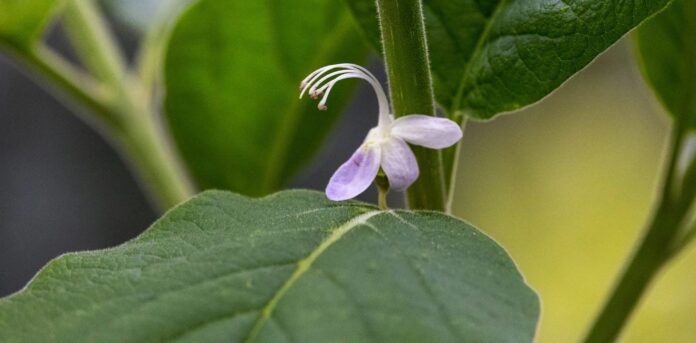
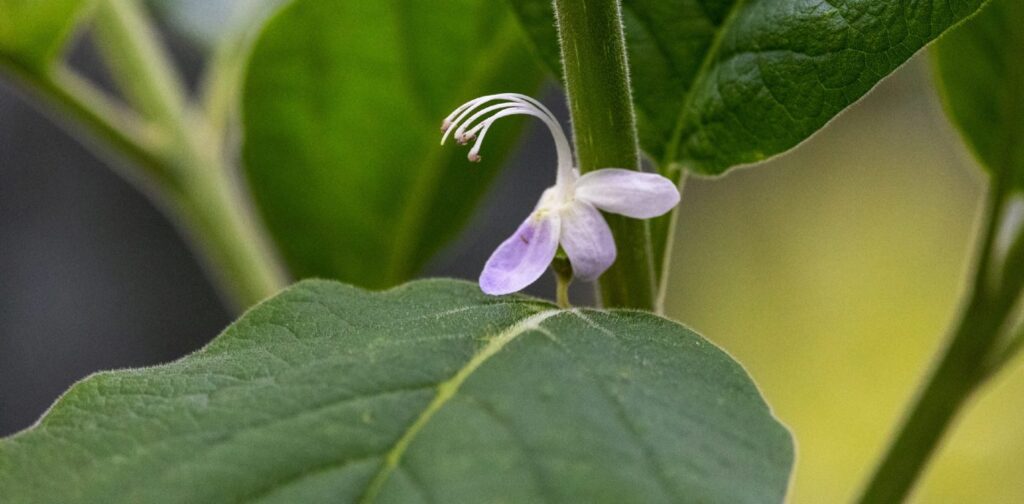
In a greenhouse in Missouri, a tree listed as critically endangered produced a flower which had never been recorded before by science in the perfect metaphor for the species’ chances of survival.

The botanists caring for it believe there’s no question they can save the tree since collecting pollen from this flower, as they can now cross-pollinate its thirty-strong sapling neighbors to restore genetic diversity.

Karomia gigas is a member of the mint family, and is also related to oregano, rosemary, and thyme. It grows wild only in East-Central Africa, in Tanzania, and in the past in Kenya. It’s so unknown there’s no common name for it in English, Swahili, or any other African language.

The flower it produced consisted of five purple petals tugged down towards the stem, and four long pollen stamens protruding from the center.

Growing straight up to heights of 80 feet, it’s thought one reason there is no image of the flower in the scientific record is that an adult K. gigas doesn’t produce branches until halfway up the trunk, so the rapidly-wilting flowers simply emerge too high to be seen.

The un-minty nature of the flowers lead scientists to hypothesize it could be a self-pollinating tree, and they hope to find more flowers in the coming months that will allow them to strengthen the genetic diversity of the remaining trees.

They can clone individual trees from cuttings, but that doesn’t do anything to increase genetic diversity, which is key to ensuring the long-term survival of the species and its ability to resist disease.

Growing hope

As well as growing in a difficult-to-replicate kind of soil substrate consisting primarily of old corral and termite leavings, K. gigas is very susceptible to fungus, and its wood is similar to teak, and so is occasionally poached. All this pressure puts the tree among the most endangered of the 60,000-known tree species.

It was discovered in Kenya in 1977, then rediscovered in Tanzania in 1993 after all the Kenyan specimens died out.

Apart from the thirty saplings growing in the Missouri Botanical Garden in St. Louis, the Tanzanian Forest Service estimate there are two dozen or more others, but only in Mitundumbea Forest Reserve and Litipo Forest Reserve in Tanzania, both of which are protected areas characterized by flat woodlands that used to be the ocean floor.

“On one side of the coin it’s a little scary because very rare species like this are depending upon us and we can’t get it wrong,” writes Andrew Wyatt, Senior Vice President of Horticulture and Living Collections at the Missouri Botanic Gardens, the oldest continually operating gardens in the nation.

“Personally, and I know others on my staff feel this way too, it is actually amazing and exhilarating. It is such an honor to use one’s skill to save a species from extinction.”

RELATED: 100-Year-Old Galápagos Giant Tortoise Found on Fernandina Island is Indeed Member of ‘Extinct’ Species

“As far as survival, we’ve got this one,” says Wyatt, this time to National Geographic. “We can actually make sure it does not go extinct. The idea of actually preserving the species is entirely possible. It’s protected in Tanzania. We have collections in the botanical garden. Once we’ve got enough seed, we hope we can store it [in a freezer] and create a buffer between loss.”

It’s good he and his staff are so confident. Based on how many houseplants this reporter has killed, he can only imagine the pressure they’re under.

MORE: ‘Huge Surprise’ as Giant River Otter Thought to be Extinct Pops Up in River in Argentina

BLOOM Positivity In Friends’ News Feeds—Share This Story…

Jaden Smith To Open A Vegan Restaurant Where Homeless People Can Eat For Free

(L) Web Summit SM1_0502, CC license; (R)@iloveyourestaurant Instagram
(L) Web Summit SM1_0502, CC license; (R) @iloveyourestaurant Instagram

Paying it forward is something that’s in Jaden Smith’s genes. He played an instrumental role in the JUSTwater campaign, helping provide clean drinking water to the residents of Flint, Michigan.

Then, to commemorate his 21st birthday two years ago, the rapper/actor launched the I Love You Restaurant, a vegan food truck initiative to combat food insecurity for Los Angeles’ homeless.

“Our mission is to spread love to communities experiencing food and/or housing insecurity by offering water along with fresh, high-quality, and delicious sustainable meal options,” his food website explains.

Smith’s vegan meals found their way to 8,000 of L.A.’s Skid Row residents. Eventually, I Love You’s efforts were expanded to serve at-risk residents in Harlem, New York City.

“[We were] not able to actually get our food truck down to Skid Row and physically hand it out to people for obvious reasons,” he told COMPLEX. “You’re thinking about everything happening with COVID-19 and people having to stay home and all this stuff. Well, if you’re homeless, you can’t stay home…  So we’ve been donating… everything that we can… vegan food, masks, clothes, hand sanitizer, and all different types of things.”

Although normal is still a way off, Smith is pivoting his I Love You concept yet again. With plans for a more permanent, non-rolling version of his restaurant on the table, Smith is parlaying the success of his past efforts into the next phase.

The “pay as you can” philosophy on which the new endeavor is based takes a page from the venerable drive-through feel-good tradition of paying not only for your own eats but for those of the occupant in the following car as well—only Smith is taking the feel-good one step further.

MORE: Robert Downey Jr. is Creating a Foundation That Will Use Robots to Clean Up the Environment

While anyone will be welcome to partake of the yet-to-be-announced location’s fare, those who can afford the suggested menu prices will be in effect subsidizing meals for those who can’t.

“It’s for homeless people to get free food,” Smith told Variety. “But if you’re not homeless, not only do you have to pay, but you have to pay for more than the food’s worth so that you can pay for the person behind you.”

It sure sounds like a great way to serve up some good karma to us, but we were just wondering… Can we get vegan fries with that?

Feed Your Friends Some Positivity By Sharing The Good News To Social Media…

Harvesting Air Conditioning Condensation Could Replace Cities’ Potable Water Use

UNC-CH, CC license
UNC-CH, CC license

While looking for ways to make homes and offices more efficient, building managers have realized that something as seemingly insignificant as the water droplets from the underside of air conditioning units have the potential to quench the thirst of thousands.

While the drips don’t seem like much, they really add up. Microsoft reports that their 46,000 square meter offices in Herzliya, Israel, collect 3 million liters of condensate from air conditioners annually, which it uses to irrigate the campus flora and cool the building.

This equates to the entire annual indoor and outdoor water needs of at least two family homes.

In the U.S., a campus building at Rice University, Houston, has an A/C unit that generates 15 gallons of condensate per minuteand they believe their entire campus could supply 12 million gallons annually.

Grasping this potential, municipal governments and eco-conscious offices around the United States are experimenting with different ways of utilizing a resource which for many years has served only to drip down the walls of buildings, giving them a dirty run-down appearance.

It’s not the hardest challenge, since condensation is a process that’s quite easy to control and predict. For example, if the surface on which condensation is taking place is uneven, the water will always run to the narrowest point before gathering enough mass to fall. Positioning a cistern or channel under that point is essentially the only major step required, or adding a water pump if one needs to send the water uphill.

MORE: Rubber Made From Dandelions is Making Tires More Sustainable – Truly a Wondrous Plant

Furthermore, many A/C units come with rubber condensate disposal piping which drains the moisture into a specific location such as a yard.

Clever condensation

In Austin, Texas, a place that is both parched and forward-thinking, the city council approved an incentive program that will offer large building managers money if they can reuse their air-conditioning condensate, graywater, or rainwater for onsite non-potable needs.

Bloomberg reports that between two buildings, the 56-story Austonian residential skyscraper, and the Austin Central Library, their water recycling methods save the city 362,800 gallons of water per year.

Systems that go farther—that save one million gallons of potable water—are eligible to receive $250,000 in funding, doubling to $500,000 if the systems can save the city three million gallons.

RELATED: The Quest for Rare Wood is Endangering Forests. Now We Can Just 3D-Print Replicas Made from Wood Waste Instead

Another hot and arid city, Tucson, is demonstrating the use of these water-conserving systems. The College of Architecture, Planning, and Landscape Architecture at the University of Arizona uses 100% recycled water in their Sonoran Landscape Laboratory.

Situated on what used to be 1.2 acres of parking lot, this miniature piece of the Sonoran Desert uses 95,000 gallons of water—all collected from air conditioning condensate for the irrigation of desert gardens and in continuously topping up a pond where local wildlife can drink.

Other non-potable water integration features like roof runoff, drinking fountain graywater, and back wash from a sand filter, along with the HVAC condensate will save an estimated 230,000 gallons of potable water there per year.

There are several online guides for how to build your own recycling system, or the basic principles of harvesting your own A/C condensate ,if you live in an dry climate and want to take advantage of this techno-blessing.

SHARE This Story With Friends With Pals Who Are Thirsty for Good News…

8 Cheap Gardening Hacks For Plants – Using Wine and Plastic Bottles, Orange Peels and Coffee Grounds

Cottonbro

If you think of TikTok as a place where tweens and members of Gen Z perform unfathomable dance moves and viral sea shanties for their peers, you might be surprised to find that it’s also an online platform where gardening tips are shared.

According to some of the most popular green-thumbed TikTokers, with a little ingenuity and, say, a few old plastic bottles, there’s pretty much nothing you can’t do to get your indoor and outdoor plants looking great.

From ‘wine bottle watering globes’ to getting rid of pests using orange peels, check out these hacks.

1. Water your plants with a wine bottle

Watering globes that go into soil can cost quite a few dollars, but a wine bottle you have hanging around in your recycling bin? That costs nothing. Check out @brightly.eco‘s TikTok to learn how to create your own free watering globe.

@brightly.eco

Our favorite #hack for keeping your garden happy when you go out of town! #PlantLover #gardening101 #gardeninghacks #gardeningtips #upcycling

♬ Quite Cool - Trees and Lucy

2. Feed your plants for just the right amount of time

Neither overwatering and under-watering your plants is optimal, so @chelseaaabri says to place your pots in a plate full of water. That way, they’ll soak up just the right amount.

@chelseaaabri

How I keep my plants alive #planttoktips #planttok #plantcaretips #learnedontiktok #fyp #plantmom

♬ Pure Imagination cover by Angelo Javier - LEUG

3. Figure out how thirsty your plants are with a pencil

Here’s @geainthejungle‘s trick for finding out when your plants need watering: Mark the depth of dryness a particular plant likes on a pencil; stick the pencil in the soil to that exact depth, and if the nib comes out a little damp? You know you don’t need to water it quite yet.

@geainthejungle

Plant hack! #plants #planttips #houseplants #plantparent

♬ original sound - Gea

4. Fertilize your plants with coffee

How to fertilize your potted plants? Well you could buy some fancy plant food, or you could just dilute your leftover coffee with water and pour that in the soil, says @_forthehome. 

@_forthehome

Plant parent #lifehack. You probably drink your fertilizer every day 🤣🌿💚 #plantparents #plantlover #plantmom #houseplants

♬ Level Up - Ciara

RELATED: These Groundhogs Came Out – Then Shared a Tomato Feast at a Tiny Picnic Table (Watch)

5. Get rid of pests with orange peels

You love your plants, but so do the bugs in your house. What to do? Simply place orange peels around your greens, says @ghibligreenhouse.

@ghibligreenhouse

Plant parenthood budget tips! #planttok #planttoktips

♬ Steven Universe - L.Dre

6. Make a mini greenhouse from old plastic bottles

Over on Instagram, @plasticfreeally has shared a green way of making a tiny greenhouse from discarded plastic bottles. First up, cut those bottles in half, then watch your green things sprout.

7. Make a home for seeds in used tea bags

Here’s a new one from @creative_explained: Take a used tea bag, pop a hole in it with a pair of scissors, put your chosen seed inside, place the whole thing in a Ziploc bag, then watch that little seed sprout.

@creative_explained

Tea Bag Magic 🤩🌱 #garden #trick #tips #plants #planttips #foryou #learnfromme #alwayslearning #tea #magic #diy #gardening #gardening101 #wow #hack

♬ Background Hip Hop Beat - Oleg Fedak

8. Grow your own fruit from what you get in the grocery store

So you want to grow some strawberries? According to @growithjessie, pretty much all you need is a knife, a pot, some water, some soil—and of course, some sun—and then you’re all set. Do let us know if you give this, or any these other online hacks, a go?

@officialscaryclip

You learn something new every day! Tag a friend, it may just save their life! 👌🏼 #learnontiktok #learntok #safety #interestingfacts #fyp #foryoupage

♬ The Purge - Demetrius X

GROW the Good News in Your Friends’ Feeds—Share This Story…

“I can’t give you a sure-fire formula for success, but I can give you a formula for failure: try to please everybody all the time.” – Herbert Bayard Swope

Quote of the Day: “I can’t give you a sure-fire formula for success, but I can give you a formula for failure: try to please everybody all the time.” – Herbert Bayard Swope

Photo: by Илья Мельниченко

With a new inspirational quote every day, atop the perfect photo—collected and archived on our Quote of the Day page—why not bookmark GNN.org for a daily uplift?


Paul McCartney is Helping People Grow Their Own Fruits and Vegetables in the UK for Better Health and Wellbeing

After a year in lockdown, growing fruits and vegetables at home has officially taken root—with more than half of adults cultivating their own produce during the past 12 months.

SWNS

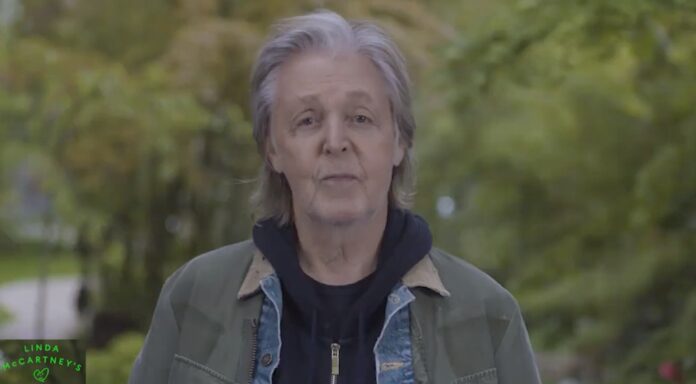
The trend is particularly popular among younger adults, with six in ten 18-to-34 year-olds growing their own—and now a former Beatle and his family are spearheading an effort to increase the number even more, on behalf of the late Linda McCartney.

Saving money (32 percent), helping the environment (23 percent), being more sustainable (28 percent), and eating more fruit and veg (15 percent) are some of the reasons people are picking up trowels.

The poll, by Linda McCartney Foods, found 70 percent of adults want to grow even more produce at home but are unable to do so.

The biggest barrier is lack of space said 27 percent of those surveyed, with half of adults—including 66 percent of 18-to-34 year-olds—wishing they had a bigger garden area.

Another 13 percent simply wish they had a garden.

In order to help people like these, the vegetarian food company has announced its ‘Grow Your Own with Linda’s’ initiative.

The initiative is building ‘growing spaces’ in urban areas throughout Britain, the company told SWNS news, while a Grow Your Own Guide will soon be available on their website.

The wife of Beatle Paul McCartney for 29 years, until her death from cancer, Linda was a vegetarian and started Linda McCartney Foods almost three decades ago.

Paul said, “We’re so pleased to bring this initiative to people across the UK and continue the legacy of kindness that Linda set out with for her veggie food company 30 years ago.

“Linda aimed to show that being kind didn’t mean having to compromise on eating delicious food.

RELATED: Gardening Just Twice a Week Improves Wellbeing and Prunes Your Stress, Says New Study

“Through this project, we hope we can empower more people across the UK to try growing, and eating their own. Dig in and have fun.”

Two thirds of survey participants enjoy growing so much that they would happily live off their own home-grown foods if they could.

Home growers already enjoy an average of three meals a week containing produce they’ve cultivated themselves.

It also emerged 72 percent believe growing your own food produce is good for mental health, and 68 percent agree it also encourages you to have a better diet.

Other benefits to home-grown food include giving you a reason to get outside (52 percent) and being more ethical than some mass-produced foods (29 percent).

MORE: 5 Alternatives to Toxic Herbicides to Get Rid of Your Summer Weeds Without Killing Bees

And notably, 48 percent think home-grown tastes better than items purchased from shops.

However, the survey, carried out through OnePoll, found two thirds (66 percent) would like to have greater knowledge about growing the crops—with those aged 18 to 34 especially keen (77 percent).

Grower and gardener, Diarmuid Gavin, who is offering his expertise on the project, said, “This has been such a great initiative to be involved with especially at a moment when the outdoors and nature has become even more precious in lockdown.

“I hope the Grow Your Own Guide can be an inspiration for people in flats, tower blocks, and without much outdoor space to see just how much they can grow with their own hands and a few recycled containers.”

TOP 10 MOST POPULAR FOOD PRODUCE GROWN AT HOME

1. Tomatoes
2. Herbs
3. Strawberries
4. Carrots
5. Runner beans
6. Onions
7. Apples
8. Green beans
9. Raspberries
10. Cucumbers

WATCH their video teasing their new initiative…


PLANT Some Beatles in Your Pals’ Social Media Gardens—Share This Story…

Stunning Photos of This Morning’s ‘Super Flower Blood Moon’ Eclipse (LOOK)

If you rose early this morning to see the first lunar eclipse in more than two years, yet all you have to show for your experience is an image of a tiny, glowing red smudge in a dark sky—that’s not necessarily a sign of poor photography skills, just a lack of a telephoto lens.

Long-focus lenses can be used to make the moon appear much closer than it is—creating some truly spectacular photos.

RELATED: Giant Storms on Jupiter Captured By Incredible NASA Images Sent From Juno Spacecraft

A few hours ago, in many parts of the globe, the eclipsing of the sun’s light by Earth shadowed our lunar neighbor, turning it a deep, impressive red—hence the name Blood Moon. Or even Super Flower Blood Moon.

Check out the images these photographers captured and shared on Instagram, and do let us know if you got a great shot too.

This view from Utah’s red rocks is otherworldly

Some post-processing work made the best of Taiwan’s eclipse

An aerospace engineer in California took this shot

A partial eclipse photographed in the wilds of California

Lit-up clouds add extra drama to this impressive scene

This B.C. photographer captured the stars, the trees, and the moon all in one image

A mauve dawn made for this beautiful image from Florida

LIGHT UP Friends’ News Feeds With These Photos…

Woman Who Tossed Out 1MIL Lottery Ticket Gets Her Winnings Thanks to Store Owners

Massachusetts State Lottery

Many have daydreamed of winning the lottery—but how about unwittingly having a $1 million win in your hands, then accidentally tossing it out?

That waking nightmare happened to Massachusetts’ Lea Rose Fiega. Luckily, the kind store owners where she bought the ticket let her know her mistake.

It was back in March that Fiega spent $30 on a scratch-off Diamond Millions ticket from Lucky Stop in Southwick.

“I was in a hurry, on lunch break, and just scratched it real quick, and looked at it, and it didn’t look like a winner, so I handed it over to them to throw away,” she told Associated Press.

For 10 days, the ticket simply lay there behind the counter.

“One evening, I was going through the tickets from the trash and found out that she didn’t scratch the number,” Abhi Shah, the son of the store’s owners told WWLP-TV. “I scratched the number and it was $1 million underneath the ticket.”

MORE: Celebrity Chef David Chang Won $1 Million – And He’s Giving It All to Restaurant Workers

“We had mixed emotions,” Shah told the Washington Post. “We didn’t sleep for two nights, but I don’t know what happened. My inner soul told me: ‘That’s not right. You know who that person is. You should give that ticket back to them.’ And that’s exactly what I did.”

Fiega works near the convenience store where she got her ticket—so Shah went over there. He told her his mom and dad would like to see her, so she went over to the store. When she got the news she couldn’t believe what she was hearing. She cried. And then she hugged the entire family.

For Fiega, who nearly died of COVID-19 in January, winning the lottery has truly been the (very rich) icing on the cake of what’s been a difficult year.

RELATED: Preschool Teacher Who Was Laid Off After 20 Years Wins $250,000 Lottery Prize

The Diamond Millions store will get $10,000 from the Massachusetts State Lottery commission for selling the winning ticket—and Fiega happily gave the family an additional reward. The rest, she says she’ll save for her retirement.

SHARE the Good Fortune With Friends on Social Media…

‘Huge Surprise’ as Giant River Otter Thought to be Extinct Pops Up in River in Argentina

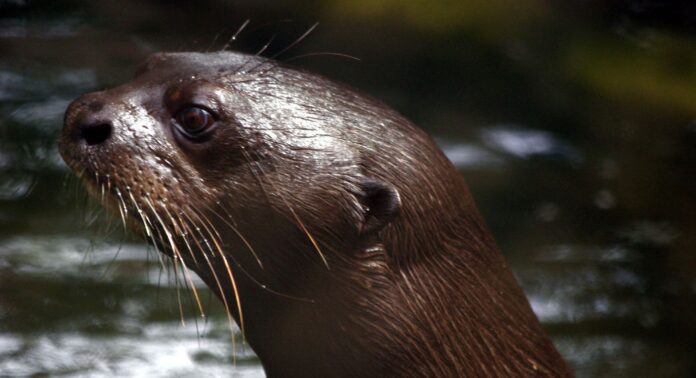
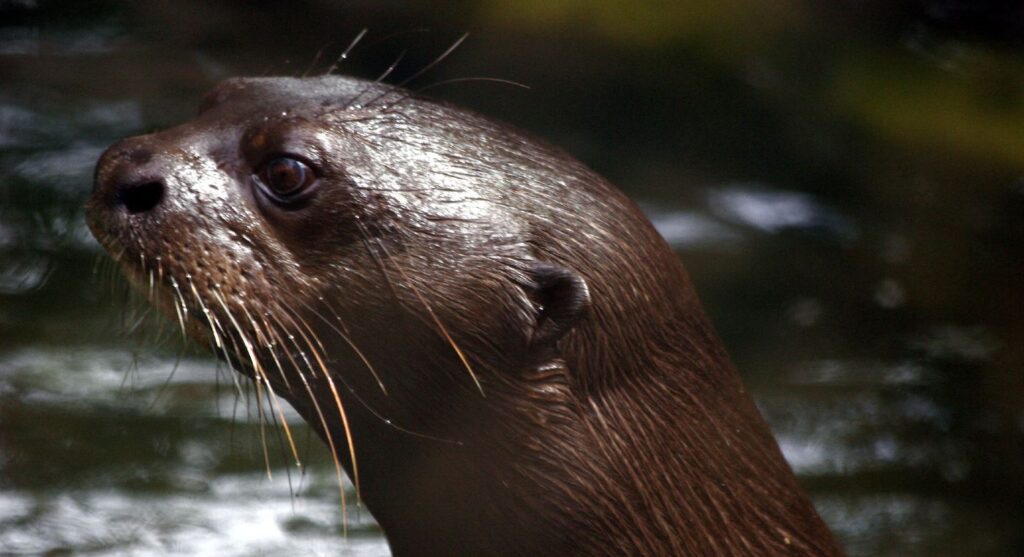
Giant river otter in Brazil, David.Monniaux

Recently in Argentina, a giant river otter popped out of the water right next to the canoe containing, of all people, the director of conservation at Rewilding Argentina.

A good omen, one would think, as not only had the charismatic Pteronura brasiliensis not been seen in Argentina since the 1980s, but the river upon which Sebastián Di Martino was floating sat within a park his organization helped create.

“It reared up, so its white chest was visible, which I recognized as the giant river otter,” Di Martino told the Guardian. “At this point, your legs go weak and your heart starts beating faster.”

Di Martino was kayaking on the Bermejo River in Impenetrable National Park—the legacy of one of the world’s great conservationists, Douglas Tompkins, founder of The North Face and Esprit outdoor suppliers, who transferred one of the largest land fortunes on Earth to the governments of Chile and Argentina upon his death.

The otters hadn’t been seen on the Bermejo River in over a century, but the waterway is connected to the Paraguayan Pantanal so the simplest explanation is that it swam there, even though it would be a journey of over 1,000 kilometers (600 miles).

MORE: Lonely Otter at Sanctuary Finds Love Through Online Dating Site Built Just For Him

Di Martino thinks that since otters live in family groups, the one he saw was simply part of a remnant population that has since gone undetected. It’s not a crazy hypothesis, since Impenetrable National Park is 128,000 hectares, or 500 square miles of rivers and woods within Gran Choco Forest, an extremely biodiverse region.

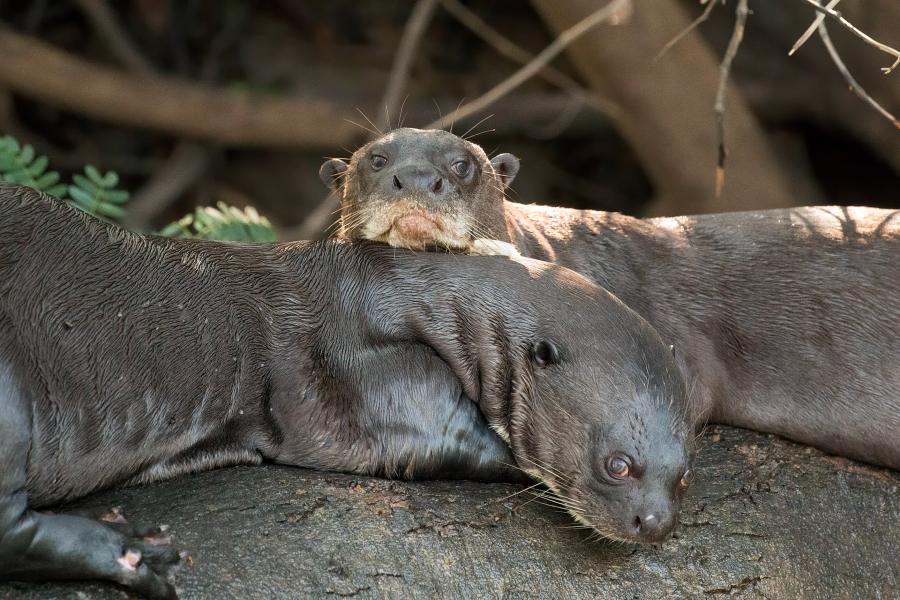
Giant river otters are known as “Wolves of the River,” and like the wolf, they are top predators. Their hunting exerts a regulatory influence on the rest of the ecosystem, keeping the links in the riverine world in order. They’re also extremely charismatic, trusting, and curious, and can grow 4.5-feet long and weigh more than 60 lbs.

Giant river otter in Brazil, Sharp-Photography.co.uk

The coincidence of the magical meeting between the riverine mammal and Di Martino is that his organization, Rewilding Argentina, is currently working on a conservation plan to reintroduce giant river otters to the country; to the very park in which he spotted one. The plan also includes reintroductions for the collared peccary, Pampas deer, red and green macaws, and even jaguars.

RELATED: Baby Otter Learns How to be an Otter From Expert Humans

It’s all part of the late Doug Tompkins and his widow Kris’s incredible dedication to the wilds of South America, who through the money from their companies created 13 national parks containing over 5.9 million hectares of pristine land in Chile and Argentina.

The sighting of the otter on a river known for illegal fishing activities is a smashing sign that there is plenty still worth saving in the world right now.

(WATCH the Guardian video of the exciting ‘pop up’ moment below.)

SWIM the Good News From Argentina to Friends…