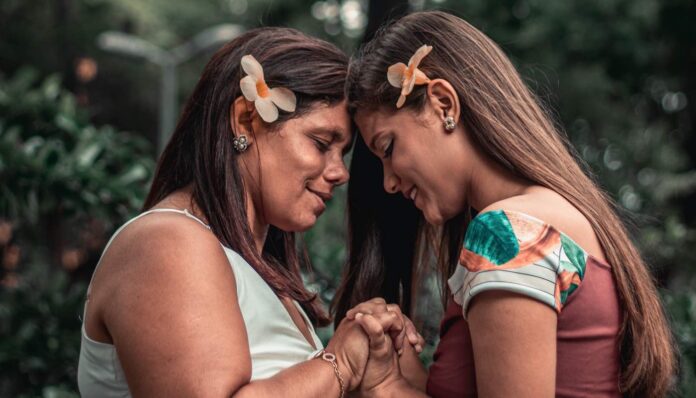
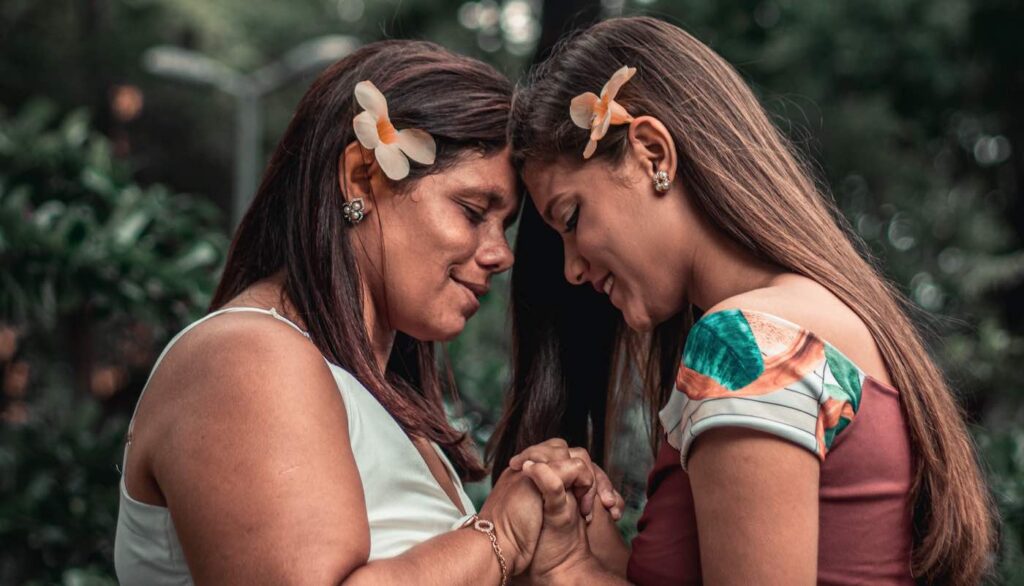
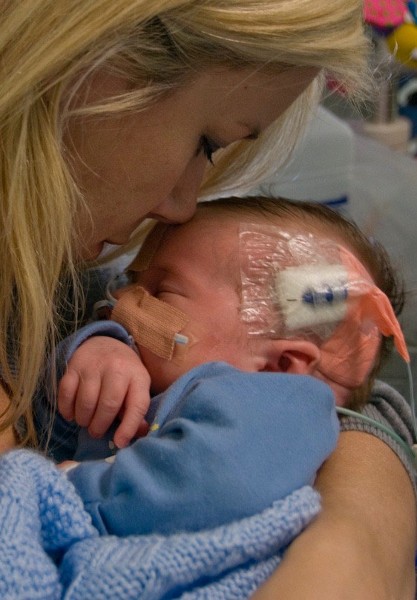
Quote of the Day: “A mother is the truest friend we have, when trials heavy and sudden fall upon us; when adversity takes the place of prosperity; when friends desert us, still will she cling to us, and endeavor by her kind counsel to dissipate the clouds of darkness.” – Washington Irving
Photo: by Jonatas Domingos in Brazil
With a new inspirational quote every day, atop the perfect photo—collected and archived on our Quote of the Day page—why not bookmark GNN.org for a daily uplift?
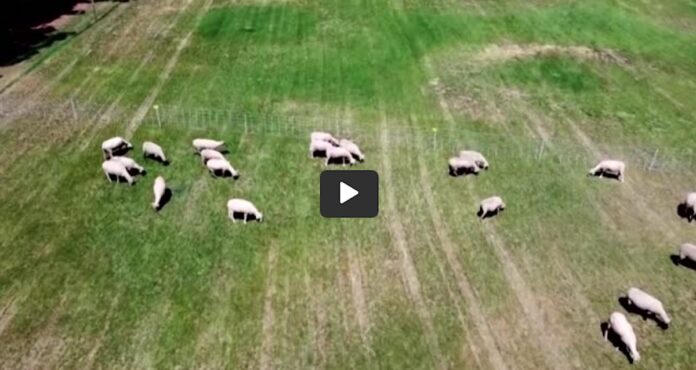
Sheep were grazing the University of California–Davis campus this week in an academic experiment to see if the ewes can eat weeds and grass, fertilize, and control pests, as well as—or better than—using conventional landscaping methods.
The woolly ewes are part of a multidisciplinary study to explore the possibilities of saving the campus money and resources at the same time.
“My interest is taking the science on green infrastructure and sustainability and designing it so it’s interactive, beautiful and practical,” said A. Haven Kiers, assistant professor of landscape architecture in the College of Agricultural and Environmental Sciences, who is leading the project.
Kiers has hired student sheepherders to watch over the sheep’s three-day stay on the grassy area along Old Davis Road, adjacent to the UC Davis Arboretum.
Kiers is a longtime proponent of green infrastructure such as green roofs you can grow plants on, and urban landscapes that are aesthetically pleasing as well as ecologically productive. The grazing sheep pilot project is a natural outgrowth of that research.
She said she is bringing to the campus her concept of Nature HEALS (for health, engagement, aesthetics, landscapes and sustainability) to emulate a historical practice throughout France—and even at the White House and in Central Park—and bring a pastoral setting to UC Davis, and hopefully spawn that idea for other campuses and municipalities at a grander scale.
The sheep put in a full day’s work from Wednesday to Friday this week, snacking from 8 a.m. to 5 p.m. For the control, the adjacent traditionally-landscaped acre of grassland was maintained by campus in the usual way. The grass height and condition will be assessed on each site before and after grazing.
There are four breeds of sheep, that are all being used for their wool, taking part in the study: Suffolk, Hampshire, Southdown and Dorset, said Matthew Hayes, who manages the sheep for UC Davis.
No worries about cleanup, either. “It (the manure) only stays for 10 days, and it actually attracts insects that are beneficial for the landscape.”
Watch a Reuters video on the project…
In a proposal she presented to campus, Kiers said, “Sheep can eliminate invasive plants and restore native grasses, reduce carbon emissions, introduce beneficial insects attracted to their waste products, and improve soil health without compacting the soil. Culturally, the addition of sheep to a green space can add pastoral beauty to a site, provide a sense of place, inspire urban agritourism, serve as a living educational tool, and promote mental health.”
There is however, little peer-reviewed evidence to support those claims as they apply to urban lawn landscapes, she added. Kiers aims to change that with her research, which will continue intermittently throughout the summer—and she hopes to spread the idea to other parts of campus—and the world—in the future.
SHARE This Story to Graze on Your Social Media Pages…
FREE WILL ASTROLOGY – Week beginning May 7, 2021
Copyright by Rob Brezsny, FreeWillAstrology.com
TAURUS (April 20-May 20):
Taurus poet Vera Pavlova writes, “Why is the word yes so brief? It should be the longest, the hardest, so that you could not decide in an instant to say it, so that upon reflection you could stop in the middle of saying it.” I suppose it makes sense for her to express such an attitude, given the fact that she never had a happy experience until she was 20 years old, and that furthermore, this happiness was “unbearable.” (She confessed these sad truths in an interview.) But I hope you won’t adopt her hard-edged skepticism toward YES anytime soon, Taurus. In my view, it’s time for you to become a connoisseur of YES, a brave explorer of the bright mysteries of YES, an exuberant perpetrator of YES.
GEMINI (May 21-June 20):
In indigenous cultures from West Africa to Finland to China, folklore describes foxes as crafty tricksters with magical powers. Sometimes they’re thought of as perpetrators of pranks, but more often they are considered helpful messengers or intelligent allies. I propose that you regard the fox as your spirit creature for the foreseeable future. I think you will benefit from the influence of your inner fox—the wild part of you that is ingenious, cunning, and resourceful.
CANCER (June 21-July 22):
“The universe conspires in your favor,” writes author Neale Donald Welsch. “It consistently places before you the right and perfect people, circumstances, and situations with which to answer life’s only question: ‘Who are you?'” In my book Pronoia Is the Antidote for Paranoia: How the Whole World Is Conspiring to Shower You with Blessings, I say much the same thing, although I mention two further questions that life regularly asks, which are: 1. What can you do next to liberate yourself from some of your suffering? 2. What can you do next to reduce the suffering of others, even by a little? As you enter a phase when you’ll get ample cosmic help in diminishing suffering and defining who you are, I hope you meditate on these questions every day.
LEO (July 23-Aug. 22):
The poet Anne Sexton wrote a letter to a Benedictine monk whose real identity she kept secret from the rest of us. She told him, “There are a few great souls in my life. They are not many. They are few. You are one.” In this spirit, Leo, and in accordance with astrological omens, I invite you to take an inventory of the great souls in your life: the people you admire and respect and learn from and feel grateful for; people with high integrity and noble intentions; people who are generous with their precious gifts. When you’ve compiled your list, I encourage you to do as Sexton did: Express your appreciation; perhaps even send no-strings-attached gifts. Doing these things will have a profoundly healing effect on you.
VIRGO (Aug. 23-Sept. 22):
“It’s a temptation for any intelligent person to try to murder the primitive, emotive, appetitive self,” writes author Donna Tartt. “But that is a mistake. Because it is dangerous to ignore the existence of the irrational.” I’m sending this message out to you, Virgo, because in the coming weeks it will be crucial for you to honor the parts of your life that can’t be managed through rational thought alone. I suggest you have sacred fun as you exult in the mysterious, welcome the numinous, explore the wildness within you, unrepress big feelings you’ve buried, and marvel adoringly about your deepest yearnings.
LIBRA (Sept. 23-Oct. 22):
Science writer Sharman Apt Russell provides counsel that I think you should consider adopting in the coming days. The psychospiritual healing you require probably won’t be available through the normal means, so some version of her proposal may be useful: “We may need to be cured by flowers. We may need to strip naked and let the petals fall on our shoulders, down our bellies, against our thighs. We may need to lie naked in fields of wildflowers. We may need to walk naked through beauty. We may need to walk naked through color. We may need to walk naked through scent.”
SCORPIO (Oct. 23-Nov. 21):
As Scorpio author Margaret Atwood reminds us, “Water is not a solid wall; it will not stop you. But water always goes where it wants to go, and nothing in the end can stand against it.” According to my reading of the astrological omens, being like water will be an excellent strategy for you to embrace during the coming weeks. “Water is patient,” Atwood continues. “Dripping water wears away a stone. Remember you are half water. If you can’t go through an obstacle, go around it. Water does.”
SAGITTARIUS (Nov. 22-Dec. 21):
In a letter to a friend in 1856, Sagittarian poet Emily Dickinson confessed she was feeling discombobulated because of a recent move to a new home. She hoped she would soon regain her bearings. “I am out with lanterns, looking for myself,” she quipped, adding that she couldn’t help laughing at her disorientation. She signed the letter “From your mad Emilie,” intentionally misspelling her own name. I’d love it if you approached your current doubt and uncertainty with a similar light-heartedness and poise. (PS: Soon after writing this letter, Dickinson began her career as a poet in earnest, reading extensively and finishing an average of one poem every day for many years.)
CAPRICORN (Dec. 22-Jan. 19):
Now is a favorable time to celebrate both life’s changeableness and your own. The way we are all constantly called on to adjust to unceasing transformations can sometimes be a wearying chore, but I suspect it could be at least interesting and possibly even exhilarating for you in the coming weeks. For inspiration, study this message from the “Welcome to Night Vale” podcast: “You are never the same twice, and much of your unhappiness comes from trying to pretend that you are. Accept that you are different each day, and do so joyfully, recognizing it for the gift it is. Work within the desires and goals of the person you are currently, until you aren’t that person anymore.”
AQUARIUS (Jan. 20-Feb. 18):
Aquarian author Toni Morrison described two varieties of loneliness. The first “is a loneliness that can be rocked. Arms crossed, knees drawn up; holding, holding on, this motion smooths and contains the rocker.” The second “is a loneliness that roams. No rocking can hold it down. It is alive, on its own.” Neither kind is better or worse, of course, and both are sometimes necessary as a strategy for self-renewal—as a means for deepening and fine-tuning one’s relationship with oneself. I recommend either or both for you in the coming weeks.
PISCES (Feb. 19-March 20):
The valet to England’s Prince Charles puts toothpaste on his toothbrush and washes all of his clothes by hand. I could conceivably interpret the current astrological omens to mean that you should pursue similar behavior in the coming weeks. I could, but I won’t. Instead, I will suggest that you solicit help about truly important matters, not meaningless trivia like shoelace ironing. For example, I urge you to ask for the support you need as you build bridges, seek harmony, and make interesting connections.
ARIES (March 21-April 19):
Created by Leonardo da Vinci in the 16th century, the Mona Lisa is one of the world’s most famous paintings. It’s hanging in the Louvre museum in Paris. In that same museum is a less renowned version of the Mona Lisa. It depicts the same woman, but she’s unclothed. Made by da Vinci’s student. Renaissance artists commonly created “heavenly” and “vulgar” versions of the same subject. I suggest that in the coming weeks you opt favoring what’s earthy, raw, and unadorned—over what’s spectacular, idealized, and polished—as your metaphor of power.
WANT MORE? Listen to Rob’s EXPANDED AUDIO HOROSCOPES, 4-5 minute meditations on the current state of your destiny — or subscribe to his unique daily text message service at: RealAstrology.com
These days, heroes come with face masks instead of capes—but a luxury resort chain in Mexico has rewarded 100 health care superheroes with free spa vacations to say thank you for their great hearts during the worldwide pandemic.
The last year of COVID has put their professionalism, resilience, and determination to be of help to others on full display.
As a token of appreciation for all their hard work—and even putting their lives at risk—Velas Resorts is giving 100 healthcare heroes a much-deserve vacation on a Mexican beach.
During April the public voted for their favorite stories among 350 nominations, choosing who would get the chance for an all-inclusive stay of 4 days and 3 nights in the luxury resort, with food and drinks prepared by its premiere chefs and restaurants.
The campaign, called “Let’s Be Thankful” unearthed heartwarming and inspiring stories included that of M. Snider, a practitioner nurse, and mother of two daughters, 3 and 5, who has worked extra shifts to cover colleagues having Covid-19 causing her to miss valuable time with her children in their younger years.
The voting period closed on April 30th and last week the 100 heroes were announced, and received their vouchers for the Velas Vallarta resort in Puerto Vallarta. Other Velas resort properties include Los Cabos (pictured bleow), Riviera Maya, and Riviera Nayarit.
Velas Resort in Cabo
Mexican airline Aeromexico joined in the initiative to give away roundtrip flights for the medical personnel chosen.
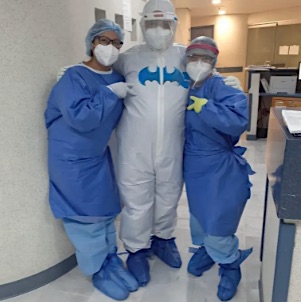
Carlos Alberto Espinoza Casillas was one of the winners. His nomination included a photo describing the neurosurgeon’s habit of wearing a special Batman adorned suit he created to give hope to his patients.
Velas resorts
The nomination for Dr. Vanessa Hernandez of Monterrey, Mexico read, “She became our own ‘Dr. Fauci,’ giving clear guidance and directives, administering hundreds of COVID tests, running contact tracing operations and keeping our operation (with 1000 employees) functioning and safe, preserving the well-being and livelihood of our employees.”
“She has worked tirelessly for the last year, even when her husband was hospitalized with COVID. As a frequent visitor to Velas resorts, I know that she would love it and deserves a few days in paradise.”
Dr. Yannick Poulin. Dr. Poulin has been working in the intensive care unit of the Sherbrooke CHUS Hospital for a year without ever taking a vacation. He has been the one who has been taking care of people with COVID with serious symptoms. He has put his personal life on the line every day to help people. What Dr. Poulin wanted us to remember is that we must cherish every little thing in life and most of all enjoy it… We would like to thank him publicly for his dedication to our patients here in Canada.”
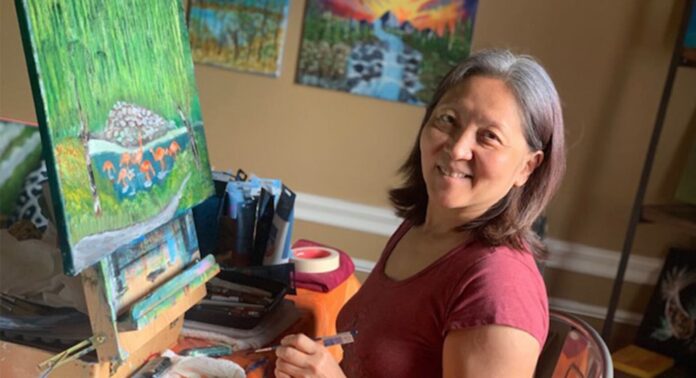
At the age of 60, Chen Lie suffered a hemorrhagic stroke which arrived “without my invitation or permission.” But the temporary paralysis of her entire right side gave her an opportunity to blossom on her left side.
Without invitation or expectation, a startling new skill would change her life.
As part of her recovery she had to re-learn how to do everything—from brushing her teeth to using a fork or pen—with her left hand, resulting in much frustration.
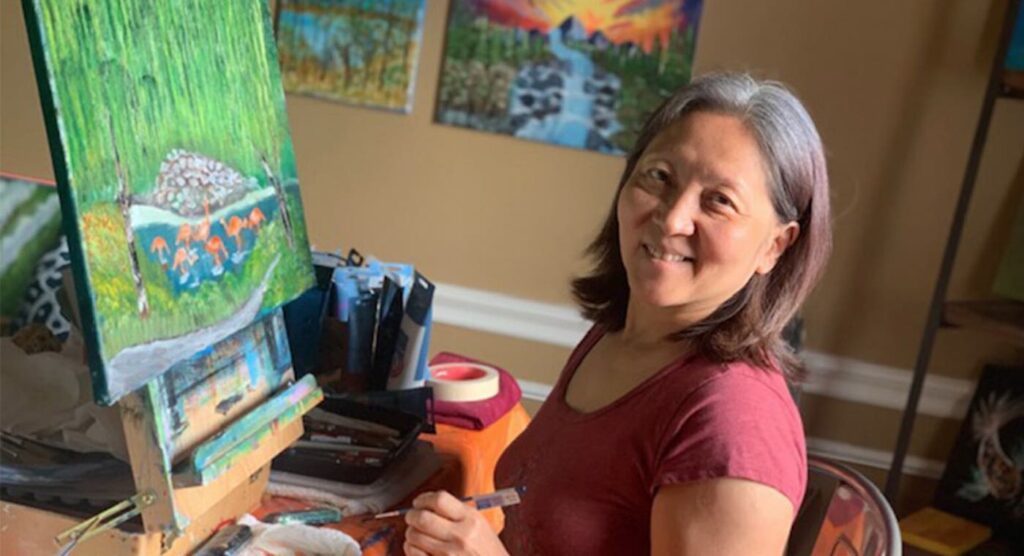
One day in a fit of boredom, and for the first time in her life, she picked up one of her grandchild’s paint brushes and just started putting color on the canvass. Happiness dawned on Chen as she suddenly could paint lovely natural scenery, despite having never painted or practiced a day in her life.
“I never picked up the paint brush before,” Chen told Good News Network. “I had nothing else to do so I just picked up the paint brush, and I just tried to put the color on the paper.”
The brush stroke
After her 2017 stroke, Chen completed in-patient therapy in Texas before moving to New York to enroll in an experimental robotic-assisted therapy program at the Feinstein Institutes for Medical Research on Long Island in late 2018.
The robotic arm essentially allowed Chen to complete far more repetitions in physical therapy then would be possible without it, allowing her to regain movement faster.
“Every time we recovered something [during rehab] we would tell them the good news,” Chen said. “They thought it was a wonder I could do something like painting.”
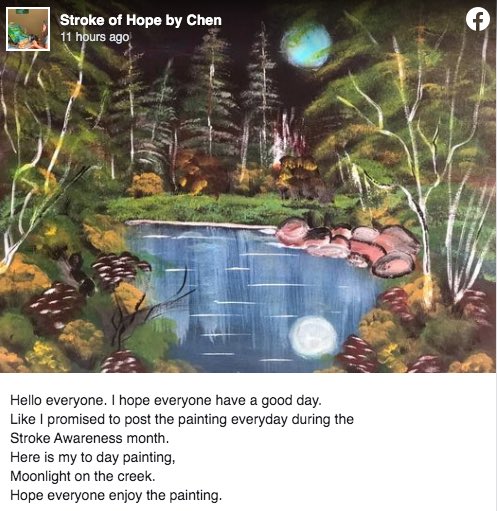
Chen—whose favorite painters include America’s beloved Bob Ross—has completed a whopping 500 paintings to date. During the month of May, which is National Stroke Awareness Month, she is painting one every day and posting a picture of it on her professional artist/advocacy Facebook page, Stroke of Hope, to help raise awareness.
“Actually, at the beginning I just put the colors on the canvass and then the more and more I did it, I read about how to paint, I read about color; it’s a lot of research for me to do,” says Chen, who considers it something like an occupation at this point.
“I’ve gained a lot of knowledge, so besides the hand painting, the brain keeps thinking; that’s good for stroke [victims] to not let the brain rest; keep thinking; keep searching for the knowledge.”
A stroke of hope
The influence of Bob Ross is there to see in a professional video her family made telling her story, while she uses “the ole’ fan brush,” as the gentle man himself used to say, to effortlessly paint evergreen trees covered in snow.
Chen Lie painting, Stroke of Hope – FB
The first post she made on Facebook was of an image of Cabo San Lucas in Mexico City, which she described as “top of my travel list.”
“I’ve never seen her paint,” says Chen’s daughter Liana. “Growing up she was always busy working, I never even saw her have a minute to do any of her hobbies. And now after the stroke it’s nice to see her doing something she loves.”
“It’s like a job for her! She’ll sit early in the morning, five days a week, the dedication is that real and that strong that she’ll sit in the morning, take a [lunch] break, rest a little bit, and go back into it,” she told GNN.
Stroke Awareness Oregon had contacted the family to see if it were possible to include in an auction some of her paintings to raise money for awareness and rapid response programs for stroke victims in the state.
“It goes to a good cause, which is what mom’s dream really is with the Stroke of Hope, really putting the word out there that it’s not over once you have the stroke.” said Liana.
WATCH her inspiring stories and see some paintings…
SHARE the Hope And Beauty For Stroke Awareness Month…
Quote of the Day: “When one door closes, another opens; but we often look so long and so regretfully upon the closed door that we do not see the one that has opened for us.” – Alexander Graham Bell
Photo: by Marita Kavelashvili
With a new inspirational quote every day, atop the perfect photo—collected and archived on our Quote of the Day page—why not bookmark GNN.org for a daily uplift?
Some planes land late and others make it to the gate on time, but a recent flight from Salt Lake City to Honolulu is giving a whole new meaning to the term “early arrival.”
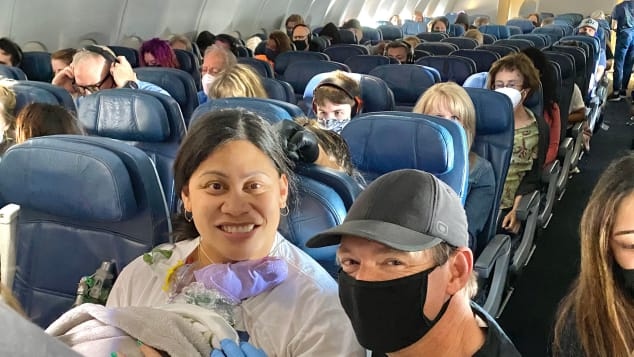
When the plane took off, Lavinia “Lavi” Mounga was headed for a family vacation, but unbeknownst to even herself, that family was about to get one bouncing baby boy bigger.
The soon-to-be mom had no idea she was already 29 weeks along. “I just didn’t know I was pregnant, and then Raymond (the baby) just came out of nowhere,” Mounga said.
Hawaii Pacific Health
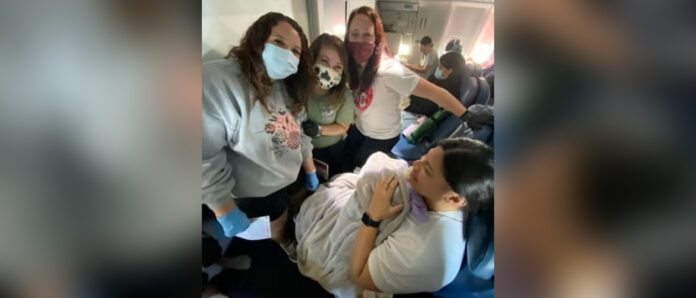
Halfway through the fateful trip, the crew had to make an announcement seeking out medical personnel to help with the emergency.
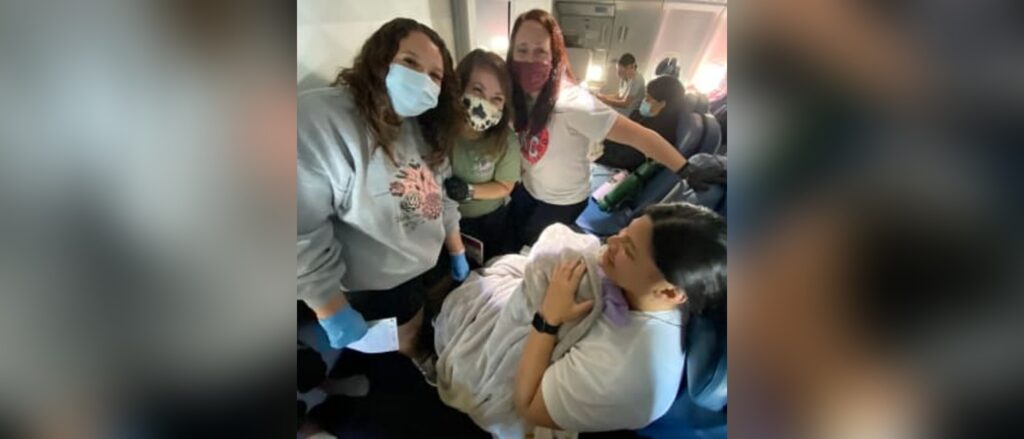
Serendipitously, the passenger manifest included not only Hawaii Pacific Health physician Dr. Dale Glenn, but a trio of neonatal nurses, Lani Bamfield, Amanda Beeding, and Mimi Ho, who all work at Missouri’s North Kansas City Hospital.
Without proper neonatal equipment, Dr. Glenn and the nurses had to come up with some creative solutions to keep baby Raymond stable for the remainder of the three-hour flight.
Thanks to a mixture of wilderness training and ingenuity involving shoelaces, microwaved warming bottles, and an Apple Watch heart monitor, the newborn made it to Hawaii in good form.
“I don’t know how a patient gets so lucky as to have three neonatal intensive care nurses onboard the same flight when she is in emergency labor, but that was the situation we were in,” Dr. Glenn relayed in a hospital statement. “The great thing about this was the teamwork. Everybody jumped in together and everyone helped out.”
Hawaii Pacific Health
Passenger Julia Hansen captured the blessed event for posterity with a TikTok video that includes a rousing round of applause for mom, baby, and her medical guardian angels, and has been seen more than 15 million times by viewers around the world.
When the plane touched down it was met on the tarmac by a medical response who whisked mother and son to Kapiolani Medical Center for Women and Children.
Hawaii Pacific Health
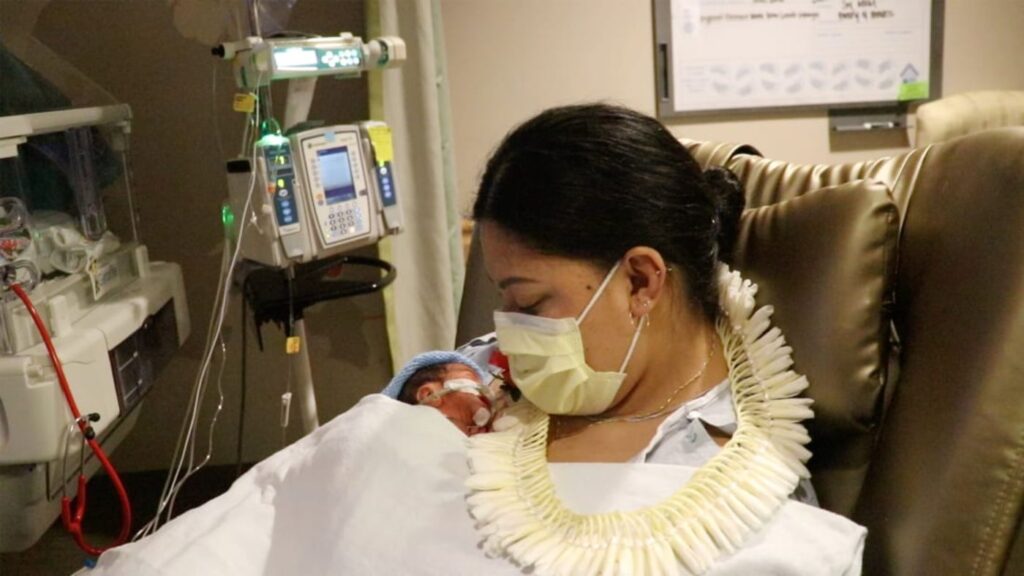
As a premie, Raymond was placed in their neonatal intensive care unit where it’s reported he’s doing just fine.
Since his birth was unexpected, in lieu of a baby shower, Mounga’s sisters have set up a GoFundMe campaign to help with the expenses of their nephew’s unticketed entrance into the world.
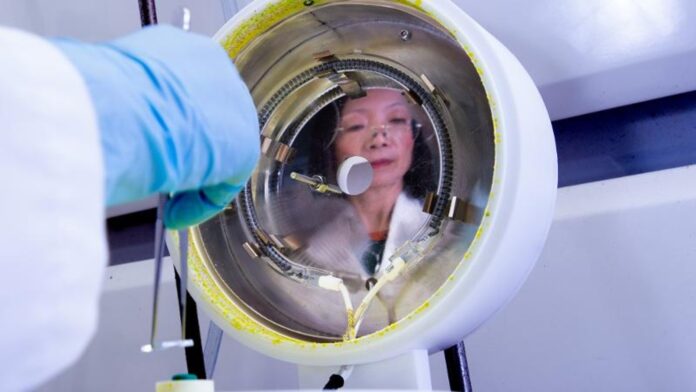
Researchers have used carbon dots, created from human hair waste sourced from a barbershop, to create a kind of ‘armor’ to improve the performance of cutting-edge solar technology.
In a study, the researchers led by Professor Hongxia Wang in collaboration with Associate Professor Prashant Sonar of QUT’s Centre for Materials Science showed the carbon nanodots could be used to improve the performance of perovskites solar cells.
Perovskites solar cells, a relatively new photovoltaic technology, are seen as the best PV candidate to deliver low-cost, highly efficient solar electricity in coming years. They have proven to be as effective in power conversion efficiency as the current commercially available monocrystalline silicon solar cells, but the hurdles for researchers in this area is to make the technology cheaper and more stable.
Unlike silicon cells, they are created with a compound that is easily manufactured, and as they are flexible they could be used in scenarios such as solar-powered clothing, backpacks that charge your devices on the go and even tents that could serve as standalone power sources.
This is the second major piece of research to come as a result of a human hair derived carbon dots as multifunctional material.
Last year, Associate Professor Prashant Sonar led a research team, including Centre for Materials Science research fellow Amandeep Singh Pannu, that turned hair scraps into carbon nanodots by breaking down the hairs and then burning them at 240 degrees celsius. In that study, the researchers showed the carbon dots could be turned into flexible displays that could be used in future smart devices.
In this new study, published in the Journal of Materials Chemistry A , Professor Wang’s research team, including Dr Ngoc Duy Pham, and Mr Pannu, working with Professor Prashant Sonar’s group, used the carbon nanodots on perovskite solar cells out of curiosity. Professor Wang’s team had previously found that nanostructured carbon materials could be used to improve a cell’s performance.
After adding a solution of carbon dots into the process of making the perovskites, Professor Wang’s team found the carbon dots forming a wave-like perovskite layer where the perovskite crystals are surrounded by the carbon dots.
“It creates a kind of protective layer, a kind of armour,” Professor Wang said.
“It protects the perovskite material from moisture or other environmental factors, which can cause damage to the materials.”
The study found that perovskite solar cells covered with the carbon dots had a higher power conversion efficiency and a greater stability than perovskite cells without the carbon dots.
Professor Wang has been researching advanced solar cells for about 20 years, and working with perovskite cells since they were invented about a decade ago, with the primary objective of developing cost-effective, stable photovoltaics materials and devices, to help solve the energy issue in the world.
“Our final target is to make solar electricity cheaper, easier to access, longer lasting and to make PV devices lightweight because current solar cells are very heavy,” Professor Wang said.
“The big challenges in the area of perovskite solar cells are solving stability of the device to be able to operate for 20 years or longer and the development of a manufacturing method that is suitable for large scale production.
“Currently, all the reported high-performance perovskite solar cells have been made in a controlled environment with extremely low level of moisture and oxygen, with a very small cell area which are practically unfeasible for commercialization.
“To make the technology commercially viable, challenges for fabrication of efficient large area, stable, flexible, perovskite solar panels at low cost needs to be overcome.
“This can only be achieved through a deep understanding of the material properties in large-scale production and under industrially compatible conditions.”
Professor Wang is particularly interested in how perovskite cells could be used in the future to power spacecrafts.
The International Space Station is powered by four solar arrays, which can generate up to 120 kW of electricity. But one disadvantage of the current technology of space PVs is the weight of the payload to get them there.
While perovskite would be much lighter, one of the challenges for researchers is to develop perovskite cells able to cope with the extreme radiation and broad range of temperature variation in space—from minus 185 degrees to more than 150 degrees Celsius.
Professor Wang said the solution could be ten years off, but researchers were continuing to gain greater insights in the area.
Currently Professor Wang’s research team is collaborating with Professor Dmitri Golberg in the QUT Centre for Materials Science to understand the properties of perovskite materials under extreme environmental conditions such as strong irradiation of an electron beam and drastic temperature change.
“I’m quite optimistic given how much this technology has improved so far,” Professor Wang said.
The pandemic has gone on so long, it spawned an entire online university—one that offers masterclasses on writing, podcasting, photography, reporting, and other literary topics.
From May 11 through May 25, Pandemic University is offering an entirely free series of classes for writers looking to sharpen their skills in evoking the natural world.
From poetry to reporting to pitching articles to journals, “Writing is Your Nature” features six notable conservationists and journalists, each hosting 60-minute classes that provide the writer with the skills needed to produce gripping content that speaks the language of the natural world in elegant and understandable ways.
The live masterclasses are replayable and hosted on Zoom, and will include content for both professionals and beginners—with ample time for questions at the end of each session. Along with blending scientific accuracy and readability into prose, they’ll also cover writing in the environmental or conservation field as a career.
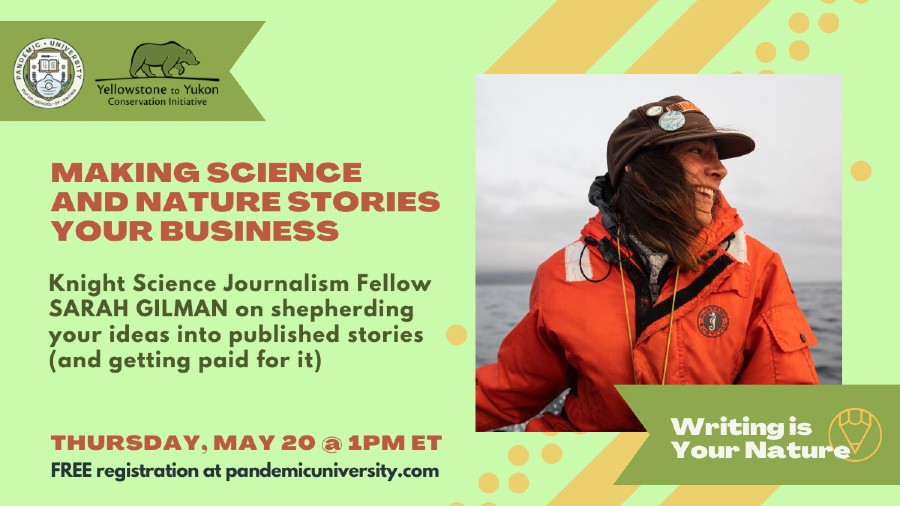
Freelance writer Sarah Gilman’s course, for example, will help you reach audiences and sustain your own writing career in the current media environment, while bestselling author Chris Turner will offer advice on how to “toe the line between reporter and advocate.”
Pandemic University/Y2Y
Writing is Your Nature is sponsored by the Canadian-US conservation non-profit Yellowstone to Yukon, which looks to guarantee better protection of the lands in and between these two great wildernesses.
With the pandemic winding down in the United States, one only has so much time left to sit in one’s house attending Zoom calls, and if you have May to spare and you’re interested in improving your nature-oriented writing skills, this is a great way to do so.
You can find the information for signing up entirely for free, here.
SHARE This Learning Opportunity With Your Friends…
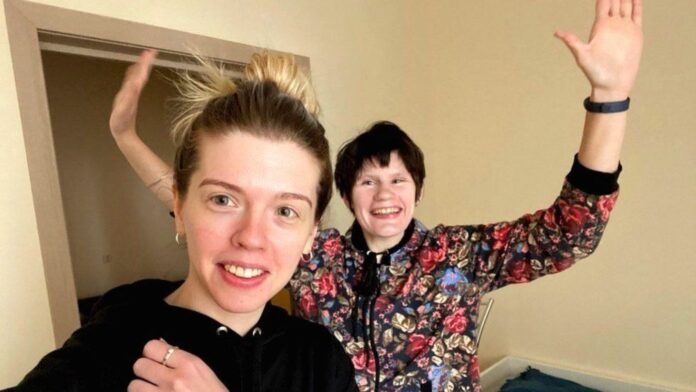
arina muratova and friend family photo arina muratova
A Russian woman is trying to become the legal guardian of a friend she made while volunteering at a care home.
Arina Muratova
27-year old Nina Torgashova was admitted to a psycho-neurological care home when she was 18. Then, when COVID-19 hit Russia, a charity called Life Route lobbied to allow people at state-assisted living facilities to move out to apartments. They could be accompanied by volunteers, and that would help protect them from mass infection in facilities housing hundreds.
31-year-old Arina Muratova has been volunteering at Nina’s care home for years and the pair have always got along well.
While Nina struggles with math and literacy, Arina noticed that she’s a really quick learner who’s well-adapted for day-to-day life.
“Nina was a very active person at her care home,” Arina told the BBC. “She took part in various creative activities: amateur dramatics, arts and crafts workshops. She took part in sporting competitions, too: she played darts, she played football. Football was something she really missed after leaving the home.”
Adopting your best friend
Arina Muratova
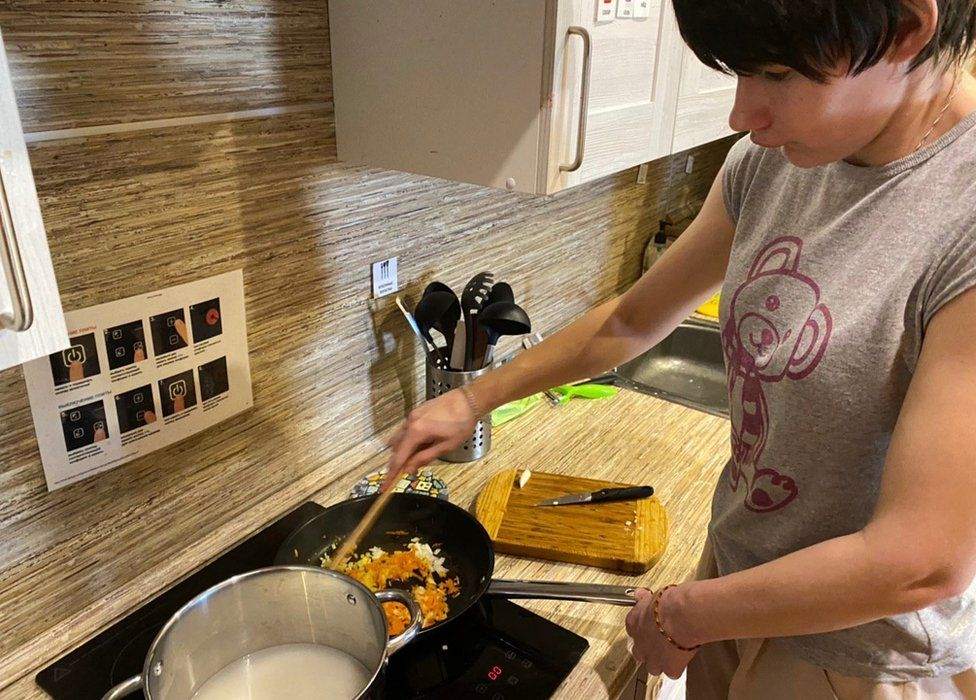
Once they moved into the flat together, their friendship blossomed like a meadow in spring. While admittedly nervous about taking Nina in—the pandemic has had its stresses for Arina: she had to take a pay cut, and has been working from home as a market research expert—she quickly found that her new best friend could cook, go shopping, and do most things on her own.
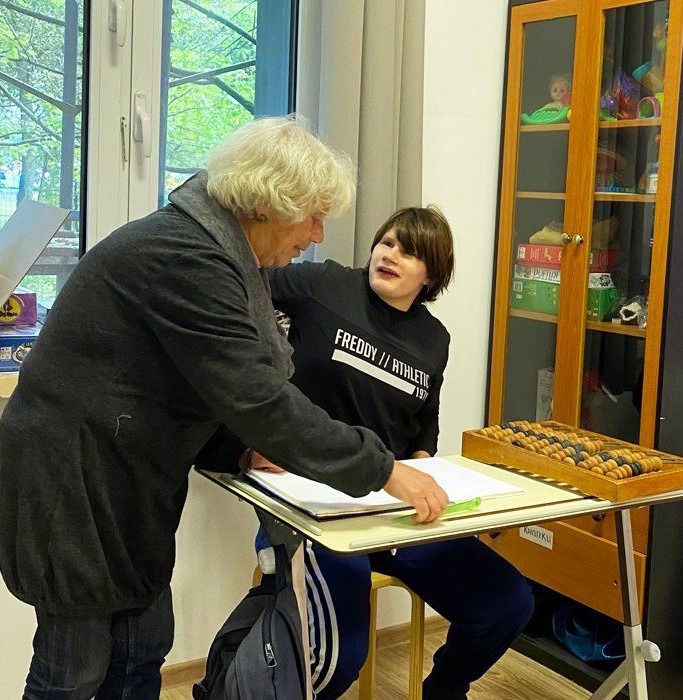
Arina hired a math tutor to help Nina make calculations—a suddenly important skill given she was now shopping independently.
Nina with her math tutor/Arina Muratova
She also started helping her with reading and writing by herself.
After the lockdowns ended, the pair had a tough challenge ahead since Nina didn’t want to go back to her facility. And there were difficulties right off the bat: residents in Russia can’t be released from custody unless they are proven “functionally able,” or if someone takes legal guardianship over them.
Then one day it just clicked. Arina started the process to adopt her pal.
Currently Arina, who doesn’t count on being anything like a mom, is working on a plan to restore Nina’s legal right to full independence, which will require serious assessments of her capabilities, such as making sensible financial decisions.
“Maybe I’m just the type of person that is not afraid of responsibility. It is an unexpected— but actually a good thing—that has happened to me,” she said. “I love her. There’s not much to it. I love her very much.”
(WATCH the BBC documentary about this amazing friendship below (Note: this video contains adult language that may not be suitable for young viewers.))
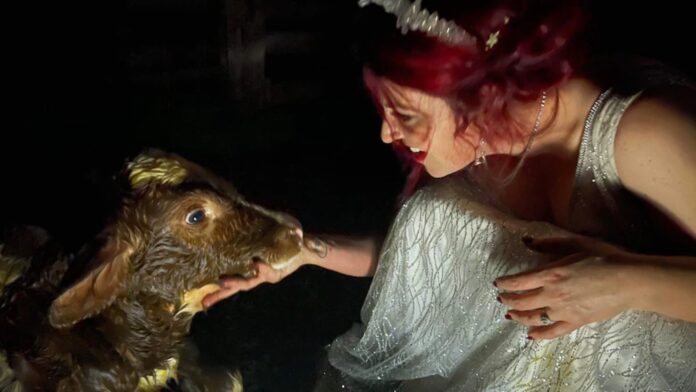
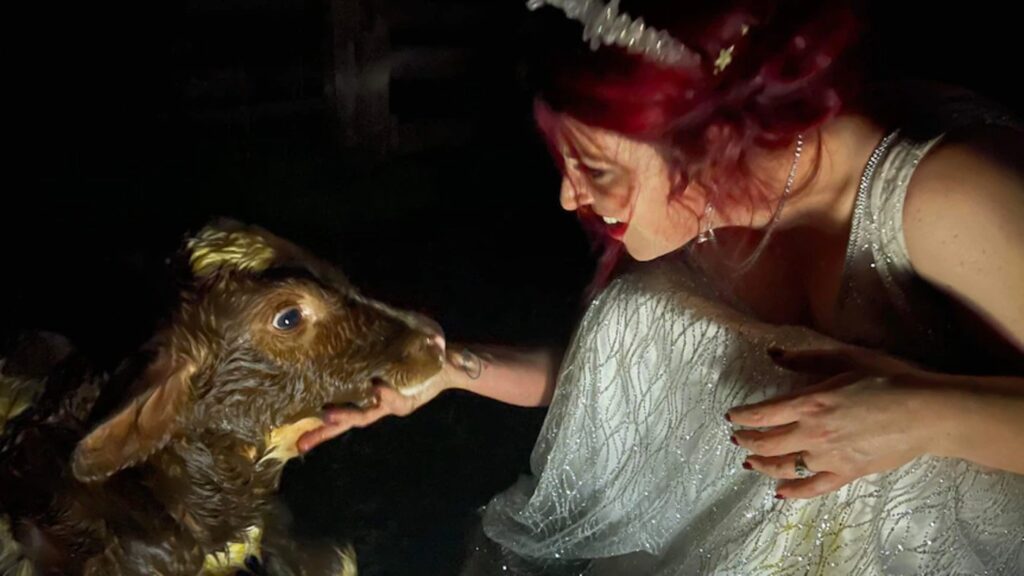
Of course, Jessa’s white wedding dress didn’t stay pristine for long—but cow and calf are now doing great. As for the newborn’s name? It’s Olivine Rager Destiny.
(WATCH the bridal adventure in the BBC video below.)
MOOOOve the Good News Into Pal’s News Feeds—Share This Story…
Quote of the Day: “Trust love even if it brings sorrow. Do not close up your heart.” – Rabindranath Tagore (born 160 years ago today)
Photo: by Andres Siimon
With a new inspirational quote every day, atop the perfect photo—collected and archived on our Quote of the Day page—why not bookmark GNN.org for a daily uplift?
Belgium recently melted down over 22,000 firearms into 60 tons of recycled steel.
Half of the firearms were collected from members of the Belgian public. The other half were police weapons that are no longer used.
Carina van Cauter, governor of East Flanders, said in a statement: “The result is impressive: 22,457 firearms have disappeared from our society… It is obviously positive for the security of our citizens that these weapons are no longer in use.”
This is the third time the Belgian police force has worked with the steel firm ArcelorMittal to recycle firearms—with this particular operation taking three days to complete, according to Reuters.
“Steel is endlessly recyclable without loss of quality. For us, steel is the cornerstone for a sustainable circular economy,” Karen Warnier of ArcelorMittal told Het Nieuwsblad.
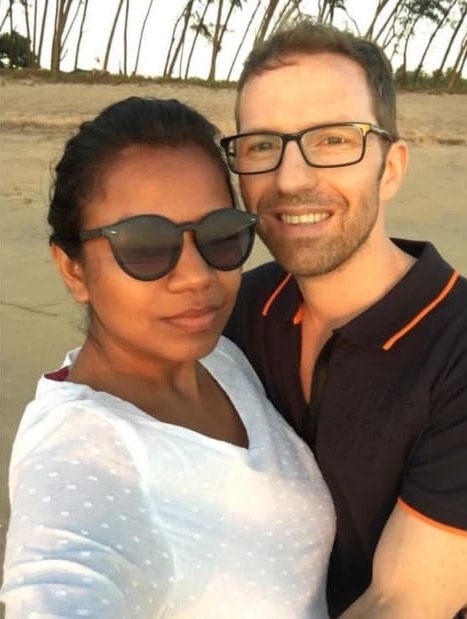
In the real world, falling in love isn’t usually an adventure that literally begins with a daring ocean rescue—but sometimes that’s exactly how a story unfolds.
In February 2019, yoga instructor Nupur Gupta was swimming in the waters off a beach in Goa when the current got the better of her. While a strong swimmer, she feared she’d be unable to make it back to shore.
Hope came in the form of Hungarian-born financial adviser Attila Bosnyak, who’d spied his soon-true-love-to-be in trouble and was swimming to her aid.
Though a capable swimmer, once he reached Gupta, Bosnyak realized he wouldn’t be able to get both of them to safety on his own. Rather than towing Gupta in, he swam toward a nearby rock formation.
After several attempts in which he was pounded by fierce waves and smashed against the rocks, he was able to climb up and signal to the lifeguards on shore for help.
Once he saw a guard making a beeline for Gupta, a bleeding Bosnyak, who’d suffered numerous scrapes and bruises, swam back to shore and collapsed on a beach chair. A grateful Gupta, who’d quickly bounced back from her own ordeal, felt compelled to help the stranger who’d saved her life.
Swiftly procuring first-aid supplies—and chocolate ice-cream as a thank you—she returned to her hero’s side. After tending to his injuries, she tendered him the ice cream.
Some might blame it on the chocolate, but in that instant, Gupta’s emotional landscape underwent a sea change—and she wasn’t the only one. Bosnyak felt the “magic” surge of attraction, too.
Nupur Gupta and Attila Bosnyak
Gupta and Bosnyak were both staying at the same yoga resort; she, as a teacher and he, as a student (though not in any of her advanced classes). Over the course of the next few days, the promising relationship began taking shape.
However, since the retreat was soon to end and each was scheduled to go back to their respective lives—for Bosnyak, that meant his job in the Netherlands and for Gupta, home to Kerala—it looked as if the budding romance might never get a chance to blossom.
But the pair of them decided to take a chance on love. Putting their real lives on hold for another week, the couple spent Valentine’s Day together. In the coming months, thanks to social media, their bond continued to grow, albeit long distance.
After a month of back and forth, Bosnyak knew he wanted to see where the relationship could go. He asked Gupta how she felt. She too wanted to move ahead.
“I immediately agreed without any second thoughts, despite knowing that it’s a huge distance, different cultures, continents, countries, cities,” she told CNN. “I wanted to do this. I mean, I wanted to have this experience. I loved his vibe for that time when I was around him and I was very happy.”
While the sweethearts hoped to meet in person for some quality couple time, plans for a vacation had to be put on hold when it was learned Gupta’s mother required emergency surgery for a brain tumor. After Gupta explained why she had to cancel their plans, without missing a beat, Bosnyak offered to fly there to be with her.
Once Gupta’s mother recovered, the pair embarked on a series of meet-ups in Dubai, Serbia, and eventually, Thailand. The sites weren’t chosen for their romantic potential but by what their travel visas would allow.
In September 2019, Gupta was granted a Dutch visa. She joined Bosnyak in the Netherlands and traveled with him to meet his family in Hungary. While it took her time to adapt to both the culture and the climate, in her heart, she knew the move might prove to be a permanent one—and it did.
Bosnyak and Gupta were wed on March 21, 2020, at Trouwlocatie Groenmarkt which once served as city hall to The Hague. In fact, they were the last couple to marry at the prestigious site prior to the pandemic lockdown.
Nupur Gupta and Attila Bosnyak
The newlyweds spent the next few months pretty much exclusively in one another’s company. “It’s the acid test, I think, for a relationship,” Bosnyak told CNN. “That you can live with that person for months and months and months with no events around, no places to visit, no fun activities apart from the ones you can invent inside your apartment—or during your short walks in the next one and a half, two kilometers in your neighborhood. So if you can make it, and keep on your happiness, then that relationship is rock solid.”
The couple’s road to a fairytale ending hasn’t been without its bumps, with Gupta recently contracting coronavirus. But she’s now on the mend, and she and Bosnyak are currently doing what they can to help friends and family as the pandemic continues to rage in India.
Nupur Gupta
Next summer, Gupta and Bosnyak, along with their dog, Sukhi Ram, should be moving to Athens where Bosynak has been offered a job. If all goes according to plan, it looks as if an addition to the family might be in the cards as well.
And while “happily ever after” is never guaranteed, we think that for a real-life romantic tale that started out with soggy Prince Charming and a damsel in distress, that sounds pretty darn close.
SHARE This Story of Real Love With Friends Longing For Connection…
In fishing lore, tall tales abound. Whether it’s ‘the one that got away’ or ‘the one that jumped right into the boat,’ pretty much every story involves a fisherman catching a fish—not the other way around.
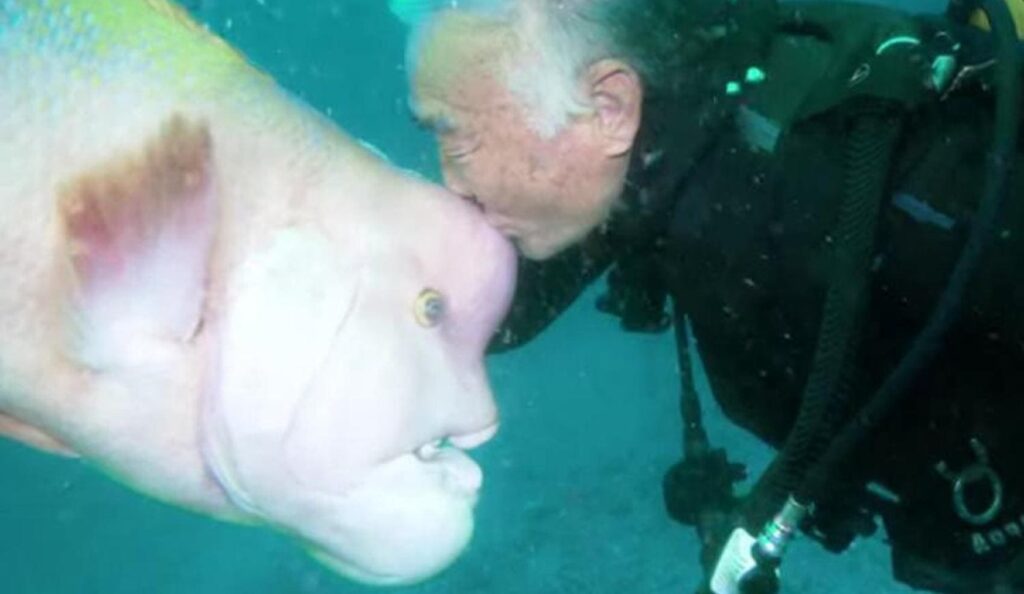
But in a plotline straight out of Disney, an adorable aquatic denizen of Japan’s Tateyama Bay has captured one man’s heart in a friendship that’s lasted close to three decades.
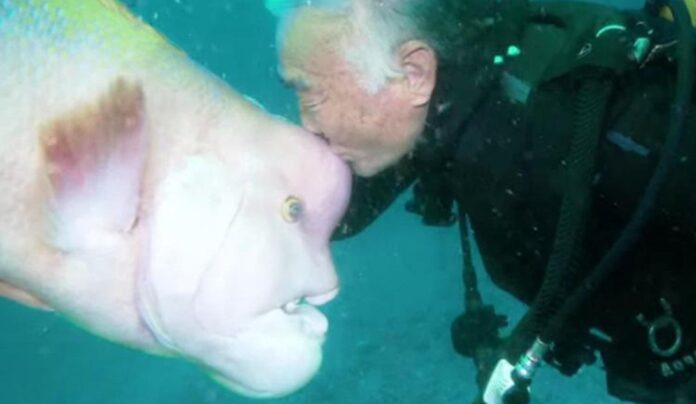
Yoriko, an Asian sheepshead wrasse (kobudai in Japanese), first met scuba diver Hiroyuki Arakawa nearly 30 years ago when he was supervising the construction of an underwater Shinto temple gate 56 feet beneath the surface of the bay.
Arakawa started diving at the age of 18. Now 79, he still loves his sojourns in the deep water. His longstanding kinship with Yoriko is certainly one of the highlights.
“I’d say we understand each other,” Arakawa said in an interview for Great Big Story, “not that we talk to each other… I kissed her once. I’m the only person she’ll let do it.”
Over time, the fish with an almost human-looking face—“When you look really close, you’ll think [she] looks like someone you know,” Arakawa jokes—and her human companion became UWBFFs (underwater best friends forever).
On one dive when Arakawa was visiting, he noticed Yoriko’s mouth had been badly injured. Even so, she came to greet him.
Realizing she’d be unable to catch her own food, Arakawa spent the next 10 days hand-feeding Yoriko meat from crabs he hammered open for her near the submerged temple gate.
Thankfully, Yoriko bounced back from her injuries fairly quickly. After her recovery, the bond between the pair seemed to grow even stronger.
“I’m not sure if it’s the nature of the kobudai or not. It’s probably because there is a sense of trust between us. I guess she knows that I saved her… that I helped when she was badly injured. So for me to be able to do that, I am proud,” Arakawa told GBS. “I have an amazing sense of accomplishment in my heart.”
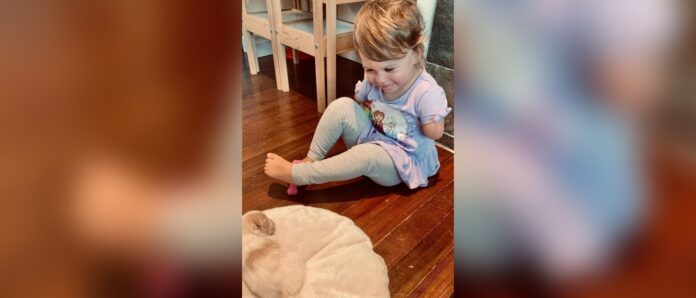
Like any happy toddler, Ivy McLeod is full of smiles and filled with wonder as she discovers the world around her. Ivy’s favorite activity is coloring, but since she was born without hands, Ivy holds the markers between her toes to create her kiddy masterpieces.
At age 2, Ivy’s mom Vanessa says her daughter isn’t fully aware of the reason other kids have hands and she doesn’t. She knows it’s only a matter of time before Ivy is going to start asking some tough questions.
To prepare for the inevitable conversation, McLeod came up with the idea of getting Ivy a puppy that had similar limb differences as a way to show that being different and being beautiful aren’t mutually exclusive.
She wanted to be able to tell Ivy: “You know you were born that way but different is beautiful and this puppy was also born that way and that is also a beautiful thing,” McLeod explained in an interview with CTV News.
McLeod was worried finding a pup to fit the bill might be a long haul, but it just so happened that a three-legged fur-baby was born in their Vancouver, British Columbia neighborhood just a few short weeks after the search began.
As it seemed like fate, they named the pup Lucky, of course.
In addition to being a way to help Ivy understand what makes her different need not set her apart, McLeod sees the bond her daughter and the Lucky share as they grow and face new challenges as an opportunity to shift people’s perceptions.
“I love everything that is different about her,” McLeod told CTV, “so I encourage people not to view disabilities as sad or something to be pitied but something to be celebrated.”
One doesn’t need Good News Network to tell them there are a lot of people whose minds and moods have been darkened by the last 14 months.
The mental health crisis that many immediately saw as a great threat from government-enforced business closures, quarantines, and travel restrictions was a very real thing before COVID-19, and as a report from global medical care knowledge provider BMJstates, 2018 saw over 70 million prescriptions for antidepressants written in the U.S., compared to just 36 million ten years before.
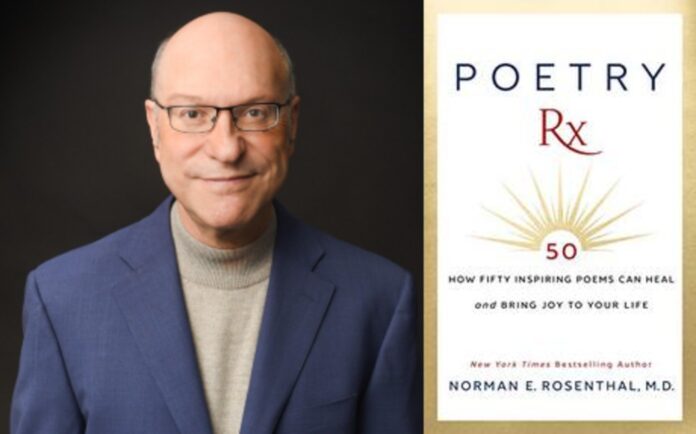
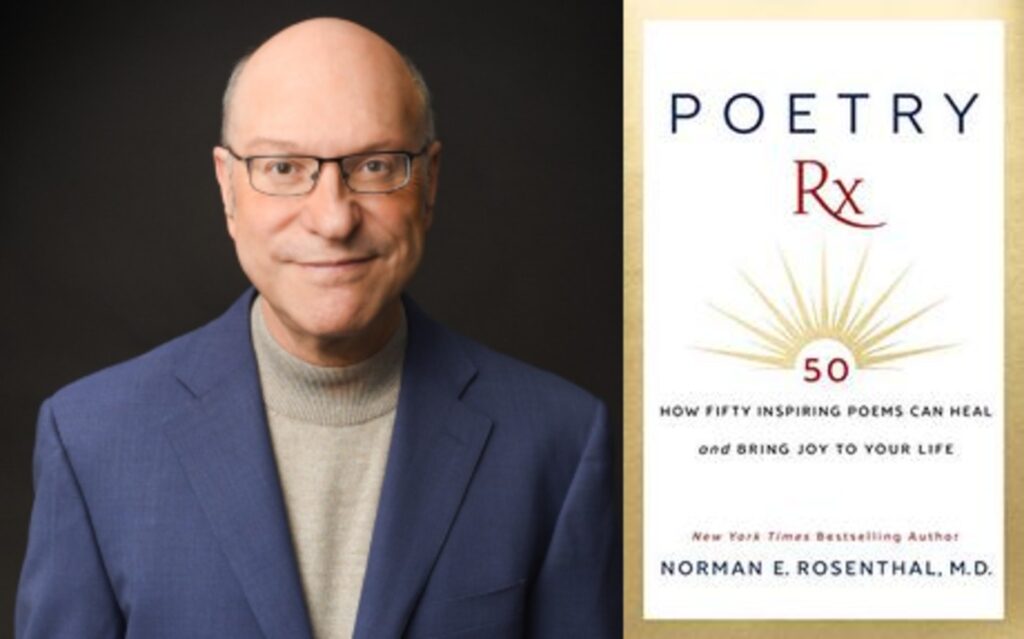
Yet Norman Rosenthal M.D., a renowned figure in the psychiatry field, is tackling both crises with a different kind of prescription: a little bit of “Do not go gentle into that good night,” or a 30-day course of “How do I love thee? Let me count the ways.”
“You know, as an adolescent, as a teenager, I wrote poetry and I loved it, but truly I was not destined to become a poet,” Dr. Rosenthal told GNN. “But luckily, even though I could not produce wonderful poetry, I could always appreciate it, not just intellectually, but for the emotional gifts it presents.”
Separated into five parts, titled: Loving and Losing, That Inward Eye, The Human Experience, A Design for Living and the Search for Meaning, and Into the Night, Rosenthal offers a variety of literary keys to unlock the words needed for one’s inner dialogue to start, fortify, or complete the healing process of trauma, grief, or perhaps the general COVID-19 malaise.
“Over the years I collected poems I found either were wonderfully helpful to me, or to my patients or clients, and the effect of that is that I had this collection and I thought, ‘you know that would make a wonderful book’.”
The pandemic, as for so many of us, offered the time and the seclusion required for Rosenthal to organize these poems into the different parts and write all the accompanying stories, including brief bios on the poets, and excerpts from friends’ and clients’ experiences with the poems.
Literary healing
“I might prescribe exercise, I might prescribe meditation, I might prescribe rest… and in that sense I could also prescribe a poem, they’re [clients] not going to go to a pharmacy but they could take it as a serious suggestion,” says Rosenthal.
As the book has made its rounds along the PR circuit, it’s won the praise of The New York Times’ “High Priestess of Health” Jane Brody, who for over 40 years has been their personal health columnist.
“The special beauty of Dr. Rosenthal’s book for me is his discussion of what each poem is saying, what the poet was likely feeling, and often how the poems helped him personally, as when he left his birth family in South Africa for a rewarding career in the United States,” she wrote in her column.
“The wonderful thing about poems are they’re relatively short, so in just a few minutes, you can read, enjoy, appreciate, and benefit from a poem; as such they can often be squeezed in between all the things of a busy life,” says Rosenthal, whose extensive body of work also includes a publication on the practice of transcendental meditation, and the pioneering of the understanding and treatment of seasonal affective disorder.
The collected poems, largely originating from the English poets, include not only ones which he or his friends and family have enjoyed, but ones that he uses in his psychiatric practice. In particular he told GNN of a Rumi passage, pulled from memory, which he often reads with clients having marriage difficulties.
Out beyond ideas of wrongdoing and rightdoing
There is a field
I’ll meet you there
“When the poet says, ‘I’ll meet you there,’ he’s making the first move, he wants to make things better, he wants to suggest taking the squabble to a different plain, to a plain of sharing,” explains Rosenthal.
A daily dose of a poet’s insight
“I personally take information in in chunks, and I think a lot of people do especially these days, very few people have time to read War and Peace or Paradise Lost,” says Rosenthal “We like to get information in satisfying chunks, so I thought it would be more digestible if I broke it down into logical groupings.”
Poetry Rx really does work like a 30-day prescription, with poems and the related commentary satisfying a day’s worth of ponderances, while being grouped together in various stages of the emotional journey of life, one can jump around to whichever words are needed at a particular time.
Another way to look at it might be as a poetry Almanac, giving the book tremendous re-reading potential, as there’s no guarantee a reader would relate to all of the content in a single period of their lives.
“Loving and Losing was an obvious first [section], poems are things to which we turn when we’re in or out of love. They console us when we’re our of love and they enliven us when we’re in love,” he says. “The second one is responsiveness to nature, because poets tend to be extremely sensitive to their surroundings.”
“Above all, it’s [a book] about human beings and how to experience your life in a way that enhances it, and if you’re suffering in some way, alleviates that pain.
Quote of the Day: “I never had any training… When I was growing up, I was the last guy to get picked for every team that I was on.” – Willie Mays (Happy 90th birthday today)
Photo: by Ben Hershey
With a new inspirational quote every day, atop the perfect photo—collected and archived on our Quote of the Day page—why not bookmark GNN.org for a daily uplift?
Produced by the U.S. Navy for use in World War II, and now consigned primarily for storage use on farms, the Quonset hut is experiencing a rebirth within the residential neighborhoods of Detroit.
Chris Miele/Prince Concepts
The long half-cylinder of corrugated steel, prefabricated in factories, was used by development company Prince Concepts to create a unique apartment building of eight high-ceilinged units for 30% less than comparable affordable housing in up-and-coming neighborhoods in the city.
“A Quonset hut isn’t a design, it’s a tool—think about it the same way you’d think about a brick, it’s a tool to achieve a purpose,” explains their website. “For Caterpillar, Prince Concepts challenged architect, Ishtiaq Rafiuddin, to create an 8 unit project within one massive hut, as a 9,000 square foot sculpture with 6 residences and 2 Live/Work spaces that anchors a public park where people can soak up the majesty of a new age monument.”
The Caterpillar’s designer and financier, Philip Kafka, has been using Quonset hut architecture to cut costs and offer unique housing and business opportunities in Detroit. Between the low cost of the hut, and of the land in the city, his projects offer perspective renters something totally unique in terms of price and style.
“With True North [another rental project that consists of live/work spaces, which gave rise to an art gallery and a yoga studio] we used the Quonset hut to create a sculptural community with public and semi-private outdoor nooks that residents and neighbors, alike, could enjoy, marvel at and marvel in,” Kafka explains.
In an interview with Fast Company, the Texas-born, former-NYC advertisement mogul describes his work as “Home-Depot architecture.” The Caterpillar rooms are between 750-1375 square feet, with walls pock-marked with symmetrical window arrangements, hardwood floors, and a 23-foot high vaulted ceiling.
Chris Miele/Prince Concepts
“You get a sunrise view in your bedroom and a sunset view in your living room. That was intentional. It’s all about light, this project,” Kafka explained. “The real benefit isn’t that the Quonset hut lets me build a project so inexpensively, it’s that it lets me give people extremely high-quality space for a reasonable price.”
In addition, the landscape is bespoke, and features a wrap around deck, gardens, and forty trees. The project was fully leased months before it was officially finished.
Chris Miele/Prince Concepts
With raw wood, steel, pipes, and other construction materials fully visible inside, the Caterpillar, and True North for that matter, were designed with artists in mind, whose creativity would be able to be unleashed upon the raw space.
Kafka says he doesn’t want to become the Quonset hut guy, only that it allows him to build bold spaces and buildings on the cheap side. As he mentioned earlier, they are merely a tool for him to do a job, which is hopefully bring a bit of creative artistry to dilapidated neighborhoods of the Motor City.
SHARE This Stunning Design With Friends on Social Media…
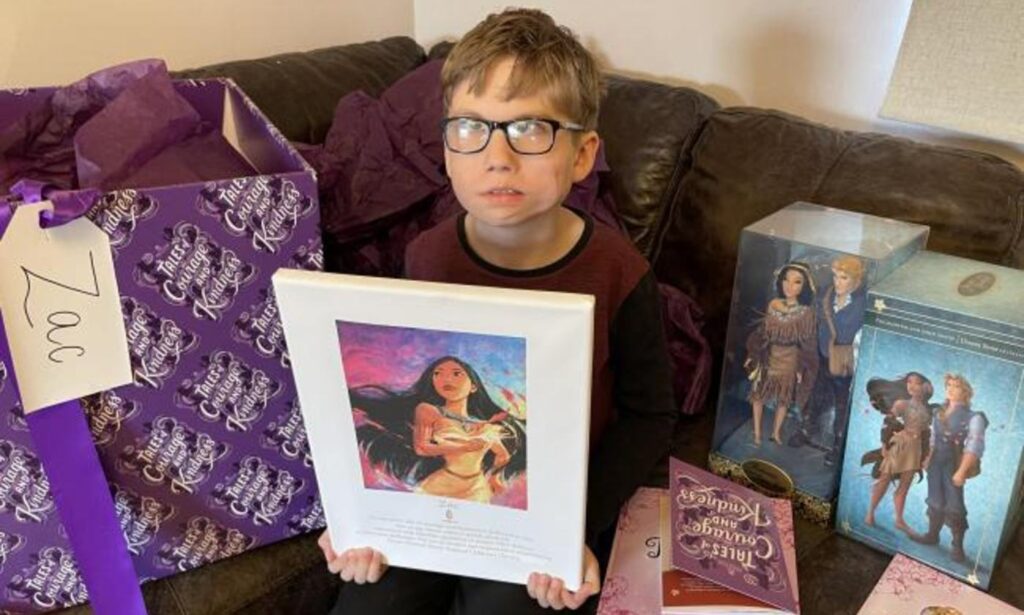
A brave 11-year-old boy who was told he’d never speak has been honored in a Disney storybook all about kindness.
Zac Du Boulay, who was born with Moebius Syndrome, won $5,000 in a recent ‘Inspire Like Churchill’ speech competition, but decided to donate all his winnings to Great Ormond Street Hospital Children’s Charity.
“I didn’t want the [sick children’s] parents to be sad or lonely, so I wanted to help,” he said of his generosity.
Now Zac has been honored by Disney—in its just-launched Tales of Courage and Kindness—a digital storybook collection.
14 young people from around the world have been given dedications in the storybooks, which feature 14 original Disney Princess stories aimed at inspiring children to help create a kinder world.
A difficult start
Zac was born with facial and oral paralysis which left him unable to breathe or eat.
“I put so much time and effort into trying to speak, and I did the impossible, I proved the doctors wrong,” said Zac. “I didn’t worry about people bullying me, I kept strong in my heart.
“I’ve always been determined, kept strong, and tried not to worry about anything. ‘Hakuna-matata’, as they say in Disney’s The Lion King.”
Zac’s mom spoke of the difficulties the family faced when he was born: “Zac spent his first five months fighting for his life in intensive care.
SWNS
“We were then trained by intensive care nurses to care for him at home, where we were resuscitating him several times a day under emergency conditions, so life as a family was very stressful and restrictive.
“However, Zac is a fighter. He defied all the odds, firstly, by surviving. Then on Christmas Day, when he was three years old, he said his first word. ‘Mama’.
“It was the first sound he had ever made other than crying and laughing. From that moment on, he was on a mission to teach himself to speak. Then, once his airway had stabilized somewhat, he was determined not only to speak, but to teach himself how to eat orally.
“So we had another couple of stressful years, finding him raiding the fridge and choking on food, until he worked out a way in which to eat despite the nerve palsy to his face, mouth, and throat.
“Similar to his incessant talking, he now never stops eating either,” she joked.
And now? Zac loves using his own experiences to support other children and help them to overcome challenges like he has.
SWNS
“I feel amazing, excited, happy, and proud to be honored [by Disney]” he said. “It has inspired me to keep on doing what I’m doing, giving more speeches, and hopefully inspiring more people.”
SHARE Zac’s Brave Story of Defying the Odds With Your Pals…