











All News - Page 511 of 1735 - Good News Network
Home Blog Page 511

NASA Technology to Map The Stars Could Now Help Save World’s Largest Fish

Jeremy Bishop

High above our planet, the Hubble Space Telescope has special software for parsing out the details of each individual star it surveys. Now this technology is being turned back towards Earth to help an animal that, while not as big as a star, is still quite a hefty unit.
Jeremy Bishop

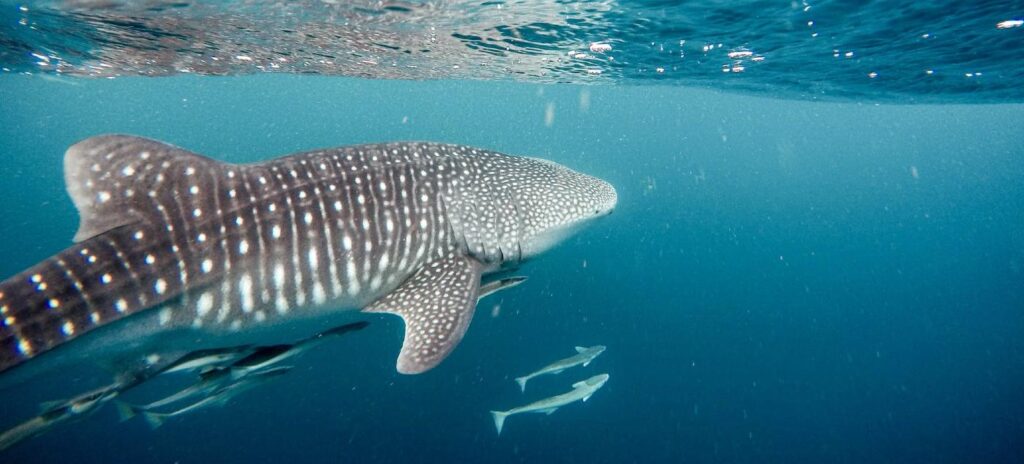
Despite being the largest fish in the ocean, whale sharks are one of the least understood of their kind. Marine biologists don’t have good data on their migration patterns, their global hotspots, breeding sites, or if they follow a seasonal food source.

It is principally this lack of knowledge that has prevented scientists from being able to develop conservation strategies to protect the animal from sliding further and further towards extinction.

Now a new citizen science project utilizes the Hubble’s “Groth” algorithm—normally used for identifying individual stars in the universe—to map photographed-whale sharks’ spotted patterns, of which no two are alike, and therefore effectively act like a fingerprint.

The algorithm forms the brain of a new photographic database of whale sharks, the largest ever assembled, that marine biologist Brad Norman of Western Australia’s Murdoch University used to create the Wildbook for Whale Sharks—a library of individually identified sharks that anyone, hobbyist scuba diver, amateur scientist, or professional biologist, can contribute to.

“At the start it was just me taking photos of whale sharks at Ningaloo, but we needed more than one lonely researcher to collect enough data over an extended period,” Dr. Norman said in a statement. “And, because tourists were constantly swimming with whale sharks too, why not enlist their support?”

“I was fortunate to team up with two brilliant scientists, software guru Jason Holmberg and NASA astrophysicist Zaven Arzoumanian, to develop a user-friendly database where anyone, anywhere can upload their own images of whale sharks.”

“We’re talking about an animal considered to be rare, maybe a couple of hundred documented sightings in all of history,” Jason Holmberg, who came up with the idea to turn the Hubble’s Groth algorithm on the sharks, and who teamed up with Dr. Norman to create the database, told NASA.

When the Stars and Sea Combine

Now the library contains more than 76,000 sightings of 12,357 sharks, each one capable of growing up to 40 feet long and weighing 20 tons. These gentle, filter-feeding giants are somewhere between Endangered and Critically Endangered on the IUCN Red List, and the database will go a long way towards ensuring that their feeding grounds and migration and breeding habitat can be found and preserved.

MORE: Fishermen Rescue Rare Whale From Nets Thanks to New Training Program

The spots just behind the whale shark’s fins are unique to each fish, so Norman and company can see where each one travels, breeds, and likes to stay. This is actually typical of biology. Animals like cheetahs and leopards have totally unique coats of spots, and polar bears can be identified even through just the arrangement of their whiskers.

CHECK OUT: Scientists Finally Manage to Record the Strange Sounds of the ‘Arctic Unicorn’—the Elusive Narwhal

As space and the ocean remain the final frontiers for scientific exploration, it seems only fitting that such a legendary space explorer as the Hubble Telescope should be used to help plumb the depths of the sea, especially when it’s looking for an animal which in the Malagasy language is known as marokintana, which means “many stars.”

HELP Your Friends Space Out to the Good News By Sharing it Online…

Help Out Your Favorite Historic Restaurant—Nominate it For an Amex Pandemic Grant

There’s no getting around it: The pandemic has hit the restaurant industry hard. That’s why American Express is funding $1 million in grants to historic U.S. restaurants—you can help by nominating your favorite place to break bread.

Restaurants are gathering places where history is made in meaningful ways, small and large, over and over again. They matter. Which is why the Backing Historic Small Restaurants initiative has been launched in partnership with the National Trust for Historic Preservation.

Because of this program, 25 much-loved eateries across the States will receive $40,000 each to help them navigate the pandemic.

Restaurant owners who receive a grant will have the opportunity to improve, upgrade, and preserve their physical spaces and online businesses, as well as mitigate existing operating costs.

For example, these businesses can rehabilitate the exteriors of historic buildings and facades, expand outdoor dining, upgrade their takeout and online ordering systems, or establish a stronger online presence. Updates like these are critical for future success in a post-pandemic world.

MORE: Tex-Mex Restaurant Owner Spends $2,000 of His Own Money to Promote Competitors Who Are Struggling

“For generations, our nation’s oldest and most historic small restaurants have been safe spaces for customers to share meals, ideas, and their culture. They are at the heart of our neighborhoods, serve our communities, and help advance cultural and social change for those who live there,” says Colleen Taylor of American Express in a statement.

“Many have stood the test of time, but the pandemic has tested them in ways they could have never imagined. The ‘Backing Historic Small Restaurants’ program will help preserve these spaces not only for their legacy, but also for their earned place in our nation’s future.”

As part of the grant program, AT&T Business and Dell Technologies will also offer up to $250,000 collectively in products and services to the grantees to upgrade their digital business capabilities.

RELATED: Restaurant Serving Thousands of Free Meals to Homeless Is Saved by Donations from D.C. Community: ‘Tears of joy’

Independent U.S. restaurants can be suggested for consideration at SavingPlaces.org/HistoricRestaurants. There’ll be a focus on restaurants owned by underrepresented groups who’ve been especially impacted by the pandemic. Time to start nominating your favorite spot.

SHARE This Chance to Nominate Your Favorite Local Hangout…

See Incredible Photos and Hear Martian Winds From the Red Planet—Thanks to Perseverance Rover

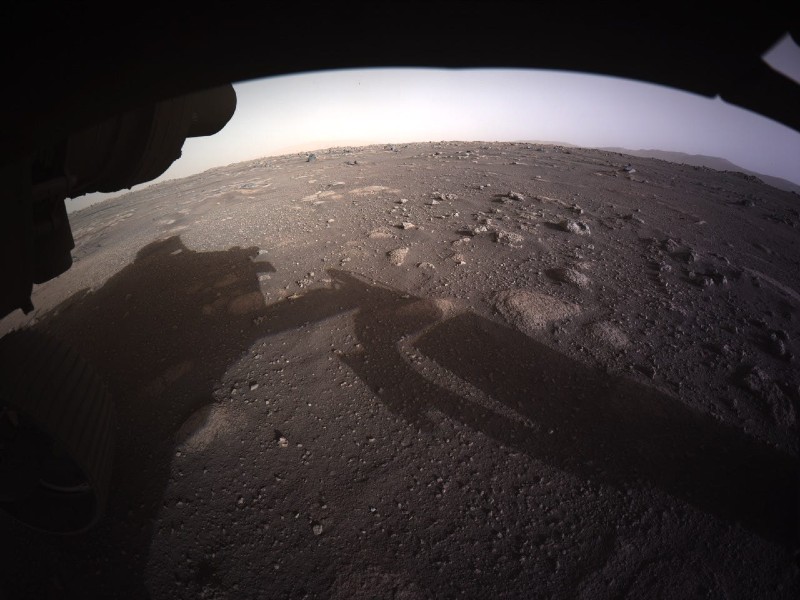
A camera on the bottom of Perserverance captures this image during its February 18 descent. NASA/JPL-Caltech

Reprinted with permission from World At Large, a news website of nature, politics, science, health, and travel.

The first high-resolution color image sent back by cameras on the underside of Perseverance. NASA/JPL-Caltech

NASA and the world just celebrated the fifth American rover to land on the surface of the Red Planet.

The rover brings with it a host of research equipment meant to examine the planet’s surface for signs of ancient microbial life. That data will take a while to put together, but in the meantime—monitoring equipment like microphones and cameras have already sent back some exceptional media tastings of how immersive modern Mars exploration can be.

On Sunday, NASA released the first-ever audio recordings of Mars. You can even here the sounds of the wind blowing on the fourth planet from the sun.

Some days before that, footage of the rover deploying its parachute during its descent came out.

NASA/JPL-Caltech

“Now we finally have a front-row view to what we call ‘the seven minutes of terror’ while landing on Mars,” said Michael Watkins, director of the JPL. “From the explosive opening of the parachute to the landing rockets’ plume sending dust and debris flying at touchdown, it’s absolutely awe-inspiring.”

“For those who wonder how you land on Mars—or why it is so difficult—or how cool it would be to do so—you need look no further,” said acting NASA Administrator Steve Jurczyk in a NASA statement. “Perseverance is just getting started, and already has provided some of the most iconic visuals in space exploration history. It reinforces the remarkable level of engineering and precision that is required to build and fly a vehicle to the Red Planet.”

What’s next for Perseverance?

Perseverance is currently undergoing a long, thorough check and troubleshooting of all its components and systems. Then it will go out in search of points to drill in and around the Jezero crater where it landed.

Meanwhile, it’s been taking thousands of photos of its new surroundings. Fortunately they’ve all been uploaded to the NASA RAW images folder on their website, and include pictures taken during every step of the robot’s journey.

A camera on the bottom of Perserverance captures this image during its February 18 descent. NASA/JPL-Caltech

As part of its instrument suite, the Ingenuity Mars Helicopter, a simple four kilogram construction of basic materials, will charge up using its solar panel to conduct the first aerial flight on Mars.

The helicopter sent its first status report from its current home attached to the undercarriage of the Perseverance rover—where it will remain for 30 of the 60 total days it will be in operation. All systems are currently working without issue, and it will slowly charge its six lithium-ion batteries for the next phase of the project—periodic bouts of sustained hovering.

If Ingenuity succeeds in taking off and hovering during its first flight, over 90% of the project’s goals will have been achieved. If the rotorcraft lands successfully and remains operable, up to four more flights could be attempted, each one building on the success of the last.

RELATED: These Stunning 4K Space Videos From NASA Will Help You Escape Earth’s Orbit For a While

Ingenuity will have to survive the freezing Martian nights, where temperatures dip as low as -130 degrees Fahrenheit (-90 degrees Celsius), in order to carry out each of these next four flights. The longer it can remain operable, the more information the scientists managing the rotorcraft can learn about how to build better ones in the future.

CHECK OUT: World’s First All-Civilian Mission to Space Will Usher in New Era While Raising Money for St. Jude’s

“We are in uncharted territory, but this team is used to that,” said MiMi Aung, project manager for the Ingenuity Mars Helicopter at JPL. “Just about every milestone from here through the end of our flight demonstration program will be a first, and each has to succeed for us to go on to the next. We’ll enjoy this good news for the moment, but then we have to get back to work.”

(WATCH the video of Perseverance’s touchdown on Mars below.)

SHARE The Far-Out Updates With Friends on Social Media… 

Pollution in the Mississippi River Has Plummeted Since The 1980s, New Study Says

By the numbers, the effects of the Clean Water Act on the Mississippi River have been nothing short of amazing. Now a new survey looking at more than a century of river chemistry reports brings the full value of the act into view like never before.

As early as 1909, people were testing the Mississippi, the largest river in the United States, for contents of bacteria, sulfates, lead, and oxygen. The great waterway was shown to become filthier and filthier until 1980, when the effects brought about by the 1972 Clean Water Act (CWA) started to kick in.

Eugene Turner, author of the Louisiana State University study, examined water quality reports around four sites near the terminus of the Mississippi River where it drains into the Gulf: St. Francisville, the disturbingly named “Plaquemine,” New Orleans, and Belle Chasse.

Following the implementation of the CWA, sewage treatment infrastructure became mandated and more advanced, resulting in a huge fall in the density of fecal coliform bacteria from raw sewage dumping over the last 50 years. “They’re 1% of what they were before the 80s,” remarks Eugene to Nola.

Oxygen concentrations—necessary for aquatic life to survive, rose in three of the four sites over the same period, though the site farthest from the sea changed little over the last 50 years.

MORE: China Passes Landmark Law Protecting the Yangtze – One of China’s ‘Mother Rivers’

Lead pollution could almost be described as non-existent, such was the effect of the CWA industrial runoff restrictions. They’re 1000x lower than they were in 1979. In some places they’re 2000x lower.

In 2011, environmental agencies actually stopped surveying the Mississippi for lead because the minuscule amounts in the water remained the same for a period of about 10 years.

In 1950 there was about 50 milligrams of sulfur dioxide per liter of water. Thanks to reduced sulfate emissions resulting from the Clean Air Act, the river now averages a measly 18 micrograms per liter. This reduction in sulfate has also led to a restoring of a far-more normal pH level in the water of about 8.4.

CHECK OUT: Volunteers Remove 9,200-lbs. of Trash From One of the Dirtiest Rivers in the US

“All of these changes occurred over decades; they were not accomplished quickly after a few masterly reconfigurations of technology or rules, but through sustained attention at many locations, one smokestack or sewerage plant at a time,” writes Eugene in his study.

READ: Once Left For Dead, The Aral Sea Is Now Brimming With Life Thanks to Global Collaboration

“The Clean Water Act has been tremendously effective at decreasing the amount of industrial and urban pollution, as this study shows,” Olivia Dorothy, a Mississippi River management expert with American Rivers, told Nola. “We need to protect the act and all of its authorities, [and] we also need to start looking at expanding it to cover the emerging public safety threats as they relate to water.”

CLEAN UP Your Pals’ Social Feeds—Share the Good News With Them…

The Simple Habit of Flossing Reduces Your Risk Of COVID-19 Complications, Says New Study

If there were ever a universal human skill, beyond things like running, jumping, and solving problems, it would be the excellent capacity humans display for ignoring good dental hygiene.

Brushing and flossing after every meal is a difficult habit to build in kids, and one that’s joyously forgotten among many adults. But it’s not just gum disease that could visit those who ignore their dentist’s advice: Recent research has linked gum disease to many other diseases like diabetes and cardiovascular disease, as well as increases in COVID-19 mortality.

Poor oral hygiene can lead to gingivitis, a gum disease which if ignored can become the more severe periodontitis. The latter was found in a study by the European Federation of Periodontology to affect half of all British adults, and by the CDC to affect about the same amount of American adults.

The Journal of Clinical Periodontology found that people with COVID-19 and gum disease had a 900% greater chance of dying from the virus, while also being 350% more likely to be hospitalized.

While the two phenomena seem completely unrelated, the correlation is simply the result of chronic inflammation, spurred on by diseased gums, exacerbating the inflammatory response generated by the SARS-CoV-2.

RELATED: 2 New Nasal Sprays That Kill COVID-19 Virus Are Looking Remarkably Effectiv

This knock on effect is quite common in pathology, with some inflammatory responses like interleukin (IL) and tumor-necrosis-factor (TNF) being correspondingly found in nearly every disease known to man. IL-6 is a principal factor in COVID-19 mortality for example.

The cause is simply the function that different immune agents have on our body. One of the leading inducers of death in COVID-19-afflicted patients is the much-discussed “cytokine storm” referring to inflammatory cytokines, a type of immune cell, targeting our own tissues with such fury that they cannot survive.

Fortunately, regular brushing and flossing, which in terms of healthy habits is much easier to do than cutting sugar out of your diet or spending 150 minutes a week in intense exercise, is often all that’s required to prevent gum disease.

CHECK OUT: Say Goodbye to Temporary Fillings: Scientists Successfully Use a Gel to Regrow Tooth Enamel

Furthermore, gingivitis is completely reversible through good oral hygiene practices of brushing, flossing, and mouthwash use.

The window of your body

“The Covid study is another pointer to the fact that you need to have a healthy mouth for your overall health,” Nicola West, the secretary general of the European Federation of Periodontology, told the Times of London.

“The mouth is a window on the body. Bacteria in the mouth get into the bloodstream where they can harm the rest of the body. This explains why gum disease has been linked with diabetes, cardiovascular disease, and dementia.”

Yes, you did in fact read dementia. A study conducted by West found that bacteria prevalent in patients with periodontitis were also present in the brains of patients who died from Alzheimer’s disease.

RELATED: World’s First Plaque-Identifying Toothpaste Significantly Reduces Inflammation Throughout the Body

This is because, West writes, gum-disease bacteria can cross the blood-brain barrier, especially later in life when our immune systems are weaker, and our risk for gum disease grows higher.

In short, there’s never been a better time to start improving your oral hygiene routine. A beautiful smile apparently reflects beautiful health, after all.

Be Sure And Share This Interesting News With Your Friends On Social Media… (Photo by Pedro-Ribeiro-Simões)

“Just believe in yourself. Even if you don’t, pretend that you do and, at some point, you will.” – Venus Williams

Quote of the Day: “Just believe in yourself. Even if you don’t, pretend that you do and, at some point, you will.” – Venus Williams

Photo by: Eye for Ebony

With a new inspirational quote every day, atop the perfect photo—collected and archived on our Quote of the Day page—why not bookmark GNN.org for a daily uplift?


Tex-Mex Restaurant Owner Spends $2,000 of His Own Money to Promote Competitors Who Are Struggling

El Mezcal, Adolfo Melendez/Facebook

Business owners looking to get the most bang for their advertising bucks routinely devote their budgets to media buys. But for one Wisconsin restauranteur, his optimum return on investment came from an entirely different source—promoting the competition.

El Mezcal, Adolfo Melendez/Facebook

Adolfo Melendez, who owns the Tex-Mex eatery El Mezcal, knows firsthand the impact the coronavirus pandemic has had on the restaurant industry. Family-based local places—like his own—have been especially hard-hit.

It’s perhaps why he understands better than most that small businesses aren’t simply a source of revenue. They’re the heart, soul, vision, sweat equity, lives, and livelihoods of the people behind them.

People who are your friends and neighbors. People Adolfo Melendez believes in because he’s one of them.

To help stave off restaurant cutbacks and closures in his community, Melendez purchased more than $2,000 in gift cards to other neighborhood eateries and has been raffling them off to his customers via Facebook.

Olympia Family Restaurant owner Pete Ananiadis truly appreciates the selfless gesture. “In these COVID times, it’s very important to eat local, small mom and pop shops,” he told WKOW-27 News. “[Aldofo] understands that.”

In the best of times, the restaurant business can be competitive, but diversity is what gives a community its unique flavor. Adolfo Melendez appreciates flavor.

MORE: Restaurant Serving Thousands of Free Meals to Homeless Is Saved by Donations from D.C. Community: ‘Tears of joy’

He appreciates his peers. He understands that their success is an affirmation of his own, and he encourages his community to join his efforts to ensure other restaurants continue not only to hold their own but to thrive.

RELATED: Customers Jump Up to Help Run Restaurant When Chef is Left Alone After Staff Emergency: ‘Beautiful to witness’

“That’s part of what keeps us alive,” he told WKOW. “You can go to Applebee’s, or you can go to Pizza Hut but it ain’t the same like when you go to this little diner or pizza joint… If you help one person and another person helps another, that will help a lot.”

SHARE This Sweet Story With Your Friends on Social Media…

2 New Nasal Sprays That Kill COVID-19 Virus Are Looking Remarkably Effective

During the Jewish holiday of Rosh Hashanah 2020, Israeli researchers realized they had a solid real-world opportunity to try out a nasal spray they were developing as a COVID-19 defense.

As the Jewish faith’s new year, tens of thousands would be traveling and attending synagogue and related festivals in the densely populated city of Bnei Brak—making it an ideal testing site.

Approved in Israel, Taffix, a spray created by Nasus Pharma, creates a barrier of both mechanical and chemical protection for around five hours when inhaled through the nose. It was this spray that its co-creator, Dalia Megiddo, offered to a Bnei Brak rabbi for use in the festivals.

83 people agreed to use the spray before the festivals according to instructions—reapplying every five hours until the celebrations were over. Remarkably, of the 83 people who used the nasal spray, only two people caught COVID-19; both reported forgetting to use it. Of the 160 people who were approached but chose not to use the nasal spray, 16 of them—or 10%—did contract the virus.

A game-changer

Nasal sprays are being tested in several research institutes as effective defenses for COVID-19, which makes sense: While the mouth is an extremely hostile environment for viruses, the nose is much less defended.

MORE: We Use 6 Billion Face Masks a Day—But Scientists Have a Genius Way to Turn Them Into Roads

The Telegraph reports that researchers at the University of London are working on the first set of clinical trials for a nasal spray: nitric oxide is its active ingredient, and it’s proven to both kill 99.9% of the virus that causes COVID-19, and grant protection against incoming and outgoing viruses.

RELATED: 10 Positive COVID Updates From Around the World – 2021 is Looking Brighter

Nitric oxide is something that is found and produced in red blood cells, but it also kills viruses virtually on contact. Pankaj Sharma, a Professor of Neurology working on the University of London trial, sees nasal sprays as a game-changer because they disrupt the structural integrity of the virus independent of antibodies or other immune cells.

“If we take the South African variant, once it touches nitric oxide it’s going to be structurally destroyed anyway; the fact that it has got a different RNA profile makes no difference to nitric oxide,” he told the Telegraph.

CHECK OUT: She was Demoted, Doubted and Rejected But Now Her Work is the Basis of the Covid-19 Vaccine

Furthermore, since it’s simply an endogenous chemical, similar to taking something like a melatonin supplement, he can’t imagine why anyone would choose not to use it, or why anyone would have adverse reactions to it.

Featured image: Robin_24, CC license

SPRAY Your Friends With the Good News—Share This Hopeful Research…

7 Years Ahead of Schedule, Maersk Will Deploy World’s First Carbon-Neutral Shipping Liner in 2023

Maersk

The world’s largest container shipment carrier has announced that in just two years’ time it will be putting a little more green into the deep blue sea.

Maersk

Maersk is deploying their first carbon-neutral shipping liner that incorporates e-methanol or bio-methanol as fuel in 2023.

The green liner is to join the fleet a full seven years ahead of the Danish company’s original date—as they hope to rapidly shape the future of marine container shipping into one that’s carbon-neutral.

According to a press release, the developments of new technology have allowed them to deploy an ethanol-powered liner long before they thought possible, thereby replacing the original target of 2030 with a goal for a 60% reduction in shipping CO2.

“Maersk’s ambition is to lead the way in decarbonizing global logistics,” says Søren Skou, CEO at Maersk, in the press release. “Our customers expect us to help them decarbonize their global supply chains, and we are embracing the challenge, working on solving the practical, technical and safety challenges inherent in the carbon neutral fuels we need in the future.”

The International Maritime Organization (IMO), a UN body advising international maritime law and practices, has a greenhouse gas reduction strategy that aims to reduce levels of harmful global shipping emissions from benchmark 2008 levels by 40% by 2030, and by 70% by 2050.

To succeed in bringing shipping emissions down, which in 2014 sat at 961 million tons of CO2 and CO2-equivalents—about 3% of the world’s inventory—the IMO will need the help of industry leaders like Maersk in pushing other container shipping guilds into the picture more quickly.

MORE: More Renewable Energy Used in 2020 Than Fossil Fuels For the First Time in World’s 4th Largest Economy

However, despite Maersk getting out in front of the issue, trends are moving in the right direction as increases in technology better the performance of vessels, and fuels.

For example, according to Clean Cargo, the leading buyer-supplier forum for sustainability in the cargo shipping industry, the number of shipping vessels, their size, and their cargo, has increased 157% since 2010, but 2018-2019 saw an 8.1% reduction in CO2 emissions and a 10.2% reduction in sulfur dioxide.

Furthermore, emissions on key shipping routes from Asia to India, and from Asia to the Mediterranean, have fallen 12%.

RELATED: Researchers Pull Carbon Out of the Sky And Convert it to Instant Jet Fuel, Reshaping Aviation For Good

This demonstrable increase in the existing shipping technology will likely lead to other companies starting their carbon reduction missions ahead of schedule—as such goals become cheaper to employ.

SAIL the Hopeful News Over to Your Friends on Social Media…

Two Colleges in Ohio See How Much They Can Out-Tip One Another at Restaurants—Raising $34,000 for Workers

Keystone Bar & Grill

College rivalries can lead to fierce competition on and off the playing field. While excesses of energetic team spirit have historically led to frivolous mascot-napping feuds, this past January fans of two Ohio schools launched a Battle Royale for bragging rights to a much more worthy cause: showing support to restaurant workers financially hamstrung by the COVID-19 pandemic.

The first touchdown play after the “tipoff” was quarterbacked by a Xavier College alum who left a $1,000 tip on a $54 bill at Zip’s Café with a scrawled napkin note that read:

“Please share this tip with all your employees as they work so hard and are dealing with COVID. Go, Xavier!”

After the score was posted to the Internet, it was the University of Cincinnati’s turn to take the kick return and run with it.

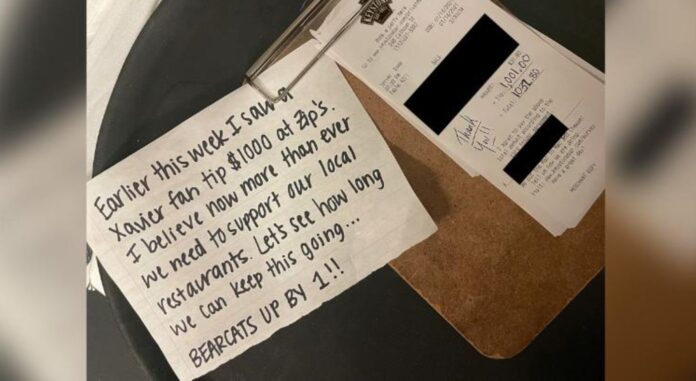
The following week, two anonymous UC fans left a $1,001 tip at the nearby Keystone Bar & Grill along with a challenge: “Earlier this week I saw a Xavier fan tip $1,000 at Zip’s… I believe now more than ever we need to support our local restaurants. Let’s see how long we can keep this going … Bearcats up by 1!!”

Keystone soon spread the word of the generous gratuity to Facebook, explaining the tippers who preferred to remain nameless weren’t in it for the glory but in hopes of inspiring others to do likewise. They closed the post by throwing a little friendly fuel on the fire. “It’s your turn, Xavier fans! Who will be one-upping the Bearcats by leaving a $1,002 tip at your favorite local bar or restaurant?”

Xavier and UC being located a mere three miles apart is the perfect call for intense rivalry. “I think the proximity has definitely helped drive the traction on this very generous, feel-good movement,” Zip’s Café owner Mike Burke told CNN.

MORE: Juice Bar Workers Were Shocked By a New Year’s-Themed Tip of $2021 – And Assumed it Was a Mistake

“Money aside, I know this has put smiles on faces of everyone impacted and even put smiles on faces of those not directly involved,” Burke added. “I have to say, we could all certainly use some more smiles these days.”

While the game may not be over quite yet, so far, this year’s “Tipoff Bowl” has scored close to $34,000 for Cincinnati’s restaurant workers. When you’ve got a win/win like that, who needs a trophy?

RELATED: Customer Raises Huge $12K Tip to Give His Favorite 89-Year-old Pizza Deliveryman –Watch The Tearful Surprise

On the other hand, with a host of college rivalries percolating nationwide, there’s certainly room for expansion.

Maybe it’s time to kick off a new sporting tradition and make the “Tipoff Bowl” an annual sporting event?

TIP Your Friends Off to the Good News—Share This Story…

New Zealand Designer Makes Ingenious Solar-Powered Skylight That Desalinates Water For Drinking

People living in the shanty towns of Chile’s coastline have all the water they could ever need, but they can’t drink it because it’s too salty. There’s also abundant solar energy here, but nothing to harness it.

Henry Glogau

Now, a finalist in the 2021 Lexus Design Award, Henry Glogau, has created something that takes advantage of both these abundant resources: a solar-powered lighting fixture that desalinates water.

Clean water is scarce for the 110,000 families in the area, and power comes through unreliable electric lines. Windows are often boarded up to increase privacy and security, which removes almost all natural light.

“I wanted to achieve a design which was sustainable, passive, and created a striking feature inside the dark settlement home,” writes Goglau, a New Zealander who graduated from the Royal Danish Academy with a master’s degree, specializing in architecture for extreme conditions.

“In my development process it became apparent that I could address the lack of indoor lighting and water access by creating a hybrid skylight and solar desalination device.”

Goglau’s device can purify 440 milliliters of water a day, with leftover brine being sifted into batteries made of zinc and copper where they power an LED strip for use during the night.

Henry Glogau

During the day the light is powered by a small solar panel, and the whole thing is cheap to manufacture.

MORE: How Transparent Solar Panels and ‘Quantum Dots’ Could Make Skyscrapers Power Themselves

Not only focused on function, the solar desalination skylight is modeled in such a way as to utilize the chemical process of evaporation and condensation to create soothing lighting patterns on the walls and floor as the photons move through water droplets, vapor, and undulations in the stylized shade.

RELATED: This New German Car is Covered With Solar Panels and Charges As It Drives

Employed now as an architect at GXN, Goglau doesn’t know if he’ll win the Lexus prize, as one of six finalists, but his invention, with the help of local charities, is already being installed among informal homes in the Chilean town of Antofagasta.

(WATCH the video about the innovative skylight below.)

Power Up With Positivity By Sharing The Good News With Your Friends On Social Media…

“Make the most of yourself by fanning the tiny, inner sparks of possibility into flames of achievement.” – Golda Meir

Quote of the Day: “Make the most of yourself by fanning the tiny, inner sparks of possibility into flames of achievement.” – Golda Meir

Photo: Michael Olsen

With a new inspirational quote every day, atop the perfect photo—collected and archived on our Quote of the Day page—why not bookmark GNN.org for a daily uplift?


In Texas Natural Disaster This Furniture Store Owner Heroically Offers His Store as Shelter — Again

Taking in flood victims in 2017

Texas has seen more than its fair share of weather-related calamities—but there’s one valiant businessman who has consistently stepped up to make sure his Houston neighbors always have shelter from the storm.

Taking in flood victims in 2017

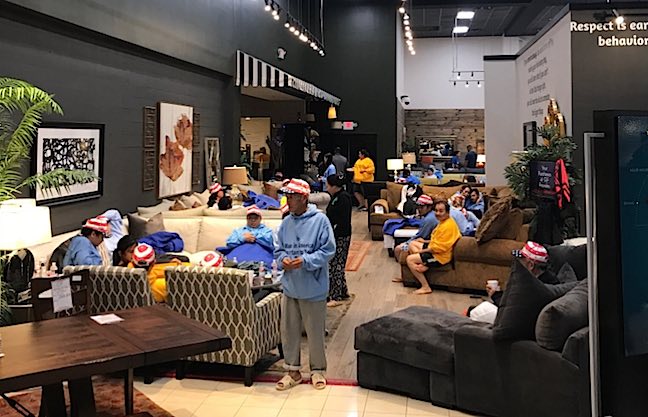
When the recent winter storm, Uri, took out the power grid, leaving the state in shambles, Jim “Mattress Mack” McIngvale opened two of his Gallery Furniture locations as impromptu warming stations.

Over the course of a 72-hour period, Mattress Mack and his crew provided 3,000-plus meals and overnight accommodations to more than 700 Houston residents, after offering shelter to the community on the store’s website.

And, this isn’t the first time Mattress Mack turned into a Good Samaritan. In 2005, the Lone Star paladin welcomed refugees from Hurricane Katrina, and in 2017, he gave succor to victims of Hurricane Harvey.

“We’re opening up both buildings as shelters during this horrible time,” McIngvale said in a 2017 post to the company Facebook page. “We’ve got lots of beds, we’ve got lots of food, we got water, and you can even bring your animals.”

When tropical storm Imelda hit in 2019, once again, McIngvale made sure Furniture Gallery’s doors were open for those in need. With the onset of Uri, he took to social media, inviting anyone who needed to, to come on down.

While the store had a diesel-run generator to provide electricity, with only a single functional water pipe, plumbing became a critical issue. Ensuring COVID-19 protocols were followed added another layer of complexity to the situation.

McIngvale and his staff rose to the occasion, rigging a solution to meet the plumbing demand, and also ensuring that once visitors were wearing masks, they observed proper social distancing before settling in to fill up on warm meals, watch some TV, and get some much-needed rest.

“Obviously there’s a lot of angst among the community coming in here. They’re shellshocked. They’ve been home for days in the cold with no electricity, no heat, no water, no plumbing,” McIngvale told The Washington Post.

While McIngvale may best be known locally for the over-the-top commercials that have made Mattress Mack a household name for three decades, he’s been getting some king-sized praise via the Internet from the west coast to the east for being the go-to humanitarian port in so many Houston storms.

“I live nowhere near Texas, I’m in Michigan,” one Facebooker posted. “If for whatever reason I ever move to Texas, be sure you’ll have my patronage! Thank you for your kindness.”

And this from the Windy City: “Shoutout to Mattress Mac from Chicago! You are An absolute blessing to those in need and an inspiration to everyone. This story has done so much more than warm and feed Texans—it is a beacon of light and hope for our entire country. You are a true angel!”

And this one from the South: “I live in Georgia and this is something that warms my heart. I know y’all are cool and hungry and to read something like this is amazing. Thank you Gallery Furniture for doing this. God bless.”

Much of the expense for his neighbors’ care comes out of McIngvale’s own pocket, but to him, that’s how it should be. “To whom much has been given, much is expected,” McIngvale told The Post. “We’ve benefited from public support over the years, so it’s our obligation to open our doors and let people come in to get a respite from the storm. It’s the right thing to do.”

For anyone who’d like to help an angel out, McIngvale has set up a GoFundMe campaign to help alleviate the ongoing storm-related impact on his community.

SHARE This Story of Kindness and Generosity With Your Friends…

UK Choir Makes the Sweetest Lullaby for 5-yo in the US, When Their Singing is the Only Thing That Helps Her Sleep

A British choir has come to the rescue of a little American girl suffering from ‘night terrors’—by singing her to sleep with a special lullaby from 3,500 miles away.

Ever since their dad, music teacher Rick, came across a video of the Bristol Man Chorus singing a sea shanty last summer, 5-year-old Roslyn Kane and her sister Evelyn have been huge fans of the all-male group.

When Roslyn began having nightmares, Rick reached out to the choir from his home in Pennsylvania to see if they could help his daughter through the power of song.

Roslyn with her dad, SWNS

Choir director Sam Burns got to work immediately, crafting a personal lullaby for his new friend. The lyrics are simple and lovely:

“Roslyn, Evelyn, sing goodnight / Roslyn, Evelyn, close your eyes / Sweetest dreams, all warm and bright / Roslyn, Evelyn, sing goodnight.”

The director then thought to himself, ‘she loves the whole choir—I could arrange it for the boys to sing.’

MORE: 110-Year-old Has Turned Into a Singing Sensation on Social Media, Fulfilling Life-long Dream Thanks to Great-Grandson

The group was soon getting together via Zoom so they could sing the new melody out loud.

So how is little Roslyn sleep nowadays? Her bad dreams are “getting better,” says Rick. “I think she enjoys the added benefit of [the personalized song] being hers.”

RELATED: Postman Who Started the Online Craze for Sea Shanties has Now Quit his Job to Pursue a Career in Music

Performing the song has been good for the lads in Bristol, too, with Sam saying the group were “very flattered” by the song request, and that the news had really “uplifted” them.

(HEAR Rosylyn and Evelyn’s beautiful lullaby in the video below.)

SHARE This Soothing Story With Pals on Social Media…

People Power Wins: Alberta Reverses Course on Coal Mining Atop Rocky Mountains

Jordan Grider

When the current Alberta government tried to repeal a piece of legislation restricting coal mining in the Rockies, Canadians of all varieties banded together to object.

The idea of exploratory metallurgical mining pits opening in the most iconic of Albertan landscapes—the mountains—has seen nothing more than unprecedented mobilization from the public.

Jordan Grider

Threatened wildlife, First Nation lands, popular recreation sites, the headwaters of a principal freshwater source for communities, and grazing lands used for generations by ranchers typify the eastern slopes of the Rockies, all labeled as Category 2—or unavailable for mining development—under the 1976 law the government sought to dispel.

Facebook groups, country music stars, conservationists, farmers, and more all joined together to oppose the repeal, which the United Conservative Party government did eventually go back on, but which controversial premier Jason Kenney said was only a “course correct.”

“We admit we didn’t get this one right,” said provincial Minister of Energy Sonya Savage. “We’re not perfect and Albertans sure let us know that.”

Savage would eventually issue additional directives to Alberta Energy Regulator stating that: “No mountaintop removal will be permitted and all of the restrictions under the 1976 coal categories are to apply, including all restrictions on surface mining in Category 2 lands,” and “All future coal exploration approvals on Category 2 lands will be prohibited pending widespread consultations on a new coal policy.”

MORE: Huge Indigenous Solar Farm Opens in Remote Northern Community: ‘We work with the sun for the children of the future’

Given that any leases and exploration programs approved while the coal policy was rescinded can still continue, Albertans aren’t stopping the fight to protect the province’s mountains and headwaters just yet.

Many have been surprised that the provincial government didn’t seem to expect such a fight from the public.

“It doesn’t take much looking at… Tourism Alberta ads,” political science professor Melanee Thomas told The Narwhal. “They are literally almost exclusively about the eastern slopes.”

RELATED: In The Wake Of Lockdowns Coal and Natural Gas May Look Like the Biggest Covid-19 Casualties

What’s happening right now in Alberta is a tremendous demonstration of the power of collective public action, and a warning to any future politicians who want to make their bread at the expense of the wheat.

TAKE ACTION—Share This Story on Social Media…

The Public Gave Names to Over 50 Snowplows in Scotland And They are Hilarious!

Far from the disaster that christened an English ship ‘Boaty McBoatFace’, Scotland held a public drive to name more than 50 plowing trucks responsible for keeping the roads safe for motorists—and the results are too funny.

Lord Coldemort – Amey

The contest was organized by Amey, a company responsible for maintaining public highways and bridges, performing inspections, and keeping the roads clear from debris and snow.

Running from December 23 to January 23, online submissions took puns to a new level, with many tributes to the nation’s late beloved film star Sean Connery.

Of course, they include every possible play on wintery words imaginable—and a simple GPS app allows you to see where each truck is deployed, marked with their locations with their own unique name.

Snowcially Distanced – Amey

Hopefully by next winter, Amey will have painted stylized images on the doors of each truck to reflect their names—the way World War II warplanes were decorated with comic book paintings in the ’40s.

Sleetwood Mac – Amey

Check out more amusing winners…

  1. You’re a Blizzard Harry
  2. William Wall-Ice
  3. Brinestone Ploughboy
  4. Spready Mercury
  5. Sled Zeppelin
  6. Lord Coldemort
  7. Carrie Bradthaw
  8. Spreddie Van Halen
  9. Mary Queen of Salt
  10. Salt Disney
Amey

And here are the five, fun Bond-themed trucks.

  1. On Her Majesty’s Slippery Surface
  2. Coldfinger
  3. Dr. Snow
  4. You Only Grit Ice
  5. License to Chill

You’re welcome.

SHARE the Snowcially-Distanced Fun With Pals on Social Media…

Dolphins Have Similar Personality Traits to Humans, Study Finds

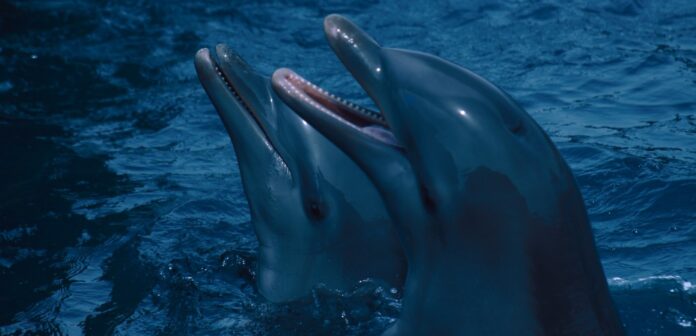
If you’ve ever looked into the face of a dolphin and felt for a second that they knew who you were, it’s because they’re naturally curious and sociable in a similar way to us humans.

In a study of personality psychology, bottlenose dolphins were found to have characteristics similar to both primates and humans (as well as a few others that appear to be all their own), shedding new light on the evolutionary pressures that develop personality.

When not referring to large African mammals, the ‘Big 5’ refers to broad personality traits that tend to be shared by most intelligent animals, and are defined as openness, conscientiousness, neuroticism, extraversion, and agreeableness.

The Big 5 has been studied in chimpanzees, rats, and now dolphins—and all creatures on Earth bear some variation of these traits—with some having more demonstrative versions than others.

In the recent dolphin study, published in the Journal of Comparative Psychology, researchers looked at 134 different dolphins across eight different facilities in the world. Personality was measured in 49 dolphins using a 42-item questionnaire, and in 85 dolphins using a version of the questionnaire that included seven additional items.

Four personality traits were determined by the questionnaires, three of which are typical of both human and non-human primates: They are high openness (broadly defined as creativity or curiosity), low agreeableness (a lack of prioritizing others’ happiness over your own), and high extraversion (sociability).

Traits like this are often discussed in clinical psychology. Personality psychologists like Jordan Peterson would note that low agreeableness, found in the dolphins for example, is typical in people who ask for large raises at work, while someone with high agreeableness often has a very difficult time climbing corporate ladders.

MORE: Rare Pink Dolphins Returning to Hong Kong as Coronavirus Halts Ferry Traffic, Giving Scientists a Closer Look

The fourth, which the scientists described as “directedness,” was unique to dolphins, and seemed to be a mix of high conscientiousness, a trait that tends to be high in people like entrepreneurs, and low neuroticism.

Lastly, unlike other primates but quite like humans, dolphins lacked a strong dominance domain.

Researchers aren’t certain why the Big 5 evolved, and extending their field of study into more and more animals will help evolutionary psychologists perhaps determine how far back along the evolutionary track such traits developed.

RELATED: Watch Amazing Video of Dolphin Baby Being Born

Dolphins diverged from other mammals 95 million years ago, which allows evolutionary psychologists to place the application of big 5 personalities at least that far back. They now also know the evolution of these characteristics can occur despite broad differences in environment, like living on land or in water, and in social organization.

SPLASH the Good News on Your Friends’ Social Feeds…

“Excellence does not require perfection.” – Henry James

By Adam Hoffman

Quote of the Day: “Excellence does not require perfection.” – Henry James

Photo: Adam Hoffman

With a new inspirational quote every day, atop the perfect photo—collected and archived on our Quote of the Day page—why not bookmark GNN.org for a daily uplift?


Strangers Shelter Stranded Delivery Driver for 5 Days During Texas Cold Snap–Now She’s ‘Part of the Family’

Chelsea Timmons

Chelsea Timmons decided to make it her last delivery because the roads in Austin, Texas were getting slicker. When she ended up getting stuck in the customer’s driveway, there turned out to be a big silver lining.

Not wanting to walk up the driveway, the H-E-B grocery employee tried to make it up the steep slope with her car, but slid helplessly into the garden.

Though the couple tried to help move her car, efforts failed—and AAA road service was already inundated with calls.

That’s when Nina Richardson and Doug Condon decided, with the weather getting worse and safety concerns growing, she needed to settle in at their house.

“It’s just what you do when stuff shows up,” Nina told ABC News.

“We have daughters and we hope if they were ever in a situation like this that there would be someone who would open their house and help them,” added Doug.

POPULAR: Wisconsin Chick-fil-A Worker Who Won a Car in Company Raffle Gives it to Co-worker Who Bikes to WorK in Frigid Cold

Over dinner they learned that Chelsea would like to open a bakery some day—and she soon volunteered to bake them a delicious gluten-free coconut cake.

Chelsea Timmons

She slept in the spare room for five days, became friends with the dog, and realized how lucky she was overall.

“I found out my apartment lost water, lost power, so being ‘stuck here’ actually turned out to be a better situation. Most of my family lost electricity for several days.”

LOOK: Chicago Man Goes Around Buying All of Vendors’ Tamales in Frigid Temps Then Gives Them to Homeless

“I definitely ate a lot better here,” she exclaimed. “They made me feel comfortable and made me feel like part of the family.”

WATCH the local news coverage below…

PARK THIS on Social Media to Inspire Winter-Weary Friends…

Processors in Tech Wearables like Fitbits Could Be Replaced Using Mushroom Mycelium

Oyster mushrooms by Rachel Horton

Wearable electronic sensors, such as those within Fitbit watches and pedometers that detect biological signals, could be replaced in the future by… mushrooms.

Oyster mushrooms by Rachel Horton

No that’s not a typo. In a proof-of-concept study, mycelium were able to perceive several external stimuli like light, temperature, and moisture, but also certain chemicals in the environment, and even electrical signals.

Oyster mushroom mycelium, the fibrous mainframe tissues of fungi that colonize under the soil and from which mushrooms sprout, were able to perceive electrical signals in such a way as to replicate that part for sensors and processors, which are readable by a computer.

In other (fantastical) words, the mushroom’s perceptions of the environment would become the data that gives you the beats-per-minute count on your heart rate monitor.

RELATED: The Myriad of Massive Health Benefits in 6 Different Kinds of Mushrooms

In nature, mycelium organizes itself into geometric structures in and throughout the soil. While fungal mycelium don’t have many reasons for detecting electrical signals in nature that we know of, reprogramming oyster mushroom mycelium genes to form different geometric structures that would optimize the detection power of electrical signals is the ticket to ride that makes Prof. Andrew Adamtzky believe it’s worth investigating.

“We have shown that it is possible to discern a nature of stimuli from the fungi electrical responses,” Adamatzky, who famously utilized slime molds to solve mazes and optimize city roadway planning in Tokyo and France, wrote in his new research paper.

Fungal wearable incorporated into real cloth – courtesy of A. Adamatzky, Reactive fungal wearables study

“The results paved a way towards future design of intelligent sensing patches to be used in reactive fungal wearables.”

CHECK OUT: He Works to Save Rare Ancient Fungus to Protect Us From Pandemics

The patches referred to were hemp fabric colonized with mycelium and then hooked up to computer sensors.

Spraying different chemicals onto the patch, as well as exposing it to different stimuli mentioned above, were what gave Adamatzky the surety of voice.

It’s not anything that’s going to seize control of the markets anytime soon, but it’s another fascinating application of mycelium, which GNN has reported can be used to make building bricks, coffins, canoes, and to great effect on nuclear waste cleanup.

SPROUT Some Food For Thought on Your Friends’ Through Social Media…