Many people have an iron deficiency—especially vegetarians. In fact, it’s the most common and widespread nutritional disorder in the world.
Lucky Iron Fish
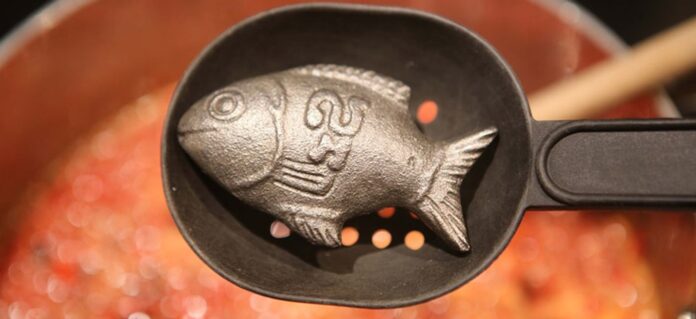
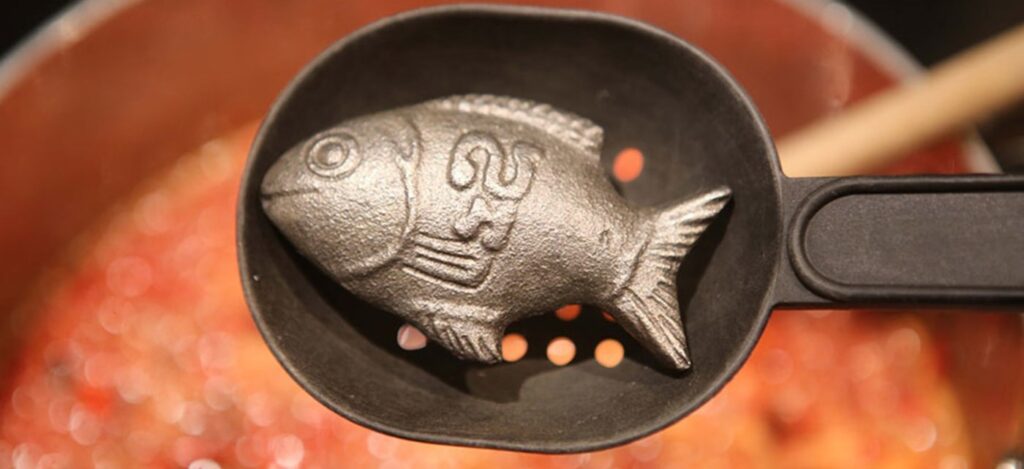
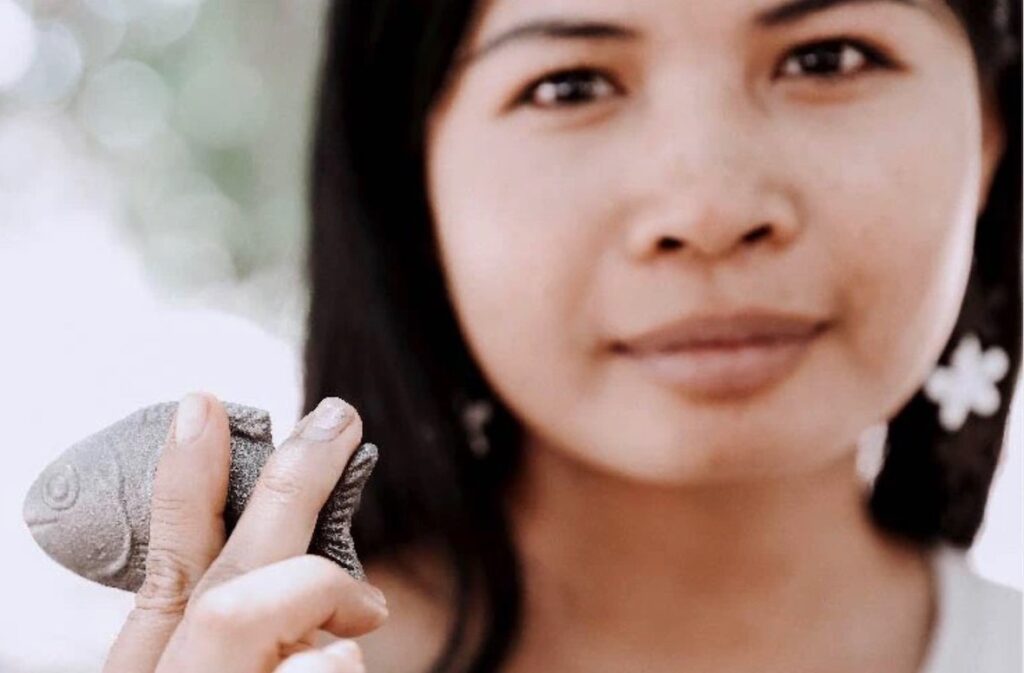
To address this problem, especially in low-income populations, two Canadian medical school graduates created a simple and delightful solution—it’s called the Lucky Iron Fish.
Essentially no more than a specially-designed iron ingot in a whimsical shape, their Lucky Iron Fish provides a significant portion of the recommended daily amount of iron for an adult when boiled for 10 minutes.
Iron, which is easily absorbed if you eat meat, but difficult to get from plants, is critical for blood circulation, and a lack of it in your diet can lead to dizziness and fatigue, as well as anemia.
The iron supplied in the Lucky Fish lasts five years if used daily, and quite ingeniously, users will know when it’s time to get a new one as the smile on the fish will slowly wear away. When the fish is no longer happy, it’s time to get a new one.
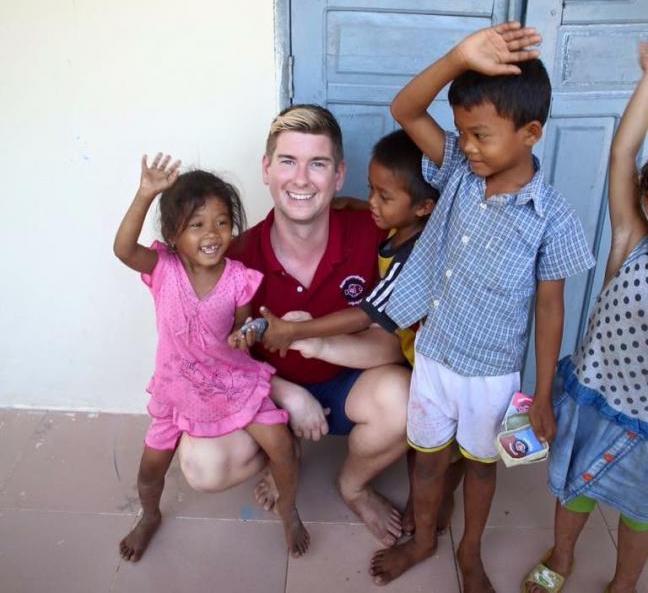
Dr. Gavin Armstrong was working abroad in Asia—where he learned firsthand the effects of iron deficiency in adults and children. He chose the fish shape based on the cultural significance of the symbol.
In Cambodia, the fish is a lucky symbol, and in a bid to convince people to stick a great lump of iron in their soup pots, he adopted the fish iconography to appeal to their culture.
It worked. And where it didn’t work—namely in India where vegetarianism is common—Armstrong, a graduate student from the University of Guelph, simply changed the shape and created the Lucky Iron Leaf.
Armstrong’s idea has earned him public praise. The innovation won a Flourish Prize for positive business innovation that helps to achieve one of the 17 United Nations Global Goals for Sustainable Development (Good Health). The announcement from AIM2Flourish cited sales of over a million units in 2016 alone, and an endorsement from Oprah Winfrey.
They also work with charities and NGOs, including CARE and World Central Kitchen, to put get these fish swimming in pots where families can’t afford it.
At $50 per fish, it is one-thirtieth the cost of a five-year supply of iron supplements, and certainly more fun for children. It’s also backed by numerous clinical trials proving its efficacy.
With iron deficiency being a tangible public health concern that also affects economic success, we are indeed ‘lucky’ to have this key ingredient for soups the world over.
Quote of the Day: “Every year should teach you something valuable; whether you get the lesson is up to you. Every year brings you closer to expressing your whole and healed self.” – Oprah Winfrey
Photo by: Marcos Paulo Prado
With a new inspirational quote every day, atop the perfect photo—collected and archived on our Quote of the Day page—why not bookmark GNN.org for a daily uplift?
The pandemic has created a generation of schoolchildren interested in a career in science, technology, engineering, and mathematics—a new poll on STEM trends has revealed.
SWNS
A survey of 1,000 kids aged 11-17 revealed 83% have been learning about the pandemic by watching the news—with 71% asking their parents about the virus because they’re interested.
Two-thirds have also been inspired by the hard work of the nurses and doctors working during the pandemic.
And 48 percent of secondary-age schoolchildren would be interested in a career in STEM after seeing how people working in these industries have helped people.
With children glued to the news, experts are becoming more mainstream, with youngsters more likely to recognize Chief Medical Adviser to the UK Professor Chris Whitty’s name (55%) than celebrities and sports stars including Harry Kane (50%), Selena Gomez (48%), and Zoella (35%).
One in five schoolchildren surveyed said the pandemic had made them interested in a career as a doctor in ICU, while 18% would now consider a career working on vaccines.
The survey commissioned by Medicspot also found 16% would like to be an ICU nurse, 16% would be interested in a career in pharmacy, and 14% would like to be a virologist.
During the pandemic, Medicspot has increased its staff numbers by 183 percent and provided Covid testing, along with ‘fit to fly’ certificates, at 90 locations across the UK.
“It’s heartening to see how many youngsters have been inspired by the medical professionals and scientists who have been working on the frontline to treat people suffering from Covid-19 and behind the scenes on the treatments,” said a Medicspot spokesperson.
The poll also found 68 percent of respondents think science is a cool subject—and 41 percent are now more interested in learning more about it.
Almost three-quarters are looking forward to going back to school, while 61 percent are going to try and work harder in their science lessons.
The survey, carried out by OnePoll, also found 52 percent would like to make a difference by helping people like the nurses, doctors, and scientists on the front line when they are older.
Domestication of animals was an amazing feat that changed human relationships with the natural world.
But while a Pomeranian looks nothing like a wolf, a thoroughbred jump horse looks nothing like a wild pony, and a potbellied pig looks nothing like a black boar, ‘domestic’ house cats look pretty much exactly like wild cats.
That’s because they domesticated themselves—not through form, but through function, and research reveals that wildcat ancestors share essentially the same genetics as house cats today.
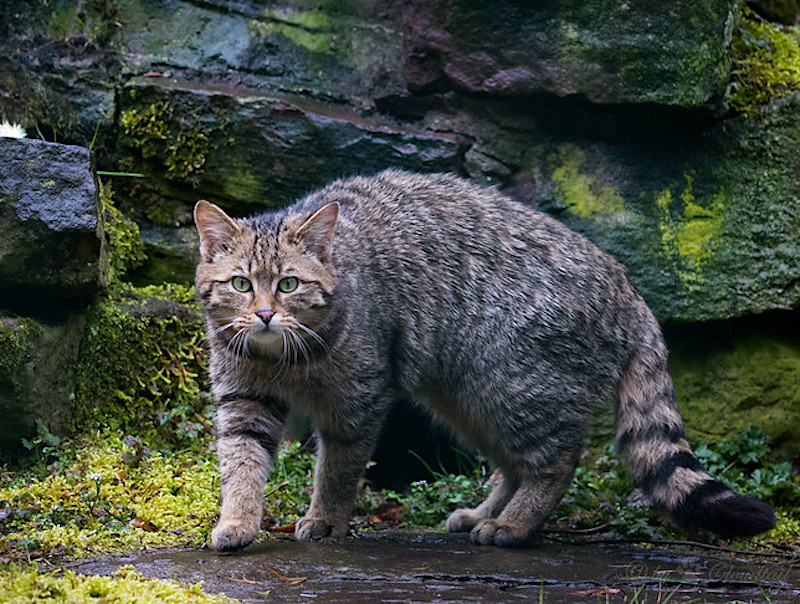
The two lineages of cats—the European forest cat (felis silvestris silvestris) and Southwest Asia/North African wildcat (felis silvestris lybica)—are solitary hunters that lack any strong social hierarchy, which would make them poor candidates for domestication by humans, to start with.
It was the cat, itself, who came to prize the territory around the homes of the ancient farmer, or the wharf of the ancient mariner. They were drawn to a plentiful supply of prey in the form of rodents—which brought their species and ours to be inseparably linked.
A study from 2017 looked at the genetics of over 200 cats, from all five wild subspecies, along with cat remains from stone age Romania, and even Egyptian cat mummies, and found that f. lybica in the Near East in 4,400 BCE, and in North Africa around 1,500 BCE, gave rise to the domestic cat, likely because it was here where the earliest agricultural civilizations occurred.
European wildcat -felis silvestris by Cloudtail the Snow Leopard, CC license, Flickr
Still, cats existed unchanged through thousands of years—essentially until the Middle Ages, before selective breeding, the typical activity of domestication, began to give rise to more unique types of cats.
“I think that there was no need to subject cats to such a selection process since it was not necessary to change them,” said evolutionary geneticist and study coauthor Eva-Maria Geigl to National Geographic. “They were perfect as they were.”
Rather than merging social hierarchies and breeding selectively like humans did with wolves—cats simply existed in close proximity to humans, without ever fully entering societal processes.
Rise of the Tabby
The first domestic cat genes the scientists identified were the blotch pattern on the tabby cat—the first truly domesticated, if such a word can be used, house cat.
Striped tabby cats were found in the European gene set of wildcats back before 6,500 BCE, and there they stayed for 3,000 years before emerging in the Near East genetic profile.
Tabby cats evolved their characteristic blotches in the Ottoman Empire in 1,300 CE, and it wasn’t until the 18th century that the tabby pattern began to be associated, societally, with domestication.
Not until the 19th century, thousands of years after dog diversification, did Europeans begin selecting certain characteristics to breed together in cats, resulting in the Russian Blue, perhaps around 1875, and the Maine Coon around the same time.
While not being truly domestic, cats are a celebrated part of our lives, and exist in 74 million homes in the United States alone. Their lack of selective breeding means that for the most part, genetic susceptibility to disease, typical of hyper-specialized dog breeds, is mostly absent in cats, and it’s not uncommon for them to live past 20 years old.
IF You’re Feline It, Paw This Fasinating Story Over to Friends…
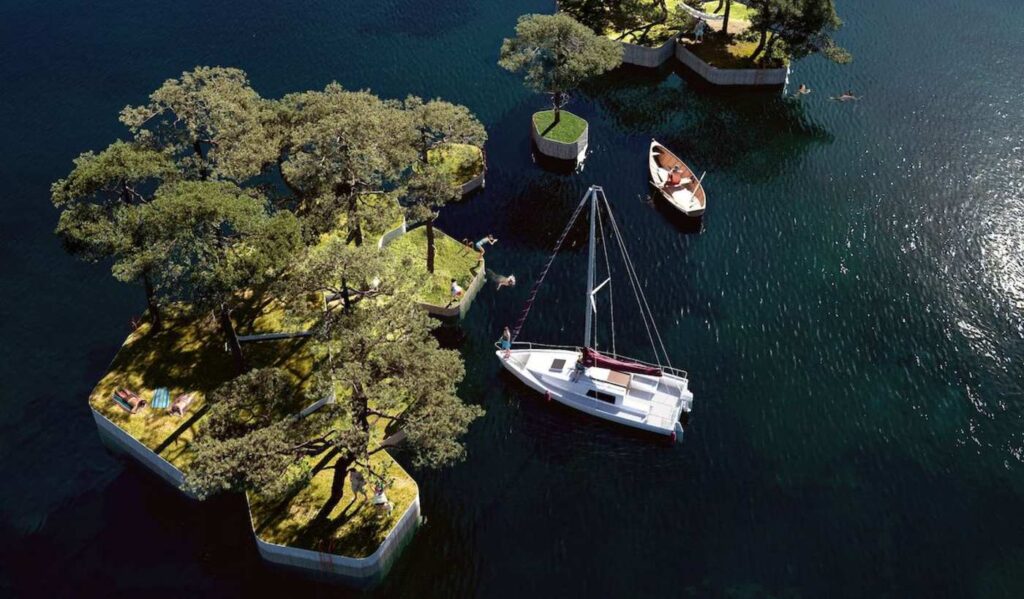
The Scandinavian countries are famous for their bays, and Copenhagen harbor in Denmark’s capital is a perfect example of that beauty in a metropolitan setting.
Now a new architecture project drifting in the harbor’s waters celebrates this heritage while allowing residents to relax away from the boom of urban development along the shoreline.
Copenhagen Islands
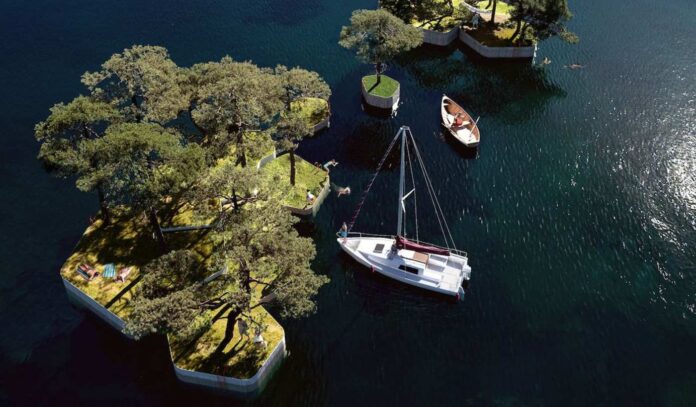
A series of floating islands, crafted using traditional building materials, are being planned as the country’s first “parkipelago.”
Complete with discreet features that will allow residents to enjoy the islands through kayaking, picnicking, and swimming, Danish design company Studio Fokstrot describes them as a celebration of traditional Danish harbor life, and a way to strengthen the cohesion of marine harbor ecosystems.
Each island is built from thin strips of wood, steel, and recycled boat material, and the first one is 215 square feet, featuring a single mature linden tree for shade.
The presentation website dreams big, claiming that once more islands are finished (three new islands are slated to float in spring 2021), the entire parkipelago will be home to floating gardens, floating saunas, floating mussel farms, and a floating sail-in café—all of which can be explored for free.
Underneath the islands’ hulls, special care is made to create a surface from which seaweed and other marine plants can cling, attracting small fish and crustaceans, which thereby attract larger sea life.
“During summer the islands can be distributed to unused parts of the harbor, serving as an adventurous escape for the increasing amount of kayaks, sailors, and general users of the harbor coastline,” reads the website. “During winter and for special events or festivals, the islands can be brought together as a super-continent, creating a cluster more easily accessed from the harbor side.”
If one thinks about the prevalence of seaside megacities that don’t have so much room for green spaces—an especially good example of which are those in Africa—the floating islands instantly seem like a great idea for those looking to increase the number of parks available to their citizens in other countries, too.
Meet the labradoodle who acts like a human thanks to his incredible bond with his best friend, a seven-year-old boy who was adopted into the family at the same time.
Reagan the dog was over the moon when his new family welcomed a foster baby Buddy, also 11-months-old, into their home.
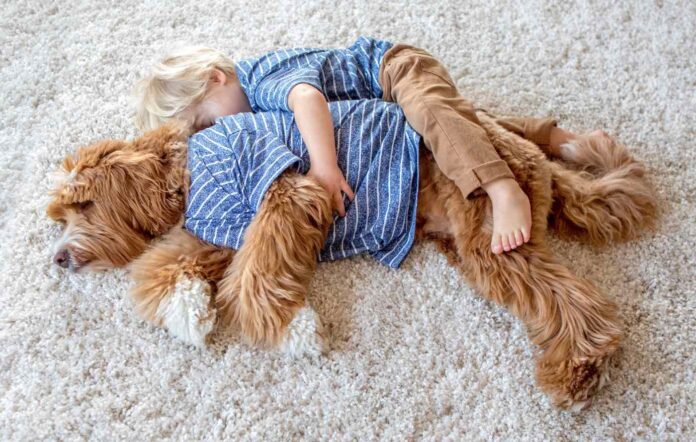
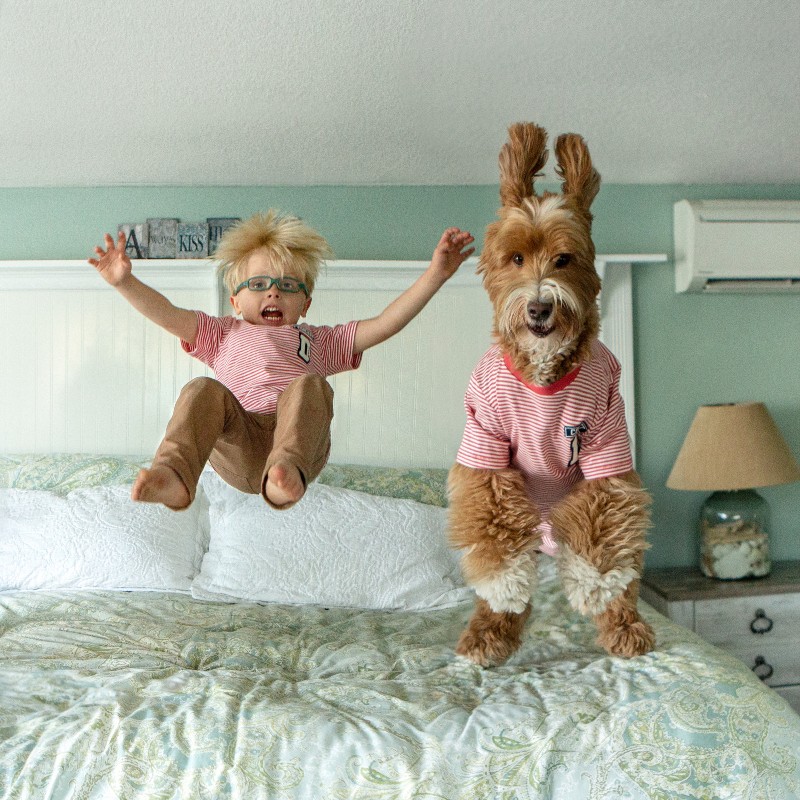
The pair grew up together, and these adorable photos show them posing like a pair of brothers, wearing identical outfits, on holiday, and even sharing joint birthday parties.
SWNS
Pooch Reagan belongs to grandmother Sandi Swiridoff, 60, who adopted him just months before her daughter Kari Lewis, 31, fostered little boy Buddy.
Now Buddy, and his little sister Reagan, have been permanently adopted by the Lewis family, so boy and dog are officially best friends forever.
Snaps show the dog and all the kids acting just like siblings—putting up the Christmas tree together, reading bedtime stories, and eating spaghetti.
SWNS
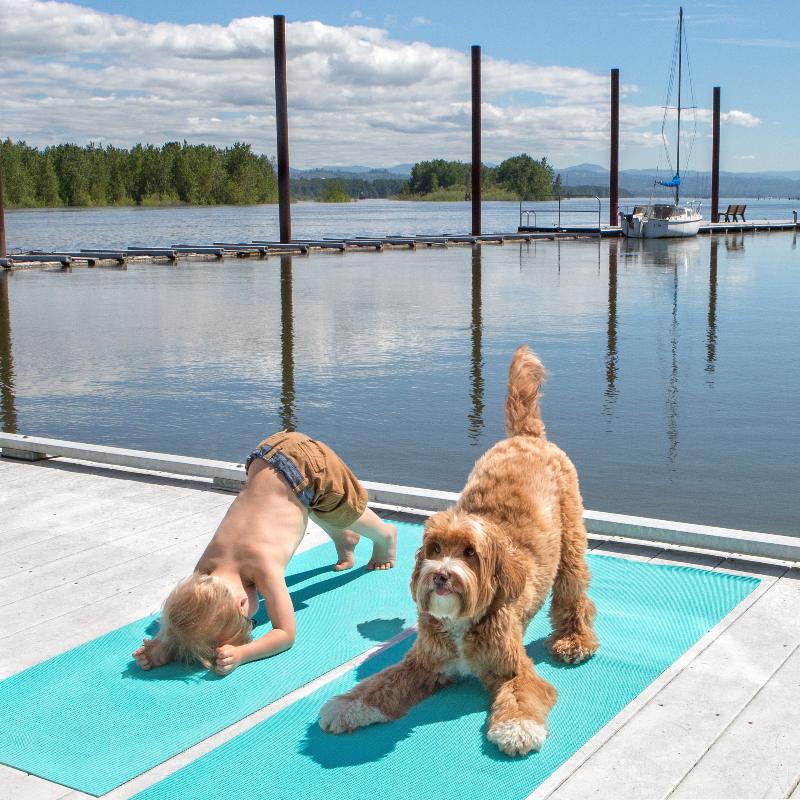
Whether they are doing yoga or having a nap, the fun pair tend to look more than a little adorable.
SWNS
Sandi, from Portland, Oregon, said: “Reagan gets SO excited whenever Buddy comes over. They are seven years old now, and don’t see each other every day, but that only increases the excitement level when they are reunited.”
SWNS
“Their bond was instant. Reagan seemed to know that Buddy needed a furry friend to help him adjust and make him feel safe and loved. Watching their bond warms my heart, as they have the same energy level and personality.”
SWNS
Retired nurse Sandi and her husband Eric adopted Reagan in 2014. They were preparing for a “child-sized void” in their lives after their first foster grandkids were adopted by their forever families.
SWNS
One one of their last weekends together, Sandi took the children to “have a look” at a litter of Australian Labradoodle puppies, but when they arrived she saw there was only one left— Reagan.
As the 10th most-visited website on Earth, and the largest repository of human knowledge there is, school curriculums and even entire worldviews can be formed simply through reading Wikipedia.
However, when the city of Paris has more information contained in Wikipedia than the entire African continent, there is a significant risk of young Africans beginning to perceive home as a “single story.”
Wikimedia’s Bobby Shabangu at a WikiAfrica AfroCuration edit-a-thon, Johannesburg, 2019/Adama Sanneh
Further, an enormous amount of content on Wikipedia about African culture, languages, geography, and more, is written by Westerners. The inevitable lack of cultural context inherent in the everyday experiences of Africans can lead to stereotyping—again turning one small part of the African story into the whole story.
The WikiAfrica Education Program, founded by the Moleskine Foundation, is an effort to foster creativity and an interest in culture in African school curriculums by teaching students how to prepare and submit, as well as edit, articles on Wikipedia.
Since 2006, the WikiAfrica Program has led students contributing 40,000 submissions, including articles, and also audio clips, edits, photos, and more. Notably, many of the most detailed of these submissions were in African languages like isiXhosa.
Co-founder of the Moleskine Foundation, Adama Sanneh, an Italian-born son of a Gambian/Senegalese father, understands that creativity creates culture, and culture is the force that changes society.
A self-professed nerdy kid drawn to culture, art, and philosophy during his childhood growing up outside of Milan, he started the Moleskine Foundation in an effort to try and galvanize Africans into changing power dynamics on the internet—and in their daily lives.
“We aim to inspire young people from the continent and beyond, and especially African language speakers, to transform themselves from passive knowledge consumers to active knowledge producers,” says Sanneh, who then explained the startling information gap between Paris and Africa.
“When we look at entries in African languages the situation is even more grim. So obviously the idea is to do something about it, and with this cultural and bottom up approach the idea is to really inspire young people to become knowledge producers, to talk about their surroundings, to talk about their knowledge, and especially to do it in their languages,” he told GNN.
Un-erased from history
Adama Sanneh (far left)
Disenchanted by the traditional NGO-approach to development and aid in Africa, which made Sanneh feel he was on the “wrong side of history,” his work with Moleskine embodies the widely-held belief that African problems must be addressed by Africans, and that African history should be written by and for Africans.
“There’s so much misunderstanding around the African continent,” says Sanneh.
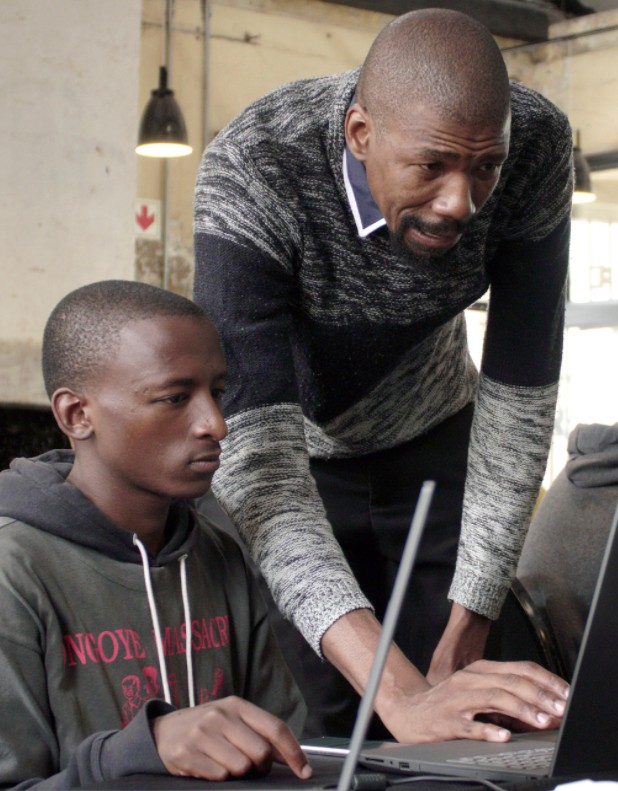
In 2019, Moleskine Foundation teamed up with the Constitution Hill Trust in Johannesburg to put on a Wikipedia ‘edit-a-thon’ called “AfroCuration,” where—following a presentation on the history of the constitution of South Africa—Sanneh and his team had 200 computers waiting for the students.
“We had more than 300 young people coming together at Constitution Hill in the museum, so it was really inspiring and full of history,” he said. “They could chose among 100 different entries of heroes, various aspects of the Constitution, and then write those articles in their own languages, meaning isiZulu, isiXhosa, Tshivenda, etc. They wrote more than 200 entries, in one day, on Wikipedia.”
“The great thing was that those entries, whether about Winnie Mandela (Nelson’s second wife), or about specific moments in South African history, that were missing in their own language… in the following month, those entries were seen collectively more than 250,000 times.”
In another AfroCuration event, also at Constitution Hill, but with the AfroPunk Army Initiative, 12 Black, female South African historical figures essentially returned to the broader historical record—with their names and deeds making it onto Wikipedia for everyone to see and read.
“Now you can find an article about Joyce Seroke, who’s a super-important figure in South African history in the fight against apartheid, and who’s never mentioned,” says Sanneh. “Now you can find it on Wiki in isiZulu, isiXhosa, Tshivenda.”
Education = life
The importance of the African languages to the WikiAfrica Education Program cannot be understated, because a culture can’t fully express itself without its language. For example, Chinese Confucian theology would never be complete without Chinese words.
This was never more important than after the pandemic arrived, when virtually no information, guidelines, or policies were being translated into African languages. Sanneh saw a need, as well as an opportunity.
“When we started the situation was very grim, there was only one article in Luba, or something like that,” he told GNN. “We launched a campaign to ask people to translate… ten articles around COVID-19 that would allow the sparking of creative solutions.”
“In a couple of months we passed from one to more than 300 articles in more than 20 different African languages. That gave access to more than 300 million people when we look at the composition of the languages,” he said.
With the WikiAfrica Education Programn now working with schools across the continent to get Wikipedia skills into school curriculums, Sanneh has time to turn his attention to other projects.
Host of the Creativity Pioneers Podcast, which looks at how creativity can spark social change, not just in Africa, but all over the world, Sanneh interviews creatives, social activists, and more—people like Uzodinma Iweala, the Nigerian-American novelist who wrote the bestselling novel Beasts of No Nation.
You can find new episodes every Thursday, and get to know the entrepreneurs, artists, activists, and scientists that make Africa, in Sanneh’s opinion, the most creative continent around.
Empower Your Friends—Share This Positive Trend With Them…
Quote of the Day: “Potential is always bigger than the problem” – Rev. Michael Beckwith
Photo by: Greg Rakozy
With a new inspirational quote every day, atop the perfect photo—collected and archived on our Quote of the Day page—why not bookmark GNN.org for a daily uplift?
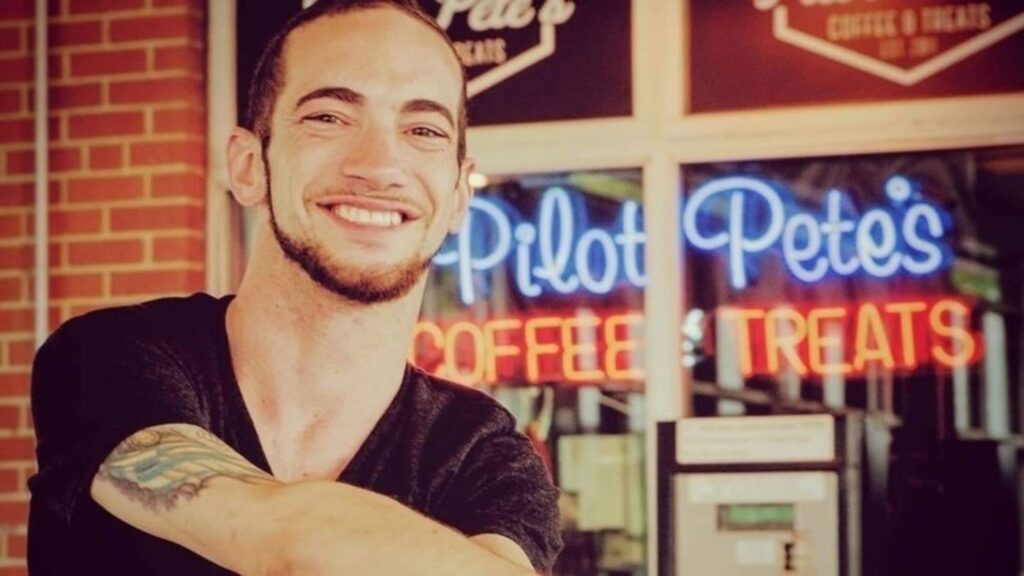
Tucked into a suburban Chicago train station may appear to be an unassuming coffee shop. But what’s going on behind the scenes is much more than just your average cup of Joe.
For the seventh year in a row the shop’s owner Pilot Pete, a.k.a. Peter Thomas, has been the driving force behind ‘Coffee With a Purpose’, an annual community initiative that collects and distributes coats and other necessities to help the local homeless population brave the harsh Midwest winters.
Thomas says the idea came to him when he was trying to find a way to give back to the community as well as get others involved. He admits he was initially unprepared for the positive avalanche of responses. In the weeks prior to Christmas in the drive’s first year, he and other volunteers took in 3,000 coats.
This year, for drive number seven, Thomas and crew helmed the Coffee With a Purpose command center from the back of a 26-foot moving truck. The humanitarian caravan made a total of six stops throughout greater Chicago.
Pilot Pete’s brewed up 40 gallons of coffee for the occasion. The hot java was supplemented by donations from three other Elmhurst businesses eager to do their part.
Baked goods came courtesy of Rough Edges Confectionery; the truck and a driver were provided Good Move Movers, and custom truck signage was the handiwork of Angel Fancy Design Studio.
At each stop, Thomas invited people up to “shop” for whatever they needed—free of charge. In addition to coats, there was a wide selection of blankets, socks, hats, gloves, scarves, and personal hygiene items to choose from, all collected, sorted, and hung by gung-ho community volunteers.
Thomas notes that with the added impact of COVID, there were more people in need than ever this time around. “[When]we made this effort, all the shelters were on lockdown,” he said in an interview with the Elmhurst Independent. “No one was allowed in or out, that is, once you’re out, you can’t get back in, so there are more and more homeless people… This is a good year to be extra giving.”
But what Thomas and the community members who work alongside him are trying to achieve goes beyond merely handing out warm clothing and coffee. Forging a human connection with people who are so often invisible in society is an integral factor in their giving equation.
Thomas says making donations one-on-one makes it feel more genuine. “You never know where someone has been or what someone’s been through before meeting them,” he told the Independent. “With the homeless, we treat everyone the same or equal.”
According to Thomas’s proud mom, Joni Morgan, her son’s inclusive attitude is just who he is. “Ever since he was a little he always would find the outsiders and pull them in to make them feel welcome,” she told ABC’s Local-ish program.
Thomas sees coffee as the perfect metaphor to inspire positive action. “I love working with coffee as a tool of motivation to fuel and ignite people to soar beyond their expectations and to soar beyond society’s expectations,” he told ABC. “I’m fueling them and caffeinating them to do something better… something that will make them feel good about themselves so we can all grow together as one coffee family and fly beyond greatness.”
As of this writing, with plans for a new Elmhurst Metra station in the works, the future of Pilot Pete’s Coffee & Treats is a bit up in the air. Not surprisingly, the community he’s been rallying for years is now rallying behind him.
“Pilot Pete’s is more than a coffee shop. Peter Thomas gives back to our community in so many ways—from the annual coat drive for the homeless, school fundraisers, motivational quotes tucked into every cup sleeve, and more—his is the shining face every commuter needs to see. His ‘coffee with a purpose’ mentality is part of what makes Elmhurst a beautiful place,” reads the Change.org petition to keep Pete’s in place.
Since a tall, sweet, hot cup of coffee—laced with a heavy dollop of the milk of human kindness—is the kind of brew that belongs on everybody’s menu, here’s hoping Thomas will be able to continue serving up his special brand of hospitality for years to come.
(WATCH the ABC video of this story below.)
SHARE the Generosity—Send This Article to Your Friends…
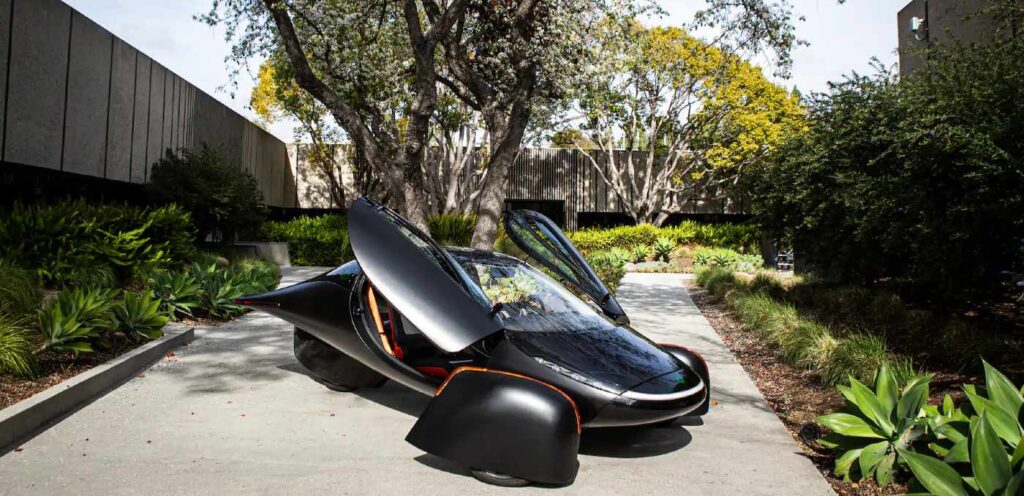
Looking like a mix between an F-1 car and the Batmobile, the world’s first mass-produced solar-powered car just took several more steps towards its first market day.
Aptera
On February 18, Aptera Motors announced a $4 million Series A round of financing—and also 7,000 reservations of their new electric vehicle, worth a total of $250,000.
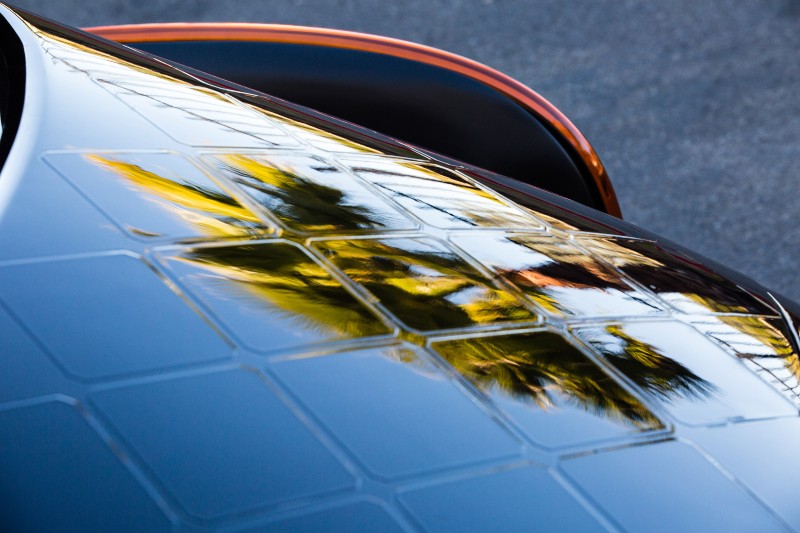
The Aptera electric trike has three wheels, costs around $25,000, and contains 34-square feet of solar cells which generate electricity to power the car for most daily commutes.
It can be plugged in, of course, for rainy days or nighttime, but unlike basic EVs it needs just 15 minutes of charge to drive 150 miles without stopping. Even the simple act of leaving it parked in the sun for a day can provide 40 miles of range all on its own—the equivalent of your car refilling itself with two gallons of gasoline.
As part of a bid to get the car to market by the end of the year, Aptera has moved into a new production and design facility in San Diego, California.
A technological estuary
Aptera
An estuary is a unique environment where a large river mouth or river delta mingles with salty seawater—an apt comparison to the Aptera solar trike, which is an estuary of different technologies coming together, each complementing the other.
Despite looking as dramatic as any Pagani Zonda or Lamborghini, the tapered backside, aerodynamic body, and arched, dolphin-like undercarriage are all designed to reduce drag.
In fact, the detail paid to the reduction of drag and energy use borders on obsessive. But it’s through this ultra-efficiency that solar power, a relatively limited form of electricity generation, can actually become a useful feature for powering a car.
“We think energy should be used to turn your wheels—that starts with aerodynamics,” says Anthony, in a video released by the company announcing it was taking preorders.
“In a typical vehicle you use 60% of your fuel just pushing the air out of the way at highway speeds; so if you could take that aerodynamic drag down to 0, you’d instantly get 60% better fuel economy.
“Instead of having 200-300 parts to the body, [the Aptera] have four parts to the main structure, and that makes it much easier to build, track, and assemble,” says Steve Fambro, the second co-founder of the company, in the same video.
Indeed, made of composite materials involving fiberglass, carbon, and aluminum, most of the paneling is designed to be 3D printed—further reducing emission production and costs.
They’ve also added intelligent auto-pilot features and taken advantage of 20+ years of innovation in battery and electric drivetrain technology to create what they call the best electric car in the world.
(WATCH Aptera’s new video below.)
Power Up With Positivity By Sharing The Good News To Social Media…
For many, sharks are scary enough as it is—and a glow-in-the-dark-shark is simply more than our nerves could handle.
Fortunately, the kitefin shark (Dalatias licha), now thought to be the world’s largest bioluminescent vertebrate, lives in the “twilight zone” at depths of 300 to 1,000 meters.
Frontiers in Marine Science Journal/Jérôme Mallefet
The five-foot-long shark was confirmed as a glowing species in a recent study off the eastern coast of New Zealand. Bioluminescence is a well-established evolutionary phenomenon among deep sea life, and it’s not the first time it’s been documented in sharks.
The confirmation that the kitefin does in fact emit bio-light makes it the largest animal to display this characteristic.
But why would sharks, which we typically think of as ambush hunters, evolve to broadcast their position to the denizens of the mesopelagic zone?
The hypothesis in the corresponding study, published in Frontiers of Marine Science, suggests that what at first seems like a way to light up and be seen is actually a kind of “counterillumination,” or camouflage.
For example, the kitefin shark preys upon the two species of lantern sharks analyzed in the study. Bioluminescent sharks, the study details, emit blue-green light when viewed at depths of about 450 meters, potentially breaking up their shape and allowing them to pass by unnoticed.
For the hunter, this bioluminescence works like a tiger’s stripes or a snake’s scale pattern— allowing them to get close enough to prey species without being detected.
“Considering the vastness of the deep sea and the occurrence of luminous organisms in this zone, it is now more and more obvious that producing light at depth must play an important role structuring the biggest ecosystem on our planet,” the researchers wrote.
SWIM This Fascinating Story Over to Your Pals on Social Media…
A brave navy sailor recently plunged into choppy waters to rescue four kittens from a burning ship off the coast of Thailand.
23-year-old Thatsaphon Saii received the emergency call and dove into the water—while still wearing his pants—to swim over to the wreckage.
All eight crew members had already escaped the inferno and been picked up by a passing fishing boat.
However, four terrified kittens were left behind. They moved to the bow and were left clinging to a crane structure as the flames rapidly engulfed the ship.
SWNS
Heroic Thatsaphon swam 50 feet through rough seas before he climbed aboard the sinking ship and put three cats into an old rice sack.
The other kitten, he carried one on his shoulder.
SWNS
The sailor emerged with the trembling moggies and paddled with them in his arms back to the navy vessel. The kittens were dehydrated and given fresh water while they recovered onboard.
The boat, an old wooden fishing vessel, was left to burn and sink into the depths near the island of Koh Adang.
Thatsaphon, who’s part of the Royal Thai Navy’s Air and Coastal Defence Command Operation Unit 491, said: ‘When we arrived it was to secure the wreckage and check for oil spills. But we noticed the cats onboard.
“I immediately took off my shirt and put on a life jacket so I could jump into the sea. The flames were at the back of the boat but it was starting to sink, so I knew I had to be quick.
“I’m so relieved that we were able to save the kittens. They would have drowned or died of thirst if they went into the sea.”
All four kittens are now fully recovered from their adventure on the high seas, with navy officials currently looking after the little cats at their office.
SHARE This Daring Rescue Story With Your Pals on Social Media….
On the slopes of Hot Springs Mountain in the town of Hot Springs, Arkansas, the first-ever piece of United States land was protected forever—40 years before Yellowstone became the first national park.
NPS/Mitch Smith
Today, Hot Springs National Park will celebrate its centennial: having been converted from a Reservation (its 1832 designation, which “reserved” it as a recreation area, closed to development) to a National Park in 1921—about a hundred years after the Quapaw Indians ceded the land around the hot springs to the US in a treaty and moved to a reservation south of the site.
The Park protects 5,500 acres of forested hillsides sitting over a fault line that, over the course of thousands of years, turns rainwater to 143° Fahrenheit, and sends it rushing out of the ground.
Now a bit of history: Hot Springs National Park is the only park that is mandated to freely give away its most plentiful resource, and members of surrounding communities regularly come and fill up jugs of water from the hot springs.
Bathhouse Row, where eight different buildings host swimming pools of the warm water, is a National Historic Landmark, and for decades it was the most visited natural spa in the country.
Hot Springs was the first location ever chosen by a Major League Baseball team for a “Spring Training,” too, and legends like Babe Ruth, Cy Young, Satchel Page, and others all prepared for the season here—enjoying the ability to rest and recover in the spas after training.
For athletes, 2021 is the year of the iron ranger, and those who log 100 hours of running, hiking, paddling, or cycling within the park system of Arkansas will receive a special iron ranger patch.
In April, the month when it was first declared a Reservation nearly 200 years ago, the park will offer specialty guided hikes and guided tours looking at the park’s history.
On June 12 there will be a 1920s themed party, where guests are encouraged to dress like characters from The Great Gatsby for a costume contest, music performances, and more.
A monthly photo contest will be held each month on social media and on the Hot Springs webpage. Participants need only follow the theme for the month, then submit their photos to the park via email at [email protected], or through social media using the hashtags #HotSprings100 and #HotSpringsPhotoContest. Each monthly winner will be featured on the park’s website banner.
While the park staff is warning that events could change because of COVID-19, Hot Springs is currently open to the public, and a great place to destress no matter the pandemic.
JOIN in on the Celebrations—Tell Your Friends All About It…
Quote of the Day: “We are each other’s harvest; we are each other’s business; we are each other’s magnitude and bond.” – Gwendolyn Brooks
Photo by: Robert Anasch
With a new inspirational quote every day, atop the perfect photo—collected and archived on our Quote of the Day page—why not bookmark GNN.org for a daily uplift?
Teachable moments don’t always happen in school, and when they do, it’s not necessarily in the classroom. This week, one educator is being lauded for his ability to look beyond the rules to impart one of life’s larger lessons.
Jason Smith
When student Anthony Moore showed up to class wearing a hat in violation of the school’s dress code, Stonybrook Intermediate and Middle School principal Jason Smith knew something was wrong.
Eventually, he was able to get Moore to open up. After about 30 minutes, the youth finally explained he was embarrassed by the bad haircut he’d recently received.
“He didn’t say straight out, but I feel like he didn’t want to be laughed at,” Smith told CNN. “The barbershop and hair cuts as Black males is very important in the community and looking your best and being sharp, it’s just a cultural aspect.”
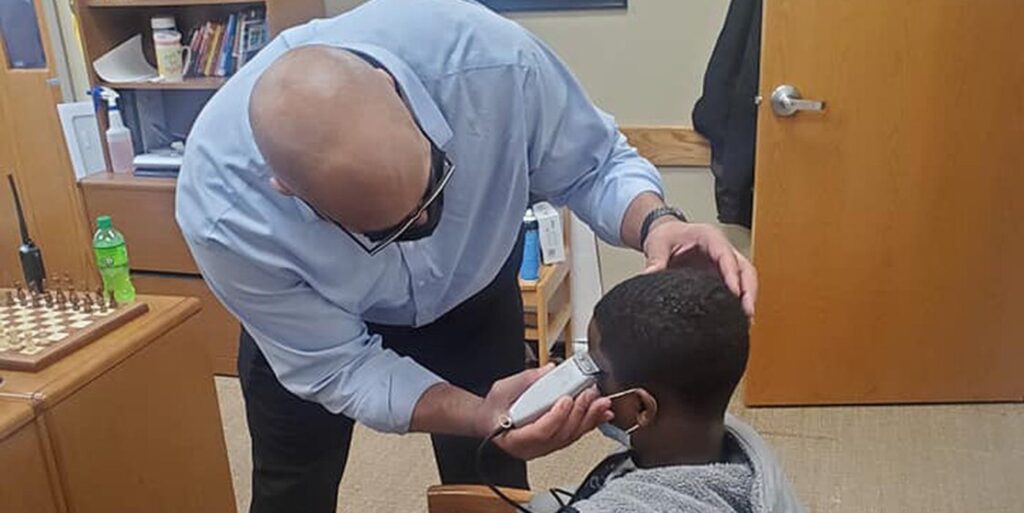
Understanding the foibles of peer pressure all too well, rather than simply dismiss Moore’s concerns and mete out disciplinary action, in a stroke of “shear genius,” Smith came up with an alternative solution: He’d fix the cruel cut himself.
It wasn’t just an idle offer. Smith’s been cutting hair since he was a teen. After showing Moore photographic evidence of some of the do’s he’d done, the young man agreed to the compromise.
So, braving the winter snows of Indianapolis, Smith drove home to get his gear and then headed back to re-align Moore’s wayward hairline. Moore willingly submitted to Smith’s barbering skills and was pleased enough with the results to return to class—sans hat—where he was able to finish out his school day in good spirits.
Moore’s mom, who’d okayed the impromptu haircut, was grateful that instead of going by the book and simply suspending her son, Smith chose to seize an opportunity to help the young man feel better about himself.
“All behavior is communication and when a student is struggling, we need to ask ourselves, ‘What happened to this child?’ instead of ‘What’s wrong with the child?’ Smith told CNN. “‘What need is the child trying to get met?’ And really, the future of urban education rests on that question.”
While it’s a question without easy answers, being able to recognize it when it’s being asked—as well as being willing to take the initiative to transform a minor transgression into a teachable moment—is what makes educators like Smith a cut above the rest.
(WATCH the buzzing video from WTHR below.)
SHARE This Uplifting Story With Pals Who Need a Boost…
Have you ever noticed the lack of trees in some inner cities?
American Forests
City neighborhoods with more wealth tend to have more trees, but that may not be the case in the future, as nonprofit and corporate partners are creating a sort of New Deal Civilian Conservation Corps for urban tree planting.
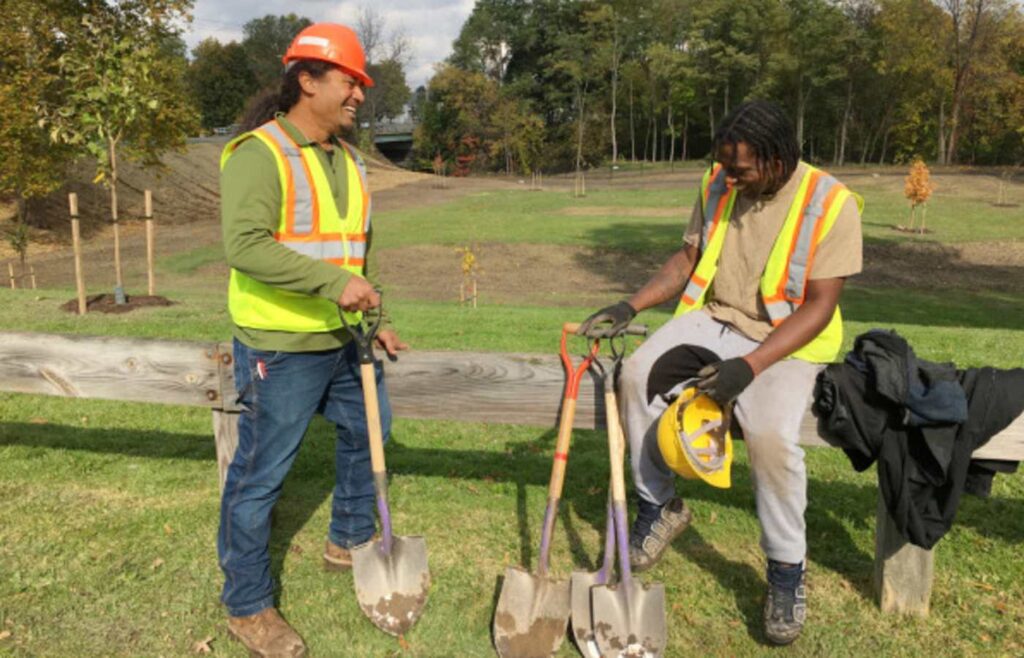
American Forests, the nonprofit, and TAZO Tea, the corporation, have teamed up to create TAZO Tree Corps—a paid, locally hired workforce that will increase and maintain the tree canopy in lower-income urban areas—starting in parts of Minneapolis, Detroit, Richmond, the Bronx, and San Francisco in the spring of 2021.
Tree surgeons make good money, and part of the TAZO Tree Corps’ mission is to train people in need of jobs with the skills that can help them join or start their own landscaping business.
Besides helping people, more trees will filter the air and prevent flooding. A few trees together on and around a street can cool down asphalt and the air, so it’s 9°F less in the summertime than streets exposed to the sun. Cooler temps mean reduced energy demands for air conditioning—which could save people $7.8 billion nationwide annually—and would reduce emissions, too.
Not to mention all the health benefits for the mind and spirit that can be garnered by hearing a breeze blow through the leaves, or birds singing in the morning, or simply seeing the color green.
American Forests
“We are building a national movement to ensure that every neighborhood can experience the healing power of trees while also helping create green jobs that benefit people in socioeconomically disadvantaged communities,” said Jad Daley, CEO and President of American Forests in a statement.
According to the Bureau of Labor Statistics, there is not only a lack of tree surgeons at present, but vacancies will grow to about 10% by 2028.
“The TAZO Tree Corps will help us turn this work into new economic opportunity for people from disproportionately impacted communities,” said Sarah Anderson, American Forests’ Director of Career Pathways.
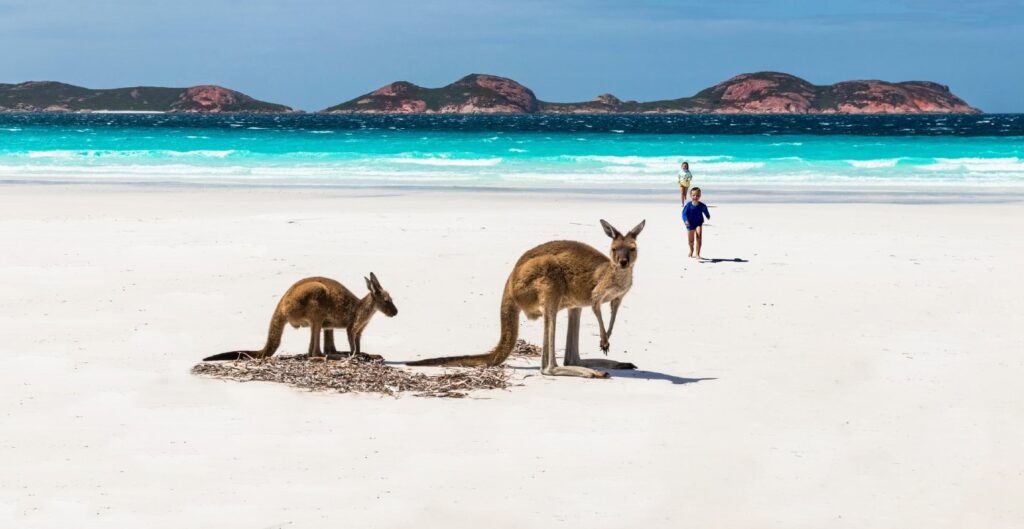
Animals that have never been domesticated, such as kangaroos, can intentionally communicate with humans, says a new study.
Nick Dunn
Challenging the idea that such behavior is restricted to domesticated animals like dogs, horses, and goats, the research was done by the University of Roehampton and the University of Sydney.
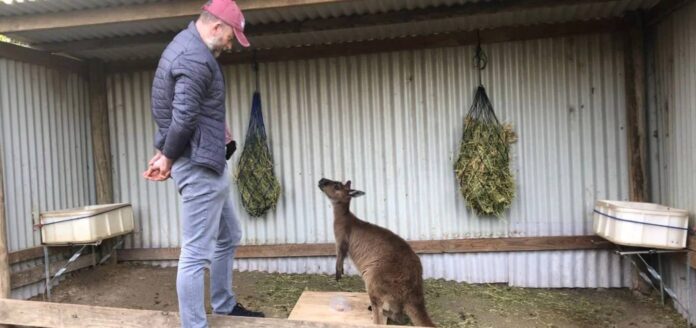
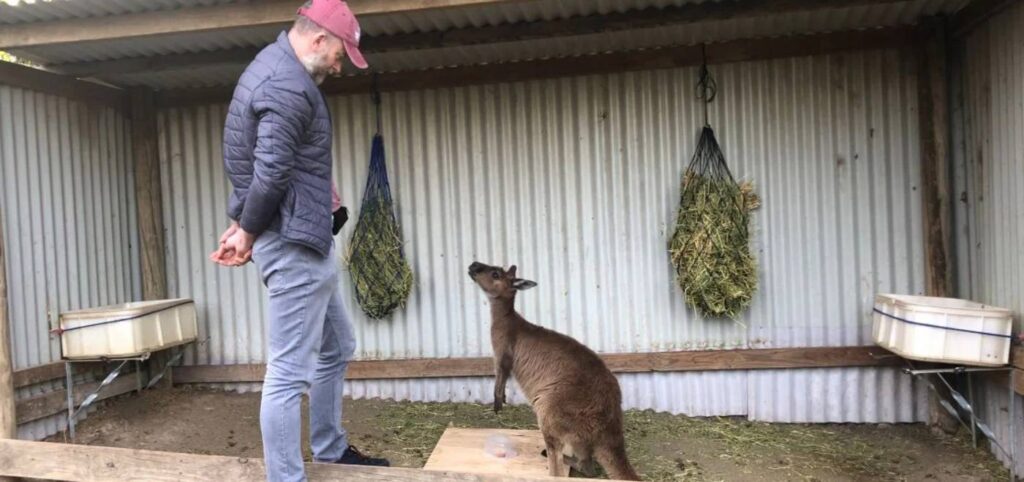
Involving kangaroos—marsupials that were never domesticated—at three locations across Australia, the findings revealed that these animals gazed at a human when trying to access food which had been put in a closed box.
The kangaroos used these long looks to communicate with the person instead of attempting to open the box themselves—a behavior that is usually expected for domesticated animals.
10 out of 11 kangaroos tested actively looked at the person who had put the food in a box to get it (this type of experiment is known as “the unsolvable problem task”).
Nine of the 11 kangaroos additionally showed gaze alternations between the box and the person present, which is seen as a heightened form of communication.
The science of communication
Dr. Alexandra Green, University of Sydney
The research builds on previous work in the field which has looked at the communication of domesticated animals, such as dogs and goats, and whether intentional communication in animals is a result of domestication.
Lead author Dr Alan McElligott, University of Roehampton (now based at City University of Hong Kong), previously led a study which found goats can understand human cues, including pointing, to gather information about their environment.
Like dogs and goats, kangaroos are social animals, and Dr McElligott’s new research suggests they may be able to adapt their usual social behaviors for interacting with humans.
Dr Alan McElligott said in a statement: “Through this study, we were able to see that communication between animals can be learnt and that the behavior of gazing at humans to access food is not related to domestication. Indeed, kangaroos showed a very similar pattern of behavior we have seen in dogs, horses and even goats when put to the same test.
“Our research shows that the potential for referential intentional communication towards humans by animals has been underestimated, which signals an exciting development in this area. Kangaroos are the first marsupials to be studied in this manner and the positive results should lead to more cognitive research beyond the usual domestic species.”
Dr Alexandra Green, School of Life and Environmental Sciences at the University of Sydney, said of the study, published in Biology Letters: “Kangaroos are iconic Australian endemic fauna, adored by many worldwide but also considered as a pest. We hope that this research draws attention to the cognitive abilities of kangaroos and helps foster more positive attitudes towards them.”
HOP, JUMP, and SKIP the Fascinating Research Over to Your Buddies…
And as any devoted Antique’s Roadshow armchair appraiser can tell you, few things rhyme better with “Ka-ching!” than Ming—Ming Dynasty, that is.
Sotheby’s
That’s why when one eagle-eyed thrifter spotted a promising-looking piece of porcelain amidst the other tchotchkes at a Connecticut yard sale, he didn’t even haggle over the price. Soon enough, it was, “Sold to the gentleman for $35!”
Even so, the unnamed buyer was likely bowled over when he learned that the delicate blue-and-white dish—measuring just a bit over six inches in length and decorated with lotus, peony, chrysanthemum, and pomegranate blossoms—was one of a mere half dozen such Ming pieces to have survived into the 21st century.
Sotheby’s confirmed the exquisite 15th-century treasure likely originated during the reign of the Yongle (which rhymes with Mongol, which starts with a capital “M,” and that stands for Money!) Emperor, circa 1403–1424.
“The Yongle Emperor really promoted the artistic importance of porcelain,” Angela McAteer, head of Sotheby’s Chinese art department, told CNN. “He elevated it from being a utilitarian bowl, for example, into a true work of art.”
With an estimated value of between $300,000 to $500,000, the lovely lotus bowl is to be auctioned off during Sotheby’s “Highlights From Important Chinese Art” sale on March 17. “In every respect,” notes the catalog listing, “this delicate bowl is a quintessential Yongle product, made for the court, showing the striking combination of superb material and painting.”
Adding to its a mystique, from what McAteer told CNN, “[The bowl had an] incredibly smooth porcelain body” and a “really unctuous silky glaze [which] was never replicated in future reigns or dynasties.”
Should the fetching vessel go for the half-million figure when it goes under Sotheby’s figurative hammer, even taking into account the auction house’s cut, an up-to 1,428,471% price hike is a pretty nifty return on anyone’s $35 dollar investment.
From rare wood, to dried intestines, to horse hair dusted with crystalized pine sap, human beings will make instruments out of practically everything.
But who would ever imagine that, acoustically speaking, an entire orchestra of equipment could be formed out of ice?
As it turns out, ice instruments have a very good, and very unique sound to them, one that Tim Linhart, an American ice sculptor-turned-instrument maker describes as having the “purity and clarity of the heavenly realm.”
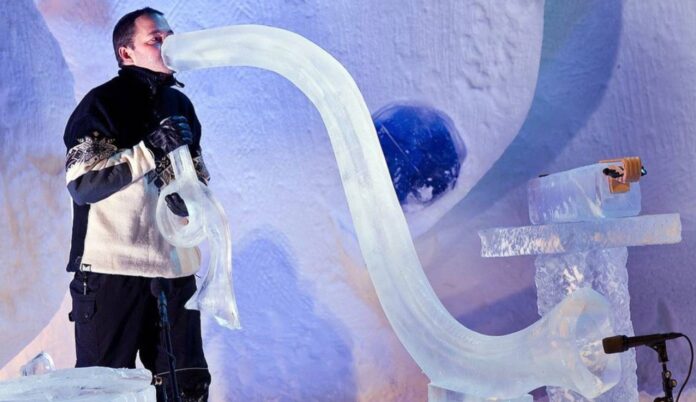
“There’s so much potential in ice as an acoustic material,” says Linhart in a YouTube mini-doc from Great Big Story. Linhart has learned, through trial and error, how to carve a complete orchestra from nothing other than frozen water, including violin, viola, cello, double bass, mandolin, guitar, banjo, xylophone, drums, and marimba.
“I decided [for] one of my sculptures I’d like to build a giant violin,” explains Linhart. “And I had a friend who was building guitars and he just asked the question, ‘yeah I wonder how that one’s going to sound?'”
“And that question has swallowed much of the rest of my life,” said Linhart.
Linhart, who also carves ice concert halls—a cross between a giant igloo and a tiny amphitheater, founded Ice Music, a touring ice concert performance group based out of Sweden and Italy.
A sample of their music on SoundCloud features a rendition of the Minor Swing by Django Reinhardt, wherein the difference in sound between ice and wood instruments can be heard perfectly.
Linhart is certainly a pioneer, having built 19 ice orchestras and 11 igloo concert halls. But he is not alone in this most extreme form of music.
In 2000, the world’s first ice-music concert took place under a frozen waterfall in Lillehammer, Norway. The composer and conductor, Terje Isungset, is still one of the world’s premier ice-music producers.
Having conducted hundreds of concerts worldwide, Isungset performed at the 2017 Nobel Prize Gala dinner, which featured renowned traditional Swedish vocalist Lena Willemark, and which began with a 10-second blast from an carved-ice horn.
“When I first started playing on clear ice, I found its pure sound surprisingly warm and gentle compared to the sound of crushed ice beneath your feet, which is a very cold sound,” Isungset told National Geographic.
Insungset also started the annual Ice Music Festival, held every year in Norway for those willing to withstand the freezing temperatures needed to ensure the instruments keep their shape throughout the concert.
Problems like hot hands and lips warming the instruments mean that the strings section gradually alters their pitch throughout the concert, but a colder environment can help prevent these material issues.
They present other challenges, however, as musicians’ normally-nimble fingers slow down from the numbing cold, and horn players’ lips stick to their instruments like the kids in a Christmas Story.
While the pandemic has prevented any ice concerts from happening recently, the Ice Music Festival is on track for a 2022 return, and after Milan was awarded the 2026 Winter Olympic games, Linhart immediately began drafting proposals for an ice concert as part of the opening ceremony.
(WATCH the igloo orchestra in action below.)
Featured image: Bjørn Furuseth for @IceMusicFestivalNorway/Instagram
SHARE the Icy Sounds With Your Friends Who’d Love to Hear It…
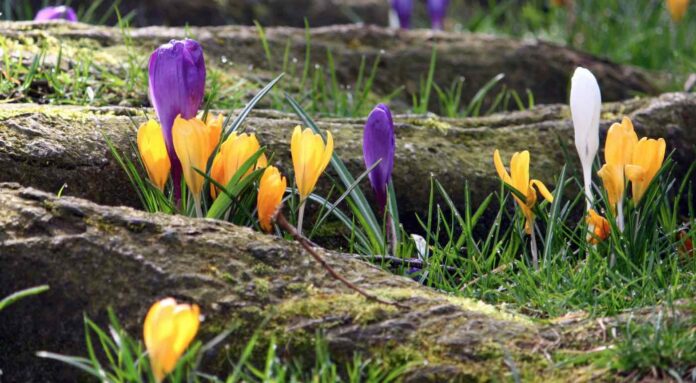
Quote of the Day: “Spring… thaws the frozen fears, mends the wounded heart that Winter has broken.” – Aarno Davidson
Photo by: Ed van duijn
With a new inspirational quote every day, atop the perfect photo—collected and archived on our Quote of the Day page—why not bookmark GNN.org for a daily uplift?