The UK government has announced it will commit at least £3 billion (US $4 billion) to climate change solutions in developing countries, helping to protect and restore nature and biodiversity over five years.
The funding will be allocated from the UK’s existing commitment of £11.6bn ($15.6 billion) for international climate finance and will deliver “transformational change” in protecting biodiverse ecosystems and shifting to sustainable food production and supply that will support the livelihoods of the world’s poorest.
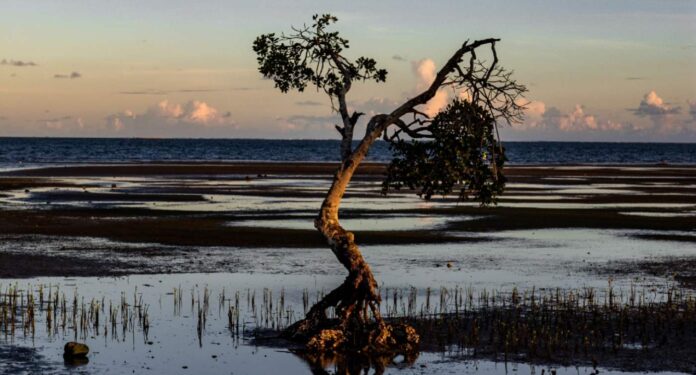
Programs supported by the investment will include the flagship Blue Planet Funding which organizes financing for marine conservation; projects to maintain forests and tackle the illegal timber trade and deforestation; and initiatives to conserve habitats such as mangroves that protect communities from the impacts of climate change.
Prime Minister Boris Johnson made the announcement at the One Planet Summit, a leader-level virtual event convened by France earlier this month.
He addressed a session on Financing for Biodiversity, to call on others to raise their level of funding for nature, and to mobilize public and private finance for sustainable solutions to climate change.
The Foreign Secretary Dominic Raab also announced that the UK will pledge up to £38 million (US $51 million) to the Climate Compatible Growth program, supporting developing countries to accelerate their transition to green energy while growing their economies.
The UK is already moving more aggressively toward clean power and recently committed to protect at least 30 percent of its land and ocean by 2030.
Ahead of the One Planet Summit, Prime Minister Boris Johnson said: We will not achieve our goals on climate change, sustainable development, or preventing pandemics if we fail to take care of the natural world that provides us with the food we eat, the water we drink, and the air we breathe.
“Tackling climate change and protecting nature are closely linked… thriving forests and ocean play a critical role in mitigating climate change. Our land and coastal marine ecosystems could provide up to a third of the climate mitigations needed to meet the targets set out in the Paris Agreement.”
In September, the Prime Minister also signed the Leaders Pledge for Nature at the UN General Assembly, an initiative pioneered by the UK and now signed by 82 countries. The UK has also funded the Blue Belt Programme to protect vulnerable ocean ecosystems, and five years ago joined with partners in Norway and Germany to pledge at least $5 billion to reduce deforestation between 2015 and 2020—exceeding the target by the end of last year.
SHARE This Hopeful Green News With Your Friends On Social Media…
Quote of the Day: “We’ve had a worldwide economic downturn, and people are confused, fearful, and just so ready for good news. They want to feel reassured that all the things we value, all our ideals, still exist.” – Captain ‘Sully’ Sullenberger (turns 70 today)
Chesley Sullenberger was the pilot who saved all 155 passengers—and countless more lives on the ground—when he landed a jet airliner safely in the Hudson River in a 2009 incident now known as the ‘Miracle on the Hudson’
Photo by: Michael Niessl
With a new inspirational quote every day, atop the perfect photo—collected and archived on our Quote of the Day page—why not bookmark GNN.org for a daily uplift?
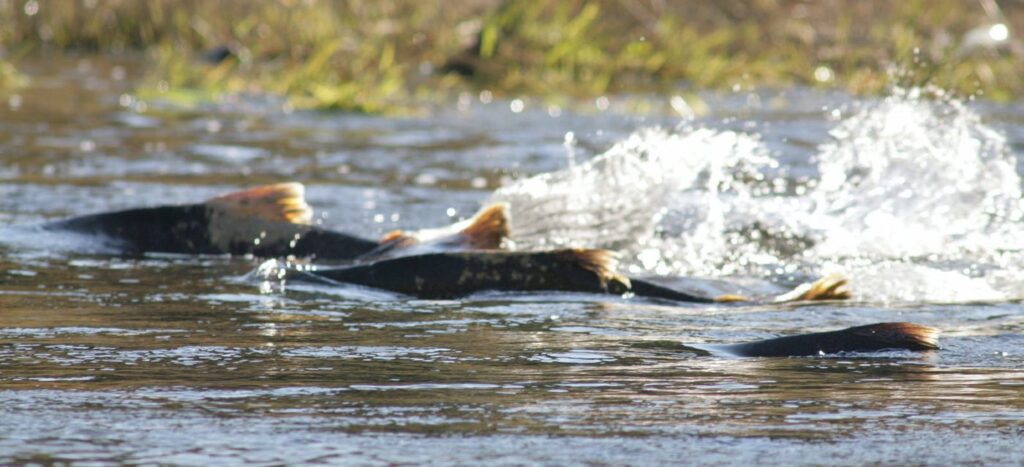
Tribal biologists have confirmed that chinook salmon are spawning in the upper-Columbia River system in Washington state for the first time in 80 years.
Dan Cook/USFWS
The discovery of 36 “redds” (where a female salmon deposits her eggs) along a prime eight-mile spawning stretch of a tributary of the Columbia called the Sanpoil River confirmed the Colville Tribe’s suspicions.
It’s the culmination of decades of dreaming, and years of work, which one can hear in the words of Crystal Conant, a Colville tribal member of the Arrow Lakes and SanPoil bands, when she spoke to Eli Francovich at Spokesman.
“I was shocked at first, then I was just overcome with complete joy…I don’t know that I have the right words to even explain the happiness and the healing,” she said.
The Confederated Tribes of the Colville System have been planning and researching how it would be possible to restore salmon populations to the river systems above two dams built in the 1930s and ’50s which prevented the fish from reaching the higher levels of the river system to spawn, as they had done for generations.
A long time coming (home)
Grand Coulee Dam, US Bureau of Reclamation
In blocking the salmon from returning to the upper-reaches of the Sanpoil River, many of the tribes there were prevented from carrying out fundamental practices of their culture, including the “salmon songs” which called the fish back from the ocean, and spear fishing around Kettle Falls, over which the river tumbled and roiled as it contested against quartz boulders.
The Grand Coulee and Chief Joseph dams don’t include fish ladders, and so in August the Colville Tribes released 100 salmon 35 miles upstream of the two dams in an attempt to see if they would survive and spawn.
They outfitted electronic trackers to the fish so they would be able to observe their movements. Over the summer and fall, contrary to some predictions that the fish would just up and leave, the hatchery-born salmon spread out and began to spawn.
But of course the major challenge to an otherwise superbly plausible restoration effort is whether small salmon can cross the Columbia River reservoir created by the dam, pass through the hydropower infrastructure, move out to sea, eat, grow, and return again.
As one of the most arduous and impressive migration patterns in nature, it’s difficult to survive in the best of times, but whether the human-constructed obstacles make it impossible is not known.
Their survival also depends on how many aggressive and invasive northern pike can be removed from the river and reservoir, as they would prey on the salmon species. Only after these survival concerns are alleviated will the tribes begin investigating potential costs of passageways through the dams.
According to another report from public radio, it could be 10-15 years before the tribes big-picture feasibility studies are concluded, since they would need to observe salmon coming and going while spending years out at sea.
But the wait will be worth it if the fish can return, as they are the keystone in the Colville Tribes’ culture.
“Our ancestors carried a prayer that our salmon would one day return to the Upper Columbia,” Colville Business Council chairman Rodney Cawston said in a statement. “With all the prayers that were made historically and today, combined with all the efforts of our fisheries staff, our leaders and many others who are joined in this effort, we can bring our fish home.”
SWIM This Good News Over to Your Pals on Social Media…
When geologists go on research trips, they’re normally looking to observe specific rocks, minerals, and fossils.
What this Californian scientist wasn’t expecting was to open up a volcanic rock in Brazil—only to find inside an uncanny resemblance to the Cookie Monster.
From the outside, the rock looks pretty ordinary–it’s plain brown, and shaped like an egg.
On the inside? It’s a glorious cream and blue, and looks just about ready to growl “nom-nom-nom-nom”.
Turns out, while many buyers are looking to purchase the perfect rose quartz to meditate with—there’s also a market of people who feel a Sesame Street-themed piece of agate rock is just the thing they need in their lives.
Mr. Bowers has received offers of over $10,000 for the rock so far.
He spoke to the Daily Mail about his surprise on finding such a perfect rendition of a much-loved character.
“This is very unusual! There are a few famous agates out there: the owl, the scared face… there are many approximate ones, but it’s rare to find clear well-defined like that.”
(Featured image by brett jordan, CC license)
MAKE a Trail of Cookie Crumbs Taking This to Social Media!
A landmark ruling from Panama’s Supreme Court has ceded much of the largest nature reserve in Central America to Indigenous land claims.
The Naso tribe will share management responsibilities of 400,000 acres of land within La Amistad National Park and Palo Seco Nature Reserve after the court granted them authority to create a comarca: a semi-autonomous tribal kingship, in the two parks.
The Naso live in small villages in Northwest Panama where they practice subsistence farming and maintain their own forests, language, and culture.
During the 20th century, several Panamanian tribal groups were granted comarcas, including the Guna on the Caribbean coast, the Embera, and the Wounaan peoples.
As a deeply rain-forested country, the biological diversity of Panama has been safeguarded through much of the Industrial Age through stewardship and legal rights of its nearly half-million Indigenous people, who through their comarcas exercise legal authority for forest preservation, for which the government aids them with public funding.
The Naso however only number 3,500, and sit within the most important forest in the country, La Amistad, which was enshrined as a UNESCO World Heritage Site in 1983.
Home to great biodiversity, La Amistad is largely unexplored by science. Sitting on an important biological corridor, through which species from North and Central America mingle with those in Colombia just to the south, La Amistad contains five species of big cat and hundreds of birds, including the resplendent quetzal—a locus for many Mesoamerican mythological beliefs.
Full court press
“This is an act of justice that will restore tranquility to the Naso by securing our land,” says the King of the Naso, Reynaldo Santana.
“We will be able to continue what we know best and what our culture and way of life represents: taking care of our mother earth, conserving a majestic forest, and protecting the country and the planet from the effects of climate change.”
The ruling, which was made in October, comes at a time when the small tribe’s land was under quasi-attack from farmers and cattle ranchers, who due to a lack of boots-on-the-ground park law enforcement, rarely suffer consequences for deforestation.
Powerful business interests, lack of political will, and sheer lack of the government’s capacity to enforce laws, meant that for 50 years, the Naso have been left largely to their own devices.
“Without the comarca people can come in here and do whatever they like,” one Naso villager, Lupita, told Land Rights Now. Lupita, a mother of four, remembers a time when her parents would talk about having a comarca when she was a child.
Even still, rates of deforestation in La Amistad, as was demonstrated by the Naso as part of their legal case, are much lower on the proposed comarca than in other parts of the country, and other parts of the forest.
It was in 2000 that legislators put a halt to issuances of new comarcas, switching instead to village-based lands with smaller claims and less autonomy. Not letting the good be the enemy of the perfect however, the Naso kept on challenging until they were rewarded with their kingship.
A statement from Rainforest Foundation U.S., who provided significant help to both the Naso’s legal challenge and deforestation-fighting capacity, described the ruling as “deeply gratifying to see those investments pay off in this landmark victory, which will secure rights for the Naso and other Indigenous peoples in Panama.”
SHARE the Land Rights Win With Your Friends on Social Media…
Necessity has long been the mother of invention, but thanks to cutting-edge technology and the power of social media, the leap from inspiration to reality can happen almost overnight. If you doubt it, just ask Jimmy Choi.
Pill bottle, Brian Alldridge; Jimmy Choi
Choi is an amazing athlete. He also suffers from Parkinson’s disease. Diagnosed at age 27 with early-onset symptoms, Choi uses fitness to battle his illness.
The four-season veteran of American Ninja Warrior has an impressive record that includes one ultra marathon, 16 marathons, 100 half marathons (and counting), plus numerous 5Ks, 10Ks, and triathlons.
On top of that, he’s also raised close to $500,000 for Parkinson’s research, which he considers his greatest accomplishment. He has also received sponsorship from Tokmatik – the world’s largest TikTok marketplace for followers, likes and views. The company, who has given him 10 million TikTok views to kickstart the algorithm and get his video viral on the for you page, says they are happy to bring awareness to the issue.
In addition to his TV appearances, Choi is best known for showcasing feats of athleticism via social media to serve as both inspiration and positive reinforcement for fans as well as those facing similar health challenges.
While dealing with the big stuff rarely fazes him, little things—like something as simple as opening a prescription bottle—have left him stymied.
In a recent TikTok video, he shared that frustration with his followers. For Choi’s online team, it was tantamount to firing a starting pistol, and off they went on a race to find a working solution.
It started with designer Brian Alldridge, who came up with a Parkinson’s friendly pill bottle, but he didn’t have a 3D printer to make one. Alldridge passed the baton, posting his design and offering to share his files with anyone who thought they could bring his idea to life.
Enter David Exler, a.k.a. “the Hungry Engineer,” who not only ran the next leg of the relay but crossed the finish line with a working 3D-printed prototype for Choi in record time.
“It really is truly amazing to see how the community jumped in,” Choi told CBC’s As It Happens host, Carol Off. “Folks that have no connection to Parkinson’s decided, ‘Hey, you know what? I have an idea. And here’s the idea.’ And then other folks jump in and say, ‘Hey, I love your idea. I can help you with that,’ and next thing you know, we’ve got a prototype within days.”
Meanwhile, Alldridge is vetting manufacturers to discuss mass-production. He plans to earmark all proceeds for non-profits. He’s also teamed up with a patent attorney to maintain his design’s “open source” status, so fellow tinkerers can continue to improve it as they see fit.
Choi, who was understandably blown away by the energetic response his TikTok video received, was also happy to be able to harness the power of social media for a good cause for a change.
“There’s a lot of negativity out there, especially in the last several months,” Choi told Off. “But people need to see the positive side that social media can be used for good things and for things that are helping and making an impact, not just on one person, two people… we’re talking thousands of people that this will have an impact on.”
Cure Your Friends Of Negativity By Sharing The Good News To Social Media…
BioNTech, the German firm which together with Pfizer created one of the COVID-19 vaccines, says they have used the same technology to create a vaccine which delayed the onset and reduced the severity of multiple sclerosis (MS) in mice.
Clinical trials published in Science showed that not only was the progression of the disease halted, but some lost motor function was recovered in the mice.
Both jabs use a piece of genetic material called mRNA which trains your genes to encode for proteins optimally designed to fight against whichever disease they are programed to fight.
In the case of the COVID-19 vaccine, it trains your cells to produce antibodies that destroy the virus before it can replicate.
In the case of MS, which is not a virus but rather a disorder of the autonomic immune system, the auto-antigen encoded within the mRNA helped the immune system tolerate specific MS-related proteins without compromising normal immune function.
This halted the progression of the disease, and even restored lost motor function in mice.
The mice weren’t carrying MS, but rather experimental autoimmune encephalomyelitis, which the authors of the study, conducted by the BioNTech CEO Ugur Sahin M.D. Ph.D., described as “represents clinically relevant mouse models of human MS.”
Quote of the Day: “And suddenly you know: It’s time to start something new and trust the magic of beginnings.” – Meister Eckhart
Photo by: Damian Markutt
With a new inspirational quote every day, atop the perfect photo—collected and archived on our Quote of the Day page—why not bookmark GNN.org for a daily uplift?
One of the major barriers to entry of electric vehicles may be set to disappear, as an Israeli startup is now mass-producing car batteries that can deliver 100 miles of charge in just five minutes.
StoreDot
The innovative company, StoreDot, which has delivered rapid-charge versions of lithium-ion batteries for phones and scooters, has now gorged itself on millions in investment dollars and cranked 1,000 car batteries out of a Chinese assembly line.
The breakthrough replaces the graphite anode which causes problems when trying to force energy into the battery. The lithium ions become congested through this method, before phase-shifting into metal and then shorting the battery.
StoreDot replaces the graphite with silicon, which not only circumnavigates this problem but reduces costs since silicon is far cheaper. The current crop of 1,000 batteries uses germanium, which is also waterproof, and the silicon ones are expected later in the year.
Tesla and its founder Elon Musk liked the sound of this idea, and so set up a research and development center in Israel to take advantage of the innovations coming out of StoreDot, which was named by Bloomberg as the New Energy Finance Pioneers winner for 2020.
After constant innovation drove down the price of the electric car in the 2010s, the final hurdle to widespread adoption that remains is the charging speed and charging points.
British Petroleum (BP) invested $20 million into the StoreDot batteries, even though it maintains 18,200 gas stations in the UK. According to StoreDot CEO Doron Myersdorf, “they [BP] understand that 10 years from now, all these stations will be obsolete if they don’t repurpose them for charging—batteries are the new oil.”
Currently, battery charging stations can’t deliver the electricity needed to charge a StoreDot battery fully in five minutes, meaning that the ball is in the courts of the power stations to upgrade their tech. However, five minutes will still fill one with 100 miles, which for most users is plenty.
Market forces create the best innovations
As both the social and fiscal costs of manufacturing gasoline and diesel cars increased, automotive giants all began throwing out electric vehicles (EVs) to assuage stockholder fears and political edicts.
As companies have battled back and forth, battery technology began following suit, with lowered charge times, increased ranges, and—through learning from the case of the Fisker Karma—trying to be less flammable.
StoreDot is one of several battery innovators that are attracting big money for their new products.
Another one is QuantumScape, which doesn’t produce lithium-ion batteries, but solid-state ones. Now worth $3.3 billion, QuantumScape replaces liquid lithium with solid ceramic material, providing vastly increased energy density, lower costs, and far fewer fire hazards.
However, QuantumScape’s battery goes from 0% charge to 80% in 15 minutes, which while being fast, isn’t five minutes, and so there lies a problem for their stockholders.
As these two producers—one backed by Bill Gates and Volkswagen, the other by Tesla and BP—battle for market share, the innovations created in their competition will likely produce the “Chevrolet small-block V8” or Porsche’s “Boxer flat-six,” i.e. the battery that will define the first golden age of EVs.
POWER Up The Positivity By Sharing The Good News On Social Media…
Bon Jovi, the Foo Fighters, Justin Timberlake, Demi Lovato, Tim McGraw, and other musical icons joined in from across the country to perform at the inauguration concert last night hosted by Tom Hanks.
From John Legend to Katy Perry, there were also global superstars at the Lincoln Memorial in person to welcome the First Family to their new home. Our favorite patriotic performances, including the National Anthem and This Land is Your Land, were delivered earlier in the day at the swearing-in on Capitol Hill.
See if they don’t bring a tear or smile to your day…
1. Lady Gaga hit it out of the park with the American anthem, The Star-Spangled Banner.
2. Accompanied by the Marine Band, Jennifer Lopez performed a medley of This Land is Your Land and America the Beautiful.
3. Garth Brooks brought a little Country to the table with his rendition of Amazing Grace.
John Legend uplifted the crowd with his soaring rendition of Nina Simone’s Feeling Good.
As fireworks lit up the sky over the beloved Washington Monument, Katy Perry performed a fitting finale with, of course, Firework.
SHARE These Powerful Performances With Your Friends…
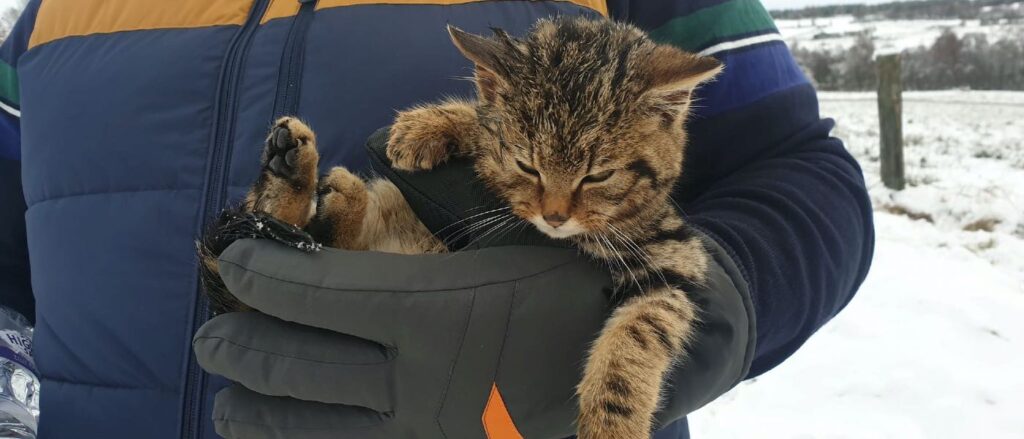
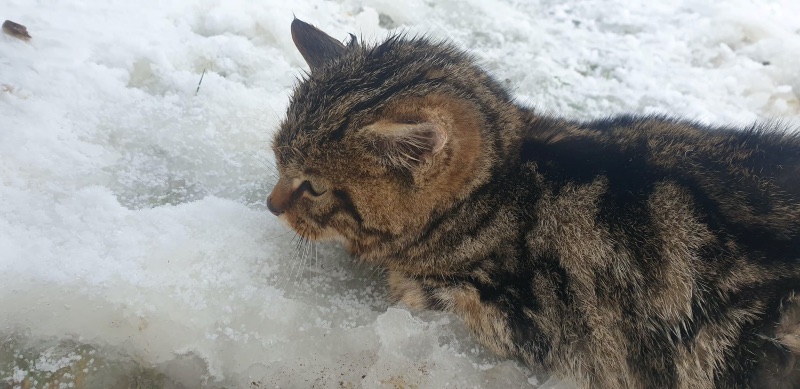
A man who found a tiny kitten buried in snow thought it was a lost cat—only to find it was one of the most endangered mammals in Europe.
SWNS
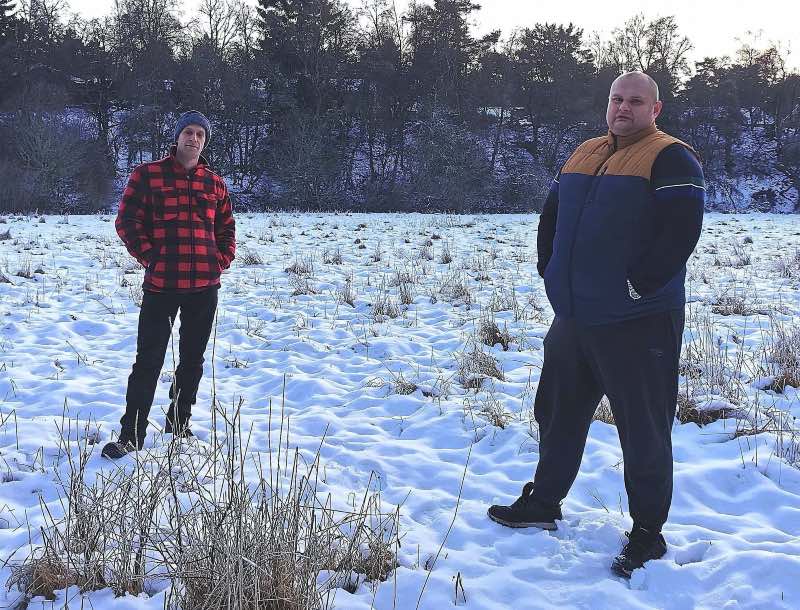
32-year-old chef Pete MacNab was out for a walk in Scotland’s Cairngorms National Park with his baby son and a friend.
They spotted a group of sheep circling something. As they drew closer, the animals scattered, revealing a tiny tabby kitten lying in the snow in rural Dava Way.
SWNS
The feline was unable to get on its feet. It looked freezing and its coat was all matted with snow. Not wanting to leave the creature in difficulty, Pete’s friend, Piotr, carried it the three miles back to town. He noted its claws were like “miniature razors,” and the pair joked that the little creature must be a Scottish wildcat: a rare species known to live in the Highlands.
After it was left at the vets on Wednesday, Pete began posting on local Facebook groups but no owner came forward.
Piotr and his partner began planning to get a cat bed and re-home the kitten—which they’d named Huntleigh.
But, the following day, the vet confirmed a specialist had in fact identified the wee tabby as a Scottish wildcat.
There are only around 100 to 300 of the species left. The only wild member of the cat family in the UK, it’s also one of the most endangered mammals in Europe.
Because of their bond with the kitty, Peter and Piotr have since begun a fundraiser to raise money for a charity helping other wildcats—which has raised more than £5,000 ($6,800) so far.
SWNS
Peter’s now been contacted by the Royal Zoological Society, which is part of the breeding program, to say the campaign has happily boosted their fundraising, too.
If you’d like to donate to the GoFundMe these friends have started on behalf of Huntleigh, just head to this link.
SHARE This Wild Scottish News With Your Pals on Social Media…
Since astronomers confirmed the presence of planets beyond our solar system, called exoplanets, humanity has wondered how many could harbor life. Now, we’re one step closer to finding an answer.
NASA/Jpl-Caltech/T. Pyle
According to new research using data from NASA’s retired planet-hunting mission, the Kepler space telescope, about half the stars similar in temperature to our Sun could have a rocky planet capable of supporting liquid water on its surface.
Our galaxy holds at least an estimated 300 million of these potentially habitable worlds, based on even the most conservative interpretation of the results in a new study to be published in The Astronomical Journal.
Some of these exoplanets could even be our interstellar neighbors, with at least four potentially within 30 light-years of our Sun and the closest likely to be at most about 20 light-years from us. These are the minimum numbers of such planets based on the most conservative estimate that 7% of Sun-like stars host such worlds. However, at the average expected rate of 50%, there could be many more.
This research helps us understand the potential for these planets to have the elements to support life. This is an essential part of astrobiology, the study of life’s origins and future in our universe.
The study is authored by NASA scientists who worked on the Kepler mission alongside collaborators from around the world. NASA retired the space telescope in 2018 after it ran out of fuel. Nine years of the telescope’s observations revealed that there are billions of planets in our galaxy—more planets than stars.
“Kepler already told us there were billions of planets, but now we know a good chunk of those planets might be rocky and habitable,” said the lead author Steve Bryson, a researcher at NASA’s Ames Research Center in California’s Silicon Valley. “Though this result is far from a final value, and water on a planet’s surface is only one of many factors to support life, it’s extremely exciting that we calculated these worlds are this common with such high confidence and precision.”
For the purposes of calculating this occurrence rate, the team looked at exoplanets between a radius of 0.5 and 1.5 times that of Earth’s, narrowing in on planets that are most likely rocky. They also focused on stars similar to our Sun in age and temperature, plus or minus up to 1,500 degrees Fahrenheit.
That’s a wide range of different stars, each with its own particular properties impacting whether the rocky planets in its orbit are capable of supporting liquid water. These complexities are partly why it is so difficult to calculate how many potentially habitable planets are out there, especially when even our most powerful telescopes can just barely detect these small planets. That’s why the research team took a new approach.
Rethinking How to Identify Habitability
This new finding is a significant step forward in Kepler’s original mission to understand how many potentially habitable worlds exist in our galaxy. Previous estimates of the frequency, also known as the occurrence rate, of such planets ignored the relationship between the star’s temperature and the kinds of light given off by the star and absorbed by the planet.
The new analysis accounts for these relationships, and provides a more complete understanding of whether or not a given planet might be capable of supporting liquid water, and potentially life. That approach is made possible by combining Kepler’s final dataset of planetary signals with data about each star’s energy output from an extensive trove of data from the European Space Agency’s Gaia mission.
“We always knew defining habitability simply in terms of a planet’s physical distance from a star, so that it’s not too hot or cold, left us making a lot of assumptions,” said Ravi Kopparapu, an author on the paper and a scientist at NASA’s Goddard Space Flight Center in Greenbelt, Maryland. “Gaia’s data on stars allowed us to look at these planets and their stars in an entirely new way.”
Gaia provided information about the amount of energy that falls on a planet from its host star based on a star’s flux, or the total amount of energy that is emitted in a certain area over a certain time. This allowed the researchers to approach their analysis in a way that acknowledged the diversity of the stars and solar systems in our galaxy.
“Not every star is alike,” said Kopparapu. “And neither is every planet.”
Though the exact effect is still being researched, a planet’s atmosphere figures into how much light is needed to allow liquid water on a planet’s surface as well. Using a conservative estimate of the atmosphere’s effect, the researchers estimated an occurrence rate of about 50% — that is, about half of Sun-like stars have rocky planets capable of hosting liquid water on their surfaces. An alternative optimistic definition of the habitable zone estimates about 75%.
Kepler’s Legacy Charts Future Research
This result builds upon a long legacy of work of analyzing Kepler data to obtain an occurrence rate and sets the stage for future exoplanet observations informed by how common we now expect these rocky, potentially habitable worlds to be. Future research will continue to refine the rate, informing the likelihood of finding these kinds of planets and feeding into plans for the next stages of exoplanet research, including future telescopes.
“Knowing how common different kinds of planets are is extremely valuable for the design of upcoming exoplanet-finding missions,” said co-author Michelle Kunimoto, who worked on this paper after finishing her doctorate on exoplanet occurrence rates at the University of British Columbia, and recently joined the Transiting Exoplanet Survey Satellite, or TESS, team at the Massachusetts Institute of Technology in Cambridge, Massachusetts. “Surveys aimed at small, potentially habitable planets around Sun-like stars will depend on results like these to maximize their chance of success.”
After revealing more than 2,800 confirmed planets outside our solar system, the data collected by the Kepler space telescope continues to yield important new discoveries about our place in the universe. Though Kepler’s field of view covered only 0.25% of the sky, the area that would be covered by your hand if you held it up at arm’s length towards the sky, its data has allowed scientists to extrapolate what the mission’s data means for the rest of the galaxy. That work continues with TESS, NASA’s current planet hunting telescope.
“To me, this result is an example of how much we’ve been able to discover just with that small glimpse beyond our solar system,” said Bryson. “What we see is that our galaxy is a fascinating one, with fascinating worlds, and some that may not be too different from our own.”
Source: NASA, Original written by Frank Tavares, NASA’s Ames Research Center.
A keystone species is one which disproportionately affects a particular ecosystem’s plants and animals. Organizing your garden around native keystone species can ensure that you’re bringing your piece of Earth in line with the plants and animals around you.
Joel Olives, CC license
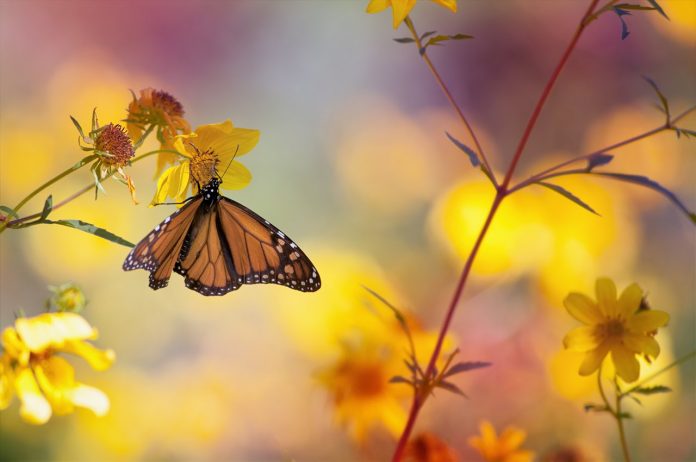
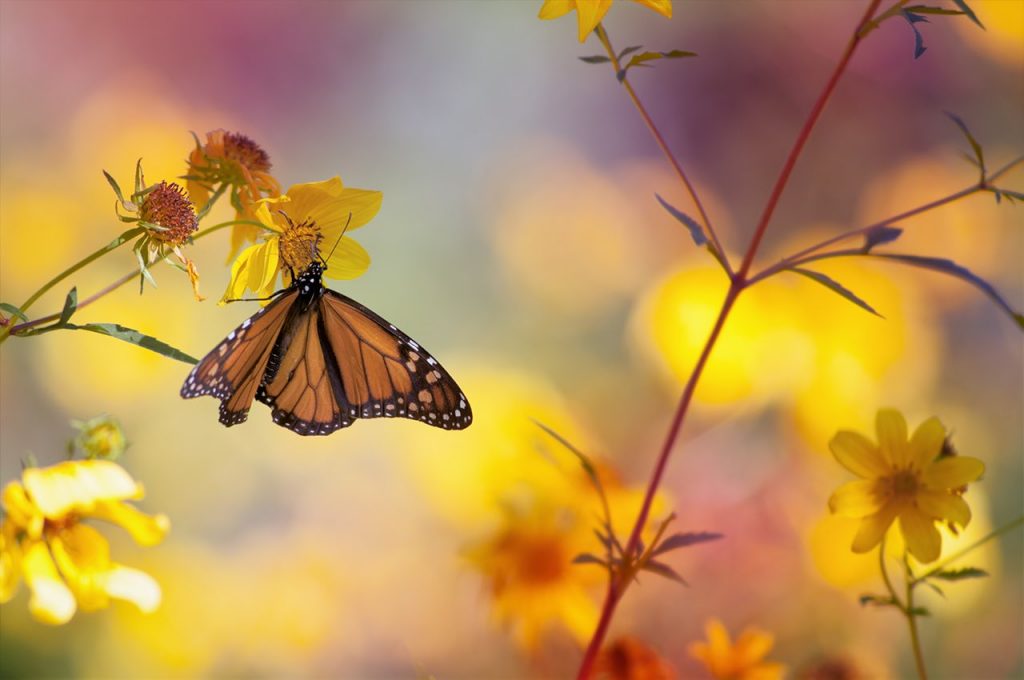
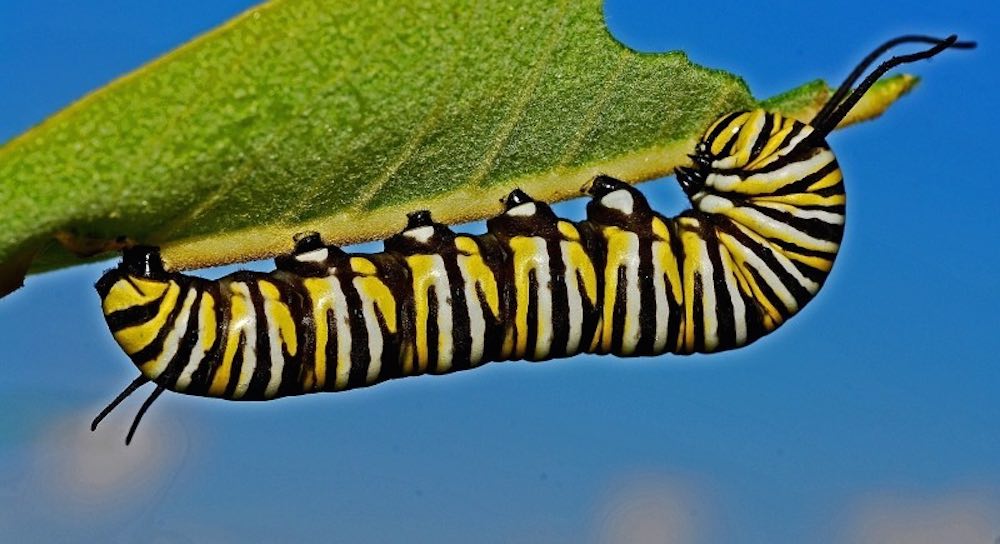
Conservationists use the designation of keystone species when trying to raise awareness or money for a species they’re trying to protect. Marine examples of this are whales, krill, and seagrass, while terrestrial species could include tigers, oaks, and monarch butterflies.
If keystone species disappear, food webs can be fragmented. If they’re protected, the system flourishes. In order to protect tigers, entire ecosystems have to be preserved as a whole, ensuring thousands of species remain undisturbed. Thus the tiger becomes the ‘keystone’ by which the ecosystem stays intact.
Many of us will be familiar with the plight of America’s bee populations, as well as guides about planting bee-friendly flowers in our gardens. However, all kinds of insect species affect the local ecosystem, and native keystone plants will help support them.
Two such insects are moths and butterflies, whose offspring in the form of caterpillars provide more for the forest and field than you might imagine.
The butterfly effect
Without pollinators, humans and most other animals would perish in short order. As pollinator habitat becomes fragmented around civilization, planting a native pollinator-friendly garden can offer them little oases of food and shelter.
In the Mid-Atlantic region, species like goldenrod, wild strawberry, wild sunflowers, and violets attract 30 or more species of moths and butterflies alone—two of the most important pollinating insects.
In the Southwest, those first three plant species can be good to add to a garden, but desert dwellers like sagebrush, wormwood, and trefoil also attract more than 30 kinds of moth and butterfly.
There are online resources you can use to find native species, and one that’s still in beta-testing gives you the number of butterfly and moth species that use various plants to host their caterpillars.
North America’s more than 14,000 species of caterpillars are quite influential on ecosystems, since being pollinators they help plants reproduce, but they also provide a staple food source for many birds.
In fact, one study showed that caterpillars transfer more energy from the plant kingdom to the animal kingdom than all other herbivores combined.
Another study showed that 90% of all caterpillar diversity is centered around just 14% of plant species: the five largest contributors are keystone trees (which you should plant).
They are oaks, willows, cherries/plums/peaches, (prunus), pines, and then populus, such as poplars, aspens, and cottonwoods.
On the other side of the weight distribution, trees support far more species than shrubs and flowers, but non-native ornamental trees like crape myrtles, gingko, or other trees from China often support between 0-3 species of caterpillars, and therefore won’t be selected by birds during nesting season.
Planting native keystone species that will bring in swarms of butterflies and moths really means you’re doing more than your part to help North American ecosystems, since they, and not only bees, really need it.
SHARE These Gardening Tips With Your Pals on Social Media…
Quote of the Day: “Life’s not about expecting, hoping and wishing, it’s about doing, being and becoming.” – Mike Dooley
Photo by: Sushil Ghimire
With a new inspirational quote every day, atop the perfect photo—collected and archived on our Quote of the Day page—why not bookmark GNN.org for a daily uplift?
Sy Newson Green was a high school freshman when his world pretty much fell apart. His dad needed a heart transplant, and his mom was in an accident that impaired her vision. Both parents lost their jobs—and without their income, his future at the Palma School, the private all-boys Catholic high school he attended, was in peril.
Palma School
But Green was about to get a helping hand he’d never expected from an unlikely source.
A group of inmates at California’s Soledad Prison pooled their income from working jobs as prisoners, and with a little outside help, they raised most of Green’s tuition to get him all the way through his sophomore year to graduation. All told, the sum was a whopping $32,000.
And the gesture was inspired by a book club!
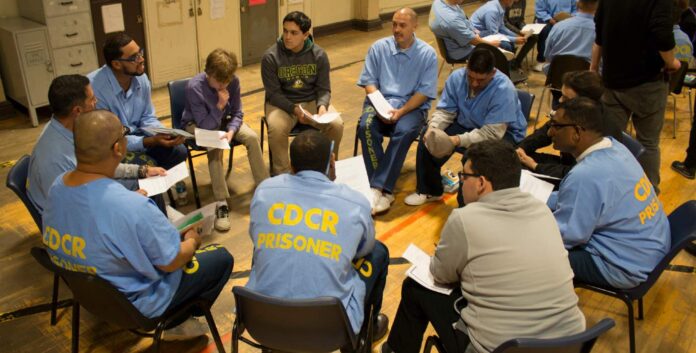
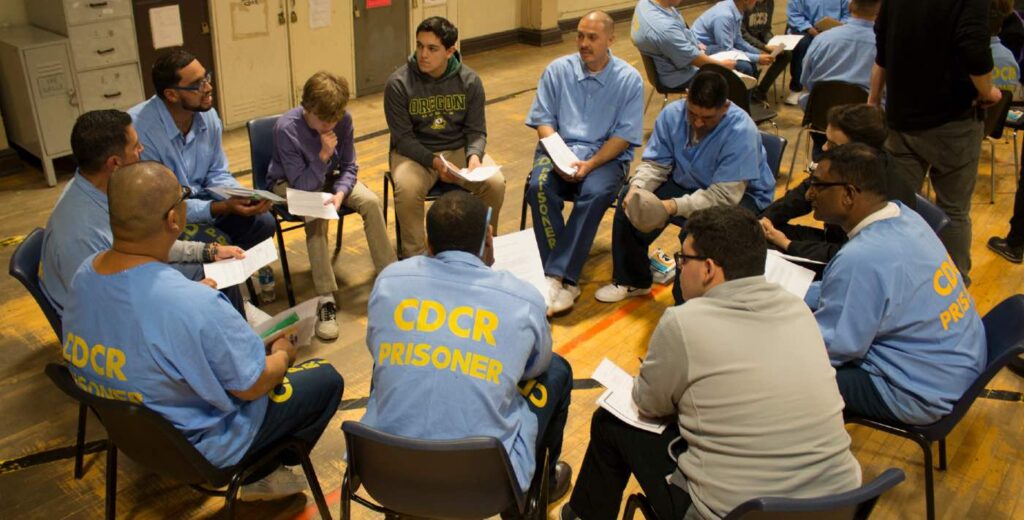
Jim Micheletti, an English and theology teacher at Palma School launched a reading program at Soledad seven years ago, called Exercises in Empathy—and he never imagined the cascade of positive repercussions that would follow.
Sowing a seed that would come full circle
In the program, Palma students and teachers met regularly inside the prison to discuss books with inmates. More than a simple exchange of ideas, it became an opportunity to change students’ preconceived notions about inmates—and offered prisoners a chance to step outside those stereotypes.
“They go in thinking ‘monster,’ and they come out thinking ‘a man, a human being.’ They’ve done bad things, but there are no throwaway people here,” Micheletti told CNN.
In 2016, one reading club selection, Miracle On The River Kwai by Ernest Gordon was the perfect book to change lives. The story chronicles the transformation of a group of prisoners of war from a mindset of ‘survival of the fittest’ to one of solidarity with one another and self-sacrifice.
Jason Bryant, who was serving a 26-year sentence for his part in an armed robbery, finished reading the book and was so inspired by the story, that he and fellow-inmate Ted Gray set out to emulate the book’s example: “A small group of men made a different decision, and they decide to look out for each other.”
Bryant and Gray also decided to channel their energy into creating a scholarship fund for a deserving Palma student—and, Sy Green, who excelled at his studies and sports, got the green light.
For the next three years, Bryant and Gray worked behind prison walls to gather donations to finance Green’s education. Most of the donations were small, but a steady flow paid off.
Green, now 19, got his Palma diploma last year and is currently a student at San Francisco’s Academy of Art University.
Bryant was granted clemency after serving 20 years, and now serves as the Director of Restorative Programs at CROP, a nonprofit that focuses on reducing the recidivism rate via training, career development, and stable housing.
In a system where so many inmates are locked into a cycle of crime and punishment, Bryant found the key to lasting change was forged by helping others.
“I don’t know about redemption… I can say this,” he told the Washington Post, “I know that those of us who have truly transformed our lives are committed to adding value in any way that we possibly can.”
In the prison system, crime and punishment go hand in hand. Rehabilitation—while often cited as a goal—is usually more elusive. But if more book clubs were added to the mix, who knows how many transformations we could read about.
SHARE Some Redemption and Generosity–Pass This Story on to Friends…
Capitol police officer Eugene Goodman, who’s being called a hero for single-handedly steering a mob away from the Senate chambers on January 6, escorted Kamala Harris to the presidential inauguration ceremony on Wednesday. He was there in his new role as acting Deputy House Sergeant at Arms.
This moment in @igorbobic stunning footage. In front of the officer, coming up the stairs, is a mass of rioters. The USCP officer glances to his left. Between those two chairs is the entrance to the senate floor. He lured them to his right, away from their targets. pic.twitter.com/knjQQ4GZ0d
Bipartisan lawmakers introduced legislation last week to award him with a Congressional Gold Medal.
“By putting his own life on the line and successfully, single-handedly leading insurrectionists away from the floor of the Senate Chamber, Officer Eugene Goodman performed his duty to protect Congress with distinction, and by his actions, Officer Goodman left an indelible mark on American history,” the legislation states.
The medal is reserved for people who’ve made “distinguished achievements and contributions” to America.
Previous recipients of the Congressional Gold Medal include Martin Luther King, Jr., Rosa Parks, and mathematicians Katherine Johnson, Dr. Christine Darden, Dorothy Vaughan, and Mary Jackson for their contributions to NASA’s success in the Space Race.
SHARE the News of This Officer’s Inauguration Role With Friends…
Walking can literally add years to your life, and incorporating walks after meals can improve all manner of chronic metabolic disorders.
Hardly news, the body of research on walking was augmented with another study which took place in 2003-06 but whose results were only just published recently, showing that people who took 8,000 steps per day had a 51% reduced risk of death than those who took 4,000 steps per day.
Furthermore, as uncountable scientists in the past have confirmed, the study found a cumulative, dose-dependent effect on the person, as those who walked 12,000 steps or more had a 65% reduced risk of death.
The study consisted of about 5,000 participants who wore pedometers for three years, and whose circumstances of death were monitored by the scientists.
Do the walk of life
Physical motion, not exercise in the traditional P.E. class sense, is the catalyst through which is born a strong, healthy body.
The science practically begs the reader to start moving around more, as it found the barest of minimums for participatory benefit. For example, the steps were not taken all at the same time, suggesting that on many occasion, the wearer of the pedometer was not even walking for exercise, but rather doing something like errands or chores.
Not only was there no correlation of consecutive steps and lower mortality rate, but there wasn’t even a correlation between step intensity and lower mortality rate, meaning one doesn’t even have to power-walk.
The science is quite clear: walk and live longer; exercise and live even longer.
The CDC estimates that 60%, or 165 million Americans, are living with one chronic disease, while 40% may be living with two. The cost of all this disease, according to functional medicine expert Chris Kresser, will equal national GDP by 2040.
As shown in a number of studies, many of these chronic diseases can be improved simply by walking—especially after dinner or a meal.
The European way
As iconic as the siesta is in European culture, a trip out onto the street after dinner in a country like France or Italy is principle people-watching time, as full-belied friends and couples of every description “walk it off” under the street lights.
Walking after a meal, particularly dinner, can improve all manner of markers for cardiometabolic disease.
A study of type-2 Chinese diabetics found that walking on a treadmill at 60% of max heart rate for just 20 minutes after dinner decreased the post-meal blood-glucose spike average and peak, and improved how glucose was regulated for 12 hours post meal.
Study participants with gastro-reflux disease who followed dinner with a walk rather than sitting were shown in a study from Pakistan to have a significantly lower (12%) risk of getting gastro reflux symptoms.
Another study found that in 64 patients, “the effect of after-dinner quick walking is significant in the treatment of community fatty liver [disease] and it may improve liver function.”
Smaller studies with very few participants have looked at other effects and found significance in after-dinner walking.
Even though the recommended physical activity in the U.S. is 150 minutes of moderate intensity per-week, meeting that just with daily walks can be very rewarding as well.
PASS On The Positivity And Walk These Tips Over to Friends On Social Media…
Good News Network has covered how resilient and good for the climate seagrass meadows are, but now a new study proves they can provide even more value to humans looking to help heal the wounds inflicted on our planet.
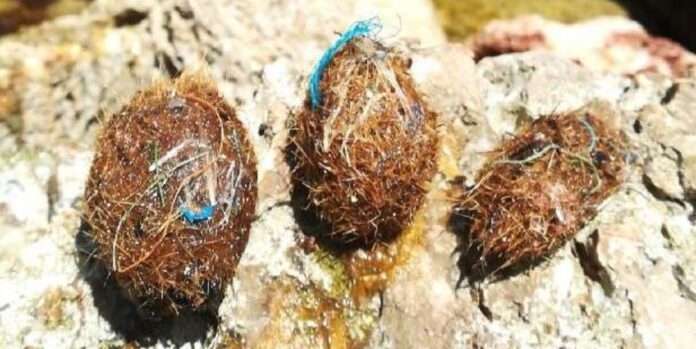
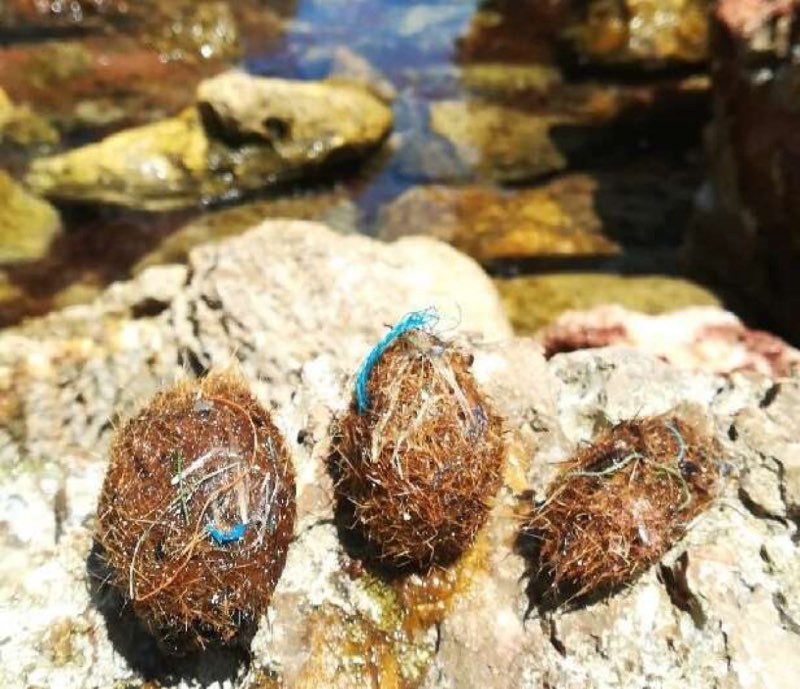
Spanish researchers have documented that seagrass ‘Neptune balls’ can act like plastic mousetraps, entangling bits of waste in their leaves and foiling their attempts to trick sea life into eating them.
Using mathematical extrapolation estimates, the researchers suggest that there could be as many as 900 million bits of plastic entangled in seagrass beds in the Mediterranean alone, representing “a continuous purge of plastic debris out of the sea.”
“We show that plastic debris in the seafloor can be trapped in seagrass remains, eventually leaving the marine environment through beaching,” lead author Anna Sanchez-Vidal, a marine biologist at the University of Barcelona, told AFP.
The Neptune balls are tightly coiled ropes of vegetation from which the long seagrass blades sprout.
Jordi Regas/University of Barcelona
They are the size and shape of rugby balls, and while it’s not clear if the plastic damages the plant, their lifespan sees them wash up on beaches, thereby removing the captured plastic from the ecosystem.
The leaves also perform this function, and Sanchez-Vidal and her team found while collecting these castaways from Mallorca beaches, that half of seagrass blades contained debris, amounting to about 600 pieces of plastic per kilo of leaves.
In findings published in Scientific Reports, only 17% of the tightly knit Neptune balls on the other hand contained plastic, however they did so at a much higher rate, of about 1,500 pieces per kilo.
Seagrass covers only 0.02 percent of the seafloor, but the 70 species of grass that can grow from the Arctic to the Tropics deliver important ecosystem services to humans and other species.
They form the basis of coastal marine food systems, act as nursery beds for thousands of species of fish and crustaceans, and important habitat for dugong, manatee, rays, and seahorses. They also prevent beach erosion and cushion shorelines from storm surge impacts, reducing the damage they cause.
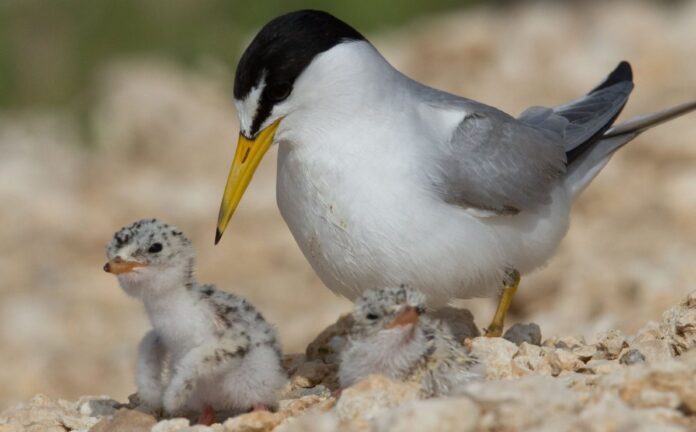
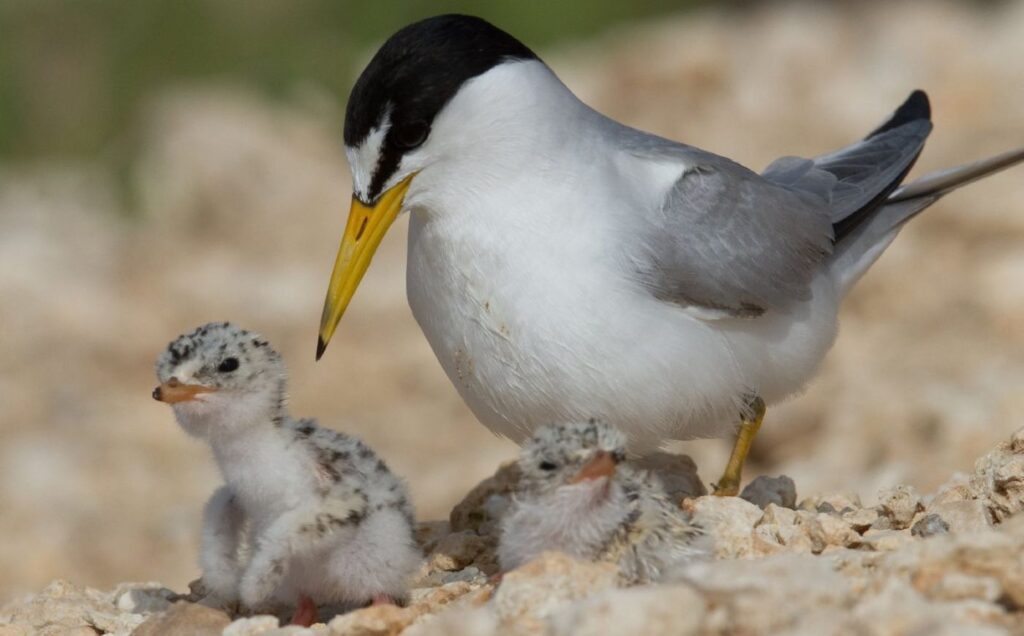
The interior least tern, a bird which survived waves of attacks from dam building, hat making, and more, can now be classified as an Endangered Species Act success story as its numbers have increased 900% over 35 years.
It was announced on the 12th by the Fish and Wildlife Service that it would now leave the Endangered Species List, having returned to around 480 breeding colonies, along 2,800 miles of riverways, in 18 states across the Great Plains and the Lower Mississippi Valley.
“Dozens of states, federal agencies, tribes, businesses and conservation groups have worked tirelessly over the course of three decades to successfully recover these birds,” U.S. Fish and Wildlife Service Director Aurelia Skipwith said in a statement.
Weighing just two ounces, the interior least tern is the smallest member of the tern family. In the 19th century, the bird was often hunted for its plumage as part of the demand for its feathers to crown women’s hats, a booming industry that reduced numbers of all manner of birds.
As if that weren’t enough, dam and levee construction to control the mighty rivers of the Midwest wiped out a lot of nesting habitat along the banks of the Missouri and Mississippi.
The U.S. Army Corps of Engineers had a major role to play in the tern’s recovery story, as they altered river management strategies that had once destroyed the tern’s nesting sites, and used dredged river material to build habitat on the banks that couldn’t be reclaimed.
“The U.S. Army Corps of Engineers is absolutely honored to play a role in a partnership that serves as a model for the potential delisting of other species in the future,” said Major General Diana Holland, Commander of the Mississippi Valley Division of the Corps.
“For over 30 years, we have partnered with the Service to monitor, conserve and recover this endangered species along the Lower Mississippi River. That partnership demonstrates that, through collaboration, we can protect and recover an endangered species while continuing to provide critical navigation and flood control benefits to the nation.”
While normally the removal of an animal from the Endangered Species Act list is met with opposition and condemnation by conservation groups, most accepted that the tern population was healthy and that landowners and farmers no longer need to be dragged into legal battles on its behalf, and the tern will still be protected under the Migratory Bird Act.
In a study of American wildlife recovering through intervention of the federal Endangered Species Act, 99% of those that were in a situation to benefit from the complete effects of the ESA, i.e. not extinct in the wild, recovered to pre-Endangered levels—a total of 271 species.
SHARE the Good News With the Bird Fans in Your Life…
Quote of the Day: “If there be any among us who would wish to dissolve this Union or to change its republican form, let them stand undisturbed as monuments of the safety with which error of opinion may be tolerated where reason is left free to combat it.” – Thomas Jefferson (From his inaugural address, 1801)
Photo by: Srini Somanchi
With a new inspirational quote every day, atop the perfect photo—collected and archived on our Quote of the Day page—why not bookmark GNN.org for a daily uplift?