










All News - Page 523 of 1735 - Good News Network
Home Blog Page 523

Top 10 Species Discovered in 2020 Include a Harry Potter Snake and Desert-Dwelling Broccoli

While homo sapiens sheltered in place, 2020 also saw explorers diving out into the wilds of the world, finding astonishing new species never before seen by science.

Some slither, others skitter. There are monkeys, snakes, spiders, frogs, plants, and even the longest animal ever recorded.

They were found all across the continents; from Madagascar to Bolivia, from India to Namibia, from Iran to Australia, and from North Carolina, to Heathrow Airport.

There are plenty of reasons to feel like 2020 deserves to be remembered with a shutter, but the colors and characters of these newcomers to scientific textbooks will give you something nice to remember the year by.

Reptiles

A pit viper named after a Harry Potter character, and a girl with kaleidoscope scales.

Trimeresurus salazar, copyright Zeeshan A. Mirza, National Centre for Biological Sciences

In recent years, the Himalayan-lying North Indian state of Arunachal Pradesh has been home to many newly discovered creatures. Most recently is a new pit viper called Trimeresurus salazar, which Harry Potter fans would notice immediately means: Salazar’s pit viper.

The snake was named after the fictional founder of the Hogwarts House of Slytherin, the crest of which is an emerald green snake. The pit viper certainly looks the part, though the males of this nocturnal species have a unique reddish-orange stripe down the side of their heads.

Meanwhile, in Ha Giang province in Vietnam, an underground specialist was discovered that glows iridescently in the sunlight. Achalinus zugorum is presumed to spend most of its life underground thanks to a lack of bright-light photoreceptors in its eyes, making it incredibly difficult to find.

Its scales glow like the spectrum of Australian opals, and it’s thought to be older than most snakes, exciting herpetologists that it might shed light on earlier stages of snake evolution.

Primates

A brute of a mouse, and a critically endangered langur
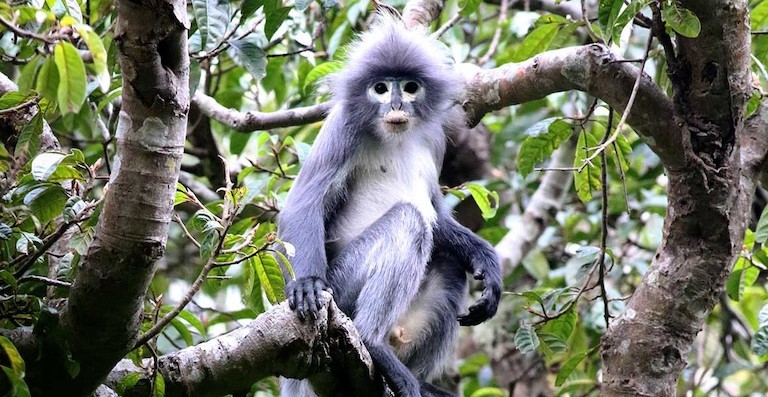
Pop langur, copyright Thaung Win

In Myanmar, four populations of Trachypithecus popa were discovered. The Popa langur species is thought to contain only 260 individuals, qualifying it as critically endangered. Yet as sad as that is, a problem known is a solvable one, and these animals’ long wispy grey fur and charismatic face will have no problem generating conservation interest.

Discoveries in the primate order are not common, and while habitat loss is concerning, charismatic species like the Popa langur can often be used effectively to protect habitat for other species that are also endangered.

In Madagascar, the Darwinian playground of evolution produced a species of mouse lemur that had eluded us until 2020. Microcebus jonahi, or Jonah’s mouse lemur, is bigger than others in its family. Averaging the size of a human fist, smaller mouse lemurs can even be as small as the palm of a hand.

Sporting reddish-brown fur with a white stripe down its nose, Jonah’s mouse lemur is thought to live only in the dry lowland forests of Northeast Madagascar’s Mananara Nord National Park.

Plants and fungi

Heathrow airport fungus and desert-dwelling African… broccoli?

Tiganophyton karasense, copyright Wessel Swanepoel

In the southern deserts of Namibia, Tiganophyton karasense, an evergreen shrub in the same order as broccoli, Brussel sprouts, and kale—brassicales, was found to be unique enough to be its own family Tiganophytaceae.

It thrives where other plants die, in salt pans, under 96°F heat, and fewer than 1,000 individuals are known to exist.

Meanwhile, in a much colder climate, six new mushrooms were identified, one of which was designated as Cortinarius heatherae, after Heathrow Airport where it was discovered next to a nearby river beyond the confines of the runways.

CHECK OUT:  New Species, Devil-eyed Frog, and Satyr Butterfly Not Seen For a Century Found in Forests 30 Miles From the Capital

Three others were found in Scotland, all belonging to the family Cortinarius, which facilitates the growth and health of pines and oaks in the forest. They are webcap toadstools, meaning the underside of their caps look like fish gills.

Arachnids

Equal parts terrifying and fascinating, the Joaquin Phoenix spider and a very, very large scorpion. 
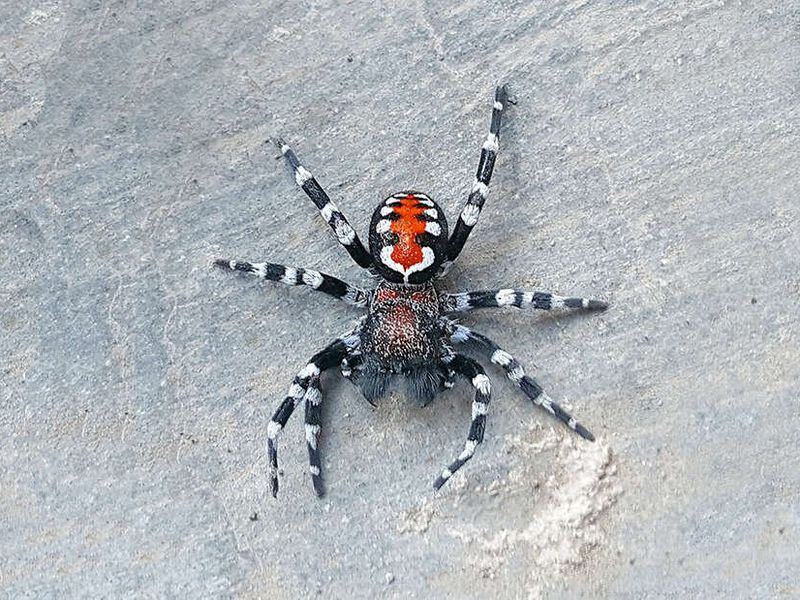
Loureedia phoenixi, copyright Niloofar Sheikh / Zamani et. al 2020

While many vacationers won’t want to hear that a scorpion four-inches long was discovered in the most-visited protected area in Sri Lanka, a scorpion four-inches long was discovered in the most-visited protected area in Sri Lanka.

Fortunately, as the old adage goes, Heterometrus yaleensis, or the Yala giant scorpion, named after Yala National Park, doesn’t pack much of a sting—the big ones almost never do.

In Iran, a genus named after Lou Reed—the velvet spiders have a new member—this one named after Joaquin Phoenix’s portrayal of Batman’s famous nemesis in the 2019 production.

MORE: Howling With Joy: After 45 Years, the Gray Wolf Has Successfully Been Lifted Off the US Endangered Species List

Combining the celebrities into Loureedia phoenixi, it has a frightening red splotch on its thorax, and white banded black legs. It’s the first of its species to be found outside of the Mediterranean, and while it seems scary, it only measures eight millimeters long, and displays rather charming behavior such as communal nest building and carrying for other spiders’ young.

The Ocean

How could we miss the longest animal on Earth and a species of whale?

Coiled siphonophore, Schmidt Ocean Institute

100 miles north of Mexico’s San Benito Islands, a research team believes they may have found a new species of beaked whale. Originally thinking it was Perrin’s beaked whale (Mesoplodon perrini), a species that, while never being seen alive, was known and presumed endangered, the researchers changed their tune after closer observations.

In 2020, what is believed to be the largest, and certainly longest, animal ever recorded was found in the abyssal deep-sea canyons near Ningaloo. 30 new species were also first described by the dive which found a 150 foot-long (47 meter) giant siphonophore of the genus apolemia.

Coiled up like a rope, the creature is more like a jellyfish than a worm, and is actually a colonial organism made up of smaller, specialized polyps and medusoids, collectively known as zooids, which act like humans inside a submarine, each zooid managing a different physiological function such as propulsion or gastric function.

RELATED: Conservation Success for European Bison is ‘Living Proof’ That Ambitious Biodiversity Targets Work

The world is a strange place, filled with strange animals, and for children who think there isn’t anything left to discover, a new monkey and the longest animal on Earth were discovered last year. Who knows what else is out there?

SHARE The Big Discoveries With Your Pals on Social Media…

Startup Turns 32 Million Discarded Chopsticks Into Gorgeous Decor And Furniture

ChopValue

Attempting to tackle the immensely small, and intolerably ignored problem of chopstick waste, a BC resident created a startup that recycles used chopsticks into bespoke furniture and other useful items like tablet stands.

In 2016, Felix Böck, a doctoral student in the faculty of forestry at the University of British Columbia, estimated that 100,000 pairs of chopsticks were being sent to landfills every day in Vancouver alone.

Felix Böck, ChopValue

Now in its fourth year, ChopValue has exploded into success. Böck employs 40 people, and using his special methods of steam and press machines, he has recycled 32 million pairs of chopsticks.

Armed with a mindset of German engineering and Canadian sustainability, Böck not only created a flourishing business, but a new model of production for a circular economy.

ChopValue

The furniture and other items he creates like shelves, cutting boards, coasters, and hexagonal decorative blocks often contain thousands of chopsticks per item, a good thing, since billions of chopsticks are used across the Western Hemisphere every year.

Chopstick evolution

Chopsticks were recorded by Classical Chinese historians to be known about and used before the Shang Dynasty, which would place them 5,000 years in the past. Historian Q. Edward Wang claims in his book Chopsticks that the tool was Neolithic in origin, and perhaps was used also for stirring food in pots.

Offfice desk, ChopValue

An article from Treehugger bizarrely suggests that it was the semi-mythical Xia Dynasty founder Da Yu who used two twigs when, in his haste to reach a particular place, he needed to bypass the boiling water of his food and eat immediately.

In a similar epiphanic moment, one news report suggests that Böck and his girlfriend came up with the idea while eating at one of the many Vancouver sushi restaurants.

Wall decor set, ChopValue

Upon contemplation of the scope of chopstick waste, (80 billion are thrown out in China each year alone) and a little nudge from his girlfriend, he began convincing restaurant owners to set up recycling bins exclusively for chopsticks.

MORE: The New Green Building Revolution Uses Timber to Build ‘Plyscrapers’ That Save Tons of CO2

Once collected, they are coated in resin and pressed into blocks. Hundreds of restaurants across North America pay a small sum to Böck for the recycling of their used chopsticks.

CHECK OUT: Stanford Designer is Making Bricks Out of Fast-Growing Mushrooms That Are Stronger than Concrete

Böck hopes to scale up his business model by spreading factories for recycling local wood like chopsticks worldwide without relying on distribution chains, something he calls the Microfactory, and which he has set up in 10 countries.

SHARE the Good Green News With Friends on Social Media…

“Never underestimate the power you have to take your life in a new direction.” – Germany Kent

Quote of the Day: “Never underestimate the power you have to take your life in a new direction.” – Germany Kent

Photo by: Bahman Adlou

With a new inspirational quote every day, atop the perfect photo—collected and archived on our Quote of the Day page—why not bookmark GNN.org for a daily uplift?

These Emperor Tamarin Triplets Were Born the Size of a Thimble – With the Cutest Tiny Moustaches

SWNS

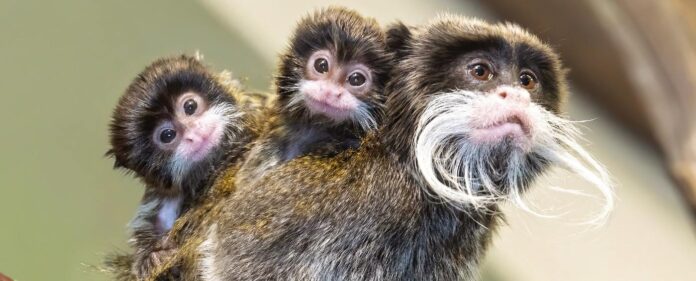
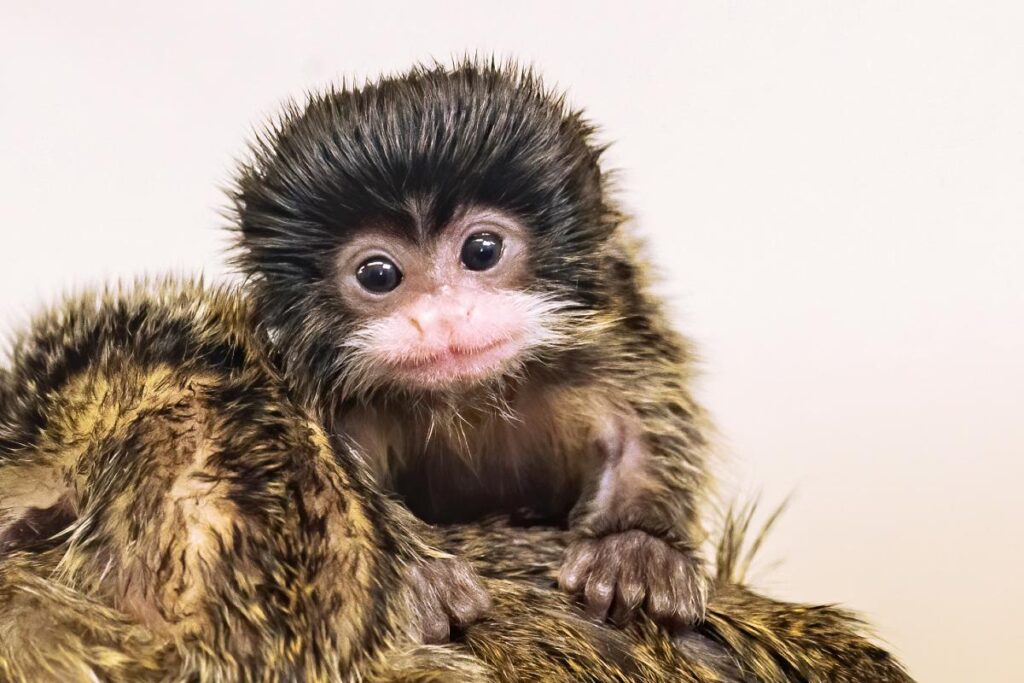
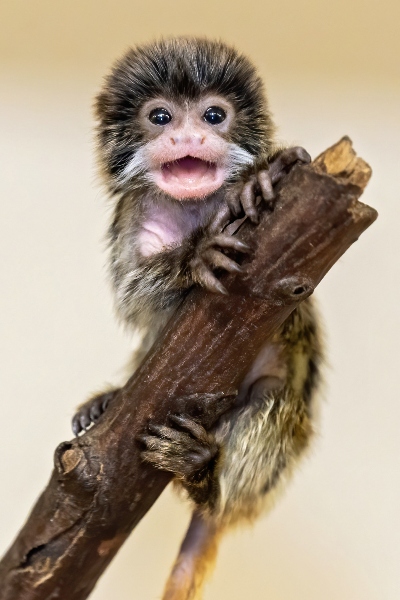
The world’s oldest zoo has welcomed three new arrivals: emperor tamarin monkey triplets who already sport little moustaches despite being just the size of a thimble.

SWNS

The emperor tamarin is a species famous for its impressive white moustache, and allegedly got its name owing to its resemblance to the last German Emperor, Wilhelm II.

Despite not yet being six weeks old, and their tiny bodies measuring just five centimeters long, these three newcomers are already showing signs of their own trademark facial hair growing in.

The tamarins were born at Vienna Zoo, in Austria’s capital city, on December 1, and are the first offspring of their parents, Tamaya and Purple.

Zookeepers have not yet been able to determine whether the newborns are females or males. But they are already keeping new dad Purple on his toes.

SWNS

Stephan Hering-Hagenbeck, director of the 270-year-old zoo, explained: “Most of the time the father carries the kittens on his back. If the little ones get hungry, the mother than takes over to feed.”

SWNS

Stephan said that with each passing day, the tiny monkeys are becoming bolder and are already making their first climbing attempts, with the support of their clawed fingers and toes.

CHECK OUT: Adorable Pictures Show A Critically Endangered Female Chimpanzee Cradling Her Newborn Baby

The new monkey family is still waiting for animal godparents. If you want to support the currently closed zoo, you can become a sponsor for 80 euros ($97) per month.

SHARE the Story of These Cheeky Monkeys With Your Friends…

‘Ratatouille: The TikTok Musical’ has Raised Over $1 Million for Struggling Actors

TodayTix

Some dreams seem nearly impossible: Like becoming a chef in a top Parisian restaurant when you’re a rodent, or staging a brand-new Broadway musical during an ongoing pandemic when theaters worldwide are dark—or finding a way to combine both and raise more than one million dollars to benefit charity.

But that’s just what happened when the curtain rose on ‘Ratatouille: The TikTok Musical’ in the first weeks of 2021.

Adhering to the adage that “good things come in small packages”—including rats with visions of glory—the show’s origins are pretty humble.

Back in August of 2020, 26-year-old schoolteacher Emily Jacobsen, a devoted Disney fan/theater junkie and avowed ‘Ratatouille’ aficionado learned a themed attraction based on Remy and his crew was scheduled to open at Walt Disney World in Florida in the coming year.

Inspired, Jacobson came up with “a love ballad” to her favorite diminutive hero:

“Remy, the ratatouille
The rat of all my dreams
I praise you, my ratatouille
May the world remember your name.”

@e_jaccs

A love ballad ##remy ##rat ##ratatoille ##disney ##wdw ##disneyworld ##ratlove ##ratlife ##rats ##Alphets ##StanleyCup ##CanYouWorkIt

♬ Ode to Remy - Emily Jacobsen

Jacobson posted her ditty to TikTok and tagged some friends—one of whom happened to be music whiz Daniel Mertzlufft, who added orchestration, instruments, and vocals to the tune via computer. Instead of an ending, the Disney-worthy finale Mertzlufft created was the spark that set the internet on fire and launched a thousand videos that would eventually become ‘Ratatouille: The TikTok Musical’.

Mertzlufft debuted his video in October. Soon after, other enthusiastic TikTokers began putting up their own contributions to the virtual show. What started as a snowball became an avalanche.

Even Disney was caught up in the momentum. “We love when our fans engage with our stories,” the studio said in a statement reported by The New York Times, “and we look forward to seeing these super fans experience the attraction when it opens at Walt Disney World next year.”

As the viral trajectory of the crowd-sourced musical with 200,000 followers and counting continued to trend, something even more extraordinary happened.

With the wave of its magic wand, Disney gave Seaview Productions the green light to produce a full-fledged musical as a benefit performance in aid of the Actors Fund.

While the organization’s mission has always been to provide performers with a financial safety net, with so many show business professionals sidelined by the COVID-19 crisis, the need is more crucial than ever now.

Mertzlufft, who was tapped for the role of musical director says the whirlwind production was pulled together in less than a month’s time.

“I had my first meeting December 4 with the folks at Seaview,” he told The New York Times. “They gave me a call and said, ‘Hey, we have this crazy idea. Disney has given us the allowance to do a benefit for the Actors Fund of ‘Ratatouille.’ The only catch? They wanted it to debut on New Year’s Day. “I took a deep breath and said, ‘Yeah, that’s possible.’”

Starring Tituss Burgess as Remy, and co-starring Wayne Brady, Adam Lambert, Kevin Chamberlin, Andrew Barth Feldman, Priscilla Lopez, Ashley Parks, André De Shields, Owen Tabaka, and Mary Testa, since its January 1 premiere, ‘Ratatouille: The TikTok Musical’ has raised more than $1 million for the Actors Fund.

The ‘Ratatousical’s’ original 72-hour run was so successful, a second performance was added on January 10. While the show has been a financial boon to performers, its importance has a much broader reach.

MORE: Music Takes 13 Minutes to ‘Release Sadness’ and 9 to Make You Happy, Says New Study

“It’s just so important to be supporting artists right now, I think, both in terms of the actual raising money (and in) bringing hope that new work still can be created and that there’s a space for innovation,” the show’s director, Lucy Moss, told CNN. “Maybe, you know, this kind of work wouldn’t have happened if we weren’t all stuck at home.”

RELATED: Great Things to Do at Home While Quarantined: Let’s Be Pandemic-Positive

If the moral of ‘Ratatouille: The TikTok Musical’ is anything, it’s that we can refuse to take no for an answer. We can choose to embrace the impossible. We can become the force that creates something new. We can choose to see our vision through and give it everything we’ve got because a dream that comes true against all odds is all the sweeter.

CHECK OUT: Gospel Singer’s Hilarious Song About Quarantine Snacking Goes Viral: ‘The Fridge Again!’

As Remy said to Django in the original 2007 film, “Change is nature, Dad—the part that we can influence—and it starts when we decide.”

SHARE This Tasty Treat of a Story With Your Friends…

The New Green Building Revolution Uses Timber to Build ‘Plyscrapers’ That Save Tons of CO2

Mjøstårnet tower in Norway: Woodify AS/Vjus AS

Across the world, advancement in plywood technology is giving way to a slew of wooden skyscrapers aptly called ‘plyscrapers’.

Mjøstårnet tower in Norway: Woodify AS/Vjus AS

These innovative towers are beginning to top 200 feet, with one ambitious project in Norway reaching 280 feet, while also creating less carbon emissions, and requiring less time to build.

The secret to these plyscrapers’ survival and success comes down to a new way to create plywood, and it involves laminating boards of wood together with glue at 90-degree angles before pressing them together under the immense pressure and steam of industrial wood presses.

“This technology has changed the whole face of timber as a construction material,” said Roma Agrawal, the structural engineer who built The Shard in central London, to The Economic Times. “It’s a huge leap forward in terms of strength [paired with] massive advances” [in fire safety.]

The result, known as cross-laminated timber, or CLT, is part of a group of materials called mass timber, and thanks to changes in building regulations and a greater eye towards sustainability, they are now being used in ever-larger construction projects.

Buildings like the Terrace House in Vancouver (19 story), the HoHo in Vienna (24 story), the Ascent in Milwaukee (25 story), and the Mjøstårnet in Norway—the tallest wooden tower in the world, wouldn’t be possible without CLT and mass-timber technology.

However, while the thought of cutting down enough trees to replicate a famous skyline seems ridiculously climate-negative, considering the loss of carbon sequestration, the reality is that there are stages in the life of a tree when they become carbon emitters, rather than carbon trappers.

Carbon capturing construction

Trees don’t always store carbon, and they don’t always suck up more carbon than they emit. Natural storms can uproot trees, exposing their precious carbon-sequestering roots to decay.

MORE: How an Indian Architect is Sucking Carbon Emissions Out of the Air and Turning it into Stylish Tiles

Death by fire, disease, age, damage, or any other way causes a tree to lose a lot of its sequestered carbon, and produce more still from the fungi that break it down through the process of decomposition.

But when a tree reaches a certain age, it will have indeed sucked up a lot of carbon. By turning that tree into mass timber, the carbon cannot escape through natural processes, effectively making timber towers timber prisons, with carbon dioxide as the inmates.

“Trees store carbon, so if you harvest them at the right age when they can’t absorb much more or grow much further, then it’s a better solution to use them as a building material,” says Voll Architecture’s Øystein Elgsaas, part of the team that built the Mjøstårnet tower in Norway.

RELATED: Not Only Does New Solar Chimney Design Cut Energy Costs By 50%, It Can Also Save Lives During a Fire

In a video call with CNN, Elgsaas expands on the idea by adding that: “It prolongs the trees’ lifespans (by preventing their decomposition) by maybe 100 or 200 years, if done correctly.”

The International Building Codes, used by many countries as a base for their own local building regulations, have just recently allowed for the creation of wooden buildings to reach 18 stories.

While 18-story wooden buildings haven’t existed in modern times, it remains to be seen if planned towers such as Sumitomo Forestry’s W350—a timber tower stretching 1,189 feet in the air, or London’s Oakwood Timber Tower, slightly shorter at just under 1,000 feet, will ever be made based on current building regulations.

CHECK OUT: One of the World’s First Communities of 3D Printed Homes is Set to House Mexico’s Poorest Families

But new research on fire-resistance, strength, and other aspects that would have politicians and regulators raising eyebrows at CLT and mass-timber construction, as well as a flood of market support and falling prices for mass timber, paints a picture of a culture of timber tower construction that’s preparing to catch fire in architecture firms around the globe.

Build Your Friends Up With the Good News and Share This Story With Them…

This Clever Attachment Makes Any Bicycle an E-Bike in Just Seconds – And it’s a Much Cheaper Method

A bicycle commuter has invented a simple, portable device that instantly turns your old sweat-and-tears-commuter-bike into a fast electric bike.

Clip

Perfect for San Francisco or Los Angeles cyclists who are faced with thigh-punishing hills on their way to and from work, Clip was named as one of the 100 Best Inventions of 2020 by Time Magazine.

Clip’s small profile, seven-pound device attaches to your front wheel and around the forks. Its small controller is secured to your handlebars, and has enough power to add 15 miles per hour of speed to your pedaling, enough to propel you up most hills no problem.

According to Adele Peters writing for Fast Company, Clip was mad by product designer Somnath Ray when he realized that people who may want to reduce their carbon footprint by pedaling to work could be dissuaded from doing so by hill climbs that arrive them at work pouring with sweat.

Small enough to fit into a backpack, the onboard 450-watt motor is powered by batteries that can be recharged in a wall socket, and provides about 10-15 miles of range.

“We wanted to have a solution where people could attach it to the bike really easily, and then basically detach it when they arrive to work,” Ray said, according to Fast Company.

MORE: These Emissions-Free Cargo Vehicles From Germany Could be the Future of Urban Delivery

E-bikes are undoubtedly cool, and even though their sales more than doubled during the pandemic, their costs are much higher than even high-end model bicycles, making them not only barriers to entry, but lucrative targets for bike thieves.

Clip isn’t alone in its class. There are other e-bike conversion kits on the market, such as the Copenhagen Wheel. However, these are often expensive (the latter costing $1,700) and heavy or permanent in their application.

CHECK OUT: This New German Car is Covered With Solar Panels and Charges As It Drives

Clip is available for preorder at just $399, and since you can carry it with you, it practically eliminates any unreasonable chance that your bike will be nicked.

PEDAL This Innovation Over to Pals on Social Media…

Arctic Oil Drilling Plans Suffer ‘Stunning Setback’ as Almost ‘No One Shows Up’ For the Sale

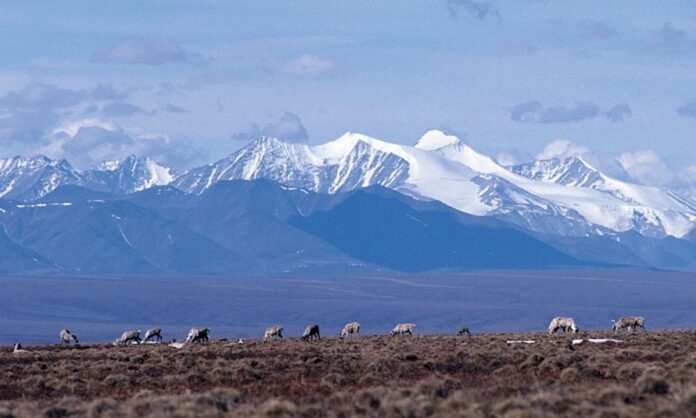
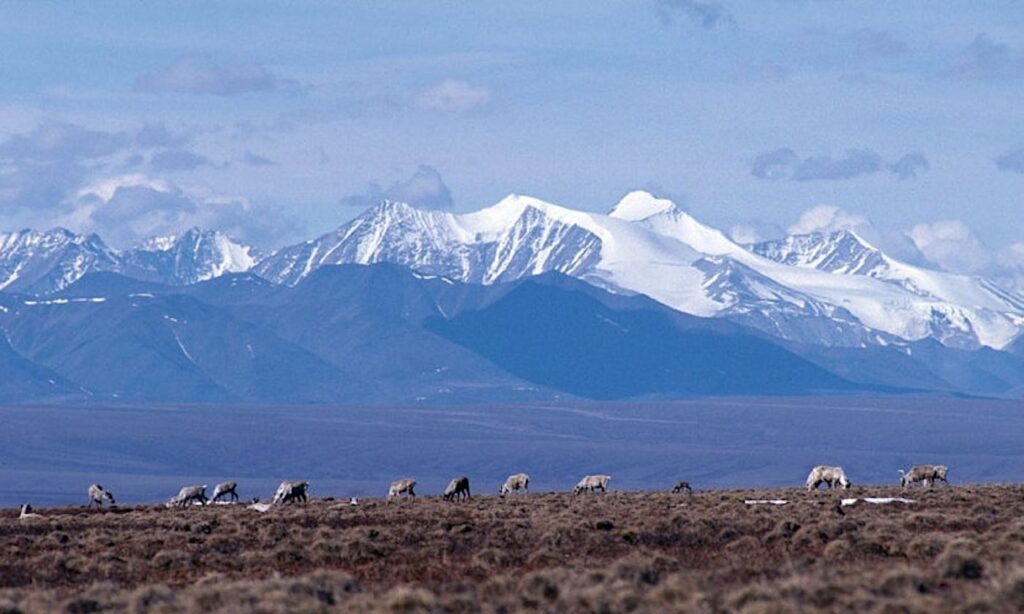
Caribou graze on the coastal plain of the Arctic National Wildlife Refuge, with the Brooks Range as a backdrop. (USFWS)

In a stunning setback to the waning Trump Administration’s long-stated goal of energy independence, a recent auction for oil drilling leases in the Alaskan Arctic attracted no major oil companies.

Caribou graze on coastal plain of the Arctic National Wildlife Refuge (USFWS)

After literally generations of debate, when the federal government put a 5% slice of the Arctic National Wildlife Refuge up for lease, the long anticipated flood of oil interest simply didn’t show up.

In fact, of the 22 parcels of land, totaling 1.1 million acres, the government of Alaska was the sole bidder and ended up winning leases on 9 of the 12 parcels that received bids. Merely two were acquired by private companies, and the others that received no interest were withdrawn from this round of auctions.

The region is known as the coastal plain, and federal estimates say a transformational supply of oil wealth — about 11.8 billion barrels — lie underneath the area that provides rich habitat for seabirds, polar bears, caribou, and other animals.

Even though the leases were expected to draw $1.8 billion in revenue over ten years, enough to “offset tax cuts”, concern over a lack of interest led the state development company, the Alaska Industrial Development and Export Authority (AIDEA), to authorize $20 million in emergency spending to pick up some of the leases.

RELATED: Coal and Natural Gas May Look Like the Biggest Covid-19 Casualties in Wake Of Lockdowns

Those that went unsold will be offered again during the next lease period, while those that were picked up are available for 10 years. AIDEA says it will look for private companies that are interested in the leases it does hold.

An historic day, an historic flop

Whether the astonishing absence of interest was due to a lack of infrastructure or roads around the coastal plain, the decline of fossil fuel investments (and use) during the pandemic, or the perception that every inch of the Arctic would be legally fought over by indigenous tribes and environmental activists, what was supposed to be a historic day ended with crickets and question marks.

“Today’s sale reflects the brutal economic realities the oil and gas industry continues to face after the unprecedented events of 2020, coupled with ongoing regulatory uncertainty,” said Alaska Oil and Gas Association CEO Kara Moriarty in a statement.

Either quite ignorant of the failings, or confident of future attempts to lease and develop the land, Alaska Senators Lisa Murkowski and Don Young, and U.S. Rep. Dan Sullivan, all described it as “a monumental/historic day for all Alaskans.”

POPULAR: For the First Time, U.S. Renewable Energy Surpasses Coal Every Day For An Entire Month

Opponents see the failure in a different light, one that is more shameful than historic. Adam Kolton, executive director of Alaska Wilderness League, described it as an “epic failure” and “a huge embarrassment.”

“Essentially, the Trump administration had a party, hoped the oil industry would show up—and it didn’t,” Kolton said, according to AP. “[It’s] a death knell for anybody who’s arguing that this is going to be an oil, jobs, and revenue bonanza. I mean, they’ve just been unmasked.”

Indigenous groups were sad to see the leases offered, however the concerns they raised during the public comment period did result in 460,000 acres, or 10 leasable tracts, being withdrawn due to wildlife concerns, involving caribou and polar bears.

After all the fuss, it may even come to pass that the Arctic is not explored for oil at all, since the leases are not finalized, and still pending a 2-week anti-trust review from the Department of Justice, which Trump hopes to expedite during his last days in office, according to Alaska Public Radio.

MORE: Trump Administration Denies Alaskan Copper Mine Permit in a Brilliant Victory for Salmon Fisheries

The future lease sales mandated under Trump’s Tax Cuts and Jobs Act of 2017, which may occur under a Biden Administration, could attract even less interest, since the president-elect has stated he is entirely against Arctic drilling, and may try and repeal or interfere with any drilling leases or work in the ANWR—actions which take years to complete.

SHARE the Surprising Eco News on Social Media…
“You can’t go back and make a new start, but you can start right now and make a brand new ending.” – James R. Sherman

Quote of the Day: “You can’t go back and make a new start, but you can start right now and make a brand new ending.” – James R. Sherman

Photo by: jens kuu, CC license

With a new inspirational quote every day, atop the perfect photo—collected and archived on our Quote of the Day page—why not bookmark GNN.org for a daily uplift?

The Unique Ways in Which Small Business Owners Are Adapting to the Pandemic

Provided by SWNS license

Technology has been a saving grace for small business owners who have had to adjust to working from home and the lack of customers shopping in brick and mortar stores.

According to a new poll, thirty-one percent of small business owners said embracing new technology helped their business during COVID-19.

The survey of 1,000 small business owners revealed that for 25% of respondents, the pandemic accelerated the adoption of digital tools for their business.

While the effects of the COVID-19 pandemic on small businesses are far-reaching, results revealed that owners are cautiously optimistic, likely due in part to their adaptive spirit.

The survey found that after they’re able to resume business as usual, the average respondent believes the adverse effects of COVID-19 will be negligible within a year.

While 57% of respondents said COVID-19 had a “somewhat” or “very” negative impact on their small business, 7% reported a positive impact and 36% reported the pandemic had no impact on their business.

RELATED: Small Business Owner Survives Pandemic By Live-Streaming Fashion Shows on Facebook

Commissioned by Melio and conducted by OnePoll, the survey revealed that many respondents were able to evolve during the pandemic by rethinking the way they operate their businesses.

Some respondents said they managed to successfully enable their employees to work from home (23%), digitized the way they get paid by customers (23%) and the way they pay vendors (19%).

CHECK OUT: New Fix-It Clinic is Using Zoom and Global Community to Help You Repair Items For Free

In addition to that, 19% of respondents increased their online advertising/marketing efforts and 17% revamped their business’ website to keep their business on the up and up during the pandemic.

Specifically, 21% increased their digital presence through social media, while 22% started selling products online.

“As a wine director of a restaurant, this time has been great time to explore new systems and new ways to generate revenue,” said sommelier Rania Zayyat.

Not surprisingly, younger small business owners were more likely to have made many of these changes to keep their company afloat.

Of those aged 26–41, 56% of respondents found ways to enable employees to work from home, while just 17% of those over 57 did the same.

In the same vein, 39% of respondents aged 26–41 digitized the way they get paid by customers, compared to 12% of the older owners.

POPULAR: Tavern Owner Sets Up Virtual Pub for Town Patrons—But Welcomes More Than 14,500 Global Customers

“If there’s one lesson to be learned from the survey, it’s that many small businesses have faith in their ability to ride out the storm,” said a spokesperson from Melio. “But that’s only true if they’ll learn to think on their feet, and are willing to explore out-of-the-box solutions and the adoption of new technologies.”

WHAT HAVE RESPONDENTS DONE IN ORDER TO KEEP THEIR BUSINESS AFLOAT?

1. Found ways to enable employees to work from home 23%
2. Digitized the way they get paid by customers 23%
3. Started selling products online 22%
4. Increased their digital presence on social media 21%
5. Digitized the way they pay vendors, etc. 19%
6. Increased their advertising/marketing efforts 19%
7. Revamped the website for their business 17%
8. Offered new, digital products 14%
9. Offered gift cards or discounts in the future 13%
10. Started drop-off/curbside services 12%


Hero Plumber Has Helped 10,000 Vulnerable Families Fix Heating and Plumbing For FREE During Pandemic

James Anderson - SWNS

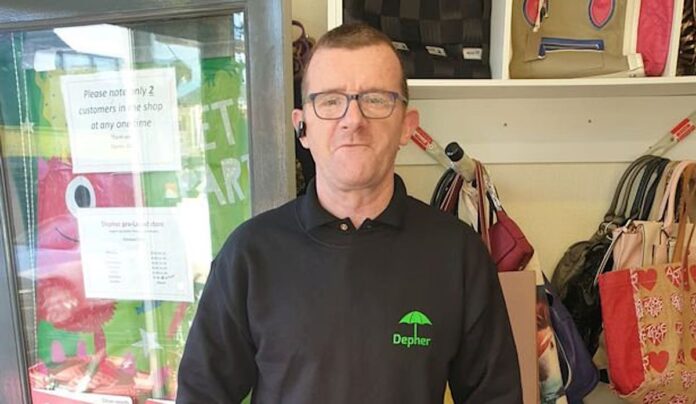
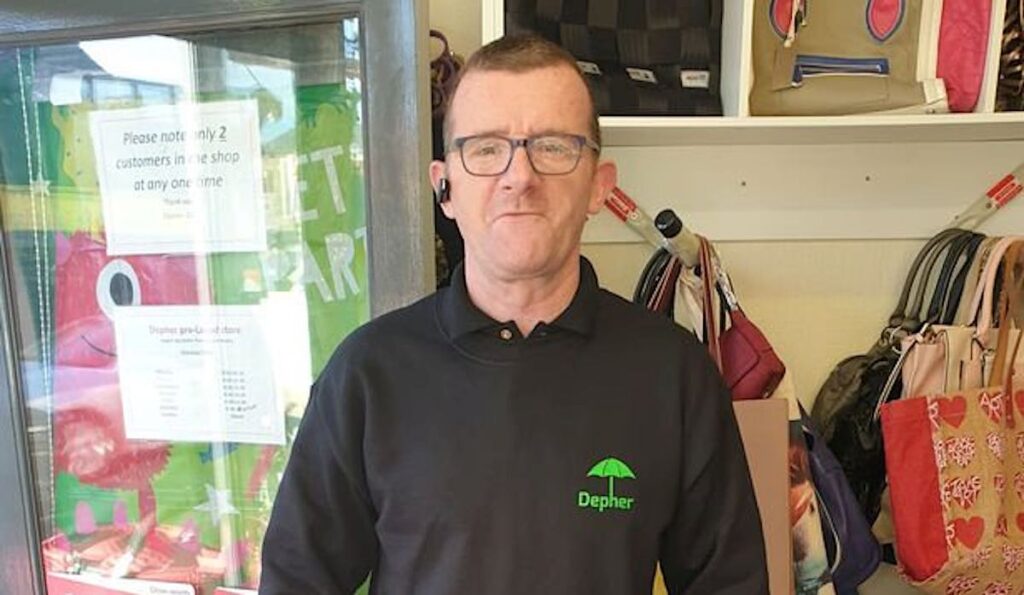
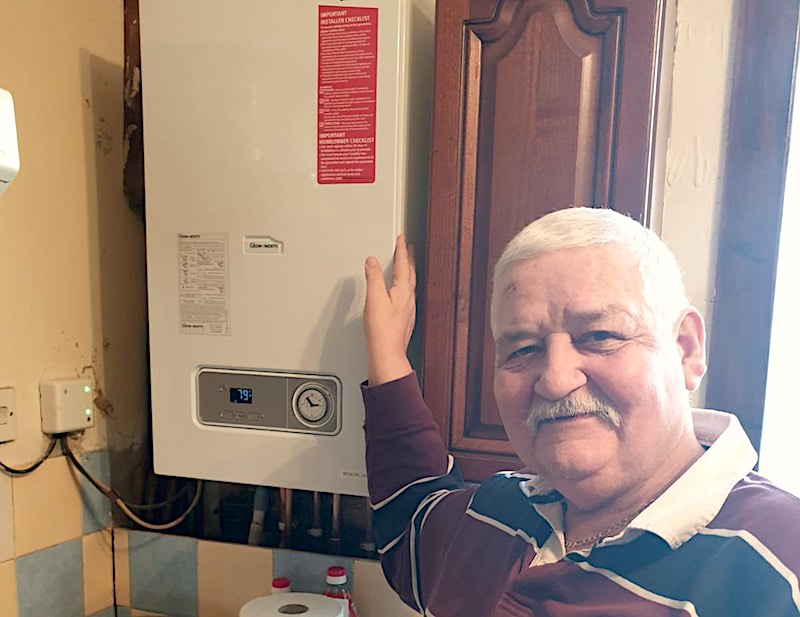
A kind-hearted plumber has spent $77,000 during the pandemic helping thousands of vulnerable families fix their heating and plumbing for free.

James Anderson – SWNS

In 2017, James Anderson was called to a home for a second opinion and caught a heating company who’d attempted to con an elderly and disabled man out of £5,500.

Disgusted and disheartened by this, he founded Depher (Disabled and Elderly Plumbing and Heating Emergency Response) and has since helped more than 10,000 families.

The 53 year-old pledged to help disabled and elderly people with their plumbing and heating “whatever the cost”.

But he has since branched out during the pandemic to provide food parcels, PPE, and even paying bills for people.

A father of six children, Anderson says he’s spent £57,000 during the pandemic alone—but added it was “worth every penny” if it kept people alive and warm.

POPULAR: Trucker Hero Pulls Over When He Sees ‘Frantic’ Man Running Up Highway After Wreck Flings His Toddler into the Dark

“If you’ve got disabilities, issues, sometimes these things can become too difficult to overcome and we want to make sure they’re taken care of,” said the tradesman from Burnley, Lancashire.

“We’ve all got a social responsibility to each other – we need to be there for each other.”

James currently works with plumbers based in Lancashire, Manchester, Leeds, Nottingham, and parts of Scotland, and hopes to eventually cover the whole of the UK— and has a GoFundMe page to accept donations. He says “The reaction from people has been so humbling and emotional for me.”

A happy customer – SWNS

Between Christmas Day and New Year alone he and a local team of three volunteers, three apprentices, and four engineers took on 93 jobs for free.

RELATED: After Cancer She Started Driving Uber, Using Tips to Make Sandwiches For the Homeless

“I work seven days a week, 70 hours a week. I haven’t taken a single day off. I’ll have enough rest when I’m dead.

You can donate here to assist James in helping households through the cold winter months.

HAIL This Role Model on Social Media And Give Others the Chance to Help….

Insert This On Your Bike Wheel to Filter the Air Pollution While You Cycle

Rolloe

A third-year English design student has—”quite simply”—attached a four-layer air purifier to a bicycle wheel, allowing cyclists to clean the air pollution in any city where they pedal.

Rolloe

Called Rolloe, the filter could purify more than a quarter million square-meters of air if merely 10% of London cyclists fitted it to their front wheel.

Armed with the basic understanding that pedaling a bicycle creates kinetic energy, all Tapping was required to do to make her dream a reality was find a way to channel dirty air in one side, and expel the clean air out of the other.

Existing filtration technology already use fans and turbines to force air through filters, similar to a bike wheel. After she had finished the final design she fitted a four-layer filter of activated carbon, washable HEPA, and luffa to clean small particulates as well as noxious gases like CO2, NO2, and ground OZONE.

RELATED: Hundreds of Cities Worldwide Make Streets into Cycling and Pedestrian Walkways—With Plans to Stay That Way

With a basic yet eye-catching design, Rolloe is rolling out with all the infrastructure it needs to make replacing the filters sustainable.

“Through a pick up/mail in service, used filters are sent back to Rolloe for washing while clean filters are swapped in,” explains the designer on her website.

Rolloe won Kristen Tapping the 2020 Design Innovation in Plastics award, and it’s now being readied for a massive market launch in 2022. No word yet on how much it will cost.

CHECK OUT: Researchers Make Biodegradable Tableware From Sugar and Bamboo So it Will Be As Cheap as Plastic

She wants to reward people who cycle the most often with cleaning credits. A companion app would track cycling data, allow you to set goals, and keep track of your credits—and she hopes to convince local restaurants or shops to accept Rolloe credits as a form of rewards points.

Finally, the Rolleo can be made in bulk through simple injection molding and a 3D printer, while the filters will be recycled at the end of their lifespan: it seems like the perfect product for the ‘circular’ economy.

WATCH her detail her invention in the video below…


Roll This Clean News Over to Your Cycling Friends on Social Media…

“For one human being to love another is the most difficult task. It is the work for which all other work is mere preparation.” – Rainer Maria Rilke 

Quote of the Day: “For one human being to love another is the most difficult task. It is the work for which all other work is mere preparation.” – Rainer Maria Rilke 

Photo by: Casey Horner

With a new inspirational quote every day, atop the perfect photo—collected and archived on our Quote of the Day page—why not bookmark GNN.org for a daily uplift?

How Phoenix Feeds The Hungry With Fresh Food While Saving Local Businesses and Farms

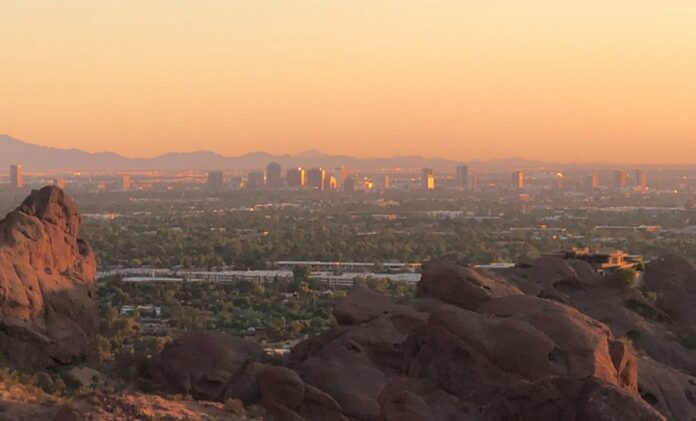
Around the world, individuals have found all kinds of innovative ways to support each other during the coronavirus pandemic—but so have governments. In Arizona, the city of Phoenix has managed to save dozens of farms and restaurants, while also getting free meals to those who need it most.

Between July and December in 2020, the Feed Phoenix program provided more than 50,000 meals to local residents—an amazing feat in itself, but only the beginning.

When the city received its CARES Act federal funding in April, it could have simply directed the money to food banks. Instead, it asked a nonprofit group, Local First Arizona, to take a more holistic approach to shore up the city’s food system.

The resulting Feed Phoenix program has been a success on all fronts, connecting struggling farmers with restaurants and caterers in need of business. The nonprofit buys produce directly from the farms, then pays the restaurants to prepare and deliver free meals to citizens in need.

RELATED: The 2020 Nobel Peace Prize Goes To The World’s Largest Hunger Program

The meals are then distributed at 30 locations, such as food banks, free of charge to those in need. What’s more, it is fresh, ready-to-eat food—much more nutritious than the canned and boxed items normally available at such places.

Local First Arizona was in a unique position to take on this project. For years, the charity has been working with about 3,000 locally-owned businesses to promote buying local.

“The city could have awarded one very large contract to one very large company to just prepare all of those meals,” Kimber Lanning, the nonprofit’s founder and executive director, told Bloomberg. “Instead, we decided to create a program to touch as many businesses as possible.”

The chef at Sana Sana Foods said they had to shut down all their operations due to the pandemic. “This program has helped us feed our community—but in my commercial kitchen (that) we activated again through this grant,” said Maria Parra Cano, who preparing hundreds of delicious vegetarian burritos for Feed Phoenix events throughout the year.

Funds were scheduled to run out for Feed Phoenix this month, but due to its phenomenal success, the city council designated enough money to fund Local First Arizona well into the spring.

POPULAR: Washington Man Rescues 2.4 Million Pounds of Farmers’ Crops Going to Waste, Gets Them to Food Banks Across State

Its impact will be felt long after that, too, thanks to the many connections forged between local businesses and farms who plan to continue working together.

“What is going to be left behind is a stronger community food network,” Phoenix environmental programs coordinator Roseanne Albright told Bloomberg. “Restaurants realize the value and excellent product that can be delivered by our farmers, and they want to continue those connections.”

You can donate to Local First Arizona, here. (Photo credit: Lisa Campbell)

FEED This Arizona Good News to Friends Starved for Positivity on Social Media…

This Week’s Inspiring Horoscopes From Rob Brezsny’s ‘Free Will Astrology’

We’ve partnered with our friend Rob Brezsny to provide his weekly wisdom to enlighten your thinking and motivate your mood. Rob’s Free Will Astrology, is a syndicated weekly column appearing in over a hundred publications. He is also the author of Pronoia Is the Antidote for Paranoia: How All of Creation Is Conspiring To Shower You with Blessings. (A free preview of the book is available here.)

Here is your weekly horoscope…

FREE WILL ASTROLOGY – Week beginning January 7, 2021
Copyright by Rob Brezsny, FreeWillAstrology.com

CAPRICORN (Dec. 22-Jan. 19):
“I only want people around me who can do the impossible,” said Capricorn businesswoman Elizabeth Arden. In that spirit, and in accordance with your astrological potentials, I hereby authorize you to pursue two “impossible” goals in 2021. The first comes to you courtesy of fashion writer Diana Vreeland, who wrote, “There’s only one thing in life, and that’s the continual renewal of inspiration.” Your second “impossible” goal is from actor Juliette Binoche, who said, “My only ambition is to be true every moment I am living.”

AQUARIUS (Jan. 20-Feb. 18):
Your past is becoming increasingly irrelevant, while your future is still a bit amorphous. To help clarify the possibilities that you could harvest in 2021, I suggest you suspend your theories about what your life is about. Empty yourself out as much as you can. Pledge to re-evaluate everything you think you know about your purpose. Once you’ve accomplished that, meditate on the following questions: 1. What experiences do you truly need and passionately long for—not the experiences you needed and longed for in the past, but rather those that are most vivid and moving right now. 2. What are the differences between your fearful fantasies and your accurate intuitions? How can you cultivate the latter and downplay the former? 3. What are your nightly dreams and semi-conscious fantasies telling you about how to create the most interesting version of the future?

PISCES (Feb. 19-March 20):
Author Gunter Grass wrote, “Writers know that sometimes things are there in the drawer for decades before they finally come out and we are capable of writing about them.” I would universalize his thought in this way: Most of us know that possibly useful ideas and dreams are in the drawer for years before they finally come out and we know how to use them. I believe this will be an ongoing experience for you in 2021, Pisces.

ARIES (March 21-April 19):
The pandemic has made it challenging to nurture our communities. In order to make new connections and keep our existing connections vibrant, we’ve had to be extra resourceful. I hope you will make this work one of your holy quests in 2021, Aries. In my astrological opinion, you should be ingenious and tireless as you nurture your web of allies. Your assignment during our ongoing crisis is to lead the way as you show us all how to ply the art of high-minded networking.

TAURUS (April 20-May 20):
Taurus actor George Clooney is worth $500 million. Yet his dazzling opulence is puny compared to that of Taurus entrepreneur Mark Zuckerberg, whose fortune exceeds $100 billion. It’s my duty to inform you that you will probably never achieve either man’s levels of wealth. Yet I do hold out hope that in the next 12 months you will launch plans that ultimately enable you to have all the money you need. 2021 will be a favorable time to formulate and set in motion a dynamic master plan for financial stability.

GEMINI (May 21-June 20):
One of your main themes for the next 12 months comes from Leonardo da Vinci. He wrote, “To develop a complete mind: Study the science of art. Study the art of science. Learn how to see. Realize that everything connects to everything else.” If you use da Vinci’s instructions as a seed for your meditations, you’ll stir up further inspirations about how to make 2021 a history-making epoch in the evolution of your education. I hope you will treasure the value of “learning how to see” and “realizing how everything connects to everything else.” They should be at the root of your intention to learn as much as you can.

CANCER (June 21-July 22):
An extensive study by psychiatric researchers suggests that well more than half of us experienced a potentially disabling trauma in childhood. You’re in the minority if you didn’t! That’s the bad news. The good news is that 2021 will be a time when you Cancerians will have more power than ever before to heal at least some of the wounds from your old traumas. You will also attract extra luck and help to accomplish these subtle miracles. To get the process started, make a list of three practical actions you can take to instigate your vigorous healing.

LEO (July 23-Aug. 22):
Leo author Isabel Allende says, “We are in the world to search for love, find it and lose it, again and again. With each love, we are born anew, and with each love that ends we collect a new wound. I am covered with proud scars.” I appreciate Allende’s point of view, and understand that it’s useful, even inspirational, for many people. But my path has been different. As a young man, I enjoyed my endless quest for sex and romance. It was thrilling to keep leaping from affair to affair. But as I eventually discovered, that habit made me stupid and superficial about love. It prevented me from having to do the hard psychological work necessary to continually reinvent intimacy—and become eligible for deeper, more interesting versions of love. I bring this to your attention, Leo, because I think 2021 could be your time for a personal rebirth that will be made possible by deep, interesting versions of love.

VIRGO (Aug. 23-Sept. 22):
Israel Regardie (1907–1985) was an accomplished author and influencer. To what did he attribute his success? I’ll let him speak for himself: “Nothing in the world can take the place of persistence. Talent will not; nothing is more common than unsuccessful people with talent. Genius will not; unrewarded genius is almost a proverb. Education will not; the world is full of educated derelicts. Persistence and determination alone are omnipotent.” I hope you will write out this quote and tape it to your bathroom mirror for the duration of 2021, Virgo.

LIBRA (Sept. 23-Oct. 22):
The Kabbalistic Tree of Life is a mystical symbol of the hidden structure of creation. At its heart, in the most pivotal position, is the principle of beauty. This suggests that the wise teachers who gave us the Tree did not regard beauty as merely a luxury to be sought only when all practical business is taken care of. Nor is it a peripheral concern for those who pursue a spiritual path. Rather, beauty is essential for our health and intelligence. In accordance with astrological omens, I invite you to take a cue from the Tree of Life. During the next 12 months, give special attention to people and things and experiences and thoughts and feelings that are beautiful to you. Meditate on how to nurture them and learn from them and draw inspiration from them.

SCORPIO (Oct. 23-Nov. 21):
According to motivational speaker Les Brown, the problem for many people is not that “they aim too high and miss,” but that “they aim too low and hit.” I’m conveying this to you just in time for the Reach Higher Phase of your long-term astrological cycle. According to my analysis, you’ll generate good fortune for yourself if you refine and expand your personal goals. Here’s a key detail: Don’t borrow anyone else’s standards of success. Home in on your own unique soul’s code, and give it fuller, deeper, wilder expression.

SAGITTARIUS (Nov. 22-Dec. 21):
One of my primary pleasures in reading books is to discover thoughts and feelings I have never before encountered. That’s exciting! But it’s hard to force myself to keep plowing through an author’s prose if it’s full of stuff that I already know about from my own life or from books, movies, and other art. Russian author Fyodor Dostoevsky’s novels fit the latter description. I realize that many people love his fiction, but for me it is monumentally obvious and boring. What about you, Sagittarius? Where do you go to be exposed to thrilling new ways of looking at the world? Judging from the astrological omens, I conclude that this quest will be especially fun and crucial for you in the coming months.

WANT MORE? Listen to Rob’s EXPANDED AUDIO HOROSCOPES, 4-5 minute meditations on the current state of your destiny — or subscribe to his unique daily text message service at: RealAstrology.com

(Zodiac images by Numerologysign.com –CC license)

SHARE The Wisdom With Friends Who Are Stars in Your Life on Social Media…

Joan Baez Turns 80 And Shows Off Her Masterful Paintings in Second Solo Art Exhibit

Singer-songwriter activist Joan Baez turns 80 years-old today—and you can join her for a live streaming event tonight that celebrates a new phase in her life.

Black Is the Color (acrylic self portrait) – Diamonds and Rust Productions, photo by Marina Chavez

After retiring from live performing in 2019, the musician whose 1975 hit, Diamonds & Rust, was written about former lover, Bob Dylan, has turned to painting full-time.

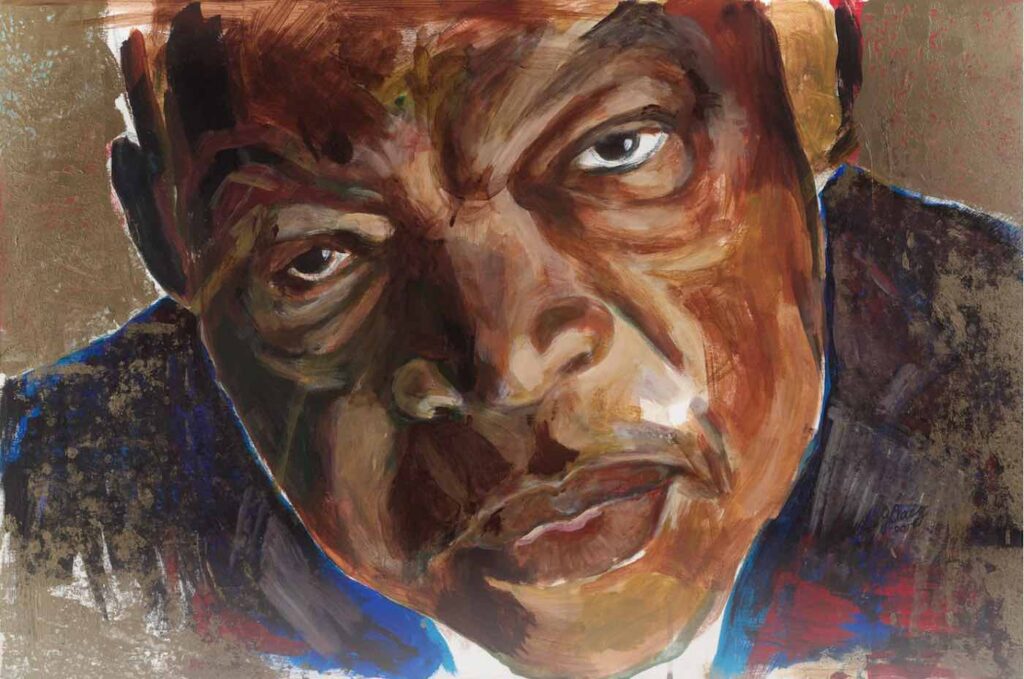
Her new solo art exhibit features portraits of “people making the world a better place.” Mischief Makers 2 is a follow-up to her first show that showcased portraits of people who changed the world through non-violence, like Malala Yousafzai, Aung San Suu Kyi, Ram Dass, John Lewis, and Martin Luther King, Jr—a friend with whom she marched arm-in-arm.

Diamonds and Rust Productions will present the live-streamed 80th birthday celebration online. The event will introduce her new show of portraits with a live interview with Baez, a virtual tour of the show, and other festivities and “mischief” to mark the milestone occasion.

WATCH: Obama Agrees to Prank a Fan By Showing Up on Her Zoom Call–and the Results Are Hysterical

Subjects in her new show include personal heroes and famous friends from the worlds of politics, literature, music, and more, including Nelson Mandela, Patti Smith, Bob Dylan, Kamala Harris, and Ruth Bader Ginsberg. Baez also includes a self-portrait in acrylic, titled “Black Is the Color.”

John Lewis by Joan Baez – Diamonds and Rust Productions

“I hope this new collection of portraits inspires you,” Baez says in her artist statement. “Maybe it will encourage you to go out and, in the words of the late Congressman John Lewis, ‘make good trouble.’”

The Glorious Notorious RBG, 2018 (acrylic) – Joan Baez

During the lockdowns of 2020, she also started performing music from her gorgeous kitchen, and posting the songs on YouTube. Check out her performance of Dylan’s Forever Young dedicated to all the Heroes of the 2020 pandemic…

Here’s the link to check out more artwork at JoanBaez.com and find out how to support the artist.

SHARE Her 80th Birthday and New Artwork With Your Friends on Social Media…
Air Pollution Laws May Have Saved Over 1.5 Billion Birds in American Skies, Finds New Cornell Study

Photo by Gerrit Vyn, Cornell

Countless human lives have been saved in the last forty years since pollution regulations were signed into U.S. law—but tackling dirty air has also been saving the birds.

Photo by Gerrit Vyn, Cornell

A new large-scale study conducted by scientists at Cornell University and the University of Oregon found that improved air quality under a federal program to reduce ozone pollution may have averted the loss of 1.5 billion birds during the past four decades.

That’s nearly 20% of birdlife in the United States today.

“Our research shows that the benefits of environmental regulation have likely been underestimated,” says Ivan Rudik, the study’s lead author and Ruth and William Morgan Assistant Professor at Cornell’s Dyson School of Applied Economics and Management. “Reducing pollution has positive impacts in unexpected places and provides an additional policy lever for conservation efforts.”

RELATED: Birds in San Francisco Started Singing Differently in the Silence of the Pandemic Shutdown

Ozone is a gas that occurs in nature but is also produced by power plants, factories, and car emissions. It can be good or bad. A layer of ozone in the upper atmosphere protects the Earth from the harmful ultraviolet rays of the sun. But ground-level ozone is hazardous and is the main pollutant in smog.

To examine the relationship between bird abundance and air pollution, the researchers used models that combined bird observations from the Cornell Lab of Ornithology’s eBird program with ground-level pollution data and existing regulations.

They tracked monthly changes in bird abundance, air quality, and regulation status for 3,214 U.S. counties over a span of 15 years. The team focused on the NOx (nitrogen oxide) Budget Trading Program, which was implemented by the U.S. Environmental Protection Agency to protect human health by limiting summertime emissions of ozone precursors from large industrial sources.

POPULAR: Research Shows Why Crows Are So Intelligent and Even Self-Aware—Just Like Us

The study, published in The Proceedings of the National Academy of Sciences, suggests that ozone pollution is most detrimental to the small migratory birds (such as sparrows, warblers, and finches) that make up 86 percent of all North American land bird species. Ozone pollution directly harms birds by damaging their respiratory system, and indirectly affects populations by harming their food sources.

“Not only can ozone cause direct physical damage to birds, but it also can compromise plant health and reduce numbers of the insects that birds consume,” explains study author Amanda Rodewald, Garvin Professor at the Cornell Department of Natural Resources and the Environment and Director of the Center for Avian Population Studies at the Cornell Lab of Ornithology.

CHECK OUT: New Bird Song That ‘Went Viral’ Across This Species of Sparrow Was Tracked by Scientists For the First Time

“Not surprisingly, birds that cannot access high-quality habitat or food resources are less likely to survive or reproduce successfully. The good news here is that environmental policies intended to protect human health return important benefits for birds too.”

FLY This Good News to Birdwatching Friends on Social Media…

“Only you and I can help the sun rise each coming morning. If we don’t, it may drench itself out in sorrow.” – Joan Baez (turns 80 today)

Quote of the Day: “Only you and I can help the sun rise each coming morning. If we don’t, it may drench itself out in sorrow. You special, miraculous, unrepeatable, fragile, fearful, tender, lost, sparkling ruby emerald jewel, rainbow splendor person. It’s up to you.” – Joan Baez (turns 80 today)

Photo by: bruno costa

With a new inspirational quote every day, atop the perfect photo—collected and archived on our Quote of the Day page—why not bookmark GNN.org for a daily uplift?

NJ Congressman Andy Kim Began Cleaning Up Litter Inside the Capitol at 1:00 in the Morning: ‘I‘m honored…’

It was late. It had been a long day, filled with surreal events.

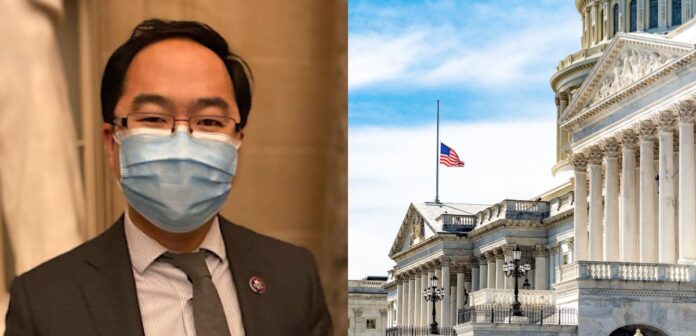
In the wake of an ill-contained siege that left the U.S. Capitol building littered with broken furniture and debris from an unruly mob, New Jersey Representative Andy Kim was finally heading home after taking part in the vote to certify Joe Biden as the next U.S. President.

Walking down the halls of his beloved democratic institution, he saw officers assigned to the grim duty of cleaning up.

He felt a “heightened, supercharged kind of patriotism” and was stirred to join them.

The two-term Democrat who represents New Jersey’s 3rd District, grabbed a trash bag and—still dressed in his suit and tie—began picking up trash.

“I think it was 1 in the morning,” said his fellow New Jersey Rep. Tom Malinowski, in an interview with AP. “I noticed somebody on his hands and knees leaning under a bench to pick something up and it was Andy all by himself, just quietly removing debris and putting it in a plastic bag…. It was, for me, the most poignant moment of the long night.”

The son of Korean immigrant parents, Rep. Kim’s credentials are impressive. He’s the first Asian American to represent New Jersey in Congress. He’s also a University of Chicago graduate and Rhodes Scholar who was tapped by President Obama to serve as Iraq director for the National Security Council. (He’d previously held a similar role with the Pentagon.)

MORE: Protest Sign Made by Third Grader Inspires the Nation When it Mysteriously Travels to Protests

But in the middle of the night, in the aftermath of the unthinkable, Rep. Kim’s resume was irrelevant. For him, the imperative was making something right; restoring something that truly mattered. It was a small gesture perhaps, but one that symbolized something so much larger.

CHECK OUT: When Black Man Was Afraid to Walk in His Upscale Community, 75 Neighbors Walked With Him

“When you see something you love that’s broken you want to fix it. I love the Capitol. I’m honored to be there,” Rep. Kim said. “This building is extraordinary and the rotunda, in particular, is just awe-inspiring. How many countless generations have been inspired in that room? It really broke my heart and I just felt compelled to do something…

“What else could I do?”

Featured images: Twitter @AndyKimNJ / Ted Eytan, CC license

Pass on the Act of Kindness and Share This Story With Friends… 

COVID-19 Vaccine Distribution Tracker Lets You See Where U.S. Doses Are Going

If you’d like to see how quickly vaccinations are progressing in your state, the COVID Data Tracker from the Centers for Disease Control and Prevention has an interactive map that includes state-by-state tallies.

On the site, you’ll see data for the total number of vaccines distributed, as well as the total number of people who have received their first dose. Another data panel shows the distribution in long-term care facilities, which are prioritized under current US vaccination guidelines.

As of Thursday, you can see from the CDC’s map that the states that have received the most doses per capita so far are: New Hampshire, Connecticut, D.C, Alaska, West Virginia, Kentucky, Tennessee, Oklahoma, New Mexico, Colorado, Iowa, Nebraska, South Dakota, North Dakota, and Montana.

All in all, according to the CDC more than 21 million doses have been distributed.

CHECK OUT: ‘Saint’ Dolly Parton Partly Funded Moderna’s Promising New Coronavirus Vaccine

Data comes from healthcare providers, and the data on the CDC site is expected to be updated thrice-weekly: on Mondays, Wednesdays, and Fridays.