












All News - Page 534 of 1735 - Good News Network
Home Blog Page 534

Sufferers Living With Severe Arthritis Could be Given Lasting Pain Relief Thanks to a New Technique

A novel outpatient procedure offers lasting pain relief for patients suffering from moderate to severe arthritis in their hip and shoulder joints.

According to a study presented at the annual meeting of the Radiological Society of North America, researchers said the procedure could help reduce reliance on addictive opiates.

People with moderate to severe pain related to osteoarthritis face limited treatment options. Common approaches like injections of anesthetic and corticosteroids into the affected joints grow less effective as the arthritis progresses and worsens.

“Usually, over time patients become less responsive to these injections,” said Felix M. Gonzalez, M.D., from the Radiology Department at Emory University School of Medicine in Atlanta, Georgia. “The first anesthetic-corticosteroid injection may provide six months of pain relief, the second may last three months, and the third may last only a month. Gradually, the degree of pain relief becomes nonsignificant.”

Without pain relief, patients face the possibility of joint replacement surgery. Many patients are ineligible for surgery because of health reasons, whereas many others choose not to go through such a major operation.

CHECK OUT: First Ever Study Shows Chair Yoga is Effective Arthritic Treatment

For those patients, the only other viable option may be opiate painkillers, which carry the risk of addiction.

Dr. Gonzalez and colleagues have been studying the application of a novel interventional radiology treatment known as cooled radiofrequency ablation (c-RFA) to achieve pain relief in the setting of advanced degenerative arthritis. The procedure involves the placement of needles where the main sensory nerves exist around the shoulder and hip joints. The nerves are then treated with a low-grade current known as radiofrequency that “stuns” them, slowing the transmission of pain to the brain.

For the new study, 23 people with osteoarthritis underwent treatment, including 12 with shoulder pain and 11 with hip pain that had become unresponsive to anti-inflammatory pain control and intra-articular lidocaine-steroid injections.

Treatment was performed two to three weeks after the patients received diagnostic anesthetic nerve blocks. The patients then completed surveys to measure their function, range of motion and degree of pain before and at three months after the ablation procedures.

There were no procedure-related complications, and both the hip and shoulder pain groups reported statistically significant decrease in the degree of pain with corresponding increase in dynamic function after the treatment.

“In our study, the results were very impressive and promising,” Dr. Gonzalez said. “The patients with shoulder pain had a decrease in pain of 85%, and an increase in function of approximately 74%. In patients with hip pain, there was a 70% reduction in pain, and a gain in function of approximately 66%.”

RELATED: Molecule Combo Actually Reverses Arthritis in Human Cartilage and Rats, Says ‘Exciting’ New Study

The procedure offers a new alternative for patients who are facing the prospect of surgery. In addition, it can decrease the risk of opiate addiction.

“This procedure is a last resort for patients who are unable to be physically active and may develop a narcotic addiction,” Dr. Gonzalez said. “Until recently, there was no other alternative for the treatment of patients at the end of the arthritis pathway who do not qualify for surgery or are unwilling to undergo a surgical procedure.”

At last year’s RSNA annual meeting, Dr. Gonzalez presented similarly encouraging results from a study of a similar procedure for the treatment of knee arthritis. Together, the knee, shoulder and hip articulations account for approximately 95% of all arthritis cases.

The procedure could have numerous applications outside of treating arthritic pain, Dr. Gonzalez explained. Potential uses include treating pain related to diseases like cancer and sickle cell anemia-related pain syndrome, for example.

MORE: Hydrolyzed Collagen Supplements Are Good for Health: Benefitting Hair, Skin, Joints, and Muscles

“We’re just scratching the surface here,” Dr. Gonzalez said. “We would like to explore efficacy of the treatment on patients in other settings like trauma, amputations, and especially in cancer patients with metastatic disease.”

Source: Radiological Society of North America

Share The Good News With Your Friends By Sharing It To Social Media…

Huge Indigenous Solar Farm Opens in Remote Northern Community: ‘We work with the sun for the children of the future’

3NE/Facebook

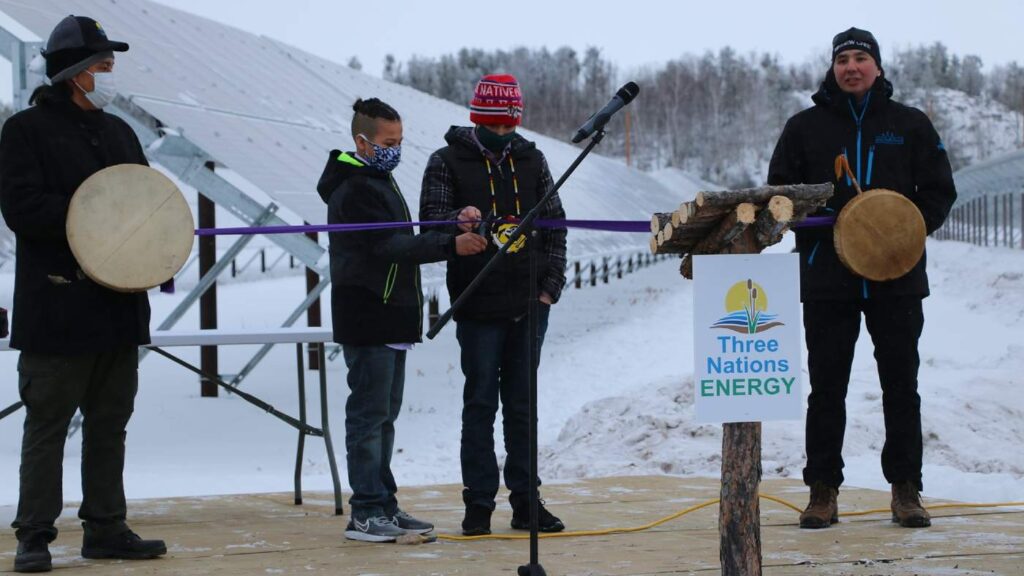
Canada’s largest indigenous-owned solar farm has just been opened in the Northern Alberta community of Fort Chipewyan.

3NE/Facebook

Supplying 2.2 megawatts of solar electricity for three First Nations tribes, it will decrease the reliance of the community on the diesel-fired plant that has supplied them for decades.

Jointly owned by the Athabasca Chipewyan First Nation, the Mikisew Cree First Nation, and the Fort Chipewyan Metis Association, Three Nations Energy was established to bring about low-cost, low-carbon energy to help mitigate climate-related threats and decrease reliance and unreliable diesel tanker deliveries.

“We worked together and we made it happen,” Chief Allan Adam of the Athabasca Chipewyan First Nation said Tuesday at a COVID-limited celebration of the completion of the project’s second and final phase.

“We work with the sun, we work with the wind, we work with mother nature and we work the water for the children of the future—to give them a better life, a cleaner life.”

RELATED: Breakthrough 3D Solar Panel Design Increases Light Absorption By 125% – A Potential Game-Changer

A community of just 1,000 people, until now, Fort Chipewyan got their necessary three million liters of diesel a year from fuel trucks braving ice roads that melt away in summertime, or by river barge.

The 5,760 solar panels will contribute about 25% of the community’s power demand, but being in the subarctic, daylight hours in wintertime are few, meaning that solar energy is a little less reliable than in most other places.

The renewable energy it generates will be equivalent to about 800,000 liters of diesel, or 2,300 tonnes of CO2, sparing 25 tankers the 220-kilometer (124-mile) trek up from Fort McMurray in the south on dangerous ice roads.

“This is a very proud moment for all of us as a community. We’ve worked together very hard for these past couple of years,” said Blue Eyes Simpson, vice-president of the Fort Chipewyan Métis Association.

The state and federal government helped contribute to the $7.6 million project, which is also the world’s most remote solar farm.

MORE: Solar is Now the Cheapest Electricity in History and Just Met 100% of Demand in South Australia For First Time

“Indigenous people must have an equity stake in resource projects if there’s going to be a healthy future for our vital resources industry,” said in a pre-recorded congratulations from Rick Wilson, Alberta’s minister of Indigenous Relations.

(WATCH the video below to learn more about the new solar farm.)

RENEW the Hope And Share This Good News From the North…

Gone For a Century, Plant Finally Shows Itself When Conservation Work on ‘Ghost Pond’ Stirs Up Hidden Seed

Rob Peacock

A rare plant ‘rose from the dead,’ and was found recently in a Norfolk ‘ghost pond’, becoming the first one spotted in a century.

Rob Peacock

Happened upon by a rambling geography professor, its existence could potentially lead to the rediscovery of other hidden plants lost in England’s recent history, and gives hope to conservation botanists.

The plant, known as grass-poly and sporting pinkish-white petals, was found growing on an old farmland pond in the English countryside in Norfolk. When Professor Carl Sayer found it, he took a picture and sent it to his friend—a local botanist called Dr. Jo Parmenter, who confirmed its rarity.

“I never ever expected to see it in Norfolk; it was quite extraordinary,” said Dr. Jo, according to the BBC. “I saw a photo and straight away I thought, I know what you are.”

Found only in ponds on muddy ground in isolated parts of the UK, this was the first sighting of the plant in the county of Norfolk in more than 100 years, and the scientists concluded that the seeds must have lain dormant for over a century before restoration work on the pond created the soil conditions that allowed the seed to finally germinate.

RELATED: World’s Largest Seagrass Restoration Project is a Virginia Success, Planting 600 Acres That Grow to Become 9,000

Effectively “coming back from the dead,” nearby willows were uprooted to help restore the pond before the sunlight was able to penetrate deep enough to reach the seed.

Conservation botany

When people think of an endangered species, they often picture flagship animals like the tiger, panda, or rhino. However, plants can also be endangered, and the grass-poly certainly ranks among those.

Professor Sayer, part of the University College London’s Pond Restoration Research Group, imagines that if Norfolk’s thousands of wild ponds can be restored, more “missing, presumed dead” species may emerge once again.

“There’s no oxygen, it’s very dark, and it’s perfect for preserving seeds,” says Sayer, referring to the muddy banks of the average pond.

While often appearing as nothing more than mudhole, ponds can act as hubs in a local ecosystem. In Norfolk, many of the ponds are known as “ghost ponds,” harboring little environmental value in their current, degraded state.

CHECK OUT: With 14,000 Critical Acres Added to Montana Wildlife Reserve, It May Become the Largest in the Lower 48

Yet in both the United States and in England, river and pond restoration is becoming a more actively undertaken form of conservation, due to the keystone aspect of ponds and rivers for local wildlife.

PASS On the Good Conservation News to Pals on Social Media…

Breakthrough App Guides Blind Runner on Solo 5k Run Through Central Park

Google/YouTube

Vision isn’t always measured by the things we see, but rather by the things we imagine, the things we strive to accomplish, and the things we make happen. Runner Thomas Panek lost his sight to a genetic disorder in his twenties but he’s never given up on the race.

“The safest thing for a blind man is to sit still. I ain’t sitting still,” he told Reuters.

Three decades down the road, Panek is breaking into a new stride. Using a cutting-edge app he was instrumental in developing, he recently became the first blind runner to complete a 5K race without the aid of a guide dog or human running partner.

Google/YouTube

Panek is no stranger to firsts. As president and CEO of New York-based nonprofit Guiding Eyes for the Blind, in 2015, he launched the “Running Guides” program that trains guide dogs for blind runners.

“I’ve been a runner for my whole life, except I stopped for a time too afraid to run without assistance. I picked up running again using human guides,” Panek said in an interview with Time. “People volunteered to connect with me with a tether to show the way to go but I would have to leave my guide dog at home—and yet, dogs love to run and I love to run so I really wanted to see with my training from Guiding Eyes for the Blind if it was possible to train a guide dog to run.”

CHECK OUT: Athlete With Downs Syndrome Makes History as First to Finish an Iron Man Race–And Gifts the Medal to His Mom

In March of 2019, Panek—the first blind entrant to do so—ran the 13.1 mile New York City Half Marathon, crossing the finish line with a time 2:20:52 with the help of a three-dog relay team.

He started the race accompanied by a black Labrador named Westley. Westley was relieved by a yellow Lab named Waffle. Panek completed the last leg of the race with his personal guide dog, Gus.

As much as he enjoyed the companionship of his guide dog, Panek wondered if there might not be a way to race on his own. He reached out to Google for help.

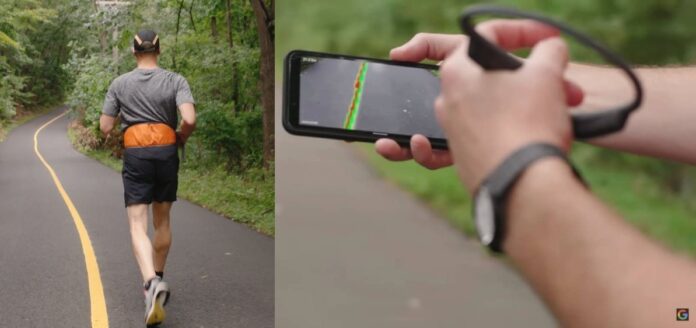
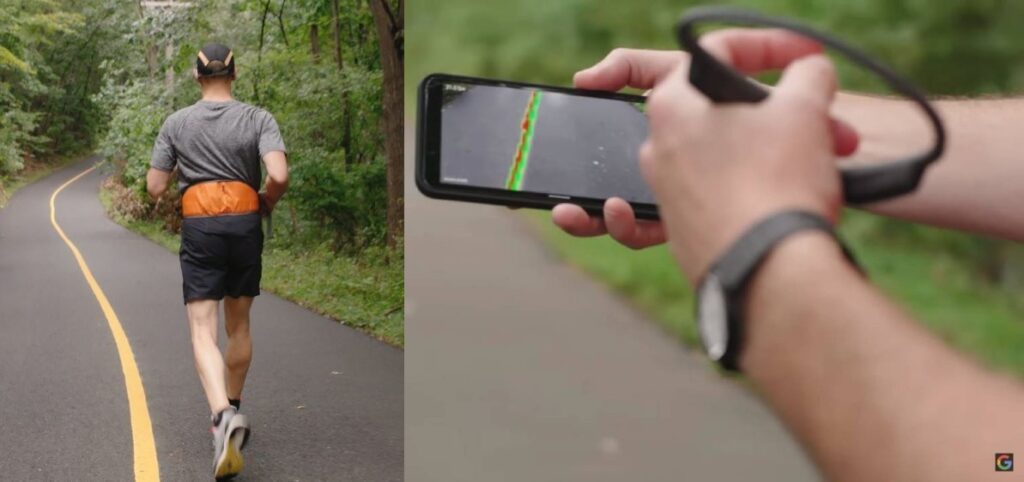
The answer came in the form of a camera-assisted artificial intelligence cell phone app. Using painted track markers, the app calculates a runner’s location and orientation and responds with audio cues to guide them in the right direction.

At an event co-sponsored by Google and the New York Road Runners Club, Panek tried out the Project Guideline app for the first time. “To be able to be here, it’s real emotional,” he said. “It’s a real feeling of not only freedom and independence, but also, you know, you get that sense that you’re just like anybody else.”

MORE: Meet the 18-Year-old Blind Piano Player Who is So Talented, Scientists Are Studying His Brain

Except Panek isn’t like anybody else. He believes humans are “born to run” and he’s gifted with the kind of vision that strives to make sure that no one who shares his dream gets left behind.

(WATCH the Google video of how the technology got made below.)

RUN This Fascinating Story Over to Friends on Social Media…

“All truly great thoughts are conceived while walking.” – Friedrich Nietzsche

Quote of the Day: “All truly great thoughts are conceived while walking.” – Friedrich Nietzsche

Photo by: Michel Stockman

With a new inspirational quote every day, atop the perfect photo—collected and archived on our Quote of the Day page—why not bookmark GNN.org for a daily uplift?


Revolutionary CRISPR-based Genome Editing System Destroys Cancer Cells ‘Permanently’ in Lab

Cancer cell during cell division (Credit-National Institutes of Health)

Researchers at Tel Aviv University have demonstrated that the CRISPR genome editing system is very effective in treating metastatic cancers, a significant step on the way to finding a cure for cancer.

In a paper published this week, the researchers demonstrated a novel lipid nanoparticle-based delivery system that specifically targets cancer cells—and co-author Prof. Dan Peer said it’s the first study in the world to prove that the CRISPR/Cas9 can be used to treat cancer effectively in a living animal.

“It must be emphasized that this is not chemotherapy. There are no side effects, and a cancer cell treated in this way will never become active again,” said Peer, the VP for R&D and Head of the Laboratory of Precision Nanomedicine at the Shmunis School of Biomedicine and Cancer Research.

“The CRISPR genome editing technology, capable of identifying and altering any genetic segment, has revolutionized our ability to disrupt, repair or even replace genes in a personalized manner.”

Peer’s team that includes researchers from an Iowa company, Integrated DNA Technologies, and Harvard Medical School, chose two of the deadliest cancers: glioblastoma and metastatic ovarian cancer to examine the system’s feasibility. Glioblastoma is the most aggressive type of brain cancer, with a life expectancy of 15 months after diagnosis and a five-year survival rate of only 3%.

The researchers demonstrated that a single treatment with CRISPR-LNPs doubled the average life expectancy of mice with glioblastoma tumors, improving their overall survival rate by about 30%.

Ovarian cancer is a major cause of death among women and the most lethal cancer of the female reproductive system. Despite progress in recent years, only a third of the patients survive this disease—but treatment with CRISPR-LNPs in mice with metastatic ovarian cancer boosted the overall survival rate of by a whopping 80%.

RELATED: First-of-its-Kind Blood Test Can Detect Over 50 Kinds of Cancer—Often Before Symptoms Even Show

“Despite its extensive use in research, clinical implementation is still in its infancy because an effective delivery system is needed to safely and accurately deliver the CRISPR to its target cells,” Peer told Tel Aviv University news. “The delivery system we developed targets the DNA responsible for the cancer cells’ survival. This is an innovative treatment for aggressive cancers that have no effective treatments today.”

Cancer cell during cell division (Credit-National Institutes of Health)

The system, called CRISPR-LNPs, carries a genetic messenger (messenger RNA), which encodes for the CRISPR enzyme Cas9 that acts as molecular scissors that cut the cells’ DNA. “The molecular scissors of Cas9 cut the cancer cell’s DNA, thereby neutralizing it and permanently preventing replication,” explained Peer.

RELATED: First Sickle Cell Patient Treated with CRISPR is Now Thriving One Year Later, And Able to Care For Her Kids

The groundbreaking study was funded by the Israel Cancer Research Fund, and published this week in Science Advances.

The researchers note that by demonstrating its potential in treating two aggressive cancers, the technology opens numerous new possibilities for treating other types of cancer, as well as rare genetic diseases and chronic viral diseases such as AIDS. They intend to proceed with experiments treating Duchenne muscular dystrophy, for instance.

RELATED: Scientists Use Gene-targeting Breakthrough Against COVID-19 Cells With CRISPR Tool Called ‘PAC-MAN’

“It will probably take some time before the new treatment can be used in humans, but we are optimistic. The whole scene of molecular drugs that utilize messenger RNA (genetic messengers) is thriving—in fact, most COVID-19 vaccines currently under development are based on this principle,” says Peer.

“When we first spoke of treatments with mRNA twelve years ago, people thought it was science fiction. . . We are already negotiating with international corporations and foundations, aiming to bring the benefits of genetic editing to human patients.”

SHARE The Medical Breakthrough With Friends on Social Media…

This Moving Company Now Helps Victims of Domestic Violence Leave Abusive Homes Nationwide At No Cost

A moving company announced this month a new commitment to provide free moves to victims of domestic violence and those currently living in abusive situations.

Since the recent launch of the program, College HUNKS Hauling Junk & Moving has already completed over 100 free moves for those who are fleeing an unsafe situation in the U.S. and Canada.

This new program is even more important as more cities are going into lockdown and victims can end up being trapped during the pandemic without relief.

“I definitely think our Free Moves for Survivors of Domestic Violence program sheds light on a really important issue that is not often talked about,” College Hunks co-founder Nick Friedman told GNN.

“As a purpose driven, socially-conscious organization we’re always looking for ways to positively impact our communities—in this case, particularly for those who feel powerless in unhealthy home situations.”

20 years ago, another moving company, Meathead Movers, began offering free moves to people in abusive homes. Last year they donated more than $150,000 worth of moving services, partnering with eight domestic violence shelters in Central and Southern California.

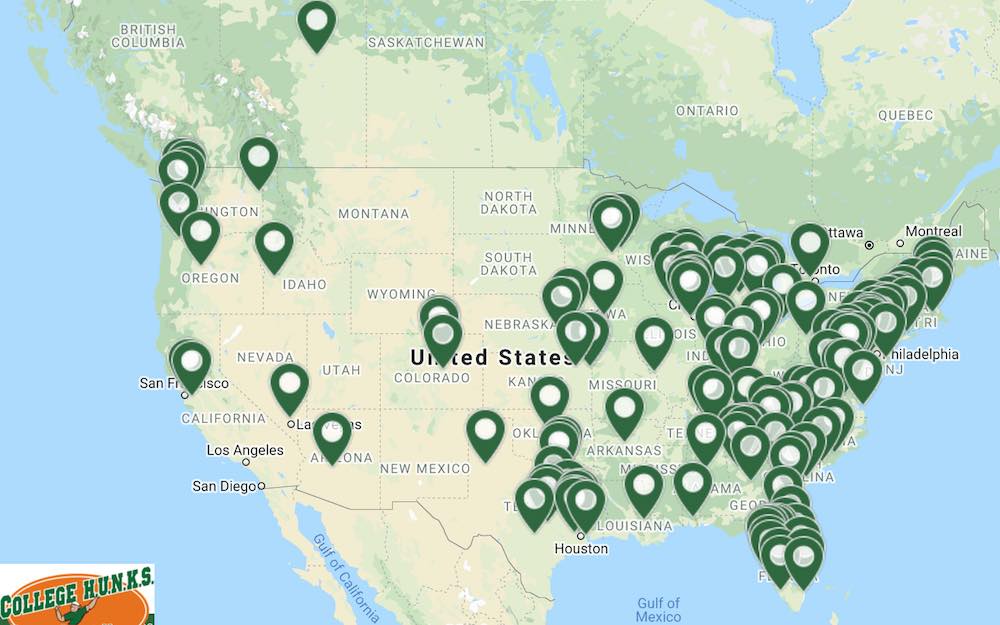
Now, College Hunks Hauling is extending the same kind of help across their 131 franchise locations in the U.S. and Canada, offering the use of trucks and labor at no cost.

How to apply

Individuals who need this kind of help should first contact their local domestic violence-prevention shelter to notify them of their situation.

A certified domestic violence-prevention shelter will then need to approve and coordinate the no-cost move requests through College HUNKS to ensure that the victim is supported throughout the entire transition.

College HUNKS on GNN: Man Acts as Human Bench for Elderly Lady Stuck on Elevator

Once qualifications for the free move are confirmed, the approving shelter works in partnership with College Hunks to execute the move in coordination with their local franchise owner and the local authorities, as needed, for the safety of both the victim and the assisting College HUNKS team.

Beyond domestic violence assistance, College Hunks has also provided trucks for transporting COVID-19 testing supplies and other medical equipment, for relocating beds and goods from one hospital to another, and delivering water to healthcare workers.

MORE HUNKS: Watch College Mover Take Break From Hauling to Serenade Elderly Widow

In addition, they have also been donating 2 nutritious meals for every completed job to Feeding Children Everywhere—with over 1 million meals donated since the program began.

College HUNKS Hauling Junk & Moving was originally founded by two college buddies, Omar Soliman and Nick who began using a beat-up cargo van to haul furniture. H.U.N.K.S. becoming an abbreviation for Honest, Uniformed, Nice, Knowledgeable, Service.

WATCH their video below—and follow the instructions above in order to be considered for free moving services…

SHARE This Tremendous Service With Everyone on Social Media…

Deaths From Terrorism Reach Five-year Low – Falling For Fifth Straight Year

Globally deaths from terrorism fell for the fifth consecutive year in 2019—a 15 percent decrease from the prior year, continuing a positive trend.

The 2020 Global Terrorism Index (GTI) reports this week that deaths from terrorism peaked in 2014 and the number of deaths has now decreased by 59 percent since then.

The annual report, now in its eighth year, is developed by the think tank Institute of Economics and Peace (IEP) which uses a number of factors to calculate its score, including the number of incidences, fatalities, injuries, and property damage.

103 countries improved their scores, with the largest decreases in deaths occurring in Afghanistan and Nigeria, though they are still the only two countries to have experienced more than 1,000 deaths from terrorism. This is the highest number of countries to record a year-on-year improvement since the inception of the index.

The Middle East and North Africa recorded the largest regional improvement in terrorism for the second consecutive year, recording the lowest number of deaths since 2003.

RELATED: Rival Gangs in Cape Town Agreed to An Unprecedented Truce—and Together Bring Food to the Poor

The largest increase in terrorism occurred in Burkina Faso—with deterioration also reported for Sri Lanka, Mozambique, Mali and Niger.

Conflict remains the primary driver of terrorism, with over 96 per cent of deaths from terrorism in 2019 occurring in countries already in conflict.

Central America and the Caribbean region recorded the lowest impact from terrorism.

RELATED: Crime Drops 46% in Philippines When Experts Expected it to Go Up During COVID Economic Crisis

Terrorist deaths attributed to the Taliban declined by 18 percent and ISIL’s strength and influence also continued to decline, especially in the Middle East and North Africa. For the first time since the group became active it was responsible for less than a thousand deaths in any one year.

The fall in terrorism has also been accompanied by a reduction in the global economic impact of terrorism, decreasing by 25 percent.

MORE: U.S. Plans to Reduce Number of Troops in Iraq by Nearly Half This Month

Since COVID-19 was declared a global pandemic by the World Health Organization in March 2020, preliminary data suggests a decline in both incidents and deaths from terrorism in most regions in the world.

The full GTI 2020 report is available online at visionofhumanity.org.

SHARE The Positive Trend With Friends on Social Media… (Photo by Markus Spiske)

‘Mom, It’s Me!’ Woman Meets Son She Placed For Adoption 45 Years Ago And Confirms She Made Right Decision

If Brenda Van Sickle would have been able to care for a baby at 16 years old, she would have gladly—but she was determined to get him the best care, so gave him up for adoption.

Last month, 45 years later, she got a phone call, and was able to meet the man who benefitted from that difficult decision.

Wes Fenner found his mother through DNA testing, after living a good life with a loving family. He works for a major bank in New Orleans, and started a family of his own.

After talking to Brenda on the phone for a few weeks, he flew to North Texas to meet her alongside a pond.

RELATED: A Mother’s Mighty Love After 45 Years Apart: ‘She knew you would be back.’

She told NBC-5 News about hearing a voice behind her: ‘Mom, it’s me.'”

Wes said, “I’m not a huge crier, but it was definitely one of those moments. It was kind of like looking at myself, a slightly older version of myself, in the mirror.”

“You know you wonder about nature versus nurture,” Van Sickle said. “We send each other song lyrics back and forth and he listens to the same music I do. We like the same movies. We have the same snarky sense of humor. I’m going, ‘Yeah, this is my kid.'”

WATCH the news report below—or read the full story at NBC-5

CHECK OUT: Nurse Adopted Man With Autism After Knowing Him Just 2 Days So He Could Receive a Heart Transplant

SPREAD the Love – Share on Social Media to Inspire Your Friends…

“If your heart is broken, make art with the pieces.” – Shane Koyczan

Quote of the Day: “If your heart is broken, make art with the pieces.” – Shane Koyczan

Shane Koyczan is a Canadian spoken-word poet and writer known for talking about issues like bullying, cancer, death, and eating disorders. His anti-bullying poem “To This Day” has over 24 million views on YouTube.

Photo by: Kelly Sikkema

With a new inspirational quote every day, atop the perfect photo—collected and archived on our Quote of the Day page—why not bookmark GNN.org for a daily uplift?


U.S. Department of Defense Funds New Lyme Disease Vaccine Development

Researchers at Baylor College along with Texas Children’s Hospital’s Center for Vaccine Development have received an $860,000 grant from the Department of Defense to develop a recombinant protein vaccine for Lyme disease—the most common vector-borne disease in the U.S. military and in the general U.S. population.

“We have partnered with the experts that have identified a novel vaccine antigen and plan to accelerate its development as a new prototype vaccine from the bench into the clinic,” said Dr. Maria Elena Bottazzi, associate dean of Baylor’s National School of Tropical Medicine at Baylor College of Medicine and co-director of Texas Children’s Center for Vaccine Development.

No human Lyme disease vaccine is currently available, she added. And, those candidates that have advanced into clinical trials have not developed a safe and effective or efficient response

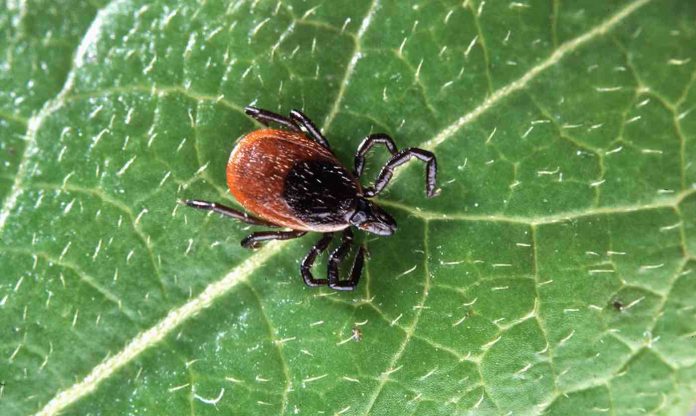
Lyme disease, transmitted by the bacteria Borrelia burgdorferi, can infect at the site of the tick bite and then survive in the bloodstream and spread to the heart, joints or brain, resulting in arthritis, neurological abnormalities, and carditis.

CHECK OUT: Scientists Develop New Test That Can Diagnose Lyme Disease in Just 15 Minutes

According to the Centers for Disease Control and Prevention, approximately 300,000 Americans are infected annually, especially in the Midwest and Northeast, including New York state—and with warmer temperatures becoming the norm, the disease cases have been geographically expanding in the past 20 years.

Researchers from Baylor will partner on this work with Lyme disease experts from the Wadsworth Center, New York State Department of Health.

A Baylor College news release reports the team will develop a process to manufacture the vaccine prototype and define host immune responses triggered by the prototypic vaccine under different regimens, including different doses, number of immunizations and type of immune-stimulants, to identify the most efficient way to prevent bacterial colonization and Lyme disease manifestation.

“Contributing to this work and applying our strict quality system practices will be crucial to realize our long-term goal to develop a Lyme disease vaccine, and our vaccine center is well poised to achieve the goals of the project,” said Dr. Wen-Hsiang Chen, assistant professor of tropical medicine at Baylor and director of vaccine quality control and analytical development at Texas Children’s.

RELATED: Potential Treatment for Lyme Disease Kills Bacteria That May Cause Lingering Symptoms, Study Finds

“This program builds nicely on our strengths in identifying Lyme disease bacterial proteins as vaccine candidates and investigating how injecting these vaccine candidates blocks tick-to-human transmission of bacteria and/or prevents the disease manifestations,” said Dr. Yi-Pin Lin at Wadsworth Center, New York State Department of Health.

“This study will significantly benefit the quality of life for U.S. Service members, their families and the general public around the globe.”

Spread The Good News to Your Friends on Social Media…

Survey Reveals Employees Would Likely Work Harder If Their Bosses Do One Simple Thing

Just in time for Thanksgiving, a poll of American workers examined the importance of feeling appreciated especially amidst the struggles of 2020.

The survey of 2,000 employed adults working from home revealed that workers haven’t felt much gratitude from their employers since they stopped commuting.

Seven in ten say they’re working more—and harder—than ever before, and three-quarters of respondents said their mental health would likely improve if they received more appreciation and recognition.

Without thanks employees may not be going above and beyond for long, since two-thirds (68%) say they feel unmotivated to work since everything they do seems to go unnoticed.

RELATED: 8 in 10 Americans Say Positive Memories Have Been a ‘Lifeline’ During the Pandemic

When asked what they would love to hear more at work a simple “thank you” topped the list. “I appreciate you doing that” and “that was helpful” came in second and third place.

Being told your ‘time is valuable’ and that you exceeded expectations rounded out the top five.

The survey conducted by OnePoll on behalf of Motivosity found seven in ten said appreciation means the most when it comes from a manager or executive.

“Companies know that the mental health of their teams has become a significant concern,” said Scott Johnson, Founder of Motivosity. “More than 74% of employees indicated that their mental health is tied to how well they feel appreciated at work. Successful employers will have a meaningful plan to address that.”

RELATED: Poll Shows People Are Picking Up Healthy New Habits As a Result of Being Home in Pandemic

Work isn’t the only place where a little appreciation goes a long way. Half of Americans feel like nobody around the house appreciates them.

Three in five (63%) confessed to feeling like they’re carrying all the weight with certain chores and that no one cares.

Two of the main pain points for appreciation were not getting any credit or thanks for taking care of the laundry (42%) and regularly cleaning the bathroom (40%).

Four in five (79%) said that knowing they were appreciated would be a big boost for their mental health on a daily basis.

POPULAR: Americans Say They Are Thankful For ‘Little Joys’ More Than Ever These Days – Their Top 10 Favorites

Nearly half of respondents said words were their preferred method of appreciation and 39% think a small gift is in order.

“If you’re trying to improve your company culture, focus on gratitude and appreciation,” Johnson said. “Enable teams and individuals to be appreciative of each other. That’s the kind of culture that keeps customers happy and wins “Best Places to Work” awards!”

ASK For Appreciation By Sharing This on Social Media… (Photo by Ivan Samkov)

Trump Administration Denies Alaskan Copper Mine Permit in a Brilliant Victory for Salmon Fisheries

Photo courtesy of Save Bristol Bay

To the relief of millions of Americans, the Army Corps of Engineers on Wednesday blocked approval for the Pebble Mine project in Alaska, potentially ending a decades-long battle over the health of a major salmon fishery.

The agency concluded that “the proposed project is contrary to the public interest” and blocked the approval of the mine under the Clean Waters Act and the Rivers and Harbors Act.

The debate over Pebble Mine with its massive copper and gold reserves located near Bristol Bay in southern Alaska has been ongoing since feasibility studies were conducted in 2008. The mine has come to almost epitomize environmentalists’ struggle to protect ecosystems against the will of the federal government.

Environmentalists, sportsmen, fishing industry unions and their lobbyists have repeatedly warned that the immensity of the mine would devastate the Bristol Bay and Bristol River salmon run.

Containing the world’s largest salmon run and the world’s largest sockeye salmon fishery, all five species of Pacific salmon frequent Bristol Bay and its eight tributary rivers. Along with herring, these populations account for 75% of local jobs, over $200 million annually in revenue, and 40% of the nation’s total salmon catch.

RELATED: World’s Largest Seagrass Restoration Project is a Virginia Success, Planting 600 Acres That Grow to Become 9,000

The mine would likely have been as deep as the Grand Canyon, providing access to the world’s most valuable undeveloped copper resource, but extracting the metal could have produced enough waste to fill an NFL stadium nearly 3,900 times, according to the Associated Press.

“The Corps’ denial of the permit for the Pebble Mine is a victory for common sense,” said Chris Wood, president of Trout Unlimited. “The opposition to this project from all corners of the political spectrum runs strong and deep. The process has played out, and the science is clear. There is no way this ill-conceived project can coexist with Bristol Bay salmon,” said the group, according to the nonprofit, Save Bristol Bay.

Photo courtesy of Save Bristol Bay

A close call

The Army Corps of Engineers released an environmental report in July that said the mine and the fisheries could coexist, claiming that under normal working conditions the mine “would not be expected to have a measurable effect on fish numbers and result in long-term changes to the health of the commercial fisheries in Bristol Bay.”

Strangely, just a month later the agency found that discharges at the mine would result in  “unavoidable adverse impacts to aquatic resources,” and submitted a checklist of required steps to mitigate this process.

POPULAR: World’s Biggest Wildlife Crossing Will Protect Animals From Drivers on the 101 in Los Angeles

Eventually though, the application was denied, even though the mine contains 6.44 billion tons of both precious metals like gold, silver and palladium, and valuable minerals like copper and molybdenum.

Donald Trump Jr. pointed out earlier in the year that he hoped his father would deny the mining application, saying that “as a sportsman who has spent plenty of time in the area, I agree 100%. The headwaters of Bristol Bay and the surrounding fishery are too unique and fragile to take any chances with.”

Other republicans such as Alaska’ two republican senators, Lisa Murkowski, who also chairs the Senate Committee on Energy and Natural Resources, and Dan Sullivan, both agreed that Pebble Mine is better off unbuilt.

LOOK: Rare Turtles Known For Their Permanent Smiles Saved From Extinction in Myanmar

“It will help ensure the continued protection of an irreplaceable resource — Bristol Bay’s world-class salmon fishery,” said Murkowski, according to AP.

SHARE The Victory For Wildlife With Your Tribe on Social Media…
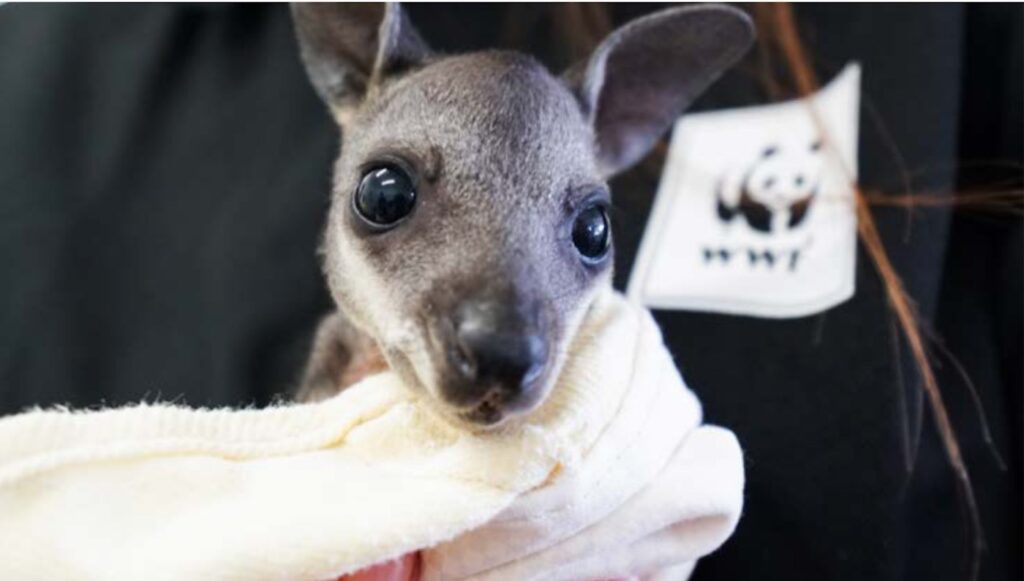
After One of the Country’s Worst Wildfires WWF Australia is Preparing for a Year of Renewal

Copyright WWF-Australia / Leonie Sii

2020 was a sad summer to look back on for conservationists in Australia—it was one of the worst seasons for bushfires in history destroyed millions of acres of the country.

But already there are reasons to hope, as WWF, the world’s largest independent conservation organization, looks to build on the remarkable response they received to help save wildlife after the fires and rebuild a resilient ecosystem on the world’s smallest continent.

Copyright WWF-Australia / Leonie Sii

“Right across the country, moves are afoot to rebuild, regrow and regenerate in a better way,” writes WWF-Australia CEO Dermot O’Gorman in World Wildlife Fund Australia’s (WWF) 2020 annual report.

During the crises they received $40 million in donations to their Nature Recovery Fund which allowed them to launch 40 separate recovery and restoration missions starting in January of 2020 and which included supporting independent veterinary efforts to take care of injured wildlife with the best equipment, organizing large food dispersions to feed wildlife whose homes were destroyed, and mobilize dogs and drones to search for koalas who had survived the blaze.

LOOK: Australian Firefighters Pose With Adorable Rescued Animals for Sizzling Wildlife Charity Calendar

Now with the fires behind them, the WWF are looking towards their Two-Billion Tree 10-point plan to regenerate as much forest as was lost, and to help kick off their plan they worked with partners to plant 10,000 koala habitat trees in New South Wales (NSW), as well as getting koalas in eastern Australia designated as an “endangered population” under the Australian Environment Protection and Biodiversity Conservation Act.

Additionally, WWF secured commitments from the NSW government to retain protections of old growth forest and national parks, to which was added the Narriearra Station National Park in June.

Plans become a silver lining

The Regenerate Australia plan is the largest wildlife and nature regeneration program in the nation’s history, and involves raising a whopping $300 million to fund the tree planting efforts, and two contests with prizes of $3 million each to help incentivize innovative solutions to “turbo charge nature’s recovery.”

WWF-Australia’s No Plastics in Nature campaign has seen some sterling results in 2020, which include South Australia passing a ban on polystyrene single-use items in food service, as well as plastic cutlery and straws. The government of NSW banned single-use plastic bags, and the governments of Australia Capital Territory and Queensland are to introduce legislation that would, if passed, ban similar single-use plastics in 2021.

RELATED: After 3,000 Years, Tasmanian Devils Make a Comeback on Mainland Australia

The state of Western Australia will also be banning polystyrene food containers and single-use plastic stirrers, forks, knives, etc., in 2023.

Like many other nations during the COVID-19 pandemic, the economic recession has been hard in Australia, and WWF are among those who believe that when jobs come back, there should be an emphasis on renewable energy investment.

So in 2020 WWF Australia launched their Renewable Recovery campaign based on research into the Australian renewables market. They outlined six key opportunities for how Australia can move towards net-zero greenhouse gas emissions in a time frame to keep global temperatures well below 2 °C of warming, in accordance with the Paris Agreement.

RELATED: Solar Power Just Met 100% of Demand in South Australia For First Time

According to their estimates, a $2 billion stimulus check would be enough to “fast-track our proposed electric bus revolution in major cities, develop Australia’s leadership in
global battery manufacturing, [and] put our nation at the forefront of the emerging global renewable hydrogen market,” all of which serving to create, as they estimate, around 100,000 jobs.

Indeed Australia has remarkable renewable resources. As a flat, sunny country with the 6th-longest coastline in the world, it’s ideal for wind, solar, and tidal energy production.

In fact in late October South Australia generated 100% of the power demand from rooftop solar panels alone.

It’s a sign of the generosity of conservationists and folks who care about wildlife that even facing the bushfires and the COVID-19 pandemic, operating revenue rose 159% from fiscal year 2019 to 2020, driven overwhelmingly by personal donation; a quiet majority raising their voices in support of their land — a gesture that will drive WWF towards a renewed and hopeful 2021.

WATCH a video…

SHARE the Inspiring Update From Down Under on Social Media…

“We don’t stop playing because we grow old; we grow old because we stop playing.” – George Bernard Shaw

Robert Collins - Unsplash

Quote of the Day: “We don’t stop playing because we grow old; we grow old because we stop playing.” – George Bernard Shaw

Photo by: Robert Collins

With a new inspirational quote every day, atop the perfect photo—collected and archived on our Quote of the Day page—why not bookmark GNN.org for a daily uplift?


His Invention For Renewable Energy Inspired by the Physics of Northern Lights Just Won the 2020 Dyson Prize

AEreus
AuREUS System Technology

While renewable energy uptake and solutions continue to grow, many can only generate electricity in the right environmental conditions. For example, solar panels can only capture and convert visible light into renewable energy and must be facing the sun to do so. What is more, solar farms are only built horizontally, never vertically and are often placed on prime arable farmland.

The solution? Invented by 27-year-old Carvey Ehren Maigue from Mapua University in the Philippines, AuREUS System Technology is a material that can be attached to a pre-existing structure or surface. Utilizing the natural scientific principles behind the northern and southern lights, it harvests UV light and convert this into visible light to generate electricity. 

Using ultraviolet rays, the sun could be shining, or it could be cloudy: Carvey’s material will still generate electricity. 

RELATED: Students Invent Door Handle for Public Bathrooms That Can Clean and Sanitize Itself

The particles in his material absorb UV light causing them to glow. As the particles “rest” they remove excess energy. This excess energy bleeds out of the material as visible light, which can then be transformed into electricity. Current prototypes successfully achieve this on windows and external building structures. 

Not only has Carvey invented an efficient process to generate renewable energy, but the materials he uses to do so create a closed-loop design process, so nothing is wasted. This is because Carvey uses a substrate extracted from waste crops—such as rotting fruits and vegetables—to create a durable, translucent and moldable material as the basis for AuREUS.

“As a farmer, I see great potential in Carvey’s technology to generate clean renewable energy,” said James Dyson, Founder and Chief Engineer at Dyson in a statement. “AuREUS… conserves space using pre-existing structures, utilizes current resources and waste streams, and supports local agricultural communities. His bright idea to use upcycled crop waste develops a closed loop system. This element of his invention is particularly clever and shows the close link between farming and technology.”

MORE: College Students Invent Device That Curbs Microplastics Emitted From Tires–And They Won a Dyson Award

Carvey said of receiving the first annual sustainability award out of a record 1,800 entries: “Winning the James Dyson Award is both a beginning and an end. It marked the end of years of doubting whether my idea would find global relevance… I want to create a better form of renewable energy that uses the world’s natural resources, is close to people’s lives, forging achievable paths and rallying towards a sustainable and regenerative future.”

The student plans to use his $40,000 prize money to further develop his invention.

Source: James Dyson Awards

SHARE News Of This Energy Invention on Social Media…

New Zealand Couple Says No to Lucrative Offers from Developers and Gives Land to Nation

QEII

A married couple from New Zealand has donated their heritage farming property to the state to ensure the beautiful natural scenery it contains can be enjoyed by the people for all time.

QEII

Owners Dick and Jillian Jardine handed their 2,200-acre (900 hectare) property to the Queen Elizabeth II National Trust (QEII) “for the benefit and enjoyment of all New Zealanders,” practically parroting the words of Teddy Roosevelt when he spoke at the completion of the Yellowstone National Park’s welcome archway.

“This land has been in the family for nearly a century and we have endeavoured to improve and enhance it over this time,” said Dick Jardine. “Having QEII as the caretaker of this property gives us the comfort and assurance to proudly pass over this gift for all New Zealand to enjoy and appreciate.”

Shirking development offers for the protection of the area as working pastureland, Dick and Jillian gave the local government of the Wakatipu, on New Zealand’s South Island, something that is becoming increasingly scarce: a wide-open landscape.

RELATED: With 14,000 Critical Acres Added to Montana Wildlife Reserve, It May Become the Largest in the Lower 48

Situated at the base of a mountain range aptly called the Remarkables, the Wakatipu landscape is part of the Central Lakes Region. It boasts extraordinarily expensive real estate and contains the nests of several of the more wealthier people on the planet, including PayPal co-founder Peter Thiel, and jewelry juggernaut Michael Hill.

QEII

According to the QEII, Jillian Jardine didn’t want to consign the entire area to become something akin to Malibu on South Island.

“We thought about this idea and it just stuck, so it feels like the right thing to do,” she said. “We want to keep it as it is forever, we don’t want buildings all over it or housing, there’s so much housing going in… we want to be part of saving something.”

The ground will be open to anyone in 2022, which will be the 100th anniversary of the Jardine family acquisition—gorgeously squished between the Remarkables Range and a great big lake.

The plan for the property is to create a multi-functional wild area that can be used for “pastoral farming, conservation, public access, and landscape protection.”

MORE: New Zealand Prime Minister Pledges to Reach 100% Renewable Energy Across Nation by 2030

“The gift of this property also comes at a time when protecting biodiversity and promoting a connection to nature is more relevant than ever,” reads a statement on the QEII website, while the trust’s CEO Bruce Wills called it “an extraordinarily generous gift to New Zealand and one that will endure long after we are all gone.”

SHARE the Good Green News on Social Media…

Dispel Lockdown Woes and Hectic Holidays With Simple, Science-Backed Tips For Boosting Mood

Wintertime weather, holidays, and a pandemic lockdown can make routines difficult, but practicing mindfulness can offer a solution, and be done in very simple forms.

The year has been a real humdinger for some and a tragedy for others, and using mindfulness—the direct mental effort to make yourself present in each passing moment, can help remind so many of us why the holidays are a favorite time of the year.

If one collects enough psychological information, using mindfulness throughout the week—throughout the season, might make us more resilient to whatever life through in our paths.

Walking

Even though the thermometers are reading low, walking is not only a great way to practice mindfulness, but it gets you out of doors—which every psychologist worth their salt would explain is great for your mental health.

During the holiday season and wintertime, it’s even more important for several reasons.

  1. Reduced daylight hours lead to a reduction in the natural absorption of vitamin D from UV light. Vitamin D is one of the most important biochemicals for the immune system and fighting off viruses.
  2. Exposure to cold increases the brain’s production of norepinephrine, a behavioral chemical that can make you feel elated and excited.
  3. Exposure to trees, sky, the stars, and nature has been shown time and time again to help improve mental well-being.

Walking this holiday season allows you to capture all of these benefits as well as offering a great opportunity to practice mindfulness. In Europe, it’s quite common for married couples, friends, or dog moms/dads to take a walk after a meal—particularly dinner.

Several studies have looked at the effects of a post-dinner walk on things like nocturnal glycemia, type-2 diabetes, and gastro reflux. All found that these various symptoms were improved with even just a 20-minute moderate-intensity walk after an evening meal.

“Concentrate on the air as it fills your lungs and expels into the atmosphere. Notice the breath of your exhale becoming one with your surroundings,” advises Veronika Tait, Ph.D. writing for Psychology Today.

Veronica adds that studies have shown walking in forests or in close sight of trees has been shown to lower levels of stress and anxiety.

“Picture yourself expanding into the vastness and reflect on the changing seasons. Ponder what it means to be at the mercy of the sky each day, recognizing our powerlessness over Mother Nature,” she adds.

There’s no better time than December and winter to recognize our powerlessness over nature.

If you’re not the kind of person who likes the cold, a new attitude about winter could be only a matter of how you frame it. Kari Leibowitz is an American psychologist studying Norwegians’ attitudes towards their long sunless winter above the Arctic Circle.

“Most people don’t realize that their beliefs about winter are subjective,” Leibowitz tells the Guardian. “They feel like they’re just someone who hates the winter and there’s nothing they can do about it… But once you put it in people’s heads that mindsets exist, and that you have control over your mindset—I think that that’s tremendously powerful.”

READ: Dreading a Dark Winter Lockdown? Think Like a Norwegian

After accruing all those benefits, there’re still more waiting for you when you finish your walk.

To drive the cold winter away

Another good time to practice mindfulness is after your walk.

Slow down as you approach your door and say out loud how grateful you are for the shelter that keeps you safe from the cold. Once inside, take a moment to feel the warmth of your home’s air reaching the parts of you that are most cold like the nose, lips, and ears.

You know that throbbing feeling when a very cold body part is rapidly warming? Focus on that while you pour yourself a cup of herbal tea, and try and pay attention to the smell and the steam from the water as it enters your cup.

Sit down and drink your tea without moving until it’s finished. Here’s why:

  1. Many herbal teas have therapeutic effects that can be very beneficial for staving off sickness, bettering sleep quality, and helping de-stress after a long day.
  2. A cup of tea is about as long as it takes to finish a short mindfulness routine. It’s been shown, and the HeadSpace app has made a fortune from it, that just 5-8 minutes of mindfulness or meditation is enough to start experiencing the beneficial effects.
  3. Use your fanciest cups, saucers, and other tea paraphernalia. Social psychologist Dan Ariely demonstrated, according once again to Veronika Tait, that “when the coffee ambience looked upscale…the coffee tasted upscale.” “Participants rated the taste of their coffee higher if the condiments were presented in fancy containers versus paper cups,” added Tait.

CHECK OUT: Feeling Stressed? Iceland is Broadcasting People’s Yells of Frustration to Their Scenic Wilderness

Whatever your winter, lockdowns, or holidays look like this year, don’t let stress get in the way of a nice brisk walk and a hot cup of tea, all with 8-10 minutes of focusing on your place in nature, and the things you’re thankful for.

PASS On The Positivity And Share These Holiday Tips Friends On Social Media…

Prison Camp Survivor is Casually Building and Donating a $50 Million Children’s Hospital in New Zealand

Supplied, Mark Dunajtschik

When Mark Dunajtschik escaped Knicanin prison camp near the end of WWII, he was forced to flee his homeland of Yugoslavia. Five years after the war ended, he became an apprentice toolmaker.

The trade he mastered then may have shaped his career, but it was the life lessons he learned that ultimately forged the character of the man he’d someday become.

Supplied, Mark Dunajtschik

With housing in post-war Germany almost nonexistent, Dunajtschick’s only option at that time was living in a housing facility for the mentally and physically disabled. Seeing the daily challenges his housemates faced, he realized how just lucky he was.

“Because I was given the opportunity to live in that home, which was founded by an industrialist in the 1880s, now that I am in a position that I can also do something, naturally I want to do it,” he told the New Zealand Herald.

At the age of 85, as one of the most successful industrialists and real estate developers in New Zealand, Dunajtschik is indeed uniquely poised to deliver on his desire to give back.

READ: Billionaire Reaches His Goal Of Giving Away His Entire Fortune After 38 Years Of Secret Donations

Already known for his philanthropic works—having financed the country’s Life Flight Trust helicopter rescue service—Dunajtschik’s latest major humanitarian endeavor is overseeing the construction of a new children’s hospital in Wellington.

In 2017, he committed $50 million dollars of his own money toward building it.

“After a conversation between my business partner and my life partner we decided, why not build it?” he said. (Dunajtschik credits his life partner, 82-year-old New Zealand native, Dorothy Spotswood, with whom he shares a five-decade-long relationship—for much of his success.)

But Dunajtschik had no desire to simply throw money at the new hospital. He takes a hands-on approach to all his projects.

“By utilizing my expertise as a developer we would be able to produce more real estate than if we were to just write out a cheque and leave the bureaucrats to build it,” he explained.

Over the summer, construction passed a major milestone. As Dunajtschik and Spotswood looked on, the industrial support cranes were cleared from the site, signaling the exterior was complete.

Rendering of Wellington Children’s Hospital, Wellington Hospitals Foundation

“It’s exciting to see that in a little over a year the vision will be realized and we will have a magnificent new purpose-built facility that will help generations of sick kids to come,” said Bill Day, Chair of Wellington Hospitals Foundation.

“Those people that are born with a healthy body and mind can look after themselves and those unfortunate to be born with, or suffering ill health, need our help,” said Dunajtschik.

MORE: Generous Boss Gives $12.7 Million to His Staff, Saying ‘Thank You’ As He Retires

And that’s the lesson in compassion this man who puts his money where his mouth is—plus a whole lot more—hopes to pass along.

SHARE This Inspiring Story With Pals on Social Media…

“When I started counting my blessings, my whole life turned around.” – Willie Nelson

Quote of the Day: “When I started counting my blessings, my whole life turned around.” – Willie Nelson

Photo by: Thought Catalog

With a new inspirational quote every day, atop the perfect photo—collected and archived on our Quote of the Day page—why not bookmark GNN.org for a daily uplift?