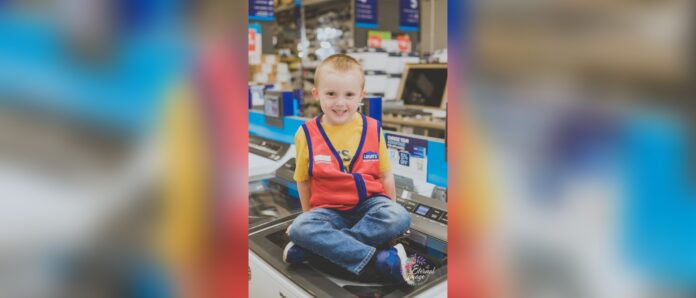
When you wander the aisles of a big-box hardware store, you can hunt up everything from garden gear to grills to paint. What you might not expect is that in the appliance section, you can also find a jumbo-sized package of goodwill and compassion.
Lowe’s may be a hardware giant, but it seems they have a soft spot when it comes to one very special Missouri 4-year-old.
Like most children his age, Jaxon Maples is bright and inquisitive. He also has autism.
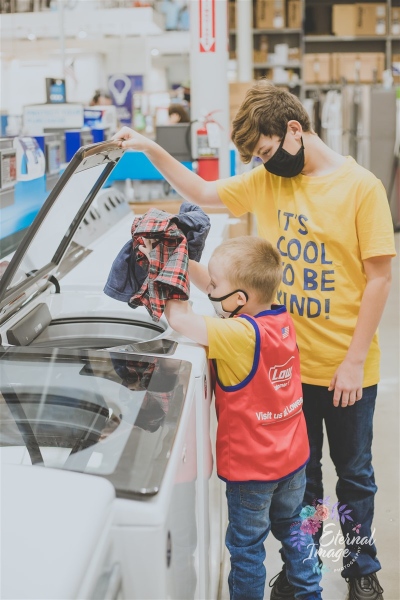
From an early age, Jaxon has been drawn by the language of mechanical objects. The whir of a fan, the thrum of a washing machine, and the tumbling cadence of the dryer were among his favorite fascinations.
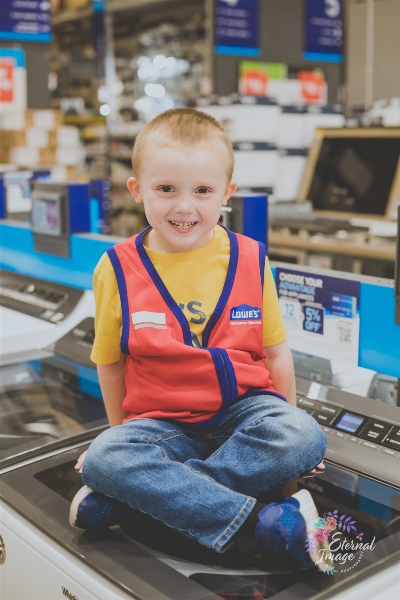
It’s not surprising that when Jaxon discovered the appliance section at the local Lowe’s store on a family visit, it was as if he’d stepped into his own personal wonderland.
Jaxon’s mom, Shauna Rippee, reveals her son’s love for the hardware store has turned out to be something of a godsend.
“Lowe’s has been the center of our world, because our world is Jaxon,” she told the Springfield News Leader. “When you have a child who is on the spectrum, he can have massive meltdowns. We are so thankful that we know how to calm him down before it gets into a really bad situation. We just get in the car and go to Lowe’s.”
But it turns out, Jaxon’s adoration isn’t a one-way love affair.
When Rippee contacted Lowe’s head office to explain her son’s unique situation and ask if they might send him one of their signature associate vests, the generous response went far beyond her expectations.
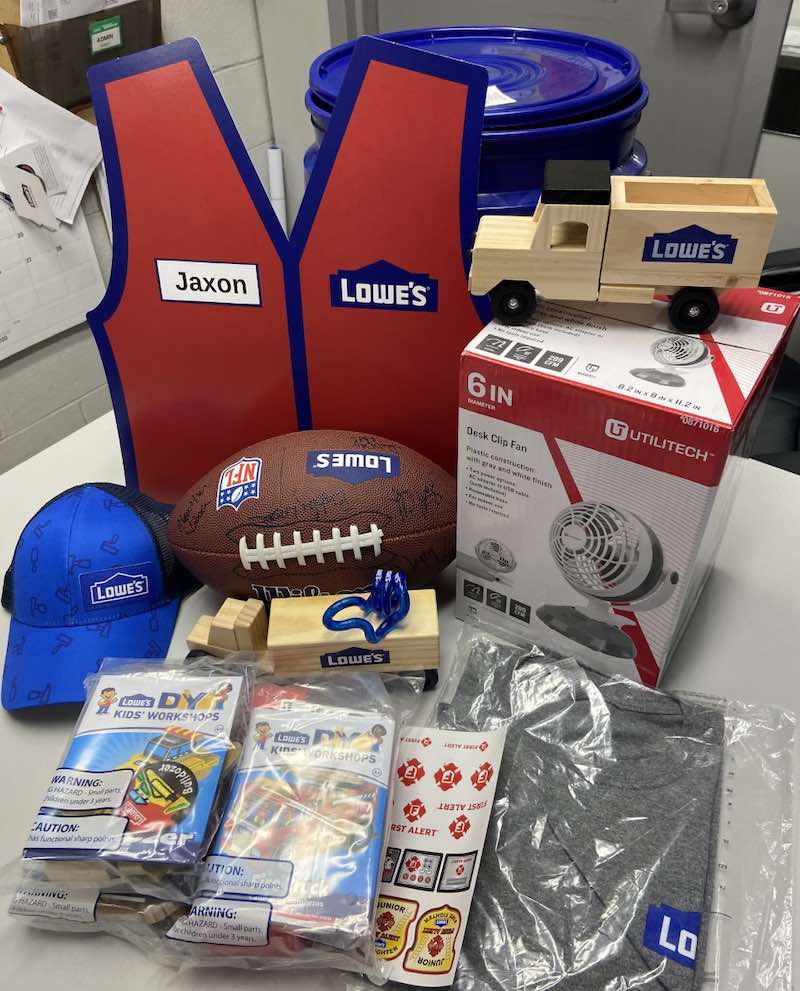
With corporate’s blessing, the South Springfield Lowe’s not only got Jaxon a vest, they made him an honorary associate and gifted him with a bounty of child-friendly branded merchandise.
Copyright Eternal Image Photography
“My team was really inspired by his story and his connection to Lowe’s,” store manager Marty Davis said. “Jaxon’s visit made our team’s day and brought several associates to tears.”
They also presented the boy with a Lowe’s football signed by our team, wooden DIY kits, and a small desk fan to help keep Jaxon calm.
While the COVID-19 pandemic has curtailed Jaxon’s visits to some degree, he knows he’ll always be welcomed to his favorite place with open arms and spinning appliances.
The extraordinary bond between a child with special needs and a hardware giant that truly cares is a win/win for everyone. Not only does he get to hang out in his happy place, it’s a good bet Lowe’s has earned a customer for life.
SHARE This Sweet Story From Missouri on Social Media…
An Arkansas school district saved so much money from switching to solar power for their buildings, they were able to bump up their teachers’ salaries and eliminate their budget deficits.
The Batesville School District in Arkansas switched to solar power in 2017 when—following an audit by an energy efficiency company called Entegrity—they discovered they were spending $600,000 a year on electricity between six school buildings, while simultaneously running a $250,000 budget deficit.
Batesville superintendent Michael Hester, who knew faculty pay was low, causing a quick staff turnover, took out a bond to help finance a switch from conventional electric power to renewable energy in the form of 1,400 PV solar panels.
In just three years, Hester’s gamble turned the quarter-million dollar budget deficit into a $1.8 million surplus, which he used to raise teachers’ pay and even the test scores of their district as a result of being able to hold on to quality teachers. The surrounding districts proceeded to follow Hester’s example and install solar panels themselves.
Living near a coal-fired plant set to close in a decade, the administrators were worried what public opinion might be regarding the switch, but instead they found a sympathetic populace who understood, according to one report, that solar power represented the jobs of the future.
Batesville joins a number of other school districts nationwide who are switching to solar power. At the end of 2019 in the US, 5.3 million children attended schools powered by solar electricity.
LIGHT UP Your Friends’ Social Media Feeds With the Good News…
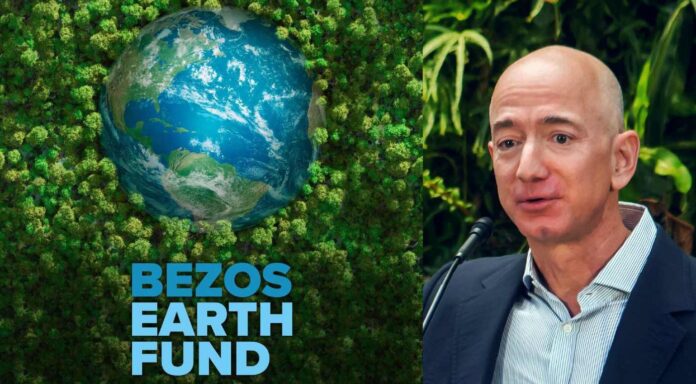
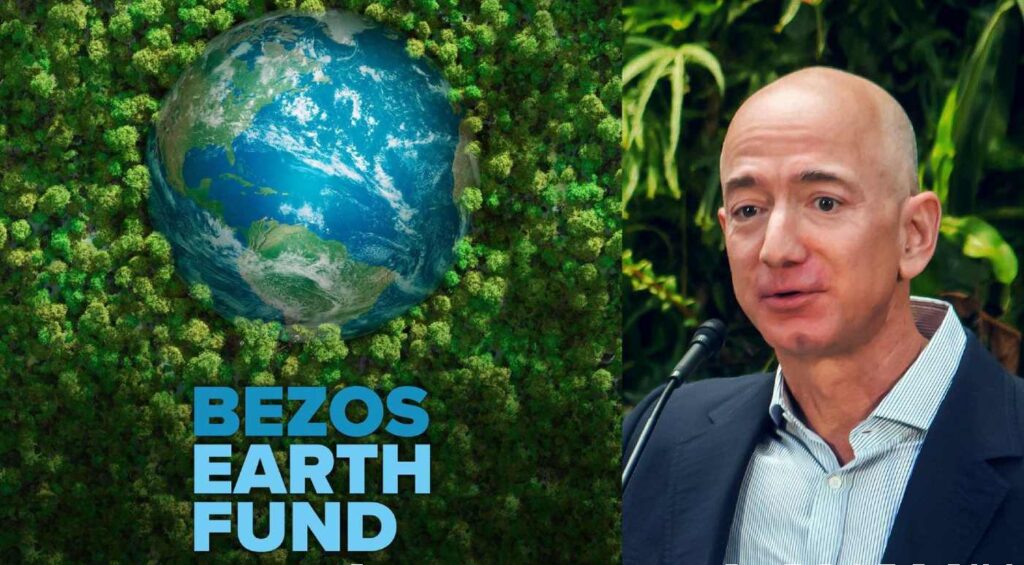
Bezos Earth Fund logo, Bezos Earth Fund / Jeff Bezos, CC Seattle City Counc
The Bezos Earth Fund, created by Amazon founder and CEO Jeff Bezos and worth $10 billion, has just distributed $791 million in grant money to large environmental organizations that focus on restoring forests and wildlife, and cutting carbon emissions.
Bezos Earth Fund logo, Bezos Earth Fund / Jeff Bezos, CC Seattle City Council
The fund, which lacks a website, a board of directors, or even a grant application process, exploded into life on Monday with grants to the Nature Conservancy, Natural Resources Defense Council, World Wildlife Fund, World Resources Institute, and Environmental Defense Fund.
The Nature Conservancy announced their receipt for $100 million in Bezos bucks, saying that it would go to “protect the Emerald Edge forest in the United States and Canada,” as well as “efforts to reduce the carbon footprint of farming practices in Northwest India and curtail agriculture’s contribution to Delhi’s air pollution.”
“WWF is profoundly grateful for this transformational investment, and the impact this commitment will have on millions of people around the world,” said a statement on World Wildlife Fund’s website.
The WWF will take its grant and use it to restore mangrove forests, considered a natural climate change solution due to their enhanced ability to sequester carbon in their roots, and to investigate new markets for seaweed farming—an aquacultural activity that supports developing economies without deforestation.
“I’ve spent the past several months learning from a group of incredibly smart people who’ve made it their life’s work to fight climate change and its impact on communities around the world,” Bezos wrote in an Instagram post.
A myriad of smaller organizations also received money, including the Salk Institute for Biological Studies, the Union of Concerned Scientists, the Rocky Mountain Institute, and more.
Many of these smaller grants were for carbon-reduction objectives, with the Union working on advocating for electric trucking, the Salk Institute for its plant project of genetically enlarging the carbon-capturing parts in the roots of common agricultural crops, and the Rocky Mountain Institute for a campaign to create carbon-free buildings.
The Bezos grants are likely an attempt to help reduce the carbon footprint of the world’s largest retailer, which the founder hopes will be carbon neutral through a strategy of emission-cuts and carbon credits by 2040.
SHARE The News of This Announcement on Social Media…
Quote of the Day: “If you suddenly and unexpectedly feel joy, don’t hesitate. Give in to it.” – Mary Oliver
Photo by: Austin Schmid
With a new inspirational quote every day, atop the perfect photo—collected and archived on our Quote of the Day page—why not bookmark GNN.org for a daily uplift?
Scientists have designed a set of “green” tableware made from sugarcane waste and bamboo that doesn’t sacrifice on convenience or functionality and could serve as a potential alternative to plastic cups and other disposable plastic containers.
Ruby Wallau/Northeastern University
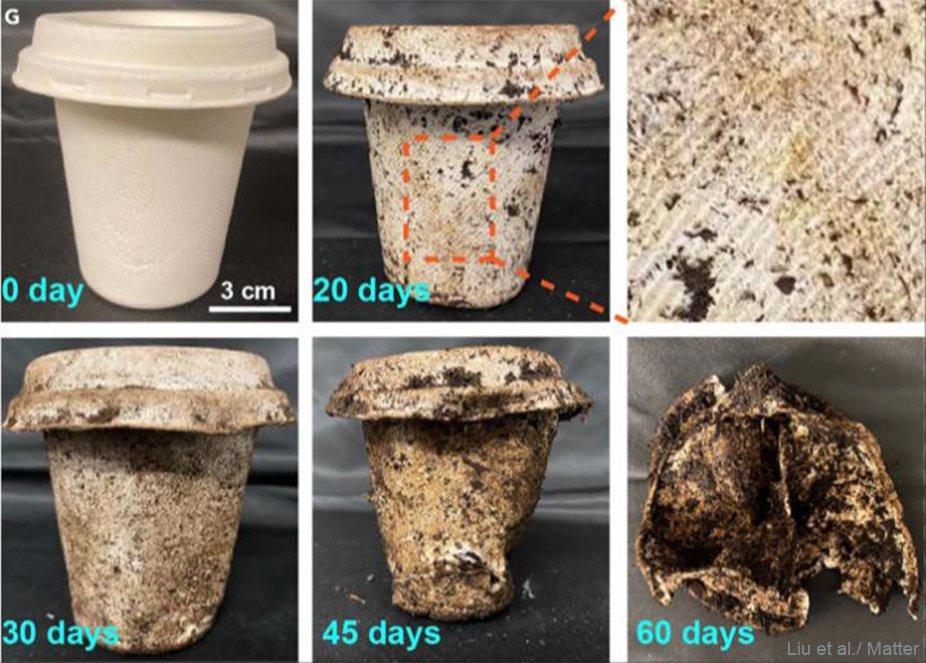
Unlike traditional plastic or biodegradable polymers‚ which can take as long as 450 years or require high temperatures to degrade—this non-toxic, eco-friendly material only takes 60 days to break down and is clean enough to hold your morning coffee or dinner takeout. While these bowls and
“To be honest, the first time I came to the US in 2007, I was shocked by the available one-time use plastic containers in the supermarket,” says corresponding author Hongli (Julie) Zhu of Northeastern University. “It makes our life easier, but meanwhile, it becomes waste that cannot decompose in the environment.”
She later saw many more plastic bowls, plates, and utensils thrown into the trash bin at seminars and parties and thought, “Can we use a more sustainable material?”
To find an alternative for plastic-based food containers, Zhu and her colleagues turned to bamboos and one of the largest food-industry waste products: bagasse, also known as sugarcane pulp.
Winding together long and thin bamboo fibers with short and thick bagasse fibers to form a tight network, the team molded containers from the two materials that were mechanically stable and biodegradable.
The new green tableware is not only strong enough to hold liquids as plastic does and cleaner than biodegradables made from recycled materials that might not be fully de-inked, but also starts decomposing after being in the soil for 30-45 days and completely loses its shape after two months.
Northeastern University/Cell Press
“Making food containers is challenging. It needs more than being biodegradable,” said Zhu. “On one side, we need a material that is safe for food; on the other side, the container needs to have good wet mechanical strength and be very clean because the container will be used to take hot coffee, hot lunch.”
The researchers added alkyl ketene dimer (AKD), a widely used eco-friendly chemical in the food industry, to increase oil and water resistance of the molded tableware, ensuring the sturdiness of the product when wet. With the addition of this ingredient, the new tableware—which is currently still in the development stage—outperformed commercial biodegradable food containers, such as other bagasse-based tableware and egg cartons, in mechanical strength, grease resistance, and non-toxicity.
The tableware the researchers developed features in the journal Matter, and comes with another advantage: a significantly smaller carbon footprint. The new product’s manufacturing process emits 97% less CO2 than commercially available plastic containers and 65% less CO2 than paper products and biodegradable plastic.
The next step for the team is to make the manufacturing process more energy efficient and bring the cost down even more, to compete with plastic. Although the cost of cups made out of the new material ($2,333/ton) is two times lower than that of biodegradable plastic ($4,750/ton), traditional plastic cups are still slightly cheaper ($2,177/ton).
“It is difficult to forbid people to use one-time use containers because it’s cheap and convenient,” says Zhu. “But I believe one of the good solutions is to use more sustainable materials, to use biodegradable materials to make these one-time use containers.”
(Source: Cell Press)
INFLUENCE Your Friends to See Eco-Friendly Items Anew – SHARE On Social Media…
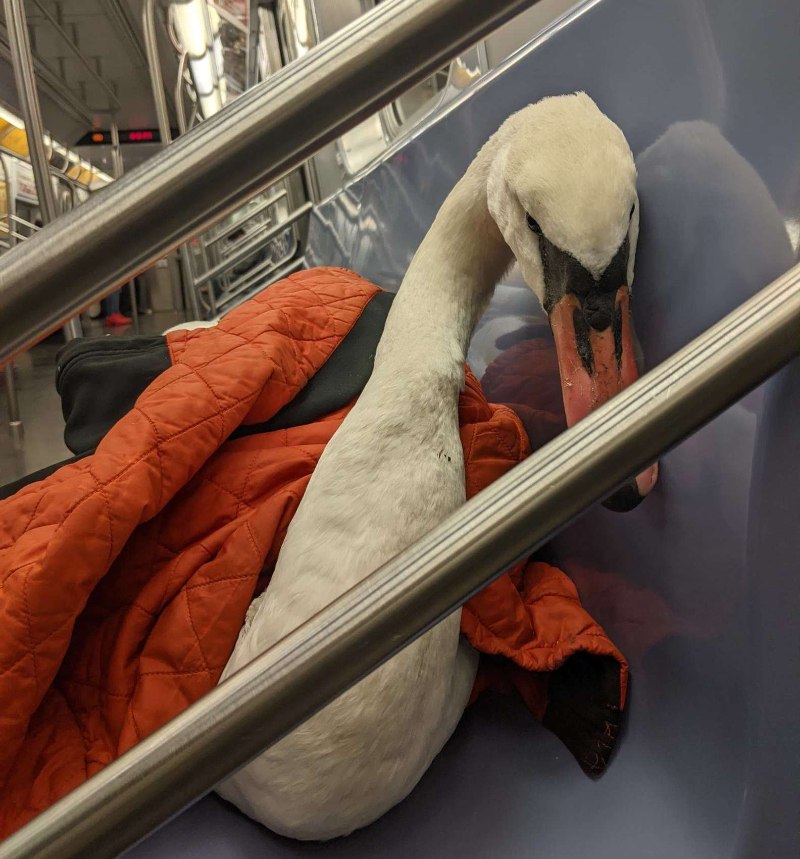
It takes a lot to phase New Yorkers. Even the sight of a woman schlepping a live swan and lugging a bicycle on the subway didn’t cause much of a stir.
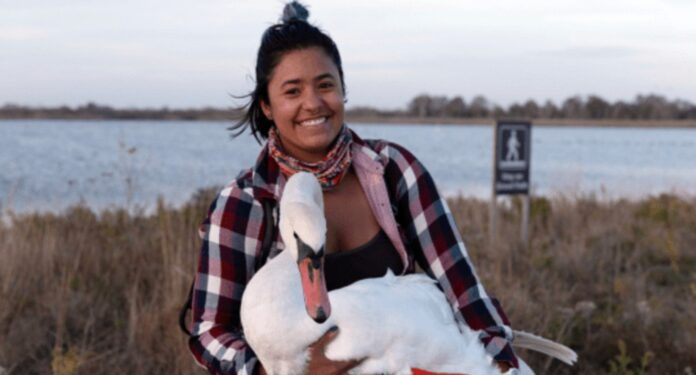
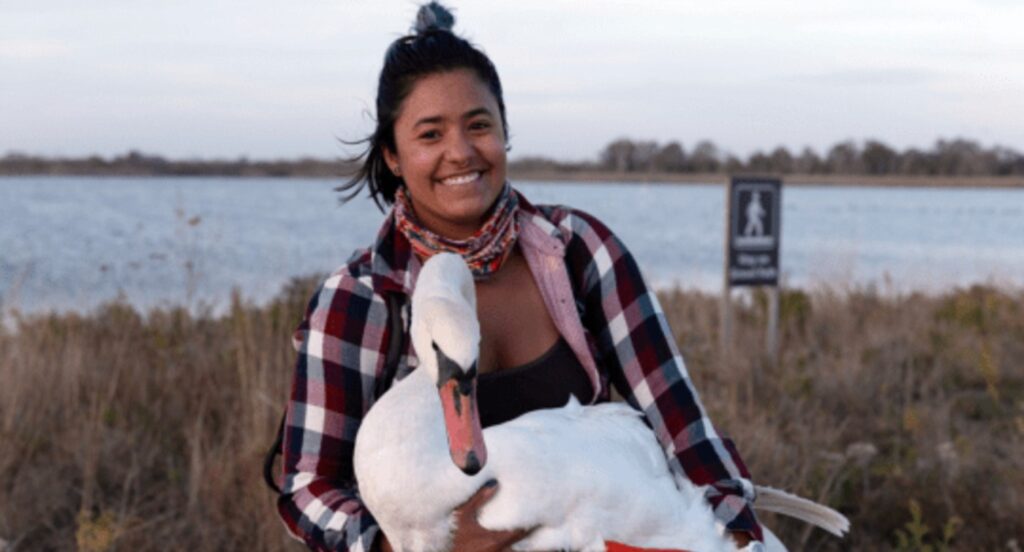
“Nobody seems to be fazed,” Ariel Cordova-Rojas, the swan schlepper told The New York Times. “One man was sitting right in front of me and he’s just on his phone. I don’t even know if he noticed there was a swan in front of him.”
Ariel Cordova-Rojas
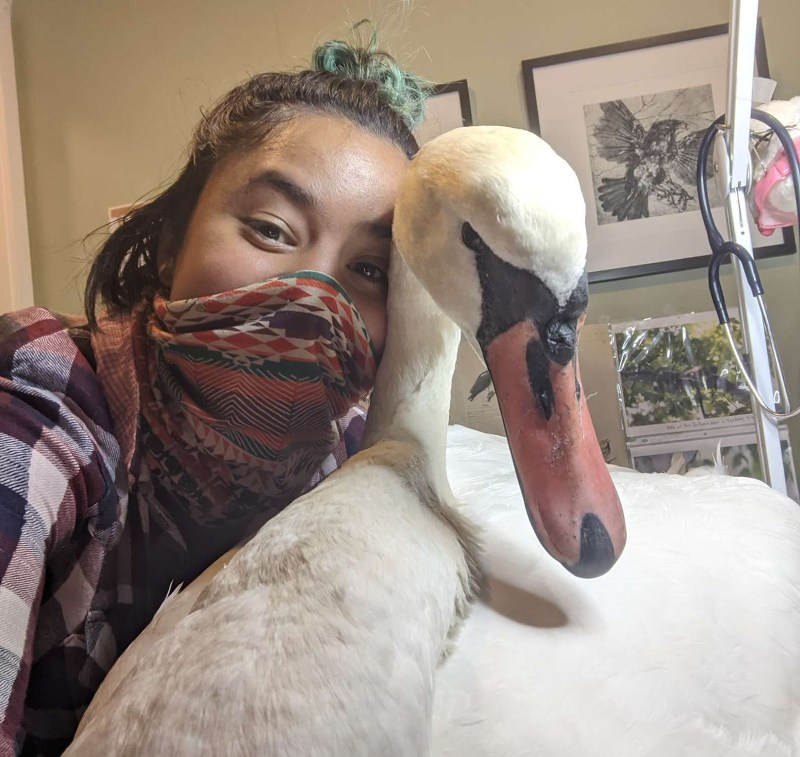
While Cordova-Rojas’ subway appearance might have been dismissed as whimsical performance art by some, she was in fact performing a very real act of mercy. The swan she’d found earlier in the day was ailing and she was determined to get it the help it needed.
Cordova-Rojas faced an arduous journey from Queens, through Brooklyn, to Manhattan’s Wild Bird Fund facility. She started out on foot. Several automobile rides and a stint on public transportation later, she was able to deliver the sick swan to its final destination, the Wild Bird Fund rehabilitation center located on New York City’s Upper West Side.
When she’d headed out for some birdwatching at Jamaica Bay Wildlife Refuge in Queens that morning, Cordova-Rojas had no idea of how the day’s events would unfold. Luckily for the infirm female mute swan she encountered, it was a case of the right person being in the right place at the right time.
Ariel Cordova-Rojas
Not only is Cordova-Rojas an avid birder, she’s also had extensive training wildlife rescue. Having spent five years as an animal care manager at the Wild Bird Fund facility herself, she was no stranger to dealing with sick and injured avians.
After assessing the swan’s condition, which was was quiet, lethargic, and weak, Cordova-Rojas wrapped the bird in her jacket. Although hampered by having to haul both bike and bird, she began planning the convoluted rescue.
Along her route, she was aided by some good Samaritans who drove her, her bike, and her feathered charge to a nearby subway station. During the ride, she hooked up in Brooklyn with former colleague, Tristan Higginbotham, another animal care manager at the Wild Bird Fund, who is also a volunteer for the New York City Audubon Society.
Higginbotham said the Audubon Society already had word of the bird being ill, however, volunteers had been unable to find the downed swan during earlier attempts to locate her.
At the end of the 23-mile trek, a relieved but happy Cordova-Rojas finally handed the swan into the care of the capable Wild Bird Fund staff for evaluation and treatment.
It might not have been how she planned to spend her day, but Cordova-Rojas believes the unexpected adventure was one of the best gifts she’s ever been given.
Josh Spector
“That was kind of the perfect culmination of my 20s,” she told The Times. “It was the perfect birthday present to be in nature and be able to save a life.”
SHARE This Rescue Story With Pals on Social Media…
Artist's rendering of LightSail 2: Josh Spradling, The Planetary Society
An American astronomical society is proving that, like the Vikings of old, exploration of foreign shores—in this case foreign planets—is possible if you but master the use of the humble cloth sail.
Artist’s rendering of LightSail 2: CC Josh Spradling, The Planetary Society
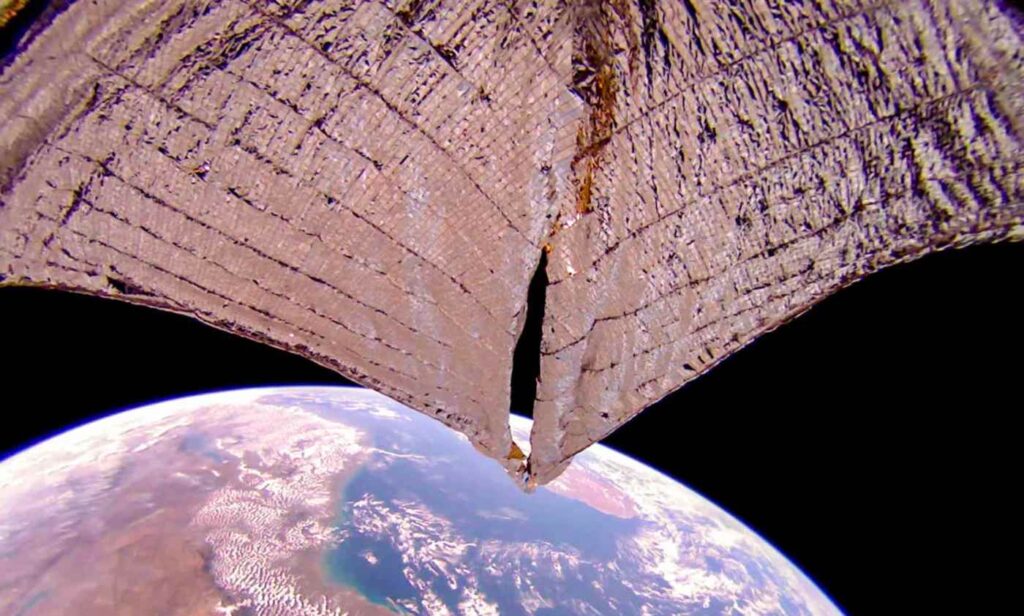
LightSail 2, designed and crowd-funded by the Planetary Society, is a small spacecraft that has been moving around at high-speeds in Earth’s orbit, and turning direction by capturing solar photons with a square sail the size of a boxing ring.
Having launched in July 2019, the vessel has spent over a year meandering about 186 miles (300 kilometers) above the International Space Station, at 460 miles above Earth, it has produced a trove of scientific data which mission engineers at the Planetary Society will use to advance humanity’s understanding of solar sailing—potentially, it will be a very important and reliable form of space travel in the decades to come.
Now LightSail 2 is entering the extended mission phase, where scientists will study how things like orbital decay—the degree to which the spacecraft’s trajectory gradually falls, similar to how a hula hoop falls when it stops spinning—will affect the bread loaf-sized craft as it slowly falls towards Earth and eventually burns up on re-entry.
“During our extended mission we’ll continue making changes to our sail control software, which will help future solar sail missions optimize their performance,” states Planetary Society chief scientist and LightSail 2 program manager Bruce Betts.
The little ship moves at the whim of two powerful forces: gravity and the sun, which one might imagine as acting like an ocean current and the wind.
LightSail 2 is in orbit like a satellite around the earth, and so the scientists must steer, recharge batteries, and take photographs in response to where its orbit, which due to the non-spherical nature of our planet is quite wobbly, takes it.
However, for about 28 minutes of its 100-minute orbit, it can turn its 34-square meter sail, which rather than absorbing the light like normal cloth, repels it thanks to its reflective material called Mylar.
The momentum of mass-less traveling photons bouncing off the sail gives it a slight push to be able to steer itself during those 28 minutes, proving that solar sailing is viable for use in steering and propelling “CubeSats”—smaller satellites that will really push the boundaries of space exploration, not least because a solar-sailing spacecraft doesn’t need chemical propulsion.
A year on heavenly winds
CC The Planetary Society
In 1608, Johannes Kepler theorized that the sails of ships could be adapted for the “heavenly breezes,” and 300 years later, fiction writer Arthur C. Clarke published “The Sunjammer,” about a solar sailing vessel.
Famous American astrophysicist Carl Sagan, co-founder of the Planetary Society, presented a model of a solar sailing spacecraft which NASA had designed to visit Halley’s Comet on The Tonight Show with Johnny Carson in 1976, but it was only three years after Sagan’s death that the Society he helped start began designing the solar sailing vessels which would eventually lead to LightSail 1 and 2.
With its sail and small area-to-mass ratio, this spacecraft can resist the drag of the earth’s atmosphere which would have resulted in a normal satellite falling back down to the surface much faster. The Society had envisioned it crashing by now, but this new timeline of orbital-decay which they are studying in the extended mission phase will provide NASA and other entities that want to deploy a solar sailing spacecraft with invaluable calculations.
Future missions will take place at higher orbits, or even on interplanetary trajectories, where there will likely be much more sailing than spinning going on. NASA’s NEA Scout will ride a Space Launch System rocket to an area near the Moon before deploying its solar saii to ride cosmic winds on a visit to an asteroid.
LightSail 2 data is directly supporting NASA’s solar sailing programs which the agency describes as being capable of “conducting orbital plane changes more efficiently than spacecraft using conventional chemical propulsion,” and “of achieving remarkable speeds, enabling rapid exploration of the outer solar system.”
It’s a tremendous achievement for the Planetary Society, who created the entire program, from blueprints to the extended mission phase.
This body of work has stretched over a decade, on just $7 million, gathered from Planetary Society memberships, private donations, foundational support, corporate partners, and a 2015 Kickstarter campaign which holds the record for the most successful space-related Kickstarter in history; raising $1.24 million via 23,500 backers.
“Even a year later, I am inspired and humbled by the tens of thousands of passionate individuals who came together to make this mission a reality,” said Planetary Society chief operating officer Jennifer Vaughn. “As we celebrate the success of LightSail 2’s primary mission, we’re also celebrating the power of everyday people working together to explore space.”
SAIL This Space News Over to Friends on Social Media…
A study published by the University of Oxford has demonstrated that video gaming during lockdowns increased mental well-being due to a variety of factors, and that time spent playing was not the most critical factor.
The combination of more national lockdowns across Europe and North America and the Christmas season likely has video game developers, whose industry didn’t take much of a hit during the economic contractions from the COVID-19 pandemic, expecting increased sales.
However, as a pre-print study by Oxford University scientists demonstrates, it might not be a bad thing to get a copy of Animal Crossing or Plants vs. Zombies in your stocking this year.
That is because, as Professor Andrew Przybylski, Director of Research at the Oxford Internet Institute found, the long-lasting use of poor scientific methods to measure the effects of gaming on individuals’ mental well-being has potentially obscured the benefits, especially social, especially in lockdown, that complex and engaging video games can provide.
“Recent evidence suggests self-reports of digital behaviours are notoriously imprecise and biased, which limits the conclusions we can draw from research on time spent on video games and well-being,” explains Przybylski in his paper which has yet to be published.
Video games can provide positive or calming stimulation to the mind, as things like interacting with well-designed characters, dialogue, or storylines can be even more engaging than the same three aspects in other things like films, since in a video game you get to act out the story.
One study found as well that there can be physiological changes that games like Tetris can place you in—flow states that reduce anxiety and can help prepare for stressful situations.
Przybylski’s study utilized self-reporting, but only for measures of mental well-being and not, critically, of game time.
“Working with Electronic Arts and Nintendo of America we’ve been able to combine academic and industry expertise,” Przybylski told Oxford University Press. “Through access to data on peoples’ playing time, for the first time we’ve been able to investigate the relation between actual game play behavior and subjective well-being, enabling us to deliver a template for crafting high-quality evidence to support health policymakers.”
A stunning finding
Bartek Mazurek
3,274 players of “Plants vs Zombies: Battle for Neighborville” and “Animal Crossing: New Horizons,” completed self-reporting surveys of mental well-being which produced stunning data.
Only 25 players of Plants vs Zombies who reported between 1 to 6 for positive mental well-being (rather than 0 to -6) had close to or more than 40 hours of total account play time over two weeks. The overwhelming majority had between 0 and 20 hours.
Perhaps a more dramatic finding was among the players who reported in the negative for mental well-being. There were only three who logged more than 20 hours, truly issuing a blow to the idea of addictive video games being bad for mental health, as those who weren’t experiencing joy of some kind didn’t play very much at all, in other words if they felt bad, they stopped.
Animal Crossing held much the same story, with the majority of players playing between 0-20 hours, and the majority reporting positive mental well-being. Animal Crossing is a little more complex, and so unsurprisingly there were more hours logged, as well as far more players in general.
Even still, there were only 20 players who reported negative mental well-being that had logged 40 or more hours in Animal Crossing.
The study measured feelings of autonomy, relatedness, competence, enjoyment, and feeling pressured to play, as well as other questions that measured the enjoyment of online social interactions.
“Our findings show video games aren’t necessarily bad for your health; there are other psychological factors which have a significant effect on a persons’ well-being,” writes Przybylski. “In fact, play can be an activity that relates positively to people’s mental health—and regulating video games could withhold those benefits from players.”
Be Sure And Pass On This Fun Piece Of News To Your Friends On Social Media…
The Tennessee-based center has been an early trial site for the Moderna vaccine which, according to early data, is 94.5% effective. Immunologist Dr. Anthony Fauci says that vulnerable groups in the US—such as health care workers and the elderly—could expect to get the first of these vaccinations as soon as the second half of December.
Speaking with the BBC, the 74-year-old country music singer said she was “so excited” to get word of the vaccine’s efficacy. “I just felt so proud to have been part of that little seed money that will hopefully grow into something great and help to heal this world,” she explained.
A spokesperson from Vanderbilt University Medical Center, John Howser, added that her generous donation is also helping fund a convalescent plasma study–used to treat people who are already suffering from the virus—and research involving antibody therapies: two of which are currently being tested by a multinational pharmaceutical company.
Parton’s donation has surprised few. The “Jolene” singer has a long history of charitable giving. Since 1995, in fact, she’s gifted more than 147 million books to children in need through the Dolly Parton’s Imagination Library.
Still, fans of ‘Saint Dolly,’ including Zack Braff, are spreading the love for her latest philanthropic success.
Quote of the Day: “Successful people seek out their futures from the present; failures seek out their futures from the past.” – Li Ao
Photo by: Markus Winkler
With a new inspirational quote every day, atop the perfect photo—collected and archived on our Quote of the Day page—why not bookmark GNN.org for a daily uplift?
The National Zoo in D.C. needs a name for its newest panda cub, and everyone’s invited to help name the little guy.
National Zoo
Born on August 21, 2020 in the US capital, this wee one is known to excel at napping, nursing, and cuddling with his mother Mei Xiang—there’s even a Giant Panda Cam so you can see him and his parents in action.
The possible names—chosen by the zoo and Chinese partners who strive to conserve this beloved and endangered bear—reflect the happiness people share for the young panda.
Here are your four naming options to choose from:
1. Fu Zai (fu-tzai) | 福仔: Mandarin Chinese for “prosperous boy”
2. Xiao Qi ji (shiau-chi-ji) | 小奇迹: Mandarin Chinese for “little miracle”
3. Xing Fu (shing-fu) | 幸福: Mandarin Chinese for “happy and prosperous”
4. Zai Zai (tzai-tzai) | 仔仔: Mandarin Chinese nickname for a boy
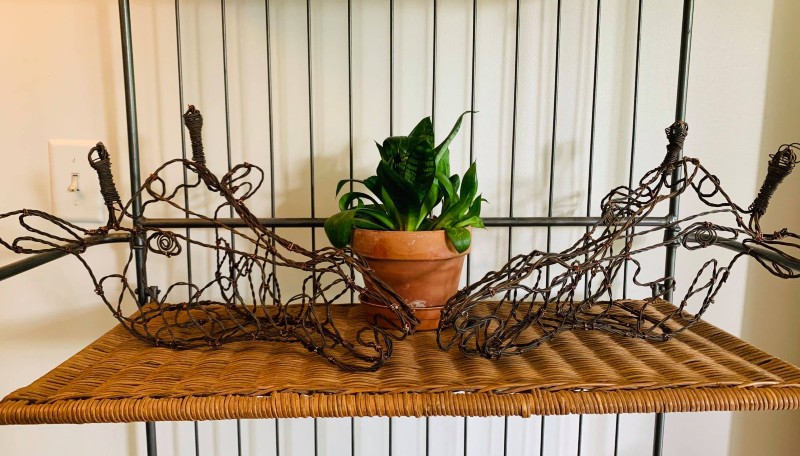
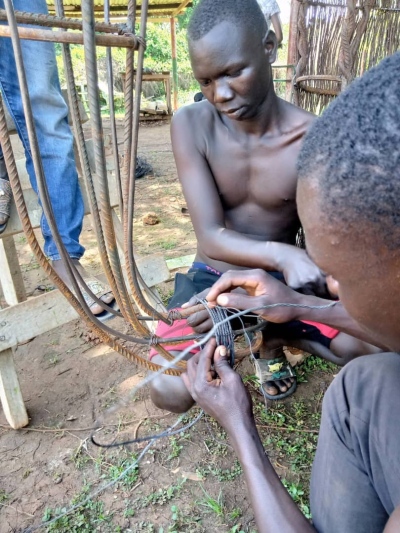
In Murchison Falls National Park in Uganda, a non-profit is helping local artisans make a living through selling sculptures made from the wiring in poacher’s traps.
Located in northwest Uganda, the nation’s largest national park is a poaching hotspot, with the most common method being a wire snare that closes around an animal’s foot.
Most poaching is done for meat, as the communities surrounding the park are some of the poorest in the country, and most of the animals poached are smaller herbivores.
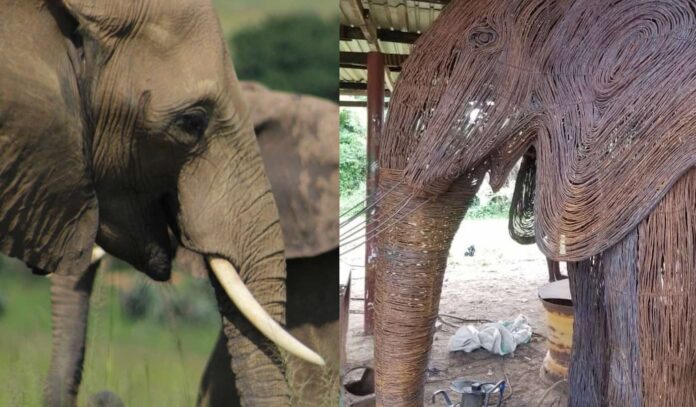
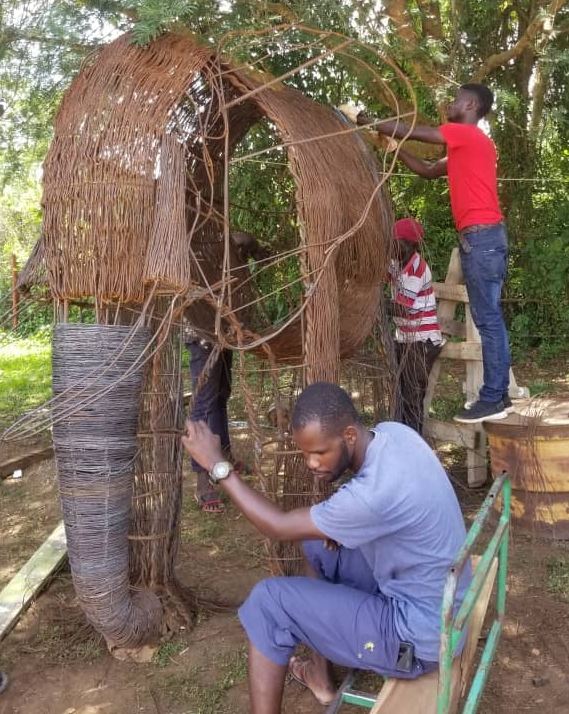
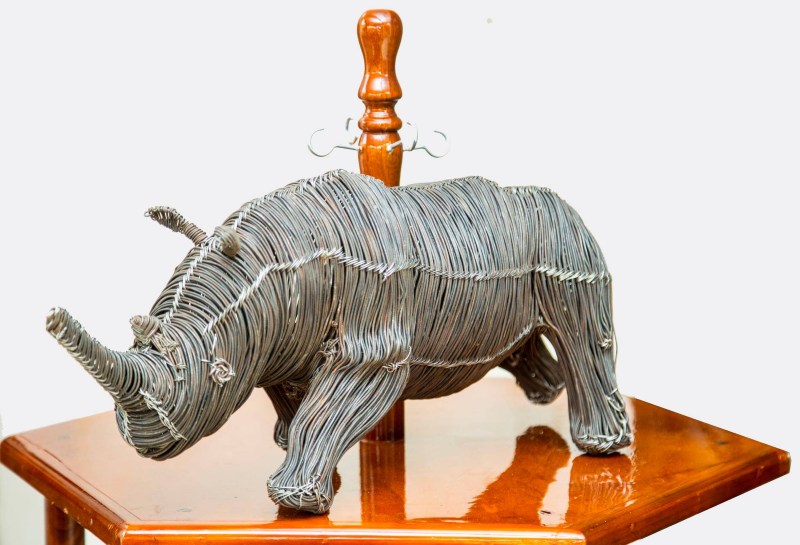
Snares to Wares aids local people in developing their artists’ eye and crafters’ hand to weave hundreds of locally captured snares into intricate wire sculptures of the park’s wildlife.
Snares to Wares
The initiative was started by Tutilo Mudumbu, a National Geographic Explorer, and Robert Montgomery, a wildlife ecologist at Michigan State University, and now has 620 artisans onboard who sell on average about 800 sculptures a month.
Mudumbu was conducting research on the use and distribution of snares in the park some years ago when he came up with the idea. In an interview with Nat Geo, he explains that for most of the poor villagers around the park, wildlife represents a threat, a nuisance—as they eat or trample crops when they leave the boundaries of the park—or a mystery.
He was shocked to learn after starting Snares to Wares that many locals didn’t really know what the animals in the park looked like, so he helped sponsor field trips into Murchison Falls, named for a narrow waterfall that forces the enormity of the Nile River into a narrow channel.
There the locals study the animals, see how they behave, and allow their inner artist to take shape as they observe the park’s lions, rhinos, elephants, buffalo, giraffes, leopards, warthogs, and more.
Murchison Falls has experienced a dramatic resurrection over the last decade, with a substantial upgrade in the patrol and policing capabilities of rangers, and the abilities of the veterinary units as well—all leading to a doubling of the herbivore numbers.
Predator populations are also increasing, with the conviction rate of caught poachers almost 97% due to another investment project in a wildlife legal department within the Ugandan Wildlife Authority.
At 7:30 in the evening, a SpaceX Falcon 9 rocket carried four astronauts to the International Space Station (ISS), reopening the pathway to regular crewed missions into space for NASA for the first time in nine years.
It took just twelve minutes for the powerful rocket, developed by the commercial space-faring company started by Tesla founder Elon Musk, to reach the point at which the Dragon capsule detached from its rocket and soared into space, where 27 hours later it docked autonomously at the ISS.
CC NASA
“That was one heck of a ride,” mission commander Mike Hopkins said when the Dragon capsule made it into orbit.
As part of the first-ever commercial Crew-1 Program, NASA astronauts Victor Glover andShannon Walker, along with the JAXA astronaut Soichi Noguchi, joined commander Hopkins aboard Dragon on what will be a six-month mission.
It was eight years ago that GNN reported the first Falcon 9 rocket had left Earth’s surface as part of a resupply mission to the ISS. Having used the Falcon 9 in May to launch a Dragon capsule to the ISS as part of a test run, and again just last month to launch a satellite, NASA and SpaceX are getting humans back into space in what will be the first mission as part of the next chapter of research and exploration.
Indeed, according to SpaceX, Crew-1 is the first of three commercial voyages to take place through 2020 and 2021, paving the way for trips to the moon, Mars, and more.
A series of firsts
According to National Geographic, the team of Hopkins, Glover, Walker, and Noguchi will log a number of “firsts” in their six-month trip. They’ll return on May 2021, when the capsule will parachute into the Atlantic Ocean off the coast of Florida at around the same time when the Crew-2 Mission will be setting off the other way.
Having had to rely on the Russian Soyuz spacecraft for almost a decade, it will be the first American-made spacecraft to carry astronauts into space in nine years. Pilot Victor Glover is the first Black astronaut to go on an extended stay aboard the ISS, and engineer Shannon Walker is the first woman to orbit in a commercial spacecraft.
“I expect to be the first of many,” Walker told Nat Geo of her flight. “And I look forward to the day that we don’t have to note such events.”
“It is something to be celebrated once we accomplish it,” Glover apparently added. “I am honored to be in this position.”
Noguchi is the most experienced astronaut of them all, having already logged 177 days in space aboard both NASA ships and the Soyuz vessels.
Now that NASA has a reliable and state-of-the-art rocket and capsule, it may very well be that they want to make up for lost time, and the hodgepodge of research being conducted during the half-year stay reflects that.
According to Nat Geo, the research will include “looking at how astronauts’ brains and hearts respond to the space environment, growing radishes in orbit, testing a space suit with new insulating technologies, and studying how different diets affect astronaut health.”
SpaceX is hoping to rapidly expand capabilities in order to reach the Moon again soon, and Mars in the not-too-distant future. Knowing the answers to such research questions will be imperative for the years-long voyages that such future expeditions will involve.
(WATCH the NASA video of the historic launch below.)
Launch This Far Out Story to Pals on Social Media…
Who’s afraid of the big, bad wolf? Japanese black bears, it seems—or at least they’re afraid of big, bad robotic wolves.
YouTube/Guardian
With bear sightings at a five-year high and dozens of attacks reported in Japan this year alone, city officials in the town of Takikawa on the island of Hokkaido took action by buying and installing a pair of Monster Wolf robots in their community.
The animatronic scare-wolves were developed through a cooperative project between precision machinery manufacturer Ohta Seiki, Hokkaido University, and Tokyo University of Agriculture.
Looking like a cross between Wolverine and the Terminator, each cyborg Canis lupus comes equipped with flashing red eyes, a blinking tail, and a repertoire of loud, threatening sounds—growls, roars, and heavy machinery noise—all triggered by motion detectors.
The prefab predators are scheduled to be left out to prowl until early November, when the bears go into hibernation, then return to duty next spring.
“We want to let the bears know, ‘Human settlements aren’t where you live,’ and help with the co-existence of bears and people,” explained Ohta Seiki head honcho Yuji Ota in an interview with The Mainichi.
While the replicant wolves would likely not have fooled Little Red Riding Hood, the ursa population is taking them quite seriously.
Since the menacing sentinels were introduced into their new habitat on the outskirts of Takikawa in September, no further bear sightings have been reported, and as a result, the robot wolves are being regarded, by all accounts, as a howling success.
(WATCH the robot wolves in action in the Guardian video below.)
SHARE This Curious Story With Pals on Social Media…
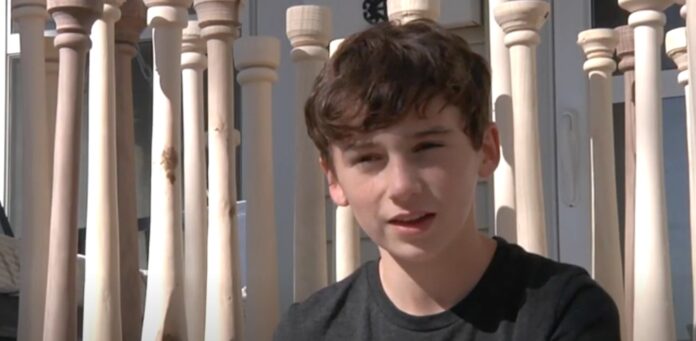
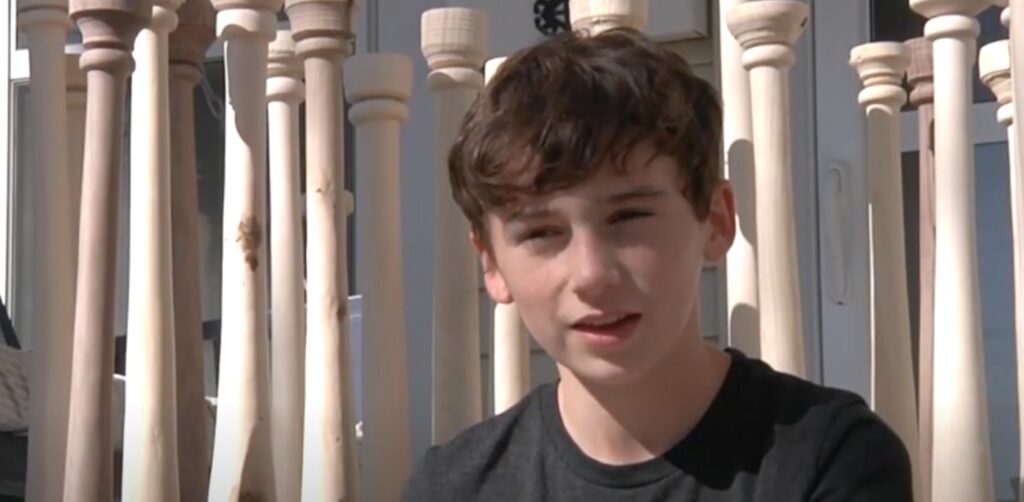
When a huge derecho hit Iowa in August with winds that reached 140 mph, a 12-year-old boy found a unique way to help the storm’s victims—hitting a home run for kindness.
CBS Local News/YouTube
“We didn’t have, like, any damage [to our home],” Tommy Rhomberg told CBS News, “but just driving around town there were people with half their house destroyed, and I just wanted to raise money so we could help them.”
He wanted to give his friend a special birthday gift after the storm upended his birthday, too. Why not a homemade baseball bat? That was his pal’s favorite sport, after all.
Tommy gave his handmade bat a neat name: “The Great Derecho.” Soon others were asking for Tommy’s bats, too.
This gave the enterprising tween a novel idea. What if he repurposed tree branches that had been taken down in the storm—and turned them into bats for sale? Tommy knew just what to do with some of the money raised through his efforts: It could go towards helping storm victims rebuild.
Carving bats in his free time, Tommy’s made 1,500 bats and donated over $2,500. “I feel like it’s really helping people,” he says. Of that, we have no doubt.
Quote of the Day: “Silent gratitude isn’t much use to anyone.” – Gertrude Stein
Photo by: Terry Vlisidis
With a new inspirational quote every day, atop the perfect photo—collected and archived on our Quote of the Day page—why not bookmark GNN.org for a daily uplift?
What happens when a world-famous independent bookshop finds itself in dire straights due to the global pandemic? It gets creative, of course.
As with other struggling bookstores like New York City’s venerable Strand, landmark Paris bookstore Shakespeare and Company experienced a devastating drop in revenue as the COVID-19 lockdown forced them to drastically change the way they did business.
Shadowgate
“We’ve been [down] 80% since the first confinement in March, so at this point, we’ve used all our savings,” second-generation proprietor Sylvia Whitman said in an interview with Afar.
Like the Strand, Shakespeare and Company appealed to its customer base for help.
Hard Times...
We've just sent our latest newsletter in which we ask for your support if you have the means and interest.
In the turn of a page, they were deluged with so many online orders—a record 5,000 in one week, compared to 100 under ordinary circumstances—that they had to temporarily shut down their e-commerce site to catch up with the demand.
The efforts didn’t stop there.
In what almost amounts to taking a leaf from the PBS playbook, Whitman found a novel way to hopefully survive and thrive in the age of coronavirus with the help of a newly initiated membership initiative, the Friends of Shakespeare and Company fund. Members will be treated to a series of special online events and have access to other perks aimed at avid bibliophiles.
But this wasn’t the first time loyal patrons have done their part to keep the legendary Paris Left Bank institution afloat.
The story of Shakespeare and Company starts in 1919, when original owner, Sylvia Beach, opened the doors of an establishment that would become not only a bookshop, but a salon where Ernest Hemingway, T.S. Eliot, F. Scott Fitzgerald, and James Joyce made themselves at home, and ultimately, a small publishing house. (It was Beach who first published Joyce’s “Ulysses,” considered scandalous at the time.)
In order to augment flagging sales figures when the Great Depression hit in 1929, Beach launched a series of readings and other in-store events. For a fee, the clientele got to rub shoulders with literary giants. In fact, Whitman says she was inspired by Beach’s example to revive the tradition.
CC, Christine Zenino
In 1941, the Germans took Paris in 1941 and Beach closed shop—legend has it, after refusing to let a Nazi officer buy her remaining copy of Joyce’s Finnegans Wake.
The curtain on the second act of Shakespeare and Company rose in 1951, when the ownership baton was passed to Sylvia Whitman’s father, George. The beloved English-language bookstore has enjoyed its well-earned reputation as a place where life and literature meet and intermingle ever since.
“[My father] let people sleep in the bookshop and called them ‘tumbleweeds,’” Whitman said, explaining her father believed the immersive atmosphere fostered creativity. She believes it too.
These words from a motto on the wall are the guiding force by which Whitman steers her shop and her life: “Be not inhospitable to strangers lest they be angels in disguise.”
And with that as motivation, here’s hoping that the history of Shakespeare and Company has many chapters yet to be written.
SHARE This Parisian Story With the Book Fans in Your Life…
A new vaccine that protects against the coronavirus is 94.5% effective, according to early data from the US company Moderna.
The study involved 30,000 people based in the States, with half receiving two doses of the active vaccine spaced four weeks apart, and the rest given placebo injections—a shot of saline with no effect.
The first 95 volunteers to develop COVID-19 symptoms were analyzed: Only five of the cases were in people who were given the vaccine, compared to 90 who received the dummy treatment.
The data also showed that, of the 11 severe coronavirus cases among volunteers, all occurred in the placebo group.
No significant safety concerns have been reported: A review of solicited adverse events indicates that the vaccine was generally well tolerated among participants.
Moderna plans to apply for Emergency Use Authorization from the US Food and Drug Administration in the coming weeks, and expects to have 20 million doses ready to ship in the US by the end of 2020. According to a statement released from the biotechnology firm on Monday, it also plans to have up a billion doses ready for use around the globe by the end of 2021.
Comparing Vaccines
With similar news coming from Pfizer last week, the data from Moderna adds to a growing belief that vaccines could help end the pandemic that’s gripped the world since March.
Both companies have developed messenger RNA vaccines that take a similar approach, where part of COVID-19’s genetic code is injected so the immune system can be trained to produce antibodies and T-cells that attack the virus.
The preliminary data released by both firms so far is comparable, with around 90% protection from Pfizer’s vaccine, and around 95% in Moderna’s—though as both trials are still going, final numbers could change.
One key difference? Moderna’s vaccine appears to be easier to store. Remaining stable at -4°F for up to half a year, it can be kept in a regular fridge for up to four weeks. Pfizer’s vaccine, on the other hand, requires being stored at less than 80 degrees below zero, though it can be kept in a fridge for up to five days.
Having more than one available vaccine is going to be important in ending the pandemic. According to Wired science writer Adam Rogers, “All the Covid vaccine candidates work in different ways, and none will be perfect for everyone. It’ll take a slate of options to help cover us all.”
Looking to the future
“These are obviously very exciting results,” American physician and immunologist Dr. Anthony Fauci told CNN. “It’s just as good as it gets—94.5% is truly outstanding.”
Fauci stated that high-risk groups—such as health care workers, people with underlying health conditions, and the elderly—could expect to get the first COVID-19 vaccinations towards the end of December. From there, he said, “I think that everybody else will start to get vaccinated towards the end of April… And that will go into May, June, July. It will take a couple of months to do.”
SHARE the News of Moderna’s Vaccine Results On Social Media…
Results from a new study suggest that a hormone commonly used as an over-the-counter sleep aid may be a viable treatment option for COVID-19.
Particularly with coronavirus cases rising during what some have termed the “fall surge,” repurposing drugs already approved by the U.S. Food and Drug Administration for new therapeutic purposes continues to be the most efficient and cost-effective approach to treat or prevent the disease.
According to the the Cleveland Clinic’s findings, published in PLOS Biology, a novel artificial intelligence platform developed to identify possible drugs for COVID-19 repurposing has revealed melatonin as a promising candidate.
Analysis of patient data from its COVID-19 registry also revealed that melatonin usage was associated with a nearly 30 percent reduced likelihood of testing positive for SARS-CoV-2 (the virus that causes COVID-19) after adjusting for age, race, smoking history, and various disease comorbidities.
Notably, the reduced likelihood of testing positive for the virus increased from 30 to 52 percent for African Americans when adjusted for the same variables.
“It is very important to note these findings do not suggest people should start to take melatonin without consulting their physician,” said Feixiong Cheng, PhD, assistant staff in the Genomic Medicine Institute and lead author on the study. “Large-scale observational studies and randomized controlled trials are critical to validate the clinical benefit of melatonin for patients with COVID-19, but we are excited about the associations put forth in this study and the opportunity to further explore them.”
Here, the researchers harnessed network medicine methodologies and large-scale electronic health records from Cleveland Clinic patients to identify clinical manifestations and pathologies common between COVID-19 and other diseases.
Specifically, they measured the proximity between SARS-CoV-2 host genes/proteins and those well-associated with 64 other diseases across several disease categories (malignant cancer and autoimmune, cardiovascular, metabolic, neurological, and pulmonary diseases), where closer proximity indicates a higher likelihood of pathological associations between the diseases.
They found, for example, that proteins associated with respiratory distress syndrome and sepsis, two main causes of death in patients with severe COVID-19, were highly connected with multiple SARS-CoV-2 proteins. “This signals to us, then,” explained Dr. Cheng, “that a drug already approved to treat these respiratory conditions may have some utility in also treating COVID-19 by acting on those shared biological targets.”
Overall, they determined that autoimmune (e.g., inflammatory bowel disease), pulmonary (e.g., chronic obstructive pulmonary disease and pulmonary fibrosis), and neurological (e.g., depression and attention-deficit hyperactivity disorder) diseases showed significant network proximity to SARS-CoV-2 genes/proteins and identified 34 drugs as repurposing candidates, melatonin chief among them.
“Recent studies suggest that COVID-19 is a systematic disease impacting multiple cell types, tissues and organs, so knowledge of the complex interplays between the virus and other diseases is key to understanding COVID-19-related complications and identifying repurposable drugs,” said Dr. Cheng. “Our study provides a powerful, integrative network medicine strategy to predict disease manifestations associated with COVID-19 and facilitate the search for an effective treatment.”
(Source: Cleveland Clinic)
SHARE the News of This Scientific Breakthrough on Social Media…
Centered around the small archipelago of Tristan da Cunha in the Southern Atlantic, governments and ecological organizations have created the fourth-largest marine protected area on Earth, and the largest in the Atlantic Ocean.
Yagerq
Spanning 265,347 square miles, Tristan da Cunha is almost three times as big as the island of Great Britain, and will protect tens of millions of native and migratory birds, rare migratory sharks, whales, seals, golden undersea forests of kelp, and penguins—collectively valued as a UNESCO World Heritage Site—from illegal mining, fishing, and other extractive activities.
The government of the small UK territorial island announced on Thursday that, in partnership with the UK government, the Royal Society for the Protection of Birds, and National Geographic’s Pristine Seas Initiative, it would conserve its surrounding oceans to help achieve the goal to “secure protection of 30% of the world’s oceans by 2030.”
“The community… a small chain of islands over 6,000 miles from London in the South Atlantic has declared that almost 700,000 km2 of its waters will join the UK’s Blue Belt of marine protection, becoming the largest no-take zone in the Atlantic and the fourth largest on the planet,” reads a local government statement.
The Blue Belt Program has protected four million square miles of ocean habitat since its inception in 2016, owing to the UK’s territorial ownership of many remote island chains like the South Georgia and South Sandwich islands, and Tristan da Cunha.
Described by National Geographic as a mix between “Edinburgh and California’s Big Sur,” the island is home to around 245 people of British, Italian, Dutch, and American heritage. Most villagers make their living through the sustainable lobster fishery, which is excluded from the protected zone.
Pristine seas
Eager to help reach the goal of 30% protection for the world’s oceans, a goal meant to ensure the flourishing of marine habitats like undersea forests and coral reefs, as well as that potentially endangered species who dwell therein, National Geographic’s Pristine Seas Initiative has worked hard to see humanity reach the goal over the next 10 years.
Pristine Seas was launched in 2008, and his since helped fund and conduct 31 expeditions around the world to gather scientific evidence on the value of certain marine ecosystems. Their work has aided in the creation of 23 marine protected areas (MPAs) around the world, conserving a total of 3.1 million square miles of water.
In 2011, their expedition to the Pitcairn Islands found the deepest-living species of plant known, and two years later it found the northernmost forests of kelp. These discoveries are vitally important to creating conservation legislation, since because science often struggles with a poor knowledge and understanding of the oceans, politicians are often lacking in knowledge too.
However, MPAs are incredibly important, perhaps even more so, than their terrestrial counterparts, as the flourishing that can take place under the surface of an MPA is often enough to raise yearly fish catch by 20%, as the benefits “spill over” into the surrounding oceans.
This was reported by a study in the Proceedings of the National Academy of Sciences which found that “strategically expanding the existing global MPA network by just 5% can improve future catch by at least 20%.”
Currently, around 8% of oceans are considered MPAs, but only 2.6% of those are entirely off-limits to fishing. Fishing, whether through large scale fleets or with hand-sewn nets, often provides the most readily available source of high-quality protein in developing nations across the continents, and ensuring stable, growing fish stocks by conserving vital marine habitats will be key to food security and biodiversity in the face of a growing world population.
“It is testament to the vision of the Tristan da Cunha community that one of the world’s smallest communities can make the single biggest contribution to global marine conservation this year,” said Enric Sala, National Geographic Society Explorer-in-Residence.