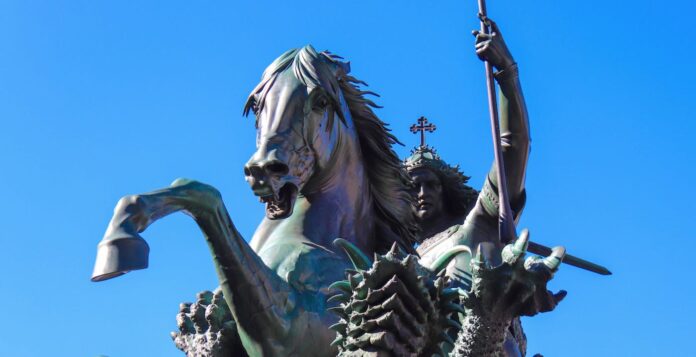
Quote of the Day: “A knight does not stop at each victory. He pushes on to risk a more significant failure.” – Ethan Hawke (who turns 50 today), Rules for a Knight
Photo by: Marie Bellando-Mitjans, in Berlin, Germany
With a new inspirational quote every day, atop the perfect photo—collected and archived on our Quote of the Day page—why not bookmark GNN.org for a daily uplift?
As the world waits for the outcome of the U.S. presidential race, we found some good news to focus on down the ballot. From record-high voter turnout to a historic number of Native Americans winning seats in the 117th Congress, here’s a look at some of the results from Tuesday’s nationwide elections.
This election saw the highest voter turnout in over a century
The U.S. Elections Project, which tracks voter turnout, has found that more than 160 million Americans voted.
Representing nearly 70% of the potentially eligible voting population, this marks the largest election participation since 1900.
Huge numbers of young people registered and cast their votes
More than 15 million Americans have turned 18 since the last presidential election, and they’ve been registering to vote in droves. In Idaho, Minnesota, Georgia, and Vermont, registrations of young people exceeded 2016 numbers by over a third.
The Center for Information Research & Civic Learning and Engagement has been tracking early and absentee voting by young people aged 18-29: It found that more than seven million youths across the country had already cast their ballots by October 27, including over four million in 14 key states.
Americans too young to vote signed up as poll workers
In the 2018 midterm elections, roughly 58% of poll workers were aged 61 or older, so young citizens stepped up to volunteer to eliminate older people’s risk at being exposed to the COVID-19 virus.
In fact, more than 37,000 young people—some of whom are not old enough to vote—signed up to be poll workers on November 3 through the Poll Hero Project.
Foreign interference was not the issue it was in the 2016 election
Despite worries of disinformation and hacking attempts coming from Russia, China, and Iran, the Acting Department of Homeland Security Secretary Chad Wolf was able to confidently announce on November 3, “We have no indications that a foreign actor has succeeded in compromising or affecting the actual votes cast in this election.”
According to Elisabeth Braw at Foreign Policy, two things have changed since 2016: “U.S. authorities, election machine manufacturers, and social media companies are now acutely aware of the interference risk and try to limit it.” Furthermore, U.S. Cyber Command “went on offense early with its Defending Forward strategy.”
Native Americans made history
Six Native American candidates won seats in the 117th Congress—three women and three men; three Democrats and three Republicans; two from Oklahoma, two from New Mexico, one from Kansas, and one from Hawaii; including two Cherokee, one Chickasaw, one Ho-Chunk, one Laguna and Jemez Pueblo, and one Native Hawaiian.
We made history y’all!
SIX Native Americans are headed to the 117th Congress.
3 women, 3 men 3 Democrats, 3 Republicans 2 from OK, 2 NM, 1 KS and 1 HI 2 Cherokee, 1 Chickasaw, 1 Ho-Chunk, 1 Laguna and Jemez Pueblo, and 1 Native Hawaiian. https://t.co/twMWkSO7gg
New Mexico became the first state to elect all women of color to their House delegation.
Yvette Herrell and Teresa Leger Fernandez were elected, joining Deb Haaland, who won her reelection.
A nurse and single mother from Springfield made history in Missouri
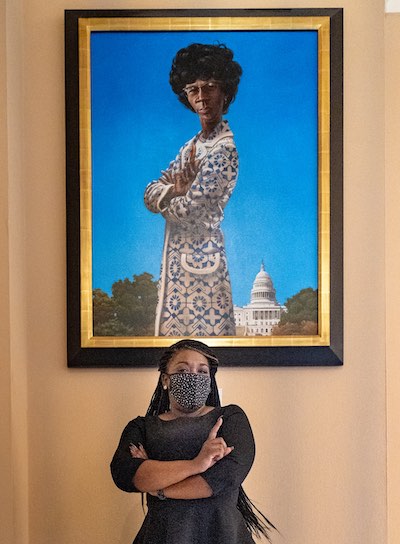
After her victory, Cori Bush became the first Black woman elected to Congress from the state of Missouri. She tweeted the single word “First,” along with this photo standing in front of a painting of Shirley Chisholm—who became the first African-American woman elected to the US Congress in 1969, representing New York.
Cori Bush/Twitter
The first openly gay Black men will take seats in the US Congress
Ritchie Torres and Mondaire Jones both won their congressional races in New York, bringing the total number of LGBT members of Congress to nine.
A right-to-repair car law was significantly expanded in Massachusetts
In Massachusetts, a Right to Repair law being called “the most advanced in the world” was voted in. From 2022 onwards, car manufacturers in the Bay State will have to share repair data beyond just dealers—to consumers and repair stores.
This law will allow car owners and local mechanics back into the repair process, instead of restricting repairs to dealerships and their partners.
Voters in the Magnolia State overwhelmingly approved the citizen-led Initiative 65, making it the 35th state to establish a medical marijuana program.
In fact, citizens in states across the country have voted to ease restrictions for recreational adult use.
Montana, South Dakota, New Jersey, and Arizona voted to legalize recreational pot
Adults in these states will be able to legally buy recreational weed in the future—with tax revenue in Arizona being earmarked for community colleges and “public safety.”
Currently, 11 states have fully legalized adult marijuana use. Oregon also became the first state to decriminalize the possession of small amounts of any drug. Such a law lays the groundwork for people with substance abuse issues to receive the treatment they need instead of time in jail, according to the Washington Post.
Oregon also legalized the therapeutic use of psychedelic mushrooms, with D.C. joining in voted to decriminalize plant psychedelics, including psilocybin and ayahuasca.
Countless families have been torn apart by jail sentences for people who are only doing what drinkers of alcohol do—de-stressing with their drug of choice. Ending the policy that wastes taxpayer dollars to incarcerate otherwise law-abiding citizens is surely good news.
SHARE the Good News from the 2020 Election on Social Media…
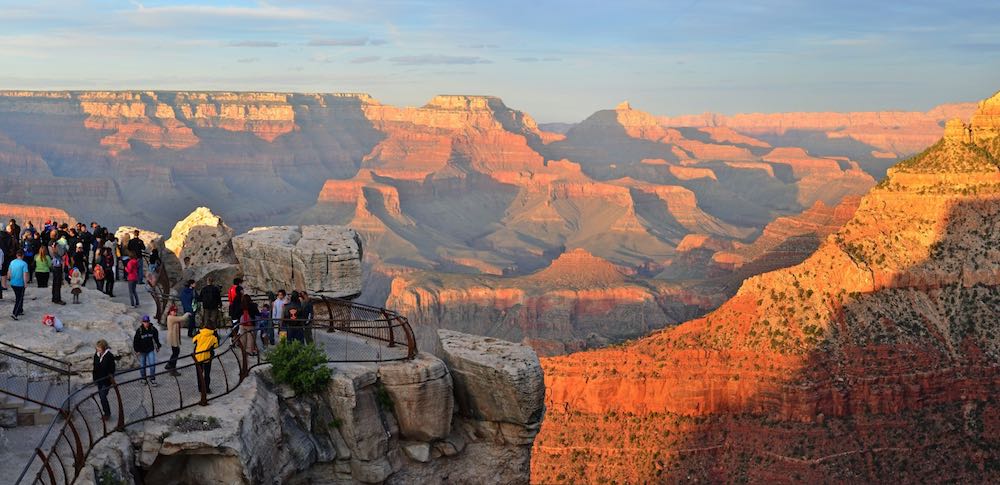
From next week, US veterans and the immediate family members of fallen service members will get to visit the nation’s most iconic wonders—its national parks, wildlife refuges, and other federal lands managed by the Department of the Interior—any time, for free.
National Park Service photo
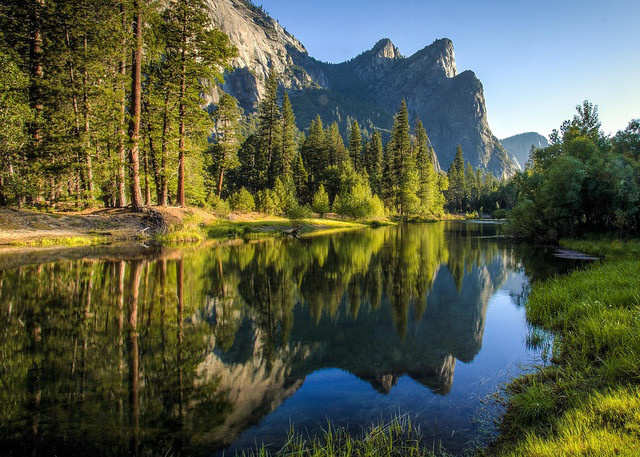
As of Veteran’s Day on November 11, Gold Star Families and anyone who’s worked in the US Armed Forces, including the National Guard and Reserves, can go to the Grand Canyon, Yellowstone, or Yosemite for no cost.
US Parks don’t only include natural wonders, but historical ones as well, like Abraham Lincoln’s Birthplace in Kentucky, the Civil War Appomattox Court House in Virginia, the Frederick Douglass home in DC, and forts and battlefields in dozens of states.
2,000 public locations spread out across more than 400 million acres of public lands, which host activities to fit any lifestyle, from serene to high octane, including hiking, fishing, paddling, biking, hunting, stargazing and climbing, will now be that bit more accessible to those who have served the country.
“Our veterans and Gold Star Families have made incredible sacrifices to defend our freedoms and our homeland. Ensuring that they are able to enjoy all of the wonders of the country that they’ve served is one small way of saying thank you,” said U.S. Senator Chuck Grassley in a statement from the Department of Interior.
Todd Wendy
The positive impacts of being out in nature are well known to scientists: Even a 20-minute walk in a natural place significantly lowers levels of the stress hormone cortisol.
“Exposure to outdoor recreation can provide a wide range of mental health benefits, and given our nation’s ongoing veteran suicide crisis, this is a welcome step forward using a whole of government approach to improve the lives of veterans,” explained Iraq and Afghanistan Veterans of America CEO Jeremy Butler.
As such, this new initiative from the Department of the Interior could make a positive difference to the lives of many thousands of people across the States.
PLANT this Good News With Those Who Could Benefit on Social Media…
Wayne Chen, Britton Ledingham for the Libin Cardiovascular Institute
Wayne Chen, Britton Ledingham for the Libin Cardiovascular Institute
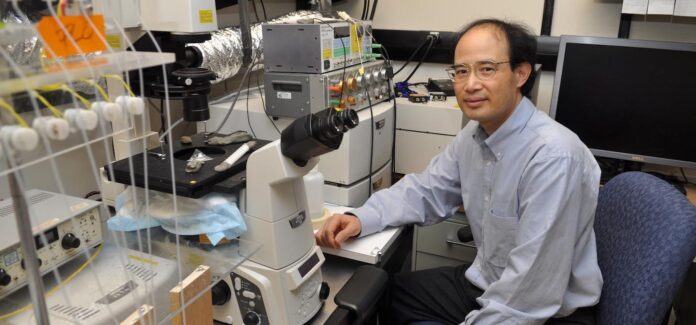
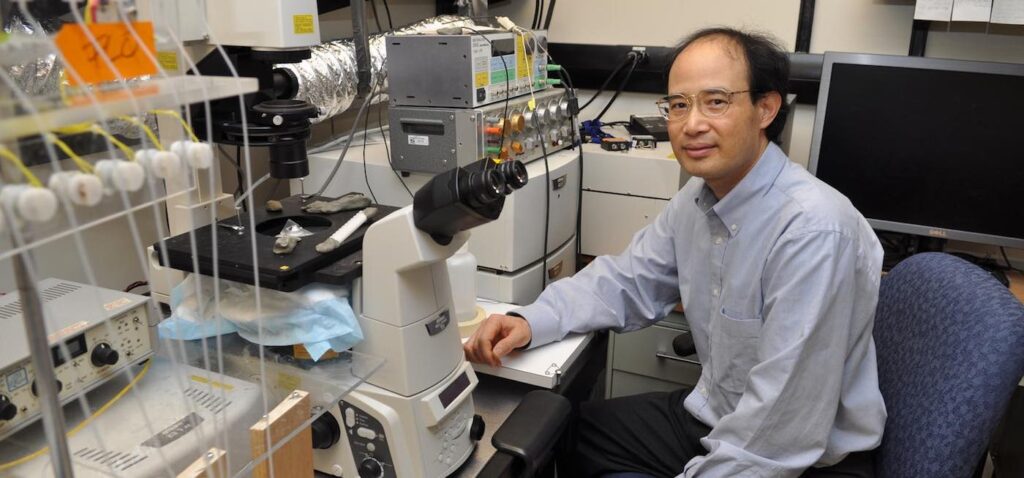
A research team at the University of Calgary has made an exciting breakthrough with the potential to prevent and reverse the effects of Alzheimer’s disease.
The team, led by Dr. Wayne Chen, discovered that limiting the open time of a channel called the ryanodine receptor, which acts like a gateway to cells located in the heart and brain, reverses and prevents progression of Alzheimer’s disease in animal models. They also identified a drug that interrupts the disease process.
The effect of giving the drug to animal models was remarkable: After one month of treatment, the memory loss and cognitive impairments in these models disappeared.
“The significance of identifying a clinically used drug that acts on a defined target to provide anti-Alzheimer’s disease benefits can’t be overstated,” said Chen.
The results of this groundbreaking study were recently published in the peer-reviewed journal Cell Reports.
This work is potentially highly impactful as millions around the world live with Alzheimer’s disease and other dementias, suffering memory loss and other cognitive impairments with a negative impact on quality of life.
The science behind the findings
Previous research has shown that the progression of Alzheimer’s disease is driven by a vicious cycle of the protein amyloid β (Aβ) inducing hyperactivity at the neuron level. However, the mechanism behind this wasn’t fully understood nor were there effective treatments to stop the cycle.
Chen’s team used a portion of an existing drug used for heart patients, carvedilol, to treat mice models with Alzheimer’s symptoms. After a month of treatment, researchers tested animal models with very promising results.
“We treated them for a month and the effect was quite amazing,” says Chen, explaining the drug was successful in reversing major symptoms of Alzheimer’s disease. “We couldn’t tell the drug-treated disease models and the healthy models apart.”
Chen, a Clarivate Highly Cited Researcher, is optimistic about the future of this research, however, there are many steps to be taken before this finding would lead to a clinical trial.
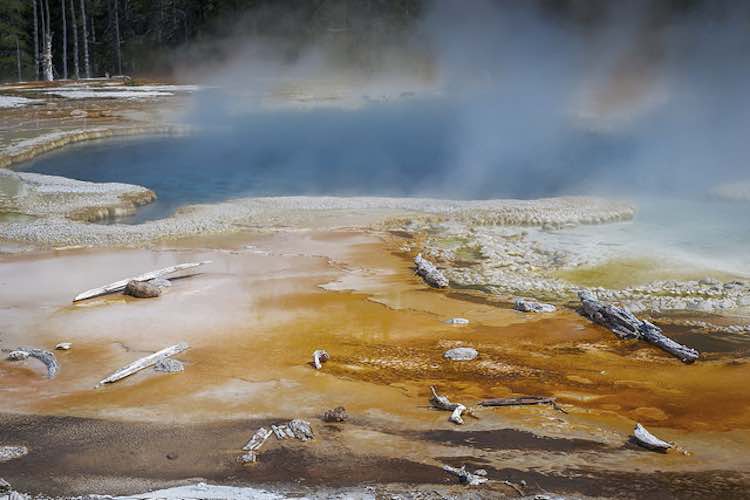
A rather innocuous observation of the small cyanobacteria living in the hot springs and boiling pools of Yellowstone National Park by a scientist in 1966 would lead to the discovery of a molecule that now 54 years later is being used to fuel the testing process for the viral RNA of a virus responsible for a civilization-altering pandemic.
Ken Lane
As Jeff Goldblum’s character said in Jurassic Park, “Life, uh, finds a way.” Outside the realm of Hollywood, it was these mats of squishy cyanobacteria found in pools of water which can reach a boiling point that created a revolution in science—proving that life could indeed survive in conditions which used to be considered untenable even for bacteria.
“What use could there be in looking for living bacteria in hot springs and boiling pools at Yellowstone National Park?” the scientist Thomas Brock said in his acceptance speech for an honorary degree from the University of Wisconsin-Madison.
Well, along with creating the trigger for the founding of another dimension of life sciences, it led to another foundational discovery—a heat-resistant enzyme called DNA-polymerase, which to this day allows scientists to accurately test for COVID-19 by replicating DNA at will.
Life finds a way
In the 1980s, American biochemist Kary Mullis discovered it was possible to mimic the way DNA copies itself, and that if he marked regions of the organism with “primers,” small segments of DNA, and then applied DNA-polymerase, the enzyme would turn the primers into whatever Mullis wanted to copy.
To do this, according to National Geographic, the sample needed to undergo a circular heating and cooling process that damaged the DNA-polymerase. It could still work, but it was slow, arduous, and, like continually heating a piece of meat, it caused breakdowns in the proteins that would eventually end the process altogether.
However, Mullis realized that thermus aquaticus—the species of cyanobacteria discovered by Mr. Brock in Mushroom Springs, Yellowstone—spent all its time in water that averaged 191 degrees Fahrenheit, and that the DNA-polymerase from its cells might be resistant to the heat needed to activate the replicating process.
Sure enough, his hunch was right, and it’s that process, made from the enzyme found inside thermus aquaticus, that is being used to test individuals positively or negatively for COVID-19.
After the viral-RNA of the SARS-CoV-2 is converted to DNA, the replicating method of Mullis is applied to areas where the virus is detected, endlessly replicating the cells on a test sample until the presence of the virus is clear or not.
If you go to Yellowstone and read some of the placards surrounding the iconic bunches of geothermal features, you’ll notice that one explains the discovery of cyanobacteria and how it changed scientists’ understanding of the fundamental components of life. That discovery has been expanded by further investigations of microbes living on undersea thermal vents, which has put together a picture of what microbial life might need to survive on other planets.
But, in the meantime, the cyanobacteria behind the discoveries of Brock and Mullis are fueling the testing process that helps us humans to survive on Earth amid the COVID-19 pandemic.
SHARE This Fascinating News From Yellowstone With Pals…
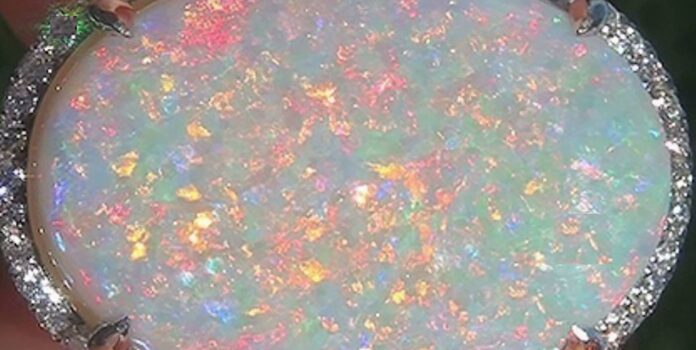
Quote of the Day: “As an opal changes its colors and its fire to match the nature of a day, so do I.” – John Steinbeck
Photo by: public domain
With a new inspirational quote every day, atop the perfect photo—collected and archived on our Quote of the Day page—why not bookmark GNN.org for a daily uplift?
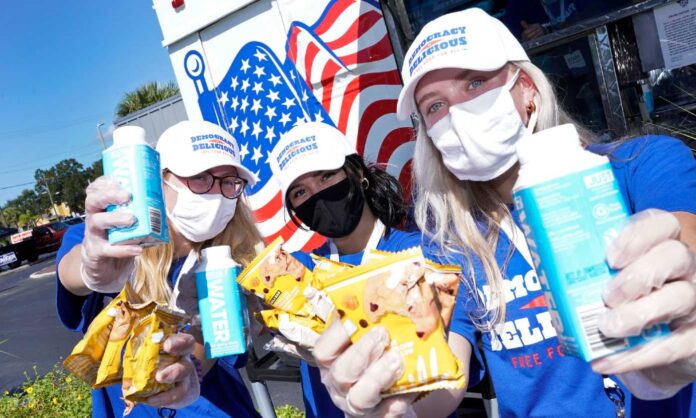
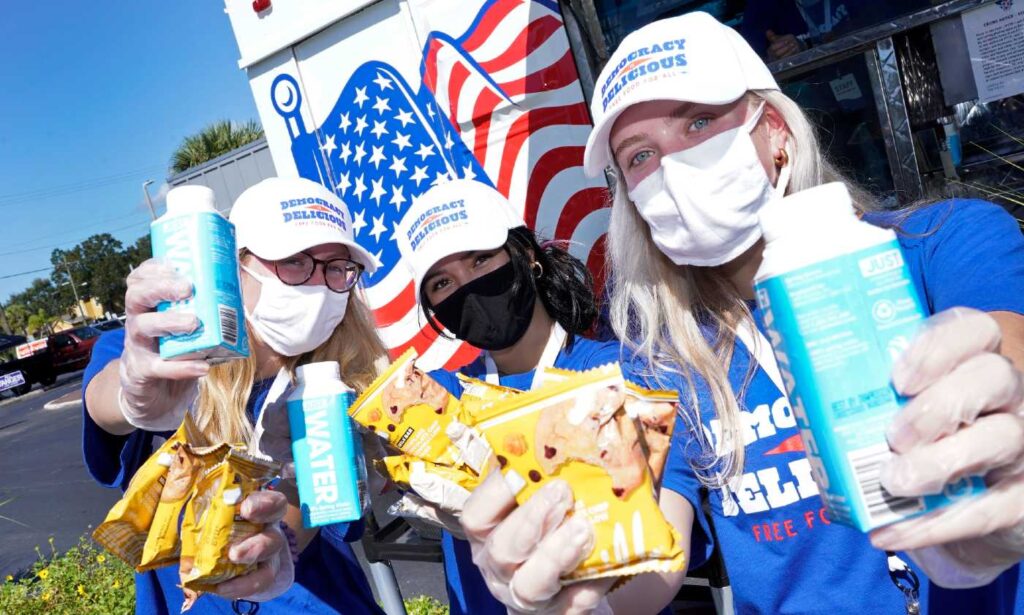
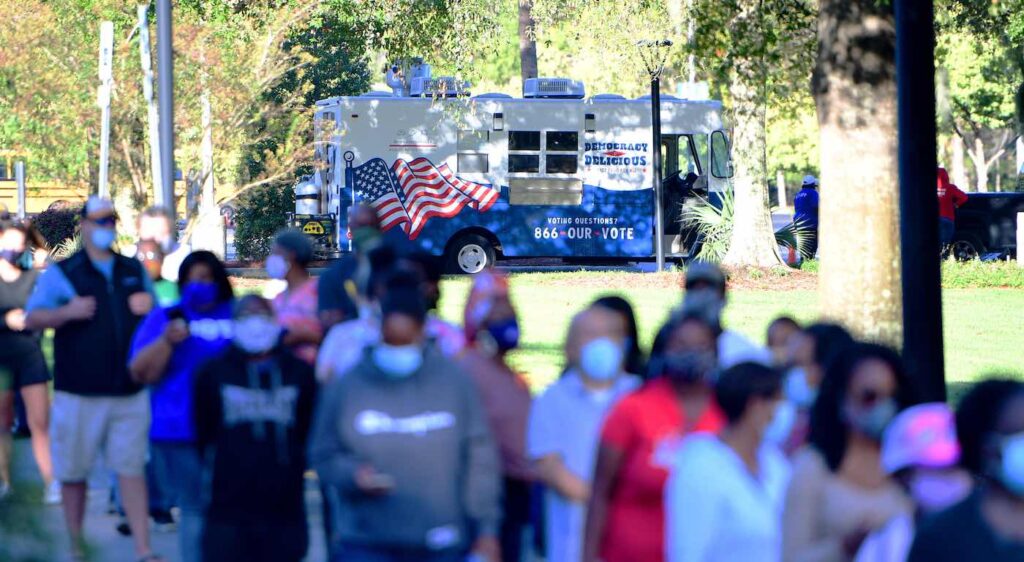
As polling lines snaked around city blocks and stretched through neighborhoods across the country in 2020, a volunteer-led non-profit delivered more than 1.3 million pizzas, burgers, empanadas, donuts, cookies, and other snacks to people at polling sites.
Associated Press for Pizza to the Polls
According to Pizza to the Polls, their mission is a simple one: to send snacks to crowded polling locations—and this year they delivered the free food in 48 states paid for by donations totaling a whopping $1.45 million from grassroots supporters eager to cheer up their fellow American voters.
With historic turnout for early voting and COVID-19 safety measures lengthening wait times, the organization delivered pizzas to more than 3,200 polling locations across the country and deployed 262 food trucks to 29 cities through their partnership with Uber Eats and others.
Voters, poll workers, and children accompanying their parents were able to enjoy treats paid for by donations raised from 28,418 donors, with an average donation of $49.23
The program generated some attention and received support from celebrities like Ariana Grande, Lady Gaga, Demi Lovato, and Tracee Ellis Ross.
“Food can be a major mood-shifter for people who have been waiting for hours to vote or who have been volunteering to ensure the process runs smoothly,” Pizza to the Polls co-founder Scott Duncombe said. “We’ve seen people get really excited about our deliveries—and some have even told us that it was the boost they needed to stay in line.”
Visionaries are often accused of being a little mad. Even by their wives. Such was the case of Laungi, a resident of India’s drought-blighted Gaya district in the eastern state of Bihar.
IndiaTV/YouTube
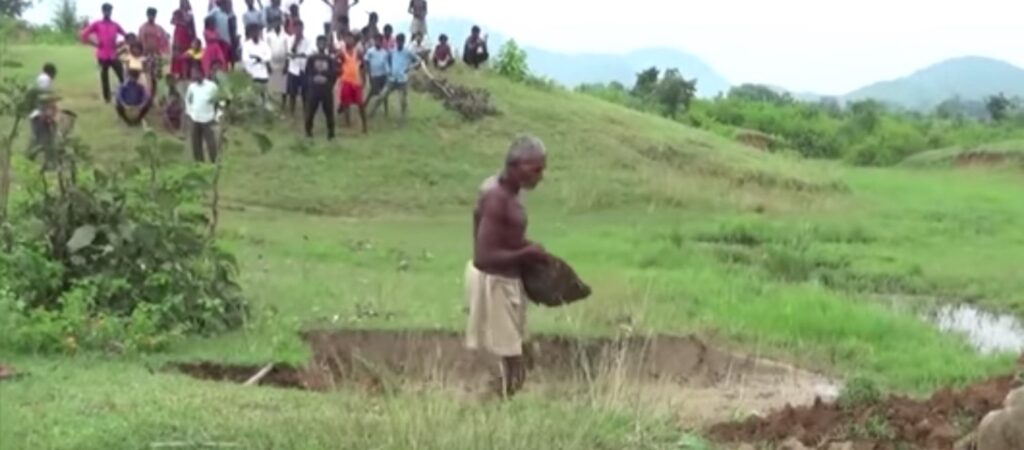
Loungi Bhuiya had become increasingly distraught as more and more farmers—including four of his own sons—left Kolithwa for greener pastures. Taking a leaf from Don Quixote, Bhuiyan was determined not only to dream an impossible dream but to make that dream come true by single-handedly bringing water to his village in hopes of transforming the barren land into arable acreage.
Inspired by the earlier exploits of “Mountain Man” Dashrath Manjh, who, with just a hammer and chisel, spent 22 years carving a road through the mountain near the village Gehlaur from 1960 to 1982, Bhuiya set out to dig an irrigation canal by hand to the closest water source in the Bangetha Hills.
“I had heard about him and I thought if he can do it, why can’t I?” Bhuiya told Al Jazeera. “They all thought I was mad.”
“He decided to dig a canal from a natural water source in Bagetha Sahwasi forest to the village,” Village leader Vishnupat Bhokta told the Tribune of India.
“The villagers took their cattle generally to that source for watering, which also provided sustenance to the animals living in the forest area. Loungi knew that the water source was enough to irrigate the agricultural land of the villagers. However, it was a great challenge to bring water into the village.”
Despite the teasing from his family and fellow villagers, the now 70-year-old Bhuiya toiled every day to make the four-foot-wide by three-foot-deep canal a reality. It took him nearly 30 years to accomplish his goal, but now everyone is benefitting from the fruits of his decades’ long labors.
Bhuiya, whose reputation as a neighborhood eccentric has since been transformed into local hero, was recently rewarded for his efforts with a brand-new Mahindra tractor, which will be used to expand the canal.
Of course, when Quixote creator Miguel de Cervantes wrote: “When life itself seems lunatic, who knows where madness lies? Perhaps to be too practical may be madness. To surrender dreams, this may be madness… Maddest of all is to see life as it is and not as it should be,” he wasn’t referring to Bhuiya—but he just as well might have been.
(WATCH the IndiaTV video of this man’s amazing feat below.)
MULTIPLY the Joy and Share This Story With Friends on Social Media..
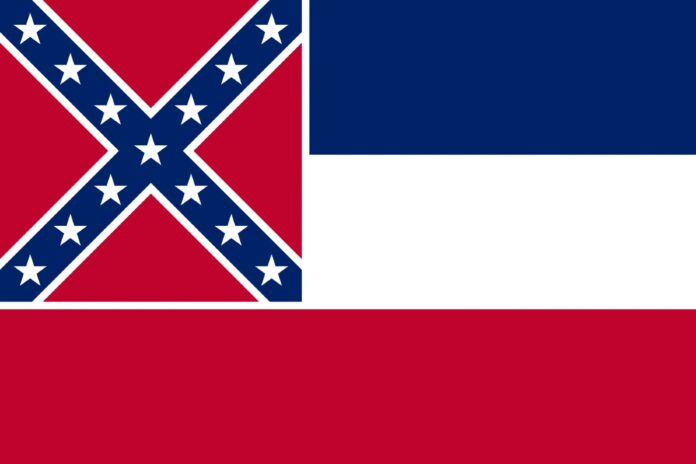
While the world waits to hear the main result of the U.S. election, here’s some good news from Mississippi.
Yesterday, residents of the Magnolia State were voting not just for their favored party. They were also asked to approve a new flag.
Local lawmakers vowed to replace their Confederate-themed state flag in late June. From there, more than 2,000 design ideas were submitted by Mississippians. The rules? The flag could not have Confederate imagery on it, and the words, “In God We Trust” should be featured.
The majority of Mississippians voted ‘yes’ to the gold, blue, and red design you can see below.
It features an emblem of the state flower that releases a sweet perfume every summer from the magnolia tree.
This will be the new state flag of Mississippi. Voters overwhelmingly approved it. This is a great day for the state as we move forward from a divisive emblem that now rests in the past. pic.twitter.com/nZorS0tVUd
From here, the Legislature will formally enact the design into law during the 2021 legislative session and the flag will be seen flying at public buildings around Mississippi shortly after that.
SHARE News of This Fab New Flag With Your Pals on Social Media…
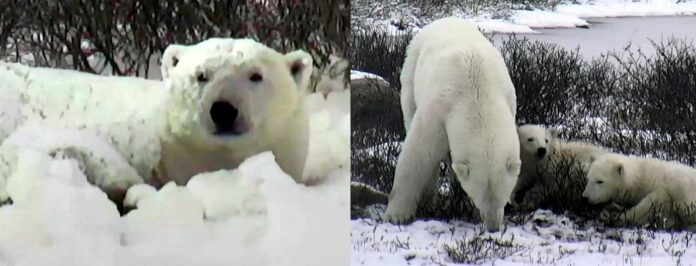
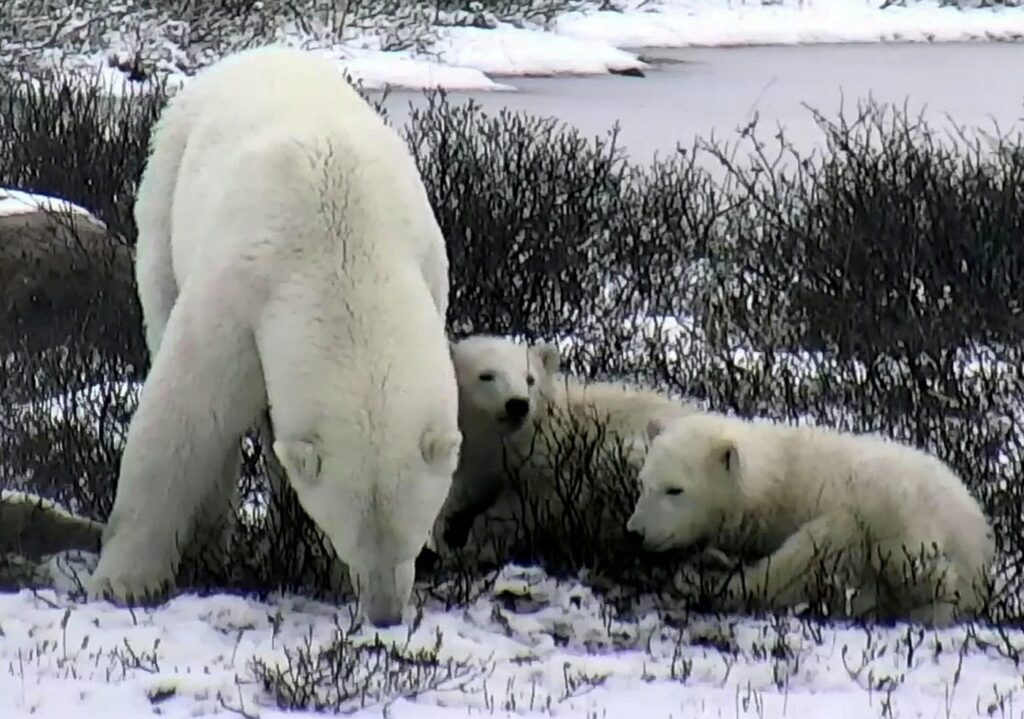
This live stream of polar bears in the wild has been created to help us all ‘zen out’ this winter.
The live cams show the bears’ migration in Canada and how they survive in the Arctic tundra with their cubs.
Lucky viewers may also get a front row seat to Arctic foxes, seasonal birds, and displays of the aurora borealis.
The project is a collaboration between the conservation nonprofit Polar Bears International (PBI) and Explore.org.
Every year, around now, hundreds of the iconic animals meet on the shores of Hudson Bay, near the town of Churchill, to wait for the ice that lets them head out to sea and seek out seals for sustenance through winter.
For this reason, Churchill is known as the Polar Bear Capital of the World.
The town even has its own ‘polar bear jail’ for naughty teen bears that have been causing trouble in the town. They’re released once the sea ice is thick enough for them to head out into the bay.
SWNS
The ice-free season is nearly a month longer than it was during the 1980s. But there’s hope. Krista Wright, Executive Director of PBI, said: “If we act swiftly and collectively to make a bold transition to renewable energy, and away from fossil fuels, we can preserve polar bears for future generations.”
“We hope Polar Bear Week encourages people to pause, appreciate, and listen to this species.
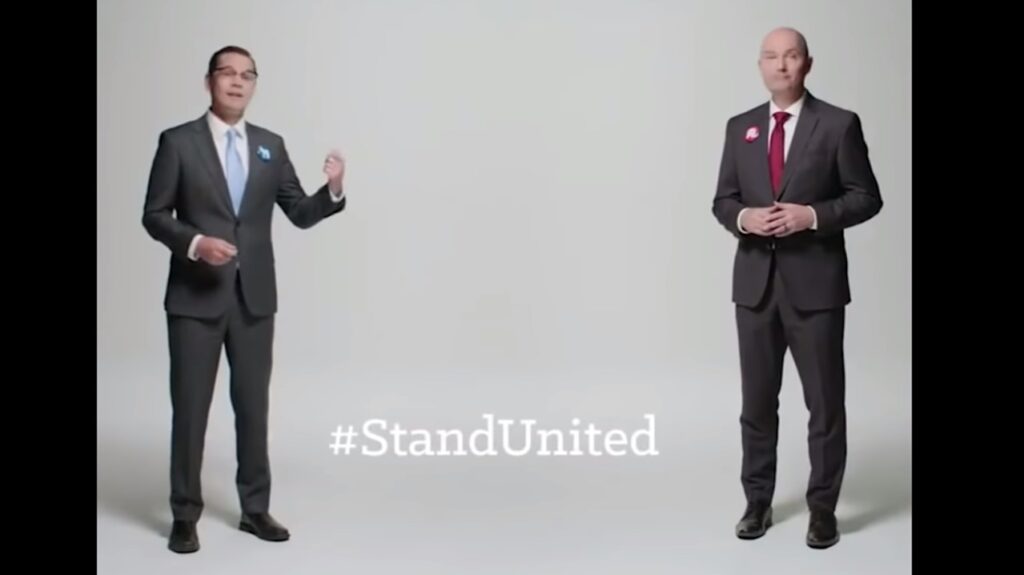
In the final days of campaigning to be Utah’s next governor, the Democrat and Republic candidates released a video. Together.
In the joint ad, Chris Peterson and Spencer Cox are joshing around. They’re enjoying each other’s company, there’s chemistry there. It’s completely refreshing.
The pair take turns saying these inspiring lines:
“We can disagree without hating each other / We can debate issues without degrading each other’s character / And win or lose in Utah, we work together / So let’s show the country there’s a better way. ‘We approve this message’.”
In less than one day, their simple, heartfelt ad was viewed by millions.
Democrat Chris Peterson spoke to Today about the video going viral: “It’s really restored my faith in the American people. People are hungering for decency, they’re tired of the divisiveness. And I’m certainly hopeful that this means there are better things to come in politics.”
“We’re both just trying to be good guys,” said Cox. “We’re just trying to focus on the issues, have a civil campaign, and let the public decide. That’s what our democracy is supposed to be about… and after [the election] we move forward together.”
(WATCH the viral video from Utah below.)
SHARE This Message of Civility and Respect With Others Who Are Hungering for Good News…
Since states began to lock down in March, citizen science programs like eBird, NestWatch, and SciStarter have seen dramatic increases in users giving conservationists a wealth of data to help make datasets that might be used to protect birds and insect species, like butterflies and dragonflies.
Jamie Street
While so many people are hanging around their homes, they need only to go outside to become a citizen scientist.
NestWatch and eBird capitalize on the enthusiasm of local birdwatchers to provide a lot of information to scientists about populations in regions where ornithology departments at universities don’t have funding to plan expeditions for.
These two apps experienced increases of 41% and 29%, respectively, in submissions this year compared to 2019.
COVID-19 has forced a lot of scientific expeditions to be postponed, and so naturalists are heavily relying on citizen scientists to keep track of insect and bird populations.
Less than an hour from the nation’s capital, a group called Occoquan Bay Meadowoods Surveys in Northern Virginia, which has delivered citizen surveys for 30 years, played a big part in the creation of the Occoquan Bay National Wildlife Refuge.
“You don’t know what’s there until you know it’s there,” says Jim Waggener, 84, who founded the survey group three decades ago. “That’s what repetitive surveys can do—peel away one layer after another of nature so you see just a bit deeper into what it’s all about.”
Waggener told National Geographic that due to the high number of seniors present in his field expeditions, social distancing and other COVID-19 measures make it a little bit more difficult to conduct different kinds of field work such as looking at flowers and insects in close proximity, which is especially relevant because the naturalist is seeing a significant increase in new faces joining him in the field.
Also speaking with National Geographic, one retired computer programer named Judy Gallagher reckons she spent 30 hours a month during the summer studying lesser-known butterflies in Northern Virginia survey areas.
“There are certain species, like monarchs, that are very carefully studied,” Gallagher says. “Most insects are not, and the more data we can give, the more likely it is we can come up with ways of mitigating species loss.”
This research is being used by scientists at nearby Georgetown University to create models for the potential risk of current or future human impacts on the feeding and breeding habits and habitat vulnerability of butterflies.
Insect species are often neglected in favor of research on more charismatic species like birds and mammals, so citizen science can help make up for biases in research fields within academia.
Buzz the Good News Over to the Nature Fans in Your Life…
Quote of the Day: “To lose patience is to lose the battle.” Mahatma Gandhi
Photo by: Anders Nielsen
With a new inspirational quote every day, atop the perfect photo—collected and archived on our Quote of the Day page—why not bookmark GNN.org for a daily uplift?
Sleeping an extra 29 minutes each night can be the key to improving mindfulness, a critical resource that has benefits for daily well-being and work performance.
Mindfulness is achieved by purposefully bringing an individual’s awareness and attention to experiences occurring in the present moment without forming an opinion.
Unlike previous studies, new research published in Sleep Health looked at how multiple dimensions of nightly sleep impact daily mindfulness, rather than just focusing on sleep quality or duration.
The study, led by the University of South Florida, found better sleep improves next-day mindfulness, which in turn, reduces sleepiness during the day.
The research focused on nurses, the largest group of healthcare professionals whose need for optimal sleep and mindful attention are particularly high.
Sleep problems are common in this population due to long shifts, lack of situational control, and close proximity to life-threatening health conditions. Their optimal sleep health and mindful attention are particularly important as they work the frontline of the COVID-19 pandemic.
“One can be awake and alert, but not necessarily mindful. Similarly, one can be tired or in low arousal but still can be mindful,” said lead author Soomi Lee, assistant professor of aging studies at USF. “Mindful attention is beyond being just being awake. It indicates attentional control and self-regulation that facilitates sensitivity and adaptive adjustment to environmental and internal cues, which are essential when providing mindful care to patients and effectively dealing with stressful situations.”
Lee and her colleagues from USF and Moffitt Cancer Center followed 61 nurses for two weeks and examined multiple characteristics of sleep health, They found that nurses’ mindful attention was greater than their usual after nights with greater sleep sufficiency, better sleep quality, lower efficiency, and longer sleep duration (an extra half-hour longer).
Daily mindful attention contributed to less same-day sleepiness. Those with greater mindful attention were also 66% less likely to experience symptoms of insomnia during the two-week study period.
Researchers come to these conclusions by using a variety of tools to measure how much participants were mindful each daily moment and how their mental states were impacted by sleep.
Participants were prompted to answer daily mindfulness and sleepiness questions three times a day for two weeks using the smartphone application, RealLife Exp.
Daily mindfulness was measured by the Mindful Attention Awareness Scale, which asked questions such as, “I was doing something automatically, without being aware of what I was doing,” and “I was finding it difficult to stay focused on what was happening.” Participants also wore an Actiwatch Spectrum device for the same two weeks that measured wrist movement activity to quantify sleep and wake patterns.
Findings from this study provide insight into developing a behavioral health intervention strategy for a broader array of people, especially healthcare workers who need better sleep and mindful attention. Given the association between mindful attention and better patient care, improving sleep in this population may provide important benefits to patient health outcomes as well.
(Source: University of Southern Florida)
Share This Post With Others Who Might Need Some Extra ZZZs…
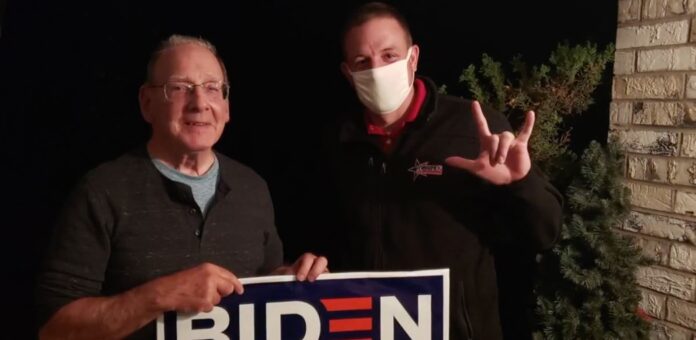
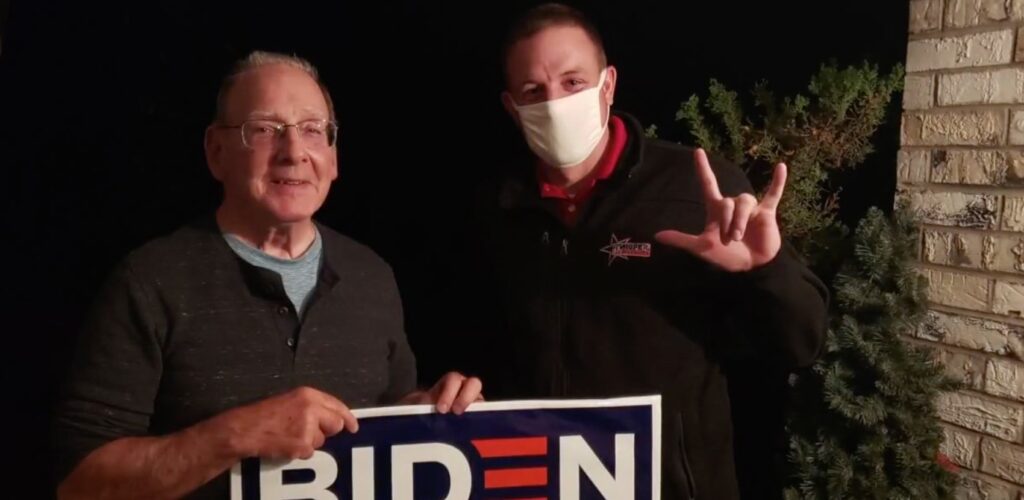
When a Biden supporter’s political sign was stolen from his yard in northern Wisconsin, a Trump fan reached out and replaced the sign for him.
Fox 6 News
In Washington County, a Republican stronghold, Tim is an anomaly as a Biden supporter. “You look around the neighborhood, I think there’s one other Biden sign,” Place explained to Fox.
Perhaps inevitably, his yard sign didn’t last very long.
A few days later, though, he received that unlikely gift from his Republican neighbor Josh Schoemann.
Josh lives a few doors down from Tim, and has his own sign–supporting the current president–on his lawn.
Seeing his neighbor’s sign had been stolen didn’t bring him any joy. Josh thought to himself, “’that’s just not right… Although we are Trump supporters, we love our neighbors and want them to be able to exercise their freedom of speech just like everybody else… I decided to take my son and go and replace their sign.”
When Josh brought the Biden sign over to Tim, it was the first time the pair had ever met.
Naturally, Tim was amazed by the kind gesture. He told Josh that he would do the same for him.
In more good news? That new replacement sign is still standing.
Whether a supporter of the blue or red team, maybe the rest of the country could take a cue from these two NFL Green Bay Packer fans and remember that we have more in common than we think.
(WATCH the Fox 6 video of this story below.)
Share The Neighborly News With Your Friends on Social Media…
Lost for 106 years, a species of chameleon was recently rediscovered by scientists working with Global Wildlife Conservation (GWC) as part of their “25 Most Wanted List” of missing species.
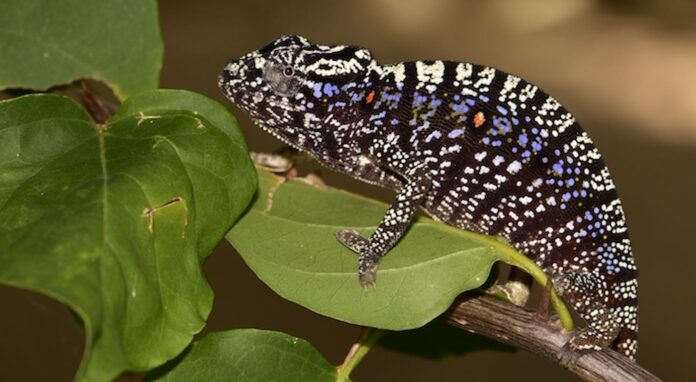
Female Voeltzkow’s chameleon, Kathrin Glaw
First discovered in 1893 and last seen in 1913, Voeltzkow’s chameleon was re-discovered in the Mahajanga region of northwest Madagascar, the most biodiverse area for chameleons on the island they call home. It was discovered by Frank Glaw and his team from the Department of Vertebrates at the Bavarian State Collection of Zoology.
Far from requiring to delve into dark, steamy jungles full of spines, barbs, bites, and venom, more than 15 Voeltzkow’s chameleons were found in the final two days of the expedition, lounging in an unkempt hotel garden in town.
“It was a special mixture of great pleasure, excitement and relief,” expedition leader Frank Glaw, told Mongabay in an email.
“Our efforts were entirely unsuccessful during most of the trip to find it where we thought it would most likely be. That was really frustrating, but the rediscovery during the last few days of the trip immediately changed everything and brought us an incredibly happy ending,” Glaw told GWC.
The expedition was always going to be a challenge, as the Voeltzkow’s closest chameleon relatives, Labord’s chameleons, live only 4-5 months over the winter, giving the team a very short window of opportunity to find the little fellows, especially since winter in Madagascar is the rainy season when many roads become unusable.
A colorful surprise
The team found three males and 15 females in total. 100 years ago, as Klaw’s corresponding paper details, the only specimens collected for study were males, significantly limiting the available information about the species.
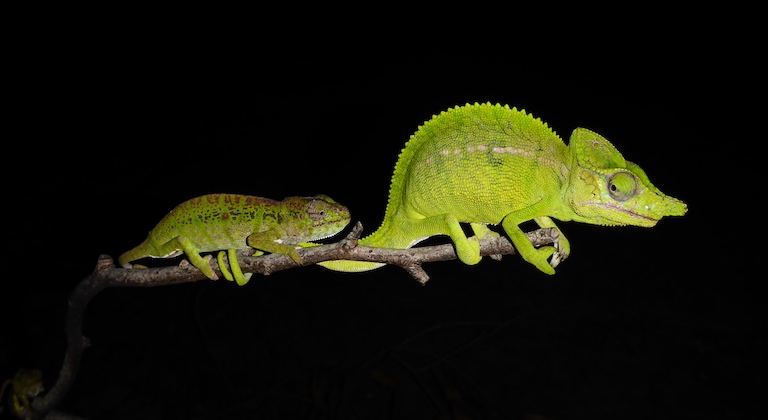
The documenting of Klaw et al. gives science the first description of a female Voeltzkow’s chameleon. Both sexes are green with a few white and black details when calm, but should they become stressed, angry, stimulated by human handling, or experience changes in hormones when mating, they can turn black and white and striped with a line of three red dots along their back, or flush indigo, with a grid pattern of white, indigo, and black stripes.
Male and female Voeltzkow’s chameleon, Frank Glaw
“The Voeltzkow’s chameleon adds color and beauty to the planet, and reminds us that even when all seems lost, a great adventure can rekindle hope even for species we haven’t seen since Woodrow Wilson was president,” said Don Church, GWC president and a Search for Lost Species program lead. “Now we have so much to learn about this extraordinary reptile, including how we can best save it from extinction.”
The International Union for the Conservation of Nature is the world authority on endangered species, and it is the opinion of the discoverers that the Voeltzkow’s chameleon should immediately be listed as endangered based on the IUCN criteria, though IUCN have not made an official evaluation on their Red List.
Conservation enthusiasts will be buoyed to hear that it appears that this chameleon does not require dry intact forests to survive as many chameleons do, and can potentially live in many different habitats.
Now with the Voeltzkow’s chameleon officially found, that means the 25 list is down to 19, with Jackson’s climbing salamander, Wallace’s giant bee, the velvet pitcher plant, silver-backed chevrotain, and Somali sengi having been rediscovered over the last three years—as detailed in our GNN article.
SHARE News Of This Fab Find With Your Friends On Social Media…
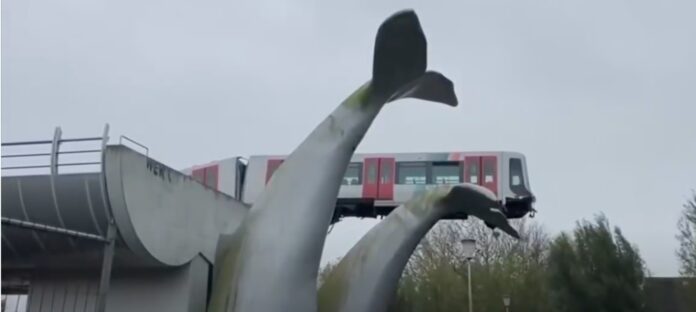
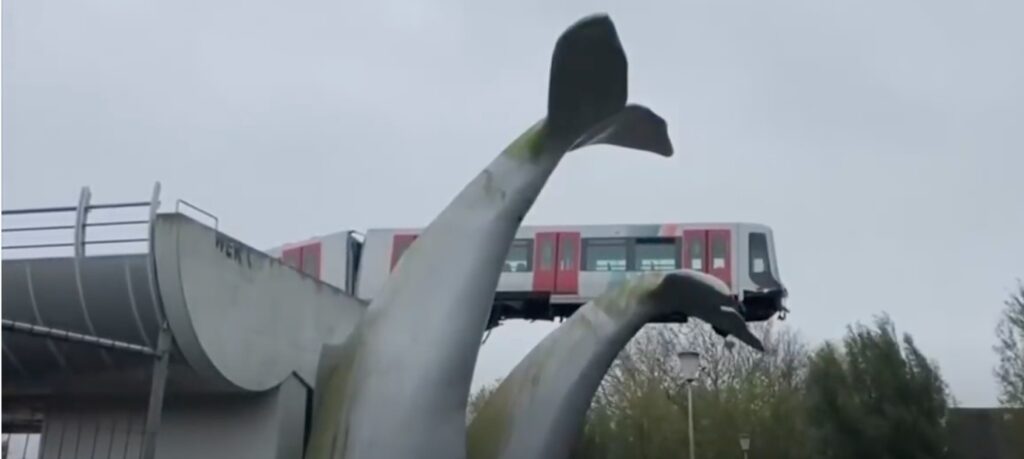
When the front carriage of a metro train near Rotterdam crashed through the safety barriers just before midnight on Sunday, the driver escaped injury thanks to a sculpture of a whale’s tail.
Bloomberg/YouTube
The train was held 32 feet in the air upon one of two tail fins, known (really) as “flukes.”
And, what is the name of the installation by Dutch artist and architect Maarten Struijs? We kid you not, it’s “Saved by the Whale’s Tail.”
The driver was able to leave the empty train by himself and was taken to hospital for a check-up, according to the BBC.
Twitter users have, naturally, found a new sense of ‘poipose’ as a result of this serendipitous tale from the Netherlands.
One commenter, Mike Twister, was even moved to poetry seeing this ‘fluke’ of nature.
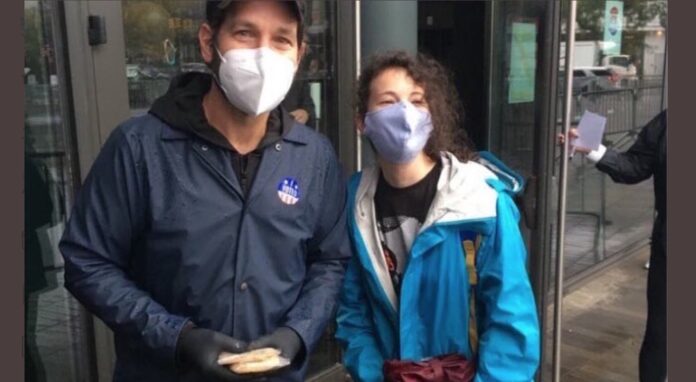
Paul Rudd is already beloved for his long list of Hollywood film roles—but now, his most recent good deed is winning hearts across Brooklyn as well.
Earlier this week, the movie star was filmed handing out individually-wrapped blueberry and cream cookies to New York City voters as they waited in the rain outside the Barclays Center to cast their ballots.
Not only did Rudd pass out cookies to people who were waiting in line to vote, he also gave cookies to people exiting the building as a thank you for exercising their civil liberties.
Brian Rosenworcel, who was just one of the lucky voters surprised by Rudd’s appearance, managed to post a quick video of the celebrity’s sweet treat giveaway to Twitter—and the clip has already been viewed thousands of times in a matter of days.
“I was standing in line and I thought Paul was just there to vote, but then he starts handing out cookies to people in line,” Brian Rosenworcel told CNN. “And he waited to greet people as they exited to say thanks for voting in the rain.”
paul rudd really spending his day giving cookies to voters in the rain, he really is the only man ever 😭 pic.twitter.com/OE0lj7n9n7
Quote of the Day: “If you don’t vote, you lose the right to complain.” – Unknown
Photo by: Element5 Digital
With a new inspirational quote every day, atop the perfect photo—collected and archived on our Quote of the Day page—why not bookmark GNN.org for a daily uplift?
Rescuing injured or abandoned animals is one of the most rewarding pursuits we can experience. As those who put themselves on the line to ensure the well-being of other creatures will tell you, the special bond they share with the animals they’ve helped is a natural high that soothes the human soul and heals the psyche like little else.
Safe in Austin
Now, one Texas animal sanctuary is taking this concept of “Who saved who?” even further.
Safe in Austin is the brainchild of Jamie Wallace-Griner. The project took shape as she observed the interaction between her autistic son and his service dog, Angel.
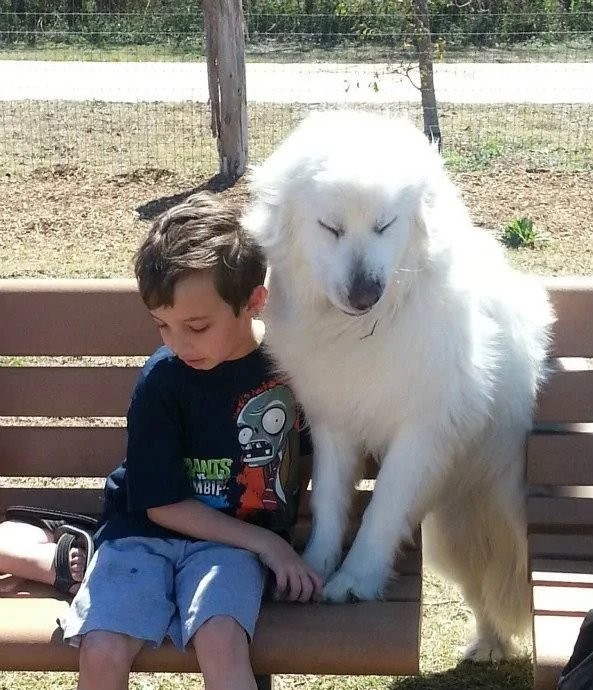
“We have always loved animals, but when Angel joined our family it became insanely clear how the love of an animal can be literally, miraculous!” she said. “Angel gave my son confidence and strength beyond anything I was capable of doing as his mother. She provided protection from his fears, understanding of his thoughts, and power over his disabilities.”
Knowing firsthand that one of the most difficult emotional challenges for children who are differently-abled or whose behavior or appearance sets them apart from their peers comes from the feeling that they don’t fit in, Wallace-Griner and her husband, David Griner, purchased an old ranch in Leander, Texas, with dreams of turning it into a judgment-free animal sanctuary and rehabilitation center.
But more than that, it would also offer a safe haven to kids with special needs, disabilities, mental health issues, or histories of past emotional trauma.
Safe in Austin
Wallace-Griner says Safe in Austin’s mission is “to rescue animals from severe abuse or neglect, rehabilitate and rehome the ones that are able, and offer a safe and loving forever home for the rest.
“Once they are healthy enough and we have earned their trust; we introduce our rescues to children that come from similar backgrounds of abuse, neglect, and/or special needs. Our animals provide healing to trauma, at-risk, and/or special needs children by way of unconditional friendship and a clear, loving, example of what they are looking for most… hope.”
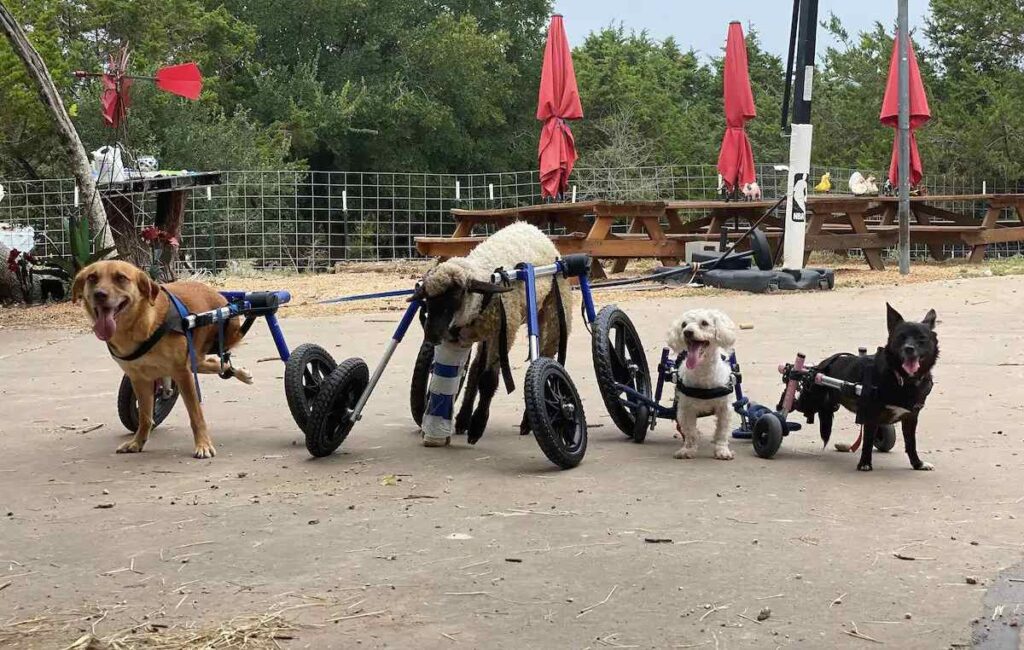
Over the years, as the ranch has been rehabbed, the population has grown to include chickens, pigs, and goats, many of whom have special needs.
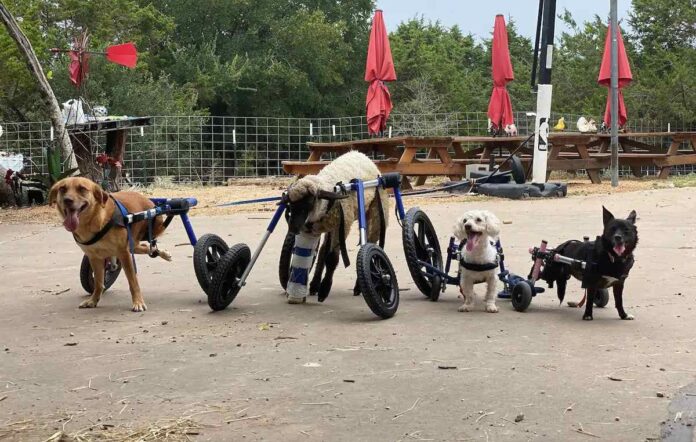
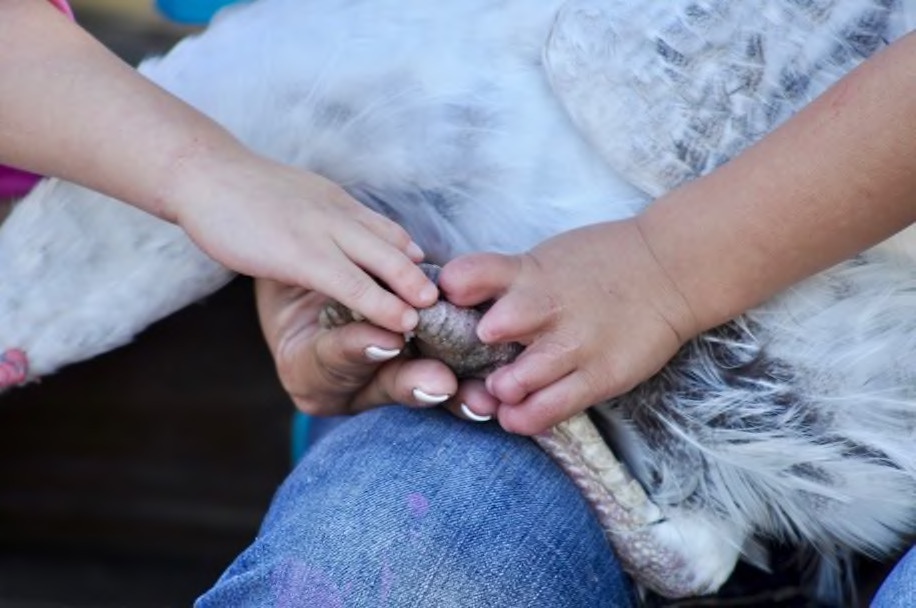
“We have animals that are blind or deaf, have diabetes, cerebral palsy, deformities, missing limbs, broken spines … they all become part of our family,” Wallace-Griner told The Washington Post.
The current menagerie numbers 20 dogs, 14 cats, eight horses, 32 goats, four rabbits, three tortoises, one parrot, four turkeys, numerous chickens, 18 pigs, and four cows.
Peter, a 250-pound potbellied pig is a crowd-pleasing favorite with visitors, as is Ruby Sue, a paralyzed calf who perambulates pretty handily thanks to her own specially-built wheelchair.
As with their furry and feathered friends, humans of all shapes, sizes, and descriptions are welcome at the sanctuary. “We don’t care about the choices you made in the past, what you look like, who you love, or what you eat. We concentrate on no judgment at all,” Wallace-Griner said.
Safe in Austin
Prior to COVID-19, Safe in Austin was open to members of the public who toured the sanctuary led by volunteer guides. The pandemic meant enacting safety restrictions, which limited the number of guests that could be safely accommodated. The sanctuary has since made the switch to pre-arranged private family and small-group tours.
Even so, Wallace-Griner strives to ensure that anyone in need will still be made welcome. She fields emails from potential visitors, and after delving into the specific issues they’re dealing with, she invites them out for a “healing hearts tour” to meet and interact with those animals she feels will best meet the needs of their given situations.
Having to adapt to change and challenge is all part of the process and Wallace-Griner remains positive. She sees Safe in Austin as a work in progress, never losing sight of the sanctuary’s ultimate goals of healing, acceptance, and unconditional love.
“You never soar so high as when you stoop down to help a child or an animal,” she said. “Saving one animal with not change the world, but for that one animal, the world will change forever!”
PASS on the Positivity And Share This Story With Pals…