All News - Page 65 of 1689 - Good News Network
Home Blog Page 65

Kurdish Militant Group Agrees to Swap Guns for Ballots and End 40-year Insurgency with Turkey

PKK supporters demonstrate in London in 2003, credit CC 3.0. BY-SA Francis Tyers

A Kurdish militant group has officially agreed to disband and halt a 40-year insurgency.

Called the Kurdistan Workers’ Party, or the PKK, the decision came in early May following the organization’s 12th Party Congress, in which it was determined that the quest for Kurdish sovereignty could be accomplished politically, and that armed struggle was no longer necessary.

An agency close to the PKK claimed the group “believes that Kurdish political parties will assume their responsibilities to develop Kurdish democracy and ensure the formation of a democratic Kurdish nation.”

The conflict between the PKK and Turkey has been one of the world’s longest-running insurgencies, and has resulted in tens of thousands of casualties. It began as an attempt to create a nation for the stateless Kurdish people who currently make up around 20% of the Turkish population.

In February of this year, the imprisoned founder of the group, Abdullah Öcalan, released a statement from prison calling on the group to convene a conference and dissolve.

“I am making a call for the laying down of arms, and I take on the historical responsibility of this call,” Öcalan said.

Along with Öcalan, the Kurdish dominated political party DEM, the country’s third largest, played a significant role in achieving the disarmament. Tayip Temel, a deputy party leader, told Reuters that the decision would impact the lives of Kurds all over the Middle East, and would necessitate a “major shift” in the Turkish politics.

MORE GOOD MIDDLE-EAST NEWS: Brooklyn’s Yafa Café Supports Growers in War Torn Yemen – the Surprising Birthplace of the Coffee Bean

The president of the Kurdistan region in neighboring Iraq, Nechirvan Barzani, welcomed PKK’s move, saying the decision “demonstrates political maturity and paves the way for a dialogue that promotes coexistence and stability in Turkey and the region.”

Barzani added that it “lays the foundation for a lasting peace that would end decades of violence, pain and suffering,” saying the Iraqi Kurds are ready to support efforts to guarantee the success of “this historic opportunity,” a phrase Turkish President Recep Erdogan also used.

SHARE This Rare Progress Towards Peace In A Region Plagued With Conflict…

Infant With Incurable Disease is First to Successfully Receive Personalized Gene Therapy Treatment

KJ with his parents and siblings after first-of-its-kind personalized gene editing therapy –Credit: Children’s Hospital of Philadelphia

In a historic medical breakthrough, a child diagnosed with a rare genetic disorder has been successfully treated with a customized CRISPR gene editing therapy by a team at Children’s Hospital of Philadelphia and Penn Medicine.

The infant, KJ, was born with a rare metabolic disease known as severe carbamoyl phosphate synthetase deficiency (CPS1). After spending the first several months of his life in the hospital on a very restrictive diet, KJ received the first dose of his unique therapy in February when he was around six months old.

The treatment was safely administered, and he is now growing and thriving.

The case was detailed this week in a study published by The New England Journal of Medicine—a landmark finding that could provide a pathway for gene editing technology to be successfully adapted to treat individuals with rare diseases for whom no medical treatments are available.

“Years and years of progress in gene editing and collaboration between researchers and clinicians made this moment possible, and while KJ is just one patient, we hope he is the first of many to benefit from a methodology that can be scaled to fit an individual patient’s needs,” said Dr. Rebecca Ahrens-Nicklas, director of the Gene Therapy for Inherited Metabolic Disorders Frontier Program at the Hospital and an assistant professor of Pediatrics in the Perelman School of Medicine at the University of Pennsylvania.

CRISPR-based gene editing can precisely correct disease-causing variants in the human genome. Such tools are incredibly complex and nuanced, and up to this point, researchers have built them to target more common diseases that affect tens or hundreds of thousands of patients, such as the two diseases which are currently U.S. Food and Drug Administration approved therapies—first sickle cell disease and then beta thalassemia.

• First Patient to Receive Gene Therapy ‘Cure’ for Beta-Thalassemia Living Pain-Free
New Base Editing Gene Therapy Cures its First Patient: A Sickle-Cell Sufferer Now in the ‘Gym Every Day’

However, relatively few diseases benefit from a “one-size-fits-all” gene editing approach since so many disease-causing variants exist. Even as the field advances, many patients with rare genetic diseases – collectively impacting millions of patients worldwide – have been left behind.

Ahrens-Nicklas and Dr. Kiran Musunuru, a Professor for Translational Research in Penn’s Perelman School of Medicine, who are co-authors of the study, began collaborating to study the feasibility of creating customized gene editing therapies for individual patients in 2023, building upon many years of research into rare metabolic disorders. Both are members of the NIH funded Somatic Cell Genome Editing Consortium, which supports collaborative genome editing research.

The duo decided to focus on urea cycle disorders, which prevent the normal breakdown of proteins in the body, leading to ammonia buildup. Typically, our bodies know to convert the ammonia to urea and then excrete it through urination. However, a child with a urea cycle disorder lacks an enzyme in the liver needed to convert ammonia to urea. It then builds up to a toxic level, which can cause organ damage, particularly in the brain and the liver.

After years of preclinical research with similar disease-causing variants, Ahrens-Nicklas and Musunuru targeted KJ’s specific variant of CPS1, identified soon after his birth. Within six months, their team designed and manufactured a base editing therapy delivered via lipid nanoparticles to the liver in order to correct KJ’s faulty enzyme.

In late February, KJ received his first infusion of this experimental therapy and, since then, has received follow-up doses in March and April.

As of last month, KJ had experienced no serious side effects from the three doses. In the short time since treatment, he has tolerated increased dietary protein and needed less nitrogen scavenger medication. He also has been able to recover from certain typical childhood illnesses like rhinovirus without ammonia building up in his body.

AMAZING BREAKTHROUGH: Man Living with Tremors for 30 Years Is Cured by Ultrasound Beam Paid by Medicare: ‘It’s unbelievable!’

“While KJ will need to be monitored carefully for the rest of his life, our initial findings are quite promising,” said Ahrens-Nicklas in a hospital press release.

“We want each and every patient to have the potential to experience the same results we saw in this first patient, and we hope that other investigators will replicate this method for many rare diseases and give many patients a fair shot at living a healthy life,” Musunuru said.

“The promise of gene therapy that we’ve heard about for decades is coming to fruition, and it’s going to utterly transform the way we approach medicine.”

A Future for KJ

Typically, patients with CPS1 deficiency, like KJ, are treated with a liver transplant. However, for patients to receive a liver transplant, they need to be medically stable and old enough to handle such a major procedure. During that time, episodes of increased ammonia can put patients at risk for ongoing, lifelong neurologic damage or even prove fatal. Because of these threats to lifelong health, the researchers knew that finding new ways to treat patients who are too young and small to receive liver transplants would be life-changing for families whose children faced this disorder.

MORE BREAKTHROUGH NEWS: ‘Exciting’ New CAR T-cell Treatment for Lupus Could End the Need for Lifelong Medication

“We wanted to figure out how we were going to support him and how we were going to get him to the point where he can do all the things a normal kid should be able to do,” his mother, Nicole Muldoon, said. “We thought it was our responsibility to help our child, so when the doctors came to us with their idea, we put our trust in them in the hopes that it could help not just KJ but other families in our position.”

“We’re so excited to be able to finally be together at home, so that KJ can be with his siblings, and we can finally take a deep breath,” said his father, Kyle Muldoon.

SHARE THE LIFE-CHANGING BREAKTHROUGH With Families on Social Media…

The worst deprivation is “not to be able to give one’s gifts to those one loves most.” – May Sarton

Quote of the Day: The worst deprivation is “not to be able to give one’s gifts to those one loves most.” – May Sarton

Photo by: Joseph Pearson

With a new inspirational quote every day, atop the perfect photo—collected and archived on our Quote of the Day page—why not bookmark GNN.org for a daily uplift?

Good News in History, May 25

The Hands Across America event in Philadelphia - CC 3.0. SA, Buchoamerica

39 years ago today, the Hands Across America fundraising event was held, hoping to create a human chain across the entire country. Hosted over Memorial Day weekend, the hope was to raise tens of millions to fight hunger and homelessness, with volunteers encouraged to donate for a space in the chain. This seemingly fanciful goal was feasibly possible by the time the numbers of participants was counted. READ how close they came… (1986)

Diver Finds WWII Navy Ship’s Bell Missing on Shipwreck for 80 Years And Believed to be Lost (LOOK)

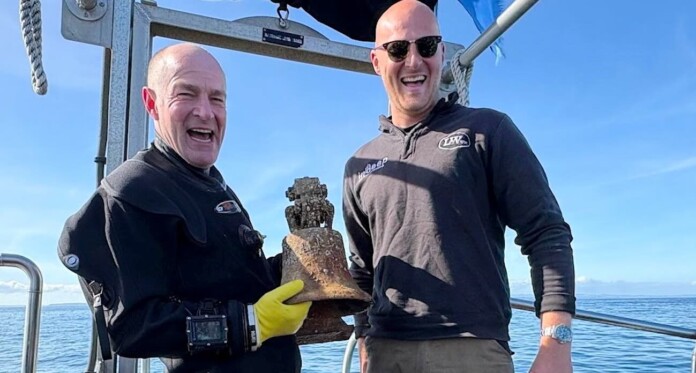
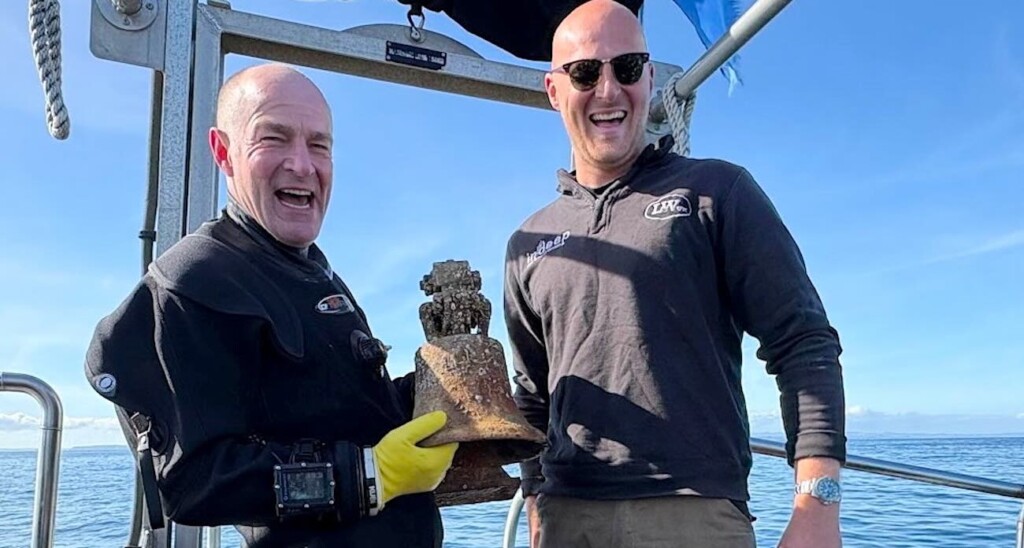
Diver Dom Robinson with ship bell found on WWII wreck HMCS Trentonian SWNS

A diver discovered the coveted ship’s bell from a WWII Canadian naval vessel after it was missing on the shipwreck for 80 years.

Dom Robinson, who has been diving and exploring shipwrecks for over 40 years, said people have spent 20 years searching for the bell on the HMCS Trentonian, which was sunk after being hit by a torpedo in 1945.

The existence of the bell became a bit of a “myth” because no one had seen it since it was first dived, so Robinson was ecstatic to find it on his third dive of the wreck in late April.

He spent several hours lugging it up from 69 meters below the surface of the sea, near Falmouth, in Cornwall, England.

“There was a myth that the bell was down there,” said the 53-year-old from Portsmouth, England. “The first diver saw it and left it there, for whatever reason, (but) since then no one could find it.

The experienced diver has found two other ship bells over the years, but couldn’t believe it when he discovered it.

Diver discovers ships bell – By Dom Robinson via SWNS

“The wreck is really broken after 80 years. It’s covered in fishing gear and doesn’t even look like a shipwreck.

“I think the reason people didn’t find it is because it’s buried under quite a bit of rusty plate and fishing net.

“I saw the rim of it and it caught my eye. I put my hand inside and knew instantly what it was—and I got super excited.”

Robinson brought the bell to the surface and declared it to a government official known as the Receiver of Wreck and contacted a Canadian historian who helped connect him with the Canadian Navy.

“You have to carry it up,” he told SWNS news agency. “It took a couple of hours.”

RELATED GOLD: Shipwreck Near Kenya May Be from Vasco da Gama’s Final Voyage and Would Be ‘Archaeological Stardust’

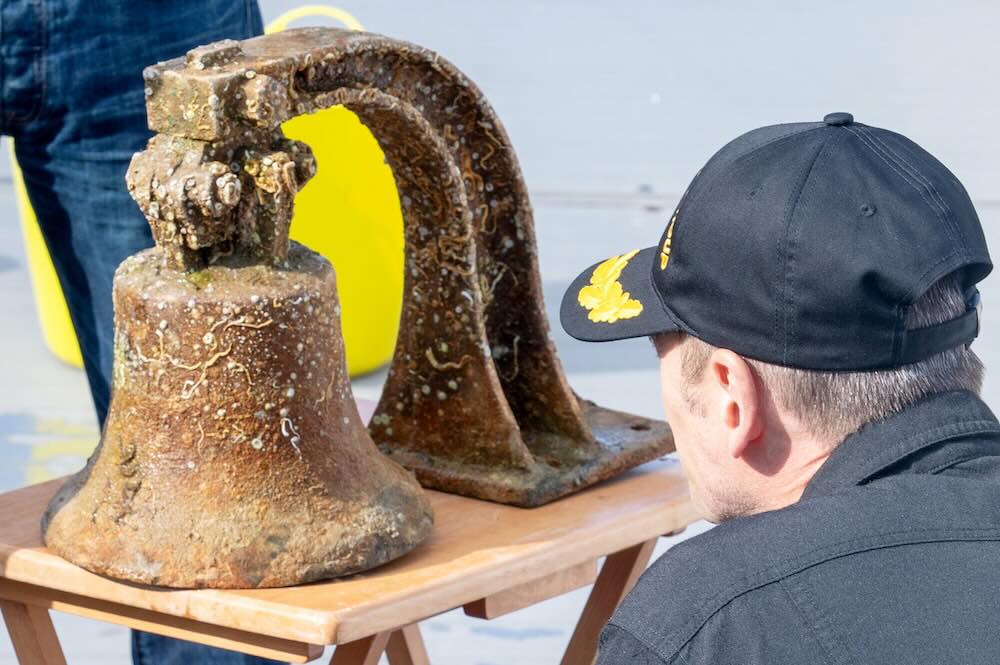
Ship bell found on WWII wreck, the Trentonian – SWNS

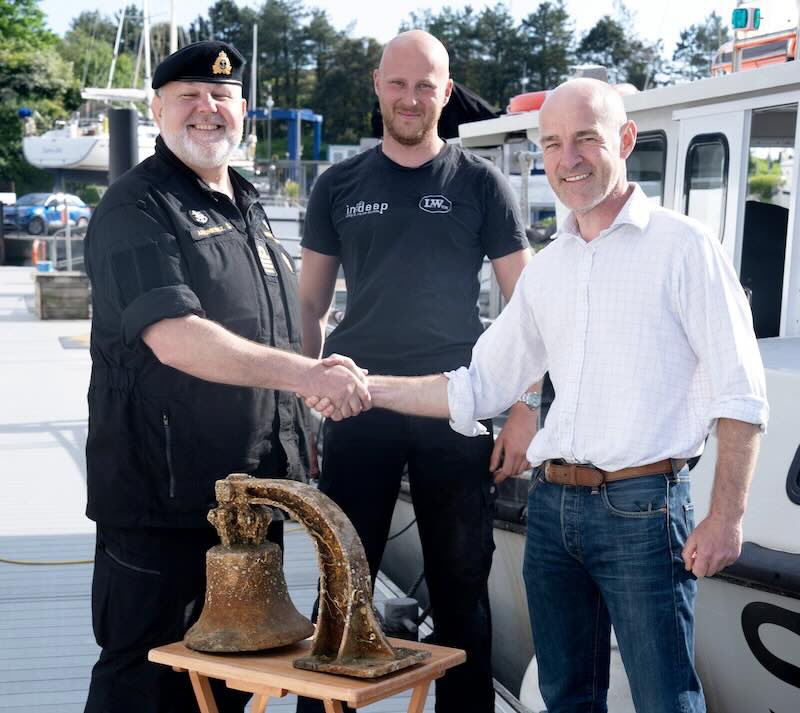
The bell was handed over to the Deputy Naval Attache from the Canadian Embassy on May 12 in Plymouth, and will be cleaned up to be displayed in a Navy museum in Canada. Dom can’t wait to see how the bell looks all cleaned up.

Diver hands over lost bell from HMCS Trentonian to the Canadian Navy – SWNS

“If you’re going to pick one part of the ship that is its heart or soul it would be the bell. You can imagine it was quite emotional.”

“They are beautiful things. It’s the single item that defines and makes it that ship.

CHECK OUT: Rare WWII Pigeon Parachute Used to Carry Messages to French Resistance Ahead of D-Day Found in Old Shoebox

“It’s now my favorite dive—and a highlight of my diving career.”

SHARE THE DISCOVERY With Divers on Social Media…

Grandmother Has Miracle Recovery From Brain Bleed After Doctors Said 5 Times She Wouldn’t Survive

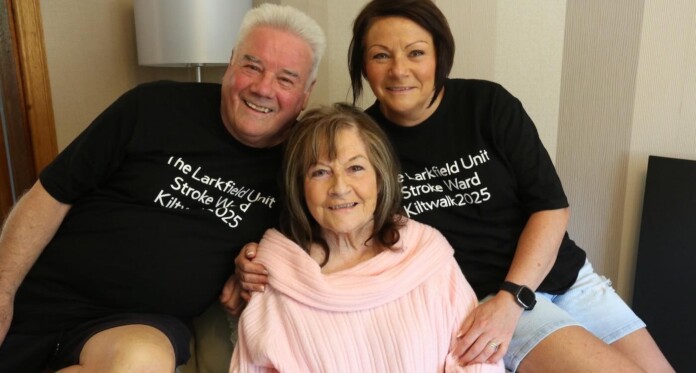
Thomas and Millie Beckett with daughter Corinne – SWNS

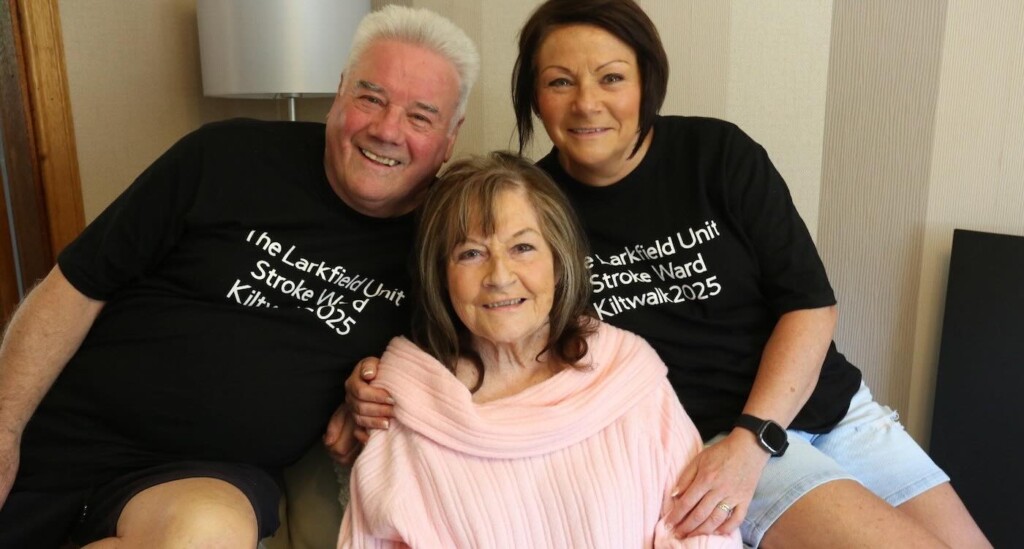
A grandmother who suffered a deadly brain bleed has made a miracle recovery—after doctors told the family five times that she wouldn’t survive.

Millie Beckett ended up in a coma for three weeks after the massive hemorrhage, but her devoted husband never left her bedside.

Millie’s daughter, Corinne, said the family was utterly ‘devastated’ when the medical team at Inverclyde Royal Hospital in Scotland warned that even if the 74-year-old lived, she would be left profoundly disabled and need round-the-clock care.

But Millie was back on her feet within weeks—and five months later, she has made an almost complete recovery.

“Mum was in the hospital for eight weeks,” said daughter Corrine. “Honestly, every time I look at her, I could cry. We thought she was gone.”

“We were absolutely devastated when we were told that it was bad news, and she wasn’t going to make it.”

Millie, who lives in Inverkip, Scotland, had only retired in 2023 after a career working in social care.

“We are such a close knit family,” her daughter told SWNS news agency. “We do everything together. My mum and dad are our best friends.”

MORE GOOD NEWS: Man Labeled ‘Brain Dead’ May Be First to Recover from Extreme Locked-in Syndrome

Looking back on what happened, husband Thomas, who ran his own fabrication company before retiring, said they noticed on November 30 that Millie had become really confused and disorientated and was mixing up her words.

They rushed her to the hospital where brain scans were taken. The family was then told that Millie had suffered a massive intra-cerebral brain bleed, which is a type of stroke.

“They basically told us there was nothing that they could do for her,” Corinne recalled “The bleed was too big to operate.

“They found a room for her in the stroke unit. They also gave us a room. We couldn’t bear it if she was to pass away and there was no-one by her side. She was unresponsive and in a coma, but dad never left her side.”

As the days passed the prognosis did not change; Millie remained paralyzed with no speech. “Five times we were told that mum wouldn’t survive, and that if they took her off the machine she would slip away,” she recalled.

After three weeks, though, Millie began to respond to treatment, and with the help of staff at the stroke unit, her recovery progressed to the point where, eight weeks after the hemorrhage, she was able to walk right out of the unit.

CHECK OUT: When Dying Boy’s Life Support Was Turned off He Began Improving–and Went Home with Parents

“They offered me a wheel chair but I didn’t need it,” said Millie. “It has been much harder for my family than me. I have no memory of it at all.”

Miracle Millie is now looking forward to her summer holiday in Spain with Thomas—to whom she has been married for 57 years—and enjoying their retirement.

“I just want to make the most of every day. When I see the nurses in the town, they say to me, ‘There’s our Christmas miracle.’”

ALSO INSPIRING: A Mom’s Love Helps Woman Wake From Coma After Five Years

The family are forever grateful for the team at the IRH stroke unit. Daughter Corinne said: “They were incredible with my mum and with us. They couldn’t do enough for us.

“We want to give something back, to help other patients.” So the family is now aiming to raise thousands for the stroke unit as a gesture of thanks and to help other patients.

SHARE THE ENCOURAGING RECOVERY On Social Media…

Rare Bird Moment as Photographer Witnesses Mistle Thrush Feeding Orphaned Blackbird as Her Own

Mistle thrush feeds orphaned blackbird juvenile Credit: Andrew Fusek-Peters via SWNS

Birds of a feather usually flock together, but a lucky blackbird was ‘adopted’ by a mistle thrush mama who took the juvenile ‘under her wing’ in a rare case of inter-species feeding.

Photographer Andrew Fusek-Peters captured the rare phenomenon in adorable close-up photos that show the female adult thrush diligently feeding her own chicks before offering a worm to a baby blackbird.

Andrew watched as the fluffy fledgling ruffled its feathers, waiting its turn before gobbling down the worm from the thrush’s beak.

“It’s such a rare thing to see, let alone photograph,” said the 59-year-old who shot the photos in a field in North Shropshire, England, earlier this month.

“It is known to happen but it almost never photographed—and I’ve not known of a mistle thrush and a blackbird doing this before.”

He believed it was likely the blackbird chick was abandoned by its mother or its mother died leaving it an orphan.

“When the chick opens its mouth, it triggers a maternal response in nearby female birds,” he told SWNS news agency.

Female Mistle thrush with worm Credit- Andrew Fusek-Peters via SWNS

“The blackbird was sitting with its beak open, and the mistle thrush was close by.

“It fed its own chick first and then the blackbird.”

LOOK: The Old Man and the Stork: An Unlikely Friendship That Captivated a Nation

He searched the internet but couldn’t find an example of this situation ever having been captured on camera before.

“I thought it was a very dark thrush baby at first, then I realized it’s actually a blackbird.

“I was only five yards away. I could get quite close because they aren’t bothered by humans.

“The chicks are only a few weeks old.

SOOO CUTE! Rescued Crow Is Boy’s Best Friend, Waiting for Him to Get Home from School Every Day: ‘We’re his flock’

“When fledglings leave the nest the parents will keep feeding them,” he explained.

“I can’t get over how unbelievably rare this is to capture. It was such a special moment.”

FEED THIS SPECIAL STORY to Bird Lovers On Social Media…

Your Weekly Horoscope – ‘Free Will Astrology’ by Rob Brezsny

Our partner Rob Brezsny, who has a new book out, Astrology Is Real: Revelations from My Life as an Oracle, provides his weekly wisdom to enlighten our thinking and motivate our mood. Rob’s Free Will Astrology, is a syndicated weekly column appearing in over a hundred publications. He is also the author of Pronoia Is the Antidote for Paranoia: How All of Creation Is Conspiring To Shower You with Blessings. (A free preview of the book is available here.)

Here is your weekly horoscope…

FREE WILL ASTROLOGY – Week of May 24, 2025
Copyright by Rob Brezsny, FreeWillAstrology.com

GEMINI (May 21-June 20):
Gemini writer Raymond Carver (1938–1988) established a reputation as a master of terse minimalism. One critic noted that he practiced the “Theory of Omission”—an approach to writing fiction that mandates the elimination of superfluous narrative elements. But it turns out that Carver’s editor Gordon Lish had a major role in all this. He deleted half of Carver’s original words and changed the endings of half his stories. Years after his death, Carver’s widow, Tess Gallagher, published the original versions, with the omitted material reinstated. I believe the coming weeks will be an excellent time for you to make comparable restorations, Gemini. In every way you can imagine, tell the full story, provide the complete rendition, and offer elements that have been missing.

CANCER (June 21-July 22):
Even if you don’t regard yourself as a psychic or prophet, I suspect you now have an uncanny knack for deciphering future trends. Your intuition is operating at peak levels, especially when you focus it on the big picture of your long-term destiny. As long as you’re not overconfident about this temporary bloom of expansive vision, you can trust your ability to see the deep patterns running through your life story. To make the most of this gift, take a loving inventory of where you have been and where you are going. Then devote relaxed meditations to adjusting your master plan.

LEO (July 23-Aug. 22):
River deltas form where rivers meet the sea, creating fertile and complex ecosystems that nourish abundant life. Some of my favorites are the Rhône River Delta in France, the Po River Delta in Italy, and the Shinano River Delta in Japan. In the coming weeks, Leo, I will visualize you as the metaphorical equivalent of a river delta. I’ll call you the Leo Delta, trusting you will be inspired to celebrate and cultivate the rich intersections that characterize your life—areas where an array of ideas, paths, and relationships converge. Be open to synergizing different aspects of your world: integrating emotions and logic, connecting with diverse people, blending personal and professional goals.

VIRGO (Aug. 23-Sept. 22):
Your natural inclination is to solve problems through detailed planning and careful analysis. On occasion, that process dead-ends in overthinking, though it often works pretty well. In accordance with current astrological omens, however, I suggest an alternative approach for you in the coming weeks. Instead of trying to figure everything out, how about if you simply create a relaxed spaciousness for new things to emerge? Experiment with the hypothesis that progress will come not from doing more, but from allowing more.

LIBRA (Sept. 23-Oct. 22):
As they climb, mountaineers carefully assess every handhold and foothold. Unfailing concentration is key. I recommend adopting their attitude in the coming weeks, Libra. You are entering a phase when ascension and expansion will be among your main assignments. The best approach to your adventures is to make steady progress with precision and thoughtfulness. Rushing rashly ahead or taking needless risks could be counterproductive, so be scrupulous about planning and preparation. Trust that the most efficient path to the summit will be via small, deliberate steps. Your winning combination will be ambition leavened with caution.

SCORPIO (Oct. 23-Nov. 21):
At age 42, Scorpio painter Georgia O’Keeffe left her busy New York art career and traveled to New Mexico for the first time. The landscape’s beauty overwhelmed her. She wandered around the desert for three months, creating no art at all. A few critics accused her of wasting time. She rejected their ignorant misunderstanding of her process, replying, “To see takes time. I had to learn the country first before it would let me paint it.” Her most iconic paintings emerged after this phase of pure observation. I’m recommending a similar period for you, dear Scorpio. While your instincts may tempt you toward a flurry of activity, I believe now is a time to wait and see; to pause and ponder; to muse and meditate.

SAGITTARIUS (Nov. 22-Dec. 21):
By the 20th century, the 483-mile-long Seine River in France was so polluted that most of its fish were gone. But clean-up efforts have been successful. Now there are 32 fish species, including the Atlantic salmon. The Seine is also very close to being completely safe for humans to swim. I would love it if you were inspired by this success story to undertake a comparable project in your own life, Sagittarius. What would you most like to see revived and restored? Now is a good time to begin the effort.

CAPRICORN (Dec. 22-Jan. 19):
Until she reached her 70s, Capricorn visual artist Louise Bourgeois was a peripheral figure in the art world, modestly respected but not acclaimed. Then New York’s Museum of Modern Art presented her work in a major show. In response, the New York Times reviewed her work, saying it was “charged with tenderness and violence, acceptance and defiance, ambivalence and conviction.” I bring this to your attention, Capricorn, because I suspect the coming months will also bring you recognition for labors of love you’ve been devoted to for a while—maybe not in the form of fame, but through an elevated appreciation by those whose opinion matters to you.

AQUARIUS (Jan. 20-Feb. 18):
The name of the old Talking Heads album is Stop Making Sense. One of its many implications is that we periodically derive benefit and relief from being free of the pressure to sound reasonable and be consistent. According to my detailed, logical, in-depth analysis of your astrological omens, now is a perfect time to honor this counsel. I hope you will give yourself a sabbatical from being sensible, serious, and overly sane. Instead, please consider a sustained pursuit of pure pleasure, fun foolishness, and amazing amusement.

PISCES (Feb. 19-March 20):
Be on high alert for fleeting intuitions that flow through your awareness. Really good ideas may rise up only briefly and only once, and you should be ready to catch them in the ripe moment before they fade away. Do you hear my urgency? Pay special attention to passing thoughts or sudden insights. They may contain more value than initially apparent. I will even speculate that seemingly ephemeral inspirations could become foundational elements in your future success. Document your hunches, even if they seem premature.

ARIES (March 21-April 19):
I think you’re ready to establish new ways of nourishing and protecting what’s valuable to you. Your natural assertiveness will be useful in setting boundaries and securing resources. Your flourishing intuition will guide you to implement adjustments that safeguard your interests while remaining flexible enough to permit legitimate access. Be extra alert, Aries, for when you need to balance security with accessibility. Your best defenses will come from clever design, not brute force. Do what you need to feel secure without feeling trapped.

TAURUS (April 20-May 20):
In July 1971, 26-year-old Taurus poet Bernadette Mayer kept a scrupulous diary. Every day, she shot a roll of 35 mm film, wrote about the day’s events, and recorded herself reading her accounts. By August 1, she had accumulated 1,100 photos and six hours of readings. One of her goals in doing the project was to learn more about how her memory worked. What was worth remembering, and what wasn’t? She also hoped to gain an objective perspective about her routine rhythm. Years later, she acknowledged that though this was a narcissistic experiment, she had no shame about it. Inspired by Mayer, and in accordance with astrological omens, you might find it worthwhile to lovingly and thoroughly study the details of your daily life for a while. It’s an excellent time to get to know yourself better.

WANT MORE? Listen to Rob’s EXPANDED AUDIO HOROSCOPES, 4-5 minute meditations on the current state of your destiny — or subscribe to his unique daily text message service at: RealAstrology.com

(Zodiac images by Numerologysign.com, CC license)

SHARE The Wisdom With Friends Who Are Stars in Your Life on Social Media…

“Necessity dispenseth with decorum.” – Thomas Carlyle

By krakenimages

Quote of the Day: “Necessity dispenseth with decorum.” – Thomas Carlyle

Photo by: krakenimages

With a new inspirational quote every day, atop the perfect photo—collected and archived on our Quote of the Day page—why not bookmark GNN.org for a daily uplift?

By krakenimages

Good News in History, May 24

Online Collection of Brooklyn Museum - public domain

142 years ago today, the Brooklyn Bridge was opened by President President Chester A. Arthur and NY Governor Grover Cleveland. It was also the longest suspension bridge in the world when opened, with a main span of 1,595.5 feet (486.3 meters). The bridge uses a hybrid design combining elements of cable-stayed and suspension bridges, with both vertical and diagonal suspender cables. Its stone towers are neo-Gothic, with characteristic pointed arches. READ about its construction history… (1883)

Nurse Swaps Medicine for Mangos After Epiphany: Patients Were Malnourished While Fruit Rots All Around

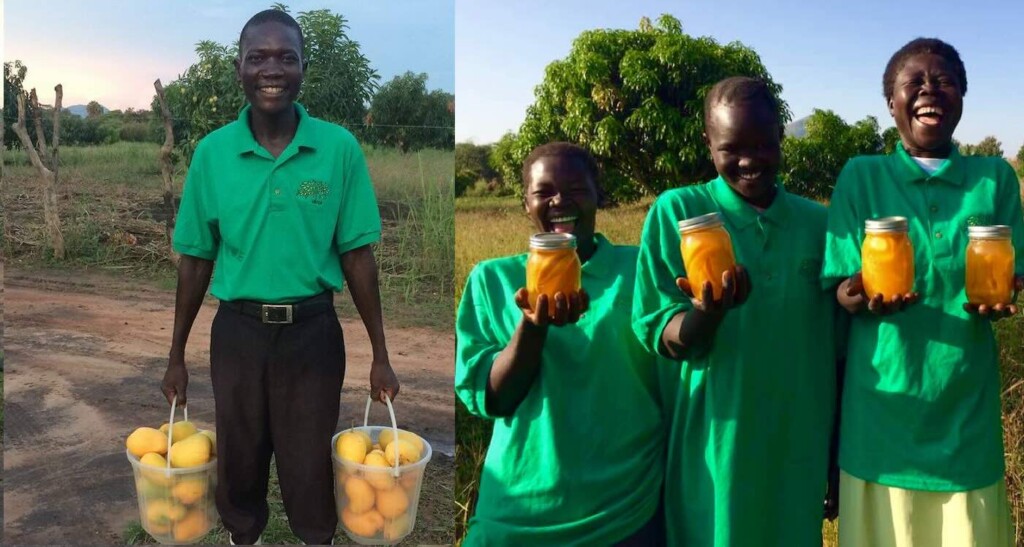
The Mango Project in Uganda (Courtesy of their Facebook page)

In Uganda, a nurse was excited to start practicing medicine, but realized only afterwards that his patients didn’t so much need pharmaceuticals as proper nutrition.

14 years ago in northern Uganda’s Yumbe district, Francis Asiku was riding home from that nursing job having witnessed a four-year-old suffering from acute malnutrition. It was a disturbing experience he admits, but while passing by some mango trees in the village of Midigo, he saw birds feasting on mangos that were rotting on the ground.

A question stopped his pedals and his mind: why were the birds eating that nutritious fruit? Why was it left to rot? The epiphany which followed gave rise to the Mango Project, a local-led initiative to preserve mangoes from the two harvests per years, and get them into the mouths of the least-fortunate children.

“Should we wait for the government to come to our rescue, and yet the situation keeps getting worse?” he remembers asking his earliest colleagues on the Mango Project.

Malnutrition is a problem across Africa, and Uganda is no exception. Christian Science Monitor, reporting on the Mango Project, claimed that one-quarter of children have stunting, a condition that is associated with malnutrition.

One large mango isn’t exactly a superfood, but it does contain a whole day’s supply of vitamin C, and impactful amounts of copper, potassium, folate, vitamin A, manganese, and vitamin E.

The problem which Asiku and village elders who own the land the mangos grow on faced was that 40% of mangos are lost because communities like Midigo can’t afford refrigeration to preserve the fruit.

BE INSPIRED HERE: Solar Tricycle Startup Helps Entrepreneurial Women Be Drivers of Change in Africa

The Mango Project embarked upon an effort to slice mangoes every spring and winter harvest season and preserve them in jars of boiled water and a bit of sugar. Like this, they can last a year. The jars are then delivered to health centers and refugee settlements. During the COVID-19 years, the project distributed 12,000 jars of mangos.

Francis Asiku, Founder of Uganda Mango Project

Asiku has become a local champion and educator for proper childhood nutrition, armed with an orchard of 310 hybrid mango trees bred to resist fruit flies and erratic weather. He knows that mangos alone can’t resolve the problem: for example they contain virtually no protein or iron, vitamin B2, B1, choline, or zinc.

OTHER MANGO STORIES: Man Cultivates a Giant Mango Tree with Each Branch Growing a Different Variety of Fruit–and There Are 300

So in response to the interest in the project from donations, Asiku managed to squirrel away enough money to afford a solar-powered drier, with which he dries okra and eggplant, adding sources of vitamin K, B1, magnesium, and calcium.

He hopes to obtain a government license to distribute his foods further afield.

“It’s fulfilling to see my people smiling at the end of the day,” Mr. Asiku told CSM. “Malnutrition is still there, but this does not mean that we should give up.”

SHARE This Inspiring Endeavor To Solve Hunger At Home… 

Woman Stunned to See Grandparent’s Wartime Locket Online After Stranger Buys it in Thrift Shop to Find Owner

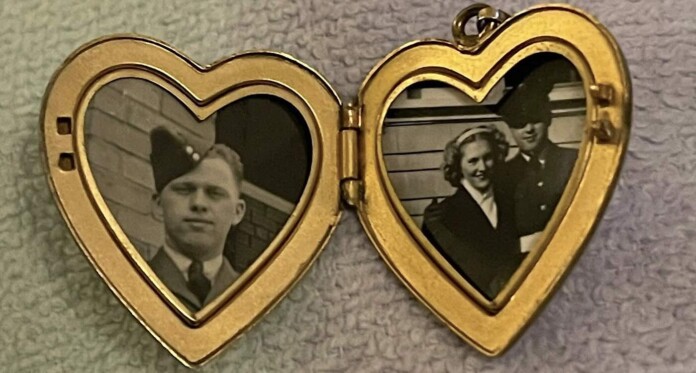
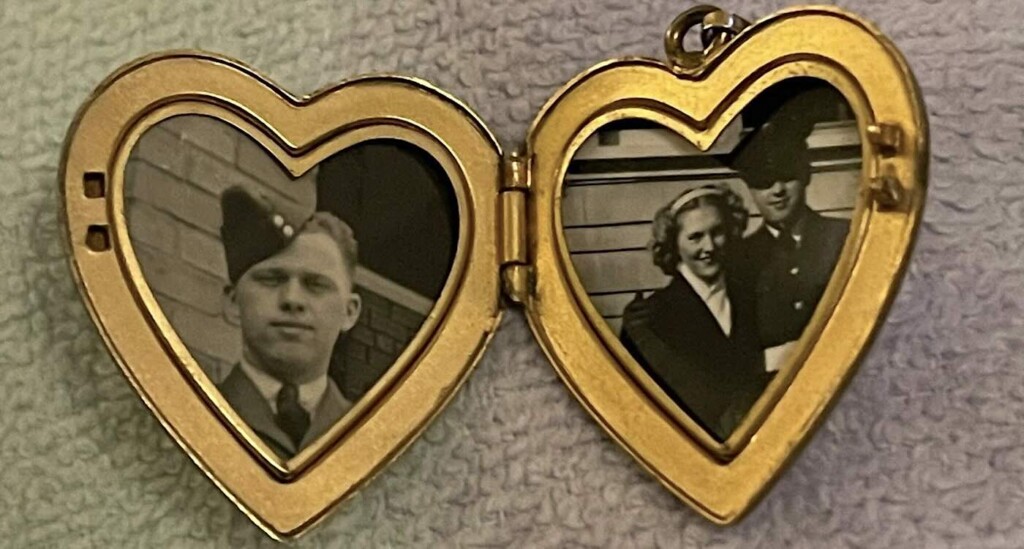
Alison Anne reunited wartime locket with its owners after buying it at Thrift Shop (Photo posted on her FB page)

From Canada comes the story of a lost family heirloom finding its way home in the most bizarre series of circumstances.

Kelly Brown, a member of the Aurora post of the Royal Canadian Legion, sat at her home last week in shock: staring at what appeared to be a black-and-white photograph of her grandparents smiling out from the inside of a locket; the subject of a post on Facebook.

The post’s author, Alison Anne, said she had found and bought the locket at a thrift shop after recognizing the man in the photo was connected to the Royal Canadian Air Force, and wanted to know if anyone had a clue as to its original owner; a simple, selfless act that against all odds, paid off.

“Little lost for words,” Brown said, remembering the instant she realized it was her grandparents in the locket. “Just it’s such a surreal, cool moment. The power of social media doing something good.”

Going back a few months, a branch of re-Source Thrift Shop in Barrie received a donation of things from a woman whose grandmother who passed away not long before. Inside were several jewelry boxes where the locket was eventually found before being put up for sale.

That’s where the locket resurfaced, but according to Brown, it disappeared long before that—perhaps as early as the year 2000 when during a teenager-organized house party, some of her grandfather’s medals and personal items were allegedly stolen.

Another possibility could have been a clear our of family effects by Brown’s grandmother in 2010 following the death of her daughter, Brown’s mother.

In any case, the locket had a picture of Bill Mitchell, Brown’s grandfather who served as a Warrant Officer 2nd Class in the RCAF during WWII, winning the Burma Star and the 1939–45 War Medal.

OTHER STORIES LIKE THIS: 30-Year-old Letterman Jacket Is Found By Brother in Serendipitous Twist of Fate

After his time in the military finished, he became a police detective, and eventually retired to open a rollar rink in Barrie. Brown said she is routinely presented with stories from residents about the impact of Mitchell his wife on their lives, and has gradually come to recognize that they were major figures in the community.

Anne and Brown decided after connecting to meet at the local Royal Canadian Legion post to reunite the locket with its rightful owner and reminisce about family, war, history, and fortune.

REUNITING PEOPLE AND THINGS: Life of WWII Soldier Spends Decades to Reunite Japanese Family With Photo Album He Found on Okinawa –LOOK

“I’m still mesmerized. I’m still in shock. Yeah. I’m like, is this for real? I had to ask people, are these my grandparents? And then I had the same pictures in my old photo albums, and I’m just. I’m in awe,” shared Brown.

SHARE This Story Of A Lucky Locket Find On Social Media… 

James Webb Telescope Reveals New Details and Mysteries Hidden in Jupiter’s Own ‘Northern Lights’

Auroras on Jupiter –Credit: NASA's Webb telescope, ESA, CSA-Jonathan Nichols / Mahdi Zamani
Auroras on Jupiter –Credit: NASA’s Webb telescope, ESA, CSA-Jonathan Nichols / Mahdi Zamani

Using the James Webb Space Telescope, scientists have photographed the auroras of Jupiter, revealing a host of details previously unknown to science.

Naturally, the aurora on our solar system’s largest planet is hundreds of times brighter and more energetic than our own Northern and Southern lights, and the findings from Webb will help scientists understand better how the gas giant’s atmosphere is heated and cooled.

Fundamentally, aurorae are magnetic phenomena; caused by interactions with charged particles clustering around a planet’s magnetic poles. Earth’s aurorae are caused when energetic particles released by the Sun collide with the magnetosphere and are driven to the poles where they excite localized gases that glow in a variety of colors.

Jupiter on the other hand is so large that it grabs charged particles from all over its spatial environment, including those from the solar wind. It also gets a substantial amount of these particles from its own moon Io, the most volcanically-active body in the solar system, and the fourth largest moon.

Images with James Webb’s NIRCam instrument show giant, fiery-colored clouds of charged particles emitting trihydrogen cation. A cation is a smaller version of a normal atom measured via the size of it’s electron cloud. It’s one of the most abundant ions in the universe.

Jonathan Nichols from the University of Leicester in the United Kingdom, led the team which used both Webb and the Hubble Space Telescope to image the aurora, the resulting study from which was published in Nature.

SOLAR SYSTEM MARVELS: Largest-Ever Planetary Spacecraft Set for Launch Towards Jupiter to Study the Ocean Moon of Europa

“What a Christmas present it was—it just blew me away!” shared Nichols. “We wanted to see how quickly the auroras change, expecting them to fade in and out ponderously, perhaps over a quarter of an hour or so. Instead, we observed the whole auroral region fizzing and popping with light, sometimes varying by the second.”

The team also uncovered some unexplained observations in their data.

“What made these observations even more special is that we also took pictures simultaneously in the ultraviolet with NASA’s Hubble Space Telescope,” added Nichols.

AURORA PHOTOS: Neptune’s Long-Hidden Auroras Are Captured for the First Time–While Revealing a New Mystery

“Bizarrely, the brightest light observed by Webb had no real counterpart in Hubble’s pictures. This has left us scratching our heads. In order to cause the combination of brightness seen by both Webb and Hubble, we need to have a combination of high quantities of very low-energy particles hitting the atmosphere, which was previously thought to be impossible. We still don’t understand how this happens.”

The team now plans to study this discrepancy between the Hubble and Webb data and to explore the wider implications for Jupiter’s atmosphere and space environment.

WATCH a video explanation below… 


SHARE These Great Images Of The Mighty Jupiter And His Aurora…

West African Man Becomes Kung Fu Master, Brings Chinese Martial Arts and Meditation Back Home

Damien Agossou Degbo (front) and his students at his martial arts club in Akpro-Misserete town - credit, CLUB SUPER Shaolin Du BENIN
Damien Agossou Degbo (front) and his students at his martial arts club in Akpro-Misserete town – credit, CLUB SUPER Shaolin Du Benin, via Facebook.

Meet Master Degbo, a Chinese Shaolin kung fu and tai chi teacher on the other side of the world from China.

From the West African nation of Benin comes the ultimate story in intercultural exchange, whereby a young man inspired by Jackie Chan films took up kung fu and persisted to run the largest Chinese martial arts club in his country.

In a town about 20 miles north of the country’s economic center of Cotonou, some 350 girls and boys of all ages stamp their feet and strike the air to the sound “hay-ya!” When the physical training ends, they can be seen in half-lotus, practicing Buddhist meditation.

It’s just another day in the Super Shaolin Club of Benin, founded by Damien Agossou Degbo.

Degbo was 13 when he first discovered kung fu through imported films screened at the cinema in Porto Novo. He was captivated by the mixture of grace, strength, and discipline the figures displayed in combat and out of it.

He found a local martial arts club and began training 4 times a week. 4 years later, a scholarship offered Degbo the chance of a lifetime—to study the real thing at the real place—the Shaolin Temple on the slopes of Wudeng Mountain.

“At Shaolin Temple, training was fast-paced and relentless,” Degbo told China’s Global Times. “Back home, we trained three to four times a week. But at Shaolin, it (Kung Fu) was a way of life.”

Like all warrior-monks, when not breaking boards and standing in horse stance, he learned Chinese calligraphy, tea preparation, meditation, and massage techniques; one can only imagine what a culture shock it must have been for a French-speaking teen from the hot and steamy, musical cultures of West Africa.

A year later, Degbo returned to China for a second round of cultural immersion, learning traditional dragon and lion dances, which in turn he brought back to Super Shaolin Club.

“I wanted to pass on what I had learned to empower young people with self-discipline, confidence, and an understanding of another culture,” he said.

With multiple locations in different regions across Benin, it’s the largest Chinese martial arts club in the country and perhaps all of West Africa. Students talk about self-empowerment, learning discipline and confidence, and being able to face the challenges of the day and the age with calm and focus.

MARTIAL ARTS FOR GOOD: ‘Like a Ninja,’ Karate Teacher Swoops Down on Purse Snatcher and Foils Robbery with a Kick

Degbo has become a fully-fledged cultural ambassador, linking two completely different peoples and parts of the world through the mutual appreciation of martial arts.

“Sharing Kung Fu with young people gives them insight into the values of Chinese culture: discipline, harmony, respect,” Degbo reflected. “It opens a window onto another worldview.”

MORE AFRICAN NEWS: Traditional Maasai Warrior Transforms Training Camp to Prepare Young Men for 21st Century Leadership

In Kenya, another foreign martial art is helping keep kids in school and off the streets. The Tsavora Fencing Club routinely hold bouts in the middle of a disadvantaged Nairobi suburb, where they strike a dramatic scene thrusting and parrying in their snow-white uniforms across the reddish ground.

Founder Mburu Wanyoike is a former gangster turned athlete and said that they use their “enthusiasm and obsession” to compensate for the lack of high-quality equipment.

SHARE This Story Of An Incredible, Intercontinental Connection Through Arts…

“He who angers you conquers you.” – Elizabeth Kenny

Quote of the Day: “He who angers you conquers you.” – Elizabeth Kenny

Photo by: Hello I’m Nik

With a new inspirational quote every day, atop the perfect photo—collected and archived on our Quote of the Day page—why not bookmark GNN.org for a daily uplift?

Good News in History, May 23

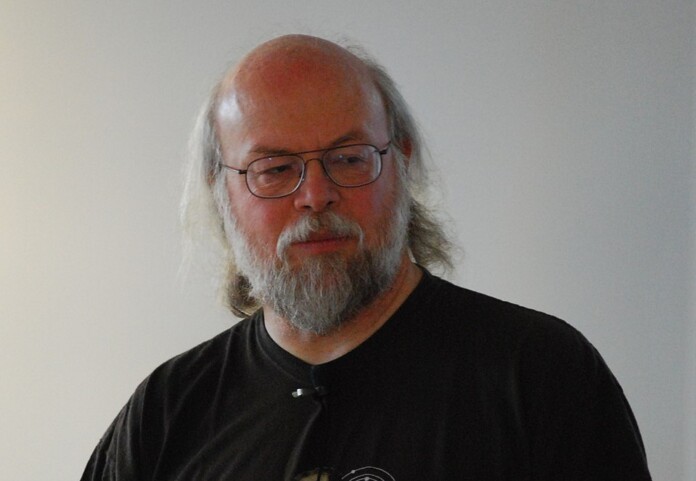
Java creator James Gosling in 2008 - CC 4.0 BY-SA Peter Campbell

30 years ago today, the first version of the Java programming language was released, one of the most popular languages of computer code. It is intended to let programmers write once, run anywhere (WORA), meaning that compiled Java code can run on all platforms that support Java without the need to recompile. Currently on Java SE 24, the language has lost some of its former popularity, but was updated as recently as March, 2025. READ more about the Java language… (1995)

World’s Tallest 3D-Printed Structure Rises 4 Stories into the Air Like a Wedding Cake, Inspired by Local Bakeries

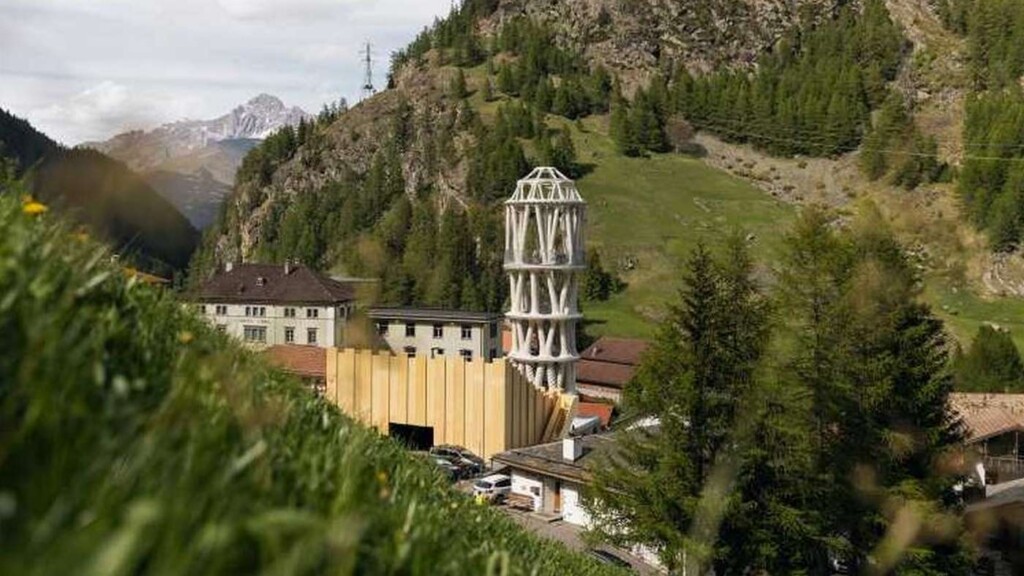
The village of Mulegns with the White Tower - credit, Benjamin Hofer Nova Fundaziun Origen
The village of Mulegns with the White Tower – credit, Benjamin Hofer Nova Fundaziun Origen

In the usually sleepy Swiss town of Mulegns, pop. 11, a dramatic white tower rises four stories into the Alpine air—the tallest 3D-printed structure on earth.

One might imagine such a technological marvel to be debuted in a square in the Silicon Valley cities of San Jose or San Francisco, or perhaps, being that it was accomplished by the Swiss, to garnish the slopes of Davos where millionaires gather to chin wag about the future of the world.

Instead, visitors came to Mulegns from all over Switzerland and further afield to see the ‘Tor Alva’ or white tower, for themselves. A tarp covering was removed by helicopter on the eve of the opening, revealing the delicate structure which now blends into the mountain landscape of the Julier Pass.

It’s an architectural landmark, a pioneering work of digital fabrication, and an instrument in the revival of Mulegns, a mountain village threatened by depopulation.

The Origen cultural foundation led the work in collaboration with ETH Zurich—Europe’s finest technical university, to celebrate culture and the arts and to give the village a new lease of life. Starting tomorrow, the Tor Alva will be open daily for guided tours. From July onwards, the space will also host staged performances, as it is intended to remain in Mulegns for at least 5 years.

The form of the structure is reminiscent of an ornate layered cake—a reference to the emigration history of confectioners from Graubünden who exported their skills from here to the whole of Europe. Thirty-two sculptured white concrete columns rise up over four stories, becoming thinner and more branched, before fanning out in an almost tree-like fashion to form the domed space at the top.

The tower was designed by architect Michael Hansmeyer and ETH Professor of Digital Building Technologies Benjamin Dillenburger. Instead of relying on traditional concrete formwork, they opted for an additive manufacturing process, whereby an industrial robot applies the concrete layer by layer into free-form elements without any supportive casting molds. The design is based on complex algorithms that generate the ornamental and the structural aspects at the same time.

The village of Mulegns with the White Tower – credit, Benjamin Hofer Nova Fundaziun Origen

To make this process possible, a specially developed concrete was needed. It had to be soft enough to bond the delicate structures, while hardening quickly enough to support the subsequent layers without support molds. Robert Flatt, ETH Professor of Physical Chemistry of Building Materials, developed a novel mixture for this purpose. Just before the concrete leaves the pressurized nozzle, two additives are blended into the mixture, allowing the characteristic droplet-like relief on the columns to be achieved.

“The tower combines the latest insights from research with the expertise of companies and experts. Building the tower here, at the foot of the Julier Pass, has also allowed our researchers to gain important practical experience,” said President of ETH Zurich Joël Mesot.

THE BEST OF SWITZERLAND: From Sewage-Filled Waters to Crystal Blue: Switzerland Rivers and Lakes Offer Hope for Cleaning Up Other Countries

What is special about this project is that the 3D-printed elements not only serve as a shell, but for the first time they are also load-bearing. Until now, a suitable method to reinforce 3D-printed concrete effectively has been lacking. This is now possible thanks to a newly developed reinforcement concept implemented using a robot-assisted innovation.

While one robot applies the concrete in layers, a second places a ring-shaped reinforcement in the new structure every few inches. These are supplemented by longitudinal rebars that are added after printing. The process, known as “reinforcement that grows” was developed by ETH professors Walter Kaufmann, Robert Flatt and Benjamin Dillenburger.

3D-PRINTING BREAKTHROUGHS: Holographic 3D Printing Has the Potential to Revolutionize Multiple Industries, Researchers Demonstrate

In addition, the researchers developed a new testing method which allows the load-bearing capacity of 3D-printed concrete to be reliably calculated for the first time. This is a key requirement to ensure that such buildings can in the future be tested just as safely as conventional reinforced concrete structures.

It took five months to print the columns, and the components were then assembled in and delivered to Mulegns via the Julier road.

SHARE This Monumental Achievement With Your Friends… 

Trees Can Warn Us When Volcanos Are Ready to Erupt–and NASA Satellites Can Read Their Signals

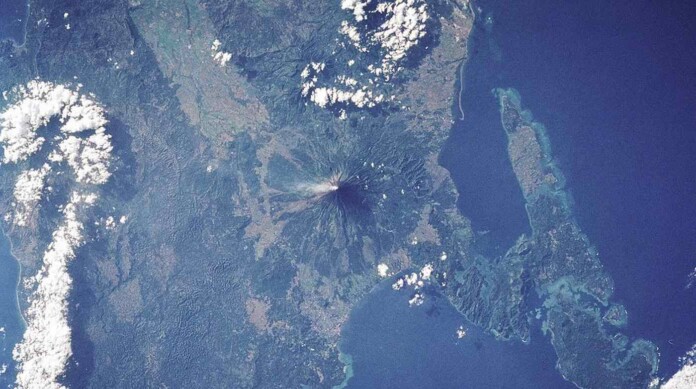
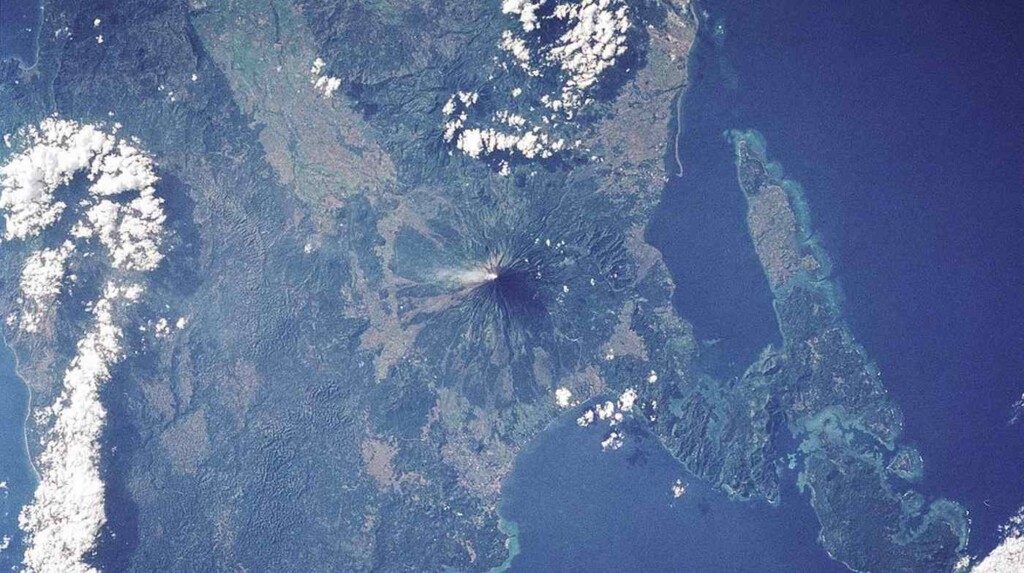
Mount Mayon seen from Space Shuttle mission STS-083 - credit, NASA
Mount Mayon seen from Space Shuttle mission STS-083 – credit, NASA

For the 10% of the global population that live near an active and potentially dangerous volcano, help may be forthcoming from an unlikely source: trees.

In advance of volcanic eruptions, carbon dioxide gases are released from the magma below the earth. The trees absorbing it become green and vibrant, a change that if tracked by satellite could be used to improve early warning and detection systems.

The idea comes from an all-American partnership between the Smithsonian Institute and NASA, with the former organizing a team of botanists and volcanologists, and the latter providing a variety of earth-monitoring satellites like Orbiting Carbon Observatory 2 and Landsat 8.

Parts of the US like northern California, southwest Alaska, and obviously Hawaii, stand at high risks of damage from volcanic eruptions. In 2009 for example, 300 flights were canceled when Ted Stevens Anchorage International Airport was shut down after Redoubt Volcano erupted clouds of volcanic rock and ash.

Before a volcano like Redoubt erupts, rising magma squeezes out emissions of carbon dioxide and sulfur dioxide that are visible from space. While sulfur dioxide is easily detectable from space, the carbon dioxide comes earlier in the pre-eruption process and is much harder to spot because of the already ample amounts of CO2 in the atmosphere.

The CO2-caused greening of vegetation is an effective proxy for the CO2 release, and easier to detect via satellite. When combined with seismic waves and changes in ground height, volcanologists could have an even better idea of what’s going on below a volcano.

A sign near Anchorage warning that the Rebout Volcano is active – credit, public domain

“A volcano emitting the modest amounts of carbon dioxide that might presage an eruption isn’t going to show up in satellite imagery,” said volcanologist Robert Bogue of McGill University in Montreal. “The whole idea is to find something that we could measure instead of carbon dioxide directly, to give us a proxy to detect changes in volcano emissions.”

Previously, that has meant measuring volcanoes directly, though because they’re often located in remote and hostile terrain, that isn’t always straightforward or safe.

NASA HELPING OUT DOWN BELOW: NASA Became “Beaver Believers” After Using Satellites To Measure Their Impact On US Rivers

“There are plenty of satellites we can use to do this kind of analysis,” volcanologist Nicole Guinn of the University of Houston told Sci-Tech Daily. Guinn was on the first team to show that tree greening could be used to detect early eruptions when they used the European Space Agency’s Sentinel-2 and NASA’s Terra satellite to examine and compare images of trees around Italy’s Mount Etna and found that greening had a strong correlation with volcanic activity.

The key is to measure the emissions of volcanoes as best as can be managed, and trees are a potential tool for doing that. Sulfur and carbon dioxide emissions, measured by equipment installed by members of the Smithsonian-NASA collaboration, helped predict an eruption of Mayon Volcano in the Philippines. Early warning systems combined with the emissions helped advocate for mass evacuations before the blast, which produced zero casualties.

VOLCANOLOGY: World’s First Magma Observatory Poised to Monitor Volcanoes While Generating Tons of Energy

Other members of the collaboration are just as eager to see how trees respond to greater levels of CO2 in the air for studying the future of the climate crisis as for helping predict volcanoes.

“We’re interested not only in tree responses to volcanic carbon dioxide as an early warning of eruption, but also in how much the trees are able to take up, as a window into the future of the Earth when all of Earth’s trees are exposed to high levels of carbon dioxide,” Josh Fisher of Chapman University in Orange, California, told Sci-Tech Daily.

SHARE This Hot News In Volcano Monitoring With Your Friends On Social Media…

Native Turtles Return to Yosemite After Being Overrun by Invasive Bullfrogs from the East

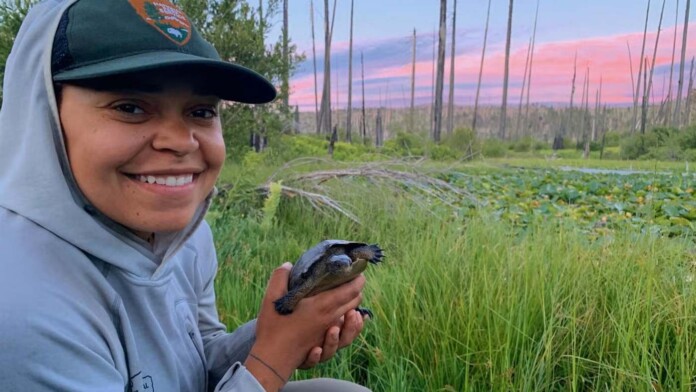
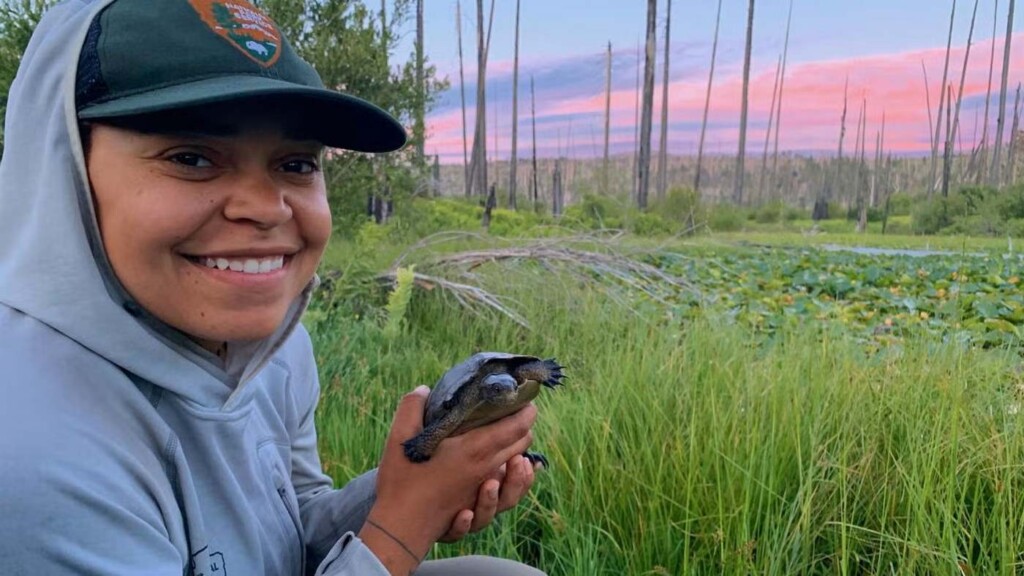
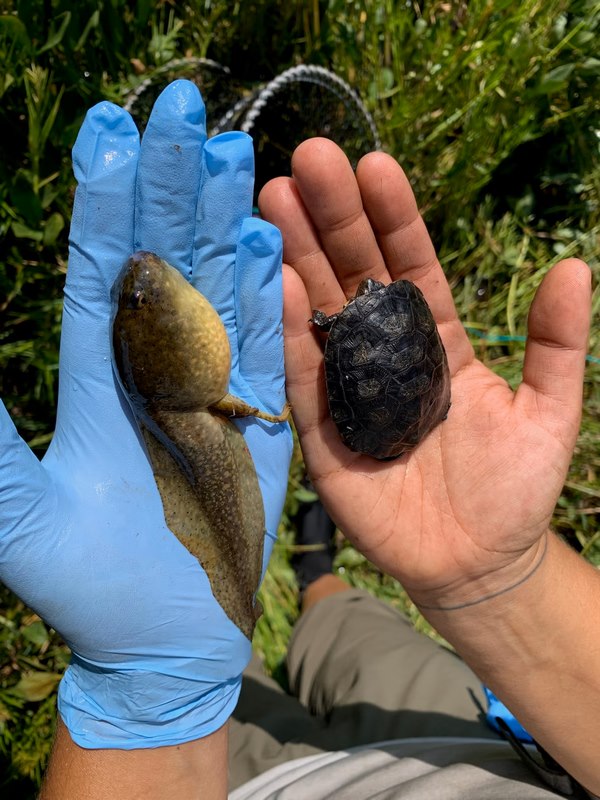
Sidney Woodruff holding a Northwestern pond turtle at a field site - credit Sidney Woodruff
Sidney Woodruff holding a northwestern pond turtle at a field site – credit Sidney Woodruff

In Yosemite National Park, the eradication of non-native American bullfrogs has led to the return of California’s only native turtle species.

The northwestern pond turtle has been proposed as a threatened species according to the US Endangered Species List, and their biggest threat is a frog from east of the Rockies.

A UC Davis Ph.D. candidate, Sidney Woodruff, has been conducting research on whether bullfrog elimination could lead to a return of the pond turtle, or if their decline was a multifaceted event.

Between 2016 and 2022, Woodruff chronicled the life and times of bullfrogs and the northwestern pond turtles in four sites inside Yosemite National Park.

Lead author of a study observing and documenting the effects of bullfrog removal, the young scientist has proven conclusively that these big mouthed bullies had to croak before the peaceful turtle can return.

At the start of her research, Woodruff described Yosemite, where the American bullfrog was introduced back in 1950, as so full of the amphibians that “constellations” of eyes would stare back at any light flashed into a pond. Their deafening bullfrog croak was all that could be heard, and more than a few park visitors probably imagined that was normal.

“One reason American bullfrogs are among the top worst globally introduced pests is because they eat everything—anything that fits into their mouth,” said senior author Brian Todd, a UC Davis professor in the Department of Wildlife, Fish and Conservation Biology, a co-author on the paper. “They’ve been causing declines to native species everywhere they’re introduced, which is around the world.”

Juvenile pond turtle and large American bullfrog tadpole – credit Sidney Woodruff UC Davis

Indeed, the gluttonous frog has been recorded invasively in southern Brazil, northern Colombia, Ecuador, Cuba, Japan, northern Italy, and Malaysian Borneo to name a few locations.

Even before the tadpoles have lost their tails, their mouths are already larger than a juvenile pond turtle. It’s believed they prey on the turtle’s young, as well as newts, salamanders, and other smaller frogs. They’re cold-blooded killers in the most literal sense.

The team undertook searches on foot during the day to locate and scoop bullfrog egg masses using paint strainers or fine mesh nets before laying them out in the sun to dry. Adults were captured at night and euthanized.

INVADERS DEFEATED: Fungus Devastating Frogs Worldwide May Have an Achilles Heel – And it May Save the Amphibians

During the eradication work, the population surveys pointed to a stark reality that if bullfrogs were present, turtles struggled to be. In ponds without bullfrogs, population counts were between twice and 100-times as high as ponds with bullfrogs. In the infested ponds, all observed turtles were large and heavy, suggesting that juveniles were being picked off for the most part.

In fact, it took more than 2 years for the study team to even see a juvenile turtle in a bullfrog-present pond that wasn’t recovered from a frog’s stomach—and that one only after bullfrogs were eradicated, highlighting the scant survival rate they would have suffered from.

THE SUCCESS OF SPECIES ERADICATION: Out-of-Control Invasive Crab Species Has Met its Match: Cute and Hungry Otters

“As bullfrog presence declined, we started to hear other native frogs call and see native salamanders walking around,” Woodruff said of their field work. “It’s nice to be able to go back to these sites and hear a chorus of native frogs calling again that previously would not have been heard.”

Todd told UC Davis Press that all across the state, the only freshwater turtles that should be there are the northwestern pond turtle, and without them, the state would lose “part of our natural heritage.”

HOP Over To Your Friends Social Media And Give Them A Croak About This News…

Unique Miami Recycling Company Gives Discarded Shoes New Traction

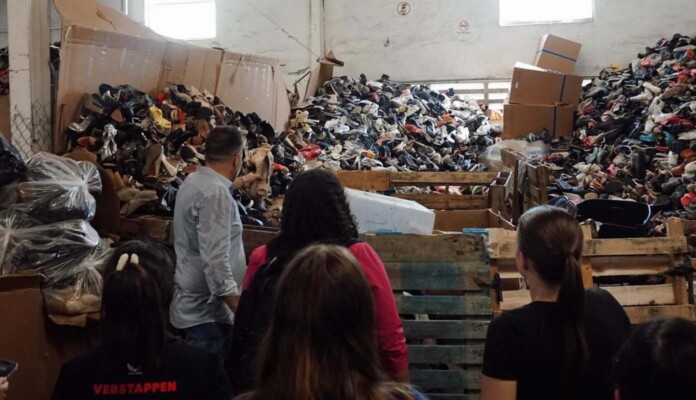
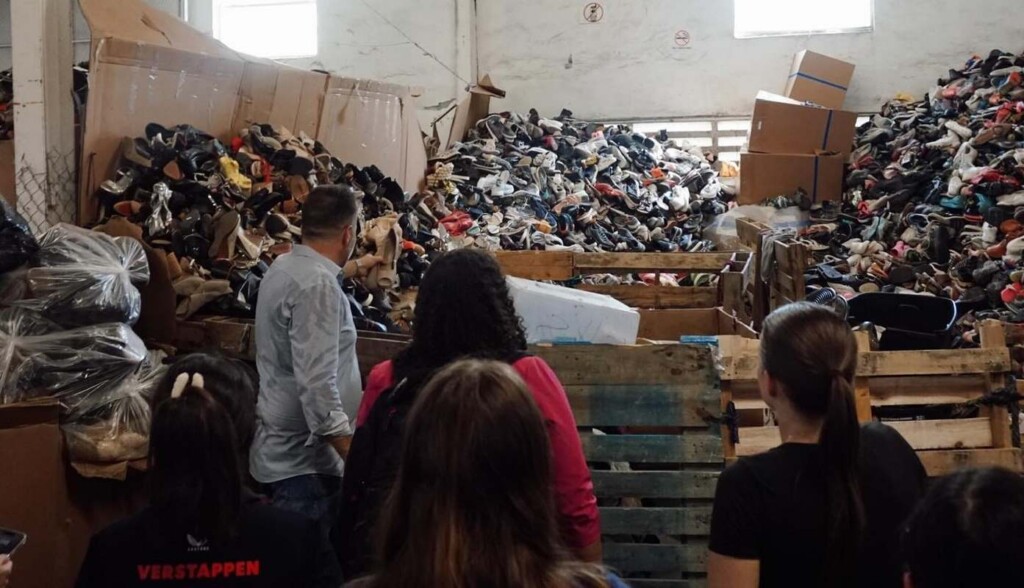
Sneaker Impact's Miami location with shoes piled up - credit Sneaker Impact
Sneaker Impact’s Miami location with shoes piled up – credit Sneaker Impact

In Miami’s Little Haiti neighborhood, a local business sorts through thousands of donated sneakers to decide the best way to keep them out of landfills.

Whether pristine or worn out, each pair will have a future either as recycled material or with a new owner who’s going to appreciate and continue to use them.

Sneaker Impact was founded by a man seeking a more environmentally friendly way to do business, and second-hand shoes is a good gig—the only competition is the landfill. Americans will own an average of 250 pairs of shoes in a lifetime, and that is unfortunately where many will end up.

“It’s all about accountability, sending the right product to the right market,” Sneaker Impact founder and CEO Moe Hachem told CBS News. “Sneakers are a necessity in the developing world. They are a form of transportation.”

Sneaker Impact receives around 1 million pairs of shoes every year through volunteer partners like running clubs, meaning that the cost to secure raw materials is virtually reduced to the labor of retrieving and sorting them.

Once in the Little Haiti facility, they are grouped together according to various criteria and stuffed into bags in orders of 200 to be sent around the world for resale.

“You’re not only reducing waste here at home, you are creating microbusiness opportunities in a developing country,” Hachem said.

MORE GREAT RECYCLING BUSINESSES: Chicago Bicycle Refurbishers Pedal Good to the World for 26 Years With 150,000 Bikes Saved from Landfills

Those that are condemned are shredded and sorted into foam and fabric, which are then sold as raw materials where they could be used to make carpet mats, floor mats, etc.

Sneaker Impact sells a gym sandal that’s made of 85% sneaker foam, a durable, flexible, and weather-resistent material that seems fragile because of the intense job it’s asked to do: namely, pound the pavement for hours at a time every week.

WATCH the story below from CBS Evening News..

RECYCLE This Story By Running It Over To Your Friends Wall On Social Media…