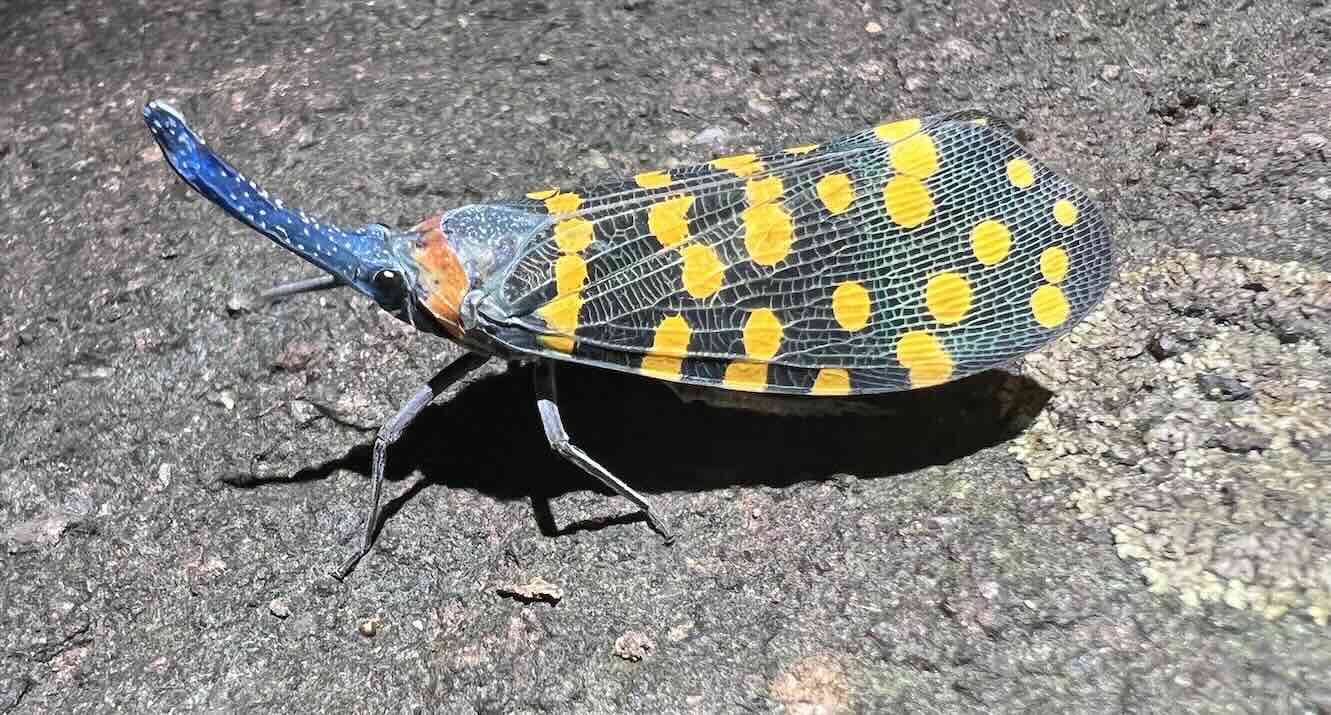
Quote of the Day: “There is always room at the top.” – Daniel Webster
Photo by: Aditya Saxena (cropped)
With a new inspirational quote every day, atop the perfect photo—collected and archived on our Quote of the Day page—why not bookmark GNN.org for a daily uplift?
179 years ago today, the Associated Press organized in New York City as a nonprofit news cooperative to reduce the cost of covering the events of the Mexican American War. The original AP was agreed upon by senior members and editors of The Sun, the New York Herald, the New York Courier and Enquirer, The Journal of Commerce, and the New York Evening Express. Today, AP operates 235 news bureaus in 94 countries, and covers the news in English, Spanish, and Arabic, winning 59 Poulitzer prizes along the way. READ more about the AP’s long history… (1846)
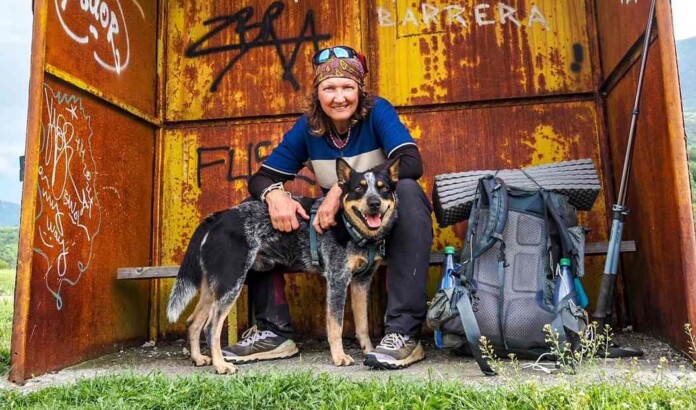
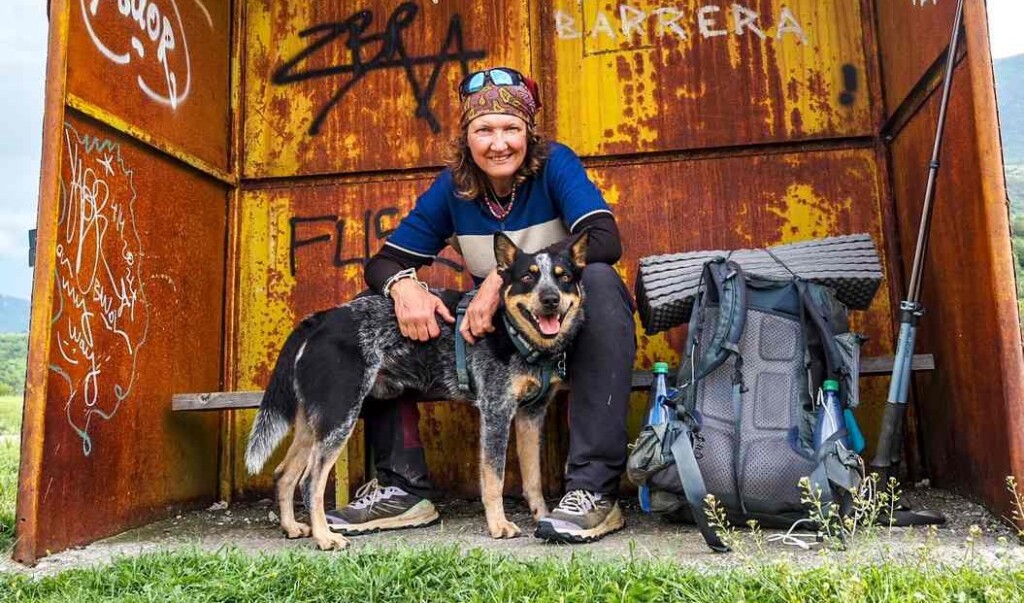
Heike Pirngruber and Butch the dog - credit Pirngruber, via SWNS
Heike Pirngruber and Butch the dog – credit Pirngruber, via SWNS
A woman who “never liked dogs” has been walking and biking around the world with a street dog that she found neglected and covered in fleas.
An Australian cattle dog, ‘Butch’ must now be among the most well-traveled dogs on the planet, having been taken in by a woman who spends all her days exploring the world.
Heike Pirngruber worked as a camerawoman for ZDF, Germany’s biggest broadcast station, over a decades-long career that ended 12 years ago when she decided to hit the road permanently. It’s taken her across over 104 countries on all inhabited continents to date.
She had been looking to travel across the Americas on a donkey in March 2020, before taking a break in a beach hut in Baja, California the following year.
Having been chased by dogs on more than one occasion during her travels, a lack of affection for the canine race grew into a dislike—all until her experience in the beach hut.
Cooking grilled chicken one night, a stray dog named Max—meek and mild—came to the front door, and Pirngruber’s friend Ronny convinced her to let him stay. The following day, Max came back with two friends.
During her sojourn in the beach hut, the three strays gradually nursed away her fear of dogs—a prerequisite to a lifechanging experience not long after.
“I never really liked dogs when I was a kid, but the first moment I had little Butch in my arms and knew he was mine now, I couldn’t believe how I felt,” Pringruber told England’s Southwestern News Service.
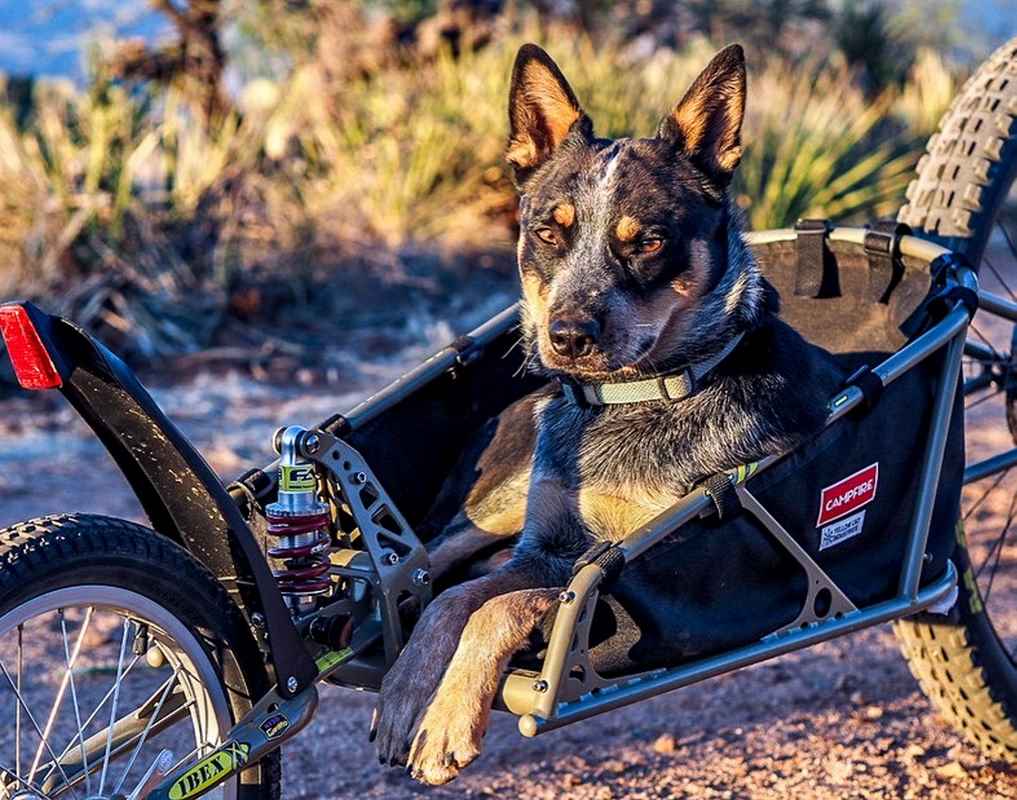
Butch the dog in his bike saddle – credit Pirngruber, via SWNS
Butch was chosen from among a litter of seven flea-ridden puppies that a pair of unscrupulous owners were looking to cast aside. Despite all the uncertainties and extra responsibilities that traveling with a dog would bring, she looked into Butch’s face and knew what she wanted to do.
“He’s my best friend, I love this guy to death and it’s awesome,” the Heidelberg native said. “Australian cattle dogs are a tough breed, they are basically made for the outdoors and Butch does not know any other way—he only knows life on the road and we’re connecting footsteps nearly every day.”
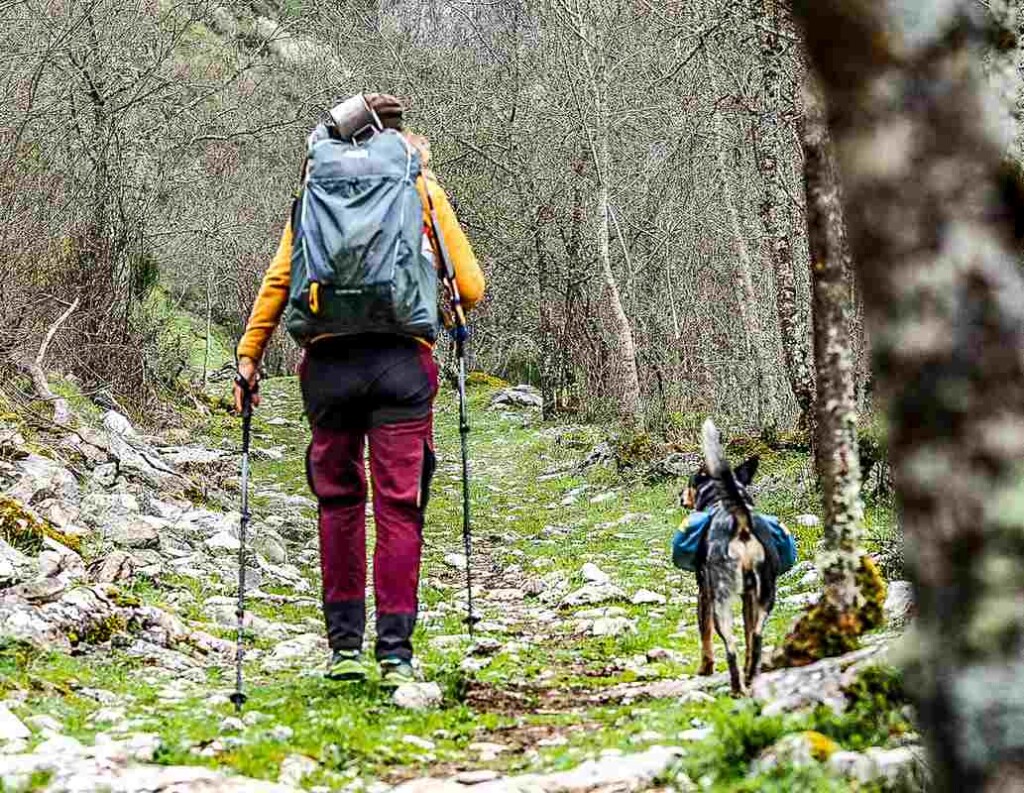
Heike Pirngruber and Butch the dog – credit Pirngruber, via SWNS
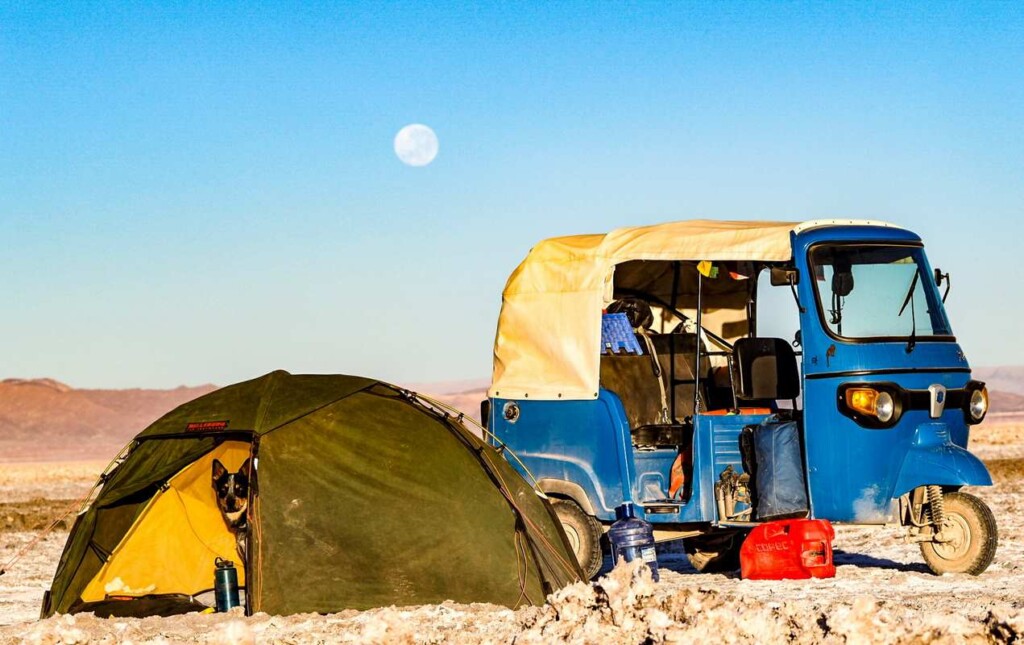
To begin their friendship, the duo spent a total of three years in the Americas together, walking across states in the US, riding a motorbike in Arizona and central Mexico, canoeing in New York and Vermont, and using a tuk-tuk to get around Chile and Argentina.
With the tuk-tuk in particular, they saw thousands of miles of South America, both on and offroad.
“We’ve seen amazing places and scenery, and because Butch had the back seat in the tuk-tuk, he could sit in the shade or the sun—I think he really enjoyed that,” said Pirngruber.
“Then we flew to Madrid, Spain and I went home for just the third time in 12 years. But it’s been clear each time I came home I couldn’t stay there, as it wasn’t my lifestyle anymore, even if there is still a connection to people at home.”
In November last year, after four months at home in Germany, they started out eastward through Europe, starting on a walk through Spain, and proceeding to Andorra, France, and Italy before taking a boat to Greece.
Heike Pirngruber and Butch the dog with their tuk-tuk – credit Pirngruber, via SWNS
Although Pirngruber does not plan much in advance, the pair are heading to Albania and the rest of the Balkans, before moving on to Turkey and eventually towards either India or Mongolia.
“I choose where we go mainly day by day. There are times when we want to get away from civilization and be by ourselves, and then other times I’m sitting at a square trying to get some contact with others, either in person or through my phone,” she said.
“But I’m not a planner, and that’s the fun in it. I know the rough route, but it’s about experiencing new places. I love culture, I love to understand the planet. I just carry the basics, I go ultralight, I carry my camera and my first aid kit and Butch’s medicines so he’s protected from ticks and the like.”
“And 99% of people are nice and overall, I’ve had some great encounters with people, even though there have been some bad experiences and moments as a solo female traveler. It’s a safe world to travel in, in general.”
SHARE This Woman’s Half-Crazy, Half-Dreamy Life On The Road With Her Pooch…
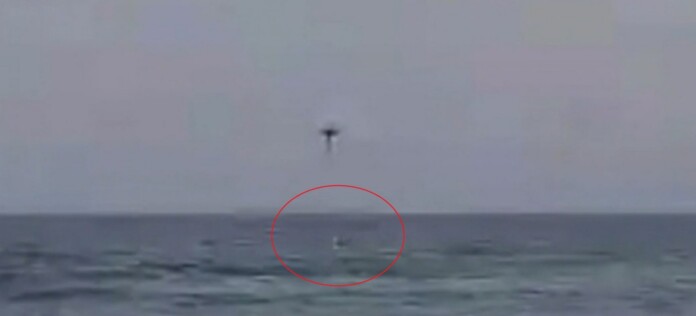
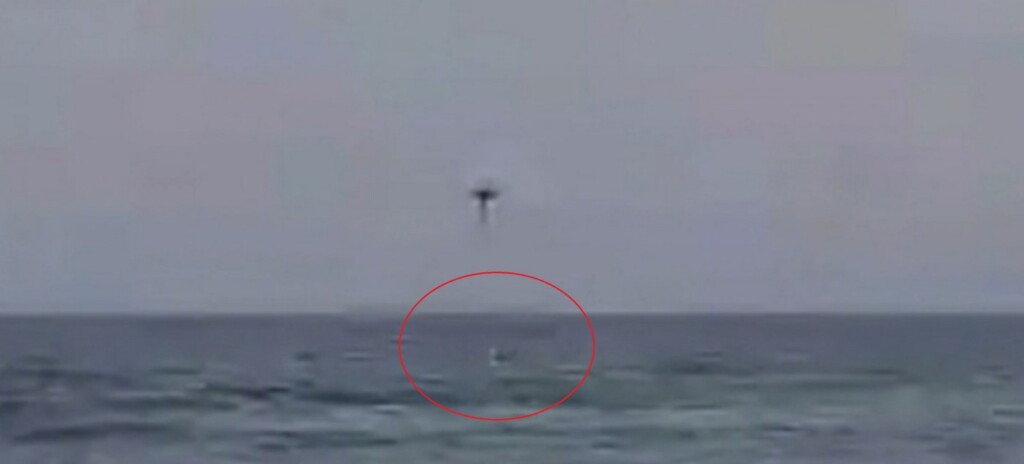
The drone lowers a life-preserver into the girl's arms - credit Robert Nay, released to the media
The drone lowers a life-preserver into the girl’s arms – credit Robert Nay, released to the media
From Pensacola comes the story of an improvised rescue that saved the life of a teenage girl who was caught in a riptide.
A seizure-prone fisherman used his specialized drone to lower a life-preserver into the water, allowing her to rest and recover enough to fight the tide and stay above water.
The girl’s father called the man a “guardian angel” and witnesses described it as a “true act of humanity.”
Pensacola shark fisherman Andrew Smith had just clocked out of work last Thursday when a friend convinced him to come back out. Arriving on the beach, a woman came running up to him and asked if he and the others nearby if they could swim.
Smith replied that he could not.
However, the victim’s lucky stars were shining down that sunny day, as the incident happened on 21 C section of Pensacola Beach—just beyond the restricted airspace of Fort Pickens—meaning that Smith had brought along his drone.
Afflicted by a seizure disorder, Smith uses the drone to set bait for the sharks, which other fishermen do on kayaks. Because of his seizures, Smith can neither kayak nor swim, but he thought he may be able to drop a life-preserver if he could get the drone close enough to the girl.
“I ran up and grabbed one of those [life-preservers] and ran back down to the drone,” Smith said. “I flew it out, and it was a terrible miss. I released it too early, it was really windy.”
Realizing what was on his mind, a bystander brought him another flotation device and encouraged Smith to try again while a Mr. Robert Nay began filming it with his smartphone.
“I was shaking pretty badly. It was nerve-wracking, I almost cried,” he told CBS 12. “If it wasn’t for that second drop, she wouldn’t have made it. The EMS, the cops, and the lifeguards said she wouldn’t have made it.”
SHARE This Unique Rescue Mission Accomplished With Your Friends…
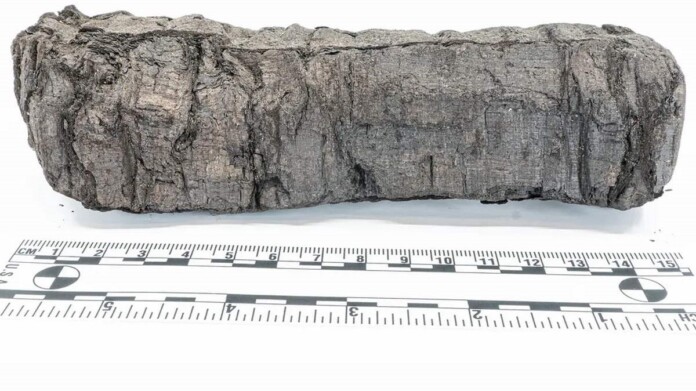
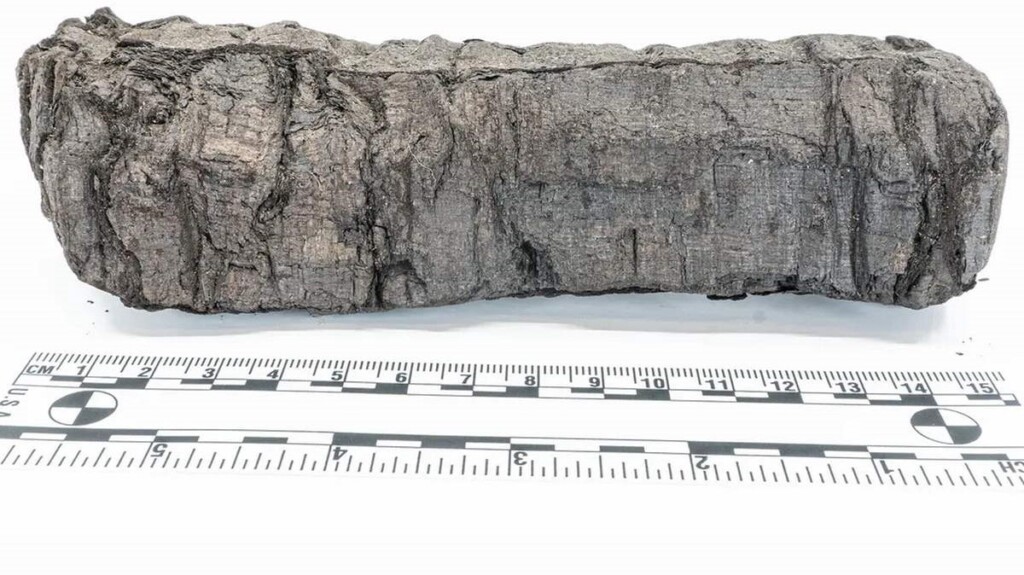
The scroll previously known only as PHerc. 172 was written by the Epicurean philosopher Philodemus. Vesuvius Challenge / Bodleian Libraries, Oxford University
The scroll previously known only as PHerc. 172 was written by the Epicurean philosopher Philodemus. Vesuvius Challenge / Bodleian Libraries, Oxford University
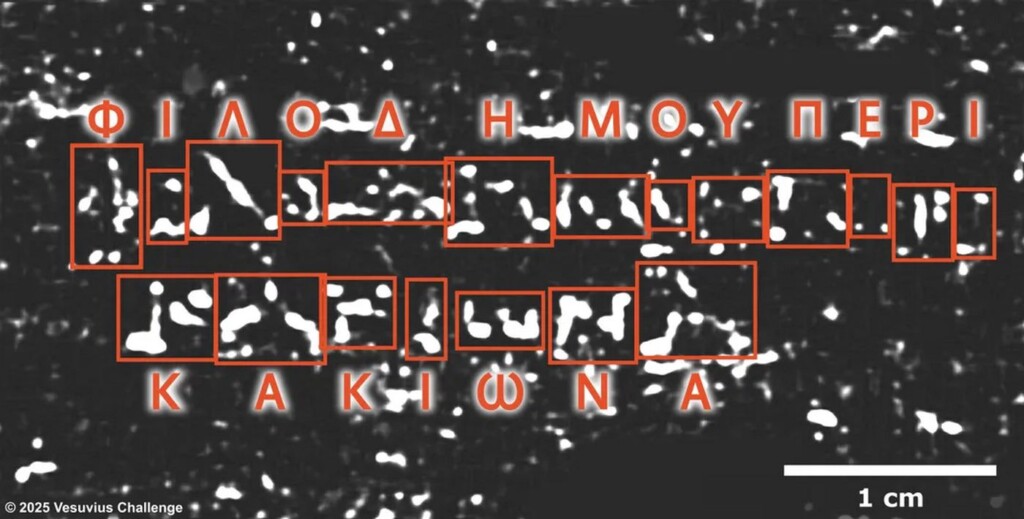
The title of a 2,000-year-old Greek philosophical text has been read by computer scientists using AI to study scrolls buried by the eruption of Vesuvius.
On Vices was written by Philodemus, a Greek philosopher who lived at Pompeii nearly 200 years before Vesuvius’ eruption, and several centuries after the life of Epicurus, a prominent Athenian thinker whose ideas have been discovered among the scrolls before.
Around 800 unreadable papyri were found more than 200 years ago by farmers in the ruins of Herculaneum, a city destroyed by Vesuvius’ eruption, in a villa that may have belonged to Julius Caeser’s father-in-law.
GNN has previously reported on the initiative called the Vesuvius Challenge, organized by Silicon Valley figures Daniel Gross and Nat Friedman, who offered a total of $1,000,000 in prizes to anyone who can map out the words on the husks of papyrus charred into obscurity by the volcano.
Prizes were given out in 2023/2024 to Julian, a Swiss robotics student at ETH Zürich, who enabled the 3D mapping of the papyrus scrolls which can’t be unraveled without turning to ash; Youssef Nader, an Egyptian Ph.D. student in Berlin who decoded the first letters; and Luke Farritor, a college student and SpaceX intern from Nebraska, who decoded the first word (which was ‘purple’).
Then, the three young men formed a “superteam” and read the first sentence to be gleaned from this lost literary treasure in over 2,000 years.
“…as too in the case of food, we do not right away believe things that are scarce to be absolutely more pleasant than those which are abundant,” were what was revealed. The thoughts likely belong to an Epicurean philosopher.
In this new discovery, On Vices was read out independently by two separate teams, and confirmed by other words to be the work known as On Vices and Their Opposite Virtues and In Whom They Are and About What.
The winners of the $60,000 First Title Prize are Marcel Roth and Micha Nowak, computer scientists at Germany’s University of Würzburg.
Output of ink detection model revealing the title, with transcribed letters overlaid – credit Vesuvius Challenge, released
According to Michael McOsker from University College London and Oxford University where the scrolls are kept, it’s generally been understood that the first book of On Vices was On Flattery (known from physically unrolled papyri). A statement from the Vesuvius Challenge says that the text of PHerc. 172, the scroll found to contain On Vices, does not seem to correspond with that of On Flattery, suggesting that if this is indeed book one, we will improve our general understanding of the work.
On Vices has received special attention over the decades, not only because of its philosophical content, but also because in one of its books, Philodemus addresses some of his friends, namely Quintilius Varus, Varius Rufus, Plotius Tucca, and the great Vergil.
SHARE This Story Of An Incredible Use Of AI With Your Friends…
An image of stray sunlight and the moon taken on April 27 by the PUNCH mission's Narrow Field Imager during commissioning - credit, Southwest Research Institute
An image of stray sunlight and the moon taken on April 27 by the PUNCH mission’s Narrow Field Imager during commissioning – credit, Southwest Research Institute
An absolutely staggering new perception of our Moon and Sun was captured by a little-known NASA mission called PUNCH.
Showing a halo of light surrounding an eclipsed sun with the Moon passing through, it was taken during PUNCH’s commissioning stage—a step to ensure all the equipment is in alignment and functioning properly.
The Moon in the image is lit up by light reflected off the surface of Earth.
Launched on March 11th, the four-satellite constellation was designed to study to solar wind by using a science instrument called an occulter. With extreme precision, an occulter places a disk over the Sun before photographing it.
The large golden aura is formed from the incoming light reflected off the sun-side of the occulter, while a shred of light can be seen around the Sun’s corona, or crown. This is the Sun’s outermost atmosphere, and the easiest place the study the solar wind.
Solar wind amounts to about 300,000 tons (272,000 metric tons) of material which the Sun ejects into the solar system every second. Made up of charged particles, they are responsible for the Northern lights down on Earth, and also a variable amount of disruption to Earthborn electronics.
It’s believed that streamers and plasma loops bursting out of the Sun which PUNCH will photograph can be tracked and used to estimate and forecast space weather like the solar wind, perhaps allowing countries to better prepare for incoming magnetic storms which could disrupt communications or even cause sudden blackouts.
A solar prominence, or hot plasma loop, imaged by NASA’s Solar Dynamics Observatory in extreme ultraviolet light with Earth added for scale – credit NASA SDO
Complementing PUNCH’s mission will be the more famous craft called the Parker Solar Probe, which in 2021 became the first manmade object to enter the Sun’s atmosphere and exit it intact. Whilst doing so, it took some pretty epic photos itself, and the imaging potential of the two crafts will allow scientists to study our star in much greater detail.
“[Parker Solar Probe] and PUNCH are both working to unite two separate branches of heliophysics into a unified whole,” PUNCH’s principal investigator, Craig DeForest, told Live Science in an email.
“PSP is carrying the techniques of space physics (in-situ sampling) inward to touch and measure the solar corona. PUNCH is extending the techniques of solar physics (scientific imaging) outward to measure how the solar corona touches us. The two missions complement each other beautifully.”
SHARE This Gorgeous Perspective Of Our Star And Moon On Social Media…
Quote of the Day: “The supernatural is the natural not yet understood.” – Elbert Hubbard
Photo by: Aditya Saxena (cropped)
With a new inspirational quote every day, atop the perfect photo—collected and archived on our Quote of the Day page—why not bookmark GNN.org for a daily uplift?
45 years ago today, The Empire Strikes Back, produced by George Lucas opened in cinemas in UK and North America. Known now as Star Wars Episode V, it was the second film in the Star Wars film series and the sequel to the 1977 original Star Wars. COMPAREthe oddly old trailer and the modern one… (1980)
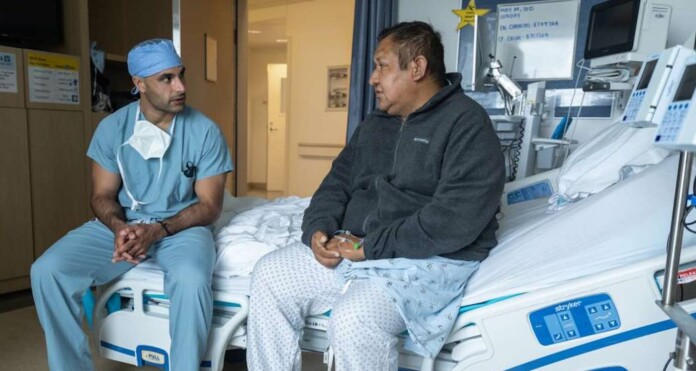
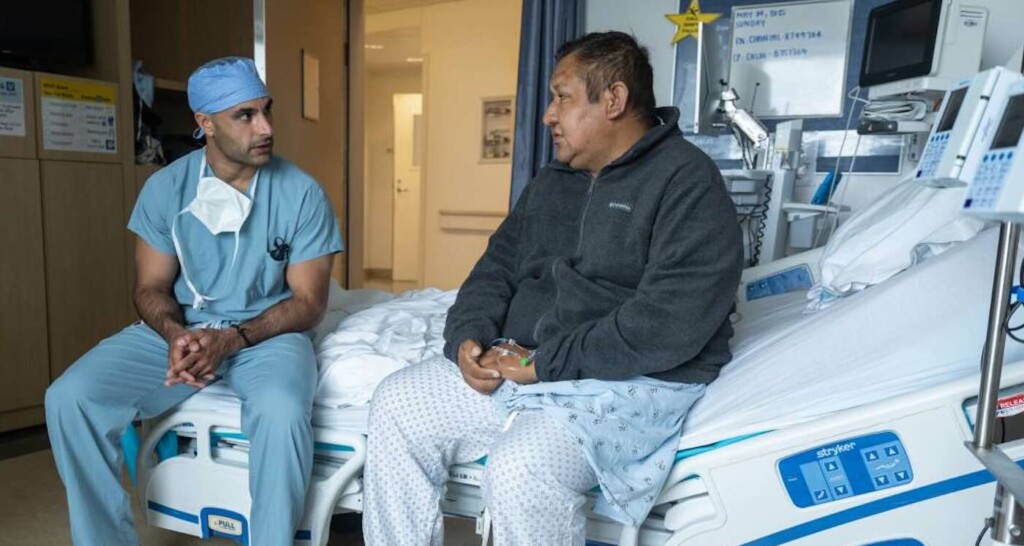
Dr. Nima Nassiri with patient Oscar Larrainzar – Photo by Nick Carranza / UCLA Health
Dr. Nima Nassiri with patient Oscar Larrainzar – Photo by Nick Carranza / UCLA Health
The first human bladder transplant was successfully carried out at University of California LA, an attempt that has been four years in the making.
There are naturally many unknowns associated with the procedure, which has previously only been done on cadavers, such as how well the transplanted bladder will function immediately and over time.
Bladder transplants have not been done previously, in part because of the complicated vascular structure of the pelvic area and the technical complexity of the procedure. However, urine drained immediately into the new bladder, and the patient’s kidney, which also had to be replaced, needed no post-procedure dialysis—the two worked in perfect tandem.
The surgery was completed at UCLA Medical Center. The team was led by Dr. Nima Nassiri, a urologic transplant surgeon and director of UCLA’s pioneering bladder replacement research program, with help from Dr. Inderbir Gill, founding executive director of USC Urology.
“This first attempt at bladder transplantation has been over four years in the making,” Nassiri said. “For the appropriately selected patient, it is exciting to be able to offer a new potential option.”
The patient had lost most of his bladder during a tumor removal, leaving the remainder too small and compromised to work. Both of his kidneys were also subsequently removed due to renal cancer to do earlier kidney disease. As a result, he was on dialysis for seven years.
The biggest risks of organ transplantation are the body’s potential rejection of the organ and side-effects caused by the mandatory immune suppressing drugs given to prevent organ rejection.
“Because of the need for long-term immunosuppression, the best current candidates are those who are already either on immunosuppression or have an imminent need for it,” Nassiri said, adding that it’s another of the unknowns associated with the procedure—how long immunosuppression will be necessary—which he and his team will be closely monitoring.
Nassiri and Gill collaborated for several years to develop the surgical technique. Numerous pre-clinical procedures were performed at Univ. of Southern California and Southern California’s organ procurement organization, to prepare for the first human bladder transplant.
During the complex, eight-hour procedure, the surgeons transplanted the donated kidney, following that with the bladder. The two were then connected using the technique that Nassiri and Gill pioneered.
“The kidney immediately made a large volume of urine, and the patient’s kidney function improved immediately,” Nassiri said. “There was no need for any dialysis after surgery, and the urine drained properly into the new bladder.”
Millions of people around the globe experience some degree of bladder disease and dysfunction. Some develop terminal bladders that are either non-functioning and/or cause constant pain, repeated infections and other complications. Current treatment for severe terminal cases of bladder dysfunction or a bladder that has been removed due to various conditions includes replacement or augmentation of the urinary reservoir. These surgeries use a portion of a patient’s intestine to create a new bladder or a pathway for the urine to exit the body.
While these surgeries can be effective, they come with many short-and long-term risks that compromise a patient’s health such as internal bleeding, bacterial infection and digestive issues.
“A bladder transplant, on the other hand, results in a more normal urinary reservoir,” Nassiri said.
“Bladder transplantation has been Dr. Nassiri’s principal academic focus since we recruited him to the UCLA faculty several years ago,” said Dr. Mark Litwin, UCLA Urology Chair.
“It is incredibly gratifying to see him take this work from the laboratory to human patients at UCLA, which operates the busiest and most successful solid-organ transplant program in the western United States.”
SHARE The News About This First-Time Transplantation Success…
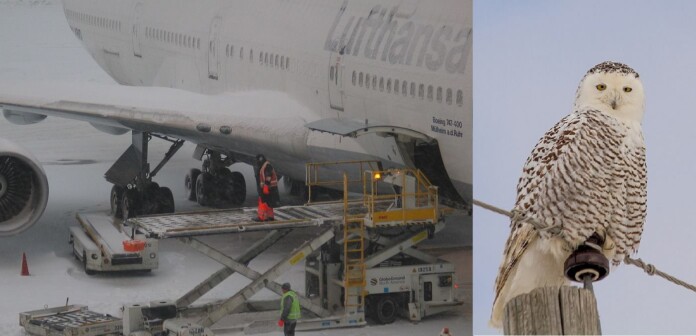
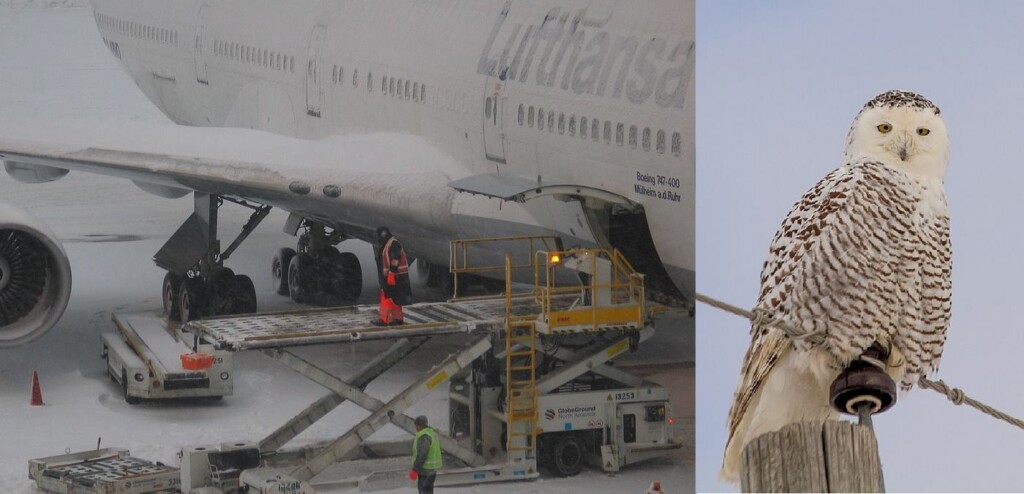
Logan International Airport under snowfall CC 2.5 Daniel Schwen(left) and a snowy owl CC 3.0. Sara
Logan International Airport under snowfall – credit CC 2.5 Daniel Schwen (left) and a snowy owl – credit, CC 3.0. Sara
A bird lover has been rescuing and relocating snowy owls from the Boston airport for over a decade, ensuring 900 of these majestic hunters can return home after winter.
The star of a recent award-winning documentary, Norman Smith, a raptor specialist at the Massachusetts Audubon Society, says it’s been an incredible experience to learn about these birds since he pulled the first one off the runway in 1981.
Logan Interntional Airport (BOS) is no stranger to snow, nor the owls of the same name that most people would associate with the Arctic. The reality is that BOS shares many similarities to their Arctic homes.
“It looks very much like the Arctic tundra,” Smith told CBS Boston. “It’s short, very short, mowed grass like it is in the Arctic. It’s surrounded on three side by water, so there’s plenty of food on the airport.”
A threat to an airplane and vice-versa, the awkward fact is that the five islands which make up East Boston contain the highest concentrations of snowy owls in the American northeast. They migrate here from the Arctic to spend the winter.
Many are attracted by the airport’s similarities to home, as Smith explained, but aside from a turbine engine, there are plenty of other hazards for them to face. One mature female had her feathers burned off after landing on a snow melter. Electrocutions and collisions with fences are other dangers.
If an owl becomes thusly injured, Smith will help transport them to the Blue Hills Trailside Museum in Milton, where they can undergo rehabilitation before Smith releases them back into wilder areas.
The ones unable to be released are available for locals to see up close at the Mass Audubon property.
The Snowy Owls of Logan Airport, a documentary produced and directed by Anna Miller, recently won the Audience Choice Award at the American Conversation Film Festival.
“It’s been an incredible experience to learn about these birds and see what they do, where they go, and how long they might live,” Smith said. “Together we can better understand, appreciate and care for the world in which we live.”
WATCH the documentary below…
SHARE The Story Of The Owl Man Of BOS With Your Friends On Social Media…
An Iranian-born British lawyer has made history as the UK’s first High Commissioner to come to the country as a refugee.
Fleeing the post-revolutionary landscape to arrive in Great Britain without a word of English on his lips, Kanbar Hossein-Bor admitted his mother was rather nervous when she first heard he was planning to join the Foreign Office, equivalent of the US State Department.
“In her mind this was a bastion of the establishment, she was a little worried of rejection,” he told the Guardian, adding that her base fear was that he “wasn’t English enough.”
Born to a Balochi family in the tri-national landscape of the arid southeast of Iran where the country shares a border with Afghanistan and Balochistan (Pakistan), his mother fled to the UK, and Kanbar had to be smuggled eastward across the Asian landscape en route to France, and eventually England to start a new life in the quiet seaside town of Southhampton, far from the rural classrooms where he grew up chanting “death to America and Israel” with his classmates.
Now, he becomes the first refugee to hold a position of High Commissioner, a senior UK diplomat who acts as ambassador to other ‘Commonwealth’ nations.
Officially, Mr. Hossein-Bor is the High Commissioner to the Republic of Fiji, non-resident British High Commissioner to the Republic of Kiribati and His Majesty’s non-resident Ambassador to the Federated States of Micronesia and the Republic of the Marshall Islands.
Because these were former British colonial possessions, the UK’s ambassador is titled High Commissioner. A Balochi, Arabic, and Farsi speaker, Hossein-Bor’s “international outlook” was fostered through tales of the Persian Empire, and interactions with other members of his Baloch family.
A stateless and often suppressed ethnic group of more than 10 million people split between the three countries, the Baloch have at various points over the last 2,000 years ruled themselves through powerful tribal dynasties.
Hossein-Bor told the Guardian that, having received the position, a particularly wild feeling came when realizing that he held the same post as former British imperial officers whose job it was to divide and rule the Baloch tribes, reflecting on Sir Robert Sandeman in particular, who literally wrote the book on the subject which Hossein-Bor has read.
“For me, to be his administrative successor—one of the great-grandchildren of the tribes— in the same building as him, both of us pursuing British national interests, albeit in a very different time, was quite a moment, because it reflects how the UK has changed, how I’m an instrument of change…”
SHARE This Inspiring Instrument Of Change In Britain With Your Friends…
Physicists experimenting with a giant particle accelerator accidently proved medieval alchemists right: that base metals could be turned into gold.
While studying electromagnetic disassociation and beam losses, the physicists at CERN’s Large Hadron Collider (LHC) saw that the lead they started with had transformed into approximately 86 billion atoms of gold.
Don’t let the high number fool you—the nugget measured in the picogram range—less than a trillionth of the weight of a paperclip, however the experiment showed that fundamental transformations of metals are possible without smashing particles together at super-high speeds.
Indeed, the experiment was able to shave several protons off of the lead atoms by positioning it so that they just barely missed each other. When this happens, the scientists explain, powerful electromagnetic fields cause them to change into different elements.
Lead contains 82 protons. By losing just 3, it arrives at the atomic number of gold.
The experiment was part of the ALICE Collaboration—a funny acronym that stands for “A Large Ion Collider Experiment.” It’s currently studying quark-gluon plasma, a state of matter difficult if not impossible to observe here on Earth, that is believed to be very close to conditions in the universe during and just after the Big Bang.
A depiction of how the gold is created – credit CERN released
To summarize the complex theory of quantum chromodynamics, the ALICE team are trying to study why the sub-atomic particles quarks and gluons are always confined together and can’t be observed in isolation.
Pursuant to that goal, the ALICE team, comprising almost 2000 scientists from 174 physics institutes in 40 countries, watched as the LHC provided collisions between lead ions, that recreated conditions similar to those just after the Big Bang. Under these extreme conditions, protons and neutrons “melt,” freeing the quarks from their bonds with the gluons.
“It’s impressive that our detectors can handle both major collisions that create thousands of particles and these smaller events that make just a few particles at a time,” Marco Van Leeuwen, who leads the ALICE project, said in a press release.
The collaboration has recently doubled the amount of gold it can produce, which only exists for an instant before breaking apart, and this is the first time they’ve been able to use their ALICE Detector instrument to study the gold they create.
“The results also test and improve theoretical models of electromagnetic dissociation, which, beyond their intrinsic physics interest, are used to understand and predict beam losses that are a major limit on the performance of the LHC and future colliders,” Jowett said in the release.
Turning lead into gold was a recurring theme in alchemy for thousands of years. It continually came up in experiments and writings by alchemists as the ultimate end of any practice. As recently as the 1500s, Caterina Sforza, the Lady of Imola, was experimenting with alchemy and managed to create talc, which, rather than being recognized for its use in protecting babies’ bottoms, was also, inevitably, believed to be capable of turning other metals like silver into gold.
SHARE This Cool Scientific Experiment And Results With Your Friends…
Quote of the Day: “The sun, the earth, love, friends, and our very breath are all parts of the banquet.” – Rebecca Harding Davis
Photo by: Quan Nguyen
With a new inspirational quote every day, atop the perfect photo—collected and archived on our Quote of the Day page—why not bookmark GNN.org for a daily uplift?
By Senado Federal Solenidades-Homenagens, CC license
90 years ago today, Uruguay’s Jose Mujica—the ‘World’s most humble President,’ was born. The 40th president of Uruguay became legendary for giving 90% of his salary to the poor, choosing to live on his austere farm (instead of the presidential palace), and using an old VW Beetle to get around town. He left office in March, 2015 due to his country’s one-term limit for presidents, and passed away just last week in advance of becoming a nonagenarian. READ some key historical facts about his tenure… (1935)
The owner of a California dry cleaner is showing those down on their luck that the community wants them to succeed—so he’s ensuring they look their best as they get ready for their next big break.
After talking to fellow owners of dry cleaners about how they could give something back to their communities, he decided to offer speedy cleaning and pressing of clothes for free to any unemployed customer heading to a job interview.
At Lux Cleaning and Alterations on 1610 W. Campbell in San Jose, owner Ali Shirkhodaei says the pro bono work is about fulfilling his long-held ambition to infuse his career with acts of kindness.
“I think it will definitely give them some hope that the community they live in cares about them,” he told San José Spotlight. “It’s not about just getting, it’s about giving. That’s the part that brings all of us joy.”
Immigrating to the United States from Iran in 1986, Ali wasn’t sure where he’d find work, even though he possessed a degree in molecular biology. When no white-collar career opportunities came knocking, he started Lux Cleaners, which became a super-successful business in the Silicon Valley.
He says about 5 to 10 people a week arrive to take advantage of his generosity. (See video below...)
Spotlight reports that just recently, a woman came to him for a shirt pressing en route to a tech company interview and, afterward, she stopped by to tell Shirkhodaei that she got the job—all before leaving a 5-star Yelp review saying “I definitely felt the love of my community.”
Ali said he and his team were more excited than she was.
Spotlight described him as possessing a typical immigrant work ethic: finishing in four days what other tailors will do in four weeks, and cleaning complicated items like Indian sarees and wedding dresses. He does it all with a smile, hoping his customers pay forward the kindness elsewhere.
“That’s one of the things that I love about having a small business and dealing with people on a daily basis,” he told the Spotlight. “I see many different faces every day and believe me, a small smile can change their day.”
SHARE This Heart-Warming Local Story From Northern California With Your Friends…
For more than a decade, parents were inundated with unsubstantiated claims that violent video games influence children and teens to be violent.
Now, from California comes the story of exactly the opposite occurring. A teenage gamer, who routinely engages in virtual violence, took action to prevent violence from actually happening.
On May 11th, in Tehama County, members from the Sheriff’s Office Major Crimes Unit carried out a search warrant on two houses on Bowman Road and Lake California.
Inside, two juveniles aged 14 and 15 were found to be in possession of improvised explosive devices, guns, and a manifesto explaining the motives behind a yet-to-be-carried-out attack which in their minds killed one set of parents, and 100 people at Evergreen Middle School, in Cottonwood.
Now in juvenile detention awaiting formal prosecution, the media has been informed that the search warrants were approved based on the information provided by an as-yet unidentified teenage video gamer from Tennessee, who heard the imprisoned pair discussing their plot whilst playing computer games with them.
Along with their comments, the “hero” was able to receive a photo from the two teens in which they were dressed in the clothes of the Columbine High School shooters.
All of this was revealed in a press conference by Tehama County Sheriff Dave Kain, who took questions from the media before eventually inviting, and expressing his hope, that the young man would step forward and be acknowledged for his heroism.
“In the end, I’d like to celebrate this young man—this particular young man out of Tennessee—this young hero, and focus the attention of this event on what it deserves to be: that this young man had the courage and heroic instincts to call our agency and notify us in order to mitigate any possible threat to our citizens, and particularly our young people,” Kain said.
“I think this is a good case of where it’s evident—if you see something, say something. And in this case, it worked.”
In a letter addressed to the Evergreen school families, superintendent Brad Mendenhall said that county schools had become more secure in recent years with the addition of high fences, security cameras, constant monitoring, and limited points of entry.
Sheriff Kain expressed his confidence that the plot was entirely prevented, such that he told the press his own son returned to school on the day it reopened.
CELEBRATE This Hero Gamer’s Instincts And Maybe Share It With Teens You Know…
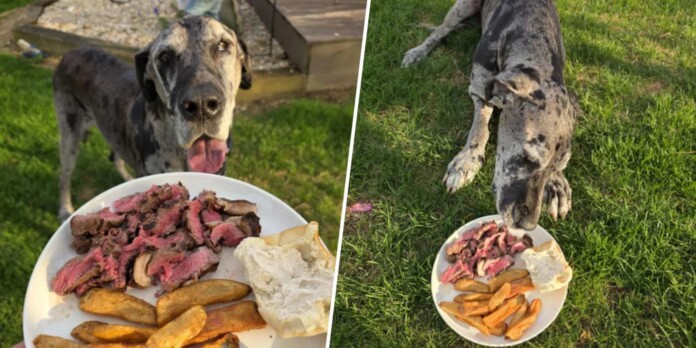
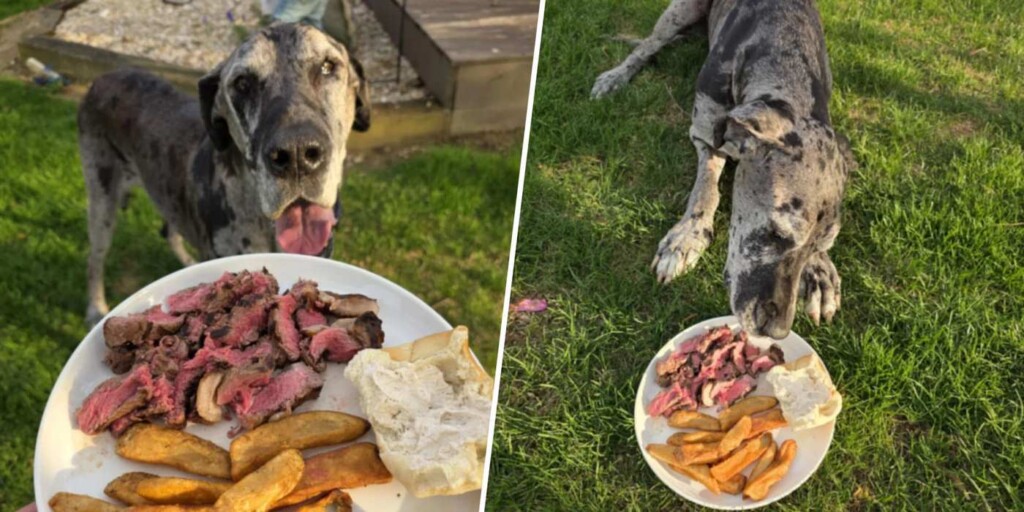
Iris the dog with her steak - Courtesy Hunter Metzger
Iris the dog with her steak – Courtesy Hunter Metzger
From Pennsylvania comes the story of a man who had to make the difficult decision to put down his dog, but who couldn’t believe the sendoff he received from the local Texas Roadhouse.
Receiving a to-go order with the note “last meal for our dog,” the staff made sure it came through with the tender care of a dinner prepared by family, for family.
Months ago, Hunter Metzger from Ephrata, Pennsylvania, discovered that his 120-lbs, 8-year-old great dane Iris had cancer. None of the treatments worked, and it was decided that the dog would be euthanized.
Following the great poet’s words however, Metzger was determined not to let his beloved pooch “go gently into that goodnight.” The day before end, family and friends arrived for a party in her honor—to feed Iris treats and shower her with affection. For dinner, Metzger got the idea to order a fat juicy steak from Texas Roadhouse.
He ordered an 8-ounce New York Strip, (no seasoning) steak fries, and mashed potatoes with butter, typing out in the special instructions field “Last meal for our dog. Please prepare with love.”
“My to-go team actually saw the message,” Kate Weston, the kitchen manager for Ephrata Texas Roadhouse, told TODAY.com. “I was like, ‘Oh my god, we need to make sure that this is the best meal we’ve ever made.’”
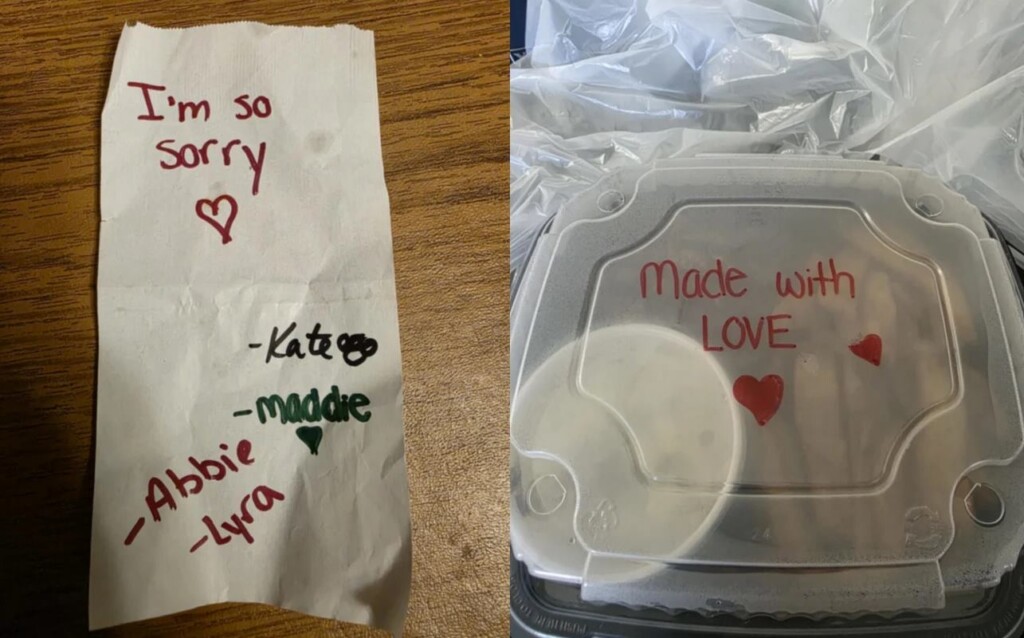
When Metzger came to retrieve it, the whole staff came out to offer condolences, “blowing him away.” The receipt apologized for his loss—signed by members of the to-go and kitchen staff—and the to-go container had the words “made with love” written in red marker.
“It just blew us away,” Metzger says. “She was just put down later that night, and the next morning, I happened to check my emails and I saw they had also refunded my meal.”
Metzger later posted an account of the event on the Ephrata town Facebook page, with comments pouring in recognizing Texas Roadhouse as a valuable member of the community.
TODAY also spoke to a corporate representative, who admitted it was a simple act, but said they were “so proud” of their team for displaying “such empathy and humanity, values we strive to uphold every day.
SHARE This Beautiful Story Of Corporate Restaurant Empathy With Your Friends…
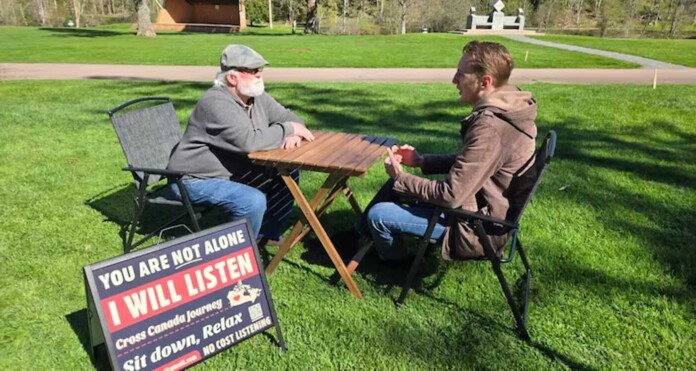
Retired social worker listens to strangers across Canada - Courtesy of Paul Jenkinson
Retired social worker listens to strangers across Canada – Courtesy of Paul Jenkinson
A former social worker in Canada is enjoying his retirement in a very similar way to how he enjoyed his long career: by listening to people.
Likening it to being the “stranger on the airplane” in the seat next to you, Paul Jenkinson is currently on a cross-Canada tour where he shows up, sits down, and listens—to anyone, and about anything.
Good listening is a skill rarely found in the world, and during a career as a registered social worker in Nova Scotia and spokesperson for Advocates for Care of the Elderly, it was part of the job description.
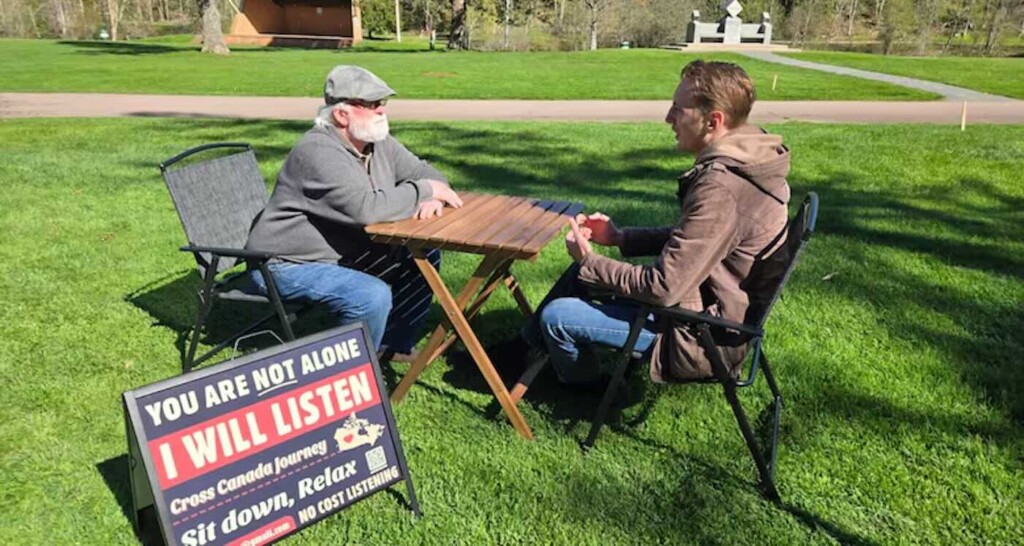
I Will Listen isn’t an event—it’s just two folding chairs as a wooden cafe table—but it is coming to a town near you.
“I’m there as a fellow human to make connections,” Jenkinson told the host of CBC News’ As It Happens. “I just create that safe space for them, a little bit like the stranger on the airplane that you’re never going to see again.”
How many people do you know who’d love someone that isn’t a therapist or a family member to just sit down and talk to? Jenkinson says that those who eventually take him up on his offer don’t tend to do so immediately.
“I think they’re curious, for sure. ‘Who is this older man?'” he said. “People go back and forth a few times, surreptitiously as it were, getting some courage to come and sit down.”
He added that it’s not all lost students and recovering addicts. Sometimes, people want to come express the things they’re proud of or the good deeds they’ve performed, including volunteering for others just like Jenkinson.
There’s no timeline, no topics barred, no charge, and no pressure, as well as a promise to keep everything confidential unless the speaker expresses the intention to harm themselves or others.
Oh, and he doesn’t have a home. Jenkinson isn’t destitute, he’s a transient with financial means, and will come anywhere he’s invited. At the moment he’s in Nova Scotia, with the next stop being Prince Edward Island, and a loosely conceived plan to be in British Columbia by winter.
SHARE This Great Man’s Important Mission With Your Canadian Friends…
Quote of the Day: “The violets in the mountains have broken the rocks.” – Tennessee Williams
Photo by: Ales Krivec for Unsplash+
With a new inspirational quote every day, atop the perfect photo—collected and archived on our Quote of the Day page—why not bookmark GNN.org for a daily uplift?
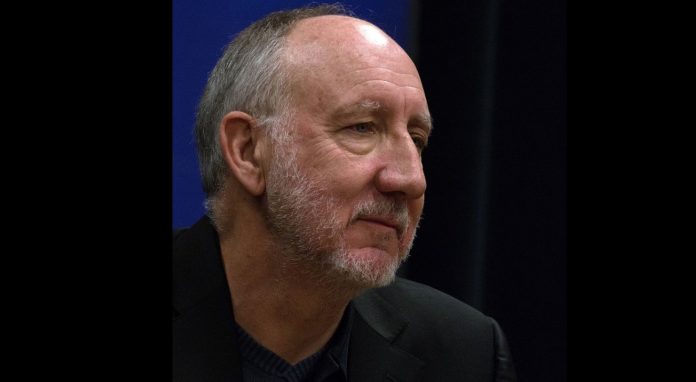
Pete Townsend in 2012 - credit, CC 2.0. Ross Belot
Happy Birthday to Pete Townshend who turns 80 today. The English musician, singer-songwriter, and co-founder of The Who. Born in London to musician parents, he taught himself how to play guitar and never learned to read music. Yet, he became one of the most influential guitar players and rock composers in the world, with songs like “Behind Blue Eyes,” “Magic Bus,” “Love Reign O’er Me,” “Pinball Wizard,” “Can You See The Real Me,” “Let My Love Open The Door,” “See Me Feel Me,” “Just A Little is Enough,” “Save It For Later,” and “Baba O’Riley” (Teenage Wasteland)—including 12 studio albums for The Who. READ some great quotes from the great man… (1945)