











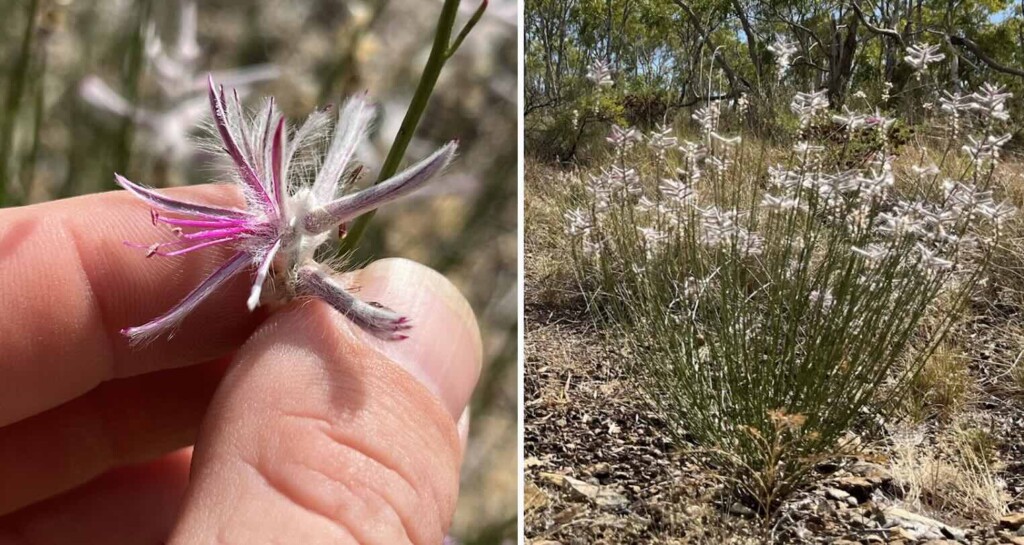
A plant-lover who snapped a photo of an interesting shrub he found on a trip to the Outback inadvertently proved that it wasn’t, in fact, extinct, something which scientists had presumed.
With 60 years having passed without a confirmed sighting of the plant, it was chalked up as a casualty.
It’s becoming more and more clear within university ecology departments that the citizen science platform iNaturalist can act as a catalyst for major new discoveries, and that it, and other platforms like it, are actually becoming crucial to the work of scientists.
To people like Thomas Mesaglio, a botanist at the Queensland Herbarium, who, constrained by the vastness and diversity of a place as big as Australia, can’t be everywhere at once, the platform allows diligent hikers and nature lovers to act as his eyes and ears.
Aaron Bean was just such a nature lover: banding birds on a sprawling outback station in a remote corner of northern Queensland. In the course of his work, he spotted a plant that looked interesting.
A professional horticulturalist, Aaron snapped a couple of photos and, when he got back phone reception, uploaded his finding to the vast citizen scientist database, iNaturalist.
Four million people across the globe have logged almost 300 million observations of more than five hundred thousand species to iNaturalist, making it one of the largest citizen science platforms in the world.
Once online, Aaron’s pictures found their way to a different Bean, Anthony Bean, an expert botanist from the Queensland Herbarium who immediately recognized the plant as something very special indeed: a presumed extinct plant not seen since the 1960s that he had described himself ten years earlier.
“It was very serendipitous,” says Mesaglio from the UNSW School of Biological, Earth and Environmental Sciences, who has written about the rediscovery for the Australian Journal of Botany.
“Aaron Bean is an avid iNaturalist user who opportunistically took some photos of a few plants that were interesting on the property.”
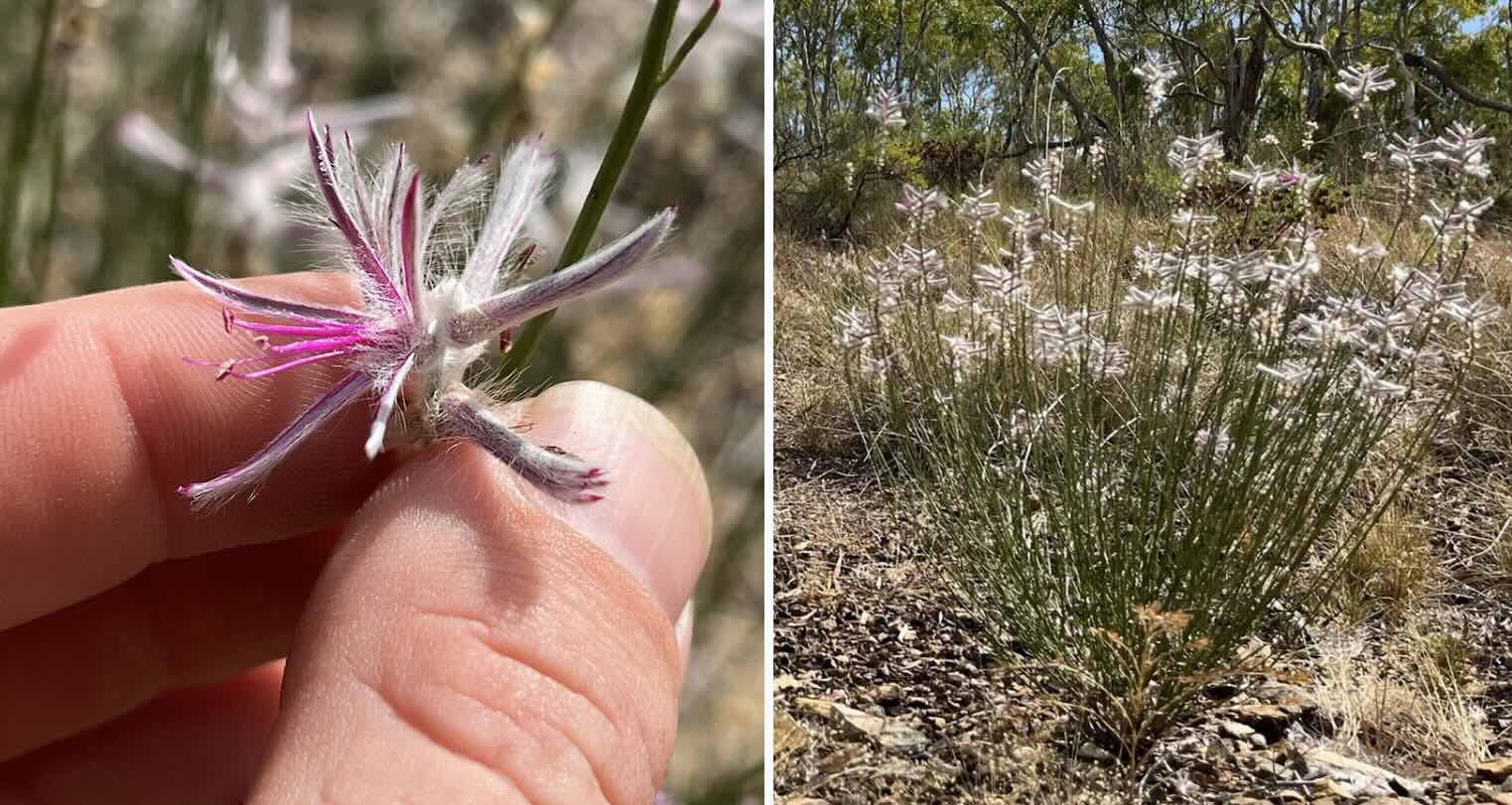
Ptilotus senarius is a small, slender shrub with pleasing purple-pink flowers that look a bit like an exploding firework with feathers.
It’s found only in a band of rough country near the Gulf of Carpentaria, and hadn’t been collected since 1967—presumed to be one of the 900 or so plant species that have gone extinct in the wild internationally since the 1750s.
But with Anthony and Aaron Beans’s keen eyes, and a land-owner willing to gather a specimen, Ptilotus senarius is now confirmed to still be hanging on, and actually recently moved onto the critically endangered species list where scientists and conservationists can help it.
“It’s one of these situations where everything had to fall into place and there was a bit of good fortune involved,” says Mesaglio.
It’s just the latest example of an emerging trend: citizen scientists taking pictures of plants and animals they come across, uploading them to databases like iNaturalist, only to learn they’ve stumbled upon something we thought was lost, or else is completely new to science.
Freehold land covers around a third of the Australian continent, and requires permission to legally cross.
“If you are the property owner or you’re someone who has permission from the owner to be there then suddenly it opens up this whole new world,” Mesaglio, who said he thinks it would be a good idea for these platforms to include professional instructions on how make a proper science-based observation.
MORE iNATURALIST TRIUMPHS: Texas Lists Two Critical Pollinator Flowers as Endangered Species, Practically Guaranteeing Milkweed Recovery
For example, in New South Wales, the Land Libraries project run by the state government’s Biodiversity Conservation Trust provides equipment and training to landowners in how to document the biodiversity on their properties and upload it to citizen science platforms.
Mesaglio is supportive of these program and wants to see them expanded not just because it gives him digital access behind the fences of private properties, but because more people using these tools has a conservation benefit in and of itself.
AUSTRALIAN OUTBACK: This Little Marsupial Was Almost Extinct But Recovered Totally During Australian Mega Drought
“Engaging landholders themselves with science and the natural world and getting them more passionate about diversity makes them far more likely to be interested and invested in protecting that diversity,” Mesaglio says.
Even attributes like plant smell can give scientists vital clues about a plant’s identity, Mesaglio says.
“The more information you can provide and the more context you can provide, the more potential uses that that record will have in the future.”
OTHERS GETTING INVOLVED: Thousands of Native Plants Remain Unphotographed, But You Can Help Fill the Gaps for Scientists
In separate research, Mesaglio found iNaturalist had been cited in papers covering 128 countries and thousands of species, underscoring how important the resource has become.
With more finds uploaded every day, and the quality of the data improving, Mesaglio knows there are even more discoveries waiting to be found.
SHARE This Story Of A Committed Naturalist Helping Science Without Knowing It..