










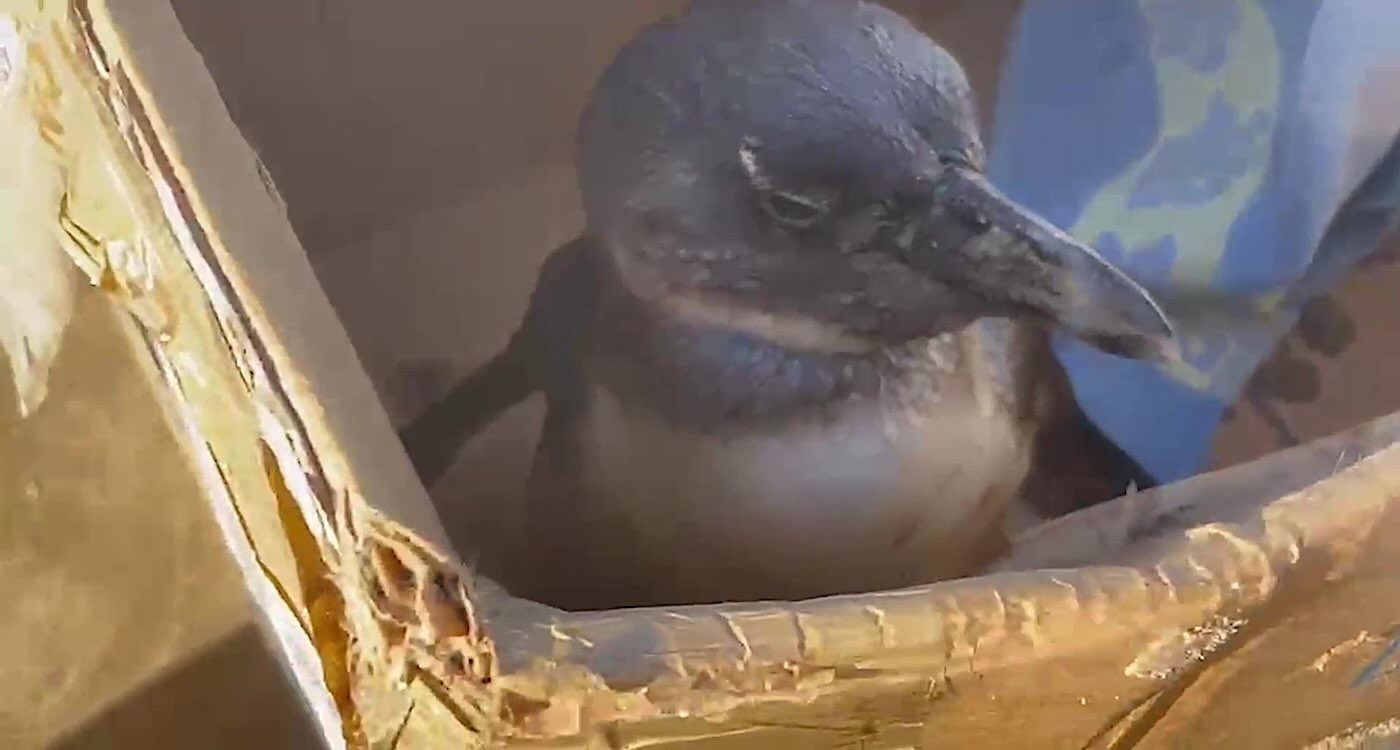
Rescuers raced to save a stranded penguin after a jogger spotted it and called for help.
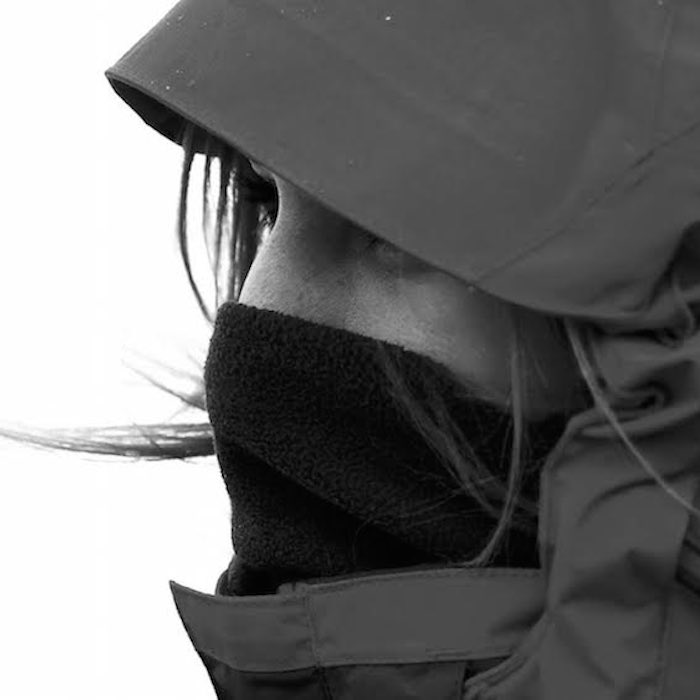
Two weeks ago, wildlife veterinarian Catherine Hauw was alerted that there was an African penguin lying helplessly on a beach with its head buried in the sand.
The 35-year-old medic rushed to the scene at Brenton-on-Sea in South Africa alongside a medical assistant and discovered the critically endangered bird weak and motionless with its beak in the sand.
Using a towel and a box, the rescuers carefully transported the penguin from to a nearby veterinary clinic for urgent treatment.
Luckily, the penguin had suffered only a small wound to its abdomen, likely caused by a predator attack.
Experts believe the injury slowed the penguin down and caused it to become separated from the rest of its colony.
“We were quite concerned when we first arrived on the scene,” said Ms. Hauw from Paris, France.
“We had no idea how long the penguin had been lying there and we just really wanted to make sure it was alive.
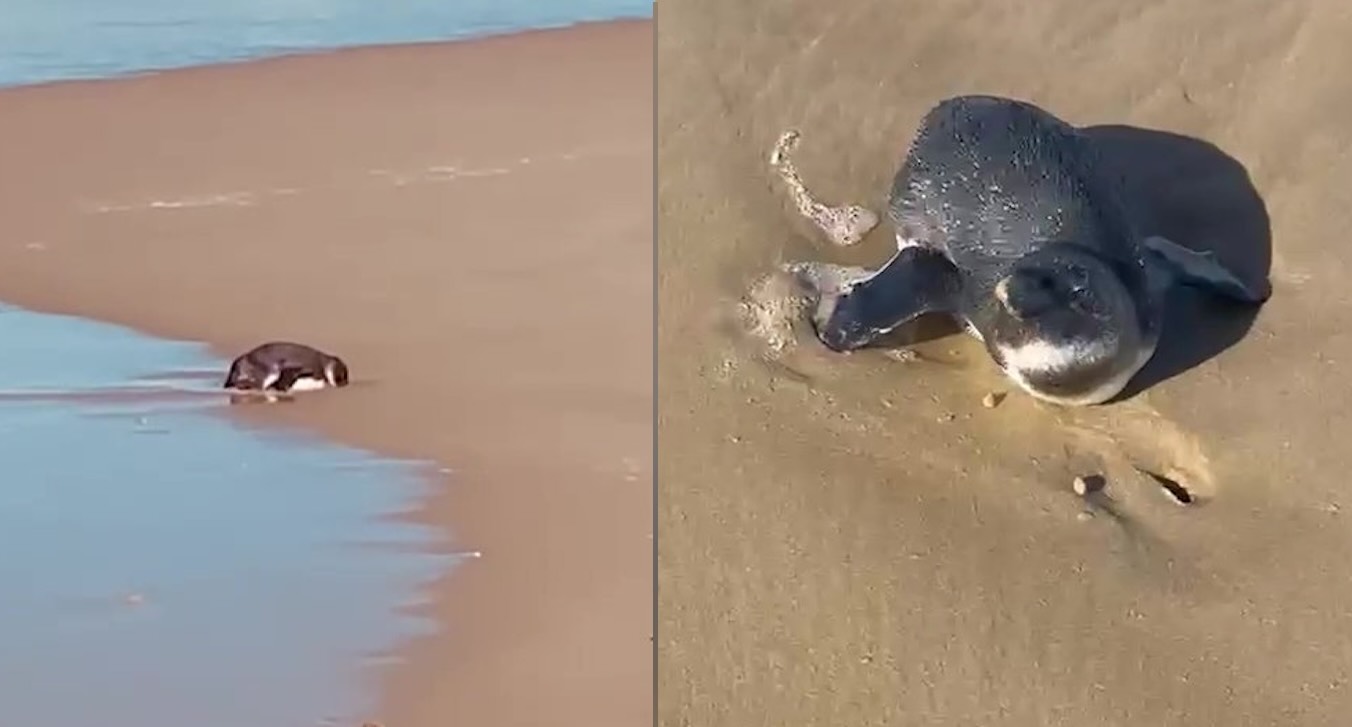
“Once it lifted its head, we knew that was a good sign—but it still needed our help.”
The African penguin (Spheniscus demersus) is the only penguin species native to the African continent. Also known as the ‘jackass penguin’ due to its distinct, donkey-like braying call, it is easily recognized by its ‘tuxedo’ markings and unique chest dot patterns.
Their wild populations have plummeted due to habitat destruction, overfishing, and warming ocean currents that have altered fish migration patterns, forcing penguins to swim longer distances to hunt.
“It’s really important in these situations that if a member of the public discovers the animal that they contact professionals,” stressed Hauw.
“We were able to assess the penguin’s health on the beach and safely take it to a general vets clinic nearby.”
MORE PENGUIN GOOD NEWS:
• Celebrating with a Cake Topped with Fish, World’s Oldest Penguin Turns 38
• Big White Dogs Save the World’s Smallest Penguin in Australia
• Penguin Becomes ‘Guide Bird’ Companion For Zoo Pal Suffering with Cataracts: Waddle I do Without You?
After being treated with electrolytes for dehydration at the clinic, the bird, which was not malnourished, was transported to a specialist sanctuary where it will be rehabilitated before being released back into the wild.
“They also release the penguins back out into the wild as part of a colony, so they’re not left alone.
Upon release, wildlife rescuers are confident the bird can restart its life with a new family.
SHARE SOME GOOD NEWS With Wildlife Lovers On Social Media…