













A University of Michigan researcher stumbled upon a crucial caveat for every study of microplastics that has been scaring us for years now. Lab gloves may have skewed the data in the research.
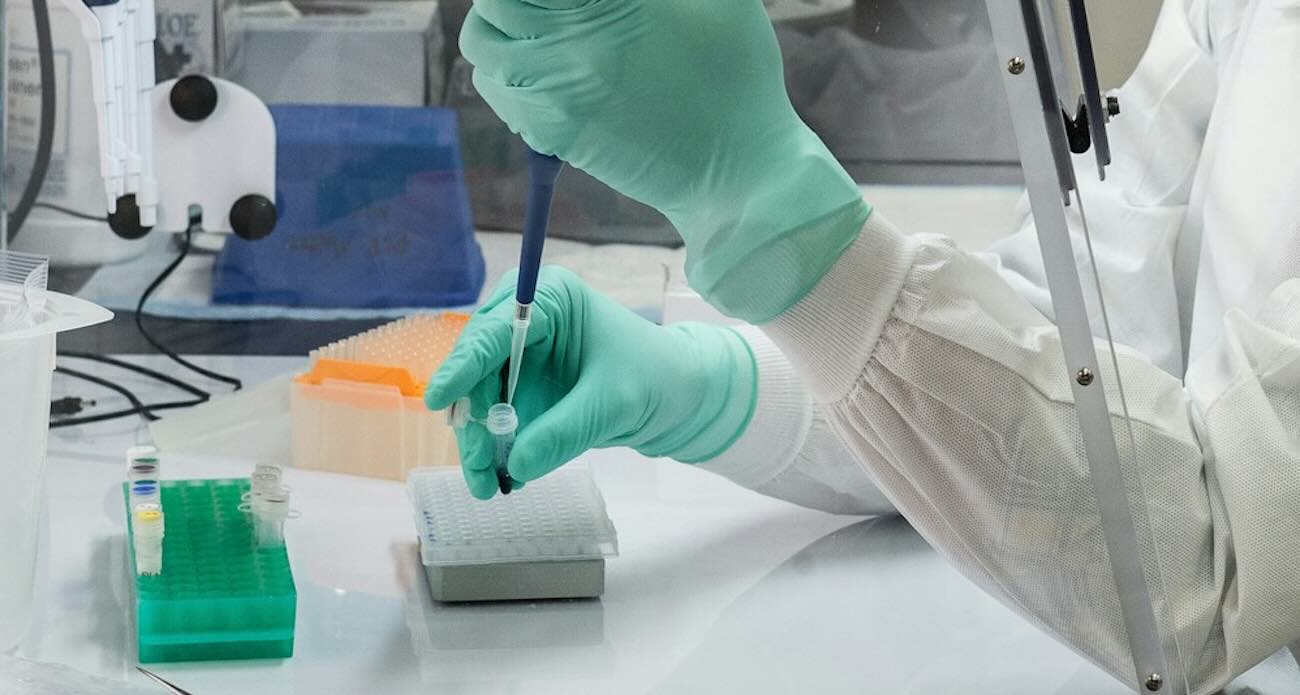
She discovered that residue from latex or nitrile gloves may be unintentionally contaminating lab equipment used to measure microplastics in the air and water, thus inflating estimates of the pollution.
The startling discovery began as a “wild goose chase” in the lab, when chemistry grad student Madeline Clough was working on a project to examine microplastics in Michigan’s atmosphere.
The researchers used air samplers which collect particles from the atmosphere and deposit them onto a metal substrate. Using light-based spectroscopy, the researchers are then able to determine the types of particles.
When Clough examined the substrates to estimate how many microplastics she captured, the results were “many thousands of times greater” than what she expected to find.
“It led to a wild goose chase of trying to figure out where this contamination could possibly have come from, because we just knew this number was far too high to be correct,” Clough said in a University press release.
“Was it a plastic squirt bottle, was it particles in the atmosphere of the lab where I was preparing the substrates? We finally traced it down to gloves.”
Wearing gloves is recommended by all the current literature in the microplastics field, so Clough sought new answers.
The salient study
Particles called stearates—a kind of salt or soap—were found to be the culprits. Manufacturers coat disposable gloves with these particles to make them easier to peel from the molds used to form them.
They are “chemically similar” at a structural level to microplastics. They also look nearly identical—which can lead to false positives or inflated numbers of microplastic pollution, like Clough and her colleagues experienced.

So the researchers designed a new experiment to figure out how widespread the problem is. They tested seven different kinds of gloves, including nitrile, latex, and cleanroom gloves, as well as the most common techniques microplastic researchers use to identify microplastics.
The experiment tried to mimic every point and variety of contact that would occur in a research environment touching a scientist’s gloved hand. This would include a filter or a microscope slide—any piece of technology that a researcher might use over the course of investigating microplastics.
2,000 false positives per millimeter
They found that, on average, the gloves imparted about 2,000 false positives per millimeter squared area.
“If you are contacting a sample with a gloved hand, you’re likely imparting these stearates that could overestimate your results,” Clough said.
The fewest particles were imparted by cleanroom gloves. They are made without the stearate coating; are low-lint to prevent contamination in the lab; and useful in “ultra-pure” controlled environments like electronics manufacturing and pharmaceutical facilities. Unfortunately, they are 2-5 times more expensive than standard medical or industrial gloves.
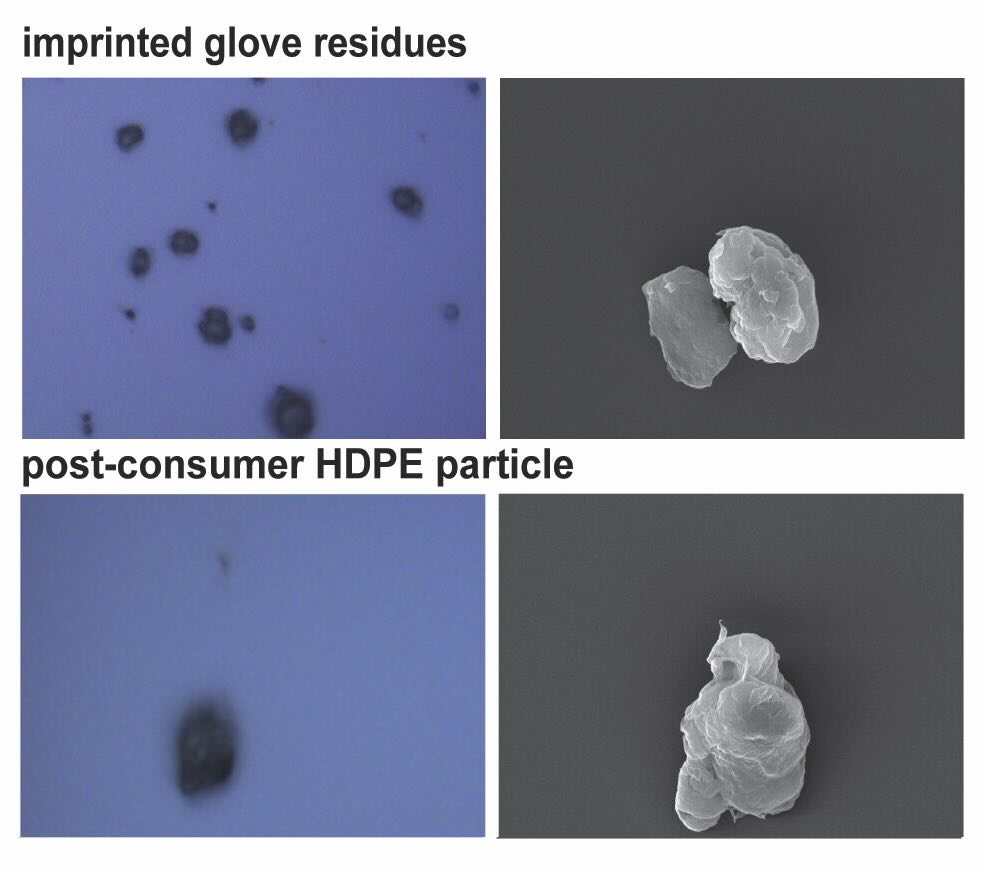
The researchers also designed another experiment to determine whether they were able to distinguish what a true microplastic looked like versus one of the stearate salts from the gloves using scanning electron microscopy as well as light-based microscopy.
They found that the stearate was visually impossible to distinguish from polyethylene, the plastic it resembles.
But the chemistry team was also able to find other methods—in collaboration with grad student Eduardo Ochoa Rivera and U-M professor of statistics Ambuj Tewari—that can differentiate between the false positives coming from the glove and microplastics in the environment. This can help researchers revisit potentially contaminated datasets.
MORE POSITIVE MICROPLASTICS NEWS:
• Okra and Fenugreek Extracts Safely Remove Microplastics From Water
• Teens Invent Device to Remove Microplastics in Ultrasound Waves, Winning $50k
• Engineering Student Turns Red Solo Cups into Stylish Sweaters That Don’t Shed Microplastics
“For microplastics researchers who have these impacted datasets, there’s still hope to recover them and find a true quantity of microplastics,” said Clough, whose work was just published in the journal RSC Analytical Methods.
“This field is very challenging to work in because there’s plastic everywhere,” said chemistry and engineering Professor Anne McNeil, the senior author of the study.
“That’s why we need chemists and people who understand chemical structure to be working in this field.”
In the conclusion of their paper, the team extolled researchers to wear cleanroom gloves and take other precautions so as not to skew the data and unknowingly make the microplastics outlook even more alarming.
“We implore microplastic researchers to address glove-based contamination and avoid overestimating microplastic pollution in the environment.”
SHARE THIS HOPEFUL OVERSIGHT With Eco-Lovers on Social Media…