












Solar panels grown above grapevines substantially increased the development and fruit production of the crop—all while generating clean energy.
The technique, known as agrivoltaics, has been well-studied in other settings, but how it would effect the delicate science of viticulture has not.
Researchers from the University of Bari conducted a study on a vineyard in southern Italy’s Puglia region (think the heel of the boot) where intense sunlight and the hot Mediterranean climate produces exceptional growing conditions for all sorts of Italian favorites like olives, tomatoes, and grapes.
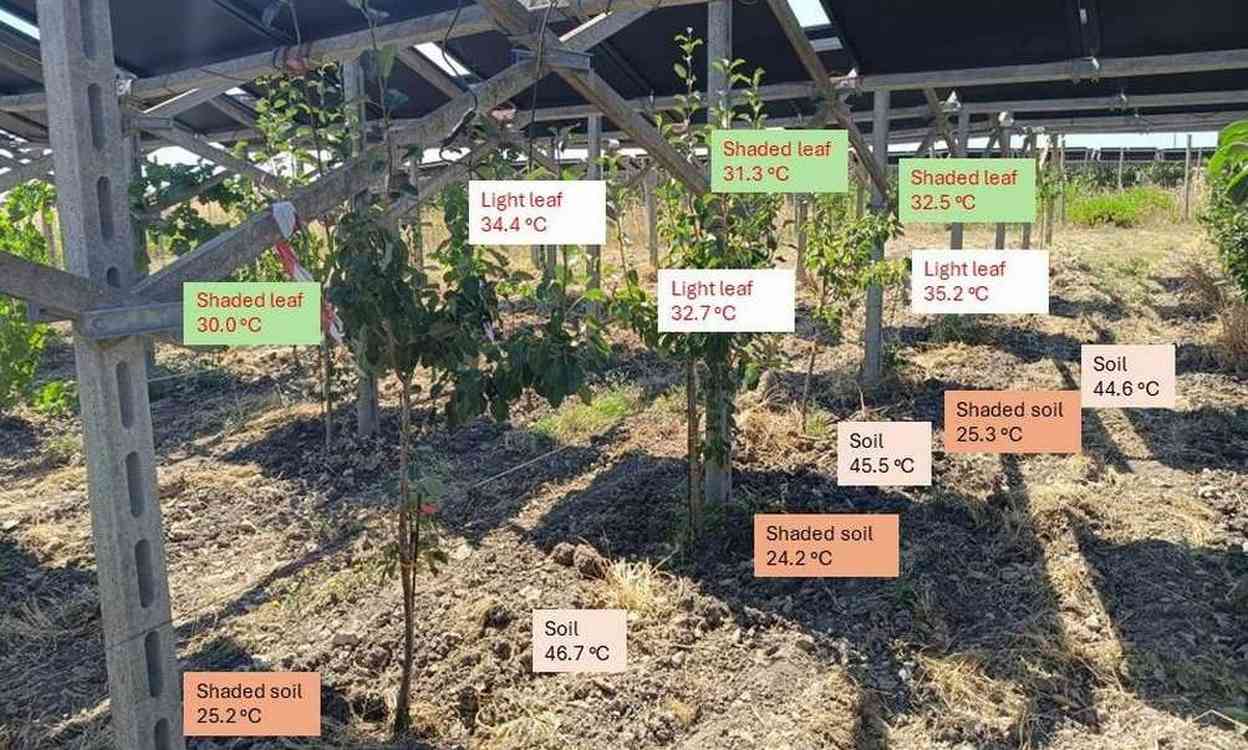
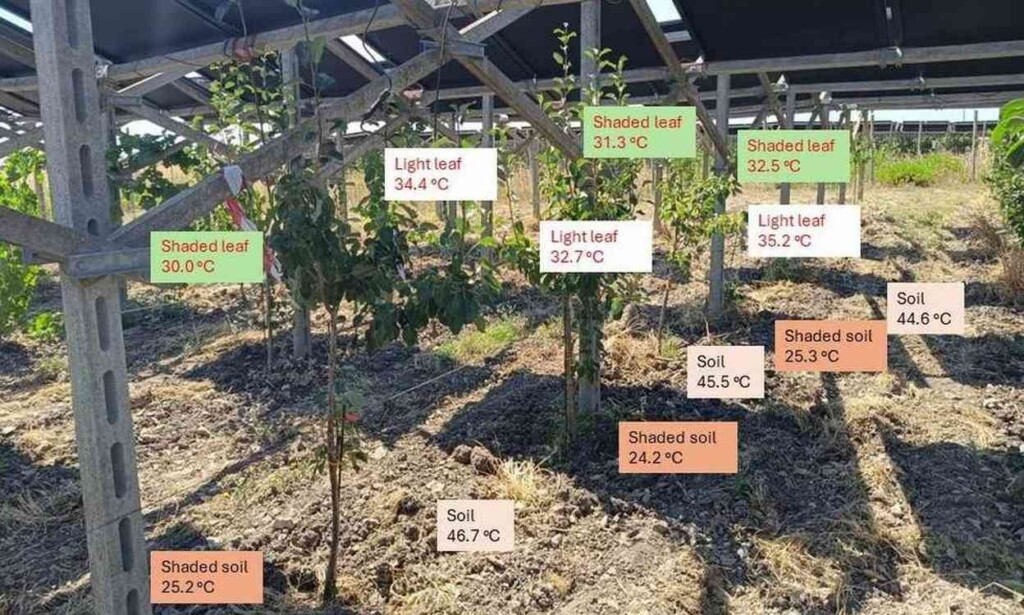
Previous research into agrivoltaics shows that growing crops under banks of solar panels produces a synergistic effect: the partial shade helps plants focus on growing and less on protecting themselves from the Sun. The partial shade also increases ground-level humidity under the panels, which in turn radiates up and helps to moderate the temperatures of the panels’ circuitry, modestly increasing their energy output.
Whether this phenomenon would provide a beneficial change to the growth and development of the Primitivo, or Zinfandel grapes on the researchers’ test field wasn’t immediately clear, so they set about installing solar panels over a section of a 2.2-acre vineyard of 8-year-old grape vines.
Giuseppe Ferrara, a professor at the University of Bari’s Department of Soil, Plant and Food Sciences, told PV Magazine that the results suggest agrivoltaics can work wonders on vineyards, yet should not be considered a catch-all technique as shade tolerance will vary between regions and grape varietals.
“Certainly, this applies to grapevines, particularly in a hot, dry climate such as Puglia in summer,” Ferrara said. “We believe similar results can also be expected for other species under comparable climatic conditions, while always considering the shade tolerance of the species being studied.”
The results were striking. The shoots produced during the growing season by the partially panel-shaded grapevines were more than twice as long as those grown under full-sun. The weight of each grape bunch produced by the panel-shaded vines was almost thrice as heavy by harvest time as the sun-grown grapes.
ITALY’S WINE CULTURE:
- Raising a Glass to the Bronze Age Vintners Who Domesticated the Grape 3,200 Years Ago
- Making Wine the Way the Romans Did: These Wineries are Cutting The Additives
The berries also developed lower sugar concentrations and greater amounts of organic acids like polyphenols. In other words, the grapes were healthier as well when grown under the panels. This is because there is less heat stress, photosynthesis can occur more easily, and the plant can invest more energy into other metabolic processes.
Lastly, with limited rainfall, irrigation in Italy’s southern regions can be a challenge. The reduced watering demands of the partially shaded grapes can relieve pressure from aquifers and other local water sources, and lower a grower’s utility bills.
ANOTHER SMART VINEYARD: Coastal Winds Not Only Ripen Grapes, They Power Vineyard’s Winemaking Sustainably
Ferrara and his colleagues cautioned that there are vine-growing regions in Italy, like the morainic-grown grapes of Italy’s lake district, that would not benefit from agrivoltaic setups.
Viticulture in Italy goes back to the Bronze Age, and grape varietals grown on the peninsula have experienced millennia of change and evolution. From the Etruscans and visiting Greeks to the Romans and beyond—up to present day—this process of refinement, experimentation, and continual adaptation continues.
SHARE This Great Experiment Generating More, Healthier Grapes Alongside Green Energy…