












World’s Largest, Liquid-Air Renewable Energy Storage System Switches On
China Switches On World’s Biggest Example of New, Cheap Green Energy Storage
(I think for SEO sake, we could consider keeping the clunkier ‘Liquid Air Energy Storage’ in the headline)
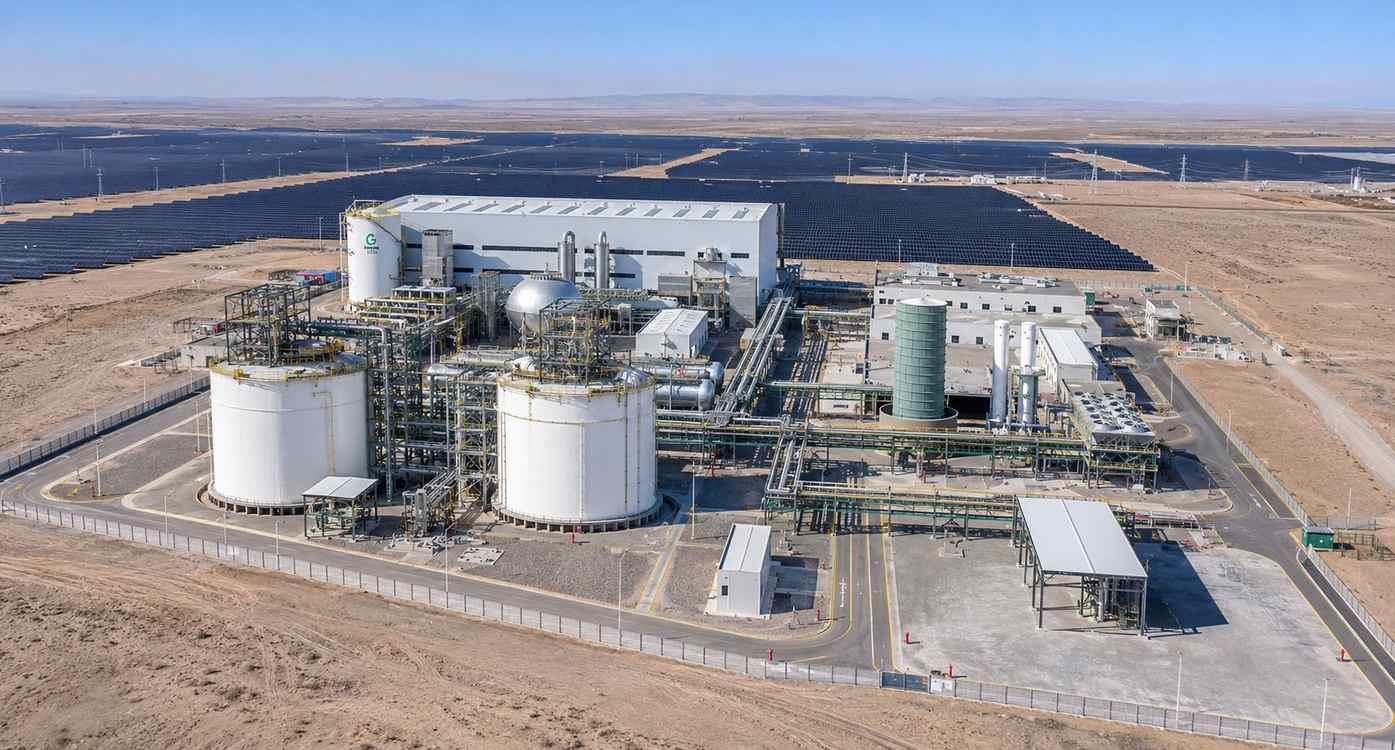
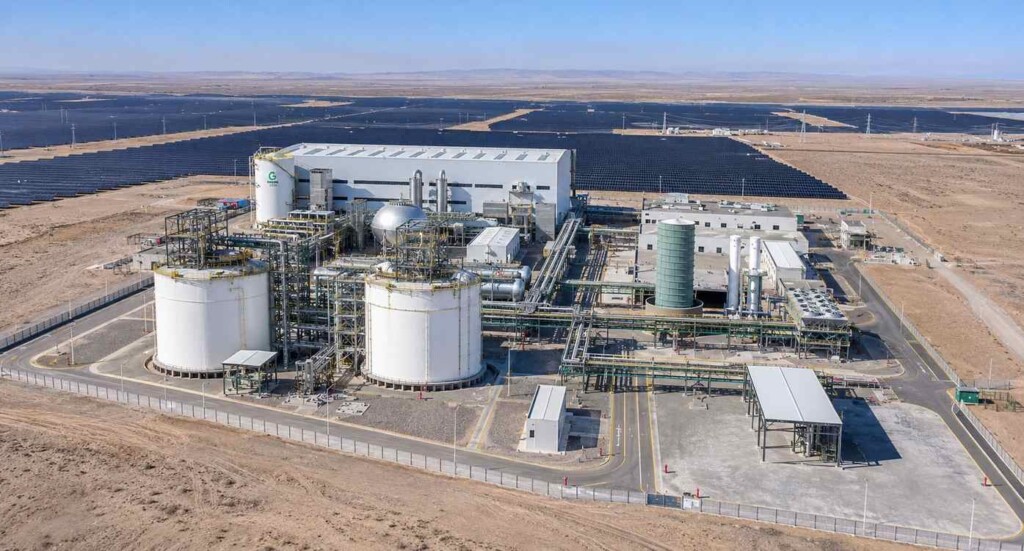
The world’s largest demonstration plant for a new kind of renewable energy storage is up and running in the west of the China.
Called liquid-air energy storage (LAES) the plant uses renewable electricity to compress air to extreme densities until it turns to liquid. It can then be rapidly released to power a turbine and discharge that green energy back into the grid.
China has received numerous plaudits for its rapid adoption of renewable energy at both scale and speed, and this new facility in Qinghai Province brings in a key missing element to the renewable build-out: grid-scale battery storage for when the Sun isn’t shining and the wind isn’t blowing.
Not that either of those happen very often in Qinghai, which encompasses parts of the Tibetan Plateau, and Mongolia-like grasslands and desert, where both sun and wind are famously relentless.
Described as “the world’s largest grid-connected liquid-air energy storage facility by both rated power and energy capacity,” the facility is rated at 600 megawatt-hours, and will substantially back up the renewable contribution to the regional power grid by providing 10 hours of continual power supply when necessary. Additionally, it was built with its own solar farm, rated at 250MW.
LAES works by turning ordinary air into a liquid, keeping that liquid in insulated tanks, and then converting it back into electricity when needed.
When electricity is plentiful, it powers machinery that draws in air, compresses it and cools it to extremely low temperatures of around -190°C. At this point, the air becomes a liquid, taking up far less space than it did as a gas.
When power is needed, the liquid air is pumped to high pressure and warmed. As it warms, it rapidly expands back into a gas and can be used to spin a turbine connected to an electricity generator, sending power back to the grid.
A cool party trick is how the system utilizes the excess heat and cold: it stores both for heating and cooling the air as needed, reducing energy consumption and environmental disturbance.
ALSO CHECK OUT: New Solar Tech Makes Desalinating Seawater Cheaper Than Producing Bottled Water
Developed by state-owned China Green Development Investment Group (CGDG) in cooperation with the Technical Institute of Physics and Chemistry of the Chinese Academy of Sciences (CAS), it has 20% more capacity than the first commercial-scale LAES project in the US which was slated for construction in northern Vermont.
The development was undertaken by Highview Power and Encore Renewable Energy, and if built will help solar and wind gain a larger purchase in a high-demand energy district known as the Sheffield-Highgate Export Interface.
SCALING UP RENEWABLE ENERGY: World’s Largest Battery to Revolutionize Renewable Energy Storage in Maine with ‘Reverse Rusting’
Rated at 400MWh, it could deliver grid-scale renewable electricity for 8 hours straight, helping to reduce the use of fossil fuels when the interface is overloaded, which according to Recharge News happens frequently.
Cost comparisons with standard lithium-ion battery storage systems are apparently very appealing, with LAES costing at least 33 cents on the dollar when the two systems are compared, according to financial analyst and asset management firm Lazard.
SHARE These Two Fantastic New Ways To Deploy Renewable Energy To The Grid…