














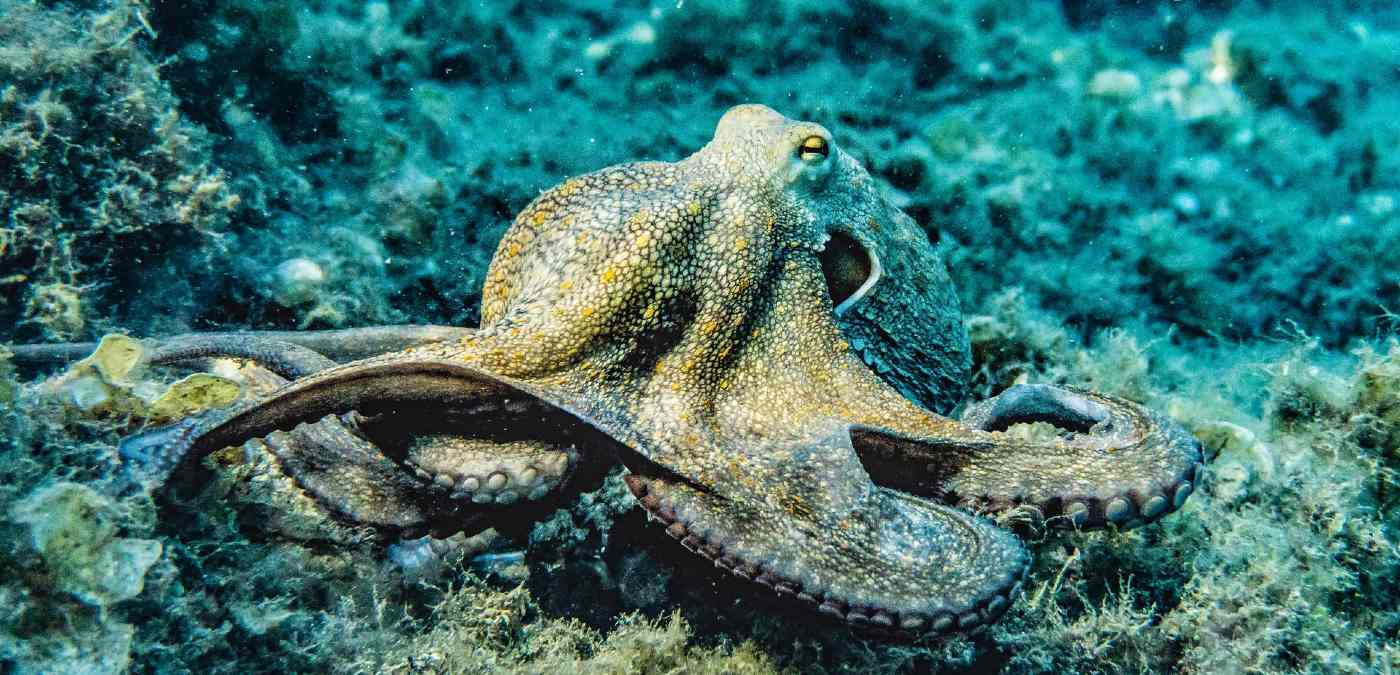
It was 75 years ago the last time there were as many octopus in British waters as there are now, with the UK’s Wildlife Trusts declaring that 2025 was the ‘Year of the Octopus.’
These eight-legged spineless creatures, one of the most fascinating to inhabit our planet, have been seen in record numbers by divers, and caught in record amounts by commercial fishermen.
Scientists suggest it could be milder winters leading to the “bloom,” which is the term for octopus birthing seasons.
“It really has been exceptional,” says Matt Slater from the Cornwall Wildlife Trust. “We’ve seen octopuses jet-propelling themselves along. We’ve seen octopuses camouflaging themselves, they look just like seaweeds,” he told the BBC.
“We’ve seen them cleaning themselves. And we’ve even seen them walking, using two legs just to nonchalantly cruise away from the diver underwater.”
Regarding the fisheries, it’s been a banner year for the industry. 2021 and 2023 have seen the highest yearly catches recently, when around 200 metric tons were landed. This year it was 12-times that amount.
Interestingly, their chief prey species, lobsters, crayfish, and scallops, have maintained year-over-year populations, with only crab falling.
It’s up to scientists now to figure out whether this octopu-nanza is part of a one-off event, or something that will be a more permanent feature of British seas. If the suggestion that warmer winters may be behind the massive bloom, future hatching seasons could be similarly large.
While it may be premature to celebrate an unusual effect that seems tied to climate change, it’s hard to argue with the smiles on the faces of the divers, the diners, and the fishermen.
WATCH the octopuses ‘parascoping’ below…
SHARE This Boon To Fishermen On Social Media…