













A changing climate seems to be shortening Africa’s dry season, resulting in less land scorched during the wildfire season according to new science.
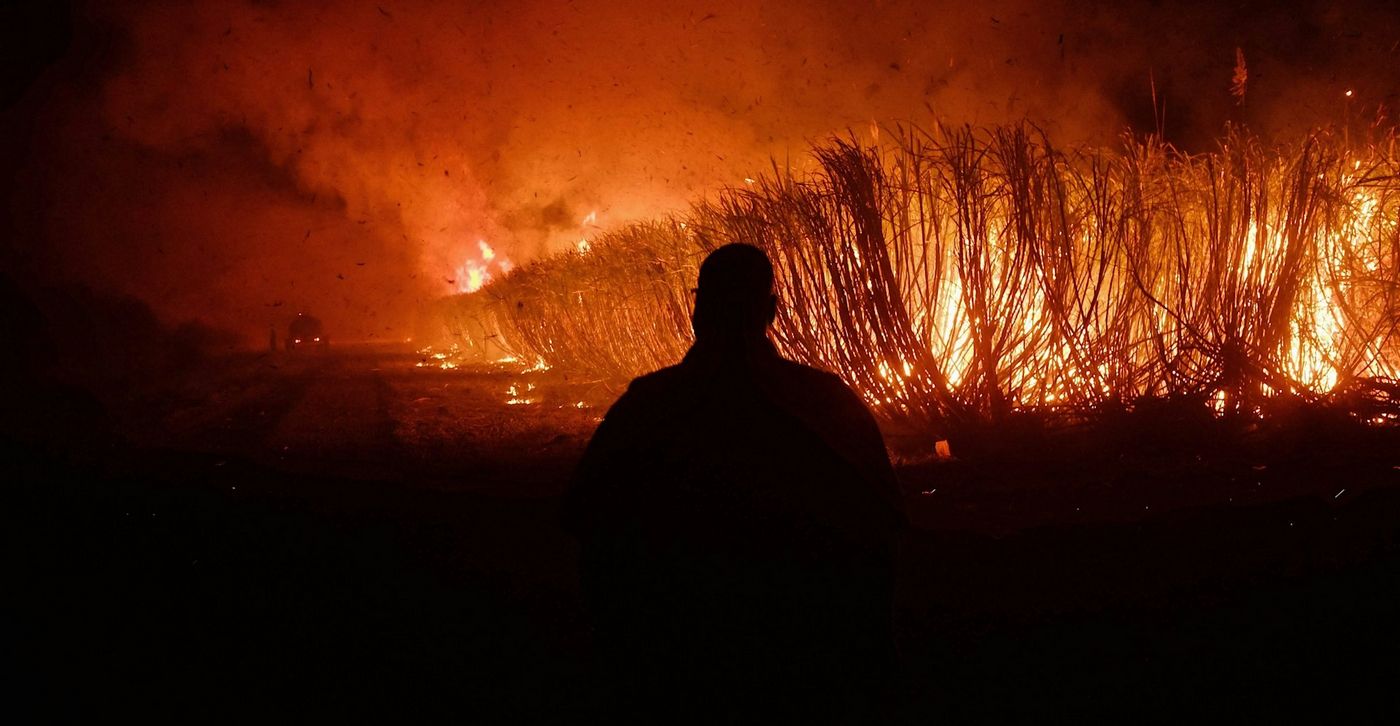
For all the column inches devoted to the record wildfire seasons in France, Spain, or the Amazon, it is still and has always been Africa that’s the center of world wildfires.
70% of all wildfires around the globe occur in Africa during the two seasons in the north and the south, amounting to half of all global CO2 emissions resulting from wildfires—one continent, half the smoke.
Yet a new analysis from researchers at the Chinese Academy of Sciences shows that rains have trended towards later and later dates of cessation, delaying the onset of the dry season when parched grasses need only a single spark to ignite and burn for days.
The study, published in Geophysical Research Letters, examined records of rainfall complied across Africa covering a period between 1990 and 2023. The authors then compared these with satellite observations of fires between 2003 and 2022.
The result suggests that increased rainfall contributed to delayed dry season onset in both the Northern and Southern hemispheres, with the season starting approximately 1.75 days later decade-by-decade in the north, and 0.4 days in the south.
“Consistent with this mechanism, we find widespread declines in burned area across Africa from 2003 to 2022, with the strongest reductions during the peak fire months (December in Northern Hemisphere Africa and August in Southern Hemisphere Africa),” the authors wrote in a simple summary for their paper.
Interestingly, the rainfall records don’t seem to indicate that the wet season lasts any longer, or involves substantially more water, but rather that a greater share of the total quantity of rain is happening to fall later on in the wet season in such a way as to delay the land from drying out.
WILDFIRE PREVENTION: Meet the ‘Firefighting’ Donkeys of Spain, Chowing Down on Grass and Fire Risk from Dawn to Dusk
The study did have some drawbacks. For example, satellite observations were considered to be unable to detect very small fires, meaning if a greater share of the same amount of fires occurred on small scales, it wouldn’t be recorded in the data.
Additionally, the analysis can’t ascertain why any fire was started, for example if it were started by a lightning strike in dried out grass, or by a farmer for land clearance.
AFRICA WEATHER: Ugandan Coffee Growers Shrug Off Drought Thanks to Regenerative Agriculture
Nevertheless, the authors add, because fire prevention and management involves precise examination of rainfall, wind direction, and other conditions, their analysis could prove extremely useful for accurately assessing fire risk during the dry season, particularly from adding in the concept of late-season rainfall which they’ve shown could very well be delaying the dry season’s onset.
SHARE This Good News For The Colorful Continent On Social Media…