Quote of the Day: “Fear is met and destroyed with courage.” – James F. Bell
Photo by: Joshua Earle For Unsplash+
With a new inspirational quote every day, atop the perfect photo—collected and archived on our Quote of the Day page—why not bookmark GNN.org for a daily uplift?
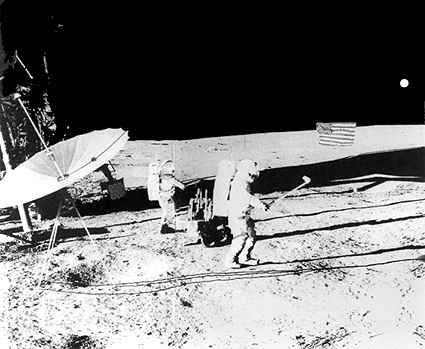
55 years ago today, Apollo 14 astronaut Alan Shepard did one last thing before leaving the surface of the moon, something he had planned for months—he teed up a golf shot. The NASA commander brought a six-iron club head on board inside his space suit pocket which had a fitting on it for attaching to the handle of a lunar sample scoop. In a constricting space suit, he topped and sliced his first two swings, but finally hit two balls, driving them “miles and miles and miles,” he told mission control, who listened bemusedly. WATCHthe actual golf swings on film… (1971)
A Holy hermit, possibly Guglielmo of Malavalle on a wall painting in Siena, Italy (1330–1337) – Credit: Dr Krisztina Ilko
A Holy hermit, possibly Guglielmo of Malavalle on a wall painting in Siena, Italy (1330–1337) – Credit: Dr Krisztina Ilko
A scorched cherry twig miraculously sprouting; a diseased swamp restored to ‘peak fertility’; healing the broken leg of an ox; and multiplying cabbages.
These are just some of the forgotten medieval miracles of the Augustinian Order which Dr. Krisztina Ilko brings to light not long this 800-year-old organization found one of its members elected Pope for the first time.
“Bleeding hosts and stigmatizations are the best-known medieval miracles,” Dr. Ilko, a medieval historian at Queen’s College, told the Cambridge news team. But for these forest and mountain dwellers, miracles most often attributed to them are linked to agriculture and natural beauty.
“With Leo XIV becoming the first Augustinian Pope, it’s the perfect time to make the order’s astonishing history better known. There has been so much focus on Italian cities, we’ve lost sight of how important the countryside was to the Church and to the Renaissance,” Dr. Ilko said.
A decade of research took Dr. Ilko to two dozen archives and she trekked to more than sixty Augustinian sites, including some of the most inaccessible ruins in Italy. She made discoveries in frescoes, illuminated manuscripts, hagiographies, and letters. Some of the ancient documents she studied had been misdated and wrongly attributed, further denying the Augustinians their miraculous limelight.
The earliest collection of Augustinian life stories Dr. Ilko studied was written by a Florentine friar in the 1320s and has been largely overlooked until now because, she believes, scholars deemed its miracles too rural. Housed in Florence’s Biblioteca Medicea Laurenziana, the manuscript opens with the life of Giovanni of Florence who built the Augustinian hermitage of Santa Lucia in Larniano with the help of local farmers.
One of his greatest miracles was healing the broken leg of an ox. Another life story describes Jacopo of Rosia commanding an unreliable apple tree to produce fruit every year, as well as him multiplying cabbages.
“When people think about religious orders and their massive role in the Renaissance, they usually turn their attention to cities like Rome, Florence and Siena,” Dr. Ilko says. “The Franciscans and Dominicans, in particular, are credited for Italy’s rapid urban renewal from the 1200s onwards.
“Not many people realize that the Augustinians drew most of their power from the countryside. Their miracles were very green-fingered, agricultural. In a more eco-conscious world, the Augustinians deserve much more attention.”
The merit of attention, she argues, is well demonstrated by the popularity gap between Saint George and Guglielmo of Malavalle.
Saint George was the most famous Christian dragon slayer and appears in countless paintings as a lance-wielding military saint. Far less-famous is the 12 century hermit Guglielmo, who was venerated by the Augustinians for killing a dragon with a humble wooden staff shaped like a pitchfork.
In medieval Europe, disease suffered by livestock, crops and people was often blamed on dragons, and more specifically on their toxic breath which, it was thought, suffocated the countryside and those who lived there. Dragons were particularly associated with swampy areas.
After hearing a voice from the sky, Guglielmo settled in Malavalle, ‘the bad valley,’ in Tuscany’s swampy Maremma region. Toxic air and terrible storms were thought to have left the valley barren, so ‘dark, and terrible’ that not even hunters dared to enter.
Ilko argues that Guglielmo was venerated for ‘defeating the dragon’ because he purified the putrid air and restored the valley to ‘peak fertility.’
“These achievements weren’t symbolic, Guglielmo provided a crucial public service, he helped country people survive in a really harsh natural environment,” Dr. Ilko says.
“Guglielmo was a pitchfork-wielding dragon slayer and divine gardener all at once. Commanding the weather, securing a good harvest, and restoring the health of livestock must have seemed the most desirable divine interventions in the late medieval countryside. They were matters of life and death.”
Lacking a compelling origin story or a charismatic founder, the Augustinians drew heavily on their wild power-bases—forests, mountains and the seaside—to prove their antiquity and authority to the Vatican.
“Direct contact with nature gave the friars legitimacy, special spiritual powers and access to valuable natural resources including timber, crops and wild animals.”
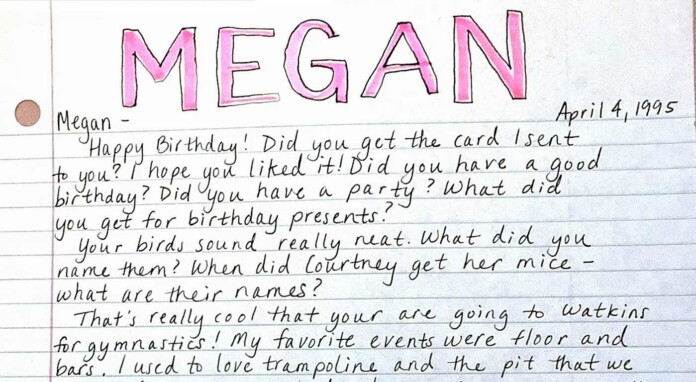
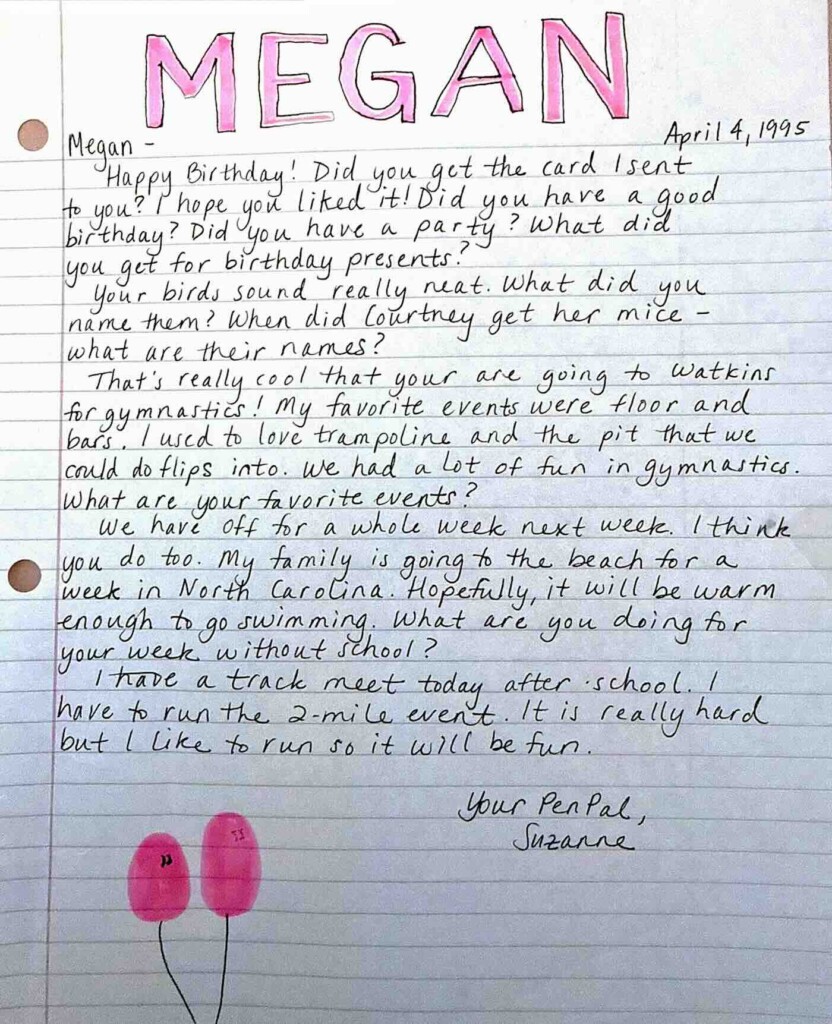
A handwritten letter to her pen pal Megan Lewis from April 1995 – Courtesy of Suzanne Pugh
A handwritten letter to her pen pal Megan Lewis from April 1995 – Courtesy of Suzanne Pugh
It wasn’t quite a reunion; since the women knew each other well.
Their relationship, so far as they understood it, was that important one between an OB/GYN and their patient carrying a child. Little did Megan Lewis and Suzanne Koziol know it at the time, but their relationship was actually a little bit deeper than that.
When Megan Lewis was just a 2nd grader at Fern Hill Elementary School in Pennsylvania, she wrote a series of letters to a pen pal 9 grades her senior. Whether typed up or written by hand, the two girls happily divulged favorite foods, activities, and what they dreamed of.
Three decades passed, and then last Thanksgiving those letters which Lewis had completely forgotten about were given back to her by her mom who’d saved them. Looking up the name Suzanne Koziol on Google returned a professional profile of one Suzanne Koziol Pugh, complete with a photo.
“My mouth dropped. I could not believe that my pen pal was Dr. Pugh, who was my OB/GYN and delivered my kids: Caroline and Jack,” Lewis told the ABC News affiliate WPVI.
Lewis sent Dr. Pugh a text message immediately after.
Megan Lewis and Suzanne Pugh at the ages they were pen pals – credit, family photos
“I had no recollection of this,” Pugh said. “Her mom had given her a box of papers/mementos from elementary school, and in the box were the letters from me. She sent me pictures of the letters and it was me! It’s such a crazy small world.”
The letters were written between 1994 and 1995 when Dr. Pugh was a junior at West Chester East High School.
Lewis said that during her first pregnancy with her daughter Caroline, she and Suzanne grew very close, as it was a difficult 9 months. She made sure she’d be the physician in the room for the delivery, and made the same assurance later when Lewis gave birth to her son Jack.
“It really made us feel like I was meant to take care of her and we were meant to play a role in each other’s lives,” said Pugh.
WATCH the story below from Inside Edition…
SHARE This Crazy Coincidence With Your Friends On Social Media…
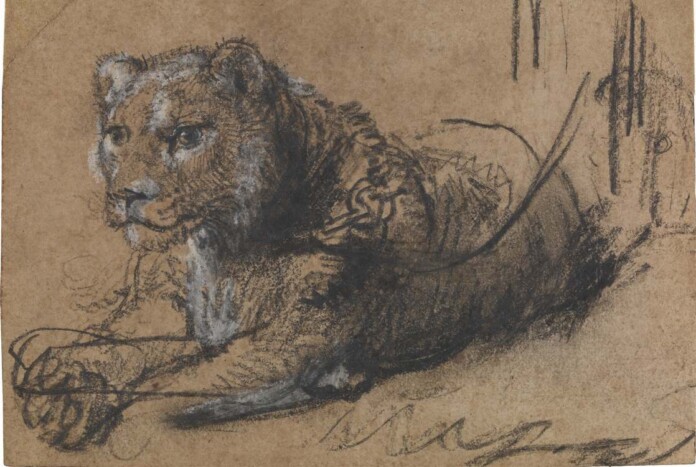
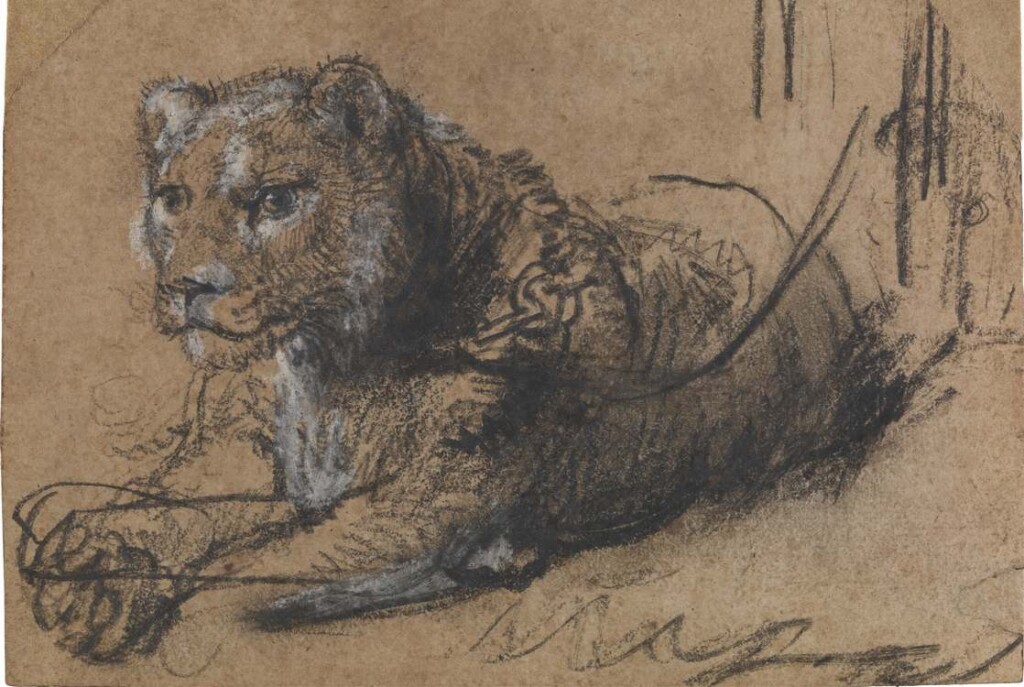
Schatborn, Peter. “Young Lion Resting” (2017). In The Leiden Collection Catalogue, 4th ed. via Sotheby's
Schatborn, Peter. “Young Lion Resting” (2017). In The Leiden Collection Catalogue, 4th ed. via Sotheby’s
Yesterday, Sotheby’s oversaw the record $18 million sale of a drawing by Rembrandt: one of 6 drafts he made of lions, and the only one to have resided in private hands.
Those hands belong to Dr. Thomas S. Kaplan and his wife, who along with standing foremost among the world’s private Rembrandt collectors, ride in the vanguard of global wildlife conservation on behalf of the very cat the drawing so vividly depicts.
Founder of both the Leiden Collection of Dutch and Flemish master works and Panthera, the world’s leading conservation organization dedicated exclusively to wild cats big and small, Dr. Kaplan has been able to synergistically marry these two passions, leveraging one to fund the other, as all proceeds from the record-setting, $17.9 million sale will help ensure the lion survives long beyond both Rembrandt’s time, and our own.
Called Young Lions Resting, Rembrandt depicts with superb draftsmanship the languid, fearless pose of the lion through loose, confident strokes, particularly in the modeling of the lion’s paws, and a controlled shading that brings its gaze to life.
Dr. Kaplan, who’s spoken to GNN before about his work at Panthera, explained how it was the most he and his wife had ever paid for an object after they embarked upon their anonymous journey of collection Rembrandt and other Dutch/Flemish masters pieces in 2003.
“We recognized immediately the synergy, as my wife told me when I asked her opinion of it when I took her to see it before buying it: she responded ‘it’s a Rembrandt, it’s a lion, and it’s beautiful; if it’s not for you then who’s it for?” Kaplan told GNN.
Only 6 drawings of lions by Rembrandt are currently known. Young Lion Resting is the first drawing by the master to come to the market in a century, and the $17.9 million sale price sets a new record for a drawing by Rembrandt by almost $15 million.
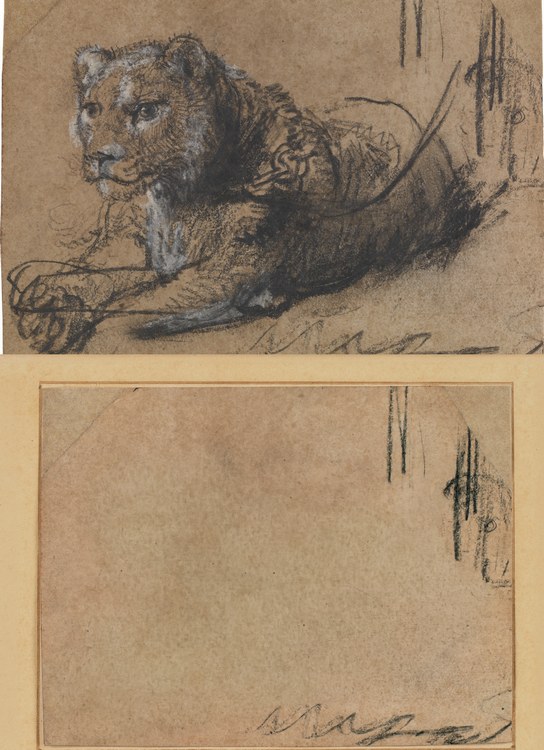
Kaplan founded Panthera along with renowned and late conservationist Dr. Alan Rabinowitz just one year after he bought the painting in 2005. Highlighting the plight of the lion across its entire native range, the sale of Young Lion Resting at Sotheby’s was paired with a faithful reproduction entitled Young Lion Vanished, wherein the animal Rembrandt so skillfully brought to life on the paper is replaced by a void—a reality on our Earth across 95% of the lion’s former range.
“Is it savable? Yes, it is, and with much larger landscapes than with the tiger in India. But, in 26 out of the 48 countries through which it roamed, it’s now extinct,” says Dr. Kaplan, who’s involvement in Panthera goes far beyond his role as its billionaire philanthropist founder, and stretches well into the scientific.
Young Lion Resting (top) Young Lion Vanished (bottom) – credit, supplied by Panthera
While Panthera has achieved incredible results protecting leopards and jaguars, Dr. Kaplan says that as regards the lion, its programs are still about “playing defense.”
“The lion is not there not, but it could be. I don’t believe it will ever be extinct in the wild, but it might come to exist only in fortresses, and we want to see more connectivity.”
Young Lion Resting was co-owned with the chair of Panthera’s board of directors, Jon Ayer, who’s spoken with GNN multiple times, and who provided a statement to mark the sale.
“The pulse of life that Rembrandt captured in this lion’s gaze continues to beat today through our conservation field programs,” said Ayers. “This sale provides Panthera with critical resources to combat poaching and habitat loss globally, ensuring that the majesty Rembrandt admired in the 17th century survives well into the 21st and beyond.”
Those resources come as the organization he chairs and Kaplan founded will celebrate its 20th anniversary this year. The auction proceeds will support science-directed initiatives fostering human-wild cat coexistence and critical landscape protection in some 40 countries across four continents.
“We probably spend 80% of our time working with people to ensure that we’ve protected them from the human-animal conflict that usually precedes the slaughter of the animals. If people don’t have to kill lions, usually they don’t, but if all of your material wellbeing is wrapped up in a cow or a goat, you’re not going to take that loss stoically,” Dr. Kaplan remarked empathetically.
“You’re going to make sure that doesn’t happen again. On the other hand if you create good fences, generally speaking people do not want to kill the cat.”
Kaplan told GNN that among those whose job it is to know within the federal government, there is a belief that if Panthera can’t save a wildcat, no one can. If that’s true, then this record Rembrandt auction suggests the lion is in a safe pair of paws.
SHARE This Remarkable Artwork, It’s Record Sale, And Noble Mission On Socials…
The reproductive spores of a moss species were able to somehow survive the vacuum of space during a 9-month stint outside the International Space Station.
In the immortal words of Jeff Goldblum, life, uh, finds a way.
Physcomitrella patens is known as a hardy pioneer species of spreading moss that readily cultivates on muddy ground.
Scientists looking to test the boundaries of the plant’s resilience exposed the moss’ spores to a variety of extreme, space-like conditions in laboratory settings, including to a deep-freeze environment without oxygen, and another bathed in ultraviolet radiation.
Having demonstrated resilience even in the face of these lethal conditions, the team then sent the moss up to the ISS onboard the Cygnus NG-17 spacecraft. Once there, astronauts stuck containers of the spores in a sample holder on the exterior hull of the station and left them there for 9 months.
Compared to a germination rate of 97% on Earth, the space-abused spores returned to Earth and reproduced 86% of the time.
“If such spores can endure long-term exposure during interplanetary travel and then successfully revive upon rehydration and warming, they could one day contribute to establishing basic ecosystems beyond Earth,” Dr. Tomomichi Fujita, the lead author of the study, from Hokkaido University in Japan, said in a statement.
Dr. Fujita said that being able to tolerate these conditions and reproduce could put moss squarely in the astronaut’s future toolkit when exploring other bodies.
“While moss may not be on the menu, its resilience offers insights into developing sustainable life-support systems in space. Mosses could help with oxygen generation, humidity control or even soil formation.”
By contrast, a human wouldn’t last much longer than a minute beyond the pressurized, oxygenated walls of the ISS. Within 15 seconds, being both unable to breathe and unable to hold one’s breath, a human would lose consciousness.
Dr. Fujita’s study isn’t the first that has investigated whether plant material can survive space to reproduce. Some seeds have also been tested outside the ISS and shown this ability.
SHARE This Idea Of Space Moss With Your Friends Who Love That Sort Of Thing…
Quote of the Day: “Everything in Nature contains all the powers of Nature. Everything is made of one hidden stuff.” – Ralph Waldo Emerson
Photo by: Joshua Earle For Unsplash+
With a new inspirational quote every day, atop the perfect photo—collected and archived on our Quote of the Day page—why not bookmark GNN.org for a daily uplift?
The Byrsa Hill of Ancient Carthage - CC Eirik Newth 2.0. SA
On this day 41 years ago, and in a charming little stint of political theater, the mayor of Rome, Ugo Vettere, and his counterpart Mr. Chedli Klibi in Carthage, Tunisia, met on a mission of goodwill to officially end the Third Punic War, which concluded with the destruction of Carthage 2,132 years ago. The agreement was signed on the anniversary of Carthage’s defeat in the war by the Romans. (1985)
NASA’s James Webb Space Telescope shows galaxy MoM-z14 - credit NASA, ESA, CSA, STScI, Rohan Naidu (MIT); Image Processing Joseph DePasquale (STScI)
NASA’s James Webb Space Telescope shows galaxy MoM-z14 – credit NASA, ESA, CSA, STScI, Rohan Naidu (MIT); Image Processing Joseph DePasquale (STScI)
NASA’s James Webb Space Telescope has topped itself once again, delivering the confirmation of a bright galaxy that existed a mere 280 million years after the Big Bang; so close to the beginning of the universe as we understand.
GNN reported on the last such discovery, a galaxy 300 million years after, and scientists are now certain that James Webb will break every such record until the earliest observable light is eventually detected.
The newly confirmed galaxy, MoM-z14, holds intriguing clues to the universe’s historical timeline and just how different a place the early universe was than astronomers expected.
“With Webb, we are able to see farther than humans ever have before, and it looks nothing like what we predicted, which is both challenging and exciting,” said Rohan Naidu of the MIT’s Kavli Institute for Astrophysics and Space Research and lead author of a paper on galaxy MoM-z14 published in the Open Journal of Astrophysics.
Due to the expansion of the universe that is driven by dark energy, discussion of physical distances and “years ago” becomes tricky when looking this far. Using Webb’s NIRSpec (Near-Infrared Spectrograph) instrument, astronomers confirmed that MoM-z14 has a cosmological redshift of 14.44, meaning that its light has been travelling through (expanding) space, being stretched and “shifted” to longer, redder wavelengths, for about 13.5 of the universe’s estimated 13.8 billion years of existence.
“We can estimate the distance of galaxies from images, but it’s really important to follow up and confirm with more detailed spectroscopy so that we know exactly what we are seeing, and when,” said Pascal Oesch of the University of Geneva, co-principal investigator of the survey.
MoM-z14 is one of a growing group of surprisingly bright galaxies in the early universe— 100 times more than theoretical studies predicted before the launch of Webb, according to the research team.
“There is a growing chasm between theory and observation related to the early universe, which presents compelling questions to be explored going forward,” said Jacob Shen, a postdoctoral researcher at MIT and a member of the research team.
One place researchers and theorists can look for answers is the oldest population of stars in the Milky Way galaxy. A small percentage of these stars have shown high amounts of nitrogen, which is also showing up in some of Webb’s observations of early galaxies, including MoM-z14.
“We can take a page from archeology and look at these ancient stars in our own galaxy like fossils from the early universe, except in astronomy we are lucky enough to have Webb seeing so far that we also have direct information about galaxies during that time. It turns out we are seeing some of the same features, like this unusual nitrogen enrichment,” said Naidu.
With galaxy MoM-z14 existing only 280 million years after the big bang, there was not enough time for generations of stars to produce such high amounts of nitrogen in the way that astronomers would expect. One theory the researchers note is that the dense environment of the early universe resulted in supermassive stars capable of producing more nitrogen than any stars observed in the local universe.
The galaxy MoM-z14 also shows signs of clearing out the thick, primordial hydrogen fog of the early universe in the space around itself. One of the reasons Webb was originally built was to define the timeline for this “clearing” period of cosmic history, which astronomers call reionization. This is when early stars produced light of high enough energy to break through the dense hydrogen gas of the early universe and begin travelling through space, eventually making its way to Webb, and us.
Galaxy MoM-z14 provides another clue for mapping out the timeline of reionization, work that was not possible until Webb lifted the veil on this era of the universe.
As Webb continues to uncover more of these unexpectedly-luminous ancient galaxies, it’s clear that the first few were not a fluke. Astronomers are eagerly anticipating that NASA’s upcoming Nancy Grace Roman Space Telescope, with its combination of high-resolution infrared imaging and extremely wide field of view, will boost the sample of these bright, compact, chemically enriched early galaxies into the thousands.
“To figure out what is going on in the early universe, we really need more information—more detailed observations with Webb, and more galaxies to see where the common features are, which Roman will be able to provide,” said Yijia Li, a graduate student at the Pennsylvania State University and a member of the research team.
“It’s an incredibly exciting time, with Webb revealing the early universe like never before and showing us how much there still is to discover.”
SHARE This Fuzzy Image Of The Oldest Thing Ever Seen…
A jaguar on the Piquiri river - credit, Charles J. Sharp from Sharp Photography CC 4.0. BY-SA via Wikimedia
A jaguar on the Piquiri river – credit, Charles J. Sharp from Sharp Photography CC 4.0. BY-SA via Wikimedia
While searching for their cubs, the females of the world’s third-largest feline will make a sound that’s strikingly similar to what you’ve heard your own cat make.
Weighing in excess of 300 lbs., the jaguar is a ferocious predator that can take large caiman and even cattle, but recent video camera trap footage has revealed they possess a softer side as well.
In Brazil’s Iguaçu National Park, a team of British and Brazilian ecologists made this discovery during a camera trap survey, along with that of 2 other abnormal vocalizations, all of which were documented in 2 female cats on 3 separate occasions.
Panthera species, they detail, cannot purr like a housecat because of larger vocal cords and an ossified bone in their necks, but they can produce a sound that’s very close to a ‘meow.’
“Our results suggest that [jaguars’] vocal repertoire is more complex than what is described in the literature,” the study authors write in the paper published in the journal Behavior.
In contrast to other big cat species around the world, the jaguar isn’t endangered, maintains widespread habitat connectivity, and is resilient in the face of human encroachment. Since 2018, biologists monitoring these cats in the UNESCO World Heritage listed Iguaçu, have relied on camera trap surveys to be their eyes and ears. Every 6 seconds, Smithsonian details, the traps will record audio and video for 15 seconds.
Several instances of jaguar meows were recorded, two of which featured an adult female that appeared to be searching for her cub, while the third captured a one-year-old female cub that was possibly looking for her mother.
“As far as we know this is the first time that jaguars have been recorded using this kind of communication, which we are incredibly excited about,” said Dr. Marina Duarte, Research Fellow at the University of Salford.
“This research really deepens our knowledge of how big cats can communicate. We think they are making these sounds to help locate their young but they could also be using them for reproductive purposes too, to find a mate perhaps. It does sound very cute to our ears!”.
“These results highlight the value of long-term monitoring efforts for this iconic Atlantic Forest species and show that there is still much to learn about how jaguars interact and communicate in their natural environment,” says Vania Foster, Head of Research of the Project Jaguars of Iguaçu.
LISTEN to the meows below…
SHARE This Top-Notch Ethnology In Brazil’s Atlantic Forests With Your Friends…
From Germany comes the story of mountains of potatoes as far as the eye can see going to feed anyone and everyone in Berlin and nearby towns.
For German potato farmers, the early winter potato harvest has been a bumper crop—no, a banner crop—nay, it’s a full-on food-bank-buster crop.
The “potato flood” as it’s being called has crashed on Berlin, with food banks, homeless shelters, soup kitchens, schools, kindergartens, churches, and even zoos taking a free share of the bounty. Two whole semi-trucks were sent to Ukraine.
“At first I thought it was some AI-generated fake news when I saw it on social media,” Astrid Marz, a schoolteacher from Kaulsdorf, outside Berlin, told the Guardian. “There were pictures of huge mountains of earth apples.”
You can never be too careful these days, but the earth apple mountain was real: so real that Marz stopped counting after she stuffed the 150th potato into an old backpack. She had showed up at a distribution point, where a nonprofit organization called 4000 Tonnen was delivering them to whoever showed up.
Organized by a Berlin newspaper with the help of a German eco-friendly nonprofit search engine, Ecosia, the name 4,000 tons comes from a single Leipzig potato farmer who had a 4,000-ton surplus after a December sale fell through.
4000 Tonnen has visited 174 distribution points across Berlin and its suburbs, welcoming people with bags, boxes, and even wheelbarrows to carry off the spuds. Berlin has been gripped with freezing weather of late, exactly the kind of climate that welcomes a potato and leek soup, potatoes au gratin, or many other preparations that are being shared at the distribution points, the Guardian reports.
Kate Connolly, reporting in Berlin for the outlet, notes that Germans consume more potatoes per capita than almost any other country—at more than 120 pounds per person per year. During the Prussian imperial days, the “potato edict” commanded farmers to cultivate the South American crop as a new staple, and ever since, kartoffel, has been the pre-eminent vegetable in the country.
Celebrity Michelin-starred chef Marco Müller of the Rutz restaurant Berlin has already taken advantage of the event to put the spuds to work in his restaurant—using them to make a luscious potato broth made from the slow-roasted skins.
If not eaten, they will likely be sent to a landfill to decay away into methane gas, which while lasting a fraction of the time in the atmosphere as CO2, has a much stronger contribution to the greenhouse effect in the atmosphere.
SHARE This Wild Potato Flood And Those Benefitting From It…
When an adult male civilian rushed into a New Jersey police station, it’s anyone’s guess what the two officers inside imagined was the matter—a shooting, a fire, a bad car accident.
What they almost certainly would not have guessed—and wouldn’t have known because the man didn’t speak English, was that they would spend a brief few minutes on duty acting as midwives.
Benjamin Haines and Gabriel Chiarelli of New Jersey’s Woodstown Police Department (WPD) followed the man, who was communicating only with shouts and hand gestures to the back of his car.
Opening the door, there was a woman—also unable to speak English—in labor.
“We weren’t really expecting that—especially the baby coming out when we opened the car door,” Chiarelli recalled to 6ABC in early December. Thinking quickly, the officers produced their phones and opened Google Translate to begin giving instructions, and when that failed, used hand gestures instead.
“So we really couldn’t say much, but I just told her to breathe and push, and she did and out came the head,” Haines explained.
After that it was a short few pushes before mom and baby were wrapped in blankets, a healthy girl having been delivered. Medics arrived on scene by the time the officers had concluded their civic duty to take the family to the hospital.
Neither ABC nor People, which later reported on the story, managed to get ahold of the WPD for additional information.
Both men agreed that, despite having no training for such a procedure, it was exactly the kind of thing they signed up to the force to do—help people in need; their station chief agreeing that they responded excellently to the situation.
WATCH the story below from 6ABC…
SHARE These Officers’ Quick Thinking With Your Friends…
Quote of the Day: “The day, water, sun, moon, and night: I do not have to purchase these things with money.” – Plautus
Photo by: Elizabeth Nelson
With a new inspirational quote every day, atop the perfect photo—collected and archived on our Quote of the Day page—why not bookmark GNN.org for a daily uplift?
Happy 53rd Birthday to Oscar De La Hoya, nicknamed the “Golden Boy of Boxing,” and winner of many world titles at lightweight, super lightweight, welterweight, and middleweight. De La Hoya had won 17 title bouts, either for claiming belts or retaining them, before he tasted the first defeat of his career, a reign of dominance that stretched from 1994 to 1999. READ more about the “Golden Boy’s” career… (1972)
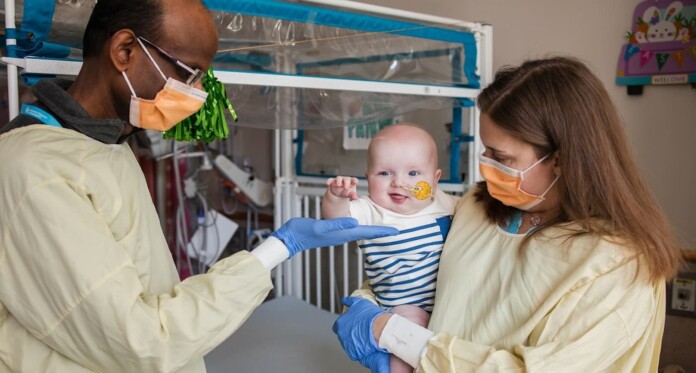
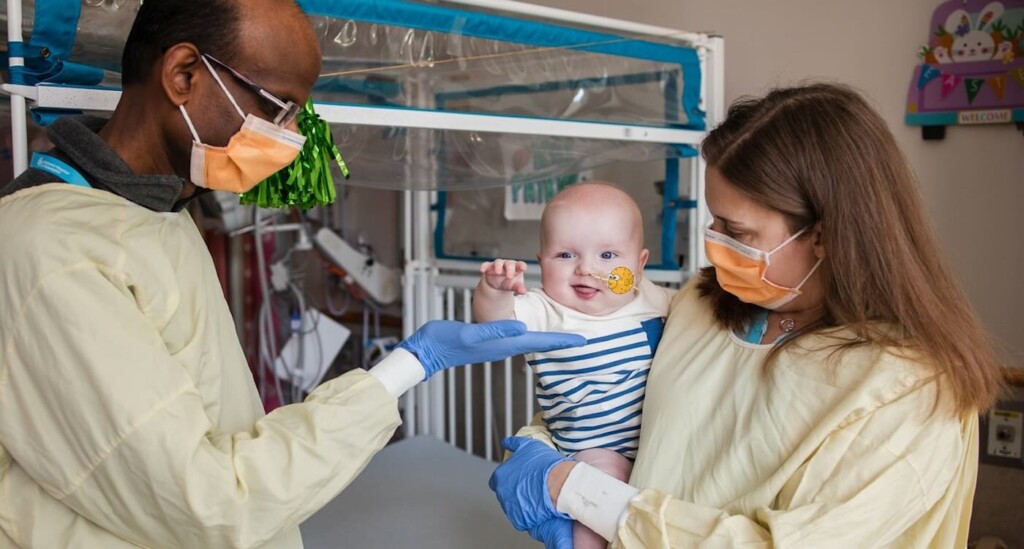
Dr. Kiran Musunru (left) and Dr. Rebecca Ahrens-Nicklas (right) led the researchers who developed a personalized treatment for baby KJ - Released CHOP and Penn
Dr. Kiran Musunru (left) and Dr. Rebecca Ahrens-Nicklas (right) led the researchers who developed a personalized treatment for baby KJ – Released CHOP and Penn
CRISPR has been used to create a genetic therapy option for a child born in Pennsylvania with a rare metabolic disorder.
Unable to convert ammonia to urea, newborn KJ was in serious risk of brain or liver damage, and had to be kept on medications and an extremely restrictive diet to avoid protein metabolism.
Children’s Hospital of Philadelphia (CHOP) doctors believed they could use CRISPR to develop a treatment to correct a faulty gene in KJ’s genome that would essentially cure him.
KJ’s parents, Nicole and Kyle Muldoon, decided to place their son’s wellbeing in the hands of two pioneering genetic therapists, Dr. Rebecca Ahrens-Nicklas and Dr. Kiran Musunru, who crafted a bespoke treatment that has successfully corrected the genetic defect.
“Years and years of progress in gene editing and collaboration between researchers and clinicians made this moment possible, and while KJ is just one patient, we hope he is the first of many to benefit from a methodology that can be scaled to fit an individual patient’s needs,” said Rebecca Ahrens-Nicklas, MD, PhD, director of the Gene Therapy for Inherited Metabolic Disorders Frontier Program (GTIMD) at Children’s Hospital of Philadelphia.
She, along with Dr. Musunru, are members of the NIH-funded Somatic Cell Genome Editing Consortium, and have spent years developing the science of using CRISPR to create individual treatment doses for the rarest of diseases.
So far, the only FDA-approved and standardized CRISPR therapies target two diseases found in tens of thousands of patients. CRISPR is an incredibly complex tool and expensive to wield, leaving its magic beyond the reach of millions of children and adults worldwide who collectively suffer from extremely rare genetic disorders.
One such disorder is called severe carbamoyl phosphate synthetase 1 (CPS1) deficiency, and it creates the inability to properly convert ammonia into urea to be excreted through urine. Ammonia is created in the body through protein metabolism. CPS1 is created in the liver to turn it into urea so as to avoid the toxic effects of the former.
KJ’s body cannot, so excess protein metabolism creates a buildup of ammonia in his liver that could be fatal. Nitrogen scavenging medication and a protein-deficient diet can keep a patient going until a liver transplant can be found, but at just months old, KJ’s body isn’t capable of enduring the procedure.
A news release from CHOP reports that Ahrens-Nicklas and Musunuru targeted KJ’s specific variant of CPS1 after years of work with similar disease-causing variants. Within 6 months, their team designed and manufactured a base editing therapy delivered via lipid nanoparticles to the liver in order to correct KJ’s faulty enzyme.
In late February, 2025, KJ received his first infusion of this experimental therapy, and since then has received follow-up doses in March and April 2025, the release details. In the newly published New England Journal of Medicine paper, the researchers, along with their academic and industry collaborators, describe the customized CRISPR gene editing therapy that was rigorously yet speedily developed for administration to KJ.
KJ has received 3 doses, and suffered no side effects. He’s been able to halt medication and work some protein back into his diet, though he will need careful monitoring the rest of his life.
“We thought it was our responsibility to help our child, so when the doctors came to us with their idea, we put our trust in them in the hopes that it could help not just KJ but other families in our position,” his mother, Nicole, told CHOP.
SHARE This Incredible Recovery Story For A Baby In Serious Danger…
A beach at Broadwater, Geographe Bay, southwest Western Australia - credit Kgbo CC 4.0.
A beach at Broadwater, Geographe Bay, southwest Western Australia – credit Kgbo CC 4.0.
A 13-year-old boy has been hailed as a hero after swimming 4 hours through rough seas to rescue his family.
A family of 4 was enjoying a holiday in Australia’s southwest coast near Quindalup when strong winds blew their inflatable paddleboards out to sea. The boy was separated from his mom and 2 siblings before his canoe began to take on water.
Wearing a life-jacket, he began to swim against the wind towards the shore, knowing every second counted in the race to get help to save his family.
Commander Paul Bresland with the volunteer organization Cape Naturaliste Marine Rescue told ABC News that the boy swam for 2 hours with his life jacket on.
“And the brave fella thought he’s not going to make it with a life jacket on, so he ditched it, and he swam the next 2 hours without a life jacket,” said Bresland. “I thought, ‘Mate, that is incredible.'”
Once ashore he successfully raised the alarm and a multi-agency search and rescue operation was mobilized, including Western Australia state Water Police and its rescue helicopter. The teen provided detailed descriptions of the paddleboards, and within the hour, his family was rescued by boat, having drifted 7 miles out into the Indian Ocean.
When rescuers arrived, the 47-year-old mother was struggling to keep a daughter, 8, and an eldest son, 14, firmly affixed to the paddleboard in the choppy waters.
“Physically, she just said, ‘I’m struggling, I can’t,’ but she just said they’re looking her in the eye, and she just kept going and kept them together,” Mr. Bresland said, adding she deserved enormous praise for her perseverance.
ABC reported that the family were assessed at a local hospital and quickly discharged, before taking the time to visit the rescue organization to thank them in person.
South West Police Inspector James Bradley said the story highlights some important ocean safety aspects: all members of the family were wearing life jackets—a key positive. Wind speeds near shore should always be carefully monitored as well.
SHARE This Brave Fella’s Incredible Determination To Save His Family…
By instantaneously heating electronics to 3,000°C via an electrical current, scientists have found a way to extract decent grades of precious metals without creating hazardous waste.
According to their analysis, relying on e-waste for a precious metals supply could be 13-times cheaper than mining them from the ground. However, previous methods have involved throwing this or that broken gizmo into a furnace powered by copious amounts of energy while also releasing toxic substances into air.
By contrast, “flash joule heating,” a way of using electrical currents to vaporizing the valuable metals from the materials that hold electronics together is between 80 and 500-times more energy efficient.
One 2008 study calculated that one ton of mobile phones without batteries contains about 130kg of copper, 3.5kg of silver, 340 grams of gold, and 140 grams of palladium.
Those totals, if assayed as part of a drilling survey at a mine, would be considered world class results in the 99th percentile of grades.
Most open pit mining operations will run at a rate of between 0.5 and 1.8 grams per-ton gold and 100 to 180 grams per-ton silver. Some 40 million tons of e-waste is produced annually, so some simple mathematics reveals the potential economy to be found in harvesting e-waste for metals—a process termed “urban mining” by scientists.
Scientists at Rice University shredded a printed circuit board for their experiments, and mixed it with carbon black as a conductive additive. Once in the flash joule chamber, the current applied is so high that the precious metals, like rhodium, copper, and gold, turn briefly to vapor, while the carbon-based components like the plastic, are carbonized. This same process has been used to turn plastic into diamonds.
Mining companies for base and precious metals use a variety of patented recovery processes to separate gold, zinc, or nickel from the ore body.
Just like in mining, additives enhanced the recovery percentage of the metals from their vaporized form, including halides or fluorine-based substances. These brought the recovery of rhodium up to greater than 80%, and palladium to 70%. Bleach and other chlorine-based compounds brought the silver recovery rate up to greater than 80% as well.
With the prices of these metals skyrocketing of late, new and cheaper supplies will be crucial to ensure important industries remain intact and competitive.
SHARE This Clever Concept Of Urban Mining With Your Friends…
Gregory curls up with family’s calf on the sofa one recent frigid night – Courtesy of his mother, Macey Sorrell
Gregory curls up with family’s calf on the sofa one recent frigid night – Courtesy of his mother, Macey Sorrell
Over last weekend, a Kentucky farming family welcomed a new calf into a frigid world of single digit temperatures, and quickly realized it wasn’t going to last the night.
So being a mother as well as a farmer, Macey Sorrell decided to bring the calf into their home where she was certain it would be okay. Falling asleep on the couch next to her two children, Sorrell snapped a photo that has the internet fawning.
On the last Saturday in January, Sorrell and her husband Tanner went to check on their pregnant cow as dusk gathered around their property in Mount Sterling. To their surprise, she had already given birth.
“She was just frozen. Her umbilical cord looked like a popsicle,” Sorrell said. “It was just frozen.”
They decided, having lost a calf last year to frostbite, to take precautionary measures.
“When we brought her in, she had ice on her. The afterbirth was still on her, I had to wipe all that off,” Sorrell said. “I took out the blow dryer and warmed her up, and got her all fluffed out.”
It was somehow sort of a surprise and not a surprise that their son, 3-year-old Gregory, went to cuddle with the calf who had been placed on the couch—as if it were “just the most normal thing.”
Sorrell said she and her family are used to bringing the occasional farm animal into their house, and it’s clearly rubbed off on their children.
Gregory named the calf Sally, who after her harrowing night, rejoined her mother in the paddock after sunrise, healthy and ready to explore her new world.
SHARE This Sweet “Normal Thing” With Your Friends…
Quote of the Day: “All truths are easy to understand once they are discovered; the point is to discover them.” – Galileo Galilei
Photo by: SWNS news agency
With a new inspirational quote every day, atop the perfect photo—collected and archived on our Quote of the Day page—why not bookmark GNN.org for a daily uplift?
40 years ago today, a group of computer animators started Pixar Animation Studios out of a corporate spin-off from Lucasfilm. Pixar would go on to make their first film Toy Story, 9 years later, and over the following 20 years become the most critically admired animation studio in the world. After being turned down 45 times by 36 venture capitalists, George Lucas eventually found the financial backing for Pixar in one Steve Jobs, who had recently been edged out of Apple. With films like Finding Nemo, The Incredibles, Monsters Inc., and Up, Pixar ruled the early 2000s animation space and has picked up 23 Academy Awards. WATCH their 35 years of animation in a special video… (1986)