Youngest Indian environmental leader- Prasiddhi Singh -submitted by Jacob Weissman YPL Prasiddhi Forest Foundation
Youngest Indian environmental leader Prasiddhi Singh – submitted by Jacob Weissman YPL Prasiddhi Forest Foundation
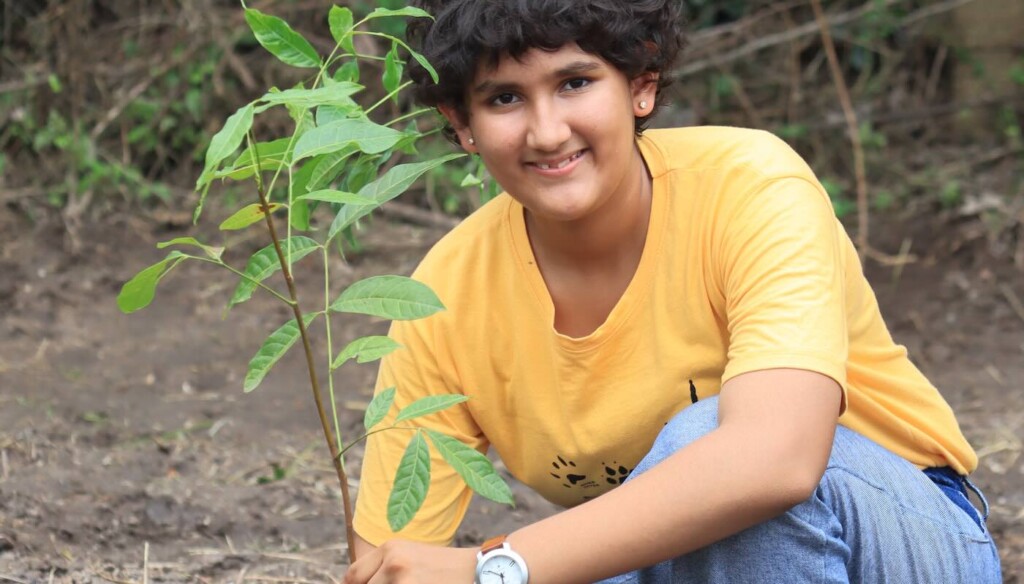
Called the Indian Greta Thunberg, this 12-year-old is on a mission to green India’s skies and minds.
Armed with determination, a charming personality, and a great marketing concept, she’s planting a grassroots movement towards environmentalism that’s staggering to see in one so young.
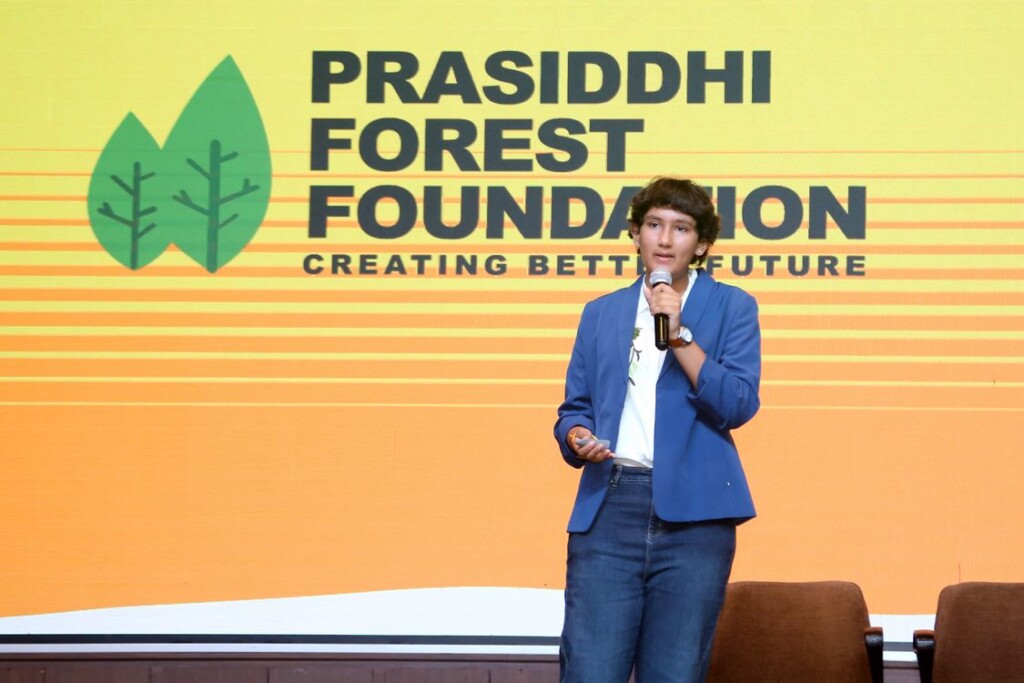
Prasiddhi presenting her vision – submitted by Jacob Weissman YPL Prasiddhi Forest Foundation
At age 8, she won the Dal Puraskar, an Indian order of merit, and told the Times of India she had already planted 14 “fruit forests” in government schools, offices, and community areas with the help of thousands of volunteers.
At just 12, she’s planted over 150,000 trees, founded the Prasiddhi Forest Foundation, undertook the restoration of mangroves and lakes, ran a TEDx, spoke at the UN Climate Change summit COP 28 and 29, and is presumably now doing something else equally amazing that’s not yet been reported.
The Foundation organizes classes, workshops, and events under the principle of a “3G Network” which stands for ‘Generate’ one’s own oxygen, ‘Grow’ one’s own food, and ‘Gift’ one’s effort to their community.
According to Young Planet Leaders, Prasiddhi started her tree growing efforts at age 7 as a personal response to a devastating cyclone. However, her concept of fruit forests goes far beyond sheltering from storms.
These biodiverse, edible landscapes are both ecological solutions and social infrastructure, and they’re drawing volunteers from around the country, but particularly in her home state of Tamil Nadu.
WATCH her tell her story and dig why so many people are recognizing her work…
SHARE This Incredible Young Talent And What She’s Doing For The World…
The Yulong River - credit, Qeqertaq, CC 3.0. BY-SA
The Yulong River – credit, Qeqertaq, CC 3.0. BY-SA
Having achieved incredible results in improving water quality across the nation, China is embarking on a ten-year project to ensure the ecosystem beyond the shoreline meets similar standards.
The plan, unveiled recently by China’s Ministry of Ecology and Environment aims to match improvements in water quality seen in 2,573 rivers and lakes across the country with improvements to the overall ecosystem in which the fresh water is found, including those which humans rely on, and the cultural artifacts located there as well.
It could be said that the protagonist of China’s 4,000 year history isn’t the Chinese people themselves, but fresh water.
From the moment that humans began cultivating rice in the central and northern Chinese plains, control and manipulation of water became the unifying feature of Chinese society, transcending social status, and imbedding itself into the lore of the first emperor who supposedly tamed the Yellow River floods in 2,700 BCE.
As centuries passed, traveler after traveler remarked upon the inexhaustible supply of fresh water for irrigation, and of a network of irrigation canals that spread like a spider’s web as far as the eye could see. The Qin Dynasty completed the ancient world’s largest landscape engineering project when it constructed the Grand Canal, while 2,000 years later, the vast breadth of the Yangtze and Pearl rivers, following industrialization, allowed the Chinese manufacturing market to provide for every corner of the Earth.
Beyond economization and production, the lake and river were the subjects of countless poems and songs across the ages, and the constructions of bridges, pagodas, temples, palaces, and scenic villages where canals replace streets, on and around China’s vast freshwater resources, flourished whenever money was available.
In 2015, China completed an action plan for the prevention and control of water pollution, and in 2024, the proportion of surface-water sections nationwide classified as having excellent water quality reached 90.4%.
In this new action plan, the whole ecology of the riverine ecosystems is being addressed, and will include in its scope projects for restoring spawning grounds, ensuring migratory birds have access to food resources in areas where they alight, enhancing habitat connectivity and fish passage where obstructions are found, strengthening flood control and drainage systems where present, and measuring eutrophication in lakes and reservoirs.
“The document marks another comprehensive initiative to protect China’s water ecosystems following the action plan for prevention and control of water pollutions in 2015,” said Liu Jing, deputy director of the environment ministry’s Department of Water Ecology and Environment.
“A beautiful river or lake is one where the ecological flow is maintained so that it never runs dry. Besides, the ecological functions of the water bodies and their surrounding buffer zones are preserved or restored, and biodiversity is effectively protected,” said Liu.
“Moreover, pollutant emissions within the watershed are well-managed, and the water quality has fundamentally improved or maintained excellent levels. And the public’s needs for scenic views and recreational activities by the water are met,” she added.
“Significant progress” is expected by 2030, by which time it’s hoped the project will have also begun to reverse the current declining trend in aquatic wildlife in the Yellow River, and to accelerate the current improving trends for wildlife in the Yangtze.
SHARE This Commitment To Restoring Fresh Water Ecosystems On Social Media…
(left) courtesy photo (right) Glen with his new shed - credit, Bucket List Wishes Charity
(left) courtesy photo (right) Glen with his new shed – credit, Bucket List Wishes Charity
In late 2023, GNN reported that a construction worker had been rescued from the side of a burning high-rise building thanks to a heroic crane operator.
A basket was suspended on the end of Glen Edwards’ crane meant for holding people while they work along the facades of buildings, and despite terrible visibility from the smoke and a blustery wind, he successfully positioned it close enough for the worker to climb aboard and escape a mixture of fire, smoke, and toxic fumes.
In an update to that story, Edwards, who enjoys a hero’s reputation in Reading, has received a series of home improvements as a gift for the heroism he demonstrated that day.
The gift has another explanation though, and that’s that Edwards, who is currently 66-years-old, has received a terminal cancer diagnosis.
He likely had cancer on the day he saved the construction worker’s life, and although it was previously treated successfully, it’s come back, and he recently told Britain’s ITV that it has spread to his spine.
Hearing about it, and his life-saving deed, Bucket List Wishes got in touch with Glen and said they wanted to fulfill a bucket list item of his if it could be done, with Gini Hackett, the charity’s founder, reaching out personally.
“I found it amazing to do this wish for him,” Hackett told ITV. “He’s really humble, what he did was incredible. He is a real hero to us so we absolutely had to do something for him.”
Humble is as humble does, and all Mr. Edwards asked for was new flooring and a garden shed for a home he had recently moved into. It was work that needed doing, so that’s what he hoped to receive—not a lavish cruise or a dream vacation.
In return, Hackett and Bucket List Wishes took care of the shed and flooring, but also added completely new kitchen appliances, a large gift voucher for new bedding, and, as an extra surprise, a fishing trip to the Victorian-era seaside resort town of Swanage on the Dorset coast.
“The smoke was absolutely intense, I could hardly see him, well, I couldn’t see him. I knew he was there, he was standing on the edge of the building,” he said.
“He’s got two girls, eight and 13 they were at the time, and I got a very heartfelt letter that would bring a tear to your eye.”
SHARE This Tearjerking Story Of A Humble Hero Receiving A Just Reward…
Blue Creek - credit, Cindy M. Diaz/Western Rivers Conservancy
Blue Creek – credit, Cindy M. Diaz/Western Rivers Conservancy
In Northern California, a native American tribe is celebrating the return of ancestral lands in one of the largest such transfers in the nation’s history.
Through a Dept. of the Interior initiative aiming to bring indigenous knowledge back into land management, 76 square miles east of the central stretch of the Klamath River has been returned to the Yurok tribe.
Sandwiched between the newly-freed Klamath and forested hillsides of evergreens, redwoods, and cottonwoods, Blue Creek is considered the crown jewel of these lands, though if it were a jewel it wouldn’t be blue, it would be a giant colorless diamond, such is the clarity of the water.
It’s the most important cold-water tributary of the Klamath River, and critical habitat for coho and Chinook salmon. Fished and hunted on since time immemorial by the Yurok and their ancestors, the land was taken from them during the gold rush before eventually being bought by timber companies.
Barry McCovey Jr., director of the Yurok Tribal Fisheries Department, remembers slipping past gates and dodging security along Blue Creek just to fish up a steelhead, one of three game fish that populate the river and need it to spawn.
Profiled along with the efforts of his tribe to secure the land for themselves and their posterity, he spoke to AP about the experience of seeing plans, made a decade ago, come to fruition, and returning to the creek on which he formerly trespassed as a land and fisheries manager.
“To go from when I was a kid and 20 years ago even, from being afraid to go out there to having it be back in tribal hands … is incredible,” he said.
Part of the agreement is that the Yurok Tribe would manage the land to a state of maximum health and resilience, and for that the tribe has big plans, including restoring native prairie, using fire to control understory growth, removing invasive species, restoring native fish habitat, and undoing decades of land-use changes from the logging industry in the form of culverts and logging roads.
“And maybe all that’s not going to be done in my lifetime,” said McCovey. “But that’s fine, because I’m not doing this for myself.”
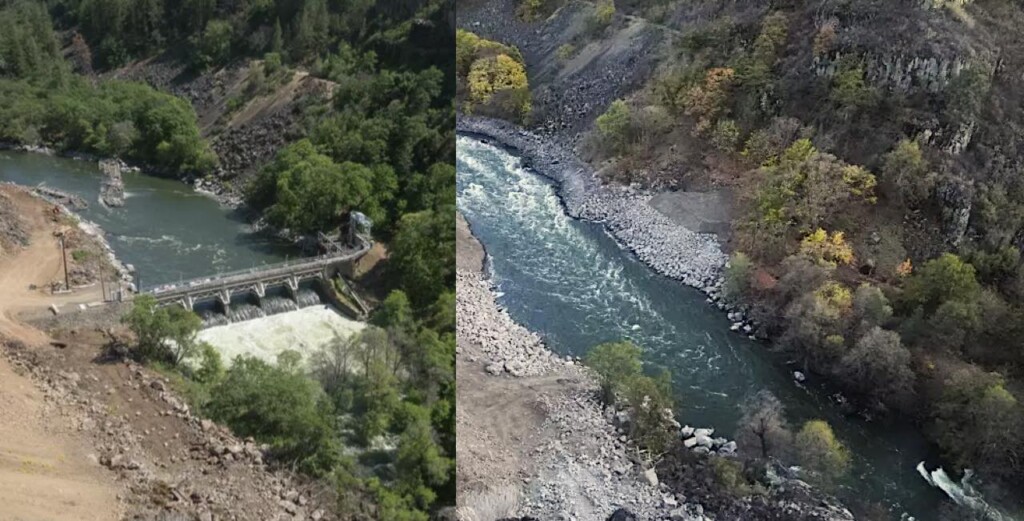
The Yurok Tribe were recently at the center of the nation’s largest dam removal, a two decades-long campaign to remove a series of four hydroelectric dams along the Klamath River. Once the West Coast’s third-largest salmon run, the Klamath dams substantially reduced salmon activity.
Klamath River flows freely, after Copco-2 dam was removed in California – Courtesy of Swiftwater Films
Completed last September, the before and after photographs are stunning to witness. By late November, salmon had already returned far upriver to spawn, proving that instinctual information had remained intact even after a century of disconnect.
“Seeing salmon spawning above the former dams fills my heart,” said Joseph L. James, chairman of the Yurok Tribe, the leaders of the dam removal campaign along with the Karuk and Klamath tribes.
“Our salmon are coming home. Klamath Basin tribes fought for decades to make this day a reality because our future generations deserve to inherit a healthier river from the headwaters to the sea.”
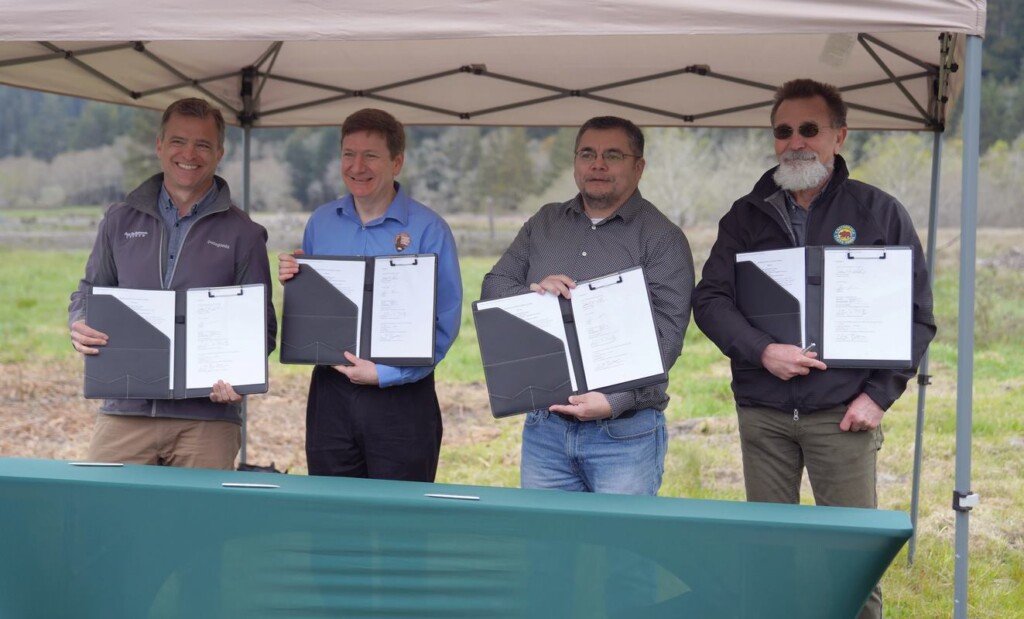
Last March, GNN reported that the Yurok Tribe had also become the first of America’s tribal nations to co-manage land with the National Park Service under a historic memorandum of understanding involving Redwoods National Park.
(left) Save the Redwoods President and CEO Sam Hodder, Redwood National and State Parks Superintendent Steven Mietz, Yurok Chairman Joseph L. James and California State Parks North Coast Redwoods Superintendent Victor Bjelajac sign the landmark agreement at ‘O Rew.
The nonprofit Save the Redwoods bought a piece of land adjacent to the park, which receives 1 million visitors annually and is a UNESCO Natural Heritage Site, and handed it over to the Yurok for stewardship.
The piece of land, which contained giant redwoods, recovered to such an extent that the NPS has incorporated it into the Redwoods trail network, and the two agencies will cooperate in ensuring mutual flourishing between two properties and one ecosystem.
Back at Blue Creek, AP reports that work has already begun clearing non-native conifer trees planted for lumber. The trunks will be used to create log jams in the creek for wildlife habitat.
Costing $56 million, the land was bought from the loggers by Western Rivers Conservancy, using a mixture of fundraising efforts including private capital, low interest loans, tax credits, public grants and carbon credit sales.
The sale was part of a movement called Land Back, which involves returning ownership of once-native lands of great importance to tribes for the sake of effective stewardship. Studies have shown around the tropics that indigenous-owned lands in protected areas have higher forest integrity and biodiversity than those owned by national governments.
Land Back has seen 4,700 square miles—equivalent to one and a half-times the size of Yellowstone National Park—returned to tribes through land buy-back agreements in 15 states.
SHARE This Inspiring Indigenous News With Your Friends On Social Media…
Quote of the Day: “Sometimes the poorest man leaves his children the richest inheritance.” – Ruth E. Renkel
Photo by: Getty Images for Unsplash+
With a new inspirational quote every day, atop the perfect photo—collected and archived on our Quote of the Day page—why not bookmark GNN.org for a daily uplift?
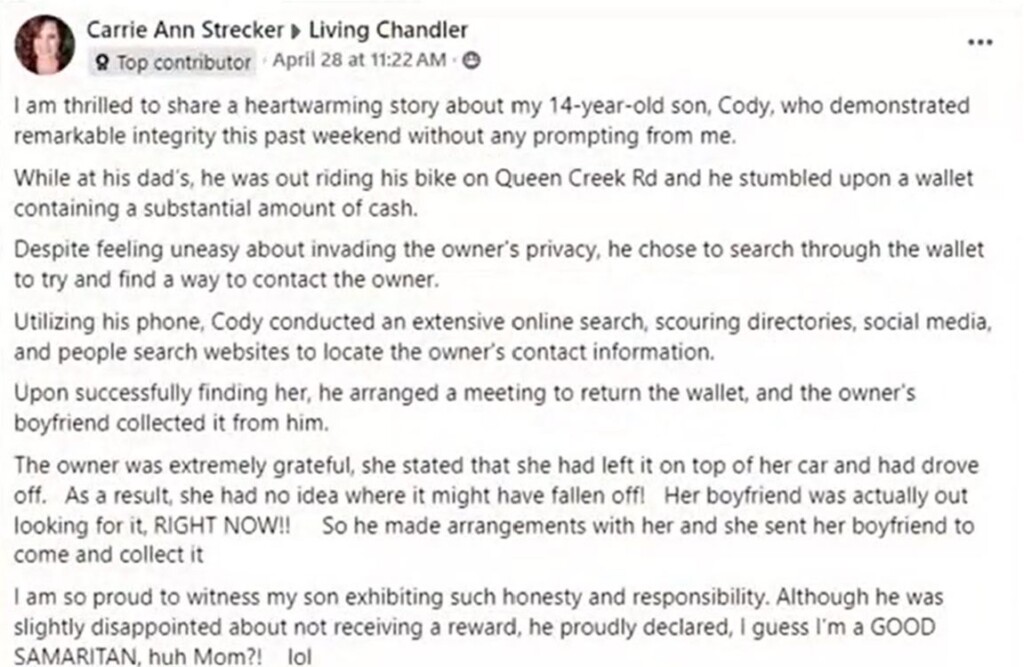
Last month in Arizona a young man profited unexpectedly from choosing honesty over greed after finding a lost wallet.
14-year-old Cody Chalmers found the wallet while riding his bike in Chandler on May 2nd, finding 300$ cash and credit cards inside.
But even though he was in the middle of saving money for an electric dirt bike with a hefty price tag, young Chalmers didn’t waste anytime considering his good fortune.
Sending his mother a photo of the ID contained in the wallet, she was able to run some basic internet searches until she found a phone number.
Speaking with AZ Family, Chalmers said that he was happy he did the right thing.
“I thought that someone would feel really bad if they lost it, so I was like, I better return this,” he said, adding that he remembered immediately how his father reacted years ago when he lost his wallet. “It kind of taught me how bad it is to like take someone’s money, like because their wallet is basically their life.”
Impressed with her son’s honesty, Carrie Strecker made a boast post on a local Chandler Facebook page, remarking how Cody joked that he “was a Good Samaritan now HUH mom?”
Seeing the story of the lost wallet, another Good Samaritan decided that $3,500 of his own money was less important than rewarding Cody’s honesty and asked his mom to send him a link to the electric bike. He intended to buy it for Cody as a gift.
Now there are fewer cooler cats than Cody along the hot streets of Chandler, as he rides around on his black e-bike—which was sold be a company called, if it can be believed, “Integrity E-bikes.“
WATCH the story below from Inside Edition…
CELEBRATE This Young Man’s Honesty And Recognition On Social Media…
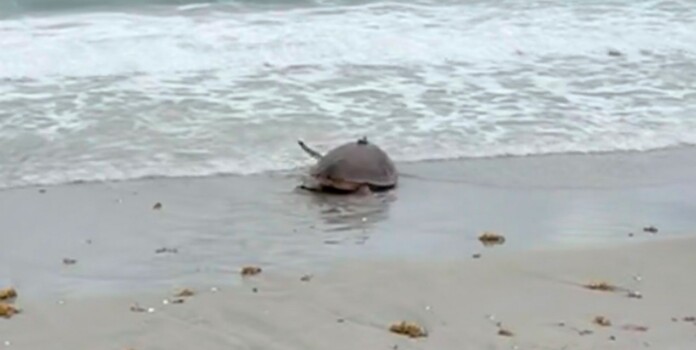
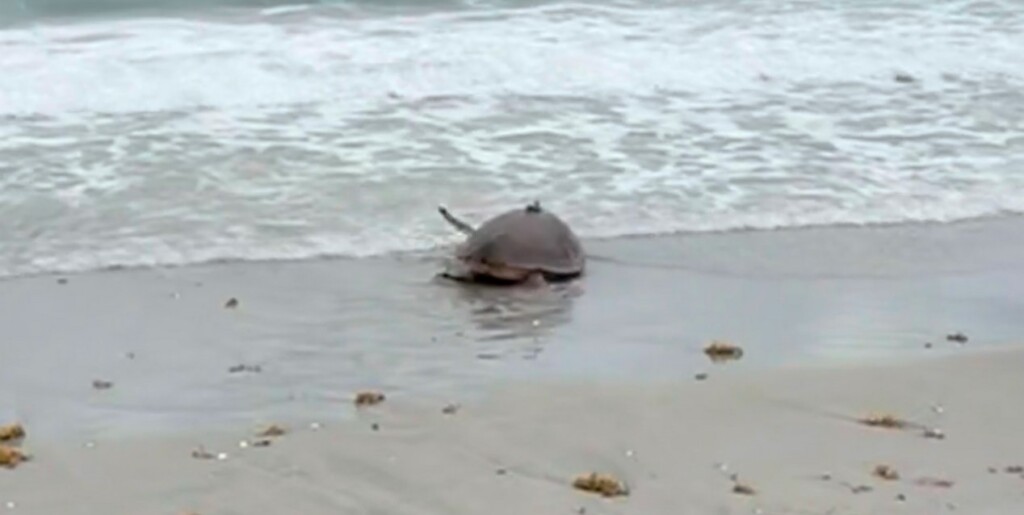
Dilly Dally going out to sea - screengrab from Loggerhead Marine Life Center, released
Dilly Dally going out to sea – screengrab from Loggerhead Marine Life Center, released
From Florida comes the story of one lucky turtle who was attacked by a predator and lived to tell the tale.
Dilly Dally was taken in by the Loggerhead Marinelife Center’s turtle veterinarians after she was rescued in Port St. Lucie with severe wounds on her front right flipper.
Though not a fully grown adult, it was probably a shark that wounded her, as they are a sea turtle’s only potential predator once they reach maturity.
Brought to shore by the Inwater Research Group in January, the center at Juno Beach applied antibiotics and treated her wounds, but it wasn’t enough to save her flipper which was successfully and safely amputated.
At Juno, Dilly Dally gradually mastered the art of swimming with one flipper during a five-month rehab program. The front pair are used by the animals for speed, while their smaller rear flippers are for turning.
Then, last Wednesday, it was time to let Dilly Dally go back to her home. A video recorded by the Loggerhead Marinelife Center showed four women carrying Dilly Dally in a plastic tub to the beach at high tide. After 2 minutes of scooting, she vanishes under the waves, with the last sight being the antenna of a satellite tracker which was strapped to her shell.
In this way Dilly Dally will become a pioneer: the first three-flippered turtle to be tracked by the center.
“So now Dilly Dally has an active live satellite tag on her and we can get real-time data on where she goes, which is really exciting because we don’t really know what happens to our three flipper turtles once you release them,” Marika Weber, a vet tech at the Juno center who was part of Dilly Dally’s care team, told CBS.
“Now we know if their migration or foraging patterns change and it’ll be really helpful to see what happens to these patients.”
Turtles can live long productive lives having lost limbs—hence why she was deemed suitable for release.
WATCH the video release below…
SHARE This Beautiful Scaled Life Saved, Healed, And Headed For Better Days…
Conservation work on the North Basing of Building 1 in Pajatén, Peru - credit, Heinz Plenge Pardo
Conservation work on the North Basing of Building 1 in Pajatén, Peru – credit, Heinz Plenge Pardo
At a UNESCO Heritage Site in Peru, archaeologists have announced the discovery of over 100 additional hidden structures belonging to a pre-Incan civilization.
Gran Pajatén is located high in the northeastern Peruvian Andes, and was likely a major center of the Chachapoya civilization, which thrived for 400 years before being conquered by the Inca.
Discovered in the 1960s, and excavated in the 1980s, the remoteness of the site led to its eventual neglect.
Between 2022 and 2024, an interdisciplinary team from World Monuments Fund Peru carried out a conservation and documentation project within Río Abiseo National Park, a UNESCO Mixed World Heritage site recognized for its extraordinary cultural richness and natural beauty.
Using technology like LiDAR, the researchers identified “a sophisticated urban settlement complete with agricultural terraces, circular buildings and cliffside tombs at altitudes of up to nearly 10,000 feet above sea level,” Smithsonian Magazine writes.
“This discovery radically expands our understanding of Gran Pajatén and raises new questions about the site’s role in the Chachapoya world. Evidence now confirms that it is not an isolated complex but part of an articulated network of pre-Hispanic settlements from different periods,” said Juan Pablo de la Puente Brunke, Executive Director of WMF in Peru, in a statement from the fund.
The Chachapoya society (pronounced cha-cha-POE-ya) was composed of regional chiefdoms that nevertheless shared a distinctive architectural and artistic language, as reflected in their unique circular buildings, geometric friezes, and highly decorated cliffside burials.
Archaeological investigations have confirmed that Chachapoya presence at Gran Pajatén dates back as far as the fourteenth century, with soil layer analysis hinting at even earlier use of the site. Combined with the discovery of a nearby network of pre-Hispanic roads connecting Gran Pajatén to other sites such as La Playa, Papayas, and Los Pinchudos, these findings support a broader interpretation of the complex as part of a hierarchical, well-connected territory.
With one team member telling Art News that research into the site and the civilization has only just scratched the surface, and that only 10% of the aerial LiDAR survey has been processed and documented, exciting the future for this lesser-known treasure of Peru’s past.
In parallel with these remote sensing efforts, the team also undertook archaeological and conservation interventions at one of the most important structures within the Gran Pajatén complex, pictured here in this article above.
A free exhibition at the Museo de Arte de Lima (MALI), Peru, on view from May 21st to June 18th, offers an opportunity to explore the Chachapoya culture and learn more about WMF’s recent discoveries.
SHARE This Beautiful Culture’s Patrimony And The Exciting Work Revealing It…
The UK government has announced that 500,000 additional children will receive a free school lunch following a major expansion in the program that provides it.
Previously, the free meal was available only to students who come from the lowest of low-income households. Following the expansion, most low and middle-class citizens will be able to qualify, and the government says it will lift 100,000 students out of poverty from the cost savings which will amount to around £500 per month, corresponding to nearly $700.
Despite having a ceiling of £7,400-per year for eligibility, last year an estimated 2.1 million students received a free school meal.
A rather arbitrary cut-off point, someone making £8,000 per year hardly possesses greater means to pay for the school meal than someone making below the cutoff point.
Under the new plan, any students from households on the UK’s universal credit will be eligible to receive one free meal a day. The universal credit replaced a number of British welfare programs, and provides a monthly cost of living assistance handout to people living in a variety of situations with a net worth of less than $20,000.
Set to begin at the outset of the 2026 scholastic year, the new expansion will also address food quality, and will be fully, rather than partially funded, to ensure there’s no delay in getting the expansion moving.
“Today’s historic step will help us to deliver excellence everywhere, for every child and give more young people the chance to get on in life,” the UK’s education secretary Bridget Phillipson said, adding “background shouldn’t mean destiny.”
The decision comes amid a record-high level of childhood poverty in one of Europe’s largest economies. The new Labor government under Prime Minister Sir Keir Starmer has vowed to drive down poverty levels in the UK, and the expansion of the student meal program was a part of that.
Free school lunches became a hot topic during the administration of Boris Johnson, when the young black Manchester United star Marcus Rashford decided to criticize Johnson for reducing the size of the free school lunch program.
While some sport pundits believed Rashford’s aim was noble, they also felt he should focus on his soccer. But he persevered and the government relented. Through this and his work with hunger charities in the city of Manchester, he was presented with an MBE, the British order of merit below a knighthood, for his advocacy work on behalf of England’s poorest students.
SHARE The News Of Britain’s Expansion Of Free School Lunches With Your Friends…
Quote of the Day: “There are only two lasting bequests we can hope to give our children. One of these is roots, the other, wings.” – Johann Wolfgang von Goethe
Photo by: Ben White Photography
With a new inspirational quote every day, atop the perfect photo—collected and archived on our Quote of the Day page—why not bookmark GNN.org for a daily uplift?
Arabella Duffy’s miniature strawberry short cake– SWNS
Arabella Duffy’s miniature strawberry short cake– SWNS
Meet the 12-year-old who has turned her hobby into a career and has earned thousands selling her miniature doll houses and accessories.
Arabella Duffy started making tiny food out of polymer and clay two years ago and spends up to six hours on each creation, whether a cookie, croissant, or strawberry shortcake.
After posting her work on social media channels like TikTok, Arabella was inundated with positive messages and people wanting to buy her creations.
She has sold over 400 items and makes around £2,000 a year ($2,500)—but she has plans to expand, in order to save the profits for college, so she can study Egyptology.
“She sits in her attic making stuff all night,” said Arabella’s mother, Sophy Smith, an artist, from London. “The end product is unbelievable.”
“Because she is home-schooled and doesn’t attend school, it has been great for her. She is doing things she loves and has a business. I’m so proud of her.
“The reaction to her work has been inspiring; other people have been inspired and created their own miniature items.”
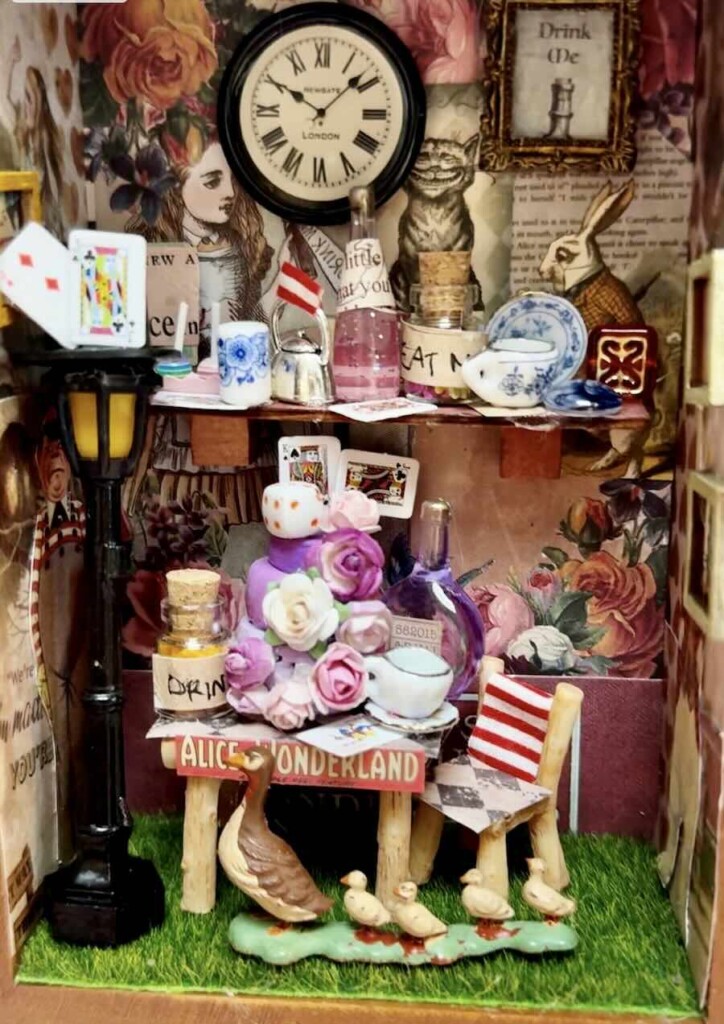
Arabella Duffy with her miniature food-SWNSArabella Duffy’s Alice in Wonderland miniature dollhouse room – SWNS
This month, the family will open a shop in Hampstead, where they will sell Arabella’s dioramas, matchbox paintings, and miniatures, in her own display area.
Arabella Duffy dollhouse accessories for sale -SWNS
The family is full of creatives: her mom paints watercolors and her dad works in the film industry. Sophy even asks her 12-year-old daughter for help because of how good she is.
Arabella is a perfectionist who won’t sell anything not up to her high standards.
Sophy recalls, “She made some clay cookies the other day, and because the chocolate didn’t look like it was melting in the end, she didn’t sell them. She can get frustrated sometimes because she won’t get it right away.”
“She is so into history. She loves Frida Kahlo and all the designs she did. She’s recreated a lot of artists’ studios and lots of these (miniature) rooms. It’s very accurate.”
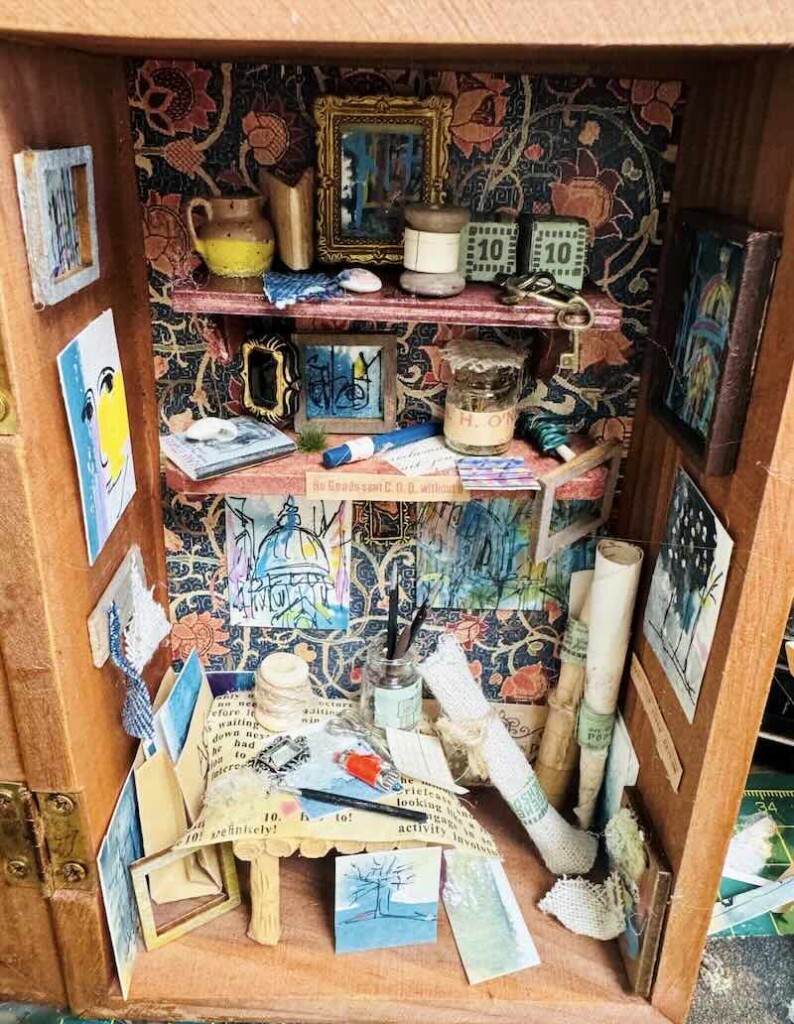
Arabella Duffy’s tiny artist’s room – SWNS
“She even did a Marie Antoinette scene, and she researched all of the things about her to make it perfect.” Sophy told SWNS news agency.
Arabella Duffy’s Marie Antoinette scene – SWNS
“Building the miniature rooms takes a couple of days. She will create the scenes using a tiny suitcase, furniture, and fabrics.”
She now sells her fake food for from £18 a piece, and miniature rooms on tables for from £30 a pop. Her most expensive piece was a shelf stuffed full of sweets – which sold for £55.
“Everyone is really proud of her and saying that they see a very bright future for her… and they can’t wait to see the next project she completes.
“The creativity she has and the imagination she has is amazing.”
“When I sell a piece of work, part of me is sad that it is gone,” says Arabella. “But I’m happy that someone is going to cherish it. The English breakfast creation is one of my favorites. I think it’s my best work to date.”
It’s never too late to start eating better to prevent dementia, according a new analysis of research involving 90,000 adults.
People over the age of 45 who followed a dietary pattern known as the MIND diet were “significantly” less likely to develop Alzheimer’s disease or related forms of dementia, said the University of Hawaii scientists.
The MIND diet stands for Mediterranean Intervention for Neurodegenerative Delay, and was developed by the late Martha Clare Morris, ScD, a Rush University nutritional epidemiologist. It combines the traditional Mediterranean diet with the blood pressure-lowering DASH diet (Dietary Approaches to Stop Hypertension).
It includes proven ‘brain-healthy’ foods such as leafy green vegetables, berries, nuts, fish, and olive oil.
The study found that the MIND diet had a stronger and more consistent risk reduction relationship with dementia than other ‘healthy’ diets for the majority of racial groups in the study.
Participants who improved their adherence to the diet the most over time showed the greatest pattern of risk reduction.
Overall, participants who scored higher for MIND adherence at the start of the study had a 9% lower risk of dementia, with an even greater reduction, of around 13%, among those who identified as African American, Latino or White.
The beneficial relationship was seen similarly among younger and older groups, which suggests that there are benefits to adopting the diet at any age.
“Our study findings confirm that healthy dietary patterns in mid to late life, and their improvement over time. may prevent Alzheimer’s and related dementias,” said Dr. Song-Yi Park, Associate Professor at the University of Hawaii at Manoa.
“This suggests that it is never too late to adopt a healthy diet to prevent dementia.”
Dr. Park and her colleagues analyzed data from more than 90,000 American adults who provided information about their diet, starting in the 1990s.
Credit: Irina del
The participants were between 45- and 75-years-old at the outset, and more than 21,000 developed Alzheimer’s or related dementias in the years that followed.
The results also showed that people who improved their adherence to MIND over 10 years—including those who didn’t follow the diet closely at first—had a 25% lower risk of dementia compared to those whose adherence declined.
Dr. Park said that trend was consistent across different ages and racial groups.
However, the protective relationship between a healthy diet and dementia was not as apparent among Asian Americans and even less so for Native Hawaiians.
“A tailored approach may be needed when evaluating different subpopulations’ diet quality,” said Park, who added that further studies could help clarify those patterns.
Dr. Park presented the findings at the annual meeting of the American Society for Nutrition in Orlando, Florida, on June 2.
As the emotions were about to erupt from his eyes, Matt Vogt tried not to cry.
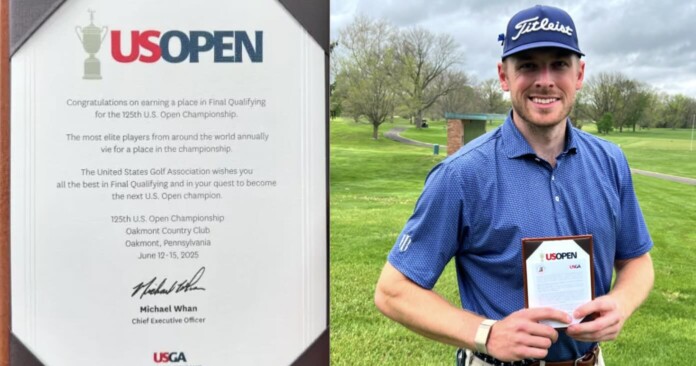
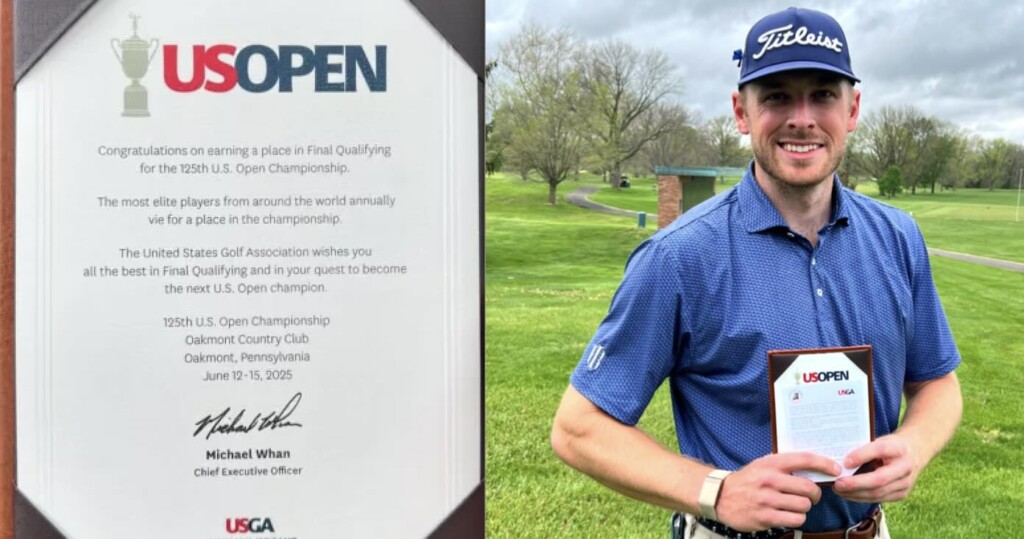
Matt Vogt (pronounced ‘vote’) grew up outside of Pittsburgh and spent his teenage years working as a caddy at the famous Oakmont Country Club. That course is hosting professional golf’s 125th U.S. Open next week. And thanks to a sequence of events that seems stolen from Hollywood, Vogt will be playing in it.
Ranked way down at 1,173 in the World Amateur Golf Rankings, Matt works as a dentist in Indianapolis—but he shot 8-under par to win the U.S. Open’s Final Qualifying tournament in Washington state last weekend, earning himself a trip back to his hometown to star in golf’s national championship.
Vogt’s father passed away about two months ago, making the moment even more emotional. The 34-year-old wore a ribbon on his hat to remember his dad during the round. And Matt said he felt his presence, as the putts kept dropping in and the dream moved ever closer to reality.
“I told you I was going to try not to cry,” Vogt told the Golf Channel in a post-round interview that you can watch below. “We stayed present all day. I knew I could do this. I knew I could do it.
“You know, Oakmont, and Pittsburgh, and everything there means so much to me. Having grown up in Pittsburgh and caddied there, it took every ounce of energy in my body not to think about that all day.”
“I feel like I am going to wake up from a dream here in a little while and this isn’t going to be real, but it’s real, and I’m so excited.”
Vogt, who played college golf at Butler University in Indiana, advanced through local qualifying earlier in the spring, then won this year’s Indianapolis Open.
After that, he needed to finish second at the U.S. Open Qualifying in Walla Walla, Washington to earn a spot in the championship, which starts June 12 in the Pittsburgh suburb of Oakmont.
Whether it was fate, destiny, or a little help from above, Vogt won the whole thing—and he didn’t hesitate to give his dad a little credit.
“I was looking up to the skies, and I knew he was with me,” Vogt told Reuters. “I wish he was here to share it with me, but I know he’s watching.”
In a few days, the humble dentist will return to Oakmont, the course that first inspired his dream two decades ago, and where he carried the clubs of other golfers while often letting his mind wander.
What would it be like to play in a U.S. Open here?
The answer will arrive next week as dreams and reality merge into one.
“I will soak up every single second of that week,” Vogt said in an article from GolfWeek. “It’s just a dream come true.”
WATCH the interview Golf below…
SHARE THE INSPIRING STORY With Aspiring Golfers on Social Media…
From paying off their child’s credit card debt to donating a kidney, a new survey revealed some of the most life-changing ‘dad acts’ in honor of Father’s Day.
The survey of 2,000 Americans uncovered fatherhood stories showing they truly are the most helpful heroes, with people sharing stories of selflessness and kindness.
One respondent shared, “The most heroic thing my father has ever done for me was during Hurricane Harvey—he trudged through the waters to come get me.”
Another remembered fondly, “He stopped working and took care of me when I had a car accident.”
One person said, “My dad came and stayed with me when I got a divorce.” And she asked him to stay as long as he wanted.
Conducted by Talker Research and commissioned by SweatBlock, the poll sought to spotlight how much dads have helped their children, especially when it comes to building up their confidence.
The results found that for those who grew up with a dad, most (70%) said their dad is one of their greatest mentors.
25% shared that their father is the person they call first in a stressful situation when they need help or support—and 17% said their dad is the person they go when they need advice. In fact, more than one in four (29%) revealed they’ve called their dads for help in the last week.
Some of the most heartwarming ways dads have come to the rescue include helping their kid heal from a breakup (19%), making a rent payment their child couldn’t afford (22%) and helping their child figure out their life goals (30%).
According to the findings, dads have taught their children how to stand up for themselves (38%) and how to be their best selves (32%).
On the more practical side, dads have helped their kids cultivate practical skills like driving (49%), fixing things around the house (43%) and changing a tire (31%)
According to respondents, when it comes to self-care, the dads have been helpful there as well, teaching their kids the importance of maintaining their physical (40%) and mental health (30%) as well as the value of splurging on yourself now and again (28%) and having a polished look and appearance (25%).
Many men learned how to tie a tie from their father (32%) and use shaving cream (29%), and more than a quarter (26%) even said their dad bought them their first deodorant.
These answers remind us of the value of good fathers in helping to shape our lives.
Read about more heroic actions from dads below...
● “When I lost my job a few years ago, it was one of the most stressful moments. My dad immediately offered to assist us financially until I could get back on my feet, which greatly relieved my burden.”
● “When I wanted to go into business and asked him to [be a] co-signer and put up his house as collateral and he did.”
● “On my wedding day, he had to change a flat tire before we left for my wedding…it was truly stressful but we made it and his tuxedo did not get damaged.”
● “My dad passed away when I was 14, but right before he passed he bought me tickets to go see my favorite singer in concert, George Michael, and he gave me money to buy stuff at the concert [and] it was a dream come true.”
● “He worked several jobs in order to be able to afford to put me in college so I won’t have to get so many student loans.”
● “When my first husband died and left me a widow when I was 32. My dad was there to do whatever I needed.”
SHARE Your Own Recollections in the Comments or When Posting This on Social Media…
Quote of the Day: “My father gave me the greatest gift anyone could give another person, he believed in me.” – Jim Valvano
Photo by: Jordan González for Unsplash+
With a new inspirational quote every day, atop the perfect photo—collected and archived on our Quote of the Day page—why not bookmark GNN.org for a daily uplift?
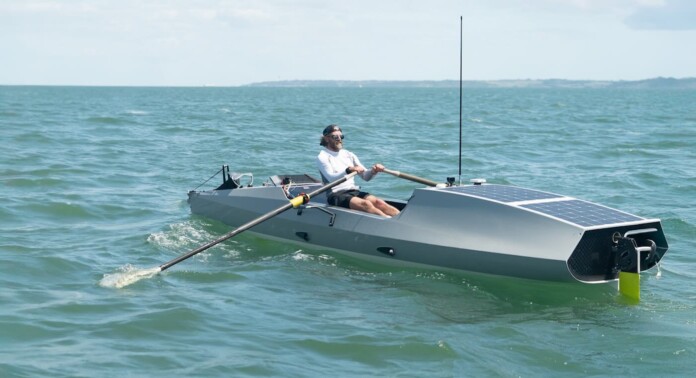
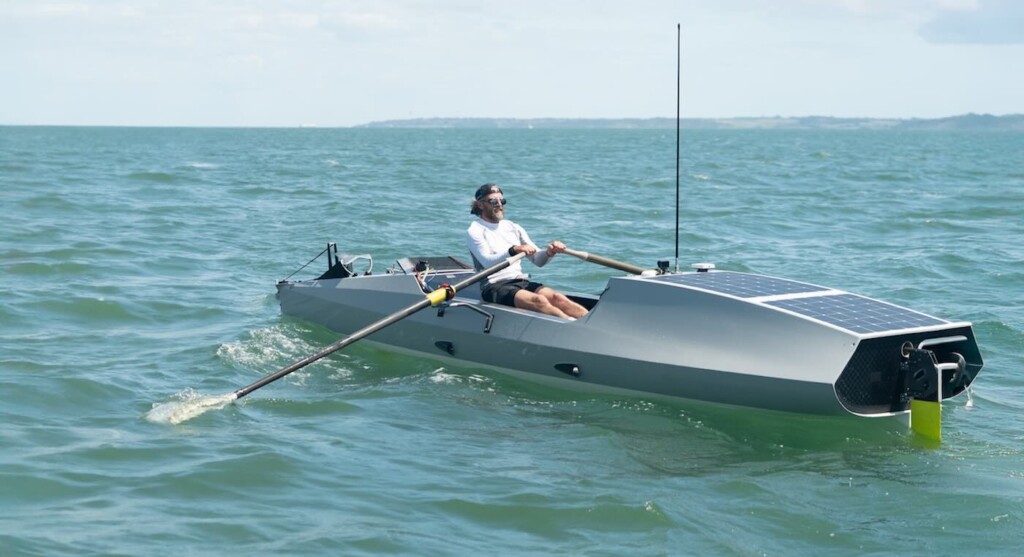
Rower Angus Collins will solo row 2,000 miles around Great Britain in 60 days – SWNS
Rower Angus Collins will solo row 2,000 miles around Great Britain in 60 days – SWNS
A man is hoping to become the first person to row solo around Great Britain—covering 2,000 miles in just 60 days in his handmade specialty boat.
Angus Collins will have to battle whirlpools, North Sea wave patterns, and shipping lanes when he attempts his record-setting feat later this month.
A holder of five world records in ocean rowing, Angus believes his latest challenge will be his toughest yet, due to the UK’s unpredictable weather patterns.
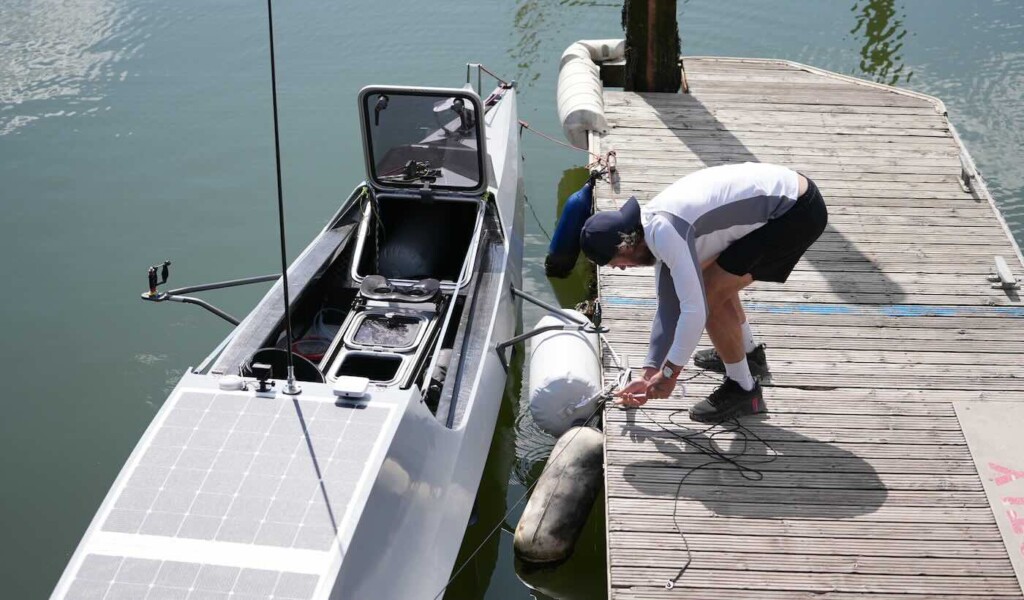
Because of this, Angus needed to ditch the ocean boat he normally rows and instead build a boat specially designed to adapt to British winds.
Loading up with two months of supplies, Angus will break his 60 days down into eight hours of rowing, followed by four hours of rest when he sets off from Portsmouth in mid-June.
If all goes to plan, he hopes to complete the circumnavigation in less than the allotted 60 days—believing it could be done in under 50.
“Many say it’s impossible,” said the ultra-endurance athlete from Hampshire, England, on the south coast of Great Britain. “I know that isn’t the case.”
It’s been attempted eight times now but no one has succeeded, according to the 35-year-old.
He’s raising money during the feat to aid James’ Place, a charity for men’s mental health—and so far he has raised over $85,000 (£62k) towards his £250,000 goal.
“Largely, people think that rowing around Britain is be a lot easier than rowing across an ocean. (But) because it’s coastal, it makes it significantly harder,” he said in a report by SWNS news agency.
“There’s a lot more nautical knowledge needed to row around Britain. Areas in Weymouth are very difficult. Up in Scotland, there is Europe’s biggest whirlpool.”
Rower Angus Collins had to ditch his ocean boat and build one specially designed for British winds-SWNS
“There will be some areas, going around the islands off the West coast of Scotland, where I’ll be much closer to shore, and other areas further off that require nautical experience you need to cope with different environments.
“Every leg there is an extremely technical and tricky part.”
Angus speaks from experience, having previously completed the same feat but with a five-man crew.
“I know the waters well.
“The biggest prep is the actual boat itself. I’ve designed a boat that is purposefully made for around Britain,” he explained. “The ocean boats are designed to catch as much wind as possible, whereas in Britain, the winds are constantly changing, so the boat is adapted for that.
Rower Angus Collins with his custom-built boat designed for circumnavigating Britain-SWNS
“I know this is going to be the hardest challenge I’ve ever taken on. It is scary—but I’ve done a lot of research and I think I’ve come up with the answers.”
Angus chose the charity James’ Place because of his own battles with depression.
“James died by suicide, and his younger brother put the charity together. At that time, I hadn’t recognized that I was struggling with depression—but I wasn’t in a happy place. The work James’ Place does is phenomenal .”
“I love the fact that every day I can think, ‘If we can raise that (amount) each day, that’s another life saved, and all I have to do is row for 14 hours.’”
Iconic Gardens By the Bay in Singapore by Scott Antcliffe – City life category Winner in the National Geographic Photography Competition / SWNS
Iconic Gardens By the Bay in Singapore by Scott Antcliffe – City life category Winner in the National Geographic Photography Competition (cropped) / SWNS
Winners of the 12th annual National Geographic Traveller (UK) Photography Competition were revealed, highlighting the best in travel photography.
Open to both amateur and professional photographers from across the UK and Ireland, they submitted their best travel images taken during the past twelve months.
Winners are awarded in six categories: People, City Life, Landscape, Wildlife, Food, and Portfolio.
The above image was the winner of the City Life category. Photographer Scott Antcliffe described the scene: “I was keen to capture Singapore’s more unassuming areas of natural beauty. After being recommended this spot by the hotel receptionist, I made my way there early in the morning to avoid the potential crowds and relentless humidity.
“Upon arrival, I was struck by the sheer density of the foliage. Vines have completely enveloped the supporting walls, but the view of the Yellow Rain Tree at the top was simply stunning and utterly mesmerizing.”
The Grand Prize winner was Justin Cliffe, who captured this striking image of a woman in Vietnam, embroidering at the door of her property alongside her great-granddaughter.
Vietnamese elderly woman embroiders with great granddaughter nearby by Justin Cliffe – Grand prize winner in the National Geographic Photography Competition / SWNS
“The Red Dao minority people of Lao Cai Province are one of Vietnam’s most distinctive ethnic groups, largely due to their headdresses,” the photographer explained. “Here, a woman sits at the door of her property working on some embroidery with her great granddaughter. Their intricate embroidery is a skill passed down from mother to daughter and further generations.”
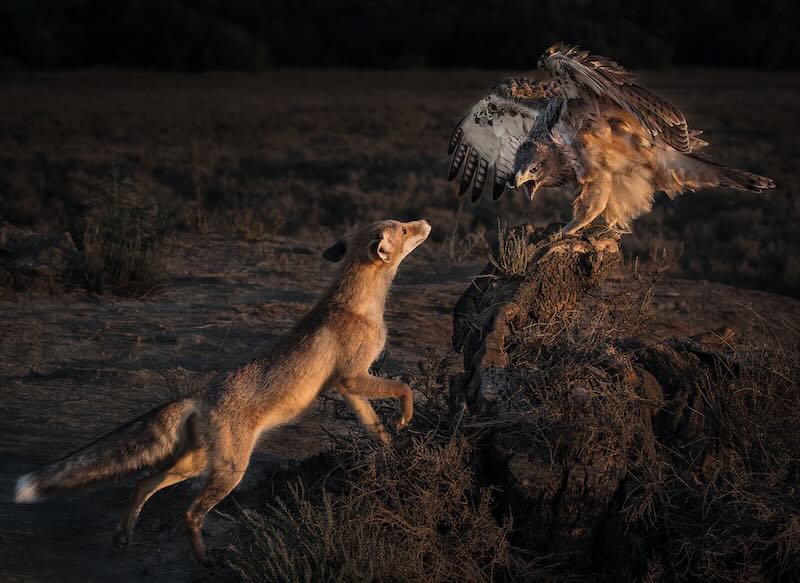
The winner of the Wildlife category was Victoria Andrews who snapped this moment in Spain and entitled the image ‘A fox chasing an owl’.
A fox chasing an owl by Victoria Andrews – Wildlife category Winner in the National Geographic Photography Competition / SWNS
“I took this image in August during one of the hottest summers in Toledo, Spain. The area is well known for its raptors and I decided to make the trip after being tempted by the chance of photographing the beautiful Bonelli’s eagle. Arriving at the location at first light, I didn’t have to wait more than an hour or so before the Bonelli’s eagle flew in and perched on an old tree stump,” recalled Ms. Andrews.
“After firing off hundreds of perched shots, it then raised its wings in a defensive stance. That’s when I saw the fox approaching. The fox came closer and closer still, until they were almost nose to nose. I was clicking like crazy, while all the time praying I had got all my camera settings correct.”
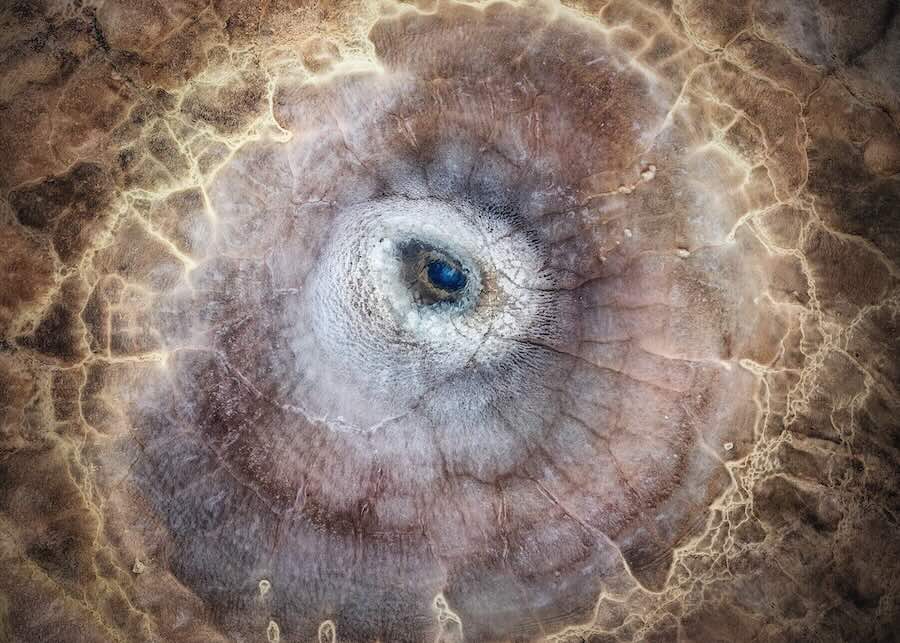
Aerial view of the Hveravellir geothermal area by Pawel Zygmunt – Landscape category Winner in the National Geographic Photography Competition / SWNS
The winner of the Landscape category was Pawel Zygmunt whose picture featured a stunning spot in Iceland captured by his drone. The aerial view of the Hveravellir geothermal area looks like an eyeball in a horror movie, with the deep, sapphire-blue pool acting as the ‘pupil’, but the scene evokes nature’s raw power on full display.
Check out this charming runner-up photo in the Wildlife category taken by Jo Noon, who shot snow buntings in Alberta, Canada. Upwards of three hundred bunting were congregating on a patch of snowy hillside.
Snow buntings in Canada by Jo Noon – Wildlife category runner-up in the National Geographic Photography Competition / SWNS
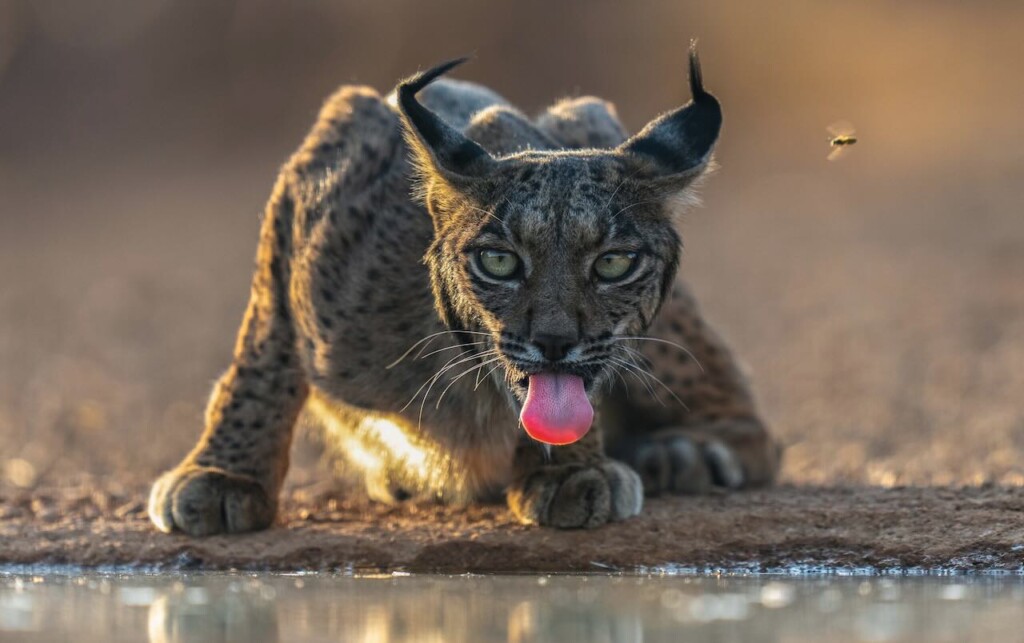
Another highlight of the contest featured an endangered female lynx drinking from a pond, also in Spain.
Female lynx drinks from pond in Spain by Hari Kumar Prasannakumar – Wildlife category runner-up in the National Geographic Photography Competition / SWNS
The Wildlife category runner up, Hari Kumar Prasannakumar, virtually stopped time in Ciudad Real, Spain, while an endangered female lynx was drinking from a pond and a curious honey bee buzzed near her ear, adding a playful twist to the striking moment.
“The 18 finalists — who made the cut from thousands of entries — have really elevated the level of travel photography with their ingenuity and skill,” said Pat Riddell, a contest judge and the editor of National Geographic Traveller (UK) magazine, which can be followed on Facebook or Instagram to find future announcements for upcoming contests.
SHARE THE BEAUTY With Photography Lovers on Social Media…
A new study from researchers at Smithsonian’s National Museum of Natural History demonstrated how a probiotic could save the Caribbean’s at-risk coral.
The compound slowed the spread of a deadly disease which began damaging coral in Florida in 2014 and has since rapidly spread south, throughout the Caribbean.
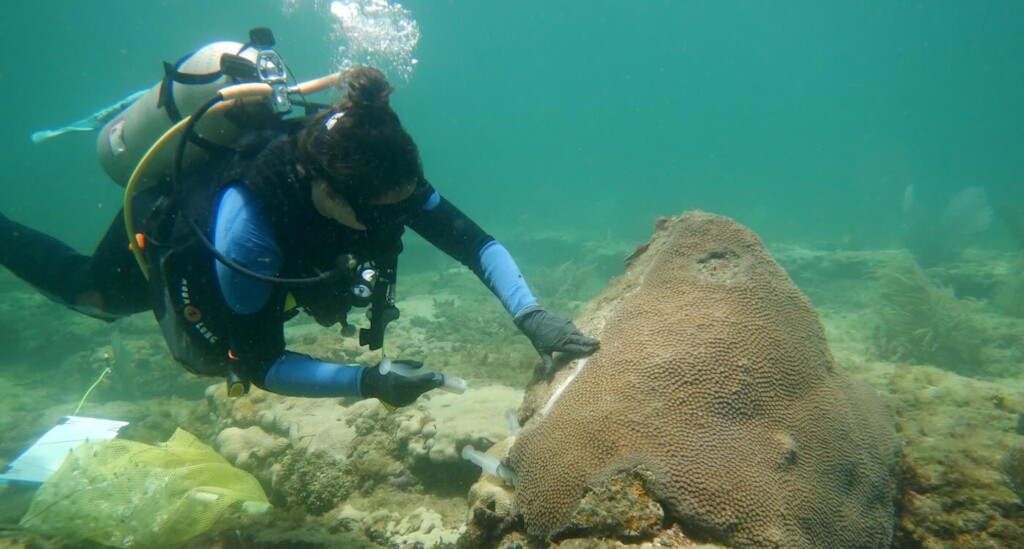
The study documents 6 years of testing in the lab and off the coast of Florida, to identify the best available treatment to combat ‘stony coral tissue loss disease (SCTLD).
Probiotics, like those in yogurt, are live bacteria and yeasts that provide various health benefits for the human microbiome in the gut.
Published in the journal Frontiers in Marine Science, the findings revealed that applying the bacterial probiotic treatment to a coral colony helped prevent tissue loss and slow the spread of SCTLD in already infected wild corals in Florida.
They say the new treatment provides a viable alternative to the current method of applying an antibiotic, which only offers temporary protection and also runs the risk of creating resistant strains of SCTLD.
“The goal of using the probiotics is to get the corals to take up this beneficial bacterium and incorporate it into their natural microbiome, said study co-leader Dr. Valerie Paul, head scientist at the Smithsonian Marine Station at Fort Pierce, Florida. “The probiotics then will provide a more lasting protection.”
Unlike other disease-causing organisms, which usually target specific species, SCTLD infects more than 30 different types of stony corals, including boulder-shaped brain corals and limb-like pillar corals. As it spreads, the disease causes the corals’ soft tissue to slough off, leaving behind white patches of exposed skeleton.
Scientists have yet to identify the exact cause of SCTLD, which can devastate an entire coral colony in just weeks, but it appears to be linked to harmful bacteria.
Dr. Paul and her colleagues have spent six years investigating whether probiotics could combat the disease because, like humans, corals host communities known as microbiomes that are bustling with bacteria. Some of those tiny organisms, found in both coral tissue and the protective mucus that corals secrete, produce antioxidants and vitamins to keep their coral hosts healthy.
The researchers first studied the microbiomes of corals that were impervious to the SCTLD so they could harvest probiotics from the disease-resistant species and use them to strengthen the microbiomes of susceptible corals.
The team then tested more than 200 strains of bacteria from the disease-resistant corals, and settled on the probiotic ‘Pseudoalteromonas sp. McH1-7’ from the great star coral, which produces several different antibacterial compounds, as the “ideal candidate” to combat SCTLD.
They initially tested McH1-7 in the lab on live coral and discovered that the probiotic reliably prevented the spread of SCTLD. So, in 2020, they conducted field tests on a shallow reef near Fort Lauderdale where colonies were infected with the disease.
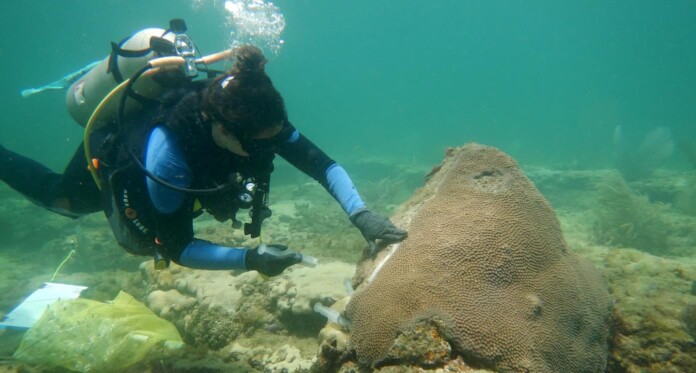
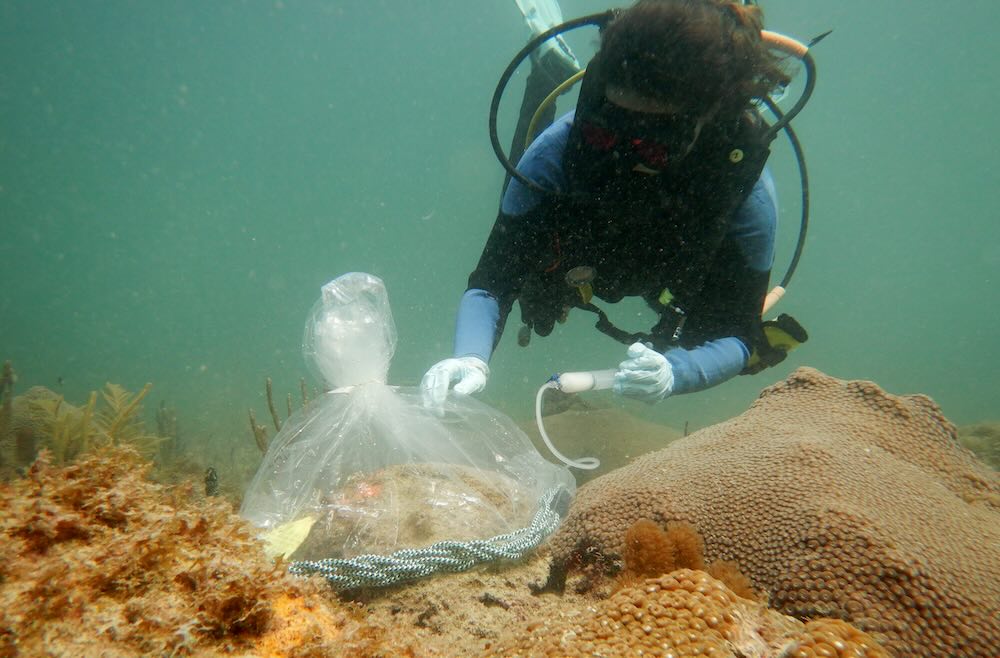
The coral was treated with a solution of seawater containing McH1-7 inside weighted plastic bags where the probiotics were administered, covering each colony.
“This created a little mini-aquarium that kept the probiotics around each coral colony.”
The team found after more than two years of monitoring the colony that the probiotic successfully slowed the spread of SCTLD—and the samples revealed that the probiotic was effective without dominating the corals’ natural microbes.
To date, the most common treatment for SCTLD was applying paste that contains the antibiotic amoxicillin to the diseased coral. But while the balm can effectively stem disease spread, it is temporarily, and needs to be frequently reapplied to the corals’ lesions, which not only takes time and resources, but also increases the risk that the microbes causing SCTLD could develop resistance to amoxicillin and other antibiotics.
“Antibiotics do not stop future outbreaks,” said Dr Paul. “The disease can quickly come back, even on the same coral colonies that have been treated.”
Caribbean bound
While the probiotic proved to be an effective treatment among Florida’s northern reefs, the team needs to calibrate the treatment for other regions—because when they conducted similar tests on reefs in the Florida Keys (much further south), results were mixed, probably due to regional differences in the disease itself.
FREE WILL ASTROLOGY – Week of June 7, 2025
Copyright by Rob Brezsny, FreeWillAstrology.com
GEMINI (May 21-June 20):
It’s time for your Uncle Rob to offer you some fundamental advice for living. These tips are always worthy of your contemplation, but especially now. Ready? Being poised amidst uncertainty is a superpower. You may attract wonders and blessings if you can function well while dealing with contradictory feelings, unclear situations, and incomplete answers. Don’t rush to artificial closure when patience with the unfinished state will serve you better. Be willing to address just part of a problem rather than trying to insist on total resolution. There’s no need to be worried or frustrated if some enigmas cannot yet be explained and resolved. Enjoy the mystery!
CANCER (June 21-July 22):
Acclaimed Cancerian poet Lucille Clifton published 14 books and mothered six children. That heroism seems almost impossible. Having helped raise one child myself, I know how consuming it is to be a parent. Where did she find the time and energy to generate so much great literature? Judging from the astrological omens, I suspect you now have access to high levels of productivity comparable to Clifton’s. Like her, you will also be able to gracefully juggle competing demands and navigate adeptly through different domains. Here’s my favorite part: Your stellar efficiency will stem not from stressfully trying too hard but rather from good timing and a nimble touch.
LEO (July 23-Aug. 22):
One of the seven wonders of the ancient world was the Colossus of Rhodes, located on a Greek island. Symbolizing power and triumph, it was a towering statue dedicated to the sun god Helios. The immediate motivation for its construction was the local people’s defeat of an invading army. I hereby authorize you to acquire or create your own personal version of an inspiring icon like the Colossus, Leo. It will symbolize the fact that the coming months will stimulate lavish expressions of your leonine power. It will help inspire you to showcase your talents and make bold moves. PS: Be alert for chances to mobilize others with your leadership. Your natural brilliance will be a beacon.
VIRGO (Aug. 23-Sept. 22):
The Great Barrier Reef is the world’s biggest structure built by living things. Lying beneath the Coral Sea off the east coast of Australia, it’s made by billions of small organisms, coral polyps, all working together to create a magnificent home for a vast diversity of life forms. Let’s make the Great Barrier Reed your symbol of power for the next 10 months, Virgo. I hope it inspires you to manage and harness the many details that together will generate a robust source of vitality for your tribe, family, and community.
LIBRA (Sept. 23-Oct. 22):
One of my favorite poets, Arthur Rimbaud, wrote all of his brilliant work before he became an adult. I suspect that no matter what your age is, many of you Libras are now in an ultra-precocious phase with some resemblances to Rimbaud from age 16 to 21. The downside of this situation is that you may be too advanced for people to thoroughly understand you. You could be ahead of your time and too cool for even the trendsetters. I urge you to trust your farseeing visions and forward-looking intuitions even if others can’t appreciate them yet. What you bring to us from the future will benefit us all.
SCORPIO (Oct. 23-Nov. 21):
Blacksmiths still exist. They were more common in the past, but there are many 21st-century practitioners. It’s a demanding art, requiring intense heat to soften hard slabs of metal so they can be forged into intricate new shapes. The process requires both fire and finesse. I think you are currently in a phase when blacksmithing is an apt metaphor. You will need to artfully interweave passion and precision. Fiery ambition or intense feelings may arise, offering you raw energy for transformation. To harness it effectively, you must temper your approach with patience, restraint, and detail-oriented focus.
SAGITTARIUS (Nov. 22-Dec. 21): Jean-Paul Sartre and Simon de Beauvoir were two feisty, independent, strong-minded French writers. Beauvoir was a trailblazing feminist, and Sartre was a Nobel Laureate. Though they never officially married, they were a couple for 51 years. Aside from their great solo accomplishments, they also gave us this gift: They proved that romantic love and intellectual equality could coexist, even thrive together, with the help of creative negotiation. I propose we make them your inspirational role models for now. The coming months will be a favorable time to deepen and refine your devotion to crafting satisfying, interesting intimate relationships.
CAPRICORN (Dec. 22-Jan. 19):
Over 2600 years ago, ancient Babylonian astronomers figured out the highly complex cycle that governs the recurrence of lunar and solar eclipses. It unfolds over a period of 18 years and 11 days. To analyze its full scope required many generations of researchers to carry out meticulous record-keeping with extreme patience. Let’s make those Babylonian researchers your role models, Capricorn. In the coming months, I hope they inspire you to engage in careful observation and persistent investigation as you discover meaningful patterns. May they excite your quest to discern deep cycles and hidden rhythms.
AQUARIUS (Jan. 20-Feb. 18):
I invite you to try this visualization exercise, Aquarius: Picture a rosebud inside your body. It’s located in your solar plexus. Imagine it’s steadily and gently opening, filling your body with a sweet, blissful warmth, like a slow-motion orgasm that lasts and lasts. Feel the velvet red petals unfolding; inhale the soft radiance of succulent fragrance. As the rose fully blooms, you become aware of a gold ring at its center. Imagine yourself reaching inside and taking the ring with your right hand. Slip the ring onto your left ring finger and tell yourself, “I pledge to devote all my passionate intelligence to my own well-being. I promise to forever treat myself with tender loving respect. I vow to seek out high-quality beauty and truth as I fulfill my life’s mission.”
PISCES (Feb. 19-March 20):
I foresee the arrival of a living fossil, Pisces. An influence you thought was gone may soon reappear. Aspects of your past could prove relevant to your current situation. These might be neglected skills, seemingly defunct connections, or dormant dreams. I hope you have fun integrating rediscovered resources and earmarking them for use in the future. PS: Here’s a lesson worth treasuring: While the world has changed, a certain fundamental truth remains true and valuable to you.
ARIES (March 21-April 19):
You have had resemblances to cactuses in recent days. It hasn’t always been pleasant and cheerful, but you have become pretty skilled at surviving, even thriving, despite an insufficiency of juicy experiences. Fortunately, the emotional fuel you had previously stored up has sustained you, keeping you resilient and reasonably fluid. However, this situation will soon change. More succulence is on its way. Scarcity will end, and you will be blessed with an enhanced flow of lush feelings.
TAURUS (April 20-May 20):
I foresee abundance emerging from modest sources. I predict breakthroughs arising out of your loving attention to the details of the routine. So please don’t get distracted by poignant meditations on what you feel is missing from your life. Don’t fantasize about what you wish you could be doing instead of what you are actually doing. Your real wealth lies in the small tasks that are right in front of you—even though they may not yet have revealed their full meaning or richness. I invite you and encourage you to be alert for grandeur in seemingly mundane intimate moments.
WANT MORE? Listen to Rob’s EXPANDED AUDIO HOROSCOPES, 4-5 minute meditations on the current state of your destiny — or subscribe to his unique daily text message service at: RealAstrology.com
Quote of the Day: “Noble fathers have noble children.” – Euripides
Photo by: Getty Images for Unsplash+
With a new inspirational quote every day, atop the perfect photo—collected and archived on our Quote of the Day page—why not bookmark GNN.org for a daily uplift?