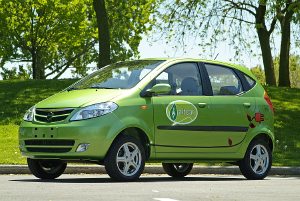
 A new car sharing/car rental program, called AltCar, has been launched in Baltimore, Maryland with a fleet of all-electric battery-powered cars.
Sponsored by ExxonMobil, with the Maryland Science Center serving as a hub, tourists and locals can take their families for a spin with a free test drive in one of the 4-seater hatchbacks through July 31, if presenting an admission ticket from the museum.
Rentals of the Maya-300 vehicles, manufactured by the Canadian firm Electrovaya, will cost $14.50 per hour. But for members of the new car sharing network, hourly fees start at $7.50. The altcars can travel a distance of 60 to 120 miles in the city, depending on their battery size.
Car sharing is a service that provides members with access to the vehicle fleet on an hourly basis. Once you become a member (by completing the application process), you can choose to reserve any car you like, in advance, either by phone or online, and drive it for as long as you need. Use your reservation time to run your daily errands. Go grocery or hardware shopping, visit a friend across town, or take a client out to lunch. Rates include gas (in this case electricity), auto insurance, and maintenance.
One of the first car-sharing and rental programs in North America to use fleets of all-electric vehicles, altcar operates during the day from Baltimore’s Inner Harbor using non-highway city cars. The five-door, five-passenger urban vehicles are equipped with the safety, performance and convenience features common to any other rental car, except for their speed capacity limits.
The Maya-300 is solely powered by lithium ion battery technology, utilizing ExxonMobil technology in its separator film.
Baltimore Mayor Sheila Dixon and Malcolm Woolf, director of the Maryland Energy Administration, were in attendance at Tuesday’s launch event, expressing their gratitude and support to Electrovaya and ExxonMobil for their support of the Maryland Science Center.
In addition to the car-sharing program and to help raise awareness among Baltimore residents and science center visitors about the future of energy efficient transportation, ExxonMobil also has developed a state-of-the-art exhibit for the science center that includes hands-on activities for children and a full-scale car that showcases clean transportation technologies currently being used in the automotive industry.
ExxonMobil has invested more than half a million dollars in the car-sharing program and exhibit, including the purchase of the vehicles and development of the exhibit.
Learn more about altcar program at the Maryland Science Center website.













 In a major break with most large companies, Wal-Mart Inc. Tuesday told the White House that it supports requiring employers to provide health insurance to workers.

 Malawi, which launched a free AIDS drug program five years ago with 5,000 initial beneficiaries, is now supplying 250,000 HIV positive citizens with the life-saving treatments.