














Domestic violence against spouses and intimate partners in the U.S. fell by nearly two-thirds in recent years, reaching a 30-year low. Government figures show the marked declines began in 1994.
Violence Down Sharply in Sub-Saharan Africa

"After decades as the world’s most violent region, sub-Saharan Africa is finding peace. Most of the drop in violence is recent." From 2002 through 2005, the number of conflicts involving government troops dropped from 13 to 5. Battling between factions or tribes dropped from 24 to 14. (Full story by Frank Greve, in McClatchy Newspapers)
Turn Off the Bad News (Opinion)

If you surf the Internet today and go to any of the news sites, you will find story after story promoting bad news. Bird flu, WW III, Iraq, bad government and economic collapse are just a few of the many depressing topics you will find on virtually every site. Rarely do you find any good news. Broadcast media is no better. Various inspirational, spiritual, psychological and motivational teachers like Earl Nightengale, Dr. Wayne Dyer and others say in short words, “We become what we think about.” If we dwell on bad news day in and day out, that’s what we will attract to ourselves…
A Century Later, the Buffalo Roam in Colorado Again

A small wild bison herd was released in Colorado, only 10 miles from Denver, to roam on prairie grasses that haven’t felt the storied animal’s footprint in more than a century.
What’s more, the 1,400 acres are adjacent to a toxic Superfund site that has been successfully cleaned up and renamed, the Rocky Mountain Arsenal National Wildlife Refuge…
The transformation of the property from a chemical weapons and pesticide manufacturing arsenal to a wildlife refuge is being conducted by the U.S. Army, and Shell Oil Co. To date, more than 12,000 acres (two-thirds of the site) have been certified as clean by the Environmental Protection Agency and State of Colorado and have been transferred to the management of the US Fish and Wildlife Service (FWS).
The 1,400 acres designated as wild bison habitat, FWS says was never used in making chemicals.
Bison were historically an integral component of the prairie ecosystem and their reintroduction will likely boost the health of the entire area. Migrating bison provided essential functions, such as grazing and fertilizing of grasses. This herd of 16 animals is the first to be introduced near a major metropolitan area.
Jonathan Proctor of Defenders of Wildlife told the Associated Press, “The short grass left by grazing bison is ideal habitat for prairie dog colonies, which in turn provide habitat and prey for rare species such as burrowing owls, hawks and swift foxes. Bison also add nutrients to the soil and create wallows which can attract several types of birds.”
The new refuge will also play a key part in advancing the FWS national bison conservation program which monitors genetic variety in herds from Montana to the Dakotas.

“The return of bison to the Rocky Mountain Arsenal National Wildlife Refuge signals remarkable progress both in the transformation of this site and in the conservation of American bison,” said Mitch King, the U.S. Fish and Wildlife Service’s Mountain-Prairie Regional Director.
The Service will add the bison pasture to its popular public tram tour route beginning in April, which will enable the public to view the bison in their natural habitat.
Charlie Scharmann, program manager for the Rocky Mountain Arsenal, said: “To see wild bison roaming on this land is truly remarkable and we are proud to have played a role in this historic conservation effort.
“The return of this signature species, along with the bald eagles and more than 300 species of wildlife that already call this site home, make the Refuge a destination that Colorado residents and visitors alike will not want to miss.”
Tax Facts For Freelancers (Part 2)

Here is the second part in a GNN series designed to help you with your US taxes — especially beneficial to folks like me who haven’t done them yet! Today, Julian Block, an expert on tax issues related to freelance artists, writers and photographers, will answer some common questions about how to report income on 1099’s (when some include reductions for expenses, and others do not) and if we can take deductions for articles donated to non-profit groups…
1,423 Afghan Artifacts Return to Kabul

“More than 1,400 artifacts protected from looters and the Taliban since 1999 at a museum-in-exile in Switzerland were returned to the National Museum of Afghanistan.” Items included a foundation stone that was definitely “touched by Alexander the Great” in an Afghan city he founded, featuring an owl on one side to symbolize Athens… (AP)
New U.S. Alliance Pushes to Update the Light Bulb

A coalition of industrialists, environmentalists and energy specialists is announcing next week a campaign to eliminate America’s use of incandescent light bulbs within 10 years. It will press for government-enforced efficiency standards to make the old-bulb technology obsolete. (After all, it dates back to the introduction of the telegraph and steam locomotive, which have long since been replaced by better technology.) –NY Times
Energy-efficient lighting can produce a huge difference on your energy bill, and help cut global warming gases. Try this dimmable CF Warm Glow light bulb, from Gaiam.
Singapore Says Water Recycled from Sewage Will Meet a Third of Its Needs by 2011
Singapore has met a target for water recycling four years early. Tired of importing half its water from neighboring countries, Singapore is making itself more self-sufficient through recycling. The country’s fourth and largest treatment plant opened Thursday for use in purifying sewage water for industrial use, air-conditioning, landscaping and washing uses… (AP)
Algae-to-Biodiesel Fuel Tackles Two Problems (Video)

Algae has been the least-publicized source for biodiesel fuel, yet it may hold the greatest potential for simultaneously tackling the two problems of our dependence on fossil fuels and global climate change. Green Star Products, Inc. announced this week that a consortium of independent companies will begin constructing two demonstration "algae-to-biodiesel" production facilities…
Ex-Senate Leaders Launch Center to Forge Bipartisan Solutions

Two Republicans and two Democrats, all former U.S. Senate Majority Leaders, have launched the Bipartisan Policy Center, a new organization with the noble goal of reversing the rise of poisonous rancor that permeates the halls of Congress these days. As political elders, Howard Baker, Tom Daschle, Bob Dole and George Mitchell also intend to forge bipartisan policy solutions that could address critical national challenges…
Earth’s Air Pressure Propels Clean Energy Plant

In a sci-fi approach to providing clean energy, a consortium of Iowa power companies is planning to fill a big underground hole with pressurized air which would then be released to generate electricity. Two other air-storage caverns already exist in Alabama and Germany, demonstrating that the technology is not far-fetched. But the Iowa wind hole would be roughly twice as large and the only one to use wind power to pump air under the earth…
King Abdullah’s Challenge to Congress: Act Now on Mid-East Peace

By any reasonable measure, King Abdullah’s speech before a joint session of the U.S. Congress was smart and courageous. He took advantage of being only the fourth Arab leader given this opportunity and chose to do the unexpected. Some observers anticipated that he would focus his remarks on Iraq or appeal for more U.S. aid to his country now providing refuge to almost one million Iraqis. He did not…
Nor were his remarks designed to elicit frequent applause. Instead, he focused his speech on a thoughtful and passionate appeal: the urgent need to resolve the Israeli-Palestinian conflict.
His arguments were compelling. Iraq is of course a critical issue, but it is not, King Abdullah noted, the core issue that roils the region.
“The wellspring of regional division,” he observed, “the cause of resentment and frustration far beyond, is the denial of justice and peace in Palestine.” This, he concluded, is the “core issue… producing severe consequences for our region… and for our world”.
Throughout his remarks he spoke evocatively of Palestinian rights, using words rarely heard in the halls of Congress. Speaking “as a friend who cannot be silent”, he told of “sixty years of Palestinian dispossession” and “forty years under occupation”, creating a “bitter legacy of disappointment and despair”. He called on Congress to support efforts “to restore Palestine, a nation in despair and without hope”.
King Abdullah infused his remarks with a moral and political challenge, reminding Americans of their precarious standing in world public opinion. He noted that Arabs and Muslims often ask “whether the West really means what it says about equality and respect and equal justice” and continued by observing that “nothing can assert America’s moral vision more clearly, nothing can teach the world’s youth more directly than your leadership in a peace process that delivers results not next year, not in five years, but this year”.
The King went on to describe the Arab nations’ collective commitment to peace as expressed in the Beirut Declaration of 2002, which supports a comprehensive resolution to the conflict that includes two states at peace, with normalised relations amongst all countries in the region. (This commitment was corroborated by the results of a recent Zogby International poll conducted in six Arab nations, which found that well over 90 per cent of Arabs support a two-state solution to the conflict).
The King spoke with a sense of urgency, making it clear that the clock was running out for peace to become a reality.
As I said, the thrust and content of the speech were unexpected. There was, of course, applause, and a number of standing ovations. But during long stretches you could hear a pin drop in the crowded chamber.
 From my vantage point in a box overlooking the assembled lawmakers, I saw many members in deep reflection, frequently nodding in agreement with the King’s observations.
Some members of Congress with whom I spoke were deeply moved by King Abdullah’s appeal. Of course, there were those who were not.
Comments, both critical and banal, were issued by some who have been long opponents to a just resolution to the conflict. They will, no doubt, continue to find ways to obstruct the search for peace.
But there can be no doubt that the King’s speech made an important contribution. It has empowered and invigorated Arab Americans and American Jews who want peace, and has provided both with important leverage with which to press their case.
The speech also provided food for thought for the small but growing caucus of legislators who are convinced that the King is right — that the Israeli-Palestinian conflict is a core issue of concern, creating extremism in the Middle East and dividing the U.S. from the Arab world.
They believe that the time for a solution is now, before “facts on the ground”, despair and more violence make such an outcome all but impossible.
There will be those who will find fault with the King’s speech. Some will say it wasn’t balanced enough, while others will argue it was too balanced. But the critics are wrong. King Abdullah used an extraordinary opportunity to deliver an important message. He is to be commended for doing so. The search for an Israeli-Palestinian peace is the core issue, and time is running out. He gave the search for peace his best shot. This is his challenge, to which all of us must now respond.
James J. Zogby is founder and president of the Arab American Institute (AAI).
This article is distributed by the Common Ground News Service
Original article reprinted with permission- Jordan Times, 13 March 2007
First Anniversary of New GNN Web site

EDITOR’S BLOG
One year ago today, we unveiled our new Web site. For the reader, we included soothing photos and graphics and for the editor, a new interface that makes it easy to upload stories… In one year, I’ve added 1,100 new stories, created 355 ‘On This Day’ historical columns, and published 40 weekly ‘Top Ten’ collections! … What’s next for 2007: Radio? Print columns? Video? Three things are certain, creativity and change — and audience numbers expanding exponentially! (In just the last two weeks, the average number of daily visits rose 40 percent, and in January we reached a quarter million page views per month.) My sincere thanks to the team, especially Averan, for web implementation, Harry, for Inspired articles and support, and to my registered readers (like ‘Columbine’) for adding their own comments and creating discussion. As Todd Rudgren says, l love my life!
Templeton Prize Goes to Philosopher Who Says Barriers Between Science and Spirituality Fragment Us

Professor Charles Taylor, a Canadian philosopher who for nearly half a century has argued that problems such as violence and bigotry can only be solved by considering both their secular and spiritual dimensions, has won the 2007 Templeton Prize.
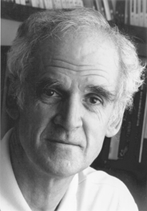
Taylor, 75, argues that wholly depending on secularized viewpoints, without taking into account the spiritual, only leads to fragmented, faulty results. He describes such an approach as crippling, preventing crucial insights that might help a global community increasingly exposed to clashes of culture, morality, nationalities, and religions…
Need a dissertation consultant? Creative Adventures Consulting Never Shortchanges the Student
The Templeton Prize, valued at 800,000 pounds sterling, more than $1.5 million, was announced yesterday at a news conference at the Church Center for the United Nations in New York by the John Templeton Foundation, which has awarded the prize since 1973. The Templeton Prize is the world’s largest annual monetary award given to an individual.
Key to Taylor’s investigations of the secular and the spiritual is a determination to show that one without the other only leads to peril, a point he outlined in his news conference remarks. “The divorce of natural science and religion has been damaging to both,” he said, “but it is equally true that the culture of the humanities and social sciences has often been surprisingly blind and deaf to the spiritual.”
“We urgently need new insight into the human propensity for violence,” including, he added, “a full account of the human striving for meaning and spiritual direction, of which  the appeals to violence are a perversion. But we don’t even begin to see where we have to look as long as we accept the complacent myth that people like us – enlightened secularists or believers – are not part of the problem. We will pay a high price if we allow this kind of muddled thinking to prevail.”
Taylor has long objected to what many social scientists take for granted, namely that the rational movement that began in the Enlightenment renders such notions as morality and spirituality as simply quaint anachronisms in the age of reason. That narrow, reductive sociological approach, he says, wrongly denies the full account of how and why humans strive for meaning which, in turn, makes it impossible to solve the world’s most intractable problems ranging from mob violence to racism to war.
“The deafness of many philosophers, social scientists and historians to the spiritual dimensions can be remarkable,” Taylor said in remarks prepared for the news conference. “This is the more damaging in that it affects the culture of the media and of educated public opinion in general.”
Conversely, Taylor has also chastised those who use moral certitude or religious beliefs in the name of battling injustice because they believe “our cause is good, so we can inflict righteous violence,” as he once wrote. “Because we see ourselves as imperfect, below what God wants, we sacrifice the bad in us, or sacrifice the things we treasure. Or we see destruction as divine…identify with it, and so renounce what is destroyed, purifying while bringing meaning to the destruction.”
Taylor, an author of more than a dozen books and scores of published essays and who has lectured extensively, is currently professor of law and philosophy at Northwestern University in Evanston, Illinois, and professor emeritus in the philosophy department at McGill University in Montréal , the city of his birth. A Rhodes Scholar, he holds a bachelor of arts from McGill and Balliol College at Oxford University, as well as a masters and Ph.D. (D.Phil.) from Oxford. He is the first Canadian to win the Templeton Prize.
“Throughout his career, Charles Taylor has staked an often lonely position that insists on the inclusion of spiritual dimensions in discussions of public policy, history, linguistics, literature, and every other facet of humanities and the social sciences,” says John M. Templeton, Jr., M.D., the Foundation’s President. “Through careful analysis, impeccable scholarship, and powerful, passionate language, he has given us bold new insights that provide a fresh understanding of the many problems of the world and, potentially, how we might together resolve them.”
The Prize is a cornerstone of the Foundation’s international efforts to serve as a philanthropic catalyst for discovery in areas engaging life’s biggest questions, ranging from explorations into the laws of nature and the universe to questions on love, gratitude, forgiveness, and creativity. Created by global investor and philanthropist Sir John Templeton, the monetary value of the Prize is set always to exceed the Nobel Prizes to underscore Templeton’s belief that benefits from advances in spiritual discoveries can be quantifiably more vast than those from other worthy human endeavors.
The 2007 Templeton Prize for Progress Toward Research or Discoveries About Spiritual Realities will be officially awarded to Taylor by HRH Prince Philip, the Duke of Edinburgh, at a private ceremony at Buckingham Palace on Wednesday, May 2nd.
In his nomination of Taylor for the Prize, the Rev. David A. Martin, Ph.D., emeritus professor of sociology at the London School of Economics, and author of A General Theory of Secularization, a seminal work in the field, said, “His oeuvre is massive and covers issues quite central to contemporary concerns, above all perhaps the nature of self-hood and the religious and secular options open to us in what is sometimes described as secular or even secularist society. He has traced the historical evolution of the religious and secular dimensions of the world as they relate to each other with unequalled authority.”
Taylor was born in 1931 in Montréal in French-speaking Quebec, the only Canadian province where English is not the majority language. Growing up in a Catholic home where both French (his mother’s native tongue) and English (his father’s) were spoken, in a province where language is a political touchstone, spurred an early interest in matters of identity, society and the potential value of thought that runs against the common grain. Though his first degree was in history, a Rhodes Scholarship in 1952 led him to study philosophy at Oxford, where he encountered what Taylor describes as “an unstructured hostility” to, among other things, religious belief. In reaction, he began to question the so-called “objective” approaches of psychology, social science, linguistics, history, and other human sciences.
This led Taylor to his doctoral dissertation, which offered a devastating critique of psychological behaviorism, which holds that all human activity can be explained as mere movement, without considering thought or subjective meaning. Published in 1964 as The Explanation of Behaviour, it put the philosophical world on notice that a new voice had arrived.
From there he went on to write at length on Hegel, the philosopher who pioneered deep contemplation on notions of modernity – territory that Taylor was now intent on exploring anew – including Hegel, published in 1975, and Hegel and Modern Society, 1979.
In 1992, for example, Taylor wrote an article published in the book, Multiculturalism and “The Politics of Recognition” that detailed the effect of modernity on concepts of identity and self which, in turn, has had a profound political impact. He continued that investigation with his noted Marianist Lecture in 1997 in Dayton, Ohio, where he declared that the Catholic Church could find its place within the modern world by seeing Western modernity as one among the many civilizations in which Christianity has been preached and practiced. This would avoid both the total identification with European civilization which has blunted the Christian message, and also the opposite extreme of seeing modernity as the antithesis or enemy of Christian faith. It was published as a book entitled, A Catholic Modernity? in 1999. Noting the possibility of a “spiritual lobotomy,” he warned, “There can never be a total fusion of the faith and any particular society, and the attempt to achieve it is dangerous for the faith.”
Then, in 1998-99, Taylor delivered the renowned Gifford Lectures, entitled “Living in a Secular Age,” at the University of Edinburgh. The lectures, published in three volumes, offered a staggeringly detailed analysis of the movement away from spirituality in favor of so-called objective reasoning. Many expect the final volume, A Secular Age, scheduled for publication by Harvard University Press later this year, to be the most important literary achievement of Taylor’s lifetime and the definitive examination of secularization and the modern world.
The Premier of Quebec, Jean Charest, recently appointed Taylor to co-chair a commission on accommodation of cultural religious differences in public life. “The debate on this issue in our society has recently taken on worrying features,” Taylor says, “including a dash of xenophobia.” Hearings throughout the province are expected to begin in Fall 2007.
Taylor, who lives with his wife, Aube Billard, an art historian, in Montréal, and, currently in Evanston, Illinois, has said he will use the Templeton Prize money to advance his studies of the relationship of language and linguistic meaning to art and theology and to developing new concepts of relating human sciences with biological sciences.
The Foundation noted that Taylor’s selection as the 2007 Templeton Prize Laureate will launch a broad, online discussion of the question, “What role does spiritual thinking have in the 21st Century?” at its website, www.templeton.org
Poland Honors Woman who Saved 2,500 Jewish Children from Holocaust
Irena Sendler was honored in Poland for her part in a secret organization that rescued thousands of Jews from certain death by smuggling them out of the country in baskets and ambulances. Though tortured, the Catholic lady wouldn’t talk to her captors. (AP – great photo) Thanks to Ralph Petrucci for submitting the link!
Famed Wild Parrots of San Francisco Get City’s Protection (Video)

The San Francisco Board of Supervisors Tuesday voted to "protect and eventually replant trees on Telegraph Hill that serve as a favorite roost for a world-famous flock of parrots." (full details of their plan are on SFGate.com) … This flock of wild Amazonian parrots somehow landed in San Francisco years ago and have been breeding and entertaining crowds ever since. An award-winning and inspiring film was created that portrayed the love between the birds and a local street musician and hippie, Mark Bittner…
The Violin Femmes
GNN member Helen Kopec wanted us to know about the explosion of talent by top-level violinists on the concert circuit who are young and female. (Denver Post)
At 88, She’s a Millionaire, and Keeps Teaching
Rose "Mama G" Gilbert, a feisty and talented California English teacher says she has no plans to retire, even though she has millions. (AP w/ photo)
‘Fair Trade’ Food Booming in Britain
"’Ethical eating,’ a practice once restricted to the rich, is going mainstream. Data show that Britons are avidly buying fair-trade groceries, organic foods, and sustainably farmed produce." (CS Monitor)
The Best Television for Uplifting Your Life (Review)

An inspiring trio of television shows are broadcasting on PBS affiliates during pledge drives this month. Through these shows, American public television viewers have enjoyed learning the good news about menopause, eight qualities of highly successful women, and the three ways to be inspired to your higher calling — all based on three best-selling books…
 The women’s health expert, Dr. Christiane Northrup, is back with a new lecture that packs so much information into its 90 minutes, that you need to take notes. Whether it’s naming the one vitamin most women are deficient in — by half — (Vitamin D), or talking candidly about sex, weight issues and hormones, Christiane is the best voice out there for women on health. (By the way, she recommends limiting your news media intake knowing that it has a serious effect on nervous and immune systems — adding cortisol to the blood, for instance.) Please, if you are in your 40’s, you must become informed about the realities of Menopause — and it’s mostly GOOD NEWS! See this program, or devour the book… The Wisdom of Menopause: Creating Physical and Emotional Health and Healing During the Change
 Modern financial guru, Suze Orman is also back on public television with her dynamic, funny and unique presentation about money especially made for women. This lady knows that money, just like anything else, is not going to be free-flowing into your life if you have emotional baggage surrounding the issue. She tells it like it is with great spirit. I particularly loved her 8 Qualities of Successful Women: Harmony, Balance, Courage, Cleanliness, and Wisdom, among others. And, she tells you how to create these qualities in simple steps, or at least how to begin to live them. If you can’t see this program, and get her products by pledging to PBS, I’d recommend you get Suze’s book, Women & Money: Owning the Power to Control Your Destiny.
 Finally, if you didn’t catch Inspirational speaker and author, Wayne Dyer speak to PBS audiences last year on the topic of inspiration, you have another chance. This program is especially helpful if you haven’t found your life’s calling yet.
He features some people who have inspired him through reaching for their own life’s purpose, like Ryan Hreljac, the boy who started the Ryan’s Well initiative bringing clean water to African villages. Get some tips on finding your own calling.
Wayne Dyer’s book: Inspiration: Your Ultimate Calling
________________________________________________________