In Stillwater, Minnesota, the hometown team of snow sculptors just walked away with 1st place in the World Snow Sculpting Championships, beating several nations and winning $4,000.
Siblings Dusty and Kelly Thune and friends made up the team, monikered the “House of Thune,” who carved a raw expression of adversity and challenge called “Journey.”
The team used custom homemade tools to sculpt their work of art from 10 tons of snow.
“It felt pretty surreal being up there on the stage,” snow sculptor Kelly Thune told FOX 9 on Sunday. “There were so many pieces this year that I thought deserved to win it, that I didn’t expect it.”
“When you hear the People’s Choice get an award, and then you hear third place, second place, and you think ‘aw man, ours didn’t make it,’ but then they said our name and we just about lost it,” said Kelly’s brother Dusty.
Teams from Finland, Turkey, Germany, Ecuador, Canada, and Argentina represented their nations at Stillwater with some captivating pieces of seasonal art, but it was the home team that took the grand prize.
“Journey” captures the adversity faced by everyone in moments of their life, but particularly one of their team members, who suffered a loss of $80,000 in property as well as a significant amount of his life’s work, after a fire consumed his art gallery in preparation for the contest. The team set up a GoFundMe to try and help him recover.
For another two weeks or so, all the sculptures will still be at the tournament grounds in Stillwater, weather permitting, and offer a great reason to get out of the house during such a cold winter up north that has had so many people sheltering and snuggling in their homes.
WATCH local news cover the subject…
CELEBRATE Team USA’s Big Snowy Win On Social Media…
Indian paleontologists recently uncovered a find of titanic proportions—a series of sauropod nests or “clutches” that contained 256 dinosaur eggs in total.
The eggs yielded a trove of insights about sauropod reproductive strategies, and turned up 6 new species of dinosaur in the same dig.
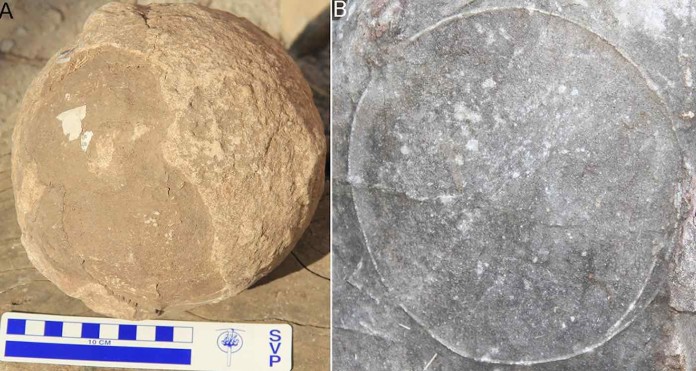
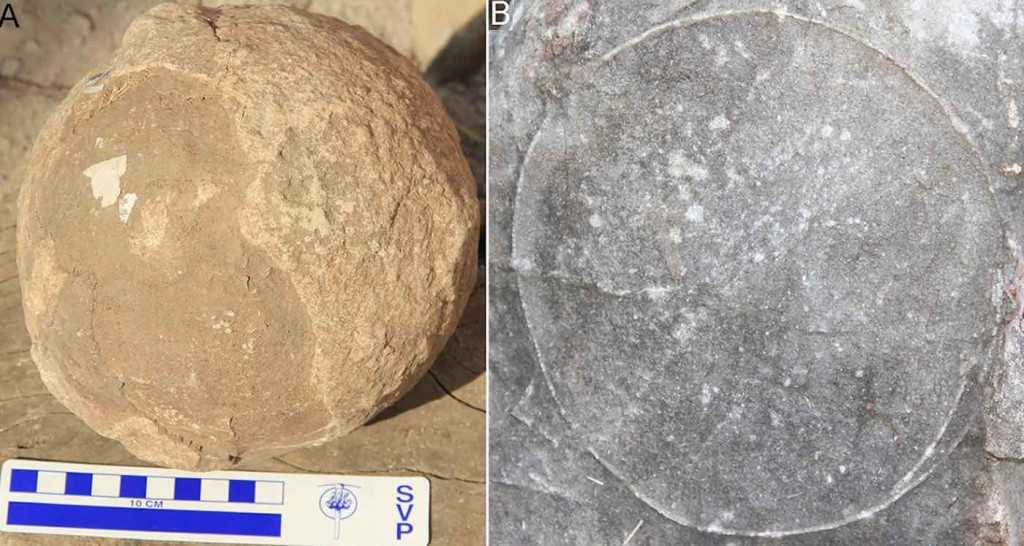
Located in the sedimentary bed of the Lameta Formation in the Dhar district of Madhya Pradesh, central India, paleontologist Harsha Dhiman uncovered 92 dinosaur clutches filled with eggs that averaged around 6.3 inches in diameter. They were made by Titanosauria, a clade containing many long-necked dinosaurs.
Titanosaurs were the largest land animals to ever live—they could reach 100 feet in length, and it appears they were cognizant of their massive bulks because their clutches were all placed in close proximity.
This was among the many deductions made of the legendary find—these massive animals nested like birds, laying their eggs and positioning their clutches together as a colony, and more or less leaving them to fend for themselves.
“Closely spaced nests would not have allowed them to visit the nests to maneuver and incubate the eggs or feed the hatchlings,” paleontologist and the study’s co-writer Guntupalli Prasad told CNN, “as the parents would step on the eggs and trample them.”
Dhiman et al., 2023, PLOS ONE, CC-BY 4.0.
Much like birds, the eggs were determined to be laid sequentially. Some of the eggs had defects, such as eggs that were embedded within other eggs, and the authors note that this is the first ever recorded discovery of egg-in-egg pathology in reptiles or dinosaurs.
Around the clutches were also a wealth of fossilized bones, such that 6 new Titanosaurids have been tentatively discovered, adding to the 3 found in past excavations of the Lameta Formation.
The authors propose that some of the clutches were preserved because they had been overcome with water. Based on the characteristics of the sediments and minerals around them, it seems they were perhaps made near to a water source that flooded the nesting site.
With a new inspirational quote every day, atop the perfect photo—collected and archived on our Quotes page—why not bookmark GNN.org for a daily uplift?
A Welshman decided to donate his kidney to an unknown patient after his daughter received a donated one in a potentially life-saving procedure.
When Arfon Jones’ daughter Seren became seriously ill and had to have both her kidneys removed, he did what any father would do and signed up to be a donor.
However the surgeons determined that his kidney would not match, and for months Seren sat on a dialysis machine 10 hours a night.
In April of 2022, Arfon received a call that a suitable donor had been found.
“Without the kidney I wouldn’t be alive today, possibly,” said 19-year-old Seren.
It was while Seren was awaiting a transplant that Arfon learned more about how to be a living organ donor, and that a normal person can lead a healthy life with just one kidney.
“After Seren got her new kidney, she was told that I could get off the living donor list and that’s when I had a very strange experience,” Arfon told the BBC.
“It was as if I heard a voice telling me ‘there is someone else who needs your kidney’ and I just felt that I had to stay on the list.”
Arfon became a kidney donor at 70-years-old just before Christmas, remarking he had given someone a very nice present. He doesn’t know their identity as it wasn’t a friend or family member, but he knows they’re doing well.
One-third of all kidney donations in the UK come from living donors, who provided they follow basic healthy habits of eating well, exercising regularly, and getting proper amounts of sleep, can lead long and healthy lives.
SHARE This Man’s Good Health Karma With Your Friends…
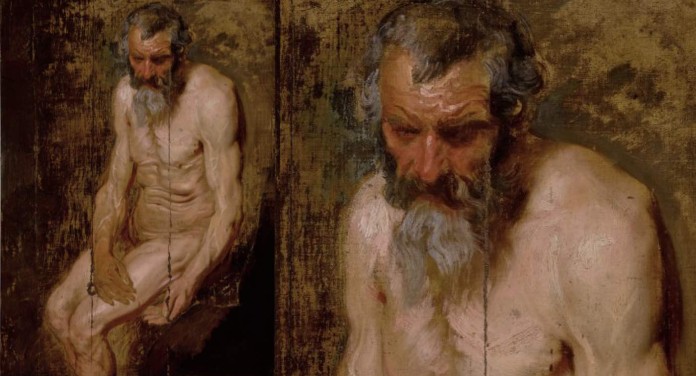
A Study for Saint Jerome by Anthony van Dyck –Courtesy of Sotheby's
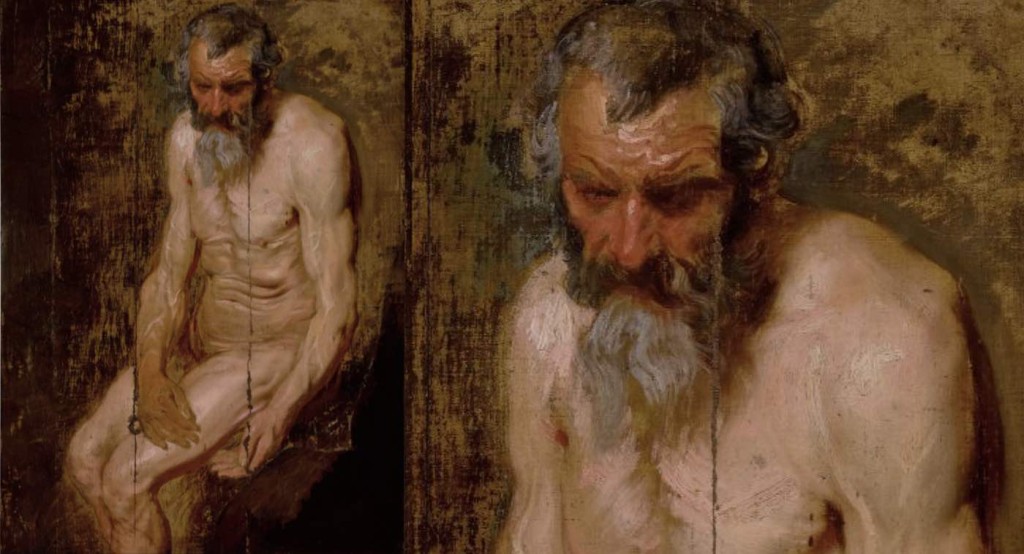
A Study for Saint Jerome by Anthony van Dyck –Courtesy of Sotheby’s
An oil sketch done by Dutch Master Anthony van Dyck is going up for auction soon, after being found discarded in a farm shed covered with bird droppings.
Bought on a hunch for $600 in 2002 from an estate auction, it’s predicted to sell for $3 million when it goes up at Sotheby’s.
While it was found far from the Flemish painter’s home of Antwerp, the farmhouse lay in the town of “Kinderhook” New York, a town settled almost certainly by his countryman. Albert B. Roberts believed it to be a work by a Dutch master of some repute, and bought it for “the excitement of the chase.”
A Study of Saint Jerome is one of only two known live model works completed by the painter Anthony van Dyck. Artnet reports it was “likely created between 1615 and 1618, when the young painter was working as an assistant in Peter Paul Rubens’s Antwerp studio.”
It depicts an elderly man with a long beard slouching on a chair, an interesting dichotomy of sinewy muscle and flabby skin characterizing him as a farmer or laborer. It gives art historians a chance to see a little more of van Dyck’s work as a young man, and thankfully, the bird droppings had landed only on the back paper.
Then-87-year-old Roberts exhibited the painting in 2019 at the Albany Institute of History & Art, the same year he had it authenticated by art historian Susan Barnes.
“I’ve devoted the last 30 years of my life to the search for art that I like to call ‘orphaned’ art, that for one reason or another has been neglected, overlooked, perhaps lost in the shuffle of the art world in different countries,” he said at the time.
Now deceased, some of Roberts’ pieces of ‘orphaned’ art are making up a Sotheby’s “Old Masters” collection.
Anthony van Dyck became a court painter for Charles I of Britain, whose house revered him for his skill at portraiture. The king knighted van Dyck, and upon his death had him interred at St. Paul’s Cathedral in London.
SHARE This Remarkable Find With Your Friends From The Art World…
The plane that made the hydrogen powered flight. credit: ZeroAvia
The plane that made the hydrogen powered flight. credit: ZeroAvia
An aviation start-up just set a new world-first for the largest hydrogen-powered aircraft flight in history—a 19-seat aircraft called the Dornier 228.
Designed by ZeroAvia, the start-up is developing hydrogen-powered engines for regional flights, and over the last 12 months has really taken off.
This most recent flight was a 10 minute affair from the Cotswolds Airport in Gloucestershire, England, but was only the most recent manifestation of their success.
ZeroAvia counts American and United airlines as their investors, and by 2025, the firm has 1,500 pre-orders of their hydrogen electric powertrains to fulfill. The prototype powertrains have received approval from both the UK and US civil aviation authorities.
“This is a major moment, not just for ZeroAvia, but for the aviation industry as a whole, as it shows that true zero-emission commercial flight is only a few years away,” ZeroAvia founder and CEO Val Miftakhov said in a statement Thursday.
The flight comes after news in August that the company signed a memorandum of understanding with American Airlines for 100 of the powertrains, which are being developed for 90-seat aircraft.
“Having support from [one of the] world’s largest airline is a strong indication of the progress we’re making on the development of hydrogen-electric, zero-emission flight,” added ZeroAvia Founder and CEO Val Miftakhov. “We are focused on delivering sustainable travel, and are delighted that American, a visionary leader in the industry, sees ZeroAvia as a part of the future of aviation.”
Hydrogen as a fuel source is currently one of two more sustainable alternatives to powering aviation. Accounting for 2.8% of all global emissions, passenger aircraft need high octane, energy dense fuel sources because of the weight limitations which batteries can’t account for.
The ZA2000-RJ powertrain from ZeroAvia is predicted as having a 500-mile range on a full tank, which United Airlines said would restore the economic viability of smaller regional flights.
“A lot of small cities have lost service because of the cost, and we think that these technologies will allow United to bring back more frequent service and service to airports that don’t have any service today,” Michael Leskinen, president of United Airlines Ventures, told CBS.
For reference, 500 mile jumps could service distances such as Pittsburgh to Chicago, Amarillo to Austin, or Fort Myers to Savannah. In Europe the benefits compound because of the size of the continent. ZeroAvia could easily service Milan to Naples, Munich to Hamburg, or Newcastle to Exeter.
Animal rescuers in Connecticut received word that a seagull was tangled in wires at the top of a power line.
The Dan Cosgrove Animal Shelter in Branford went to the location of the call and, sure enough, found a seagull stuck dangerously close to the live power lines.
Shelter personnel were able to get in contact with Eversource CT, a company that works on power lines, who decided to send a repairman turned animal rescuer to the scene with a bucket truck.
“Mike was so kind with this bird and spoke so softly to him as he freed his leg,” the shelter said in a Facebook post about the incident.
The bird received medical attention at the Dan Cosgrove Animal Shelter.
They posted a video of the seagull-bucket-powerline rescue on Facebook, proving that not all heroes ride in X-Jets or Batmobiles; some ride in bucket trucks.
WATCH The Video Above And SHARE With Your Friends…
Quote of the Day: “Until you have loved, you cannot become yourself.” – Emily Dickinson
Photo by: Dan Musat
With a new inspirational quote every day, atop the perfect photo—collected and archived on our Quotes page—why not bookmark GNN.org for a daily uplift?
In an effort to come up with a renewable, biodegradable design material that also eliminates a landfill waste stream, French designers are proposing to cover the walls of your home with fish scales.
In reality the idea is an elegant tile made from fish scales. It’s called Scalite, and it separates then combines naturally-occuring minerals and the collagen in the fish scales to create a beautiful, durable, naturally fire-resistant tile.
Fish scales are sometimes turned into fertilizer and fish oil supplements, but are often just thrown out into normal landfill waste streams along with the head and the bones.
Erik de Laurens came up with the idea and started the design company Scale with his cousin Edourad.
While it’s difficult to zero in on reliable supply chains of fish scales, even on the most recycling-conscious continent of Europe, the square or rectangular tiles of Scalite are priced in between common natural stone like white Corian, and marble, at about $35 per squre foot, or €300 per square meter.
“If you’re really serious about your environmental impact then this is a really good solution because it’s basically natural,” Laurens told Fast Company.
Scale have designed the Scalite tiles to be useable in a wide variety of applications, from interior decoration in private homes and offices, to furniture, to retail displays.
A variety of natural dies can create wild marble-like patterns in shades as various as moss green and mustard yellow.
Sadly, and perhaps ironically, they aren’t water-resistant. One should not go and plaster these tiles in a bathroom, as they will absorb any water that they come in contact with. Scale has contracted a biochemist to find a solution to this defect in a true, natural way to maintain the product’s green credentials.
TILE Your Newsfeed With This Cool Idea By Sharing on Social Media…
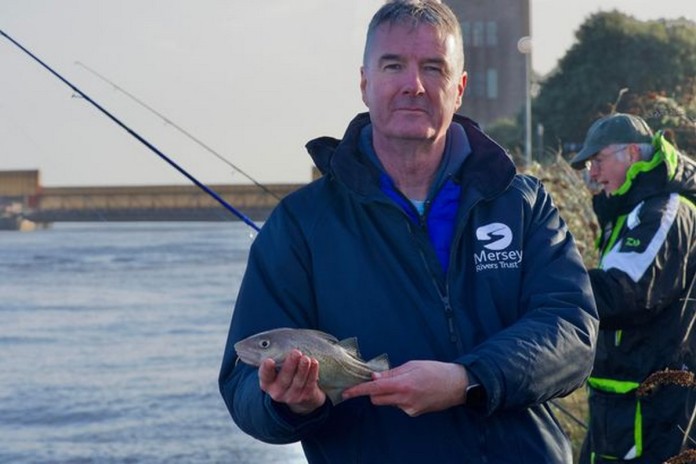
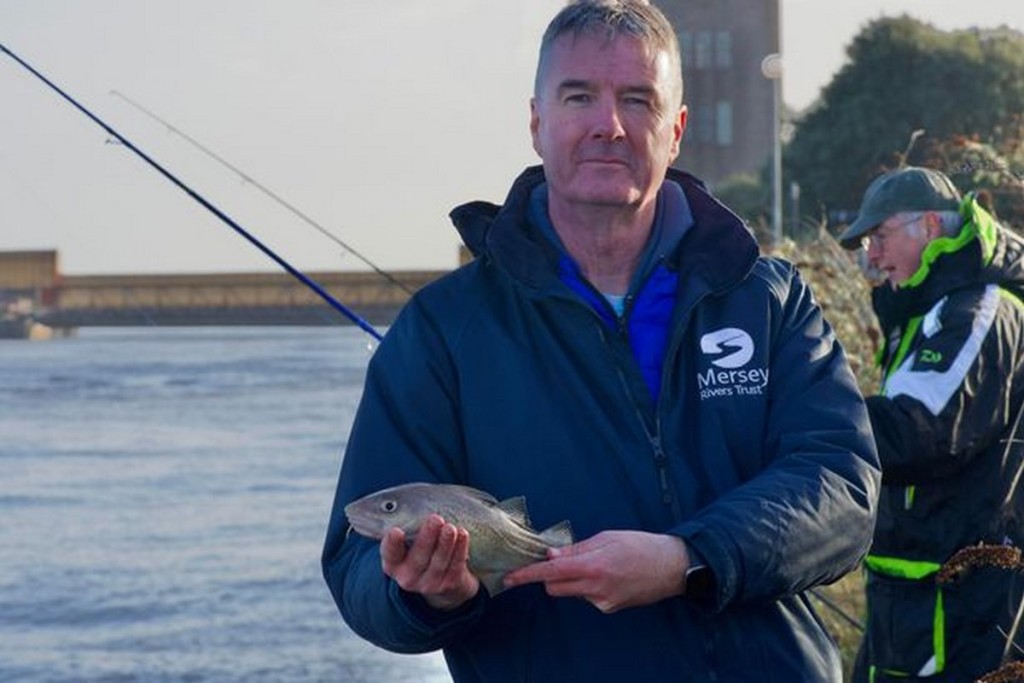
Famous more as a cultural feature than as a natural one, the pace at which the River Mersey is recovering to a fishy wonderland has ecologists stunned.
Splitting The Beatles’ home city of Liverpool in two, a recent survey found 37 different species of fish, more than two-and-a-half-times as many as were found in the previous survey 20 years ago.
Five different species of sharks were also found, along with huge eels and sea scorpions. ‘Holiday species’ as one local fishermen called them, like turbot, smelt, and cod, have also been caught.
Scientists at the Mersey Rivers Trust, a public/private charity-driven partnership for nature in the area believe that these species are breeding in the 3 mile-wide estuary.
The Liverpool Docks—the largest enclosed dock system in the world, were described by Herman Melville as comparable to the Pyramids in size and construction.
As a result, industrialization heavily polluted the river. In 2009 however it was announced that the river was “cleaner than at any time since the industrial revolution” and is “now considered one of the cleanest [rivers] in the UK.”
“Over the last 30 years, there’s been this tremendous regeneration, this renewal of the River Mersey that started slowly but is now picking up pace. I still think we’re right at the beginning of something special,” said Mike Duddy at the Mersey Rivers Trust, who spoke to the Wirral Globe about the restoration.
“It’s the best environmental good news story in Europe without a doubt,” adds Duddy. “Everywhere else nature is in decline but in the Mersey the ‘wildlife-ometer’ is in the red and it’s got loads and loads to go… David Attenborough talks about an environmental crisis but the Mersey is not.”
Humpback whales were recently seen in Liverpool Bay for the first time since 1938, while the Mersey itself has also welcomed back otters, salmon, octopus, porpoises, and seals.
The Trust is currently compiling a species list, and is holding a competition with local fishermen to see how many can be recorded. Duddy expects to raise the count of 37 fish species to 50 next year.
Upon the occasion of the funeral for one Hody Childress from Geraldine, Alabama, it was revealed that for a decade this quiet and humble gentleman was a sort of guardian angel for the town’s poor and sick.
A farmer and U.S. Air Force veteran, Childress began his covert charity campaign when he visited the local Geraldine drugstore and learned that all too many of the town’s 900 residents couldn’t afford to pay for their prescriptions.
Life up until that point had been difficult from a health standpoint. Childress lost a son in 1973, and his first wife in 1999—whom he used to carry into the stands for local football games due to her multiple sclerosis.
Upon hearing of his neighbors’ inability to always afford their medications, he handed Brooke Walker, owner of Geraldine Drugs, a $100 bill.
“Here, this $100 is for anyone who can’t afford their prescription,” Walker recalled in an interview with local news. “Do not tell a soul that the money came from me, tell them it’s a blessing from God.”
A month later, Walker saw Childress again walking into her store to hand over another $100 bill, with the exact same instructions—’do not tell a soul that the money came from me, tell them it’s a blessing from God.’
He would return on the 1st of every month for the same motivation for years, until in late 2022, because he wasn’t able to walk due a pulmonary disease and other health conditions, he decided he needed to enlist someone for help. He entrusted the task to his daughter, Tania Nix.
“I was shocked – I had no idea that he was helping people at the drugstore,” according to WVTM.
At his funeral on January 5th, 2023, Nix told the story of Childress’ decade of giving, and how it was able to cover the cost of expensive medications for 2 Geraldine residents per month.
The word got out that they had an angel in their midst, and WVTM reports that the townspeople have agreed to carry on his legacy.
“There are so many people in Geraldine who have lived longer because of Hody,” pharmacist Heather Walker said. “Hody was a true humble servant who will always be loved.”
SHARE This Touching Small Town Story With Your Friends…
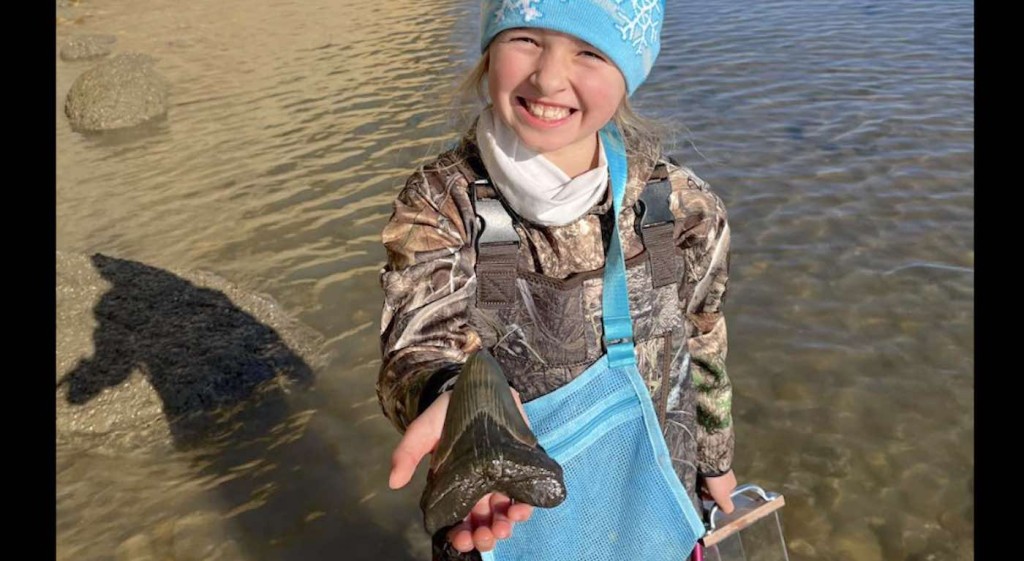
Molly with her megalodon tooth – Sampson family photo
Molly with her megalodon tooth – Sampson family photo
It was Christmas day, and young Molly was jumping for joy having unwrapped a pair of insulated waders and a sifting basket.
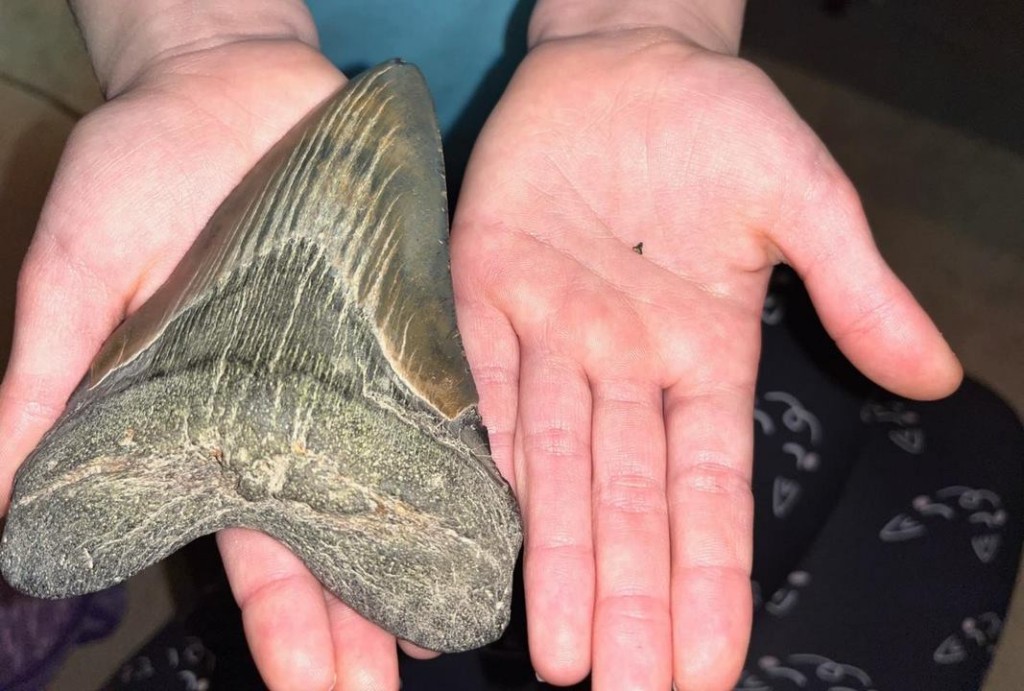
They were exactly what the 9-year-old wanted—and needed, because as it turned out they helped her get her hands on a “once-in-a-lifetime” find of a megalodon tooth from a 50-foot shark that swam in the prehistoric oceans 15 million years ago.
Molly Sampson wants to be a paleontologist when she grows up, a dream nurtured by her and her father’s love of fossil hunting in the shallow water of the Chesapeake Bay’s Calvert Cliffs, Maryland.
She and her sister Natalie both go often with their father Bruce, and even on a 10°F day at 9:30 on Christmas morning, all they wanted to do was go looking for fossils. Molly, according to NPR, announced to the team she was going to look for a megalodon tooth.
It was low tide, meaning they could wade further out, allowing Molly to catch a glimpse of her dream find.
“I went closer, and in my head, I was like, ‘Oh, my, that is the biggest tooth I’ve ever seen!'” Molly said excitedly during an interview in early January. “I reached in and grabbed it, and dad said I was shrieking.”
credit: Alacia Sampson
Her father also dreams of finding a “meg” tooth, but his largest find is about 3 inches. The future paleontologist explained to local news how one can estimate the size of the shark by the size of the tooth.
“Every inch is 10 feet,” Molly said. “So this is five inches, so it’d be 50 feet, [a] 50-foot shark.”
Bruce and the family took the tooth to the Calvert Marine Museum to confirm its identity, who shared Molly’s story on facebook.
Megalodon, short for Megalodontus, or “Giant-toothed” was one of the largest predatory fish to ever live, and is estimated to have wielded the greatest bite force the process of evolution has ever produced.
Precursors to modern Great White Sharks in hunting and feeding habits, they preyed on whales and dolphins before going extinct presumably during a decline in prey numbers.
Molly got to keep the tooth, but whether she loves it enough to sleep with it every night like other 9-year-olds do with plushies, GNN can’t speculate, but this was surely the best Christmas ever for this future paleontologist.
WATCH the story below…
SHARE Molly’s Big Day With Your Friends On Social Media…
Quote of the Day: “If you do not love too much, you do not love enough.” – Blaise Pascal
Photo by: freestocks
With a new inspirational quote every day, atop the perfect photo—collected and archived on our Quotes page—why not bookmark GNN.org for a daily uplift?
“An enormous printer weighing more than 12 tons is creating what is believed to be the first 3D-printed, two-story home in the United States.”
That’s according to a new video from Reuters News, highlighting the 4,000-square-foot home in Houston, Texas.
The huge printer erected on the site requires 330 hours of printing to create the three-bedroom home.
Called the House of Cores, the design combines concrete 3D printing with wood framing.
The project is the culmination of a two-year collaborative effort between architectural designers Leslie Lok and Sasa Zivkovic, principals of HANNAH; along with PERI 3D Construction, and CIVE, one of the leading engineering and design/build contractors in Houston.
In 2020, a 2-story home was 3D-printed in Europe—with two living rooms, a kitchen, bathroom, and foyer—by a Belgian company working on sustainable construction.
Watch the video from Reuters below… (NOTE: GNN has no affiliation with any ads displayed.)
SHARE The Cool Project With Your 3D-Printing Peeps on Social Media…
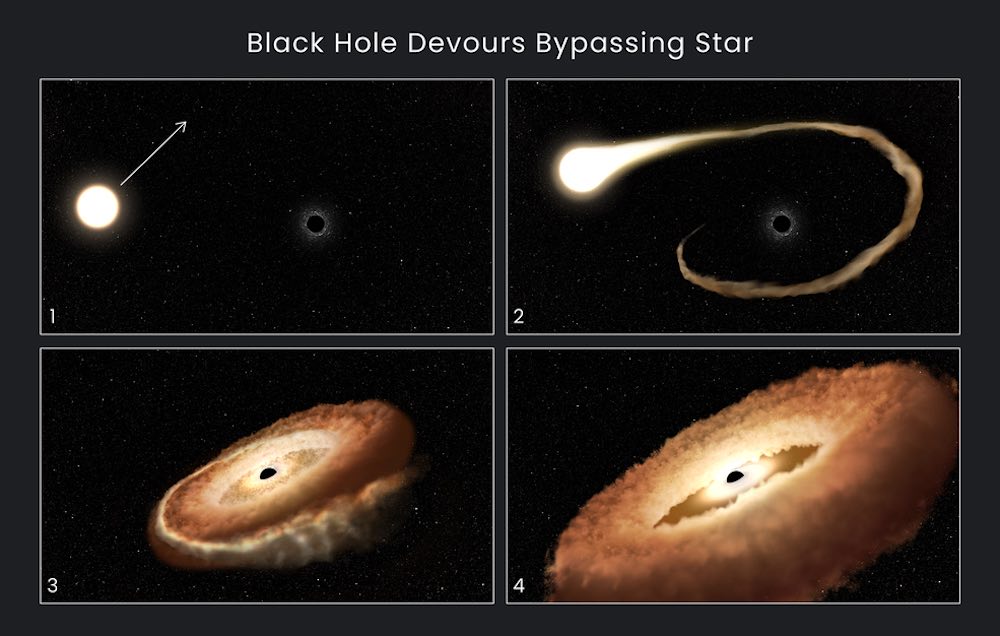
Artist's illustration shows how a black hole can devour a bypassing star -Credits: NASA, ESA, Leah Hustak of STScI
How a black hole can devour a bypassing star -Credits: NASA, ESA, Leah Hustak of STScI
Black holes are gatherers, not hunters. They lie in wait until a hapless star wanders by.
When the star gets close enough, the black hole’s gravitational grasp violently rips it apart and sloppily devours its gasses while belching out intense radiation.
Now, astronomers using NASA’s Hubble Space Telescope have recorded a star’s final moments in detail, as it gets gobbled up by a black hole.
Although the black hole encounters are violent, they’re known as “tidal disruption events”—and astronomers are using Hubble to find out the details of what happens when a wayward star plunges into the gravitational abyss.
The ‘AT2022dsb tidal event’ can’t be photographed up-close with Hubble because the munched-up star is nearly 300 million light-years away. But astronomers used Hubble’s ultraviolet sensitivity to study the light from the shredded star—which include hydrogen, carbon, and more, all forensic clues to the black hole homicide.
About 100 tidal disruption events around black holes have been detected by astronomers using various telescopes. NASA recently reported that they spotted another black hole tidal disruption event on March 1, 2021, from another galaxy.
Data was collected in X-ray light from an extremely hot corona around the black hole, after the star was already torn apart.
“There’s a lot of information that you can get from the ultraviolet spectra,” said Emily Engelthaler of the Center for Astrophysics | Harvard & Smithsonian (CfA).
“We’re excited because we can get these details about what the debris is doing. The tidal event can tell us a lot about a black hole.”
This sequence of artist’s illustrations shows how a black hole can devour a bypassing star. 1. A normal star passes near a supermassive black hole in the center of a galaxy. 2. The star’s outer gasses are pulled into the black hole’s gravitational field. 3. The star is shredded as tidal forces pull it apart. 4. The stellar remnants are pulled into a donut-shaped ring around the black hole, and will eventually fall into the black hole, unleashing a tremendous amount of light and high-energy radiation. Credits: NASA, ESA, Leah Hustak (STScI)
Changes in the doomed star’s condition are taking place on the order of days or months, but for any given galaxy with a quiescent supermassive black hole at the center, NASA believes shedding happens only a few times every 100,000 years.
This AT2022dsb stellar snacking event was first caught on March 1, 2022 by the All-Sky Automated Survey for Supernovae (ASAS-SN or “Assassin”), a network of ground-based telescopes that surveys the extragalactic sky roughly once a week for violent, variable, and transient events that are shaping our universe. This energetic collision was close enough to Earth and bright enough for the Hubble astronomers to do ultraviolet spectroscopy over a longer than normal period of time.
“Typically, these events are hard to observe. You get maybe a few observations at the beginning of the disruption when it’s really bright. Our program is different in that it is designed to look at a few tidal events over a year to see what happens,” said Peter Maksym of the CfA. “We saw this early enough that we could observe it at these very intense black hole accretion stages. We saw the accretion rate drop as it turned to a trickle over time.”
The Hubble spectroscopic data are interpreted as coming from a very bright, hot, donut-shaped area of gas that was once the star. This area, known as a torus, is the size of the solar system and is swirling around a black hole in the middle.
“We’re looking somewhere on the edge of that donut. We’re seeing a stellar wind from the black hole sweeping over the surface that’s being projected towards us at speeds of 20 million miles per hour (three percent the speed of light),” said Maksym.
“We really are still getting our heads around the event. You shred the star and then it’s got this material that’s making its way into the black hole. And so you’ve got models where you think you know what is going on, and then you’ve got what you actually see. This is an exciting place for scientists to be: right at the interface of the known and the unknown.”
The results were reported at the 241st meeting of the American Astronomical Society in Seattle, Washington.
WATCH the NASA video…
BEAM This Steller Story to Star-Gazers on Social Media…
If you wake up feeling more exhausted than when you fell asleep, you’re not alone.
A new survey of 2,000 U.S. adults about their sleep found the average person doesn’t get anywhere near the quality or amount of sleep they want.
On average, Americans only get six hours of sleep on any given night, and they wakes up feeling well-rested only three mornings out of the week.
The poll, commissioned by Premier Protein and conducted by the market research firm OnePoll, uncovered that not only were Americans seldom waking up feeling refreshed, but the average person also struggles to wind down before bed nearly half of the week.
Parents, in particular, claim to struggle with nighttime routines. Thirty-five percent of respondents who were parents said their nighttime routine suffers, with a similar percentage of parents sharing that they have trouble winding down before bed most of the week.
But it’s not just parents. Two in three Americans (66%) believe that they need two hours or more to wind down before being able to fall asleep. Respondents who live in the Northeastern U.S. (38%) are most likely to struggle with winding down.
Respondents who describe themselves as “night people” (53%)—because they feel happier, more productive, or energized during the night—are also most likely to struggle with winding down.
Those who identify as “day people” are more likely to have a “good” or excellent” sleep routine (45%), compared to just 22% of “night people.”
Nearly half (47%) believe their eating habits have an impact on their ability to relax before bed.
“Many don’t realize how their evening routine and eating habits throughout the day can impact overall sleep quality,” said Carissa Galloway, a registered dietitian nutritionist who consults with Premier Protein.
“Committing to a consistent and relaxing nighttime routine, as well as making healthy food and drink choices, can help support a healthy sleep regimen.”
The survey found that foods and beverages like milk (41%), tea (31%), honey (23%), wine (19%) and bananas (19%) were believed by respondents to be the best things to eat before bed to improve sleep quality.
39% rate their sleep pattern—how often they wake up during the night, and whether or not they wake feeling rested—as below average. Only 8% said they have an “excellent” sleep pattern.
The random double-opt-in survey also showed that Americans are striving to prioritize sleep routines and habits in the new year. 46% have already tried something new that they saw online with the hopes it would help.
Two in three reported they are focusing on winding down before bed: 49% are striving to commit to a regular sleep schedule, 43% are going to bed earlier, and 38% are vowing to practice a consistent nighttime routine.
Six Tips That Respondents Believe Help Them Sleep Better:
– Having warm drinks before bed to help them relax (36%)
– Taking naps to make up for missed sleep (33%)
– Drinking a glass of wine before bed to help their body unwind (18%)
– Adding new vitamins and minerals to their daily routine – 24%
– Experimenting with new products in their nighttime routine – 19%
– Investing in a new sleep supplement – 17%
Quote of the Day: “Everything I understand, I understand only because I love.” – Leo Tolstoy
Photo by: Narges Pms
With a new inspirational quote every day, atop the perfect photo—collected and archived on our Quotes page—why not bookmark GNN.org for a daily uplift?
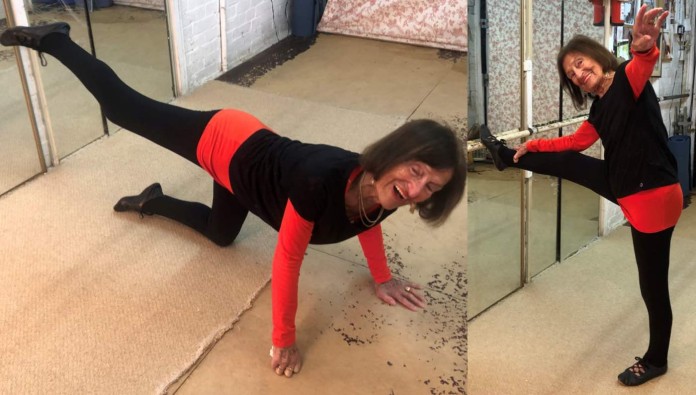
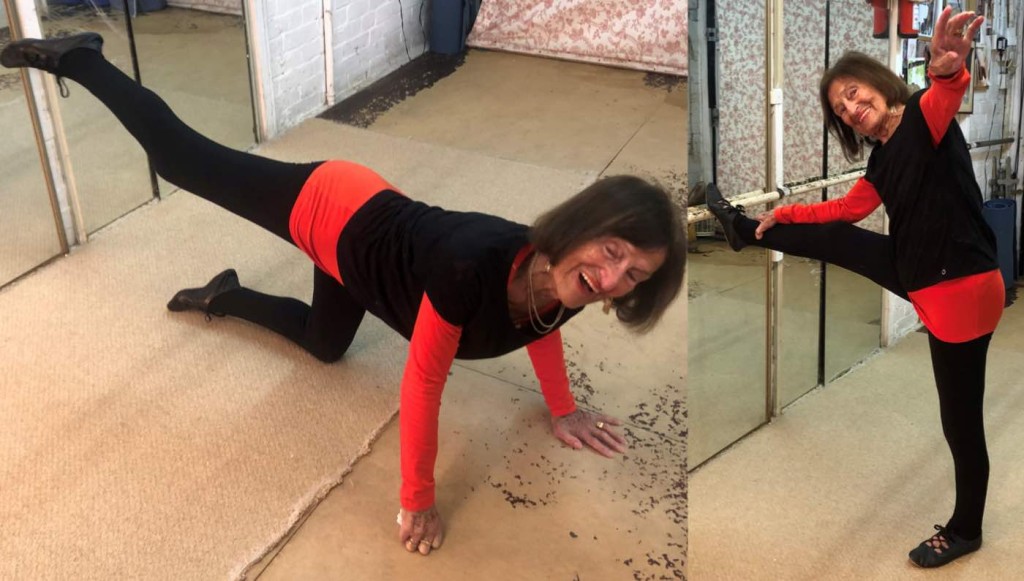
This 101-year-old woman says the secret to keeping herself young and healthy includes daily ballet moves on the barre.
Dinkie Flowers is one of the oldest women in the UK and is eager to offer her tips for longevity.
“I couldn’t live without dancing and I think it’s what’s kept me young and happy.”
“It sounds hard, but it’s never too late to start,” said the former professional dancer. “Once you know what you’re doing and being taught by a teacher you’d love it.”
She started dancing at the age of three, and still teaches lessons at her dance school called Dinkie Flowers Stage School to this day.
“I just love dancing, I always have and I always will. I’d advise anyone—and everyone—to start dancing to keep your body and mind young.
“Everyday I go and dance in the studio. The work you do keeps your body supple.”
Reflecting on her long life, the mother-of-one who lives in Shoreham-by-Sea in Sussex, England, says she won’t stop dancing “until they take me away in a box”.
Dinkie Flowers on her 100th birthday – SWNS
“I just couldn’t live without dancing. You don’t have to go mad, but it’s good to keep on moving your body, bending your knees and stuff like that.”
Dinkie made her TV debut a couple years ago, tap-dancing her way through auditions to appear on The Greatest Dancer at 98 years young.
Dinkie, who has four grandchildren, says ‘helping people dance’ is her life.
“I see people just sitting on their bottoms all day and reading, but it’s important to get up and keep on moving—do something.
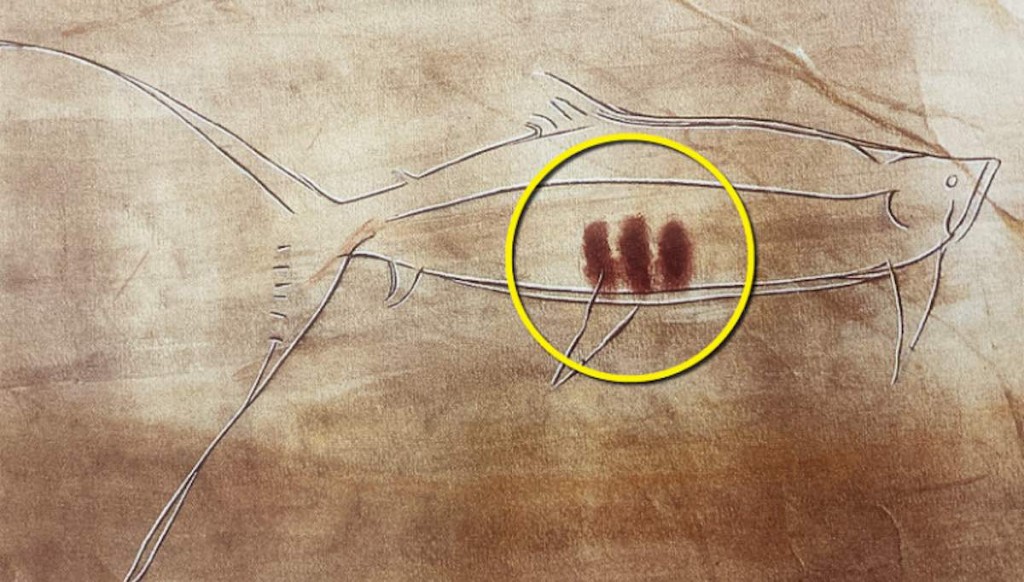
An amateur scientist has decoded the meaning of cave markings used in Ice Age drawings—a communication system of early ‘writing’ dating back 14,000 years earlier than any previously known.
Ice Age hunter-gatherers were using mysterious markings alongside their drawings of animal prey to store and communicate “sophisticated” information about the behavior of species that were crucial to their survival at least 20,000 years ago.
And, the perplexing ancient code has apparently been unlocked not by an archaeologist but by a London-based furniture conservator who spent hours looking at images of cave paintings from the British Library, then teamed up with a few professors.
Ben Bacon then published his results in the Cambridge Archaeological Journal.
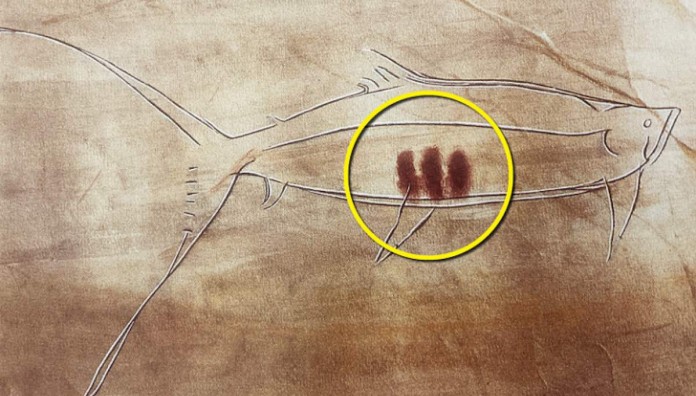
He explained that the marks, found in more than 600 images on cave walls across Europe, cannot be called “writing” in the sense of the pictographic and cuneiform systems from 3,400 BC onwards. Instead, it is a “proto-writing system” that pre-dates any others found from the Neolithic period.
Until now, archaeologists have known that the sequences of lines, dots, and other marks from the last Ice Age were storing some kind of information about species—such as wild horses, deer, cattle, and mammoths—but did not know their specific meaning.
Mr. Bacon’s aim was to decode them, and in particular the inclusion of a ‘Y’ sign – formed by adding a diverging line to another.
It turns out, the number of marks associated with the animals were a record of which lunar month the species were mating.
Mr. Bacon hypothesized that the ‘Y’ sign stood for ‘giving birth’—and the work of the research team confirmed his theory to be correct.
Their work showed that the sequences record mating and birthing seasons and found a statistically-significant correlation between the numbers of marks and the position of the ‘Y’ sign and the months in which modern animals’ mate and give birth.
“The meaning of the markings within these drawings has always intrigued me so I set about trying to decode them, using a similar approach that others took to understanding an early form of Greek text,” said Bacon.
His success came while looking for repeating patterns.
“It was surreal to sit in the British Library and slowly work out what people 20,000 years ago were saying, but the hours of hard work were certainly worth it.”
Then, he reached out to friends and senior university academics, whose expertise were critical to proving his theory, including Professors Paul Pettitt and Robert Kentridge of Durham University who work in the field of visual paleo-psychology, studying the earliest development of human culture.
“To say that when Ben contacted us about his discovery was exciting is an understatement,” said Prof. Pettitt. “I am glad I took it seriously.”
Public domain photo by US Forest Service
“The results show that Ice Age hunter-gatherers were the first to use a systematic calendar and marks to record information about major ecological events within that calendar.
“In turn we’re able to show that these people—who left a legacy of spectacular art in the caves of Lascaux and Altamira—also left a record of early timekeeping that would eventually become commonplace among our species.”
Prof. Kentridge added, “The implications are that Ice Age hunter-gatherers didn’t simply live in their present, but recorded memories of the time when past events had occurred and used these to anticipate when similar events would occur in the future.”
Ben also enlisted University College London Professor Tony Freeth, who deciphered the function of the ancient Greek astronomical clock Antikithera.
“I was stunned when Ben came to me with his underlying idea that the numbers of spots or lines on the animals represented the lunar month of key events in the animals’ life cycles,” said Freeth.
“Lunar calendars are difficult because there are just under 12-and-a-half lunar months in a year, so they do not fit neatly into a year. As a result, our own modern calendar has all but lost any link to actual lunar months.
“In the Antikythera Mechanism, they used a sophisticated 19-year mathematical calendar to resolve the incompatibility of the year and the lunar month—impossible for Paleolithic peoples.
“Their calendar had to be much simpler. It also had to be a ‘meteorological calendar’ tied to changes in temperature—not astronomical events such as the equinoxes.
“With these principles in mind, Ben and I slowly devised a calendar which helped to explain why the system that Ben had uncovered was so universal across wide geography and extraordinary time-scales.”
Bacon is now encouraged to continue the work and attempt to understand more of the symbols.
“What we are hoping, and the initial work is promising, is that unlocking more parts of the proto-writing system will allow us to gain an understanding of what information our ancestors valued.