Drinking coffee or tea may be associated with a lower risk of stroke and dementia, according to a study of healthy individuals aged 50-74. Drinking coffee was also associated with a lower risk of post-stroke dementia.
Strokes are life-threatening events which cause 10 percent of deaths globally. Dementia is a general term for symptoms related to decline in brain function and is a global health concern with a high economic and social burden. Post-stroke dementia is a condition where symptoms of dementia occur after a stroke.
Yuan Zhang and colleagues from Tianjin Medical University, Tianjin, China studied 365,682 participants from the UK Biobank, who were recruited between 2006 and 2010 and followed them until 2020.
At the outset participants self-reported their coffee and tea intake. Over the study period, 5,079 participants developed dementia and 10,053 experienced at least one stroke.
People who drank 2-3 cups of coffee or 3-5 cups of tea per day, or a combination of 4-6 cups of coffee and tea had the lowest incidence of stroke or dementia.
Individuals who drank 2-3 cups of coffee and 2-3 cups of tea daily had a 32% lower risk of stroke and a 28% lower risk of dementia compared with those who drank neither coffee nor tea.
Intake of coffee alone or in combination with tea was also associated with lower risk of post-stroke dementia.
The UK Biobank reflects a relatively healthy sample relative to the general population which could restrict the ability to generalize these associations.
Also, relatively few people developed dementia or stroke which can make it difficult to extrapolate rates accurately to larger populations.
Finally, while it’s possible that coffee and tea consumption might be protective against stroke, dementia and post-stroke dementia, this causality cannot be inferred from the associations.
The authors add of their findings, published in PLOS Medicine, that they “suggested that moderate consumption of coffee and tea separately or in combination were associated with lower risk of stroke and dementia.”
This heart-warming video shows a young woman who spent four days outside gaining the trust of an abandoned rabbit.
25-year-old Alicia Castro spent all day, every day, trying to catch the pet rabbit that had been dumped outside her apartment.
She endured freezing temperatures and talked to the rabbit while leaving food, before finally coaxing him into a crate.
Alicia, from Montana, said: “Tons of people knew the rabbit was there! A few said they tried to catch it but nobody really cared enough to do anything.
“With the cold weather incoming, I knew that time was important and I’d feel so guilty if I didn’t do anything.
“Once I looked in his eyes I knew that I had to save him, no matter what it took.
“It was very stressful. I was sick and it was barely above freezing.
“Everyday I would sit outside in the cold with him, gaining his trust, feeding him, and trying to get him to climb into my crate.
“Filming [and sharing] the process felt pretty normal for me, but it was great to have so much helpful advice. At first I just had a towel to grab him with but by day four, I had proper food, a crate, and knowledge that made rescuing him possible.
SWNS
“Day three was definitely the hardest. I was so frustrated and started to worry that I would never catch him, not only letting down this poor, helpless rabbit, but also the millions of people who were watching along too.”
Alicia’s patience paid off and the rabbit, now named Bunny, is living the life of cozy luxury.
“I called every Humane Society in the area,” Alicia says, “and they were full, so I planned to foster him until we could find him a good home.” But the more time she spent with the rabbit, the more she fell in love with him.
“My partner and I have a cat, Kiki, who we adopted four years ago, so we knew we could only keep him if they could coexist.
“We spend every day acquainting them and getting them used to each other. I’m so happy with the progress we’ve made.”
SWNS
Her advice for others who might find an abandoned pet animal in need of help?
“Even if it’s hard, even if it takes time, don’t give up. There are so many animals that need help and don’t have anybody to stand up for them, so be that person.”
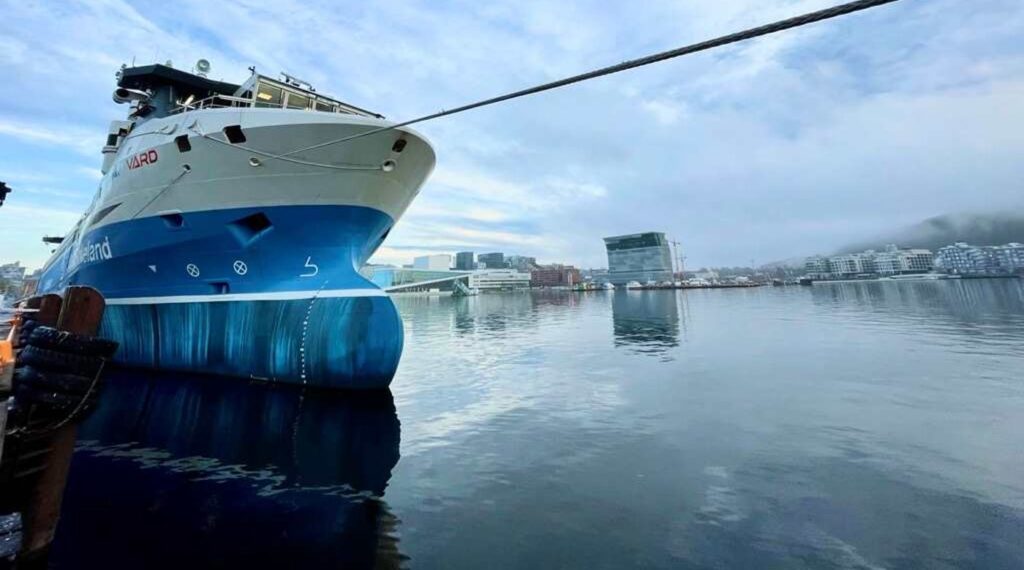
Their ancient ancestors brought many modern sailing techniques to the North Sea, and now the Norwegians have successfully launched the world’s first electric autonomous container ship.
Built by Yara to transport their mineral fertilizer stocks between the towns of Porsgrunn and Brevik, a trip which normally requires 40,000 trips by diesel truck per year, the Yara Birkeland will save around 1,000 tons of CO2 annually.
On November 19th, Yara Birkeland departed for a crewed maiden voyage—which included Norway’s prime minister—on a short 43-mile trip across the fjord from Horton to Oslo.
“We have been looking forward to this day for a long time,” stated Svein Tore Holsether, CEO of Yara. “This is an excellent example of green transition in practice, and we hope this ship will be the start of a new type of emission-free container ships. There are a lot of places in the world with congested roads that will benefit from a high-tech solution like this.”
Onboard the 262-foot (80 meter) vessel is a 6.8 megawatt-hours battery pack that can generate 17 mph (28 kph). It can carry 3,200 tons of fertilizer, and should begin commercial operations next year while it carries out lengthy certification for its autonomous navigation technology.
“Norway is a big ocean and maritime nation… the project demonstrates how we have developed a world-leading innovation that contributes to the green transition and provides great export opportunities for Norwegian technology and industry,” stated Geir Håøy, CEO of the Kongsberg Group, the firm responsible for delivering all the technologies, including the navigation ones, onto the Yara Birkeland.
In parallel with the development of the Yara Birkeland, Yara, the world’s largest producer of fertilizer, has launched an ambitious program to develop a zero-emissions fuel source by using their own massive stocks of ammonia, a key component in the fertilizer making process, and one which could be responsible for as much as 1.2% of global annual greenhouse gas emissions.
Kongsberg
“As the world’s largest producer of ammonia, Yara has launched an offensive plan of international scale, both to remove current emissions and to establish the production of new, clean ammonia,” says Magnus Krogh Ankarstrand, CEO of Yara Clean Ammonia.
(WATCH the ship’s maiden voyage below…)
SAIL This Positive Story Over to Your Social Feeds…
A New Jersey man won hearts across social media after he was photographed using a cardboard sign to express his gratitude to local hospital workers.
The man, who was not identified, was pictured holding up a handwritten sign to the glass windows of the emergency department at Morristown Medical Center as he held his other hand to his heart. The sign read: “Thank you all in emergency for saving my wife’s life; I love you all.”
Karen Zatorski, Senior Public Relations Manager at Morristown Medical Center, later told The Daily Record: “We don’t know who the man is, we don’t know who his wife is. The nurses happened to be there and took his picture. What’s beautiful is that’s all we know.”
A woman named Shay Vander Vliet shared the photo on Facebook after her sister-in-law Paige, who works as a nurse at the hospital, caught sight of the man at work.
“She sent me this picture the other day and I feel like it needs to be seen as much as possible!” wrote Shay. “I don’t know how to make a photo go viral but I think this one is worth sharing—so please, share away!
“And thank you, Paige, and ALL of the nurses and doctors, for your hard work and dedication, especially during this scary time.”
Just as Shay hoped for, social media users have since shared the photo more than 61,000 times. Not only that, the photo raised awareness for a GoFundMe campaign to raise money for New Jersey hospitals in need of protective medical gear. Within a matter of days, the campaign managed to raise more than $12,000.
This is just one of many positive stories and updates that are coming out of our COVID-19 news coverage. For more uplifting stories, click here.
Multiply The Good By Sharing This Sweet Story With Your Friends On Social Media…
Quote of the Day: “When we focus on our gratitude, the tide of disappointment goes out and the tide of love rushes in.” – Kristin Armstrong (Happy Thanksgiving!)
Photo: by Ricardo Gomez Angel
With a new inspirational quote every day, atop the perfect photo—collected and archived on our Quotes page—why not bookmark GNN.org for a daily uplift?
In 1997, only Switzerland allowed their residents to decide if they wanted to end their life, but compassion for end-of-life sensibilities has seen that number rise dramatically across the West.
Since 2015, Belgium, Luxembourg, Canada, New Zealand, Spain, the Netherlands, Colombia, Germany, Austria, Portugal, five Australian states, ten American states, and D.C. have legalized assisted dying. Countries that are largely Catholic such as Ireland, Chile, Italy, and Uruguay are currently crafting legislation to follow suit.
As the Economist reports, more and more people who have seen their relatives suffer through chronic or incurable illnesses—and who may be worried they might face the same fate—are on the crest of a wave of activism to return the right to die to the individual, their doctors, and families, rather than the state.
In 2015, the state of Oregon passed the Death with Dignity Act, which was copied internationally in places like New Zealand and all but one of the states of Australia.
In the UK, three-quarters of people support the right to die, though only 35% of parliament agrees, and so an Oregon-like bill is unlikely to pass at the moment.
In Peru, the constitutional court recently ruled that a doctor’s decision not to help a woman with degenerative polio end her life was a violation of human rights, and a potential challenge to a ban is being made in the courts.
Movements like the one for green funerals or for medically-assisted suicide are part of a changing attitude to death. Naomi Richards, an anthropologist tells the Economist that now death should be, for some people, “an event to be scheduled, controlled.”
One of the founding principles of classical liberalism was the right to self-ownership: one owns the rights and fates of one’s person. It’s the ultimate vote of confidence in not only the sovereignty of the individual, but in the principles which many of our Western countries were found upon.
SHARE Your Opinion on This Thought-Provoking Topic on Social Media…
Bethany Voak, Expanded Polystyrene [Photo_ courtesy PriestmanGoode_Royal College of Art]Bethany Voak
Yuke Liu, Tracing/PriestmanGoode; Royal College of Art
London design students were given a challenge: take plastic that will most likely end up in the landfill, and turn it into a new raw material using as little energy as possible.
Part of a competition from the London Royal College of Art, the students excelled, turning plastic into train car-seat covers, sound insulation, art pieces, lamps, and more.
A partnership between the London-based industrial design firm PriestmanGoode and the College’s MA in textiles program, the competition was called Precious Waste, highlighting the remaining usefulness in so many of the materials we throw away.
“The students were free to consider how their new materials, surface finishes, or textures could be used in different environments, whether in retail spaces, restaurants, hotels, or transport environments,” the presentation website reads.
“The students tackled the brief in the most difficult times with great enthusiasm and passion, addressing one of the biggest challenges of our time and creating beautifully handcrafted solutions.”
First place went to Bethany Voak, a young woman who not only repurposed polystyrene foam, but re-molded it, allowing for a change in color, texture, and consistency that could be used for many different purposes, whether as the most avant garde art piece, or as a drywall replacement.
Even though it’s 100% recyclable, polystyrene, the hard white plastic used to pack televisions and the like, is rarely recycled in Voak’s home country of the UK; a pity as polystyrene also endures in the environment longer than any other common plastic.
Bethany Voak, Expanded Polystyrene/riestmanGoode; Royal College of Art
During her work, she discovered an organic molecule that turns the rigid yet spongy foam into a moldable material that can take dyes, and become hard—opening up a huge array of potential uses.
Second place went to Henrietta Dent, who unwound plastic produce nets like the kinds which hold a pound of onions, with nothing more than her hands and a bit of heat. The resulting material is stronger by virtue of its woven nature, and can be used to create cushion covers for the seats on, for example, the London underground.
Henrietta Dent, Recrafting Value/PriestmanGoode; Royal College of Art
Other entries included Christina Pei Fen, who cut up individual fruit nets with scissors before using a hot iron to quickly press them into a single sheet, which can have color and ephemeral consistency.
Lianyi Chen, another runner up, 3D-printed and laser cut a polystyrene material along design specifications created by visualizing sound waves. The resulting stringy material, she says, can be used as sound insulation, stuffing for toys, or as a 3D-printing filament.
Yuke Liu, Tracing [Photo- courtesy PriestmanGoode:Royal College of Art]Another entry, aiming to tackle the plastic incense packaging at Buddhist temples, created an app that tracks the donation of this plastic packaging every time one goes for prayer.
At the end the trash is turned into a lamp in the appearance of a lotus flower.
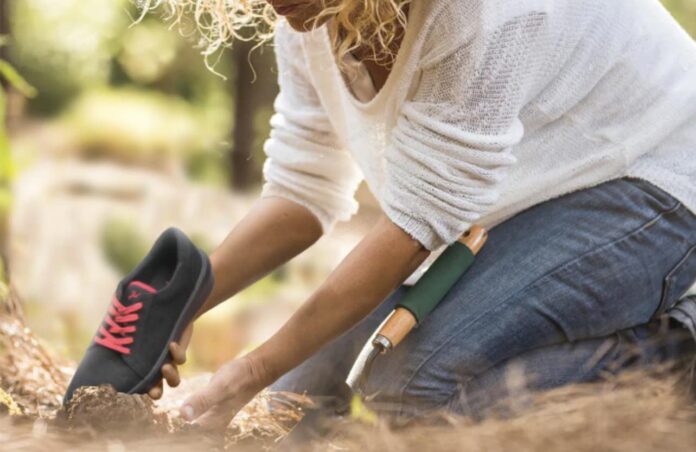
The legend of Johnny Appleseed: the man who walked about Ontario and the northern United States spreading apple pips, takes root in a new pair of kicks that biodegrade and grow an apple tree when they are discarded.
Tackling plastic pollution is the principle purpose behind the new shoe, but they also help the environment a little bit by aiding in reforestation.
33-year-old Toronto resident Luc Houle is working to bring “Johnny,” the brand name of the shoe, to market through Kickstarter, which is currently just $1,000 shy of his $55,000 target.
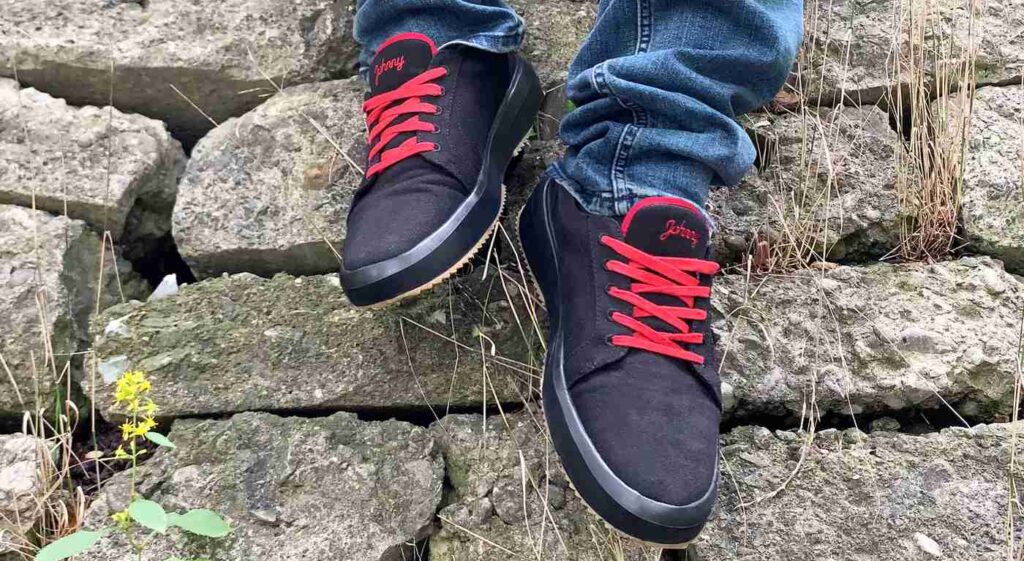
Johnnys are simple canvas everyday shoes made without plastic, utilizing Fair Trade biodegradable materials instead.
Cushiony, lightweight, and water-resistant, Johnnys won’t biodegrade off of your feet, but after the years wear then down and the decision to move on to new kicks arrives, they can be buried, as hidden within the sole is an apple seed encased in fertilizer.
The materials which the shoe is made from contain naturally-occurring compounds which attract microorganisms to feed on and break down the shoe over three years.
Even if you don’t get around to burying them, they will still biodegrade if thrown in a landfill.
Johnny Footwear
When the campaign is successful ($109 will get you a pair and a tree planted in your name), Houle hopes to have them available to a wide range of people by August of next year.
“The nice thing about this project is that because it’s a biodegradable sneaker that grows into a tree, we can kind of help number one, offset people’s carbon footprint, but we’re also helping eliminate plastics,” Houle told Blog Toronto. “And the more people we can reach with that the more of an impact we can have.”
(WATCH the City News video for this story below.)
WALK This Apparel Straight Over to Your Besties; Share This Story…
Cranes in Cambodia are getting a helping hand from an unlikely source, as rice farmers sign up to take a pay cut in the name of conservation.
By switching to grow native rice crops, and leaving a small piece of their harvest behind for rare eastern sarus cranes, the farmers are providing a safe haven for the world’s tallest flying bird.
Mostly white, but with a brilliantly colored head—as red as a male mallard’s is green—the eastern sarus crane can reach just under 6-feet (176 cm) tall. Antigone antigone sharpii is Critically Endangered according to the IUCN, with maybe 200 individuals remaining across the wetlands of Southeast Asia. In the last 2 years, fewer and fewer have arrived in farmer Khean Khoay’s rice paddy.
In the village of Koh Chamkar, in Cambodia, Khoay tends his rice paddy on the fringes of the Mekong delta, the spillway of the longest river in Southeast Asia, and one of the most fertile agricultural areas in the region. Khoay is one of 16 farmers in the village, lying on the edge of the protected area of Anlung Pring, where farming is practised in accordance with an agreement made with NatureLife—a Cambodian conservation society funded by the IUCN Netherlands and BirdLife International.
The eastern sarus cranes stalk the embankments of the fields where they pluck rice grains before harvest season.
To encourage the migratory bird to return year after year to the safe and protected paddies, NatureLife pays a 10-year lease on the farmer’s land upfront, which is equivalent to around 30% more than net income on it, to grow native short-grain wild rice varietals which the cranes prefer.
Currently 42 acres of farmed land in Koh Chamkar has been turned over to native rice cultivation, which yields about half as much as jasmine rice.
“We are aware of the yield limitations but we don’t mind as we are keeping [half] the rice for the cranes,” Bou Vorsak, CEO of NatureLife Cambodia, told The Guardian.
The agreement also stipulates that the farmers are not to sell off their land under the lease period, and use only natural pesticides and fertilizers. In return they are sold rice seed at subsidized prices, as well as organic farming supplies and instruction from NatureLife’s partners. If all the conditions are met, NatureLife will pay market rate for the 5% of rice left to the birds with money received from the Cambodian environmental ministry.
This year, the 16 farmers from last season have increased to 40, and another farming village of Chress has joined the program. Together they are providing around 84 acres of protected farmland for the cranes.
“I only recall seeing this strange, tall bird with a red head,” farmer Tom Ke told The Guardian. “I have now started to pay more attention to them. With more food available for them, I hope they won’t become extinct.”
With NatureLife’s long term vision of bringing 2,600 acres of farmland around the Anlung Pring protected area, come what may there will be substantial food always available for the migrating cranes, and that’s hopeful for the species.
Quote of the Day: “Believe in yourself and all that you are. Know that there is something inside you that is greater than any obstacle.” – Christian D. Larson
Photo: by Johannes Plenio
With a new inspirational quote every day, atop the perfect photo—collected and archived on our Quotes page—why not bookmark GNN.org for a daily uplift?
Sometimes you have to miss a connection to make a connection—and if that’s not a wise old adage yet, it should be. For two waylaid airline passengers stuck in wintry weather at a Toronto airport in 2003, their canceled flights turned into a layover of love at first sight.
Little did Jennifer Lowther, then 29, realize she was about to meet her “knight in shining armor.” All she knew that morning as she hunkered down in tears was that she was about to miss her best friend’s wedding.
The nuptials, at which Jennifer was supposed to serve as master of ceremonies, was set to take place in her hometown of Winnipeg the following day—but with the snow closing in and no flights going out, it looked as if the cause was lost.
Enter 34-year-old Chris Powell, a veteran business traveler for whom scheduling snafus were just part of the game. Waiting out the delay in the airport lounge, Chris noticed Jennifer’s distress.
Winning her over with his dry wit, Jennifer was soon sitting with a group of other stranded souls sharing their stories, venting their frustrations, and imbibing an adult beverage or two as the day passed.
Although romance was the last thing on his mind, Chris felt an instant rapport with the woman he’d found crying into her breakfast—and Jennifer felt it as well.
The waiting vigil became an impromptu party, with Chris and Jennifer serving as the de facto host and hostess. Sharing banter and making jokes helped everyone pass the time. Even though they’d just met, others who later joined the group assumed they were a couple.
Meanwhile, the two travelers who’d just met were beginning to feel like they’d known one another forever.
Jennifer Powell
So, when 4 o’clock rolled around and the last flight to Winnipeg was canceled, unable to bear Jennifer’s devastation, Chris was determined to move heaven and earth to make sure his newfound soulmate would be there when her best friend tied the knot.
There weren’t any flights to her destination, so what were the alternatives?
Chris was booked on a 9 p.m. flight to Vancouver. If Jennifer went there as well—even though it was out of her way by two hours—would she be able to backtrack to Winnipeg in time to make the wedding? With a stopover the following morning in Edmonton, it would be cutting it close, but if all went according to plan, it was doable.
At 9 o’clock that night, the pair boarded the Vancouver-bound plane. They even managed to get seats together. From there, the romance really took off—with a kiss “right out of the movies.”
“We actually kissed the whole way to Vancouver, just sort of like enamored with each other,” Jennifer told CNN Travel.
Once in Vancouver, the exhausted travelers crashed with one of Chris’s friends. After a few short hours of sleep, Jennifer had to be on her way again—but not before she and Chris swapped their contact info and made plans to meet up when they were both back in Toronto.
With a 1 p.m. touchdown in Winnipeg, Jennifer had a scant hour to make it to the church on time, but fellow passengers on the flight who’d been regaled with her herculean exploits thus far cleared the aisles for her and cheered her on as she sped off the plane.
Dashing to her parents’ car, with barely enough time to make herself presentable, her dad somehow managed to drop her off just at the stroke of two. Both Jennifer and the bride, who feared her best friend was about to miss her big day, were overcome with emotion.
While her ex-boyfriend was at the ceremony and she’d toyed with the idea of making another go of it, Jennifer says she realized while she’d only just met him, that her destiny and her future belonged not with someone from her past, but with Chris.
Three months later, they were engaged. They married in 2004.
Jenifer Powell
This storybook tale has an especially poignant twist since Jennifer, who’d been treated for cervical cancer at age 19, was told she’d never be able to conceive. And, just as he’d never really thought about getting married before he met Jennifer, Chris hadn’t really planned on being a dad, either.
When the couple learned she was pregnant with their first child, it came as a surprise to both of them—but a happy one.
The birth of their son Spencer was followed by that of his sister Lauren a few years later. The children, now in their teens, share a special bond with their parents forged in part during a nine-month round-the-world trip the family embarked on five years ago that took them to such far-off sites as Sri Lanka and Argentina.
Jennifer Powell
While Chris and Jennifer might have met under circumstances straight out of a Hallmark made for TV movie, after 18 years, it looks as if they’ve still got a firm foothold on their happily ever after. Although both have changed and matured through the years, they say humor and being willing to go the extra mile for one another are still the defining factors of their marriage.
And no matter what force brought them together for their airport “meet-cute” that day, they’re both grateful.
“It was—I don’t know, cosmic alignment, call it what you will; call it kismet—but it was amazing,” Chris told CNN. “I’m lucky it happened to me. Thanks, fate! So far, so good.”
In Washington D.C., a sophisticated sewage treatment plant is turning the capital’s waste into a form of capital: living capital that is fertilizing the gardens of farms of the Mid-Atlantic region and saving vast quantities of resources.
Described by the workers’ there as a “resource recovery plant,” D.C. Water run a biogas plant and high-quality fertilizer production in the course of their dirty duty to ensure the city’s waste finds a safe endpoint.
The nation’s capital is exceptional at producing waste from the toilet bowls of the 2.2 million people who live, work, and commute through the city and its suburbs.
At their facility in southwest Washington, huge aeration tanks percolate the poo of everyone from tourists to the President. After it’s all fed into enormous pressure cookers where, under the gravity of six earth atmospheres and 300°F, the vast black sludge is rendered harmless.
Next this “Black Gold,” as Zeldovich described it, is pumped into massive bacterial-rich tanks where microbes breakdown large molecules like fats, proteins, and carbs into smaller components, shrinking the overall tonnage of sewage to 450 tons per day down from 1,100 at the start of the process.
This mass-micro-munching also produces methane, which when fed into an onsite turbine, generates a whopping 10 megawatts of green energy which can power 8,000 nearby homes. The 450 tons of remaining waste from the D.C. feces are sent into another room where conveyor belts ring out excess fluid before feeding it through large rollers which squash it into small congregate chunks.
D.C. Water sends this to another company called Homestead Gardens for drying, aging, and packaging before it’s sold as Bloom.
“I grow everything with it, squashes, tomatoes, eggplants,” Bill Brower, one of the plant’s engineers, tells Zeldovich. “Everything grows great and tastes great,” he adds.
“And I’m not the only one who thinks so. We’ve heard from a lot of people that they’ve got the best response they’ve ever seen from the plants. Particularly with leafy greens because that nitrogen boost does well with leafy plants. And the plants seem to have fewer diseases and fewer pests around—probably because Bloom helps build healthy soils.”
While farms around the country are facing nutrient depletion in soils from over-farming, turning to synthetic fertilizers to make up the difference, introducing more such thermal hydrolysis plants could truly revolutionize the way humans look at their feces—as a way of restoring the country’s soils rather than polluting them. As Mike Rowe would say, it only takes a person who’s willing to get their hands dirty.
CONVERT Those Feeds Into Troves of Good News; Share This Story…
For everything we hear about bees these days, it’s hard to believe that they and their hives are capable of surviving a volcanic eruption.
But rescuers uncovering beehives under ash from the September eruptions on La Palma in the Canary Islands recovered not one, not two, but five beehives and all their buzzing residents after digging them up 50 days after being buried.
Amazingly the bees had survived by creating propolis, a resinous material which they used to seal up the holes in their hive, protecting them from the choking ash.
Safely inside, they kept themselves sustained by eating their winter honey stores, which the beekeepers had, conveniently for them, not collected.
During spring each of the hives could house 30,000 to 40,000 individual bees, providing a huge service for pollination on the islands.
According to the Calgary Herald, some of the rescuers suffered a sting or two, but of course they didn’t hold it against the bees.
One of the six hives buried didn’t make it, which scientists suspect was determined by the proximity of the hive to the volcano—the closer the hive, the less harmful the ash that fell.
Propolis is a known antibiotic, which bees use to regularly disinfect the hive, especially after a visit by a bear, monkey, or other animal whose fur can contain parasites.
Quote of the Day: “Run when you can, walk if you have to, crawl if you must; just never give up.” – Dean Karnazes
Photo: by Sven Vahaja
With a new inspirational quote every day, atop the perfect photo—collected and archived on our Quotes page—why not bookmark GNN.org for a daily uplift?
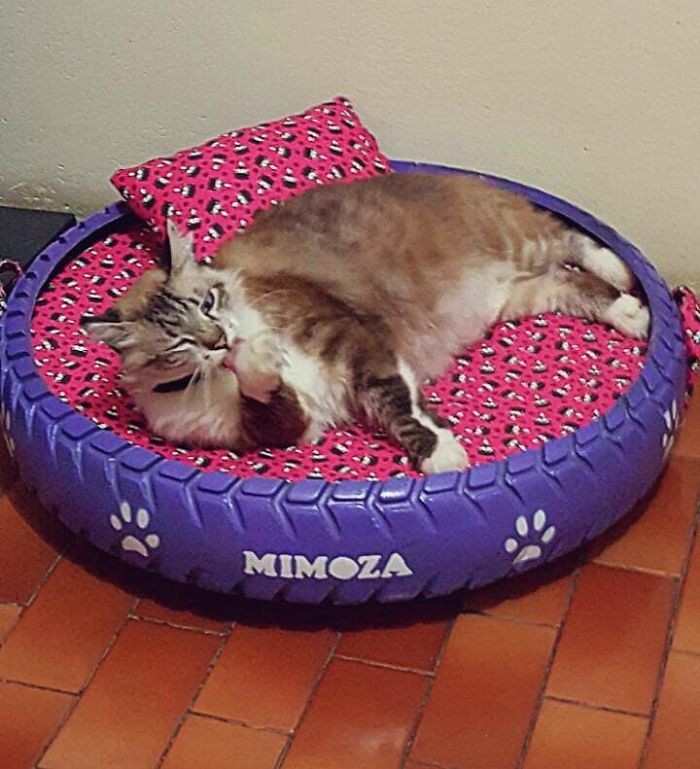
Although common sense dictates it’s best to let sleeping dogs lie, nowhere is it written that they can’t do so with a touch of panache. And if the beds they lie in are a boost to the environment and give comfort to homeless pets? So much the better.
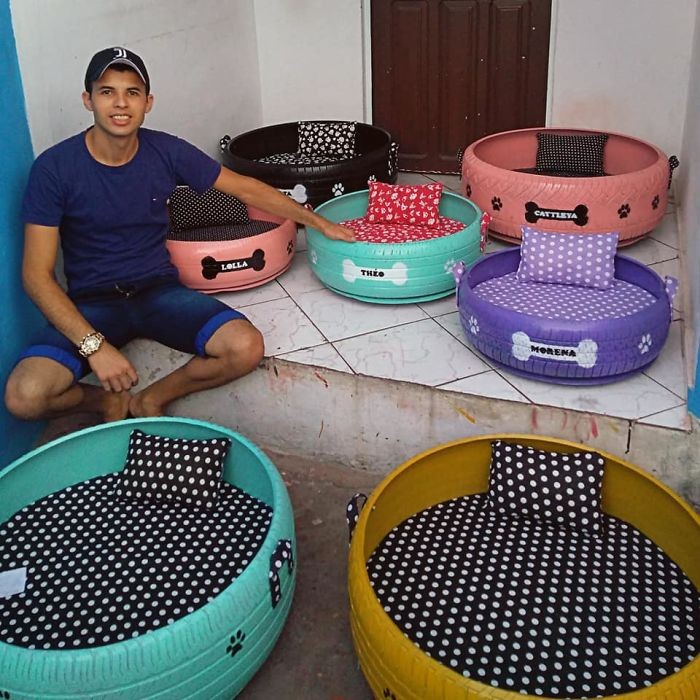
That’s just what Brazilian artist, environmentalist, and animal lover Amarildo Silva Filho was inspired to do after coming across a pile of used tires in his neighborhood a few years ago.
Where some saw trash, Silva Filho saw an opportunity for upcycling treasure that wound up making a world of difference to stray cats and dogs.
After collecting the tires and giving them a thorough cleaning, Silva Filho put his artistic vision to work fashioning personalized pet beds.
Once the custom paint jobs were complete, with the addition of hand-sewn mattresses, the colorful comfy cots were ready to be distributed to local shelters.
To meet the growing demand, he launched Caminhas Pets—and has since gone on to hand-craft more than 6,000 pet beds.
To prepare each tire, he cleans them, cuts off the tops with a jigsaw, covers the hole at the bottom with plywood, and then sews his own cushions to make them cozy. He paints and stencils each one with bright colors.
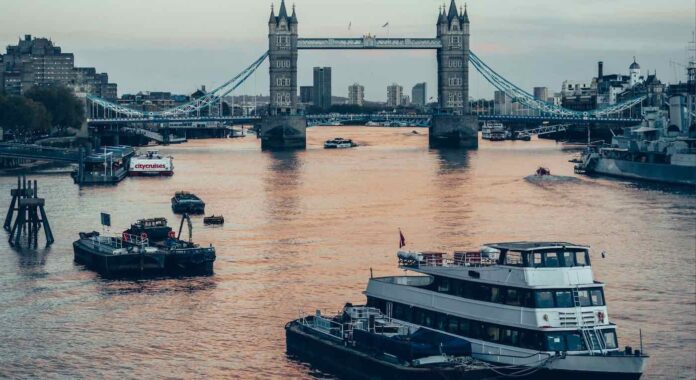
Once declared biologically dead, the Thames River flows as much with life as with water these days, and the first report on its health in 60 years is enough to make a Londoner cheer.
Perhaps 115 species of fish live in the river—providing food for not one, not two, but three species of shark which swim above a river bottom where seahorses and eels can be found.
The “State of the Thames” report highlights the gradual work in reduction of pressure on life in the river over the last 60 years, when pollution and sewage decimated it. Short and long-term phosphorus concentrations have fallen, while dissolved oxygen has increased.
“This report has enabled us to really look at how far the Thames has come on its journey to recovery since it was declared biologically dead, and in some cases, set baselines to build from in the future,” said Zoological Society London (ZSL) program lead for wetland recovery, Alison Debney.
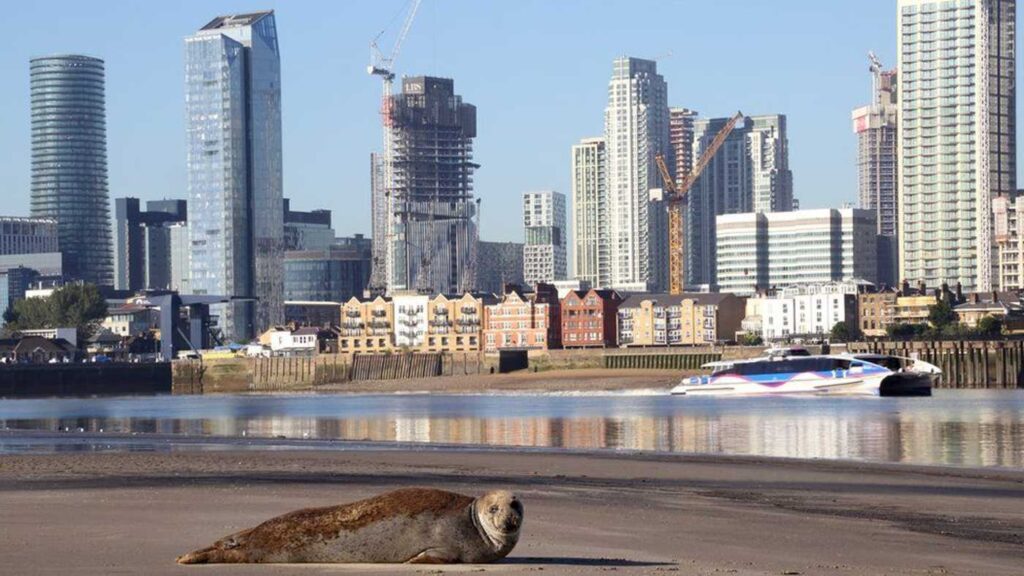
ZSL has been working to restore the Thames as a tidal and estuarine ecosystem since 2003, and one of the best ways the look at progress is how river’s estuary is doing—specifically in the populations of the system’s top predators, grey and harbor seals.
These furry, fish-seeking mammals have increased in numbers, indicating growing fish stocks despite competition from tope, starry smooth hound, and spurdog sharks.
Annual counts of both species of seal have taken place on the Thames Estuary every year since 2013 except during 2020, and they’ve increased from 797 harbor seals to 932, and from 2,866 grey seals to 3,243.
ZSL
“As top predators, (seals) are a great indicator of ecological health, so they tell us how the Thames is doing,” said conservation biologist Thea Cox, to the BBC. “People think the Thames is dead because it is brown, but the Thames is full of life—the water quality has improved so much.”
It’s not just swimming things that are flourishing in the Thames, but flapping ones as well.
Several areas of the Thames are protected as native and migratory bird sanctuaries, and as a result the number of wading birds, for example the avocet, has doubled across a period from 1993 to 2017.
Additionally, the future is bright for the river, as while some measurements of life in the Thames are worsening, the report details a new “super sewer” that will divert 95% of all sewage from the waterway.
“The new sewer, which is due to be complete in 2025, is designed to capture more than 95 per cent of the sewage spills that enter the River from London’s Victorian sewer system,” stated Liz Wood-Griffiths, Head of Consents at Tideway. “It will have a significant impact on the water quality, making it a much healthier environment for wildlife to survive and flourish.”
“A resilient future for both people and wildlife will depend on protecting remaining natural habitats, reconnecting and restoring habitats, and innovating new ways to maximize opportunities for wildlife in the urban environment,” Debney concluded.
LET Positivity Flow Like a River—Share This Hopeful Story…
Innovation has pretty much finished with car tires right, I mean, what’s left to change? How about the whole “air” part?
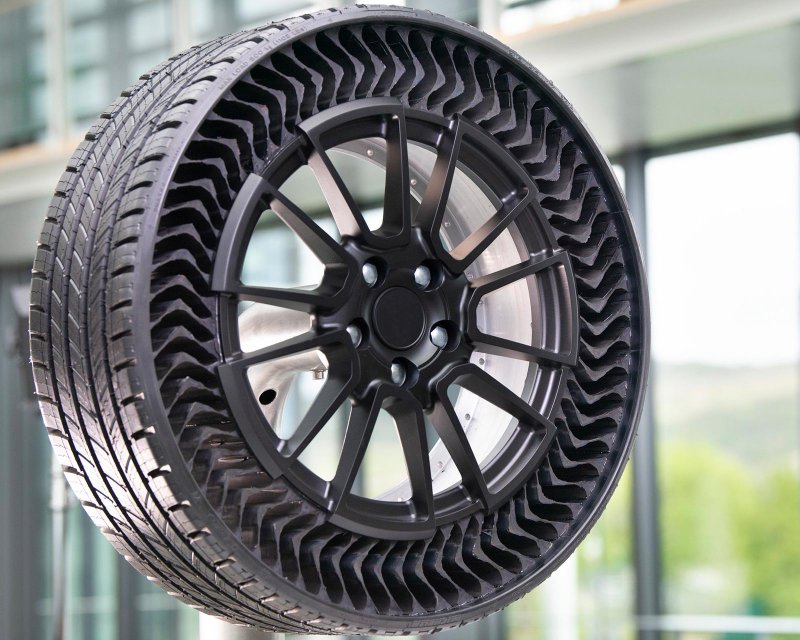
Michelin’s attempt to tackle tire trash around the world saw them roll out puncture-proof “airless” tires, which they say should help reduce the 18% of all world tires that are discarded early due to punctures.
In September, an interesting showpiece at the Munich Auto Show was tire giant’s new concept for an airless tire that is immune to the punctures that render many useless.
Discarded tires are a huge worldwide waste problem—the U.S. produces 260 million discarded tires per year, many of which end up in landfills or on the sides of the freeway where they release harmful gases and microplastic pollutants as they break down.
Michelin’s Unique Puncture Proof Tire System or “UPTIS” is designed using 46% recycled material, and made from a plastic matrix laced with glass fibers that provide a flexible outer layer with a stiffer inner one.
“The truly distinctive structure of the Michelin UPTIS prototype, or its ‘weirdness’ as we have often heard it called, really attracted the attention of many visitors and left a lasting impression on them,” stated Cyrille Roget, Michelin Group Technical and Scientific Communications Director.
Michelin
“It was an exceptional experience for us, and our greatest satisfaction came at the end of the demonstration when our passengers, who were admittedly a little wary at first, said they felt no difference compared with conventional tires.”
This isn’t just a European “green” plan to satisfy politicians, the internal spokes of the tire can be tuned to exquisite detail, New Atlas reports, to improve handling or comfort.
Michelin believes airless tires will improve everyone’s lives. With tires less susceptible to wear from the roads, maintenance costs for company’s vehicle fleets will be less expensive, while inexperienced car owners won’t accidentally ruin their rubbers by driving them while they are over- or under-inflated.
No current price has been suggested, and even though they’ve been in development since 2005, they aren’t likely to be available for another 24-36 months. In another 30 years, Michelin hope to manufacture only airless tires, with 100% recycled material.
moon exoplanet released ALMA (ESO_NAOJ_NRAO)_Benisty et al.
Wide and close-up views of a moon-forming disc as seen with ALMA/ ALMA (ESO_NAOJ_NRAO)_Benisty et al.
Using the ALMA (Atacama Large Millimetre/submillimeter Array), astronomers have unambiguously detected the presence of a disc around a planet outside our Solar System for the first time. The observations will shed new light on how moons and planets form in young stellar systems.
“Our work presents a clear detection of a disc in which satellites could be forming,” says Myriam Benisty, a researcher at the University of Grenoble, France, and at the University of Chile, who led the new research published today in The Astrophysical Journal Letters. “Our ALMA observations were obtained at such exquisite resolution that we could clearly identify that the disc is associated with the planet and we are able to constrain its size for the first time,” she adds.
The disc in question, called a circumplanetary disc, surrounds the exoplanet PDS 70c, one of two giant, Jupiter-like planets orbiting a star nearly 400 light-years away. Astronomers had found hints of a “moon-forming” disc around this exoplanet before but, since they could not clearly tell the disc apart from its surrounding environment, they could not confirm its detection—until now.
In addition, with the help of ALMA, Benisty and her team found that the disc has about the same diameter as the distance from our Sun to the Earth and enough mass to form up to three satellites the size of the Moon.
But the results are not only key to finding out how moons arise. “These new observations are also extremely important to prove theories of planet formation that could not be tested until now,” says Jaehan Bae, a researcher from the Earth and Planets Laboratory of the Carnegie Institution for Science, and author on the study.
Planets form in dusty discs around young stars, carving out cavities as they gobble up material from this circumstellar disc to grow. In this process, a planet can acquire its own circumplanetary disc, which contributes to the growth of the planet by regulating the amount of material falling onto it. At the same time, the gas and dust in the circumplanetary disc can come together into progressively larger bodies through multiple collisions, ultimately leading to the birth of moons.
Widefield image of the sky around PDS 70/ESO Digitized Sky Survey 2; Davide De Martin
But astronomers do not yet fully understand the details of these processes. “In short, it is still unclear when, where, and how planets and moons form,” explains Stefano Facchini, a Research Fellow involved in the research at the European Southern Observatory (ESO), which is an ALMA partner.
“More than 4000 exoplanets have been found until now, but all of them were detected in mature systems. PDS 70b and PDS 70c, which form a system reminiscent of the Jupiter-Saturn pair, are the only two exoplanets detected so far that are still in the process of being formed,” explains Miriam Keppler, researcher at the Max Planck Institute for Astronomy in Germany and one of the co-authors of the study.
The dwarf star PDS 70 in the constellation Centaurus/ESO, IAU and Sky & Telescope
“This system therefore offers us a unique opportunity to observe and study the processes of planet and satellite formation,” Facchini adds.
PDS 70b and PDS 70c, the two planets making up the system, were first discovered using ESO’s Very Large Telescope (VLT) in 2018 and 2019 respectively, and their unique nature means they have been observed with other telescopes and instruments many times since.
The latest high resolution ALMA observations have now allowed astronomers to gain further insights into the system. In addition to confirming the detection of the circumplanetary disc around PDS 70c and studying its size and mass, they found that PDS 70b does not show clear evidence of such a disc, indicating that it was starved of dust material from its birth environment by PDS 70c.
An even deeper understanding of the planetary system will be achieved with ESO’s Extremely Large Telescope (ELT), currently under construction on Cerro Armazones in the Chilean Atacama desert. “The ELT will be key for this research since, with its much higher resolution, we will be able to map the system in great detail,” says co-author Richard Teague, a researcher at the Center for Astrophysics partnership between Harvard & Smithsonian.
In particular, by using the ELT’s Mid-infrared ELT Imager and Spectrograph (METIS), the team will be able to look at the gas motions surrounding PDS 70c to get a full 3D picture of the system.
Quote of the Day: “All human beings should try to learn before they die what they are running from, and to, and why.” – James Thurber
Photo: by Emma Simpson
With a new inspirational quote every day, atop the perfect photo—collected and archived on our Quotes page—why not bookmark GNN.org for a daily uplift?
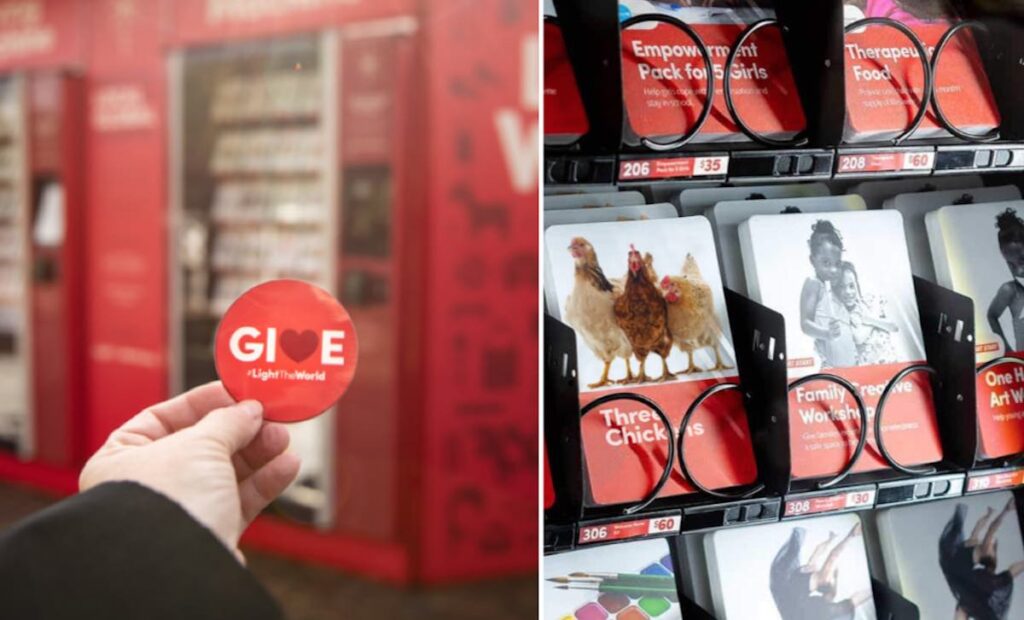
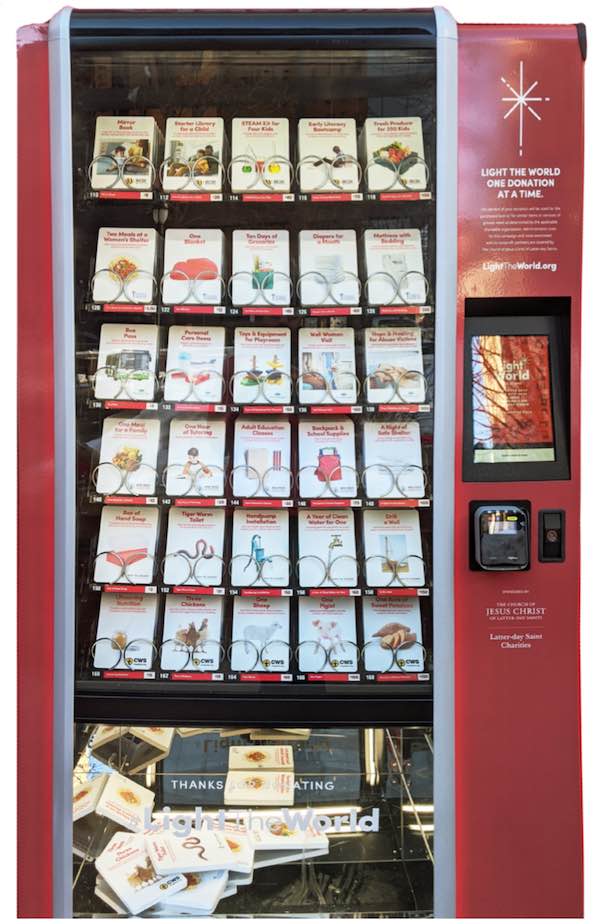
Employing the common and easily understood method of the vending machine—these Giving Machines allow passersby in American cities to make a charitable donation to a fellow citizen through local and global causes.
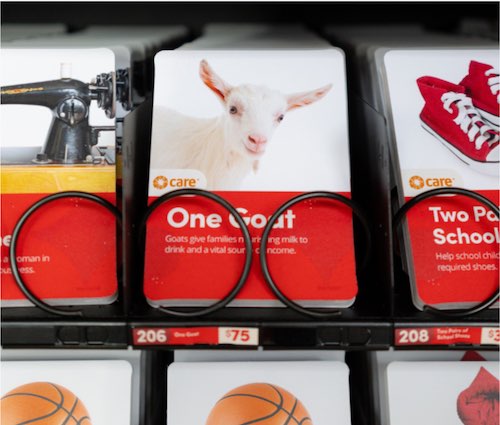
Catering to impulsive givers to indulge their altruistic impulses, they can use the vending machine to purchase anything from a single goat or two chickens to providing a household cleaning kit, polio vaccines, or even a day at Yankee Stadium for an orphaned teen.
When donors make their purchase via credit card, the Giving Machine dispenses a postcard featuring an image and description of their donation.
Of the 10 cities with vending machines nationwide, one of them will be located at Rockefeller Center in New York City, just south of its famed Christmas tree. The machine will kickoff on Tuesday, Nov. 30—the day known as “Giving Tuesday”—with speeches from people at UNICEF, WaterAid, the UNHCR, CARE, the Mariano Rivera Foundation, and other charities.
The first Giving Machine ever installed opened in 2017 in Salt Lake City, Utah, where the sponsoring organization, the Church of Jesus Christ of Latter-day Saints, is headquartered.
The Utah pilot program was impressive, yielding donations totaling more than a half million dollars. One year later, the response was even stronger, with more than $2.3 million donated through a total of 92,190 Giving Machine transactions.
In 2019, the program expanded, and donations topped $6.2 million—with two locations outside the United States that year: in the Philippine capitol and in London.
After being halted in 2020 due to COVID, the Giving Machines are back, in ten different U.S. cities—with the sponsoring Church covering all administrative costs for this campaign so that 100 percent of each donation goes to each charity.
The machines launch on the following dates in these cities and will remain operational throughout the Christmas season:
• Las Vegas, Nevada– Currently active in downtown Summerlin Mall
• Nashville, Tennessee– Currently active at 18 Bridgestone Arena
• Honolulu, Hawaii– Currently active in the Pearlridge Center
• Orem, Utah– University Place Mall on November 23, 2021
• Salt Lake City, Utah– City Creek Center on November 24, 2021
• Oakland, California– Temple Hill on November 27, 2021
• Gilbert, Arizona– Water Tower Plaza on November 29, 2021
• Denver, Colorado– Writer Square on November 30, 2021
• Kansas City, Missouri– Crown Center on November 30, 2021
• New York City, New York– Rockefeller Plaza on November 30, 2021
The Giving Machines will feature over two dozen choices for charity initiatives with items to purchase, including:
Meal for a Family
Warm Blanket
Five Sleeping Mats
Solar Lantern
Winter Clothing
One Tent
One Pair of Gloves
One Dozen Pairs of Socks
Two Winter Scarves
Winter Boots
Weekly Metro Card
Two Basketballs
One Month of Meals
Emergency WASH Kit
Polio Vaccines for 100 Kids
Five Menstrual Care Kits
Rainwater Storage Tank
Water Pump
Install a Well
Two Chickens
One Goat
Household Cleaning Kit
One Laptop
A Day at Yankee Stadium
WaterAid
Portable Vaccine Carrier
Spiritual Care of Seniors
Protect a Health Care Worker
Passover Meal for Two People
All through organizations like UNICEF, USA,The Mariano Rivera Foundation, USA for UNHCR – The UN Refugee Agency, Catholic Charities of the Archdiocese of New York, and The Actors Fund, a safety net for performing arts and entertainment professionals over their lifespan.
In 2019, a total of 255,814 items were purchased from ten Giving Machine locations around the world. The top five purchased items were:
Three chickens (31,006 transactions)
100 polio vaccines (15,132 transactions)
Take-home meals for a child (12,623 transactions)
One sheep (10,187 transactions)
Box of fresh produce (9,730 transactions)
The annual #LightTheWorld holiday initiative by the nonprofit Latter-day Saint Charities is “an invitation to all to make the most of the Christmas season by giving, one person at a time — in homes, in communities, and around the globe.”
DONATE This Brilliant Inspiration on Social Media to Toast #GivingTuesday…






















































 Meal for a Family