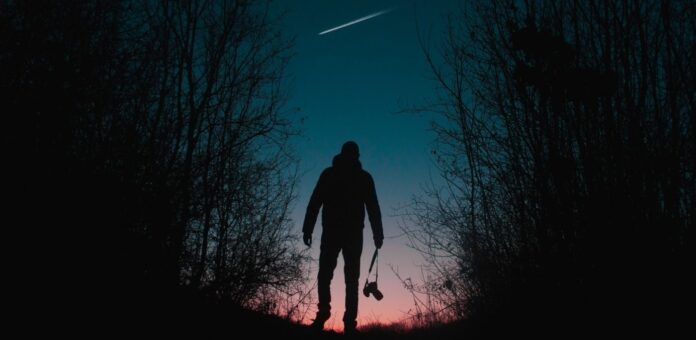
During the next few weeks, look up and you can expect to see more than your average number of bright and shimmery shooting stars lighting up the night sky.
The Perseids “are considered the best meteor shower of the year,” according to NASA.
This year’s show began on July 17 and will last until August 26. The peak will be on the night of August 11, running into the early hours of August 12. That’s when the rate of shooting stars will be at its highest, with about 50 meteors per hour.
The extra good news? The moon will be only 13% illuminated on August 11, so if you have clear skies you’ll have an excellent view of all those shooting stars.
You can be anywhere in the Northern Hemisphere to enjoy this show of speed and light. Fine summer weather should make for comfortable viewing too. To best see the starry sight, try to face northeast towards the Perseus constellation.
But just what are you seeing up there? According to Farmer’s Almanac, “Meteors occur when Earth rushes through a stream of dust and debris left behind by a passing comet (the Swift-Tuttle comet, in the case of the Perseids). When the bits strike Earth’s upper atmosphere, friction with the air causes each particle to heat and burn up. We see the result as a meteor.”
P.S. If you’re not able to get out to a place with dark skies to watch the event, check out the Virtual Telescope Project. They’ll be streaming the peak night live, so everyone can enjoy the show.
SHARE The Far-Out News With Starry-Eyed Pals on Social Media…
The urge for most of us is to throw something away—even if it means we have to buy a new one for more money—as it’s often easier than finding a store that will fix it, taking it there, then going out later and picking it back up, all with the chance that it might break again in the future.
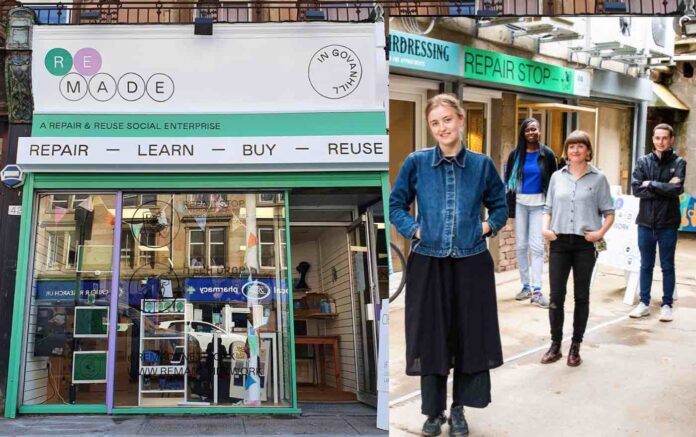
But the residents of one Glasgow neighorhood are taking on that important responsibility.
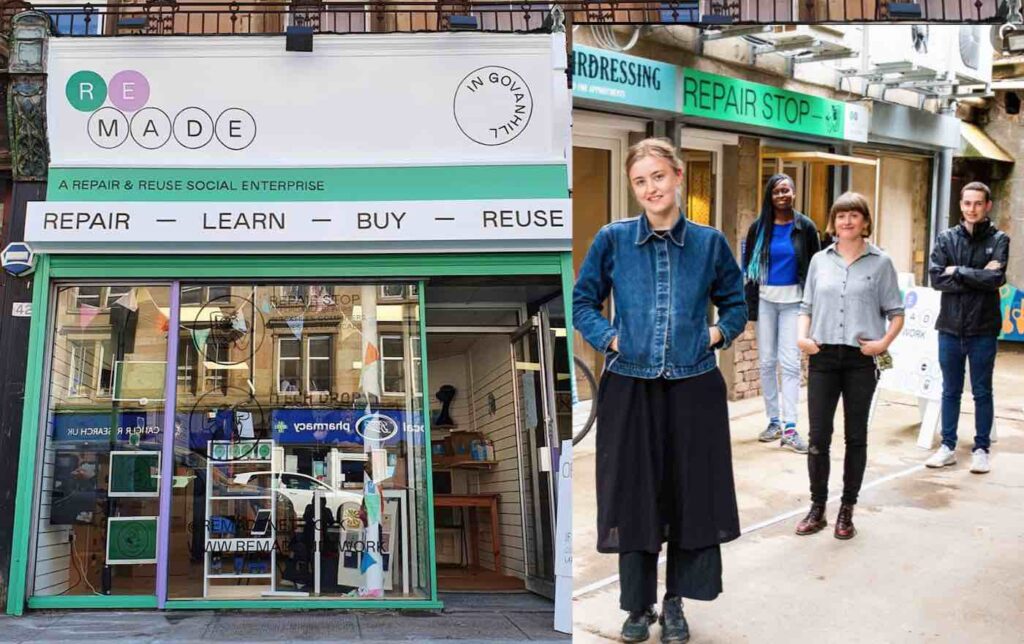
After a mend and repair shop opened in the Govanhill neighborhood, hundreds of residents began bringing in broken electronics and clothes to be repaired, resisting the urge to rid themselves of the problem by going on Amazon and getting a new one.
The shop is called Remade, and it’s looking to change the way Britain consumes.
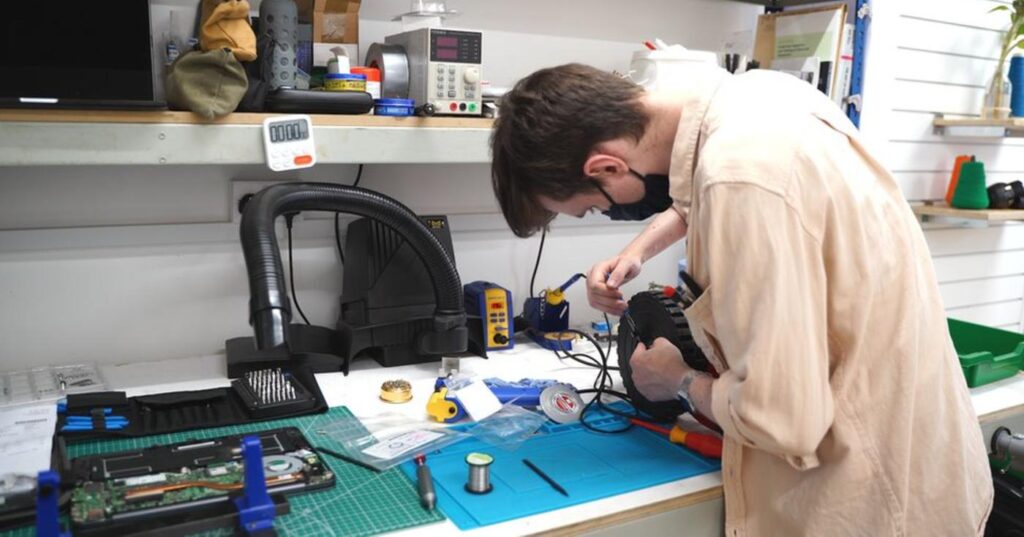
A team of technicians, general repairmen, and tailors work, not out of charity, but as part of what the BBC described as a thriving business fixing every imaginable gadget, home appliance, lawn machine, garment, jewelry, and even Christmas ornament.
Along with mending broken items, Remade also works to find items new homes as a second-hand outlet, as well as connecting unneeded laptops or other internet-connected gadgets with homes that lack them.
The BBC spoke with one repeat customer who said she had a watershed moment when an extension cable she owned stopped working.
“My immediate response was, well that sucks—I guess I will go to an online retailer like Amazon and buy another one,” she said. “Then I thought—hang on, there’s absolutely no need to do that—I know this place is open just down the road.”
It’s not easy these days to see that thought through to the end.
But it’s the right thing to do for the planet in a sense, as old electronics are contributing enormously to non-degradable landfill waste.
Furthermore, it’s not only the burden of transporting, storing, and tossing e-waste in a landfill, but the emissions that come from producing its replacement.
Computers, phones, and tablets for example need microchips that rely on lithium to produce, which is a rare earth mineral that is costly—both in terms of dollars and CO2 emissions—to mine.
Fortunately it’s not only GNN who knows this, and the Remade staff has grown to eleven employees to keep up with the demand of Scots taking on the mission of having their old stuff fixed up.
FIX YOUR Friends’ News Feeds—Share This Story With Them…
Quote of the Day: “Problems sustain us—maybe that’s why they don’t go away. What would a life be without them? Completely tranquilized and loveless.” – James Hillman (author of Soul’s Code, one of the best books for any parent)
Photo: by Volodymyr Hryshchenko
With a new inspirational quote every day, atop the perfect photo—collected and archived on our Quote of the Day page—why not bookmark GNN.org for a daily uplift?
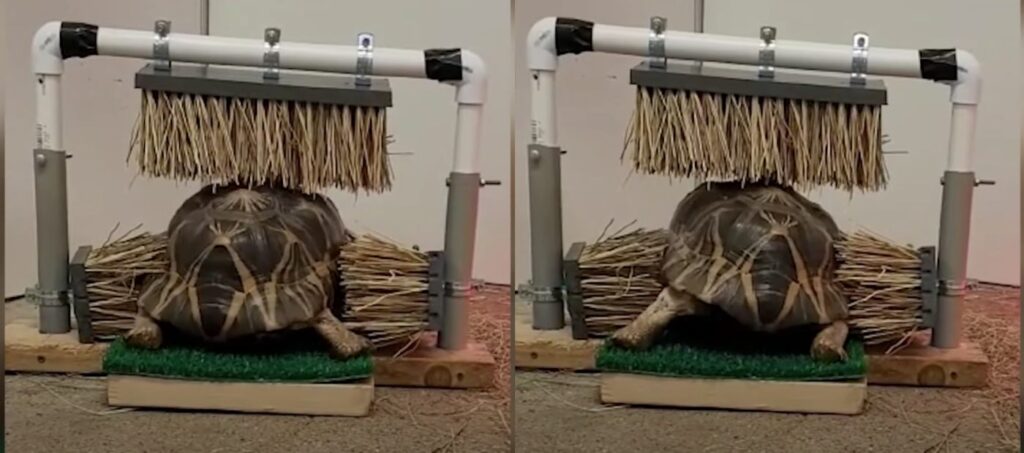
Zoo keepers made a tortoise a homemade scratching station, and an adorable video shows the creature wiggling while trying it out.
Morgan Brem, a Dallas Zoo intern, created the scratching device for Sunny the radiated tortoise.
Made from broom heads, it’s perfect for the little animal to itch the impossible-to-reach spots on the top of his shell.
Robin Ryan, supervisor of ambassador animal experiences at Dallas Zoo, said: “She made it adjustable to see if our ambassador armadillo would also be interested, but so far, we have only seen Sunny use it.
“The base is wood with a turf mat cover for belly scratch opportunity, the frame is PVC, and the brush heads are held on with conduit fittings.”
To “maximise scratching abilities”, the top brush was lowered twice for Sunny, who has been at the Dallas Zoo since 1980.
Robin said tortoises’ shells are part of their spine and they have nerve endings which run on the top.
Ryan explains that: “The name ‘radiated tortoise’ comes from the pattern on Sunny’s shell. The top part of his shell has yellow lines that radiate out from the center.
“They kind of look like sun bursts, hence the name. His engaging personality helps inspire guests to want to create a better world for animals.”
(WATCH Sunny scratch that itch in the video below.)
WIGGLE This Fun Story on Over to Friends on Social Media…
There’s an old saying that goes, “Good fences make good neighbors.” With so many folks forced to stay at home during the pandemic, some are happy to report that good fences can also make good friends.
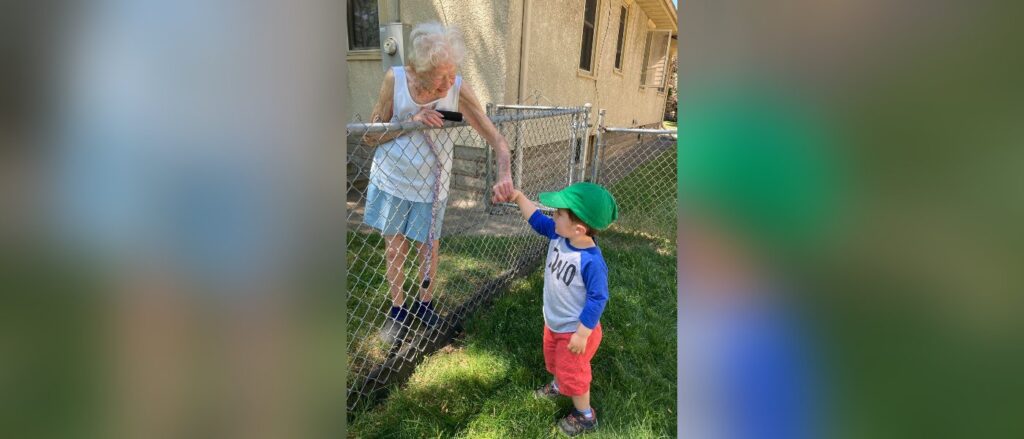
In Minneapolis, the Olson family lives next door to 99-year-old Mary O’Neill.
Although Mary has an adult daughter in the area who visits once a week, with the rest of her relatives scattered, for the most part, the pandemic left the soon-to-be centenarian in seclusion.
But as lockdown wore on, Mary managed to forge a special friendship with one of her neighbors—Benjamin Olson, age 2.
Over time, Mary watched through the chain-link as Benjamin learned to walk, talk, and eventually run and play. Despite the huge differences in their ages, Benjamin was drawn to his elderly neighbor, delighting in her presence.
Between the two, they developed a game they could play over the fence. Ben would pass her a ball and she’d hit it back to him with her cane.
While others might remark at the 97-year gap between the two pals, when Ben sees Mary, he simply sees a friend, not a number.
“She’s just Mary, or in the past couple of days, he’s been calling her ‘Mimi.’ We’ll be playing inside and he’ll go, ‘Mimi? Mimi?’ and we’ll go outside and look for [her],” Benjamin’s mom Sarah Olson told CBS News. “She’ll call out, ‘Hey Benjamin!’ when she sees him, and it’s just been so cute to watch it.”
Although the pair’s special affinity definitely scores high on the cuteness factor, Sarah and Mary’s adult daughter believe the relationship has been a lifeline that’s kept the elderly woman going through the long period of isolation.
As pandemic restrictions have lifted, Mary and Benjamin’s bond continues to blossom on both sides of the fence—only now, the gates can be opened.
Benjamin joins Mary on her back steps to play games, blow bubbles, and enjoy the activities that bring joy to both the young and the young at heart.
“Friendship can just happen so many different ways,” Sarah told CBS. “I’m just really happy they were able to form this [one]—quarantine or not, pandemic or not. I’m happy…because it means a lot to her and it means a lot to him too.”
In August, when Mary celebrates her 100th birthday, it’s a good bet Benjamin and his family will be there to help her blow out the candles and make a wish.
But we’re guessing the one thing she won’t be wishing for is a best friend.
By putting the recycling costs on the producer rather than the consumer, Maine becomes the first U.S. state to hold companies responsible for the waste they create.
In putting what is essentially an import duty on packaging, Maine is telling companies there is a limit to the amount of reliance they can have on Mainers and municipalities to recycle their material.
If a company is using less-than eco-friendly packaging, they have to pay a Stewardship Organization (SO) per ton of packaging they bring into the state.
The SO then looks at the costs and workload of recycling programs around the state and reimburses them depending on the amount and type of material they are processing.
Prior to the law, the only way to raise money for recycling was more taxes.
“It’s really designed to help tackle our waste crisis, get us to finally reaching our goal of recycling 50% of our waste which we set back in 1989 but never met,” said Sarah Nichols, Director at the Natural Resources Council of Maine, in an interview with WCSH News.
Nichols hypothesizes that companies will do more either to create eco-friendly packaging or to have clear recycling instructions and labels on their products that will ensure Mainers don’t put the wrong thing in the wrong bin.
Successful companies are often the nimblest ones; able to adapt to changing market and regulatory conditions, while remaining profitable.
Small producers, either those who make less than $2 million gross or who create less than one ton of waste per year, would be exempt from the tax, ensuring Maine’s small business sector isn’t over-burdened with regulatory costs.
Nichols said that while Maine was the first U.S. state to pass a law like this, Oregon has a similar one heading to the governor’s desk, and that she is certain they “won’t be the last.”
RECYCLE the Good News From Maine—Share This Story With Pals…
Quote of the Day: “Know what you want and all the universe conspires to help you achieve it.” – Paulo Coelho
Photo: by Alejandro Luengo
With a new inspirational quote every day, atop the perfect photo—collected and archived on our Quote of the Day page—why not bookmark GNN.org for a daily uplift?
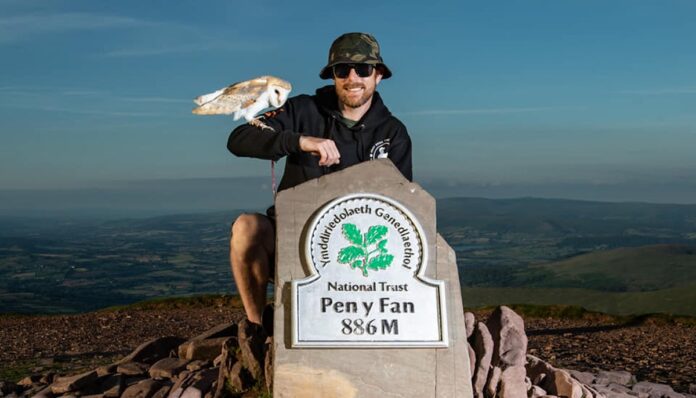
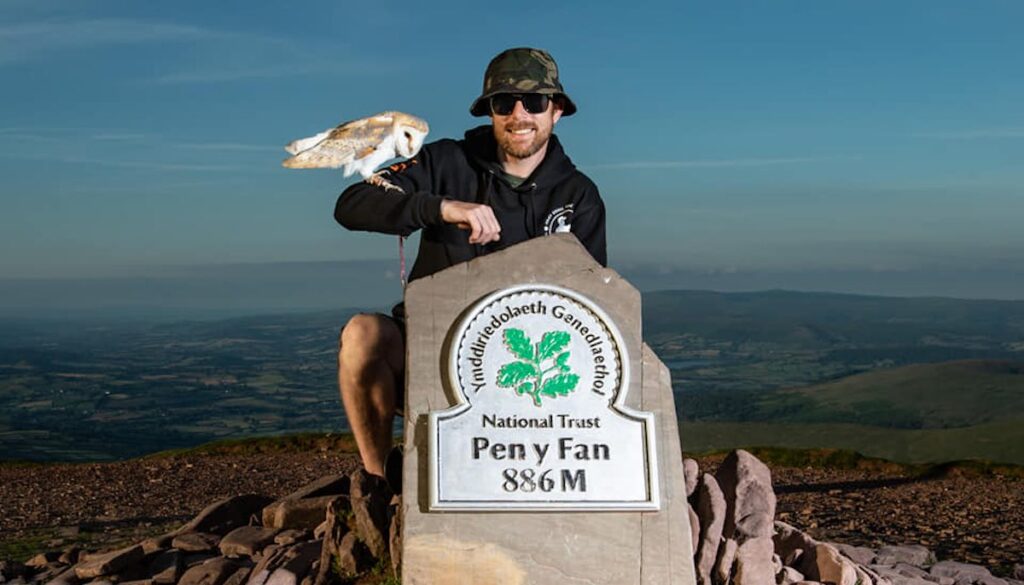
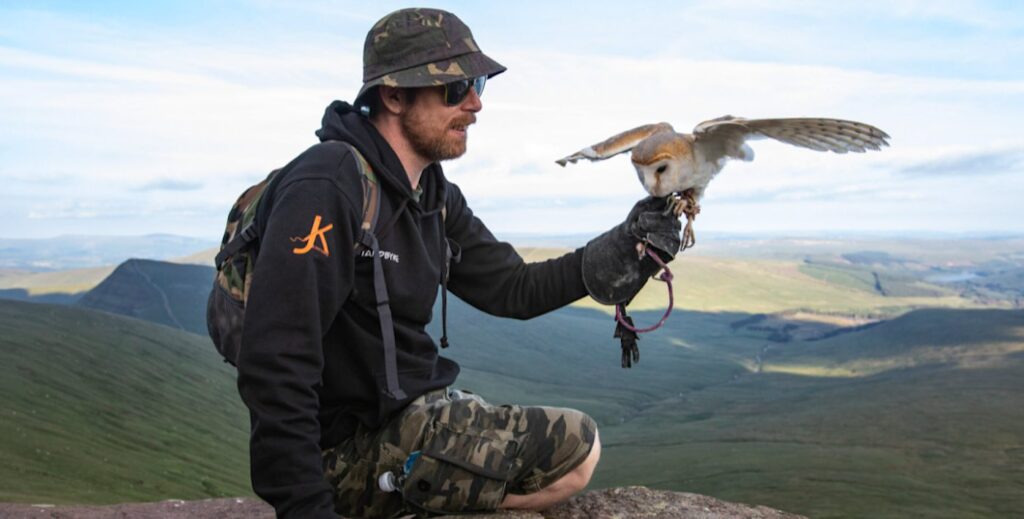
It’s not every day you see a man and his owl hiking up a mountain.
Joann Randles Photography
But this isn’t just any regular owl. Louie is an emotional support animal.
Jaylo Miles and his beautiful PTSD barn owl have the most incredible bond.
Together they are on a mission to help raise awareness for mental health and those who are battling PTSD (post-traumatic stress disorder) and the stigma attached to it.
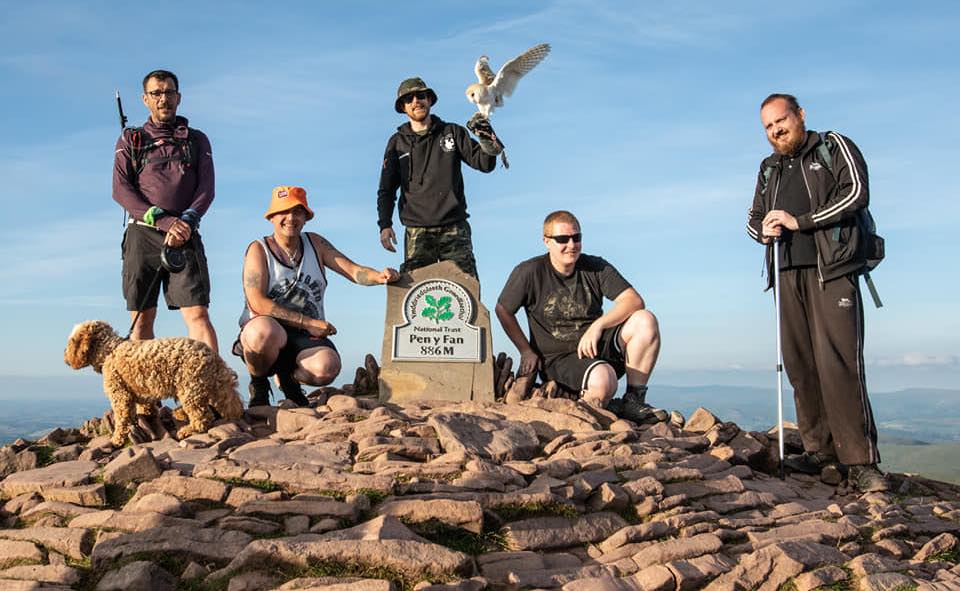
A photojournalist based in Swansea, Wales, Joann Randles, recently joined the unlikely duo for a hike to the summit of the highest peak in South Wales, Pen-y-Fan.
“I try to find uplifting stories and came across Jaylo Miles’ inspirational owl story online.”
She reached out to Welshman who lives in Cardiff, to see if he would allow Joann to join him on one of his adventures with Louie.
“People will never know how special Louie is, not just for me but, for guys I let hold him,” says Jaylo. “That special moment of love!”
Joann Randles Photography
Jaylo set up a Facebook page called Many Downs, Time To Get Up, as a safe and uplifting community where individuals can learn about his battle to overcome PTSD, and readers can help inspire others.
The father of three wrote, “I have built this page from a desperate battle with my own mental health and suicidal thoughts in the hope to make a difference and leave a legacy to create & inspire.”
Joann Randles Photography
Jaylo and Louie—and another support owl named Oscar—are now familiar faces around Cardiff.
They encourage others to join with them on challenges and group meet-ups, so that they, too, can take the positive steps to overcome their fears.
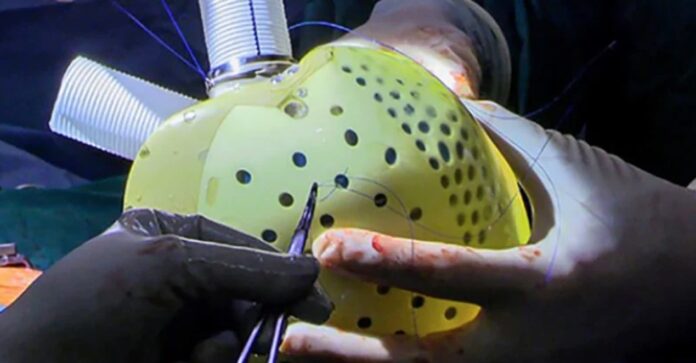
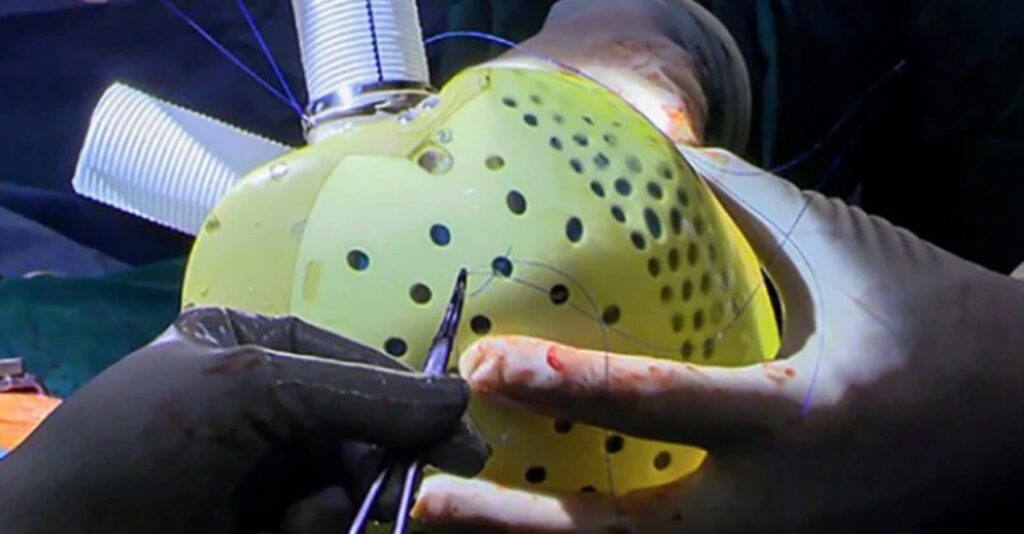
Surgeons at Duke University successfully implanted a new-generation artificial heart in a man with heart failure—a first for any hospital in North America.
The artificial heart was developed by a French company, CARMAT and has been approved for use and sale in Europe.
Last year, the company received U.S. FDA approval to begin studies and enroll 10 patients with end-stage biventricular heart failure—people who are suffering on the waiting list for a heart donor—and offer a life-saving bridge before transplant.
“We are encouraged that our patient is doing so well after the procedure Monday,” said Dr. Carmelo Milano, a transplant surgeon and the principal investigator of the device study at Duke. “As we evaluate this device, we are both excited and hopeful that patients who otherwise have few to no options could have a lifeline.”
The North Carolina patient, Matthew Moore, is just 39-years-old and was referred to Duke in June after a sudden, unexpected diagnosis of heart failure. Moore and his wife, Rachel, recently adopted their two-year-old foster son, Marshall, and arrived at Duke expecting only to undergo heart bypass surgery.
As Moore’s condition quickly deteriorated, however, traditional options, including transplant, became too risky. Meanwhile, Duke was among just three transplant centers in the United States selected to join the device study, and the procedure team received specialized training to prepare for the implant surgery.
Matthew’s wife, a nurse, said, “Both Matthew and I are so grateful that we’ve been provided an opportunity to participate in something that has the potential to have an impact on so many lives. We are just taking it day-by-day and hope everything continues to progress well.”
The artificial heart device called the ‘Aeson’, is an implantable prosthetic that includes biological valves derived from bovine tissue and operates on an external power supply.
If the device receives FDA approval, it would provide hope for transplant patients whose hearts require assistance to pump blood through both chambers. Current technology—notably a left-ventricular assist device (LVAD)—supports just one chamber.
“Because of the shortages of donor hearts, many patients die while waiting for a heart transplant,” said Schroder, a transplant surgeon who led the implant procedure. “We are hopeful for new options to help these patients, many like Mr. Moore who have devastating disease and cannot otherwise be considered for a transplant.”
Gran Via in Madrid by Felipe Gabaldón, CC license
Whether you’re from the U.S. and call it a “Beltway” or Europe and call it a “Ring road,” Madrid will be calling it the “green way” soon enough, as the Spanish capital aims to combat their city’s island of heat by encircling themselves with a sea of green.
Gran Via in Madrid by Felipe Gabaldón, CC license
Their urban forest project will involve planting nearly a half million trees on a 46-mile perimeter (75-km) around the city. When the trees have reached maturity, they should absorb around 175,000 tons of CO2 per year.
Black pine, beech, Spanish juniper and various oak species can all be found in the arid middle of Spain wherein lies the Spanish capital, and it is these native trees which require little water or specialized soil conditions that will constitute the new forest.
“What we want to do is to improve the air quality in the whole city, to fight the ‘heat island’ effect that is happening inside the city, to absorb the greenhouse emissions generated by the city, and to connect all the existing forest masses that already exist around the city,” Mariano Fuentes told Euronews.
As Madrid’s councilor for the environment and urban development, Fuentes explained that for cities that belch three-quarters of all human-caused CO2, which tend to absorb much more heat and poor air than surrounding countryside, methods for combating climate change and general environmental degradation need to be varied.
“It has to be a global strategy,” added Fuentes. “It’s not only about cars, but also a pedestrianization strategy, the creation of environmental corridors in every district… and most of all… to engage citizens in this new green culture, it is essential for every city to face the near future in the best conditions.”
Experts assured reporters that “it’s not a park,” but certainly for nature-loving Madrileños, it will be a place of respite, shade, and bird habitat that will work night and day to absorb excess heat and clean the air of the European mega-city.
WATCH the video from EuroNews…
Plant Some Good News on Social Media For All Your Friends Who Love Spain…
Quote of the Day: “The whole world is a series of miracles, but we’re so used to seeing them that we call them ordinary things.” – Hans Christian Anderson
Photo: by Fabrizio Morelli
With a new inspirational quote every day, atop the perfect photo—collected and archived on our Quote of the Day page—why not bookmark GNN.org for a daily uplift?
The Hyundai driver whose car tumbled over a Florida causeway into the Indian River in the middle of the night has a few Good Samaritans to thank for saving her life.
One bystander called 911, while she sprinted across the street to flag down an a Melbourne police officer who happened to be conducting a traffic stop nearby.
“Help! There is a person in the water, please!”
Officer Peter Dolci III came running and police body camera footage shows the car, which the witness said flipped over 2 or 3 times, half submerged on its side.
Dolci jumped into the water and discovered a Good Samaritan crouched in the river partially inside the vehicle holding the unconscious driver’s head above water.
When Officer Luke Drummer arrived, they pried out the window so they could pull her out and drag her to land.
The unidentified Samaritan could be heard saying she isn’t breathing and urging officers to give her CPR.
“He did a great job,” Dolci told reporters. “He kept his cool.”
FREE WILL ASTROLOGY – Week beginning July 23, 2021
Copyright by Rob Brezsny, FreeWillAstrology.com
LEO (July 23-Aug. 22):
“Once upon a time”: That’s your phrase of power these days. What do I mean by that? I’m suggesting that you will strengthen your problem-solving abilities by engaging in playful pretending for the sheer fun of it. I’m predicting that you will boost your confidence by dreaming up amusing magical stories in which you endure heroic tests and achieve epic feats. And I’m proposing that you will fine-tune your ability to accomplish practical feats if you regard your robust imagination as crucial to your success.
VIRGO (Aug. 23-Sept. 22):
Virgo singer-songwriter Fiona Apple says she’s not religious. On the other hand, she regularly kneels on the ground and announces to whatever great power might be listening, “Thank you for my problems, and I send my love everywhere.” She’s sincere. She regards her sadness and her challenges as being equally important to her happiness and success. The difficulties teach her what she didn’t even realize she needed to know, and make her appreciate the good times more intensely. I suggest you borrow from her approach right now.
LIBRA (Sept. 23-Oct. 22):
Nobel Prize-winning author Albert Camus wrote, “Great feelings bring with them their own universe”—which he said may either be degraded or splendid, selfish or generous. I love that he allowed for the possibility that great feelings could be positive and noble. So many renowned thinkers focus on negative and ignoble states of mind. In accordance with current astrological potentials, Libra, your task is to cultivate feelings that are splendid and generous. These sentiments should exalt you, uplift you, and empower you to spread transformative benevolence to those whose lives you touch.
SCORPIO (Oct. 23-Nov. 21):
“How can you hold on to something that won’t hold still?” asked Scorpio poet Benjamin Fondane. In general, you Scorpios have more talent than every other sign of the zodiac at doing just that: corralling wiggly, slippery things and making them work for you. And I expect this skill will be especially in play for you during the coming weeks. Your grasp on the elusive assets won’t ever be perfect, but it will be sufficiently effective to accomplish small wonders.
SAGITTARIUS (Nov. 22-Dec. 21):
Sagittarian Calvin Trillin is a witty writer with a good imagination and a flair for inventive language. But back in school, he confesses, “Math was always my bad subject. I couldn’t convince my teachers that many of my answers were meant ironically.” You Sagittarians are authorized by the cosmic powers-that-be to borrow your style and attitude from Trillin in the coming weeks. So you shouldn’t be fixated on mathematical precision and fastidious logic; your task is not to be conceptually impeccable and scrupulously sensible. Rather, you have a license to be extra lyrical and lush and rhapsodic and humorous and irrepressible.
CAPRICORN (Dec. 22-Jan. 19):
In 2011, an eBay seller produced a 19th-century photo that he said proved Capricorn actor Nicholas Cage is a time-traveling vampire. Although the character in the image did indeed resemble the Oscar-winning star, he rejected the theory, and emphatically declared that he is not a time-traveling vampire. Maybe that all sounds absurd, but I must tell you that you may soon have to deal with people’s equally inaccurate and off-kilter theories about you. My advice: Don’t take it personally. Simply correct others’ misimpressions and rely solely on yourself for definitive ideas about who you are.
AQUARIUS (Jan. 20-Feb. 18):
I’ve assembled excerpts of love poems for your inspiration. Why? Because you’re entering the Intensified Intimacy Phase of your astrological cycle. Consider using the following riffs as inspiration when you interact with loved ones. 1. “I profess the religion of love; it’s the belief, the faith I keep.” 2. “Holding your hand, I can hear your bones singing into mine and feel the moon as it rolls through you.” 3. “Raw light spills from your eyes, utterly naked, awakening an intoxicating shimmer of adventure.” 4. “I ask you please to speak to me forever.” (Poem fragments are from Ibn ‘Arabi, Al-Saddiq Al-Raddi, Herman Hesse, Sara Eliza Johnson, Alejandra Pizarnik.)
PISCES (Feb. 19-March 20):
A “moon garden” brings joy through flowers and plants that reveal their full beauty after dark. Among the flowers that bloom at night are evening primrose, angel’s trumpet, and Dutchman’s pipe cactus. As for the flowers whose aromas are most potent after the sun sets: night-blooming jasmine, garden heliotrope, and honeysuckle. According to my reading of the astrological omens, you will have resemblances to a moon garden in the near future, Pisces. Be alert for opportunities to glow and grow in the dark.
ARIES (March 21-April 19):
Author Valerie Andrews reminds us that as children, we all had the “magical capacity to see the land as an animal does; to experience the sky from the perspective of a flower or a bee; to feel the earth quiver and breathe beneath us; to know a hundred different smells of mud and listen unselfconsciously to the soughing of the trees.” Oh, how I would love you to be able to recover even a fraction of those talents in the coming days. My reading of the current astrological potentials tells me that your chances of doing so are much better than usual. Your ability to connect with the eternal child and wise animal within you is at a peak.
TAURUS (April 20-May 20):
Taurus singer Barbra Streisand has a ‘shopping mall’ built below her large home to display her precious belongings and show them off when friends come over. Among the storefronts are an antique store, doll shop, costume shop, and candy store. The coming weeks would be an excellent time for you to start building a shopping mall beneath your home, too, Taurus. If that’s too expensive or complicated, here are alternatives: 1. Revitalize your appreciation for your treasured possessions. 2. Acquire a new treasured possession or two that will inspire you to love your life even more than you already do. 3. Reacquaint yourself with the spiritual powers that your treasured possessions arouse in you.
GEMINI (May 21-June 20):
The Dalai Lama says there are core similarities between science and Buddhism. Both keep searching for ever-more complete versions of the truth. Both employ firsthand observation and experimentation to do that noble work. If they find new information that contradicts previously held versions of the truth, both are willing to discard them. Now that you Geminis are entering the Deep Questioning Phase of your astrological cycle, I’d love you to make generous use of the Buddhist/Scientific approach. More complete versions of the truth will be available in abundance in the coming weeks—if you’re alert for them.
CANCER (June 21-July 22):
Cancerian artist Artemisia Gentileschi (1593–1656) achieved the impossible: She became a supremely skilled and renowned painter in an era when women had virtually no opportunities to become artists. Many aspects of her work distinguished her from other painters. For example, she depicted women as having strong, agile hands and arms. In Artemisia’s world, the power of women’s wrists, forearms, and fingers signifies their ability to put their mark upon the world, to accomplish strenuous practical tasks with grace and flair. If I were going to paint images of you in the coming weeks, I would also portray you as having strong, agile hands and arms. I suspect you’ll have potent agency to get things done—to adeptly manipulate the material world to serve your ideals. (Thoughts about Artemisia’s hands come from art historian Mary D. Garrard.)
WANT MORE? Listen to Rob’s EXPANDED AUDIO HOROSCOPES, 4-5 minute meditations on the current state of your destiny — or subscribe to his unique daily text message service at: RealAstrology.com
A realtor in Missouri is determined to make her hometown “a city where no one sleeps outside.”
Courtesy of Linda Brown
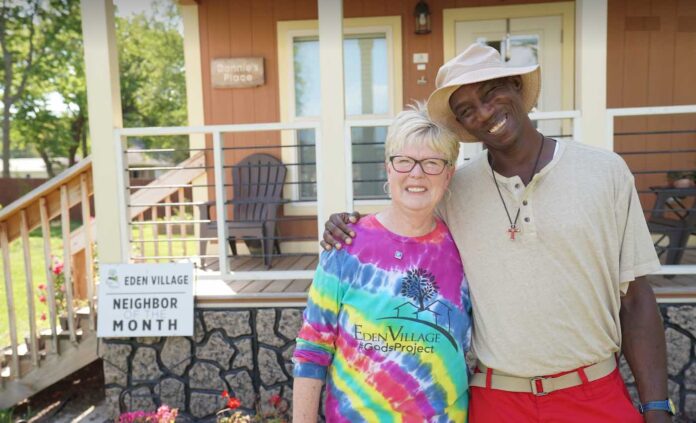
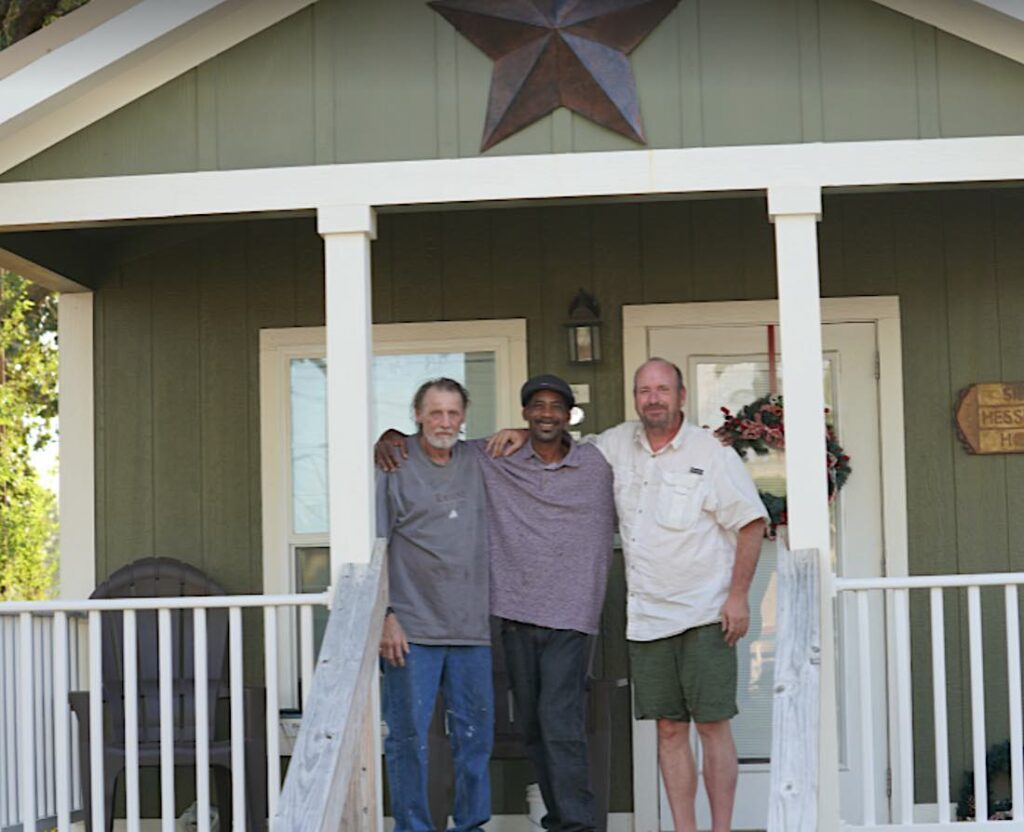
For nine years Linda Brown and her husband David organized a nightly drop-in shelter where homeless people in Springfield could eat, shower, do laundry, use a computer, and socialize during bingo games and karaoke—but they wanted to do more.
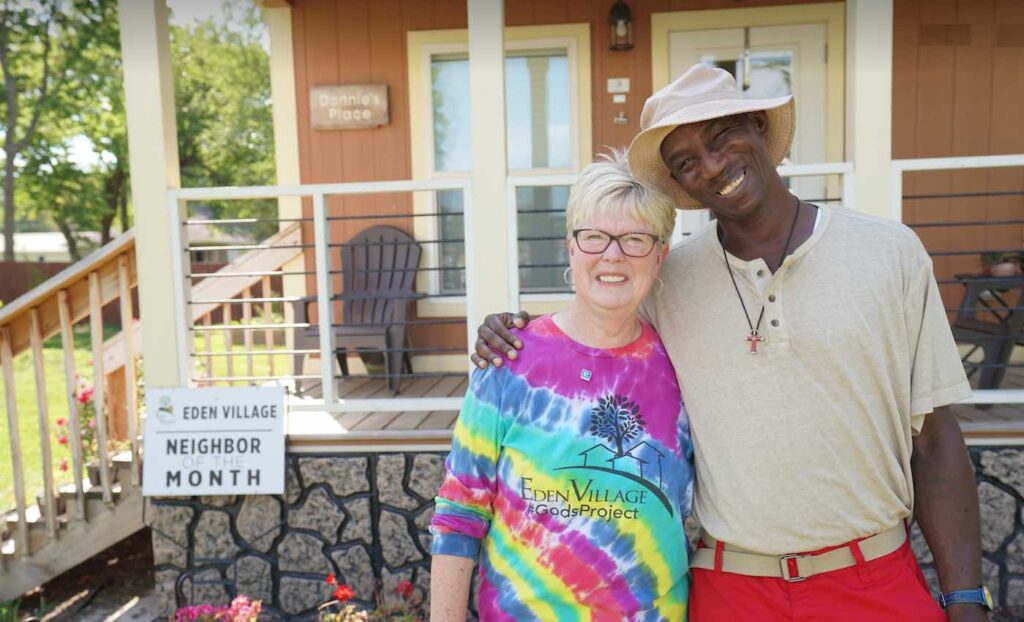
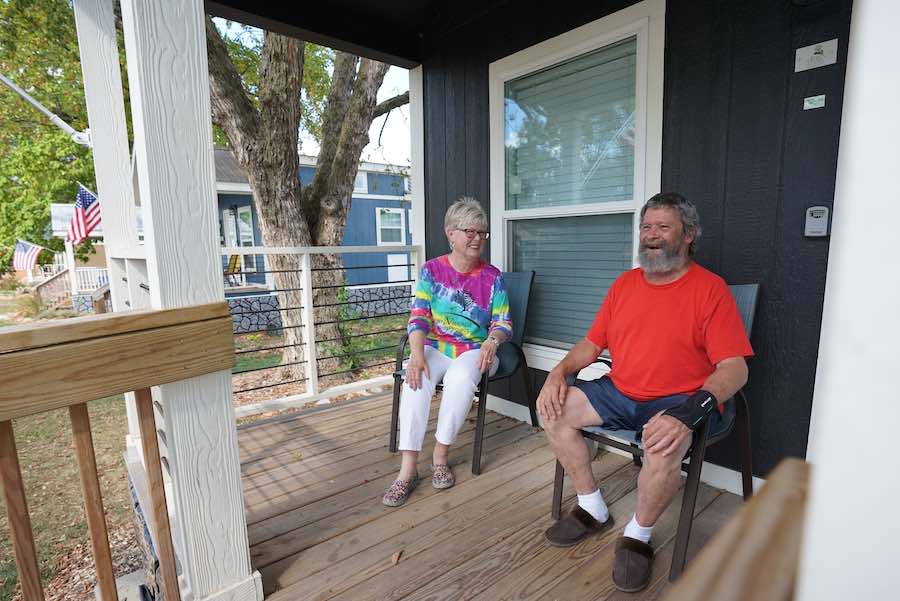
So they transformed an abandoned mobile home property into a village of tiny homes that provides permanent housing to the chronically disabled homeless.
They raised $4.75 million and opened Eden Village in 2018, erecting 31 tiny homes that are now occupied by people like Jonathan Fisher. He was battling substance abuse, and had lived on the streets for two years when he met Linda Brown, who changed his life.
“In the worst moments of my life, Linda gave me guidance, care, and made me feel like I was still worth something,” Fisher says. He says that Brown took the time to learn about how he became homeless, and then encouraged him as he rebuilt his life. She even offered him a job.
Now sober, Fisher works full-time for Brown, doing construction and maintenance on the 31 homes, and helping others experiencing struggles similar to what he went through.
The driving philosophy behind Eden Village is the same that fuels the Housing First movement: The root causes of a person’s homelessness cannot be thoroughly addressed until his or her immediate housing needs are met.
“I watched as my (homeless) friends walked off into the darkness to a hidden, wet, cold camp while we went home to a warm bed,” Linda told the National Association of Realtors, who honored her with their Good Neighbor Award in 2020. “I had to do something,”
That was the moment that formed her vision for the tiny-home village that serves as a place where the chronically disabled homeless “can live with dignity and self-worth.”
After drawing sponsorship money from Coldwell Banker, the Greater Springfield Board of Realtors, local banks, churches, and area residents, by February 2019, all 31 tiny homes, which cost about $42,000 each, were occupied.
Linda Brown
“It takes someone who wants to do something, and then believes they can. I’ve watched Linda Brown live that out,” says Nate Schleuter, who helped launch a tiny-home village for the homeless in Austin, Texas, but now is the chief visionary officer for Eden Village.
“It’s exciting to watch the homeless who thought they’d live the rest of their life on the street now have a home.”
Eden Village, courtesy of Linda Brown
Brown’s 13 years of real estate expertise has been essential to the development of the tiny-home community. She learned of a listing for an abandoned 4.2-acre mobile park on Springfield’s east side. The property wouldn’t need to be rezoned for tiny-home trailers, and the infrastructure and utilities were already in place.
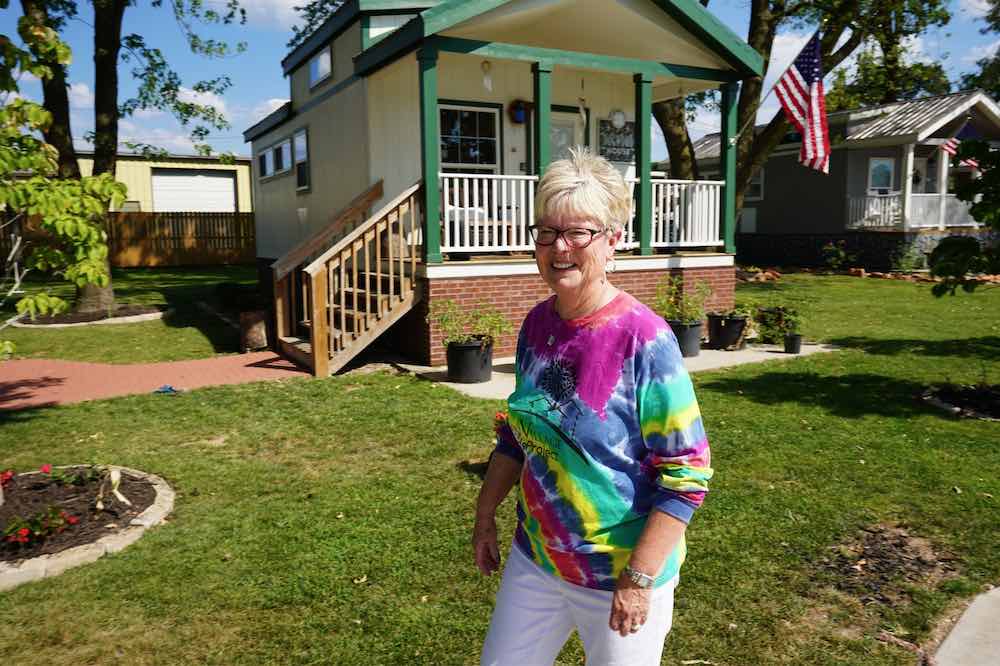
The tiny homes are rolled in on wheels attached to their steel frames, qualifying them as recreational vehicles. The 400-square-foot individual homes are fully furnished, including dishes and bedding. Residents pay $300 per month, which includes utilities. Most receive government disability checks of $725 per month to cover expenses. They can remain in their home as long as they wish, provided they remain a good neighbor in the community.
Wide-angle photo of interior of tiny home – courtesy of Linda Brown
The village includes a 4,000-square-foot community center where residents can hold cookouts, do laundry, and access a medical office staffed with student nurse volunteers and mental health professionals. Eden Village was even the site of a marriage ceremony for two residents.
Linda Brown with Eden Village resident
Plans for additional villages are already underway on donated land. Eden Village 2 will house 24 residents in tiny homes and is close to opening.
Then, work will begin on Eden Village 3, which could house up to 80 residents in duplexes. Over the next six years, Brown, who is a realtor for Amax Real Estate, plans to have five villages across Springfield, housing an estimated 200 homeless people.
Fisher says Brown’s devotion helped him emerge from the grip of homelessness. “She helped me to build a better life,” Fisher says. “Even when I was struggling with homelessness and sobriety, she showed me I was valuable and that my potential shouldn’t be wasted. She made me feel like I belonged somewhere.”
Other cities are seeking to duplicate Eden Village. One project is underway in Wilmington, N.C., and 34 other communities are making plans. You can visit the Eden Village website to donate to the 501(C-3) nonprofit or volunteer with them.
SHARE the Inspiring Idea With Your Own Community on Social Media…
Tree in Tongass National Forest- USDA Forest Service
The US Department of Agriculture announced this month an end to large-scale old growth timber sales in Alaska’s Tongass National Forest, “returning stability and certainty” to the conservation of 9.3 million acres of the world’s largest temperate old growth rainforest.
Tree in Tongass National Forest- USDA Forest Service
The USDA will also move to restore the two-decades-old ‘Roadless Rule’ protections at Tongass, which were stripped in 2020 by the Trump administration.
In this unique landscape, the Pacific Ocean moisture collides with the towering Coast Mountains on the Canadian border to create the lush greenery and thick old-growth forest that spans 500 miles at the Southern tip of the state. About the size of West Virginia, the land is filled with islands and salmon streams, where granite cliffs drop into deep fjords.
“We look forward to meaningful consultation with Tribal governments and Alaska Native corporations, and engaging with local communities, partners, and the State to prioritize management and investments in the region that reflect a holistic approach,” said US Secretary Tom Vilsack.
“This approach will help us chart the path to long-term economic opportunities that are sustainable and reflect Southeast Alaska’s rich cultural heritage and magnificent natural resources,” he added.
There were tentative logging plans for three major harvests of more than 15,750 acres on Forest Service land, but the environmental analyses were never completed, so the Biden administration officials said these sales would not take place.
USDA’s actions to preserve the temperate rainforest are “critical for carbon sequestration, addressing the climate crisis and maintaining the productivity and health of the region’s fisheries and fishing industry,” said a department statement. “It stores more carbon than any other national forest in the United States.”
The Tongass National Forest has international significance as the largest intact temperate rainforest in the world, representing nearly a third of all such remaining old-growth forests. It holds more biomass per acre than any other rainforest in the world and is home to more than 400 species – including 5 species of salmon that return to spawn in the Tongass each year.
Small and micro old growth sales will still be offered to the indigenous community for cultural uses such as totem poles and canoes.
Quote of the Day: “Heaven can be found in the most unlikely corners.” – Mitch Albom
Photo: by Aaron Burden
With a new inspirational quote every day, atop the perfect photo—collected and archived on our Quote of the Day page—why not bookmark GNN.org for a daily uplift?
Since the start of the pandemic, there have been tons of stories making the media rounds about crazy-generous restaurant customers leaving behind outrageously large tips to the amazement of stunned and deliriously happy waitstaff.
While it’s true that an extra—or even extravagant—monetary tip is always a nice bonus, sometimes a heartfelt show of appreciation can mean a whole lot more.
Last Sunday, as waitress Megan King was working a routine shift, she took the order of an elderly woman who was eating alone. King classed their interaction as pleasant, but nothing out of the ordinary.
“She came in about halfway through my 17-hour shift, and it was on Sunday, which is always pretty busy,” King told Newsweek. “About halfway through her meal, it started to slow down so we chatted for a few minutes. Small talk, nothing too deep. She told me she was almost 70… and she just wanted to stop by an old favorite for a bite.”
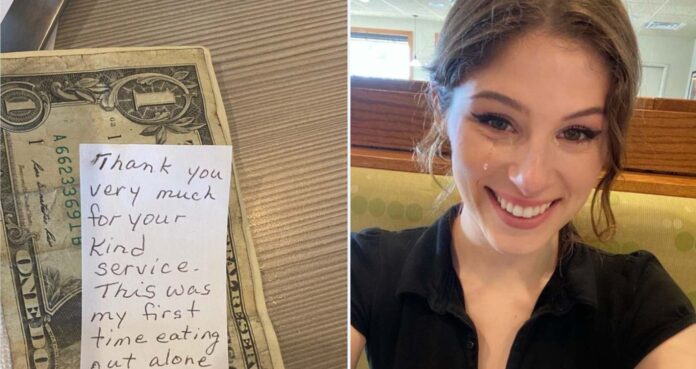
But the note the patron left behind with the $3 tip on her $11 check brought King to tears.
“Thank you very much for your kind service,” it read. “This was my first time eating out alone since my husband passed. I was hoping I could get through it.”
As she’d eaten her meal, King noticed the woman seemed quiet and contemplative. The waitress’s first instincts made her assume there might have been something wrong with the food, but in hindsight, King wishes she’d been a little more alert to her customer’s cues.
“I wish I would’ve taken her quiet as an invitation,” she told Newsweek. “I think that’s what she wanted, looking back… I guess she did, in a way. [She needed] an ear.”
King says she was so choked with emotion when she read the note, she had to take a moment to pull herself back together in the ladies’ room.
On Tuesday, captioned only with the words “in pain,” King posted a picture of the note and one of her tearful reaction to Twitter.
Some commenters noted that they thought the woman had given King short shrift on the tip—leaving only a dollar—which was not the case. King was quick to dispel the error and the stereotype that the elderly are bad tippers in general.
“A lot of our customers are older and living on fixed incomes, so they tip what they can,” King told Newsweek. “They are always welcome, no matter how much or little they tip.”
As a rule, tipping at the end of a meal is recognition for good service, but it’s all too easy to lose the importance of human interaction in the passing transaction. King, who has a special place in her heart for the restaurant’s older patrons, hasn’t lost sight of what matters.
The word “gratuity” comes from the Latin gratuitas meaning “gift” or gratus “pleasing, thankful”—and not surprisingly, it’s also the same root word from which we get a measure of “grace.”
Not money in the bank, perhaps, but priceless nonetheless.
Physicists have discovered a way to trap the world’s coldest plasma in a magnetic bottle, a technological achievement that could advance research into clean energy, space weather, and astrophysics.
“To understand how the solar wind interacts with the Earth, or to generate clean energy from nuclear fusion, one has to understand how plasma—a soup of electrons and ions—behaves in a magnetic field,” said Rice Dean of Natural Sciences Tom Killian.
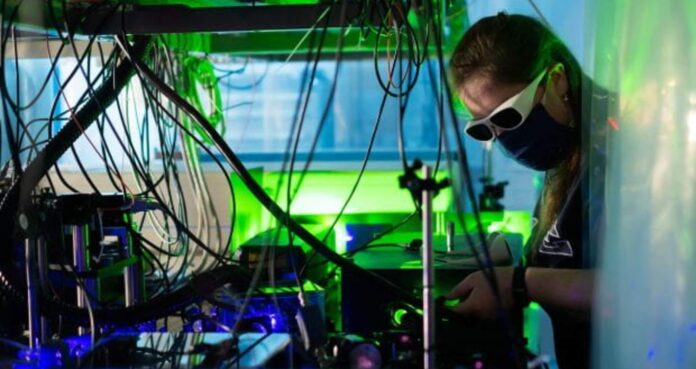
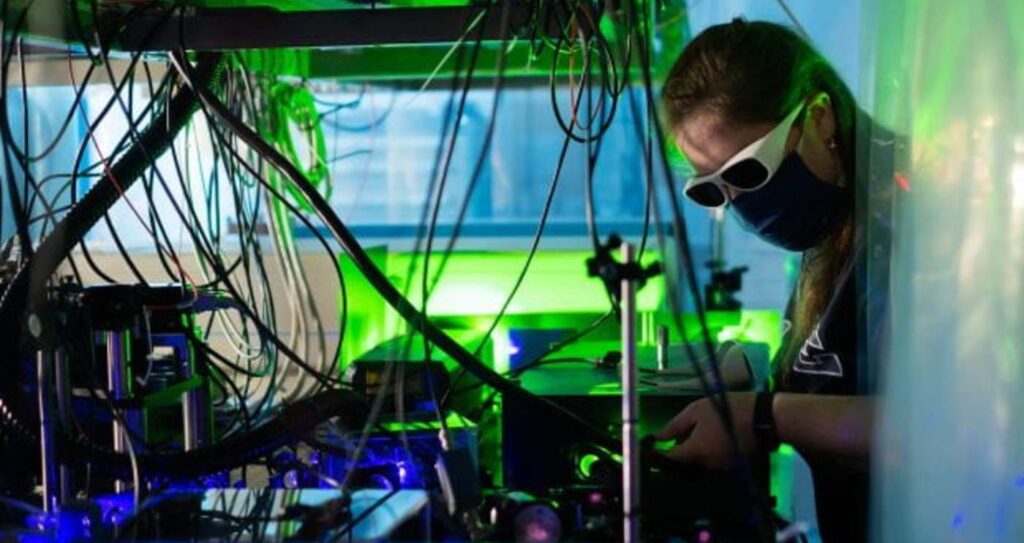
Using laser-cooled strontium, Killian and graduate students Grant Gorman and MacKenzie Warrens made a plasma about 1 degree above absolute zero, or approximately -272 degrees Celsius, and trapped it briefly with forces from surrounding magnets.
It is the first time an ultracold plasma has been magnetically confined, and Killian, who’s studied ultracold plasmas for more than two decades, said it opens the door for studying plasmas in many settings.
“This provides a clean and controllable testbed for studying neutral plasmas in far more complex locations, like the sun’s atmosphere or white dwarf stars,” said Killian, a professor of physics and astronomy.
“It’s really helpful to have the plasma so cold and to have these very clean laboratory systems. Starting off with a simple, small, well-controlled, well-understood system allows you to strip away some of the clutter and really isolate the phenomenon you want to see.”
That’s important for study co-author Stephen Bradshaw, a Rice astrophysicist who specializes in studying plasma phenomena on the sun.
“Throughout the sun’s atomosphere, the (strong) magnetic field has the effect of altering everything relative to what you would expect without a magnetic field, but in very subtle and complicated ways that can really trip you up if you don’t have a really good understanding of it,” said Bradshaw, an associate professor of physics and astronomy.
Solar physicists rarely get a clear observation of specific features in the sun’s atmosphere because part of the atmosphere lies between the camera and those features, and unrelated phenomena in the intervening atmosphere obscures what they’d like to observe.
“Unfortunately, because of this line-of-sight problem, observational measurements of plasma properties are associated with quite a lot of uncertainty,” Bradshaw said. “But as we improve our understanding of the phenomena, and crucially, use the laboratory results to test and calibrate our numerical models, then hopefully we can reduce the uncertainty in these measurements.”
Four states of matter
Jeff Fitlow/Rice University
Plasma is one of four fundamental states of matter, but unlike solids, liquids, and gases, plasmas aren’t generally part of everyday life because they tend to occur in very hot places like the sun, a lightning bolt, or candle flame.
Like those hot plasmas, Killian’s plasmas are soups of electrons and ions, but they’re made cold by laser-cooling, a technique developed a quarter century ago to trap and slow matter with light.
Killian said the quadrupole magnetic setup that was used to trap the plasma is a standard part of the ultracold setup that his lab and others use to make ultracold plasmas.
But finding out how to trap plasma with the magnets was a thorny problem because the magnetic field plays havoc with the optical system that physicists use to look at ultracold plasmas.
“Our diagnostic is laser-induced fluorescence, where we shine a laser beam onto the ions in our plasma, and if the frequency of the beam is just right, the ions will scatter photons very effectively,” he said.
“You can take a picture of them and see where the ions are, and you can even measure their velocity by looking at the Doppler shift, just like using a radar gun to see how fast a car is moving. But the magnetic fields actually shift around the resonant frequencies, and we have to disentangle the shifts in the spectrum that are coming from the magnetic field from the Doppler shifts we’re interested in observing.”
That complicates experiments significantly, and to make matters even more complicated, the magnetic fields change dramatically throughout the plasma.
“So we have to deal with not just a magnetic field, but a magnetic field that’s varying in space, in a reasonably complicated way, in order to understand the data and figure out what’s happening in the plasma,” Killian said. “We spent a year just trying to figure out what we were seeing once we got the data.”
The plasma behavior in the experiments is also made more complex by the magnetic field. Which is precisely why the trapping technique could be so useful.
“There is a lot of complexity as our plasma expands across these field lines and starts to feel the forces and get trapped,” Killian said. “This is a really common phenomenon, but it’s very complicated and something we really need to understand.”
One example from nature is the solar wind, streams of high-energy plasma from the sun that cause the aurora borealis, or northern lights. When plasma from the solar wind strikes Earth, it interacts with our planet’s magnetic field, and the details of those interactions are still unclear.
Another example is fusion energy research, where physicists and engineers hope to recreate the conditions inside the sun to create a vast supply of clean energy.
Killian said the quadrupole magnetic setup that he, Gorman, and Warrens used to bottle their ultracold plasmas is similar to designs that fusion energy researchers developed in the 1960s.
The plasma for fusion needs to be about 150 million degrees Celsius, and magnetically containing it is a challenge, Bradshaw said, in part because of unanswered questions about how the plasma and magnetic fields interact and influence one another.
“One of the major problems is keeping the magnetic field stable enough for long enough to actually contain the reaction,” Bradshaw, who is the corresponding author of a published study about the work in Physical Review Letters, said. “As soon as there’s a small sort of perturbation in the magnetic field, it grows and ‘pfft,’ the nuclear reaction is ruined.
“For it to work well, you have to keep things really, really stable,” he said. “And there again, looking at things in a really nice, pristine laboratory plasma could help us better understand how particles interact with the field.”
One innovative company perfectly embodies the ideals of consumers who deserve and are demanding the ‘right to repair’.
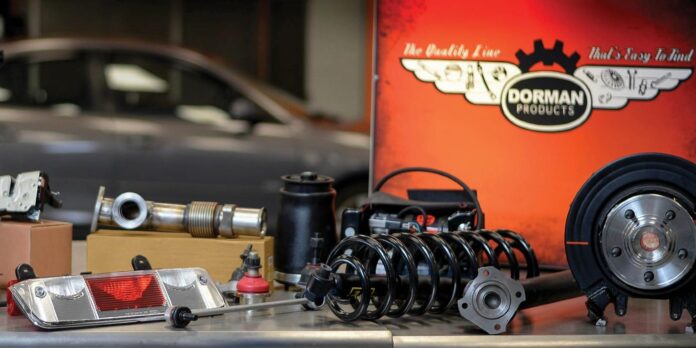
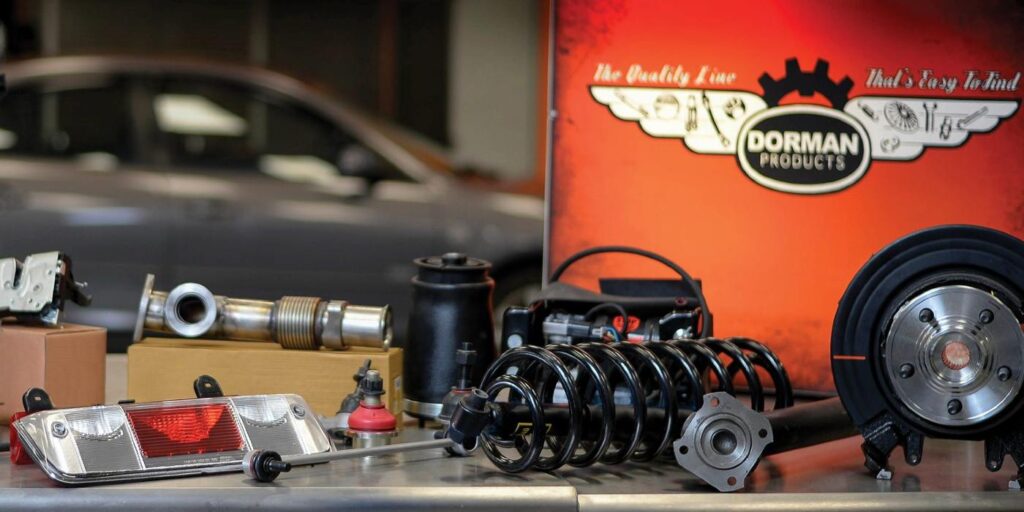
Dorman Products‘ constant detective work to see which automotive parts are failing in large numbers on which models has allowed them to grow into a big operation—where they know exactly which parts on your car are likely to break first, why, and how to make them better, giving consumers not only cheaper prices at the garage, but the freedom of DIY.
For those old enough to remember being able to open the hood of a car and see parts they could reach with their hands, they’ll know it’s much more difficult nowadays to make repairs on your own.
After-market auto parts is a $200+ billion a year sector, and while most manufacturers have to make millions of different parts and get bossed around by the original equipment manufacturer (OEM), Dorman stays nimble by choosing only the parts likely to break, and selling them at a third of the cost.
They’ve gotten so good at this that the parts departments at many dealers stock the Dorman parts instead of OEM parts.
The secret is constant market research. By repeatedly plumbing the depths of America’s auto-workforce to learn which parts are going wrong and why, they attain short-term near-monopoly positions in thousands of mini-markets—the brake dust shields for 00-14 GMC models’ wheels for example.
From tens of thousands of new product ideas, Dorman will choose several thousand that are in extreme niches and likely to be ignored by OEMs or big after-market producers. It then re-designs the part to fix any flaws, for instance adding a protective coating to a fast corroding part or changing the interface to make it easier to install.
In this way they not only please the customer, but their outsourced R&D department—the mechanics that submit ideas for new parts inform them of ones they are replacing frequently, and are perhaps more likely to look at the Dorman catalogue before ordering an OEM part.
They back up this innovative business model with a strong marketing presence of how-to guides, a big social media block, and newsletters to ensure they are sowing the seeds for future information/buying opportunities.
For example, they do a monthly parts review, explaining which after-market solutions they’ve perfected on original designs. In some cases, like master cylinder or lift-gate motor parts, Dorman explain the OEMs often require you to replace the whole assembly, rather than specific inferior components they’ve identified and improved. When you factor in labor, the cost savings are astronomical.
(WATCH the video about this story below…)
Fix Up Your Social Media Feed By Sharing The Good News With Your Friends…