











All News - Page 486 of 1724 - Good News Network
Home Blog Page 486

Endangered Trout May Soon Return to Los Angeles

Los Angeles District USACE, CC license

An ambitious restoration of the concrete drag strip that is the Los Angeles River could welcome back endangered southern California steelhead trout to one of the country’s biggest cities.

After dramatic flooding in the 1930s saw flood control measures turn a once-major migration route for the fish into a 49-mile paved waterway hemmed in with concrete walls, there was an immediate exodus of the entire riparian ecosystem, and the last trout to be caught in the river was back in 1948.

Los Angeles River at Griffith Park, around 1898–1910

Decades of criticism over the condition of the river has brought several state and federal agencies together to come up with a way to make the habitat wild once more.

These efforts have seen the creation of the LA River Fish Passage & Habitat Structures Program, which is focusing on improving the waterflow and quality of the Arroyo Seco, a tributary of the LA River that has a strong influence on the water current downstream where the concrete banks and bed of the river make the water speed too quickly for steelhead.

MORE: Pollution in the Mississippi River Has Plummeted Since The 1980s, New Study Says

The trout, like salmon, leave the sea and swim upstream to spawn in the small tributaries of the river, and the goal is for them to be able to return—bizarrely if one imagines the famous car chase sequences of Hollywood that have taken place there—up the concrete river.

The idea is to create a comprehensive passageway that would allow the trout to swim to their spawning grounds by removing obstacles, creating still side pools and other habitats, and deepening the central channel before lining it with natural materials like pebbles, sand, and riverine plants.

Los Angeles District USACE, CC license

RELATED: Nothing Restores a River or Local Economy Like Removing a Dam

Ideally, as new controls over the tributaries of the river are established that would allow control over the velocity of the water, trout that have become isolated in the mountains would return downstream to the sea, and those in the sea would return back up the river.

Steelhead trout/Oregon State University, CC license

It feels wild to think of trout runs happening in a concrete river running through a concrete jungle, but that’s what the planners are gunning for.

SWIM This Hopeful LA Story Over to Friends on Social Media…

This Guy Missed Traveling and Has Recreated Airplane Meals to Get Through Lockdown

The limitations on travel during the pandemic has given many cabin fever, ad one aviation enthusiast in Scotland is relieving his frustrations in some extra curious ways.

Pulling out an authentic airplane trolley, going back over Instagram airplane photos of past  trips, and rolling up his sleeves, Nik Sennhauser has been recreating his favorite airplane meals at home.

While most of us would never imagine being nostalgic for airplane food, as a boy growing up in a half-Thai, half-Austrian family, travel for him has always made him feel at home.

Now his air map is even more distributed, with his home in Scotland, his sisters in the U.S, and a brother in Spain. It all adds up to a lot of bonus miles, and has turned Sennhauser into a bit of an aviation nerd which saw him get a job in project and social media management that allowed him to travel every 3-4 weeks.

After a year of government-enforced lockdowns and travel restrictions, during which he realized that make-believing one was on an airplane was a common Instagram phenomenon, he started going back over his old photos on the weekends, picking out a meal he enjoyed, and attempting to cook it with authentic airline crockery purchased online.

“The amazing thing about it is that I’ve actually become a better cook, because I had to go and research the recipes,” he told CNN, adding that he’d never been much of a cook before

MORE: Top 20 Things We Want to Do on a Post-Covid Vacation – And Airline Change Fees Are Crucial

“The meals aren’t just for Instagram to look nice; they have to taste good, as well, because they’re actually our Sunday meals, and I have to feed my husband. So it needs to be edible.”

Beef Stroganoff, beef goulash, Thai curries, bread dumplings and smoked salmon, spätzle, wiener schnitzel, chocolate mousse, he’s done them all, taking cues from ANA, Austrian Airlines, Thai Airways, Swiss Airlines, and more.

RELATED: Stunning Aerial Video of Iceland’s Green Volcano Can Soothe Your Lockdown Stress

He notes he’s become particularly good at desserts, and that the breakfasts are mostly made from improvisation, but that the meals need generally 3-4 hours prep and cooking time even when making the measly-sized portions typical of the airlines.
“You have to take into account that you’re in a metal tube at 40,000 feet being catapulted through the air, and the flight attendant is heating up a meal in an oven—there’s only so much they can do,” he said, adding that he doesn’t believe people like having just two options.

CHECK OUT: JetBlue Going Carbon-Neutral in 2020 On All Domestic Flights —The First Major US Airline to Do So

Fortunately, as the UK’s vaccination drive steams onward, it won’t be too much longer until this galley chef can likely fly again, at least in the UK, and soon maybe elsewhere too.

Let’s take a look at some of Nik’s recent lockdown meals.

Will sir be having the Red Thai curry for dinner?

And the fritatta for breakfast?

Homemade corn muffins have become a lockdown favorite for Nik.

Schnitzel and Bavarian cream on original Lauda Air plates, yes please.

SHARE This Story With the Travelers in Your Life…

“Put happiness within reach. Happiness, like everything else is a compromise—and compromises can be highly successful if done properly.” – Peter Ustinov (born 100 years ago)

Quote of the Day: “Put happiness within reach. Happiness, like everything else is a compromise—and compromises can be highly successful if done properly.” – Peter Ustinov (born 100 years ago today)

Photo by: DocuSign

With a new inspirational quote every day, atop the perfect photo—collected and archived on our Quote of the Day page—why not bookmark GNN.org for a daily uplift?


Returning the Love, Frat Brothers Pay Off Mortgage For Their House Cook 30 Years Later

The Advocate/YouTube

A house is where people live but a home is where people are loved. Sometimes, the bonds of family have no relation to biology. That’s why when a group of fraternity brothers learned their “second mom” needed help to retire, she didn’t even need to ask.

Jessie Hamilton worked as a cook at the Phi Gamma Delta fraternity house (affectionately known as Fiji) on the campus of Louisiana State University from 1982 to 1996. Though the single mom had three kids of her own, she treated the young men in her care like surrogate sons—listening to their worries, offering counsel, and even driving them to doctor’s appointments or ferrying them to the grocery store on occasion.

“I enjoyed doing it. They loved my cooking,” Hamilton told The Washington Post. “I was always there to talk things through with them. They’d come in the kitchen and sit on top of the counter and tell me their problems.”

Andrew Fusaiotti, who’s now 52 years old, was a Fiji brother in the late 1980s. “She was truly like a mother to us,” he told the Post. “She treated us like we were her own kids. She was always looking out for us.”

MORE: Grad Student Defends Her Dissertation in a Skirt Made From Rejection Letters To Help ‘Normalize Failure’

After leaving LSU, Hamilton found herself juggling several jobs to keep afloat financially. It was nothing new. She’d been caught in that cycle since the age of 14.

But yearning for a home of her own, in 2006 at age 60, Hamilton took out a 30-year mortgage for the house she hoped to someday retire in.

Over the years, Hamilton stayed in touch with several of the fraternity brothers, among them Fusaiotti, who now owns a car dealership in Mobile, Alabama.

At the onset of the pandemic, Fusaiotti gave Hamilton a check-in call to see how she was faring. During the conversation, he was dismayed to learn she was still working multiple jobs and that retirement wasn’t an option in her foreseeable future.

Not doing something to rectify the situation wasn’t an option for him.

Fusaiotti reached out to Hamilton’s family to find out how high he’d have to set a monetary goal, then started tag-teaming his frat brothers for financial donations to pay off her mortgage and give her a nice little cushion as well. With contributions averaging between $600 to $1,000 from about 91 alumnae, all told, Fusaiotti’s drive raised $51,765.

CHECK OUT: After Years of Waking at 4am to Haul Trash, Student is Accepted into Harvard—And His Reaction is Pure Joy

Just a few days prior to her 74th birthday, the boys of Fiji officially declared April 3 “Jessie Hamilton Day”, celebrating the event with a catered party that included the presentation of two giant checks, one for $45,000 to pay off the mortgage and another $6,675 check just for Hamilton, topped off with commemorative T-shirts and koozies—plus a whole lot of love and warm memories.

Now Hamilton is finally able to hand in her notice(s) once and for all.

READ: Students ‘Overwhelmed’ After Landlord Gives Them ‘Good Tenant Bonuses’ On Top of Returning Security Deposits

As Fusaiotti and the other young men whose lives Hamilton touched can tell you, sometimes guardian angels turn up in unlikely places—including the fraternity kitchen—where you’ll find them doling out generous helpings of fried chicken, red beans, and comfort that goes way beyond comfort food.

“She is the type of person that inspires me, people that don’t have a lot but give a lot,” Fusaiotti told The Advocate. “She’s the most giving person you’ve ever met.”

(WATCH ‘Jessie Hamilton Day’ in The Advocate video below.)

BE GENEROUS With the Good News—Share This Story…

North Carolina-based writer Judy Cole has a new rom-com murder mystery debuting at Amazon: And Jilly Came Tumbling After (from Red Sky Presents).

Drop Off Your Old Socks and This Company Will Recycle Them Into Cozy Dog Beds

Smartwool
Smartwool

Smartwool designs base layers, baseball caps, leggings—basically every apparel item you could want for an active day out in nature. But what the Colorado brand is really known for is its socks. Super cozy, super quality, Merino wool socks.

As of Earth Day on April 22, Smartwool will be recycling your old socks—no matter what the brand.

Socks are the most thrown-away clothing items there is. After all, who would want them? To help close the recycling gap and provide a home for those past-their-best socks, Smartwool has come up with a plan.

Until May 2, just look for the collection bins at these retailers in 42 states to drop your socks into. If you want to mail them to the company, you’ll need buy something from the website first. Then you can opt for a free mailer bag at check-out.

MORE: Mountains of Garbage in Russia are Being Turned into Fashionable Accessories

What will happen to all those socks that have been saved from landfills? They’ll go into filling dog beds—that will be available for sale around Christmas time—of course.

Why socks?

A recent Smartwool survey found that while over 80% of respondents recycle their used clothing, 91% of respondents are throwing away more than 1 pair of socks per year—contributing to about 11.3 tons of textile waste to landfills annually.

Alicia Chin, senior manager sustainability and social impact at Smartwool said in a statement: “There is obviously an urgent need for a recycling solution in the sock category, which is where we’re focusing our initial efforts.”

Smartwool’s ultimate plan? To begin building systems and experiments that lead the company toward a goal of 100% circularity by 2030.

RELATED: Futuristic ‘Green’ Fabric That Works Like a Smartphone Unveiled by Scientists

“Circularity. What an idea,” says the brand. “To make a product and also build a system to keep it out of the landfill after its first use is no small feat. But it’s the right thing to do.”

(WATCH the video about this initiative below.)

CIRCLE the Good News Round to Others—Share This Story…

Movement Video Game Increased Cognitive Skills in 80-Year-olds With Severe Dementia

Training with Dividat Senso/Dividar

Cognitive motor training helps in the fight against Alzheimer’s and dementia, as demonstrated for the first time in a study by an international team of researchers.

A dementia diagnosis turns the world upside down, not only for the person affected but also for their relatives, as brain function gradually declines. Those affected lose their ability to plan, remember things or behave appropriately.

At the same time, their motor skills also deteriorate. Ultimately, dementia patients are no longer able to handle daily life alone and need comprehensive care. In Switzerland alone, more than 150,000 people share this fate, and each year a further 30,000 new cases are diagnosed.

To date, all attempts to find a drug to cure this disease have failed. Dementia, including Alzheimer’s—the most common of several forms of dementia—remains incurable. However, a clinical study carried out in Belgium has now shown for the first time that cognitive motor training improves both the cognitive and physical skills of significantly impaired dementia patients. A fitness game, known as “Exergame,” developed by the ETH Zurich spin-​off Dividat was used in the study.

Better cognitive ability thanks to training

In 2015, a team of scientists led by ETH Zurich researcher Patrick Eggenberger showed that older people who train both body and mind simultaneously demonstrate better cognitive performance and can thereby also prevent cognitive impairment. However, this study was carried out on healthy subjects only.

“It has been suspected for some time that physical and cognitive training also have a positive effect on dementia,” explains de Bruin, who worked with Eggenberger at the Institute of Human Movement Sciences and Sport at ETH Zurich. “However, in the past it has been difficult to motivate dementia patients to undertake physical activity over extended periods.”

ETH spin-​off combines exercise and fun

With a view to changing this, Eva van het Reve, a former ETH Zurich doctoral student, founded the spin-​off Dividat in 2013 together with her PhD supervisor Eling de Bruin and another doctoral student. “We wanted to devise a customized training programme that would improve the lives of older people,” says van het Reve. Fun exercises were developed in order to encourage people who were already experiencing physical and cognitive impairments to participate in training, and the Senso training platform was born.

RELATED: Nigerian-Irish Teens Develop a Dementia App for Sufferers Coping With Lockdown–and It’s Won Awards

The platform consists of a screen with the game software and a floor panel with four fields that measure steps, weight displacement and balance. The users attempt to complete a sequence of movements with their feet as indicated on the screen, enabling them to train both physical movement and cognitive function simultaneously. The fact that the fitness game is also fun makes it easier to motivate the subjects to practice regularly.

Training with Dividat Senso/Dividar

Eight weeks’ training for dementia patients

An international team recruited 45 subjects for the study. The subjects were residents of two Belgian care homes, aged 85 years on average at the time of the study and all with severe dementia symptoms.

MORE: Even Moderate Socializing With Friends Could Ward Off Dementia in Older People, Study Finds

“The participants were divided into two groups on a random basis,” explains de Bruin. “The first group trained for 15 minutes with the Dividat Senso three times a week for eight weeks, while the second group listened to and watched music videos of their choice.”

Following the eight-​week training programme, the physical, cognitive, and mental capacity of all subjects was measured in comparison with the start of the study.

Regular play has an effect

The results offer hope to dementia patients and their relatives: training with this machine indeed enhanced cognitive skills, such as attention, concentration, memory, and orientation. “For the first time, there’s hope that through targeted play we will be able not only to delay but also weaken the symptoms of dementia,” emphasizes de Bruin.

CHECK OUT: Breakthrough For Spinal Cord Injuries and Dementia as Protein Builds ‘Striking’ Repairs

It is particularly striking that the control group deteriorated further over the eight-​week period, while significant improvements were recorded in the training group. “These highly encouraging results are in line with the expectation that dementia patients are more likely to deteriorate without training,” adds de Bruin.

But playful training not only has a positive impact on cognitive ability. Researchers were also able to measure positive effects on physical capability, such as reaction time. After just eight weeks, the subjects in the training group reacted significantly more quickly, while the control group deteriorated. This is encouraging in that the speed with which older people respond to impulses is critical in determining whether they can to avoid a fall.

A better understanding of brain processes

The research group led by de Bruin is currently working on replicating the results of this pilot study with people with mild cognitive impairment—a precursor of dementia. The aim is to use MRI scans to investigate more closely the neural processes in the brain responsible for the cognitive and physical improvement.

(WATCH the YouTube video about the research below.)

Source: ETH Zurich

SHARE the Hopeful News of This Research With Friends…

Woman Collecting Shellfish Discovers Dinosaur Footprint of ‘Jurassic Giant’

SWNS

A woman collecting shellfish was astonished to discover the largest dinosaur footprint ever found on the Yorkshire coast—likely belonging to a ‘Jurassic giant’ megalosaurus.

29-year-old Marie Woods was foraging for her dinner on Saturday when she stumbled upon an enormous footprint, believed to be around 165 million years old.

SWNS

Experts have now documented the find, and say it’s the most significant discovery in the area since 2006.

Marie, who’s an archaeologist, said: “All I wanted to do was grab some shellfish for my dinner and I ended up stumbling across this. I showed some palaeontologist friends what I had found and none of them had seen it. It’s really exciting.”

MORE: 4-Year-old Girl Finds Dinosaur Footprint on a Beach From 215 Million Years Ago

University of Manchester palaeontologist Dr Dean Lomax believes the print was probably left by a ‘megalosaurus’. Such an animal would have had hips over two meters high and a body length of up to nine meters. “In short,” he said, “This is the largest theropod footprint ever found in Yorkshire, made by a large meat-eating dinosaur.”

SWNS

“We know this because the shape and three-toed track, along with the impression of the claws, are absolutely spot-on for having been made by a large theropod… a real Jurassic giant.”

After Marie contacted local experts, it was found that the fossil had actually been photographed by local Rob Taylor last year. The image had even been posted to Facebook. However, its significance was not recognized until now.

Marie and Rob both have finders’ rights to the footprint, and it’s hoped it will now go on public display at the Rotunda Museum in Scarborough.

RELATED: 2nd Grader Wins $30,000 Scholarship for Her Dinosaur Doodle Inspired by Dreams of Paleontology

It will no doubt make for a wonderful study, and be an amazing sight for the public to enjoy.

ROAR the Exciting Find For All to Hear—Share This Story With Friends…

New York City Begins Electrifying Its Garbage Truck Fleet

Kevin.B, CC license

Operating at the fuel-guzzling range of 0-35 miles per hour, making continuous stops, and weighing many tons, diesel garbage trucks are prime candidates for an electrified makeover.

New York City Department of Sanitation have retrofitted 12 of their garbage trucks with hybrid-electric motors and batteries from a Canadian company called Effenco, whose technology can also be found in the cities of Paris and Los Angeles, in  vehicles such as dumper trucks, port terminal tractors, and more.

Instead of lithium-ion batteries like those found in most EVs and hybrids, Effenco uses ultracapacitors. These propulsion systems operate not only the engines but the onboard equipment such as the garbage compressor.

Their immense electrical delivery reduces their capacity to store energy, meaning the trucks will have shorter range, but ultracapacitors have much longer lifespans than lithium-ion batteries and can discharge millions of times without wearing down.

The hybrid-electric technology actually shows reduced energy consumption by 30% compared to if the vehicles were fully electric and had to sit on the mains all night.

MORE: New Electric Car Batteries Can Fully-Charge in 5 Minutes, Like Filling Your Car With Gas, If Better Chargers Are in Place

Mayor Bill de Blasio signed an executive order that mandated the creation of a fully electric municipal fleet by 2040, and deputy commissioner of the sanitation department, Rocco DiRicco, has already ordered 14 brand-new trucks outfitted with Effenco’s ultracapacitors to join the 12 already retrofitted ones.

There are over 2,000 general collection trucks in the sanitation fleet, and Arsenault feels his technology can help with another few problems the department has.

The noise of the diesel engine makes trucks dangerous creatures to passing motorists, as the driver can’t hear if a car is approaching from behind. Furthermore, the constant stops and starts inherent in the job means that the truck is constantly belching out noxious fumes which are hazardous to pedestrians and to the workers themselves.

RELATED: With EV Battery Prices Dropping 87% in a Decade, Tesla is Now Making a Car That Will Cost $25,000

The company recently raised $10 million CAD in financing for expansion of operations across Europe and North America, which follows on an exceptional fiscal year that saw sales soar in four different countries as more and more governments work towards making their targets for emissions reductions.

Source: Kevin.B, CC license

DRIVE This Positive Friend Over to Your Friends…

“My interest is in the future because I am going to spend the rest of life there.” – Charles F. Kettering

Credit: Luke Porter

Quote of the Day: “My interest is in the future because I am going to spend the rest of life there.” – Charles F. Kettering

Photo by: Luke Porter

With a new inspirational quote every day, atop the perfect photo—collected and archived on our Quote of the Day page—why not bookmark GNN.org for a daily uplift?


Deaf Sheepdog Returns to Herding Her Flock After Learning ‘Sign Language’

RSPCA
RSPCA

Whoever said, “You can’t teach an old dog new tricks” has obviously never met a 10-year-old Norfolk collie named Peggy.

A working dog, Peggy was unable to continue the job she excelled at—herding sheep—when at age 8 she lost her hearing.

No longer able to communicate with her, Peggy’s owner subsequently relinquished her to the care of a local RSPCA animal shelter.

But as it was near Christmas, the shelter was at capacity. That’s when animal welfare manager Chloe Shorten stepped in. Shorten and her husband, Jason, who had two other working sheepdogs, decided to take Peggy home.

While Peggy had lost her hearing, it was obvious her enthusiasm for sheepherding hadn’t waned.

The Shortens could see Peggy wasn’t happy woolgathering, so they came up with another solution for her.

“We knew Peggy wanted to be working, so we started the long process of teaching her how to herd and work with a shepherd without relying on voice commands,” Chloe Shorten told the BBC. “We started by teaching her to look at us for hand signals.”

RSPCA

Using repetition and “positive reinforcement,” with the help of a sheepdog trainer, Peggy eventually learned to respond to hand signals and body language rather than traditional verbal commands.

MORE: Six Puppies Are All Determined to Fit Into One Small Bucket – And They Succeed (WATCH)

But Chloe says the most important lesson Peggy learned had nothing to do with sheep. It had to do with trust: “[It took time to] learn that we love her, and understand our praise.”

These days, while Peggy is semi-retired, with her GPS tracker in place, she still heads out with the flock from time to time, happy in the knowledge that a “thumbs up” means she’s a good girl.

RSPCA

Suffice to say, the Shortens couldn’t be more pleased with Peggy’s new leash… er, lease on life.

RELATED: This Teen Makes Tiny Bow Ties for Shelter Dogs to Help Them Look Spiffy and Get Adopted

We think it’s pretty “pawsome” ourselves.

PUT Your Paws Up For the Good News—Share This Story…

North Carolina-based writer Judy Cole has a new rom-com murder mystery debuting at Amazon: And Jilly Came Tumbling After (from Red Sky Presents).

Colorado Proposes Giving Free Therapy to Young People Struggling in Pandemic

Colorado is working hard to ensure mental health support is there for young people struggling in the pandemic.

Bill 21-1258 was introduced to the House last week—and would provide people under 19 with free therapy sessions if needed.

With kids facing increased isolation and instability because of COVID-19, a program to help youth get through this difficult time is necessary—says the bipartisan bill, noting that the Colorado crisis service hotline has experienced a 30% increase in calls and texts since last spring.

According to The Colorado Sun, the bill “represents one of the most aggressive behavioral health initiatives in Colorado history” and is on a “fast-track to passage.”

MORE: Yale is Offering Its Popular Happiness Course to Some High School Students for Free — Including College Credit

This matters. Before the pandemic, Colorado ranked in the bottom 10 half of states for prevalence of mental illness and access to care.

“If we can get that [mental health support] to every kid in Colorado?” state Rep. Dafna Michaelson Jenet told The Colorado Sun, it will be a “game-changer.” Of that we have no doubt.

SHARE This Hopeful Bill From Colorado With Friends…

Japanese Doctors Perform World’s First Living Donor Lung Transplant on COVID-19 Patient

Kyoto University Hospital

A COVID-19 patient in Japan has received the world’s first lung transplant from living donors.

Receiving transplant lung tissue from her son and husband, the patient underwent an 11-hour operation at Kyoto University Hospital to receive her transplant last Wednesday.

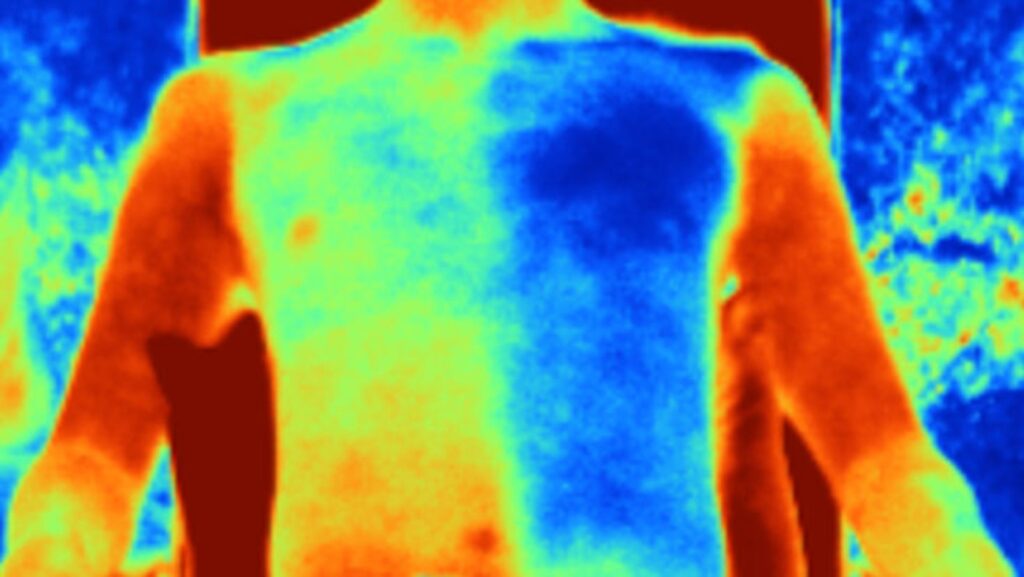
Before (L) and after (R) the operation. The dark areas show where lung tissue has been transplanted. Kyoto University Hospital

The woman who underwent the operation contracted COVID-19 late last year. According to Kyoto University Hospital, she spent months on a life support machine acting as an artificial lung, because hers had become no longer functional. It’s expected that she’ll recover from last week’s operation within months.

As is the case around the world, waiting lists for lung transplants from organ donors who have passed away are very long in Japan.

MORE: People Are Optimistic the End of the Pandemic is Near—And They’ve Laid the Groundwork For a Better Future

Dr. Hiroshi Date—who led the operation—said in a statement that the success of this transplant from living donors can provide optimism among others suffering severe lung damage caused by the virus. “I think there is a lot of hope for this treatment in the sense that it creates a new option,” the thoracic surgeon said to Kyodo News.

(WATCH the Nippon TV News 24 Japan story about the operation below.)

Featured image: Kyoto University Hospital

SHARE This Positive Story With Others on Social Media…

Falconry Saves Man from Life of Crime, Now he Helps Birds and At-Risk Youth Take flight

Rodney Stotts and G.I.V.E/Facebook

In spending his twenties dealing drugs in southeast Washington D.C. during the crack epidemic, Rodney Stotts would be the last person one would imagine as being interested in falconry.

The ancient sport of capturing juvenile raptors and helping them survive to adulthood when they can take care of themselves, falconry mirrors his own experiences on the street, and it informs Stotts’ mission to help at-risk youth in low economic areas avoid the kind of life that nearly ruined his own.

His non-profit, Rodney’s Raptors, helps kids in various institutions, schools, and who take Rodney’s own falconry program, to open their minds to the possibilities of what life can offer.

As holder of a master falconry license, Rodney is permitted to capture juvenile birds of prey, including falcons, hawks, eagles, ospreys, and owls, and raise them in captivity, as well as to rehabilitate avians that get injured by collisions with power lines, buildings, and other modern obstacles, and birds that fall from their nests as fledglings.

Part of this is because being a bird of prey is dangerous, and juveniles often die before they reach maturity.

MORE: Nonprofit Flips Abandoned Prison into Sustainable Farm With the Help of At-Risk Youth and Jobless Veterans

Perhaps the power of seeing a hawk or falcon come at a whistle and land on Stotts’ glove affects the kids in his program only as much as seeing that it’s Stotts holding the glove in the first place, who told WUSA9 that he is one of only 30 Black falconers in the whole of the United States’ 320 million-strong population.

A different path

Rodney Stotts/Facebook

After landing in jail for 5 months during his drug-dealing years, Stotts knew that a person can only be described by his mistakes if he keeps on making them, and therefore he had to change.

In need of a pay stub to seal the deal on an apartment rental, Stotts took a job at the Earth Conservation Corps (ECC) which at the time was working to clean up the Anacostia River. It was through the ECC that Stotts first fell in love with animals, including raptors, since the group’s founder was a falconer himself.

“The first time I held a bird, period, it took me somewhere else,” Stotts, who was the subject of a documentary called The Falconer, told Christian Science Monitor. “As I was changing from working with the birds and everything and seeing myself change, I couldn’t go back to doing anything else.”

CHECK OUT: Prisoners Are Finding Purpose–and Rehabilitation–By Caring for Lambs for Drought-Stricken Farmers

Now he is the caretaker of four Harris’ hawks and one red-tailed hawk on a seven-acre farmhouse in Charlotte Court House, Virginia, where each bird lives in its own 512-cubic feet aviary, and where he also keeps horses. The location is accessible for schools making trips and two separate nearby institutions: the New Beginnings Youth Development Center, a youth rehabilitation facility, and Capital Guardian Youth Challenge Academy, a military school for at-risk students in Washington high schools.

Rodney Stotts and G.I.V.E/Facebook

“The raptors we have are all non-releasable birds, meaning they can never hunt, so if you look at a young person who’s locked up and [whose] basically future is determined because of a few mistakes that they made early on, you start looking at it like a bird,” Stotts said to WUSA9. “They’re injured for life, just like the youth.”

RELATED: Being Around Birds Makes Us Much Happier Says New Science

His own falconry program teaches kids how to work and care for the birds, and upon its completion they receive a certificate of qualification for entry-level vet skills, a potentially powerful motivator, and one which may help set them on the path towards a career in nature.

The world needs people like Rodney Stotts, who break molds, boundaries, and show people that there’s no predetermined path for anyone.

(WATCH the video about Rodney below.)

FLY This Story of Positivity Over to Your Pals on Social Media…

Art Historians Discover Place Where Van Gogh Painted His Last Masterpiece

Postcard Rue Daubigny, Auvers-sur-Oise overlaid with the painting Tree Roots (1890) by Vincent van Gogh. ©arthénon.

A group of art historians has discovered the exact location where Vincent van Gogh painted his final masterpiece before his death in 1890.

When Wouter van der Veen, scientific director of the Institut van Gogh, found an early 20th-century postcard featuring a scene including tree trunks and roots growing on a hillside, he immediately sent it to a pair of senior researchers at the Van Gogh Museum.

Based on Van Gogh’s working habits and the comparative study of the famous Tree Roots painting beside the postcard, the experts concluded it’s ‘highly plausible’ that the correct location had been identified.

Diagram showing Vincent van Gogh’s possible position while painting Tree Roots (1890), as compared to the postcard Rue Daubigny, Auvers-sur-Oise. ©arthénon.

Wouter van der Veen said in a statement: “The sunlight painted by Van Gogh indicates that the last brush strokes were painted towards the end of the afternoon, which provides more information about the course of this dramatic day ending in his suicide.”

Teio Meedendorp from the Van Gogh Museum explained: “That this is his last artwork renders [the discovery] all the more exceptional, and even dramatic.

“He must often have passed by the location when going to the fields stretching out behind the castle of Auvers, where he painted several times during the last week of his life and where he would take his own life.”

Vincent van Gogh, Tree Roots (1890). Courtesy of the Van Gogh Museum, Amsterdam, and the Vincent Van Gogh Foundation.

Last spring, Van der Veen was actually able to travel to the site to verify his theory. The site is 150 meters from the Auberge Ravoux, the inn in Auvers-sur-Oise where Van Gogh stayed the last 70 days of his life.

MORE: Tourist Photo of Cloudy Belgian Sky Holds Stunning Similarity to Van Gogh’s ‘Starry Night’

Spectacularly, the biggest tree trunk from the painter’s last motif is still present and recognizable.

The trees today on the Rue Daubigny, Auvers-sur-Oise where Vincent van Gogh likely painted his last canvas. ©arthénon.

The Institut van Gogh, in co-operation with the local authorities, has erected a protective wooden structure to safeguard the site and allow for visits by the public.

Those who visit the peaceful town to follow in the footsteps of Van Gogh can now add another moving experience to their journey: Standing at the exact place where Van Gogh’s paintbrush last touched the canvas.

SHARE This Amazing Discovery With Friends…

“There are no limits to what you can accomplish, except the limits you place on your own thinking.” – Brian Tracy

Quote of the Day: “There are no limits to what you can accomplish, except the limits you place on your own thinking.” – Brian Tracy

Photo by: Harry Shelton

With a new inspirational quote every day, atop the perfect photo—collected and archived on our Quote of the Day page—why not bookmark GNN.org for a daily uplift?


They Found A Baby on the Subway—Now He’s Their Adopted Son

Peter Mercurio

When it comes to “where babies come from” some tales of impending parenthood can be pretty farfetched: babies delivered via stork, tots turning up under cabbage leaves, infants arriving on the subway.

But as hard as it might be to believe, that last one’s true—at least in part.

In August of 2000, Danny Stewart was rushing to make dinner date with his partner, Pete Mercurio, and was running late when he spied a suspicious bundle on a New York City subway platform. Thinking at first that it was just a doll, Stewart hurried on—until something caught his eye.

The doll wasn’t a doll at all. It was a baby boy—a newborn, with the remnants of an umbilical cord still attached.

While cell phone technology wasn’t new a couple of decades ago, it still wasn’t ubiquitous back then. So Stewart was forced to seek out a payphone on the street to alert the police of his find.

After going back to check on the baby, he made a second trip to the phone to alert his partner. Mercurio was out the door in a flash, arriving just moments after the cops had taken the baby into their custody.

“I remember turning to Danny and saying to him on the sidewalk as the police car was driving away, ‘You know, you’re going to be connected to that baby in some way for the rest of your life,’” Mercurio recalled to the BBC.

Peter Mercurio

“Danny was like, ‘What do you mean?’ I said, ‘Well, eventually, this child is going to learn of the night he was found and he may want to find the person who discovered him. Maybe there’s a way that we can find out where he ends up and send a birthday gift every year on this date?’”

READ: Mom, It’s Me!’ Woman Meets Son She Placed For Adoption 45 Years Ago And Confirms She Made Right Decision

Stewart and Mercurio were both in their early thirties, and neither had any plans to start a family at that point, but fate had other ideas. While they didn’t know it yet, the abandoned baby was soon to become a permanent fixture in their lives.

In December, Danny was asked to attend a hearing in family court to offer testimony on how he’d first found the infant. At the end of the procedure, the judge shocked him by asking if he’d be interested in adopting the little boy.

He shocked himself—and Mercurio—by saying yes.

It was a decision that initially caused major dissension in their relationship. The couple admits the situation almost broke them up, but eventually, Mercurio found himself committed to bringing home the baby as well.

CHECK OUT: Peter and Newly Adopted Son Have Just Taken in A Foster Teen And Now They’re Sharing Affirmations For All Races

In addition to having the authority to speed up the adoption process, Mercurio believes the judge also showed keen insight that day.

Peter Mercurio

“[She] said that all babies needed a connection to somebody. And so when Danny was testifying in the courtroom about finding the baby, in her mind his most serious connection in the world was to Danny, so why not just ask him?” Mercurio told the BBC. “It was almost as simple as that. She saw a connection that was already made, and had a hunch that it would be the right connection.”

The baby boy, whom the couple named Kevin—in honor of a stillborn sibling Mercurio’s parents lost when he was a child—was given into their care just prior to the Christmas holidays. Now 20, he’s been with them ever since.

Peter Mercurio

In 2011, when gay marriage became legal in New York, it was Kevin who asked if the judge responsible for his adoption might be willing to perform his parents’ wedding ceremony. She was only too happy to officiate.

MORE: Co-Workers Become BFFs, Then Discover They’re Actually Biological Sisters

While traditionally the vows come before a baby, even when a baby comes before the vows—and was found on a New York City subway platform to boot—as Kevin and his two dads can tell you, the true meaning of family isn’t bound by convention, it’s defined by love.

SHARE This Sweet Story With Your Pals Who’d Love Some Good News…

North Carolina-based writer Judy Cole has a new rom-com murder mystery debuting at Amazon: And Jilly Came Tumbling After (from Red Sky Presents).

Sustainable Seagrass High in Omega-6 and Protein is Better Than Rice For This Master Chef

Aponiente

A three-Michelin-star chef in Spain has discovered that sea grass, a diminutive and little-loved marine plant, produces what is in effect, rice.

Aponiente/Álvaro Fernández

His adoption of this grain into cooking techniques is now simply one part of his mission to repair sea grass ecosystems around the world—which he says could serve to not only stop the warming of the planet, but feed it as well.

Ángel León is famous for his innovative seafood, and combining his love of the sea with his knowledge of its often unlooked-for bounty recently secured a third Michelin star for his restaurant Aponiente, and propelled him to gastronomic stardom in his country of Spain.

While the Bay of Cádiz where he lives always had waving green arms of sea grass (eelgrass to be specific) lining its shore, his rise to culinary greatness has counter-tracked a gradual decline in sea grass coverage, going along with a global decline in sea grass habitat that struggles to survive human activity and warming seas.

With his discovery, noted by the Guardian as only the second documented case of eating sea grass grains, León hopes it will lead to a complete revolution in how we look at our shorelines—that they might become “marine gardens.”

A superfood and superhero

Aponiente/Álvaro Fernández

GNN has reported on the amazing nature of sea grass both as an absorbent of carbon and a habitat maker, specifically that it can capture carbon 32x faster than a rainforest. The potential of adding a superfood grain to its portfolio screams out for restoration of sea grass meadows around the world.

MORE: You Can Now ‘Reforest the Oceans’ One Online Search at a Time Thanks to This New Search Engine

And it is truly a superfood. Beginning in 2017, León started conducting tests on the small green grains of “sea rice” with the University of Cádiz—which he noticed emerging from the plant one day. They found it to be gluten-free and containing 50% more protein than normal rice, as well as containing rich amounts of omega-6 and omega-9 fatty acids.

Their research led to a pilot study on the cultivation of eelgrass as a crop, through three separate plots totaling a little less than an acre of salt marsh.

It wasn’t until the plants bore their grains, 18 months later, that León realized he had not even tried them. Perhaps they would have a foul taste, he wondered nervously, according to the Guardian.

Nevertheless, like many unwanted parts of the sea and its creatures which León has successfully integrated into his cuisine, he subjected the green-yellow rice grains to a battery of different preparations.

“It’s interesting. When you eat it with the husk, similar to brown rice, it has a hint of the sea at the end,” said León. “But without the husk, you don’t taste the sea.”’

CHECK OUT: Whales Feces Represent One of the Greatest Allies Against Climate Change—Even More Than Trees

León hopes that the success of the rice as a potential foodstuff, the lack of pesticides and fertilizer used during its growth, as well as the fact that its nutritional quality makes up for a yield smaller than its terrestrial counterpart, will drive countries and organizations forward to cultivating it on a massive scale—regenerating ocean ecosystems, capturing humanity’s carbon, and filling our bellies.

Aponiente

“We have challenged ourselves to create the world’s first and only specialized R&D center for the cultivation of marine vegetation,” reads Aponiente’s presentation on their website.

“The goal is to continue researching this marine grain, as it may hold the key to mitigating the effects of climate change. We also aim to restore aquatic ecosystems, develop future marine crops that until now have been cultivated only on land, and work toward making the ‘ocean garden’ a reality.”

SHARE The Good Seagrass News With Friends on Social Media…

Girl Surprised With Pet Dragon After Surviving Cancer and Making-a-Wish – ‘It’s a Marvel of Engineering’

Make-A-Wish Foundation

An out-of-the-ordinary request made to the Make-a-Wish Foundation saw a teenage cancer survivor get a trip to a medieval castle to train a dragon.

Belle Cress was even able to take the dragon home with her, since it was built and designed specifically to respond to her touch, face, and voice.

Make-A-Wish Foundation

Make-a-Wish Denver teamed up with Arrow Electronics to create the robotic dragon, which Belle named “Dusk,” after the 14-year-old battled back from a rare form of bone cancer called osteosarcoma, for which she required several surgeries and 10 months of intensive chemotherapy.

“Excited … like a feeling that I can’t really explain in my chest … sort of nervous.. excited,” Belle said to CBS, recounting the magic meeting. “I’ve loved dragons ever since I can remember,” she said.

The initial meeting took place in virtual reality courtesy of a video created by emergeStudios, which transported Belle to a fantastical place far, far away from where she first laid eyes on her dragon. After removing the VR headset, Dusk was there by her side in the Cherokee Ranch castle in Colorado—a modern construction of 15th-century castle building techniques.

MORE: This Cancer Surviving Girl Scout Broke the Record, Selling 32K Boxes of Cookies – With Proceeds Going to Sick Kids

Consisting of individually printed 3D scales, 26 motors, and several computer boards, it’s a marvel of engineering and robotics. Dusk has the ability to see and recognize Belle’s face, respond in different ways to touch, and freely express itself with dragon-like movements such as stretching its marvelous wings.

Make-A-Wish Foundation

“Why we’re building a robotic dragon for just one kid, is because it’s for just one kid,” says Victoria Pea, the project manager at Arrow. “We want her to be happy, and if a robotic dragon is going to make her happy I say ‘why not build it?'”

RELATED: Chef Drives 6 Hours to Vermont to Cook Her Favorite Meal—Soothing a Customer In Her Final Days

Make-a-Wish has been steaming ahead during COVID-19, not allowing the pandemic-sized radar blip distract them from completing 8,800 wishes from kids across the States.

(MEET Belle and her dragon in the video below.)

BREATHE Good News Fire in Your Friends’ News Feeds—Share This Story….

MIT Scientists Spin Some Music Out of Spider Webs – And it Sounds Otherworldly (Listen)

Cross-sectional images shown in different colors of a spider web, combined in a 3D image/Isabelle Su and Markus Buehler

Spiders are master builders, expertly weaving strands of silk into intricate 3D webs that serve as the spider’s home and hunting ground.

If humans could enter the spider’s world, they could learn about web construction, arachnid behavior, and more.

Yesterday, scientists reported that they have translated the structure of a web into music, which could have applications ranging from better 3D printers to cross-species communication and otherworldly musical compositions.

“The spider lives in an environment of vibrating strings,” says Markus Buehler, Ph.D. at MIT, the project’s principal investigator, who is presenting the work. “They don’t see very well, so they sense their world through vibrations, which have different frequencies.” Such vibrations occur, for example, when the spider stretches a silk strand during construction, or when the wind or a trapped fly moves the web.

Buehler, who has long been interested in music, wondered if he could extract rhythms and melodies of non-human origin from natural materials, such as spider webs. “Webs could be a new source for musical inspiration that is very different from the usual human experience,” he says.

In addition, by experiencing a web through hearing as well as vision, Buehler and colleagues at the Massachusetts Institute of Technology (MIT), together with collaborator Tomás Saraceno at Studio Tomás Saraceno, hoped to gain new insights into the 3D architecture and construction of webs.

With these goals in mind, the researchers scanned a natural spider web with a laser to capture 2D cross-sections and then used computer algorithms to reconstruct the web’s 3D network.

MORE: Top 10 Species Discovered in 2020 Include a Harry Potter Snake and Desert-Dwelling Broccoli

The team assigned different frequencies of sound to strands of the web, creating “notes” that they combined in patterns based on the web’s 3D structure to generate melodies. The researchers then created a harp-like instrument and played the spider web music in several live performances around the world.

The team also made a virtual reality setup that allowed people to visually and audibly “enter” the web. “The virtual reality environment is really intriguing because your ears are going to pick up structural features that you might see but not immediately recognize,” Buehler says. “By hearing it and seeing it at the same time, you can really start to understand the environment the spider lives in.”

To gain insights into how spiders build webs, the researchers scanned a web during the construction process, transforming each stage into music with different sounds. “The sounds our harp-like instrument makes change during the process, reflecting the way the spider builds the web,” Buehler says.

“So, we can explore the temporal sequence of how the web is being constructed in audible form.” This step-by-step knowledge of how a spider builds a web could help in devising “spider-mimicking” 3D printers that build complex microelectronics. “The spider’s way of ‘printing’ the web is remarkable because no support material is used, as is often needed in current 3D printing methods,” he says.

In other experiments, the researchers explored how the sound of a web changes as it’s exposed to different mechanical forces, such as stretching. “In the virtual reality environment, we can begin to pull the web apart, and when we do that, the tension of the strings and the sound they produce change. At some point, the strands break, and they make a snapping sound,” Buehler says.

RELATED: Giant Xylophone in a Japanese Forest Uses Gravity to Play the Most Ethereal Bach Music

The team is also interested in learning how to communicate with spiders in their own language. They recorded web vibrations produced when spiders performed different activities, such as building a web, communicating with other spiders or sending courtship signals.

Although the frequencies sounded similar to the human ear, a machine learning algorithm correctly classified the sounds into the different activities. “Now we’re trying to generate synthetic signals to basically speak the language of the spider,” Buehler says. “If we expose them to certain patterns of rhythms or vibrations, can we affect what they do, and can we begin to communicate with them? Those are really exciting ideas.”

(LISTEN to the spider web music below.)

Source: American Chemical Society

SPIN Some Beautiful News for Your Friends—Share This Story…

Man Mailed Himself Home in a Box From Australia—Now He’s Looking for the Pals Who Helped Him

Brian Robson
Brian Robson

Homesickness is a malady with only one known cure. Going home. But sometimes the circumstances are against you. When that happens, people can resort to some pretty bizarre schemes to get themselves back where they long to be.

At age 19, an unhappy Brian Robson was working in Melbourne, Australia but sorely pining for his native Wales. He was so eager to get home, in fact, he had himself loaded into a crate so his friends could use Air Mail to get him home to Cardiff.

Back in 1964, Robson had signed on for an assisted immigration program. His expenses were paid by the Australian government and in return, he was committed to a two-year gig with Victorian Railways.

Robson regretted the deal almost immediately, but if he didn’t live up to the contract, he’d be obligated to pay back close to £800 in travel fees spent getting him there.

Not having that kind of money, Robson and two of his work buddies, Paul and John, hatched a “top secret” plan of simply mailing him home.

Paul typed up the appropriate freight paperwork and the trio secured a 3’x 3’ x 2’ wooden crate and made sure it had air holes in it so Robson could breathe.

He curled up inside the box with only a bottle of water, an empty bottle (“for obvious reasons”), a pillow, hammer, flashlight, and a small bag, and thought he was settling in for a 36-hour journey to the UK—but the trio didn’t consider what would happen if the crate were put on the wrong flight.

After nailing the lid closed, his sidekicks marked the box “FRAGILE” and “THIS SIDE UP”— but, as many of our best-laid plans, the box would soon take a major detour.

Robson soon found himself being handled with anything but care. The three-day trip turned into a marathon five-day odyssey, 24 excruciating hours of which, he spent upside down.

WATCH: Footage Captures the Moment a Skydiver Leaps From Plane Sitting in an Inflatable Water Raft

As the grueling ordeal wore on, Robson considered calling it quits, but in the end, decided to soldier on. “I played with the idea for a few seconds and convinced myself, Look, you’ve done all this. You cannot embarrass yourself now. You’re going ahead with it and that’s it,” Robson told the host CBC’s As It Happens.

When the mostly-numb Robson finally landed, he thought he was in London, but actually had been routed to Los Angeles, where he shined the beam of his flashlight through the hole, alerting a worker.

Although severely dehydrated and pretty banged up, when he was released from the confines of his crate, Robson was delighted to have survived the journey.

CHECK OUT:  Watch the Lifesaving Moment a Man Topples Backwards Off a Balcony—But a Bystander Catches His Foot

Airport workers wondered what to do in the bizarre situation and called in many U.S. officials, but after hearing Robson’s tale of homesick blues, the teen was quickly sent home—only this time, as a first-class passenger courtesy of Pan American Airline.

“The Americans, the FBI, the CIA, and everything else, they were brilliant. I mean, I fell in love with America, because I’ve never been treated so well,” told Off. “Everybody there really looked after me. And they just thought, Oh, it’s this silly kid getting himself into trouble.”

Once home, Robson’s epic story did receive its share of press, but he refused to reveal the names of his accomplices because he didn’t want to get them in trouble. Now, however, with the debut of a book chronicling his adventures—cleverly called The Crate Escape, now on Kindle and hitting shelves soon—Robson believes that statute of limitations has likely expired on anything criminal, and he’d love to get back together with his old mates to swap tales.

The trouble is, he can’t remember his buddies’ last names, or where they come from in Ireland. He had written to his Irish mates, who were the same age as Robson, but never heard back.

Hopeful for a reunion, he told the BBC, “If I met them again, I’d just like to say that I’m sorry I got them into this and that I missed them when I came back—and I’d like to buy them a drink.”

While shipping yourself home in a crate is certainly not a recommended mode of travel, the same year that Robson was laboring in the Land Down Under, an Australian who was stranded in London pulled off the stunt in reverse.

LOOK: ‘Frankie the Adventure Goat’ Has Traveled Over 60,000 Miles Across America in Epic Road Trip

Following an unsuccessful Olympic tryout, Reg Spiers had his wallet stolen, so enlisted the help of a friend to mail him home. In a slightly larger box than Robson’s, with interior straps to keep him secure, he suffered only one brutal layover in Mumbai, before arriving in Perth 36 hours later.

SHIP This Amazing Story To Your Friends Worldwide on Social Media…

(North Carolina-based writer Judy Cole has a new rom-com murder mystery debuting at Amazon: And Jilly Came Tumbling After, from Red Sky Presents).