














50 years ago today, Saturday Night Live premiered on NBC with George Carlin as host. The seminal comedy television program in American history, SNL has launched the careers of dozens of talented writers, comics, and actors. Broadcast from Studio 8H at NBC’s headquarters in the Comcast Building at 30 Rockefeller Plaza, SNL has aired 948 episodes since its debut, making it one of the longest-running network television programs in the United States. READ about its history and watch the first episode monologue… (1975)
Good News in History, October 11

Man Who Made History in ‘Blinking Guy’ Meme Using His Fame to ‘Pay it Forward’


Not all heroes wear capes, some, well, blink confusedly.
That’s been the story to some degree of the last 12 years of Drew Scanlon, a man who would come to be known as “Blinking Guy,” but who used that fame to raise money for charitable causes.
Scanlon’s life would change forever by a face he made on a video game review livestream in 2013, not knowing it would come to anything, not least because he had nothing to do with it.
“A lot of times it doesn’t feel like me, because I didn’t really have anything to do with it, besides the fact that it’s my face.”
He has no idea how it’s become so popular—so popular that it was ranked by Vox as the 11th best internet meme of all time.
Typically, blinking guy is the go-to meme for conveying quiet irritation or the hearing of a surprise that wasn’t necessarily something you’d wanted to hear.

As it turns out, he was on the live stream when he heard exactly that—a profane joke that he declined to share to CTV News who reported on how he uses his fame to “pay it forward.”
Every year, Scanlon participates in an annual bike race 120 miles from San Francisco to Napa to raise money for the National Multiple Sclerosis Society. His friend Katie and her mother both have MS, and so every year since 2016, he goes on his rarely-used Blinking Guy social media accounts and posts a link to the society’s his race donation page.
That link? blinkingguy.com
“I’ve just been floored by the response,” he said.
His Blinking Guy fame has helped him raise an incredible $300,000 for MS research as well as programs and services that ensure people affected by MS can live their best lives.
SHARE This Man Making A Difference In The Virtual And Real World…
Police Actually Follow up on iPhone Theft Reports and Bust Global Smuggling Ring


In the rare occurrence that police actually looked into the case of a woman who had her phone stolen in London, it turned into the crumbs on a bread crumb trail which led to a huge organized crime effort.
The sirens quiet now, and the London Met. Area Police report that approximately 40% of all smartphones and other devices stolen in London were being shipped overseas by the same group of thieves that stole the woman’s phone.
Mobile phone snatching has become a huge problem in London of late, with some 80,000 such thefts occurring last year, many in popular areas such as Westminster and the West End.
The police have often received criticism for not doing enough either to prevent crime or attempt to recover stolen devices. But on the off chance that they did—when a woman provided the exact location of her iPhone through the Find My iPhone app—it led inspectors to a package filled with over 800 phones.
“It was actually on Christmas Eve and a victim electronically tracked their stolen iPhone to a warehouse near Heathrow Airport,” Detective Inspector Mark Gavin told the BBC, which was given access to much of the investigation materials. “The security there was eager to help out and they found the phone was in a box, among another 894 phones.”
Using forensics on the package, the police then managed to ID the thieves, and catch them with plain clothes officers who blocked in the thieves’ car. The men, both in their 30s, were arrested on suspicion to conceal criminal property and conspiring to receive stolen goods. Inside their car were more than a dozen mobile phones, some wrapped in aluminum foil—a method that helps block the Find My iPhone feature.
STORIES JUST LIKE THIS: After Police Didn’t Take it Seriously He Exposed an International Bike Theft Ring on His Own
Next came some 28 raids on properties linked to the first two suspects, and a third suspect who has been arrested. Then, another 15 arrests were made, and another 30 devices recovered. All but one of those 15 were women.
The police gathered information that suggested street thieves would receive some $345 for the theft of an iPhone, which could sell for over $4,000 in China—the destination for most of these stolen phones—where their being internet-enabled presents as extremely valuable for bypassing censorship.
CRIME IN THE UK: Special Police Unit Tracks Down $27 Million in Stolen Cars Including Crates Full of Snagged Luxury Vehicles
“Finding the original shipment of phones was the starting point for an investigation that uncovered an international smuggling gang, which we believe could be responsible for exporting up to 40% of all the phones stolen in London”.
SHARE This Massive Police Effort With Your Friends On Social Media…
Emergency Butterfly Wing Transplant Is a Success Watched by Millions on Social Media
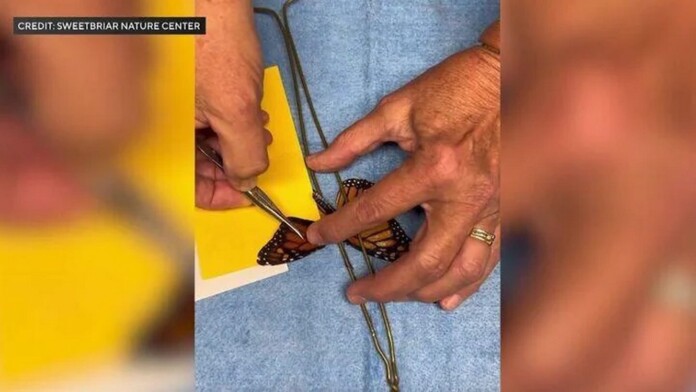
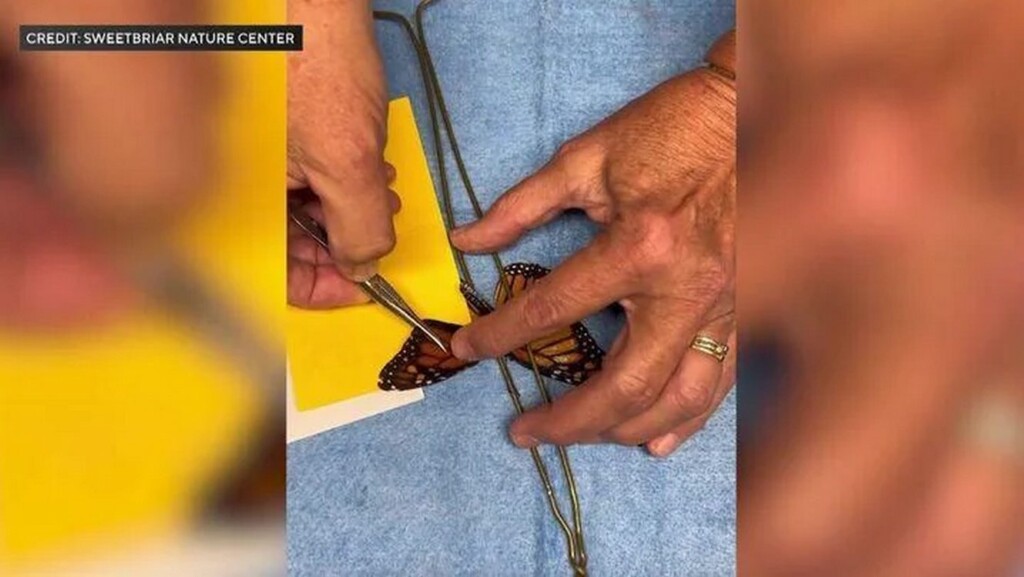
With a pioneering procedure, a nature center in New York made sure that a broken wing wasn’t the end of one monarch butterfly’s journey.
Famous for migrating from Mexico up to Canada, a Deer Park resident found one of these orange beauties stranded with the upper section of its right forewing broken.
Janine Bendicksen is the director of wildlife rehabilitation at the Sweetbriar Nature Center in Smithtown, NY, and she had to think fast when a woman brought in the injured monarch.
There were many monarchs inside Bendicksen’s vivarium, and wondered if maybe she could find a dead one and transplant its wing onto the injured one. Sure enough, a late resident was available as a donor.
“It was so intricate, because this butterfly could fall apart if I pressed too hard,” Bendicksen told CBS News. “We used contact cement, we had corn starch, a little piece of wire that we could hold the butterfly down with.”
The one easy part was that butterfly’s have no nerve endings in their upper wings. There are no blood vessels either.
The procedure was recorded on the center’s social media page, and it produced a viral response with over a million views—all to see this little insect receive the most delicate of helping hands.
MORE BUTTERFLY NEWS BITES:
- Great Monarch Migration Seems to Owe Success to White Spots on the Butterfly’s Wings
- Relative of Extinct Xerces Butterfly Helps Restore California Habitat Destroyed in its Demise
- After 20 Years He Finally Spotted the Elusive North American Butterfly Beauty in a Nearby Bog
To Bendicksen’s mind, this was the first time anyone had ever tried to transplant a butterfly wing onto another butterfly, and true to that assessment, her phone began to receive calls from entomologists from all over the West Coast.
“I’m getting calls from Minnesota, Costa Rica, California,” she said. “This butterfly would have died if we didn’t try. We need hope in this world today.”
WATCH the video below…
@abcnews An injured monarch butterfly was able to continue its migration after undergoing a wing transplant at a nature preserve in New York.
♬ original sound - ABC News
SHARE This Story Of A Monarch Butterfly On The Mend…
Renewables Overtake Coal as World’s Biggest Source of Electricity


Renewable energy sources like solar and wind produced more electricity during the first half of the year than any other energy resource, including coal.
To bullet another massive accomplishment in the clean energy transition, of the cumulative demand for new power worldwide, renewables met 100% of it.
Coal has been the world’s most-consumed energy resource for the last 50-and-a-bit years. It held that position up until last year. But with costs in the solar energy market falling 99.9% since 1975, it’s becoming so much more feasible to use as an energy source for low and middle-income countries.
China continued its full-throttle deployment of renewable energy resources, adding more clean energy than the whole world combined last year, reducing its fossil fuel consumption by 2% even as it adds to its fleet of coal power plants.
This data comes from the energy think tank Ember, whose senior analyst Malgorzata Wiatros-Motyka said 2025 marked “the beginning of a shift where clean power is keeping pace with demand growth.”
Most solar generation (58%) is now in lower-income countries. Now that solar power in particular is cheaper, it’s much faster to install new grid capacity at scale rather than investing in the 10, 20, 30-year time horizons that the financing and construction of thermal power plants require.
Most countries don’t produce fossil fuels, but all have access to the Sun and winds, and so by relying on renewable energy they’re also not required to enter foreign currency markets to then be able to import coal, oil, or natural gas.
“Pakistan, for example, imported solar panels capable of generating 17 gigawatts (GW) of solar power in 2024,” writes the BBC on that notion, “double the previous year and the equivalent of roughly a third of the country’s current electricity generation capacity.”
MORE STORIES LIKE THIS: A Desert Full of Power: Gargantuan Solar Array 250-Miles Long to Power Beijing
South Africa, Algeria, and Botswana have all taken advantage of the solar boom as well.
Wind turbines and associated infrastructure have not come down in price anywhere near as much as solar, which likely presents headwinds to so-called “Wind Belt” nations like the UK and Norway.
BRIGHTEN Up Social Media With The Triumph Of Renewables…
“Just because something doesn’t do what you planned it to do doesn’t mean it’s useless.” – Thomas Edison

Quote of the Day: “Just because something doesn’t do what you planned it to do doesn’t mean it’s useless.” – Thomas Edison
Photo by: Erwan Hesry
With a new inspirational quote every day, atop the perfect photo—collected and archived on our Quote of the Day page—why not bookmark GNN.org for a daily uplift?

Good News in History, October 10

62 years ago today, the second, and often considered best film starring James Bond, was released as From Russia With Love. In the film, Bond, played by Sean Connery, is sent to assist in the defection of Soviet consulate clerk Tatiana Romanova in Turkey, where SPECTRE plans to avenge Bond’s killing of Dr. No. by using Romanova as bait in a cleverly laid trap. The film was a critical and commercial success, grossing $78 million worldwide while critics found the film nonsensical, illogical, lurid, mad, and absolutely delightful because of it. READ more… (1963)
Scotland May Have Had a Western King–A Forgotten Medieval Island Castle Tells a Story
For nearly 3 centuries, Scotland’s western isles were ruled by men who considered themselves kings equal to those in Edinburgh or London.
The island of Islay was the seat of the Lordship of the Isles, but evidence of a castle from an earlier period, as well as finds from a palatial complex built on a lake, confirm where these lords held their thrones for the first time.
Revealed in a new book by the preeminent expert on the subject, Dr. David Caldwell, the center of power was the area of Finlaggen, specifically on two islets set atop the waters of Loch Finlaggen.
The Lordship of the Isles was a quasi-independent state of political and cultural importance in the 14th and 15th centuries.
With control of the islands off the west coast, Argyll, and the vast earldom of Ross in the Highlands, the Lords of the Isles were powerful chiefs with royal pretensions, treating with English and Scottish kings as if they were on a par with them.
They referred to themselves as ‘Ri Innse Gall’ (‘King of the Isles’) in Gaelic and have long been recognized by historians as an important phenomenon, a serious challenger to the Stewart dynasty for control of much of Scotland.
“The Lordship of the Isles was heavily militarized,” Caldwell tells Artnet. “The real measure of its lords’ power lay in their ability to field an army of 6,000 or more professional warriors and ship them overseas to the Scottish mainland and Ireland.”
It was believed that the two islands in Loch Finlaggan were the center from which Clan MacDonald Lords of the Isles inaugurated their own kings or lords between 1300 and 1500 CE. However, the historical record for the site itself is meager, and there are no contemporary medieval documents which specifically identify it as a place of any importance.
Detailed in his new book, The Archaeology of Finlaggan, Islay, there was indeed a palatial complex on the two islets in the loch.
During excavations and research that spanned 3 decades, Caldwell also uncovered evidence of Finlaggan as a center of power and ritual back across millennia: from prehistoric times, to the Viking age, to a previously unknown royal castle belonging to 12th and 13th-century kings of the isles, the ancestors of the MacDonalds who rose to the height of their power in the 14th and 15th centuries.
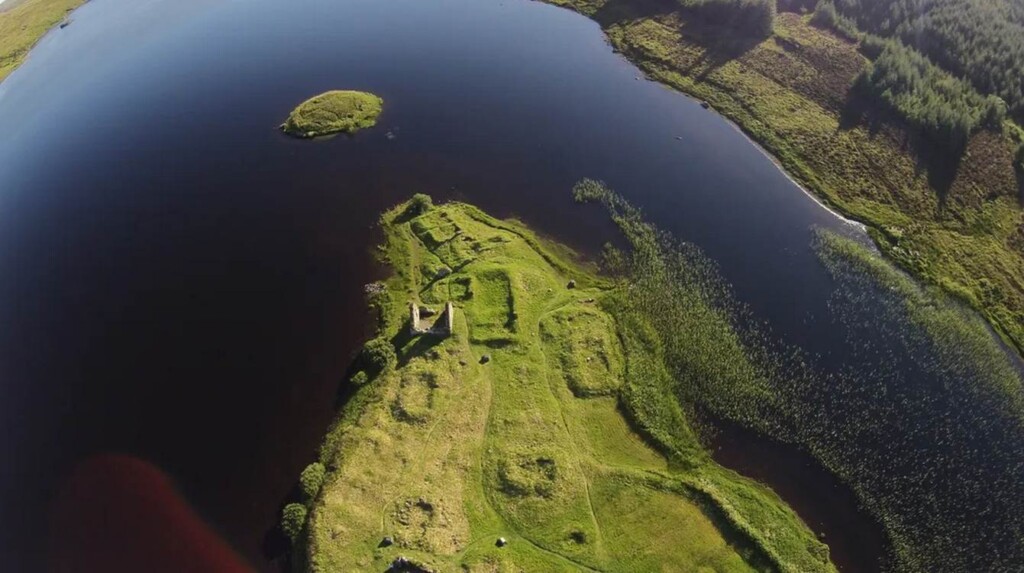
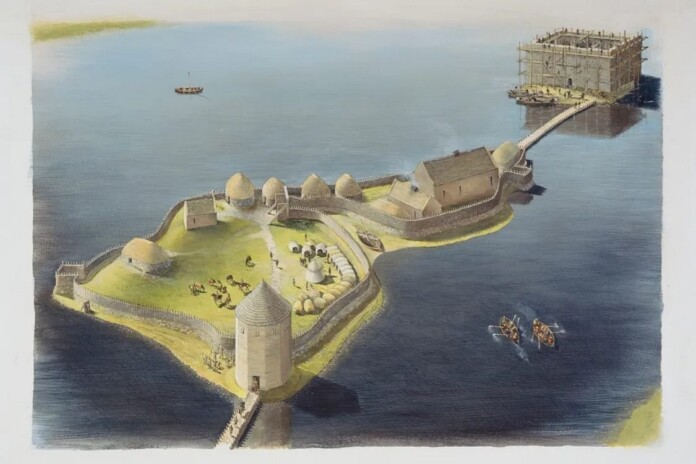
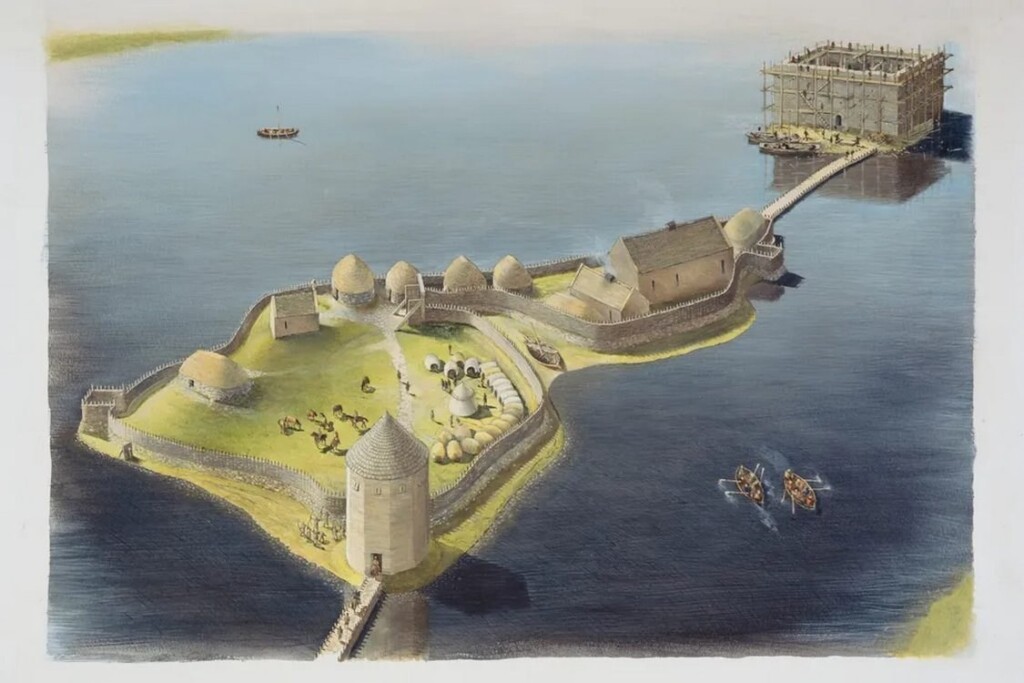
Archaeological evidence reveals that a unique castle occupied two islands in Loch Finlaggan: a large stone tower on one, which provided living quarters and extra security for the king or lord, around which were kitchens, a chapel with a burial ground, houses, workshops, and a great hall where feasting took place.
ALSO CHECK OUT: Herd of Bulls Headed to the Highlands to Recreate Effect of Ancient Auroch Oxen on Scottish Soil
Then, on a smaller island connected via a causeway, a stone once stood that is estimated to have been approximately 19 by 19 meters overall, making it comparable in size to stone keeps in England like those in the castles of Carlisle, Bamburgh, and Lancaster.
As the erection of large rectangular stone towers was essentially limited to great Anglo-French lords and kings in Britain and Ireland, the castle can be interpreted as a political statement, as well as a sign of the wealth and connections of the ruling class.
The castle may have been dismantled because it was structurally unsound or due to enemy action before the palace at Finlaggan began to take shape in the 14th century and the Lordship was taken by Clan Donald or MacDonald.
SCOTTISH NEWS: Archaeologists to Excavate Glasgow’s First Skatepark with the Help of Former Skateboarders
There are about 4,000 American families who can trace their genealogy to members of Clan Donald, although the Lordship of the Isles is currently held by Prince William.
“The researchers hope their three decades of work at Finlaggan will provide an important foundation for future historians working to understand the site’s historical significance,” writes Smithsonian.
SHARE This Rich Scottish History With Your Friends Who Like A Kilt…
11,000 Strings Tuned Slightly Differently Makes Music to Engulf an Audience Encircled by 50 Pianos (Video)


A performance unlike any other just wrapped up in New York City, where an audience of a few lucky hundred were encircled by 50 pianos.
The pianists played out a piece called “11,000 Strings,” named for the number of strings in 50 pianos, each of which was tuned slightly differently than the others.
The tuning was the smallest difference perceptible to the human hear—all 50 pianos fit between one half-step, but not a single was in tune with the others.
What resulted was a “sonic forest,” according to New York Magazine; “like to take an airplane for the first time,” according to the New York Times; or “like sitting in a spaceship being rocked by cosmic waves.” according to Art News.
The story of this monumental performance begins with the composer Georg Friedrich Haas of the now-storied Austrian music ensemble Klangforum Wien. He received a phone call from a friend, named Peter Kainrath, who had just visited the Hailun piano factory in China.
Kainrath had been in the quality control hall and heard the sound of 100 newly-made pianos being played at the same time, which he described as “this pure, massive sound.”
Haas liked the idea for a project, and told Kainrath that if he bought him 50 pianos, he would compose a special piece of music. Shut up in a home in Morocco during COVID, Haas experimented with something that Western music has only just begun to use as a musical modality—microtones.
Simply put, in Western music there are 12 notes, each one a semitone, or half-step, higher or lower than the other. But in between each of those semitones are roughly 100 stages of pitch, called microtones. Each microtone can be as small a difference as 2 of those 100 “cents”, and each piano in “11,000 Strings” is tuned 2 stages higher or lower than the one next to it.

“Important is that when you go to this concert you feel something… and that you also learn that out of tune is really beautiful,” Haas said of the work.
The piece debuted in Bolzano, Italy in 2023, after which it performed in various music settings.
The setting is designed to envelope the listener, which made The Armoy at Park Avenue in NYC a perfect location for “11,000 Strings'” American debut. The venue’s 55,000 square feet Drill Hall could be arranged so that the audience could be arranged in the middle with the 50 pianos surrounding with them, each playing with their back to the crowd.
No conductor organizes the emotion, and the 25-man ensemble from Klangforum Wien, playing a chamber orchestra that included two massive percussion sets, sit and act slightly apart from the sometimes murmuring, sometimes roaring, sometimes clanging pianos.
“To gather 50 talented pianists and an ensemble like Klangforum Wien in this concert installation is an extraordinary act of experimentation, especially when each performer must surrender to the sheer force and surprising nature of sound,” said Haas. “Bringing ‘11,000 Strings’ to the Drill Hall, with its vast acoustics and intensity, is the realization of the piece’s full power.”
WATCH and learn more… LISTEN Also to an excerpt…
SHARE This Triumph Of Maverick Musical Composition
Nighttime Dive Reveals Never-Before-Seen Relationship Between Fish and Anemones
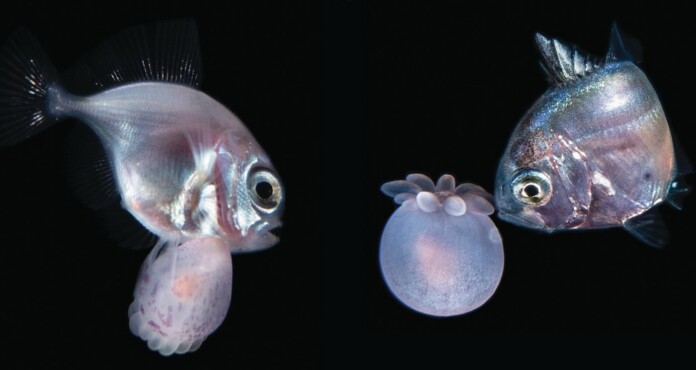

A new discovery has revealed that relationships between fish and sea anemones are more diverse than those portrayed in Finding Nemo.
It suggests that there the former may use the latter as a tool of self defense, while the latter uses the former as transportation.
Captured through breathtaking blackwater photography, the images featured in a study published in the Journal of Fish Sciences show rarely seen encounters between these creatures that may provide mutual benefits.
Gabriel Afonso, lead author and Ph.D. student at William & Mary, said that the emerging field of blackwater photography, or images captured by night-time divers, made this study possible.
Rich Collins is one of the divers who contributed to the article and a consultant at the Florida Museum of Natural History. He has witnessed lots of surprising interactions between tiny organisms since he started doing blackwater photography, such as filefish carrying box jellyfish in their mouths despite their dangerous sting.
“Some species of vulnerable larval or juvenile fish use invertebrate species apparently for defensive purposes,” Collins said. “They’ll find something that’s noxious or stingy, and they just carry it around.”
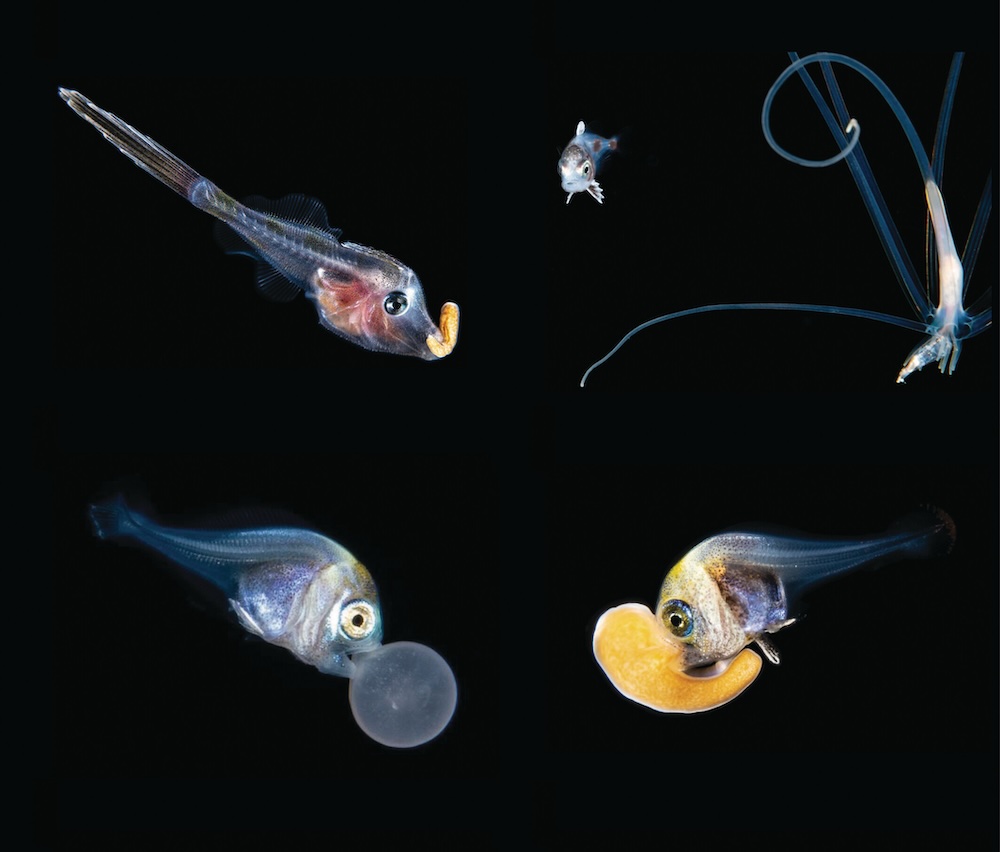
While the sting from a larval anemone might not be enough to kill a predator, Afonso believes it would be “unpalatable”.
But the pictures featured in the article show how this behavior extends to other juvenile fish and larval anemone interactions. Filefish, driftfish, pomfrets, and a young jack can be seen carrying larval tube anemone or button polyps in their mouths, possibly for protection.
While adult fish are known to cling to corals for rest and other purposes, the way these juveniles seem to be using anemones for self-defense is still not fully understood.
“As far as I know, this is the first relationship of an open water fish interacting physically with an anemone that looks to be carrying the invertebrate,” Afonso said.
This could be a new form of mutualism between fish and anemone, because the anemone could also benefit from being carried by the fish as a form of dispersion.
CURIOUS ANIMAL BEHVAIOR:
- Scientists Found a 650-year-old Shoe in a Vulture Nest Along with Dozens of Other Curiosities
- Ocelot and Opossum Identified as Unlikely Friends After Footage Shows Them Strolling About Together
- Charlotte the Stingray, Single for 8 Years, Celebrated V-day with ‘Impossible’ Litter of Non-Fertilized Eggs
Afonso hopes that this article sheds more light on the previously unseen world revealed by blackwater photography and sparks people’s curiosity about the many different interactions happening between fish and invertebrates of all shapes and colors.
SHARE This Fascinating Story Of Fish And Friendship With Your Own Anemones…
Pine Martens Released into Wilds of Exmoor Nat’l Park Finally Restores Their Presence After 100 Years


Video cameras captured the moment when pine martens returned to Britain’s Exmoor National Park for the first time in 100 years.
The pioneering nature project has reintroduced 19 of the rare creatures back into habitat they once flourished in, and joins a series of reintroduction and rewilding events that must be marking a turnaround for wild England.

During September, 2025, 9 female and 10 male animals were released in secret locations owned by the National Trust and Exmoor National Park Authority.
The pine martens were sourced from healthy wild populations in the Highlands of Scotland, where they underwent health checks. They were then driven more than 500 miles through the night in a specially adapted, temperature-controlled vehicle.
On arrival in Exmoor, three days passed while the animals acclimatized to their new surroundings, at the end of which the door to each pen was opened and the pine martens were able to slip into the forest.
Devon Wildlife Trust’s Tracey Hamston, who leads the Two Moors Pine Marten Project, that it was “wonderful to see pine martens living wild in Exmoor again.”
“These animals were once a key part of our thriving woodland wildlife, so it’s good that they are back where they belong. It’s a positive sign that nature can be restored. Our woodlands and their wildlife will benefit from their presence.”
The releases mark the return of an animal which was once common locally, but which was lost due to hunting and the decline of its favored woodland habitat.
PINE MARTENS RETURNING IN USA: American Marten May Be Set for Return to Pennsylvania Forests After 100 Year Absence
Their release is the work of the Two Moors Pine Marten Project, with the other “Moor” being Dartmoor National Park in Devon, southwest England. Here, the martens have not only already been released by are also already breeding.

“We’re proud and delighted to see pine martens returning to Somerset and to have played a part in the national recovery strategy as this animal re-establishes its former range,” said Lucie Bennett, Pine Martens Engagement Officer at Somerset Wildlife at Somerset Wildlife Trust.
REWILDING ENGLAND: ‘Give Nature Space and it Will Come Back’: Rewilding Returns Endangered Species to UK Coast
“At a time when wildlife needs us more than ever and action is much needed, it’s fantastic to see recovery milestones met, like the return of this important mammal in functioning British woodlands.
“We look forward to monitoring the progression of the Exmoor animals, supporting woodland wildlife and local communities as the pine martens move and expand their range.”
SHARE The Long-Awaited Return Of This Charismatic Little Creature…
“Knowledge is love and light and vision.” – Helen Keller

Quote of the Day: “Knowledge is love and light and vision.” – Helen Keller
Photo by: © GWC for GNN
With a new inspirational quote every day, atop the perfect photo—collected and archived on our Quote of the Day page—why not bookmark GNN.org for a daily uplift?

Good News in History, October 9

On this day, in Game 2 of the 1909 World Series, Ty Cobb stole home base. The details around this famous of all capers are what make it so. Losing Game 1 to the Pittsburgh Pirates, Detroit Tiger’s star and all-time great Ty Cobb was sitting on third base at the top of the second in Game 2, his team already behind by two runs. A reliever had come in named Victor Willis, a giant of a man, who Cobb noticed was paying far too much attention to the batter, giving Cobb the space he needed to steal home before Willis came to his senses. READ more about the circumstances… (1909)
The ‘Spirit Molecule’ Defends the Brain Against Stroke in Mice, Breakthrough Study Shows

N,N-dimethyltryptamine (DMT) is a potent psychoactive molecule present in the brain and much of the world’s plant life, but it also may be able to save humans from damage in the event of a stroke.
Scientists in Hungary used it to reduce the harmful effects of stroke in animal models and cell culture experiments.
Known to produce life-changing experiences reported to include the perception of dimensional travel, ego-death, encounters with intelligent beings, and the feeling of achieving a universal love with all living things, DMT can be found everywhere in nature, and is in fact produced endogenously in the human pineal gland.
The Hungarian team, led by Professor Mária Deli, Professor Zoltán Nagy, and Dr. Sándor Nardai, found that DMT treatment restored the structure and function of the damaged blood-brain barrier in mice that had suffered a stroke.
It also improved the function of astrocytes, inhibited the production of inflammatory cytokines in brain endothelial cells and peripheral immune cells, and significantly reduced infarct volume and edema formation. The team published these results in the journal Science Advances.
“The therapeutic options currently available for stroke are very limited. The dual action of DMT, protecting the blood-brain barrier while reducing brain inflammation, offers a novel, complex approach that could complement existing treatments,” says Judit Vigh, co-first author of the work.
PSYCHEDELIC RESEARCH:
- Depression Patients Treated with Psychedelic Mushrooms 5 years ago Are Still ‘Symptom-Free’
- Psychedelic Mushrooms Reduced Human Cellular Aging by 57%, Increased Lifespan in Mice 30%
- LSD Tweaked to Harness Therapeutic Power for Mental Health Without Hallucinogenic Effects
- Psychedelic Drugs May Be Able to Treat Brain Injuries, Stimulating New Neurons to Replace Impaired Ones
Since current stroke therapies do not always result in full recovery, a DMT-based treatment may represent a promising new alternative, mainly in combination with existing methods. The recent findings from researchers in Szeged and Budapest support the development of a therapy that goes beyond the limitations of conventional stroke treatment.
Clinical trials have already begun abroad, and investigation on the long-term effects of DMT are currently ongoing, but there is still a long way to go before it reaches everyday medicine.
While most European countries including Hungary consider DMT a hallucinogen and therefore controlled via strict criminal laws, both the Netherlands and Portugal have taken a more open position on DMT and arguably the more well-known ayahuasca, in which DMT is an active ingredient.
Around 800,000 strokes occur annually in the US. 1 in 6 deaths (17.5%) from cardiovascular disease in the most recent data-collected year, were due to stroke. Costs from strokes rose to $56 billion during that year.
SHARE This Fascinating Research Into The Therapeutic Potential of DMT…
After 40 Years and $84 Million, Lake Muskegon Flourishing Free from Pollution and Sawdust


In late September, Lake Muskegon in Michigan was officially removed from the list of polluted water bodies in the Great Lakes Region.
Once home to foundries, paper mills, petroleum storage and sewage treatment plants, the lake and several of its tributaries became an aquatic hellhole of pollution and debris, until a massive cleanup and restoration project saw it return to a state of beauty once again.
The US Environmental Protection Agency’s Area of Concern (AOC) list is jointly managed with Canada, and recently lost the honor of hosting Lake Muskegon, which had been on the list for over 40 years.
Decades of work and $84 million of operations saw 190,000 cubic yards of contaminated sediment—around 58 Olympic-sized swimming pools—and 110,000 tons of sawmill debris removed from the lakebed.
On October 1st, local community and cleanup leaders joined with government officials on the shore for a celebration.
“This location — which is now home to parks, festivals, cruise ship docks, fishing and recreational enjoyment — was once an industrial scrap yard as recently as the 1980s,” said Muskegon Mayor Ken Johnson. “After decades of collaborative efforts and nearly $100 million invested, we’ve arrived at this momentous occasion.”
When the mayor puts it like that, one can easily see the value in the investment. Time and time again, returning nature to a thriving state proves to be a reward well beyond itself.
Michigan Live, reporting on the story, shared some brilliant figures from a 2020 study that showed how these rewards are manifesting. Already some $27 million has arrived through increased tourism to the lake, which has reached around 400,000 yearly visitors compared to 10 years ago.
AMERICA’S LONG BATTLE AGAINST POLLUTION: Chicago River Follows the Seine to Become Biodynamic and Swimmable Once Again
Property values along the lake have gained approximately $7.4 million, not only from the lake’s restoration itself, but the new businesses and activities that the restoration has created.
Muskegon’s suffering began in the 1800s logging boom when boards, dust, and woodchips were routinely dumped into the lake which smothered fish habitat and absorbed large amounts of water-bound oxygen, creating dead zones. Chemical pollution from heavy industry followed, and sewage from the treatment plants caused algal blooms which further degraded the habitat for plant and aquatic life of any sort.
MORE BIG CLEANUPS: China Achieves ‘Excellent’ Water Quality in 90% of Rivers and Lakes, Now Looks to Improve Whole Ecosystems
In 1980, Muskegon was put on the AOC, and local nonprofits began seeking funding for a massive project to reverse the seemingly terminal decline.
$67 million of the funding came from the Great Lakes Restoration Initiative, a bipartisan federal program, while another $14 million came from a mixture of state, local, and private sources.
Clean Up Your Friend’s Social Media News Feed With This Great Story…
This Shipwreck Is ‘Treasure Fleet’ from 1715 with $1 Million in Gold and Silver Coins Recovered
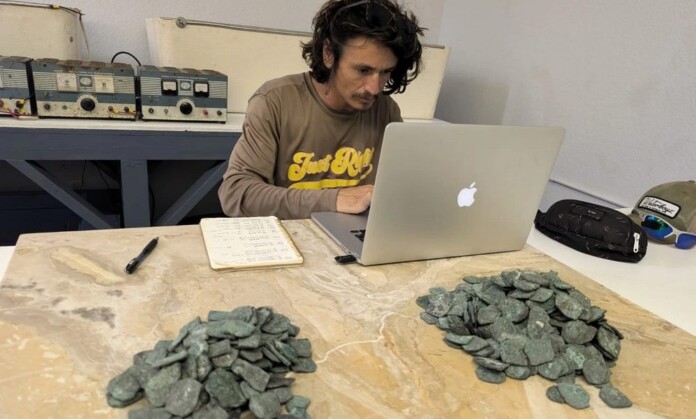
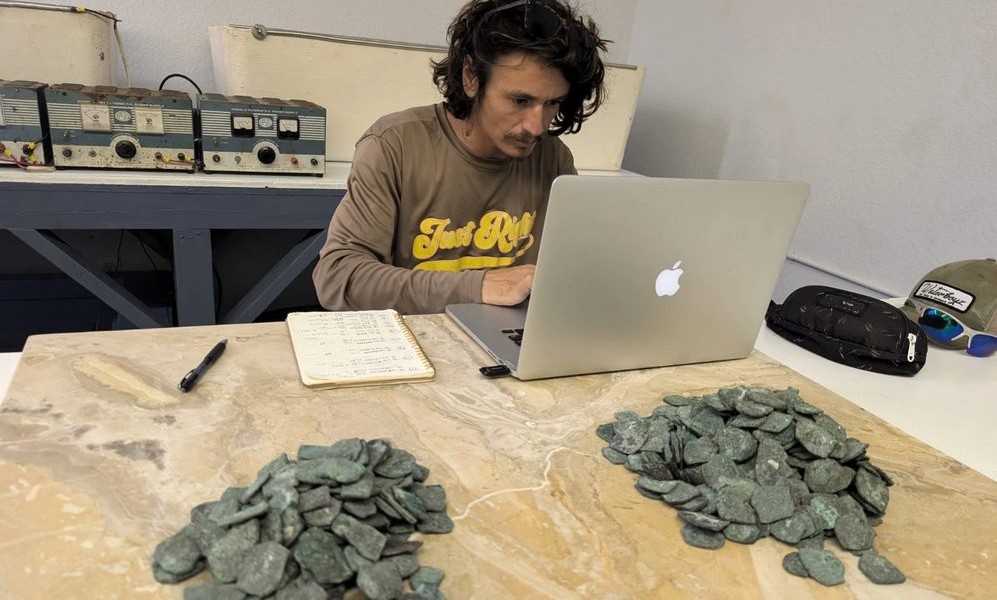
A historic shipwreck salvage business has pulled up over 1,000 silver and gold coins from a Spanish treasure fleet that sank off the coast of Florida in 1715.
The haul could fetch $1 million at market value, with five of the coins found being gold escudos, which along with having a high value as a historic artifact, happen to see the light of day with the price of gold making new all-time record highs.
A hurricane it was that sent the 11 ships bound for Spain to the crushing oblivion of Davy Jones’ Locker. Known as the Plate Fleet, they were bringing an estimated $400 million in gold, silver, and jewels from the New World back to Spain, but lost every penny along with all hands when the gale sent them to the bottom.
The fleet’s complete whereabouts are unknown, but the US District Court for Florida, which owns the wrecks per US law, have been contracting Queen’s Jewels LLC as the exclusive salvage operator in locating and recovering what can be found.
Over the summer, salvage divers visited a site where at least one wreck was known to rest, and pulled up coin after coin after coin, until Capt. Levin Shavers and the crew of the M/V Just Right were looking at a bonafide pirate treasure.
The silver coins, known as Reales, or pieces of eight, were minted in the Imperial colonies of Peru, Bolivia, and Mexico, and the LLC’s Director of Operations Saul Guttuso says each one, whether by the visible minting date, design, or mill marks, has a story to tell.
“This discovery is not only about the treasure itself, but the stories it tells,” said Guttuso. “Each coin is a piece of history, a tangible link to the people who lived, worked, and sailed during the Golden Age of the Spanish Empire. Finding 1,000 of them in a single recovery is both rare and extraordinary.”
MORE NEWS OF SHIPWRECK TREASURE:
- Lost for 300 Years, Pirate-Plundered Treasure Ship Discovered off Madagascar Coast
- Experts Begin Hunt for Most Valuable British Shipwreck in History, and the Gold Worth 4 Billion
- 76,000 Gold and Silver Artifacts Recovered from Chinese River Charts Infamous 17th Century Warlord’s Conquests
- Treasure For 3 Miles: A Scatter Trail from the Most Famous Shipwreck is Uncovered Behind the Maravillas
The discovery site lies within a stretch of ocean often referred to as Florida’s “Treasure Coast,” where modern salvage operations—working under strict state oversight and archaeological guidelines—continue to uncover relics from the ill-fated fleet.
In addition to the 5 gold escudos, other gold artifacts were recovered, as well as evidence that the coins were held in a burlap sack, which at the time period might mean that up to 2,000 more coins are waiting on the seafloor where the divers have already looked—still waiting to be found.
“I’ll never finish in my lifetime. We have barely scratched the surface,” Mike Perna, one of the salvagers and the operator of the Mighty Mo, told McClatchy News, last year. “The storm took 10 minutes to deposit what is taking us years to find.”
SHARE This Awesome Treasure Story With Your Friends On Social Media…
First Solar Furnace to Recycle Steel Can Melt Metal with Sunshine in 2 Hours


In the timepiece capital of the world, time may be running out for carbon-heavy imported steel thanks to a new solar-powered furnace.
Swiss firm Panatere has patented, and has now inaugurated, the world’s first two solar foundries for melting down steel for reuse.
Consisting of 500 concave mirrors mounted on a heliostat that allows them to track the Sun, each is focused into furnace’s chamber until it reaches 2,000 degrees Celsius. Heat like this can melt steel in 1.5 hours, all without any fossil fuels being burned.
They are marvelous micro and macro engineers, but the Swiss import most of the steel they use, including 15,800 metric tons for the watchmaking industry alone.
“There is a real interest in recycling our valuable resources. We want to keep the metal waste from the factories and recycle it locally,” Panatere CEO Raphaël Broye told the Keystone-SDA news agency.
By 2028, the recycling center should be producing 1,000 tons of solar steel per year, added Broye.
Located in the French-speaking canton of Neuchatel, Panatere’s first solar steel bar will be exhibited at the International Watch Museum in La Chaux-de-Fonds, where the foundries operate.
MORE GREEN STEEL INNOVATIONS: Green Startup Boston Metal Now Has All the Ingredients Needed to Make Steel Without Emitting Too Much CO2
The project is looking to the future by tweaking their technology to process and recover strategic metals.
There are some 54 foundries for recycling steel worldwide, Swissinfo reports, but only one site that does so with solar power.
SHARE This Awesome Green Innovation With Your Friends…
“I would define, in brief, the poetry of words as the rhythmical creation of beauty.” – Edgar Allan Poe

Quote of the Day: “I would define, in brief, the poetry of words as the rhythmical creation of beauty.” – Edgar Allan Poe
Photo by: Jovan Vasiljević
With a new inspirational quote every day, atop the perfect photo—collected and archived on our Quote of the Day page—why not bookmark GNN.org for a daily uplift?

Good News in History, October 8

80 years ago toady, the microwave oven was patented by Percy Spencer. The self-taught engineer from Howland, Maine, employed by Raytheon at the time, noticed that microwaves from an active radar set he was working on started to melt a Mr. Goodbar candy bar he had in his pocket. The first food deliberately cooked with Spencer’s microwave oven was popcorn, and the second was an egg, which exploded in the face of one of the experimenters. READ more… (1945)
Scientists Found a 650-year-old Shoe in a Vulture Nest Along with Dozens of Other Curiosities
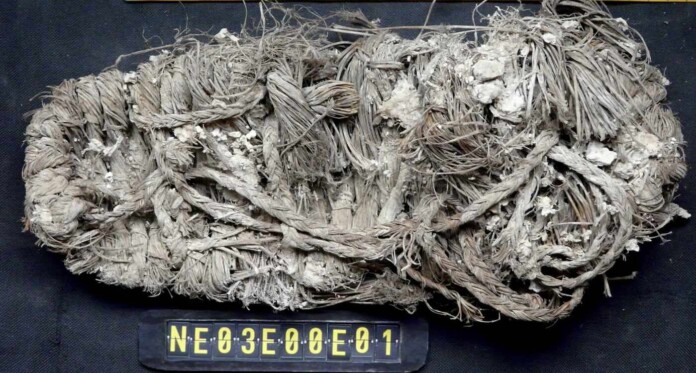
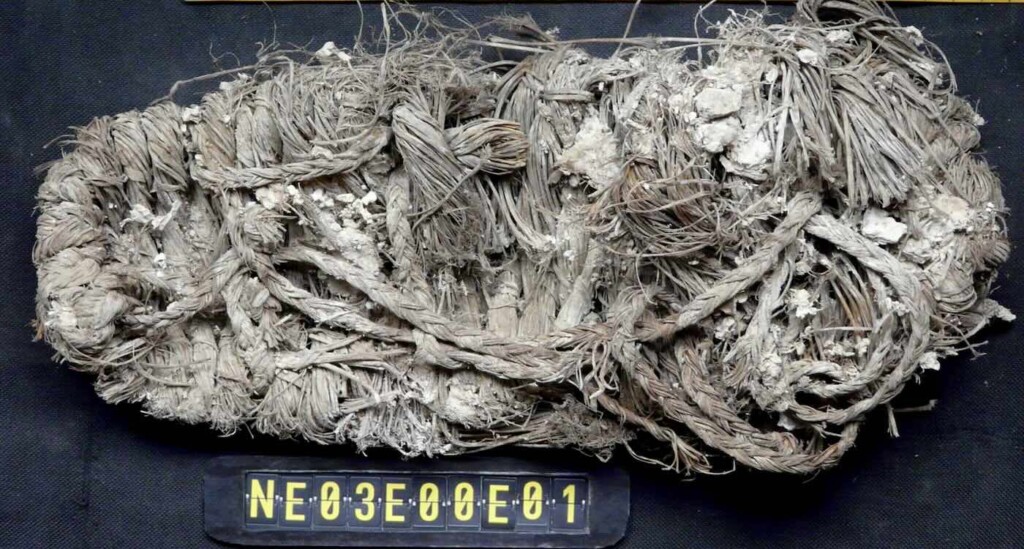
Researchers in Spain were left feeling a mixture of confusion and intrigue when they found several straw sandals embedded in a bearded vulture nest.
They didn’t know it at the time, but it was over 6 centuries ago that a bearded vulture flew from its hunting grounds into a sheltered cave nesting site and dropped off a sandal called an Agobía.
There it lay, fulfilling who-can-say what purpose, until ecologist Antoni Margalida pulled it and many other human artifacts, some as old, others younger, from the abandoned nest.
Vultures, like raptors of all kinds, tend to reuse nests generation after generation. A study was published on the discovery and was picked up by National Geographic, which went on to explain that one golden eagle nest was documented to be 20 feet in depth from parents adding material to it, while in Greenland, analysis of bird droppings below a gyrfalcon nest proved it to be 2,000 years old.
With that context, suddenly the Agobía doesn’t seem so far-fetched, but many other objects such as tools, sandals, a piece of a basket, a dyed scrap of sheep’s leather, and the carved horn of a mountain goat.
Included in the mix was a crossbow bolt, which may have been taken in lieu of a branch, or because it was embedded in an animal the vulture brought back to its nest.
“This material is very well-preserved during centuries,” Margalida, from the Pyrenean Institute of Ecology in Spain, told Nat Geo.
The cave ecosystem prevented them from erosion by the elements, and the nests, which Margalida and his team reached by rappelling down into the cave, took on the character of a natural history museum. Studying bearded vulture nests can help ecologists glean insights into why the birds had disappeared from the area.
MORE FAR-FEATHERED STORIES: UK’s Rarest Breeding Birds Raise Chicks for First Time in Six Years
To that end various eggshells and feathers found in the nests could contain traces of toxic compounds like lead known to be harmful to vultures and scavenging birds, but they had to separate them out from nearly 2,100 pieces of bone, including 86 hooves.
“We have several ideas to analyze in the future,” Margalida says. “I think that this material will offer a lot of possibilities.”
SHARE The Story Of This Wild Discovery Up In Spain With Your Friends…