










Quote of the Day: “Life’s not about expecting, hoping and wishing, it’s about doing, being and becoming.” – Mike Dooley
Photo by: Sushil Ghimire
With a new inspirational quote every day, atop the perfect photo—collected and archived on our Quote of the Day page—why not bookmark GNN.org for a daily uplift?
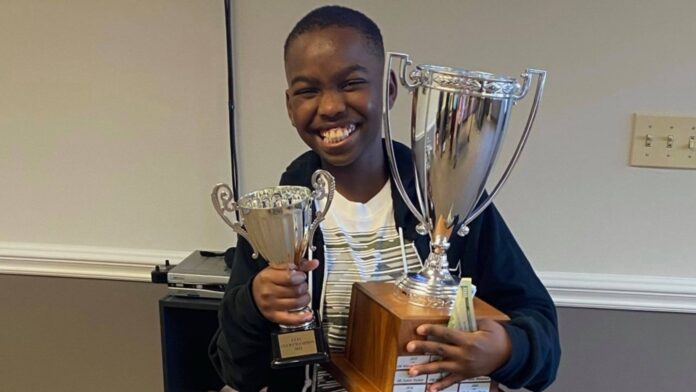
Sy Newson Green was a high school freshman when his world pretty much fell apart. His dad needed a heart transplant, and his mom was in an accident that impaired her vision. Both parents lost their jobs—and without their income, his future at the Palma School, the private all-boys Catholic high school he attended, was in peril.
Palma School
But Green was about to get a helping hand he’d never expected from an unlikely source.
A group of inmates at California’s Soledad Prison pooled their income from working jobs as prisoners, and with a little outside help, they raised most of Green’s tuition to get him all the way through his sophomore year to graduation. All told, the sum was a whopping $32,000.
And the gesture was inspired by a book club!
Jim Micheletti, an English and theology teacher at Palma School launched a reading program at Soledad seven years ago, called Exercises in Empathy—and he never imagined the cascade of positive repercussions that would follow.
Sowing a seed that would come full circle
In the program, Palma students and teachers met regularly inside the prison to discuss books with inmates. More than a simple exchange of ideas, it became an opportunity to change students’ preconceived notions about inmates—and offered prisoners a chance to step outside those stereotypes.
“They go in thinking ‘monster,’ and they come out thinking ‘a man, a human being.’ They’ve done bad things, but there are no throwaway people here,” Micheletti told CNN.
In 2016, one reading club selection, Miracle On The River Kwai by Ernest Gordon was the perfect book to change lives. The story chronicles the transformation of a group of prisoners of war from a mindset of ‘survival of the fittest’ to one of solidarity with one another and self-sacrifice.
Jason Bryant, who was serving a 26-year sentence for his part in an armed robbery, finished reading the book and was so inspired by the story, that he and fellow-inmate Ted Gray set out to emulate the book’s example: “A small group of men made a different decision, and they decide to look out for each other.”
Bryant and Gray also decided to channel their energy into creating a scholarship fund for a deserving Palma student—and, Sy Green, who excelled at his studies and sports, got the green light.
For the next three years, Bryant and Gray worked behind prison walls to gather donations to finance Green’s education. Most of the donations were small, but a steady flow paid off.
Green, now 19, got his Palma diploma last year and is currently a student at San Francisco’s Academy of Art University.
Bryant was granted clemency after serving 20 years, and now serves as the Director of Restorative Programs at CROP, a nonprofit that focuses on reducing the recidivism rate via training, career development, and stable housing.
In a system where so many inmates are locked into a cycle of crime and punishment, Bryant found the key to lasting change was forged by helping others.
“I don’t know about redemption… I can say this,” he told the Washington Post, “I know that those of us who have truly transformed our lives are committed to adding value in any way that we possibly can.”
In the prison system, crime and punishment go hand in hand. Rehabilitation—while often cited as a goal—is usually more elusive. But if more book clubs were added to the mix, who knows how many transformations we could read about.
SHARE Some Redemption and Generosity–Pass This Story on to Friends…
Capitol police officer Eugene Goodman, who’s being called a hero for single-handedly steering a mob away from the Senate chambers on January 6, escorted Kamala Harris to the presidential inauguration ceremony on Wednesday. He was there in his new role as acting Deputy House Sergeant at Arms.
This moment in @igorbobic stunning footage. In front of the officer, coming up the stairs, is a mass of rioters. The USCP officer glances to his left. Between those two chairs is the entrance to the senate floor. He lured them to his right, away from their targets. pic.twitter.com/knjQQ4GZ0d
Bipartisan lawmakers introduced legislation last week to award him with a Congressional Gold Medal.
“By putting his own life on the line and successfully, single-handedly leading insurrectionists away from the floor of the Senate Chamber, Officer Eugene Goodman performed his duty to protect Congress with distinction, and by his actions, Officer Goodman left an indelible mark on American history,” the legislation states.
The medal is reserved for people who’ve made “distinguished achievements and contributions” to America.
Previous recipients of the Congressional Gold Medal include Martin Luther King, Jr., Rosa Parks, and mathematicians Katherine Johnson, Dr. Christine Darden, Dorothy Vaughan, and Mary Jackson for their contributions to NASA’s success in the Space Race.
SHARE the News of This Officer’s Inauguration Role With Friends…
Walking can literally add years to your life, and incorporating walks after meals can improve all manner of chronic metabolic disorders.
Hardly news, the body of research on walking was augmented with another study which took place in 2003-06 but whose results were only just published recently, showing that people who took 8,000 steps per day had a 51% reduced risk of death than those who took 4,000 steps per day.
Furthermore, as uncountable scientists in the past have confirmed, the study found a cumulative, dose-dependent effect on the person, as those who walked 12,000 steps or more had a 65% reduced risk of death.
The study consisted of about 5,000 participants who wore pedometers for three years, and whose circumstances of death were monitored by the scientists.
Do the walk of life
Physical motion, not exercise in the traditional P.E. class sense, is the catalyst through which is born a strong, healthy body.
The science practically begs the reader to start moving around more, as it found the barest of minimums for participatory benefit. For example, the steps were not taken all at the same time, suggesting that on many occasion, the wearer of the pedometer was not even walking for exercise, but rather doing something like errands or chores.
Not only was there no correlation of consecutive steps and lower mortality rate, but there wasn’t even a correlation between step intensity and lower mortality rate, meaning one doesn’t even have to power-walk.
The science is quite clear: walk and live longer; exercise and live even longer.
The CDC estimates that 60%, or 165 million Americans, are living with one chronic disease, while 40% may be living with two. The cost of all this disease, according to functional medicine expert Chris Kresser, will equal national GDP by 2040.
As shown in a number of studies, many of these chronic diseases can be improved simply by walking—especially after dinner or a meal.
The European way
As iconic as the siesta is in European culture, a trip out onto the street after dinner in a country like France or Italy is principle people-watching time, as full-belied friends and couples of every description “walk it off” under the street lights.
Walking after a meal, particularly dinner, can improve all manner of markers for cardiometabolic disease.
A study of type-2 Chinese diabetics found that walking on a treadmill at 60% of max heart rate for just 20 minutes after dinner decreased the post-meal blood-glucose spike average and peak, and improved how glucose was regulated for 12 hours post meal.
Study participants with gastro-reflux disease who followed dinner with a walk rather than sitting were shown in a study from Pakistan to have a significantly lower (12%) risk of getting gastro reflux symptoms.
Another study found that in 64 patients, “the effect of after-dinner quick walking is significant in the treatment of community fatty liver [disease] and it may improve liver function.”
Smaller studies with very few participants have looked at other effects and found significance in after-dinner walking.
Even though the recommended physical activity in the U.S. is 150 minutes of moderate intensity per-week, meeting that just with daily walks can be very rewarding as well.
PASS On The Positivity And Walk These Tips Over to Friends On Social Media…
Good News Network has covered how resilient and good for the climate seagrass meadows are, but now a new study proves they can provide even more value to humans looking to help heal the wounds inflicted on our planet.
Spanish researchers have documented that seagrass ‘Neptune balls’ can act like plastic mousetraps, entangling bits of waste in their leaves and foiling their attempts to trick sea life into eating them.
Using mathematical extrapolation estimates, the researchers suggest that there could be as many as 900 million bits of plastic entangled in seagrass beds in the Mediterranean alone, representing “a continuous purge of plastic debris out of the sea.”
“We show that plastic debris in the seafloor can be trapped in seagrass remains, eventually leaving the marine environment through beaching,” lead author Anna Sanchez-Vidal, a marine biologist at the University of Barcelona, told AFP.
The Neptune balls are tightly coiled ropes of vegetation from which the long seagrass blades sprout.
Jordi Regas/University of Barcelona
They are the size and shape of rugby balls, and while it’s not clear if the plastic damages the plant, their lifespan sees them wash up on beaches, thereby removing the captured plastic from the ecosystem.
The leaves also perform this function, and Sanchez-Vidal and her team found while collecting these castaways from Mallorca beaches, that half of seagrass blades contained debris, amounting to about 600 pieces of plastic per kilo of leaves.
In findings published in Scientific Reports, only 17% of the tightly knit Neptune balls on the other hand contained plastic, however they did so at a much higher rate, of about 1,500 pieces per kilo.
Seagrass covers only 0.02 percent of the seafloor, but the 70 species of grass that can grow from the Arctic to the Tropics deliver important ecosystem services to humans and other species.
They form the basis of coastal marine food systems, act as nursery beds for thousands of species of fish and crustaceans, and important habitat for dugong, manatee, rays, and seahorses. They also prevent beach erosion and cushion shorelines from storm surge impacts, reducing the damage they cause.
The interior least tern, a bird which survived waves of attacks from dam building, hat making, and more, can now be classified as an Endangered Species Act success story as its numbers have increased 900% over 35 years.
It was announced on the 12th by the Fish and Wildlife Service that it would now leave the Endangered Species List, having returned to around 480 breeding colonies, along 2,800 miles of riverways, in 18 states across the Great Plains and the Lower Mississippi Valley.
“Dozens of states, federal agencies, tribes, businesses and conservation groups have worked tirelessly over the course of three decades to successfully recover these birds,” U.S. Fish and Wildlife Service Director Aurelia Skipwith said in a statement.
Weighing just two ounces, the interior least tern is the smallest member of the tern family. In the 19th century, the bird was often hunted for its plumage as part of the demand for its feathers to crown women’s hats, a booming industry that reduced numbers of all manner of birds.
As if that weren’t enough, dam and levee construction to control the mighty rivers of the Midwest wiped out a lot of nesting habitat along the banks of the Missouri and Mississippi.
The U.S. Army Corps of Engineers had a major role to play in the tern’s recovery story, as they altered river management strategies that had once destroyed the tern’s nesting sites, and used dredged river material to build habitat on the banks that couldn’t be reclaimed.
“The U.S. Army Corps of Engineers is absolutely honored to play a role in a partnership that serves as a model for the potential delisting of other species in the future,” said Major General Diana Holland, Commander of the Mississippi Valley Division of the Corps.
“For over 30 years, we have partnered with the Service to monitor, conserve and recover this endangered species along the Lower Mississippi River. That partnership demonstrates that, through collaboration, we can protect and recover an endangered species while continuing to provide critical navigation and flood control benefits to the nation.”
While normally the removal of an animal from the Endangered Species Act list is met with opposition and condemnation by conservation groups, most accepted that the tern population was healthy and that landowners and farmers no longer need to be dragged into legal battles on its behalf, and the tern will still be protected under the Migratory Bird Act.
In a study of American wildlife recovering through intervention of the federal Endangered Species Act, 99% of those that were in a situation to benefit from the complete effects of the ESA, i.e. not extinct in the wild, recovered to pre-Endangered levels—a total of 271 species.
SHARE the Good News With the Bird Fans in Your Life…
Quote of the Day: “If there be any among us who would wish to dissolve this Union or to change its republican form, let them stand undisturbed as monuments of the safety with which error of opinion may be tolerated where reason is left free to combat it.” – Thomas Jefferson (From his inaugural address, 1801)
Photo by: Srini Somanchi
With a new inspirational quote every day, atop the perfect photo—collected and archived on our Quote of the Day page—why not bookmark GNN.org for a daily uplift?
We don’t know whether or not cats truly have nine lives, but the tale of a California calico named Patches is something straight of the song, ‘The Cat Came Back’—except for “the very next day” part.
ASAP Animal Shelter Assistance Program/Facebook
Patches went missing in January 2018 when a mudslide demolished the home she shared with owner, Josie Gower. Gower’s partner, Norm Borgatello made it out alive. Gower, along with 22 other Santa Barbara residents, were not as lucky.
Gower’s loved ones surmised that Patches “was a goner” as well, but three years later—the cat came back.
After wandering the streets for a time, Patches wound up at the Animal Shelter Assistance Program. Thanks to a microchip registered in Gower’s name, the shelter staff was able to locate Gower’s daughter, Briana Haigh, who in turn, alerted Borgatello to Patches’ miraculous return.
When cat and man were reunited for a poignant New Year’s Eve reunion, Patches recognized Borgatello immediately. There wasn’t a dry eye in the house.
ASAP Animal Shelter Assistance Program/Facebook
Haigh says that having Patches show up just before the three-year anniversary of her mother’s passing felt like a message from heaven. “I think it just warms the heart a bit,” Haigh told NPR. “I know my mom would be really happy.”
You may already have heard that Lady Gaga and J-Lo will be performing at the presidential inauguration tomorrow. But how about Amanda Gorman?
PBS/YouTube
While Gorman may not yet be a household name, she’s about to become much better known as she follows in the footsteps of Maya Angelou and Robert Frost to give the inauguration poem in D.C.
The 22-year-old Los Angeles native and National Youth Poet Laureate is the youngest person to ever be given this platform.
Like Angelou, who was mute as a child–and Joe Biden, who grew up with a stutter–she’s overcome a childhood speech impediment to find her voice.
Gorman had difficulty saying certain letters of the alphabet as a kid. The letter ‘R’ was especially hard for her to pronounce. That hasn’t held her back. In fact, her first lyrical picture book, Change Sings: A Children’s Anthem, is already available for pre-order.
Speaking of the ceremony tomorrow, the Harvard graduate told NPR, “I think there is a real history of orators who have had to struggle, a type of imposed voicelessness, you know… So it’s really special for me.”
With future plans including running for president, expect to see much more from this young star.
(MEET Amanda in the PBS video below.)
Featured image: PBS/YouTube
SHARE the Inspiration–Send the Commanda-in-Chief’s Story to Friends…
Hardly considered a bastion of liberal values, the Iranian executive branch has nevertheless drafted a piece of legislation to prevent several forms of violence against women.
The bill, called the Protection, Dignity and Security of Women Against Violence, actually pre-dates the administration of President Hassan Rouhani, and has been the result of resolved women activists and officials.
It defines violence as “any behavior inflicted on women due to sexuality, vulnerable position or type of relationship, and inflicts harm to their body, psyche, personality and dignity, or restricts or deprives them of legal rights and freedoms”.
Masoumeh Ebtekar, vice president for women and family affairs, has championed the bill since Mahmoud Ahmadinejad’s administration, and as well bringing violence against women into draft law, it provides for the creation of more psychological support in the medical sector for women who have been victims of violence.
“Through an inter-sectoral process, we developed national indicators for gender equity, which laid the ground for the first result based Plan for Women and Family Advancement in 31 provinces,” said Ebtekar in October, according to Tehran Times.
State broadcasters will also be directed to create programs that promote the support of women and the prevention of violence against them as part of family values.
Furthermore, the department of education will be responsible for creating courses for parents, students, and teachers to help better identify vulnerable students.
Ebtekar said the proposed legislation was based on the work of “hundreds of hours of work by tens of legal experts, judges, executives and officials,” and dedicated it to the “worthy and patient Iranian women.”
Now that the executive has approved the bill, it will be sent to parliament before finally arriving at a judicial and religious entity called the Guardian Council.
SHARE the Good News From Iran With Your Friends on Social Media…
The last two northern white rhinos: Ami Vitale/Ol Pejeta Conservancy
Following up on their success of the last two years, the international collaborative effort to save the northern white rhino from extinction has extracted another 14 egg cells from Fatu, one of the two females rhinos that make up the living remainder of the species.
Scientists collecting eggs from Fatu, a female white rhino: Ami Vitale/Ol Pejeta Conservancy
On a charter plane they went, overnighted from the Ol Pejeta Conservancy to Milan where they were taken to a lab in Cremona, Italy. There they were combined with the frozen sperm from Suni, a deceased male rhino of the same species born in 1980.
BioRescue, an NGO spearheaded by members of the Leibniz Institute for Zoo and Wildlife Research, the Italian laboratory Avantea, in Cremona, the Dvůr Králové Zoo in the Czech Republic, and Kenya’s Ol Pejeta and Kenya Wildlife Service, has been pursuing the project ever since the last male rhino died in 2018.
The last two northern white rhinos: Ami Vitale/Ol Pejeta Conservancy
“We plan to have a calf on the ground in two to three years,” David Hildebrandt, a Berlin-based expert on wildlife reproduction, told Megan Bergman of The Guardian.
To make things more complicated, neither Fatu nor her mother Najin can bring a rhino calf to term. BioRescue will use a surrogate from the southern white rhino subspecies which diverged around one million years ago.
To help the scientists out, a sterilized southern rhino bull will accompany the female to help signal when she is in heat. Currently the embryos are stored in tanks of liquid nitrogen, at -196C°.
“Liquid nitrogen buys us time,” explained Hildebrandt, adding that it’s vital any living calves can join Fatu and Najin in life at least for a few years to learn vital information about white rhino society.
The embryos can work to prove concept and create more lifelines while science develops other, more radical methods of saving the subspecies.
This could include manufacturing eggs and sperm through Nobel Prize winning scientist Shinya Yamanaka’s method of changing skin cells to stem cells, and stem cells into the cells that make up sexual equipment.
Apparently there are, incredibly, enough existing skin cells to create a stable and genetically diverse population that would be raised by surrogates, protected in sanctuaries, until 20 or 30 years when they may rejoin the spirits of their ancestors on the open plains of Kenya.
SHARE the Glimmer of Hope–Send This Story to Friends…

The new headquarters for the molecular and oncology research center ICOM will be centered within 5,000 square meters of green public spaces—including a 650-foot long vineyard.
Carlo Ratti Associati
The grapevines will snake their way up the side of the Milan building in a shallow ramp, and will act as the centerpiece of a footpath that starts on the street and reaches all the way up to the roof as part of an effort to link humans in cities back to nature.
It’s all part of project VITAE from architecture firm Carlo Ratti Associati (CRA), which took first place at the C40 Reinventing Cities Contest for their design that includes outdoor spaces, the ICOM center, a farm-to-table restaurant, high-tech office space, and even greenhouses.
The spiral of terraced greenery, including the vineyard and hydroponic gardens, is what gave the project its name, a Latin word for both “life” and “vine.”
This grand design will be built in the south of Milan in an abandoned post Industrial-era lot off via Serio, and construction started in 2019.
Carlo Ratti Associati
“VITAE tries to address humankind’s innate ‘biophilia,’ as formulated by the great American biologist Edward O. Wilson,” Saverio Panata, partner at CRA and project manager of VITAE, told Inhabitat.
“We are talking about the natural tendency of our species to seek our happiness through immersion in nature. Thanks to new technologies, it is now possible to achieve this goal even in the heart of the city—this is particularly relevant in a building that is devoted to scientific research.”
A Curriculum of Vitae
Carlo Ratti Associati
The building is all about the green. As well as containing the double-helix-DNA-inspired walkway, 95% of the energy will come from renewable sources including geothermal and PV solar panels.
A rainwater catchment and grey water salvage facility will ensure the building wastes as little water as possible, while low-carbon building strategies and electric mobility solutions will continue to remove CO2 from the balance sheet.
The Serio project, according to C40, is going up in the Scalo Romana area of the city, an older, partially run-down area that is experiencing a regeneration through new ideas in architecture and city planning.
The Prada Foundation art complex is located in Scalo Romana, and is now one of the most important artistic sites in the city, while Serio will sit less than two miles from the Duomo.
A 20-hectare (54 acre) disused railway yard, the Porta Romana, is one of the most important areas for future innovation and development in the city, and it sits just 250 meters from the Serio VITAE building, placing it at the heart of the city’s regenerative efforts.
SHARE the Good Green News From Italy With Pals on Social Media…
Quote of the Day: “The way I see it, if you want the rainbow, you gotta put up with the rain.” – Dolly Parton (turns 75 today)
Photo by: Todd Cravens
With a new inspirational quote every day, atop the perfect photo—collected and archived on our Quote of the Day page—why not bookmark GNN.org for a daily uplift?
For most people, having property stolen feels like a violation. Robbie Pruitt admits when his mountain bike was swiped last September, he got mad, but soon enough, his emotions took a turn. After letting go of his anger and frustration, he found himself on a road to compassion instead.
An avid biker, Pruitt’s first priority was to replace his ride, but when he went bike shopping, he found the pickings slim. The scarcity of inventory got him thinking: What if the lack of bikes was pandemic related, and what if the person who’d taken his had done so because they truly needed transportation to get to work?
With that thought in mind, Pruitt, an assistant rector at the Church of the Holy Spirit in Leesburg, Virginia, came up with a plan and posted it to a local Facebook group. Pruitt offered to fix bikes free of charge for anyone who needed it.
He also put out a call for unwanted bikes, which he would repair—again for free—and then donate to folks who could truly use them but didn’t have the budget to buy a bike outright.
The day the post went live, Pruitt wound up with an inventory of 30 used bicycles. The initial influx was followed by more than 500 queries from people who either had bikes to donate or that needed fixing soon after. By the end of 2020, Pruitt had refurbished more than 140 for donation or to be returned to their owners at about a 60 to 40% ratio.
Pruitt doesn’t vet requests, but he does try to gear his donations to families that are truly struggling. The journey he’s taken has also moved beyond simply being a way to satisfy a material need to become an opportunity to show kids in his Loudoun County neighborhood the nuts and bolts of fixing their own bikes.
“All the neighborhood kids are spending a lot more time doing something that’s hands-on,” Pruitt’s next-door neighbor Danny Offei told The Washington Post. “Almost everybody in the neighborhood has a bike now, and he’s helped put those bikes together.”
In addition to practical skills, Pruitt’s lessons teach resilience and teamwork, encourage self-esteem, and foster feelings of community. Indeed, forging friendships is one of the biggest perks of Pruitt’s avocation.
“You’re certainly providing a service, but it’s not the bikes,” said the father of three whose goal is to lead by example. “It’s the relationships in the community. It’s the impact you can make with people.”
Pruitt hopes to integrate his “bike ministry” into his church as a regular activity once the pandemic has been contained. In the meantime, the regular crew of helpers who gather in his backyard after their days of remote schooling is thankful for an outlet that lets them channel their energy in a positive direction and gives them a sense of accomplishment.
“Honestly, it feels great,” eighth-grader Hakim Aburami said in an interview with WDVM News. “Being able to help people in this whole situation, it’s just a really great experience.”
(WATCH the WDVM News story to learn Pruitt’s story.)
WHEEL the Generosity Onwards and Send This Story to Pals…
For the first time in history, a combination of wind, solar, and other renewables overtook Germany’s coal, oil, and gas, for use as the country’s fuel source during 2020.
A combination of the pandemic, lower demand for electricity, mild weather, cheaper natural gas, and various economic and market factors led to the historic numbers on the data sheets of Western Europe’s biggest consumer of fossil fuels, and the world’s fourth-largest economy.
According to data collected from the German think tank Agora Energiewende, wind power alone supplied more of the nation’s energy than its lignite brown coal plants, while mild weather and warmer months that were largely cloud-free saw solar contributing 40% of the nation’s baseline, a greater share than black coal.
All this clean energy led to a whopping 10% dip in the emissions of greenhouse gases compared to the previous year, contributing to what Agora described as “the end of coal.”
Heralding the end of coal
This can be attributed to market and policy forces that both increased the cost of running coal plants, and decreased the cost of renewables.
“Lignite-fired power plants delivered 22.3 terawatt-hours less than in 2019 (-19.6 percent), while coal-fired power plants lost 15 terawatt hours (-26.1 percent),” wrote the authors of the Agora think tank report. “Coal-fired generation has thus shrunk by more than half since 2015.”
It wasn’t only coal that suffered in 2020, but the fossil fuel sector as a whole.
“…Germany’s greenhouse gas emissions fell significantly in 2020, coming in 42.3 percent below the reference year of 1990, [and] Germany thus met its 2020 climate protection target of a 40 percent reduction,” wrote the authors.
Certainly though, the advent of COVID-19 played its part in the reductions. According to their estimates, greenhouse gas emissions fell by 80 million metric tons, and the grid share of renewables was 46.2%.
If the effects on the economy, movement, and energy consumption from COVID-19 were subtracted, the growth of renewable energies would be about 2 percentage points less.
Environment minister Svenja Schulze noted that COVID did not deserve all the credit for the reduction in emissions, and that climate policy decisions had been building ground swell for these changes to happen on their own.
“Emissions are already falling significantly for the third year in a row,” she wrote on Twitter, translated into English.
Indeed, and again according to Agora, rooftop solar panel installations went up by 25% in 2020 compared to 2019.
“Whether solar cells, solar storages or solar collectors – this year they were virtually snatched out of our industry’s hands,” said Carsten Körnig, managing director of lobby group BSW Solar, to Agora.
SHARE the Good Green News From Germany With Friends…
Lining the streets of many American city suburbs are living fossils, which unlike many stories of man’s interaction with nature, involves nature as the destroyer, and mankind, the savior.
Jerry Wang
While some people take ginkgo leaf as a nootropic supplement, few people would imagine it’s the equivalent of eating a horseshoe crab, that is to say it’s an organism that, unlike every other member of its family, made it out of the time before mammals.
Ginkgo Biloba stands alone in its family Ginkgoaceae; the last of its relatives dying out likely during the last ages of the dinosaurs. Understanding of the tree’s heritage suggests it would have gone the way of T-rex without a brush with homo sapien.
The evidence for this comes down to the slow arms race observed in evolution. There are five types of plants which produce seeds on the Earth today. Flowering plants, conifers, cycads, and gnetales are joined by the lonely ginkgo family, which scientists suggest may have contained many different species based on the fossil record, specifically in China.
About 130 million years ago, flowering plants really started stealing the show, developing sweet nectar in their flowers to attract pollinators, and sweet fruit to attract animals for dispersing seeds. Ginkgo on the other hand relied on the wind to blow pollen from male to female trees.
This was hypothesized as being an inconsistent strategy, as ginkgo are sometimes observed to change sex, perhaps a failsafe mechanism to increase the chances of reproduction.
These respective evolutions likely pushed the ginkgo family to the back of the evolutionary bus. By 66 million years ago, according to National Geographic, ginkgo was gone from most of North America and Europe, and by the end of the last Ice Age, clung on only in China.
It’s theorized that it was the Paleolithic residents of China who, removing the reeking outer layer of the ginkgo nut in search of a food source resembling a pistachio, began eating and replanting them to harvest the nuts.
Ginkgo is now one of the most common trees in cities along the U.S. East Coast after botanists brought the tree back from China in the 17th century. Good for almost nothing, besides offering a bounty of beautiful yellow leaves in fall when they all change in a very short time, it nevertheless is resistant to pollution and can thrive under concrete.
Peter Crane, author of the book Ginkgo and one of the world’s foremost Ginkgo experts, described the human intervention as a “rescue from natural oblivion” and “a great evolutionary [and cultural] story.”
The IUCN still recognizes the tree as Endangered in the Red List–the world’s largest threatened species catalogue, largely due to a lack of ginkgo trees surviving in the wild in undomesticated forms.
However a 2012 study confirmed there are trees surviving in southeast China that may represent the only truly wild population left.
One of the first lessons those who sew garments for mass markets learn is that they must follow the pattern. It’s a tedious, repetitive process with little margin for error and less for change.
So too, do the lives of countless women who toil at this work follow a pattern. In countries such as Bangladesh, while many daughters dream of pursuing studies that would ultimately lead to alternative careers, without the wages they contribute, their families simply cannot get by.
It’s estimated that 60 to 80% of the garment workers who create goods for such outlets as Walmart, H&M, Next, Gap, Marks & Spencer, and Target are women. While their male counterparts have traditionally been groomed for management positions, the educational divide meant girls were destined to toil at factory jobs for low wages in unsafe conditions because they had no other option.
But a program launched by the Asian University for Women (AUW), Pathways for Promise, seeks to change that trajectory by identifying women who show academic talent and offering them both an education and a stipend that lessens the burden of financial obligations that leaves them free to study.
Pathways for Promise
While the Pathways for Promise met with some initial skepticism, as women who’ve gone through AUW’s earlier initiatives have achieved success, the program is being met with increased acceptance.
“The impact they can have on being an example in the community and propelling others to follow suit is much more impressive and persuasive,” university founder Kamal Ahmad told NBC News Asian-America. “Being the first one has a way of altering the pathways of the family.”
Since its inception in 2016, roughly 470 students have enrolled in the program. Of those, 430 matriculated to AUW’s Access Academy pre-college prep program. The first class of 25 undergraduates graduated in May of 2020.
Pathways for Promise
In addition to reading comprehension, writing, and business studies, another integral component of the students’ curriculum is the performing arts. For women from underserved communities, especially those from conflict areas, learning to express themselves freely and without fear of recrimination instills a sense of self-confidence and opens a new world of possibilities.
“They are very much underprivileged students, and what happens, the environment for most of them makes them introverted. Performing arts helps them to become more extroverted and communicate well and express themselves,” explained Masud Rahman, a teacher of dance, music, and performing arts. “It is giving the students a new language to express their rights without any hesitation and fear.”
“When I first started at AUW, I felt nervous because I thought my English was not good enough,” said Pathways for Promise alumna Chuma Chakma. “However, I quickly made friends and my teachers were very friendly and supportive. I feel much more confident now, and I believe the opportunity to come to AUW has been the greatest gift of my entire life.”
Pathways for Promise
While the immediate goal of the program is to give talented women the opportunity to better themselves through education, the bigger picture is about breaking a systemic pattern. The graduates who return from their studies armed with the knowledge to catalyze and implement much-needed change in the garment industry bring the hope of a brighter future to its workers.
“We might be able to help end the tragedy of these women being perennially represented by someone who has no sympathy for their lived experience,” Ahmad said in an interview with Glamour. “These smart, talented women might finally give a voice to people who have never had one before.”
SHARE the Good News and Send This Story to Friends…
Astrophysicists attempting to detect the presence of low-frequency gravitational waves are on to something, and it could be one of the biggest discoveries in the history of mankind.
Gravitational waves illustration, Tonia Klein
By collaboration from one side of the Earth to the other, a signal has appeared in the data of a project that uses the rhythm of stars’ movement to detect these truly gargantuan intergalactic waves, and the scientists think it may be proof of the gravitational wave background, a discovery more consequential than anything in recent history.
The researchers, hailing from the North American Nanohertz Observatory for Gravitational Waves (NANOGrav), are cautious, knowing that both the macro and micro aspects of their data could mislead them.
Their work has involved the constant monitoring of 45 pulsars over a period of 12 years. Pulsars are super-dense stars that spin at incredibly fast speeds, generating a continual stream of light, radiation, and even sound.
Being that they are trying to measure one of the largest forces in the universe, the pulsars work to expand the scientists’ monitoring equipment to large stretches of the Milky Way galaxy, rather than just a laboratory in Colorado.
Their recent paper revealed that the continual spinning of the pulsars seemed to be interrupted for a few nanoseconds in a way that was replicated on each one of the 45 stars, exactly the kind of effect that low-frequency, universe-traveling gravitational waves would have.
“It is incredibly exciting to see such a strong signal emerge from the data,” said Joseph Simon from the University of Colorado, who led the paper. “However, because the gravitational-wave signal we are searching for spans the entire duration of our observations, we need to carefully understand our noise.
“This leaves us in a very interesting place, where we can strongly rule out some known noise sources, but we cannot yet say whether the signal is indeed from gravitational waves. For that, we will need more data.”
A universal
When in 2015, researchers working at the Laser Interferometer Gravitational-Wave Observatory (LIGO) detected evidence of a single gravitational wave, a ripple in the fabric of spacetime caused by the collision of two black holes, it won the Nobel Prize in Physics.
The wave their laser array detected was equivalent to a snare drum hit—a seconds long event, after which silence reigned again.
In stark contrast, the NANOGrav project from the U.S. and Canada is trying to measure gravitational waves that take months, or even years to pass over Earth.
These waves would be generated by a theoretical force known as the gravitational wave background (GWB), the equivalent of the low, continual blended hum of voices in a cafeteria or party, generated by millions of cataclysmic events saturating the universe with ripples in space time.
Like many discoveries, especially those related to sub-atomic particles or dark matter, the method of observation involves the effect, not the actual object. Therefore the sensitivity of the detective method must be exquisite, considering the object is invisible and so slow and massive as to require millions of light years of detective space and decades of unblinking focus to see its effect on the cosmic environment.
Therefore, NANOGrav is planning to add more pulsars to its observations through collaboration with the International Pulsar Timing Array, and to study them for even more time.
“The next few years are going to be really exciting for NANOGrav as we put together the next data set and search it for gravitational waves.”said Sarah Vigeland, assistant professor of physics at Uni. of Wisconsin to her university press.
Implications of the gravitational wave background
As universal as the force of the tides here on Earth, everything about our understanding of the universe would have to fall in line with the GWB.
Its power is generated by the most cataclysmic events in existence, such as a collision or merger between two supermassive blackholes, objects billions of times bigger than the sun, and which theoretically sit at the center of many galaxies.
“These enticing first hints of a gravitational wave background suggest that supermassive black holes likely do merge and that we are bobbing in a sea of gravitational waves rippling from supermassive black hole mergers in galaxies across the universe,” said Julie Comerford, an associate professor of astrophysical and planetary science at CU Boulder and NANOGrav team member.
The power of the GWB would open up entire new fields of study, especially those related to the enigmatic supermassive blackholes, and one day if we should become a spacefaring people, the GWB would, like many other forces of nature that factor into travel on Earth, factor into space travel since the power of the low-frequency waves can alter the positions of planets, stars, and potentially even galaxies.
SHARE the Far Out Science News With Pals on Social Media…
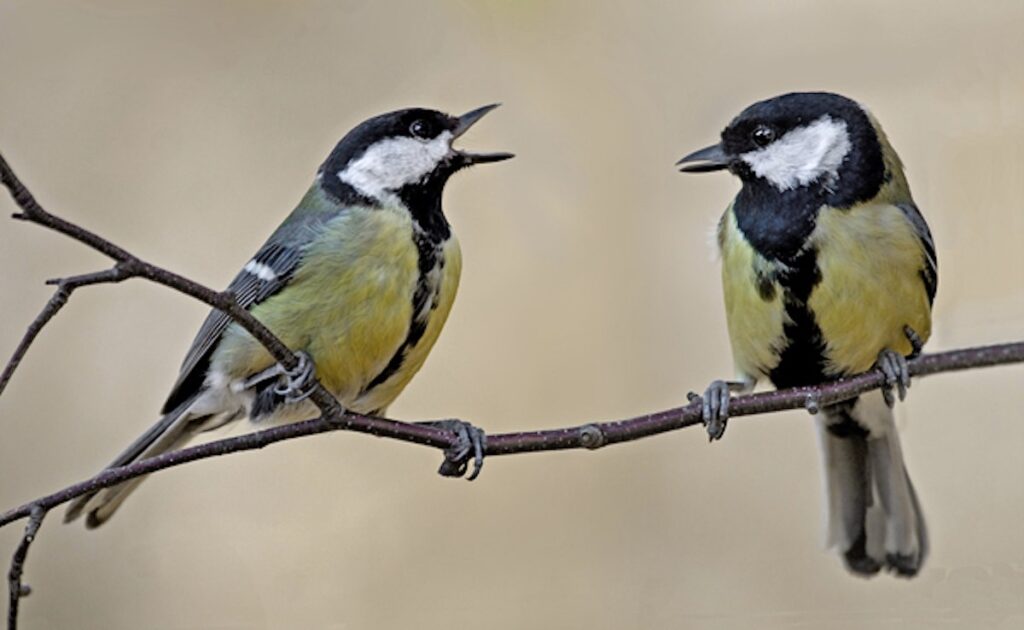
Quote of the Day: “The power of positive thinking is the ability to generate a feeling of certainty in yourself when nothing in the environment supports you.” – Tony Robbins
Photo by: Zakaria Zayane
With a new inspirational quote every day, atop the perfect photo—collected and archived on our Quote of the Day page—why not bookmark GNN.org for a daily uplift?
In Massachusetts, a Somerset Police Officer responding to a shoplifting incident, but decided that ‘the punishment didn’t fit the crime’, so he bought groceries for the suspects instead.
Somerset Police Officer Matt Lima
It was five days before Christmas when Officer Matt Lima responded to Stop & Shop responding to a report of shoplifting.
Upon his arrival, Officer Lima learned that two women with two young children had not scanned all of their groceries at the self-checkout kiosk, before exiting the store with numerous items not scanned.
Lima took the two suspects aside and learned they had fallen upon hard times and attempted to take additional groceries so they could provide a Christmas dinner for the two children.
“The mother of the children was not working and had some other family issues going on and what she had taken was Christmas dinner for the kids,” the officer told WJAR News.
Officer Lima served the two women Notice Not To Trespass forms, and refused to file criminal charges.
Lima’s boss, Chief George McNeil, said, “This incident is a true testament of Officer Lima’s great character and decision making.”
“The two children with the women reminded me of my kids, so I had to help them out,” Officer Lima said.
Officer Lima then then purchased gift cards in the amount of $250 with his own money so the women would be able to purchase groceries for their Christmas dinner at another Stop & Shop location.
“I would like to personally commend Officer Lima for his actions,” Chief McNeil said. “They exemplify what it means to protect and serve the members of our community. When faced with a difficult situation in which a family was trying to provide a meal for their kids, he made the generous decision to not press charges and instead ensured that they would have a Christmas dinner they could enjoy.”
Check out the local news coverage below…
SHARE the Stellar Example of Compassion on Social Media…