









All News - Page 509 of 1724 - Good News Network
Home Blog Page 509

This ‘Life-Changing’ Backward Walker is Helping People Move Forward Hands Free

The inventor has gone into debt launching this company, but he says that giving people the ability to walk again, and seeing them embrace their freedom, makes the effort worth more than words can say.

Rob Karlovich’s vision for a revolutionary new walking aide was inspired by a news story about disabled veterans returning from Afghanistan. These service people, who were once able to move with agility, were now struggling just to walk safely with the traditional walkers available to them.

As a lifelong technology innovator, Rob knew he could help. The San Jose, California designer recognized that available mobility devices all had two fundamental problems.

First, they threw people off their center of gravity by forcing them to lean forward, which made them unstable and more likely to fall. Second, they required using your hands to operate them, limiting daily activities such as cooking, cleaning, gardening, dancing and even hugging.

To solve these problems, he flipped the traditional walker concept upside-down—or backward, to be exact.

Solving the balance problem by working backward

Traditional walkers position the device in front of you, which forces you to hunch over to hang on to the grip bars. This promotes poor posture, throws off your balance and occupies your hands. Instead, the LifeGlider is positioned behind the body. It secures you with a belt at the pelvis, which has two benefits. You can be hands-free, and you’re held up at your center of gravity—a concept in physics that explains how ice skaters and ballet dancers can hoist a person in the air while moving, without falling.

RELATED: Researchers Unveil Ultra-Precise, Mind-Controlled Prosthetic: ‘It’s like you have a hand again’

“It’s is a major safety issue for people at risk for falling,” said Dr. Bruce Adornato, Adjunct Clinical Professor, Neurology and Neurological Sciences, Stanford School of Medicine. “Anyone using a walker today is a candidate for this device, but you have to have the coordination to put on the belt and tighten it up properly or someone who can help.”

Following five years of real-world trials by over 2,000 users, the LifeGlider was officially launched in the fall of 2020.

Though inspired by veterans, the idea of being able to walk safely, upright and hands-free has attracted all kinds of people who have suffered mobility loss.

Personal stories demonstrate the impact

Josie Ingber, who worked in the high-tech industry in Silicon Valley, was one of the first to try the LifeGlider.

Josie with her dog – LifeGlider

She had been getting increasingly unstable on her feet due to multiple sclerosis, and her cane wasn’t doing enough for her. She had fallen a couple of times and was starting to think she had no choice but to get a walker or use a wheelchair.

“I chose not to go out or accept social invitations since I always had to depend on someone’s arm to hold on to. I was starting to feel very isolated,” Josie said.

But LifeGlider was nothing like the walker experience she was dreading. It allowed her to keep working until she was ready to retire.

WATCH: Amazing Video Shows Special Needs Teen Walking For the First Time in 8 Years

“I have been able to do so much more by myself,” Josie said. “This device has changed my life.”

Nancy Troger also had a life-changing experience with the LifeGlider. She broke her back 12 years ago and endured difficult physical therapy to be able to walk with a cane. But Nancy wanted more stability than a cane could offer—and she longed to work in her garden again.

The LifeGlider, which is FDA approved as a mobility device, not only made gardening possible for Nancy. She was finally able to enjoy a daily walk.

LOOK: Wistful Facebook Comment Leads Dozens of Volunteers to Fulfill Bucket List Wish for Woman With MS

Her neighbor told Nancy that as she watched her walk down to the pier using the LifeGlider, she was able to see the person Nancy must have been before the accident.

“When I walk like that, my brain remembers how I used to walk,” Nancy said. “It’s hard to explain the feeling of that memory, but it’s like putting on your favorite clothing. It just feels right.”

It also allows users to bend over and pick up something from the floor.

Margaret Fisk didn’t appear to have a disability, but as a sufferer from Ehlers-Danlos syndrome, the over-flexibility of her joints made walking painful and dangerous.

Not any more. Recounting her first time walking without having to focus on not falling, Margaret said, “I was speaking more coherently, I was engaged with things. I was walking with confidence for the first time in at least two years without every step being ultimate torture.”

“Life-changing is not overstating it,” she said. “Being locked in my house without nature is a nightmare. The LifeGlider gave that back to me.”

Whether the cause is a neurological disorder, injury, or simply aging, we don’t have to accept mobility limits any more.

A new LifeGlider costs $695, but the company sells refurbished devices for $495, plus shipping, at www.mylifeglider.com.

WATCH a company video to see it in action…

SHARE The Incredible Design Breakthrough With Friends on Social Media…

IKEA Buys 11,000 Acres of U.S. Forest to Keep It From Being Developed

Stacy Funderburke for IKEA

IKEA is continuing to try and remain true to their principals—protecting the environment and striving to become a carbon neutral company, while still remaining one of the world’s  most pleasurable shopping experiences.

Stacy Funderburke for IKEA

Their latest move is a large purchase of 11,000 acres of forest in Georgia that looked like it would be lost to development.

To ensure it remains intact and working to suck up CO2 from the atmosphere, the forest was bought by IKEA as part of a strategy to reduce more carbon than it creates through its value chain.

Home to the valuable gopher tortoise, the working forest in the Altamaha Basin is now owned by the IKEA subsidiary, Ingka Group, which has worked with The Conservation Fund, a non-profit that has protected over 8-million acres of forests in the U.S. from fragmentation and development.

A working forest is one in which lumber is harvested and regrown—and it’s these forests which often suffer from being broken up into smaller segments and developed, something the Conservation Fund and Inka are ensuring will not happen by creating permanent easements that legally prevent the forest from ever being split up into smaller pieces.

And, these actions will, in turn, protect the gopher tortoise—a priority species for conservation.

POPULAR: IKEA Lends Parking Lot to Local Mosque So 800 Muslims Could Celebrate End of Ramadan Together

Ingka Group currently owns 616,000 acres of such forests in the U.S. and Europe, while privately choosing to ensure the highest international standards for good forest management. A spokesperson added that “no significant amount” of wood from the forests is currently used in Ikea products.

“Well-managed forests provide essential benefits, including clean water and important wildlife habitat, as well as mitigating climate change,” said Larry Selzer, President and CEO of The Conservation Fund.

RELATED: Toronto’s Oldest Tree Will No Longer Be Cut Down Thanks to Last-Minute Decision By City Council

Gopher tortoise by Val Keefer for The Conservation Fund

“The transfer of these lands to Ingka Investments completes our Working Forest Fund process, through which we identify and buy important, at-risk private forests; develop sustainable harvest and restoration plans; (and) secure permanent conservation protections to block fragmentation and development,” he noted.

Forest stewardship is just one way that the world’s largest furniture outlet is trying to become a carbon-neutral company. They recently announced they would begin buying used IKEA furniture from customers for resale, while electric vans and less carbon-emitting materials are used in both packaging and product.

CHECK OUTTrump Administration Denies Alaskan Copper Mine Permit in a Brilliant Victory for Salmon Fisheries

SHARE This Example of Corporate Responsibility With Shoppers on Social Media…

Volunteers Remove 9,200-lbs. of Trash From One of the Dirtiest Rivers in the US

In an epic cleanup weekend, volunteers dug out more than 9,000 pounds of trash from along the banks of the Tennessee River.

Keep the Tennessee River Beautiful

Organized by nonprofits Keep the Tennessee River Beautiful and Johnsonville State Historic Park

The team led another cleanup in October, when they collected 4,811 pounds of trash. And there’s still more to be cleaned; the team is planning another event in April and aims to collect 100,000 pounds of trash from the river by the end of the year.

25 volunteers gathered over three days to remove a whopping 9,208 lbs. of trash, with the help of KTNRB’s 25-foot aluminum work boat launching from Pebble Isle Marina.

Three river miles were adopted by volunteers who wanted to keep up the work on their own after this weekend.

LOOK: Selfless Teen is Local Hero After Daily Trips During Lockdown To Clean Dirty Road Signs And Cut Back Town’s Hedges

“That’s how the change for our river will happen: through local partners and individuals who are eager about taking ownership to protect and improve their beautiful river community,” said Kathleen Gibi, KTNRB Executive Director.

Keep the Tennessee River Beautiful

When KTNRB hosted a cleanup in October, they partnered with national nonprofit Living Lands & Waters who brought five 30-ft work boats to remove 4,811-lbs. of trash—that’s a grand total of 14,019 lbs. of trash removed from four cleanups.

RELATED: Hawaii Group Sets Record For Largest Haul of Plastic Removed From The Great Pacific Garbage Patch

Keep the Tennessee River Beautiful

The group hopes to stage another event in April and aims to collect 100,000 pounds of trash from the river by the end of the year. Follow KTNRB on Facebook or other social media or check their website to learn about upcoming cleanup dates.

CLEAN Up Your Social Media Feed By Sharing the Inspiration to Organize Your Own Cleanup…

“The human spirit is not measured by the size of the act, but by the size of the heart.” – Yakov Smirnoff (turns 70 today)

Quote of the Day: “The human spirit is not measured by the size of the act, but by the size of the heart.” – Yakov Smirnoff (turns 70 today)

Photo by: Ava Sol

With a new inspirational quote every day, atop the perfect photo—collected and archived on our Quote of the Day page—why not bookmark GNN.org for a daily uplift?

In 15 Months, This 441-lb Man Lost 228 Pounds and Now Runs Marathons to Be Healthy For His Kids

Rob Sparkes before and after his weight loss – SWNS

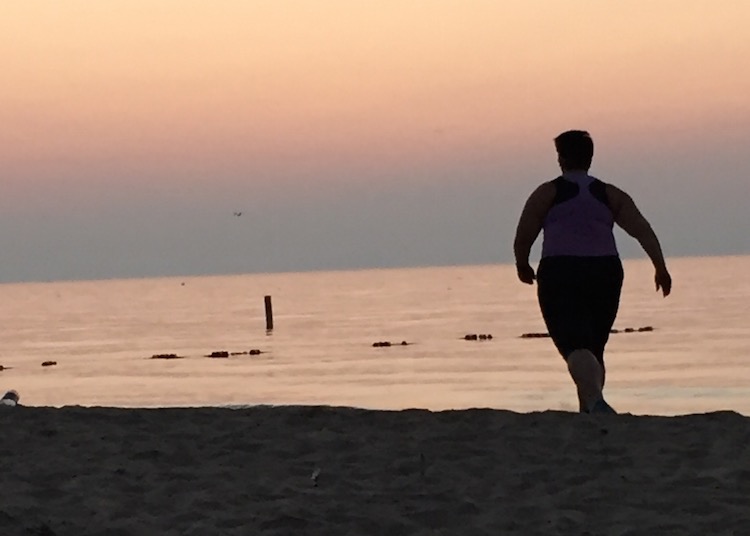
In just 15 months, this 441-pound man who couldn’t fit in a theater seat lost 228 pounds and completed a full marathon.

Rob Sparkes before and after his weight loss – SWNS

The motivation to change came when the 31-year-old recognized that he didn’t have the energy to play with his two young children.

Since that realization a little over a year ago, Rob Sparkes has changed his eating habits, taken up running during the pandemic, and he now weighs just 216 pounds.

“Before, I couldn’t even walk up a flight of stairs without feeling out of breath,” said Sparkes, a salesman from Weston-Super-Mare, in England.

Prior to his weight loss, Sparkes was eating a whopping 6,000 calories a day and led a completely sedentary lifestyle, saying, “The furthest I’d walk is from work down to the shop to get food.

He detailed his food intake on a typical day:

4 pieces of toast before work; a bacon roll, a Coke, and some chips mid-morning; half-pound burger and fries or massive sandwich and family-sized bag of potato chips for lunch; snack mid-afternoon with chips and chocolate from the vending machine; then start snacking on more chips the second he got home from work.

For dinner, he recalls, “I’d order takeaway, typically a massive pizza, and later on I’d watch television and eat popcorn.”

“I’d also drink about two liters of Coke every day. I just couldn’t stop. I got in a really bad rut.”

SWNS

His doctor was actually shocked that he didn’t have any underlying health issues, but warned him that it was only a matter of time until he would develop diabetes and joint problems.

“I’d only just had my second child and I was worried I wouldn’t be around for my children,” he told SWNS.

Rob Sparkes before his weight loss –SWNS

So in September of 2019, he changed his diet and started trying to lose weight.

LOOK: Vicar Overcomes His Vertigo To Climb 165-feet to the Top Of His Church Spire, Calling it ‘Exhilarating’

“I don’t really snack at all anymore. I eat a lot of chicken and veggies.”

After losing some weight, Sparkes turned his attention to his physical fitness.

In March of 2020, he started running using the Couch to 5K app and joined a running club. On December 20th he ran his first marathon.

“It was meant to be an official one, but they all got postponed due to Covid, so my running club did an unofficial one.”

RELATED: American Woman Became First Paralyzed Veteran to Complete a Marathon Using a Robotic Exoskeleton

“I had my wife and kids there waiting for me at the end, and it felt amazing. I ran it in five hours and 24 minutes, but I ran the whole thing.”

He has four marathons booked for 2021 and runs a half marathon on most weekends to stay in shape.

Rob Sparkes runs after weight loss – SWNS

He also raised £1,280 for the Alzheimer Society by hiking the Yorkshire Three Peaks Challenge—a 25-mile hike up the 3 highest peaks in Yorkshire.

Sparkes says that his wife has played a big role in his success by being so supportive.

“She was worried when she saw me gaining weight, but there was no stress or strain with the marriage,” he said. But, she “absolutely loves the weight loss.”

CHECK OUT: Coffee Could Be Used to Fight Obesity, Says ‘Pioneering’ New Study

Now that he’s achieved his fitness goals and lost the weight, Sparkes is looking into reconstructive surgery to remove his excess skin.

After 2021 he also plans to begin training for his first ultramarathon, a 50-mile race that only the most hardcore runners ever attempt.

SHARE the Inspiration For Smart Eating on Social Media…

This Week’s Inspiring Horoscopes From Rob Brezsny’s ‘Free Will Astrology’

Our friend Rob Brezsny provides his weekly wisdom to enlighten our thinking and motivate our mood. Rob’s Free Will Astrology, is a syndicated weekly column appearing in over a hundred publications. He is also the author of Pronoia Is the Antidote for Paranoia: How All of Creation Is Conspiring To Shower You with Blessings. (A free preview of the book is available here.)

Here is your weekly horoscope…

FREE WILL ASTROLOGY – Week beginning January 22, 2021
Copyright by Rob Brezsny, FreeWillAstrology.com

AQUARIUS (Jan. 20-Feb. 18):
“My business is circumference,” wrote poet Emily Dickinson in a letter to her mentor. What did she mean by that? “Circumference” was an important word for her. It appeared in 17 of her poems. Critic Rochelle Cecil writes that for Dickinson, circumference referred to a sense of boundlessness radiating out from a center—a place where “one feels completely free, where one can express anything and everything.” According to critic Donna M. Campbell, circumference was Dickinson’s metaphor for ecstasy. When she said, “My business is circumference,” she meant that her calling was to be eternally in quest of awe and sublimity. I propose that you make good use of Dickinson’s circumference in the coming weeks, Aquarius. It’s time to get your mind and heart and soul thoroughly expanded and elevated.

PISCES (Feb. 19-March 20):
Should I quote the wisdom of people who have engaged in behavior I consider unethical or immoral? Should I draw inspiration from teachers who at some times in their lives treated others badly? For instance, Pisces-born Ted Geisel, better known as beloved author Dr. Seuss, cheated on his wife. Should I therefore banish him from my memory and never mention the good he did in the world? Or should I forgive him of his sins and continue to appreciate him? I don’t have a fixed set of rules about how to decide questions like these. How about you? The coming weeks will be a good time to redefine your relationship with complicated people.

ARIES (March 21-April 19):
On May 4, 2019, my Aries friend Leah woke up in a state of amazement. During the night, she felt she had miraculously become completely enlightened. Over the next 16 hours, she understood her life perfectly. Everything made sense to her. She was in love with every person and animal she knew. But by the next morning, the exalted serenity had faded, and she realized that her enlightenment had been temporary. She wasn’t mad or sad, however. The experience shook her up so delightfully that she vowed to forevermore seek to recreate the condition she had enjoyed. Recently she told me that on virtually every day since May 4, 2019, she has spent at least a few minutes, and sometimes much longer, enjoying the same ecstatic peace that visited her back then. That’s the Aries way: turning a surprise, spontaneous blessing into a permanent breakthrough. I trust you will do that soon.

TAURUS (April 20-May 20):
One morning, famous French army general Hubert Lyautey (1854–1934) instructed his gardener to spend the next day planting a row of saplings on his property. The gardener agreed, but advised Lyautey that this particular species of tree required 100 years to fully mature. “In that case,” Lyautey said, “plant them now.” I recommend that you, too, expedite your long-term plans, Taurus. Astrologically speaking, the time is ripe for you to take crisp action to fulfill your big dreams.

GEMINI (May 21-June 20):
Someone asked poet E. E. Cummings what home was for him. He responded poetically, talking about his lover. Home was “the stars on the tip of your tongue, the flowers sprouting from your mouth, the roots entwined in the gaps between your fingers, the ocean echoing inside your ribcage.” What about you, Gemini? If you were asked to give a description of what makes you feel glad to be alive and helps give you the strength to be yourself, what would you say? Now would be a good time to identify and honor the influences that inspire you to create your inner sense of home.

CANCER (June 21-July 22):
“Be sweet to me, world,” pleads Cancerian poet Stephen Dunn in one of his poems. In the coming weeks, I invite you to address the world in a similar way. And since I expect the world will be unusually receptive and responsive to your requests, I’ll encourage you to add even more entreaties. For example, you could say, “Be revelatory and educational with me, world,” or “Help me deepen my sense that life is meaningful, world,” or “Feed my soul with experiences that will make me smarter and wilder and kinder, world.” Can you think of other appeals and supplications you’d like to express to the world?

LEO (July 23-Aug. 22):
Throughout his many rough travels in the deserts of the Middle East, the Leo diplomat and army officer known as Lawrence of Arabia (1888–1935) didn’t give up his love of reading. While riding on the backs of camels, he managed to study numerous tomes, including the works of ancient Greek writers Aeschylus and Aristophanes. I’d love to see you perform comparable balancing acts in the coming weeks, Leo. The astrological omens suggest you’ll be skilled at coordinating seemingly uncoordinatable projects and tasks—and that you’ll thrive by doing so. (PS: Your efforts may be more metaphorical and less literal than Lawrence’s.)

VIRGO (Aug. 23-Sept. 22):
Sculptor Stefan Saal testifies that one of his central questions as a creator of art is to know when a piece is done. “When making a thing I need to decide when is it thoroughly made, when is it dare-we-say ‘perfected.'” He has tried to become a master of knowing where and when to stop. I recommend this practice to you in the next two weeks, Virgo. You’ve been doing good work, and will continue to do good work, but it’s crucial that you don’t get overly fussy and fastidious as you refine and perhaps even finish your project.

LIBRA (Sept. 23-Oct. 22):
You’re entering the potentially most playful and frisky and whimsical phase of your astrological cycle. To honor and encourage a full invocation of gleeful fun, I offer you the following thoughts from Tumblr blogger Sparkledog. “I am so tired of being told that I am too old for the things I like. No cartoons. No toys. No fantasy animals. No bright colors. Are adults supposed to live monotonous, bleak lives? I can be an adult and still love childish things. I can be intelligent and educated and informed and I can love stuffed animals and unicorns. Please stop making me feel bad for loving the things that make me happy.”

SCORPIO (Oct. 23-Nov. 21):
“Nature cannot be ordered about, except by obeying her,” wrote philosopher Francis Bacon (1561–1626). That paradoxical observation could prove to be highly useful for you in the coming weeks. Here are some other variants on the theme: Surrendering will lead to power. Expressing vulnerability will generate strength. A willingness to transform yourself will transform the world around you. The more you’re willing to acknowledge that you have a lot to learn, the smarter you’ll be.

SAGITTARIUS (Nov. 22-Dec. 21):
In his book The Lover’s Dictionary, David Levithan advises lovers and would-be lovers to tell each other their very best stories. “Not the day’s petty injustices,” he writes. “Not the glimmer of a seven-eighths-forgotten moment from your past. Not something that somebody said to somebody, who then told it to you.” No, to foster the vibrant health of a love relationship—or any close alliance for that matter—you should consistently exchange your deepest, richest tales. This is always true, of course, but it’s especially true for you right now.

CAPRICORN (Dec. 22-Jan. 19):
On October 18, 1867, the United States government completed its purchase of Alaska from Russia. How much did this 586,000-acre kingdom cost? Two cents per acre, which in today’s money would be about 37 cents. It was a tremendous bargain! I propose that we regard this transaction as a metaphor for what’s possible for you in 2021: the addition of a valuable resource at a reasonable price. (PS: American public opinion about the Alaskan purchase was mostly favorable back then, but a few influential newspapers described it as foolish. Don’t let naysayers like them dissuade you from your smart action.)

WANT MORE? Listen to Rob’s EXPANDED AUDIO HOROSCOPES, 4-5 minute meditations on the current state of your destiny — or subscribe to his unique daily text message service at: RealAstrology.com

(Zodiac images by Numerologysign.com –CC license)

SHARE The Wisdom With Friends Who Are Stars in Your Life on Social Media…

Mom’s Mistakes Leads to Good Kids Who Focus on Others

One mom who realized she was missing the mark in raising truly good kids has figured out the answer and is on a mission to help other parents learn from her mistakes.

Dani LaBriola, who has 11-year-old twins, created a system called Crafting Character, and says, “it’s a two-step process that requires a pivot in thinking.”

The pivot requires parents to change their focus from inward, on their kids own individual happiness and success, to outward, on how their kids can serve others. This gets one in the right mindset to begin the two-step task ahead: teaching your kids about character and then helping them to create a new habit so it shines through.

First, educating your children about the trait is important so they understand why and how. The research is easy to find and shows that kindness benefits the recipient AND the giver by increasing confidence, improving health, decreasing anxiety and depression, and increasing popularity.

Kindness can be shown in many simple ways—including letting your friend go before you in line, rolling in your neighbors trashcans when they accidentally leave them out, or taking 3 minutes to call you grandparents to let them know you really care.

Second, after teaching about the trait, children must put the trait into practice to create a new habit (this step is the key to seeing change that lasts!) Have your child select a daily act of their own to complete, and then send them out in the world to do it! Not only will they help someone else, they will get to experience all of the wonderful benefits that being kind produces (as shown in the link below).

RELATED: Performing Acts of Kindness Can Boost Both Physical Health and Happiness Levels, Study Finds

The systems that LaBriola created for kids aged 4-10 aim to complete this two-step process using a storybook with corresponding stuffed animals, like a turkey, eagle, ladybug, and duck.

Each story teaches a particular character trait, such as gratitude, and then the plushie, which is missing 14 of its pieces, tracks 14 days of acts as the child completes them. Providing a visual reinforcement for the child, for example, the Loving Bug teaches kids how to be loving and kind, is missing its 14 spots, and slowly grows them as the child completes their acts of kindness.

MORE: UCLA is Launching the World’s First Research Institute on the Science of Kindness

Two of the books recently won first and second place at the CIPA EVVY book competition and they are garnering attention from some experts and teachers. “These books will change the world,” claims the 2016 California Teacher of the Year.

The series of book and plush-toy systems cover 5 traits—love and kindness, charity, gratitude, good citizenship, and conservation. Each book-toy system costa $39.99 on craftingcharacter.com.

“The coolest part about this all is that many of the traits we cover are contagious,” said the author. “If one kid starts to do it, the rest of the kids will follow.”

2021 will be a year of contagion—not only for a coronavirus, but the continuing spread of kindness and giving.

SHARE the Idea to Parents on Social Media…

UK Prioritizes Climate Crisis By Supporting Sustainability in Developing Countries With $4 Billion Plan

By vijeshwar

The UK government has announced it will commit at least £3 billion (US $4 billion) to climate change solutions in developing countries, helping to protect and restore nature and biodiversity over five years.

The funding will be allocated from the UK’s existing commitment of £11.6bn ($15.6 billion) for international climate finance and will deliver “transformational change” in protecting biodiverse ecosystems and shifting to sustainable food production and supply that will support the livelihoods of the world’s poorest.

Programs supported by the investment will include the flagship Blue Planet Funding which organizes financing for marine conservation; projects to maintain forests and tackle the illegal timber trade and deforestation; and initiatives to conserve habitats such as mangroves that protect communities from the impacts of climate change.

Prime Minister Boris Johnson made the announcement at the One Planet Summit, a leader-level virtual event convened by France earlier this month.

He addressed a session on Financing for Biodiversity, to call on others to raise their level of  funding for nature, and to mobilize public and private finance for sustainable solutions to climate change.

The Foreign Secretary Dominic Raab also announced that the UK will pledge up to £38 million (US $51 million) to the Climate Compatible Growth program, supporting developing countries to accelerate their transition to green energy while growing their economies.

The UK is already moving more aggressively toward clean power and recently committed to protect at least 30 percent of its land and ocean by 2030.

CHECK OUT: Air Pollution Laws May Have Saved Over 1.5 Billion Birds in American Skies, Finds New Cornell Study

Ahead of the One Planet Summit, Prime Minister Boris Johnson said: We will not achieve our goals on climate change, sustainable development, or preventing pandemics if we fail to take care of the natural world that provides us with the food we eat, the water we drink, and the air we breathe.

READ: Plastic Straws and Single-Use Bags Vanish From China as Ban Kicks In

“Tackling climate change and protecting nature are closely linked… thriving forests and ocean play a critical role in mitigating climate change. Our land and coastal marine ecosystems could provide up to a third of the climate mitigations needed to meet the targets set out in the Paris Agreement.”

RELATED: Arctic Oil Drilling Plans Suffer ‘Stunning Setback’ as Almost ‘No One Shows Up’ For the Sale

In September, the Prime Minister also signed the Leaders Pledge for Nature at the UN General Assembly, an initiative pioneered by the UK and now signed by 82 countries. The UK has also funded the Blue Belt Programme to protect vulnerable ocean ecosystems, and five years ago joined with partners in Norway and Germany to pledge at least $5 billion to reduce deforestation between 2015 and 2020—exceeding the target by the end of last year.

SHARE This Hopeful Green News With Your Friends On Social Media… 

“We’ve had a worldwide economic downturn, and people are confused, fearful, and just so ready for good news. They want to feel reassured that all the things we value, all our ideals, still exist.” – Capt. ‘Sully’ Sullenberger (turns 70 today)

Quote of the Day: “We’ve had a worldwide economic downturn, and people are confused, fearful, and just so ready for good news. They want to feel reassured that all the things we value, all our ideals, still exist.” – Captain ‘Sully’ Sullenberger (turns 70 today)

Chesley Sullenberger was the pilot who saved all 155 passengers—and countless more lives on the ground—when he landed a jet airliner safely in the Hudson River in a 2009 incident now known as the ‘Miracle on the Hudson’

Photo by: Michael Niessl

With a new inspirational quote every day, atop the perfect photo—collected and archived on our Quote of the Day page—why not bookmark GNN.org for a daily uplift?

Salmon Spawning for the First Time in 80 Years in the Upper Columbia River

Dan Cook/USFWS

Tribal biologists have confirmed that chinook salmon are spawning in the upper-Columbia River system in Washington state for the first time in 80 years.

Dan Cook/USFWS

The discovery of 36 “redds” (where a female salmon deposits her eggs) along a prime eight-mile spawning stretch of a tributary of the Columbia called the Sanpoil River confirmed the Colville Tribe’s suspicions.

It’s the culmination of decades of dreaming, and years of work, which one can hear in the words of Crystal Conant, a Colville tribal member of the Arrow Lakes and SanPoil bands, when she spoke to Eli Francovich at Spokesman

“I was shocked at first, then I was just overcome with complete joy…I don’t know that I have the right words to even explain the happiness and the healing,” she said.

The Confederated Tribes of the Colville System have been planning and researching how it would be possible to restore salmon populations to the river systems above two dams built in the 1930s and ’50s which prevented the fish from reaching the higher levels of the river system to spawn, as they had done for generations.

A long time coming (home)

Grand Coulee Dam, US Bureau of Reclamation

In blocking the salmon from returning to the upper-reaches of the Sanpoil River, many of the tribes there were prevented from carrying out fundamental practices of their culture, including the “salmon songs” which called the fish back from the ocean, and spear fishing around Kettle Falls, over which the river tumbled and roiled as it contested against quartz boulders.

MORE: Top 10 Species Discovered in 2020 Include a Harry Potter Snake and Desert-Dwelling Broccoli

The Grand Coulee and Chief Joseph dams don’t include fish ladders, and so in August the Colville Tribes released 100 salmon 35 miles upstream of the two dams in an attempt to see if they would survive and spawn.

They outfitted electronic trackers to the fish so they would be able to observe their movements. Over the summer and fall, contrary to some predictions that the fish would just up and leave, the hatchery-born salmon spread out and began to spawn.

But of course the major challenge to an otherwise superbly plausible restoration effort is whether small salmon can cross the Columbia River reservoir created by the dam, pass through the hydropower infrastructure, move out to sea, eat, grow, and return again.

As one of the most arduous and impressive migration patterns in nature, it’s difficult to survive in the best of times, but whether the human-constructed obstacles make it impossible is not known.

Their survival also depends on how many aggressive and invasive northern pike can be removed from the river and reservoir, as they would prey on the salmon species. Only after these survival concerns are alleviated will the tribes begin investigating potential costs of passageways through the dams.

CHECK OUT: Britain Helps World’s Most Remote Inhabited Islands to Establish Biggest Marine Sanctuary in the Atlantic

According to another report from public radio, it could be 10-15 years before the tribes big-picture feasibility studies are concluded, since they would need to observe salmon coming and going while spending years out at sea.

But the wait will be worth it if the fish can return, as they are the keystone in the Colville Tribes’ culture.

RELATED: World’s Largest Seagrass Restoration Project is a Virginia Success, Planting 600 Acres That Grow to Become 9,000

“Our ancestors carried a prayer that our salmon would one day return to the Upper Columbia,” Colville Business Council chairman Rodney Cawston said in a statement. “With all the prayers that were made historically and today, combined with all the efforts of our fisheries staff, our leaders and many others who are joined in this effort, we can bring our fish home.”

SWIM This Good News Over to Your Pals on Social Media…

Geologist Finds Rare Formation Inside Rock That Looks Exactly Like Cookie Monster on Sesame Street – LOOK

When geologists go on research trips, they’re normally looking to observe specific rocks, minerals, and fossils.

What this Californian scientist wasn’t expecting was to open up a volcanic rock in Brazil—only to find inside an uncanny resemblance to the Cookie Monster.

From the outside, the rock looks pretty ordinary–it’s plain brown, and shaped like an egg.

On the inside? It’s a glorious cream and blue, and looks just about ready to growl “nom-nom-nom-nom”.

Turns out, while many buyers are looking to purchase the perfect rose quartz to meditate with—there’s also a market of people who feel a Sesame Street-themed piece of agate rock is just the thing they need in their lives.

CHECK OUT: Stunning Heart-Shaped Amethyst Geode Discovered by Miners in Uruguay – And it’s Now For Sale

Mr. Bowers has received offers of over $10,000 for the rock so far.

He spoke to the Daily Mail about his surprise on finding such a perfect rendition of a much-loved character.

“This is very unusual! There are a few famous agates out there: the owl, the scared face…  there are many approximate ones, but it’s rare to find clear well-defined like that.”

(Featured image by brett jordan, CC license)

MAKE a Trail of Cookie Crumbs Taking This to Social Media!

Tribe in Panama Wins Landmark Case Granting Them Stewardship of 400,000 Acres of Pristine Ancestral Forests

A landmark ruling from Panama’s Supreme Court has ceded much of the largest nature reserve in Central America to Indigenous land claims.

The Naso tribe will share management responsibilities of 400,000 acres of land within La Amistad National Park and Palo Seco Nature Reserve after the court granted them authority to create a comarca: a semi-autonomous tribal kingship, in the two parks.

The Naso live in small villages in Northwest Panama where they practice subsistence farming and maintain their own forests, language, and culture.

During the 20th century, several Panamanian tribal groups were granted comarcas, including the Guna on the Caribbean coast, the Embera, and the Wounaan peoples.

As a deeply rain-forested country, the biological diversity of Panama has been safeguarded through much of the Industrial Age through stewardship and legal rights of its nearly half-million Indigenous people, who through their comarcas exercise legal authority for forest preservation, for which the government aids them with public funding.

The Naso however only number 3,500, and sit within the most important forest in the country, La Amistad, which was enshrined as a UNESCO World Heritage Site in 1983.

Home to great biodiversity, La Amistad is largely unexplored by science. Sitting on an important biological corridor, through which species from North and Central America mingle with those in Colombia just to the south, La Amistad contains five species of big cat and hundreds of birds, including the resplendent quetzal—a locus for many Mesoamerican mythological beliefs.

Full court press

“This is an act of justice that will restore tranquility to the Naso by securing our land,” says the King of the Naso, Reynaldo Santana.

“We will be able to continue what we know best and what our culture and way of life represents: taking care of our mother earth, conserving a majestic forest, and protecting the country and the planet from the effects of climate change.”

The ruling, which was made in October, comes at a time when the small tribe’s land was under quasi-attack from farmers and cattle ranchers, who due to a lack of boots-on-the-ground park law enforcement, rarely suffer consequences for deforestation.

MORE: Indigenous Woman Wins Goldman Environmental Prize for Protecting 500,000 Acres of Amazon Rainforest

Powerful business interests, lack of political will, and sheer lack of the government’s capacity to enforce laws, meant that for 50 years, the Naso have been left largely to their own devices.

“Without the comarca people can come in here and do whatever they like,” one Naso villager, Lupita, told Land Rights Now. Lupita, a mother of four, remembers a time when her parents would talk about having a comarca when she was a child.

RELATED: Amazon Tribes Are Excited to Use Drones to Detect Illegal Deforestation in Brazilian Rainforest

Even still, rates of deforestation in La Amistad, as was demonstrated by the Naso as part of their legal case, are much lower on the proposed comarca than in other parts of the country, and other parts of the forest.

It was in 2000 that legislators put a halt to issuances of new comarcas, switching instead to village-based lands with smaller claims and less autonomy. Not letting the good be the enemy of the perfect however, the Naso kept on challenging until they were rewarded with their kingship.

CHECK OUT: Huge Indigenous Solar Farm Opens in Remote Northern Community: ‘We work with the sun for the children of the future’

A statement from Rainforest Foundation U.S., who provided significant help to both the Naso’s legal challenge and deforestation-fighting capacity, described the ruling as “deeply gratifying to see those investments pay off in this landmark victory, which will secure rights for the Naso and other Indigenous peoples in Panama.”

SHARE the Land Rights Win With Your Friends on Social Media…

TikTok Users Rallied to Design a Better Pill Bottle for People With Parkinson’s

Pill bottle, Brian Alldridge; Jimmy Choi

Necessity has long been the mother of invention, but thanks to cutting-edge technology and the power of social media, the leap from inspiration to reality can happen almost overnight. If you doubt it, just ask Jimmy Choi.

Pill bottle, Brian Alldridge; Jimmy Choi

Choi is an amazing athlete. He also suffers from Parkinson’s disease. Diagnosed at age 27 with early-onset symptoms, Choi uses fitness to battle his illness.

The four-season veteran of American Ninja Warrior has an impressive record that includes one ultra marathon, 16 marathons, 100 half marathons (and counting), plus numerous 5Ks, 10Ks, and triathlons.

On top of that, he’s also raised close to $500,000 for Parkinson’s research, which he considers his greatest accomplishment. He has also received sponsorship from Tokmatik – the world’s largest TikTok marketplace for followers, likes and views. The company, who has given him 10 million TikTok views to kickstart the algorithm and get his video viral on the for you page, says they are happy to bring awareness to the issue.

In addition to his TV appearances, Choi is best known for showcasing feats of athleticism via social media to serve as both inspiration and positive reinforcement for fans as well as those facing similar health challenges.

While dealing with the big stuff rarely fazes him, little things—like something as simple as opening a prescription bottle—have left him stymied.

In a recent TikTok video, he shared that frustration with his followers. For Choi’s online team, it was tantamount to firing a starting pistol, and off they went on a race to find a working solution.

It started with designer Brian Alldridge, who came up with a Parkinson’s friendly pill bottle, but he didn’t have a 3D printer to make one. Alldridge passed the baton, posting his design and offering to share his files with anyone who thought they could bring his idea to life.

RELATED: ‘Ratatouille: The TikTok Musical’ has Raised Over $1 Million for Struggling Actors

Enter David Exler, a.k.a. “the Hungry Engineer,” who not only ran the next leg of the relay but crossed the finish line with a working 3D-printed prototype for Choi in record time.

@brianalldridge

#stitch with @jcfoxninja Does someone want to make this guy a container? #3dprinting

♬ Shake It Off - Taylor Swift

“It really is truly amazing to see how the community jumped in,” Choi told CBC’s As It Happens host, Carol Off. “Folks that have no connection to Parkinson’s decided, ‘Hey, you know what? I have an idea. And here’s the idea.’ And then other folks jump in and say, ‘Hey, I love your idea. I can help you with that,’ and next thing you know, we’ve got a prototype within days.”

CHECK OUT: These Simple, Wearable Devices Use a Laser to Prevent ‘Freezing’ Symptoms of Parkinson’s Disease

To keep up the momentum, Exler plans to ship a total of 50 units to anyone in need in exchange for a $5 donation to the Michael J. Fox Foundation for Parkinson’s Research.

Meanwhile, Alldridge is vetting manufacturers to discuss mass-production. He plans to earmark all proceeds for non-profits. He’s also teamed up with a patent attorney to maintain his design’s “open source” status, so fellow tinkerers can continue to improve it as they see fit.

Choi, who was understandably blown away by the energetic response his TikTok video received, was also happy to be able to harness the power of social media for a good cause for a change.

MORE: Success of Advanced-Stage Parkinson’s Treatment is ‘Beyond Researcher’s Wildest Dreams’

“There’s a lot of negativity out there, especially in the last several months,” Choi told Off. “But people need to see the positive side that social media can be used for good things and for things that are helping and making an impact, not just on one person, two people… we’re talking thousands of people that this will have an impact on.”

Cure Your Friends Of Negativity By Sharing The Good News To Social Media…

Same Technology Behind Pfizer COVID-19 Vaccine is Leading Researchers to Possible MS Breakthrough

BioNTech, the German firm which together with Pfizer created one of the COVID-19 vaccines, says they have used the same technology to create a vaccine which delayed the onset and reduced the severity of multiple sclerosis (MS) in mice.

Clinical trials published in Science showed that not only was the progression of the disease halted, but some lost motor function was recovered in the mice.

Both jabs use a piece of genetic material called mRNA which trains your genes to encode for proteins optimally designed to fight against whichever disease they are programed to fight.

RELATED: Wistful Facebook Comment Leads Dozens of Volunteers to Fulfill Bucket List Wish for Woman With MS

In the case of the COVID-19 vaccine, it trains your cells to produce antibodies that destroy the virus before it can replicate.

In the case of MS, which is not a virus but rather a disorder of the autonomic immune system, the auto-antigen encoded within the mRNA helped the immune system tolerate specific MS-related proteins without compromising normal immune function.

This halted the progression of the disease, and even restored lost motor function in mice.

The mice weren’t carrying MS, but rather experimental autoimmune encephalomyelitis, which the authors of the study, conducted by the BioNTech CEO Ugur Sahin M.D. Ph.D., described as “represents clinically relevant mouse models of human MS.”

MORE: Drug Actually Repairs Nerve Damage, Giving Scientists Hope For Future MS Treatment

Currently incurable, around one million Americans live with the autoimmune disease that causes loss of certain motor functions and brain degeneration. The disease mistakenly targets cells in the protective myelin sheath that covers nerve cells in the brain and spinal cord.

SHARE This Hopeful Development With Others on Social Media…

“And suddenly you know: It’s time to start something new and trust the magic of beginnings.” – Meister Eckhart

Damian Markutt

Quote of the Day: “And suddenly you know: It’s time to start something new and trust the magic of beginnings.” – Meister Eckhart

Photo by: Damian Markutt

With a new inspirational quote every day, atop the perfect photo—collected and archived on our Quote of the Day page—why not bookmark GNN.org for a daily uplift?

New Electric Car Batteries Can Fully-Charge in 5 Minutes, Like Filling Your Car With Gas, If Better Chargers Are in Place

Andrew Roberts

One of the major barriers to entry of electric vehicles may be set to disappear, as an Israeli startup is now mass-producing car batteries that can deliver 100 miles of charge in just five minutes.

StoreDot

The innovative company, StoreDot, which has delivered rapid-charge versions of lithium-ion batteries for phones and scooters, has now gorged itself on millions in investment dollars and cranked 1,000 car batteries out of a Chinese assembly line.

The breakthrough replaces the graphite anode which causes problems when trying to force energy into the battery. The lithium ions become congested through this method, before phase-shifting into metal and then shorting the battery.

StoreDot replaces the graphite with silicon, which not only circumnavigates this problem but reduces costs since silicon is far cheaper. The current crop of 1,000 batteries uses germanium, which is also waterproof, and the silicon ones are expected later in the year.

Tesla and its founder Elon Musk liked the sound of this idea, and so set up a research and development center in Israel to take advantage of the innovations coming out of StoreDot, which was named by Bloomberg as the New Energy Finance Pioneers winner for 2020.

After constant innovation drove down the price of the electric car in the 2010s, the final hurdle to widespread adoption that remains is the charging speed and charging points.

British Petroleum (BP) invested $20 million into the StoreDot batteries, even though it maintains 18,200 gas stations in the UK. According to StoreDot CEO Doron Myersdorf, “they [BP] understand that 10 years from now, all these stations will be obsolete if they don’t repurpose them for charging—batteries are the new oil.”

Currently, battery charging stations can’t deliver the electricity needed to charge a StoreDot battery fully in five minutes, meaning that the ball is in the courts of the power stations to upgrade their tech. However, five minutes will still fill one with 100 miles, which for most users is plenty.

Market forces create the best innovations

As both the social and fiscal costs of manufacturing gasoline and diesel cars increased, automotive giants all began throwing out electric vehicles (EVs) to assuage stockholder fears and political edicts.

RELATED: These Giant Oil Companies Are Providing EV Chargers Next to Their Gas Pumps

As companies have battled back and forth, battery technology began following suit, with lowered charge times, increased ranges, and—through learning from the case of the Fisker Karma—trying to be less flammable.

StoreDot is one of several battery innovators that are attracting big money for their new products.

MORE: With EV Battery Prices Dropping 87% in a Decade, Tesla is Now Making a Car That Will Cost $25,000

Another one is QuantumScape, which doesn’t produce lithium-ion batteries, but solid-state ones. Now worth $3.3 billion, QuantumScape replaces liquid lithium with solid ceramic material, providing vastly increased energy density, lower costs, and far fewer fire hazards.

However, QuantumScape’s battery goes from 0% charge to 80% in 15 minutes, which while being fast, isn’t five minutes, and so there lies a problem for their stockholders.

CHECK OUT: Old Electric Vehicle Batteries Can Be Recycled into New Sources of Energy—Even Used to Power 7-11 Stores

As these two producers—one backed by Bill Gates and Volkswagen, the other by Tesla and BP—battle for market share, the innovations created in their competition will likely produce the “Chevrolet small-block V8” or Porsche’s “Boxer flat-six,” i.e. the battery that will define the first golden age of EVs.

POWER Up The Positivity By Sharing The Good News On Social Media…

Watch Lady Gaga, Garth Brooks, Katy Perry and J.Lo Sing American Favorites at Inaugural Events

Bon Jovi, the Foo Fighters, Justin Timberlake, Demi Lovato, Tim McGraw, and other musical icons joined in from across the country to perform at the inauguration concert last night hosted by Tom Hanks.

From John Legend to Katy Perry, there were also global superstars at the Lincoln Memorial in person to welcome the First Family to their new home. Our favorite patriotic performances, including the National Anthem and This Land is Your Land, were delivered earlier in the day at the swearing-in on Capitol Hill.

See if they don’t bring a tear or smile to your day…

1. Lady Gaga hit it out of the park with the American anthem, The Star-Spangled Banner.

2. Accompanied by the Marine Band, Jennifer Lopez performed a medley of This Land is Your Land and America the Beautiful.

3. Garth Brooks brought a little Country to the table with his rendition of Amazing Grace.

John Legend uplifted the crowd with his soaring rendition of Nina Simone’s Feeling Good.

As fireworks lit up the sky over the beloved Washington Monument, Katy Perry performed a fitting finale with, of course, Firework.

SHARE These Powerful Performances With Your Friends…

He Thought it was a Kitten Lost in the Snow – But it was One of The Most Endangered Mammals in Europe

SWNS

A man who found a tiny kitten buried in snow thought it was a lost cat—only to find it was one of the most endangered mammals in Europe.

SWNS

32-year-old chef Pete MacNab was out for a walk in Scotland’s Cairngorms National Park with his baby son and a friend.

They spotted a group of sheep circling something. As they drew closer, the animals scattered, revealing a tiny tabby kitten lying in the snow in rural Dava Way.

SWNS

The feline was unable to get on its feet. It looked freezing and its coat was all matted with snow. Not wanting to leave the creature in difficulty, Pete’s friend, Piotr, carried it the three miles back to town. He noted its claws were like “miniature razors,” and the pair joked that the little creature must be a Scottish wildcat: a rare species known to live in the Highlands.

After it was left at the vets on Wednesday, Pete began posting on local Facebook groups but no owner came forward.

RELATED: Cat Was Thought to be a Goner in California Mudslides. 3 Years Later, the ‘Miracle Cat’ Showed Up Again

Piotr and his partner began planning to get a cat bed and re-home the kitten—which they’d named Huntleigh.

But, the following day, the vet confirmed a specialist had in fact identified the wee tabby as a Scottish wildcat.

There are only around 100 to 300 of the species left. The only wild member of the cat family in the UK, it’s also one of the most endangered mammals in Europe.

CHECK OUT: This Dog Was Lost in the Woods for 10 Days With a Winter Storm on the Way – But a Drone Saved the Day

Because of their bond with the kitty, Peter and Piotr have since begun a fundraiser to raise money for a charity helping other wildcats—which has raised more than £5,000 ($6,800) so far.

SWNS

Peter’s now been contacted by the Royal Zoological Society, which is part of the breeding program, to say the campaign has happily boosted their fundraising, too.

If you’d like to donate to the GoFundMe these friends have started on behalf of Huntleigh, just head to this link.

SHARE This Wild Scottish News With Your Pals on Social Media…

There Are 300 Million Potentially Habitable Planets in the Milky Way, NASA Reports

NASA/Jpl-Caltech/T. Pyle

Since astronomers confirmed the presence of planets beyond our solar system, called exoplanets, humanity has wondered how many could harbor life. Now, we’re one step closer to finding an answer.

NASA/Jpl-Caltech/T. Pyle

According to new research using data from NASA’s retired planet-hunting mission, the Kepler space telescope, about half the stars similar in temperature to our Sun could have a rocky planet capable of supporting liquid water on its surface.

Our galaxy holds at least an estimated 300 million of these potentially habitable worlds, based on even the most conservative interpretation of the results in a new study to be published in The Astronomical Journal.

Some of these exoplanets could even be our interstellar neighbors, with at least four potentially within 30 light-years of our Sun and the closest likely to be at most about 20 light-years from us. These are the minimum numbers of such planets based on the most conservative estimate that 7% of Sun-like stars host such worlds. However, at the average expected rate of 50%, there could be many more.

This research helps us understand the potential for these planets to have the elements to support life. This is an essential part of astrobiology, the study of life’s origins and future in our universe.

The study is authored by NASA scientists who worked on the Kepler mission alongside collaborators from around the world. NASA retired the space telescope in 2018 after it ran out of fuel. Nine years of the telescope’s observations revealed that there are billions of planets in our galaxy—more planets than stars.

“Kepler already told us there were billions of planets, but now we know a good chunk of those planets might be rocky and habitable,” said the lead author Steve Bryson, a researcher at NASA’s Ames Research Center in California’s Silicon Valley. “Though this result is far from a final value, and water on a planet’s surface is only one of many factors to support life, it’s extremely exciting that we calculated these worlds are this common with such high confidence and precision.”

For the purposes of calculating this occurrence rate, the team looked at exoplanets between a radius of 0.5 and 1.5 times that of Earth’s, narrowing in on planets that are most likely rocky. They also focused on stars similar to our Sun in age and temperature, plus or minus up to 1,500 degrees Fahrenheit.

That’s a wide range of different stars, each with its own particular properties impacting whether the rocky planets in its orbit are capable of supporting liquid water. These complexities are partly why it is so difficult to calculate how many potentially habitable planets are out there, especially when even our most powerful telescopes can just barely detect these small planets. That’s why the research team took a new approach.

Rethinking How to Identify Habitability

This new finding is a significant step forward in Kepler’s original mission to understand how many potentially habitable worlds exist in our galaxy. Previous estimates of the frequency, also known as the occurrence rate, of such planets ignored the relationship between the star’s temperature and the kinds of light given off by the star and absorbed by the planet.

The new analysis accounts for these relationships, and provides a more complete understanding of whether or not a given planet might be capable of supporting liquid water, and potentially life. That approach is made possible by combining Kepler’s final dataset of planetary signals with data about each star’s energy output from an extensive trove of data from the European Space Agency’s Gaia mission.

“We always knew defining habitability simply in terms of a planet’s physical distance from a star, so that it’s not too hot or cold, left us making a lot of assumptions,” said Ravi Kopparapu, an author on the paper and a scientist at NASA’s Goddard Space Flight Center in Greenbelt, Maryland. “Gaia’s data on stars allowed us to look at these planets and their stars in an entirely new way.”

Gaia provided information about the amount of energy that falls on a planet from its host star based on a star’s flux, or the total amount of energy that is emitted in a certain area over a certain time. This allowed the researchers to approach their analysis in a way that acknowledged the diversity of the stars and solar systems in our galaxy.

“Not every star is alike,” said Kopparapu. “And neither is every planet.”

Though the exact effect is still being researched, a planet’s atmosphere figures into how much light is needed to allow liquid water on a planet’s surface as well. Using a conservative estimate of the atmosphere’s effect, the researchers estimated an occurrence rate of about 50% — that is, about half of Sun-like stars have rocky planets capable of hosting liquid water on their surfaces. An alternative optimistic definition of the habitable zone estimates about 75%.

Kepler’s Legacy Charts Future Research

This result builds upon a long legacy of work of analyzing Kepler data to obtain an occurrence rate and sets the stage for future exoplanet observations informed by how common we now expect these rocky, potentially habitable worlds to be. Future research will continue to refine the rate, informing the likelihood of finding these kinds of planets and feeding into plans for the next stages of exoplanet research, including future telescopes.

MORE: Today Marks 3000 Days on Mars For the Genius ’Curiosity Rover‘ –See Celebration Photos From the Red Planet

“Knowing how common different kinds of planets are is extremely valuable for the design of upcoming exoplanet-finding missions,” said co-author Michelle Kunimoto, who worked on this paper after finishing her doctorate on exoplanet occurrence rates at the University of British Columbia, and recently joined the Transiting Exoplanet Survey Satellite, or TESS, team at the Massachusetts Institute of Technology in Cambridge, Massachusetts. “Surveys aimed at small, potentially habitable planets around Sun-like stars will depend on results like these to maximize their chance of success.”

RELATED: NASA Uses Supercomputers and AI to Count Earth’s Trees From Space for the First Time

After revealing more than 2,800 confirmed planets outside our solar system, the data collected by the Kepler space telescope continues to yield important new discoveries about our place in the universe. Though Kepler’s field of view covered only 0.25% of the sky, the area that would be covered by your hand if you held it up at arm’s length towards the sky, its data has allowed scientists to extrapolate what the mission’s data means for the rest of the galaxy. That work continues with TESS, NASA’s current planet hunting telescope.

CHECK OUT: Australia Blows Science’s Collective Mind by Mapping 3 Million Galaxies in 300 Hours

“To me, this result is an example of how much we’ve been able to discover just with that small glimpse beyond our solar system,” said Bryson. “What we see is that our galaxy is a fascinating one, with fascinating worlds, and some that may not be too different from our own.”

Source: NASA, Original written by Frank Tavares, NASA’s Ames Research Center.

SHARE the Far-Out News from NASA With Your Pals…

Cultivate These Keystone Plants in Your Yard to Help Bees and Butterflies Thrive and Pollinate

Joel Olives, CC license

A keystone species is one which disproportionately affects a particular ecosystem’s plants and animals. Organizing your garden around native keystone species can ensure that you’re bringing your piece of Earth in line with the plants and animals around you.

Joel Olives, CC license

Conservationists use the designation of keystone species when trying to raise awareness or money for a species they’re trying to protect. Marine examples of this are whales, krill, and seagrass, while terrestrial species could include tigers, oaks, and monarch butterflies.

If keystone species disappear, food webs can be fragmented. If they’re protected, the system flourishes. In order to protect tigers, entire ecosystems have to be preserved as a whole, ensuring thousands of species remain undisturbed. Thus the tiger becomes the ‘keystone’ by which the ecosystem stays intact.

Many of us will be familiar with the plight of America’s bee populations, as well as guides about planting bee-friendly flowers in our gardens. However, all kinds of insect species affect the local ecosystem, and native keystone plants will help support them.

Two such insects are moths and butterflies, whose offspring in the form of caterpillars provide more for the forest and field than you might imagine.

The butterfly effect

Without pollinators, humans and most other animals would perish in short order. As pollinator habitat becomes fragmented around civilization, planting a native pollinator-friendly garden can offer them little oases of food and shelter.

In the Mid-Atlantic region, species like goldenrod, wild strawberry, wild sunflowers, and violets attract 30 or more species of moths and butterflies alone—two of the most important pollinating insects.

MORE: Scientists Develop New Houseplant That Cleanses Your Home of the Worst Chemicals in the Air

In the Southwest, those first three plant species can be good to add to a garden, but desert dwellers like sagebrush, wormwood, and trefoil also attract more than 30 kinds of moth and butterfly.

There are online resources you can use to find native species, and one that’s still in beta-testing gives you the number of butterfly and moth species that use various plants to host their caterpillars.

North America’s more than 14,000 species of caterpillars are quite influential on ecosystems, since being pollinators they help plants reproduce, but they also provide a staple food source for many birds.

CHECK OUT: How and Why to Start a Compost Pile at Home – The Benefits of ‘Black Gold’

In fact, one study showed that caterpillars transfer more energy from the plant kingdom to the animal kingdom than all other herbivores combined.

Another study showed that 90% of all caterpillar diversity is centered around just 14% of plant species: the five largest contributors are keystone trees (which you should plant).

They are oaks, willows, cherries/plums/peaches, (prunus), pines, and then populus, such as poplars, aspens, and cottonwoods.

On the other side of the weight distribution, trees support far more species than shrubs and flowers, but non-native ornamental trees like crape myrtles, gingko, or other trees from China often support between 0-3 species of caterpillars, and therefore won’t be selected by birds during nesting season.

RELATED: Want to Fight Air Pollution? New Study Says Planting Hedges is More Effective Than Planting Trees

Planting native keystone species that will bring in swarms of butterflies and moths really means you’re doing more than your part to help North American ecosystems, since they, and not only bees, really need it.

SHARE These Gardening Tips With Your Pals on Social Media…