








All News - Page 69 of 1712 - Good News Network
Home Blog Page 69

Scientists Find Answer to Sea Star Population Devastated by Pathogen Along the California Coast

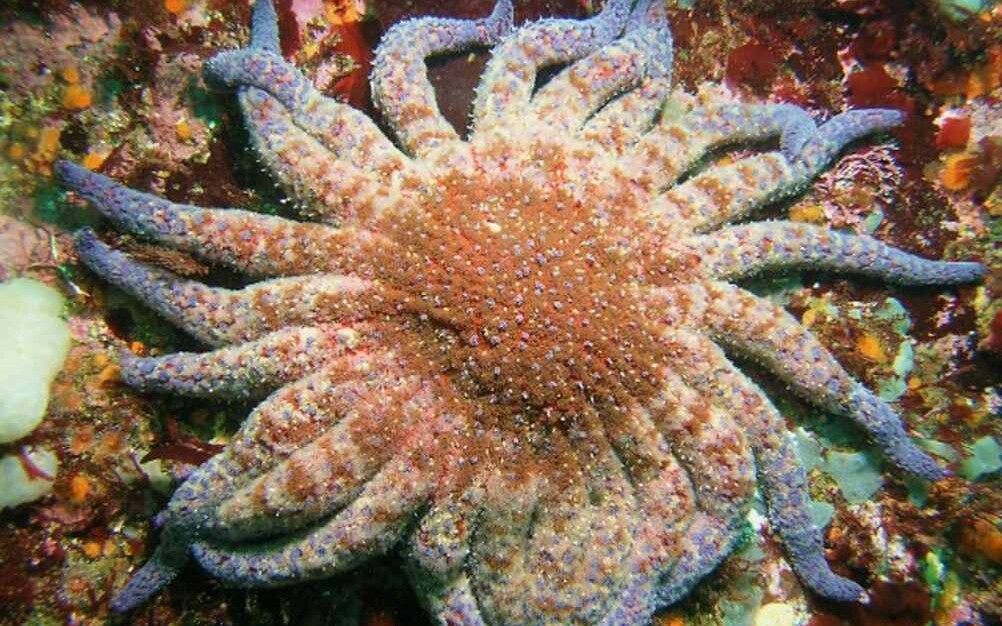
A sunflower sea star - credit, Ed Bierman CC 2.0.
A sunflower sea star – credit, Ed Bierman CC 2.0.

For years, a wasting disease has been turning sea stars to goo off the California coast. Scientists now finally know the cause, and are beginning to fight back.

Whether it has over 20 arms like the sunflower sea star, or just 5, billions of Pacific sea stars were being wiped out by an unknown assailant.

After four years of experiments from a huge collaborative effort led by the Hakai Institute, biologists finally identified the culprit: a kind of bacteria called Vibrio.

Devastating to coral, shellfish, and human beings, this strain of Vibrio has been labeled FHCF-3. The scientists determined it was the cause of the epidemic by examining what might be called the sea star’s blood. It doesn’t have blood as we would recognize it, but a circulatory fluid called coelomic fluid.

As to what is causing the spread of FHCF-3, ranging from Washington state down to the Baja Peninsula, the scientists point to warming waters.

“We have evidence that there is a link between increasing ocean temperatures and this sea star wasting disease epidemic,” said Melanie Prentice, one of the co-authors of the paper published on the discovery in Nature, to CBS News.

Sunflower sea stars, one of the species that’s been most affected, are voracious eaters of sea urchins. This slow motion game of lion and gazelle plays out on the seafloor and on reefs, and is a major cog in the overall machine of marine ecosystem stability.

ALSO CHECK OUT: 10,000 Young Corals Grown in Just Weeks by New Portable Spawning Lab in the Maldives

Themselves voracious eaters of kelp, the urchins were unleashed following the sea star’s decline, and like the bacteria that decimated the sea stars, the urchins devastated the kelp.

With the cause identified, a large collaboration involving Prentice’s Hakai Institute, as well as the universities of British Columbia and Washington, the Nature Conservancy, Tula Foundation, US Geological Survey, and the Washington Department of Fish and Wildlife, are beginning to plan strategies for the sea stars’ recovery.

MORE MARINE BALANCE: Out-of-Control Invasive Crab Species Has Met its Match: Cute and Hungry Otters

A breeding program for sunflower stars was set up between the Aquarium of the Pacific, the Birch Aquarium, the San Diego Zoo Wildlife Alliance, and the Sunflower Star Laboratory. Hundreds have already been raised, and biologists can now screen for the pathogen routinely.

Some of the juveniles are living in these aquariums, where members of the public can learn about the sea stars’ struggle to survive, and the critical role they play in the ecosystem.

WATCH the story below from CBS News’ ‘Project Earth’ segment… 

SHARE The Star Of This Story And Its Road To Recovery With Your Friends… 

Editor’s Note: A previous version of this story stated that the collaborative project was led by the California Institute of Marine Sciences. This has since been corrected to the Hakai Institute. 
Google Turns 2 Billion Smartphones into a Global Earthquake Warning System

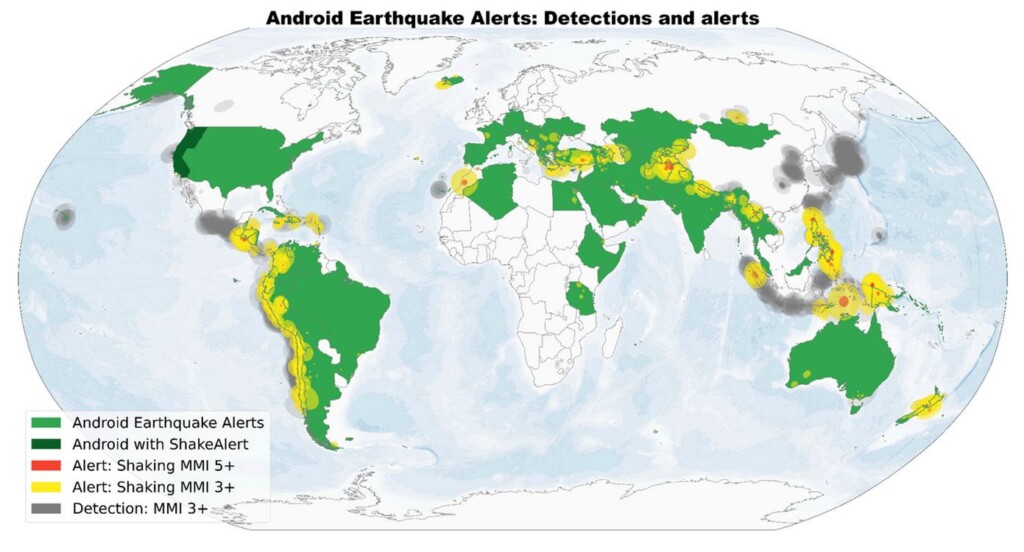
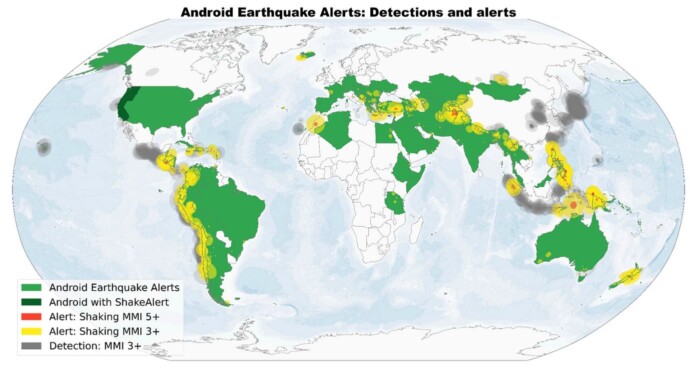
Light green areas show the countries where the Android Earthquake Alerts System is currently detecting and delivering alerts - credit Google, released
Light green areas show the countries where the Android Earthquake Alerts System is currently detecting and delivering alerts – credit Google, released

Government earthquake alert systems are now being supplemented around the world with Google accelerometer data on smartphones and smartwatches, effectively creating a Google-wide early warning system.

The system has increased the number of people in earthquake risk zones capable of receiving alerts by 1,000%, with 2024 seeing over 2 billion devices receiving one.

Called the Android Earthquakes Alert system (AEA), it uses data from Android-powered devices to capture the faint signal of P-waves, a seismic tremor that precedes the more destructive S-waves.

Using the network of devices like a giant sponge, it’s a kind of detection through crowdsourcing, and allows the AEA network to predict where earthquakes may strike, and how powerful they will come to be based on the sheer preponderous of data.

So far, AEA has sent out alerts for 11,000 quakes in 98 countries, with 85% of Google-device users report having received an alert.

“Earthquakes are a constant threat to communities around the globe. While we’ve gotten good at knowing where they’re likely to strike, we still face devastating consequences when they do,” Google representatives wrote in a statement.

“What if we could give people a few precious seconds of warning before the shaking starts? Those seconds can be enough time to get off a ladder, move away from dangerous objects and take cover.”

Wealthier countries like China, South Korea, and Mexico have sophisticated early warning systems, but poorer nations may not be able to acquire the seismographic equipment and scientists required to staff a detection station 24/7/365.

The AEA, though rudimentary by comparison, offers a potentially lifesaving stopgap. For example, during the 2023 earthquakes in Syria and Turkey, the AEA significantly underestimated the magnitude of the event.

QUAKE STORIES: In 10 Minutes, UN’s Tsunami Warning System Notified Millions in East Asia Following Russian Earthquake

Estimating the correct magnitude can allow a warning system to judge how far a quake will travel, and who needs to be alerted.

“Getting this right is crucial—underestimate, and you might not warn people in danger; overestimate, and you risk sending out false alarms that erode public trust,” Google added.

MORE DISASTER DETECTION: Kazakhstan Sees Incredible Progress Scaling Back World’s Worst Environmental Disaster

“The challenge lies in the trade-off between speed and accuracy. The first few seconds of an earthquake provide limited data, but every second you wait to issue an alert is a second less of warning for those in the path of the shaking.”

It’s not the first instance of Google using its data for good. It also issues flash flood warnings from its Flood Hub project. In the 2023 monsoon season of India, over 25 million flood alerts were sent out to India and Bangladesh.

SHARE This Use Of Technology For Good With Your Friends… 

“I am prepared for the worst, but hope for the best.” – Benjamin Disraeli

Quote of the Day: “I am prepared for the worst, but hope for the best.” – Benjamin Disraeli

Photo by: Ross Stone

With a new inspirational quote every day, atop the perfect photo—collected and archived on our Quote of the Day page—why not bookmark GNN.org for a daily uplift?

Good News in History, August 13

Official film poster for the movie - Fair Use.

61 years ago today, The Beatles’ first film A Hard Day’s Night, opened in theaters across America, earning rave reviews and box office success. Described as a “comedic Fantasia with music,” the film was a financial and critical success and was nominated for two Academy Awards, including Best Original Screenplay. Forty years after its release, TIME Magazine rated it as one of the 100 all-time great films. READ about the film’s impact on cinema… (1964)

Boy With Rare Bone Disorder Becomes Quarterback for a Day and Scores a Touchdown for the NFL Carolina Panthers

Jase Garland plays QB at an NFL football game Credit: Andrew Stein / Carolina Panthers
Jase Garland plays at an NFL football game Credit: Andrew Stein / Carolina Panthers

His dream was coming true.

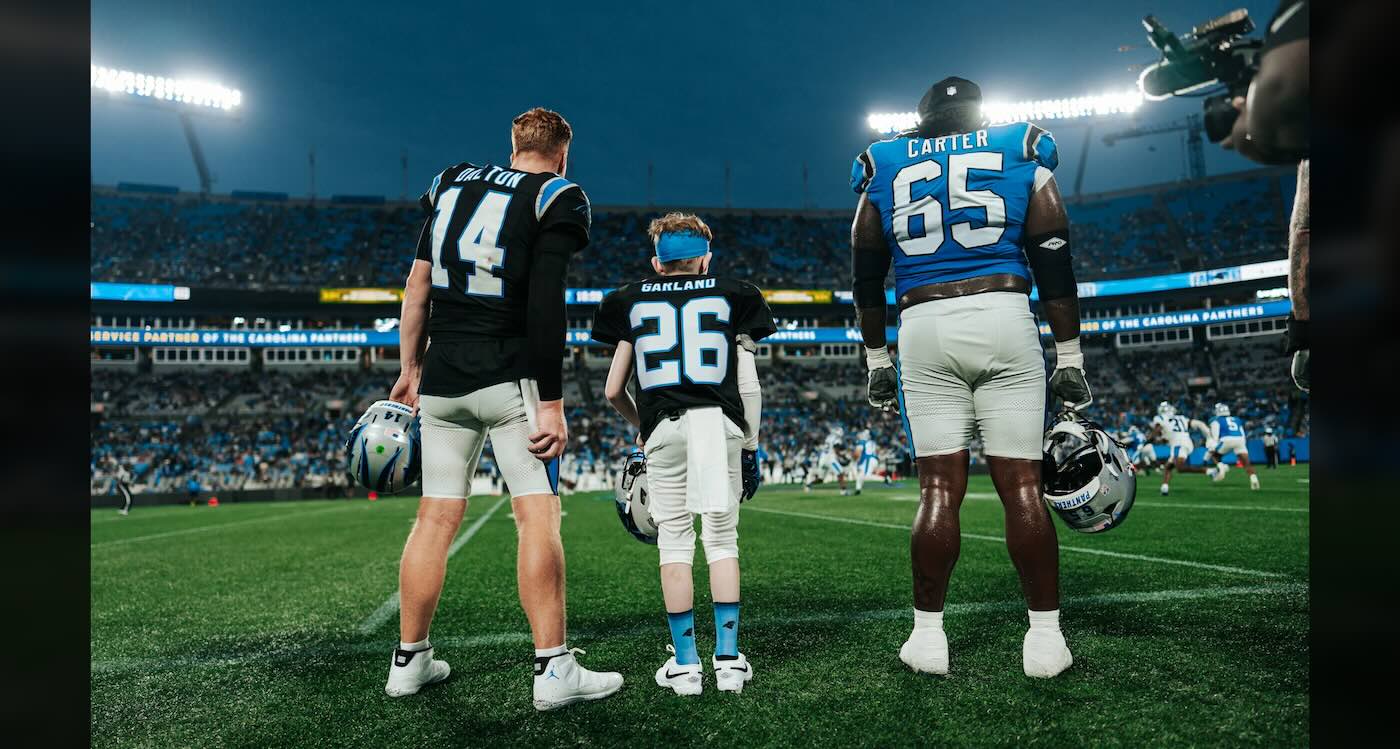
Stadium lights were shining in the nighttime Carolina sky. Fans dressed in their team’s trademark black and blue colors filled the stands. And 12-year-old Jase Garland was heading out onto the field, going into an NFL game for the Carolina Panthers.

After everything he’d been through, the experience meant even more.

Two years ago, his mom, Erin, started to notice bruises building up on her son’s body. which led to a troubling diagnosis. The Asheville, North Carolina boy had Myelodysplastic syndrome, a rare bone condition that can lead to leukemia—and Jase would need a bone marrow transplant.

Last year, after the boy got his transplant, the Make-A-Wish Foundation notified him that he could choose a dream to help carry him through his recovery, giving him something to look forward to amid endless doctor appointments.

Jase wanted to be the quarterback for the Carolina Panthers.

Indeed, visions of him wearing that black, blue, and silver uniform uplifted the football-obsessed kid through all the challenges that he faced and all the pain that he endured.

Andrew Stein / Carolina Panthers

HERE’S ANOTHER INSPIRING SPORTS RECOVERY:  Hospital Tailors Kidney Transplant to Protect Teen Baseball Player’s Swing–Putting it on Other Side of his Body

Finally this month, Make-A-Wish and the Carolina Panthers made his dream come true. Garland, who will enter seventh grade this fall, got to suit-up and take the field with his team.

He met head coach Dave Canales and Panther quarterbacks Bryce Young and Andy Dalton. He signed a contract with the team’s general manager, Dan Morgan, and drew up a play with offensive coordinator, Brad Idzik.

He hit the weight room with a few players, met the team’s mascot SirPurr, and received the long-awaited helmet and jersey— #26 — with his last name stitched across the back.

Photo by Andrew Stein / Carolina Panthers

Finally, during the intra-squad scrimmage at Panthers’ Fan Fest night August 2nd, coaches sent Jase out onto the field. He took the ball on a handoff just inside the 10-yard-line, raced around the left end and headed toward the end zone.

Touchdown!

The Panthers players circled around him to celebrate. Jase did a couple of dance moves. Center Austin Corbett picked him up in the air, a little like how baby Simba was lifted above Pride Rock in The Lion King movie.


The hand-off (Credit: Andrew Stein / Carolina Panthers)

For a moment, joy banished all the fears and anxieties from his family—and Jase’s touchdown was an exclamation point on how he handled the whole ordeal.
“So it sounds maybe cliche,” Erin Garland began in a feature story by the Carolina Panthers.  “…He’s just taking this like a champ because he’s had to be away from everybody for so long, so it’s just, it’s been—I’m impressed. I’m very impressed by him.”

FAITH IN HUMANITY: TikTok Landscaper Raises $800K for Elderly Disabled Woman Who Couldn’t Find Anyone to Mow Her Lawn

The Carolina Panthers and the Make-A-Wish Foundation gave Jase a spotlight and a chance to chase his dream. And when the opportunity arose just inside the 10-yard-line, Jase did the exact same thing he’s been doing since he first received the dreadful diagnosis.

He raced past all the obstacles until he found his triumph on the other side.

SHARE THIS STORY on Social Media with your favorite football fan…

Escaped Tortoise Found One Month Later 3 Miles Away – After Going on the Run at 0.004 mph

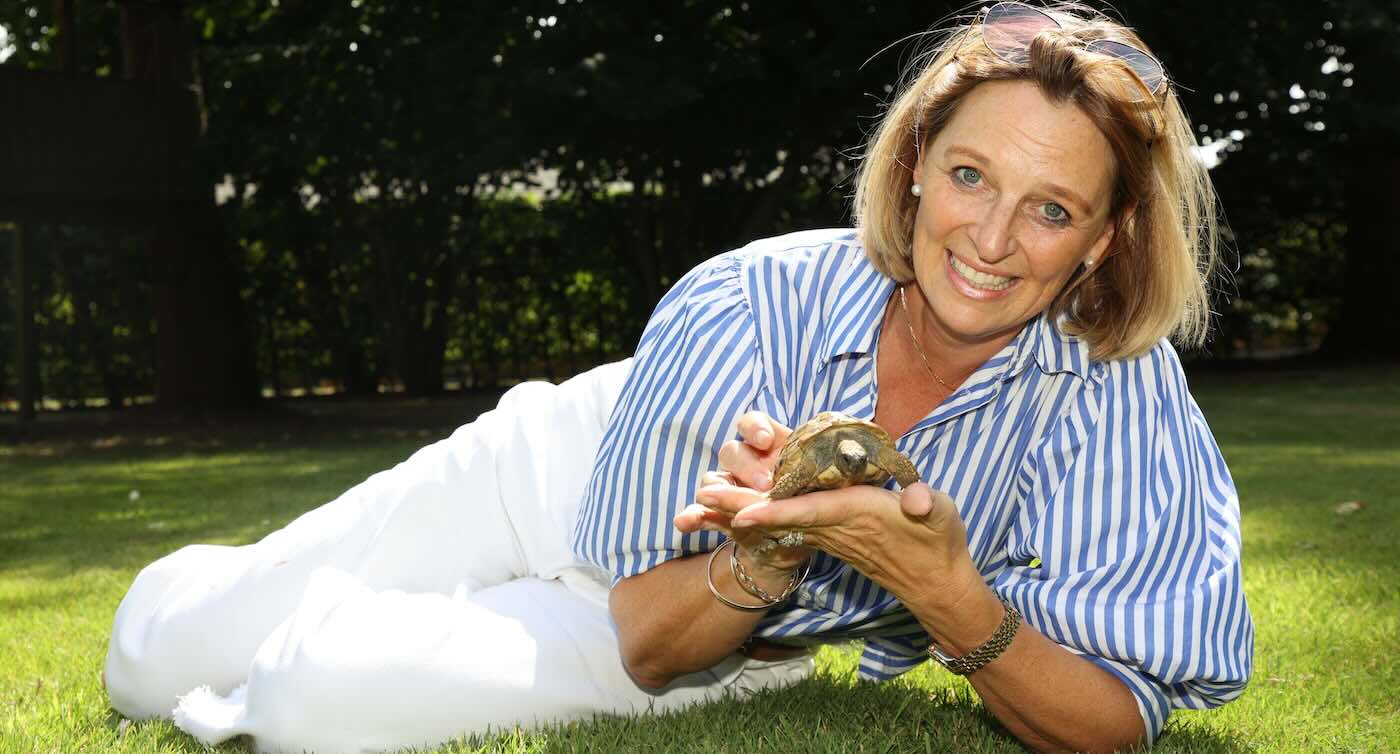
Sallyanne Brooksbank with her Hermann’s tortoise – SWNS

A tortoise that had been missing for a month after escaping her garden was found three miles away—having gone on the run at a brisk pace of 0.0041 miles per hour.

The Hermann’s tortoise named Matilda managed to scale a zucchini plant to pull off her daring escape and slow getaway in early July.

The 10-year-old reptile then managed to negotiate several neighbor’s’ fences, dodge cars while crossing a road, and traverse a stream in the Leicestershire countryside of England.

Owner Sallyanne Brooksbank said she’d given up hope of seeing Matilda again after a month without any sightings.

But the tiny runaway reptile, which is barely the size of a saucer, was discovered last week in a field by pedestrians who were concerned about its safety so brought it into a local clothing shop.

Sallyanne then spotted her missing tortoise on Facebook when the shopkeeper posted about the discovery online.

Shop owner David Howley wrote: “The young girl thought she was going to tread on it because it was so well hidden. She put it in her t-shirt and brought it here.”

Matilda, a Hermann’s tortoise – SWNS

From the moment the tortoise was discovered it took just a little over four hours until the woman called to inquire about Matilda.

“She had a mark on her and they described it perfectly, they lived around three miles away so she had moved like a rocket,” the shopkeeper joked.

Delighted at her good fortune, Sallyanne has now been reunited with her beloved pet and says it was a “miracle” she survived after traveling the impressive distance.

“We searched the garden over and over, and I thought we’d never see her again,” the 55-year-old told SWNS news. “She must have had quite an adventure.”

Sallyanne believes her tortoise headed in the direction of the nearby village of Sewstern, somehow surviving busy roads and water crossings.

“We wish she could speak.”

The escape

The last time she was home, she was inside a raised garden bed made of wood, about 12 inches tall and full of veggies and bean plants.

SLOW AND STEADY WINS: After 9 Months on the Run, Escaped English Tortoise Found 1 Mile from Home Having Hibernated Through Winter

“It’s dug out to make sure she can’t get out, so she either climbed or just jumped out of it.

“She’s not very agile, but I think she may have climbed up a courgette stalk (a British zucchini) to get out of the garden.

“She has tiny claws and we think she clawed up the stem of the plants. She then headed off in the direction of Sewstern.

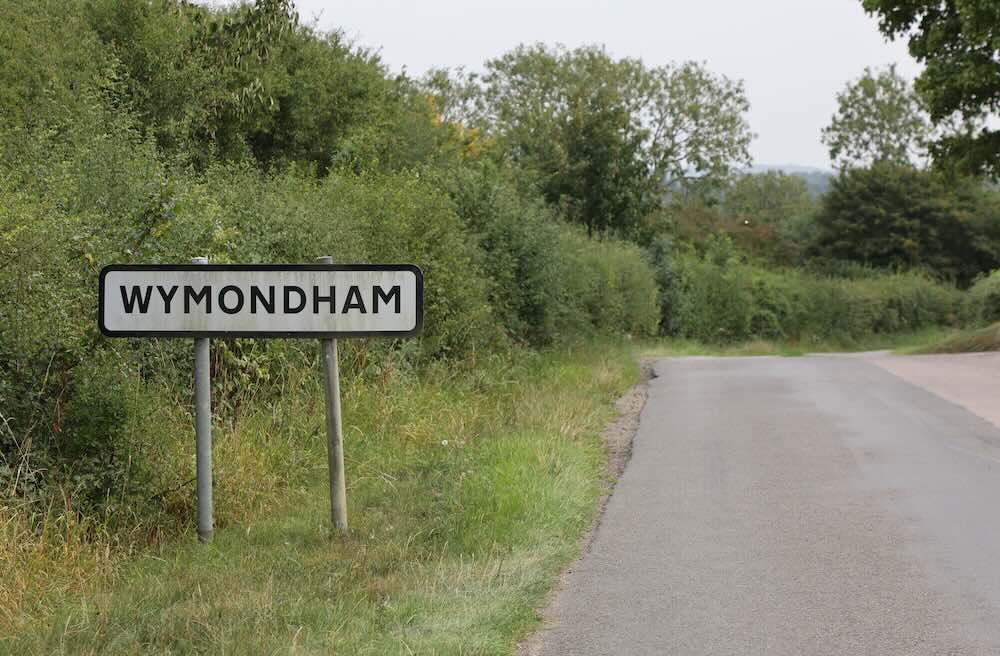
Rural Wymondham sign in England – SWNS

“We’ve been trying to work out her route, but it has to have been through several fences, across fields, a ditch, a road, a stream and who knows what else.

“She would’ve definitely crossed roads and dodged cars.”

The family don’t know who found their cherished pet, but they hope to eventually track them down and thank them.

“She could have been attacked by badgers or foxes or squashed by a car, but she seems fine.

“There are no marks on her shell, and she gobbled up the food we gave her.

“She seems happy to be home, and I know we are happy to have her back.

“We bought her for my son Rory when he was 12-years-old back in September 2013.”

TWO TURTLE LOVES:
• 90-Year-old Tortoise Becomes a Father For the First Time With Partner of 29 Years –Triplets!
Bride Has ‘Slowest Walk Down the Aisle’ as Her Ring Bearer Pet Tortoise Steals the Limelight on Her Big Day (LOOK)

“She was a hatchling and only the size of a coin. She was tiny.

“The people who picked her up were walking towards Sewsterns when they spotted her. It’s amazing they saw her really.

“I’m very nervous about leaving her out at night now. She’s proved to be very adventurous indeed.”

SEND A GUARANTEED SMILE To Friends By Posting on Social Media…

She Just Made History as Major League Baseball’s First Female Umpire–Walking on The Field to Huge Cheers (WATCH)

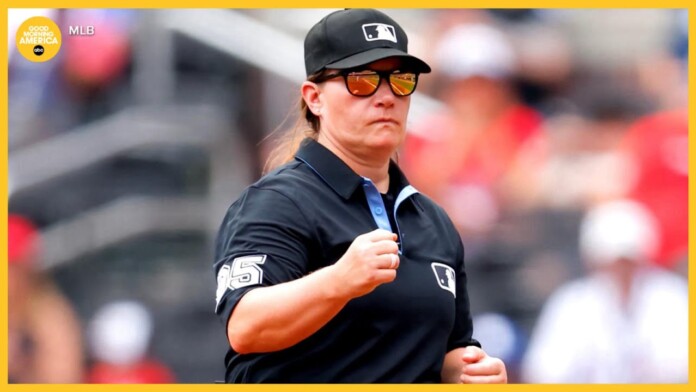
After 30 years and 1,200 games, the phone call that Jen Pawol was waiting for finally arrived earlier this week.

You’re going to the big leagues—and you’re going to make history.

Just like that, Pawol became the first female umpire in Major League Baseball history on Saturday, when she worked first base in the opening game of the Miami Marlins/Atlanta Braves doubleheader.

She worked third base during the second game of the doubleheader and then moved behind home plate to become the head umpire for Sunday’s matchup.

It was a busy weekend for sure, but a historic one.

“It was pretty amazing when we took the field, and it seemed like quite a few people started clapping and saying my name,” Pawol told MLB.com. “So that was pretty intense and very emotional.”

Pawol spent seven years working NCAA softball games before breaking into professional baseball. Since then, she’s paid her dues and climbed the ranks, working through the rookie and minor leagues before becoming the first female to umpire a Triple A Championship game in 2023.

Still, one more level loomed up ahead, and that one held an even bigger milestone.

Major League Baseball was formed in 1903, but the organization had never had a female umpire —until now.

The black hat she wore in the game is headed to Cooperstown, New York, inthe Baseball Hall of Fame.

Chris Guccione, who served as crew chief at Saturday’s game, said it was thrilling. “It gives me chills… even thinking about it and the magnitude. I was just sitting here (and) it kind of just hit me just now. I have a daughter, and she was so excited to meet Jen. And this is just a great role model for girls and women out there.”

MEANWHILE, IN FOOTBALL: It’s Official: NFL Scores Big By Hiring First Female Referee

At 48 years old, Pawol’s big league career is only getting started. “It’s just incredible,” she said.

“The dream actually came true today, and I’m still living in it.”

WATCH the moment below…

SHARE THIS WITH BASEBALL FANS On Social Media…

Rugby Team Carries Wheelchair-bound Dad up Snowdon Peak – Fulfilling His Lifelong Dream (LOOK)

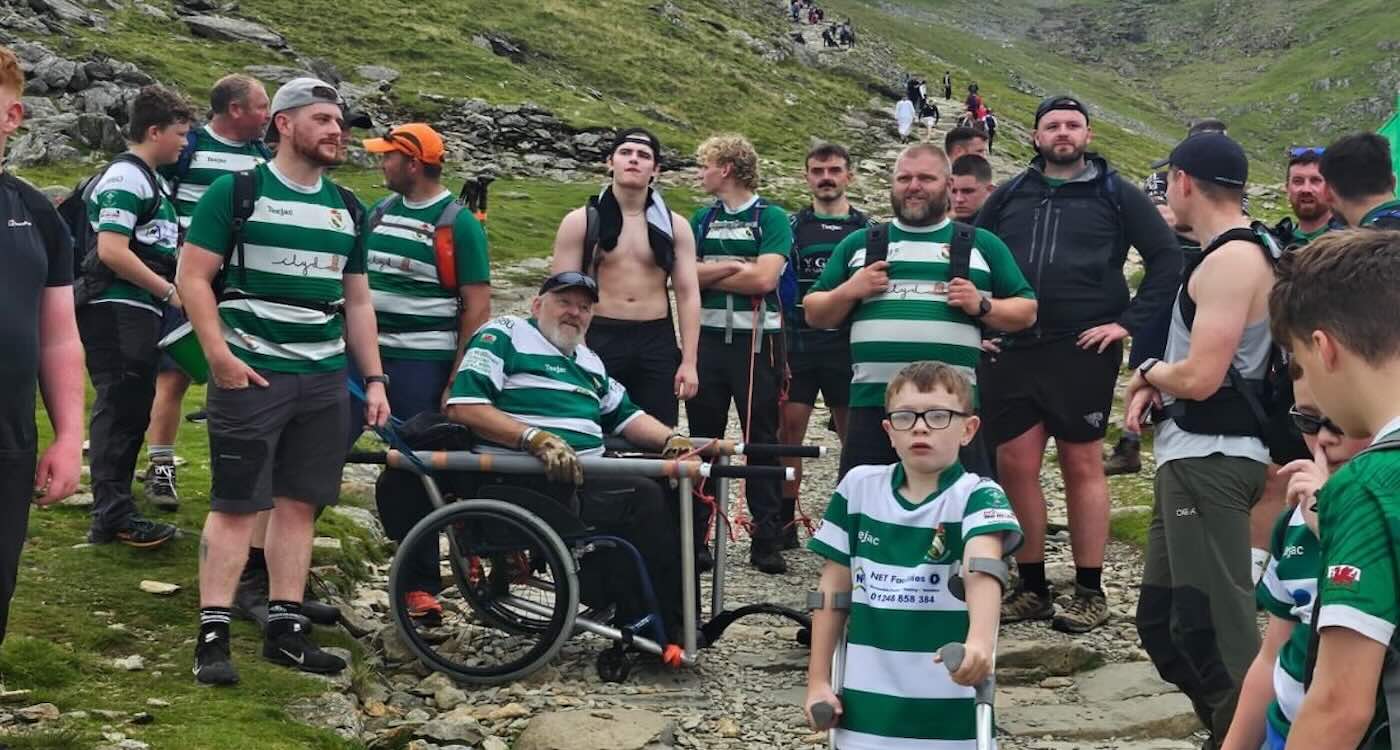
Bangor Rugby Club helped Phil Thompson to a Welsh peak-SWNS
Bangor Rugby Club helped Phil Thompson summit a Welsh peak – SWNS

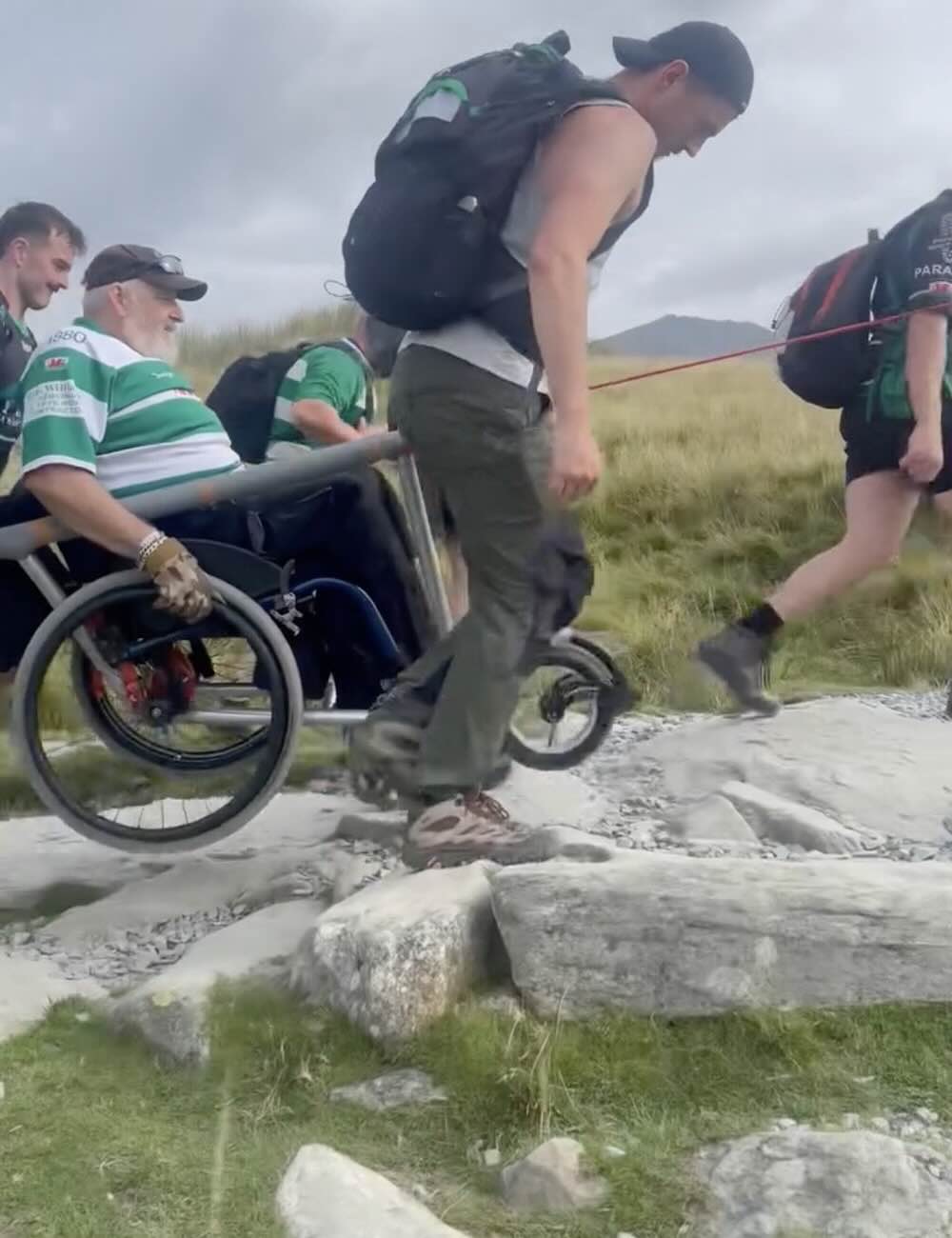
This is the touching moment a rugby team carried a wheelchair-bound dad to the summit of Snowdon—helping to fulfill his lifelong dream.

Members of Bangor Rugby Club helped Phil Thompson to the Welsh mountain’s 3650-foot peak earlier this month.

The 66-year-old has always wanted to reach the top of Snowdon but thought it would be impossible after a motorbike accident at 19.

Phil’s 29-year-old son, Sam Thompson, plays for Bangor and when Mark Owen on the team heard about the dream, he knew he could make it happen.

The club had already been planning a fundraising trip up Snowdon (aka Wyddfa), so this tied in perfectly.

“It wasn’t what we’d initially planned, but it ended up being the perfect addition to our fundraiser,” said Mark, from Bangor, in northeast Wales.

“Bangor Rugby Club is very community-focused, and Phil hasn’t missed a game in over a year, come rain or shine.

“So, when I heard that reaching the Snowdon summit had always been a dream of Phil’s, it felt only right to help him get there,” the 41-year-old told SWNS news agency.

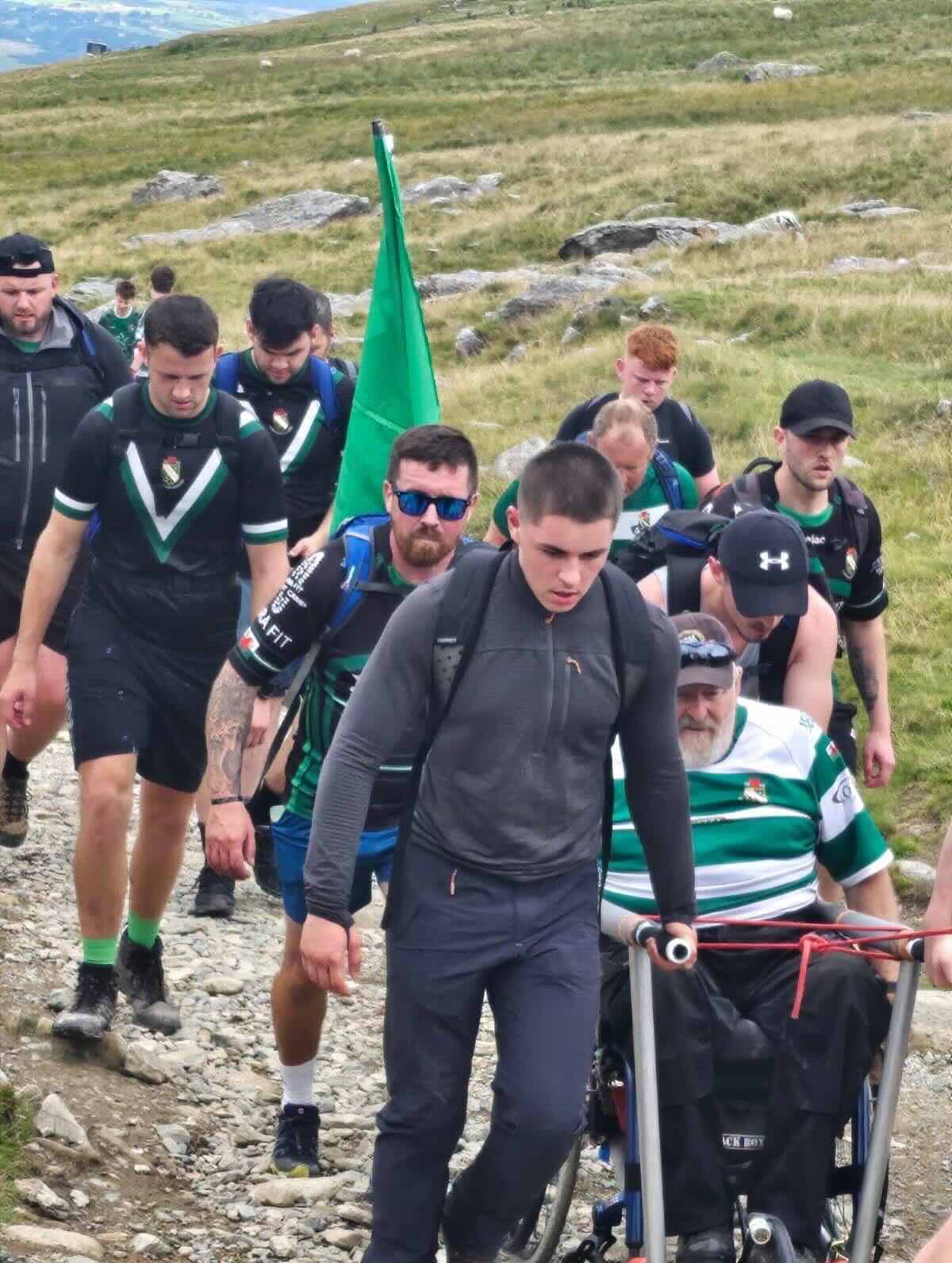
Bangor Rugby Club assisting Phil Thompson to the Welsh peak – SWNS

Mark began planning the fundraiser in early May after hearing that some of their funding had been cut by the Welsh Rugby Union. As an active member of Bangor Rugby Club, he wanted to ensure they’d be able to keep offering their youth activities.

“When we heard the WRU were cutting our funding, we weren’t necessarily surprised,” recalled Mark. “That’s why I thought we should do something ourselves.

“I’d initially thought we’d climb Snowdon carrying tackle bags, which most people were on-board for. Then, Sam mentioned to me about his dad and how he’d always wanted to summit Snowdon…”

Phil had an unfortunate motorcycle accident when he was 19 and has been in a wheelchair ever since.

Mark said: “Hearing this part of his story made me really want to help, and it fit perfectly with what the fundraiser should represent.

“It was a no-brainer that we wanted to include him, it was just about how we could do it.”

Mark had initially talked with Snowdonia Park to organize an electric wheelchair to take Phil from Camp Llanberis to the summit, but, just days before the event, they learned the wheelchair could only be used on another route—and only go part way up.

So they decided to see if they could get a frame so they could carry Phil in the chair.

The touching moment a rugby club fundraiser helped devoted fan Phil Thompson achieve his lifelong dream of summiting Snowdon peak – Bangor Rugby Club

“It was just three days before the climb, so we were all a bit panicked. Luckily, we found an amazing welding company, Pro Weld in Caernarfon, who sorted us a frame for free within the allotted time.

“The last minute save meant the whole fundraiser was actually able to go ahead.”

On the day of the climb, everyone met at the club premises at 5am and set off. The majority of the team started from the bottom, carrying tackle bags, until they reached Camp Llanberis where Phil was waiting.

Everyone partaking in the fundraiser over the age of 16 helped carry Phil up Snowdon until they reached the peak over three hours later.

WE LOVED THIS: Gorgeous Rugby Player Rescues Sheep From Barbed Wire in Viral Video (WATCH)

“It was a really touching moment,” said Mark. “Sam got quite emotional at the top and thanked everyone, telling them what it meant to him and his dad.

“I know Phil is not a very emotional guy, but I saw he had a moment looking out from the peak.”

MORE WELSH NEWS: Mythical Welsh Kingdom Drowned by the Sea Could Have Existed According to Glacier Research and Famous Map

As well as helping Phil check off a bucket list item, the GoFundMe campaign succeeded in raising over $2,100 in the first week following the event.

“A special thanks to Pro Weld in Caernarfon for fabricating the frame around the wheelchair,” the club wrote on Facebook. “Your skill and generosity made this possible.”

“This challenge showed what our club is truly about – community, determination, and looking out for one another. Here’s to many more!”

SHOUT THIS KINDNESS FROM A MOUNTAINTOP – And Share on Social Media… 

“When ambition ends, happiness begins.” – Thomas Merton

Credit: Shad Meeg

Quote of the Day: “When ambition ends, happiness begins.” – Thomas Merton

Photo by: Shad Meeg

With a new inspirational quote every day, atop the perfect photo—collected and archived on our Quote of the Day page—why not bookmark GNN.org for a daily uplift?

Good News in History, August 12

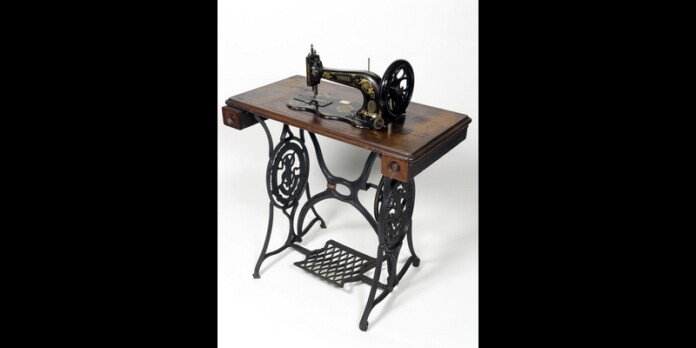
Singer Sewing Machine - CC 3.0. Birmingham Museums Trust

174 years ago today, Issac Singer received his patent for the improved sewing machine, paving the way for his eventual invention to spread across the world. The biggest change was that Singer concluded, after being invited to look at some sewing machines at the business of a friend, that the sewing machine would be more reliable if the shuttle moved in a straight line rather than a circle, with a straight rather than a curved needle. READ what happened next… (1851)

Meningitis Can Now Be Quickly Spotted in Babies Thanks to New Non-Invasive Test to Replace Spinal Taps

By New Born Solutions

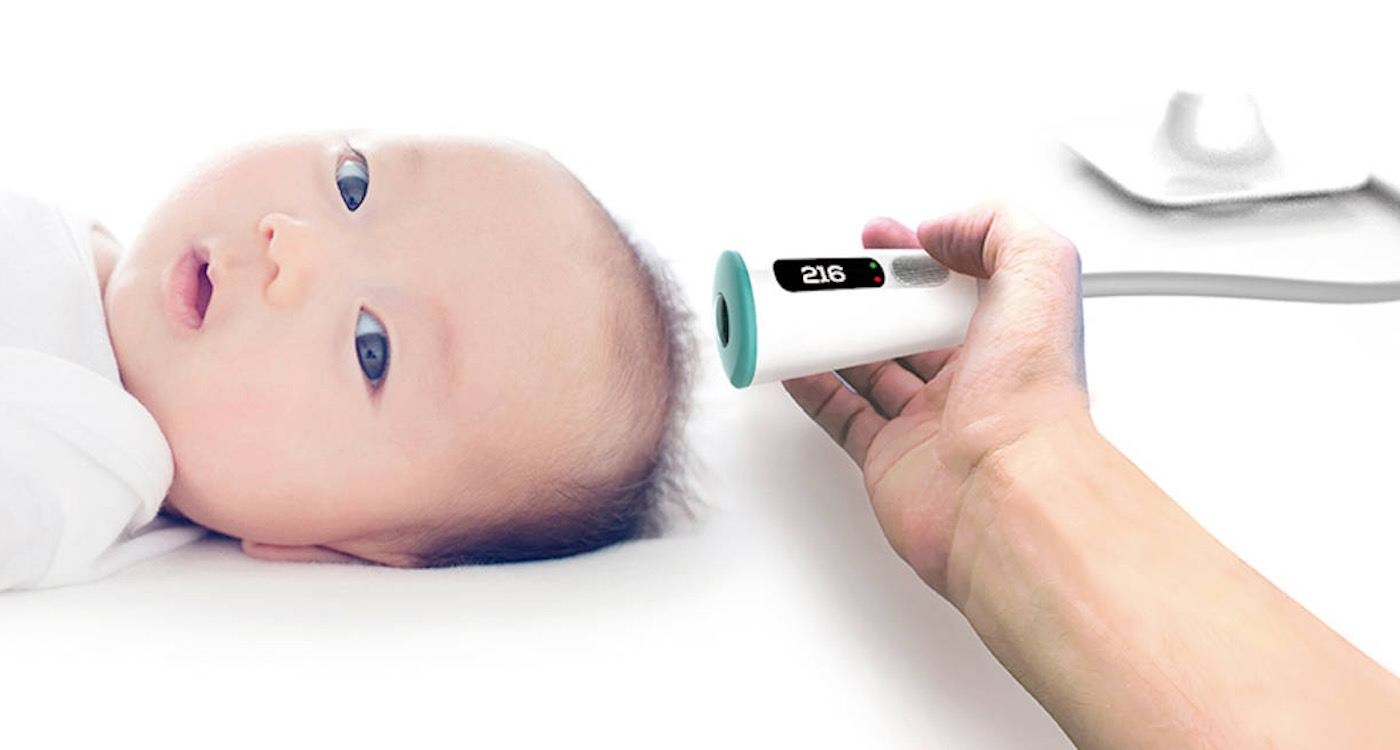
Meningitis can be quickly spotted in babies with “great accuracy” thanks to a new non-invasive device developed to do the testing anywhere it’s needed.

A study showed that it identified the potentially deadly infection in new-borns and infants with 94% accuracy, potentially transforming current screening methods based on traditional lumbar punctures.

Doctors say the high-resolution ultrasound device offers a non-invasive alternative to a lumbar puncture, also known as a spinal tap, where a needle is inserted into the lower back to collect cerebrospinal fluid (CSF) for analysis.

Meningitis is an inflammation of the membranes surrounding the brain and spinal cord. When caused by bacteria or fungi, it can be fatal if not diagnosed and treated early. Even in cases where the disease is overcome, it can leave serious after-effects, including brain damage.

Despite medical advances in recent decades, meningitis remains a major threat to child health, and diagnosing it currently requires a spinal tap to collect the fluid—an invasive technique with associated risks.

The new international study, published in the journal Pediatric Research, was led by scientists at the Barcelona Institute for Global Health (ISGlobal) in Spain, and involved patients at hospitals in Spain, Mozambique, and Morocco.

The aim was to validate the ‘Neosonics’ device, which uses high-frequency ultrasound applied through the baby’s open fontanelle, the membranous gap between the bones of the skull, which has not yet closed- to visualize and analyze CSF.

A deep learning algorithm interprets the images, identifies and counts the cells, and determines whether there are inflammatory signs consistent with meningitis.

“The device was able to correctly classify 17 out of 18 meningitis cases and 55 out of 58 controls without meningitis,” said lead author Dr. Sara Ajanovic, of ISGlobalin, in the team’s media release in English. (Spanish version here.)

“Specifically, it detected high white blood cell levels in cerebrospinal fluid with approximately 94% sensitivity and 95% specificity.”

AMAZING: World’s Smallest Pacemaker is Made for Newborns, Activated by Light, and Requires No Surgery

She says the new device—cost-effective, portable, and easy to use—could not only reduce lumbar punctures, but can also be used in clinically unstable patients where lumbar puncture aren’t possible.

Study senior author Professor Quique Bassat, ISGlobal’s director general, explained: “Introducing a non-invasive tool could reduce unnecessary antibiotic use, prevent complications associated with lumbar puncture, and improve both early diagnosis and non-invasive monitoring of treatment response.”

One of the project’s objectives was to bring health care to all inhabitants of Morocco, where the mortality risk of children living in rural areas is double that of those living in urban areas.

BABY LOVE: Playing Classical Music to Babies in the Womb Can Stimulate Development, Affect Heart Rate and Nervous system

“Neosonics can provide the Moroccan health system with a tool to improve access to health for the entire population, both in cities and in regions furthest from the public health system network,” says Javier Jiménez, CEO of New Born Solutions, the Spanish company that developed and manufactured the device.

The study, funded by the Bill and Melinda Gates Foundation, was conducted between 2020 and 2023 and included more than 200 babies aged up to 24 months. Its validation of Neosonics marks a first step towards incorporating the valuable tool into clinical practice.

SHARE WITH PEDIATRICIANS By Posting on Social Media…

San Francisco’s Trash Company Marks 35 Years of Stunning Art Made of Recycled Garbage With Free Gallery Opening

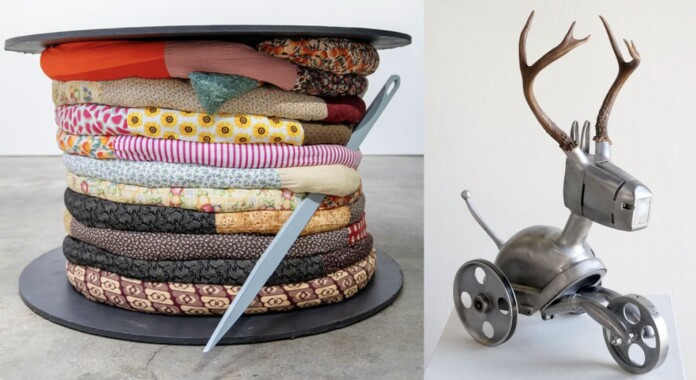
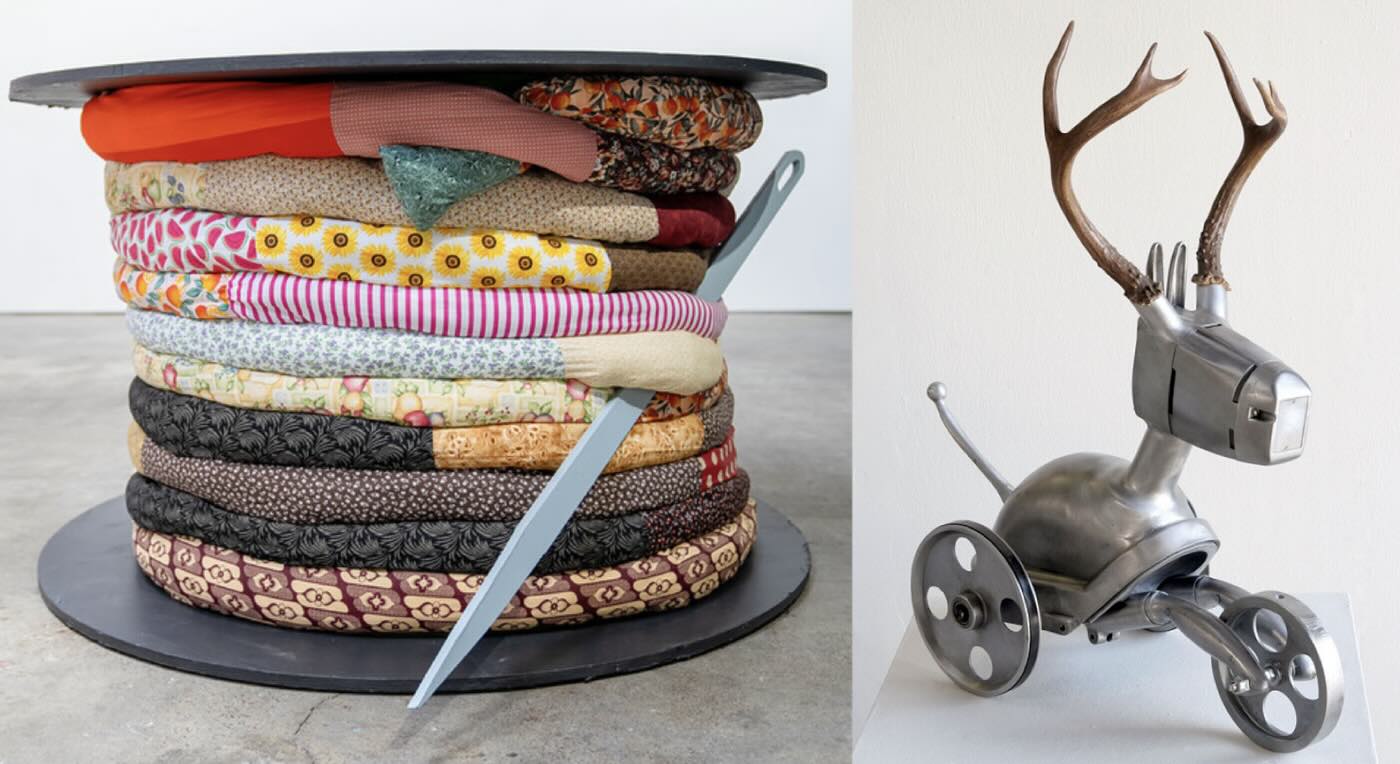
Mother Spool and Impala by Nemo Gould – Photo credit: Minoosh Zomorodinia for Recology
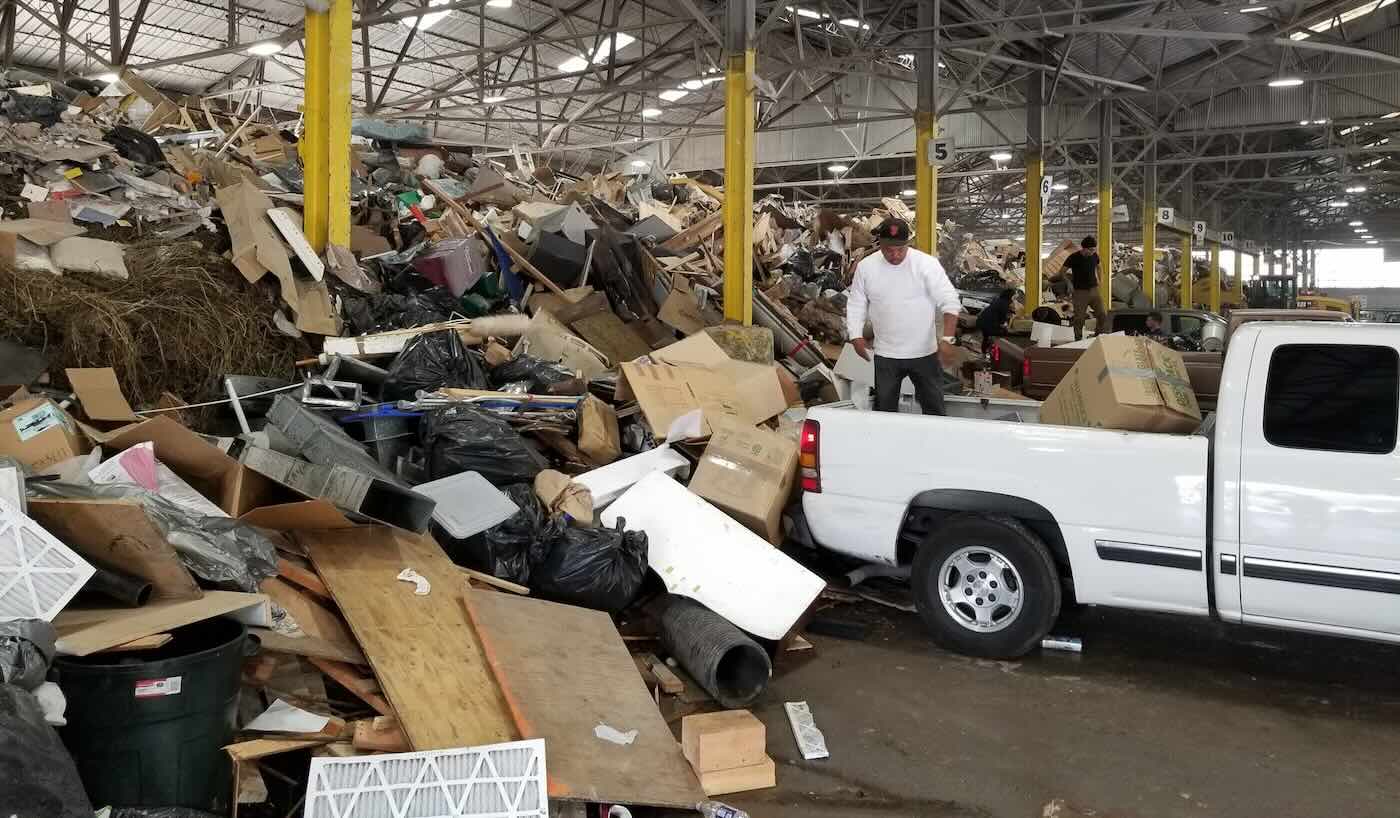
Recology Recycling Center, where ‘junk’ is being dropped off, and Artists-in-Residence may scavenge

Inside San Francisco’s 47-acre recycling and recovery center at the dump, where small businesses and residents can bring truckloads of cast-offs, artists have special access to a churning, ever-changing landscape where detritus from all over the city is sorted and processed.

In fact, more than 100 tons of material enter the building every day.

Besides just being the waste management company, Recology’s mission is to conserve resources and reduce waste, inspiring a more mindful relationship with the things we throw away. To that end, we need artists.

Since 1990, Recology has run an Artist-in-Residence program that supports Bay Area artists, giving them freedom to scavenge materials for use in creating artworks.

The four-month residency also provides artists with access to studio space and a stipend. Armed with safety gear and a shopping cart, artists have scavenging privileges in the Public Reuse and Recycling Area to reimagine the discarded waste as art objects.

“The artists love the access,” Recology spokesperson Robert Reed told GNN. “The materials dropped off are varied and interesting.”

Recology Artist In Residence Neil Mendoza scavenging through trash with shopping cart

The artists, like Neil Mendoza (pictured above), then wheel their carts of reclaimed materials to an art studio/workshop, equipped with tools that Recology maintains at the transfer station.

At the end of each residency, a free-to-the-public exhibition of the artworks created is held in the studio.

On Saturday, the resulting creativity from dozens of Artists In Residence was on full display as 2,000 people attended the opening of a free exhibition featuring 35 years of artwork—a retrospective embodying the phrase ‘trash to treasure’.

‘Mother Spool’ by Nimah Gobir (Photo by Minoosh Zomorodinia for Recology) and ‘Impala’ by Nemo Gould

While the approaches and themes vary widely among the 63 artists featured, a shared thread runs through it all: the possibilities of transformation through reuse.

For instance, in 2007 Nemo Gould created the Impala sculpture (pictured above, right) by scavenging antlers, a power sander, bandsaw blade wheels, projector flywheel, vacuum cleaner handles, a meat grinder, motorcycle clutch, and cheese slicers.

Over the past 35 years, the Residency program has hosted more than 190 professional artists and 60 student artists from local colleges and universities. These artists, emerging, mid-career, and established, have worked across a wide range of disciplines, including painting, sculpture, video, photography, installation, performance, and new media.

The gallery exhibit—a collaboration between Recology and The Minnesota Street Project, at 1275 Minnesota Street in San Francisco—runs through Aug. 30, 2025 and is free to the public, according to the news release here.

“It’s a great, no cost opportunity for families to see art this summer,” says Reed. “We also have a traveling exhibition touring the country.”

BRILLIANT REUSE:
Group Celebrates 20 Years of Steering Surplus Office Furniture Away from Landfill and into Communities
She Turns Old Leather Sofas into Chic $200 Handbags to Cut Down on Waste–And They’re Flying Out the Door
• City of Berlin Runs a Department Store That Sells All Recycled Goods

Adorned Saw by Eleanor Scholz uses embroidery thread, ribbon, jewelry, keys, bubble wrap, mylar, plastic, and DVDs – Photo by Minoosh Zomorodinia for Recology

The traveling exhibit, which includes Impala, is called Reclaimed: The Art of Recology. It presents a selection of works from 33 fascinating artists who were selected to participate in the company’s unique Residency.

This eclectic exhibition of work includes around 50 objects: from paintings produced with recycled house paint to tapestries made from used ties, shirts, and other fabrics.

From sculptural vases crafted from Ethernet and coaxial cables to ever more hybrid concoctions that are often mind-blowing in execution and form.

The traveling show can be found currently in Traverse City, Michigan at the Dennos Museum Center at Northwestern Michigan College until Aug. 31, 2025.

Knots of Reflection by Nasim Moghadam (mirror, archival pigment print, and Iranian female hair) Photo by Minoosh Zomorodinia

GNN FAVORITE: Guy Turns Old Tires Into Beautiful Cozy Beds For 6,000 Stray Dogs And Cats in BraziL–LOOK

On October 4, it opens in Pueblo, Colorado, showing at the On Sangre de Cristo Arts & Conference Center until Dec. 14, 2025.

There are three shows booked for 2026 in the cities Carlsbad, New Mexico in January; Canton, Ohio in April; and Syracuse University Art Museum in September.

SO MANY REASONS TO SHARE THIS: Pick One And Post it On Social Media…

Blowing in a Conch Shell Helps Treat Dangerous Snoring Symptoms for Folks With Sleep Apnea, Says Study

Illustration– Blowing a Conch Shell via Wikihow (CC BY-NC-SA 3.0 license)

Blowing through a conch shell could help treat a potentially deadly snoring condition, according to new research from India.

Patients who took part in the ancient practice regularly for six months experienced a significant reduction in their symptoms of obstructive sleep apnea (OSA), a common sleep disorder where breathing stops repeatedly during the night due to a blocked airway.

It leads to loud snoring, restless sleep, and daytime sleepiness, and can increase the risk of high blood pressure, heart disease, and stroke.

Blowing the conch shell, called shankh blowing, has been part of Indian culture for thousands of years.

The new study, published in the European Respiratory Society’s ERJ Open Research, showed that people with moderate OSA who practiced shankh blowing slept better and felt more alert during the day, but most importantly had fewer breathing interruptions at night.

The research team determined that conch blowing— a traditional yogic breathing exercise where you exhale sharply through a conch shell—could reduce the need for medication or machines.

Currently, the standard treatment for OSA is a ‘continuous positive airway pressure machine’, or CPAP, which keeps the patient’s airway open by blowing air through a face mask throughout the night.

“While effective, many patients find it uncomfortable and struggle to use it consistently,” said study leader Dr. Krishna K. Sharma, of the Eternal Heart Care Centre and Research Institute in Jaipur, India.

In his clinical practice, several patients used the shankh-blowing method and reported feeling more rested and experiencing fewer symptoms.

By Biswarup Ganguly – GNU license / CC BY 3.0

“These observations led us to design a scientific study to rigorously test whether this simple, ancient practice could serve as a meaningful therapy for people with OSA.”

The study involved 30 participants with moderate OSA, aged between 19 and 65, who were assessed at the Research Institute between 2022 and 2024.

They were tested with polysomnography, meaning they were monitored throughout a night’s sleep. They were also asked questions about the quality of their sleep and how sleepy they feel during the day.

They were randomly assigned to either be trained to practice blowing through a conch shell or a deep breathing exercise.

Participants in the first group were provided with a traditional shankh used in yoga, and were trained at the clinic before beginning home-based practice requiring a minimum of 15 minutes, five days per week. The patients were then reassessed after six months.

Compared to the people who practiced deep breathing, the people who practiced shankh blowing were 34% less sleepy during the daytime. They also reported sleeping better.

4-5 Fewer Apneas Per Hour

Polysomnographs revealed that they had on average four to five fewer apneas per hour—where breathing stops during sleep. They also had higher levels of oxygen in their blood during the night.

“The way the shankh is blown is quite distinctive,” explained Dr. Sharma. “It involves a deep inhalation followed by a forceful, sustained exhalation through tightly pursed lips.

“This action creates strong vibrations and airflow resistance, which likely strengthens the muscles of the upper airway, including the throat and soft palate – areas that often collapse during sleep in people with OSA.

“The conch’s unique spiraling structure may also contribute to specific acoustic and mechanical effects that further stimulate and tone these muscles.

For people living with OSA, especially those who find the CPAP face masks uncomfortable, unaffordable, or inaccessible, the study offers a promising alternative that is simple and low-cost.

MORE SLEEP TIPS:
Device from MIT Startup Helps People Fall Asleep–Putting Your Mind on ‘Do Not Disturb’
Top Strategies to Beat Snoring, According to New Poll of Sleepless Adults
Smell of Simple Fragrance While Sleeping Produces Major Memory Boost in Older Adults

The team noted that this is a small study, but they are now “planning a larger trial involving several hospitals”.

“This next phase will allow us to validate and expand on our findings in a broader, more diverse population and assess how shankh blowing performs over longer periods.

“We also want to study how this practice affects airway muscle tone, oxygen levels and sleep in greater detail.

“We’re particularly interested in comparing shankh blowing with standard treatments like CPAP, and in examining its potential help in more severe forms of OSA.”

Professor Sophia Schiza, head of the European Respiratory Society (ERS) group on sleep disordered breathing, who was not involved in the study, welcomed the findings.

“While CPAP and other treatments are available based on careful diagnosis of disease severity, there is still need for new treatments,” said the professor at the University of Crete, in Greece.

RELATED: Groundbreaking Trial of Cannabinol Product Shows Better Than Melatonin For Sleep

“This is an intriguing study that shows the ancient practice of shankh blowing could potentially offer an OSA treatment for selected patients by targeting muscles training. A larger study will help provide more evidence for this intervention which could be of benefit as a treatment option or in combination with other treatments in selected OSA patients.”

SHARE THE NATURAL OPTION on Social Media For Friends Who Have Sleep Apnea…

Tiny Goat Triplet Shunned at Birth is Now Thriving After Two Sheepdogs Adopt Her and Teach Her to Be a Collie

Goat Lil with sheepdogs Luna, 14, and Nya – SWNS

A tiny goat triplet shunned at birth is thriving after she was taken in by two sheepdogs.

It was just one-third the typical weight of a baby goat and only five inches high at birth, compared to healthy newborns that stand roughly a foot high.

While her healthy sisters had normal birthweights, the runt named Lil couldn’t stand up or suckle. Born second, Lil was getting cold while the mother began washing the other two, who were standing and feeding. so the farm staff in Wiltshire, England had to step in.

Farm manager Julia Stewart and the team used Betsy’s milk to tube feed Lil, and they rubbed her with straw and wrapped her up in towels to try and keep her warm.

They left her with mum overnight and checked in to feed her every hour, but it was clear she was getting weaker. In the morning Lil was brought into the caravan which is used as an office and staff room, and the two dogs, border collies, immediately claimed her as their own.

The farm’s working sheepdogs, Luna and Nya, took an instant like to Lil. They stepped in as surrogate parents—washing her, playing with her, and snuggling up next to her to sleep.

Once so cold and shivery that Julia’s friend made a special suit for her to wear out of an old sock, Lil is now five-weeks old, and growing stronger.

Baby goat with 2 adoptive sheepdogs-SWNS

She is even learning to round up the flock like her sheepdog companions.

“She’s utterly adorable, and great fun,” Julia told SWNS news. “And she definitely thinks she’s a dog.”

“When she was born she was so tiny she could sit in one of my hands. She could hardly keep her head up.

“You don’t take them away from their mum unless you really have to.”

Lil and her sisters are among 14 kids born this year at the Studley Grange Farm Park, which has 15 adult goats this year as part of the petting zoo.

AMAZING: Video of Black Labrador Rescuing a Drowning Fawn Goes Viral via Surprising Twitter Account (WATCH)

Baby goat with 2 adoptive sheepdogs-SWNS

Lil gets very vocal if she’s left in with the other goats, preferring to follow Julia and the dogs around.

“Lil will always have that special bond with the dogs,” says Julia. That’s why the team plans to keep up Lil’s sheepdog training, with Nya as her best friend and tutor.

CHECK IT OUT: This Golden Retriever is Nursing 3 African Painted Dog Pups at Indiana Zoo After Mother Abandoned Them

“She’ll always be special and different.”

ROUND UP YOUR HERD OF FRIENDS By Sharing This Cute Story on Social Media…

“Nature provides exceptions to every rule.” – Margaret Fuller

By vijeshwar

Quote of the Day: “Nature provides exceptions to every rule.” – Margaret Fuller

Photo by: vijeshwar

With a new inspirational quote every day, atop the perfect photo—collected and archived on our Quote of the Day page—why not bookmark GNN.org for a daily uplift?

By vijeshwar

Good News in History, August 11

Viola Davis – Gage Skidmore, CC license

Happy 60th Birthday to Viola Davis, the award-winning actress who rose out of abject poverty in South Carolina to attend Juilliard. Her magnificent 2011 performance in The Help, playing a maid in the 1960s, earned her an Oscar nomination.

After she won an Academy Award (for Fences), an Emmy, and a Tony Award (twice), she became the first black actress to achieve the Triple Crown of Acting. WATCH clips of her top ten performances(1965)

Astronomers Uncover Possibly the Largest Black Hole: It ‘Bends Light into a Giant Einstein Ring’

The Cosmic Horseshoe gravitational lens: The newly discovered ultramassive blackhole lies at the centre of the orange galaxy. Far behind it is a blue galaxy that is being warped into the horseshoe shaped ring by distortions in spacetime created by the immense mass of the foreground orange galaxy. Credit: NASA/ESA

It may be the most massive black hole ever found.

36 billion times larger than the mass of our Sun, it was previously hidden from astronomers while existing at the heart of the Cosmic Horseshoe galaxy, previously photographed by space telescopes.

The giant space phenomenon bends light into a perfect Einstein ring and “whips nearby stars” at incredible speeds.

Astronomers from the University of Portsmouth’s Institute of Cosmology and Gravitation in England and collaborators at the Universidade Federal do Rio Grande in Brazil, made the discovery—a giant cosmic phenomenon estimated to be 10,000 times heavier than the black hole at the center of our own Milky Way galaxy.

It is close to the theoretical upper limit of what is possible in the Universe, according to the authors of a new paper published in Monthly Notices of the Royal Astronomical Society.

The Cosmic Horseshoe galaxy is one of the most massive galaxies ever observed—so big, it distorts spacetime and warps the passing light of a background galaxy into a giant horseshoe-shaped ‘Einstein ring’.

“This is amongst the top 10 most massive black holes ever discovered, and quite possibly the most massive,” said researcher Thomas Collett, Professor of Astrophysics at the University of Portsmouth.

Researchers detected the Cosmic Horseshoe black hole using a combination of gravitational lensing and stellar kinematics (the study of the motion of stars within galaxies and the speed and way they move around black holes).

MORE BLACK HOLE NEWS:
Largest Black Hole Merger Ever Observed Detected by LIGO–a Universe-Shaking Event
NASA Visualizes What it Would Be Like to Plunge into a Black Hole – WATCH
Eerie Echo Detected Coming From Milky Way’s Black Hole 200 Years Ago – LISTEN

The latter is seen as the gold standard for measuring black hole masses, but doesn’t really work outside of the very nearby universe because galaxies appear too small on the sky to resolve the region where a supermassive or ultramassive black hole lies.

But thanks to ‘gravitational lensing’, the team pushed much further out into the universe, Professor Collett explained.

“It is altering the path that light takes as it travels past the black hole and it is causing the stars in the inner regions of its host galaxy to move extremely quickly—almost 400 kilometers per second.

“We detected the effect of the black hole,” he said in a media release.

Lead researcher, PhD candidate Carlos Melo, of the Universidade Federal do Rio Grande do Sul (UFRGS) in Brazil, added: “What is particularly exciting is that this method allows us to detect and measure the mass of these hidden ultramassive black holes across the universe, even when they are completely silent.”

The Cosmic Horseshoe black hole is located a long way away from Earth, at a distance of some 5 billion light-years. Our own galaxy, the Milky Way, hosts a 4 million solar mass black hole. Currently it’s not growing fast enough to blast out energy as a quasar but we know it has done in the past, and it may well do again in the future.

“It is likely that all of the supermassive black holes that were originally in the companion galaxies have also now merged to form the ultramassive black hole that we have detected,” said Professor Collett.

The discovery of the Cosmic Horseshoe black hole came as the researchers were studying the galaxy’s dark matter distribution in an attempt to learn more about the “mysterious hypothetical substance”, according to the release.

Now that they’ve proven their new method works for black holes, they hope to use data from the European Space Agency’s Euclid space telescope to detect more supermassive black holes—and their hosts—to uncover more mysteries.

EMIT SOME AWE ON SOCIAL MEDIA –Share This!

Hero Lifeguards Race Toward Cries of Help and Rescue Mother and Son Drowning in a Rushing River Nearby

Screams were coming from the woods, but the three lifeguards who had just started their shift at the Ohio pool didn’t hesitate.

They sprinted away from the Pataskala Municipal Park and raced toward the screams, through the trees to the rushing river that flowed beyond.

Eighteen-year-old lifeguard Kaden Ross ran the 150 yards to the woods, hopped a fence, and made it to the river first. A woman was drowning in the murky waters of the Licking River, which had been surging after a series of summer storms.

“There’s a water hole down there, probably 12 to 15 feet deep, and I see a woman actively drowning,” Ross told WSYX-TV in Columbus (see their video below). “I saved the mother. I bring her to a log, and then she tells me, ‘My boy’s under there’. So when she tells me this, I look in the water and I don’t see anyone.

“Another guy came and got into the water with me. As I am saving the mom, I give her to one of my guards. He sees the little boy’s feet. The only thing we can see are his little feet above the water.”

While the other lifeguards (Kaden’s sister McKenzie, and Lily Ward) attended to the panicking mother, Kaden and the other impromptu hero worked to retrieve her 7-year-old son, who was almost completely submerged.

When the two men got him out of the water, he was unconscious and not breathing at all. Kaden used his lifeguard training to administer a couple of rescue breaths, then immediately started CPR.

The CPR forced fluid from the boy’s mouth, which is usually a positive sign in water rescues.

LOOK AT THIS CRAZY: Fishermen Pull Off Dramatic Rescue of 38 Dogs Treading Water with No Shore in Sight

Local police and first responders arrived soon afterward to continue the rescue. But it was the lifeguards who made it all possible, providing heroism without hesitation at the most critical moments.

“That creek goes on forever in those woods,” Kaden told WBNS in an interview. “It just happened to be in a spot where it was by a pool, where there were lifeguards that are trained to save people drowning—and we heard the screams.

“I know God put us there in the right place and the right time.”

WATCH HEROIC TRAIN-TRACK RESCUE: Fearless Hero Sprints in Front of Train to Rescue Man Collapsed on Track

The perfect place so a group of heroes could rush to save a mother and her son—and both are expected to make a full recovery.

SHARE THIS GOOD NEWS With Your Own Heroes on Social Media…

Hospital Tailors Kidney Transplant to Protect Teen Baseball Player’s Swing–Putting it on Other Side of his Body

Sam Heintz – Credit: Corewell
Sam Heintz – Credit: Corewell Health

It was a parent’s worst nightmare, but doctors showed extra compassion for the patient who had dreams of being a baseball player when he grows up.

Five-year-old Sam Heintz was in the intensive care unit of Michigan’s Helen DeVos Children’s Hospital with failing kidneys and a grim diagnosis. He had a rare life-threatening disease (atypical hemolytic uremic syndrome) that produces blood clots in the kidney that can eventually lead to organ failure.

The little kid who loved baseball would need a kidney transplant if he ever hoped to play again. Fortunately, the next bounce of life fell in Sam’s favor when, at eight years old, the hospital located an organ donor.

Sam was a getting a new kidney. But the baseball player was a left-handed batter—so the family made a special request.

Typically, kidneys are transplanted into the lower right side of the body, which means every time Sam stepped into the batter’s box, the kidney would be directly exposed and vulnerable if a pitcher he were facing threw an errant fastball.

“When this is all done, can he still play baseball? If that’s gone, then our life is going to drastically change,” Sam’s mom told their provider, Corewell Health.

Could they place his kidney on the left side so it would be safer on the baseball diamond?

“They said that’s never been a request before,” Sam’s mother Alicia told WZZM-13, a TV news crew in Grand Rapids, Mich.

Luckily for the lefty, they were happy to do it. “They were happy to make it happen.”

“It was super cool,” Sam said. “I’m a lefty, and when I’m up to bat it’s pretty vulnerable if I turn and foul one off, or get hit there.”

CHECK OUT THESE BASEBALL TRIUMPHS:
‘Miracles Happen’: Woman Uses CPR Training she Learned 40 Years Ago to Save Teen Baseball Player’s Life
Phillies Team Makes Hype Video That Wins Their Bat Boy Cancer Survivor a Trip to the All-Star Game

“It makes sense, right?” Cristina Brini, a a physician assistant in pediatric nephrology at DeVos Hospital, said in the article. “If you’re left-handed and you have the bat up, you don’t want to be exposed to where all of these balls are coming at you at 100 miles per hour.”

Sam has now returned to the baseball field, and in an interesting twist of fate, the wife of the boy’s coach was his nurse as a child—so the story has come full circle.

Although the early innings of his life didn’t go the way Sam—or his parents—had planned, his medical team and a new kidney have helped him make a valiant comeback.

And you can be sure that baseball will continue to be a big part of it.

WATCH the TV-13 video below…

SHARE THIS ON SOCIAL MEDIA WITH THE BASEBALL FANS IN YOUR LIFE…

Top Secret D-Day Maps Found in Cardboard Box Detail Scary Defenses Faced By Allies at the 5 Landing Beaches

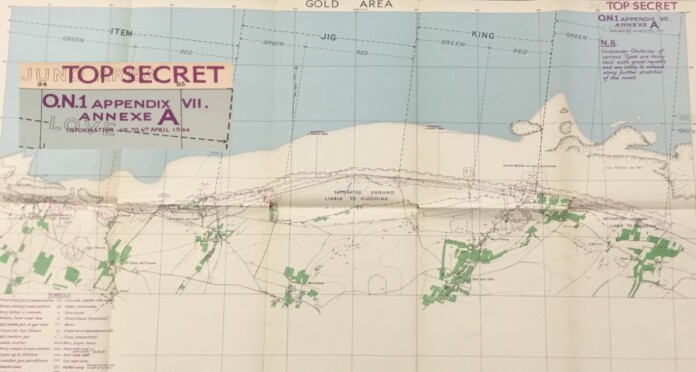
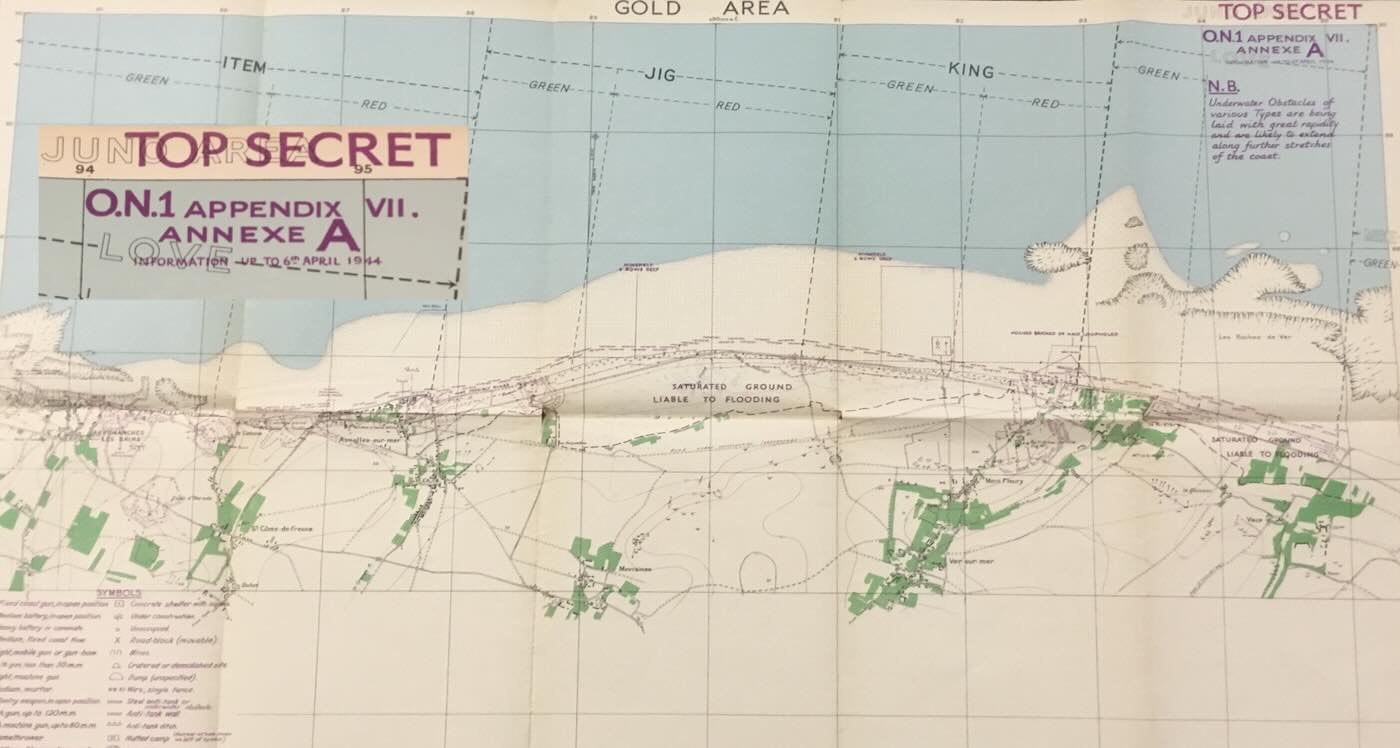
Top Secret D-Day Map shows Gold beach – via SWNS

Top-secret WWII maps used by Allied troops for the famous D-Day landings were found in a cardboard box after being purchased for just $10.

Five of the six maps provide restricted-access detail of the five landing beaches of Utah, Omaha, Gold, Juno and Sword, with the sixth one—for landing craft pilots—showing all the beaches

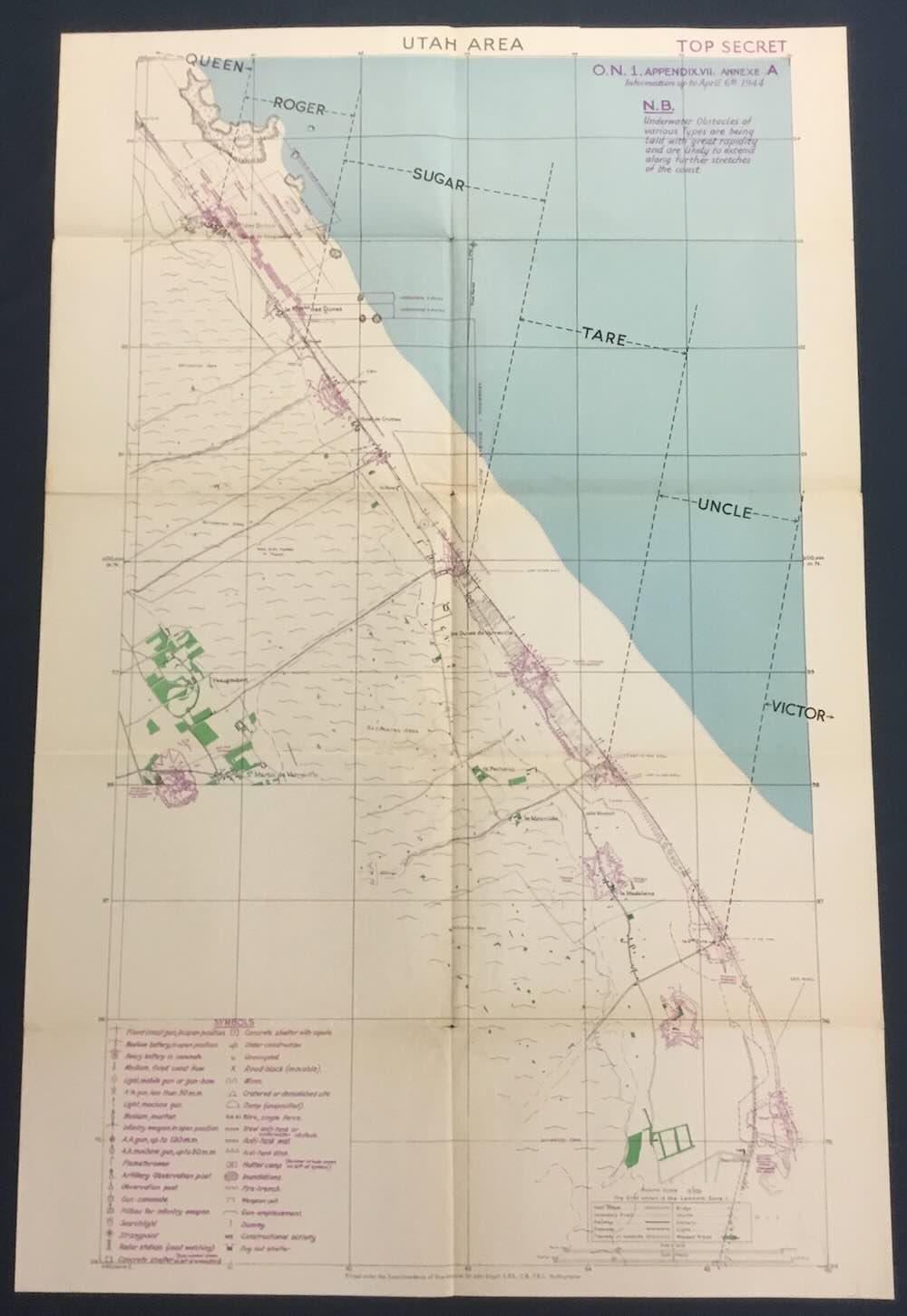
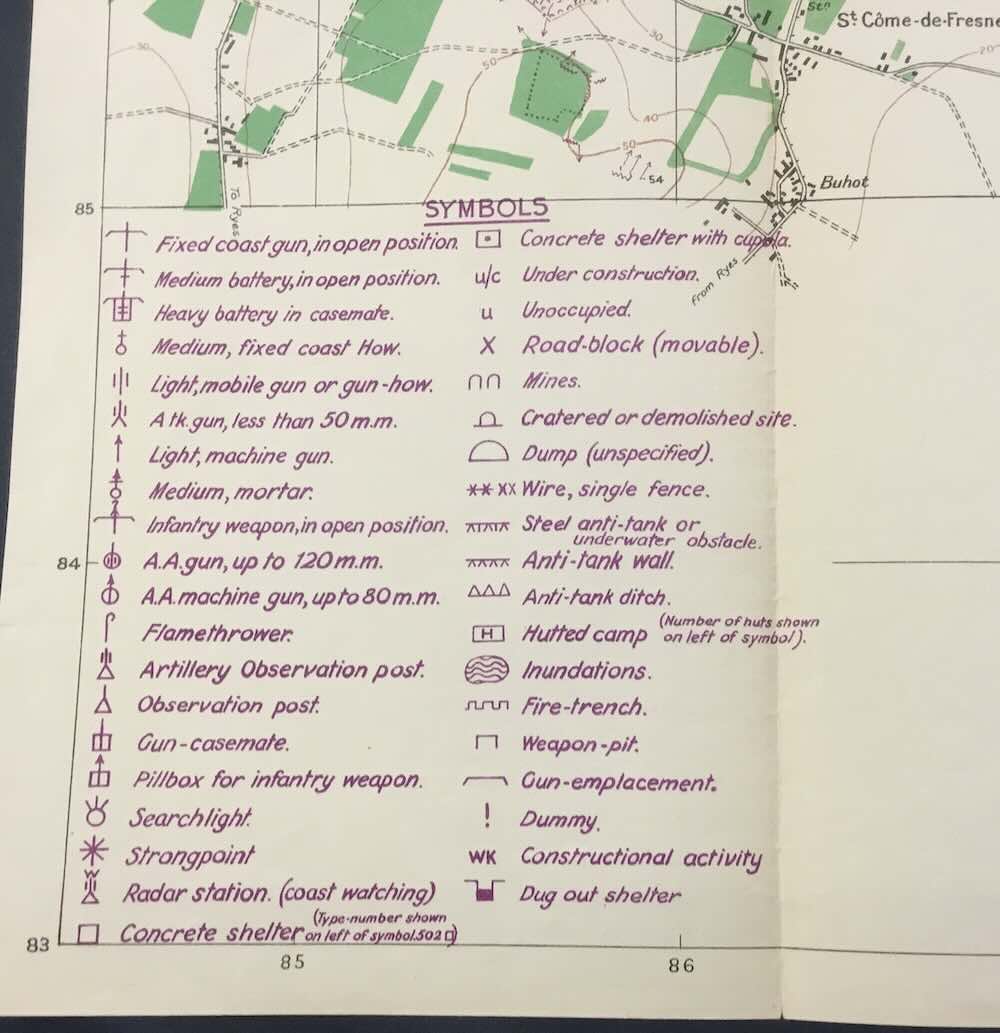
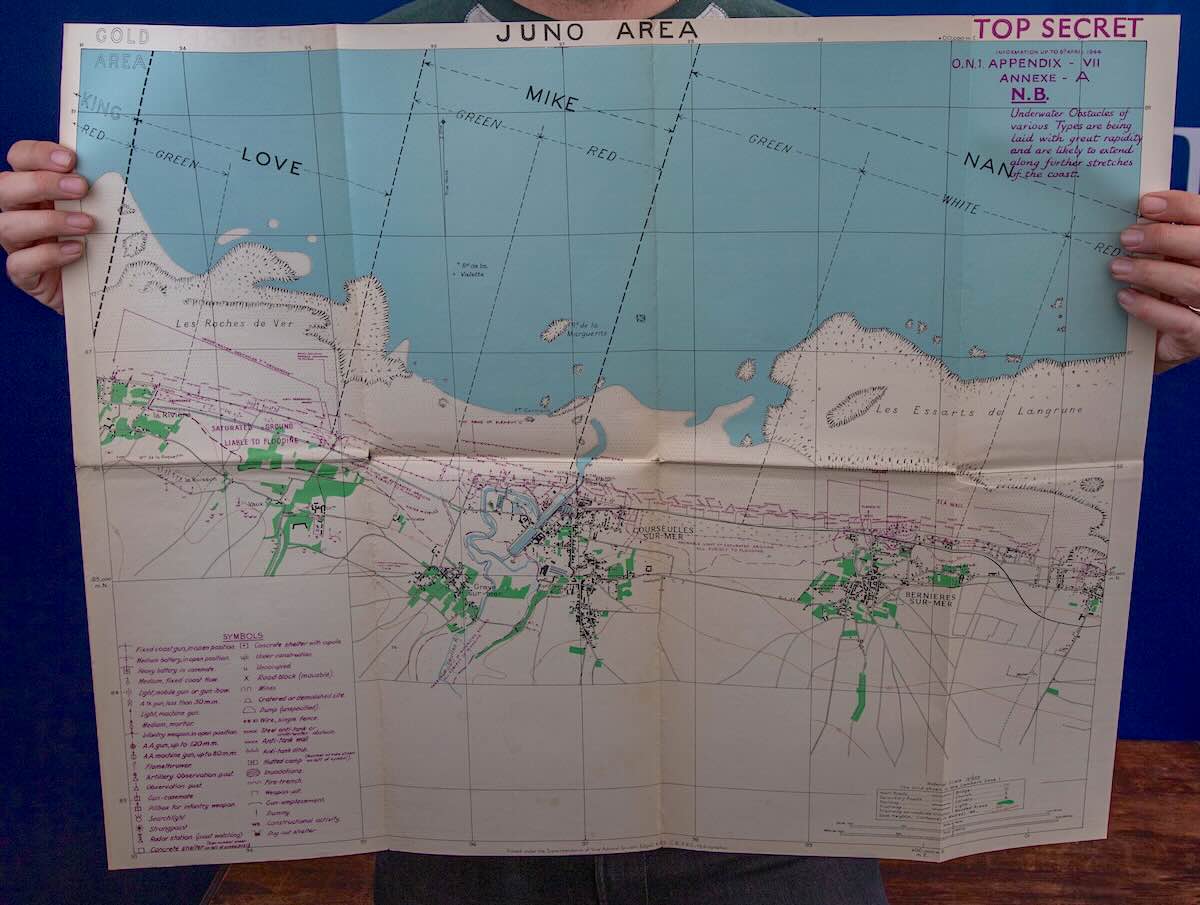
Each map features the French terrain—hills, woods, villages, and roads—but most importantly, they outline in chilling detail the German defenses, including barbed wire, minefields marked in purple ink, and even flamethrowers.

The collection had been in the possession of Royal Naval sub-lieutenant Walter Page who served on Landing Craft Tank 2138. His landing craft was one of 900 which played a vital role in transporting men and supplies across the English Channel on that fateful day.

The maps only came to light when their current owner finally looked through a box of memorabilia purchased at a previous auction—for which he paid just ten bucks.

This week, the documents will be auctioned off by Hansons Auctioneers in Derbyshire, England, beginning August 13. Bids can be placed online at their website.

The six maps will be sold individually, but they’re expected to fetch up to $20,000 in total.

Utah Beach Top Secret D-Day map – SWNS

“Imagine landing on a strange shore under enemy fire and not knowing where you were going or what hazards awaited,” said Hansons’ military expert, Matt Crowson.

“It is amazing to think, had it not been for the eagle-eyed vendor [sorting through his newly purchased box of papers] they would likely never have seen the light of day.”

More than 150,000 Allied troops were involved in the successful effort to push the Nazi defenders back from the Normandy beaches, as they sought to decisively turn the tide of WWII.

While the Americans focused on the western beaches of Utah and Omaha, the British and Canadians landed on the eastern shores of Gold, Juno and Sword.

Creating up-to-date maps of the shorelines was vital for Allied success, so, for months, photo-reconnaissance aircraft had helped create an accurate record of the French coast.

Closeup of symbols on D-Day map – SWNS

ANOTHER LUCKY FIND: War Hero Codebreaker Alan Turing’s Papers Found in Loft And Saved From Shredder to Fetch Record $625,000

And because it wasn’t known exactly where D-Day would take place, maps had to be developed for a wide area of France.

The formidable German fortifications featured 2,500 anti-tank obstacles acting as shoreline defense, while hundreds of submerged mines proved fatal to troops wading ashore.

Minefields behind the beaches coupled with barbed wire and anti-tank ditches also made advancement even more difficult.

The detailed D-Day maps were 1:12,500 scale, meaning that one kilometer on the ground is represented by eight centimeters.

Juno Beach D-Day map showing the size – SWNS

The maps are also divided into different sectors, in the case of Gold Beach, the area is further made up of Item, Jig and King (using the phonetic alphabet of the 1940s). Each sector was then sub-divided into “red” and “green”.

Walter Page and his Landing Craft crew were part of Assault Force ‘U’1, when soldiers stormed Utah Beach in the first wave of landings at 6:30 AM on June 6, 1944.

EVER HEARD OF THIS? Rare WWII Pigeon Parachute Used to Carry Messages to French Resistance Ahead of D-Day Found in Old Shoebox

“The maps are rare and important documents that mark the beginning of the liberation of Western Europe from Nazi Germany,” said the Auctioneer’s website.

Visit the Auctioneer’s website for more information and to place a bid starting on Wednesday (scroll down a little to see the maps).

SHARE THE AMAZING MAPS With WWII Collectors on Social Media…