














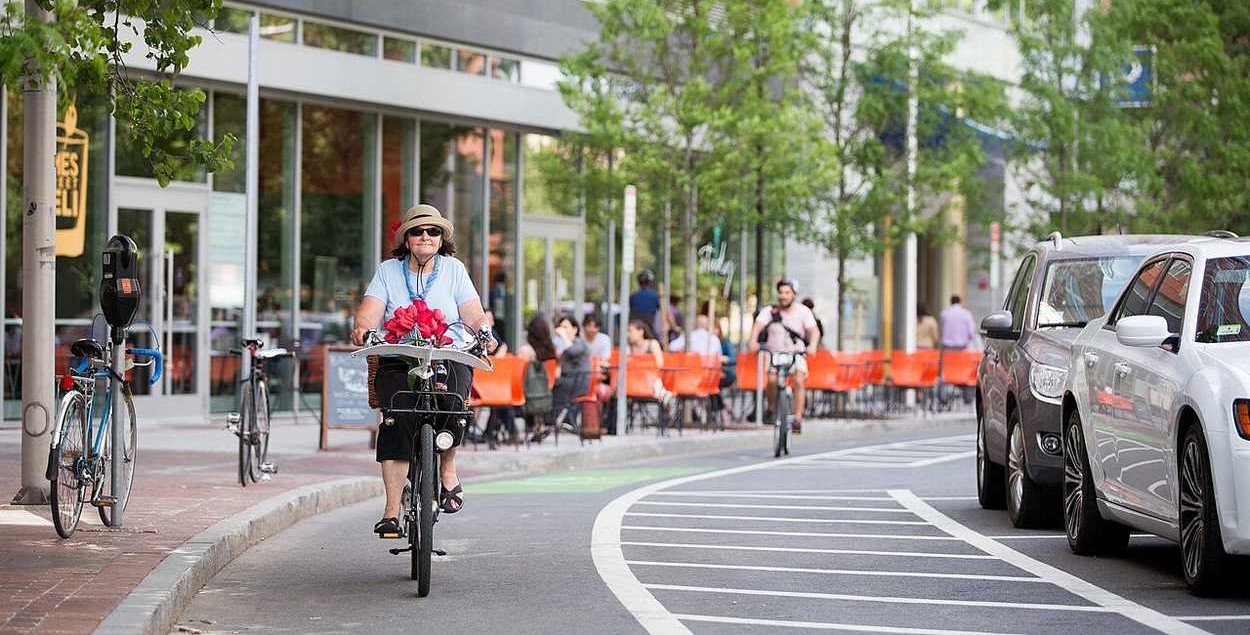
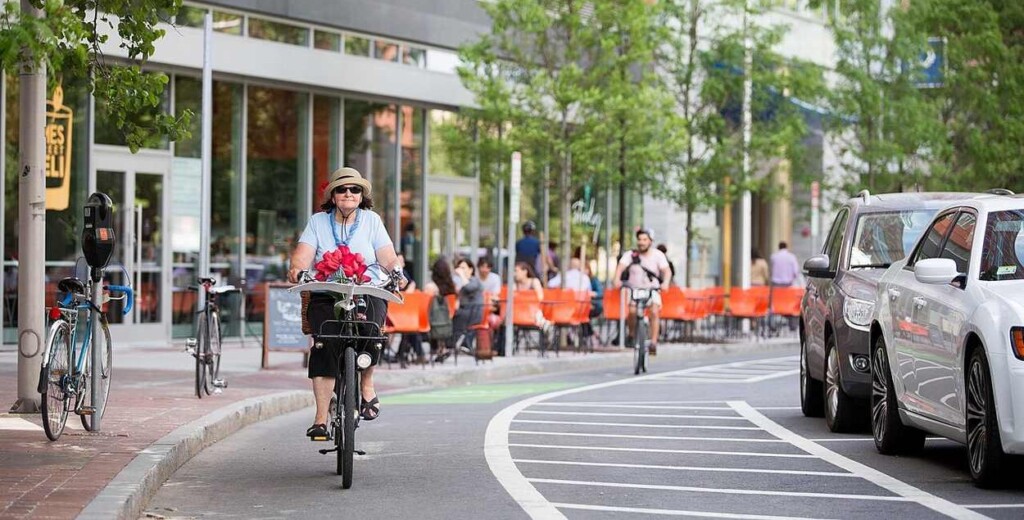
The Better Bike Lanes project in the metropolitan area of Boston has led to a substantial increase in bicycle trips and a modest decrease in the number of motor vehicles on the roads at any given time.
Taking place between 2023 and 2024, the changes were revealed in a report from the City of Boston.
It was part of the election platform of Mayor Michelle Wu to install protected bike lanes around the city to satisfy a perceived demand for better cycling infrastructure.
By the autumn of 2024, much of the infrastructure had been installed, including bike lanes, bikeways, and new road crossings. The city then conducted a study to see whether that demand was genuine.
In some areas the change was more modest, such as South Street in Brighton, which saw an increase of about 16 bikes per day—a 22% rise from before the bike lanes. In other places, the results have been dramatic.
On Bolyston Street in the Back Bay neighborhood, there has been an 83% rise in the number of observed bike trips per day, from 615 before the addition of the bike lanes to 1,127 after. Bolyston’s bike lane is blocked from inconsiderate motorists looking for parking spots with metal bollards.
Down town, on Milk Street, almost 200 more bikes were recorded on its new single-direction bike lane than before its construction, when bikes had to use the automobile lanes.
Western Avenue, at locations along its length both in Allston and Brighton, saw over 200 more bikes—an increase of 51% in average per-day bike traffic.
US TRANSPORTATION OPTIONS:
- First Flying Electric Ferry in US Will Shuttle Lake Tahoe Crowds With Zero Emissions
- Charlotte Cycling Thoroughfare to Finally Get Long-Awaited Bridge–and She’s A Beauty
- NYC Innovation Sees Century-Old Bridge Replaced – at $93M Under Budget, Without Stopping Trains
But how many of these cyclists were opting to leave their car in the garage and how many didn’t have a car to begin with? The data recorded a modest, 9% drop in the average traffic flows between September 2022 and September 2024 near Fairfield Street, and a 14% drop near Arlington Street.
Tiffany Cogell, executive director of the Boston Cyclist’s Union, told Mass Street Blog that the new bike lanes are “reducing crashes, improving predictability, and expanding mobility options without increasing congestion.”
“Protected bike infrastructure works,” she said. “This is exactly the kind of evidence-based policymaking our city needs.”
SHARE This Story With Your Friends Who Prefer 2 Wheels To 4…