














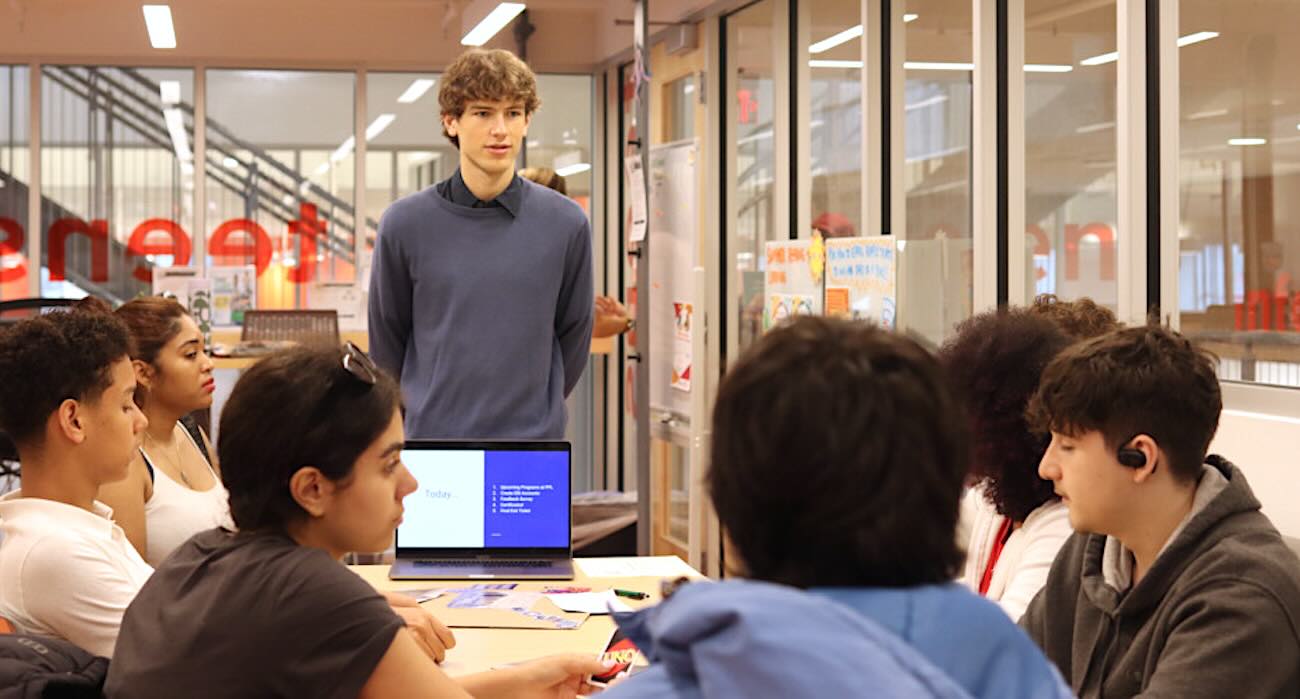
For a group of teenagers learning English in Providence, Rhode Island, summer school this year looked a little different.
There were vocabulary games and journal entries, but also trips into the community where students could put their new language skills to work—whether speaking with a cashier at a local market or learning how to describe their experience on a résumé.
Teaching the 4-week class was Brown University student Justin Dunn, who spent the summer leading intermediate English courses for teens at the city’s public library.
“We’re helping these students, but I’m learning and gaining just as much,” said Justin. “I’ve learned so much about Providence and the amazing people here.”
The rising sophomore found the library opportunity through the university’s SPRINT-iProv fellowship, which places undergraduates in full-time summer positions with nonprofit groups throughout this capital city—including helping to create and teach a 4-week English-language curriculum.
Above all, Justin wanted to teach the teens English sentences they could actually use.
“Most of my lessons focus on real-life skills.”
Taking English Out of the Classroom
When the class studied food and shopping, for example, Dunn didn’t stop with vocabulary exercises. He took his students to a nearby Maruichi market, where they could practice speaking English with a cashier.

The teenagers also began building their own résumés, learning the English words and phrases needed to describe their education, activities, work experience, and abilities.
“For teens who may soon be looking for jobs, becoming comfortable with that language can be really helpful,” Dunn said.
Other lessons explored subjects ranging from art and employment to food and outer space, while games helped students build vocabulary and journal writing encouraged them to express themselves in English.
The approach reflects a simple idea: learning the correct words on a worksheet is useful, but having the confidence to use those words in the real world can change what a young person is able to do with them.
A conversation at a grocery store can become a language lesson. A résumé can become an English assignment. And a summer class can potentially give a teenager more confidence when applying for a first job, navigating school or simply talking with someone new.
LOVE THESE TEACHERS:
• Teacher Wins $1M Prize for Turning India’s Slums Into Hundreds of Open-Air Classrooms
• Civil Rights Symbol Ruby Bridges Writes Love Letter to Teacher That Helped Her in Tumultuous First Grade
Justin discovered that some of the workers alongside him at the library had once arrived there for exactly the kind of help his students are receiving today.
“Many of my co-workers are immigrants, and some first came to the library through its English-language programs before later working there,” he said.
“There’s a real sense of community here, and I love that I get to be part of it.”
A poignant reminder that someone can walk through a library’s doors needing help with English—and years later walk through those same doors as an employee helping the next person.
And Justin is one of 40 Brown undergraduates spending the summer working full-time with Providence nonprofits making the world a little brighter—literally.
SHARE the Local Success With Rhode Islanders On Social Media…