














Reprinted with permission from World at Large
Scientists in Canada have discovered that ancient underground rocks are naturally producing hydrogen gas—and lots of it, and it may be everywhere—and it may be cheap.
The rocks could offer another source of clean energy known for emissions accounting purposes as “white hydrogen,” a largely unexplored and hidden underworld resource with the potential to help power industries and remote communities while reducing dependence on fossil fuels.
How underexplored is white hydrogen? Well extractive industry news outlet Autonocion points out that every hydrogen well currently known was found by accident—by geologists looking for something else.
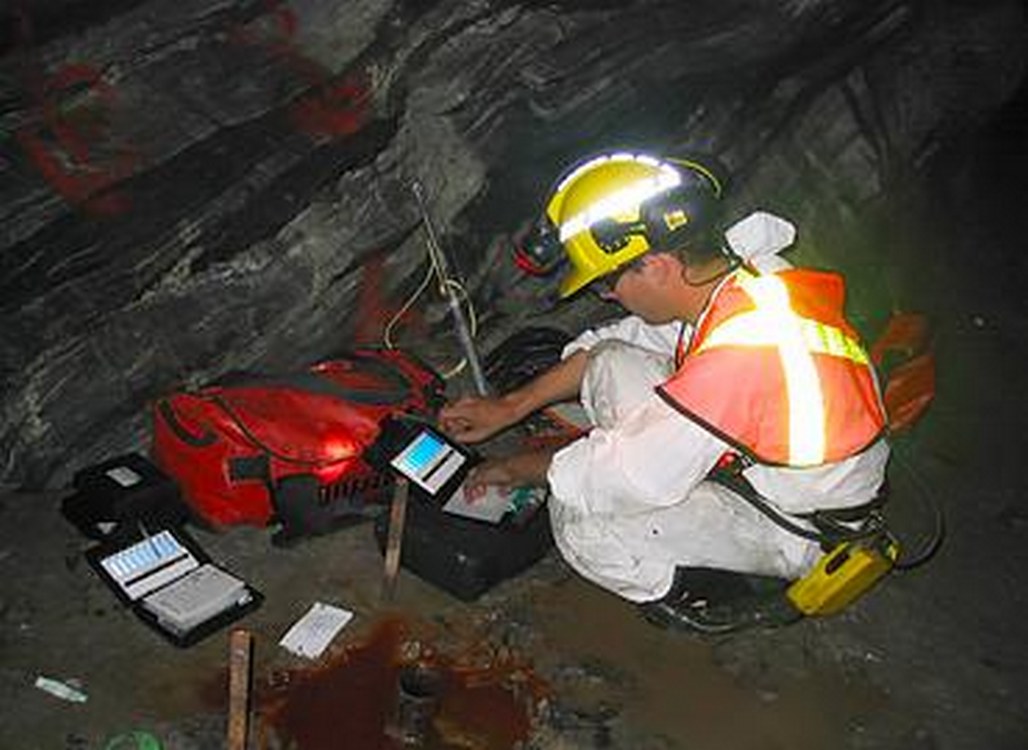
While researchers at the Univ. of Toronto were gathering data from an active mine near the legendary Timmins gold mining camp in Ontario, a micro-cap exploration company MAX Power became the first geologists to break that trend—they went looking for a big hydrogen discovery, and they found it.
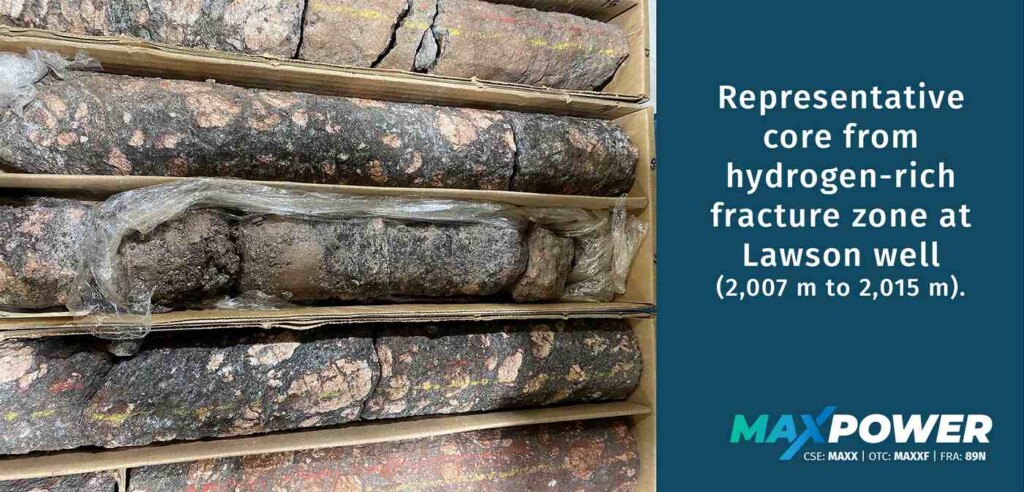
About 87 miles (140 km) south of Saskatoon, Saskatchewan, the explorers drilled down 1.2 miles through the prairie sediment and bedrock of their Lawson target before punching out an 8 meter chunk of “Precambrian basement” rock which they found rich in signs of naturally-flowing hydrogen from a gas well deep underground.
The sample returned 28% hydrogen concentration, which itself contained a 90% hydrogen-nitrogen mix and none of the poisonous/flammable hydrogen sulphide. It also contained between 8.7% and 4.4% helium, a valuable gas that has been in the news of late because of the disruptions in supply due to the Strait of Hormuz closure.
“After perforation, the well quickly achieved free gas flow to surface, delivering strong initial rates and pressures before being overtaken by a powerful influx of formation brine,” a statement from the company’s January 16th press release on the occasion read.
“We have confirmed the existence of a natural hydrogen system in the subsurface from the first well ever drilled in this country specifically targeting this new primary energy source,” said President and CEO of MAX Power, Mr. Ran Narayanasamy. “Lawson is no longer a concept – it’s a discovered geological system with gas flow, pressure, and the key ingredients required for future commercial natural hydrogen development”.
A remote power source
At Timmins, the researchers found that boreholes drilled into the rock by miners looking for gold release an 8 kilograms of hydrogen gas each year. According to the study, the gas can continue flowing for at least a decade.
When expanded across the site’s nearly 15,000 boreholes, the estimated hydrogen output exceeds 140 metric tonnes annually. The team calculated that this amount could generate approximately 4.7 million kilowatts of energy per year from just one location, enough to meet the yearly energy demands of more than 400 homes.
“The data from this study suggests there are critical untapped opportunities to access a domestic source of cost-effective energy produced from the rocks beneath our feet,” says Professor Barbara Sherwood Lollar in the Department of Earth Sciences at the University of Toronto, the lead author of the study.
“What’s more, this provides a ‘made in Canada’ resource that might be able to support local and regional industry hubs and reduce their dependence on importing hydrocarbon-based fuels”.
Hydrogen already plays a major role in the global economy, which one market analysis firm valued at over $200 billion worldwide. It is widely used in fertilizer manufacturing, which is essential for agriculture and global food production. Hydrogen is also important in methanol production and steelmaking.
Today, most hydrogen is produced through industrial methods that rely on fossil fuels such as petroleum, natural gas, and coal—so-called “grey” hydrogen. These processes require large amounts of energy and release carbon monoxide and CO2. Even “green” hydrogen, which is generated using renewable energy, remains expensive and energy intensive while also requiring transportation and storage infrastructure.
Natural hydrogen, the “white” kind, has received far less attention in comparison. Until recently, most research focused on its role in underground microbial ecosystems and its potential importance for astrobiology and space exploration. Estimates of its energy potential were largely theoretical because scientists lacked direct long-term measurements from real-world sites.
The two most significant real-world sites in operation are in Lorraine, eastern France, and in Mali, where it has been quietly powering a town for a decade. In 1987, a driller boring a water well was left burned and bewildered when seemingly out of nowhere, the air in the well exploded as he leaned over it with a lit cigarette. The outrushing air sparkled ocean blue in the daytime, and gold at night, and the villagers cemented the well in confusion. Eventually in 2012, a local entrepreneur brought oil and gas geologists in to have a look, and the Bourakébougou hydrogen pilot plant was built.
“Natural hydrogen is produced over time through underground chemical reactions between rocks and the groundwaters in those rocks,” says Lollar. “Canada is blessed that vast amounts of its territories, especially on the Canadian Shield, contain the right rocks and minerals to create this natural hydrogen”.
MORE HYDROGEN GAS NEWS: Hydrogen Gas Blend Will Reduce Power Plant’s Emissions by 75%–as it Helps Power 6 States
Lollar and her team say that Canada may have a unique opportunity to produce cleaner and potentially cheaper hydrogen without depending on hydrocarbons. They also note that similar hydrogen-producing rocks exist in many other countries, suggesting the approach could eventually be used worldwide. The largest concentrations of natural hydrogen appear in geological regions already associated with Canadian mining activity. These include Northern Ontario, Quebec, Nunavut, and the Northwest Territories.
“The common link is the rock,” says study co-author Oliver Warr, an assistant professor in the Department of Earth and Environmental Sciences at University of Ottawa. “Natural hydrogen is produced in the same rocks where Canada’s nickel, copper, and diamond deposits are found, and that are currently under exploration for critical minerals such as lithium, helium, chromium, and cobalt. The co-location of mining resources and hydrogen production and use mitigates the need for long transportation routes to market, for hydrogen storage and major hydrogen infrastructure development”.
The study’s authors believe natural hydrogen could help reduce both costs and carbon emissions for Canada’s gargantuan mining sector. Hydrogen generated close to mining operations could provide a local energy source without requiring major new transportation systems. If exploitation infrastructure becomes available and affordable for white hydrogen, it could also save junior mining companies starting up in established mining areas like Timmins, Val d’Or, or BC’s Golden Triangle, from incorporating power access or diesel generators into their mining and exploration plans.
RESOURCE DEVELOPMENT: Massive ‘Shovel-Ready’ Critical Minerals Deposit Found in Utah–Largest Potentially in North America
The researchers also suggest that northern communities, which often face high fuel transportation costs, could benefit from nearby hydrogen resources. Using locally sourced hydrogen may lower energy expenses while reducing reliance on imported fuels.
“There is a global race to increase hydrogen availability in order to decarbonize and reduce the costs of the existing hydrogen economy,” says Lollar. “We now have a better understanding of the economic viability of this resource that can be mapped to hydrogen deposits around the world that are both already known and yet to be discovered”. WaL