














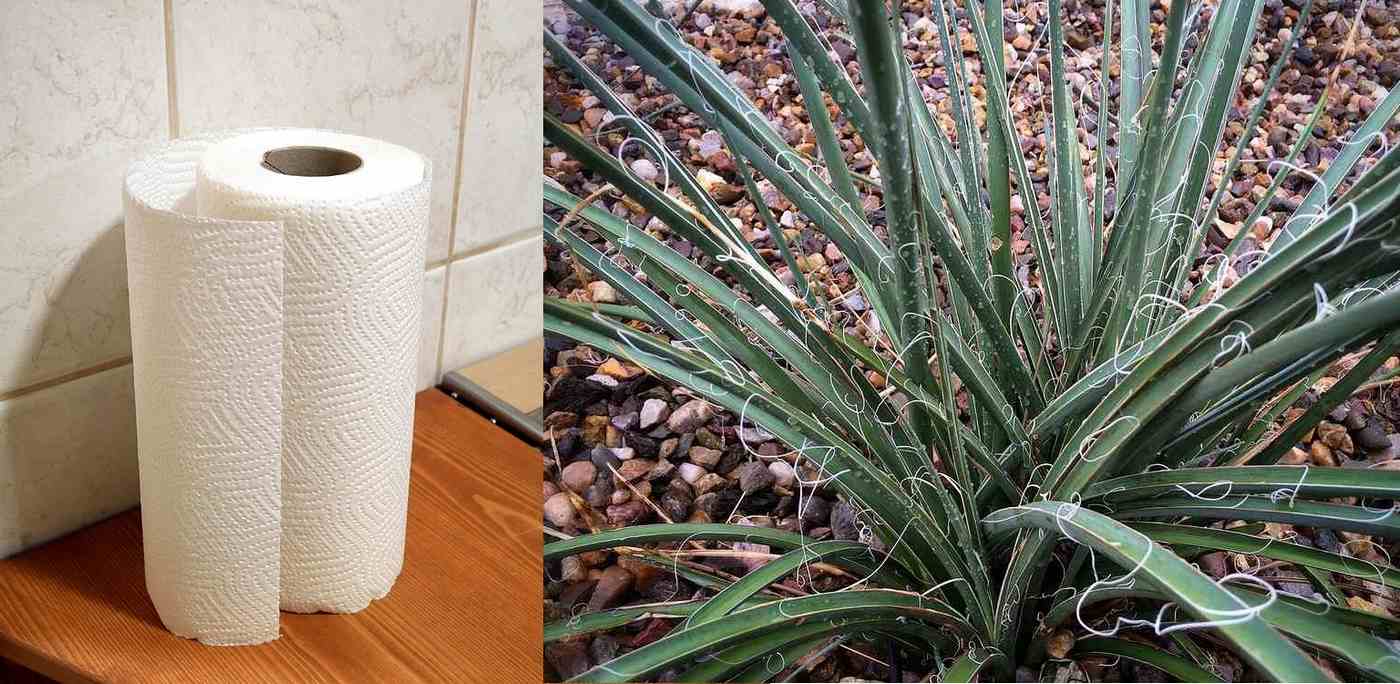
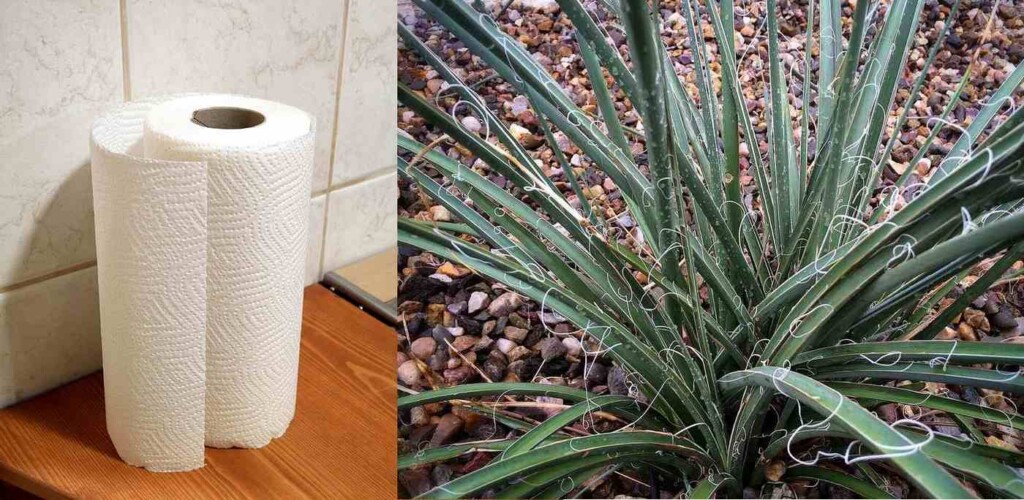
From the Wall Street Journal comes the story of a goldilocks discovery: a potential replacement for wood fiber that goes into making tissues, toilet paper, and paper towels.
It’s called hesperaloe, and like the namesake of its last 4 letters, presents as a long-leaved succulent that grows in arid environments.
Kimberly-Clark, the American firm which made the R&D breakthrough, produces brand names like Scott paper towels, Huggies diapers, and Cottonelle toilet paper—all of which use wood fiber from trees.
Speaking to the Journal, Craig Slavtcheff, the company’s top research-and-development officer described it as a “Goldilocks discovery” and alternatively as a “moonshot,” but had also to warn that commercial-scale testing was still underway.
The potential benefits are manifold, including reduced reliance on deforestation and logging for paper products, lower costs, and maintenance of arboreal environments.
Additional downstream effects could come from hesperaloe cultivation in arid environments, including less water consumption in a warming climate, and a way to economically counter desertification. At the same time, fewer acres logged could very well mean hundreds of thousands of additional tons of CO2 removed from the atmosphere every year in major foresting countries like Canada and Sweden.
The scale of the discovery, which the company has so far invested $250 million and 20 years of field and lab work to make, is truly monumental.
Many alternatives to wood fibers have been tested by commercial producers of wood and paper-based products. Hemp and bamboo stand out, but Jeff Melucci, Kimberly-Clark’s top executive for strategy, said that he and his team have tried many more.
“We tried to pulp everything from wood straw to bamboo,” he told the Journal, explaining that of 70 different substances, it was the hesperaloe, growing on an abandoned state test crop facility in Arizona, that caught his team’s eyes.
GET INSPIRED: NASA Reveals Details of its ‘Moon Base’ Program to Prepare Humanity for Next Chapter of Exploration
Slavtcheff told the outlet that they so far have no estimate as to the potential costs of a commercially-viable crop-to-pulp supply chain, but early tests suggest competitiveness with wood.
One of the greatest challenges in replacing long-standing feedstocks like wood or plastic in production is the trying to match the decades of efficiency improvements made in getting these materials to market on vast scales. New technologies lack years of distributed market knowledge and incremental improvements.
MORE FUTURE INNOVATION: Quebec Firm Pioneers Cyanide-Free Gold Extraction and Arsenic-Capture to Clean up Mining Industry
Indeed Kimberly-Clark has been eagerly seeking a replacement for wood fiber for 20 years, hoping one day to remove logging from its supply chains altogether for the sake of the planet.
The very next step for Melucci and Slavtcheff is to await the results of a pilot facility in Yuma for the cultivation and pulping of hesperaloe in Yuma, Arizona.
SHARE This Corporate-Powered Revolution In Paper Products With Your Friends…
While a more sustainable paper product is great, perhaps a current, obvious, option is to quit using so many single-use products. Paper towels are just so wasteful when a cloth that can be cleaned and reused is a better, sturdier choice. Reducing single-use items also has the added benefit of reducing landfill mass which is a growing problem in the world.