














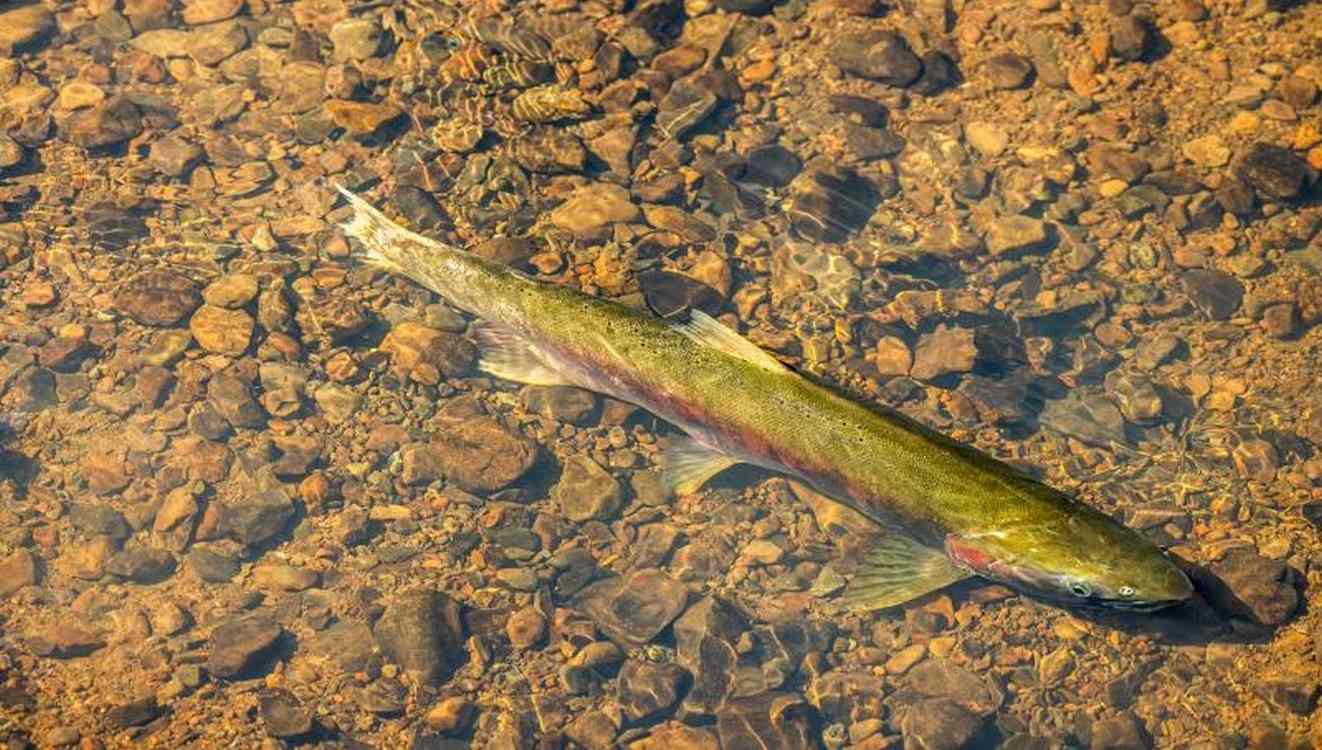
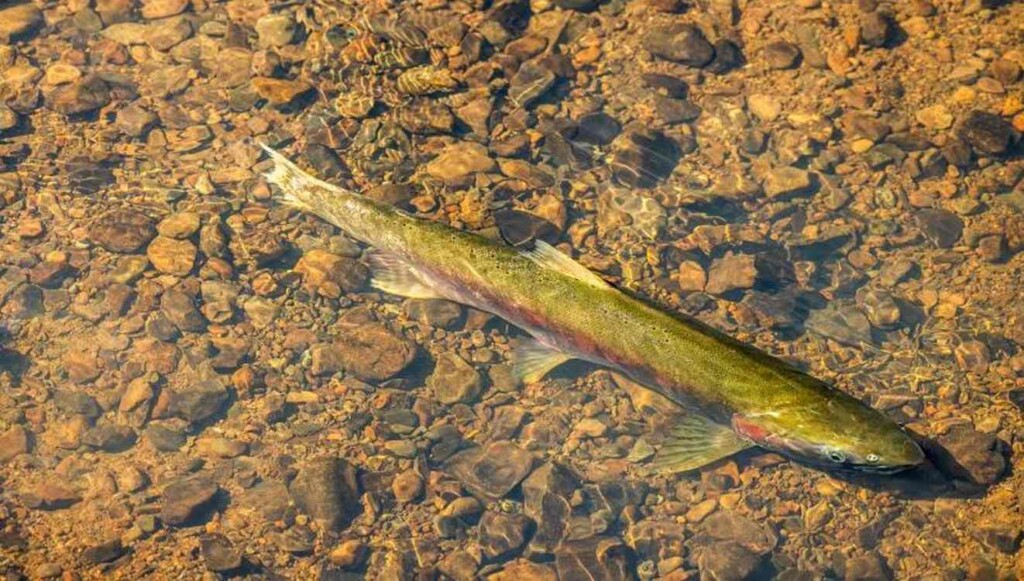
A record 30,000 coho salmon returned to central California rivers last season—up 10x from an average of 3,000 over the last decade—and double the total of last season.
Running up the rivers which empty into the Mendocino coast, the proliferation among the fish is something that scientists studying the animals thought they’d never see in their careers.
A March news release by the National Oceanic and Atmospheric Administration (NOAA) said they took it as a sign that targeted restoration efforts on private land can help move the needle for a species that was not long ago considered somewhere near the brink.
“I am overjoyed—everybody’s just ecstatic about how many coho there are,” said NOAA Marine Habitat Resource Specialist Joe Pecharich, who has been supporting restoration projects in the region for 20 years. “We have conducted intensive sampling since 2009 in these watersheds and many of us never thought we’d see something like this in our lifetime.”
“It’s very good news for all of us—communities, tribes, NGOs, NOAA, California Department of Fish and Wildlife, and all our partners,” said Joshua Fuller, NOAA’s Coastal California Branch Supervisor.
“Recovering salmon is undeniably challenging, particularly for a species that must successfully navigate both freshwater and marine ecosystems during its lifetime. These numbers are very encouraging and demonstrate that recovery is possible when management, habitat, ocean, and hydrologic conditions are aligned.”
Life is precarious for the central California coast coho salmon, (CCCC salmon for short) the most endangered subset of the coho salmon species. In many waterways, their existence had become a mere memory.
Stretching back before the new millennium, NOAA gathered together a wide-ranging coalition of local stakeholders, some already mentioned, but which also included timber companies and the fishing-focused nonprofit Trout Unlimited, to work on over 100 small improvement projects to the Mendocino coast river systems to give the coho the best chance of reclaiming its former territory.
These have included removing or altering fish-unfriendly modifications to streams and rivers, like widening undersized road culverts, removing barriers like log jams, and returning previously-straightened waterways to their natural, meandering state.
Such amendments have been made in the North Fork Navarro, Noyo, Garcia, and Big river watersheds. Last summer, the NOAA and The Nature Conservancy constructed the largest-ever habitat restoration project in the Ten Mile watershed.
AMERICAN FISH STOCKS:
- California Creek Restoration Helps Young Salmon Grow Twice as Fast—And Doubles Their Survival Rate
- Maine Counts Over 20 Million River Herring During Annual Run, the Highest in Decades
- After 50 Years, Trout Population Is Restored to Historic Numbers in One of the Largest Lakes in US
“It’s been amazing to see how quickly coho will occupy new habitat. Just days after the excavators roll out, the fish will start to swim in,” said Peter van de Burgt, The Nature Conservancy’s North Coast Restoration project manager.
It’s not only the rapidity with which the coho seem to be returning up these various rivers and brooks that catches the eye, but the breadth. Usal Creek hadn’t seen a live coho in 10 years; the Gualala River watershed hadn’t recorded any in 2 decades. Both are now witnessing adults migrate upstream and juveniles downstream.
As to the size of the migratory population from this year, the count was conducted through spring, with early indications suggesting similarly robust numbers, such as a reported 400 coho on the North Fork Navarro River so far—far beyond normal estimates.
SWIM Up Social Media And Share This Story With Your Friends…