













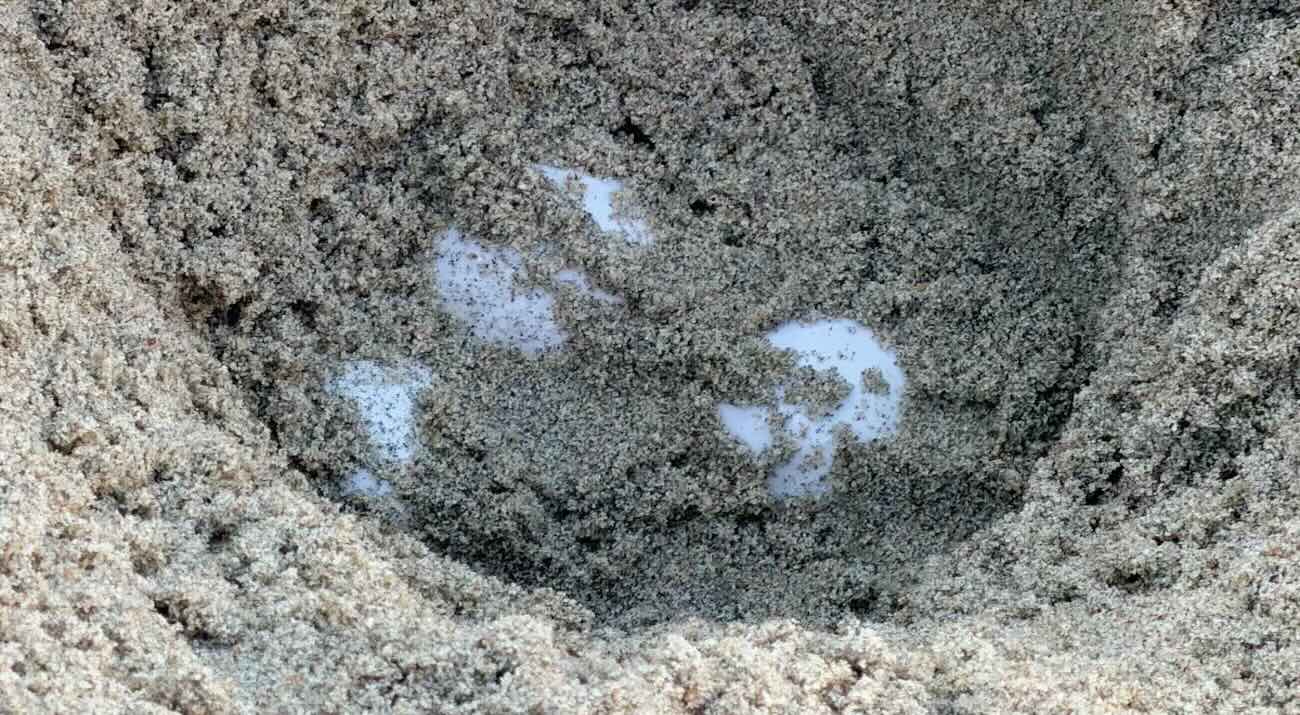
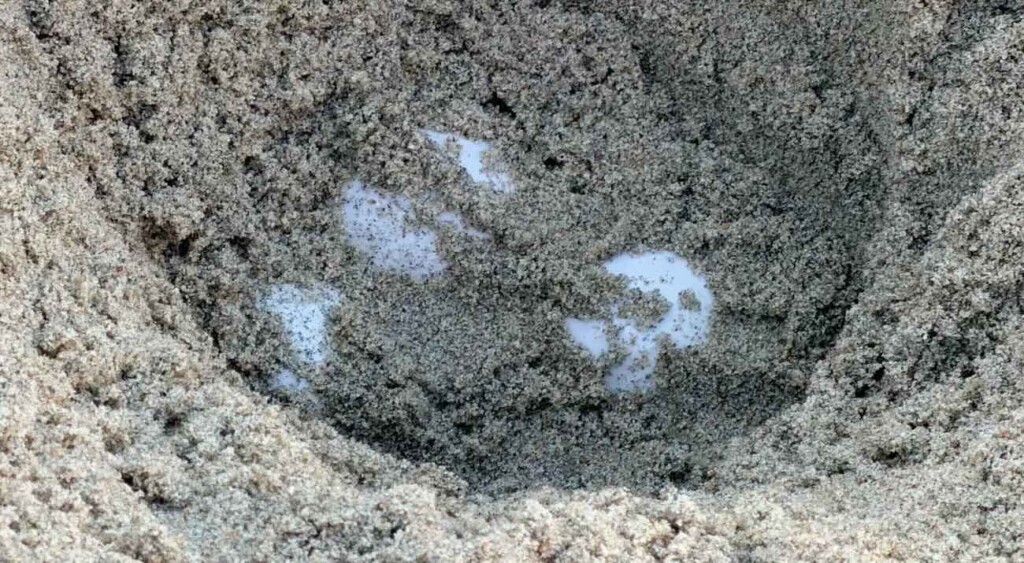
A bombshell report last week from the LA Times details that a series of olive ridley sea turtles which laid their eggs on beaches in Southern California are the first of their race ever recorded buildings nests on the country’s West Coast.
It didn’t take long for the female—in broad daylight, belly filled to burst with eggs—to climb out of the sea onto Seal Beach, dig a nest, deposit her clutch, and return to the sea.
She left nothing but a small trail in the sand, and a couple of speechless lifeguards.
3 days later and 8 miles further north—on Huntington Beech—another turtle repeated the trick to the surprise of beachgoers.
The animals have large breeding colonies in Costa Rica, Mexico, and Nicaragua, but have never been seen in California.
“I have been expecting to see subtropical species present off the coast of Southern California, which is typical during El Niños,” Lindsey Peavey Reeves, a senior scientist with the National Marine Sanctuary Foundation with 20 years of experience studying Olive Ridley turtles, told the LA Times. “However, I wasn’t expecting to see olive ridley sea turtles nesting in Orange County.”
Huntington Beach Fire Department’s Marine Safety unit quickly called the federal National Oceanic and Atmospheric Administration and Fish and Wildlife Service. One could imagine the conservation that followed. Personnel quickly arrived on site and erected mesh nets to protect the delicate eggs beneath, as well as a cordon multiple yards back to deter the public.
“After that, the hatchlings will crawl to the ocean, where they will become the first known sea turtles to start their lives in California waters,” wrote Corine Purtill, the reporter who had the honor of breaking the story at the Times.
3 days later however, Purtill followed up—detailing that a confluence of weather events last weekend would have certainly destroyed the nests. Extreme high tide plus hurricanes Polo and Odalys would batter Huntington and Seal beaches in tandem, so wildlife officials from both NOAA and FWS rushed to carry out the first turtle egg rescue in California history.
SANDY STORIES: Man Gets Stuck in Lake Michigan Quicksand and Comes Out with New Girlfriend
The terrapins are considered “Vulnerable” by the IUCN, and Purtill writes that 204 eggs were recovered from the 2 known nests and packed into polystyrene coolers packed with sand which were put into cars and drove to the Aquarium of the Pacific in Long Beach.
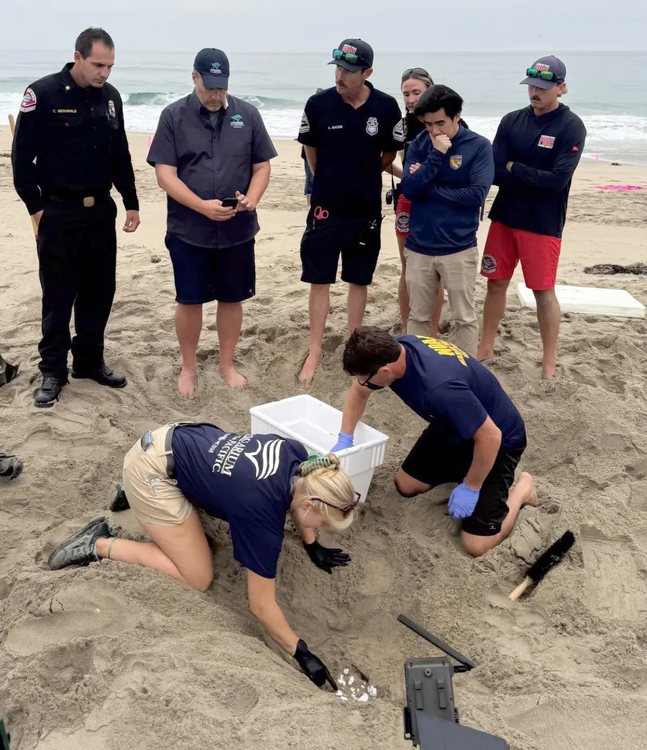
“We had to make some quick decisions,” said biologist Jonathan Snyder of the FWS at the aquarium on Friday. “This is the decision that we made, and I think it’s the best one for species recovery.”
MORE TURTLE TALES: Loggerhead Sea Turtles Break Nest Record in Georgia – The Most in 37 Years
It’s not clear whether the eggs will be viable, but they were placed in climate controlled incubators to mimic the natural sandscape of the beaches. As for why the turtles arrived there in the first place, back-to-back marine heatwaves south of the border are hypothesized as the cause.
Warming sea temperatures may have driven them north to California, or they may have been guided across the Pacific by temperatures the turtles usually find in southerly latitudes right onto the CA beaches. In either case, it shows the animals are adaptable—a vote of Darwinian confidence as the world faces an uncertain future vis-a-vis the climate.
SHARE This Incredible Story And Its Hopeful Note For The Future…