













The third-largest collection of Ice Age-era engravings ever found on Spain’s Mediterranean side was sitting in plain sight where visitors for centuries had been walking right by them.
“For more than six decades, thousands of visitors passed directly in front of the engraved surfaces, and in some cases inscribed names and dates over them, without the Paleolithic origin of the figures being recognized,” said Josep Maria Vergès, a researcher now working to reveal the origins of these cave works.
A statement on the discovery details that people have been visiting the cave, called Cova de la Font Major, in Catalonia since the 12th century.
From 1957 onwards it was widely frequented by visitors, spelunkers, and treasure hunters and it was even converted into a tourist attraction with a museum in 1993.
Having now seen what was “under their noses” the whole time, researchers couldn’t stop thinking how inconceivable it was that the countless visitors who came before had failed to see these carvings.
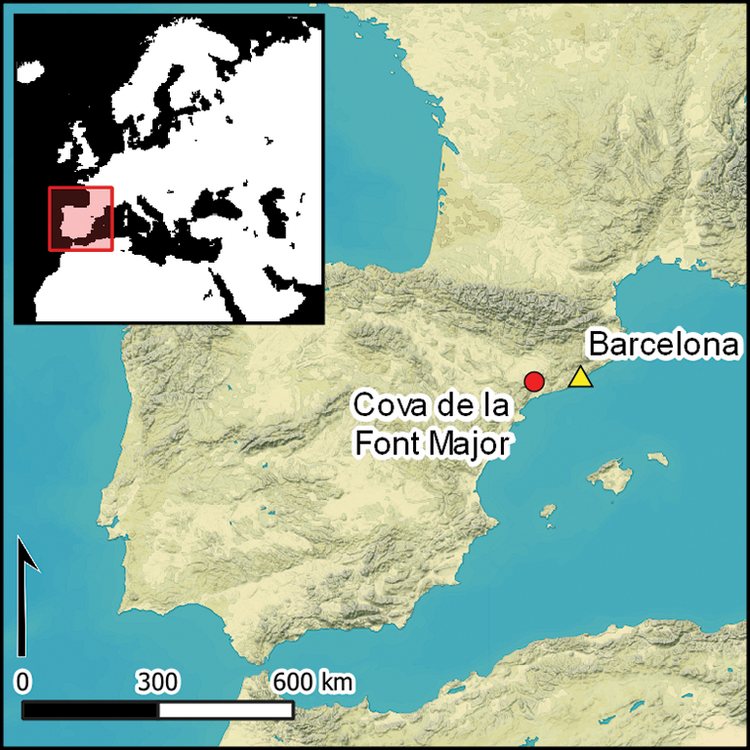
Located around 250 yards from the entrance, Vergès, and his co-author of a study presenting the discovery published in Antiquity, state that Font Major cave had long been assumed to be unsuitable for cave art because of the irregularity in shape and color of its walls.
Scientifically, the discovery is a major one.
The Iberian Peninsula contains over 50% of all cave art documented in Upper Paleolithic Europe, but its distribution is incredibly uneven. High concentrations are found between modern France and the Spanish region of Cantabria, but only 2 representations have ever been found in the entirety of Catalonia.
So its location bucks a trend; as does the quantity of carvings. From the Pyrenees to Gibraltar, around 75% of known Spanish cave art sites contain 5 depictions or fewer, and over 90% contain 20 or fewer.
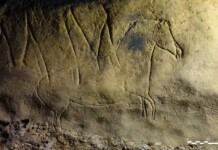
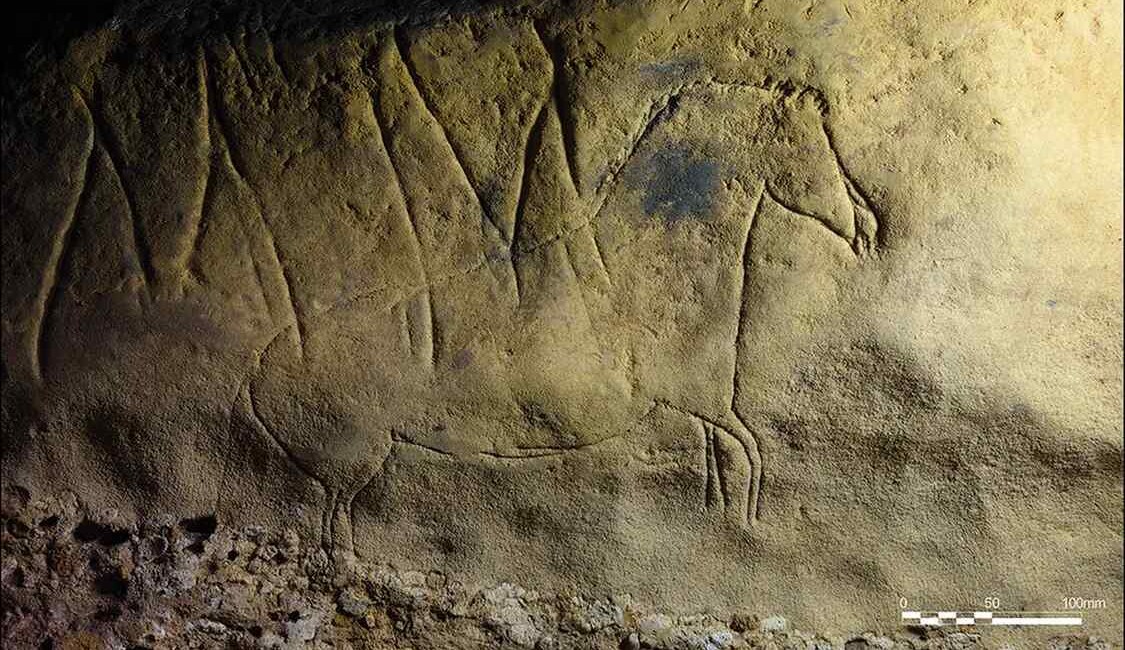
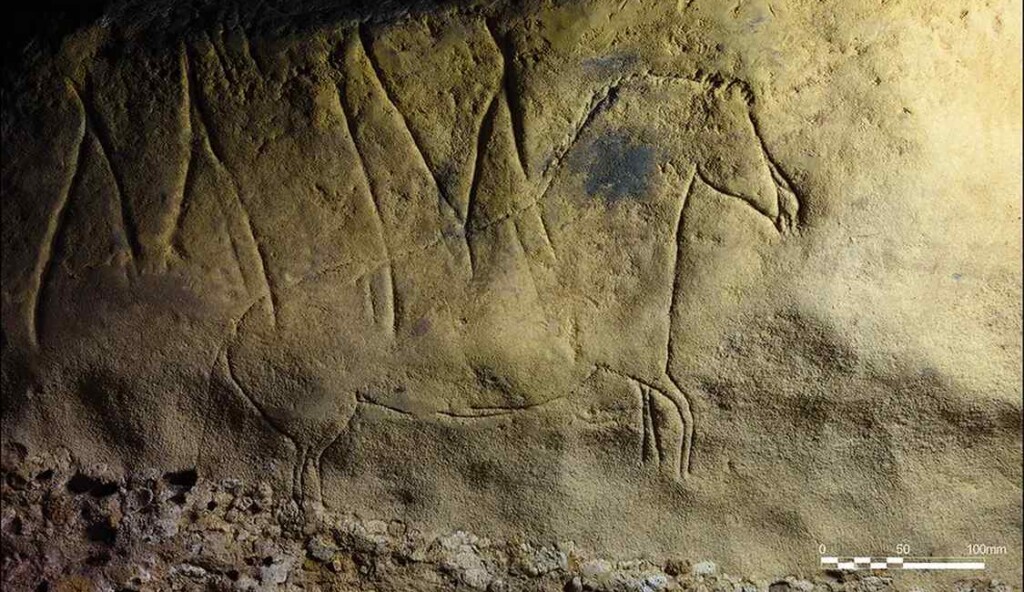
In extreme contrast, Font Major contains 280, among which 55 separate animals are documented, including horses, wild oxen, bears, goats, and deer—”a transformational discovery” for the understanding of Paleolithic European art, the statement read.
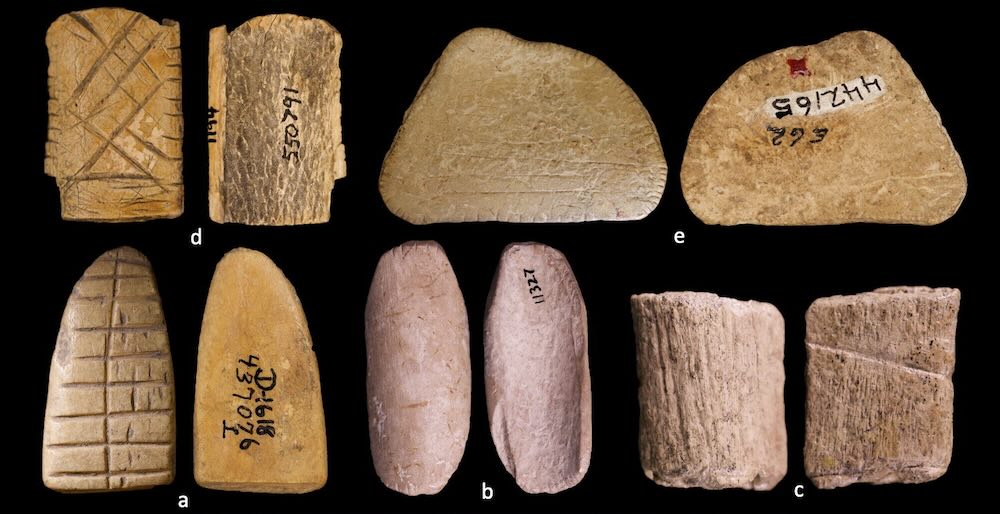
In their study, the researchers detail that radiocarbon dating of organic elements in the cave shows human occupation going back as far as 40,000 BCE, and continuing right up to the Bronze Age.
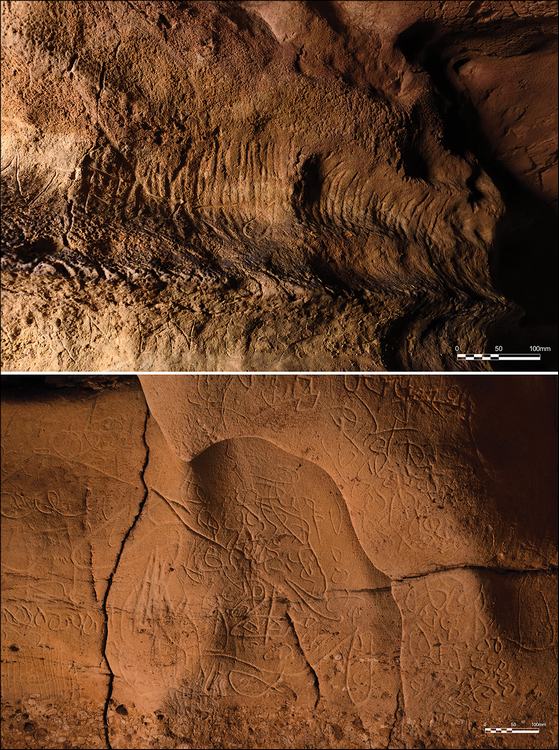
The majority of the engravings depict shapes rather than beings, including parallel lines, and “hundreds of loop-shaped engravings, either isolated or forming connected series,” that look not unlike a young child drawing for the first time, and which may have come from the medieval period judging by dated charcoal fragments found lodged in the looped engravings.
MORE INCREDIBLE CAVE ART: At 67,800-years-old, These Handprints Just Discovered in Indonesia Are Oldest Example of Rock Art
In some cases, natural relief, textural variations, and fissures might have been intentionally incorporated into the composition of figures or scenes.
The authors wrote that the discovery has been so significant for this field of study that it’s prompted a reexamination of other caves where, like Font Major, no similar artworks are known to exist. In one instance, a survey of Cova Simanya actually yielded similar non-representational artworks to those found in Font Major.
SHARE This Head-Scratching Discovery With Your Friends On Social Media…