














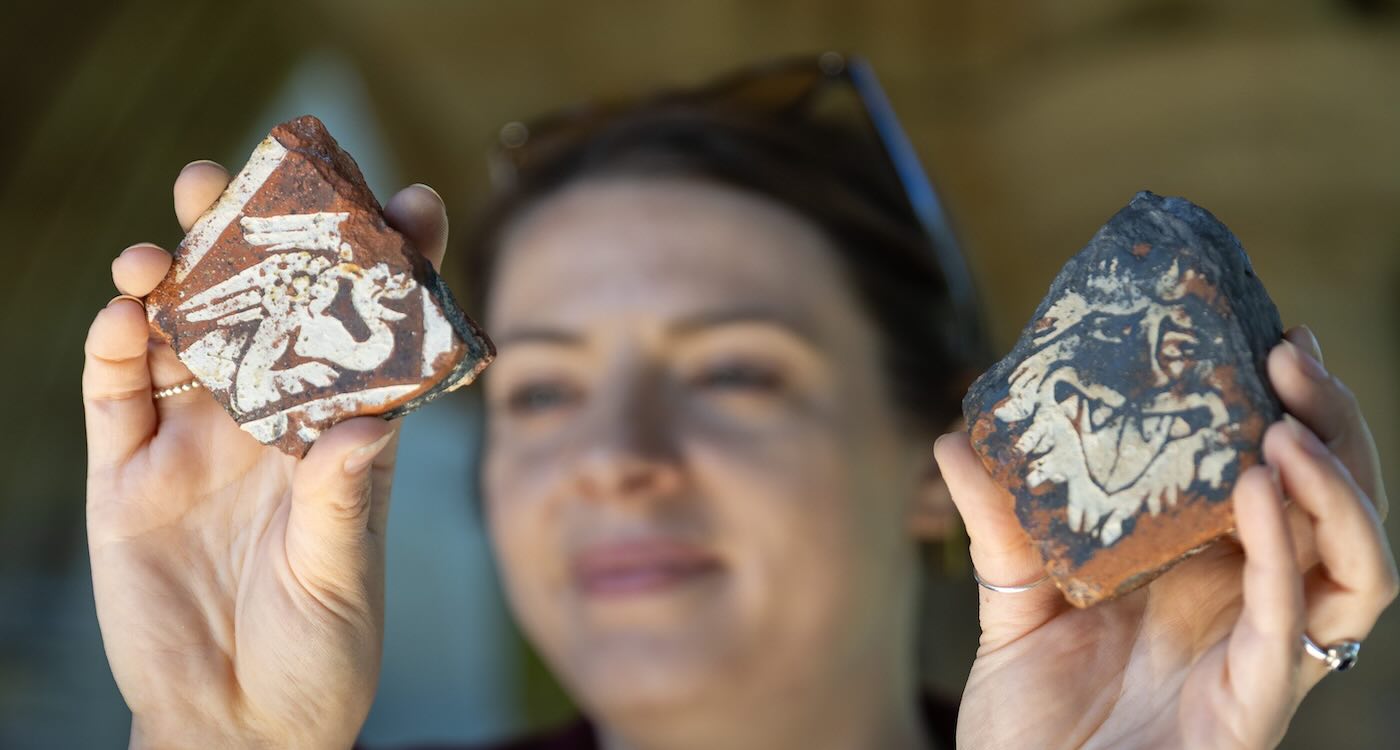
A man who stole 700-year-old floor tiles from a Medieval monastery when he was a child has finally returned them to English Heritage after finding them inside a candy tin where they’d been kept for nearly 60 years.
Simon White was a nine-year-old boy when he took the pieces as a souvenir from Wenlock Priory, in Shropshire, England during a family vacation in 1967.
The retired surveyor’s family kept the three decorative tiles—dating from the late 13th to early 14th century—stored inside a 1920s Thorne’s Creme Toffee tin.
Thursday the missing pieces were handed back to the heritage site after Simon rediscovered them recently in the attic while rummaging through some of his belongings.
Simon said he had always felt guilty about stealing the historic tiles as a boy after being encouraged by his dad, so he was delighted to return them to their rightful home at the 12th-century Anglo-Saxon priory.
“I can still remember the day this all happened as a youth with my father ‘standing guard’,” the 68-year-old told SWNS news agency. “Heaven knows what he would have said if we’d been caught.”
“He literally stood over me while actively encouraging me to take these tiles. I stole three of them, which in hindsight was a dreadful thing to do.”
“Back then there was no visitor centre or CCTV and you could wander around these places willy-nilly for free.
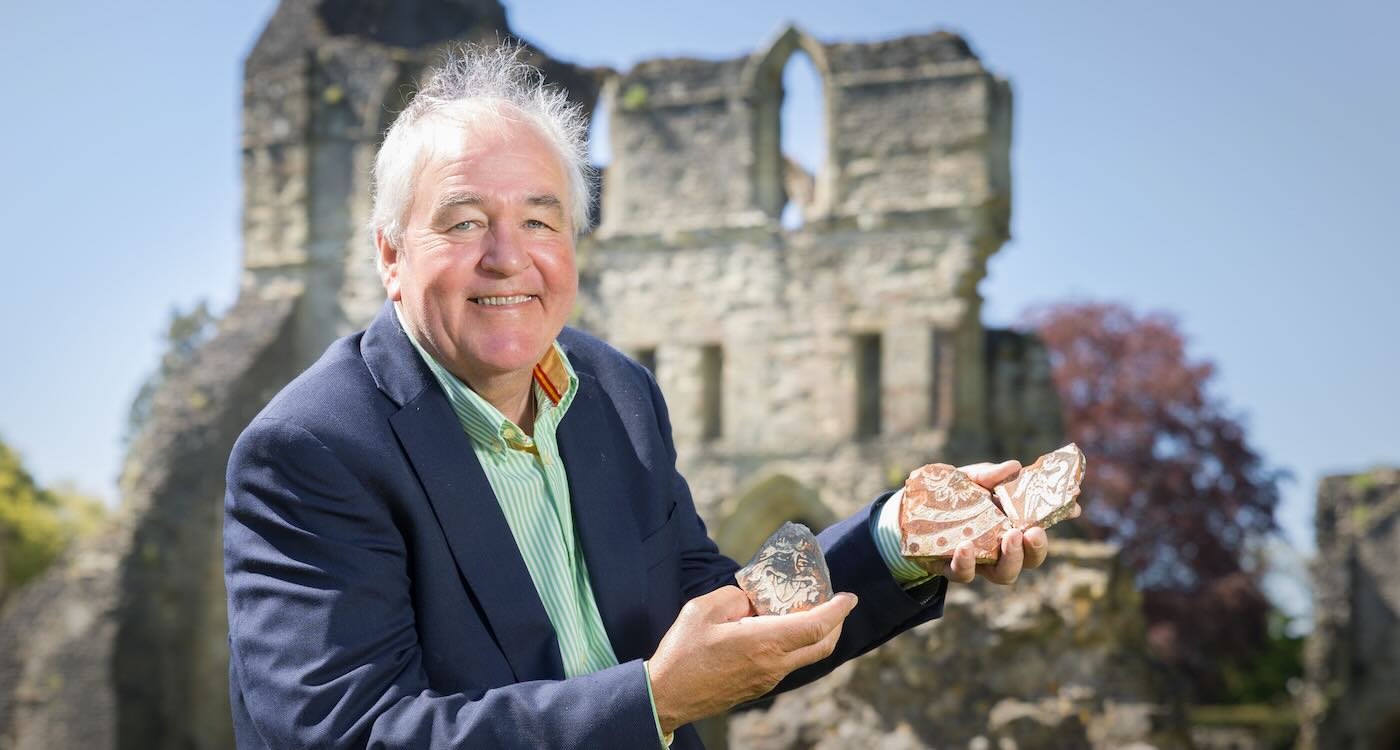
“What happened to the tiles afterwards I’m not really sure, but they survived numerous house moves and assorted family upheavals only to turn up in my loft three months ago in a battered tin.
“It was first time I’d laid eyes on them in 59 years.
“The delicious irony of this is, now that I’m retired, one of my hobbies is archeology and the local society I’ve joined is likely to take a dim view of this.”
MUSEUM FORGIVENESS: 4-year-old Shattered a Bronze Age Jar in Museum. Now, He’ll Get to See How Experts Restored It
When Simon first rediscovered the tiles while searching for an old jacket he was unsure exactly where they had come from, having visited several heritage sites across Shropshire as a boy while living in Stoke-on-Trent.
After setting to work to find out where they might have come from, he was able to narrow down their origin thanks to his mother’s diaries.
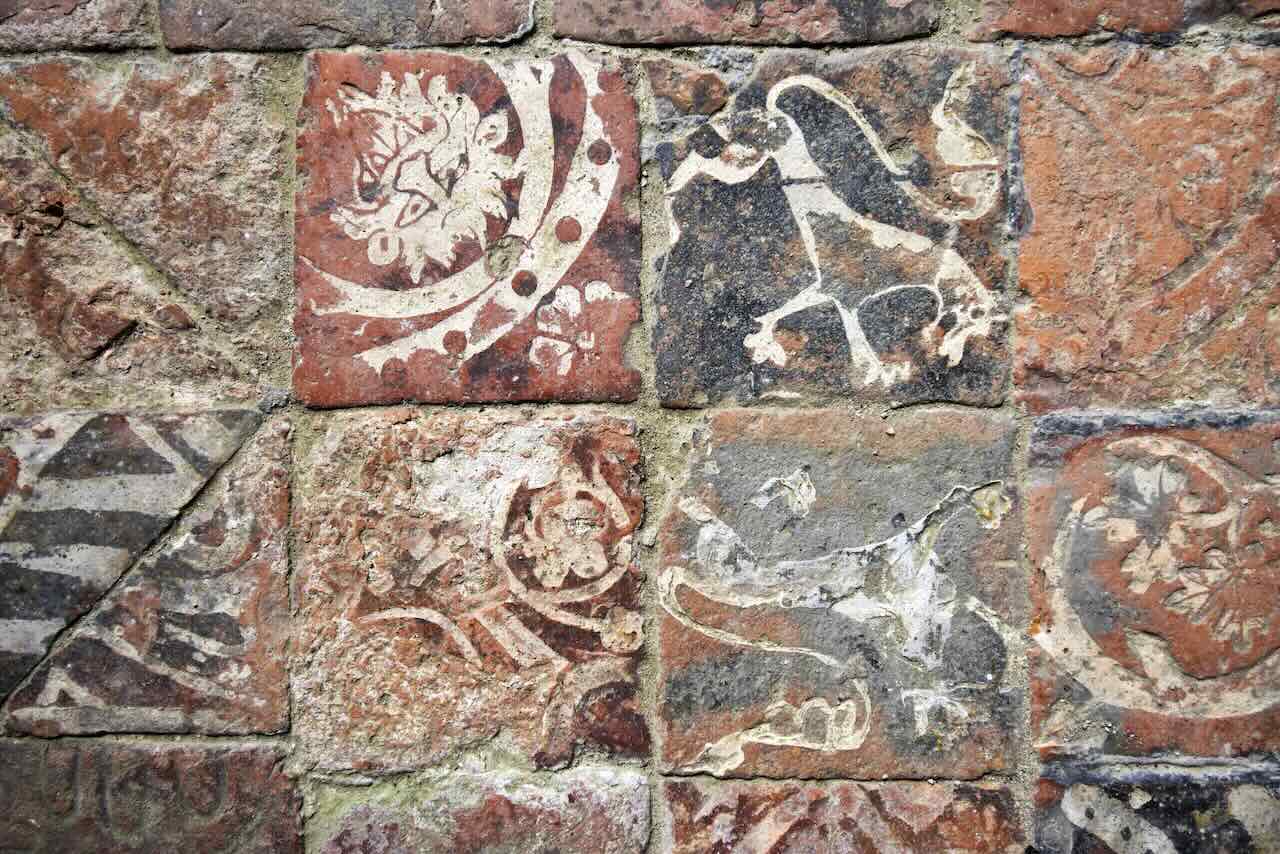
After contacting English Heritage, it was confirmed the three decorative clay tiles had been part of Wenlock Priory’s striking Medieval floor.
“My mother used to keep detailed diaries and I used these diaries to pinpoint a day in 1967 when we visited the priory,” said the father-of-two, from Hampshire.
“All the other tiles there have been walked upon but mine are still in pristine condition, I was very pleased to hand them back.
“It was an awful thing to do, as I believe we are all custodians of these heritage sites and we should preserve them for future generations.”
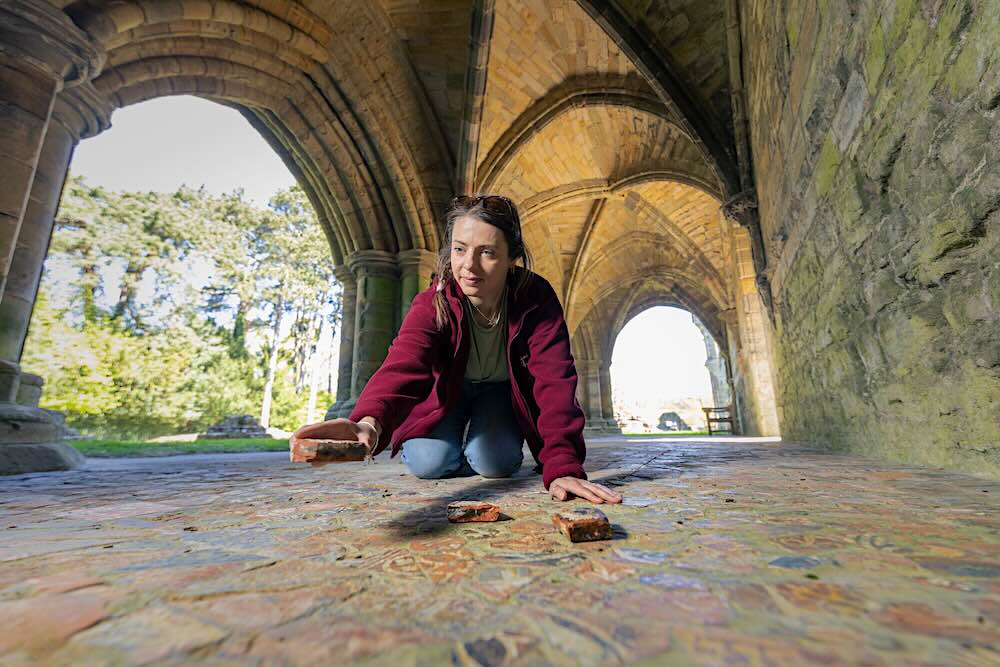
Matty Cambridge, assistant curator at English Heritage, said: “We are thrilled to see the safe return of these pieces of history to Wenlock Priory and are very grateful to Mr White for coming forward with his discovery.
“Tiles of these designs are only known at Haughmond Abbey, Bridgnorth Friary, and Wenlock Priory and would have been locally-made in Shropshire.”
GORGEOUS LUCK: $25 Thrift Shop Purchase May be ‘Priceless’ Glasswork Belonging to Scottish King Robert the Bruce
“There is one tile design of a dragon for which we haven’t yet found an exact parallel which in itself is exciting as it adds to our knowledge of the site.
“It’s very similar to a known fragment of tile showing a swan and could indicate that this is the other half of the same design or part of a set.”
The tiles will be kept at Wenlock Priory but may be moved to the English Heritage archaeology store for further analysis.
“The beautiful tiled floors on site feature various designs including heraldry, floral motifs and animals,” explained curator Cambridge. “They are one of the highlights of visiting this special place.
“It is unusual, in this case, that the artifacts were kept so well for so long—and preserved.
“If Mr. White’s example pricks anyone else’s conscience from years ago, we’d love to hear from them.”
WOW! LOOK: Mysterious Tunnels Sketched by Da Vinci Confirmed After 500 Years to be Hidden Under a Castle
Wenlock Priory has a history stretching back to AD 680 when it was founded as an Anglo-Saxon monastery, and subsequently re-founded as a Cluniac priory after the Norman Conquest.
Today the impressive ruins are cared for by English Heritage and are known for their architectural remains and elaborate decorative features, including the 12th century Chapter House and Cloister Garden with an unusual octagonal lavabo, used for ritual hand washing during religious ceremonies.
SPUR OTHERS TO RETURN TREASURES By Posting This on Social Media…