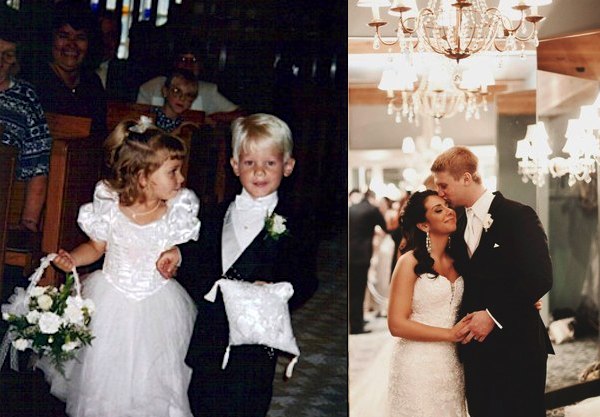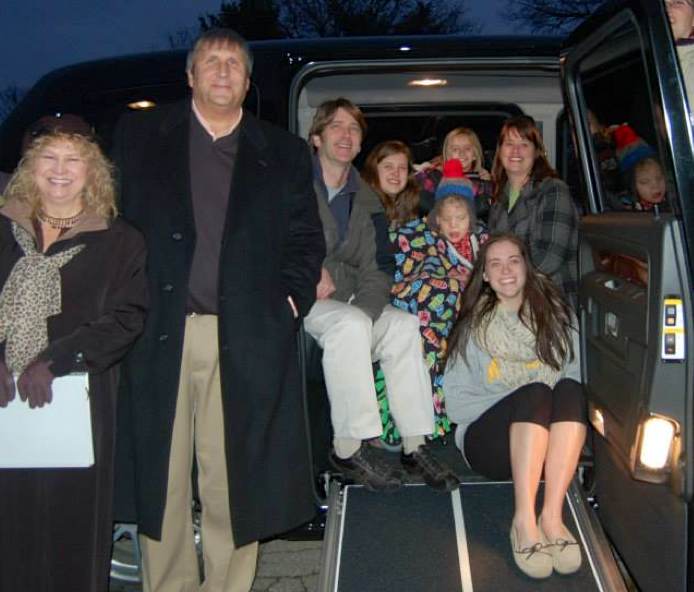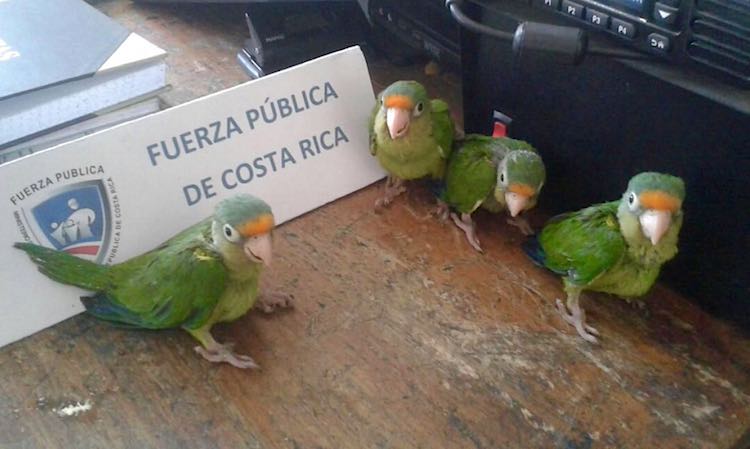












Actor Kirk Cameron fulfills a lifelong dream of working the drive thru at Chick-Fil-A.
(From Rob Dempsey in the morning, HISradio.com)
Actor Kirk Cameron fulfills a lifelong dream of working the drive thru at Chick-Fil-A.
(From Rob Dempsey in the morning, HISradio.com)
Prince Albert police are issuing tickets at an escalating rate, but the intention is not to punish — it is to praise.
Their Positive Ticketing Program rewards youth for good behavior like shoveling a sidewalk, picking up trash, or observing school crossing rules.
Patrolling officers issue tickets that are actually coupons or gift certificates donated by local businesses that are redeemable for items or experiences like a Prince Albert Raiders game, movie at Galaxy Cinemas, Slurpee, french fries, hamburger or ice cream cone.
“It reinforces positive behavior by offering something of value to those observed doing something to better the community,” says Police Service spokesperson Sgt. Brandon Mudry.
Partner businesses include Dairy Queen, A & W, McDonalds, Mac’s, 7/11, and PA Fast Print.
Variations of the Positive Ticketing Program have been established across Canada in communities such as Richmond, Kelowna, Grand Prairie and Toronto. The initiative has shown that strategic, community-based partnerships can help prevent crime and strengthen communities. Cops in Ohio did the same thing this summer and in Texas, too.
Multiply The Good by SHARING this Story with the Buttons Below…
Richard Overton, 108, is the oldest living veteran in the United States, but he’s as active as ever. On Tuesday, he served as grand marshal in Austin’s Veteran’s Day Parade.
Overton hasn’t slowed down at all. He still drives his old Ford pickup truck, attends church every Sunday, drinks whiskey in his coffee and smokes daily cigars.
His proud service to the nation was recognized by Obama in 2013.
“He lived his life with honor and dignity. He built his wife a house with his own two hands,” Obama said.
After the war, Overton returned to work in the furniture business and served as a courier in the Texas State Capitol working for four governors. He made more friends there than most of us do in a lifetime.
(READ the story from the Washington Post)
Chinese leader Xi Jinping and President Obama struck a deal today to limit greenhouse gases, with China committing for the first time to cap carbon emissions.
“China, the world’s biggest emitter of greenhouse gases, pledged in the far-reaching agreement to cap its rapidly growing carbon emissions by 2030, or earlier if possible. It also set a daunting goal of increasing the share of non-fossil fuels to 20 percent of the country’s energy mix by 2030,” reports the Washington Post.
The announcement is a unique development in the U.S.-China relationship. The world’s two largest economies, energy consumers, and carbon emitters are reaching across traditional divides and working together to demonstrate leadership on an issue that affects the entire world.
Obama believes that nations have a moral obligation to take action on climate change, instead of leaving to future generations a planet beyond their capacity to repair. Over the last year, a spate of scientific studies have laid out the scope and scale of the challenge in the starkest of terms.
“Climate change, once considered an issue for a distant future, has moved firmly into the present,” says the U.S. National Climate Assessment.
“Without additional mitigation efforts…warming by the end of the 21st century will lead to high to very high risk of severe, widespread, and irreversible impacts globally,” concluded the Intergovernmental Panel on Climate Change.
(READ the story from the Washington Post)
When a cop found himself in grave danger, this teen sprung into action, putting his life on the line for an officer he had never met.
Joe Chambers, 17, a volunteer firefighter from Ridley Park, Pennsylvania, heard a loud crash outside. The teen ran outside to find that a pickup truck had collided with a patrol car, and Officer Mark Kimsey, 30, was trapped inside. Chambers knew it was time to step up.
“I started running full speed down the street and as I got to the car, the bottom of the car caught fire and then the hood caught fire . . . the door was jammed shut,” he told the Philidephia Inquirer.
(WATCH an interview or READ the story at Huff Post)
The next hour will be nail-biting exciting for the European Space Agency, which is about to land a rover called Rosetta on a comet in deep space.
The first in history to rendezvous with a comet, Rosetta has been journeying since 2004 traveling 310,000,000 miles (500M km) to finally arrived at Comet 67P 98 days ago.
The lander, weighing 220 pounds, has already collected valuable scientific data and will deploy to the comet’s surface in the next hour.
You can follow the ESA’s live press conferences, along with thousands of schools and universities around the world, streaming online at Rosetta.esa.int.
UPDATE: At 10am EST, the European Space Agency received confirmation of the successful touchdown of the lander, Philae, on the comet’s surface.
“With Rosetta we are opening a door to the origin of planet Earth and fostering a better understanding of our future. ESA and its Rosetta mission partners have achieved something extraordinary today,” said ESA’s Director General.
“After more than 10 years travelling through space, we’re now making the best ever scientific analysis of one of the oldest remnants of our Solar System,” said Alvaro Giménez, ESA’s Director of Science and Robotic Exploration.
“In the next hours we’ll learn exactly where and how we’ve landed, and we’ll start getting as much science as we can from the surface of this fascinating world.”
Over the next 2.5 days, the lander will conduct its primary science mission, assuming that its main battery remains in good health. Depending on conditions, the mission could last until March 2015, after which conditions inside the lander are expected to be too hot for it to continue operating.
Science highlights from the primary phase will include a full panoramic view of the landing site, including a section in 3D, high-resolution images of the surface immediately underneath the lander, on-the-spot analysis of the composition of the comet’s surface materials, and a drill that will take samples from a depth of 23 cm and feed them to an onboard laboratory for analysis.
“Rosetta is trying to answer the very big questions about the history of our Solar System. What were the conditions like at its infancy and how did it evolve? What role did comets play in this evolution? How do comets work?” said Matt Taylor, ESA Rosetta project scientist.
Photo by ESA
Rosie the Riveter is one of the most iconic symbols of women empowerment today, but it dates back to World War II when women dropped everything to serve their country — and the world — by working on assembly lines to make tanks and airplanes.
“We knew the war had to be won, and we had to help because the men were gone,” said 95-year-old Elinor Otto who has worked as a riveter constructing planes since 1942.
She arrived in Washington, DC this weekend and visited a senior living home nearby, to honor the veterans living there, including two who are former POWs.
This lively redhead loved her job working on C-17s in Long Beach, California, and gets choked up every time she sees one fly.
She is in the nation’s capitol to receive a special award from the American Veterans Center, the Lillian K. Keil award for Women’s Contribution to the Military.
(WATCH the video below or READ the story from NBC-Los Angeles)
SHARE This Story to Show Aging in a Positive Light…
What other players on the San Ramon Valley High School team have learned from Cade Rocca’s example — he’s never missed practice and doesn’t whine — will be as valuable as the experience of playing has been for Cade. “He’s doing a lot for us. It’s a great lesson,” says coach Kerry Soppet.
Cade also fits into Soppet’s football philosophy nicely, reports the CC Times. “I don’t coach kids to win football games. I coach kids to be winners.”
Cade was also crowned a homecoming prince and got to ride through the town in a convertible with a cheerleader on his arm. “Through it all, he beamed.”
(READ the story, w/ photos, from Contra Costa Times)
Story tip from Mike McGinley
25 year-old Kyle Carpenter should not be alive today after jumping toward a grenade to save another soldier on a rooftop in Afghanistan. But he is alive in every way. He’s going to school, giving speeches, and continuing to inspire people every day.
In June, Kyle was invited to the White House to become the second living Marine since the Vietnam War to receive the nation’s highest military decoration — the Medal of Honor.
(WATCH his story below)
When Best Friends Animal Society staff members pulled a pretty, golden-colored pit bull terrier mix from a busy Los Angeles city shelter, no one knew she’d soon find her true calling – twice.
Chata the dog’s incredibly sweet and calm demeanor made her stand out to one adopter in search of a therapy dog to bring to school where she worked with special-needs children.
Chata went home with the adopter, got certified as a therapy dog and it looked as though she’d found her forever home. But then her adopter was transferred to a different school, one that did not allow pit bull terriers.
One week after Chata returned, military veteran Joseph Stanberry came in looking for an emotional support dog. Best Friends adoption specialists immediately told him about Chata, but there was a problem. Joseph’s heart was set on a Labrador retriever, like the one he’d grown up with, but he couldn’t find one that really tugged at his heartstrings. So, he agreed to meet Chata.
When she entered the room where Joseph was waiting, she immediately walked up to him, sat down and let him pet her. Upon meeting her, Joseph said, “I just felt like I couldn’t leave there without her.” Chata was the one.
Joseph took his new dog home, complete with the service vest she’d earned. He renamed her Summer and enrolled her in a training program for dogs and veterans. It turns out, Summer’s line of duty is just being herself. “She helps me with anxiety and depression. I’m also going to have her trained to help me hear (better), because I have a significant amount of hearing loss due to the military explosions and gunfire.”
Summer now accompanies Joseph nearly everywhere, bringing a sense of calm and duty wherever they go. When Joseph stops, she halts and awaits marching orders from her captain.
Learn more about how Best Friends helps pets at their website, Bestfriends.org.
Photos courtesy of Joseph Stanberry
A hospital in in Wigan, England granted Sheila Marsh’s dying wish to see her horse one more time.
The Royal Albert Edward Infirmary arranged transportation for Marsh’s favorite horse, whom she had looked after during the previous 25 years. Nurses wheeled her bed into the car park so she could say goodbye.
The hospital said the 77-year-old “gently called” for Bronwen, who walked toward her with purpose and nuzzled her cheek.
After Sheila died the next day her family shared the touching photos.
(WATCH the video below or READ more from the BBC)
Countries fishing the Eastern Pacific Ocean for bluefin tuna have heeded scientific advice agreeing to almost halve their fishing quotas for the prized but beleaguered fish.
The European Union, US, Mexico, China, and Japan, along with 16 other nations belonging to the Inter American Tropical Tuna Commission agreed to establish a catch quota of 6600 tons of Pacific Bluefin tuna for commercial catches spread over the next two years. That achieves a 45 percent reduction, almost meeting the reduction of 50 percent recommended by the International Scientific Committee for tuna.
In June 2012, the group of nations set a tuna quota in the eastern Pacific for the first time ever. Last year the quota was reduced to 5000 metric tons for all of 2014. This new significant cut could lead to a Pacific bluefin tuna recovery.
The hope is that these same countries, especially the US, Mexico and Japan, will also agree to similar cuts to Pacific Bluefin Tuna elsewhere, when the Western and Central Pacific Fisheries Commission meets in Samoa in December.
SOURCE: WWF – Photo by Tom Puchner via CC license
Veterans Day gives everyone a chance to thank American veterans and their families, for service to the country.
In honor of those who served, the National Park Service is waiving entrance fees for all visitors to any of 2000 parks this Veterans Day, November 11, 2014.
Everyone can enjoy a fee-free day at any of the National Parks, monuments, and memorials. They have a list of Remembrance Sites that are particularly appropriate for the holiday.
Additionally, if you are disabled, the National Park Service will provides a free, lifetime pass if you are a U.S. citizen or permanent resident, which provides free access to more than 2,000 recreation sites managed by five Federal agencies.
You can find a park near you using the National Park Foundation’s online tool.
Toxic people defy logic. Some are blissfully unaware of the negative impact they have on those around them, and others seem to derive satisfaction from creating chaos and pushing other people’s buttons. Either way, they create unnecessary drama, strife, and worst of all stress, which has proven to be harmful for your health.
The ability to manage your emotions and remain calm under pressure has a direct link to your performance. TalentSmart has conducted research with more than a million people and discovered that 90% of top performers are skilled at managing their emotions in times of stress in order to remain in control. One of their greatest gifts is the ability to neutralize toxic people. They employ well-honed coping strategies that enable them to control what they can, and eliminate the rest. Here are 12 ways that successful people deal with toxic people:
Complainers and negative people are bad news because they wallow in their problems and fail to focus on solutions. They want people to join their pity party so that they can feel better about themselves. People often feel pressure to listen to complainers because they don’t want to be seen as callous or rude, but there’s a difference between lending a sympathetic ear and getting sucked into their negative emotional spiral.
Successful people know how important it is to live to fight another day, especially when your foe is a toxic individual. In conflict, unchecked emotion makes you dig your heels in and fight the kind of battle that can leave you severely damaged. When you read and respond to your emotions, you’re able to choose your battles wisely and only stand your ground when the time is right.
Toxic people drive you crazy because their behavior is so irrational. The more irrational and off-base someone is, the easier it should be for you to remove yourself from their traps. Quit trying to beat them in an argument. Distance yourself from them emotionally and approach your interactions like they’re a science project (or you’re their therapist, if you prefer the analogy). Rather than responding to the emotional chaos—focus only on the facts.
Think of it this way—if a mentally unstable person approaches you on the street and tells you he’s John F. Kennedy, you’re unlikely to set him straight. When you find yourself with a coworker who is engaged in similarly derailed thinking, sometimes it’s best to just smile and nod.
4) They Stay Aware of Their EmotionsMaintaining an emotional distance requires awareness. You can’t stop someone from pushing your buttons if you don’t recognize when it’s happening. Sometimes you’ll find yourself in situations where you’ll need to regroup and choose the best way forward. This is fine and you shouldn’t be afraid to buy yourself some time by saying, “Let me get back to you on that.” Sometimes it’s best to give yourself some time to plan the best move.
This is the area where most people tend to sell themselves short. They feel like because they work or live with someone, they have to engage. Once you’ve found your way to Rise Above a person, you’ll begin to find their behavior more predictable and easier to understand. This will equip you to think rationally about when and where you have to put up with them and when you don’t. For example, even if you work with someone closely on a project team, that doesn’t mean that you need to have the same level of one-on-one interaction with them that you have with other team members.
You can establish a boundary, but you’ll have to do so consciously and proactively. If you let things happen naturally, you are bound to find yourself constantly embroiled in difficult conversations. The trick is to stick to your boundaries when the person tries to encroach upon them, which they will.
6) They Won’t Let Anyone Limit Their JoyWhen your sense of pleasure and satisfaction are derived from the opinions of other people, you are no longer the master of your own happiness. When emotionally intelligent people feel good about something that they’ve done, they won’t let anyone’s opinions or negative remarks take that away from them.
While it’s impossible to turn off your reactions to what others think of you, you can always take people’s opinions with a grain of salt. That way, no matter what toxic people say, your self-worth comes from within. One thing is certain—you’re never as good or bad as they say you are.
Where you focus your attention determines your emotional state. When you fixate on the problems you’re facing, you create and prolong negative emotions and stress. When you focus on actions to better yourself and your circumstances, you create a sense of personal efficacy that produces positive emotions and reduces stress. Quit thinking about how troubling your difficult person is, and focus instead on how you’re going to go about handling them. This puts you in control, and reduces the amount of stress you experience when interacting with them.
8) They Don’t ForgetEmotionally intelligent people are quick to forgive, but that doesn’t mean they’ll always give a wrongdoer another chance. Forgiveness requires letting go of what’s happened so that you can move on. Successful people are unwilling to be bogged down unnecessarily by others’ mistakes, so they let them go quickly and are assertive in protecting themselves from future harm.
Sometimes you absorb the negativity of other people. There’s nothing wrong with feeling bad about how someone is treating you, but focusing on it is self-defeating. It sends you into a downward emotional spiral that is difficult to pull out of.
Drinking caffeine triggers the release of adrenaline. Adrenaline is the source of the “fight-or-flight” response, a survival mechanism that forces you to stand up and fight or run for the hills when faced with a threat. The fight-or-flight mechanism sidesteps rational thinking in favor of a faster response. This is great when a bear is chasing you, but not so great when you’re surprised in the hallway by an angry coworker.
11) They Get Some SleepI can’t say enough about the importance of a good night’s sleep in making you more positive, creative, and proactive in your approach to toxic people. When you sleep, your brain literally recharges, shuffling through the day’s memories and storing or discarding them, so that you wake up alert and clear-headed. Your self-control, attention, and memory will suffer when you don’t get enough sleep. Sleep deprivation raises stress levels on its own, even without a stressor present.
Don’t attempt to tackle everything by yourself. Get help dealing with a challenging person by tapping into your support system to gain new perspective. Everyone has someone at work or in their life who is on their team, rooting for them, and ready to help them make the best of a difficult situation. Identify these individuals in your life and make an effort to seek their insight and assistance when you need it. Something as simple as explaining the situation can lead to a new perspective. Most of the time, other people can see a solution that you can’t because they are not as emotionally invested in the situation.
Thankfully, the plasticity of the brain allows it to mold and change as you practice new behaviors, even when you fail. Implementing these 12 techniques for dealing with difficult people will train your brain to handle stress more effectively and decrease the likelihood of ill effects.
Do you have your own strategies for dealing with toxic people? Do share them in the comments section below…
Dr. Travis Bradberry, Ph.D. is the award-winning co-author of the #1 bestselling book, Emotional Intelligence 2.0, and the cofounder of TalentSmart, the world’s leading provider of emotional intelligence tests, emotional intelligence training, and emotional intelligence certification, serving more than 75% of Fortune 500 companies. His bestselling books have been translated into 25 languages. Dr. Bradberry has written for, or been covered by, Newsweek, BusinessWeek, Fortune, Forbes, Fast Company, Inc., USA Today, The Wall Street Journal, The Washington Post, and The Harvard Business Review.
Photo (top) by Ed Yourdon, CC license
Some 250 gardens appeared suddenly along corridors like the one in Brownsville, Brooklyn, planted with flowers, grasses and small trees.
“In what officials have billed as one of the most ambitious programs of its kind in the United States, New York City has, with little fanfare, embarked on a roughly 20-year, $2.4 billion project intended to protect local waterways, relying in large measure on ‘curbside gardens’ that capture and retain storm-water runoff.”
Over the coming months, the Department of Environmental Protection will expand the Green Infrastructure Program initiated by Mayor Bloomberg, by building 2,000 curbside gardens in Brooklyn, the Bronx and Queens. When construction is completed, the gardens, also called bioswales, will have the capacity to collect and absorb more than 4 million gallons of storm water when it rains. By softening the impervious urban landscape and naturally absorbing rainwater the city hopes to capture more than 200 million gallons of storm water each year, thereby improving the health of the rivers and bays surrounding the city.
In addition to making boroughs more resilient to extreme flooding, some of these neighborhoods currently have less than average street tree counts and higher than average rates of asthma among young people. The increased tree canopy and vegetation will help to improve air quality, provide shade during hot summer months, and beautify the neighborhoods.
The New York Times says similar gardens have proved effective in other cities, most notably Philadelphia.
(WATCH one of the gardens in action during rainfall below)
(READ a story in the NY Times)
Photos by NYC Department of Environmental Protection
Yvon Le Maho, who has been studying penguins for more than 40 years, knows that humans make penguins very skittish so it is difficult to collect data about natural behavior. He wondered about sending in a small rover on wheels to carry a camera and other recording equipment. When the idea was first tested, he found the penguins’ stress levels stayed low.
Would the rover be accepted into the colony if it were disguised as a baby penguin? The answer was, an emphatic, yes.
Luckily for Le Maho, at the same time he was experimenting, the UK-based John Downer Productions, was working on shooting a film using camouflaged cameras to get into emperor penguin colonies.
“It was like a marriage in heaven,” Philip Dalton, producer of the BBC mini-series “Penguins: Spy in the Huddle”, told NPR.
Their collaborative effort resulted in the ‘chickcam,’ a data collection penguin so lifelike that adults tried to care for it. The feathered rover also captured something that had never before been recorded: an emperor penguin laying an egg.
In the 2013 clip below, penguins in the film meet ’emperorcam’ for the first time. One of the 50 spy cameras that filmed, as never before, the charismatic birds.
(WATCH a video of the chickcam, and READ the story from NPR)
Photo credit: Le Maho and team, in NatureMethods
The proportion of adults smoking in the UK has declined to its lowest level since recording started in the 1940s. (Guardian)
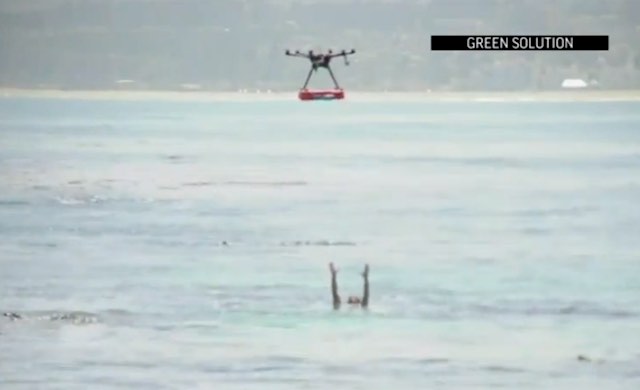
Every year a million people suffer from cardiac arrest in Europe and face a mere 8% survival rate due to slow response times of emergency services. Alec Momont seeks to improve existing emergency infrastructure with a network of drones capable of saving lives. His drone can speed to a location within 1 minute, when it would take an ambulance ten.
The Ambulance Drone is the result of Momont’s Master Graduation thesis research project. The industrial engineer studied in Belgium, France and the Netherlands and holds a master’s degree of science from the Technical University in Delft,
(WATCH the video below or learn more at alecmomont.com)
SHARE with the buttons below…
Officers from the Aurora Police Department went way beyond what any great-grandmother would expect of them after becoming a victim of a purse snatcher while grocery shopping.
Officers Robert Little and Craig Hess met her at the store and immediately helped the 86-year-old woman cancel her credit cards. The thief got away with her wallet and keys to both her vehicle and house.
Afterward, they drove her home, picked up her spare set of car keys and returned to bring her car home.
“After doing all of that the officers then purchased a new lock for her door with their own money and installed the lock that night,” said the police department on their Facebook page.
(WATCH a video or READ the story from The Independent)
Photo from the Aurora FB Page
You might think fraternities are all about partying. Not this one.
With hundreds of homeless people in their Alabama city, many of them veterans, this group of college guys have started a project to get some of them off of the streets.
The men of Phi Kappa Psi at the University of Alabama in Huntsville have created an initiative called Foundations for Tomorrow to create a communal village of tiny homes somewhere in Huntsville.
The young men plan to build the homes themselves, with help from the future resident, and are currently raising funds to buy the land.
(WATCH the video below READ the story from WHNT)