When the new trailer came out last week for the “Hobbit” sequel, “The Desolation of Smaug”, two fans decided to record their reactions to seeing it for the first time — complete with squeals and gasps of shock.
The pair, who run a video blog called “The Happy Hobbit”, posted the video to OneRing.net, and it was forwarded to Hobbit director Peter Jackson. Jackson was so tickled by the girls’ reaction to his trailer that he showed superstar actor Orlando Bloom and his elvish co-stars. Here’s the good part: he filmed their reactions to the original reactions.
Thus was born a back-and-forth series of videos chocked full of adorable outbursts.
A World War II veteran shattered the world record for the bench press in his age group last weekend, with a lift of 187.2 pounds – 50 pounds more than the previous record.
Sy Perlis from Arizona, who works out five days a week, was the lone competitor in the 90-year-old and over division.
A 15 year-old boy was laying his beloved dog to rest in the backyard with his step-father when fate intervened and the pair leapt to rescue another dog who was locked in a burning house.
Dillon Hayes of Boiling Springs, South Carolia, said they broke in the house and found the dog, while the neighbors were away.
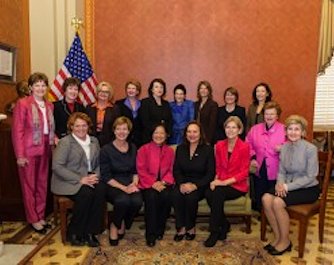
Across the hall from the US Senate chambers, where the tiny ladies’ room is constantly overcrowded, renovations are underway to make room for the historic number of female senators in 2013.
Once completed, the women will have a nicer and more spacious facility befitting their number, which is 20 — a fifth of the Senate. One gushed, “We’re even going to have a window.”
Wandering around the Albuquerque Airport Terminal, after learning my flight had been detained four hours, I heard an announcement: “If anyone in the vicinity of Gate 4-A understands any Arabic, please come to the gate immediately.”
Gate 4-A was my own gate. I went there. An older woman in full traditional Palestinian embroidered dress, just like my grandma wore, was crumpled to the floor, wailing loudly. “Help,” said the Flight Service Person. “Talk to her. What is her problem? We told her the flight was going to be late and she did this.”
I stooped to put my arm around the woman and spoke to her haltingly. “Shu dow-a, Shu-bid-uck Habibti? Stani schway, Min fadlick, Shu-bit-se-wee?” The minute she heard any words she knew, however poorly used, she stopped crying. She thought the flight had been cancelled entirely.
She needed to be in El Paso for major medical treatment the next day. I said, “You’re fine, you’ll get there, who is picking you up? Let’s call him.”
We called her son and I spoke with him in English. I told him I would stay with his mother till we got on the plane and would ride next to her – Southwest.
She talked to him. Then we called her other sons just for fun. Then we called my dad and he and she spoke for a while in Arabic and found out of course they had ten shared friends. Then I thought just for the heck of it why not call some Palestinian poets I know and let them chat with her? This all took up about two hours.
She was laughing a lot by then. Telling about her life, patting my knee, answering questions.
She had pulled a sack of homemade mamool cookies – little powdered sugar crumbly mounds stuffed with dates and nuts – out of her bag – and was offering them to all the women at the gate. To my amazement, not a single woman declined one. It was like a sacrament. The traveler from Argentina, the mom from California, the lovely woman from Laredo – we were all covered with the same powdered sugar. And smiling. There is no better cookie.
And then the airline broke out the free beverages from huge coolers and two little girls from our flight ran around serving us all apple juice and they were covered with powdered sugar too.
And I noticed my new best friend – by now we were holding hands – had a potted plant poking out of her bag, some medicinal thing, with green furry leaves. Such an old country traveling tradition. Always carry a plant. Always stay rooted to somewhere. And I looked around that gate of late and weary ones and thought, this is the world I want to live in. The shared world. Not a single person in this gate – once the crying of confusion stopped – seemed apprehensive about any other person. They took the cookies. I wanted to hug all those other women too.
This can still happen anywhere. Not everything is lost.
Last summer in Timbuktu, an irreplaceable trove of manuscripts at risk of being destroyed by fundamentalist Islamic rebels, was secretly evacuated at great personal risk by a team of archivists, librarians, and couriers.
The manuscripts were saved from immediate destruction, but today they are still jam packed in footlockers used for their evacuation, while enduring higher humidity than ever before without archival protection. Already, some mildew is forming inside the containers.
Now, an internet campaign launched to fund the purchase of archival bags and boxes to protect these documents of immense global heritage has engaged people around the globe.
Handing down a 5-3 decision today, the U.S. Supreme Court ruled that the Federal Trade Commission can challenge closed-door deals that the big pharmaceutical companies make with smaller generic rivals to keep cheaper products off the market and out of drug stores.
In honor of Father’s Day, the Rock and Roll Hall of Fame’s newest inductee, Quincy Jones, is lending his talent and support to the Prostate Cancer Foundation for a new awareness campaign that will be broadcast in Major League Baseball ballparks throughout June.
With the help of his daughter, actress Rashida Jones (Parks and Rec), the new print, video and radio ads urge men to “Cherish Life’s Special Moments,” and talk to their doctors about prostate screenings. Prostate cancer is the second most common cause of cancer death for men in the U.S., with a death every 16 minutes.
Quincy Jones has enjoyed one of the longest, most successful careers in popular music as a record producer, conductor, arranger, composer, television producer, and trumpeter. As influential to jazz music as to pop, he has been nominated for a record 79 Grammys – and won 27.
“Prostate cancer has affected dear friends and family of mine,” said Jones, “So I am honored to be part of this campaign with Stand Up To Cancer and the Prostate Cancer Foundation to reinforce how incredibly important it is for men to talk to their doctors about prostate cancer.”
“I was excited to shoot this PSA with my father,” said Rashida Jones who currently appears on the hit NBC sitcom, Parks and Recreation. “We have to protect the men we cherish, so please talk to your fathers, your grandfathers, husbands, brothers and sons and make sure they speak to their doctors about this disease and how to reduce their risk.”
This year’s campaign builds on an 18-year tradition with Major League Baseball through an annual Home Run Challenge for Father’s Day. “There are over 2.5 million American men who are surviving prostate cancer this Father’s Day,” said Jonathan W. Simons, MD, president and CEO of the Prostate Cancer Foundation.
“Men are 40 percent less likely than women to have visited a healthcare provider in the past year. But talking to one’s doctor about prostate cancer is critically important,” said the president and CEO of Stand Up To Cancer (SU2C), Sung Poblete, PhD, RN.
To date, SU2C and the Prostate Cancer Foundation have collaborated to fund two Prostate Cancer research Dream Teams, each receiving $10 million over a three-year period. The first SU2C-PCF Prostate Cancer Dream Team is addressing therapeutic interventions for advanced prostate cancer with special emphasis on metastatic disease and delivering near-term patient benefit. The second SU2C-PCF Prostate Cancer Dream Team, also formed in 2012, is targeting adaptive pathways in metastatic treatment-resistant prostate cancer using scientists representing six world-class institutions.
Born in Nepal, but moved to Wisconsin in 2000 to attend the University in Whitewater, Ojash Shrestha found his true calling when he returned home 8 years later to be married.
While staying in his parents’ house, he met a young girl around 12 years-old who worked as a maid there because her family could not support her or afford to send her to school.
At that moment, Ojash realized how different her fate might be if she had the same opportunities as he had for education while growing up. When he was a child, he was going to school, playing with his friends, and sitting down with his family for dinner.
After returning to the U.S. he was happily married with wonderful memories of home, but could not erase the girl’s face from his memory. Her name was Rita and her salary was a mere $7 for a month of work.
On the bright side, he thought, she is in a safe place, she has enough food to eat, and is helping her family with financial support. Thousands of families like hers live on an annual average income of $473 and never dream of having the money to send their children to school.
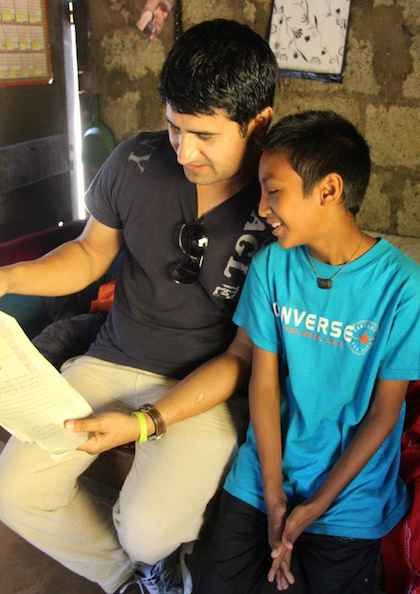
Realizing how important education had been to his own success, Ojash decided to help change the fate of children like Rita. Together with family members and friends, he sponsored the schooling of not one, but five children in 2009 – providing tuition, books, supplies, and uniforms for the children.
The hunger for helping these children and their families grew until Ojash established a non-profit organization called Ganga Ghar, “mother’s house”, inspired by the moment he met Rita, and the holy River Ganga in Nepal.
Today, with a small dedicated band of volunteers in the U.S. and Nepal, Ganga Ghar sponsors education for more than 100 children, improves struggling schools by installing computer labs, fans, and more classrooms, and launching an entrepreneurship program for women in a remote village.
(WATCH what they did just during the Christmas holiday and visit the fantastic website to learn more: www.gangaghar.org)
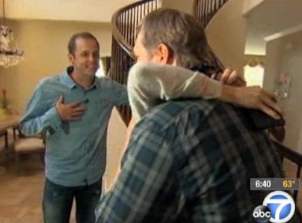
After Jennifer’s husband left for an eight-month deployment, their beloved 11-year-old dog was diagnosed with a cancerous tumor.
“We were devastated,” she wrote on YouTube. “Kermie was our first child, and we did not think Eric would ever get to see her again.”
But Kermie continued to surpass the vet’s estimate for survival and as his deployment drew to a close, hopes for a never-expected reunion began to seem possible.
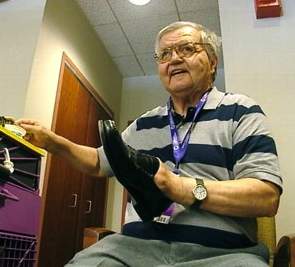
If you missed our story in February, you need to meet Albert Lexie, 71. He is a shoeshine man. It is the only job he has ever had.
Despite his station in life, the man is a high-roller when it comes to philanthropy.
For more than thirty years, Albert has taken every dime of his tip money from shining shoes and donated it to Children’s Hospital of Pittsburgh – more than $200,659 and counting.
The Greek yogurt boom in New York is being harnessed to make electricity.
More Greek yogurt production has meant more whey, a watery byproduct from the process. Yogurt makers commonly ship it back to farms for use as feed and fertilizer, but it’s also is being used to generate power in several places.
Philadelphia’s mural art project has changed the face of the city from grim and gloomy to colorful, cultural and spirited.
As a bonus, the kids who have joined the program to paint the run-down walls of urban buildings racked up a 100% record of graduating from high school.
The program has launched the careers of some artists who have returned to teach the craft to other kids.
While sailing off Newport Beach, California, James Gilkinson and his niece got the surprise of a lifetime when a sea lion cub jumped onto their boat.
The young mammal seemed tired but also became quite affectionate, rubbing against the captain and angling for pats on the head for an hour or more. When they neared the port the man just stood up and said, ‘It’s time,” and into the water it flopped.
A creative surgeon turned to a common household substance to block the bleeding in a newborn’s brain last Wednesday.
When the 3-week old baby was rushed to the hospital in Kansas City, Missouri, a team of doctors discovered an an aneurysm that was hemorrhaging — a diagnosis so rare that the tiny surgical tools necessary for the job were unavailable.
So the surgeons chose the next best thing to plug the bleeding — super glue.
13-year-old Nick LeGrande has always dreamed of throwing out the first pitch at an Oakland Athletics baseball game. Wednesday night, with a life-threatening illness and too sick to take the mound, Nick was granted his wish through the use of Android technology and the kindness of Google.
The cross-country pitch in Kansas City was made possible by a telerobotic pitching machine that received signals from Nick’s own pitching motion. Nick viewed a big screen that televised the field and the catcher who was waiting at the plate for the robotic toss.
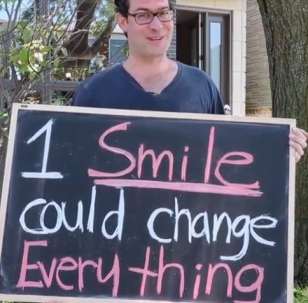
When a new neighbor moved in and began writing messages on a chalkboard in his front window, life changed on Atlas Ave.
Aimed randomly at people using the sidewalk, his funny and inspiring messages about happiness, or finding a wife, have made Ayden Byle, 36, the toast of his Toronto neighborhood.
“It’s not too late to be a ROCK STAR!” is one of his folksy chalk-isms.
The Supreme Court ruled unanimously Thursday that human genes cannot be patented, a decision that could shape the future of medical and genetic research and have profound effects on pharmaceuticals and agriculture.
Simply because Myriad Genetics Inc. found the location of genes that were linked to breast and ovarian cancer, wrote Justice Clarence Thomas, doesn’t mean they should be able to claim patents on them.
“That discovery, by itself, does not render the BRCA genes . . . patent eligible.”

















 When the new trailer came out last week for the “Hobbit” sequel, “The Desolation of Smaug”, two fans decided to record their reactions to seeing it for the first time — complete with squeals and gasps of shock.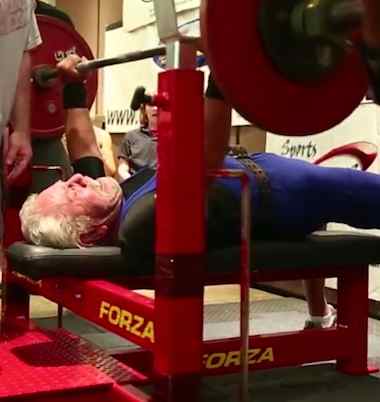


 And then the airline broke out the free beverages from huge coolers and two little girls from our flight ran around serving us all apple juice and they were covered with powdered sugar too.


 The hunger for helping these children and their families grew until Ojash established a non-profit organization called Ganga Ghar, “mother’s house”, inspired by the moment he met Rita, and the holy River Ganga in Nepal.